• 3 Free Agents Projected With High Likelihood of IL Stint in 2023

    3 Free Agents Projected With High Likelihood of IL Stint in 2023

    Mark Simon also contributed to this article.

    One of the cool items in the SIS toolkit is our injury prediction model.

    This is something we make available to teams and not the public, though we share an excerpt in The Bill James Handbook 2023 from which I’ll share a little bit here.

    Our projections come from a comprehensive injury database. We log nearly everything deemed significant to a player’s physical health – not only whatever we can glean from media reports, but even something as inconsequential as a batter fouling a ball off his body or a pitcher being struck by a batted ball.

    We take that injury data, factor in a player’s workload, position, body type, and playing style (does he slide, dive, jump a lot) to figure a likelihood of an injury worthy of an IL stint or missing 10 days of playing time. Seven of the top likeliest batters to sustain an IL-worthy injury in 2023 spent time on the IL in 2022.

    If you want to learn more about what goes into the projections, watch our presentation from the 2021 SABR Analytics Conference.


    If you don’t have time to watch the video, among the most important inputs for a hitter are his speed score (a stat combining six indicators, including frequency of steal attempts and double plays, triples, and fielding range), his Body Mass Index (BMI), age, and the number of days since his last injury.

    With all this in mind, who are the free agent position players who rated most likely to need at least one IL stint in 2022?

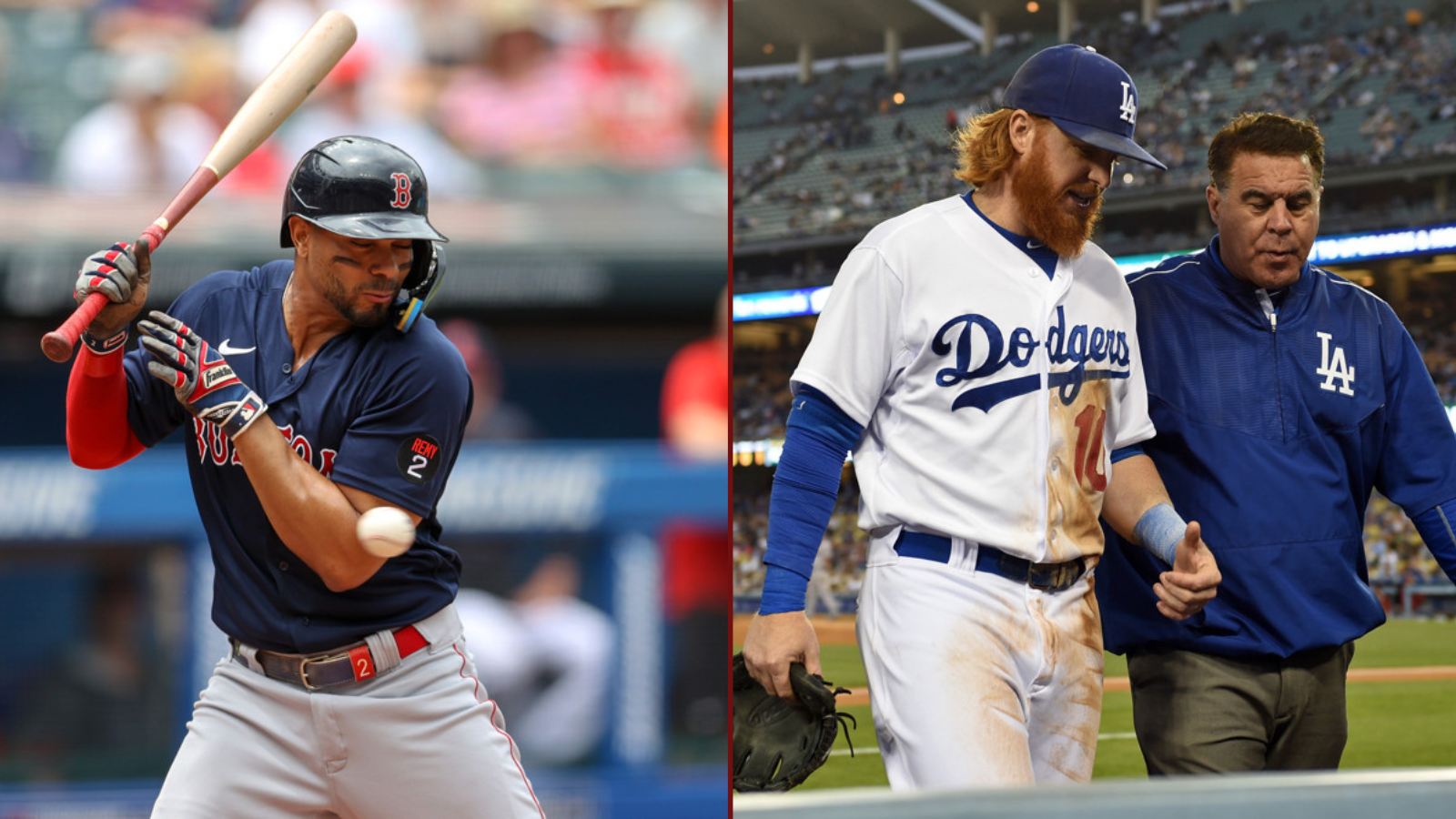
    Our No. 1 is shortstop Xander Bogaerts. Bogaerts actually ranked third in our injury projections entering 2022 but played in 150 games and avoided the IL. However, most of his games missed were acknowledged as being due to an injury rather than scheduled rest. He left four games early due to injury (hamstring, back) and was taken out of the starting lineup four other times due to lingering back or hamstring issues. These minor injuries do factor into our projections.

    Also, since 2021 Bogaerts boasts the second-highest number of sliding, diving, and jumping plays, with 150. Bodily sacrifice impacts our injury projections. Given that Bogaerts has recorded an out on 10 of his last 72 dives, it may be better for him to taper that approach as he starts his new contract.

    No. 2 on the list is third baseman Justin Turner. This isn’t that surprising given that Turner is old (he just turned 38) and has a history of injuries. He had one IL stint last season, missing 16 games in a 17-game stretch with an abdominal strain. It’s worth noting that Turner hit considerably better after returning from the rest, hitting .314 with an .878 OPS in his last 41 regular season games.

    Turner is another who might be served by cutting back. He’s the oldest player with at least 50 slides, dives, and jumps in the last three seasons (he has 80).

    The No. 3 highest-risk free agent in our projections is second baseman (and former shortstop) Jean Segura and that shouldn’t be that surprising. Segura missed 54 games last season when he broke his finger after getting hit by a pitch. He twice spent time on the IL in 2021, once with a strained groin and once with an injured quad.

    Segura is 5-foot-10 and played at between 205 and 220 pounds the last few seasons. As noted earlier, BMI is one of the most important inputs in our projection tool, so his build joins his recent injury history and age as contributing factors in this projection.

    The 2023 Bill James Handbook has the top 10 hitters and top 10 pitchers in our injury projections (Bogaerts and Turner were No. 1 and No. 2 among all players). You can purchase the book at ACTA Sports or wherever you buy your books.

  • How One Play Changed Boise State’s Season

    How One Play Changed Boise State’s Season

    The beginning of Week 5 looked like the end for head coach Andy Avalos at Boise State. In his first season with the Broncos, Avalos had won 7 games, which constitutes success at nearly every mid-major not named Boise State. Four games into year 2, he had gone 2-2, fired his offensive coordinator, and lost his three-year starting quarterback to the transfer portal.

    Game 5 did not look any better. Through 30 minutes the Broncos had scored 0 points under new offensive coordinator Dirk Koetter and gone through two quarterbacks. Down 13-0 to San Diego State, Avalos stood on rocky ground.

    But then Boise State opened the second half with this play:

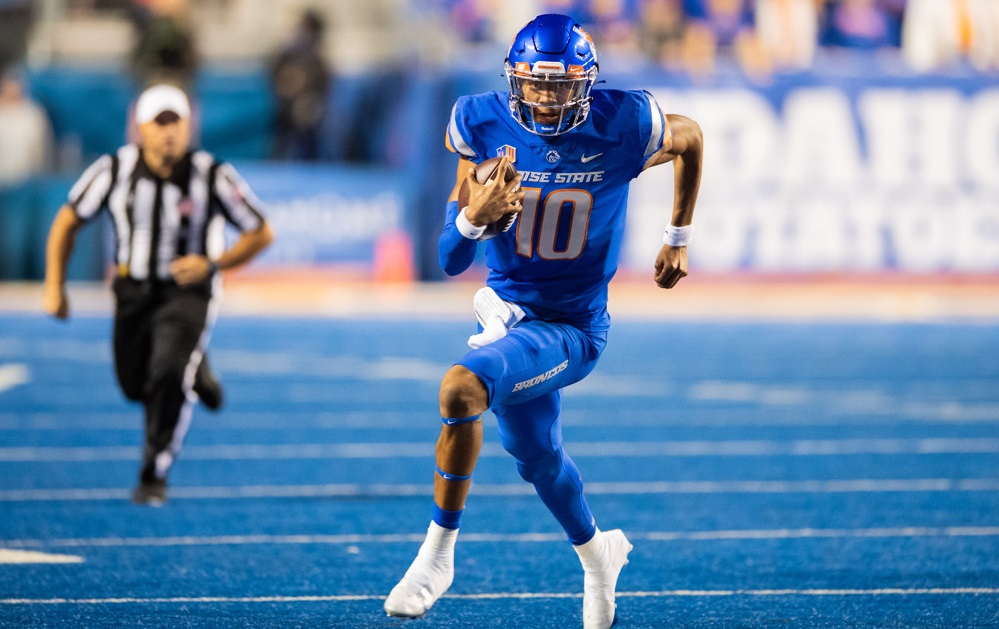
    With one quarterback keeper, the entire offense changed. In 3+ years as Boise State’s quarterback, Hank Bachmeier had kept the read option only 18 times. He posed no threat running the football, and defenses gameplanned accordingly. But with Taylen Green now under center, the Broncos now had an effective runner at quarterback.

    Following the success of this run, Koetter called the read option again, which Green pulled once more as he ran 17 yards for a touchdown. He would keep the option four more times this game for 61 additional yards, including this 39-yard scamper to put the Broncos up by two scores.

    With the defense unable to focus on the base run and ill-prepared to defend the option, the rest of the running game flourished as well. The Broncos rushed for 276 yards on 30 carries in the second half, scoring 35 unanswered points en route to defeating the Aztecs. 

    While a simple offensive adjustment would not normally result in such a momentum shift, adding the quarterback keeper put the Aztec defense on skates, unsure of who had the ball and where. two runs in the middle of the 3rd quarter illustrate the conundrum San Diego State now faced.

    On the first play, the defense swarmed to the running back, leading to an easy pull by Green for a gain of 12. The next play, the defense, afraid of the quarterback pulling the ball again, flew to Green, leaving six blockers for five defenders in the box. Green gave the ball to Ashton Jeanty, who found the open hole on the stretch and rushed for 24.

    This massive rushing performance marked only the beginning. Since running over the Aztecs, Boise State has won 7 of 8 and will now host the Mountain West Championship game. With Green at the helm, the Broncos have averaged over 12 more points per game, 2 more yards per play, and jumped 103 spots in their Total Points Per Play ranking. With one play, as well as some simple adjustments and scheming around it, Green and Koetter have turned around not only this season, but Avalos’ tenure as well.

    Before its offensive renaissance, Boise State passed slightly more than it ran, based its run game off of outside zone, and ran a variety of drop back passes designed to attack all parts of the field. With this philosophy the offense sputtered, ranking 114th in Total Points Per Play.

    But with a new quarterback, Koetter adjusted the main scheme to take advantage of Green’s abilities. Boise State operates out of the gun 24% more than before, and runs the read option more than twice as often. With the read option, the Broncos normally run duo and inside zone out of the pistol and outside zone out of their regular shotgun sets. Boise State does also run outside zone out of the pistol, but with Green carrying out the bootleg he remains a threat to run.

    With the passing game, Koetter has settled into a few concepts that Green throws well. With the running game’s increased efficacy, the play action game has drastically improved in turn. The Broncos gain .21 pass points per throw when dropping back from play action, up from -.35 before Green became the starter. Off of play action, the post and dig have done the most damage, including this strike to open the game against Nevada:

    Green also excels when rolling out, as he throws flat and out routes quite well. Koetter mainly calls Cross and Flood with the bootleg, but no matter the concept the Broncos add .54 total points when Green rolls out without even faking the run, up from -.08 in their first four weeks of the season.

    With the increase in rushing, play action, and rolling out comes a decrease in the dropback game the Broncos used a lot their first four games. Nevertheless, even Boise State’s Total Points when dropping back has gone up since the change in philosophy, with particular efficiency throwing the curl, fly, post, and out. Green reads defenses fairly well, but Koetter has also helped by simplifying some of the reads.

    Against BYU, Koetter called two separate concepts, one to each side of the field. With two high safeties, Green would have looked to the wide side of the field, where either one safety covered two receivers or the running back ran free in the flat. Instead, Green saw one, so he threw the short side 5-step slant in between the curl and flat defenders for a gain of 24.

    Green’s ability to run has fundamentally changed the Boise State offense. Working with the talent at hand, Koetter has adjusted the offense to emphasize those skills while calling constraints and counters to continually keep defenses on their heels. With this mixture of talent and scheme, Avalos and the Broncos have seen their prospects go from poor to promising as they shoot for their 10th win in the Mountain West Championship game.

  • Reprint: Jeter vs Everett

    Reprint: Jeter vs Everett

    This article was originally published in The Fielding Bible, Volume 1.

    We are well aware that we are not the first statistical analysts to question Derek Jeter’s defense at shortstop. Others before us have argued that Jeter was not a good shortstop, and yet he has won the Gold Glove the last couple of years, the Yankees certainly have won several baseball games with Jeter at short, and he is among the biggest stars in baseball.

    Asked about Derek Jeter’s defense on a radio show in New York one year ago, I answered as honestly as I could: I don’t know. I know that there are Yankee fans and network TV analysts who believe that he is a brilliant defensive shortstop; I know that there are statistical analysts who think he’s an awful shortstop. I don’t know what the truth is. You’ve seen him more than I have; you know more about it than I do.

    I am instinctively skeptical. I don’t tend to believe what the experts tell me, just because they are experts; I don’t tend to believe what the statistical analysts tell me, just because they are statistical analysts. I take a perverse pride in being the last person to be convinced that Pete Rose bet on baseball, and I fully intend to be the last person to be convinced that Barry Bonds uses Rogaine. I am willing to listen, I am willing to be convinced, but I want to see the evidence.

    So John Dewan brought me the printouts from his defensive analysis, and he explained what he had done. John’s henchmen at Baseball Info Solutions had watched video from every major league game, and had recorded every ball off the bat by the direction in which it was hit (the vector) the type of hit (groundball, flyball, line-drive, popup, mob hit, etc.) and by how hard the ball was hit (softly hit, medium, hard hit). Given every vector and every type of hit, they assigned a percentage probability that the ball would result in an out, and then they had analyzed the outcomes to determine who was best at turning hit balls into outs. One of their conclusions was that Derek Jeter was probably the least effective defensive player in the major leagues, at any position.

    So I said, “Well, maybe, but how do I know? How do I know this isn’t just some glitch in the analysis that we don’t understand yet?”

    “I knew you would say that,” said John. “So I brought this DVD.” The DVD contained video of 80 defensive plays:”

    The 20 best defensive plays made by Derek Jeter.

    The 20 worst defensive plays of Derek Jeter, not including errors.

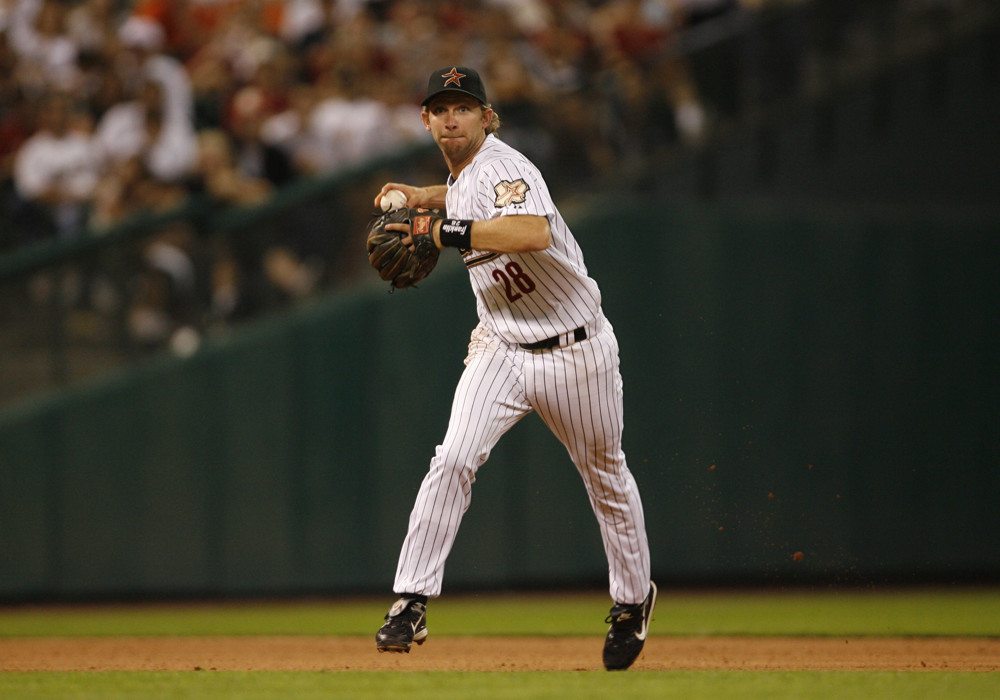
    The 20 best defensive plays of Adam Everett, who the analysis had concluded was the best shortstop in baseball.

    The 20 worst plays of Adam Everett, not including errors.

    How do we define “best” and “worst”? It’s up to the computer. Every play is entered into the computer at Baseball Info Solutions. The computer then computes the totals, and decides that a softly hit groundball on Vector 17 is converted into an out by the shortstop only 26% of the time. Therefore, if, on this occasion, the shortstop converts a slowly hit ball on Vector 17 into an out, that’s a heck of a play, and it scores at +.74. The credit for the play made, 1.00, minus the expectation that it should be made, which is 0.26. If the play isn’t made—by anybody—it’s -.26 for the shortstop.

    The best plays are the plays made by shortstops on balls on which shortstops hardly ever make plays, and the worst plays are No Plays made on balls grounded right at the shortstop at medium speed. Sometimes these actually don’t look like bad plays when you watch them. Sometimes the ball takes a little bit of a high hop and Ichiro is running, and he beats the play on something the computer thinks should be a routine out—but it’s still a legitimate analysis, because the shortstop didn’t have to play Ichiro that deep. He could have pulled in two steps; he could have charged the ball. He weighed the risks, he used his best judgment, and he lost. That happens.

    Anyway, this business of looking at Derek Jeter’s 20 best and 20 worst plays and Adam
    Everett’s.. .logically, this would appear to be an ineffective way to see the difference between the two of them. Suppose that you took the video of A-Rod’s 20 best at-bats of the season, and his 20 worst, and then you took the video of Casey Blake’s 20 best at-bats of the season, and his worst. The video of A-Rod’s 20 best at-bats would show him getting 20 extra-base hits in game situations, and the 20 worst would show him striking out or grounding into double plays 20 times in game situations. The video for Casey Blake would show Casey Blake doing exactly the same things. This isn’t designed to reveal the differences between them; this is designed to make them look the same.

    That being said, watching Derek Jeter make 40 defensive plays and then watching Adam Everett make 40 defensive plays at the same position is sort of like watching video of Barbara Bush dancing at the White House, and then watching Demi Moore dancing in Striptease. The two men could not possibly be more different in the style and manner in which they run the office. Jeter, in 40 plays, had maybe three plays in which he threw with his feet set. He threw on the run about 20-25 times; he jumped and threw about 10-15 times, he threw from his knees once. He threw from a stable position only when the ball, by the way it was hit, pinned him back on his heels.

    Everett set his feet with almost unbelievable quickness and reliability, and threw off of his back foot on almost every play, good or bad. Jeter played much, much more shallow than Everett, cheated to his left more, and shifted his position from left to right much, much more than Everett did (with the exception of three plays on which Everett was shifted over behind second in a Ted Williams shift. Jeter had none of those.)

    Jeter gambled constantly on forceouts, leading to good plays when he beat the runner, bad plays when he didn’t. Everett gambled on a forceout only a couple of times, taking the out at first base unless the forceout was a safe play.

    Many or most of the good plays made by Jeter were plays made in the infield grass, slow rollers that could easily have died in the infield, but plays on which Jeter, playing shallow and charging the ball aggressively, was able to get the man at first. These were plays that would have been infield hits with most shortstops, and which almost certainly would have been infield hits with Adam Everett at short.

    For Everett, those type of plays were the bad plays, the plays he failed to make. The good plays for Everett were mostly hard hit groundballs in the hole or behind second base, on which Everett, playing deep and firing rockets, was able to make an out. These, conversely, were the bad plays for Jeter—hard-hit or not-too-hard-hit groundballs fairly near the shortstop’s home base which Jeter, playing shallow and often positioning himself near second, was unable to convert. And there was literally not one play in the collection of his 20 best plays in which Jeter planted his feet in the outfield grass and threw. There were only three plays in the 40 in which Jeter made the play from the outfield grass, two of those were forceouts at third base, and all three of them occurred just inches into the outfield grass.

    Now, I want to stress this: I don’t know anything about playing shortstop. I don’t have any idea whether the shortstop should play shallow or deep, when he should gamble and when he should play it safe, how he should make a throw or whether it is smart for him to shift left and right in playing the hitters. The professional players know these kind of things; I don’t.

    That’s not what I’m saying. I’m not suggesting that Jeter is a bad shortstop because he plays shallow and throws on the run and gambles on forceouts and shifts his position. What I am saying is this: that watching that video, it was very, very easy to believe that, if Adam Everett was on one end of a spectrum of shortstops, Derek Jeter was going to be on the other end of it. But that video is in no way, shape or form the basis on which we argue that Derek Jeter is not a successful shortstop.

    OK then, what is that basis?

    First of all, there is the summary of Jeter’s plays made and plays not made. Both Jeter and Everett had plays that they made on the types of balls a shortstop does not usually make a play on, and both Jeter and Everett had plays they didn’t make on balls a shortstop should make the play on. But, as in the case of A-Rod and Casey Blake at the bat, the numbers are quite a bit different.

    Adam Everett had 41 No Plays in 2005 on which, given the vector, velocity and type of play, the expectation that the shortstop would make the play was greater than or equal to 50%. Derek Jeter had 93 such plays. 93 plays you would expect the shortstop to make, Jeter didn’t make—52 more than Everett.

    On the other side of the ledger, Derek Jeter had 19 plays that he did make that one would NOT expect a shortstop to make (less than 50% probability). Adam Everett had 59. Calling these, colloquially, Plus Plays and Missed Plays:

    Plus Plays Missed Plays
    Derek Jeter 19 93
    Adam Everett 59 41

    Brief accounting problem. . .Our charts show Adam Everett as being 73 plays better (on groundballs) than Derek Jeter—+34 as opposed to -39. The totals here are 92 plays (40 + 52). Why the difference?

    The 93 plays that Jeter missed were not plays on which there was a 100% expectation that the shortstop would make a play. Some of them were plays on which there was a 55% expectation the shortstop would make a play; some of them were 95%. He probably should have made about 75% of them, so the 52-play difference between them on those plays leads to something more like a 40-play separation in the data.

    The low defensive rating for Derek Jeter is not based on computers, it is not based on statistics, and it is not based on math. It is based on a specific observation that there are balls going through the shortstop hole against the Yankees that might very well have been fielded. Lots of them—93 of them last year, not counting the ones that might have gone through when somebody else was playing short for the Yankees. Yes, there are computers between the original observation and the conclusion; we use computers to summarize our observations, and we do state the summary as a statistic. But, at its base, it is simply a highly organized and systematic observation based on watching the games very carefully and taking notes about what happens.

    Jeter, given the balls he was challenged with, had an expectation of recording 439 groundball outs. He actually recorded 400. He missed by 39. Everett, given the balls hit to him, had an expectation of 340 groundball outs. He actually recorded 374. He over-achieved by 33-point-something.

    This is an analysis of groundballs. Shortstops also have to field balls hit in the air—not as many of them, but they still have to field them. That part of the analysis helps Jeter a little bit. Jeter is +5 on balls hit in the air; Everett is -1. That cuts the difference between them from 72 plays to 66.

    Could these observations be wrong? It’s hard to see how, but. . .I’m a skeptic; I’m always looking for ways we could be wrong.

    This is not the only basis for our conclusion; actually, this is one of four. Another way of looking at this problem is to make a count of the number of hits, and where those hits land on the field.

    Against the Yankees last year there were 196 hits that went up the middle, over the pitcher’s mound, over second base and into center field for a hit (more or less. . .near second, and some of them may have been knocked down behind second base by the second baseman, the shortstop, or a passing streaker). That is the most common place where hits go, and an average team gives up 177 hits to that hole. Against Houston, there were 169—27 fewer than against the Pinstripers.

    Against the Yankees in 2005 there were 131 hits in the hole between third and short, as opposed to a major league average of 115. Against the Astros, there were 83.

    Against the Yankees in 2005 there were 110 hits that fell into short left field, over the shortstop but in front of Hideki Matsui. The major league average is 106. Against the Astros, there were 94.

    The Yankees did have an advantage vs. the average team in terms of infield hits allowed; they allowed 85, whereas the average team allowed 89. (The Astros, 79.) But taking all four of the holes which are guarded in part by the shortstop, the Yankees allowed 35 hits more than an average major league team, and 97 more than the Astros.

    Yanks Average Astros
    Infield Hits 85 89 79
    Up the Middle 196 177 169
    In the SS/3B Hole 131 115 83
    In short left 110 106 94
    Totals 522 487 425

    So there is a separate method, relying on a different set of facts, which gives us essentially the same conclusion: that Everett is an outstanding shortstop, and Jeter not so much.

    There is a third method, Relative Range Factor, which is explained in a different article. Relative Range Factor is an entirely different method, relying not on Baseball Info Solutions’ careful and systematic original observation of the games, but on a thorough and detailed analysis of the traditional fielding statistics. It’s just plays made per nine innings in the field, but with adjustments put in for the strikeout and groundball tendencies of the team, the left/right bias of the pitching staff, and whether the player was surrounded by good fielders who took plays away from him or bad fielders who stretched out the innings and created more opportunities. That method is explained on page 199.

    In that article, the Relative Range Factor article, I scrupulously avoided any mention of Derek Jeter, which turned out to be more difficult than you might expect. In 2005, Jeter’s Relative Range Factor actually is OK. . .it’s middle-of-the-pack, not really noteworthy. But the Relative Range Factor is not a precise method; there is some bounce in it from year to year. I believe it is more than accurate enough in one year to make it highly reliable over a period of three years, but it is probably not highly reliable in one year.

    Jeter’s “OK” performance in Relative Range Factor in 2005 is an aberration in his career. It was only the second time in his career that his Relative Range Factor hasn’t been absolutely horrible. In fact, although I haven’t figured enough Relative Range Factors yet to say for certain, I will be absolutely astonished if there is any other shortstop in major league history whose Relative Range Factors are anywhere near as bad as Jeter’s. I’ll be amazed.

    In one part of that article, to illustrate the method, I wanted to contrast Ozzie Smith with some player who would be easily recognized and generally understood by modern readers to be a not-very-good defensive shortstop. I started with a list of team assists by shortstops relative to expectation. . .several of Ozzie’s seasons were near the top end of the list, and I chose one, and then I went to the bottom of the list to try to find a “bad example.”

    I was looking for modern seasons, because I wanted modern readers to recognize the player, and I was looking for teams that had shortstops you might remember. Of course, 80% of the teams at the bottom of the list were 25 years ago or more, and most of the other “classically bad” shortstops were guys who were just regulars for one year, so people wouldn’t necessarily remember them.

    Eventually I found the player I needed—Wilfredo Cordero in 1995. Everybody remembers Wilfredo; everybody knows he wasn’t much of a shortstop. I found him after walking past six separate seasons of Derek Jeter. While virtually no other recognizable name at shortstop had had even one season in which his team had 40 fewer assists by shortstops than expected, Jeter had season after season after season in that category.

    We have, then, a third independent method which confirms that Jeter’s range, in terms of his ability to get to a groundball, is substantially below average. All three methods suggest essentially the same shortfall. We have one more method.

    Our fourth method is zone ratings. The concept of zone ratings was invented by John Dewan—the primary author of this book—in the 1980s. Over the years zone ratings have proliferated, some of them better than others. The zone ratings presented here are not exactly the same as the originals. They’re better. . .better thought out, better designed, with access to better accounts of the game.

    Zone ratings and the plus/minus system are actually very similar concepts. . .what the zone rating actually is is a simpler and less precise statement of the same original observations that make up the fielding plus/minus. What we do in zone ratings is, we take the data from each of the 262 vectors into which the field is divided, and we identify those at which the shortstop records an out more than 50% of the time. Those are the shortstop’s “responsible vectors”. . .the vectors for which he is held accountable. The zone rating is a percentage of all the plays the shortstop makes in those vectors for which he is accountable.

    Derek Jeter’s zone rating is .792, and he made 26 plays outside his zone. Adam Everett’s zone rating .860, and he made 78 plays outside his zone.

    We can’t really count this as a fourth indicator that Derek Jeter’s range is limited, because the underlying data is redundant of our first indicator, the +/- system (-39 for Jeter, +33 for Everett). Still, setting that aside, we have three independent systems evaluating Jeter’s defense (as well as the defense of every other major league shortstop). One system—Relative Range Factor—looks at traditional fielding stats, which is to say it looks at outs made. One system looks at where hits landed, which is to say it looks at hits. One system looks at balls in play, and evaluates the fielder by the rate at which balls in play are divided between outs and hits.

    All three systems agree that Jeter has extremely limited range in terms of getting to groundballs—and all three systems provide essentially the same statement of the cost of that limitation. It is very, very difficult for me to understand how all three systems can be reaching the same conclusion, unless that conclusion is true. It’s sort of like if you have a videotape of the suspect holding up a bank and shooting the clerk, and you have his fingerprints on the murder weapon, and you recover items taken in the robbery from his garage. Maybe the videotape is not clear; it could be somebody who looks a lot like him. Maybe there is some other explanation for his fingerprints on the murder weapon. Maybe there is some other explanation for the bags of money in his garage. It is REALLY difficult to accept that there is some other explanation for all three.

    Those Yankee fans with a one-switch mind will demand to know, “How come we won 95 games, then? If Derek Jeter is such a lousy shortstop, how is it that we were able to win all of these games?”

    But first, no one is saying that Derek Jeter is a lousy player. Let’s assume that the difference between Derek Jeter and Adam Everett is 72 plays on defense. That’s huge, obviously; that’s not a little thing that you blow off lightly. But almost all of those 72 plays are singles. What’s the value of a single, in runs? It’s a little less than half a run. 72 plays have a value of 30, 35 runs.

    That’s huge—but it is still less than the difference between them as hitters. Derek Jeter is still a better player than Adam Everett, even if Everett is 72 plays better than Jeter as a shortstop. (Jeter created about 105 runs in 2005; Everett, 61.)

    In one way of looking at it, it makes intuitive sense that Derek Jeter could be the worst defensive shortstop of all time. Unusual weaknesses in sports can only survive in the presence of unusual strengths. I don’t know who was the worst free throw shooter in NBA history—but I’ll guarantee you, whoever he was, he could play. If he couldn’t play, he wouldn’t have been given a chance to miss all those free throws. If a player is simply bad, he is quickly driven out of the game. To be the worst defensive shortstop ever, the player would have to have unusual strengths in other areas, which Jeter certainly has. It would help if he were surrounded by teammates who also have unusual strengths, which Jeter certainly is. The worst defensive shortstop in baseball history would have to be someone like Jeter who is unusually good at other aspects of the game.

    Second, we have not exhausted the issue of defense. There are other elements of defense which could still be considered—turning the double play, and helping out other fielders, and defending against base advancement, I suppose. The defensive ratings that we have produced, while they are derived from meticulous research, might still be subject to park illusions, to influences of playing on different types of teams, and from influences by teammates. There is still a vast amount of research that needs to be done about fielding.

    But at the same time, I have to say that the case for Jeter as a Gold Glove quality shortstop is a dead argument in my mind. There is a lot we don’t know, and Derek Jeter could be a better shortstop than we have measured him as being for any of a dozen reasons. He is not a Gold Glove quality shortstop. He isn’t an average defensive shortstop. Giving him every possible break on the unknowns, he is still going to emerge as a below average defensive shortstop.
  • Stat of the Week: Contemporary Baseball Hall of Fame Candidates

    Stat of the Week: Contemporary Baseball Hall of Fame Candidates

    If only it were so simple such that we could judge Hall of Fame candidates just on their on-field performance.

    If we did, the Contemporary Baseball Era player ballot would look a lot different than the eight names who will be voted upon by a committee of 16 voters on Sunday.

    Barry Bonds, Roger Clemens, Curt Schilling, and Rafael Palmeiro wouldn’t be on that ballot. They would be in the Hall of Fame.

    Alas, the debate over PED usage and Schilling’s off-field comments and actions continues.

    That leaves four other players on this ballot to consider. We’ll use Bill James’ simple Hall of Fame Value system (HOF-V) to evaluate them. For those unfamiliar, HOF-V equals a player’s Win Shares + 4 times his Baseball-Reference Wins Above Replacement (WS+4xWAR).

    As James noted when he wrote about this in The Bill James Handbook 2019, “The Hall of Fame line breaks right around 500, actually closer to 510.”

    Here’s how these players fare.

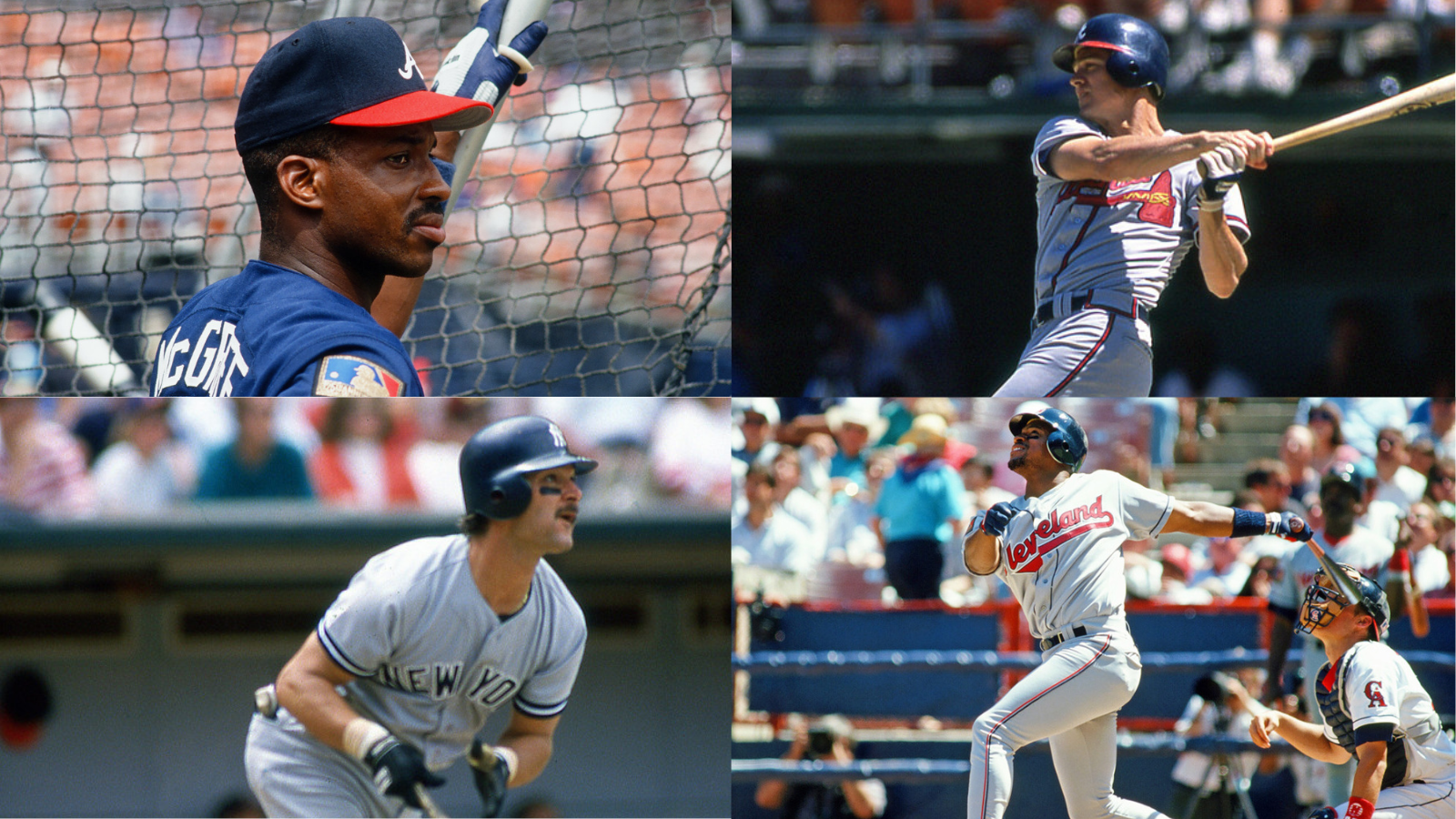
    Fred McGriff

    McGriff is the one player of these four to clear James’ threshold of being Hall of Fame-worthy. He has an HOF-V of 552.4.

    McGriff finished his career with a slash line of .284/.377/.509, 2,490 hits, and 493 home runs. He finished in the top 10 in MVP voting six times. He also was great in the postseason, hitting .303/.385/.532 with 10 home runs and 37 RBI in 50 games.

    James also devised a metric known as Similarity Scores to illustrate how similar one player is to another. The two players rated as most similar to McGriff are Hall-of-Famers Willie McCovey and Willie Stargell.

    McGriff always seemed to be “the other guy” on the crowded Hall of Fame ballots of a few years ago. With former teammates Chipper Jones and Greg Maddux on the Hall’s voting committee, we wouldn’t be surprised to see him elected. He’d be a worthy choice.

    Dale Murphy

    Murphy comes so close to meeting the threshold, with a HOF-V of 483.7

    For those who grew up in the early 1980s (as this writer did), Murphy was an oft-televised superstar (via the cable network TBS).

    In the seven full seasons from 1980 to 1987 (omitting the strike season, 1981), Murphy averaged 36 home runs and 103 RBI, made the All-Star team every year, won five Gold Glove Awards, and was voted MVP in both 1982 and 1983. He also averaged 53 points of Hall of Fame Value in that time.

    The problem for Murphy is that the decline phase of his career was more of a cratering than a decline. With the struggles in his last six seasons, his career batting average dropped from .279 to .265 and his career OPS fell from .862 to .815. He went from surefire Hall of Famer to someone waiting through more than 20 years of balloting to be elected.

    Don Mattingly

    Mattingly is similar to Murphy in that his success is contained to a time period considered brief for a Hall of Fame candidate. His HOF-V is 432.6.

    From 1984 to 1989, Mattingly was a megastar, with a .902 OPS in that span and an average of 27 home runs, 114 RBI, and 51 points of HOF-V for the Yankees. But a back injury cost him skill and ended his career prematurely after 14 seasons. His last game came as a 34-year-old. Had he been healthy and able to keep playing into his late 30s, he’d almost surely have come close to or surpassed the 500-point threshold.

    Albert Belle

    Belle has his own off-field issues plus a corked bat suspension, so he’s already working at a disadvantage with potential voters. His stats leave him considerably short regardless. His HOF-V is 403.4.

    Belle posted incredible offensive numbers from 1991 to 1999, with a .300/.377/.582 slash line and 350 home runs. However, he was not a good defensive player and suffers statistically both for being a left fielder and for playing in the game’s richest offensive era.

    Like Mattingly, Belle had his career shortened, as a hip injury forced him into retirement at age 33. He’s likely on the outside looking in as far as Hall of Fame consideration goes.

  • Q&A: The Origin of Defensive Runs Saved w/ John Dewan

    Q&A: The Origin of Defensive Runs Saved w/ John Dewan

    With the end of the 2022 season, there are now 20 available seasons of Defensive Runs Saved data. This winter, we’ll be looking more closely at those numbers, looking both at what they tell us and what they don’t tell us.

    But before we do that, we wanted to go back to where it all began in this Q&A with Sports Info Solutions co-founder John Dewan, who led the team that invented Defensive Runs Saved.

    Mark: Who is the first defensive player you saw that made you say, ‘I want to be able to better quantify his value?’

    John: The first player that I wanted to better quantify defensive value was Reggie Jackson.

    Because in Strat-O-Matic, he was a ‘1’ one year, which is the best rating you can get. Then the next year he was a ‘2’, which is above average, and the next year he was a ‘3’, which is average, and next year a ‘4’, which up until that time was pretty much the worst you can get.

    So in four consecutive years, he went from best to worst. Strat does a really good job in trying to do their defensive ratings. And Reggie was on my team and I’m like, wait a minute, why is he changing every year?

    Their defensive ratings were very good, but I wanted to understand it better. All we had was fielding percentage and then Bill James came out with range factors and I just wanted to do more and more.

    I was directing Project Scoresheet in the 80s and I came up with, I don’t know what I called it, adjusted range factor or something where I factored in the handedness of the pitcher, where when a lefty is pitching, more righties will be in the lineup and they would pull the ball on the ground. So if you have a lefty predominant pitching staff, the left side of infield gets more chances, or right predominant, the right side of infield gets more chances.

    So, I created a system that adjusted for that, because that’s the data we had with Project Scoresheet. We didn’t have the location of a batted ball, but we did know how many innings were faced against lefties and against righties. So I adjusted for that. In the 90s, when we were at STATS, we had the location for every ball, and I came up with Zone Ratings and then the precursor to the plus-minus system with the Ultimate Zone Rating.

    That (UZR) was something that Mitchell Lichtman continued to do. Zone Ratings, Chris Dial continued to do that.

    Mark: How did you get from there to Defensive Runs Saved?

    John: We focused on the plus-minus system in the first Fielding Bible book. That is the most important element within DRS.

    And then in the second Fielding Bible, which came out in 2009, that was the launch of Defensive Runs Saved. That’s where we said, all right, we’ve got to translate the numbers that we’ve been coming up with into the currency of baseball, which is runs.

    Mark: How did you get there? Phone calls, e-mails?

    John: That was me working with our research department and researching all the different elements we want to put into it. Ben Jedlovec (now at MLB) was the key person then. Steve Moyer was running the company. Pat Quinn did a lot of the work with me and Rob Burckhard.

    Mark: How did you figure on adding things like double plays, bunts, catcher components like pitch framing?

    John: The plus-minus system was the key but there are other defensive elements. We have a Good Plays and Misplays system, tracking first base scoops, missing a relay throw, things like that.

    We just tried to look at things that the plus-minus system doesn’t capture and, you know, tried to come up with something that measures every element of defense.

    Mark: How did you figure out the idea of categorizing fly balls, liners, and then another subgroup called “fliners”?

    John: We went with five different distinctions between fly balls and line drives, which made the plus-minus system better because it was harder to catch a liner than a fly ball if it’s hit to the exact same location.

    Mark: Is there a concession with the early version of Runs Saved that positioning is essentially incorporated into it for the player but more recently, positioning is awarded to the team?

    John: Exactly. The early version of Runs Saved, the fielder got credit for good positioning if he was positioned at a good spot. Later on we separated that into a team element and a player element.

    Mark: So is it a little odd to compare 2005 Runs Saved to 2020 Runs Saved?

    John: If you’re an absolute purist, yes. But remember there wasn’t as much shifting back then, so positioning wasn’t as important as it is now. And the player positioned himself in a lot of cases. So he should get the credit for that.

    I remember the story about Cal Ripken where he would make sure he knew the pitch that was being called. And so his positioning was based on the pitch type.

    If it was a breaking ball, he knew that the pitch was more likely to be pulled than if it was a fastball. I don’t think was very common then.

    Mark: What was the hardest thing to figure out for Defensive Runs Saved?

    John: We won an award at Sloan for Strike Zone Runs Saved (our pitch framing stat). That took a lot of work. There was an iterative process on how to split the data between the four principals – the pitcher, the catcher, the umpire and the hitter. Prior to that, catchers were getting all the credit for a pitch being called a strike or ball. All the credit to Ben, Scott Spratt, and Joe Rosales for that. They were a team on that and did most of the work.

    The umpire is key in determining whether a pitch is a ball or strike. Some umpires have tendencies that other’s don’t. Giving the catcher credit for an umpire who tends to call balls out of the strike zone is not appropriate.

    Mark: What were the biggest surprises you found in the early days of Defensive Runs Saved?

    John: The big one was comparing Jeter vs Everett, an article from the first Fielding Bible book. That article established what the heck was going on (and showed that Adam Everett was a great fielder and Jeter was not as good as his reputation).

    People really got to understand that the analytics have value and Bill’s research made such a big difference. It gave it credibility. Looking through in the kind of detail he did was fantastic. It was a stepping stone into acceptance of this kind of information.

    Mark: Do you remember what the public reaction was?

    John: There were a lot of people who had some doubts in the data, they started nodding their head yes. That this is really showing what’s going on.

    What it doesn’t always measure is the intelligence of Jeter’s play. He did a lot of good things on the field that aren’t measured, but in terms of his basic job, he was not one of the best. He was definitely below average at getting to balls that other shortstops would get.

    Mark: Can you tell the story of Ozzie Guillen’s reaction to our defensive stats?

    John: Pat Quinn and I were the reps visiting with the White Sox every year.

    We were meeting with their analytics team in a cafeteria that was pretty empty. It was right before a game that got called because of rain.

    Ozzie—then the manager—and the players come into the cafeteria. Ozzie happens to sit at the table next to us. He starts listening and I’m explaining the whole system. He starts looking at our stuff.

    “Show me that (expletive) thing … Oh my gosh. This (expletive). If they had this (expletive) when I was playing, I would’ve been the greatest (expletive) shortstop that ever (expletive) lived.”

    Every other word was the f-word. But he believed the numbers and gave us credibility instantaneously. It wasn’t ‘This stuff is (expletive).’ He was giving it credibility.

    For more information about Defensive Runs Saved, check out FieldingBible.com

  • How South Carolina put up 63 points on Tennessee

    How South Carolina put up 63 points on Tennessee

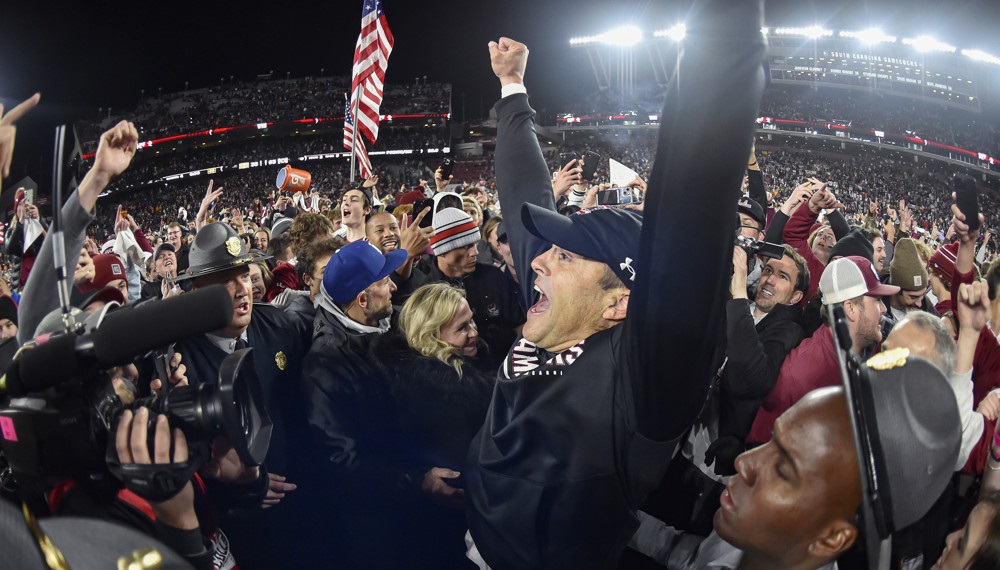
    At 6-4 and playing the No. 5 team in the country, South Carolina’s chances of an upset appeared bleak. Having only one healthy running back made them look even worse. But by creatively packaging its personnel and plays, South Carolina turned its shorthanded offense into a juggernaut, scoring 63 points in its upset of Tennessee.

    Though short running backs, head coach Shane Beamer and offensive coordinator Marcus Satterfield had plenty of tight ends at their disposal. South Carolina would play as many as four at a time, had 2 on over 50% of its snaps, and 3 on over 25%. The Gamecocks also put one at running back. Jaheim Bell made the transition beginning this season, but has carried the ball more than 12 times in each of the past three games due to the lack of depth in the backfield. With 17 carries for 82 yards, Bell gave the Gamecocks enough of a conventional run game to convert short-yardage situations and open up the rest of the offense.

    As another running option, South Carolina lined up in the Wildcat, playing Dakereon Joyner at quarterback. While the Wildcat made good use of the talent at hand, it also took advantage of what the Tennessee defense does poorly. With five defensive backs, the Volunteer defense has a defensive back to cover every receiver. But with a quarterback unlikely to throw, this leaves fewer men to defend the run.

    Within the Wildcat set, the Gamecocks used motion to open up the running lanes further. But in the passing game as well, the offense used motion hoping the defense would either overreact to the motion, or lacks the numbers sufficient to defend against a play to the motion side.

    With such motions, as well as certain formations, the offensive coordinator can reduce complex reads into simple if/then functions. For example, if the defense reacts one way, then throw the front-side route; else, throw the back-side route. Satterfield took this a step further by running a few plays out of only one look.

    If an offense runs one play out of several different formations and motions, the quarterback will need to decipher the entire defense every time he takes a snap. But with only one formation per play, he can trust the defense will present nearly the same front and shell each time, and he needs only to confirm his suspicions once the offense gets aligned. With a consistent picture of the defensive structure, the quarterback can make quicker, sounder decisions than if he had to read the entire defense every play.

    Additionally, the quarterback and offensive coordinator can prepare such packaged formations and plays specifically for their opponent. While an offense does not want to run only one play per formation for the season, game-by-game it can exploit the flaws of its weekly opponent, in this case Tennessee.

    Three times out of quads South Carolina put the running back in motion, and each time it ran the same play. The first time, quarterback Spencer Rattler saw the shift to the back side and threw the front-side bubble. The final two times, in seeing the defense, most notably the backside linebacker, shift with the motion, he took one step and fired the ball to the backside hitch, gaining a first down each time.

    On South Carolina’s first drive, on crucial third and fourth downs, the Gamecocks ran a curl flat concept with two stacked receivers and a tight end. The first time Rattler hits Traevon Kenion in the flat, the second he nails Antwane Wells Jr. on the curl, both for first down conversions to keep the drive alive. Two more times Satterfield would call this concept, both ending in Rattler scrambles, but the first two added 5 expected points to a drive that set the tone for the rest of the game4.

    Twice in long-yardage situations the Gamecocks went with the empty backfield. Both times they called the same passing concept. Two receivers ran mesh routes, two went deep, while one ran the dig targeting the middle of the field. Each time the safeties followed the deep routes, leaving the middle of the field open for the dig and the first down conversion.

    South Carolina went trips many times throughout the night, but only twice did the Gamecocks shrink their splits. When doing so, they ran a double mesh concept similar to the one they ran out of empty, only in this case looking for Jalen Brooks underneath the defense. The first time the concept did not work, forcing Rattler to scramble. But Satterfield went back to this concept late in the fourth quarter, and Brooks iced the game with his 20-yard score.

    Though their one-play formations proved plenty effective, the Gamecocks also prepared a few looks with multiple possibilities. Eight times South Carolina aligned with a tight end to one side and trips to the other, excluding its Wildcat sets. Twice it ran to the tight end, twice it threw the bubble screen, and four times it threw the switch concept to the trips. With three plays, only one of which required a read, the Gamecocks could attack all parts of the field.

    With simple plays also come simple adjustments. Notice the first time South Carolina ran out of this set in the video above, pulling two linemen yet unable to climb and block the linebackers. The next time they ran to the tight end, the Gamecocks pulled only one, successfully blocked the second level of the defense and gained 11 yards and a first down.

    South Carolina’s gameplan does not completely explain its win over Tennessee. Spencer Rattler played a fantastic game, Jaheim Bell ran the ball better than ever, and the offensive line put forth a performance unlike any other this season. But the gameplan helped unlock its potential, focusing on execution rather than sophistication. With the optimal packaging of concepts and players, Shane Beamer and Marcus Satterfield got the most out of the Gamecocks in their biggest upset victory since 2010. 

  • 2022 NPB & KBO Fielding Bible Awards

    2022 NPB & KBO Fielding Bible Awards

    For the third straight year, Sports Info Solutions is rewarding defensive excellence on a global level. Today, we announce the winners of the NPB and KBO Fielding Bible Awards.

    The awards were voted on by a panel of experts and members of SIS’ operations staff, who spent the entire season tracking NPB and KBO games. Among our voters were Jeeho Yoo (Yonhap News Agency, South Korea), John Gibson (Japanese Baseball Weekly Podcast), and Jason Coskrey (Japan Times).

    Each voter ranked their top three players at each position in the league they covered, as well as a multi-position (utility) player, with 5 points awarded for a first-place vote, 3 for second and 1 for third. Eligibility for voting was based on playing-time requirements.

    (note that in accordance with Japanese and Korean customs, we are listing the players with their family name first)

    Seibu Lions shortstop Genda Sōsuke became the first NPB player to win a Fielding Bible Award at the same position twice in the award’s three-year history. Genda, who previously won the award in 2021, saved 20 runs with his defense this season, easily the most among NPB shortstops

    Genda’s Seibu teammate, second baseman Tonosaki Shuta, also won the Fielding Bible Award at his position. Tonosaki led NPB second basemen with 26 Runs Saved. Genda and Tonosaki had more Runs Saved at their positions than any MLB player.

    Two other pairs of teammates won, first baseman Suzuki Daichi and left fielder Nishikawa Haruki of the Rakuten Golden Eagles and pitcher Senga Koudai and multi-position player Makihara Taisei of the Fukuoka SoftBank Hawks. Senga is one of the top free agent pitchers and is available to MLB teams this offseason. Makihara goes by the nickname “King Joker” because of his utility role.

     Nishikawa, Genda, Tonosaki, Okabayashi Yuki (right field), and Umeno Ryutaro (catcher) were the winners who recorded at least 10 Runs Saved at their respective positions. Umeno had arguably the most dominating season in the league, finishing with 23 Runs Saved. The next-closest catcher among eligible candidates had only 12.

    The LG Twins led KBO in Defensive Runs Saved in 2022 and their players earned the rewards of that. Five of them won a Fielding Bible Award at their respective position.

    Catcher Yoo Kang-nam, shortstop Oh Ji-hwan, third baseman Moon Bo-gyeong, center fielder Park Hae-min, and right fielder Hong Chang-ki all were winners for LG. Oh, Kim, and Park each won at their positions for the second time, the only three players who have won twice at their positions in the three-year history of the award

    Yoo, Moon, and Hong were the three winners to finish with at least 5 Runs Saved at their respective positions. Defensive Runs Saved are calculated using an MLB basis and KBO Runs Saved totals are generally considerably lower than their MLB counterparts.

    Two former major leaguers won a Fielding Bible Award. First baseman Park Byung-ho, who played for the Twins in 2016, won in his first season with the KT Wiz, for whom he also hit 35 home runs. And left fielder José Pirela, who also had a great offensive season, was one of two winners on the Samsung Lions along with pitcher Won Tae-in. Pirela formerly played in the majors from 2014 to 2019 for the Yankees, Padres, and Phillies.

  • How UNC’s Offense Stays Ahead of the Game

    How UNC’s Offense Stays Ahead of the Game

    As football’s popularity and professionalism have grown over the past century, so too has the centralization of power by its coaches.  Descended from a time where quarterbacks called one of six plays, modern offenses contain hundreds of plays for hundreds of situations, chosen by one person hundreds of feet away. Designed and practiced over hundreds of hours, these plays detail precise instructions for all eleven players, giving such control to the coach and restriction of the players to make the Panopticon appear as free as the Garden of Eden.

    With a change in dynamics comes the establishment of orthodoxy. One coach’s success results in the creation of rules and methods detailing the one true way to win. The rest of the profession falls in line, with members looking to replicate someone else’s success instead of creating their own.

    Even as coaches continually fail by following the conventional wisdom, they will not change, lest they do things “the wrong way.” The paradigm can change, but only when a coach proves his way far superior to the current practices.

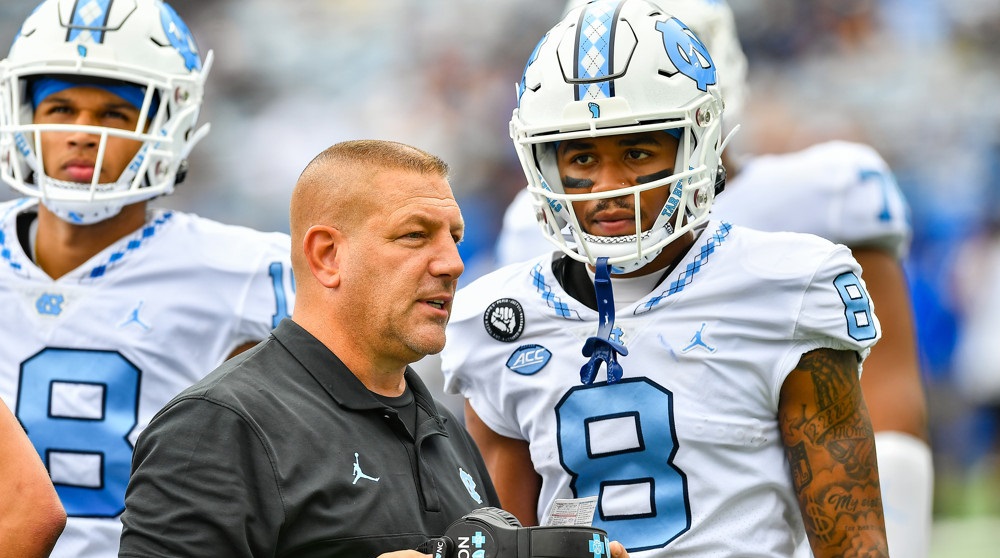
    Enter Phil Longo, a career high school and lower division college coach who did not reach the FBS until the age of 48. The offensive coordinator for the North Carolina Tar Heels, his offense appears like any other at first glance. Labeled an Air Raid coach, his offenses feature the standard fare of four verticals, mesh, snag, and so on. But Longo’s “throw to grass” philosophy differs from nearly every other offense. 

    For most modern passing plays, the receivers run specific routes executed with precise spacing and timing. The quarterback, in turn, must read the defense and interpret from its look which receiver will get open and when, operating in four dimensions and forced to decide in under four seconds.

    Longo’s offense inverts the decision making process, having the receivers read the defense and running to the open space on their path. The quarterback needs only to find the open area and trust that a receiver will fill the void. 

    With receivers, and not the play call, responsible for creating opportunities, each can diverge from the typical programming that coordinators install to get open. While vaguely reminiscent of the Run and Shoot, Longo’s offense employs slighter adjustments of stems and routes, instead of wholesale changes on the fly.

    Josh Downs, a potential first-rounder come April (read my other piece this week), reads defenses phenomenally and displays how these adjustments work in practice. On curls he finds the seams between underneath defenders. On out routes he blows past the curl zone while stopping before running into the flat defender.

    Longo’s philosophy lends itself to better practice as well. Contemporary passing drills train receivers and quarterbacks to follow instructions in a closed environment. This rote repetition and memorization of skills, often practiced against no defender, does not transfer to the game whatsoever, even within such planned offenses. It fails to replicate the chaos taking place on Saturdays, leaving those who practice such drills unprepared. 

    But an offense that emphasizes decision making in reaction to the opposition must practice in a different manner. Periods and drills must emphasize the speed and space in which the players must act in order to train the receivers to think. As a result of the offensive philosophy, practice methods invoked will more accurately represent the game.

    To summarize the optimal practice philosophy as it stands today, Rob Gray stated on the Just Fly Performance podcast, “Being skillful is not about repeating the same solution to the problem, it’s about repeating coming up with solutions to problems.”

    Between the obvious logic of finding space in the defense and practicing in a way representative of the actual game, Longo appears ahead of the curve. Thus far this season, North Carolina’s offensive production backs this assertion.

    The Tar Heel offense scores over 40 points per game and averages .25 Total Points per play, second in the FBS. The passing offense, where the philosophy presents itself the most, ranks first in both Total Points (.49)  and Expected Points (.48)  per play. In Longo’s first three years, the Tar Heels ranked 9th, 2nd and 25th in Total Points per passing play as well, making this year hardly an outlier. Even before Longo arrived in Chapel Hill, his offense at Ole Miss ranked 11th in Passing Expected Points Per Play in 2018.

    Even as Longo sustains his success, defenses have no answer. A look at coverages of UNC’s opponents from 2021 and 2022 show a wise increase in man coverage and a foolish increase in two-high coverages. More notable than the coverage calls, even the lowest PE Per Play values based on coverage (.27 vs Man Cover 2) would still rank in the top third of all passing attacks in Passing PE Per Play6.

    Man vs Zone Coverage

    Coverage % of Plays-2021 PE Per Play-2021 % of Plays-2022 PE Per Play-2022
    Man 34% .17 39% .43
    Zone 66% .29 61% .47

    Middle of Field Open vs Closed

    Coverage % of Plays-2021 PE Per Play-2021 % of Plays-2022 PE Per Play-2022
    MOFO 56% .18 47% .38
    MOFC 44% .33 53% .52

    Specific Coverages

    Coverage % of Plays-2021 PE Per Play-2021 % of Plays-2022 PE Per Play-2022
    Cover 0 4% .21 11% .60
    Cover 1 25% .19 21% .40
    Man Cover 2 6% .05 7% .27
    Cover 2 4% .34 13% .70
    Cover 3 31% .18 26% .37
    Cover 4 31% .40 22% .46

    But even attempting to adjust the coverage based on one year of data looks more foolish. 

    A data set of all ACC offenses since 2019 with the same coordinator in consecutive years produces the following correlations of defensive coverage calls and offensive production against certain coverages.

    R2 of Coverages Called and Performance Against Them

    Coverage Split Coverage Called Percentage PE Per Play
    Man vs Zone .28 .12
    MOFO vs MOFC .05 .13
    Specific Coverages .84 .07
    Specific Coverages (min. 50) .02 .19

    On a macro scale, defenses display opponent-dependent trends in whether they call man or zone, but offenses have little ability to perform better compared to the other year-to-year. Defenses show less of a tendency when it comes to open and closed coverages, and offenses appear similarly incapable of sustained performance here as they do against man and zone. The R2 for calling certain coverages looks strong at first, but filtering for little-used coverages by each defense, primarily Cover 0, 2, and Man Cover 2, shows that defenses seldom call coverages according to their opponent’s weaknesses. The replication of performance against each, however, increases slightly.

    Straying from the conventional wisdom, Longo has created an offense that takes advantage of the philosophical flaws in modern defense. With his system, his offense prepares and performs better than any other. Short of a change in general defensive strategy or preparation, Longo will continue to reside on the bleeding edge of offensive football.

  • NPB Free Agent Scouting Report: Masataka Yoshida

    NPB Free Agent Scouting Report: Masataka Yoshida

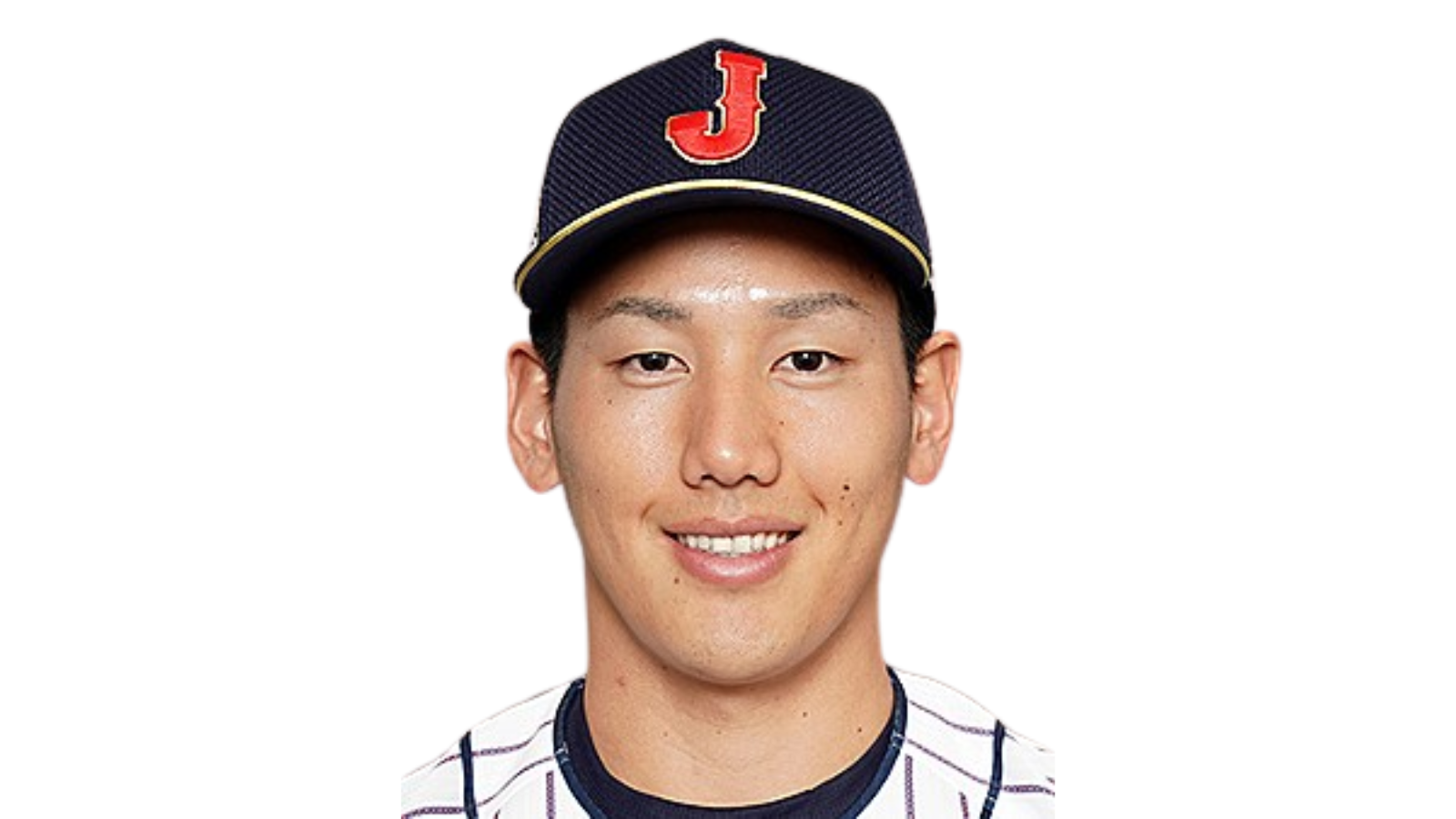
    Masataka Yoshida is expected to be posted by the NPB Champion Orix Buffaloes. This is a bit of a surprising move, as there had not been much buzz around Yoshida being posted until after the playoffs concluded.

    That does not mean that Yoshida is not deserving of a look. He has been one of the most consistent hitters in the Pacific League over the last half-decade, posting a batting average of at least .300, an on-base percentage of at least .400, and a slugging percentage of at least .500 in each of the last six seasons.

    Yoshida does have a reputation as a slugger, though that is a little misleading. He has never reached 30 home runs in a season (he hit a career high 29 in 2019), and has hit 21 home runs in each of the last two seasons.

    Below is a great side view of Yoshida hitting a walk-off home run in Game 5 of the Japan Series:

    https://twitter.com/baseballcosmo/status/1585631003753971716

    And here is the normal broadcast view:


    Yoshida has a bit of an uppercut in his swing, which allows him to maximize his power output from his smaller frame. Listed at 5’8” and 176 lbs, his frame is reminiscent of Dustin Pedoria’s and, like Pedroia, Yoshida has to put everything he has into his swings.

    Despite the effort exerted on them, Yoshida demonstrates elite plate discipline skills. He struck out only 41 times this season (an 8% rate) while walking 80 times (16%), though the walk rate was boosted by 18 intentional walks. If we remove the intentional walks he still maintained a healthy 13% walk rate.

    Yoshida isn’t just piling up stats against weaker arms either. The Pacific League is home to many of Japan’s best young pitchers. While he does not have to face teammate Yoshinobu Yamamoto, he has hit well against fellow MLB hopeful Koudai Senga, NPB wonderkid Roki Sasaki, and veteran Masahiro Tanaka. He’s a combined 19-for-53 (.358) with 10 walks against them. He’s also 10-for-24 (.417) in the last three seasons against the Pacific League’s top lefty relievers, Yuki Matsui and Livan Moinelo.

    While Yoshida’s offensive stats look very good, there is another wrinkle to consider with him. NPB teams do not shift much in general, but Yoshida was an exception as he faced the shift regularly. With MLB teams unable to put three fielders on the right side, or put an infielder in short right field, Yoshida might find more holes in MLB infields to get hits through.

    While Yoshida has proven everything he can with the bat in NPB, the rest of his game has some questions. Defensively he is likely limited to only left field. Yoshida’s size makes him too small for first base, where longer reach is desired to catch errant throws from infielders.

    His arm can also be a liability in right field, where he has played just over 600 innings since 2018, when we began tracking NPB data. In that time Yoshida has allowed runners to take an extra base (for example, go first to third on a single) on 64% of their opportunities in right field. Yoshida played only 23 innings in right field in 2021, and did not play there at all in 2022.

    As a left fielder, teams could look for a way to maximize his abilities defensively. Over the last five years, Yoshida has totaled -15 DRS in 3,103 innings in left, averaging -3 DRS in around 600 innings per year (we judge NPB players using MLB out probabilities).

    In the range and positioning component of DRS he has rated above-average on “shallow” plays in each year, while scoring negatively on “deep” plays in each year. If a team wants to use him in the outfield, they could dig deeper to determine how to optimally position him in left field in hopes of masking his deficiencies.

    How much he can play in the field is also a concern. From 2018-2020 Yoshida played in every game for Orix, though he only played more than 100 games in the outfield in 2018. In the last two seasons he has missed some time and also seen more time at DH.

    In 2022, played left field in only 39 of his 119 games, slotting in as the DH in his other 80 games. A positive COVID test and a hamstring injury limited his ability to stay on the field. He did start at left field in 9 of Orix’s 11 playoff games, while playing DH in the other two.

    Similar to his defense, Yoshida’s speed is a bit of a question mark, and maybe more of a liability following his hamstring injury. He is slower than the typical small-framed outfielder, though his speed is much closer to below-average than basepath-clogging.

    He was 4-for-4 stealing bases this season (with no attempts in 2021), suggesting he was opportunistic with his opportunities. Given his .447 OBP he was on base frequently, but ran sparingly. He also rarely finds an extra gear on liners in the gap, totaling exactly 1 triple in each of the past three seasons, and 7 total over his seven-year career.

    Yoshida has been the best hitter that Orix has had since Ichiro, and will likely find a MLB home this off-season. While there are some questions regarding his defense, his elite offensive production will likely overshadow those other concerns.

  • Stat of the Week: Most Valuable Pair

    Stat of the Week: Most Valuable Pair

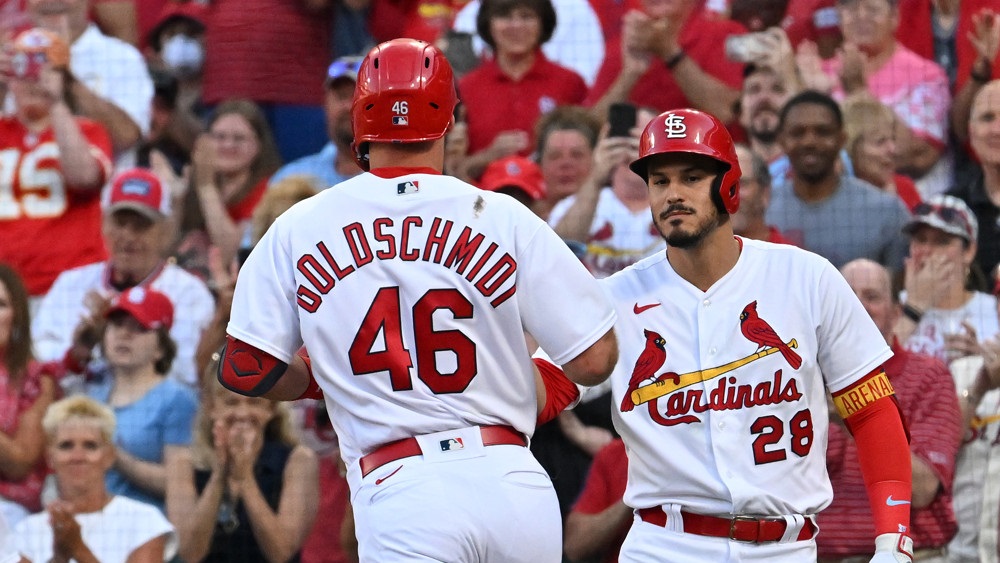
    This article is an abridged version of one on NL MVP candidates Paul Goldschmidt and Nolan Arenado that appears in The Bill James Handbook, available now from ACTA Sports.

    If we’re going to talk about the best infield corner combos in major league history, we can begin by producing a list of instances in which a team’s usual first and third basemen each posted 5 WAR (per Baseball-Reference) in a season.

    Doing so nets us 43 sets of combos in baseball’s modern era (since 1900). If we raise the bar to each recording a 6-WAR season, the list thins to only seven pairs, each of whom made it once. Bump it to 7 WAR and we’re in rare pair air.

    There are only three such corner combos, and our Bill James Handbook cover subjects Nolan Arenado and Paul Goldschmidt make up one of them. The others are first baseman Frank Chance and third baseman Harry Steinfeldt of the 1906 Cubs and the standard-setter, Albert Pujols and Scott Rolen for the 2004 Cardinals.

    The amazing thing about Goldschmidt and Arenado is how closely aligned in overall value they are.

    What made them so special in 2022?

    For both Goldschmidt and Arenado, 2022 was the greatest offensive season of their careers when considering how they did relative to the rest of MLB.

    In 2022 MLB hitters had a .706 OPS, down 22 points from 2021 (despite the DH becoming permanent in the NL) and 52 points from 2019.

    Goldschmidt’s OPS jumped by 102 points from 2021 to 2022. Heck, Goldschmidt’s OPS with two strikes was .785, 79 points better than the MLB overall OPS.

    If you’ve ever regularly watched Goldschmidt during a full season (I did in 2018), you’d know that he goes through periods of time in which the baseball looks like a beach ball.

    In 2022, that covered 51 games from May 7 to July 2, in which he hit .383 with a .455 on-base percentage and a .755 slugging percentage, with 17 home runs and 54 RBI.

    Arenado’s OPS increased by 84 points from 2021 to 2022. He also cut his strikeout rate to 11.6%, the lowest for any full season in his 10-year career.

    Arenado finished with 30 home runs and 72 strikeouts. There were 23 players with 30 home runs in 2022. The only other one with fewer than 100 strikeouts was Kyle Tucker with 95.

    Peak Arenado showed up twice. In the first 20 games of the season, he hit .368 with a 1.133 OPS.

    Then, over the nearly two-and-a-half months from June 17 to August 29, he hit .345 with a 1.065 OPS and 16 home runs in 58 games.

    Left unsaid to this point are the aesthetics. Goldschmidt does everything well. He’s not just a hitter. Did you know he’s got a streak going of 23 consecutive successful stolen base attempts?

    Goldschmidt may not have played Fielding Bible Award–worthy defense this season, but the Cardinals did lead MLB in how often they turned groundballs and bunts into outs, so he deserves some credit for that. He turned 35 in September but he doesn’t play like a 35-year-old. At least not yet.

    Arenado similarly just plays the game well. He’ll turn 32 not long after Opening Day in 2023. But he still plays defense like he’s in his prime. He won his 5th Fielding Bible Award in 2022.

    The joint value that the two of them provided this season was virtually unprecedented and is something that likely won’t be seen again for quite some time.

    Unless they do it again next season, of course.