Category: John Dewan’s Stat of the Week

  • Stat of the Week: Mariners Top The AL West, Are Tops In Positioning

    Stat of the Week: Mariners Top The AL West, Are Tops In Positioning

    Photo: Nick Wosika/Icon Sportswire

    The Mariners infield is turning grounders and bunts into outs at a 77% rate, which ranks 3rd-best overall. The outfield is turning balls hit in the air into outs at a 63% rate, which ranks 5th in MLB.

    When we consider the skill of their defensive players, the Mariners do alright in Defensive Runs Saved. But when you factor in how they position their players, it takes their defensive performance to a different level.

    They have average skill. They rank 16th with just their fielder totals for Runs Saved. But when you factor in defensive positioning, they rank 7th.

    That’s why it’s important to know that the Mariners rank 1st when we combine their Infield and Outfield Positioning Runs Saved into one stat, Defensive Positioning Runs Saved (you can find these stats here). Their defensive positioning across all positions has been vital to their first-place standing in the AL West.

    In Defensive Positioning Runs Saved, if the out probability increases when positioning is known, the team receives a credit based on how much it increased. If the out probability decreases when positioning is factored in, the team earns a debit based on how much it decreased. The credits and debits are subsequently converted to run values.

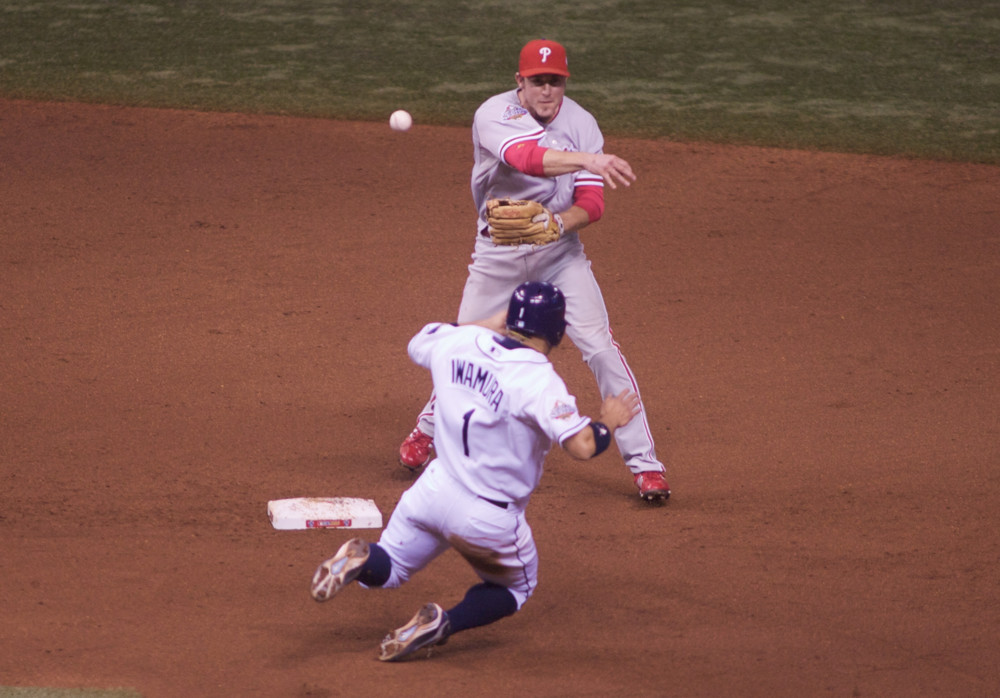
    There are plenty of examples of defensive positioning helping the Mariners this season. There’s this one, a play on which positioning increased the out probability of this inning-ending double play ball for J.P. Crawford from 12% to 56%. This one is a different type of double play for Jorge Polanco, with positioning increasing his out probability from 34% to 78%. And here’s one for Ty France where defensive positioning took the out probability from 62% to 100% because he was stationed so well for this rocketed line drive.

    Julio Rodríguez has been a beneficiary of good positioning in the outfield several times. Here’s one on which the out probability increased from 26% to 74%. We’d be remiss if we didn’t show you this catch by Luke Raley, who given his initial stumble wouldn’t have made the catch if he weren’t in the path of this fly ball, on which positioning increased the out probability from 54% to 91%.

    There’s some history here. The Mariners ranked 8th in Infield Positioning Runs Saved last year, the first in which full shifts were banned, and 11th in Outfield Positioning Runs Saved last season. And in 2022, we wrote about the Mariners and their outfield positioning success.

    Here’s the list of the team leaders in Defensive Positioning Runs Saved this season.

    Defensive Positioning Runs Saved Leaders

    Team Infield Positioning Runs Saved Outfield Positioning Runs Saved Positioning Runs Saved
    Mariners 9 3 12
    Dodgers 4 6 10
    Padres 7 3 10
    Braves 4 6 10
    Reds 8 1 9
    Blue Jays 8 1 9
    Cardinals 6 3 9
  • Stat of the Week: Who Has Benefited Most Often From Good Defensive Plays?

    Stat of the Week: Who Has Benefited Most Often From Good Defensive Plays?

    BY MARK SIMON

    If you happened to catch the Cubs-Brewers game on Sunday, you saw Cubs starter Javier Assad pitch 6 scoreless innings, lowering his season ERA to 1.66.

    But a glimpse of the box score tells only part of the story.

    The Cubs infield made 4 very good defensive plays behind Assad.

    In the top of the first, Dansby Swanson kept the game scoreless with a sliding play in the 5/6 hole and subsequent throw-out of Willy Adames with a man on 3rd and 2 outs.

    In the second inning, first baseman Michael Busch dove to tag out Oliver Dunn on a drag bunt attempt, ending the inning.

    Then Swanson took a hit away from Brice Turang with a 4th-inning sliding stop in the other direction, behind second base. Though a runner on first advanced to second, Swanson helped kill a rally.

    In the fifth inning, Busch made a sprawling stop on a Sal Frelick grounder then dove to tag first base. Again, a runner advanced to second base but the out prevented further potential damage.

    There was one other play that probably went unnoticed by many but not by us – Mike Tauchman hustled to the right field line to field a ball off the side wall and hold Tyler Black to a single.

    At SIS, we keep track of Good Fielding Plays and Defensive Misplays. These are given by our game-watching Video Scouts for about 30 types of good plays and 60 types of mistakes.

    The 4 plays on ground balls all count as Good Fielding Plays under the categorization of ‘ground ball out.’ Tauchman’s play counts as a ‘holds to single,’ and for that play Tauchman gets a fractional credit applied to his Defensive Runs Saved.

    The Cubs made 5 Good Fielding Plays behind Assad in 6 innings. He’s now been the beneficiary of 11 Good Fielding Plays this season against 2 Defensive Misplays & Errors.

    The Cubs have 3 unbeaten starting pitchers with sub-2 ERAs: Assad, Shota Imanaga, and Jameson Taillon. But there’s a difference in what’s happened behind them.

    Assad was the beneficiary of 5 Good Fielding Plays in those 6 innings. Imanaga and Taillon have received 4 Good Fielding Plays (against 8 Misplays & Errors) in 65 2/3 innings pitched all season.

    Assad has been on the mound for the second-most Good Fielding Plays by a team for a pitcher this season. Seth Lugo of the Royals has benefited from the most, 13 (including this this home run robbery).

    But Lugo’s experience has been a little different from Assad’s. He’s been on the mound for 12 Royals misplays and errors, the most by any team for any pitcher. Lugo has thus far benefited more from the good plays than he has from the mistakes and is pitching to a 1.92 ERA.

    Phillies starter Ranger Suárez is another who has benefited from Good Fielding Plays. The Phillies have made 10 behind him (including this one by first baseman Bryce Harper). They’ve turned 85% of grounders and bunts against Suarez into outs, the 4th-highest rate in the majors (minimum 40 grounders and bunts against them). Suárez has a 1.72 ERA.

    But a high total of Good Fielding Plays does not guarantee success. Chris Bassitt of the Blue Jays and Logan Allen of the Guardians each have had 10 Good Fielding Plays behind them, just like Suárez. Each has an ERA of 5.00 or higher.

    Most Good Fielding Plays – By Team For Pitcher

    Pitcher Team Good Fielding Plays
    Seth Lugo Royals 13
    Javier Assad Cubs 11
    Ranger Suárez Phillies 10
    Chris Bassitt Blue Jays 10
    Logan Allen Guardians 10
  • Stat of the Week: March/April Defensive Players of the Month

    Stat of the Week: March/April Defensive Players of the Month

    Blue Jays outfielder Daulton Varsho and Rangers second baseman Marcus Semien are our co-Defensive Players of the month for March/April.

    The two have an additional common bond. Despite gaudy defensive statistics, they’ve never won a Fielding Bible Award.

    By our eyes, Varsho has the best highlight reel of any player in MLB this season. He finished April tied for the MLB lead among all players with 8 Defensive Runs Saved and 10 Good Fielding Plays. He’s split his time between left field (5 Runs Saved) and center field (3 Runs Saved) and thus does not lead either position individually in Runs Saved.

    Blue Jays fans (and Toronto media) shared their annoyance at Varsho not winning a Fielding Bible Award last season. Varsho led all outfielders in Runs Saved but finished 2nd in the voting to Steven Kwan of the Guardians for left field and 4th in our inaugural Defensive Player of the Year voting to Pirates third baseman Ke’Bryan Hayes. Varsho didn’t win a Gold Glove either.

    Since the start of the season, Varsho has made a statement with how good his defense has been. He’s had a knack for making great plays against great hitters. Check out his fence-crashing catch against Shohei Ohtani and his diving catches against Bobby Witt Jr. and Kyle Tucker.

    Varsho has 55 Defensive Runs Saved as an outfielder since the start of 2022 season. No one else is within 20 runs of him. It’s not just catches either. In that time, he has 11 Outfield Arm Runs Saved, 1 shy of the MLB lead.

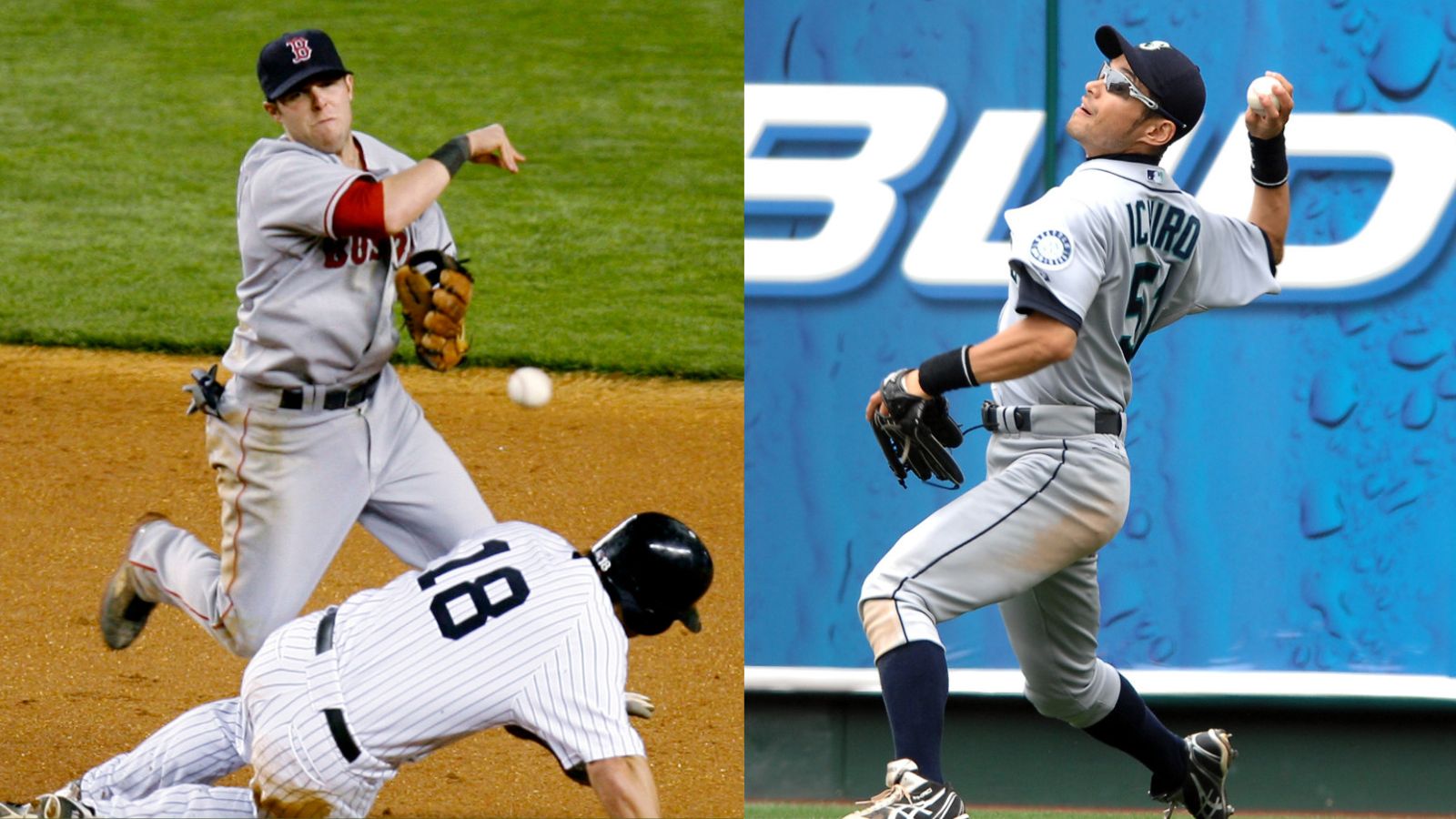
    Semien has finished 2nd in the Fielding Bible Awards voting twice, in 2021 and 2023. Perhaps this is the season that Semien wins it as he’s off to a pretty good start.

    Semien has 7 Defensive Runs Saved this season for an infield that has turned the highest percentage of grounders and bunts into outs of any MLB team. His defensive work has been less about fancy plays (though he has this one and this one) and more about just getting to balls without issue and accumulating outs. That’s not calling him a compiler. That’s calling him good at his job.

    Semien has made just about every play he should make. Most of the balls he’s missed fielding, other second basemen have a history of missing similar balls too. Last season, Semien had 30 plays on which he was debited more than 0.4 runs. In March and April, he had only one. He’s made 19 of 19 plays with a 60% to 80% out probability and is 47-of-48 fielding balls with a greater than 80% out probability.

    By a bizarre coincidence, Semien also ended April ranked No. 1 in Defensive Runs Saved against him as a hitter. Teams have saved a combined 6 runs against his batted balls.

    Semien ended April hitting .258 but should probably be doing better than he is.

    Here are a bunch of examples of very good plays being made against him: a running catch by Cubs left fielder Mike Tauchman, a sliding snag by Astros right fielder Kyle Tucker, a play from deep in the hole by Cubs shortstop Dansby Swanson and a nifty play by Braves shortstop Orlando Arcia. Defensive positioning has also gotten Semien a couple of times, including on this catch by Mark Canha.

    There’s no shortage of good defense being played against Semien at the moment. But there’s no shortage of good defense being played by him either.

    Most Defensive Runs Saved By Position

    Through End of April 

    Player Team Runs Saved
    1B – Christian Walker Diamondbacks 7
    2B – Ketel Marte Diamondbacks 8
    3B – Trey Lipscomb Nationals 4
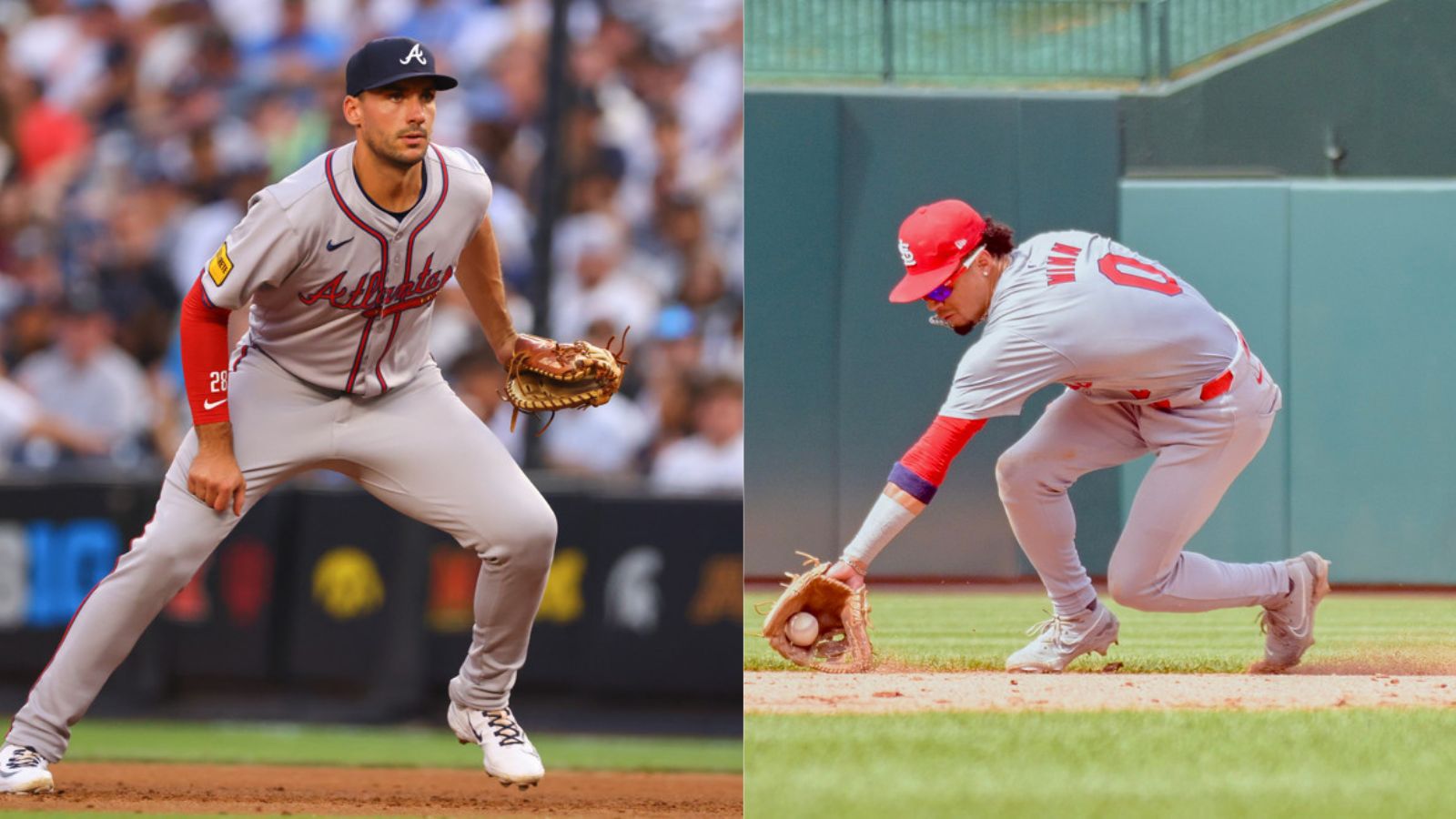
    SS – Masyn Winn Cardinals 6
    LF – Riley Greene Tigers 7
    CF – Kyle Isbel (Tie) Royals 5
    CF – Parker Meadows (Tie) Tigers 5
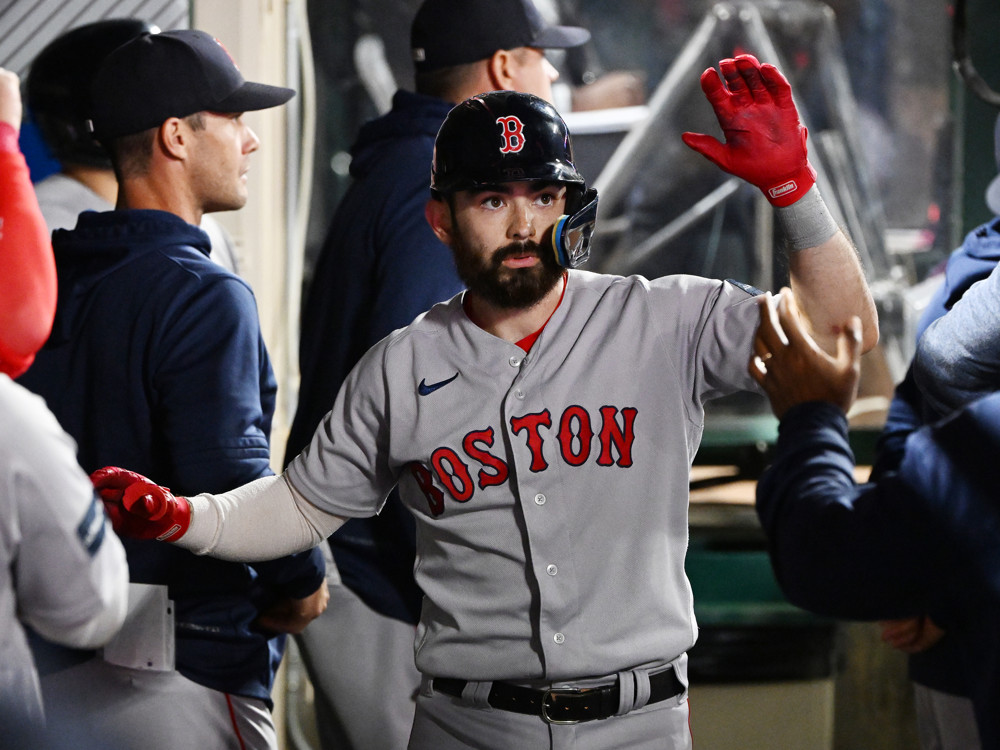
    RF – Wilyer Abreu Red Sox 4
    C – Cal Raleigh Mariners 7
    P – Josh Fleming Pirates 3

  • Stat of the Week: AL Central Doing It With Defense

    Stat of the Week: AL Central Doing It With Defense

    As someone who likes to write about defense, this is a little bit of a challenging time for me, because it’s hard to find much meaning in small sample sizes. Defensive Runs Saved isn’t necessarily meant to be an evaluative tool within the first 10 to 15 percent of the season.

    But we can still find instances in which good defense has mattered. Just look at the three teams in the AL Central that rank in the top 7 in Runs Saved.

    Royals (2nd)

    The Royals enter today ranked 2nd in the majors in Defensive Runs Saved. What’s propelled them is their defense up the middle.

    Two years ago, Bobby Witt Jr. ranked as the worst shortstop in the majors in Runs Saved. He still rated below-average per Defensive Runs Saved last season, but made considerable improvements (some metrics rated him above-average last season). This season, he’s setting an early standard.

    The Royals’ infielders have turned ground balls and bunts into outs at the highest rate in MLB, with Witt leading the way no matter what’s in his path. He leads shortstops with 5 Runs Saved.

    In the outfield, center fielder Kyle Isbel has continued his fine defensive work from 2023. Isbel doesn’t hit a lot, but thus far he’s done what the Royals have needed him to do: catch enough fly balls and line drives to have an impact.

    Combine 2023 and 2024 and Isbel ranks 3rd among center fielders in Defensive Runs Saved.

    Meanwhile, catcher, long held down by Salvador Perez, has turned into a timeshare between Perez and Freddy Fermin, the latter being a better pitch framer and the former typically being good at throwing out baserunners. Between the two of them they’ve allowed only 8 stolen base attempts all season. And Perez’s past issues with pitch framing haven’t manifested yet. The Royals’ pitchers have fared well with both.

    Guardians (3rd)

    The Guardians have last year’s Platinum Glove and Fielding Bible Award winner, Andrés Giménez, and he’s been doing as he typically does at second base. But other than that, you have to look a little deeper in order to ascertain what’s going on there.

    For one thing, the Guardians’ outfielders have combined for an MLB-high 8 assists. That’s the most in MLB. The average team has 2.5. Ramón Laureano’s 4 assists (though a couple have been awkwardly attained) are more than 25 teams have gotten from their outfield this season.

    The Guardians have also done well – at least through 19 games – in another aspect that we measure. They are tied for the major league lead when we combine their infield and outfield positioning Runs Saved totals. Score one early on for the team’s coaching staff (and probably their analytics department too).

    The Tigers (T-6th)

    Our timing on this isn’t great given that the Tigers made 3 errors yesterday, but let’s not let one bad game get in the way of some good work here.

    The Tigers have turned the 2nd-highest rate of balls hit in the air into outs of any defense in MLB (73%). And they’ve turned grounders and bunts into outs at the 7th-highest rate. If you’re wondering why the Tigers have the lowest BABIP allowed in the majors by a healthy margin, that’s why (.244, 14 points better than the next-closest team).

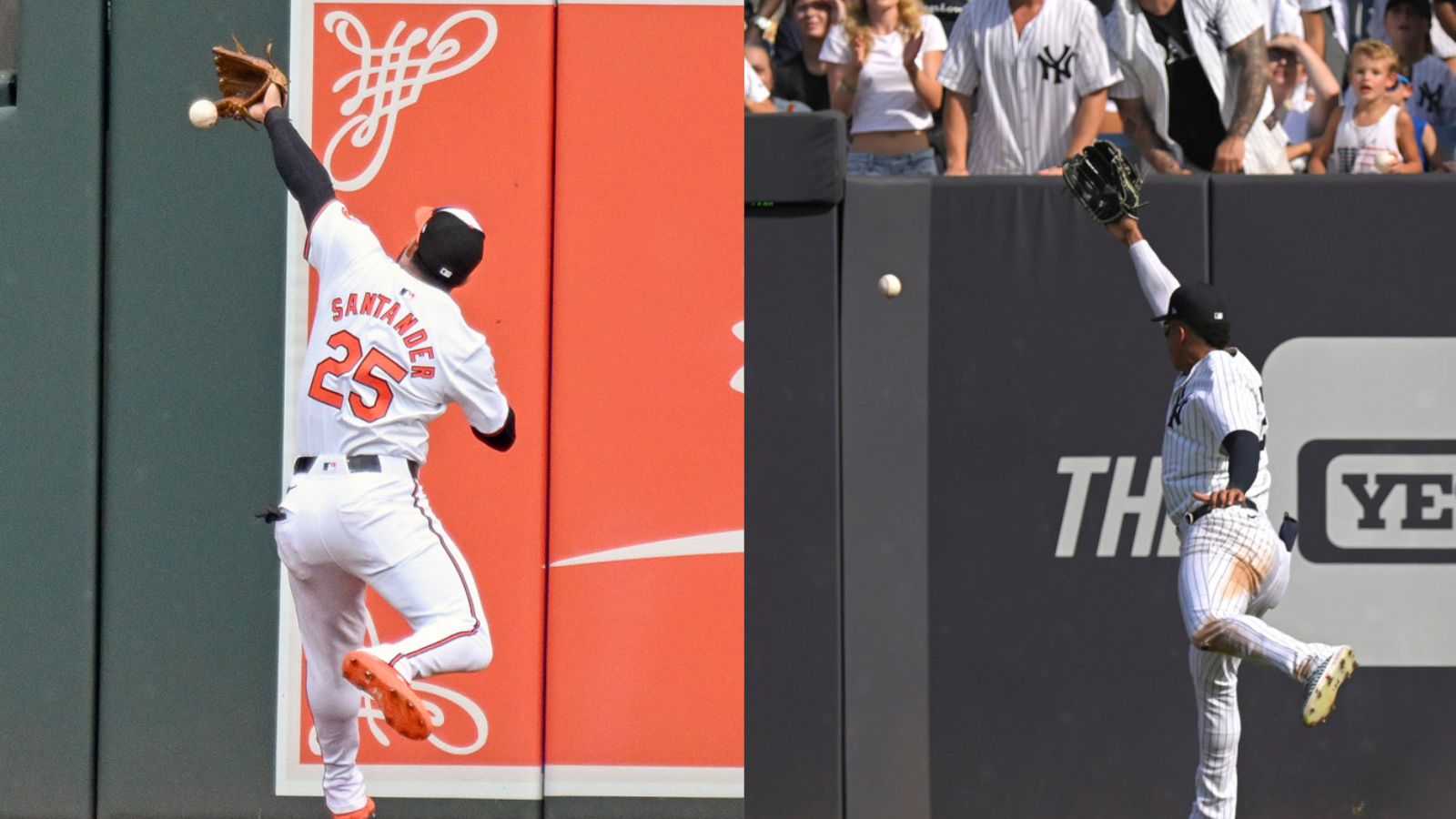
    Additionally, the Tigers have a pair of home run robberies, which count significantly in Defensive Runs Saved because these plays literally save runs. On March 30, Parker Meadows brought this one back from White Sox catcher Martin Maldonado. On April 9, Riley Greene snared a would-be homer from Pirates third baseman Ke’Bryan Hayes. The Tigers won a close game in both instances.

    The good D has helped the Tigers to a 10-9 start despite an offense that ranks in the bottom 5 of the American League in runs scored and the slash line stats.

  • Stat of the Week: Trey Lipscomb Makes A Good First Impression

    Stat of the Week: Trey Lipscomb Makes A Good First Impression

    Early this season baseball fans are celebrating big starts at the plate from Mookie Betts, Juan Soto, and Bobby Witt Jr. 

     But what about recognizing a good start in the field?

     It’s an oft-said baseballism that when you’re newly in a game, the ball finds you. The ball has found Nationals third baseman Trey Lipscomb a lot. In his first 3 major league games, Lipscomb has already handled 15 chances cleanly.

     That’s busy for a third baseman. Ke’Bryan Hayes led the position in range factor last season. He had a few three-game stretches last season like the one Lipscomb just did, but his range factor last season was an average of just under 3 chances per game.

     Now you may ask why we’re bringing up an unknown rookie on a 1-3 team that may finish at the bottom of the NL East this season. Fair question. 

     It’s easy to get excited by the superduperstars and the hyped rookies, like Jackson Chourio and Wyatt Langford. But part of the fun of baseball is about the under-the-radar guys who might catch some people by surprise.

     And while maybe Lipscomb won’t be Hayes or Nolan Arenado in the field, he could still be someone you’ll want to watch. Reds broadcaster and Hall of Famer Barry Larkin was impressed and said so during during the telecasts of the last 2 games of the Reds-Nationals series. Larkin’s a 3-time Gold Glove winner, so when he says a player has been “impressive,” we listen.

    We talked to Lipscomb last year after he won a minor league Gold Glove at third base in a season in which he played every infield position. He was among the Nationals’ final cuts after hitting .400 in spring training but was almost immediately recalled when Nick Senzel suffered an injury that required an IL stint.

    Lipscomb made a couple of nifty plays on ground balls, getting an initiation in the first inning of his first game at third base on a Christian Encarnacion-Strand grounder that took a high hop. Lipscomb handled it well and got the out.

    Lipscomb’s best play by Runs Saved was also against Encarnacion-Strand, one that he turned into a 5-4-3 double play. That play was worth nearly 3/4 of a Run Saved by itself.

    Lipscomb and Encarnacion-Strand had quite the batter-fielder relationship for a couple of days, with Lipscomb retiring Encarnacion-Strand 5 times.

    Lipscomb said in our interview that he wanted to be a fielder who dominated the routine plays. He had his share in his first 3 games and looked comfortable.

    But there were a couple of interesting challenges. On one play Lipscomb made, against Bryan Reynolds of the Pirates, he chose not to throw home in a situation in which he may have had a play at the plate. For those unaware, that decision is factored into Lipscomb’s Defensive Runs Saved. He gets a credit for retiring Reynolds at first base but also loses some run value within his Runs Saved for what we call “Giving Away a Lead Runner” in our cataloging of Defensive Misplays.

    Lipscomb also was unable to make a play on a hard-hit ball down the third base line. However, by diving and reaching the ball, Lipscomb held Santiago Espinal to a single rather than a double.

    Lipscomb got penalized within Defensive Runs Saved for not making the play on Espinal, but he gets a chunk of that run value back because he recorded a “Keeping The Ball In The Infield” in our tracking of more than 30 types of Good Fielding Plays.

    All in all, Lipscomb got through his first 3 days in the major leagues pretty well. He experienced a variety of plays and handled them. He wasn’t perfect but he made a strong impression.

    “The game of baseball is not about perfection,” Lipscomb said in our offseason conversation. “But if you can be as physically sound and mentally sound on defense as you can, it can help you a lot.

     So far so good. Let’s see if he can keep it up.

  • Stat of the Week: Dancing With The Star

    Stat of the Week: Dancing With The Star

    Let’s talk dancing for a moment.

    Not NCAA Tournament dancing. Even though that’s pertinent these days, that’s another sport. I’m talking about baseball and dancing.

    Several years ago, I interviewed Hall of Fame manager Casey Stengel’s grand niece, Toni Harsh, who told me how much Stengel loved dancing, to the point of showing off the waltz to his family with his wife Edna. He passed on the importance of dancing to his players, encouraging them to take lessons.

    “Dancing taught shifting weight, turning, and stretching,” Harsh said. “It was about staying light on your feet.”

    Stengel would have loved the answer Guardians second baseman Andrés Giménez gave us when we asked him how he stayed in good physical shape during the offseason, besides doing basic baseball work. He likes to dance.

    “First of all, it’s a way to enjoy the moment, enjoy the music, enjoy your family,” Giménez said on the latest episode of The Sports Info Solutions Baseball Podcast. “Dance is an easy way to show love. And if you move your feet, you’re going to be in a great position to dance or to catch a ground ball. When I have the opportunity to dance with my wife or other family members, I do it, because you move your feet there. When the ball is coming, you kind of dance with it.”

    Giménez brought to mind similar thoughts from former Red Sox minor league coach Bianca Smith, who is now coaching in Japan. A few months ago she told us, “No matter what you’re doing, whether you’re hitting, you’re on the bases, you’re in the field, you’re dancing with the pitcher.”

    Said Giménez: “I’m with her. If you move your feet when you’re dancing, it’s going to be easier to take a ground ball. I’m not the best dancer, but I can do it, so it helps me for my defense.”

    Giménez danced his way into the hearts of Guardians fans in 2022 with an MVP-caliber season. He wasn’t quite as good a hitter in 2023 but he dominated in the field. His 22 Defensive Runs Saved led the majors at his position. He won both our Fielding Bible Award at second base and the Rawlings Platinum Glove Award as the top AL defensive player last season. Giménez’s deft athleticism led to him making 23 sliding defensive plays, most in MLB in 2023.

    This season, Giménez has a new middle-infield partner to tango with, as fellow Venezuelan Brayan Rocchio is slated to be the Guardians’ everyday shortstop and another Venezuelan, Gabriel Arias, is a possible backup. Notable all-Venezuelan double play combinations of the past include Elvis Andrus and Rougned Odor, Alcides Escobar and Omar Infante, and Ozzie Guillén and Fred Manrique.

    If Giménez is at the top of his game his double play combo has a chance to be the best all-Venezuelan one ever. And perhaps they’ll give a new meaning to ‘dancing with the stars.’

  • Stat of the Week: MLB’s Rising Defensive Stars

    Stat of the Week: MLB’s Rising Defensive Stars

    Photo: Brandon Sloter/Icon Sportswire


    A year ago at this time I wrote about MLB’s rising defensive stars, and now seems like a good time to do that again looking to 2024.

    There are 4 players on active rosters this spring who will be in their age-23-or-younger season in 2024* and who had at least 10 Defensive Runs Saved in the major leagues in 2023. They’re in our spotlight heading into the upcoming season.

    * Age 23 or younger as of June 30, 2024

    Yankees shortstop Anthony Volpe totaled 15 Runs Saved and won the AL Gold Glove last season. Volpe played the 2nd-most innings of any shortstop in the majors (only Francisco Lindor played more). With his defense solid (he’s particularly good on balls hit to his left), improving his hitting figures to be a high priority in 2024. He had a .666 OPS in 2023.

    Phillies center fielder Johan Rojas was outstanding after being recalled from the minor leagues, amassing 15 Runs Saved in 57 games. Combine that with his minor league-best total of 15 Runs Saved and Rojas had an epic defensive season. Rojas placed 9th in The Fielding Bible Awards voting among center fielders last year. It wouldn’t surprise me if he was 1st, 2nd, or 3rd in 2024.

    Orioles infielder Gunnar Henderson played an almost identical number of innings at shortstop and third base last season. He was better at shortstop, amassing 10 of his 13 Runs Saved. Henderson finished with 6.2 bWAR in 2023. With a good defensive season and solid offensive numbers again, he may be in line for something better in 2024.

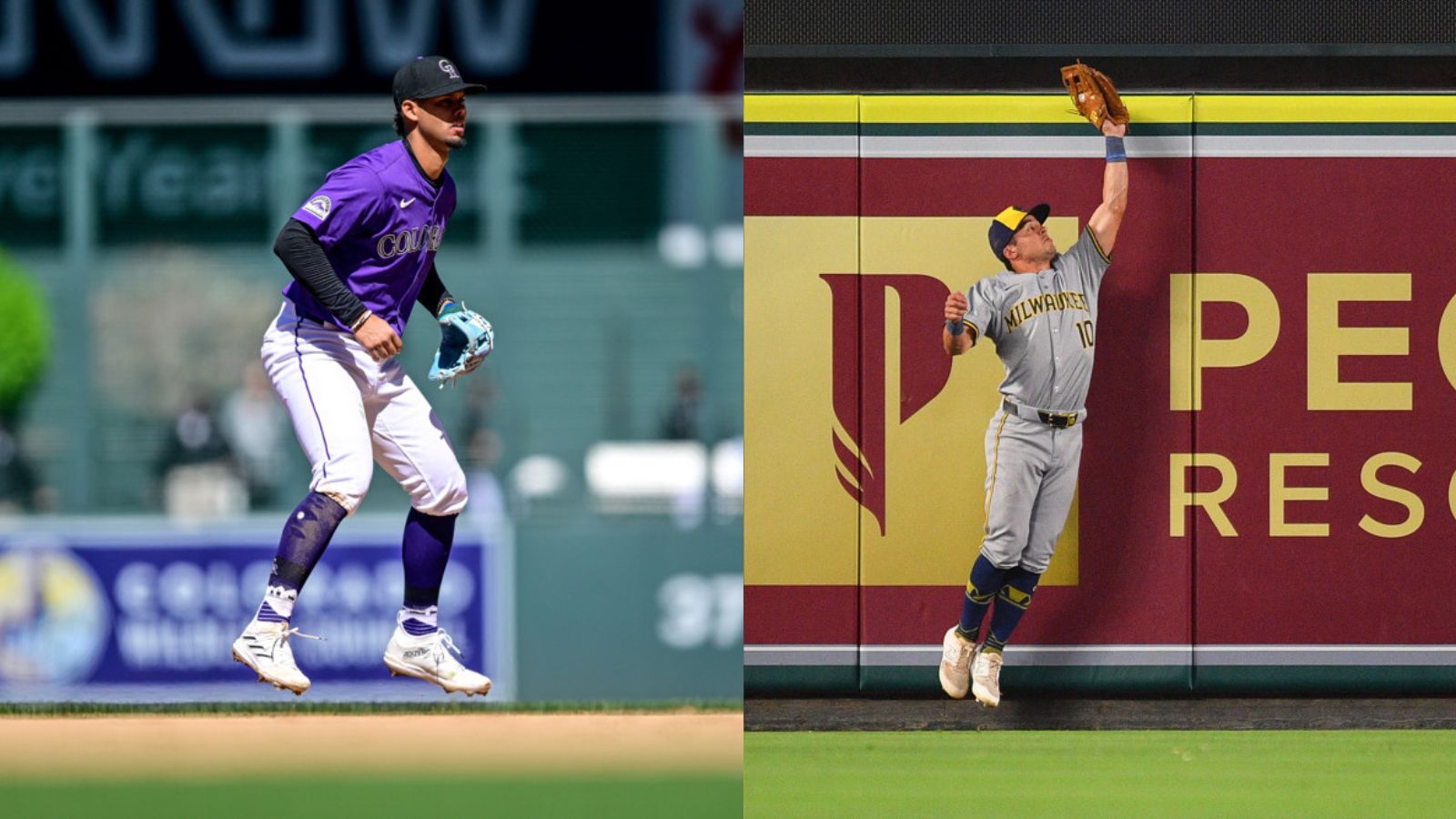
    Rockies shortstop Ezequiel Tovar’s defensive play was one of the highlights of a rough season for a last-place team. His 13 Runs Saved ranked 4th at the position. Like Volpe, Tovar played a lot. He ranked 5th among shortstops in innings played and had an impressive reel of standout defensive plays.

    One other player I want to point out is Nationals shortstop CJ Abrams who finished with 4 Runs Saved in 2023. Abrams’ defensive game took a major step forward in 2023 as he improved from -5 Runs Saved in 2022. Though his throwing issues kept him from being in the same class as the quartet above, his defensive stock is up heading into 2024.

  • Stat of the Week: Gio Urshela Is A More Meaningful Signing Than You Think

    Stat of the Week: Gio Urshela Is A More Meaningful Signing Than You Think

    Photo: Melissa Tamez/Icon Sportswire

    The biggest defensive hole in MLB team infields last season was third base for the Tigers. Detroit tried 9 players at that position and those players combined for -22 Defensive Runs Saved. Not only did the Tigers rank last in MLB in Runs Saved by their third basemen, they also ranked 26th in Baseball-Reference’s Wins Above Average at the position.

    Tigers general manager Scott Harris chipped away at his team’s roster construction all winter. He traded for Mark Canha to give the team a bat that could control the strike zone and improve the offense’s production. And he added a pair of veteran arms for the starting rotation in Kenta Maeda and Jack Flaherty.

    These additions supplement a young core that could have 2 prime prospects— center fielder Parker Meadows and infielder Colt Keith— as everyday players.

    Harris didn’t do much about third base until Thursday when the Tigers signed Gio Urshela to a one-year contract. If the Tigers wanted to be really ambitious there, they could have pursued free agent Matt Chapman on a long-term deal, but for the short term, Urshela is a good fit.

    If fully recovered from the pelvis injury that limited him to 62 games last season, Urshela, an 8-year veteran, will be a massive upgrade at the hot corner for whatever number of games he plays in 2024. He totaled 6 Defensive Runs Saved in limited action at third base last season and 4 Runs Saved there in 2022. He’s had only one bad stretch there, in 2021 when he totaled -4 Runs Saved for the Yankees.

    Urshela had a .703 OPS in those 62 games last season. That doesn’t sound impressive, but that would also be a big upgrade. Tigers third basemen combined for a .624 OPS last season, 3rd-worst in MLB.

    There is risk with the 32-year-old Urshela, but it’s inexpensive risk. He signed for a base salary of $1.5 million. He may just play in a platoon role. But even if he plays part time, the Tigers improving to 0 Runs Saved and a .700 OPS at third base this season as a result of his production would be noticeable. If Urshela could reach his past peak (he’s twice been a 3-bWAR player), the change would be significant.

    This signing isn’t by itself going to win a division title. But it potentially makes a big hole on the team look much more respectable. Winning championships isn’t just about signing star players. It’s about making sure you have a roster of players that aren’t costing you potential wins. In an AL Central where 85 to 90 wins may be enough to win the division, a move like signing Urshela looks like a pretty smart one.

  • Stat of the Week: 2023’s Overperforming Pitchers

    Stat of the Week: 2023’s Overperforming Pitchers

    Photo: Steven King/Icon Sportswire

    Tigers pitchers Matt Manning and Tyler Holton were each pretty good in their own ways in 2023.

    Manning pitched to a 3.58 ERA in about a half-season’s worth of work as a starter. Holton got some of the best results of any reliever in MLB, with a 2.11 ERA in 85 1/3 innings, almost entirely out of the bullpen.

    The two of them had something in common. They each did this with strikeout rates that were a bit below MLB average, meaning they were relying on a combination of defense, sequencing (the order in which hits, walks, and outs came), and luck to keep their numbers down. Both pitchers outpitched their FIP by a considerable amount. Manning’s FIP was 4.81. Holton’s was 3.56.

    Additionally, Manning and Holton were the pitchers whose expected OPS was the most above their actual OPS among those pitchers who faced at least 300 batters in 2023.

    This is our 4th and final Stat of the Week in a series looking at overperforming and underperforming pitchers and hitters from 2023.

    A brief point of explanation:

    Sports Info Solutions tracks its own version of a player’s expected stats (like what you can find on Baseball Savant). Rather than basing a player’s hit probability (and subsequently single, double, triple, and home run probability) on a batted ball’s exit velocity and launch angle, SIS’ version estimates probabilities based on where balls are hit, how hard they are hit, and how long they spend in the air.

    This allows us to compare a player’s actual stats to his expected stats to see if they fared better or worse than perhaps they could have.

    Here’s the list of pitchers with the greatest differential between their expected OPS and their actual OPS. Think of them as a group whose actual 2023 numbers could have been worse under different circumstances.

    Greatest Differential – Expected Opponents’ OPS vs Opponents’ OPS

    2023 Season, Minimum 300 Batters Faced

    Pitcher Expected Opp OPS Opp OPS Differential
    Matt Manning .825 .649 .176
    Tyler Holton .639 .536 .103
    Tony Gonsolin .822 .722 .100
    Ty Blach 1.005 .918 .087
    Corbin Burnes .684 .598 .086
    José Berrios .776 .696 .080
    Reese Olson .729 .649 .080
    Shohei Ohtani .697 .618 .079

    Manning had a Top-20 fly ball rate last season (47%) and the Tigers caught 76% of all balls hit in the air against him, a rate that matched Justin Verlander as 5th-highest in MLB (minimum 100 balls hit in the air).

    Manning could thank the walls in Comerica Park being lowered prior to the season for this homer-robbing catch (click here to see it) and he had some good defense played behind him (this was a pretty good catch), but perhaps not overly so. The Tigers’ defense had 3 Runs Saved on batted balls behind Manning, leading us to surmise that perhaps it was factors other than fielding skill that kept Manning’s actual numbers so low.

    Holton is not a fly ball pitcher to the level that Manning is. He got 10 Runs Saved worth of support on batted balls, a total that ranked in the Top 20 among pitchers despite his not even having pitched 100 innings.

    The Tigers turned 84% of grounders and bunts into outs with Holton pitching, the 3rd-highest rate among pitchers who got at least 100 grounders ands bunts last season, and 11 percentage points better than MLB average.

    It’s not hard to find examples of the Tigers infield performing very well behind Holton (click here, here, here, and here for examples). And for good measure, the outfield was good behind him too. Here’s a home run saving catch by Riley Greene with Holton pitching.

    Manning and Holton were just above the batters faced qualifier we set. If we look a little further down the list of pitchers with the biggest difference between expected and actual OPS, you’ll notice some notable pitchers with higher innings totals.

    The most prominent of those is Corbin Burnes, who was recently traded by the Brewers to the Orioles. In Burnes’ case, defense likely played a significant role in the difference between his expected numbers and actual numbers. The Brewers defense saved 17 runs behind him on batted balls last season, the 2nd-highest total in MLB. José Berrios, who is also on our expected vs. actual leaderboard, got the most defensive support, 19 Runs Saved.

    Regarding Burnes, the Brewers were the 2nd-best defensive team by Runs Saved in 2023. The Orioles weren’t that far behind, ranking 8th in that stat and they return most of the team that put those numbers up (with No. 1 prospect Jackson Holliday probably in the mix).

    Our usual disclaimer: Results in 2023 don’t necessarily mean that those results will repeat themselves in 2024. But perhaps our data will reset your expectations for some of these pitchers heading into the coming season.

  • Stat of the Week: Hunter Greene Deserved Better in 2023

    Stat of the Week: Hunter Greene Deserved Better in 2023

    There was a lot of hype around Hunter Greene’s debut in 2022 and follow-up season in 2023. And Greene has had some spectacular starts the last 2 seasons, but these years have also been marked by injury and disappointment.

    Though Greene posted a 4.82 ERA in 112 innings last season, he pitched better than his final numbers indicated.

    Greene was the pitcher who underperformed relative to his expected stats the most of any pitcher that faced at least 300 batters in 2023.

    A brief point of explanation:

    Sports Info Solutions tracks its own version of a player’s expected stats (like what you can find on Baseball Savant). Rather than basing a player’s hit probability (and correspondingly single, double, triple, and home run probability) on a batted ball’s exit velocity and launch angle, SIS’ version estimates probabilities based on where balls are hit, how hard they are hit, and how long they spend in the air.

    This allows us to compare a player’s actual stats to his expected stats.

    Here’s the list of pitchers with the greatest differential between their expected opponents’ OPS and their actual opponents’ OPS.

    Greatest Differential – Expected OPS and Actual OPS

    2023 Season, Minimum 300 Batters Faced

    Here is Greene’s actual line compared to his expected line.

    Greene ranked right among the worst 20% of pitchers in opponents’ OPS but ranked right around the best 20% of pitchers in expected opponents’ OPS.

    I watched the 40 hits that Greene allowed with the lowest hit probabilities. Within that I saw a combination of some bad breaks and some defense that— had it been just a little bit better— would have made a difference in Greene’s numbers.

    For example with regards to bad breaks, if this ball is hit slightly to the left, it’s an inning-ending out instead of a 2-run single. Or if this ball is hit a little to the left, Will Benson makes the catch instead of just missing it, literally saving another run from his pitching line.

    Another instance of bad breaks, though this of a different kind: In Greene’s first game back from injury on August 20, he allowed 9 runs and 5 home runs in 3 innings against the Blue Jays. Yes, that’s a bad start. But 2 of the 5 home runs barely cleared the fence and were sub-25% home run probability balls by our measures (one would have been a homer in 5 parks, another 13, per Statcast).

    As for defense, Greene had the 3rd-worst Defensive Runs Saved support on batted balls of any pitcher in MLB last season. The Reds had -11 Runs Saved on the batted balls against him.

    There’s this fly ball to center field that seemed to be lost in the lights, a ball whose spin off the bat fooled shortstop Elly De La Cruz, and a ball that Greene himself just missed on which second baseman Jonathan India could not make the play quickly enough.

    The usual disclaimer applies: Just because Greene didn’t get good breaks or good defense doesn’t mean that he will in 2024. But the knowledge that he was on the right track in 2023, even if the results weren’t there, should be reassuring to him, Reds management, and their fans heading into the upcoming season.