Category: Baseball

  • Stat of the Week: The Leading Minor League Shortstop Defenders

    Stat of the Week: The Leading Minor League Shortstop Defenders

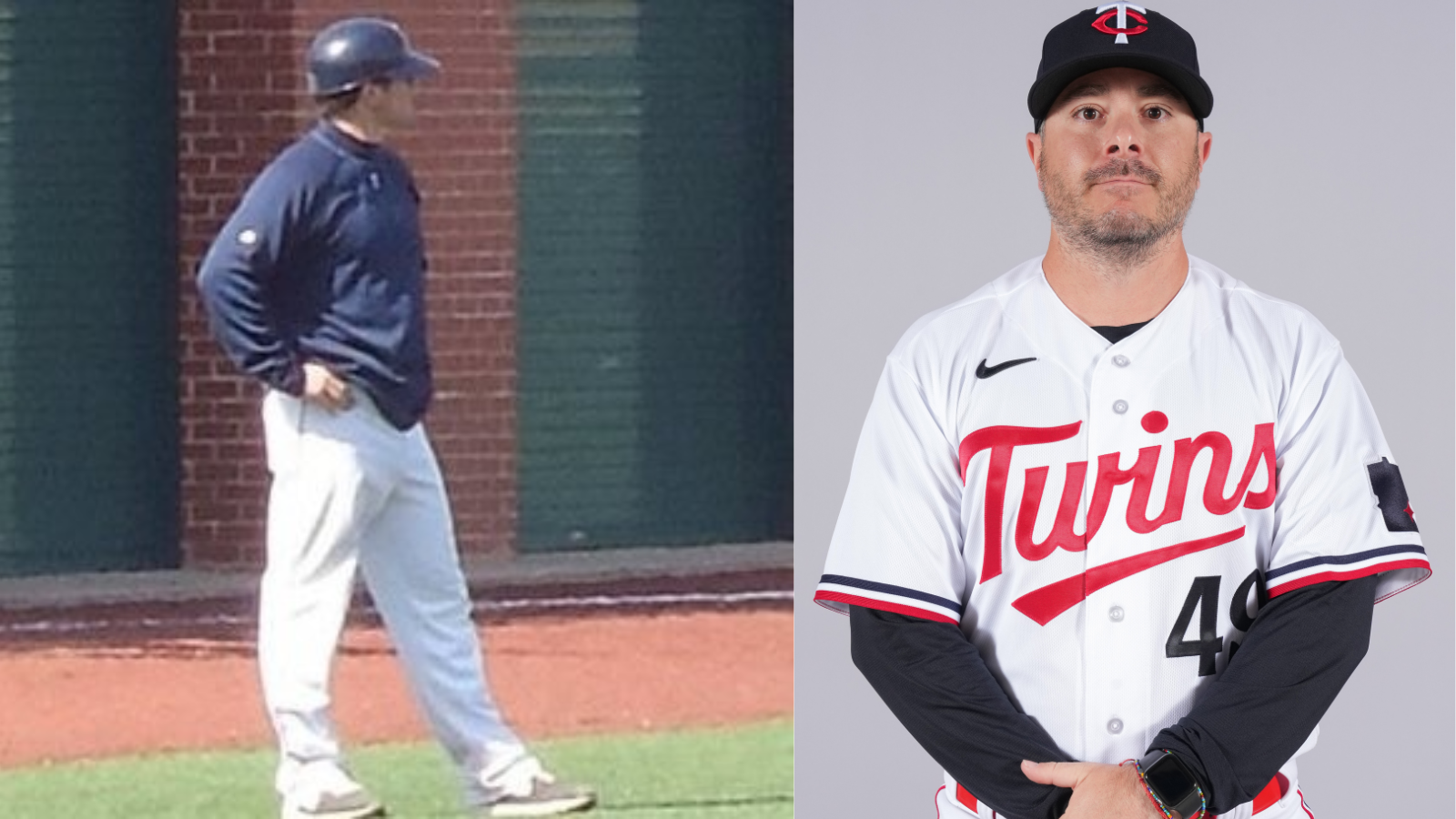
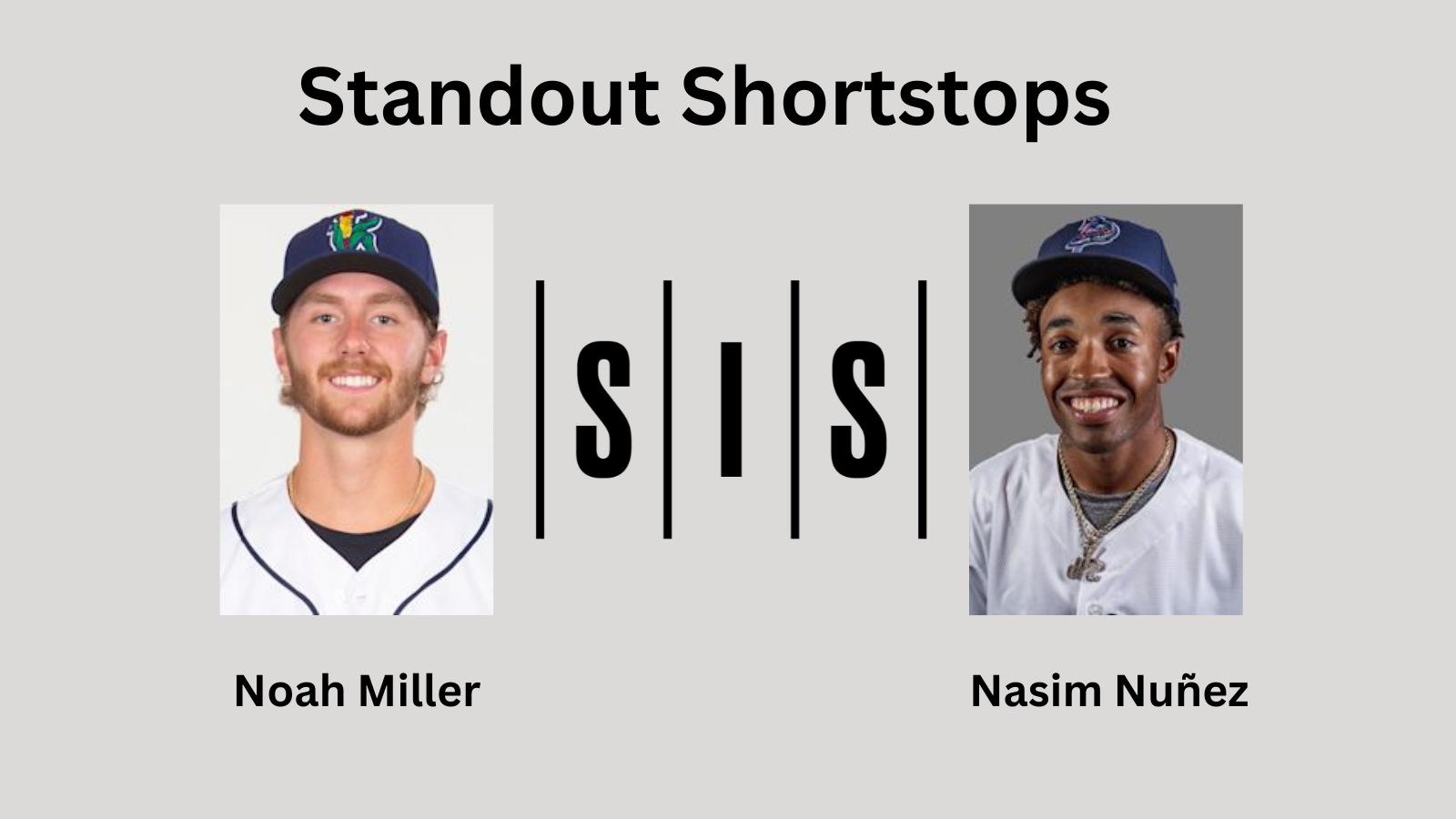
    Minor league shortstop prospects Noah Miller (Twins) and Nasim Nuñez (Marlins) are as good at conversing about defense as they are at playing it. And they are both very good defensive players.

    The two of them were guests on the Sports Info Solutions Baseball Podcast this week. Miller is the runaway minor league leader in Defensive Runs Saved by a shortstop with 16.

    The 16 Runs Saved are impressive both because he’s still in High-A with the Cedar Rapids Kernels and because he’s being judged by major league standards. In other words, a ball that’s a 60% out probability for Brandon Crawford (one of Miller’s favorites to watch) is a 60% out probability for Miller.

    Miller seems to have very good self-awareness for someone his age.

    “I’ve just always been very comfortable going to my left,” Miller said, which matches what our metrics show about his skills. “Keeping my eyes behind my glove. That’s the big thing for me. Being able to read the hop is easier going to your left than to your right.”

    He also knows what he wants to do to improve his game.

    “The biggest things are probably just increasing arm strength and increasing foot speed to increase my range and the angles that you can take,” Miller said.

    Said Twins minor league infield and catching coordinator Tucker Frawley: “I said this to Noah when I saw him last week. He’s the bar to which I hold our other infielders. He seems to be consistently raising the bar. He’s been nothing short of amazing for us.”

    Amazing is a good way to describe what Nuñez does in the field too, though in a little bit of a different way. Our VP of Baseball, former major leaguer Bobby Scales, described him as an “artisan” in the field. Judge for yourself.

    Nuñez ranks tied for 3rd among minor league shortstops with 7 Runs Saved. He talked about both situational awareness and self-awareness and knows what he needs working on too.

    “Slowing down the game,” Nuñez said. “Understanding my body, understanding how athletic I am, and some plays, I don’t have to be 110% or 100%. Some plays I can understand the runners (on base and at the plate), understand my arms, understand the direction of the ball, and go according to that.”

    Both Miller and Nuñez have other aspects of their game to work on. Miller is hitting .223. Nuñez is at .225 but also has 47 stolen bases, which should increase his value to the Marlins.

    “Their gloves are going to give them opportunity in big leagues,” Scales said. “What’s going to be the separator for both of them is: Are they going to be able to hit enough to stay? They’re going to play in the big leagues because they can defend and run prevention is a massive piece of what run offices use now to construct their roster.”

    Check out what they all had to say on the current episode of the Sports Info Solutions Baseball Podcast.

    Most Defensive Runs Saved – Minor League Shortstops

    Name Team (Level) Defensive Runs Saved
    Noah Miller Twins (High-A) 16
    Christian Koss Red Sox (Triple-A) 8
    Nasim Nuñez Marlins (Double-A) 7
    Gregory Barrios Brewers (Single-A) 7
    Ambioris Tavarez Braves (Single-A) 6
  • Stat of the Week: Defense, The NL Cy Young Race, and Blake Snell

    Stat of the Week: Defense, The NL Cy Young Race, and Blake Snell

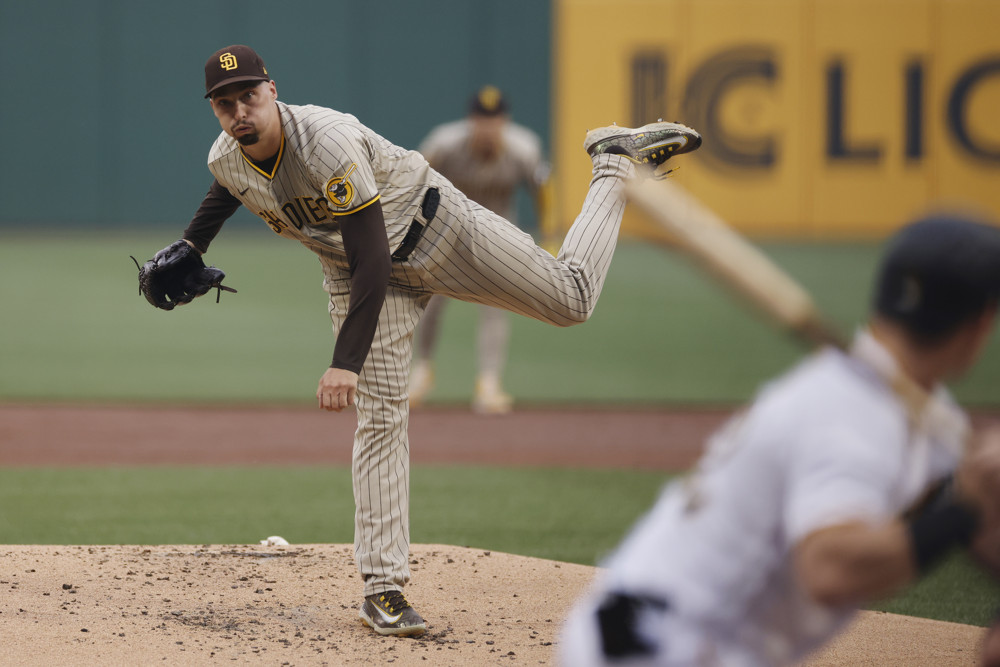
    On May 19, Padres starter Blake Snell got clubbed for 6 runs in 4 innings in a loss to the Red Sox. His season ERA at that point was 5.40.

    But from that point forward, Snell has had the most remarkable run of pitching in 2023. He has a 1.31 ERA in his last 19 starts with nearly 2.5 times more strikeouts (153) as hits allowed (62) in that span.

    Snell’s season ERA is currently an MLB-best 2.50. This is remarkable given that he’s walked 89 batters, the most in the NL. That’s more than 5 walks per 9 innings, a rate that ranks 4th-highest in MLB.

    Snell’s ERA is an outlier among those with the most walks per 9 innings. His walks per 9 are an outlier among the pitchers with the lowest ERAs in MLB.

    So with all these crazy numbers floating around, where does Snell fit within the context of the NL Cy Young race, compared to pitchers like Justin Steele of the Cubs and Spencer Strider of the Braves?

    A Twitter follower presumably looking to answer that or a similar question asked us how much defensive support the different Cy Young contenders have received this season.

    The easiest way for us to answer that is to look at Defensive Runs Saved on batted balls by a team in support of a pitcher, something we did earlier this season in this article.

    Pitchers Receiving Most Defensive Support From Teams – 2023

    Name Team DRS
    José Berrios Blue Jays 16
    Blake Snell Padres 15
    Corbin Burnes Brewers 13
    Yusei Kikuchi Blue Jays 13
    Framber Valdez Astros 12
    Dean Kremer Orioles 12

    Snell and the Padres show up prominently on the leaderboard. That makes sense. In order to have an ERA that good with the walk rate that high, a pitcher is going to need help in some form.

    And now let’s look at this using the Top 5 NL Cy Young candidates as established by Tom Tango’s Cy Young Predictor tool (now available on FanGraphs).

    Pitchers Receiving Most Defensive Support From Teams

    Cy Young Candidates- 2023

    Name Team DRS
    Blake Snell Padres 15
    Zac Gallen Diamondbacks 5
    Justin Steele Cubs 2
    Spencer Strider Braves 1
    Zack Wheeler Phillies -1

    Admittedly if we considered other areas of defense, such as keeping runners from stealing, the Defensive Runs Saved numbers behind Snell would go down a bit. Snell has allowed 20 stolen bases in 21 attempts. But he would still be well ahead of any other serious Cy Young contender. The work of the Padres defense has been an important part in Snell’s ERA being the best in the game.

    So if Snell does win the Cy Young Award, we’d recommend him giving some complimentary gifts to the likes of Fernando Tatis Jr.Ha-Seong KimXander Bogaerts, and others. As good as Snell’s been on the mound, they’ve been just as good for him.

  • Defensive Excellence Q&A: Beth Woerner (Lebanon Valley College Assistant Coach)

    Defensive Excellence Q&A: Beth Woerner (Lebanon Valley College Assistant Coach)

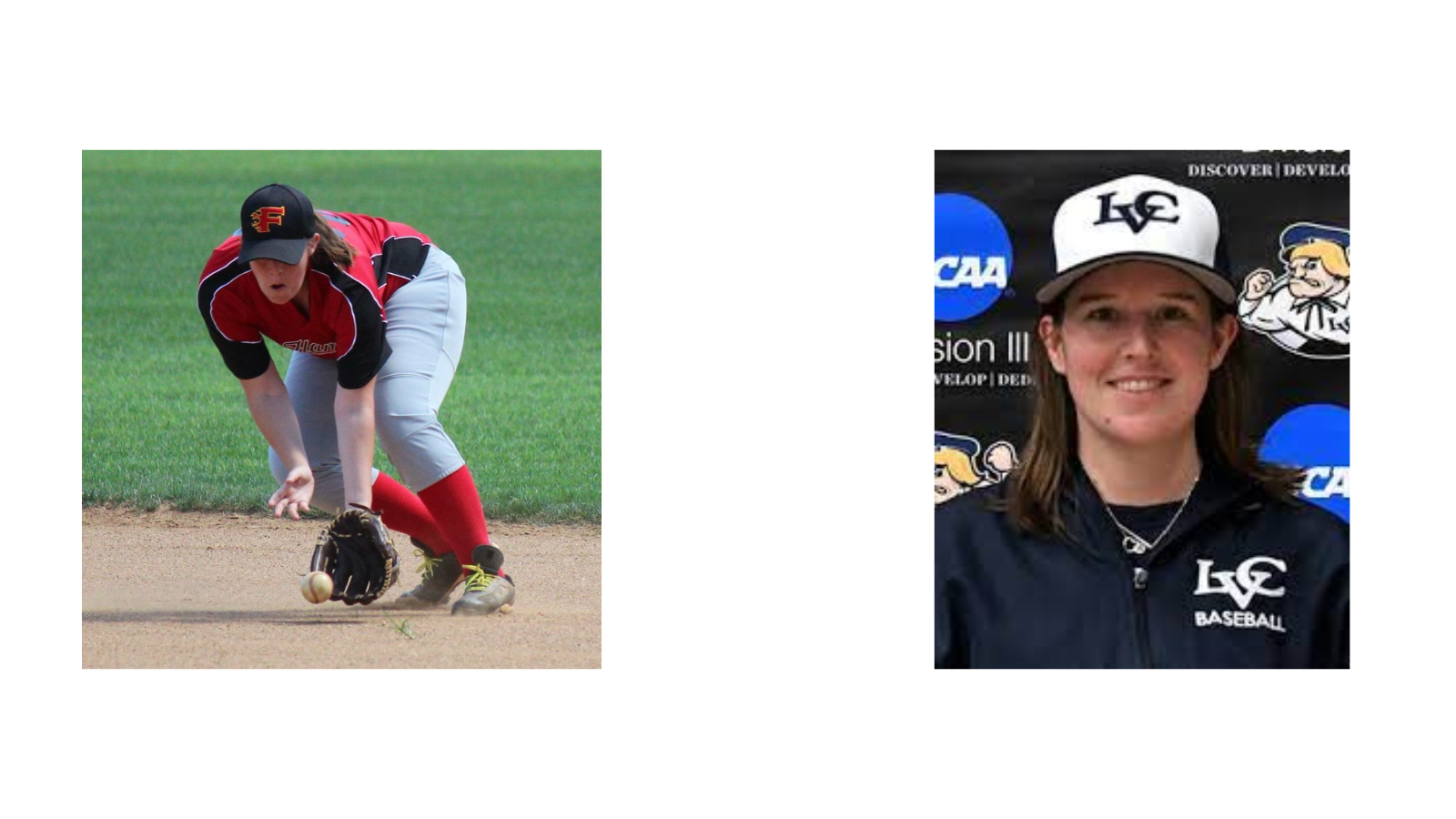
    Beth Woerner began coaching at Lebanon Valley College, an NCAA Division III school in Pennsylvania in August of 2021. She is believed to be the only full-time female baseball assistant coach in the NCAAs.

    As you’ll read in our interview below, Beth’s comes to baseball with a fresh perspective, having not played it or softball in college. And a lot of her knowledge is self-taught. In her previous stop at University of Charleston, West Virginia she spent a lot of time coaching infield, so that was the focus of our discussion with her here. We also talked briefly about one of her other passions, coaching excellence in baserunning.

    Follow Beth on Twitter at @beth_woerner

    This is the latest article in a series in which we’ve interviewed a diverse group of coaches about teaching defensive excellence. To read the others in the series, including 2 others with female coaches, click here.

    This interview has been edited for clarity and length.

    Mark: Can you explain your playing background to me?

    Beth: Sure. I haven’t played a ton. I didn’t play softball in college. I just graduated college and I found out about a women’s baseball league in the D.C./ Baltimore area called the Eastern Women’s Baseball Conference. So I started playing with them about 6 or 7 years ago, just for fun. I’m not very good at playing baseball, but because of that, I started to figure out, started to research. How do I get better at this? How do I make this play? How do I not mess up so much? Which is pretty much what coaching is, is figuring out how do we get better? How do we make fewer mistakes?

    Mark: So what was the research that you did?

    Beth: It started out with just like really simple stuff, like how to field a ground ball, what footwork should I use? But then I started just watching the game differently, seeing the little things that happen that you may not think about when you’re just watching for fun. I’m starting to notice a lot of little things, little specifics in the footwork, specifics in the way that people throw.

    So that was sort of where I started. I played pretty much everywhere, second base, outfield, pitched a little bit, caught a little bit in the women’s league, which is a great opportunity.

    It’s not as extensive as a lot of other coaches, but I think there’s a lot of value in it.

    Mark: What does defensive excellence mean to you?

    Beth: I think defensive excellence is just being able to be the best player that the player can possibly be, whether that is making all the routine plays or making routine plays and some excellent plays. But I think that is extremely individual on the player.

    Mark: Okay, so who were the players you watched that most influenced you in trying to get to that point yourself?

    Beth: My brother played third base as a kid, so I’ve watched a lot of good infielders play. One of my favorite players is Andrelton Simmons. Watching him play defense is a lot of, a lot of fun. He’s really good and makes really excellent plays all the time, was always locked into the game. So those are probably a few people there.

    Mark: Who are the people that have influenced you as a coach?

    Beth: All the ones that have encouraged me to continue coaching. Some of those people are the coach I currently work for, which is Jonas Fester here at Lebanon Valley College. He was a great infielder himself.

    We have a lot of conversations about good defense and how to be a better coach, not just on defense, but in general. And I owe him a lot of credit for everything that I’ve done. And then also the coaches that I worked with at the University of Charleston under Robbie Britt, who is now at Eastern Michigan, and Pablo Cabrera, who’s now with the Red Sox.

    Pablo and I worked together as infield coaches together at Charleston and we learned a lot together. I’m sure some of the stuff that I’ll talk about here in a minute is stuff that he and I worked on together and came up with together.

    He played infield in college and was a very good infielder and I had a background in teaching but didn’t know that much about infield. So we came from two very different backgrounds and worked together to create the way that we both think about infield now.

    About Beth Woerner
    Full-time assistant baseball coach, Lebanon Valley College (NCAA Division III)
    – One of few women working in college baseball coaching
    – Experience comes from playing in adult baseball leagues
    – Graduate of James Madison University

    Mark: What’s an example of something you work on with players now?

    Beth: It’s hard to say because it’s different with every player. Every player is working on different little things. But I think one of my favorite things to teach and to work on with players is the infield prep step, which is whatever the player is doing before the pitch. I think it’s fun because every player is a little bit different in what they feel.

    And it’s really about what they feel. Matching that to what they’re actually doing, so there’s creativity required to become good at it. That’s true of all parts of the fielding a ground ball and making a play. There’s little things that players can do to maximize what they’re good at and limit their weaknesses.

    Mark: Okay, can you pick out a player and go into the specifics with his prep step?

    Beth: I love working with third basemen.

    One of our third basemen last year, he was working with his prep step and he was a little bit early, which means that he wasn’t reacting as quickly as he could because he was heavy on his feet at the point when he was making the decision to move, once he knew where the ball was going.

    So we worked with him and it was a lot of fun because every now and then he would say, hey, I’m still a little off. Can we check in? And then we would work with some video and check in where he was at and then he could work on it in his drills once he knew that he was a little late and needed an adjustment.

    Beth: When I first got to Lebanon Valley, I wasn’t really sure how the team was gonna treat me and he accepted me as somebody who could help him get better right away. So that was a pretty special moment for me as a young coach that this player wants to get better and wants to use all of his resources … which is me, to get better.

    Mark: What else have you discovered in working with players?

    Beth: This is true for all coaches—some players connect with you better and some don’t, but I think most players, once they realize that this person wants to help me get better, they’re going to do what they feel like they need to in order to get better.

    Sometimes you don’t necessarily have to have the closest connection with every single player because they’ll teach each other what you teach them.

    It’s really cool they’re taking what you’ve taught them and applying it. And not only applying it, but helping other people also learn how to do those things better.

    Mark: Did your experience with him get you credibility with everybody else?

    Beth: Yeah, younger players, sometimes don’t even know how to interact with coaches in general. Once they see this is how this player, who they trust, trusts me and is working with their coach, it’s a model for them on how to communicate with a coach.

    Mark: What’s the hardest part about teaching defense?

    Beth: I think the hardest part and the coolest part are the same answer. Every single player is different. Everyone has different strengths and weaknesses.

    Everyone feels the way their body moves, the way they do things differently. Everyone understands the game differently. So that makes it difficult because every single player is a new challenge. That makes it a lot of fun because you’re always trying to work with that player and figure it out.

    Hey, this is exactly what you’re feeling. This is exactly what you’re doing. This is how we can get better. There’s no formula or special secret sauce to getting a player better because everyone is different and has different experiences.

    Mark: Okay. How have you used technology and data in your coaching?

    Beth: We’re a Division III school, so we don’t have as many resources as some of the other programs. But we do still use a lot of information, and we still use the research that other teams and organizations do to inform decisions.

    And for the defense specifically, we will track some things. We’ll track the plays that our players are making. We’re actually in the process of figuring out how we want to do that this year. And then we use that as feedback for our players.

    Mark: You have a master’s in strategic leadership. How does that come in handy in coaching?

    Beth: We talked about leadership in all different kinds of organizations and how things are organized for leaders. Knowing how leaders work is helpful in knowing that I want to do things how this leader does them or don’t want to do things how this leader does them.

    Mark: I know you also teach baserunning, and you just did a talk on it at Saberseminar, and I saw the tweet that you sent after Ken Rosenthal wrote about vault leads.

    So, why don’t you give us the perspective on the vault lead from the baserunner’s side, and then how you would stop it defensively from a pitcher, catcher, fielder combo?

    Beth: The vault lead give you an advantage when a pitcher’s quicker, has a quicker delivery. It helps you to get a better jump and our players who have a good feel of it, they actually have an easy time getting back to the base no matter what part of the vault they’re in. That’s the difficult part – that it’s easier for a pitcher to catch you off-balance.

    I think the players who are very good at it and understand the way that it’s supposed to work in terms of timing are able to easily implement the vault leads.

    It also is useful against the left-handed pitcher because you might have a hard time getting a good jump. Vault leads are difficult because it requires a lot of creativity on the player’s part to know exactly what they’re able to do and how to do it and know exactly where they are in space at those points where there may be more risk involved in getting that vault jump.

    Our players really enjoyed learning how to do them. We’ll play some development games that don’t count towards anything, but both teams are just there to get better.

    One of our players who isn’t really a base stealer was like, ‘Hey coach, I’m just going to try a vault lead. I want to see what happens.’ He stole the base and came back to me and said that was the best jump he ever got in his life. ‘I felt like I got there so fast and was running so fast.’

    The benefit of it is it’s able to give you a little extra momentum, just like if you’re driving and you come to a stoplight, you stop all the way at the stoplight, it’s going to take you longer to keep going. But if you keep rolling just a little bit, it’s going to be easier to accelerate once the light turns green.

    It’s the same kind of concept, but with running. If a full vault isn’t comfortable, maybe we can do half vault, or maybe we can do a walking lead, or some kind of other lead that gets that momentum without having to do the full vault.

    Players love getting creative. They get to make it their own, how they want to do the vault.

    And then, on the defending it side, it’s a lot of fun here at practice, actually, when we practice it. Because the pitchers, they really want to pick off runners, especially some of our faster runners who are able to get further off the base.

    So we’ll get competitive in practice and have pickoff practices where the base runners are practicing getting their leads and the pitchers are practicing pickoffs to see how much momentum they can get, how far off the base, and the pitchers are working on mixing up their timings.

    Having a different delivery, maybe a slightly higher leg kick or a slightly lower leg kick. There’s all kinds of different things to to hold the runners.

    And what’s cool about practicing it with our pitchers is that sometimes, hey, I can tell that you’re gonna pick off because you turn your head a different way when you’re picking off, and we’ll tell our pitchers that so that they can get even better.

    Mark: What are your aspirations as a coach? Long term?

    Beth: This is a tough question because I really don’t know and I debate it with myself all the time. I love college baseball when I first started, my original dream was to work in the big leagues like everyone else.

    I think I will likely end up doing quite a few different things in the future, but I definitely want to stay working with players and I want to keep working with the best players that I can.

    Mark: Last question: Is there any point that you wanted to make that I didn’t give you a chance to make?

    Beth: I love working with the players and I love getting creative with players to help them learn what they’re able to do and how to be the best player they can be. The creativity piece is a lot of fun.

    Anybody can coach. Even if you don’t know every single little thing there is to know about baseball, you’ll figure it out.

  • August’s Defensive Players of the Month

    August’s Defensive Players of the Month

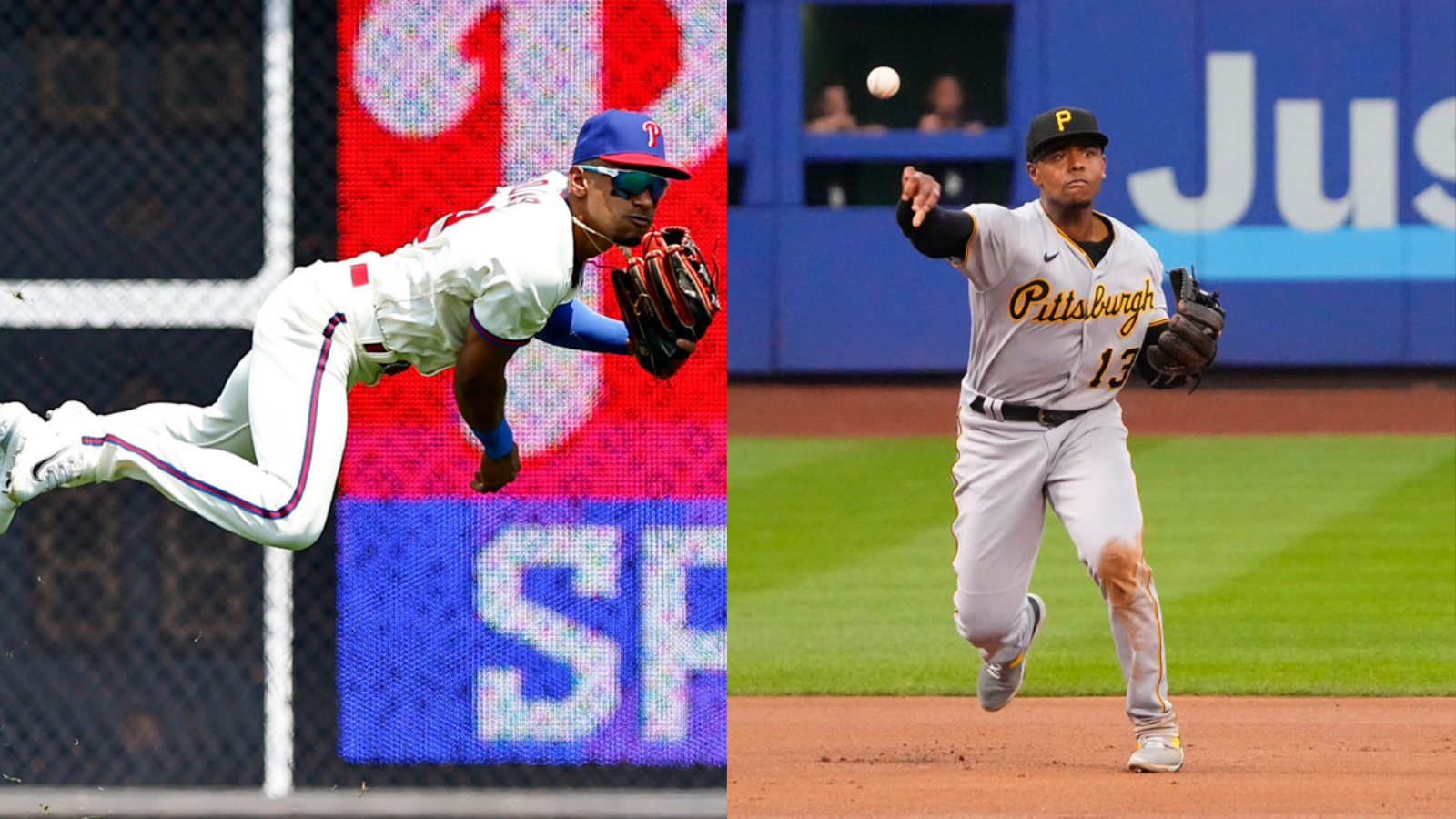
    This month the SIS/Fielding Bible Awards Defensive Player of the Month goes to two players who demonstrated defensive dominance in August: Phillies center fielder Johan Rojas and Pirates 3rd baseman Ke’Bryan Hayes.

    Rojas is getting it done at a premium position for a Phillies team that can use the defensive help. He saved 11 runs in August, the most of any player, and has 12 Defensive Runs Saved for the season. He ranks tied for 3rd in Runs Saved by a center fielder despite ranking 44th among them in innings played. Rojas was also the runaway leader in Runs Saved by a minor league center fielder with 15.

    Rojas also covers ground better than most. He ranks 5th in MLB’s Jumps stat, covering nearly 3 feet more than the average outfielder within the first 3 seconds of batted-ball contact. He ranks 3rd in the Statcast metric “Burst” – covering more ground than the average outfielder when the ball has been in the air from 1.5 to 3 seconds.

    Additionally, Rojas has a strong arm, one that has averaged about 92 MPH on the top 10% of his throws. That ranks Top 5 among center fielders this season. Also impressive is that he’s minimized his mistakes. He had only 1 Error and no Defensive Misplays the entire month.

    Rojas’ 11 Runs Saved for the month easily topped the next-closest center fielder. Daulton Varsho (6) of the Blue Jays was the only other player with more than 5 Runs Saved there in August.

    Hayes also easily led his position with 9 Runs Saved in August. The next-closest third baseman for the month was Austin Riley of the Braves with 5 Runs Saved.

    Hayes is a two-time winner of the award this season, having also taken the honor in April. This month marked a triumphant return from the lower back injury that caused him to miss all but one game in July. Hayes now has 20 Runs Saved this season and reclaimed the seasonal lead in Runs Saved at third base from Ryan McMahon of the Rockies, who has 17. No one else has more than 10 Runs Saved at that position this season. By the way, Hayes also hit .320 with 6 home runs, 20 RBI, and a .956 OPS in August.

    Other players under consideration for the award this month included Guardians left fielder Steven Kwan and second baseman Andrés Giménez, and Padres right fielder Fernando Tatis Jr. Each led his respective position in Runs Saved for the month.

    A reminder that Sports Info Solutions will announce the winners of The 2023 Fielding Bible Awards in late October. A panel of voters selects the top defensive player at each position, along with a multi-position honoree. This will be our 18th consecutive year presenting this honor.

  • Dodgers Doing It On Defense Again

    Dodgers Doing It On Defense Again

    On June 18 the Dodgers lost to the Giants, 7-3, completing a three-game Giants’ sweep in which the Dodgers were outscored 29-8 and gave up at least 7 runs in every game.

    Each of the last 2 games featured an array of misplays and errors. There were offline or wasted throws, missed line drives, bobbled ground balls, and multiple failures to catch throws.

    At that point in the season the Dodgers were a not-very-Dodgers like 39-33.

    Since that day, the Dodgers have looked a lot more like the Dodgers you thought you knew, going 44-16. And they’ve had something of a defensive reset.

    The Dodgers totaled -5 Defensive Runs Saved and ranked 21st in that stat at the All-Star Break. But since the Break, they rank No. 1 with 43 Runs Saved. They’re now 4th overall.

    Most Defensive Runs Saved – 2023 Season

    Team Runs Saved
    Blue Jays 72
    Brewers 50
    Padres 41
    Dodgers 38
    Rays 34


    What’s been so good about the Dodgers defense this season?

    Left Side of the Infield

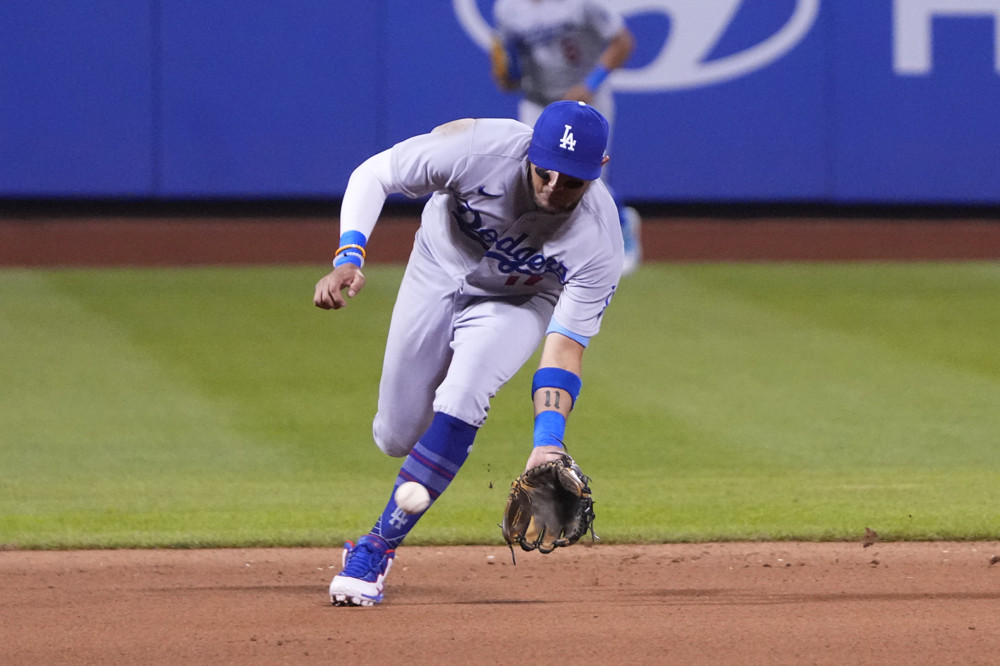
    When the Dodgers traded for Miguel Rojas in January, they knew they were getting a top defensive player. And though Rojas hasn’t hit, he’s more than met defensive expectations with plays like this one. He ranks 4th among shortstops in Defensive Runs Saved with 11 and he has the most Runs Saved of any Dodgers player since their hot streak started on June 20 with 7.

    Additionally since returning from injury on June 27, Max Muncy has looked more like the third baseman he was in 2022 when he saved seven runs in a little more than a half-season’s worth of games. He’s saved 4 runs there since his return. He was at -2 at third base prior to that.

    Mookie

    Mookie Betts isn’t going to win a Fielding Bible Award in right field this season but he’s in-play for our multi-position honor.

    In 2023 Betts has split time between right field, second base and shortstop. He’s handled second base particularly well, netting 6 Runs Saved in 50 games. And keep in mind that he was replacing Miguel Vargas, who was at -3 Runs Saved there.

    The Outfield

    The Dodgers are one of the best teams in baseball at turning balls hit in the air into outs. Among a crowded field of teams they rank in the Top 5 in that stat both overall and specific to balls hit to the outfield.

    Through June 18, they ranked 11th in an efficiency stat that measures their catch rate (how often they’ve caught balls). Since then, they’re No. 2 in MLB and they’ve increased their out rate by more than 4 percentage points.

    An increase of that much on the roughly 800 balls hit in the air represents about 34 more catches than they would have made if they were performing at their pre-June 20 level.

    Out Rate on Balls Hit In the Air

    Through June 18 Through June 20
    Out Rate 66.6% 70.9%
    Out Rate (Balls Hit to OF) 59.6% 64.0%


    With Betts being shuffled between right field and the infield, the success of the Dodgers outfield defense this season is more of a collective effort than one player carrying the load. For example, three-time Fielding Bible Award winner Jason Heyward has saved 4 runs in 68 games in right field (though he’s -2 in a brief amount of time in center. Another past Fielding Bible winner David Peralta has manned left field without issue, saving 4 runs.

    And more recently, James Outman has lived up to his last name. He has 3 Runs Saved playing center field exclusively in August. He was -3 there prior to that.

    Putting Players In The Right Place

    When we say collective effort, that includes the team’s coaching staff too. Our Defensive Runs Saved splits up credit between a player’s skill and how well or poorly he’s positioned.

    The Dodgers have 21 Positioning Runs Saved combining the team’s infield and outfield alignments. Here are a couple of instances (here and here)in which the team got significant positioning credit for putting their fielders in position to best use their skills.

    Catcher

    What Will Smith has done the last three years with both his bat and his glove is impressive. Smith is in line for his 3rd straight season with an OPS+ of 120 and at least 5 Defensive Runs Saved behind the plate.

    Smith currently ranks tied for 5th among catchers with 8 Runs Saved (which would be his best season total yet) helped by above-average pitch-framing stats. The Dodgers are 58-29 when he starts at catcher, 25-20 when he doesn’t

    A Tale of 2 Pitchers

    Just like the Dodgers knew what they were getting in Miguel Rojas, they knew what they were getting in Noah Syndergaard. And when they traded Syndergaard, who has never been able to thwart a running game, they got rid of a pitcher who was bringing down the team’s Runs Saved total. He was at -4 for them. They’ve also since dealt oft-used reliever Phil Bickford and his -3.

    But one guy who hasn’t gone anywhere is Clayton Kershaw, who has 4 Runs Saved, giving him potentially his best defensive season since 2015.

    In Sum

    Give the Dodgers credit for consistency. Presuming these numbers hold up, they’ll rank in the Top 10 in Defensive Runs Saved for the 8th straight season. They’ve ranked in the Top 6 in 6 of the last 7 years. Defensive excellence continues to be a staple for them year-in and year-out. This year, it just took them a little while to get to that point.

  • Marveling At The Defense Of Fernando Tatis Jr.

    Marveling At The Defense Of Fernando Tatis Jr.

    It was never a question of if Fernando Tatís Jr.’s athleticism would play on defense. Even in his tumultuous time as a shortstop, he flashed the leather with leaping plays that made him look more like the Air Jordan logo than a baseball player. 

    But the errors piled up and the Defensive Runs Saved sank, and after a brief cameo in the corner outfield in late 2021, it was clear Tatís, who missed all of last year first due to a fractured wrist and then a PED suspension, would be calling right field his more permanent home entering 2023. 

    By the numbers, the move has paid off in spades. The 24-year-old is the runaway right field leader in Defensive Runs Saved with 23. His 21 Runs Saved rank second among all outfielders, trailing only Daulton Varsho’s 24 and above past Fielding Bible Award winners like Kevin Kiermaier and Steven Kwan. 

    Most Defensive Runs Saved – 2023 Right Field 

    Name Team Runs Saved
    Fernando Tatis Jr. Padres 23
    Alex Verdugo Red Sox 14
    Ramón Laureano A’s-Guardians 9
    Adolis García Rangers 7
    Will Brennan Guardians 7
    Blake Perkins Brewers 7

    A closer look reveals how he’s tapped into his unicorn-like athletic ability to close the gap on such stalwarts, and where he can hope to improve to rank among the truly defensive elite in the outfield. 

    The arm

    What stands out, perhaps unsurprisingly, is his arm. He’s tied for 2nd among outfielders in assists with 11 and the video shows they’re no cheapies. 

    “I was having a conversation about this very topic the other day and the thing we are all wondering is why people keep running,” SIS VP of Baseball Bobby Scales said. “It seems foolish, but they keep going.”

    “The only thing we can think of is they are testing his decision making and/or his accuracy. Jeff Francoeur used to be this way as well: People ran because they were betting on him chucking it into row ZZ. But if they were wrong, it was ugly.” 


    Early on in the year, like the plays shown above, it was a matter of baserunners and base coaches underestimating the might of his cannon. As the season has progressed, however, he’s been turning awkward angles into surprising outs. 

    Of Tatís’ 4Good Fielding Plays given for outfield assists in June, three came on plays in which his momentum was carrying him toward the right field line. Two such plays demonstrate the potential of Tatís’ defensive ability (on the third, the Colorado broadcast team claims Elehuris Montero stumbled a bit out of the box, making him easier to nab). 

    On this play against the Guardians, Amed Rosario, who possesses 95th percentile sprint speed (per Baseball Savant), thinks about taking two. As he sees Tatís digging the ball out of the corner, he throws on the brakes, fearful of getting nailed at second. Tatís, whose mind was surely on making the throw to second to try to prevent Rosario from getting there, sees the runner make the wide turn, adjusts, and fires a one-hop strike to Jake Cronenworth for the out. 

    The baserunner is erased, both out of fear of Tatís’ arm and because of it. 

    In this play, Elly De La Cruz chops a single into shallow right. Tatís comes in to field the ball and De La Cruz, maybe the fastest man in the sport, decides to challenge him. The displaced infielder picks up the ball like a second baseman, turns like he’s making a throw across the diamond, and fires a seed to get the runner. 

    In both plays, Tatís is able to control himself as he moves laterally to field the ball, shift his body to put himself in a position to make a throw back toward the infield, and fires to get the runner. They require skills one might typically expect from an infielder, demonstrating one of the advantages the former shortstop seems to have over his outfield contemporaries: He was playing on the dirt just two seasons ago. 

    The range

    It hasn’t been only with his arm that Tatís has been able to save extra bases. He leads all right fielders with +10 Plays Saved on deep balls, which are likelier to be doubles and triples. 

    The converted infielder has shown no fear going back toward the wall. On this play, in just his 21st Major League game in right field, he sprints toward the corner before using the fence to stop his momentum. At the end of last month, he navigated an awkward right field corner at Petco Park to rob Bryan Reynolds, crashing into the jutting right field foul pole to pad his fall. 

    The downside

    Early in the season, he made his share of misplays that can likely be attributed to inexperience. 

    On two plays in his first series back from suspension, Tatís attempted to throw to the base ahead of the lead runner, allowing the trail runner to advance an additional base. On one hit in his very first game back, he fired home even though the runner didn’t even attempt to advance from third, making it easy for the batter to take second. 

    The 4th-year standout has also suffered a bit from overestimating his own ability. He didn’t have much of a chance on two failed slides against the Nationals in the first half, allowing runners to move up extra bases. 

    But though there have been mistakes – Tatis ranks 8th among right fielders in our Defensive Misplay tracking on a per-inning basis – the benefits have far outweighed the risks.

    And it’s that athletic ability that makes one wonder what the defensive ceiling looks like for him. 

    He gets a defensive misplay on this deep fly ball for not reeling it in, but if you were to make a short list of outfielders who have a chance to make that play in the first place, Tatís might be the only name. 

    That always is the case: No matter where he finds himself on the diamond, Tatís’ upside is sky-high.

  • Stat of the Week: Rookies Making Big Defensive Impacts For Contenders

    Stat of the Week: Rookies Making Big Defensive Impacts For Contenders

    Have you gotten to see the Phillies rookie center fielder Johan Rojas since his recall about a month ago?

    He’s been something to watch from Day 1.

    Rojas was the runaway leader in Defensive Runs Saved in center field in the minor leagues. And he’s racing up that leaderboard even after just 30 games in the major leagues. He’s already saved 10 runs and is within striking distance of the MLB leaders in Runs Saved in center field, Kevin Kiermaier and Daulton Varsho, who each have 13 for the Blue Jays.

    Player Team Runs Saved
    Kevin Kiermaier Blue Jays 13
    Daulton Varsho Blue Jays 13
    Johan Rojas Phillies 10
    Brenton Doyle Rockies 10
    Kyle Isbel Royals 10

    Rojas is a potential gamechanger for a Phillies team that has struggled defensively the last few seasons. The Phillies had -24 Runs Saved at the All-Star Break but have actually increased that total by 5 runs since then.

    But Rojas isn’t the only rookie to make a prominent impact defensively for a postseason contender.

    We’ve brought up a few in some of the articles we’ve written. Here’s a list of those who have been the most impressive for potential playoff teams.

    Giants catcher Patrick Bailey leads everyone at that position with 15 Runs Saved. He’s been great at both pitch framing and controlling the running game. He will be a strong contender for a Fielding Bible Award.

    Another catcher, Yainer Diaz of the Astros, has forced Houston’s hand a little bit, as his 4 Runs Saved are considerably better than pitching staff favorite Martín Maldonado’s -10.

    We just wrote about Mariners infielder José Caballero and outfielder Cade Marlowe in an article for our website this week. Caballero has 9 Runs Saved, most of anyone on the team. Marlowe has excelled for the Mariners, contributing 7 Runs Saved to an outfield that ranks 4th in the majors in that stat.

    There’s also Orioles infielders Gunnar Henderson and Jordan Westburg. Henderson, barely rookie eligible after getting a long look last season, has 7 Runs Saved at shortstop and 2 at third base. Westburg has 6 Runs Saved at second base (and -2 at third base) since his recall two months ago.

    The NL Central is loaded with talented rookie fielders. The Brewers have Joey Wiemer and Brice Turang, as well as our June Defensive Player of the Month winner, Blake Perkins. Between the 3 of them, they have 23 of the Brewers’ 46 Runs Saved. Turang ranks tied for 5th at 2nd base with 8 Runs Saved. Perkins, out with an oblique injury, has played even less than Rojas but ranks tied for 4th among right fielders with 7 Runs Saved. Overall, the Brewers rank second to the Blue Jays in Runs Saved this season.

    And yes the Reds have Elly De La Cruz, but their best defender may be Matt McLain, who has split time between shortstop and second base and handled both without issue. He’s tied for the team lead with T.J. Friedl with 5 Runs Saved.

    There are some big moments ahead for these players in the next 5 weeks. They’ve played like seasoned veterans so far but their biggest tests have yet to come.

  • The Transformation of Kodai Senga

    The Transformation of Kodai Senga

    Photo by Wilfred Perez/Icon Sportswire

    Kodai Senga has come to Major League Baseball and immediately cemented himself as a top of the rotation pitcher. In his first season in MLB Senga has put up the 12th-lowest ERA among qualified pitchers with a 3.19. He’s also totaled the 9th highest K% (28%) and the 15th best swinging strike rate (12.5%).

    It’s worth mentioning that Senga is doing this with a baseball completely different from what he was used to. MLB baseballs are slightly bigger and less tacky compared to NPB baseballs. 

    Senga had a 4.14 ERA in his first 7 starts. But in his 8th start, May 17 vs the Rays, it seems like things clicked for him. In that start Senga went 6 innings, struck out 12 and allowed only 1 earned run. There’s been notable differences in how Senga has used all of his pitches since that game. The results have been there. He’s dropped his season ERA by nearly a full point.

    Brandon Tew and I wanted to see how much he’s changed from last season in Japan. Brandon will touch on how he worked in Japan in 2022 and I will dive into Senga this season. If you want a more in-depth look at Senga in NPB you can read it here.

    4-seam fastball

    NPB: Senga was reliant on early-count fastballs to get ahead of hitters early. This would bite him every now and then as he gave up 4 HRs off the fastball. The threat of getting beaten on a badly-located fastball was still minimal so it didn’t stop him from using it.

    MLB: Senga’s 4-seam is still his most used pitch but the usage continues to decline. This is mostly because the shape of it isn’t great. It has just above-average ride so he struggles to get swings and misses (a 16.7% whiff rate). 

    Senga doesn’t even rank in the Top 200 in fastball induced vertical break (iVB) with an iVB of 16.4 inches, not far above the league average of 15.7. For reference, the best iVB is Felix Bautista with 20.5 inches. Basically, Senga’s fastball doesn’t have much deception compared to others.

    Hitters aren’t necessarily crushing his fastball relative to other pitchers. they have a .267 avg, .424 slug with 6 home runs (MLB average fastball numbers are .270 and .448). The problem for Senga was the counts in which he has used the fastball. He was using the fastball in the “traditional” fastball counts, so hitters were ready for it. 

    Here’s a graphic from Baseball Savant showing Senga’s usage by count in his first 7 starts. He was using the 4-seamer earlier in counts, similar to when he used it in Japan. Now he’s started to use the cutter early in counts and save the fastball for late in the ABs. With 2 strikes the fastball usage has gone from 28% to 37%.

    The splits this season for the fastball when the batter is ahead vs when the batter is behind show decisively different numbers, particularly with his whiff rate.

     Batter ahead: .288 avg .441 slg 8% whiff

     Batter behind: .234 avg .404 slg 24% whiff

    Using the fastball late in counts is super effective because of the way it tunnels with his forkball. Because his forkball is so nasty, hitters have to be ready for it late in counts. Senga uses this to his advantage and surprises them with his fastball. 

    Cutter

    NPB: Senga mainly attacked the best hitters in NPB with his cutter. He threw it mainly inside to LHBs but he would throw the pitch to different quadrants. Including down and away from RHBs or backdooring it to lefties. 

    MLB: Senga’s cutter has become not just his most important pitch, but one of the best pitches in all of baseball. The cutter has totaled a 17 Run Value, the highest for a cutter, and 10th-best for any pitch in baseball. 

    In 127 ABs ending with one, hitters have only a .205 avg and .268 slg. He generates a 51% ground ball rate against it. His ability to make it move late and get just under the barrel makes it difficult for hitters to square up. 

    Similar to when he was in NPB, he will throw it anywhere, but he can change the shape of it too. Sometimes it cuts, sometimes it goes straight down, and sometimes he can make it move arm side

    This usage by count breakdown shows his usages since the May 11 start. His cutter usage has seen a big increase in counts where the hitter has the advantage. In the first 7 starts, he used it 34% when he was behind in the count, it’s up to 51% since.

    Forkball

    NPB: The forkball was Senga’s best weapon. He threw it more than any other pitch in 2-strike counts and over half his strikeouts came with it. The pitch would consistently fool hitters because they had to gear up for his fastball.

    MLB: Senga’s forkball is one of the nastiest pitches in all of baseball. For pitch types with at least 100 plate appearances here are some ranks for Senga’s forkball:

     .128 avg (7th-lowest)            

     .152 slg (2nd-lowest)                 

     58.6% whiff (1st)            

     55.9% K (2nd)

    The tunnel effect he gets on the forkball and 4-seamer make it incredibly difficult for hitters to pick up on. Senga’s average vertical break on the forkball is 37.5 inches. 

    The key is that it stays on the same plane as the fastball for such a long time then drops off a cliff. Here’s an example in video form from Pitching Ninja.

    Not only is Senga’s tunneling with his forkball and fastball elite but the velocity differential between the 2 pitches is one of the best in baseball (compared to other pitchers’ splitter/fastball differential). Senga gets a 12.4 mph difference between the 2 pitches, 2nd-best to only Fernando Cruz who gets 12.8 mph.

    Curveball

    NPB: Senga had two different curveballs, a 12-6 curve (mid 70s MPH) and one that was slurvy (low 80s mph). He had trouble keeping the shape consistent with both of them. He struggled to use the pitches effectively because of that but the change of speed helped keep hitters off balance. 

    MLB: Senga has separated his two curveballs since coming to MLB. His curveball this season is 12-6 with big drop and thrown super slow (73 MPH). 

    He uses it to surprise hitters and steal strikes a few times a game. He’s thrown 61 CBs, 49 of them have been first pitches of ABs. 

    Sweeper 

    MLB: We think the slurvy variation of Senga’s curveball in Japan is what is being classified as his sweeper. 

    His sweeper has a lot of drop and not much sweep. Compared to other sweepers thrown at similar velocity (81 MPH) and release height to Senga’s, he gets 4 inches more drop and 2.1 inches less sweep.

    The sweeper has been his worst pitch. Hitters are 7 for 21 with a .952 slug, including 4 homeruns. The break of the sweeper is pretty lazy and thus easy for hitters to track.

    Slider

    NPB: Senga’s slider was always a work in progress. He spun it well but was never consistent. He only used it to give hitters a different look, it wasn’t a main part of his plan.

    MLB: The slider he began throwing as an alternative to the sweeper has been effective. Hitters are only 5-for-25, with all the hits being singles. It’s a gyro slider with high spin and sharp break. He’s done a great job of picking certain hitters and spots to use it in.

    Summation

    These 12 strikeouts against the Diamondbacks on July 5 show how difficult Senga can be to face with his repertoire. Bad swings on forkballs, fastballs taken down the middle, plus some help from the pitch clock. 

    Senga’s already put his name into the Rookie of the Year conversation. As he continues to evolve, he could become the favorite after a few more starts.

  • It’s Not Just The Hitting and The Pitching For The Mariners

    It’s Not Just The Hitting and The Pitching For The Mariners

    The Mariners are rolling.

    They’ve scored 55 runs in their current seven-game winning streak. Julio Rodríguez has been impossible to get out and that’s rubbed off on his teammates.

    So of course, we want to talk about their defense.

    The Mariners rank 9th in MLB in Defensive Runs Saved. So it’s not just the hitting that explains why they’re 15 games over .500.

    The key to their ranking is the performance of their outfield. The Mariners outfield ranks 4th in Defensive Runs Saved. The team has a 61.8% out rate on balls hit to the outfield, 2nd-highest in MLB.

    Here are the top defensive outfields in MLB.

    Team Runs Saved
    Blue Jays 45
    Padres  25
    Guardians 23
    Mariners 22

    By our measures, Seattle doesn’t necessarily have anyone who’s going to blow you away save for small-sample size superstar Cade Marlowe, whose strong Statcast “burst” numbers have allowed him to make up for slow reactions to the ball off the bat. 

    Marlowe made the catch in the tweet above filling in for Rodríguez in center field last night. He’s spent most of his time since his recall in left field, where he has 7 Runs Saved, including a couple of assists, like this one on which he played spoiler for another player’s memorable moment. 

    The Mariners have done well with whoever they’ve put in left field. Jarred Kelenic and A.J. Pollock have also combined for 5 Runs Saved there.

    But more than anything, the Mariners outfield is good because the team doesn’t play anyone who is bad. All but 73 innings this season have been played by an outfielder who totaled a non-negative number of Runs Saved.

    Go figure that Teoscar Hernández has been an unexpected positive contributor in right field. He’s never finished a season with a positive Runs Saved total there but has 4 Runs Saved. 

    The Mariners play him deep – at an average depth of 297 feet at T Mobile Park, an average of about 7 feet deeper than they played their right fielder last season.

    Hernández had a strong first month, with 5 Runs Saved at the end of April. He’s leveled off since then but his season numbers are still alright. 

    Depending on your metric of choice, Rodríguez is either having a great defensive season (Baseball Savant’s Runs Prevented) or one that’s a little above-average (Defensive Runs Saved). The metrics agree that he’s good but differ on the degree, which happens sometimes. In this case, there’s an explanation. Our Defensive Runs Saved separates out the value a team accrues from properly positioning him. Rodriguez, Steven Kwan, and George Springer have each netted 6 Positioning Runs Saved for their teams, the most for any outfielder in MLB this season.

    Rodríguez is another player who can make up ground with a burst once the ball has been in the air for 1.5 seconds and that’s led to a bunch of dazzling catches. 


    The other player who has given this team a defensive boost is a surprising one. The Mariners were projected to open the season with a pair of Gold Glovers in second baseman Kolten Wong and shortstop J.P. Crawford. But the team’s best defensive infielder by Runs Saved has actually been utility man José Caballero. The soon-to-turn 27-year-old rookie has 9 Runs Saved split primarily between the two middle infield positions.

    The Mariners aren’t a perfect defensive team. The numbers from their corner infielders, particularly Ty France and Eugenio Suarez aren’t great (though they’ve put up good numbers at first and third in the past), their primary catcher Cal Raleigh hasn’t quite replicated what he did last season when he ranked 3rd among catchers in Runs Saved, and J.P Crawford hasn’t matched where he was in 2020 and 2021.

    But right now there’s enough there both at the plate, on the mound, and in the field to make up for that.


  • Stat of the Week:  The Surprise Defensive Runs Saved Leader

    Stat of the Week:  The Surprise Defensive Runs Saved Leader

    Photos: Larry Radloff/Icon Sportswire

    Whenever I share the list of Defensive Runs Saved leaders by position, there’s one name that always elicits a strong reaction.

    People are surprised that not only is Carlos Santana of the Brewers the leading first baseman, he’s the leading first baseman by a healthy margin.  He has 9 Runs Saved, well ahead of Christian Walker (5 Runs Saved), Matt Olson (4), Anthony Rizzo (3), and Paul Goldschmidt (2), who have combined to win the last 8 Fielding Bible Awards. Santana has never won one.

    Santana doesn’t exactly look the part. His body type would best be described as “stout.” He’s listed at 5-foot-11, 210 pounds, and at that height he’s one of the shortest first basemen in MLB. At 37 years old, he’s also one of the oldest, which might make you think that his ideal position is DH.

    But Santana has played a good first base in the past. This will be his 4th consecutive season with positive Runs Saved there. Since a rough 2015 in which he cost his team 11 runs with his defense, Santana has had positive Runs Saved in every season but one, peaking at 8 in 2017. He ranks 4th in Defensive Runs Saved by a first baseman over the last 3 seasons.

    Most Defensive Runs Saved, 1B Since 2021

    Name Runs Saved
    Christian Walker 26
    Matt Olson 16
    Lewin Díaz 14
    Carlos Santana 13
    Paul Goldschmidt 13

    How Is He Doing It?

    So what’s driving Santana’s success?

    Amassing Runs Saved at first base largely comes down to how well you field balls and finish plays more than how you handle throws (being well positioned isn’t part of the calculation). It might surprise you: Santana is pretty good at fielding and finishing.

    Santana rates 13 Plays Saved better than the average first baseman (Plays Saved is similar conceptually to Statcast’s Outs Above Average). If you go to The Fielding Bible website, you’ll see that he’s an MLB-best 7 plays better than average on balls hit to his right, 4 plays better on balls hit to his left, and 2 plays better on balls hit at him.

    So how is Santana getting to all of these balls?

    In addition to charting batted ball locations and speeds, SIS also denotes what we call elements of descriptive defense, such as: Did the fielder slide, dive, or jump to make the play?

    Santana is playing 2023 all-out. He leads all players with 29 plays made via slides, dives, and jumps this season (click the hyperlinks to see examples).

    2023:      29 Diving, Sliding, Jumping plays in 852 innings

    2021-22: 28 Diving, Sliding, Jumping Plays in 1,822 innings

    He leads all first basemen with 53 such attempts. But his efforts are not wasted.

    Carlos Santana in 2023

    Type Plays Made-Attempts Success Rate (MLB avg)
    Dives 15-28 54% (37%)
    Slides 8-11 73% (71%)
    Jumps 6-14 43% (39%)

    Santana is succeeding at an average or better rate in sliding, diving, and jumping. Of his top 6 defensive plays made this season by Runs Saved value, 5 of them involved Santana diving, sliding, or jumping either to extend his range or to make sure he’d successfully corralled the ball.

    Santana got off to a slow start after being traded by the Pirates to the Brewers but Craig Counsell continues to play him. The Brewers have been rewarded twice this week with home runs. They’ve also gotten good defense. In 16 games with the Brewers, Santana has 3 Runs Saved.