
With the MLB Draft coming up this weekend we can put some of the college data we track to use in evaluating some of the top prospects. For college baseball we chart the ACC, Big Ten, Big 12, and SEC similar to what we do in the minors and majors. Among the things we generate are a suite of hitting statistics meant to emulate MLB’s exit velocity and hard-hit rate numbers, as well as our flagship stat, Defensive Runs Saved. Here’s a look at where MLB’s top six college position player draft prospects rate in those stats.
UCLA shortstop Roch Cholowsky is the consensus top college position player prospect in the MLB Draft and MLB.com‘s No. 2 player overall.
By hard-hit rate he finished in the 77th percentile of college players in the leagues we tracked. Because we track college players using MLB out probabilities, it is highly unusual for a college shortstop to finish with a positive Runs Saved. Cholowsky came close with -3 Runs Saved, finishing third among shortstops who played at least 200 innings this past season.
Roch Cholowsky – 2026 with UCLA
|
Category |
Stat |
|
BA |
.320 |
|
HR |
21 |
|
Hard-Hit Rate |
75th percentile |
|
SS DRS Rank |
3rd-best |
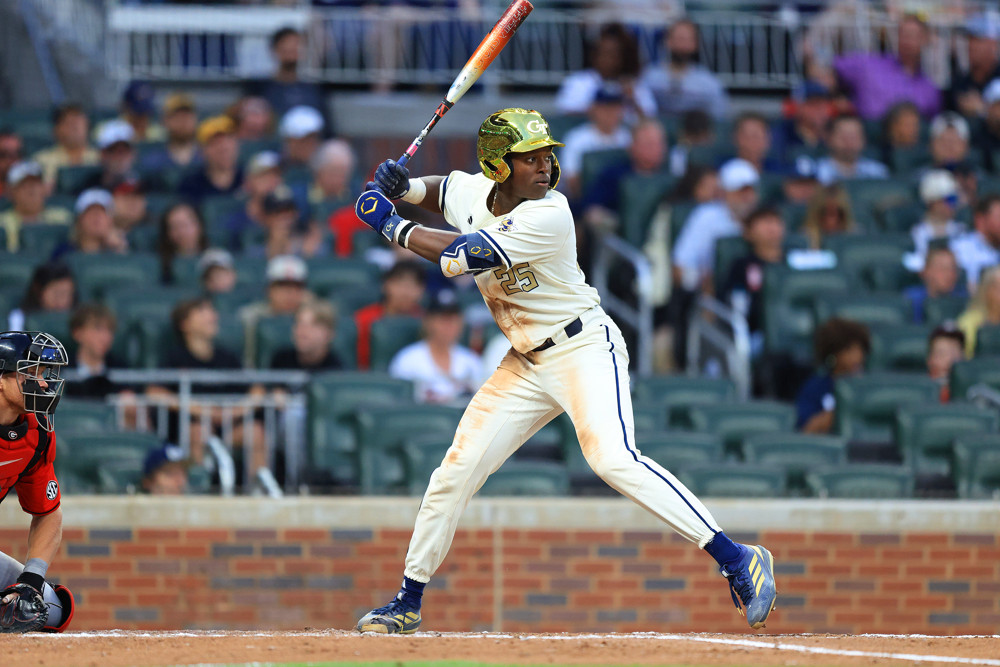
Georgia Tech’s Vahn Lackey (MLB No. 3) is the leader of a team that is loaded with draft prospects. His hard-hit rate ranks in the 83rd percentile among college players. Lackey also fared very well in our “expected stats.” He had the fourth-highest xSlug* of any player we tracked (.470). Lackey ranked in the middle of the pack in Runs Saved among catchers (who are judged largely based on how they do at getting more strikes than expected).
* xSlug is also calculated against an MLB basis, hence the xSlug being far lower than his collegiate stats
Lackey’s teammate, center fielder Drew Burress (MLB No. 7) is one of the top hitters in this year’s draft. His 49% hard-hit rate ranked in the 98th percentile. Burress’ -6 Runs Saved doesn’t necessarily sound good but he’s in the top 20% of center fielders if we evaluate them on a Runs Saved per inning basis.
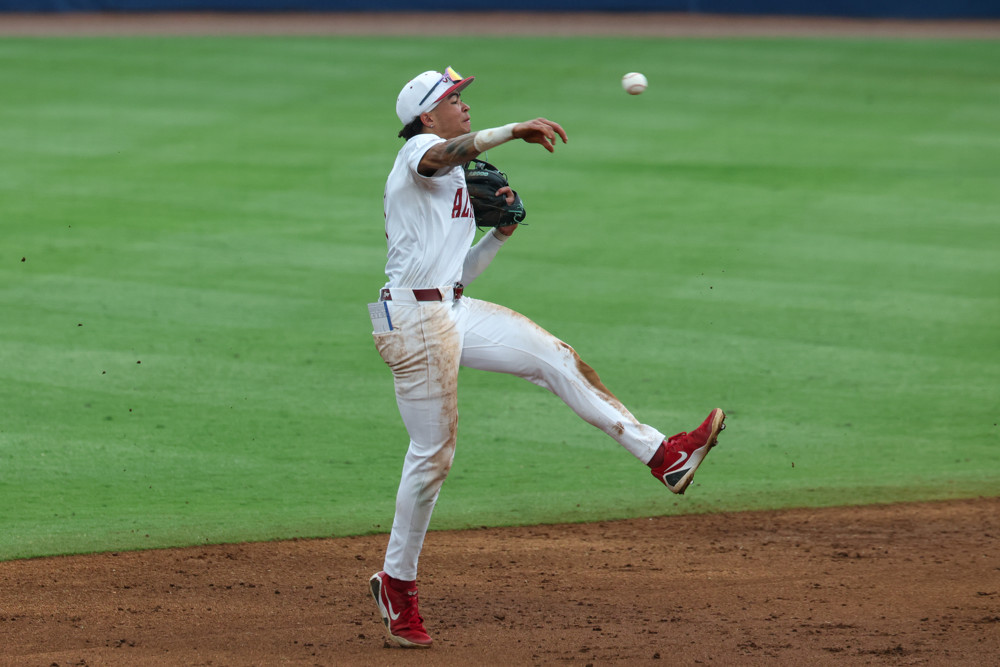
Alabama shortstop Justin Lebron (MLB No. 9) has a 73rd percentile hard-hit rate. Similar to Burress, his college Runs Saved looks better when compared to collegiate players than compared to current major leaguers. He’s in the top 20% of the college shortstops we tracked in Runs Saved per inning.
David Buono/Icon Sportswire
Kentucky shortstop Tyler Bell (MLB No. 10), a switch-hitter who hit .343 with 9 home runs at Kentucky, has a 73rd percentile hard-hit rate. Defensively, Bell is in the top half of shortstops in Runs Saved per inning.
Ryder Helfrick of Arkansas (MLB No. 11) is a premier defensive catcher, so we’ll lead with that. He ranked second to Chase Fralick in Runs Saved by a catcher within those four leagues this season. Helfrick hit .305 and .283 the last two seasons, with 33 combined home runs between the two years. His hard-hit rate ranks in the 86th percentile.
Our scouting expert, Brandon Tew, said “Helfrick is a great athlete with upside as a power threat, but he is also a smooth receiver and pitch framer with the arm to contain the running game, as an all-around plus defender.”
A few deep sleepers to keep an eye on: Georgia Tech third baseman Ryan Zuckerman and Pittsburgh outfielder Lorenzo Carrier haven’t made any of the top prospects lists, but they rank No. 2 and No. 4 in our hard-hit rate tracking, respectively. North Carolina second baseman Gavin Gallaher had the most Runs Saved among infielders this season. He’s between No. 100 and 200 on most prospects lists.
The Draft begins with Round 1-4 on Saturday beginning at 1pm ET. It concludes with Round 5-20 on Sunday beginning at 11:30 AM ET.