The NBA Finals are upon us, and bringing with them a taste of pre-millenium flavor.
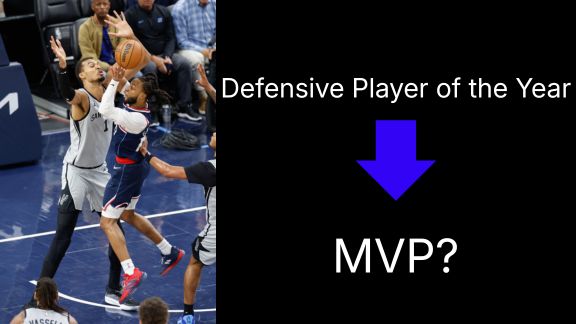
In 1999, the Knicks faced off against a Spurs team led by a generational 22-year-old big man and defensive savant: Tim Duncan. 27 years later, the Knicks face off against a Spurs team led by an all-time 22-year-old big man and defensive savant: Victor Wembanyama.
The Knicks, through a combination of elite play and favorable matchups, have remained relatively untested since the early days of Round 1 against the Hawks, while the Spurs reached the Finals via baptism by fire, defeating the reigning champion Thunder in seven hard-fought games.
San Antonio’s experience against the Thunder should have them well-prepared to take on the Knicks, as the Spurs showed their ability to wear down their opponent’s elite isolation ball-handler with size and physicality while helping off weak points in order to protect the paint at a high level.
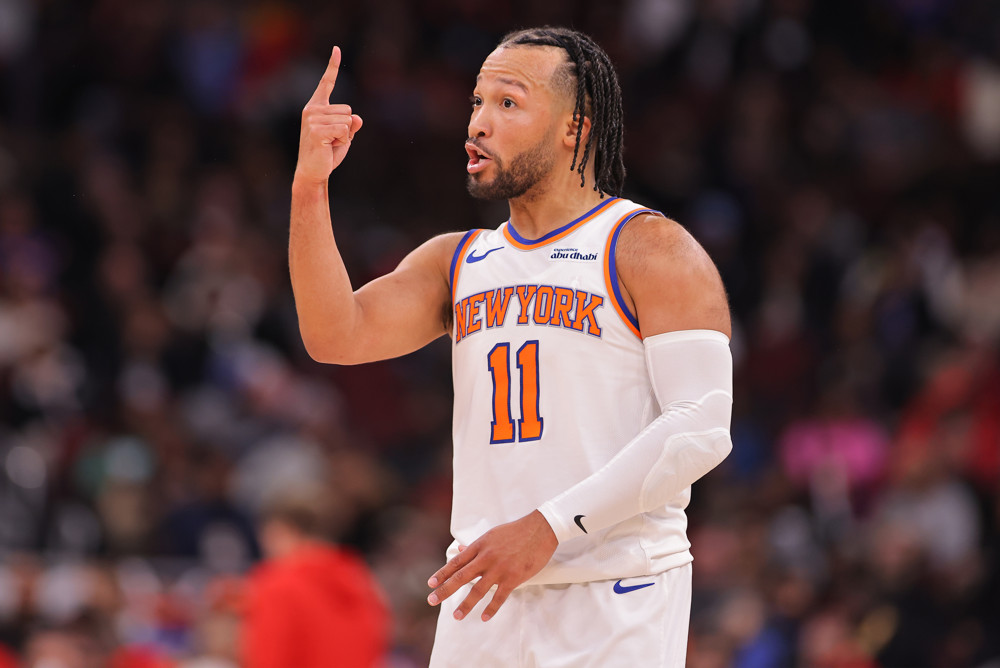
OKC’s Shai Gilgeous-Alexander and the Knicks’ Jalen Brunson share similarities in how they approach the game on the offensive end.
Both stars are known for playing at their own speed, operating in the midrange, and being able to get to the free throw line when needed. Both are wired to score first, and aren’t the most natural playmakers, though both are very willing to move the ball and find the open man. They even represent the two most recent Clutch Player of the Year award recipients.
However, there are also key differences between how the two players and their respective teams play that could provide something of a roadmap for how the Knicks might be able to attack the Spurs’ formidable defense in ways that the Thunder struggled to.
Gilgeous-Alexander doesn’t have many holes in his offensive arsenal, but one area where he is less proficient than other elite guards is his ability to be a consistent threat as a pull-up three-point shooter. His midrange game off the bounce is deadly, but he’s less comfortable behind the arc.
In 15 games this postseason, Gilgeous-Alexander attempted 48 pull-up threes, while Brunson has attempted 58 in one fewer game (per NBA.com stats).
Three-point volume in general can be an issue for the two-time MVP. He averaged 3.9 threes during the playoff run, which he hit at a 30.5% clip. Brunson is averaging 6.3 attempts per game and hitting 35%, a number brought down by his 18% shooting series against the Cavaliers.
While Gilgeous-Alexander’s midrange mastery was a key to the Thunder cruising to the best record in the league during the regular season, the presence of Wembanyama changes how much space you have to operate, so the more room you can give the offense to search for looks, the better.
That’s why it’s not just about shooting threes, but where and how those threes are created that could be a swing factor.
Where the Knicks can take advantage:
The Knicks this postseason have diversified their attack and become less reliant on Brunson’s isolation heroics, a shift the Thunder, missing two of their three best offensive creators, were unable to make.
That said, New York still loves letting its star guard operate at the top of the key off a ball screen, and Brunson is happy to let it fly when he gets a sliver of daylight in a matchup he likes.
The Knicks are 6th among playoff teams in self-created Above-The-Break threes coming off a ball screen (6.5/game). Coming into the series with the Spurs, OKC was 15th (3.6).
Brunson is 7th in the playoffs in volume on those shots (2.8 per game) while SGA was 40th in volume (0.9).
This is a critical part of the approach against the Spurs, who prefer to keep Wembanyama out of ball screens so that he can smother the rim. Creating looks before the first-ever unanimous Defensive Player of the Year is even in the action will be important, as will stretching him as far from the basket as possible when he is in the play.
Attacking the Corners
While the Knicks’ wings, OG Anunoby and Mikal Bridges, can be up-and-down in terms of offensive production, one thing that doesn’t waiver is their elite efficiency from the corners. Both players have been among the top corner three-point shooters since arriving in New York, and that has carried over to the postseason.
The Knicks are shooting 9.1 assisted corner threes per game, the 6th-best rate in the playoffs, and they convert at the third-best efficiency, at 65.5% TS%.
Coming into the Spurs series, the Thunder were shooting 8.8 assisted corner threes per contest, and hitting at 58% TS%, but against San Antonio, that number rose to 11 shots per game, which they hit at roughly the same efficiency.
The Spurs have allowed the second-most assisted corner threes in the playoffs with 9.1 shots defended per game. If the Knicks are able to get into the paint and continue their strong off-ball play from previous series, there’s a decent chance they can find good looks.
Pounding the Glass
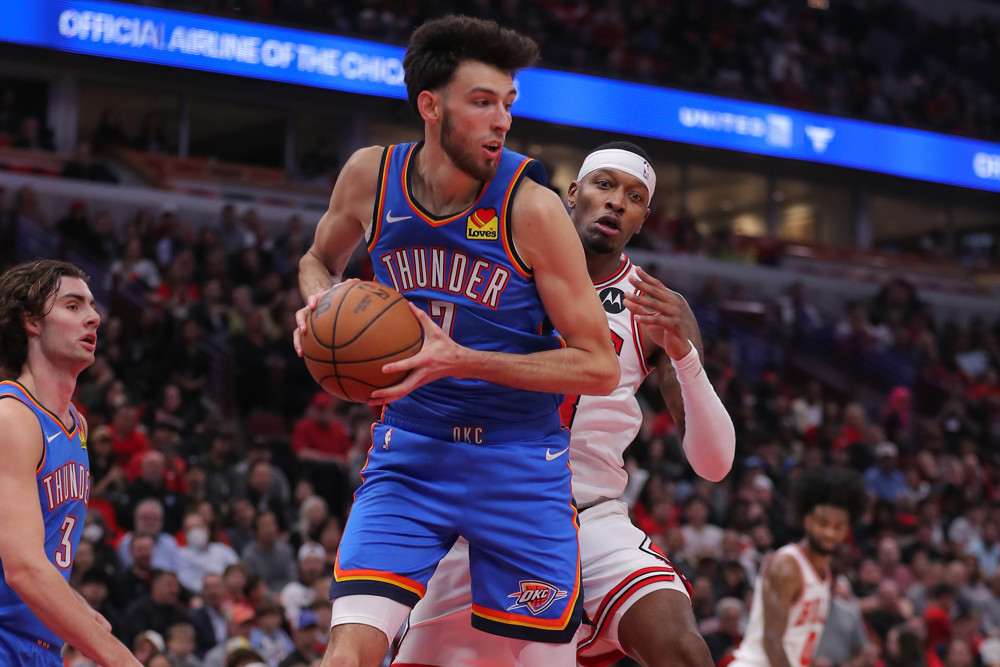
The news that Mitchell Robinson broke his pinky coming into this series was a huge blow. It’s unclear his status, as he’s been listed as “questionable” for Game 1, but his presence will not just be sorely needed as a strong defensive big to play against Wembanyama.
Robinson also helps the Knicks maintain their edge as an elite offensive rebounding team. The extra possessions generated by grabbing offensive boards has become a fundamental part of the Knicks’ identity.
In the playoffs, the Knicks boast a 135 offensive rating and score at 1.15 PPC (points per chance) on possessions following a Robinson offensive rebound per Second Spectrum.
It starts with Karl-Anthony Towns, Josh Hart, and Robinson, all of whom are some of the best rebounders in the game, but it extends to players like Jordan Clarkson and OG Anunoby, both of whom have averaged more than 1 offensive rebound per game in the playoffs.
The Knicks are the best offensive rebounding team in the playoffs (34 ORB%) while the Thunder were 5th (32%) coming into the Western Conference Finals. Against the Spurs, that number dropped precipitously to just under 29% for Oklahoma City, as San Antonio as a team did a disciplined job crashing the defensive glass.
The Knicks will have to find ways to get past the Spurs’ group of physical, hard-nosed defenders to carve out these extra looks if they want to maximize their chances on the offensive end.
Handling the Counters
The Spurs are loaded with strong, physical defenders, especially at the guard position where they can make life difficult for Brunson. They also have the ability to play two-bigs with Wembanyama and Luke Kornet, who is capable of holding his own on the boards.
The Knicks will have to be ready for the Spurs to try to take these potential strengths away, and to adapt when they do so.
Against the Thunder, the Spurs often loaded up with two defenders collapsing on the ball-handler at the top of the key. If they deploy a similar strategy, Bridges will be crucial as a player who can flash into the paint and be an automatic knock-down threat in the midrange (as he has been for the last several weeks), as will Anunoby as a cutter and spacer from the corners.
Every playoff matchup becomes about adjustments the deeper into the series you get. Against a 7’4 destroyer of worlds and his legion of gritty defenders, the Knicks’ offense will have to be unpredictable and ready to adjust on a dime to find the weak points and exploit them.