Tag: Kolten Wong

  • Which Players Have High Injury Risk in 2022? (Bill James Handbook Excerpt)

    Which Players Have High Injury Risk in 2022? (Bill James Handbook Excerpt)

    The following essay is an excerpt from The Bill James Handbook 2022, which is available at bookstores now and can be purchased at ACTASports.com. The book features essays, stats, leaderboards, contained within 640 pages of baseball goodness. 

    by ALEX VIGDERMAN

    Orioles center fielder Cedric Mullins wildly outperformed expectations in 2021. You might hear more about that in the Bill James Projections recap later in the book, because he hit for an OPS nearly 200 points higher than what we projected him for, going 30-30 when we projected him for fewer than 30 total homers and steals.

    Yes, Mullins improved a great deal as a hitter. But the reason Mullins was able to put up an MVP-caliber campaign is that he stayed on the field. He appeared in 159 games, which was more than his career total up to that point. Two other AL MVP candidates through the first month of the season, Mike Trout and Byron Buxton, couldn’t say the same.

    Mullins led the league in defensive opportunities as an outfielder, saved runs at a representative rate for a center fielder, and did so with one of the lowest rates of dives, slides, and jumps, which look great on highlights but are big factors in injury risk among outfielders.

    He (literally) outran his projection of being one of the likeliest position players to suffer an IL-worthy injury in 2021, per last year’s Handbook.

    The same could not be said for most of his comrades on those lists. We listed 10 pitchers and 10 position players who our model found to be most likely to suffer an injury and miss at least 10 days in 2021, and seven players on each list endured such a fate. That includes Spring Training losses like Mike Clevinger’s Tommy John surgery.

    How are we going about projecting something as timeless in its unpredictability as physical injuries?

    Well, we have collected and aggregated injury data for some years now. It started with just noting when a player suffered some kind of injury event during a game: getting hit by a pitch, pulling up lame while beating out a groundball, or crashing into the wall on a deep fly.

    We combine that information with Injured List stints and media reports to create as comprehensive an injury history as anyone outside an MLB organization has. And starting in 2020, we began leveraging that data to investigate injury risk.

    If you read last year’s edition of this book, you’ll recall John Shirley’s introduction to the model we built and the different elements involved. In short, we take injury data and combine it with playing time, position, body type, and play style information to create a daily estimate of how likely a player is to suffer an IL stint or miss at least ten days with an injury over the next week, month, two months, and season.

    For more info on the model, its inputs, and the kinds of insights we’ve already gained, check out our presentation from the 2021 SABR Analytics Conference.

    So, who are we most concerned about heading into 2022?

    As of the end of the 2021 regular season, here’s who we have our eye on.

    Pitchers With The Highest Predicted Injury Risk
    Entering 2022

    1. José Alvarado
    2. Ryne Stanek
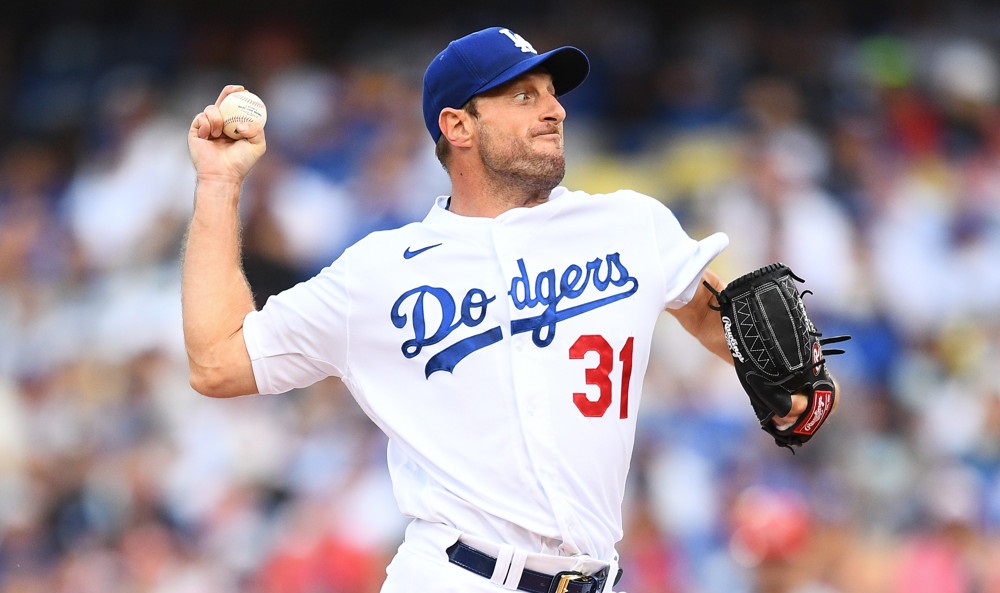
    3. Max Scherzer
    4. Aroldis Chapman
    T5. Peter Fairbanks & Genesis Cabrera
    T7. Jake Brentz & Michael Kopech
    T9. Edwin Díaz, Diego Castillo & Jonathan Loaisiga

    Alvarado, Stanek, Fairbanks, and Castillo were Rays teammates two years ago, and they have eight IL stints between them in the two years since. Perhaps it’s not a coincidence that only Fairbanks remains with the team.

    Fans of power pitching shouldn’t be surprised to see some favorites on this list given the risks associated, but some of the more compelling pitchers to watch over the last few years have warning signs for missed time in 2022.

    Chapman and Kopech have arguably the fastest fastballs of all time. Scherzer is on the back side of his career (pun intended); he has served time on the IL three times with a back injury over the last three seasons.

    Hitters with the Highest Predicted Injury Risk
    Entering 2022

    1. Alcides Escobar
    2. Kolten Wong
    3. Miguel Cabrera
    T4. Carlos Santana & Salvador Perez
    6. Raimel Tapia
    7. Xander Bogaerts
    8. Aledmys Diaz
    T9. Jorge Soler, Franmil Reyes, Didi Gregorius & Jordy Mercer

    What you should notice from the hitter list is that three big risk factors for injury are playing an up-the-middle position, being a bulky corner player / DH, and failing to discover the Fountain of Youth.

    Alcides Escobar hadn’t played in the majors for two years but has already re-signed for a one-year deal with the Nationals, who gave him a bit more than a coffee this season. He doesn’t have a dramatic injury history, but his position and age make him something less than a sure bet in ‘22.

    Salvador Perez and Xander Bogaerts would be huge losses to their respective teams if they were to miss time.

    Perez missed 2019 to injury and after the short 2020 season was able to start 160 games (120 at catcher) this season. That’s not something we expect to continue in 2022.

    Bogaerts has played in at least 136 games in every full season of his career, so it’d be a turn for the surprising for him to miss a big chunk of time, but he plays a tough position and his mix of size and just-past-his-prime age make for a cocktail of injury risk.

  • 10 Free Agents Whose Defense You Should Know About

    By MARK SIMON

    With free agency just underway, you’ve probably looked over the rankings list and made judgements on players. Perhaps you’re using Wins Above Replacement to get a snapshot of a player’s overall value. But it’s human baseball-fan nature to place a priority on how good the player is as a hitter in assessing his overall value

    With that in mind, let’s look at things a little differently. Let’s examine the defensive value of 10 free agents – five premier free agents (star players) and five premier defenders.

    Premier Free Agents

    J.T. Realmuto, C

    What are we supposed to make of Realmuto catching 4-of-19 (21%) runners stealing in 36 games, a year after nailing potential baserunners at a 43% clip in 2019?

    How you answer that question answers what you think of Realmuto’s defense as a whole, as his numbers are largely driven by the stolen base stats. Realmuto had 10 Stolen Base Runs Saved in 2019 after totaling 4 such Runs Saved in his four previous seasons combined. His track record as a pitch-framer is average to below-average. He’s had two good seasons blocking pitches but he’s also had three full seasons in which he rated average.

    George Springer, OF

    Springer is going to get paid for the total package. He’s a good center fielder by the numbers, maybe not Kevin Kiermaier or Byron Buxton, but still decidedly above average. Over the last two seasons he’s averaged just under 15 Runs Saved per 1,000 innings, within striking distance of Kiermaier’s 16.5 and in the top-third among center fielders overall.

    Springer can also play right field if needed. Some stories link Springer to Boston, which makes sense given his Connecticut roots. He’s also an outfielder used to playing quirky field dimensions in Houston, which may make him a good candidate to adapt well to Fenway Park.

    Marcell Ozuna, OF

    Premature wall climbs and other odd plays aside, Ozuna is probably going to come out a little better than he looks. In his three seasons playing left field full time (2017 to 2019 for the Marlins and Cardinals), he totaled 13 Runs Saved. When Ozuna played well, his arm helped him along (he has 11 career Outfield Arm Runs Saved).

    If your team signs Ozuna, we’ll guess that he’ll likely be a DH, but don’t shudder if he has to play the field.

    Marcus Semien, SS

    If Semien had been a free agent after the 2019 season, he’d have been poised for a huge deal after posting his best offensive season and his second straight season with at least 10 Runs Saved. But in 2020, Semien struggled at the plate and in the field with a .679 OPS and -5 Runs Saved.

    The biggest concern for Semien is his arm. As you can see in the chart below: From 2016 to 2020, Semien ranks second to Andrelton Simmons among shortstops in Runs Saved from Range but ranks tied for next-to-last ahead of only Xander Bogaerts in Runs Saved from Throwing.

    NameRange Runs Saved
    Andrelton Simmons61
    Marcus Semien*48
    Paul DeJong45
    Trevor Story43
    * Ranks next-to-last in Throwing Runs Saved

    Seems like he’ll need a good first baseman (like a Matt Olson) to maximize his value.

    DJ LeMahieu, INF

    LeMahieu is 32, a time when infielders often decline considerably in defensive value. The good news for him though is that there’s a track record of success, though his best seasons, 2017 and 2018, are a few years removed. LeMahieu has shown a little bit of a dip in performance in that his rate of making mistakes (what we call Defensive Misplays) is up. He’s had 16 in about 850 innings the last two seasons, compared to the 12 he had in over 1,100 innings in 2018.

    LeMahieu’s versatility is important to note too. He comes out average statistically at both first base and third base, where he could move if he is determined to have lost some of his skill.

    Premier Defenders

    Andrelton Simmons, SS

    Simmons’ track record is that of an all-time great. He’s the leader among shortstops in Runs Saved since we began tallying the stat in 2003. The concern is in the recent injuries that have shortened his last two seasons.

    The -2 Runs Saved in 2020 presents an interesting thought exercise for teams, which can be articulated by this arbitrary-endpoint based stat.

    In 2020, Simmons made 3 plays on ground balls with an out probability of 34% or less. He failed to make plays on 8 plays on ground balls with an out probability of 66% or higher.

    In 2018 and 2019 combined, he had a near-even split between the two (38 vs 40).

    I watched the 8 ground balls that dinged his numbers the most this year and said to myself “when he’s right, he makes that play” for almost all of them.

    So it’s a matter of Simmons doing what he needs to do to get himself right moving forward.

    Yadier Molina, C

    No Yadi, there was no conspiracy against you to keep you from winning a Gold Glove. Just a few catchers whose numbers were better than yours (especially Tucker Barnhart and Jacob Stallings).

    Molina is still elite when it comes to stolen base prevention (he allowed 6 steals against 5 caught stealing and 1 pickoff in 2020) and he’s an above-average pitch blocker. Where Molina doesn’t match up with top catchers is in pitch framing. In 2019 and 2020, he graded out as average. His last above-average season was 2017.

    We’d take Molina on our team every time, but a realistic assessment of his defense would be that he’s just plain good. Which is great for a 38-year-old.

    Kiké Hernández, 2B and Kolten Wong, 2B

    Hernández and Wong are arguably the two best defensive second basemen in baseball right now. Wong has won three straight Fielding Bible Awards there but Hernández could make a case that he’s better given that over the last two seasons he’s played nearly 800 fewer innings there than Wong, but only trails him in Runs Saved, 24-21.

    Wong’s value is in his consistency. He’s reached a level of excellence in getting to ground balls that he’s maintained for three seasons.

    Hernandez has enhanced value in a utility role. He has a positive Runs Saved total at each of the three outfield spots, as well as shortstop.

    In each case, defense is extremely important to their overall value. Each posted an OPS below .700 last season, so their ability to field is a big part of what warrants their being in the lineup.

    Jackie Bradley Jr. CF

    Bradley had a bounceback season in 2020 both with his bat, where he cut back on how often he pulled the ball and added hits without sacrificing power, and in the field, where he saved 5 runs and tied Kevin Kiermaier for the lead among center fielders with 11 Good Fielding Plays (he had 3 Misplays & Errors to Kiermaier’s 8).

    On his best day, Bradley is a top-end defensive center fielder who adds value with his bat and arm. He came out as average defensively in 2018 and 2019, so the key for him will be getting to balls (like the one below) and making great throws as he ages beyond his prime.

  • Which middle-infield defensive combo is best in the DRS era?

    By MARK SIMON

    After looking at where the Athletics’ corner info combo stacked up against others in the Defensive Runs Saved era (since 2003), it made sense to continue the theme and look at middle-infield combos to see which ones ranked best.

    In terms of having a current interest, a logical question would be whether the 2019 Cardinals combination of Paul DeJong and Kolten Wong is the top one, given how good they were last season.

    Let’s use Defensive Runs Saved to take a look. We’ll do it slightly differently from our look at corner infields in that we’ll look at specific players rather than overall team performance.

    2017 Angels – Andrelton Simmons and Danny Espinosa (49 Runs Saved)

    It shouldn’t come as a surprise that the Angels end up here given that they have the player selected the top defender of the 21st century. The 2017 season was Andrelton Simmons’ best year. He saved 40 runs with his defense, the most that any player has had in a season since 2003, the first season that the stat tracks.

    All Simmons needed was a good second baseman for this combination to end up at the top and he had that, at least for a little while in Danny Espinosa, an infielder with a good defensive reputation who saved nine runs in 71 games playing second base there.

    2008 Phillies – Jimmy Rollins and Chase Utley (48 Runs Saved)

    The Phillies won a World Series in 2008 with this revered pair manning the middle infield. Chase Utley’s 30 Runs Saved match the most that a player has had at the position in a season (Craig Counsell also saved 30 runs at second base in 2005). The most important run Utley saved that year didn’t count in his stats – it came on a play in Game 5 of the World Series.

    The 18 runs saved by Jimmy Rollins led shortstops that season, equaled his career high and turned out to be his peak (he’d never save more than six runs at shortstop after that). Regardless, he’s held in high regard. Arguing that this season’s work is one of the best middle-infield defensive combos of all-time isn’t that much of a stretch.

    2019 Cardinals – Paul DeJong and Kolten Wong (45 Runs Saved)

    It’s a case of close but not quite for the Cardinals top infielders last season. Nonetheless, Kolten Wong saved 19 runs and won his second straight Fielding Bible Award at second base. Paul DeJong’s 26 Runs Saved tied Javier Báez for the MLB lead at shortstop and brought to light that he deserved to be mentioned when discussing some of the game’s top defenders at the position.

    https://www.youtube.com/watch?v=Pb0lIQQnJqU

    2007 Blue Jays – John McDonald and Aaron Hill (45 Runs Saved)

    This is probably one you wouldn’t have guessed (unless you’re from Toronto), but it’s worth noting because this is the only instance of a team having a shortstop and a second baseman who each had at least 20 Runs Saved in a season.

    Shortstop John McDonald had 23 in 102 games, the most he played at that position in his career. McDonald is now the Indians’ Field Coordinator after previously working as the organization’s Defensive Coordinator. Hill had back-to-back seasons of 26 and 22 Runs Saved in 2006 and 2007 but was never able to quite return to that level again. Nonetheless, he had a solid 13-year career in the big leagues, starring both in Toronto and Arizona.

    2007 Rockies – Troy Tulowitzki and Kaz Matsui (45 Runs Saved)

    Strong middle-infield defense played a role in the Rockies’ incredible late-season run that culminated with a trip to the World Series. This year was Troy Tulowitzki in peak defensive form (31 Runs Saved) and Kaz Matsui performing at a level he hadn’t reached before or since, with 14 Runs Saved.  Tulowitzki, who wore No. 2 as a tribute to Derek Jeter, excelled at fielding the ball in the shortstop-third base hole that year at a level that was tough to match. And let’s not forget he turned an unassisted triple play (albeit on a relatively easy play)!

    https://www.youtube.com/watch?v=glMPzclgKRQ


  • Modeling the Subjective: 2019 Gold Glove Awards

    By Chris Weikel and Sam Weber

    The Rawlings Gold Glove, given annually to the MLB players who exhibit superior defensive performances, is a fickle and ever-changing award. Despite how much weight the Gold Glove is granted when discussing Hall of Fame careers, its actual inputs are vague and amorphous. The award has long been voted upon by MLB managers and coaches, but since 2013, in an attempt to combat its subjectivity, the SABR Defensive Index metric has accounted for 25% of the vote.

    This statistic is a combination metric that integrates Ultimate Zone Rating’s (UZR) zone-based method with the hybrid play by play/zone based formula of Defensive Runs Saved (DRS) and Chris Dial’s Runs Effectively Defended. This change has allowed us to build a model that attempts to predict the award recipients, as we now have enough seasons of winner data under the new criteria.

    Due to the award’s 75% reliance on subjective voters, we first had to test whether any public defensive statistics were actually taken into account by these managers, as they hold the most weight. Below is a visualization for all the Pearson coefficients of major defensive metrics and Gold Glove winners, bucketed into three-year stretches since 2003, the first year that DRS was available.

    The original correlations start out very weak because in 2003 the voters’ buy-in for defensive metrics was almost nonexistent. But as time goes on, they slowly pick up more and more steam, with the 2013 shift to more analytical selection methods marking the final large jump in bucket 2. The current correlations convinced us that modeling this very subjective award is now possible, as long as we also take into account voter biases like previous award winners and flashiness (we used the Good Fielding Play component of DRS for this – SIS Video Scouts reward players for making notable plays that would not be acknowledged in a box score).

    Our final model is a binary logistic regression with variables ranging from the DRS components and UZR (up to September 23) to previous Gold Gloves won. The model also incorporates a Gold Gloves-per-age factor to help weed out aging winners, while adding extra weight to young stars.

    We performed rigorous 10-fold cross validation testing and determined our model to be the best predictor with a .97 sensitivity and .44 specificity. This may seem low, but for the training and validation set, the model does not realize that only one person at each position, in each league, can win each year; it just takes a winner as anyone over a certain probability cutoff set to pick the appropriate proportion of victors for that sample.

    We then filter the winners by probability and delegate the award to the top probability player in each league, at each position, each year who played enough innings to qualify. We excluded both catcher and pitcher as their limited metrics and far more unique defensive requirements require different modeling than the other fielders.

    The MLB uses three finalists to build up suspense, so here are our model’s projected Gold Glove winner and the top three finalists for each award. We also included extra information on the top probability earner.

    NL 1B:

    1. Paul Goldschmidt
    2. Anthony Rizzo
    3. Eric Hosmer

    AL 1B:

    1. Matt Olson
    2. Ronald Guzman
    3. Carlos Santana

    Overall Probability Leader 1B: Matt Olson

    Oakland’s Matt Olson is an artist. He makes an at-times-mundane position, first base, as exciting as shortstop. Anchoring one of the better defensive infields in the league, Olson allows teammates Matt Chapman and Marcus Semien to shine while also making quite a few highlight plays himself.

    He was by far the rangiest first baseman in the league, posting 12 runs saved from the Range and Positioning DRS component alone. Where Rizzo thrives is in handling difficult throws, securing 32 of these attempts for his teammates (second to Pete Alonso’s 33). Rizzo gets a huge bump here, but unfortunately the other aspects of his defense bring him back down to the pack.

    Our model sees Olson’s consistent, across-the-board production and decided it outweighs the previous Gold Glove resumes of Goldschmidt and Rizzo, so it selected him as the top contender.

    NL 2B:

    1. Kolten Wong
    2. Max Muncy
    3. Adam Frazier

    AL 2B:

    1. DJ LeMahieu
    2. Yolmer Sanchez
    3. Hanser Alberto

    Overall Probability Leader 2B: DJ LeMahieu*, Kolten Wong

    Although the Yankees’ DJ LeMahieu was the model’s selection at second base, we decided to discuss the second highest probability winner, Kolten Wong, because of LeMahieu’s significant use this season at multiple other positions, such as first and third. Even though Wong has never won a Gold Glove, he has been seen favorably by DRS. In the past two years, he’s taken a major step forward, accumulating 19 total runs saved last season and 14  this season (his previous high was 9 in 2014). Compared to LeMahieu, he also seems to handle difficult line drive outs well, amassing five of these GFPs compared to LeMahieu’s one at the position:

    NL 3B:

    1. Nolan Arenado
    2. Evan Longoria
    3. Brian Anderson

    AL 3B:

    1. Matt Chapman
    2. David Fletcher
    3. Kyle Seager

    Overall Probability Leader 3B: Nolan Arenado

    Nolan Arenado comes in as the overall probability favorite to win the Gold Glove at third base in 2019. Three 20-plus DRS seasons in the last six years have helped the Rockie win the NL award every year since 2013. His 2013 season was particularly stunning, amassing 14.6 UZR and 17.7 Fielding Runs Above Average to go along with his 30 total Runs Saved. Since our model takes into account the subjectivity of voting, Arenado is helped tremendously by the fact he’s won the NL award every year since 2013. Second overall was Oakland’s Matt Chapman, who’s arguably had better defensive seasons at third base in recent years, though he was still great in 2019:

    Year Name UZR FRAA DRS
    2017 Nolan Arenado 6.7 5 20
    2017 Matt Chapman 9.4 12.6 19
    2018 Nolan Arenado 5.8 9.1 5
    2018 Matt Chapman 10.9 15.6 29
    2019 Nolan Arenado 7.5 10.3 7
    2019 Matt Chapman 12.8 13.5 16

    With Chapman’s sole win coming last year, the model heavily favored a five-time Gold Glover in Arenado to be the top pick. That’s not to say Arenado hasn’t been superb throughout his career, as evidenced by plays like this one that will keep him a formidable force at the position for years to come:

    NL SS:

    1. Nick Ahmed
    2. Trevor Story
    3. Javier Baez

    AL SS:

    1. Andrelton Simmons
    2. Francisco Lindor
    3. Adalberto Mondesi

    Overall Probability Leader SS: Andrelton Simmons

    At shortstop, we have another case of a perennial winner taking home the overall top spot. Andrelton Simmons of the Angels comes in as the favorite at the position. A winner in 2013, 2017, and 2018, Simmons, for a period of time, was considered possibly the best defender in Major League Baseball. His range and ability to make tough ground ball outs (like this one) contribute strongly to his Good Fielding Play totals and other metrics like UZR.

    Like Arenado, his 2013 season was pretty remarkable. Simmons totaled 14.8 UZR, 27.2 FRAA and 41 DRS, the second-highest total for the statistic behind Kevin Kiermaier’s 2015 season.

    Last year’s NL winner Nick Ahmed came in at second and, like Chapman, was hurt by the model for not winning as many previous awards.

    NL LF:

    1. David Peralta
    2. Joc Pederson
    3. Marcel Ozuna

    AL LF:

    1. Alex Gordon
    2. Andrew Benintendi
    3. Michael Brantley

    Overall Probability Leader LF: David Peralta

    David Peralta would be our theoretical overall winner in left field. Peralta’s a name that may not have gotten a lot of attention playing in Arizona this year, but the 32-year-old outfielder was an anchor at the position. He put up an impressive 6.2 UZR and 10 defensive runs saved this season, considerably better than his runner up Alex Gordon, who only had a 3.2 UZR and -1 DRS. Again, we see an example of a six-time winner in Gordon being assisted by his previous prowess, but Peralta has performed well enough to win at a position that’s slightly devoid of talent.

    NL CF:

    1. Victor Robles
    2. Lorenzo Cain
    3. Harrison Bader

    AL CF:

    1. Kevin Kiermaier
    2. Jackie Bradley Jr.
    3. George Springer

    Overall Probability Leader CF: Kevin Kiermaier

    Kevin Kiermaier of the Rays comes in as the top probability winner, with Victor Robles behind him. Both have had strong seasons, with Kiermaier leading Robles in UZR, but Robles having 22 DRS compared to Kiermaier’s 13. With what’s become a theme of this piece, Kiermaier is helped by the model favoring players with previous wins, as he’s a two-time Gold Glover compared to Robles’ none. As previously mentioned, some of Kiermaier’s seasons have been remarkable, especially his 2015 campaign in which he totaled 42 DRS, the highest total since its inception in 2003. He’s certainly not a bad choice for the award by any means.

    NL RF:

    1. Jason Heyward
    2. Cody Bellinger
    3. Hunter Renfroe

    AL RF:

    1. Mookie Betts
    2. Josh Reddick
    3. Max Kepler

    Overall Probability Leader RF: Jason Heyward

    Right field turned out as effectively a tie between the Dodgers’ Cody Bellinger and the Cubs’ Jason Heyward. Taking a quick look at their 2019 defensive stats , this might be a bit striking: Bellinger had 19 Runs Saved and a 9.5 UZR. Heyward had 7 Runs Saved and a 2.4 UZR.

    If we’re looking at this year’s numbers, the Gold Glove shouldn’t even be a contest between these two. Heyward, though, is helped tremendously, probably too much, by the fact he’s won five times by his age 29 season, whereas Bellinger has yet to win. Before any previous Gold Glove inputs were added to the model, Bellinger was the overall favorite to win, showing that subjectivity of voting and previous wins can play a major role in who ends up with the hardware.

    Conclusion

    This was our first attempt at building a Gold Glove model and it’s clear it needs some tweaking. It performs fairly well on most occasions but does tend to overvalue players who have won previous Gold Gloves. One potential way to fix this overemphasis on past winners is to eliminate more of the older years from the training data. We do need to go back in time relatively far in order to incorporate enough positive results in the sample, but voting in the pre-defensive index days was far more friendly to past winners than the current system (for example: Derek Jeter)

    Removing some of the pre-2013 years — along with adding team record as a small adjustment to account for more bias — could make the model more robust and accurate. Overall, our model appears to be a successful way to judge Gold Glove contenders. Nevertheless, the true measure of whether our model performed admirably won’t come until we see the final votes.