Author: Eli Cohen

  • Winning The Old-Fashioned Way

    Winning The Old-Fashioned Way

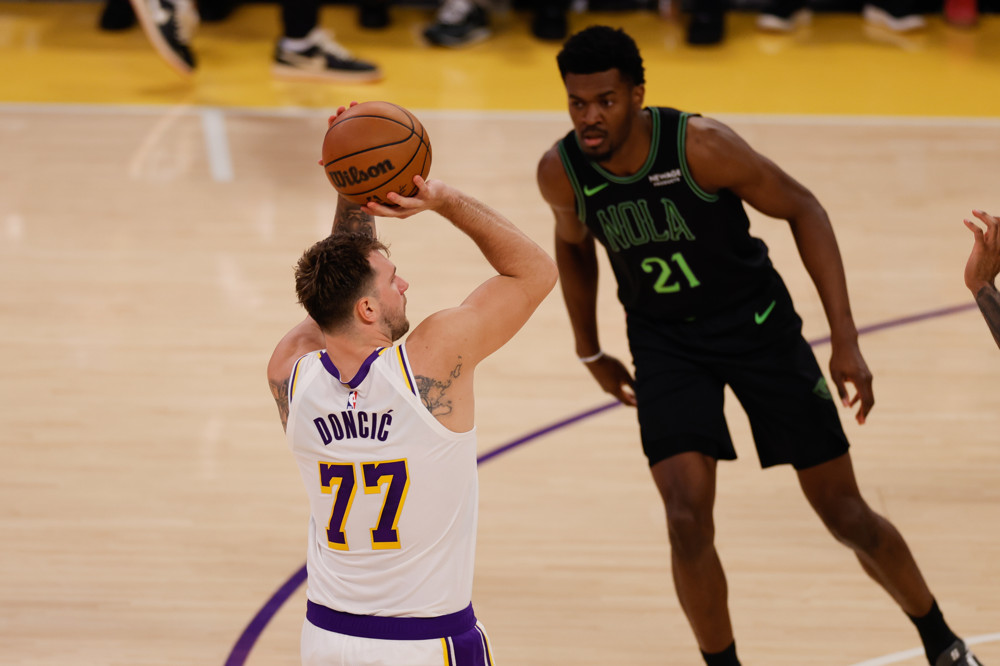
    Photo: Jevone Moore/Icon Sportswire

    If your primary understanding of the NBA landscape comes from talking heads on TV and browsing social media, you could be forgiven for believing that the league has become homogenous in terms of offensive approach.

    It’s undeniably true that the three-point revolution is here and ongoing, but as with all things, growth isn’t linear. 

    The Miami Heat is one example of a team eschewing the norms to create its buzzsaw offense, a topic SIS’ Jack Klein recently dove into, but it’s not the only one.

    Nearly a quarter of the way through the 2025-26 season, there are a handful of teams showing that high-volume shooting isn’t necessarily needed to carve out a high-level offense or a winning system.

    Of the top-10 teams in wins, six are bottom-10 in three point attempts: The Rockets, Pistons, Raptors, Lakers, Nuggets, and Heat.

    Of the top-10 teams in offensive rating (ORting) in the same span, four are bottom-10 in three point attempts: the Rockets, Lakers, Magic, and Nuggets.

    As you may have surmised by cross-comparing those lists, three teams are top-10 in both wins and offensive rating despite being bottom-10 in three-point attempts: the Rockets, Lakers, and Nuggets. The Raptors, who are 11th in ORting, are a close fourth.

    So how have these teams managed to buck the modern conventions and find success despite their apparently non-modern shot profile?

    Back To The Post

    All four teams represent some of the most post-heavy offenses the league has to offer. 

    The Nuggets create the most field goal attempts off of post-ups in the league at 5.9 per game (as tracked by our Data Scouts, who watch every play of every game) and are wickedly efficient on those shots, ranking 5th in true shooting percentage (TS%) at 65%.

    Not far behind are the Rockets, who are 2nd in field goal attempts off post-ups at 5.6, and 7th in TS% at 62%. 

    These attacks are fueled primarily by Alperen Sengun and Nikola Jokic, who represent the two most dominant post presences in the league this season.

    FGA Off Post-Ups True Shooting Percentage
    Alperen Sengun 3.8 (1st in NBA) 64%
    Nikola Jokic 3.5 (2nd) 70%

    The Lakers come in tied at 7th with 3.3 FGA out of the post per game, and are tied with the Nuggets for 5th in efficiency, while the Raptors are 10th in attempts but only 25th in efficiency.

    Midrange Maestros

    Any team losing what is commonly referred to as “the math battle” (for those who need a remedial lesson, 3>2) will need to find ways to dominate in other areas, which is why it’s not surprising that these four teams are all lethal when it comes to scoring from the mid-range.

    Some teams do it by volume, others by efficiency. 

    The Rockets and Raptors are 3rd and 5th in the league in total FGA that come in the midrange. The Raptors convert these shots at the 5th-best efficiency in the league, while the Rockets are considerably less efficient, posting the 22nd-best TS% on these shots.

    The Lakers and Nuggets are just outside the top 10 when it comes to volume, with the Lakers taking the 14th-most midrange shots and the Nuggets the 11th-most. However, they are elite at converting these looks, with the 1st and 3rd-highest true shooting marks (the Thunder are 2nd).

    Fourth-Quarter Fiends

    Perhaps unsurprisingly, these teams are all also some of the most effective the league has to offer when it comes to closing out games. With little room for error in their scoring profile, they’ve leaned on elite fourth-quarter efficiency to secure their places at the top of the standings.

    The Rockets boast the league’s highest fourth-quarter TS% at 64%, while the Nuggets are hot on their heels at 62%. The Raptors and Lakers come in tied for 6th at 60%, just 0.1% behind the fifth-ranked Bucks.

    The Rockets’ late-game dominance is also evidenced by the fact that they lead the league in clutch-time offensive rating, advantage creation, and have the 2nd-lowest turnover rate. 

    Their late-game execution, spearheaded by Kevin Durant who ranks 8th in clutch advantage creation per game*, is undoubtedly one of their keys to success as they’ve dealt with injuries and spacing issues.

    *Advantage creation is defined by SIS as an action from a player which results in a situation where the team can generate a high-value shot.

    Of the 62 players to take at least 50 fourth-quarter field goal attempts this season, Jokic stands as the most elite finisher in the league, scoring at a 71.9% TS%. Reaves is 3rd (71.5%) and Sengun 4th (70.5%), while the most efficient Raptor is Scottie Barnes, who comes in 10th at 66.9%.

    Finding ways to win

    Of course, each team has its own unique way of carving out wins in addition to these similarities.

    The Rockets, who emphasized size this offseason, make a point to bludgeon teams on the glass.

    Houston Rockets Ranks – 2025-26 Season

    Stat Rank
    Offensive Rebound Pct 1st
    Second-Chance Points 1st

    The Lakers are the most efficient rim finishing team, and the best when it comes to drawing free throws in the clutch.

    They’re also the most efficient team in terms of self-created shots in the league. They rely on their star guards in Reaves and Doncic to create offense for themselves while generating the second-fewest field goal attempts off closeouts of any team.

    While the Nuggets are only 7th in advantage creation, they’re 2nd in the league when it comes to protecting their advantages – only the Celtics and Knicks have a lower advantage reduction rate, per SIS data.

    Finally, the Raptors know their strengths and weaknesses, and use their length and activity to get out on the break and make up for their half-court game.

    The Raptors are 1st when it comes to FGA in transition and 1st in terms of fast break points, per the NBA’s tracking data. They’re 3rd in assists and 5th in assist-to-turnover ratio, prioritizing ball movement and security to find cracks in the defense.

    Possessions reign supreme

    When you look at these profiles together, a theme begins to emerge. In addition to dominating the post and/or midrange, possessions are a crucial battleground for teams that don’t prioritize three-point volume.

    Whether creating extra possessions via the offensive glass, prioritizing a lack of turnovers, or ensuring that any advantages created are taken advantage of, the focus is clear: no possession can be taken for granted.

  • Some Clues On How The Mavericks Will Defend Against The Celtics

    Some Clues On How The Mavericks Will Defend Against The Celtics

    The Dallas Mavericks are coming into their first Finals appearance of the Luka Doncic era as underdogs against a Celtics team that spent the entire season as the unquestioned best in class. 

    Boston finished the regular season with a 7-game cushion over the second-place Nuggets, a lead that was never remotely in doubt at any point of the year, thanks to an incredibly well-balanced roster that features one of the most pure distillations of 5-out offense in league history while not making any sacrifices to their defense.

    It’s rare for a team to feature so many shooters while also lacking any real holes defensively, and it leaves the Mavs with a tall task if they want to take home their first championship since 2011. 

    Luckily for Dallas, their previous two series have given them some practice at defending well-spaced, potent offenses with dynamic isolation threats.

    The Thunder are probably the closest facsimile to the Celtics given Chet Holmgren’s abilities as a spacer from above the break, but the Timberwolves also offered some interesting 5-out looks when Rudy Gobert sat and Karl-Anthony Towns shared the floor with Naz Reid.

    So what can we take away from how Dallas defended those two offenses and apply to their upcoming series?

    Lessons from the Thunder series

    Throughout the previous two rounds, Jason Kidd’s team made calculated decisions in identifying points of concession, players they could help off of and trust their long-limbed perimeter defenders to recover to in time to prevent any real damage. 

    Against the Thunder, Dallas would often leave Lu Dort parked in the weakside corner and have his defender function as the low man, flashing to the strong side to deter drives or slipped screens before recovering to his assignment. 

    The Mavericks were even comfortable letting an elite shooter like Isaiah Joe get loose as his defender stunted at a driver, counting on their combination of rim deterrence and perimeter length to not allow a single drive to put them into a fatal rotation.

    One decision that really slowed the Thunder’s potent offense was Dallas’ willingness to switch everything on the perimeter and weather mismatches in the post, knowing that the young, slightly undersized frontcourt of Chet Holmgren and Jalen Williams would struggle punishing smaller defenders.

    By switching across the court and not sending doubles on perceived height mismatches, the Mavs forced hesitation by Thunder drivers. These momentary hesitations clogged lanes and helped keep Dallas from being put in full-on scramble situations, instead operating in semi-scrambles that were tricky but manageable.

    Because of Dallas’ length and emphasis on keeping a help defender at the nail, the Thunder struggled to consistently drive deep into the paint, instead relying on a series of drive-and-kicks that failed to get much deeper than the free throw line.


    Key in the above clip is PJ Washington’s ability to stay in front of Shai Gilgeous-Alexander in isolation – no easy feat for a good guard defender, let alone a big man – but we’ll come back to that later.

    Lesson from the Timberwolves

    In the Western Conference Finals, the Mavericks faced a much different style and size of offense, but there were still relevant data points we can take away. 

    The Wolves played 62 minutes with Naz Reid and Karl-Anthony Towns on the court and Gobert off, a sample that isn’t massive but neither is it insignificant. In that time, with the self-proclaimed best big man shooter of all time and the newly-crowned, sweet-shooting 6’9 Sixth Man of the Year, the Mavericks managed to outscore the Timberwolves by 18 points.

    Once again, Jason Kidd’s preference to switch everything on the perimeter and not overreact to mismatches in the post paid off. In ball screens, they became adept at having their guard defender peel-switch onto the popping big while trusting their big to stay in front of the ball handler for long enough to let the defense recover and the low man to come over and provide back-line help.

    Whether it was Doncic stuck guarding Towns on the block or Washington or Kyrie Irving guarding Anthony Edwards in space, the Mavs stunted and stayed home, preferring to let the driver blow by the defender and be met by one of their two rim protectors rather than compromise the shell of their defense by getting into scramble situations.

    One key in this series was the return of Maxi Kleber from a shoulder injury. Kleber’s ability to stay in front of even dynamic ball-handlers like Anthony Edwards added another layer of versatility to the already-impressive PJ Washington/Derrick Jones Jr. combination.

    Facing the Celtics

    While the Thunder and the Wolves both offered different looks that might mimic the Celtics’ attack, the Mavericks are about to find out that it’s different when you go up against the real thing.

    The Thunder had multiple players the Mavericks could cheat off of in Dort and Josh Giddey, and the Wolves tended to run Kyle Anderson in the dunker spot when Gobert wasn’t on the floor, another slow-release player they could feel comfortable leaving and recovering to without sacrificing devastating looks.

    The Celtics, on the other hand, go seven or eight men deep, and every one of them is a dynamic shooting threat who can get their shot off quickly. There will be nowhere safe to hide, only a choice to make as to who Kidd is most comfortable daring to shoot.

    Another interesting choice to monitor will be whether Washington opens the series primarily guarding Tatum or Porzingis. 

    Tatum is Washington’s positional equivalent, and as mentioned earlier, PJ’s ability to move his feet in space at his size makes him a good foil for Tatum’s isolation game, but keeping one of Daniel Gafford or Derek Lively II on Porzingis, one of the league’s best deep three-makers, would make it much more difficult for the Mavs to execute their funnel-and-recover scheme.

    Boston, with veteran players comfortable playing in the post such as Kristaps Porzingis, Jayson Tatum, Jaylen Brown, and even Jrue Holiday, will punish smaller players more than either the Thunder or Wolves could, though Doncic and Kyrie are both surprisingly stout post defenders when locked in, as they have been during this playoff run.

    The switchability of Jones, Kleber, and Washington on the perimeter will be key to containing actions run between Tatum or Brown and Porzingis, as will replicating the at-the-nail help that helped stymie so many Thunder drives, especially in Game 6. 

    If the Mavericks can keep the Celtics from getting too deep on drives, it will go a long way to preventing the kind of chaos the Celtics thrive on, where a single extra pass can lead to an open shot from a 40% three-point shooter. 

    The 2024 NBA Finals will be an interesting match as the Mavs have been forged in the fire of multiple close, hard-fought series, while the Celtics have skated through the East relatively unchecked. Kidd’s defensive schemes have proved sound until now, but it will be fascinating to see how they hold up against the best-spaced team in the league.

  • NBA Playoff Preview (Eastern Conference)

    NBA Playoff Preview (Eastern Conference)

    By Eli Cohen, Reecca MaWhinney, and Blake Benjamin (graphics by Noah Edwards-Thro)

    With the Eastern Conference Playoffs beginning Saturday, we wanted to break down each first-round matchup using our proprietary data. Each tile chart below outlines how the teams fared in their head-to-head matchups this season including all possessions played, All metrics given are Per 100 Possessions and do not include garbage time unless otherwise stated.

    For a primer on Advantage Creation and some of the other metrics mentioned in these articles, check out our Twitter, @SIS_Hoops, and reach out if you have any questions.

    1. Celtics vs. 8. Heat

    The Celtics are ranked very highly in almost all categories of SIS data except positive defensive playmaking. They play solid defense and defend well around the rim. The Celtics are tied with none other than the Spurs (shoutout Wemby) for the highest alter contest % in the league.

    Along with that, they have the highest offensive rating and 2nd-highest defensive rating in the league. Another thing the Celtics do surprisingly well is rebound the basketball on both ends of the floor. They do all of this while turning the ball over the least in the NBA at a clip of 9.6 per 100 possessions.

    Defensively, specifically contesting shots is where the Cs are disciplined. Porzingis and Kornet are both top 10 in block/alter per 100 possessions, with Derrick White not far behind them at 19th. As a team the Celtics protect the rim well, blocking/altering 6.1 shots per 100 at the rim and in the paint. And they do so without fouling, only 5.1 fouls per 100 at the rim or in the paint.

    With the Celtics being a juggernaut on both ends of the floor it will take a David vs Goliath effort just to extend the series. They play as a team well and this makes them extremely tough to beat, especially in a 7 game series.

    The Heat will have their work cut out for them facing this Celtics team without Jimmy Butler. The Heat offense has struggled much of the season, with or without Butler, but where it will really miss him is drawing fouls. With Butler playing the Heat rank 6th in the league in FT rate (20.9 per 100). Without him they rank 17th (18.5 per 100).

    Furthermore, the Heat defense will take a major hit, with Butler playing they are 20nd in the league in steals (3.8 per 100). Without Butler on the court the Heat rank last in the NBA with a dismal 1.7 steals per 100. With Butler playing, the Heat rank 10th  in the NBA in positive defensive plays (13.6 per 100) while without him on the court they rank 30th (6.5 per 100).

    With that being said, for some reason you can never count this Heat team out no matter who takes the floor as long as Erik Spoelstra is the head coach. On the flip side, the Celtics will be out for revenge after the Heat ended their season in the Eastern Conference Finals last year.

    2. Knicks vs 7. 76ers

    This matchup will come down to whether or not Joel Embiid can stay healthy.

    The Knicks have had their own injury trouble this season, losing Julius Randle for the season and Mitchell Robinson and OG Anunoby missing many games. Jalen Brunson is the driver for this Knicks offense. Brunson ranks 4th in advantages created (28.4 per 100 poss.) among guards and forwards. He will need to be this player throughout the series for the Knicks to beat the reigning MVP.

    One thing to look out for this series is the defense on Embiid. The Knicks struggled to contest shots well this year. New York is 22nd in the NBA in block/alter% and is also tied for 10th in poor contests. The Knicks do well defending without fouling, which is important because of how well Embiid and the Sixers draw fouls.

    The Sixers have missed their star but still have had some bright spots during his absence. Even with Embiid missing significant time, the Sixers still ranked 2nd in the NBA in FT rate (21.9 per 100). This balances out with how often they foul during contests. They rank 23rd in the NBA in foul%, especially with Brunson’s ability to draw fouls similar to Embiid.

    The Sixers have maintained a solid defense throughout the regular season, ranking 1st in deflections and positive defensive plays, 2nd in disruptions, and top 6 in block/alter%. With a solid Philadelphia defense matching up with an underwhelming Knicks offense this will be an interesting matchup to watch as the series goes on.

    Finally, the battle on the boards is always important for this Knicks team, which ranks 1st in contested offensive rebounds. While Philadelphia ranks 9th in contested defensive rebounds on the season, the 76ers will have their work cut out for them.

    3. Bucks vs 6. Pacers

    This matchup once again will be determined by if/when Giannis Antetokounmpo is healthy. Even with the changes Milwaukee has made since Doc Rivers became the coach, the health of their megastar is the most important thing.

    Without Giannis on the floor the Bucks struggled to create advantages. The Bucks ranked 30th in the NBA with Giannis off the court (17.8 per 100) and 9th (58.4) with Giannis on the floor. Even with this difference the Bucks still hold the 5th-best offensive rating (119 per 100). This should bode well against a Pacers team that is not known for their defense.

    Unlike in years past, the Bucks are not a defensive juggernaut. They ranked 17th in defensive rating (116) compared to last season when they were 3rd in the league (111.9). Without Giannis on the floor it hurts this defensive unit even further. When Giannis is not on the floor the Bucks tend to foul at a higher rate, going from 12th in the league (18.7) to 22nd (20.2).

    The Pacers are one of the fastest paced teams in the NBA, The Bucks forcing the Pacers to play at a slower pace could help mitigate Giannis’ absence. In addition to creating far fewer advantages without Giannis on the floor, the Bucks offensive rating falls from 5th (119) to 22nd (113.5), another number showing how much the all-star will be missed.

    It’s no secret that the Pacers have a great offense built around Tyrese Haliburton. Haliburton is 2nd in the league to Luka Doncic in total on-ball opportunities. Haliburton leads the league by a large margin in almost all of our passing stats (passes, assists, potential assists, hockey assists) while doing so with a top-10 assist-to-turnover ratio.

    There’s been much discussion about the pre/post Haliburton injury that occurred on Jan. 8. Prior to the hamstring strain, every Pacers rotation player was doing better than expected, led by Haliburton. Haliburton was shooting 11% better than expected based on his shot profile.

    But with Haliburton off the floor, the Pacers were dead last in advantages created.

    Defense will be huge for the Pacers, who rank 24th in defensive rating (118.6). Myles Turner does better than the expectation defensively, but the problem is how low the expectations are for him. His teammates force him to clean up after their mistakes.

    This series will be a fun one to watch play out, especially since the last time these two teams met there was a fiasco post-game about who got the game ball.

    4. Cavaliers vs 5. Magic

    This Cleveland-Orlando series might be one of the most fun matchups in the playoffs. Both of these teams are physical, defensive, fundamental teams that play older-school basketball compared to the rest of the league.

    Neither of these teams are offensive juggernauts. Cleveland ranks 17th (115.6) in offensive rating while Orlando comes in tied for 21st (114.4). Both of these teams lean greatly on their stars to create offense. Orlando relies on All-Star Paolo Banchero to create advantages, creating 41 per 100 possessions with him on the court compared to 16.5 per 100 with him off the court.

    The Cavaliers have more options to create offense but Donovan Mitchell is the engine. Mitchell ranks 17th among guards and forwards in True Shooting% when facing plus, altered, or fouled contests. This Cleveland offense likes to move the ball and get everyone involved, producing the most hockey assists in the league (8.6 per 100 possessions). The Cavaliers are also 5th in the league in assists (25.5 per 100), even with many of their main offensive drivers missing significant time throughout the season.

    The Cavaliers are going to have to defend the rim and paint well in this series. Cleveland was 3rd in the league this year in rim deterrence, and 2nd in the league in opponents’ FG% at the rim or in the paint. But they also have the 3rd-highest poor contests in this area. The Magic have the 10th-highest FG% in the paint and at the rim while shooting the 9th-most attempts.

    The Magic have one of the league’s youngest cores with exciting talents on the offensive end of the floor. But what sticks out in our data is the defensive statistics. The Magic rank tied for 2nd in defensive rating (111.7 per 100) and are 5th in positive defensive plays. The only defensive playmaking metric in which the Magic weren’t top-6 is rim deterrence in which they came in at 22nd (.53 per 100). Orlando also plays sound defense. The Magic rank 3rd in the NBA in least miscues per 100 possessions (15.2). Even with these eye popping numbers on defense they have their weaknesses on defense as well.

    Orlando is not among the best contesting shots. The Magic rank 14th in the NBA in block/alter% even though they have one of the taller starting lineups in the league. The Magic also foul at a higher clip than most teams and rank 24th in opponent FT Rate. With all this taken into account the Magic still rank 1st in expected points per chance defensively (1.019).

    On the flip side, on offense the Magic turn the ball over at a high rate ranking 6th in the league (12 per 100). They do get to the foul line at a good rate coming in at 3rd (21.7 per 100). Orlando is middle of the road in many of our offensive statistics and will have its hands full against a very solid and capable defensive team like the Cavs. The Magic will have to make tightly contested shots in order to win this series.

  • NBA Playoff Preview (Western Conference)

    NBA Playoff Preview (Western Conference)

    By Eli Cohen, Reecca MaWhinney, and Blake Benjamin (graphics by Noah Edwards-Thro)

    With the Eastern Conference Playoffs beginning Saturday, we wanted to break down each first-round matchup using our proprietary data. Each tile chart below outlines how the teams fared in their head-to-head matchups this season including all possessions played, All metrics given are Per 100 Possessions and do not include garbage time unless otherwise stated.

    For a primer on Advantage Creation and some of the other metrics mentioned in these articles, check out our Twitter, @SIS_Hoops, and reach out if you have any questions.

    1. Thunder vs. 8. Pelicans

    The Thunder may be young, but make no mistake, they didn’t become the youngest No. 1 seed in history in a hyper-competitive Western Conference as a fluke.

    Nor are they a one-trick pony when it comes to relying on their top-3 MVP candidate Shai Gilgeous-Alexander. They’re well-rounded and well-coached, ranking in the top-5 in most categories on both offense and defense, and thanks in large part to the two-way leap from Jalen Williams, they’re able to at least tread water when SGA is off the court.

    They run a hyper-efficient offense, thanks to their team being constructed around a principle of always maintaining five-out spacing, and they move the ball as well as any team, ranking 6th in assists per 100 possessions (25), 4th in hockey assists (8), and 2nd in maintained advantages (46).

    Those numbers combine to show a team that makes quick decisions once Alexander or Williams penetrate the shell of the defense and do not squander opportunities.

    Defensively, while the Thunder, and Alexander in particular, like to play passing lanes, they are remarkably disciplined for a team so young. They committed the fewest breakdowns* of any team this season (4.5 per 100 possessions) and were 10th in total negative defensive plays.

    *Player makes a defensive miscue through poor communication, understanding of scheme, or decision-making leading to a significant offensive advantage

    The two weaknesses they have are offensive rebounding (ranking 27th) and sending teams to the line (ranking 23rd). Matching up against the Pelicans in the first round, they will be dealing with strong, physical big men inside. Keeping Chet Holmgren out of foul trouble and working as a team to fight for rebounds will be key to them keeping their advantage.

    The Pelicans will be without Zion Williamson for most, if not all, of this series. Surprisingly, during this season the Pelicans have a better offensive rating (119.1) than without Zion (117.8). Pelicans offensive rating without Zion is good for 5th in the NBA and nearly matches the Thunder’s offensive rating of 120.1.

    New Orleans can struggle to create advantages, ranking 19th in the league in advantages created and advantages maintained. With players like Brandon Ingram and CJ McCollum, the Pelicans rely on taking and making tough shots. New Orleans is tied for 4th in the NBA in FG% on self-created shots (49.6%) while OKC is ranked 1st (50.9%). We should see a lot of self-created looks from each team’s stars throughout this series.

    The Pelicans defense could be the key to this matchup. New Orleans shot defense in particular is concerning against a Thunder team who can take and make tightly contested shots. The Pelicans rank 26th in block/alter% and 23rd in shots defended. However they are good at not sending shooters to the free throw line, ranking 8th in the NBA (8.9 per 100).

    The Pelicans rely on defensive playmaking to offset their lack of quality contests, ranking 2nd in positive defensive plays (15 per 100), 1st in steals (4.9 per 100), and 2nd in deflections (8 per 100). Of course the good comes with the bad, the Pelicans rank 25th in the NBA in defensive miscues (18.9 per 100). The Thunder will look to take advantage of the Pelicans tendency to gamble (22nd) and have consistent breakdowns on defense (24th).

    Finally, the Thunder’s poor rebounding may be put to the test early in these playoffs. While the Pelican’s rank 19th in our offensive rebound percentage on the season, that number jumps into the top 10 while Jonas Valanciunas is on the floor. Oklahoma City is our 29th-ranked team in defensive rebound percentage. Valanciunas may function as a big X-factor in the series.

    Both of these teams will showcase elite shotmaking with a dash of defensive playmaking in their quest to reach the second round. This series will be a fun one to watch with a young Thunder team looking to prove they are the best in the west and a Pelicans team hoping to extend their playoff run long enough to get their star back.

    2. Nuggets vs. 7. Lakers

    Can the defending champions repeat? It of course starts with the 2-time MVP who had another incredible season. Nikola Jokic ranked in the top 5 in shooting percentage above expectation, something that he was able to maintain during last year’s playoff run. Combine the scoring with Jokic’s passing ability and the Nuggets will be incredibly difficult to contain. Jamal Murray is no slouch as their No. 2 option. In last year’s championship run, Murray was a top-5 advantage creator with the ball.

    On the defensive side, the Nuggets performed better than expected this season. This is the result of a team familiar with each other and the scheme it wants to execute. The majority of the rotation performs better than expected on the defensive side of the ball, led by Aaron Gordon and the bench rotation. Peyton Watson has been a fun watch this season and leads the team in advantages prevented on defense.

    The Lakers will have a shot at redemption from last year’s sweep. The Nuggets will need to defend without fouling. Denver ranked 19th in opponent free throw rate, while Los Angeles is a top-5 free throw rate team and is up to 2nd in the league since the All-Star break.

    Los Angeles has been playing some of its best basketball since inserting Rui Hachimura into the starting lineup on Feb. 3. Since then the Lakers offensive numbers have popped, including a tie for the 2nd-best offensive rating in the league (this without sacrificing much on defense). Nearly all of the Lakers starters have seen their individual offensive efficiency jump as well.

    Finally, LeBron James is difficult to count out even at 39 years old. In his 21st season he is still one of the very best players in the game, ranking in the top 10 in advantages created this year. Not only does he create good looks for himself and his teammates, he also converts on his scoring opportunities at a higher than expected level. He has earned the benefit of doubt in most cases, but the Nuggets are the defending champions for a reason.

    The Lakers will have the chance to seek revenge against the Nuggets who swept them out of the playoffs just a season ago. With each team’s core members still intact, it will be exciting to see which team is able to swing some of the key stats in their favor.

    3. Timberwolves vs 6. Suns

    The Timberwolves arguably have the most to prove of any of the top three seeds in the West. They put together a fantastic regular season, but both of their big men have their own playoff performance questions to answer as they head into a matchup with the ultra-talented but inconsistent Suns.

    The Wolves are built on defense first and foremost. This season they were first in allowed points per chance* and defensive rating, and the difference between their defensive rating 109.1 and 2nd-place Magic (111.7) is bigger than the gap between the Magic and the 10th-place Rockets (113.8).

    *Opponent points scored per defensive opportunity that leads to a result in the same sequence

    The Wolves are most dominant defensively at the rim, ranking 2nd in rim deterrence, 5th in blocks, and 1st in fewest allowed points per chance on shots at the rim or in the paint, though the Suns tend to prefer midrange shots over rim attempts, ranking 29th in field goal attempts at the rim.

    Rudy Gobert’s strength is as a drop defender in the pick and roll while the Suns rank 8th in midrange field goal attempts out of ball-screens, with the 5th-best efficiency, relying on their trio of midrange maestros to take advantage of the shots most teams are willing to concede. The Suns’ shot profile is wildly at odds with the Wolves’ defensive tendencies, making this a fascinating stylistic clash.

    Karl-Anthony Towns will also be put to the test defensively. With Gobert anchored to Jusuf Nurkic in the paint and Jaden McDaniels on Kevin Durant, Towns will likely be stuck guarding Grayson Allen, who is coming off a career year in which he shot 46% from 3-point range.

    Meanwhile, Bradley Beal seems to have settled into his role as a malleable complement to Devin Booker and Durant, and Mike Conley will have his hands full trying to slow him down.

    The Suns are hungry for post-season wins and uniquely poised to give the Wolves fits. Meanwhile the Wolves are desperate to prove their regular season success can translate. But which will hold up more: the Wolves’ defense or the Suns’ offense?

    4. Clippers vs. 5 Mavericks

    It is hard to know how the Clippers will look if Kawhi Leonard misses time in this series.

    L.A. does not rank very highly in our team passing statistics which means a lot of the playmaking falls on one player – James Harden. Harden is still one of the elite playmakers in our league and creates over 21 advantages per 100 possessions. He ranks in the top 10 in all of our passing metrics as well.

    Defensively, the Clippers have one of the toughest individual matchups in round one. The Clippers have multiple defenders to throw at Luka Doncic.

    Both the Mavericks and the Clippers play slowly. They are each a bottom-3 team in total scoring opportunities per game. Yet both teams are incredibly efficient with their scoring opportunities and are still able to generate great looks on offense.

    The Mavs are 2nd league-wide in efficiency on field goal attempts out of ball screens, a number greatly bolstered by the mid-season addition of Daniel Gafford, but where they really hang their hat offensively is isolation, utilizing the diverse but equally lethal isolation approaches from Kyrie Irving and Doncic to spearhead their 5th-ranked offensive rating.

    They are second in field goal attempts out of isolation opportunities, and 5th in true shooting percentage on those shots. They rank in the bottom third in terms of assists and turnovers, but the creation ability of their two stars is more than enough to keep the offense operating at a high level.

    Defensively, the Mavericks are closer to average than elite, but with a scheme that emphasizes staying at home and playing conservatively, they’re able to hold their own enough for their offense to take center stage. They seem content to forego defensive playmaking in order to mitigate defensive breakdowns.

    Doncic is no stranger to this Clippers team, averaging 33 points, 9 assists, and 9 rebounds in 13 career playoff games against them, though that has not translated to team success, as the Mavs have lost both previous series. But with his most talented roster to date and Leonard recovering from injury, this could be his best chance yet.

  • How Have The Knicks Adjusted To Julius Randle’s absence?

    How Have The Knicks Adjusted To Julius Randle’s absence?

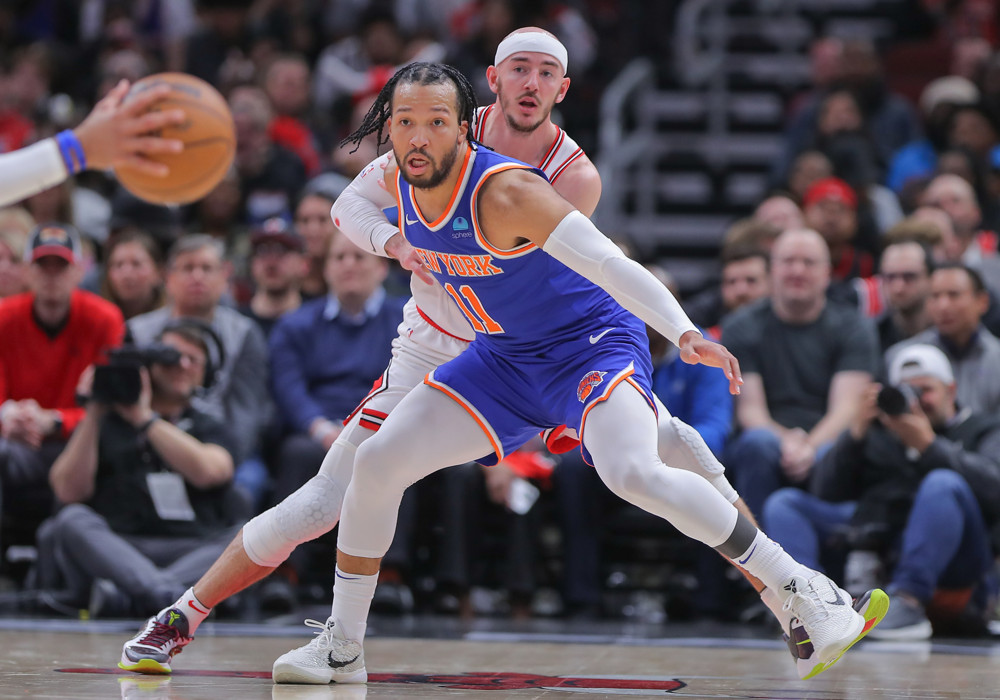
    Photo: Melissa Tamez/Icon Sportswire

    The Knicks are no strangers to tumultuous seasons, but this year has been chaotic for different reasons than Knicks squads of old. 

    The 2023-24 Knicks have contended with uneven play, major trades, and the most injuries this side of Memphis, which is why when analyzing their performance and outlook, it’s best to divide their season into three segments:

    1. Pre-OG Anunoby Trade (17-15)
    2. Post-Anunoby Trade, Pre-Julius Randle Injury (12-2)
    3. Post-Randle Injury (18-15, 5-1 with Anunoby and 13-14 without)

    Mitchell Robinson, OG Anunoby, and Julius Randle have missed a combined 111 games in their time with the Knicks this season, but through it all, they have embodied the “Next Man Up” philosophy, using their combination of physical defense and just enough offensive creation to grind out wins with a depleted roster.

    And yet, what is good enough for the regular season is not necessarily indicative of what is good enough for the playoffs, when the games slow down and every weakness is amplified, dissected and exploited. The news that Randle will miss the rest of the season and playoffs after undergoing shoulder surgery came as a blow to the Knicks’ hopes of challenging the Celtics (whom they play tonight) for control of the Eastern Conference, but how does it actually re-shape their team identity?

    Change in their offensive attack: Only Brunson Gets To The Line

    It’s no surprise that losing a two-time All-NBA forward with versatile scoring ability has forced a change in the Knicks’ offensive attack. With Randle, the Knicks hovered around the top 10 in free throw rate for most of the season, ranking 11th league-wide pre-Anunoby trade and 8th following the trade. 

    With Randle out, foul-magnets RJ Barrett and Immanuel Quickley shipped off to Toronto, and Anunoby missing time as well, that number cratered, dropping the team to 23rd.

    Brunson often functions as the lone player able to consistently get to the line, and this is a large contributor to the Knicks’ offensive rating falling out of the top-10, where it has hovered all season, to 14th in this last chunk of the season.

    That’s far from the only change in approach, however. 

    Other changes

    In the 14 games that followed the Anunoby trade but preceded Randle and OG’s injuries, the Knicks looked like a dominant team, employing a brutal combination of size and skill on both ends of the floor. 

    Along with the free throw rate numbers, they had 3 other rankings of note.

    Stat Rank
    Transition Opportunities Per Game 4th
    Offensive Rebound Rank 1st
    Passes Per Game 4th

    Their ball-screen offense was good but not great both in terms of volume and efficiency, but where they really dominated was playing out of isolation.

    With two good isolation operators in Brunson and Randle and a myriad of shooters and ball-movers around them, the Knicks were able to exploit aggressive coverages to consistently find quality looks.

    During this part of the season, the Knicks ranked 9th in isolation opps while scoring over 1.1 points per chance (PPC*), the fourth-best mark in the league, on the 8th-highest True Shooting percentage. They also averaged nearly two assists per game out of isolation, the second-highest number for that stretch of time.

    *Points scored per offensive opportunity that leads to a result in the same sequence

    While the injury-ravaged team fighting valiantly to maintain top-3 seeding in the Eastern Conference has maintained a similar volume of isolation attempts, the efficiency and efficacy of such attempts have cratered without Randle. 

    Before Randle Injury Since
    True Shooting Pct 57% 48%
    Points Per Chance Rank 4th 20th

    Without a second reliable self-creator, defenses have been able to overload on Brunson isolations and trust their ability to recover to shooters.

    The team has also slowed down considerably, averaging nearly 3 fewer transition opportunities per game during this post-Randle stretch of season.

    Instead, they’ve opted to trade those transition opps for halfcourt ball-screen chances. Since late January, the Knicks’ have jumped from 11th to 5th in terms of ball-screen opps per game, and are getting nearly 4 more shots per game out of them. 

    Putting Brunson In Position To Succeed

    Their efficiency in the pick and roll is on the wrong side of average (nearly three percent lower than with Randle and Anunoby), but where they have found value is in the way that Brunson forces defenses to overcommit.

    While the Knicks are in the bottom-10 in assists out of ball screens during this late-season push, they’re 3rd in hockey assists, and when watching Brunson operate, it’s clear why.

    The key stat here is that the Knicks rank fourth in advantages created out of ball screen situations in the 2.5 months following Randle’s injury. While that isn’t leading directly to assists for Brunson, it is leading to assists for the players Brunson hits after bending the defense. 

    By ramping up the number of ball-screens and empowering players like Josh Hart and Isaiah Hartenstein to create out of short-roll situations, the Knicks have managed to keep their offense alive despite having so many key players in and out of the rotation.

    Playoff Watch

    The question is: how will that translate to playoff basketball? 

    The good news is that the slow, half-court based grind-out style of play that the team has employed since Randle went down is easily translatable to the postseason, where pace slows and every possession matters more. 

    There are also few players more steady with the ball in their hands than Brunson, who has spent the last three months learning to attack defenses that are overloading on him in order to force the ball out of his hands. If that doesn’t wear him down, it’ll be the perfect “iron sharpens iron” training.

    There’s also the matter of Anunoby. It’s hard to ignore the fact that the Knicks are 17-3 this season when Anunoby plays. Some of that is due to scheduling – Anunoby’s trade coincided with the Knicks’ easiest stretch of the season, in which they faced 7 lottery teams in his first 12 games – but his arrival also helped to balance out the roster, whether Randle plays or not.

    Anunoby’s high-level floor spacing (43% on about 3 corner 3s per game since coming to New York) and strong cutting has helped the offensive flow, while his ability to lock down the best perimeter player on opposing teams has shifted passing lane pests like Hart and Donte DiVencenzo into their ideal defensive roles.

    With Anunoby, Hartenstein, Hart, Miles McBride, and a freshly-healthy Mitchell Robinson in the fold, the Knicks will have enough defense to hang with any team in the playoffs. 

    Given their abundance of shooters and the right matchup, that could well be enough to win a first-round playoff series and give a second-round team an admirable fight. But without Randle’s added offensive gravity and versatility, the Knicks will need a 2023 Miami Heat-style run from their shooters if they have any hope of progressing further than that.

  • Making Victor Wembanyama’s Case For Defensive Player of the Year

    Making Victor Wembanyama’s Case For Defensive Player of the Year

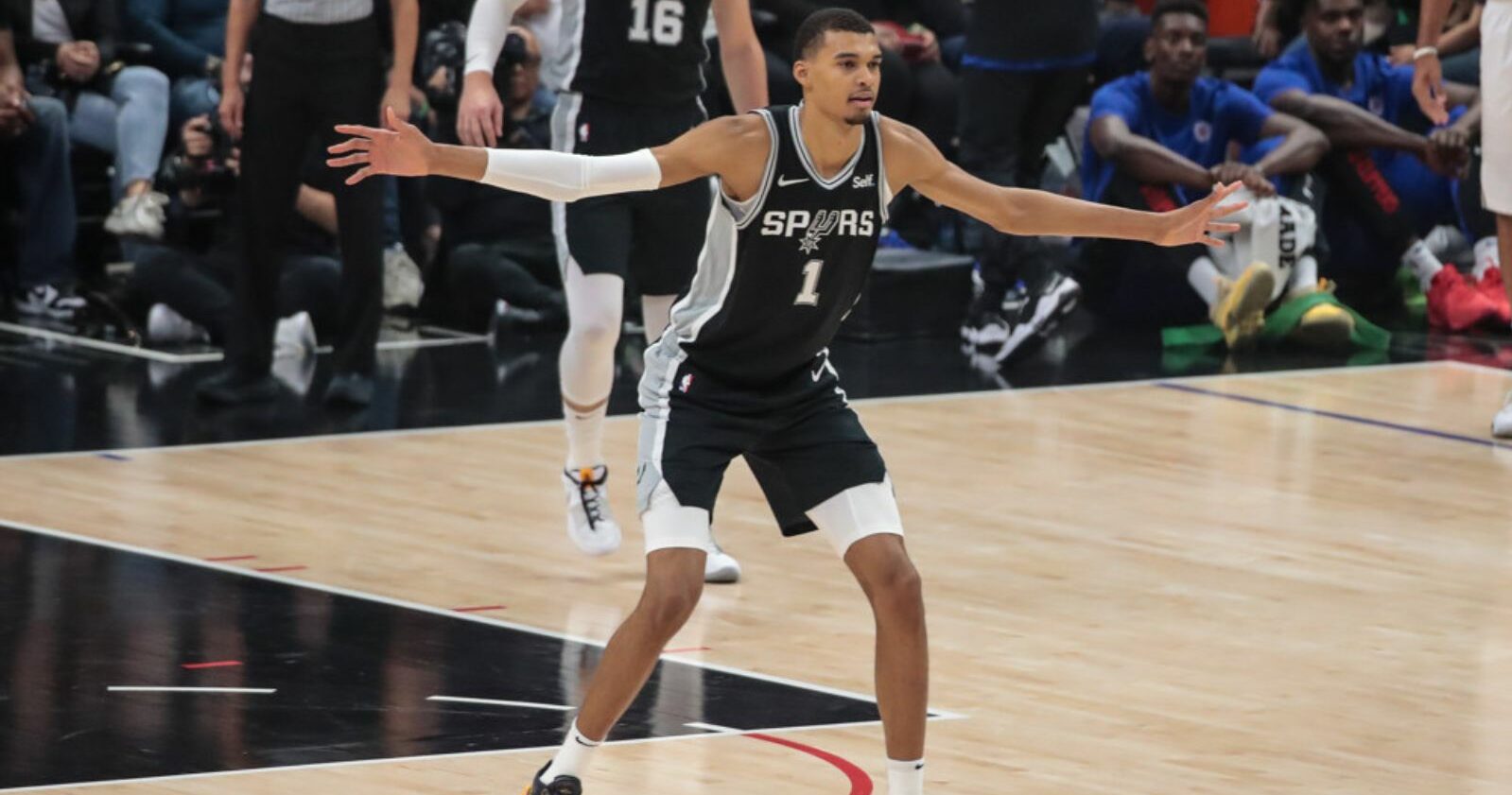
    Photo: Jevone Moore/Icon Sportswire

    When Victor Wembanyama entered the NBA this past October, it was clear that with his unprecedented combination of size, mobility, and instincts, it was only a matter of time before he became one of the league’s premier defenders. 

    Few suspected that the timeframe in question would be measured in weeks, not years, including the Las Vegas betting lines, which gave him the 30th-best odds to win Defensive Player of the Year, just below Kelly Oubre. But as this season enters its final stretch, Wembanyama is widely considered to be the strongest challenger to Rudy Gobert’s push for his fourth Defensive Player of the Year award. 

    Rim Protector

    His meteoric rise into the top echelon of NBA defenders starts with his absolute dominance protecting the rim. Despite playing on a minutes restriction for much of the season, Wembanyama leads the league in total blocks by a substantial margin, having collected 45 more than the 2nd-place Chet Holmgren.

    It’s no surprise that Wemby puts a lid on the rim anytime he’s around it. Since the Spurs moved Zach Collins to the bench and Wembanyama to full-time center in early December, he has graded out in the 99th percentile for blocks around the rim and the 99th percentile in Contest Impact*.

    *Contest Impact: The reduction of expected points caused by the quality of a player’s contest. 

    But one reason his block numbers are so high is that unlike more traditional big men, Wembanyama’s rejection radius extends far beyond the rim. 

    Wembanyama ranks in the 99th percentile for blocks and 87th percentile for defensive field goal percentage allowed on shots in the paint, and in the 95th percentile for total blocks against midrange shots this season. 

    Simply put: if a shot is going up anywhere past the three-point line, there’s no one in the league more likely to block it than Wemby. 

    Disruptor

    Where the rookie’s defensive maturation really pops is in the pick and roll. There’s a strong case to be made that Wembanyama has been the most complete pick and roll defender in the league this season, not just in terms of rim protection, where he ranks in the 99th percentile, but also as a disrupter. 

    According to SIS data, Wembanyama’s steal, deflection, and rim deterrence* as the screen defender in ball screen situations are all in the 98th percentile or higher, and what makes him unique for a big man is that his shot contest numbers are just as dominant when defending ball handlers.

    *Rim Deterrence: An active scoring attempt by the opposing ball-handler is abandoned due to the defender’s presence.

    Wembanyama isn’t limited to simply being a dominant on-ball presence, though. He is also an elite help defender, already standing as one of the most effective weak-side rim protectors in the league, while showing impressive instincts and timing on rotations and playing passing lanes.

    For the season, take a look at his ranks 

    Category Percentile Rank
    Steals 87th
    Deflections 97th
    Rim Deterrence 99th

    These show that he’s not just a disruptor in ball screen situations,  his length and timing, his very presence, changes the geometry of the floor. No pass or shot is safe around his 8-foot wingspan.

    Webanyama vs Gobert

    While his case is strong and growing stronger by the day, there are clear hurdles Wemby still has to overcome if he wants to take home the hardware: most notably, the chasm between his team’s defensive rating and Gobert’s Timberwolves, and the inherent conservatism of the award’s voters. 

    For the first point, while it’s true that the Spurs have been a lackluster defensive team this year on the whole, Wembanyama stands as far and away the person most responsible for them being below average rather than worst in the league. 

    This season the Spurs have a defensive rating of 122 and a 57% defensive field goal percentage with Wembanyama off the floor compared to 114 and 55% with him on. 

    Since the move to full-time center, the team’s defensive rating has gone from 22nd in the league to 18th, while the team’s defensive rating with him on the floor has improved even further, to 112. 

    While that is still a far cry from the Timberwolves’ league-leading 109 defensive rating, it does illustrate that there are few players, if any, who single-handedly swing their team’s defensive outlook the way Wembanyama does.

    Tough for a young’un

    As for the second obstacle mentioned, it’s no easy feat for a young player to make real noise in the Defensive Player of the Year conversation.

    No one younger than 23 has ever won DPoY in the NBA. In fact, since 2000, the only players 21 or younger to even crack the top five of voting are Kobe Bryant (2000), Anthony Davis (2014 and 2015), Jarrett Allen (2019), and Evan Mobley (2023).

    Alvin Robertson (1985) is the only 2nd-year player to ever win the award, and Leonard is the only player since 1992 to win in the 4th year of his career or earlier. The defining defenders of this generation (Dwight Howard, Draymond Green, Rudy Gobert) all won in year five. Joel Embiid was second in voting as a 2nd-year player, but he was already 23 and 4 years past his draft date at the time.

    There’s a good reason for this. 

    NBA defense is very difficult, and even the best defenders need time to learn, refine, and start dominating. Similarly, quantifying defensive impact can be difficult, requiring synthesis of multiple individual and team metrics, plus a heavy dose of the eye test, to approach anything like a well-rounded conclusion, which lends itself to voters wanting a large sample size before making declarations on young players.

    There are many barriers to a rookie winning – or even being runner-up for – the coveted award, but if there was ever a player capable of beating out those odds, it’s Wembanyama.