Author: Ted Baarda

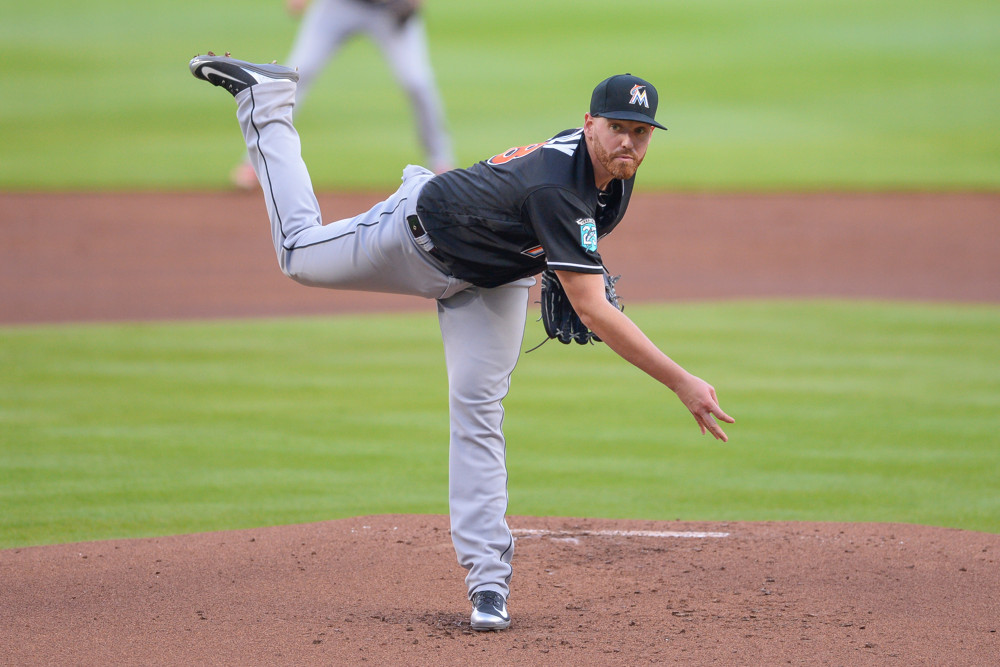
  • KBO Scouting Report: Dan Straily Worthy of an MLB Return?

    KBO Scouting Report: Dan Straily Worthy of an MLB Return?

    While MLB’s lockout continues, this hasn’t stopped other leagues around the world from making moves and shoring up their rosters for the coming season. In the KBO, all roster spots for foreign players have now been filled, and two pitchers with MLB experience were not signed by any team in the league. Both Dan Straily and Aaron Brooks come with questions, but they could end up being useful depth options for MLB teams, or look to catch on in another league. 

    We’ll look at Straily in this article and Brooks in a separate piece in the near future.

    Straily came to the KBO with high expectations, as he easily had the most MLB experience of any pitcher looking to prove themselves in Korea.

    From 2012-2019 Straily was 44-40 with a 4.56 ERA in just over 800 career innings. The best stretch of his career was from 2016-2018, when he was a roughly league-average starter over almost 500 innings for the Reds and Marlins. However, his 2019 season was a disaster, as he had a 9.82 ERA that was fueled by allowing 4.2 HR/9.

    Season W-L ERA IP WHIP BB/9 K/9
    2020 KBO 15-4 2.50 194 2/3 1.02 2.4 9.5
    2021 KBO 10-12 4.07 165 2/3 1.38 3.6 8.9

    As the chart shows, Straily appeared to right the ship in 2020. He became the first KBO pitcher in 8 seasons to reach 200 strikeouts in a season (Hyun-jin Ryu had been the last pitcher to do so), and produced a great ERA in a league with defense well below the MLB standard. While his 2021 results were not as excellent as 2020, there were some positives to take from the season as well. Straily is now hoping to return to MLB for the 2022 season.

    Pitch Type Usage (2021) Average Velocity (MPH)
    Fastball 44% 91
    Slider 31% 84
    Changeup 15% 85
    Curveball 6% 76
    Cutter 4% 88

    Straily was aware that the league would adjust to him for a second season. He added a cutter to his repertoire, which he had not thrown before in either MLB or in Korea. He did scrap the pitch by July, but it shows his willingness to adapt and stay ahead of hitters. He also added a tick of velocity to his fastball, despite having thrown over 3,000 pitches in 2020.

    Straily’s changeup also became a better pitch in terms of limiting significant damage in 2021. His changeup features good downward break and armside run, which would typically make it more effective against left-handed hitters. But lefties hit the pitch surprisingly well with a .326 average against, while right-handed hitters only hit .121. 

    However, despite the high batting average by left-handed hitters, it’s worth notingthat no hitter managed an extra-base hit against his changeup all season.

    What led to the drop in his performance was some regression in control. Straily was pitching from behind more often, and had fewer opportunities for strikeouts. 

    Look at his best breaking pitch, the slider. It was his most used pitch with two strikes in both 2020 and 2021, and in both seasons his whiff rate on the pitch was around 30%.

    However, he dropped from 114 strikeouts with the slider in 2020 to only 62 in 2021. Part of the drop is likely attributed to hitters expecting the slider with two strikes in 2021, but the biggest factor was that he didn’t have as many opportunities to pitch with two strikes. His slider strike rate dropped from 70% in 2020 to 65% in 2021.

    The dip in control also contributed to a loss of effectiveness with his fastball. Despite adding 1 MPH to his average velocity, his OPS versus his fastball rose from .706 in 2020 to .890 in 2021.

    It wasn’t so much that his fastball was a worse pitch, just that his command wasn’t as sharp, and he was forced to throw it in the zone more as he fell behind in more counts.

    Overall, let’s keep the expectations reasonable.

    Straily looks like a potential back-end or depth starter candidate. Given his experience, and his having to make several adjustments throughout his career, he could be a good mentor who soaks up innings on a younger team, or he could be used as a swingman type on a competitive team that needs more pitching depth.

  • KBO Scouting Report: Aríel Miranda

    KBO Scouting Report: Aríel Miranda

    By TED BAARDA

    In 2021 the KBO’s Doosan Bears signed Aríel Miranda and Walker Lockett to front their rotation, and once again they found the right pitchers to lead their staff. Lockett battled some injuries but still managed a 2.98 ERA in 124 innings.

    However the star of the pitching staff was the 32-year-old Miranda, who broke the league’s single-season strikeout record. I’m wondering if (even at his age) he could be in line for a return to the major leagues.

    No team has been better recently at identifying and acquiring top foreign pitchers in the KBO than the Doosan Bears. In 2019 Josh Lindblom won the league’s MVP award before leaving for Milwaukee on a three-year deal. In 2020, Raul Alcantara won the Choi Dong-won award, given to the league’s top pitcher, and Chris Flexen earned a two-year contract with the Seattle Mariners.

    Here’s Miranda’s stat line the last 5 seasons.

    Year League W-L ERA

    Innings

    K/9 BB/9
    2017 MLB 8-7 5.12 160 7.7 3.5
    2018 NPB 6-1 1.89 47 2/3 7.6 5.1
    2019 NPB 7-5 4.19 86 6.1 5.0
    2020 CPBL 10-8 3.80 156 1/3 9.8 3.5
    2021 KBO 14-5 2.33 173 2/3 11.7 3.3


    Miranda’s path

    A Cuban-born left hander, Miranda played seven seasons in Cuba before signing with the Orioles. He spent 2015 in their minor league system and, after a brief MLB debut with Baltimore, was sent to the Mariners during the 2016 season. He spent the whole 2017 season with the Mariners, primarily as a starter and posted a 5.12 ERA.

    In 2018, Miranda embarked on what turned out to be an adventure through the top Asian baseball leagues, pitching in NPB, the Chines Professional Baseball League in Taiwan, and now the KBO. 

    What Miranda throws

    What fueled his breakout in 2021? It looks like Miranda adjusted his approach and focused more on his strengths, as 86% of his pitches thrown this year were fastballs or splitters, his two best pitches. 

    That was up eight percentage points from 2017. That year, he threw his changeup more than twice as often as he threw it at this past season.


    Pitch Type 2021 Usage 2021 AVG Velocity
    Fastball 61% 91 MPH
    Splitter 26% 80 MPH
    Slider 7% 82 MPH
    Changeup 7% 82 MPH


    Miranda throws a lot of fastballs because it’s the pitch he controls best. He threw it for a strike 69% of the time, and started 67% of at-bats with a fastball so he could get ahead of hitters. At 91 MPH on average, it is not a blazing fastball, but for a left handed starter it has acceptable velocity and he locates it well.

    The splitter is Miranda’s best pitch. Of his KBO record 225 strikeouts, 139 came on the splitter. Only eight other pitchers in the KBO had more than 139 strikeouts in total. His splitter gets good downward break on it, and will run away from right handed hitters, or in on lefties. At times its movement will resemble that of a screwball. Despite it being a primary pitch of his, Miranda’s splitter still got hitters to whiff on 46% of their swings. It was his go-to pitch with two strikes.

    Even when hitters did make contact with his splitter, they could not do much with it. Opposing hitters managed a .127/.179/.172 line against his splitter with a 11% hard hit rate. Results-wise, Miranda’s splitter was to the KBO what Kevin Gausman’s was in MLB (opponents hit .139 with a 14% hard-hit rate against one of the top pitches in the game).

    While his splitter is the star of his repertoire, it does not come without concerns. Due to the nature of its grip, the splitter tends to be a harder pitch to control than most others, and that is definitely the case with Miranda. His splitter control can come and go, which can make him depend more on his weaker pitches on days where he can’t locate the splitter. 

    While splitters tend to be a pitch that pitchers want to throw low and have batters swing over, Miranda actually threw a lot of his up in the zone. 30% of his strikeouts on the splitter were strikeouts looking, and many of those were belt-high that hitters gave up on and watched fall into the top of the zone. He only gave up 2 HR with the splitter all season but against stronger competition the volume of splitters left up in the strike zone could be a problem.

    As for his other pitches, Miranda’s changeup would normally be considered fairly unimpressive. It does not feature much drop or fade and rides relatively flat. That doesn’t sound like a good thing, until you consider how it plays off his two main pitches. The changeup has similar movement to his fastball, but is 9 MPH slower, so if a hitter is looking for a fastball, he will be ahead of the changeup. If the hitter is looking for a splitter, he will be under the changeup since the splitter has much more downward break.

    Comparable #1 – Tyler Clippard

    A good example of a pitcher who can play these pitches off each other like this is veteran reliever Tyler Clippard, though Clippard’s changeup features more movement than Miranda’s.

    Miranda managed a 61% whiff rate on swings against his changeup, but that is mostly a product of him using it sparingly and catching hitters by surprise. He cut his changeup usage dramatically, from 16% in 2017 to 7% in 2021, and throws it exclusively to right handed hitters.

    Miranda’s slider is also a pedestrian offering, but it is the only pitch he has that runs away from left handed hitters. Used as his third pitch against lefties, it gives hitters a different look in an at-bat. He also would occasionally throw it to run in against right handed hitters.

    Injury Concerns

    Miranda missed his club’s first two post-season series with shoulder fatigue, though he did return in time to start Game 3 of the Korean Series. While the results were there (5 IP, 1 ER, 6 K), Miranda’s fastball was lacking its customary zip. He was sitting around 89 MPH for most of the game, though he was able to reach back for 92-93 occasionally.

    Given his command and health concerns, he may fit better on a MLB team as a reliever than as a starter. He will also turn 33 in January, so if a team wants him to start, it needs to be confident he can step into that role immediately, as he doesn’t have time on his side to work through issues as a longer-term project.

    Comparable #2 – Héctor Neris

    Teams now are prioritizing diversity in their bullpens, trying to vary handedness, release points and pitch mixes among their relievers. This works in Miranda’s favor as very few left handed pitchers throw splitters, and even fewer feature a splitter and a changeup. A good relief comp to Miranda might be a left handed version of Héctor Neris of the Phillies, who relies on his splitter but can struggle with command at times.

    After the season he just had, Miranda would be welcomed back to the KBO by any team, but he could be looking at some MLB offers for 2022. What role teams will consider him for might still be up in the air. But keep an eye out for where he could land.

  • What to make of Seiya Suzuki? Something more than Tsutsugo

    What to make of Seiya Suzuki? Something more than Tsutsugo

    By TED BAARDA

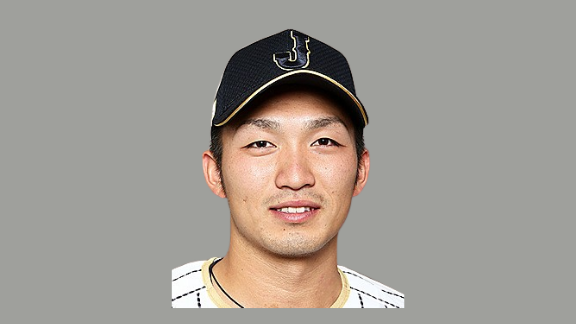
    Reports have surfaced recently that NPB’s Hiroshima Carp will be posting their star right fielder, Seiya Suzuki, in the coming offseason. Suzuki is coming off a monster season with the Carp, as he led Japan’s Central League in all three triple-slash categories with a batting line of .317/.433/.639, and set a career high with 38 home runs.

    Predicting how that success will translate to MLB performance can be tricky, however. Adjusting for the quality of competition faced is one aspect, but there are also the challenges of moving to a new country and culture, as well as adapting to a new role on a new team that can have an effect on the player’s performance. There is also an argument that certain skill sets are more transferable than others when players move to MLB.

    In order to get a ballpark idea of what to expect from Seiya Suzuki, I am going to compare his last two seasons in NPB to another recent corner outfielder from the same league, Yoshi Tsutsugo. I chose Tsutsugo because he plays a similar position, was close to the same age when posted, and made the transition recently.

    Tsutsugo was known as a power hitter in Japan, and particularly a home run hitter. He had some swing-and-miss in his game, but made up for it by hitting the ball hard when he did make contact and drawing walks as pitchers worked around his power. Here are his numbers from his last two years in Japan, and his combined line in MLB:


    Season League AVG OBP SLG K% BB%
    2018 NPB .295 .393 .596 18% 14%
    2019 NPB .272 .388 .511 25% 16%
    2020-2021 MLB .209 .309 .388 27% 12%


    Tsutsugo had a down year in 2019 before he came to MLB, with a .85-point drop in slugging percentage and an increase of 7 percentage points to his strikeout rate. Facing MLB pitching, his numbers further dipped, showing how good MLB pitchers are.

    Tsutsugo struggled to catch up to fastballs at the beginning of his MLB career, which makes sense since far fewer pitchers in NPB routinely throw 95 MPH or higher. However, he did finish his 2021 season off strong with the Pirates, hitting .268/.347/.535 in 144 plate appearances over 43 games. With Pittsburgh, he was also able to get more regular playing time than he did with the contending Rays and Dodgers.


    For comparison, here are Seiya Suzuki’s numbers over his last two seasons in NPB:


    Season League AVG OBP SLG K% BB%
    2020 NPB .300 .409 .544 14% 14%
    2021 NPB .317 .433 .639 17% 16%

    The high batting averages for Suzuki are no fluke, as this is his sixth consecutive season with an average over .300. He has a fairly flat bat path which produces lots of line drives when he squares up the ball, allowing for higher averages than the fly ball approach of Tsutsugo.

    Suzuki’s athleticism, a key differentiator between him and Tsutsugo, shows in his batting stance. 

    He incorporates a leg kick, lifting his front leg as the pitcher delivers home and balancing with one foot in the air for a second before stepping into his swing and driving his bat towards the ball. He has a selective approach at the plate, taking pitches until he gets the one he wants. 

    With two strikes he loses the leg kick to sacrifice a little power in order to make contact and keep at bats alive.

    Suzuki is coming off a career year in the power department, smashing his previous high of 30 HR with his 38 this season. This also led to a career best slugging percentage of .639, his third season slugging .600 or higher. For comparison’s sake, Tsutsugo only had one season over .600, with a .680 SLG in 2016.

    Offensively, Suzuki has a clear edge over Tsutsugo before coming over to MLB. His career marks in all three triple slash stats beat Tsutsugo’s handily and, if he is posted this off-season, Suzuki will also be coming off a much better platform year than Tsutsugo.

    In other areas of their games, Suzuki also tends to outshine Tsutsugo. Defensively Tsutsugo is more or less a liability. He played a lot of left field in Japan due to the Central League not utilizing a DH, and per DRS he was a negative fielder in both 2018 and 2019:


    Season Position Innings DRS
    2018 LF 1105 -9
    2019 LF 840 -6
    2019 3B 230 -8


    Tsutsugo does not have a large enough sample at any position in MLB to make any conclusive judgements from, but he does have 180 innings of +2 DRS fielding in left in MLB, along with -2 in 89 innings at third. He also has played some first base and right field in MLB, scoring below average at both positions.

    One thing that stands out is that Tsutsugo struggled mightily in both 2018 and 2019 in left field with deep balls. This may not be entirely his fault however, as NPB teams will play their outfielders much shallower than MLB teams at times, giving up the deep ball in the hopes of taking away some singles in front of outfielders.

    Since balls over a fielder’s head are worth more runs than the shallow hits, this positioning can adversely affect an outfielder’s DRS, and might explain why DRS is more of a fan of his work in MLB than in NPB.

    For comparison, here is Seiya Suzuki’s Defensive Runs Saved over his last two seasons:

    Season Position Innings DRS
    2020 RF 1015 6
    2021 RF 1037 2


    Suzuki’s big skill on defense is his arm, and most of his value in the outfield comes from throwing out runners, or preventing them from advancing. He came up as a pitcher and infielder, so his outfield defense was a work in progress earlier in his career, though he has improved at tracking balls down. For the same reason that Tsutsugo’s defense grades out better in MLB, there is a possibility that Suzuki’s defense could play better in MLB as well.

    Playing in right field, where the throw to third base is longer and therefore more challenging, Suzuki has kept runners from advancing extra bases at roughly the same rate that Tsutsugo did from left field, even though Tsutsugo had the advantage of a much shorter throw to third.

    Suzuki also has 12 unaided assists in the last two seasons (assists where the outfielder directly throws out a runner), compared to Tsutsugo’s five over his last two seasons in NPB.

    In terms of baserunning, while Suzuki is more athletic than Tsutsugo, he doesn’t necessarily have as refined baserunning instincts. For their NPB careers, Suzuki is 82-for-134 stealing bases (61% success rate), while Tsutsugo was 5-for-9. I expect Suzuki to be given less free reign to attempt stolen bases in MLB, though his good speed will still be a benefit on the basepaths allowing him to take extra bases on balls in play.

    Two years ago Yoshi Tsutsugo was an intriguing player, and after his run in Pittsburgh to end the 2021 season he still is. However, Seiya Suzuki looks to have a higher chance to be an impact talent and can impact a game in multiple ways. We could see that on display as soon as Opening Day.

  • A New Way Of Looking At Lucky and Unlucky Hitters – Meet ‘Fielding Play Adjusted (Batting) Average’

    A New Way Of Looking At Lucky and Unlucky Hitters – Meet ‘Fielding Play Adjusted (Batting) Average’

    By TED BAARDA

    “It will balance itself out,” is a commonly quoted saying among baseball people when a player gets robbed of a hit. And for the most part, in a large enough sample, that will roughly hold true. However things rarely balance out perfectly, and that disconnect in baseball is often regarded as ‘luck’ or randomness.

    There are some stats that can be used to support a claim that a hitter is lucky or unlucky. BABIP is one of the original luck indicators, but more recent stats like xBA, which focuses on quality of contact, have tried to determine what a player’s “true talent” batting average should have been based on what a hitter did at the plate.

    I wanted to try a similar approach, but instead focused on the question from a defensive perspective. Using our Good Fielding Play (GFP) and Defensive Misplay (DM) data, we can adjust a player’s batting average for exceptionally good or bad defensive plays made against them.

    Imagine an alternate reality where defenders are perfectly sound fundamentally, but are unable to make exceptional plays to rob players of hits

    Imagine an alternate reality where defenders are perfectly sound fundamentally, but are unable to make exceptional plays to rob players of hits, and that’s the environment in which we are judging hitters. 

    Admittedly, this alternate reality sounds quite boring. But let’s give it a try.

    The model is quite simple: if a player was robbed of a hit by an exceptional defensive play, we are now giving them theoretical credit for a hit. 

    If a player is credited with a hit but was aided by a defensive blunder, they now are not credited with that hit. 

    If a player is credited with a hit but was aided by a defensive blunder, they now are not credited with that hit. 

    Calling this new average “Fielding Play Adjusted Average” (FPAA), we can compare it to a player’s actual average and determine who is getting lucky or unlucky based on the plays made against them.

    This model has a few differences from xBA (expected batting average) that are worth pointing out. 

    There are a couple of different versions of xBA. The version you see on Statcast focuses solely on how hard a ball was hit and it’s launch angle, but that ignores the effects of fielder positioning and shifting. 

    The reasoning for this is that xBA removes defense from their equation entirely, since hitters “have no control over what happens to a batted ball once they put it in play.” This isn’t fully true though, as hitters will have a tendency to hit the ball to some areas of the field more than others. 

    Hitters who pull the ball a lot, for example, will have more defenders set up where they hit the ball more often. This makes turning those balls into outs easier, and will drive down a hitter’s batting average and FPAA, since great plays are less likely to be necessary due to better positioning.

    Conversely, hitters who spray the ball around the whole field are less likely to be shifted, which opens up more holes and gives them a chance to hit for a higher average and FPAA.

    Another difference is in how they handle foul balls. The advantage of using our Defensive Misplay data is that we have some DMs that are assigned for foul balls that should have been caught but were not, which are ignored from xBA calculations. 

    For foul balls with a DM, FPAA credits an extra at-bat to the hitter. So if a hitter hits a foul ball that is missed due to a misplay, but recovers to get a hit, our stat will treat that AB as the hitter going 1-for-2. 

    If a hitter is robbed on a foul ball, FPAA will take away an AB from the hitter, basically treating that plate appearance as a 0-for-0.

    You can find the data for all players with at least 300 at-bats here.

    Here are the luckiest hitters this season by FPAA (minimum 300 AB):

    Luckiest Hitters in MLB

    Batter Actual_AVG FPAA Diff
    Victor Robles .204 .177 .027
    Gregory Polanco .208 .182 .026
    Starling Marte .308 .285 .024
    Juan Lagares .236 .214 .022
    Josh Rojas .264 .244 .021
    Harold Ramirez .268 .248 .021
    Abraham Toro .239 .218 .021

    It is a little surprising to see players who struggled so much this season, in Robles and Polanco, as the ‘luckiest’ hitters in baseball. 

    Here’s one example of what were talking about as it relates to Robles. The pitcher being slow to cover the base eliminated any chance of it being an out. We score it a Defensive Misplay. The official scorer scores it a hit.

    And this was scored a hit too. A tough play yes, but since the center fielder got his glove on it, it’s a Defensive Misplay in our accounting.

    There are some possible explanations that can explain how certain players can be more prone to being lucky than others. 

    For instance, ground balls are inherently more difficult to turn into outs since they require a ball to be fielded and usually thrown to a base in less time than the average fly ball is in the air. 

    Marte and Ramírez both take advantage of that, with ground ball rates above 50%. In addition, having good speed, like Marte and Robles, can put more pressure on the defense to handle the ball quickly and cleanly, which can force extra miscues.

    At the opposite end of the spectrum, we have the unluckiest hitters:

    2021’s Unluckiest Hitters

    Batter Actual_AVG FPAA Diff
    Eugenio Suarez 0.198 0.226 -0.028
    Maikel Franco 0.210 0.233 -0.023
    Sean Murphy 0.216 0.239 -0.022
    Carson Kelly 0.240 0.258 -0.018
    Dansby Swanson 0.248 0.266 -0.017
    Joey Wendle 0.265 0.282 -0.017
    Jonathan Villar 0.249 0.266 -0.017

    Like with the lucky hitters we can point to some similarities among the three unluckiest hitters, as none are particularly fast, and as power hitters they are typically trying to hit more balls in the air than on the ground. However Swanson and Villar do not fall into that category of hitter.

    Another way we can try to evaluate luck is just by looking at the raw hits robbed or hits “gifted”. 

    While Eugenio Suárez is the unluckiest hitter by FPAA, Kevin Newman has been robbed of the most hits this season with 17, though Suárez is second with 16. 

    Newman, however, has received 10 gifted hits (or hits due to a DM) on the season, compared to just 2 for Suarez. 

    Here’s one of Suarez’s tough-luck outs.

    In terms of the gifted hits leaders, there is a three way tie at 17 for Mark Canha, Whit Merrifield and Alex Verdugo. Merrifield and Verdugo have also been robbed a lot (13 and 14 times respectively), so they didn’t get the same bump in FPAA that Canha, who was robbed only 7 times, received, 

    Here’s an example of a play that was ruled a hit for Canha but rightfully scored a Defensive Misplay.

    Looking at this data, it serves as a reminder that “luck” does seem to be randomly distributed. It tends to stand out more when a player performing poorly has bad luck, or a player performing well has good luck, but players can have good luck in a bad season, or bad luck in a good season. Luck is also a subjective topic, as there are different ways to interpret luck.

    FPAA suggests that during a full season, the luck does tend to even out somewhat, as the vast majority of players had a difference between their batting average and FPAA of less than .020. Lowering the at-bat threshold gives larger outliers (especially among pitchers hitting), but no player with 50 AB had a difference between their batting average and FPAA greater than .050.

    You can find data for all players with 300 at-bats here.

  • 2021 NPB Position Players to Watch

    By TED BAARDA

    With Spring Training underway, baseball fans can look forward to enjoying more baseball in 2021 than we had in 2020. While MLB teams are ramping up, so are players in NPB and the KBO, Japan’s and South Korea’s top leagues respectively. NPB is starting up the earliest, on March 26, while the KBO is starting their season about a week later, on April 3. 

    Both leagues will also be taking a break from mid-June through early August to allow players to represent their countries in the Olympics, which should result in both Japan and South Korea fielding competitive teams in the event. In addition to fielding Olympians, both leagues feature players that have the upside to be future Major League contributors.

    We looked at NPB pitchers a couple of weeks ago. Now here are some hitters from Japan’s NPB who could make their way to MLB at some point in the future. To get a balanced look at different types of players, I will fill out a roster with a player at each position, plus an extra at DH. Some of these players are established stars in Japan, some have high ceilings but are coming off down years, and some are in the process of proving themselves. We wanted to give you a variety.

    Catcher: Tomoya Mori – Seibu Lions

    Before the 2020 season Mori would have been one of the easiest choices for this list, as a young catcher coming off a .329/.413/.547 season in 2019. He is still young (he turns 26 in August), but he is coming off his worst season as a pro by far, slashing .251/.325/.380 in 2020. His worst previous season was 2016, when as a 20 year old he still managed an OPS that was 98 points higher than his 2020. For Mori to be successful, the bat needs to bounce back, since historically his glovework has been below average (and his small stature raises questions as well), as was discussed in my scouting report of him earlier this off-season

    If Mori can bounce back, many teams would be happy to add a lefty-swinging catcher with a career .291/.372/.469 slash line entering his prime years. Given his age and experience he should be eligible for international free agency after the 2023 season but could also find himself posted next off-season if a bounceback year creates a strong market for him.

    First Base: Hotaka Yamakawa – Seibu Lions

    Yamakawa has a lot of similarities to his teammate, Tomoya Mori, as a bounceback candidate from the Seibu Lions with questions about his size and defense. Yamakawa combined to hit 90 home runs in his first two seasons as a full-time player and has 153 career homers in just 530 games (46.8 per 162 games). However, his slugging percentage has dropped off since his big 2018, going from .590, to .540 in 2019, to .450 in 2020. His strikeout rate has also bumped up from 21% to 25% last year, though he has maintained high walk rates during that time as well.

    His athleticism is probably the first place to look to explain his struggles, as he is listed at 5’9 and 227 lbs and is a poor runner. While Japanese teams are not known for embracing defensive shifts, they do get creative with Yamakawa by having their middle infielders back up and play anywhere from 5 to 20 feet deep into the outfield grass since he hits the ball so hard.

    Anything they can reach on the ground is likely an out. Yamakawa’s size also limits him on defense, as 5’9 is very short for a first baseman (taller players are preferred since they can more easily reach errant throws from infielders). His range is poor, even for a first baseman, which leads to poor metrics at the position. While he has played some third base, it has been sparingly and not particularly pretty by the eye test. He is more of a DH than anything else. 

    Yamakawa had a later start to his career than many NPB stars, and that means that despite being 29 years old, he is still years away from free agency. For him to be a big leaguer, he will need to have a resurgence at the plate, and find some success in the posting market in the next couple of years.

    Second Base: Tetsuto Yamada – Yakult Swallows

    Yamada is arguably the biggest name on this list and is a superstar in Japan, commonly referred to as Japan’s Mike Trout. I wrote a scouting report on Yamada a few months ago, but the 2020 season was a disappointment for him. 

    Reports have indicated that Yamada arrived to resumed camps out of shape and then he dealt with injuries in the middle of the season. That being said, a second baseman putting up a .254/.346/.419 line is respectable at the NPB level. 

    Yamada’s batting line in 2020 was so disappointing because he has established that he can perform at an elite level. In the six seasons from 2014-2019 Yamada put up a .299/.406/.555 line with 198 HR and 159 SB (with just 22 CS), producing four 30-30 seasons in that span. Yamada is another player who needs to rebound in 2021, but the rewards for him could be much greater. He should be eligible for international free agency next off-season, and given his established level of performance and age (he turns 29 in July) he could land himself a very nice MLB contract should he rebound to his previous form.

    Shortstop: Hayato Sakamoto – Yomiuiri Giants

    Sakamoto is on the older side for a list of potential future Big Leaguers, having just turned 32. However, he is one of the most accomplished players in NPB history, having surpassed 2,000 career hits at this point in his career, a total he cleared late last season. While 2,000 hits is an impressive total, it is even more impressive when you consider that NPB regular seasons are 19 games shorter than MLB seasons, and as a middle infielder Sakamoto would be required to spend countless hours doing defensive drills in practice in addition to finding time to work on his hitting. 

    Sakamoto is only the 53rd player in league history to reach 2,000 hits. He does more than just collect singles, as he has good gap power and will usually finish the year with home run totals in the teens and around 30 doubles. In 2019 he won the Central League MVP with career highs of 40 HR, 94 RBI, and a .575 SLG.

    In addition to his talent with the bat, Sakamoto is a good fielder too. While he has a large frame for a NPB shortstop (6’1, 190 lbs), Sakamoto has good range, particularly up the middle, and a strong throwing arm. While he has never won a Gold Glove at the position, Sakamoto did win the first NPB Fielding Bible Award at shortstop for his glovework in 2020, when he also led all NPB shortstops with 6 Defensive Runs Saved (Note that DRS in this case is compared to MLB average). This was the best year that he has had defensively by DRS (since we started tracking NPB data in 2018). He grades out as close to MLB average at the position when looking at his 3 year average.

    Sakamoto’s is an interesting case, as he looks to have all the tools to be a MLB-caliber player and has an impressive resume to back it up. However, at only 32 he has a good shot at breaking the all time hits mark in NPB, which is currently 3,085 by Isao Harimoto. A detour to play a few years in North America would severely hinder his chances of breaking the record and the infamy that would come with it. He may have less motivation than most to come stateside, but he will likely go down as one of the best players Japan has ever seen.

    Third Base: Kazuma Okamoto – Yomiuri Giants

    Kazuma Okamoto has spent the past few years building an impressive offensive resume. He made his NPB debut back in 2015, but was used sparingly in his first three years before becoming a full-time player in 2018. His 2018 season is still the best that he has put up with the bat, hitting .309/.394/.541, but he has been a consistent source of offense for the Giants. 

    At only 24 years old (he turns 25 in June) Okamoto could grow into more power. Despite playing 25 fewer games in 2020 than he did in each of the previous two seasons, he managed to match his 2019 home run total of 31, and posted a career best .270 ISO with a career-low 17% strikeout rate (best among his full seasons).

    Defensively Okamoto has settled in as the full-time third baseman for Yomiuri and he has been about MLB average at the position, with a net DRS of 0 over the last three seasons (reminder: MLB average equates to a good defensive player in Japan). He uses his strong arm to make up for below average range. He has also played some first base (where the metrics showed he rated poorly) and left field, where in a small sample he again graded out around MLB average and recorded a couple of outfield kills (assists without a cutoff man), in limited innings, to again demonstrate his strong arm. 

    Yomiuri has started to post some players when requested, but overall is not going to aggressively post their young stars. Okamoto will likely need to wait until his late 20s to either be posted or achieve international free agency to be available to MLB teams.

    Designated Hitter (Third Base): Yusuke Ohyama – Hanshin Tigers

    Calling Ohyama a DH is a bit misleading, since he has been Hanshin’s regular third baseman for the past few years, but for the sake of this exercise he is our ‘DH’. Ohyama has experience at all four corner positions (plus 2 innings in center field last year), grading out as a little below MLB average at both corner infield spots and without enough of a sample size to say how good his outfield defense is. While Ohyama can be played in any corner spot, his bat is what will determine his success.

    Ohyama made his NPB debut in 2017 and appeared in 75 games before becoming a full-time starter in 2018. From 2017-2019 he hit .259/.315/.418, which is an uninspiring batting line for a corner player. However in 2020 he exploded for a .288/.357/.560 line, which is made even more impressive given that his home park, Hanshin Koshien Stadium, is known as a pitcher’s park. 

    Ohyama doubled his previous season-high in home runs by belting 28 in the abbreviated 2020 season, which placed him in a tie for second in the Central League. Now 26 years old, Ohyama will need to show that he can maintain his newfound power stroke over the next few years if he wants an opportunity to play in North America.

    Outfield: Seiya Suzuki – Hiroshima Carp

    Seiya Suzuki is simultaneously the most established and youngest of the outfielders highlighted here, as despite debuting for Hiroshima in 2013 he won’t turn 27 until this August. He is the prototypical right fielder, with a strong arm and a powerful bat, though he is more than just a slugger at the plate. Incredibly, Suzuki’s 2020 slash line of .300/.409/.544 features his lowest AVG and SLG since he became a full-time starter beginning in 2016. His strikeout and walk rates, both right around 14% in 2020, were both a little worse than his 2019 numbers, where his walk rate was a bit higher than his strikeout rate. 

    Defensively Suzuki’s best tool is his cannon of an arm. He is also fairly athletic but doesn’t always read balls well, yet his arm and athleticism have helped him earn three Gold Glove Awards for his work in right field. Similarly on the bases, Suzuki has the speed to steal bases, but doesn’t have great base-stealing instincts and gets thrown out at a high rate. 

    Compared to fellow former Central League outfielder Yoshi Tsutsugo, Suzuki produces better rate stats at the plate and has a better defensive reputation (And it should be noted that Tsutsugo’s home park was considered fairly hitter-friendly). Suzuki will likely still need to wait for a few years to test himself at the MLB level, as he still looks to be three years from international free agency, unless he gets posted before then. 

    Outfield: Masataka Yoshida – Orix Buffaloes

    Coming into 2020 Yoshida was already considered one of the better pure hitters in Japan, coming off a .322/.413/.543 2019 with a career high 29 HR. While many players now make changes to sell out for more power, Yoshida went in the opposite direction in selling out for contact and avoiding striking out in 2020. Last season he put up 72 walks against just 29 strikeouts, for a 6% strikeout rate with a healthy 15% walk rate. His power took a step back, as his .162 ISO was a career low, but he posted career bests in AVG and OBP with a .350/.453/.512 line and still hit 14 home runs in the slightly abbreviated season.

    While Yoshida is not old, he turns 28 in July, he is primarily a left fielder without any loud defensive tools, though Defensive Runs Saved pegged him around average as a left fielder last season with some DH time as well. Orix has struggled to win as a team for a while now, so Yoshida could be a posting candidate in a couple of years if the team can’t build a winner with him. If they hang onto him, he will be a few years into his 30s by the time he can become an international free agent.

    Outfield: Mel Rojas Jr. – Hanshin Tigers

    Mel Rojas Jr. proved everything that he could in the KBO last season, winning KBO MVP, and nearly captured a Triple Crown in the process. He did all of that while enjoying a comfortable lead in hard-hit rate. 

    Moving to NPB, Rojas will look to put up big numbers again, which will be more of a challenge given the better pitching he will face, and the fact that he is moving to a pitcher’s park. Hanshin has had success in transitioning players from the KBO to NPB, evidenced by its signings of reliever Seung-hwan Oh in 2014 and outfielder Jerry Sands last year, and is hoping for more success with Rojas and pitcher Raul Alcantara this year.


    Rojas will likely play right field for the Tigers, replacing veteran Yoshio Itoi in the starting lineup while Sands plays left field on most days. While the 30 year old Rojas was rumored to be considering MLB offers this off-season, they likely were not substantial offers, and he is betting on himself going to NPB and putting up big numbers to earn a more lucrative MLB contract in the next year or two.

  • 2021 KBO Position Players to Watch

    By TED BAARDA

    With Spring Training underway, baseball fans can look forward to enjoying more baseball in 2021 than we had in 2020. While MLB teams are ramping up, so are players in NPB and the KBO, Japan’s and South Korea’s top leagues respectively. NPB is starting up the earliest, on March 26, while the KBO is starting their season about a week later, on April 3. Both leagues will also be taking a break from mid-June through early August to allow players to represent their countries in the Olympics, which should result in both Japan and South Korea fielding competitive teams in the event. In addition to fielding Olympians, both leagues feature players that have the upside to be future Major League contributors.

    We previously looked at prominent KBO pitchers. Here are some of the most intriguing hitters playing in the KBO this year. Some of these players have some MLB experience, some will be Olympians this summer, and some are young players with bright futures. To capture a variety of players, I will be filling out a full defensive alignment (and adding a DH).

    Catcher: Eui-ji Yang – NC Dinos

    Like many KBO players, Yang gained some international recognition with his strong play in a year where the KBO was more of a focus for baseball fans. Despite being 33 years old with a lengthy catching career, he posted one of the best offensive seasons in his career, with career highs of 33 HR, 124 RBI and a .603 SLG. Yang’s .328/.400/.603 line in 2020 is certainly impressive, but he actually produced his lowest OPS in his last three years, with his 1.003 OPS in 2020 being slightly below the 1.012 OPS he produced in both 2018 and 2019.

    Yang is on a truly impressive three year run at the plate, which is especially remarkable when considering the toll catching takes on one’s body throughout a season. Defensively Yang is a standout as well, winning the inaugural Fielding Bible Award for KBO catchers for his defensive work in 2020. While Yang is older than most players who may have a MLB future, he could attempt a brief cameo like Dae-ho Lee did in 2016 with the Mariners to challenge himself at the highest level.

    First Base: Baek-ho Kang – KT Wiz

    Baek-ho Kang was the first overall pick in the KBO draft before the 2018 season, and he made that look like a wise choice with a monster year. Despite being 18 when he debuted, he went on to post a .290/.356/.524 line as a rookie in 2018 and has made improvements to his game in the following years. Kang cut his strikeout rate from 21% in 2018 to 16% in 2020, while raising his walk rate from 9% to 11.5% over the same time period. His OBP has sat in the low .400s the last 2 seasons and he brought his SLG up to .544 last season, though he still has the potential to turn some of his doubles into home runs in the coming seasons.

    Defensively, Kang is a first baseman and only a first baseman, and the metrics were not appreciative of his glovework, with him ranking near the bottom of the KBO DRS leaderboards for first baseman. He still has four years before he is eligible to be posted, and he still has room to grow, but Kang is the most exciting KBO first base prospect since Byung-ho Park.

    Designated Hitter: Roberto Ramos – LG Twins

    Ramos was a 16th round pick of the Colorado Rockies in the 2014 MLB Draft, and he slowly moved up through their minor league system. As a lefty-swinging first baseman, Ramos didn’t display much power early in his minor league career (outside of a .610 SLG at Asheville in 2015, where the dimensions are 297 ft down the right field line and 373 to straightaway center). He started to show more pop in 2018, breaking out with a .305 ISO split between High-A Lancaster and AA Hartford. He followed that up with a .309/.400/.580 line in 2019 in the hitter-friendly Pacific Coast League. After that season, his sixth in the Rockies organization, the team released him to pursue an opportunity in the KBO.

    Ramos continued to hit well in his debut season in Korea, slashing .278/.362/.592 over 117 games and finishing second in the league with 38 HR. He also finished second in the league in hard hit rate, behind only MVP Mel Rojas Jr. While the power is undeniable, Ramos can have problems making contact at times, as evidenced by his 28% strikeout rate in his first year in the KBO, which lines up with his career 26% strikeout rate in the minors. 

    While a 28% strikeout rate is not bad for a Major Leaguer, MLB pitchers consistently generate many more strikeouts than their KBO counterparts. This means that MLB teams eyeing Ramos are likely concerned about a big strikeout spike should they sign him to a MLB deal. Ramos is young enough, at 26, that he has time to learn to cut down on his whiffs while still producing power at the plate. That will be necessary if he wants to sign with a MLB team in the future.

    Second Base: Min-woo Park – NC Dinos

    Min-woo Park is a throwback type of middle infielder, with a high-contact, low-power profile at the plate. He debuted in 2013, and became a regular fixture in NC’s lineup the following season. Park has hit over .300 in each year since 2015 and has a career slash line of .330/.404/.433. While his career slugging percentage is low, Park has beaten that mark in each of the last four seasons with a career high of .475 in 2020. He has never reached double digits in home runs, but will mix in his share of doubles and triples.

    Early in his career, Park’s offensive game was supported with speed on the bases as he went 96 for 122 in stolen base attempts from 2014-2015. Since then he has not topped 20 steals in a season, though he still uses his speed to help him leg out triples, of which he has 43 in his career. Defensively Park looks like he could play about an average second base in the Majors, but he doesn’t have the arm to consistently play on the left side of the infield.

    Min-woo Park has played more than seven seasons in Korea, so he is eligible to be posted and will likely gain free agency rights in two years. He is 28 now, but profiles as more of a backup at the MLB level, and the posting process has not been kind to players who aren’t viewed as having starter potential. As a 30 year old in two years, reaching free agency then might provide him with his best chance at signing with a MLB team.

    Shortstop: Dixon Machado – Lotte Giants

    Dixon Machado has some similarities to Min-woo Park, as a middle infielder without much power who likely profiles as a bench player on a MLB team. Machado spent nearly a decade with the Tigers organization, who signed as an amateur with the team out of Venezuela, before spending 2019 with the Cubs AAA team. 

    Machado’s career MLB line of .227/.285/.295 in 172 games is uninspiring, and his career minor league line is not much better at .247/.328/.331 over 10 seasons. Throughout his time in the minors, defense was always Machado’s strength. This is shown on his 2017 scouting report from FanGraphs, where he was given future grades of 60 on his fielding and throwing.

    Machado put up a solid .280/.356/.422 line in his first year in the KBO with 12 HR. He also went 15 for 16 stealing bases and played in every game for the Lotte Giants. His glovework was again recognized as he won the Fielding Bible Award as the best defensive shortstop in the KBO. For Machado to get another opportunity at a MLB role, he will need to continue to improve at the plate and maintain his strong fielding skills. He just turned 29, so a strong season this year could open up the opportunity for a bench spot on a MLB team in the future should he want to go that route.

    Third Base: José Miguel Fernandez – Doosan Bears

    While it is a stretch to call Fernandez a third baseman (he primarily is the DH for Doosan), he did play 11 innings at the position for the Los Angeles Angels in 2018. This also allows me to include Fernandez along with Kang and Ramos on this list, as all three are among the best hitters in the KBO.

    Fernandez has had a unique career path, debuting in the Cuban National Series as a 19-year-old in 2007 and playing in the league until 2015. In his eight seasons in Cuba he hit .319/.403/.423, demonstrating both his ability to make solid contact but also less power than is expected for a corner infielder. In 2017 Fernandez played in the Dodgers system and signed with the Angels in 2018. He made a brief appearance in the Majors with the Angles and hit .267/.309/.388 in 123 plate appearances.

    In 2019 Fernandez joined Doosan, and in the two years that have followed he has turned into one of the most prolific hitters in the history of the KBO. The KBO single-season hits record is 201, set in 2014 by Geon-chang Seo. In 2019, Fernandez ended the season with 197 hits, and last year he had 199. During this time Fernandez has slashed an impressive .342/.407/.490 while hitting 36 home runs over the two seasons, again demonstrating remarkable hitting ability but with less power than the typical corner infielder.

    Jose Miguel Fernandez has already appeared in MLB, and he could find his way back again in the future. It is hard for contact-over-power first basemen to find a home in the Majors, so he would need to find a team where his skill set fits in. Due to the nature of his career, Fernadez is on the older side for a “prospect,” set to turn 33 in April. He could have the opportunity to return to the Majors, or continue to build his legacy in Korea and take a few more shots at Seo’s record.

    Outfield: Jung-hoo Lee – Kiwoom Heroes

    The Kiwoom Heroes have been the best team in the KBO at producing MLB position players, with Big Leaguers Jung-ho Kang, Byung-ho Park, and Ha-seong Kim all coming from Kiwoom. 22 year old Jung-hoo Lee might be the next one, as he has demonstrated a strong offensive game early in his career. His career batting line of .336/.397/.468 is impressive considering his youth, and his power is still emerging. 2020 was the first year that Lee produced a SLG over .500, at .524, and his first year reaching double digits in home runs with 15. He also set the single-season KBO record for doubles with 49 last year. With his evolving power, Lee has maintained his elite contact skills, with a career strikeout rate of 9% that matches his career walk rate. He has walked more than he has struck out in each of the last two seasons.

    Listed at 6’1 and 172 lbs, Lee has some raw athleticism. He has stolen between 11 and 13 bases in each of his first four seasons, with his most efficient season being the most recent. He has graded out as only slightly below MLB average in right field by DRS, again demonstrating overall athleticism without any outstanding defensive tools.

    As a young player who debuted early, Lee has played four full KBO seasons already, leaving him three years from posting eligibility. With Kiwoom’s openness to post young stars, Lee could be posted when he is 25, the same age as Ha-seong Kim was this past off-season. Assuming he keeps developing his power and maintains his elite contact skills, a 25 year old Jung-hoo Lee could be a hot commodity in the 2023-2024 off-season.

    Outfield: Sung-bum Na – NC Dinos

    Na was posted by NC this past off-season, though he was unable to find a deal to his liking and returned to NC for the coming season. I wrote a scouting report on Na before he was posted.

    Na is known for being a prolific hitter in Korea, as shown in his career .317/.384/.542 line, and he set career highs in home runs and total bases in 2020. Offensively, strikeouts have always been a bit of a problem for him, with a career 22% strikeout rate and only a 8% walk rate. His strikeout rate spiked to 25% in 2020, with a career high of 148 strikeouts recorded in just 130 games.

    His 2019 season was cut short by a gruesome knee injury, which cut off a terrific start to the season where Na was hitting .366/.443/.645. Since the injury, Na hasn’t been able to get back to his previous levels of athleticism, as he attempted a career low 4 stolen bases in 2020. He also spent more time as a DH in 2020 than he had in previous years. His glovework in right field was graded as below average when he did take the field, due to his lost range from his knee injury.

    While Na was unable to reach a deal this past off-season, he could try to come stateside again in the future. He will have limited chances, since he is 31 already, but he could be a platoon bat in MLB..

    Outfielder: Preston Tucker – Kia Tigers

    Preston Tucker showed significant improvement in his second KBO season and established himself as one of the better hitters in the league. Tucker joined Kia in the middle of the 2019 season and managed only 9 home runs in 95 games with a .479 SLG. In 2020 he finished the season with 32 home runs and a .557 SLG, while walking more than he struck out. He finished 2020 with the fifth highest OPS in the league at .955.

    While his bat took off in his second season in Korea, Tucker struggled in the field. I noted in my scouting report of him that his defense could use some work, and he ended up grading out as the worst defensive right fielder in the KBO by DRS. Tucker lacked the ability to get good reads on balls in the air last year, and he doesn’t have the speed to make up for poor routes and jumps.

    Tucker will turn 31 in July, and another strong year with the bat may convince a team to take a flier on him. He might also benefit from a position change, though that is unlikely to happen with Kia.

  • 2021 NPB Pitchers to Watch

    By TED BAARDA

    With Spring Training underway, baseball fans can look forward to enjoying more baseball in 2021 than we had in 2020. While MLB teams are ramping up, so are players in NPB and the KBO, Japan’s and South Korea’s top leagues respectively. NPB is starting up the earliest, on March 26, while the KBO is starting their season about a week later, on April 3. 

    Both leagues will also be taking a break from mid-June through early August to allow players to represent their countries in the Olympics, which should result in both Japan and South Korea fielding competitive teams in the event. In addition to fielding Olympians, both leagues feature players that have the upside to be future Major League contributors.

    Here’s a look at some NPB pitchers to watch in the coming season. The NPB features three starters who, based on talent and not contractual minutia, could easily fit into a MLB rotation today if given the opportunity.

    NPB teams tend to be deep with homegrown talent and use their foreign player slots to round out their rosters, so on the pitching side foreign players will hold bullpen roles or fit in at the back of the rotation. The top starters in this list are homegrown, and if they are all healthy come the Olympics, the Japanese team is set up to dominate the competition on home soil.

    Starting Pitchers:

    Tomoyuki Sugano (Yomiuri Giants): Since arriving at Yomiuri in 2013, Sugano has dominated the Central League and really has nothing left to prove at the NPB level. I wrote about Sugano a couple of months ago, and my opinion of him is still that he is the best pitcher in the world who has yet to appear in MLB. 

    While he did just sign a four year contract to stay with Yomiuri, the deal includes opt-outs after each season, meaning he can again try to come to North America next off-season without having a time crunch from the 30-day posting window. Sugano will also be able to stay in familiar surroundings during the pandemic, represent Japan at home for the Olympics and re-enter the market next year when conditions are hopefully more favorable.

    Masahiro Tanaka (Rakuten Golden Eagles): Tanaka’s decision to return to Japan came as a surprise to many, as he is certainly still a capable MLB starter. While he signed a two-year deal, he may have an opt-out included as well

    His decision likely included accounting for similar factors as Sugano, such as: the pandemic, proximity to family, the ability to participate in the Olympics, and that next year’s free agent market will likely be better for the players. The two-year deal could also serve as insurance for Tanaka should labor negotiations between MLB and the Player’s Association stall out. It will be interesting to see how Tanaka adjusts his game moving back to Japan (he may have to adjust his splitter grip again), and it will be interesting to see how long it takes before he returns to the Majors again.

    Kodai Senga (SoftBank Hawks): Senga, who recently turned 28, is the power pitcher of this group, with a big fastball that can push triple digits. He also features a nasty splitter, a cutter and a slider, per former colleague Will Hoefer. Senga is a power pitcher known for getting strikeouts, pushing close to a 30% strikeout rate in the last couple of years, though last year also featured a slight jump in BB% (from 10% in 2019 to 11% in 2020). Even with the occasional loss of location, he still produces results and makes up for the walks with his career 3-to-1 K-to-BB ratio.

    Outside of Senga’s control, however, is his contract situation. He will not be eligible for domestic free agency until after this season, but more importantly he will not be eligible for international free agency until after 2022. 

    While he has a strong desire to come stateside (he requested to be posted for the fourth consecutive year), SoftBank refuses to utilize the posting system and keeps its players until free agency. The strategy does work for the team, as it has won six of the last seven Japan Series, but it is also certainly frustrating to their best players. 

    For now Senga is a player to watch, but with an eye on two years from now for him to actually make his move to North America.

    Raul Alcantara (Hanshin Tigers): Alcantara can be considered the journeyman of this group, having made his debut in affiliated ball at 17 years old, with 46 1/3 innings for the Athletics spread over the 2016 and 2017 seasons.

    While he limited walks and home runs in the minors, Alcantara was never a big strikeout pitcher, and at the big league level he was crushed for 2.7 HR/9 in his small sample of appearances, and again lacked strikeout stuff to put away big league hitters. He joined the KT Wiz of the KBO for the 2019 season and was his usual self with a 4.01 ERA, 14% K% (good for 5.2 K/9), and a miniscule 4% BB% (1.4 BB/9 and exactly 27 BB in 27 starts).

    Following the 2019 season he signed with the Doosan Bears, who have had success with helping foreign pitchers get back to the Majors. Josh Lindblom’s three-year deal with Milwaukee opened up a spot in the Bears’ rotation for Alcantara, and his rotation-mate Chris Flexen signed a two-year deal with Seattle this off-season. 

    After joining the Bears, Alcantara started throwing more sliders, which he pairs with his mid 90s fastball to overpower KBO hitters, along with a change-up, splitter and curveball. The prioritization of the slider led to Alcantara’s strikeout rate jumping from 14% in 2019 to 23% in 2020 with his walk rate remaining virtually unchanged. Alcantara finished the 2020 season with a 20-2 record and 2.54 ERA, winning the Choi Dong-won award as the KBO’s best pitcher, and if he can build on his success in Japan a return to the Majors may not be far off.

    Yoshinobu Yamamoto (Orix Buffaloes): Yamamoto is by far the youngest starter listed here at 22 years old. He features a deep repertoire, relying on a mid 90s fastball and a hard splitter as his go-to pitches, but also featuring a cut fastball, a big curveball and a slider.

    The results have also been there for Yamamoto, with a 2.42 career ERA in the NPB while his strikeout rate climbed above 30% last season with a career high 10.6 K/9. He also keeps walks in check as his BB/9 has never been above 2.7. Yamamoto is also tough to square up, given that he locates, throws hard and gets good movement on his pitches. While hits allowed is generally a poor stat to use to evaluate a pitcher due to the many factors that can affect the number, it demonstrates the quality of Yamamoto’s stuff as his career H/9 in NPB is only 6.6, with a career low 5.8 last season. While he is a few years away from being considered for a MLB opportunity, he is definitely one to watch for in the future.

    Swingman Pitchers:

    Shintaro Fujinami (Hanshin Tigers): Even though he won’t turn 27 until April, Shintaro Fujinami’s career has had its share of ups and downs already. Fujinami debuted with Hanshin in 2013, the same year that Shohei Ohtani started his NPB career with Nippon-Ham, and prospect analysts were divided on who the better pitcher was. 

    Like Ohtani, Fujinami has a pitcher’s body (listed at 6’6 and 220 lbs) and features a fastball capable of hitting triple digits, a hard splitter, and a sweeping slider. After two strong seasons to start his career, Fujinami’s control started to waver.

    After walking hitters at a 8.5% rate in his first two seasons his walk rate started to slowly increase in the subsequent years, and by 2017 he was no longer a fixture in the Tigers’ rotation. Fujinami still made some starts here and there, but with poor results. From 2017-2019 Fujinami started 25 games, combining to throw 134 1/3 innings of 4.69 ERA ball with an 18% strikeout rate and an ugly 16% walk rate.

    Something seemed to click for Fujinami in 2020. His season started poorly, as he went 1-5 in 8 starts with 48 strikeouts, 26 walks  and a 5.87 ERA in 46 innings before being moved to the bullpen. He shined in a relief role, making 13 appearances with a 2.35 ERA and adding 16 strikeouts against 6 walks in 15 1/3 innings. He ended the season with three starts, allowing only one unearned run while tallying 21 strikeouts and 8 walks in 15 innings. 

    While he showed signs of bouncing back, Fujinami needs to show more than just a month and a half of good performance to be considered a viable MLB arm in the future. He does have a power arm, but harnessing it and showing consistency is the key for him, whether he starts or comes out of the bullpen.

    Yuki Matsui (Rakuten Golden Eagles): A 25-year-old lefty, Yuki Matsui is a nice mix of young and accomplished. Despite being tried as a starter a few times, including 2020, he has racked up 141 career saves, and four seasons of 30 or more. He was dominant in 2019, collecting 38 saves, 12 holds and posting a 1.94 ERA. He struck out a whopping 107 in 69 2/3 innings with a 39.5% strikeout rate. Rakuten tried him as a starter this season, and he went 3-3 with a 3.66 ERA over 10 starts before moving back to the bullpen. 

    In his 16 1/3 relief innings Matsui posted a 1.65 ERA with 25 strikeouts and 6 walks. While his fastball is straight and thrown in the low 90s, Matsui gets lots of swings and misses with both his splitter and slider, and he will also incorporate the occasional change of pace curveball. As a lefty with strikeout stuff, Matsui could find a home in a big league bullpen down the road.

    Carter Stewart (SoftBank Hawks): Stewart’s is one of the more interesting amateur baseball stories in recent years. After being drafted No. 8 overall in the 2018 draft, Stewart was unable to reach a deal with the Atlanta Braves, with the team offering him less than full slot value due to an injury they uncovered.

    Before the 2019 draft, when Stewart would have been eligible to be selected again, he signed a long-term deal with the Hawks which is said to guarantee him $7 million. Stewart only pitched in the Japanese minor leagues last season, and the results were fine for a 20-year-old, but it will be interesting to see how he adapts to Japanese professional baseball and how he performs against top competition.

    Relief Pitchers:

    Robert Suarez (Hanshin Tigers): I wrote a scouting report on Suarez earlier this off-season, and he is set to resume in his role as Hanshin’s closer this year. As noted in the earlier report, Suarez showed promise coming out of Mexico in 2015, but had Tommy John surgery and struggled to find his command post-surgery until last year. He was reportedly being considered for offers from MLB teams before re-signing with Hanshin, and another solid season for the Tigers will get him considered again next off-season.

    Liván Moinelo (SoftBank Hawks): The left-handed Moinelo comes from Cuba, and it is easy to see why he is an intriguing talent. He throws a mid-90s fastball that he can locate above the zone and at the knees. He will mix in a big breaking curveball, a high-80s slider, and a changeup. Exclusively used as a reliever, Moinelo’s K/9 has steadily increased in each season, going from 9.1 in 2017 to 14.4 in 2020 and a 40% strikeout rate. Moinelo’s walk rates are slightly high, but he has maintained better than a 3-to-1 K-to-BB ratio in his last two seasons.

    At only 25 years old Moinelo would certainly be of interest to MLB teams, and that the Cuban government previously stated that it would allow Moinelo to sign with MLB teams in the future, though the initial proposal of how player transfer would work was shot down by the US government. Cuban players do not need to defect from their homeland to sign with NPB teams, but they have had to take that route to join MLB teams in the past. Moinelo’s case is an interesting one to watch, from both a baseball and international relations perspective, and it could mark a significant change in how players move from Cuba to MLB.

    Raidel Martinez (Chunichi Dragons): Martinez is another Cuban pitcher succeeding at the NPB level, like Livan Moinelo, though he is a right-hander in the Central League. Martinez has shown improvement each year, and he became Chunichi’s closer by the end of 2020, picking up 21 saves with a 1.13 ERA for the Dragons.

    Martinez features a four pitch mix with a mid 90s fastball, a hard splitter, a changeup and a slider. Over the last two seasons, covering 80 2/3 innings, Martinez has a 30% strikeout rate and an 8% walk rate for the Dragons. At only 24, his situation is similar to Liván Moinelo’s, with stuff that could play in a MLB bullpen.

  • 2021 KBO Pitchers to Watch

    By TED BAARDA

    With Spring Training underway, baseball fans can look forward to enjoying more baseball in 2021 than we had in 2020. While MLB teams are ramping up, so are players in NPB and the KBO, Japan’s and South Korea’s top leagues respectively. NPB is starting up the earliest, on March 26, while the KBO is starting their season about a week later, on April 3. 

    Both leagues will also be taking a break from mid-June through early August to allow players to represent their countries in the Olympics, which should result in both Japan and South Korea fielding competitive teams in the event. In addition to fielding Olympians, both leagues feature players that have the upside to be future Major League contributors.

    Here’s a look at some pitchers from the KBO who could find their way to MLB teams in the coming years. KBO teams tend to anchor their rotations with foreign pitchers, the max being two on a team (and for most teams those are your numbers one and two in the rotation). Having standout Korean pitchers on your staff can be an incredible advantage. 

    Just look at the reigning champs, the NC Dinos, with a Korean ace in Chang-mo Koo. Their top three instantly becomes one of the best in the league come playoff time. Since teams don’t use foreign players to shore up their bullpens, homegrown pitching becomes important to be able to close out games.

    Starting Pitchers:

    Chang-mo Koo (NC Dinos) – The left-handed Koo dominated in the first half of last season in the KBO with a 9-0 record and 1.74 ERA, and since the KBO was the first league to get underway in 2020 he received international attention for his dominance. While his fastball averaged only 89 MPH last year, he was still highly effective in the KBO with his strikeout and walk rates both making substantial positive strides, and he posted better K% (29%) and BB% (5%) in 2020 than Hyun-jin Ryu did in his best KBO season. Koo relies on his slider as his best breaking pitch, and pairs it with a splitter and a curveball to round out his repertoire.

    While the rate stats have been impressive, Koo’s innings pitched have also dropped in the last few years. He threw only 93⅓  regular season innings in 2020. His career high is just 133. 

    He missed a couple of months with a forearm injury last year, and his velocity wasn’t quite back when he returned, although he was able to ramp up in time to pitch in the Korean Series and make two starts, winning Game 5. Koo looks like he could be the next great Korean starter to make the jump to MLB, but he needs to stay healthy to show teams he can handle a starter’s workload. With two years until he becomes eligible to be posted and age on his side (he is only 24 years old), he has time to prove that he can do just that.

    Dan Straily (Lotte Giants) – The Lotte Giants made a bit of a gamble last year on Dan Straily, as he was coming off a terrible 2019 MLB season, and they signed him to the max contract that a foreign player can sign in their first year in the KBO, at one year for $1 million. The deal worked out for both sides, as Straily was dominant and became the first KBO starter in eight years to reach the 200 strikeout mark, last accomplished by Hyun-jin Ryu in 2012. He ended the season with a 15-4 record, 2.50 ERA in 194.2 innings and a 4-to-1 strikeout to walk ratio.

    Straily’s struggles in 2019 stemmed from his slider, which had been his go-to secondary pitch for his entire career, but lost its effectiveness in 2019. From FanGraphs, Straily’s slider was a positive pitch by run value in every season of his career until 2019, where it plummeted to 14.7 runs below average. 

    His slider was an asset in 2020 for Lotte however, and his 36% slider usage in the KBO was higher than his slider usage was in any of his previous MLB seasons. While the slider performed better in the KBO, it is hard to tell how much better the pitch was. He hung a lot of sliders in 2019, and he appeared to miss his spots with the pitch in 2020 as well. 

    The difference in 2020 was that he didn’t seem to miss belt high quite as much, and the hitters were more willing to chase it out of the zone, and miss it more frequently in the zone. This could be a quirk of quality of competition as opposed to an improvement on Straily’s part. Straily will return to Lotte again in 2021, and if he can demonstrate improved slider command he could be in line for a big league deal before long.

    Aaron Brooks (Kia Tigers) – Aaron Brooks came to the KBO with much less fanfare than Dan Straily, but there are similarities in both of their journeys to Korea. Both spent part of 2019 with the Baltimore Orioles (and both struggled), and they have similar pitch mixes as well, with a fastball, slider, changeup and a little-used curveball to round out the repertoire. 

    Brooks didn’t have the strikeout numbers that Straily had, but he limited walks (only 24 allowed in 151 1/3 innings), throws harder (his fastball averaged just under 93 MPH) and is more than a year younger. Brooks will turn 31 in April which means his window of opportunity is not large, but another strong performance in the KBO could give him a chance to return to the Majors, either as a back-end starter or possibly as a reliever.

    Drew Rucinski (NC Dinos) – The right-handed Rucinski is one of the older players on this list (only about a month younger than Straily), which may limit his contract options in the future, but he is nonetheless one of the best pitchers in the KBO. In his two KBO seasons Rucinski has posted identical 3.05 ERAs, but his strikeout rate jumped from 16% (6.0 K/9) to 22% (8.2 K/9) from 2019 to 2020. Rucinski throws a low 90s fastball with a cutter as his primary secondary pitch, and also incorporates a slider (with vertical break that looks curvy) and a splitter that can flash good drop and fade. Rucinski also pitched very well in the Korean Series, winning Games 1 and 6, while earning a save in Game 4. He may project more as a reliever in the majors, but Rucinski could still put up some good years as a starter in Korea too.

    Eric Jokisch (Kiwoom Heroes) – Eric Jokisch can seem like a pitcher from another era. The soft-throwing lefty averages 89 on his fastball, and mixes in a knuckle-curve with late break, changeup and a slider that he can manipulate to add velocity and work as a cutter inside to righties. Jokisch pitches to contact, and over his two years in the KBO he has had strikeout rates under 20% (less than 7 K/9) and a walk rate under 5% (under 2 BB/9). Despite the low strikeout totals, Jokisch did receive interest from MLB teams over the offseason before resigning with Kiwoom.

    As a contact-oriented pitcher Jokisch was at the mercy of his defense, and luckily for him the Heroes were the best defensive team in the KBO. With a strong defense behind him (and Jokisch himself is no slouch, winning the Fielding Bible Award at pitcher), he was able to win the ERA title at 2.14. With the departures of Addison Russell and Ha-seong Kim, the middle infield defense of the Heroes is in question for next season, and it will be interesting to see how Jokisch has to adjust to a new defensive cast behind him. If Jokisch can continue to find success, and stay healthy (he dealt with a minor shoulder injury last year) he could find his way back to the Majors as teams are always looking for left-handed pitchers.

    Min-ho Lee (LG Twins) – At this point in the list of pitchers, we are starting to look at pitchers who have potential, but still need to prove that they deserve a chance to pitch at the MLB level. Min-ho Lee definitely has potential, with a fastball that averages around 90 MPH (and can touch 94) and has a deep repertoire including a cutter, curve, splitter, and slider.

    The truly impressive part about Lee’s performance is that he is only 19 years old. He spent some time going up and down from the Twins Futures League team, and he had a rough spell in August and early September where he seemed to be running out of gas (a four-start stretch where he allowed 24 earned runs, including 10 in 1 1/3 innings against Lotte on September 7). He rebounded from that rough stretch and finished the season with a 3.69 ERA in 97 2/3 innings, and should be a key member of the team’s rotation moving forward. There is still a lot of time between now and when he could be considered for a MLB role, but he could establish himself as a future MLB arm if he can keep improving in the KBO.

    Relief Pitchers:

    Sang-woo Cho (Kiwoom Heroes) – When I first saw Sang-woo Cho (also listed as Jo) pitch in 2019, he seemed to be MLB ready and the stats backed it up. His fastball averaged 95, and in the KBO he could dominate by just throwing a bunch of fastballs and some sliders, which feature late, two-plane movement. However, he didn’t look the same in 2020. The fastball that used to average 95 was now topping out at 95 and averaging 92, which is a worrying drop. He also dealt with a neck injury that sidelined him for two weeks early in the season, and was rested for the last two weeks of the season to prepare for the playoffs. Despite the injury, Cho set career bests with 33 saves and a 2.15 ERA.

    The drop in velocity did allow Cho to deepen his repertoire, throwing more changeups which feature some fade away from lefties. He also added a splitter to give him a pitch in a different velocity range from his fastball and other offspeed pitches, though he didn’t incorporate it until later in the year and only threw it a handful of times. 

    Cho has seven years in the KBO already, so he could be posted as soon as next off-season, but I doubt the market would favor a reliever with a 30-day negotiation window as dictated by the posting system. He could wait until he is eligible for free agency, and follow the path of Seung-hwan Oh by going to Japan for a couple of years before getting a chance at the big leagues. At 26 years old, Cho has time to build up his stock, and hopefully regain some of his velocity along the way.

    Woo-suk Go (LG Twins) – Go (or Ko, depending on your source) has the typical fastball-slider combination that is common among relievers, and his fastball sat at 94 MPH, and touched 97 last year. Lacking an offspeed pitch to help against lefties, Go started incorporating a cutter into his pitch mix in October, and relied on it during his two playoff appearances as well, throwing it in to jam lefties or to run away from righties. His cutter control is spotty, but since it is a new pitch it will be interesting to see if his control improves following the off-season. 

    He also features a knuckle-curve as his fourth pitch, but it does not distinguish itself from the slider as the pitches overlap in velocity and movement.

    The surface stats from 2020 don’t do Go justice, as his ERA climbed from 1.52 in 2019 to 4.10 last year. His BB% stayed the same (10%) and his K% increased slightly (26% to 28%), but he sustained a knee injury early that caused him to miss two months, and was a bit rusty upon his return. In his first three appearances following the injury he gave up 6 runs (4 earned) in just 1 1/3 innings and allowed a run in 5 of his first 7 appearances off the injured list. He followed with 11 consecutive scoreless appearances. At 22 years old, with four KBO seasons under his belt, Go is a player to watch down the road as a possible MLB bullpen arm.

    Woo-jin Ahn (Kiwoom Heroes) – The right-handed Ahn is the youngest relief pitcher on this list, at just 21 years old, but he is also the tallest at 6’3. He also has the most starting experience of the relievers, starting 20 of his 39 appearances for Kiwoom from 2018 to 2019, before being moved exclusively to the bullpen in 2020. 

    Ahn has the traditional four-pitch mix of fastball, slider, curveball and changeup, though he scrapped the changeup for most of the season before bringing it back just before the playoffs. His stuff played up when he pitched exclusively out of the bullpen: in 2019 his average fastball velocity was 91 MPH in 15 starts and 5 relief appearances, but in 2020 his average velocity jumped to 95 MPH in 42 relief appearances and topped out at 99. 

    The improvement showed in his stats too, as his ERA dropped from 5.20 to 3.00 (though his FIP just went from 4.06 to 3.73) and he raised his strikeout percentage by over 8 points from 20% to 29% (8.2 K/9 to 10.3). 

    Like his teammate Cho, Ahn dealt with some injuries during the 2020 season, getting a late start to the year due to a shoulder problem, and missing close to a month during the season with back issues as well. Ahn is likely being groomed as Kiwoom’s next closer should Sang-woo Cho depart, but in the meantime they combine to give Kiwoom the most powerful back-end relief combination in the KBO.

  • Let’s Hand Out Some Year-end KBO Awards

    By TED BAARDA

    With the calendar approaching January, we can look back at a year unlike any other and find one baseball development that may have been forgotten: How foreign leagues became the center of attention while MLB was shut down until mid-summer. 

    North American fans were able to learn more about leagues in Japan, Korea, and Taiwan, but the KBO managed to take center stage, with games broadcast every day throughout the season in the US. Let’s look back at the KBO season and find some players worthy of some stat-based awards.

    The Hard-Hitter Award – Mel Rojas Jr. – KT Wiz

    Mel Rojas Jr. had a breakout season in the KBO, winning league MVP honors and nearly capturing a Triple Crown. He narrowly missed out on the batting title while comfortably leading the league in home runs and RBI. In addition to this, he finished only nine hits short of the single-season KBO hits record of 201. Rojas Jr. was also at the top of our hard hit leaderboards all season, and ended up leading the league with a 30.5% hard hit rate, 1.5% ahead of the next closest hitter, Roberto Ramos of the LG Twins (minimum 200 AB). 

    Rojas Jr. also limited his soft contact, finishing with the second-lowest soft hit rate of 9.1%, behind only former Minnesota Twin, and current Kiwoom Heroes first baseman Byung-ho Park at 8.5%. Rojas Jr. had a great year, and earned a two-year contract in Japan as a reward for his efforts.

    The Contact Minimizer Award – Aaron Brooks – Kia Tigers

    Aaron Brooks bounced around the Majors for a few years before signing in Korea last year, and his first year with Kia was very successful. Brooks went 11-4 with a 2.50 ERA and 130 strikeouts in 151 1/3 innings. A big key to his success was his ability to limit hard contact. He had the lowest hard-hit rate allowed by pitchers who had 300 at-bats against, at 11.6%. Brooks allowed a paltry .292 SLG against. He and Dan Straily were only behind Chang-mo Koo’s .278 (also with a minimum of 300 AB against).

    If we drop our threshold to 100 at-bats against, the lowest hard-hit rate belongs to Samsung Lions reliever Ji-gwang Choi at 9.4%. Choi only allowed 2 HR in 44 1/3 innings, but his 31 walks helped to inflate his ERA to 4.87 on the season.

    The “Crime Fighter” Award – Seung-ho Lee (Kiwoom) and Jae-won Lee (SK)

    The Crime Fighter Award goes to the pitcher and catcher who recorded the highest total of Stolen Base Runs Saved, which measures how well they perform at limiting stolen bases, as well as recording pickoffs and caught stealings. The 21-year-old left-handed Seung-ho Lee led all pitchers with 6 Stolen Base Runs Saved, narrowly beating out Hyun-Jong Yang of the Kia Tigers who had 5.

    Jae-won Lee of the SK Wyverns led all catchers with 4 Stolen Base Runs Saved, which narrowly beat Bo-geun Jung of the Lotte Giants who had 3. His proficiency at slowing the running game is important as the Wyverns employ starter Jong-hoon Park, whose -5 Stolen Base Runs Saved in 2020 was the lowest total in the league largely due to a slow delivery to the plate.

    The “Picking It” Team Award – Kiwoom Heroes

    At Sports Info Solutions we are known for our defensive stat, Defensive Runs Saved (DRS). If we adjust our basis to KBO average, the Kiwoom Heroes led the way with 57 Runs Saved, 32 runs better than the KT Wiz.

    The Heroes’ strength on defense was their infield, leading the KBO in turning grounders into outs at 72.5%, one percentage point above second-place Lotte, and two percentage points above league average. The Heroes were led defensively by Fielding Bible Award winner Hye-sung Kim, who won the award at second base, leading all 2B with 5 DRS despite only playing 441 innings at the position. Kim also won a Fielding Bible Award for his multi-positional versatility, also tallying a respectable -5 DRS in 322 innings at shortstop, and +3 in 292 innings in left field. Pitcher Eric Jokisch also won a Fielding Bible Award, leading all pitchers with +4 DRS

    The defensive challenge for the Heroes next year will be how to replace infielders Ha-seong Kim and Addison Russell, and improve on their outfield defense which finished 7th in the league at turning outfield fly balls into outs (55.8%). Ha-seong Kim had the best DRS per inning rate in the league while also mixing in strong defense at third. Russell struggled defensively at shortstop, but was able to put up 4 DRS in limited time at second base.

    The “Track It Down” Team Award – Samsung Lions

    The “Track It Down” Award is going to the outfield group that did the best job at converting fly balls into outs, which was the Samsung Lions. The Lions turned 59.7% of air balls to the outfield into outs, 1.1% better than the second place NC Dinos, and over three percentage points above the league average of 56.6%. If we look at all air balls, and not just those hit to the outfield, the Lions still come out on top turning 67.8% into outs, again well above the league average of 65%.

    The Lions outfield was led by Fielding Bible Award winner Hae-min Park in center field, who was second in DRS by center fielders with at least 1,000 innings at (behind only Jeong-dae Bae of the KT Wiz). The Lions also had help in the corners with Seung-gyu Park turning in an impressive 3 DRS in only 271 innings in right field, and Ja-wook Koo putting up respectable numbers in 445 innings in left field.

  • Need a reliever? A couple from the NPB might work

    By TED BAARDA

    Last season, a few NPB relievers signed small MLB deals and ended up making an impact in the bullpens of playoff teams. Pierce Johnson (Padres) and Rafael Dolis (Blue Jays) both provided value to their teams on cheap contracts during last year’s shortened season. Each year it seems like a reliever or two comes from, or comes back from, overseas to make an impact. This year there are two potential relief options for teams to consider from Japan. Both are free agents, and thus are not bound by the rules of the posting system.

    One good option came off the market when Robert Suarez decided to stay in the NPB for 2021. We’ll give a report on him at the end of this piece.

    Hirokazu Sawamura – RHP – Chiba Lotte Marines

    Hirokazu Sawamura had a rough start to the 2020 season for the Yomiuri Giants but after being traded to Chiba Lotte on September 8, he was able to find his strikeout stuff again and gave them 21 innings of 1.71 ERA ball down the stretch. A starter earlier in his career for the Giants, Sawamura had been essentially a one-inning bullpen arm since 2015.

    Season Games IP ERA WHIP K/9 BB/9
    2018 49 52.1 4.64 1.567 9.3 4.6
    2019 43 48.1 2.61 1.179 10.2 3.2
    2020 35 34.1 3.41 1.223 10.5 4.7

    Sawamura pitches exclusively from the stretch and releases his pitches from a high ¾ arm slot. He also incorporates a slide step with runners on base to help control the running game. Sawamura throws everything hard, with all of his pitches being thrown 90 MPH or above. 

    Sawamura throws a straight, mid 90s fastball that sits around 96 that he can locate well at the bottom of the zone. His primary secondary pitch is a low-mid 90s splitter, which has some late drop but doesn’t have a huge break due to the speed he throws it at. He does a good job of keeping the pitch down, either in or below the zone, and hitters regularly swing over it when it dips out of the zone. Splitters are difficult pitches to command, which is a factor contributing to Sawamura’s high walk rates. 

    His third pitch is a low 90s cutter with a short, late break that he tries to locate inside to lefties, or mix into righties when in a long at-bat. It is clearly his third pitch, as his control of the pitch is hit or miss and he can get under it and throw it above the zone at times.

    Sawamura’s inconsistency could make teams hesitant to offer him a deal, but his stuff is comparable to fellow free agent Hansel Robles, who also relies on throwing a lot of hard splitters (admittedly Robles is a rough comp given his 2020 struggles). Like Robles, Sawamura likely could fit into a MLB bullpen in a middle relief role and attempt to work his way into higher-leverage situations if his performance merits it.

    Spencer Patton – RHP – Yokohama DeNA Baystars

    Spencer Patton has had a winding career, drafted in the 24th round of the 2011 Draft by the Kansas City Royals, pitching in parts of three MLB seasons with the Rangers and Cubs from 2014-2016, and finally ending up in Yokohama for the last four years. 

    While the results have not been there for Patton the last couple of years, his first two years in Yokohama were very promising, and he still features high strikeout rates.

    Season Games IP ERA WHIP K/9 BB/9
    2017 62 60 2.70 1.150 9.9 2.9
    2018 58 56 2.57 1.232 10.8 2.6
    2019 42 36.2 5.15 1.636 11 5.4
    2020 57 53 4.92 1.491 11 4.6

    Patton primarily comes after hitters with his fastball/slider combo from a ¾ arm slot. He pitches out of the windup with no runners on, not a common occurrence for a reliever, and features a high leg kick to power his delivery from the windup or stretch. He likes to work up with his four-seamer which will sit around 93-94 MPH, though if he misses he tends to miss up out of the zone altogether. 

    Patton’s slider sits in the high 80s and typically features some late drop to it. Patton locates the slider well to the outside corner to righties, and tries to run it in off the plate to lefties. He also features an occasional changeup that he will primarily throw away to lefties.

    Patton will likely have to prove himself on a minor-league contract with a small salary if he returns to North America, given how his last two seasons have gone in Japan. It is hard to find a comp for Patton, as two-pitch relievers without elite velocity don’t have a long shelf-life in the Majors. To have sustained MLB success he may need to move towards using the slider as his primary pitch or develop another weapon. As he is now, he profiles as similar to Blake Taylor of the Astros (2.18 ERA in 20 2/3 IP but a 4.55 FIP in 2020).

    Robert Suarez – RHP – Hanshin Tigers

    Robert Suarez is likely the least known pitcher of the three in this article, but he is also likely the best and as such, he re-signed with the Hanshin Tigers. Suarez put together a great 2015 in the Mexican League and turned that into an opportunity with the SoftBank Hawks of the NPB.

    In 53 2/3 innings in 2016 Suarez pitched to a 3.19 ERA for the Hawks, with strong peripherals to back his performance. He earned a spot on Team Venezuela in the 2017 World Baseball Classic, but got injured there and needed Tommy John Surgery. He put up unimpressive numbers the next two years with SoftBank before the team let him go.

    Suarez signed with the Hanshin Tigers for the 2020 season, and with Hanshin losing both Pierce Johnson and Rafael Dolis to MLB teams there was a clear opportunity in their bullpen. When closer Kyuji Fujikawa struggled at the beginning of the season, and Suarez regained his control, the team handed him the closer role and he ran with it, collecting 25 saves in a shortened NPB season.

    Season G IP ERA WHIP K/9 BB/9
    2018 11 10 6.30 2.000 9.0 4.5
    2019 9 26.2 5.74 1.800 9.1 6.8
    2020 51 52.1 2.24 1.051 8.6 3.3

    Suarez pitches exclusively from the stretch and attacks hitters with his high 90s fastball from a high ¾ arm angle. The fastball typically sits around 96 but he can run it up to triple digits on occasion. In addition to his great velocity, Suarez also gets some tailing action on his fastball, letting it run in on right handers and producing ground balls. He also features a splitter with some traditional tumbling action that he throws in the upper 80s, along with the occasional slider that will be slightly harder than the splitter with some sweeping action.

    Suarez’s control was inconsistent early in the season, though he was still able to close out games. In the second half of the year his control took a big step forward, suggesting that he has returned to form following his injury. Throwing hard, inducing grounders, and limiting walks are three big keys for a successful bullpen arm. He profiles as similar to Jeurys Familia, and (like Familia) his ability to limit walks could determine how much success he has.