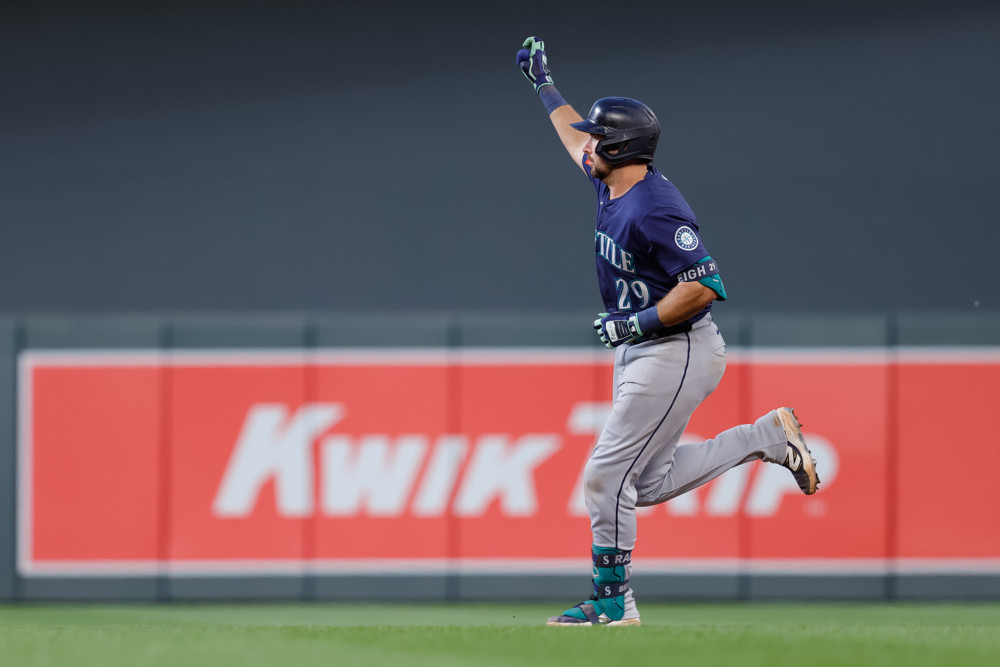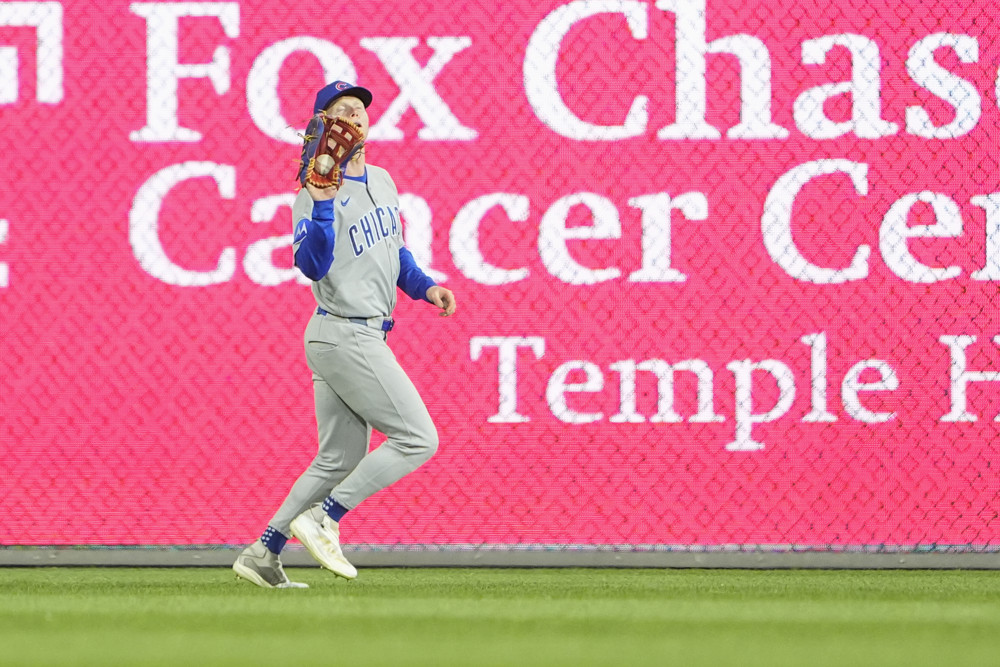
The BBWAA just voted to add a Relief Pitcher of the Year category. And though it won’t be awarded until 2026, we’d like to open a loophole to cast our vote for 2025, under the similar title of ‘Reliever of the Year’: Blue Jays center fielder Myles Straw.
The Blue Jays have two closers these days. One is pitcher Jeff Hoffman who has 30 saves in 37 opportunities amidst a 4.94 ERA.
They don’t have to worry as much about the other one, Straw.
Straw has made 60 starts and 57 ‘relief appearances,’ so to speak. The latter have been more frequent recently. He’s come off the bench as a defensive replacement in 14 of his last 19 appearances, which coincides with the return of center fielder Daulton Varsho on August 1.
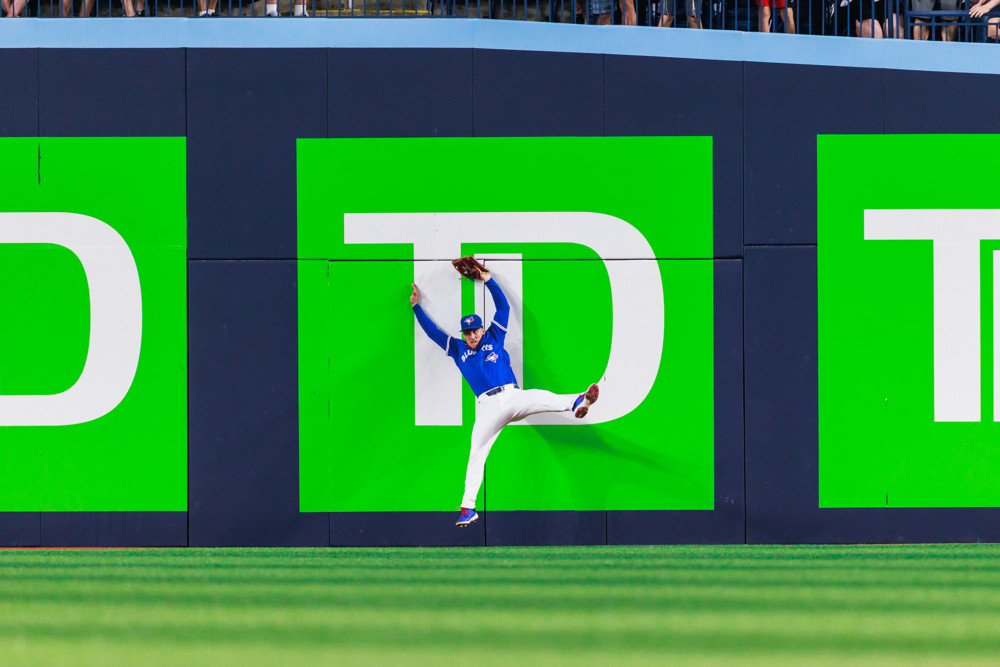
We bring this all up because Straw is having a phenomenal season. He has 16 Runs Saved in center field, second-most at the position (despite ranking 26th in innings played) and 3 more in left field. The Blue Jays deploy him late in games, usually to protect leads or keep games close because he’s so good defensively.
Just look at what he did in two games (starts) against the Brewers to close out August. He had a hat trick: a home run robbery, a diving catch, and an outfield assist.
Past criteria suggests that Straw won’t be eligible for a Gold Glove Award. The usual threshold for eligibility has typically been measured at a team’s 138th game (the Blue Jays have now played 139) and Straw was about 80 innings short of what’s been needed in past seasons to qualify to be voted on (position players needed 698 innings).
Straw will be eligible for a Fielding Bible Award, at minimum as a center fielder and possibly as a multi-position player (the latter is based on criteria related to his season-ending innings totals and how often he plays different positions).
He’ll face extremely tough competition in center field in Pete Crow-Armstrong and Ceddanne Rafaela (among others). He’ll have a chance in the multi-position category, which Varsho won last year.
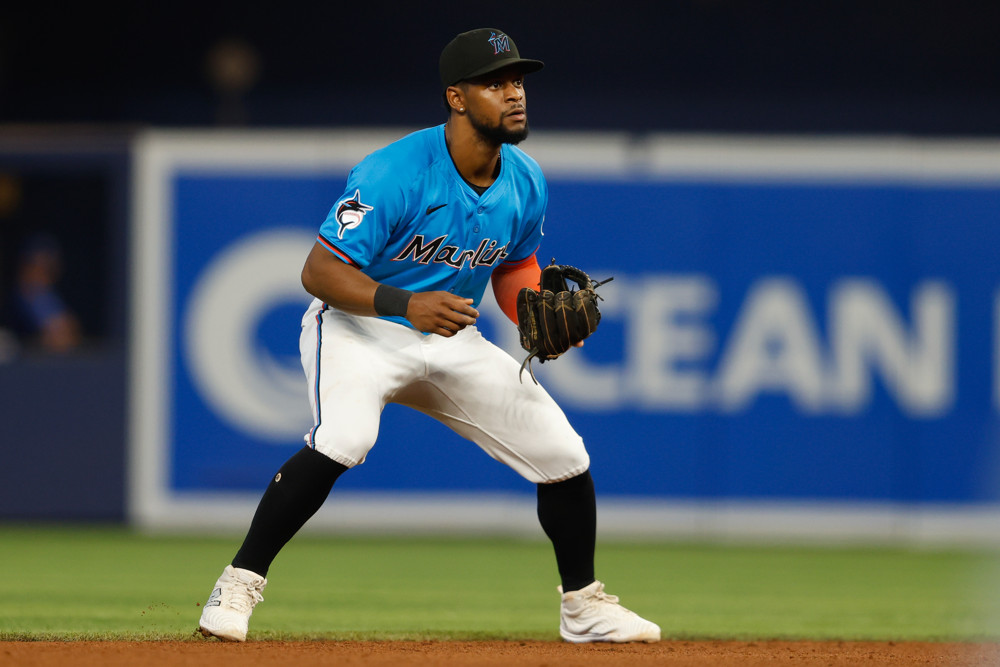
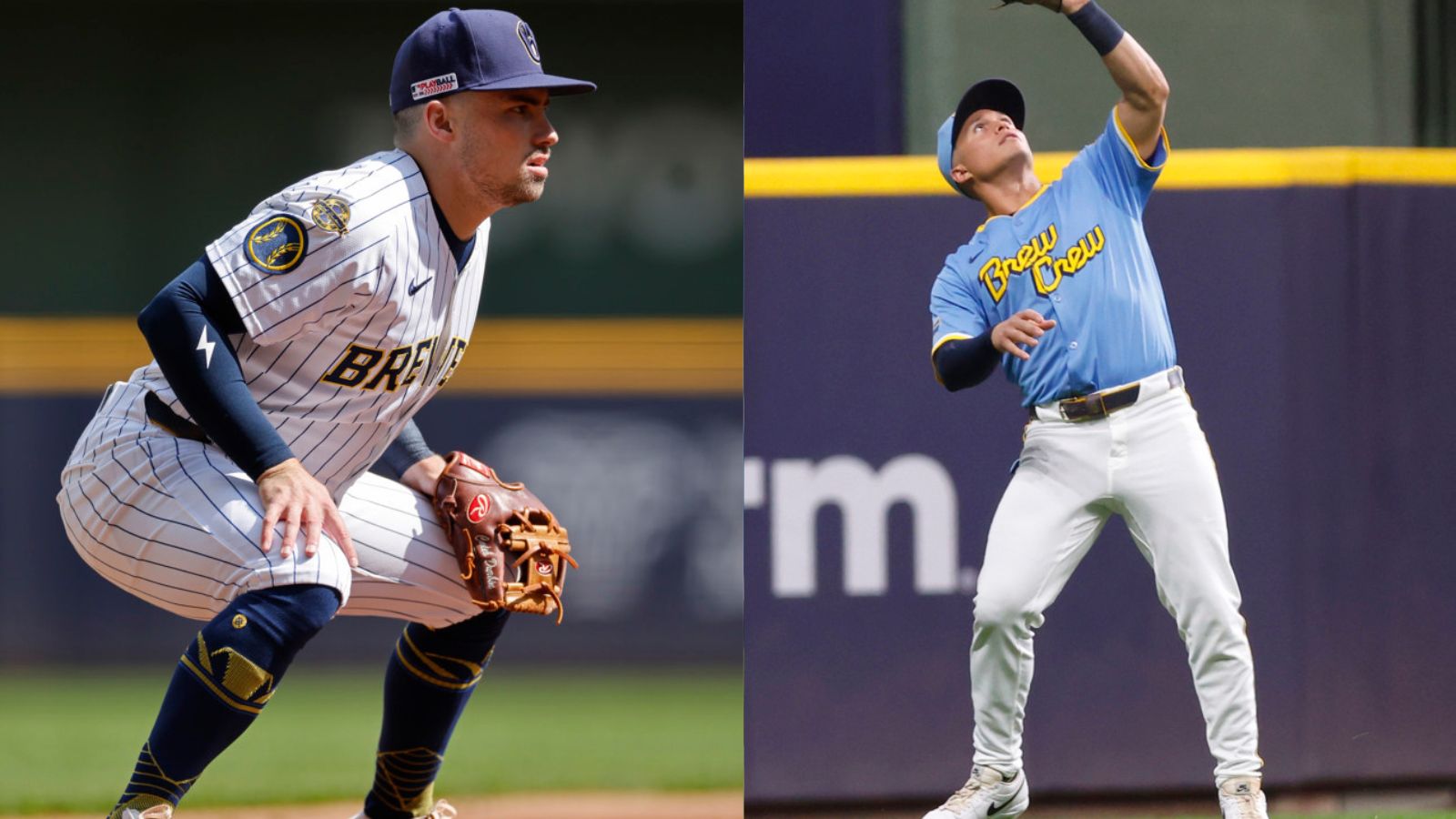
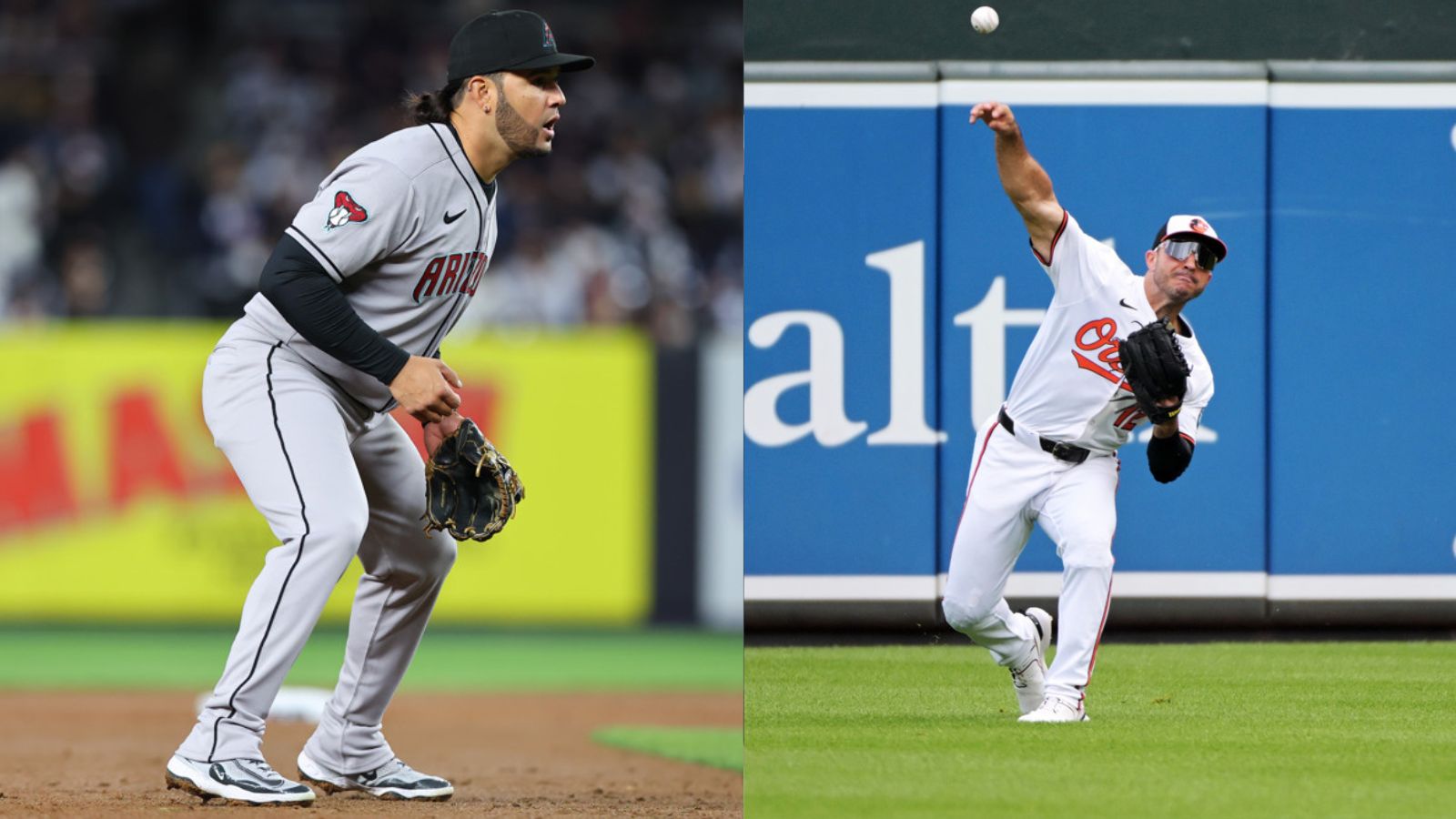
There’s good competition for Straw there too, particularly from Astros utility man Mauricio Dubon and Marlins infielder Otto López. Those two players are in completely different situation. Dubon is skilled enough to start at a multitude of spots. López was great at second base and has been great at shortstop since the Marlins flipped him and Xavier Edwards
Still, it feels like Straw merits his own category based on his combination of skills and usage. Maybe there needs to be something like Relief Pitcher of the Year for defense too.
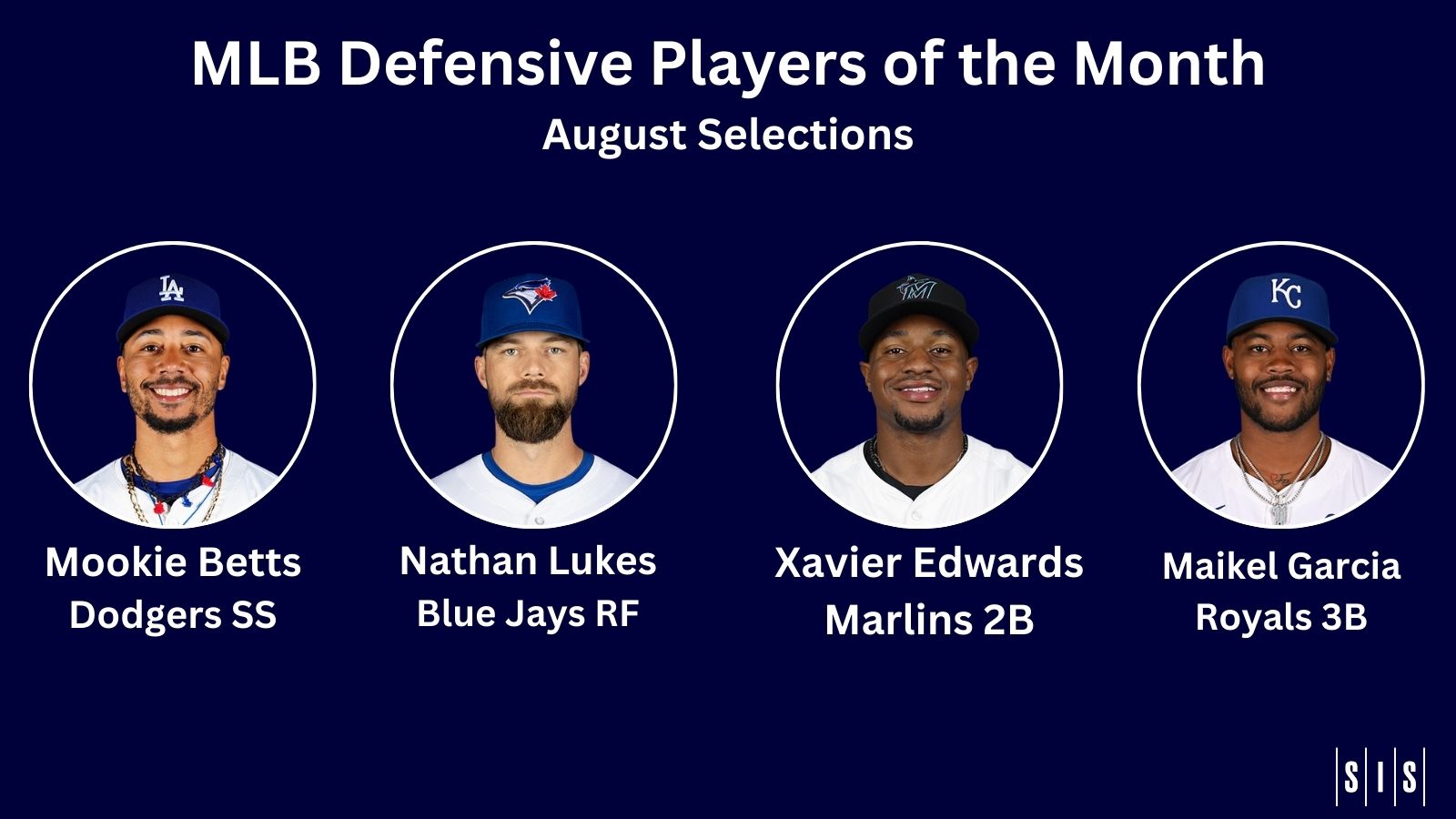
Last year and this year we’ve expanded the field for Defensive Player of the Month honorees often selecting three players for the honor. For August we’re going to go four-deep, two in each league, to cover four different positions.
Here are our four selections.
Mookie Betts
Mookie Betts won for the second time in three months and it was well-earned. His 9 Runs Saved led not only shortstops but all positions for August. Take a look atthis playagainst Ke’Bryan Hayes, this oneagainst Xander Bogaerts andthis oneagainst Manny Machado.
Betts has a legitimate chance to win a Fielding Bible Award, which would be his 7th, snapping a tie with Yadier Molina for most since the award was first given in 2006. He has 16 Runs Saved this season, 1 shy of Taylor Walls for the MLB lead at shortstop (and 1 more than Corey Seager, who has also had a terrific defensive season).
Nathan Lukes
Nathan Lukes totaled 5 Runs Saved in August. His 4 in right field matched Dylan Crews of the Nationals for most at the position. He also had 1 Run Saved in left field.
Our Data Scouts award Good Fielding Plays and Defensive Misplays for different things that happen on defense. His 9 Good Fielding Plays matched teammate Vladimir Guerrero Jr. for the most by any player for the month. Lukes had 1 error and no Defensive Misplays.
Lukes had one of the most impressive defensive games this season on August 15 against the Rangers. He madea leaping catch in the first inning,a throwto nail a batter trying for a double for one out in the second inning, and aleaping catchfor another out.
Lukes has 8 Runs Saved in total from playing all three outfield spots. The only player with more than his 6 Outfield Arm Runs Saved is Steven Kwan (7).
Xavier Edwards
Last month we honored Marlins shortstop Otto López. This month his infield mate, Xavier Edwards gets the nod. He led all second basemen with 6 Runs Saved in August, had 4 Good Fielding Plays and no Defensive Misplays and Errors. His 13 Runs Saved at second base rank second in MLB at the position and validate the midseason switch that moved him off shortstop, where he has -11 career Runs Saved over 110 games.
Edwards’ highlights included both the incredible play (check out thisdiving catch) and the heads-up play (a surprising double play on a popup, watch him repeatedly look to see where the runner was).
Maikel Garcia
There aren’t many opportunities for a third baseman other than Ke’Bryan Hayes or Matt Chapman to win this award, so we felt that Maikel Garcia’s MLB-best 6 Runs Saved at third base in August made him worthy.
Garcia’s 8 Runs Saved overall rank tied for fourth at the position this season.
Garcia made 4 barehand plays in August (includingthis oneandthis one). His 11 this season are 1 shy of Alex Bregman for the lead among third basemen.
Garcia probably won’t win a Fielding Bible Award this year but he’s done enough to share Player of the Month and played himself into a legit shot at an AL Gold Glove Award.
Cubs second baseman Nico Hoerner is currently routing the rest of the field in Defensive Runs Saved at his position. He also trails only his teammate Pete Crow-Armstrong, Rays shortstop Taylor Walls, and Dodgers shortstop Mookie Betts in Defensive Wins Above Replacement.
Most Defensive Runs Saved – Second Base, 2025 Season
Player
Team
Runs Saved
Nico Hoerner
Cubs
19
Xavier Edwards
Marlins
9
Brice Turang
Brewers
9
Tyler Fitzgerald
Giants
8
David Hamilton
Red Sox
8
When I see gaps that wide between the No. 1 and No. 2 players at a position, I like to dig into why the gap is so large.
In Hoerner’s case, there is a pretty easy answer.
Our version of MLB’s Outs Above Average is Plays Saved, a stat that has existed since the first season for which Defensive Runs Saved was first calculated, 2003 (we called it plus-minus then). It’s basically the same concept as OAA – how many more plays did a player make than the average player at his position, which can be broken down directionally (left, right, and straight-on).
By our measures, Hoerner has a +16 plays saved on balls hit to his right. No other infielder is better than +11 or better at making plays in any direction this season*. Hoerner has made 113 plays on 182 opportunities**. The expectation is that an average fielder would make 97 of them.
* Ke’Bryan Hayes is + 11 on balls hit to his right at third base.
** Opportunities = plays with a > 0% out probability.
The excellence on balls hit to his right is a new development. Hoerner has played second base regularly the last two years and was +4 and +1 on those plays.
The types of plays that help produce this sort of stat take on a few different forms. Here are three valuable ones for Hoerner this season.
Here’s Hoerner staying on his feet and going across second base to reach a ball and throw out Jacob Wilson of the Athletics.
Here’s another play of that nature. This time the Cubs defense is shifted, so it’s a little easier for him to get to the ball. He still has to make a shortstop’s throw to first base from where he’s standing and given that he’s played shortstop in past seasons, that’s not an issue.
Here’s a diving play against the very fast Elly De La Cruz. Dives are a low percentage play for Hoerner, as they are for most second basemen, but that one worked.
If Hoerner’s play looks familiar to Cubs manager Craig Counsell, it should. Defensive Runs Saved was calculated a little differently when Counsell played, as good positioning was credited to the player rather than the team.
As such, Counsell has Hoerner beat. In 2005 Counsell was a +24 on balls hit to his right on the way to a season with 30 Runs Saved. From a defensive perspective, it was an all-timer of a season. Counsell still shares the single-season record for most Runs Saved by a second baseman with Chase Utley. Hoerner’s season may not reach that level, but it’s looking like a great one too.
Did you catch Cal Raleigh’s next-to-last at-bat in the game in Williamsport between the Mets and Mariners on Sunday night? If you didn’t see it, you missed something quite unusual (and you can watch it here).
Raleigh hit what I would describe as a bad golf shot home run, a sliced fly ball to left field on a pitch that was down near his ankles, 17 inches off the ground.
If you look at all the home runs that MLB has marked as opposite-field home runs (linked here), you’ll see that the pitch from Reed Garrett was the 3rd-lowest hit for an opposite-field shot this season. But Raleigh’s is the only one among the 10 lowest to be hit that close to the foul line.
Raleigh went 7-for-12 with two homers in the series. That wasn’t even the only instance of him hitting an ankle-high pitch. He also bonked a Frankie Montas splitter that was 14 inches off the ground off the right center field wall, the lowest pitch on which he’s gotten a hit this season.
Splitters and forkballs thrown 12 to 15 inches off the ground have an .080 batting average and 66% whiff rate this season.
You’re not supposed to be able to do what Raleigh did to those pitches over the weekend.
But Raleigh’s season has been all about doing things others aren’t supposed to do. With 47 home runs, he’s one shy of the most by someone who primarily played catcher in a season (Salvador Perez hit 48 in 2021). The only switch-hitter with more home runs than that in a season is Mickey Mantle, who hit 54 in 1961 and 52 in 1956.
Before this season, Raleigh was known as a catcher with pretty good power, one who hit 27, 30, and 34 home runs in the previous three seasons. He was actually recognized more for his defense. He won the Platinum Glove for the Amercian League last season after leading the league’s catchers with 17 Defensive Runs Saved.
But this season his offense has become his signature. In addition to all the home runs, he’s already surpassed his career high in walks (75) and more than doubled his best stolen base total with 14. The latter is impressive considering that he ranks in the bottom 100 of major leaguers in both sprint speed and 90-foot split time.
Raleigh’s defensive numbers have actually taken a hit this season. His pitch framing and stolen base numbers are still better than MLB average but not as good as past years. His pitch blocking stats, if they hold up the rest of the season, would be the worst of his career. And though there are some flaws in evaluating this stat this way, the team ERA when he catches is 4.13, well below teammate Mitch Garver’s 3.43, and that helps to push down Raleigh’s overall Runs Saved to -2 for 2025.
But even with all that Raleigh still ranks second to Aaron Judge among American Leaguers in Baseball-Reference’s Wins Above Replacement, and you should be watching the rest of his season closely, given his penchant for doing things you haven’t seen before.
Marlins shortstop Otto López was one of our Defensive Player of the Month selections for July. Otto has had a terrific defensive season, playing well both at second base, where he has 6 Defensive Runs Saved and shortstop where he has 5. We got to talk to Otto on The Sports Info Solutions Baseball Podcast earlier this week to learn more about how he does what he does. Here’s what he had to say. The interview has been edited for clarity.
SIS: What is the earliest memory that you have of making a great play on defense?
Otto López: First of all, thank you for the (Player of the Month).
I remember a few plays, diving catches and things like that.
But back in the days when I was really, really young when I started learning baseball and stuff in Dominican Republic, where I born, we play with the caps (bottlecaps). I was playing with the big guys and I was the only younger guy.
And it’s super hard to – when they hit those caps – to grab it. The reactions and all of that. It’s so difficult. And I think (catching one) was one of the most impressive plays I can remember.
SIS: So how old were you when you did that? Like 10, 11, 12, something like that?
Otto López: Yeah, I’ll go nine. Yeah, nine years old.
SIS: You grew up in both the Dominican and Canada because of your father’s job, and I read an article from 2019 by Hayden Godfrey, and he said that you played basketball and hockey too. And I know that you can jump because I’ve watched a couple of leaping catches that you’ve made this season or catches to leap and where you’ve had to leap to catch a throw from someone.
Did that come from basketball?
Otto López: Probably not. It just came natural on that, on those plays that I make jumping and it’s probably the, the ability that I have.
SIS: Did you get anything out of playing hockey?
Otto López: Ooh. Probably the breaks (making cuts), but I can’t break much. I can’t break much in the field. The reaction probably came from badminton. I play a little bit too.
SIS: Tell us about that.
Otto López: Growing up, when I first got to Canada in school, we had a big tournament for us for badminton. And I just learned how to play a little bit and I keep doing it in my off season. Like I go once for a while just playing badminton, a little bit of pickleball and stuff.
SIS: Are you good?
Otto López: Well, considering the best player, no, but I’m pretty sure that I’m good. Yeah.
SIS: All right. So baseball wise, the numbers show that you’re pretty comfortable at both positions in our stats. You do very well at shortstop and you do very well at second base. What’s playing shortstop like compared to playing second for you?
Otto López: A little bit more movement and a stronger throw, of course. And just the mentality of it, like leadership. You gotta be communicating with your guys. Second base, you’re closer to first base you have a little more time to make sure you can just grab the ball and get your feet moving a little bit quicker.
SIS: How is your relationship and like your synergy with Xavier Edwards on double plays at short as compared to when you guys were playing the other position?
Otto López: It’s amazing. We communicate a lot. We’re trying to get on the same page every single time. In practice, we go on the field very early to do early work stuff, work on communication and be more comfortable doing double plays together.
SIS: So I went looking through all your best plays this season, and I think my favorite is the diving stop and throw to first from your knees against Michael Harris. But I have to be more specific because you’ve done that twice this year. You did that once at second base and you did that once at shortstop.
The shortstop one did look tougher. Do you remember that play? Can you take us through it a little bit?
Otto López: Oh yeah, I remember that play. I know Harris. He is a fast guy. So right when he hit that ball, he hit it pretty hard to my right side and I dive forward. And when I throw the ball, I didn’t know it was like that.
So I was trying to get it out quick, out of my hands, and when I throw that ball, it just, it just led to my guy making the extra play at first base. And, it was amazing. It was impressive.
SIS: What’s another favorite?
Otto López: I make a lot on shallow flyballs from the third base side. I make that run. I put my head down and just go for the ball. That’s, that’s one of the best ways that I like to make plays. Sometimes I go out there with Kyle Stowers and we have some (collisions) and stuff.
SIS: Yeah. I was gonna say I saw a collision or two.
Otto López: Ii’s pretty dangerous, but at the same time, we gotta make those plays. It’s hard ’cause you got, look at the ball, you gotta look at at your teammate and where they play. And at the same time, you’ve gotta look all around.
SIS: Who are some of the people that have helped you as you’ve come up?
Otto López: I was with Toronto before and I was a second baseman. I got a lot from Santiago, Espinal. Looking at him, I wanted to see how smooth he is with his hands. And he played with a small glove.
When I got to San Francisco, the coaches just helped me a little bit more. When I got to the Marlins, it was complete. Jody Reed helped me a lot and now Tyler Smarslok this year. We’ll look at our numbers, look at what I can be better at. This spring, I worked with him on something very important for my defense now, my first step, knowing what pitch is coming and reacting before the batter hits the ball.
SIS: What do you wanna get better at?
Otto López: We always want to get better at something. I want to get a little stronger on my throws and get better on my first step so that I can get to the ball quicker.
SIS: What’s the hardest thing about playing shortstop?
Otto López: It’s reading. Reading and knowing the plays, all the plays like, like do this before that happens. You gotta think about if it’s a man and second or first, you gotta think about where you’re going to go if the ball is hit to any part of the field. It’s a little more difficult at shortstop. You gotta know everything that’s gonna happen before it happens.
SIS: And one hitting question: You’ve done a lot better at controlling the strike zone this year. Strikeouts down, walks up, power up too. What happened there?
Otto López: I get a little more low and don’t have too much movement. I’m just trying to be simple and just use a little bit of my legs and hip more.
SIS: If a little kid, like a 10-year-old kidsaid to you, I wanna play like you do on defense, what would you tell him? For advice?
Otto López: I would say just work harder every single day and you don’t ever give up. Just listen to your dad and mom. They are always gonna be the one who’s gonna be there from now on. And most important, focus on the little work and practice each day as if it’s your last.
SIS: Nice. And play badminton too, right?
Otto López: Oh, of course. Just have some time off and just play another sport to get you out of your (baseball) mind
SIS: Yep. Otto López starting shortstop for the Miami Marlins. Thank you for taking the time to join us. Best of luck the rest of the year.
Photo: Joe Robbins (L), Larry Radloff (R)/Icon Sportswire
The Brewers have the best record in baseball and are 44-16 in their last 60 games. They’ve scored the second-most runs in baseball and allowed the fewest in that time. As you probably know, we’re more interested in the latter.
Milwaukee ranks 11th in MLB in Defensive Runs Saved, down seven spots from their 2024 ranking. But they’re still a pretty good defensive team.
Since May 25 the Brewers have the 2nd-best rate of turning ground balls and bunts into outs (76%) and the 6th-best rate of turning balls hit in the air into outs (70%). For the season they’re 10th in the former (74%) and 4th in the latter (70%).
The Brewers defense is not quite what it was last year. It has been without Garrett Mitchell (shoulder surgery) and Blake Perkins (fractured shin) for most of the season, which meant that now-injured Jackson Chourio had to play center field. As such, the team that made 10 home run-robbing catches last season has but 1 in 2025 and the team’s center field defense has dropped from 18 to -7 Runs Saved. On the infield, while Brice Turang has 6 Runs Saved and he’s already made more errors and defensive misplays (24) than he did in 2024 (21).
But we’re here to give credit and I want to give the team’s management credit for identifying a couple of players who were not on last year’s team who became helpful when the need arose.
Isaac Collins was a college second baseman and minor league utility player who was claimed off waivers from the Rockies in December 2022. After two seasons in the Brewers organization, Collins got the call as an outfielder this year. He’s saved 5 runs in left field and shown good range, which meshes pretty well with a .385 on-base percentage, 7 home runs, and 12 stolen bases.
The Brewers obtained Caleb Durbin with Nestor Cortes in the trade that sent Devin Williams to the Yankees. The now 25-year-old Durbin was a 14th-round pick by the Braves out of Division III Washington University of St. Louis in 2021.
He played second base twice as often as he played third base in the minor leagues. But after Willy Adames signed with the Giants the Brewers moved Joey Ortiz to shortstop, and early this season made Durbin their everyday third baseman.
Durbin has rewarded his team’s faith with 7 Runs Saved at third base, which ranks tied for 4th at the position. He’s shown good range, particularly to his left, and has kept his mistakes to a minimum. Durbin got hot when the Brewers got hot (or perhaps vice-versa). He’s hitting .306 with an .821 OPS since May 24.
Neither Collins nor Durbin looks like your prototypical player. Collins is listed as 5-foot-8. Only Jose Altuve is shorter among regular left fielders (at least 40 games played). Durbin lists as the shortest regular in the majors at that position, 5-foot-7.
And while we’re here, we should note that the shortest regular right fielder, 5-foor-8 Sal Frelick, has 9 Runs Saved in right field and is having his second straight standout season for the team.
Collins, Durbin, and Frelick have maximized what they’ve gotten out of their bodies and the Brewers have maximized what they’ve gotten from them.
The trade deadline is a week away and you’re probably going to hear more rumors of deals than you can handle in that time. When the hot stove cooks, the focus for position players most often is on what their bat can bring to a lineup.
But if you’ve been here long enough, you know we like to focus on defense, so we pay attention to what trade candidates could bring in that area (if you haven’t been here long enough, now you know that’s what we do).
We could easily list 20, 30, or even 50 players, but in the interest of crafting something readable, we’re giving you a summary of those who are pertinent and those who are interesting, either in terms of the skills they bring or those they don’t.
Diamondbacks third baseman Eugenio Suárez is the biggest available bat. He’s the NL leader in home runs and RBI. But defense is not his strong suit. In fact, with -4 Runs Saved in 2025, he’s on pace for his 9th season with negative Runs Saved in the last 10 seasons. He hits more than enough to make up for that over an extended period of time.
There are other third basemen who could be available who bring good defense to the field. If Nolan Arenado decides to waive his no-trade clause, he would be an intriguing acquisition. Arenado is no longer the superstar he was in 2022, but he tallied 6 Runs Saved last year and has 5 in 2025.
Rockies 30-year-old third baseman Ryan McMahon, 4 years younger than Arenado, has similar defensive stats as Arenado. But his offensive numbers, especially given he plays half the season in Coors Field, leave a lot to be desired.
That’s kind of a trend on this year’s trade market. The really good hitters aren’t good defensive players and vice-versa (most teams aren’t going to trade someone who is good at both).
One exception has been Orioles outfielder Ramón Laureano, who is hitting .279 with an .861 OPS and 3 Runs Saved in both left field and right field. Laureano’s defensive value is in using his arm to deter baserunners. He has an MLB-best 35 Outfield Arm Runs Saved since 2018 but also has -28 Runs Saved from range in that time.
He’s been a more complete player than Cedric Mullins, whose 2025 has been an aberration but perhaps a change of scenery would help. Mullins had 5 and 7 Runs Saved in center field in 2022 and 2023, respectively, but has slipped to an MLB-worst -16 there this season. Another Oriole who could get dealt is Ryan O’Hearn, who has -11 Runs Saved at first base and -10 in right field for his career.
If Jarren Duran, Wilyer Abreu, Adolis García, or Steven Kwan are actually available (we’re skeptical, but others are listing them on their rumor mills), any of them would be the best outfield defenders. Duran led center fielders in Runs Saved last season and is playing a solid left field for the Red Sox. Abreu, Duran’s teammate, won the Fielding Bible Award in right field last season and ranks 3rd at the position in Runs Saved this season.
One of the players Abreu is behind is García, whose 14 Runs Saved are the most at the position. García was primarily known for his arm in the past, but in 2025 he has shown the kind of range he’s never had before.
Kwan led left fielders in Runs Saved in 2022 and 2023 and looks like he’ll do so again in 2025, as he’s paced the field with 14 Runs Saved.
The other standout outfield defender and one more likely to get dealt is Harrison Bader of the Twins. He has 8 Runs Saved in left field and 3 in center field entering Wednesday. He has a track record that is largely good, with past seasons of 15 and 18 Runs Saved in center field. This is his first year in left and the transition has been smooth. He ranks 2nd to Kwan with 17 Good Fielding Plays at the position.
Bader has more to offer as a hitter than two other solidly-performing defensive outfielders who could get dealt, Pirates left fielder Tommy Pham and White Sox outfielder Michael A. Taylor. Pham has been very good in left field, where he ranks tied for 3rd in Runs Saved in 2025. Taylor, who has always played a good center field, has 5 Runs Saved in right field and ranks 2nd in Runs Saved for an outfielder over the last five seasons.
White Sox center fielder Luis Robert has had past seasons of 9 and 7 Runs Saved, but he’s managed 1 and now -2 the last two years and hasn’t thrown a runner out trying to advance in either season. But he was a 5-WAR player as recently as 2023 and has had a recent 8-game offensive surge so he may be coveted for his potential as a hitter and fielder.
One of the better infield defenders who could be available has been traded during two of the past three seasons, Guardians first baseman Carlos Santana. Santana has been a below-average hitter at first base this season but he’s enjoying his third straight very good year with the glove. In fact, only Matt Olson has more Runs Saved at first base than Santana both this season and over the last three seasons.
That rounds out our list for now, though other players becoming available would certainly interest us (Ke’Bryan Hayes, anyone?). Happy Hot Stove to you!
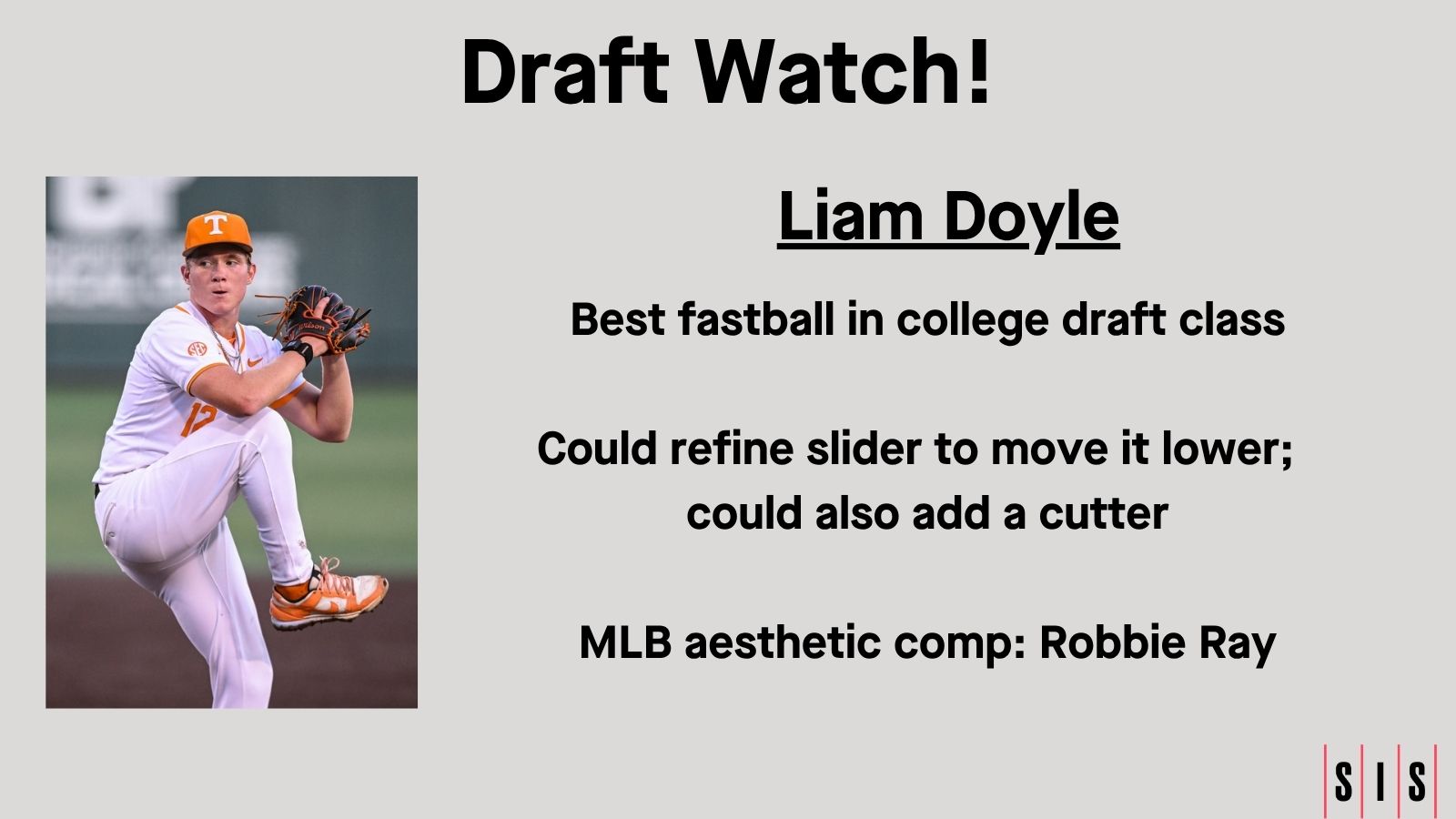
Liam Doyle, picked 5th overall by the Cardinals, pitches like he just crushed multiple energy drinks in the dugout before his outing, taking the mound like he has a personal feud with every batter. He’s jittery, and his delivery is up-tempo and high energy. His arsenal is fueled by a high-octane fastball that explodes through the top of the zone. The pitch is a legit high-velocity four-seam with carry from an average release height.
If Doyle succeeds in MLB as a starter, it’s with the rest of his arsenal woven in and out of the fastball usage at an effective rate. He gives off the look of a reliever with a high-effort delivery and snappy movements. However, he zones all his pitches and throws strikes at a high enough rate to be in the starter mold right now.
If Doyle lands on more of the relief pitcher track, it will be his secondaries not improving from their current shapes, and his control and command backs up to more fringe-average and below.
College Career:
Liam Doyle began his career at Coastal Carolina, posting a decent ERA and a respectable number of strikeouts. After transferring to Ole Miss for his sophomore season, there was an uptick in strikeouts, even through a rocky season in and out of the bullpen as a starter and high-leverage reliever.
Doyle then found his way to Knoxville, where he pitched with more confidence and improved his conditioning, turning himself into one of the best Friday starters in the SEC.
Doyle began throwing his fastball at a higher velocity. While also holding that velocity deep into starts, and still throwing all his pitches at a decent zone rate.
Year
ERA
IP
K%
BB%
2023
4.15
56 1/3
29%
9%
2024
5.73
55
35%
9%
2025
3.20
95 2/3
43%
8%
Pitching Mechanics:
In the windup, Doyle starts with his glove at his stomach. He brings the glove up to his nose before stepping back with his glove foot, bringing the glove back down to his belt as he turns to settle on the third base side of the rubber.
With high-tempo, he enters leg lift with an aggressive move forward, drifting down the mound. There is significant counter-rotation in his front side and hips as he reaches peak leg lift, with the bottom of his cleat pointing out to second base.
He enters a drop-and-drive move, holding his front side into landing, and he turns his glove hand into his body. As he lands at front foot strike, he pulls his glove arm fully into his chest, and his arm flips up to a solid position as he shifts weight to his front side into a lead leg block.
His head pulls off to the right with high effort as he spins out to third base to finish his delivery, falling off hard. It’s high-effort and high-tempo, but Doyle gets the most out of his body to throw hard from his high three-quarters slot.
There might be less room for projection in terms of adding velocity. Still, Doyle has maintained the high-effort delivery and velocity deep into his outings, so keeping that sustained velocity into a full pro ball season of starts will be key.
Doyle’s fastball is a blitzball shape in the mid-to-upper 90s; the pitch whizzes through the top of the zone and has an insanely high 40% zone whiff rate. He keeps the fastball up in the zone and pushes the location of it up and away from right-handed hitters.
When he gives up damage on the pitch, it usually is on more 94-95 mph fastballs in the heart of the zone. The attack plan, armside from righties, has worked and should continue to work, leaning into the natural run of the pitch.
Doyle’s fastball profile and velocity made it the best fastball of the college draft class. The rest of the development of his arsenal will honestly decide how good he can be as a starter. Still, Doyle should have no issues handling right-handed hitters with his fastball, and the four-seam up can also protect his secondaries against left-handed hitters, too.
Slider: 85-90 mph avg, 5” IVB, 4” Sweep
Doyle’s shorter slider lives in the slider to cutter range in terms of velocity and break. He landed the pitch more middle than pushing the location to the glove side, even to left-handed hitters.
When the velocity exceeds 87+, it is a better offering. He can build on the arsenal and push more of a true cutter 90-92 mph, and have a possible gyro slider shape play off of the cutter. He uses the cutter more inside to righties and using the cutter and slider away from lefties.
Overall, his feel for zoning the slider is good, but refining the command and moving the location more down in the zone, while also having a more vertical cutter, would be ideal.
Slurve: 78-82 mph avg, -3” IVB, 10” Sweep
Doyle’s slurve is an interesting pitch. As a pronator, he throws with his hand and wrist turning over as he stays more behind the ball to apply force to the ball. This allows Doyle to create good backspin and carry on his four-seam.
The downside is he can’t effectively create a sweep on pitches like a sweeper or slider as easily when getting to the side of the ball. When he forces this shape, it leads to a bigger and significantly slower breaker that should be categorized as more of a slurve than a sweeper because of the depth of the pitch.
You could have Doyle lean into a more vertical curveball or even a more gyro slider shape, and classify it as a curveball in a “death ball” shape.
The death ball is a pitch that has the bullet-like spin of a slider but sits with more depth than a traditional bullet slider. Pete Fairbanks, Ben Brown, and Kumar Rocker throw hard death balls that perform well.
I think the pitch plot above from Lance Brozdowski’s pitcher notes on Bryce Miller’s death ball last season illustrates a possible shape Doyle could get to with a mid-80s breaker.
A left-hander that gets to this shape and has expanded his arsenal is Cole Ragans, so if Doyle can figure out this bullet-slider shape, he could pair it with the bigger slurve.
The slurve does create timing issues for both right-handed and left-handed batters and induces swings as well. There’s probably just a harder breaking ball Doyle can get to inside of his mix.
Splitter: 84-89 mph Specs: 2” IVB, 10” Arm-side
Doyle’s splitter is almost purely a two-strike pitch for him, but he will drop offspeeds early in the count if he feels a hitter is on his fastball. (Not many hitters are on his fastball even if they know it’s coming.)
In its current form, it’s probably a below-average splitter, but Doyle should be able to get to an above-average offspeed pitch at a hard velocity. The offspeed would most likely be used for opposite-handed hitters, but if he can find more of a breaking ball glove side there’s less concern about the splitter or changeup because of how well his fastball performs against righties.
An offspeed for the 2nd and 3rd time through the order would be nice as a wrinkle inside of his arsenal for usage purposes.
Projection:
Doyle’s fastball is a true double-plus pitch, performing at elite rates in college. The Cardinals are banking on the fastball being a true weapon in his arsenal. Building off a dominant fastball like Doyle’s makes him an intriguing prospect.
His success as a starter will hinge on continued strike throwing and solid command of his pitches, a foundation he already has in being able to zone multiple offerings at a good rate.
Overall, Doyle should be able to add a harder breaking ball to his arsenal to combat left-handed hitters; the fastball’s performance against right-handed hitters should continue if he gets the offering up in the zone.
The Cardinals are currently evaluating a starter profile with a higher upside due to his fastball, but with a wider variance in his profile if his control and command dip below average. That was something control-wise that didn’t appear to be an issue for Doyle for most of the 2025 college season.
Doyle has an exceptional fastball, but the rest of his arsenal will be the driving force behind his success in MLB.
Aesthetics Comp: Robbie Ray (Body Comp, Up-tempo delivery)
By our anecdotal observations in surveying the various social media, Pete Crow-Armstrong is the most popular defensive player in baseball this season.
It’s understandable given his assortment of terrific catches, the amount of ground he covers and the capability of his arm to throw 98 miles-per-hour from center field.
So let’s give the people what they want and provide a few things to watch for after the All-Star Break (we’re not calling it “the second half”) from PCA.
Best Defensive Center Fielder in Baseball?
There’s a difference between popular and best and when we talk about the best defensive center fielders in baseball, there’s a lot of competition.
Ceddanne Rafaela of the Red Sox actually is tied with Crow-Armstrong in Runs Saved (13), and has played 71 fewer innings than Crow-Armstrong has. Myles Straw of the Blue Jays hasn’t even played half as many innings as either of them and is close behind with 11 Runs Saved.
There’s also defensive sensation Denzel Clarke of the Athletics (7 Runs Saved), who has played even fewer innings than Straw. And if he can get healthy, Daulton Varsho (5 Runs Saved) may be better than all of them. Others in the discussion include Julio Rodriguez, Michael Harris II, and Victor Scott II.
Crow-Armstrong is a great defensive player having a great defensive season. He’s No. 1 among center fielders in the range component of Defensive Runs Saved and he’s caught 89 of 103 balls hit to the deepest part of center field, 8 more than his expected catch total (his +8 is best in MLB on deep balls for CF).
But what we’re saying is: Crow-Armstrong is not a lock for the year-end Fielding Bible Award in center field. It’s still an open race.
Crow-Armstrong is 5 home runs and 3 stolen bases away from a 30-30 season. Defensive Runs Saved was first calculated in 2003 and Crow-Armstrong reaching those milestones will give MLB thirty 30-30 seasons in that time.
But only one player has had a season with 30 home runs, 30 stolen bases, and 20 Defensive Runs Saved.
Want to take a guess as to who it is? Answer at the end of the article.
MVP?
Crow-Armstrong’s defense is an integral part of his MVP argument, as he needs to be multi-dimensional to compete with someone like Shohei Ohtani.
Let’s use Baseball-Reference Wins Above Replacement as a proxy for MVP judgement. Crow-Armstrong is caught in a logjam of players at about the same level in the offensive component of WAR. Those include Ohtani, Juan Soto, Kyle Tucker, Will Smith, C.J. Abrams, James Wood, Elly De La Cruz, and Pete Alonso.
But none of those players are in the same territory as Crow-Armstrong in terms of defensive value. He’s at 1.7 Defensive WAR. Next-best from that group are Smith and De La Cruz, 0.5.
Ohtani is the one player capable of neutralizing that edge in the season’s remaining games if he pitches well enough.
Regardless, it behooves Crow-Armstrong to be as complete a player as he can be. Defense is a vital part of that.
National League Wins Above Replacement Leaders
Player
Team
WAR
Pete Crow-Armstrong
Cubs
5.2
Zack Wheeler
Phillies
4.8
Paul Skenes
Pirates
4.7
Cristopher Sánchez
Phillies
4.6
James Wood
Nationals
4.4
Shohei Ohtani
Dodgers
4.3
Fernando Tatis Jr.
Padres
4.3
Trivia answer: The two players to hit 30 home runs, steal 30 bases, and record 20 Runs Saved in a season are Ian Kinsler (2009 Rangers) and Mike Trout (2012 Angels)
The Red Sox season has pinballed like a bouncycastle, starting with a 5-game winning streak after a 1-4 start, a 10-2 stretch in June after bottoming out at 5 games under .500, and now a 10-game winning streak, which immediately followed a 3-8 stretch.
When we’ve brought up the Red Sox defense on social media, we’ve often gotten negative reactions, as fans have dwelled on specific misgivings they have with the roster and the team’s 78 errors (2nd-most in MLB). But we’re here to tell you that as defense’s go, Boston’s is not so bad.
The Red Sox currently ranks 11th in Runs Saved. They have an outfield overloaded with defensive talent, a veteran left side of the infield, and an excellent starting catcher.
Position
Individual Runs Saved Rank
Carlos Narváez
C
1st
Ceddanne Rafaela
CF
1st
Wilyer Abreu
RF
3rd
David Hamilton
2B
T-3rd
The Outfield
The Red Sox have – by Defensive Runs Saved – the best defensive outfield in baseball. Ceddanne Rafaela leads all center fielders (including the much-heralded Pete Crow-Armstrong) with 14 Runs Saved. Wilyer Abreu ranks 3rd among right fielders with 9 Runs Saved and when he missed time with an injury, Roman Anthony saved 5 runs in 17 games there. Left fielder Jarren Duran, who tallied an MLB-best 17 Runs Saved in center field last season but then moved to left field to accommodate Rafaela, has 4 Runs Saved there.
It’s not just about making catches. Red Sox outfielders co-lead in MLB in Runs Saved from their outfield arms with 11. Here’s an example of why from Abreu.
Boston has such a strong supply of defensive outfielders, they’ve moved Rafaela to other spots: shortstop last season and then briefly to second base prior to the break. But he’s most valuable in center field.
The Infield
Boston has a quandary at second base. Its best defensive player by far is David Hamilton, who has 15 Runs Saved in 86 games there over the last two seasons. But he’s also hitting .179 with a .505 OPS in 133 plate appearances in 2025.
Hamilton has 7 Runs Saved in part-time play. The player who has played the most there, Kristian Campbell has -14 Runs Saved, the worst total in MLB this season.
Similarly at first base, there seems to be a gap between Romy Gonzalez (0 Runs Saved) and Abraham Toro (-4). Both are trying to replace Triston Casas, who wasn’t doing well defensively prior to getting hurt (-5 Runs Saved).
There’s a little more certainty on the left side of the infield with Alex Bregman back in the lineup at third base (4 Runs Saved) and Trevor Story (1 Run Saved) at shortstop. Both are players with good defensive track records. Fans don’t shudder if a ground ball or line drive is hit their way.
Pitcher and Catcher
Fans do worry on balls that don’t make it to shortstop or third base or are hit back up the middle because that means Red Sox pitchers have to make a play. And that’s been a problem. Red Sox pitchers rank last among pitching staffs with -17 Runs Saved, -11 of which are attributable to range.
Behold a few examples.
But you could make a strong case that the Red Sox defensive MVP this season and maybe the defensive MVP for all MLB is catcher Carlos Narváez (apologies to him that it’s taken us 500-plus words to get to this). The Red Sox ranked 27th in Runs Saved from their catchers last season and their solution to fix that was to make a trade with the rival Yankees for Narváez.
This deal may help both teams in the long term (the Yankees got their No. 6 prospect, Elmer Rodriguez Cruz in return) but for the short term, it’s been a boon to the Red Sox.
The Red Sox lead the majors in Runs Saved from their catchers. Narváez ranks 1st individually with 13. Narváez is a decent pitch framer whose strength is throwing out potential basestealers. He’s been a standout all-around player. Boston is 42-25 when he starts, 11-20 when he doesn’t.
We suspect that if the Red Sox are in the hunt that they’ll be a team looking to make moves at the trade deadline and that valuing defense will be a priority. The team isn’t that far from having one of the best defensive lineups in baseball and if they do, that might stabilize their season … and perhaps send them into the postseason.