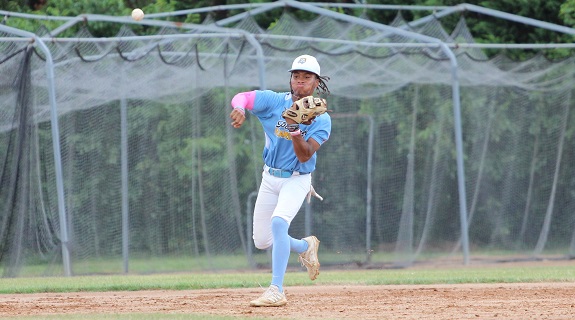
Category: Teaching Defense

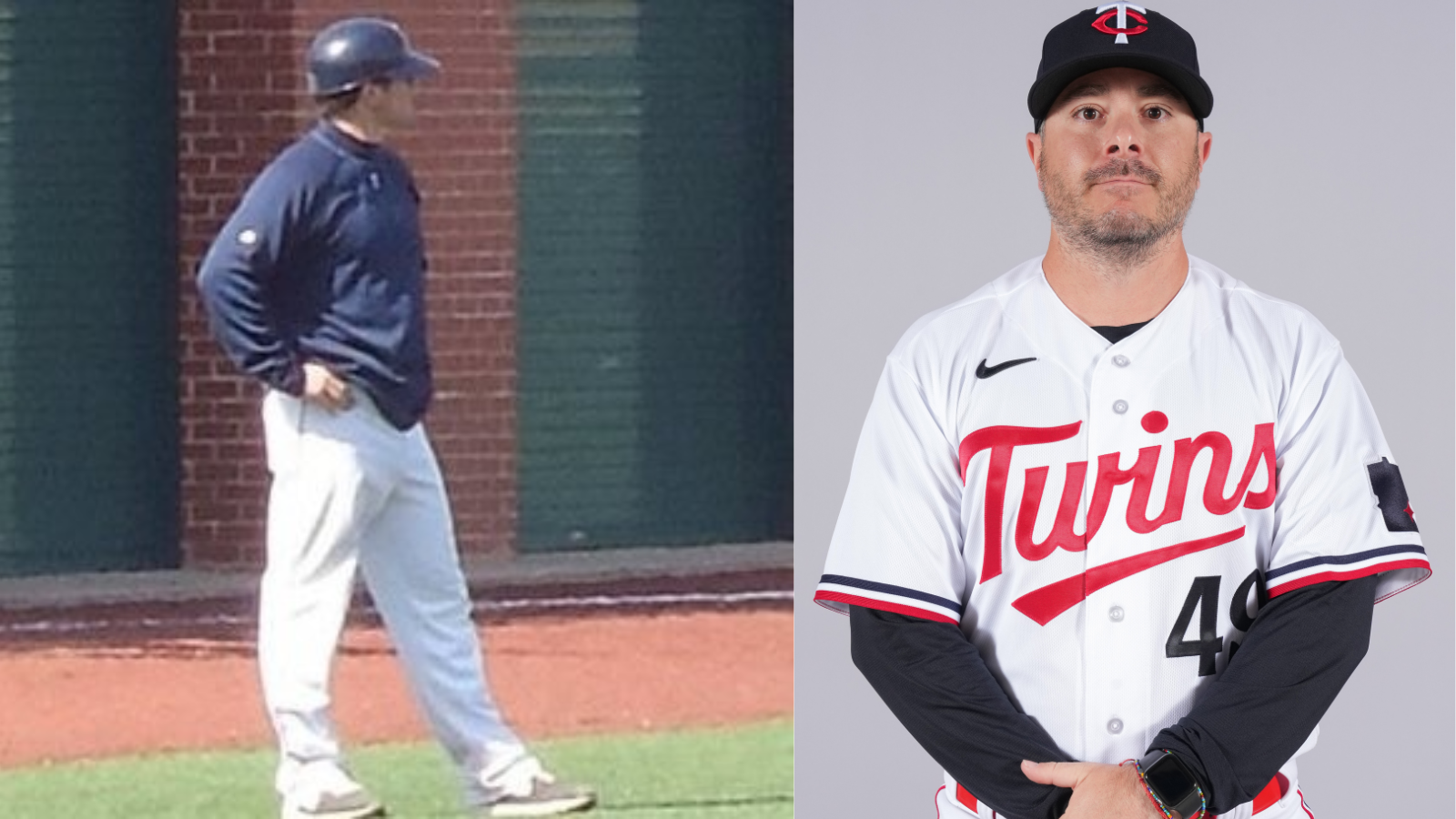
  • Defensive Excellence Q&A: Tucker Frawley, Minnesota Twins Infield and Catching Coordinator

    Defensive Excellence Q&A: Tucker Frawley, Minnesota Twins Infield and Catching Coordinator

    This is the 12th interview in our series of articles on coaching defensive excellence the last two years, likely our final one for 2023.

    This season, we’ve talked to people from a few different nationalities, three female coaches working with male and female baseball players, and the head of a baseball academy focused specifically on defense. You can find the full series here.

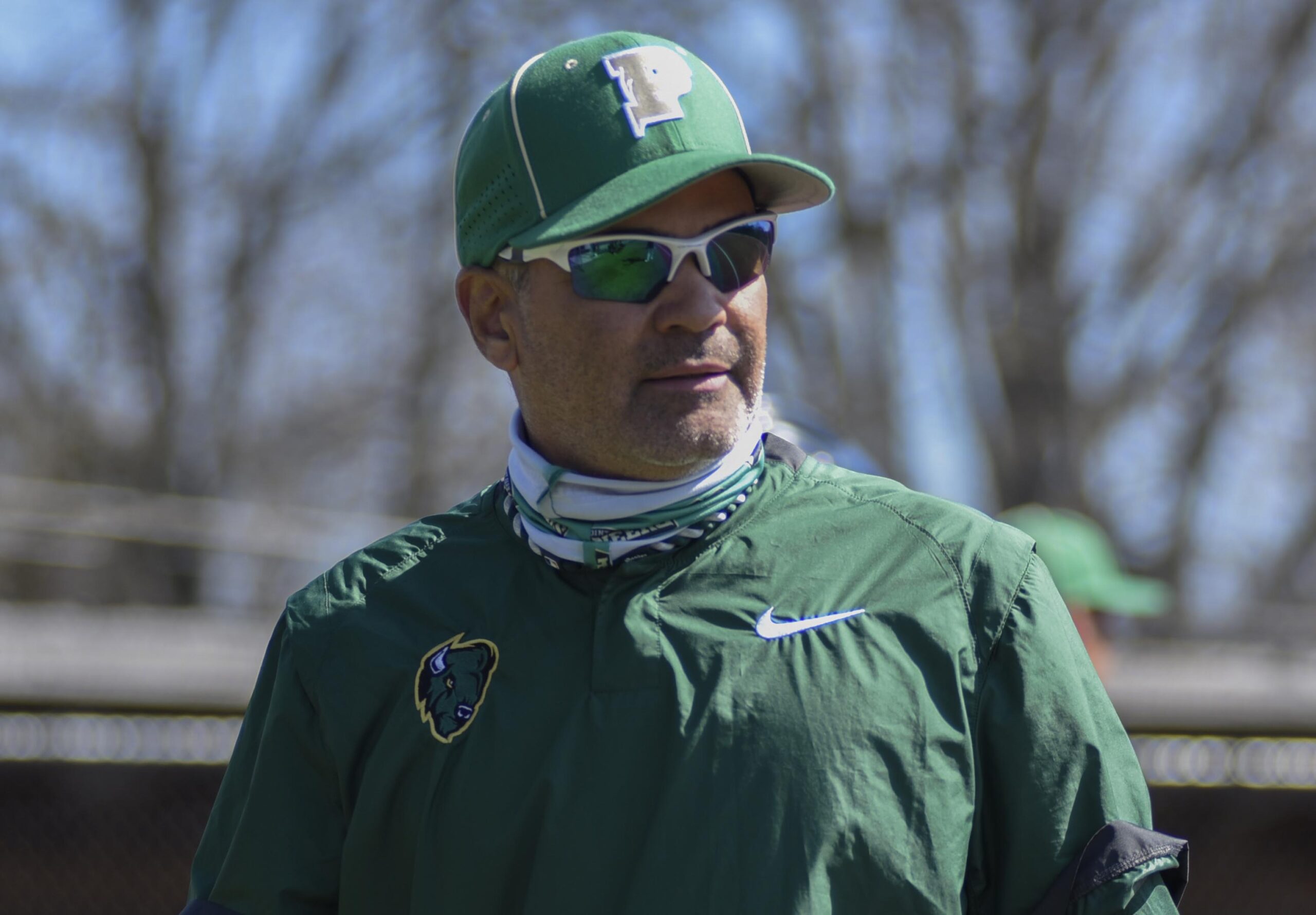
    This week we talk to Tucker Frawley. He’s the Twins minor league infield and catching coordinator. Tucker played one year in the pros and then went into coaching. Prior to joining the Twins he was the associate head coach at Yale. One of Tucker’s focal points, which you’ll read about here, is integrating data into coaching.

    This interview has been edited for clarity and length. 

    Mark: What does defensive excellence mean to you and how do you go about teaching it?  

    Tucker: Defensive excellence is constantly trying to perform at a level that is an elite clip relative to our peers and I think that over the course of the last several years, that bar may have changed.

    What my offseason job is to do a whole bunch of research to ensure that we have MLB-level benchmarks that our minor leaguers are in tune with for every part of their game. I want them to know when they’re within an MLB spectrum in any of the tools or KPIs (Key Performance Indicators) that we want them to highlight and hone in their training.

    I want them to know when they’re at an MLB average in each of those areas. And we ultimately want to get to a point where we can get them to an elite level in each of those areas. Now, obviously getting to an elite level in all of them is a tall order, but they’re still just good north stars of sorts for us to try to follow and pursue. 

    At the very least, I want to give them consistent knowledge of results from month to month and make sure that they understand just how they’re performing relative to the average MLB player and the MLB spectrum as a whole.

    Mark: Can you explain this using a specific example? 

    Tucker: The best example I can give is arm strength.

    I use the term KPI. Another word for it, is just the tools that we want to own in each of our players. So, let’s use arm strength as an example for a tool that we’ve highlighted as a high-level KPI for an infielder, or a really important tool for an infielder.

    A really simple way of going about this is going on Baseball Savant or any of the other great resources out there and getting a sense of what that MLB spectrum is. And I think we highlighted for shortstops that the best arm velo was around 98 miles an hour, Oneil Cruz. But on the low end of that spectrum is a guy like Dansby Swanson, who gets it up as high as 83 or 84. And both those guys are phenomenal defenders, very good shortstops. It’s a healthy thing to remind guys, if we have guys that are outside of that range, let’s say they’re only able to get their arm strength up to 81 or 82, they now have a good sense of just how much more improvement they need to be considered MLB caliber.

    I think the average MLB arm strength, the average top velo that shortstops show is about 86 miles an hour, and that’s one that we hold every single one of our shortstops to. That’s again just a KPI, a tool of sorts that we’re constantly trying to gauge our monthly performance with, both in practice and in games. 

    Mark: Ok, so how do you go about teaching technique?

    Tucker: Technique-wise, I want to make sure that everything, every technique that we are stressing, it still comes back to something objective. The best way for me to explain this is, there’s a lot of infielders out there, both at the college and pro level, that aesthetically look phenomenal.

    They are smooth, they have great arm actions, they’re what we prototypically want to see out of an infielder. But when you actually pay attention to how often they catch it, and how accurately they throw it, they are the furthest thing from an efficient infielder. 

    From an infield standpoint, I want us to chase aesthetics less, and efficiency more, and I often equate things to hitting, where there are just some hitters who have a knack of consistently finding the barrel and hitting the ball hard, and when they’re able to do that, there’s usually some freedom that the hitting coaches give them.

    I think as an infield coach, we need to just hit pause on a lot of the aesthetics that we’ve been accustomed to wanting to see out of our infielders. And if it comes back to something objective, that we know is ultimately going to help them make more plays and collect more outs, then I am all for that.

    To use a catcher analogy and not just focus solely on infield: Blocking is a really good topic where we have an emotional attachment to a ball that hits the dirt and squares us up in the chest and the catcher recovers and keeps the guy from moving on to the next base. When in reality, if we just pick that clean or our depth is good enough where we don’t even have to pick it, it’s in a sense just as efficient as the ball that we were accustomed to calling an actual block.

    Mark: Can you give an example of what it’s like to teach someone who’s a visual learner versus someone who is not? Maybe walk us through the different learners you deal with and how you talk to them.

    Tucker: All of us have learned some things through conversation. We’ve learned other things through visual aids. And what I try to do is equip myself with that whole gamut, that whole buffet of things and what ultimately sticks is going to be completely unique to the topic at hand and what clicks for that player.

    So for some guys, showing them an actual visual of what it means to throw from different slots and the role that posture plays in impacting that slot and the role that their feet play in impacting that posture. Sometimes seeing video is a great thing. Sometimes using still shots is a great thing.

    Sometimes it’s getting them up on their feet and putting their bodies in that posture with our hands and helping them hold positions and feel exactly what we want them to feel like. We’ve done it all with guys, some of which has clicked, and if it hasn’t, we’ve moved on to the next one and we’ve tried the next-best thing.

    But even just using that as an example, throwing from different slots and when to use it. We’ve tried to show our guys in a number of different teaching points and teaching aids to hopefully make sure that we’re not leaving anyone behind who may be in the minority in terms of how they’re learning it.

    Mark: What’s the hardest thing to teach a pro at the various positions that you’re teaching them? 

    Tucker: The drop step is the hardest thing. When we basically look at balls within 10 feet of infielders and the ones that they actually kick that are still really high probability, they’re the rockets that hit the infield dirt first. 

    So that low line drive, if their feet don’t gain any or lose any ground, it eats them up. Now, they may have good enough hands where they’re able to stab at it and get it.

    The guys that are able to work backwards, lose ground, and actually create an easier-to-handle hop, those are the ones that make it look easy. But, when we bring that over to the practice setting, it is the hardest thing to replicate. 

    You’re talking about balls that are rockets, so if you’re using real balls you’re putting them in harm’s way.

    Second, if they know it’s coming, it is so much different than developing the reaction that comes with that play. So, we’ve tried everything under the moon but I have not felt like we’ve really nailed any drill series that really hones that ability to read a low line drive, give ground, and make it basically a long hop that’s a lot easier to handle than when your feet just kind of stay put.

    That is far and away something that applies to every one of the four infield positions that I have not been able to crack the code on. 

    Mark: What’s the most fun thing to teach? 

    Tucker: The most fun thing to teach is actually showing these guys what separates the below-average infielder from the average and the above-average from the average.

    We use a football analogy a lot where it’s like we’re an NFL kicker offered 30 kicks a day, about the same number of ground balls that we usually get as infielders. And we asked them how they would kick, and some guys will reference the fact that the most frequent kick is an extra point after a touchdown.

    But when you actually look at field goal kickers, even the worst field goal kicker in the NFL misses that one once a season. It’s basically automatic for guys in the NFL, and it’s the 40-yarders, the 50s, the 60s, the kicking it from the hash marks, or in inclement weather, that ultimately separates the best from the average.

    And, for us as infielders, it’s teaching them that the more rangy plays, the ones that force them to field with one hand, or their backhand, or when they’re pressed for time, those are the separator plays.

    On the pro side, it’s really difficult to really squeeze that into a weekly work week, where these guys are forced to play every night. But it forces us to be creative, it forces us to be really cognizant of our workloads, and when we’re squeezing those types of drill packages in, and how we do it. But once that lightbulb goes off in their head that the routine ground ball isn’t going to be the thing that separates me from my peers in the big leagues, then it’s fun to talk about how we’re going to attack things with them from there. 

    Mark: Is there a player for whom you could point to and say, wow, that guy did a really good job of learning how to play defense. 

    Tucker: Edouard Julien. A guy that, early on in his career, it was a huge question mark where his defense would ultimately lead him.

    Anyone who watches him, I don’t think anyone would consider him for a Gold Glove right now. But, if you knew where Eddie was three or four years ago, even if you knew where he was at the beginning of this season, he’s a rising star because of his work ethic.

    He’s taken all the talking points that we’ve had relative to those separator areas that we mentioned earlier, and the drills and what they mean. He has been as much of a student as anyone we’ve had. He’s the poster child for what a really good, purposeful training plan can do for you. And I really hope that people see that even years down the road, because again, he’s a rising star. He’s getting better every single month, let alone every single year.

    And he’s the first guy that comes to mind 

    Mark: If you were gonna give a blanket piece of advice to adults coaching kids with regards to defense and I’m talking kids of Little League age, what would you say?

    Tucker: Yeah, my son’s actually 10, so that’s a great question.

    I have a very healthy viewpoint right now because I have that 10-year-old, I’m able to see big leaguers, and everything in between. For my son, my No. 1 goal with him, no matter whether I’m the one coaching him, or he’s playing a game for someone else is making sure he’s having enough fun to want to be back out there the next time.

    In terms of the actual technique it’s pretty darn similar to the way I practice with our minor leaguers. Now, the speed at which we go, I try to match it up with the speed of his game. But the tools that we’re asking him to use in terms of dealing with two hands, and one hand, backhand and being able to throw on the run and range to his left and right, it’s all the same stuff. It’s just done on a smaller field with balls that aren’t hit as hard, and with a lot more encouragement and pleasantries along the way.

    He’s a catcher right now and I want him to be able to receive from all stances and understand how important blocking is in addition to receiving and throwing, since he’s at a level where those things mean that much more. 

    And then as he grows up, hopefully that skill set he learns to apply it in a way that is a little bit more in line with whatever level he’s playing and whatever coach he’s playing for. But, it’s super similar. So the biggest advice is just make sure that the speed of the game is matched up with what those kids see at whatever level they find themselves in.

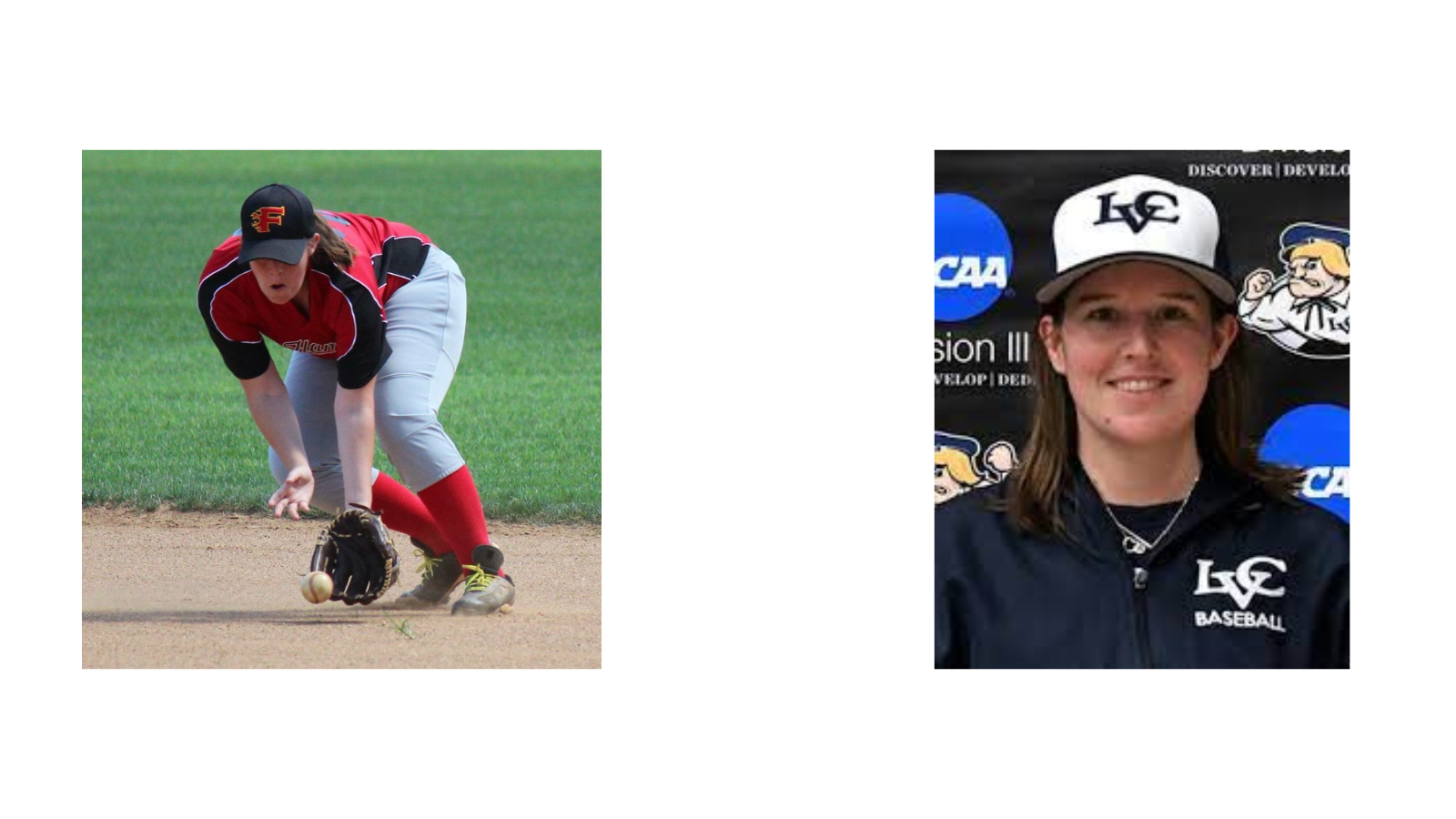
  • Defensive Excellence Q&A: Beth Woerner (Lebanon Valley College Assistant Coach)

    Defensive Excellence Q&A: Beth Woerner (Lebanon Valley College Assistant Coach)

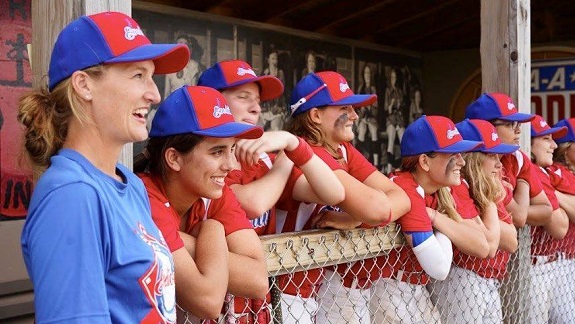
    Beth Woerner began coaching at Lebanon Valley College, an NCAA Division III school in Pennsylvania in August of 2021. She is believed to be the only full-time female baseball assistant coach in the NCAAs.

    As you’ll read in our interview below, Beth’s comes to baseball with a fresh perspective, having not played it or softball in college. And a lot of her knowledge is self-taught. In her previous stop at University of Charleston, West Virginia she spent a lot of time coaching infield, so that was the focus of our discussion with her here. We also talked briefly about one of her other passions, coaching excellence in baserunning.

    Follow Beth on Twitter at @beth_woerner

    This is the latest article in a series in which we’ve interviewed a diverse group of coaches about teaching defensive excellence. To read the others in the series, including 2 others with female coaches, click here.

    This interview has been edited for clarity and length.

    Mark: Can you explain your playing background to me?

    Beth: Sure. I haven’t played a ton. I didn’t play softball in college. I just graduated college and I found out about a women’s baseball league in the D.C./ Baltimore area called the Eastern Women’s Baseball Conference. So I started playing with them about 6 or 7 years ago, just for fun. I’m not very good at playing baseball, but because of that, I started to figure out, started to research. How do I get better at this? How do I make this play? How do I not mess up so much? Which is pretty much what coaching is, is figuring out how do we get better? How do we make fewer mistakes?

    Mark: So what was the research that you did?

    Beth: It started out with just like really simple stuff, like how to field a ground ball, what footwork should I use? But then I started just watching the game differently, seeing the little things that happen that you may not think about when you’re just watching for fun. I’m starting to notice a lot of little things, little specifics in the footwork, specifics in the way that people throw.

    So that was sort of where I started. I played pretty much everywhere, second base, outfield, pitched a little bit, caught a little bit in the women’s league, which is a great opportunity.

    It’s not as extensive as a lot of other coaches, but I think there’s a lot of value in it.

    Mark: What does defensive excellence mean to you?

    Beth: I think defensive excellence is just being able to be the best player that the player can possibly be, whether that is making all the routine plays or making routine plays and some excellent plays. But I think that is extremely individual on the player.

    Mark: Okay, so who were the players you watched that most influenced you in trying to get to that point yourself?

    Beth: My brother played third base as a kid, so I’ve watched a lot of good infielders play. One of my favorite players is Andrelton Simmons. Watching him play defense is a lot of, a lot of fun. He’s really good and makes really excellent plays all the time, was always locked into the game. So those are probably a few people there.

    Mark: Who are the people that have influenced you as a coach?

    Beth: All the ones that have encouraged me to continue coaching. Some of those people are the coach I currently work for, which is Jonas Fester here at Lebanon Valley College. He was a great infielder himself.

    We have a lot of conversations about good defense and how to be a better coach, not just on defense, but in general. And I owe him a lot of credit for everything that I’ve done. And then also the coaches that I worked with at the University of Charleston under Robbie Britt, who is now at Eastern Michigan, and Pablo Cabrera, who’s now with the Red Sox.

    Pablo and I worked together as infield coaches together at Charleston and we learned a lot together. I’m sure some of the stuff that I’ll talk about here in a minute is stuff that he and I worked on together and came up with together.

    He played infield in college and was a very good infielder and I had a background in teaching but didn’t know that much about infield. So we came from two very different backgrounds and worked together to create the way that we both think about infield now.

    About Beth Woerner
    Full-time assistant baseball coach, Lebanon Valley College (NCAA Division III)
    – One of few women working in college baseball coaching
    – Experience comes from playing in adult baseball leagues
    – Graduate of James Madison University

    Mark: What’s an example of something you work on with players now?

    Beth: It’s hard to say because it’s different with every player. Every player is working on different little things. But I think one of my favorite things to teach and to work on with players is the infield prep step, which is whatever the player is doing before the pitch. I think it’s fun because every player is a little bit different in what they feel.

    And it’s really about what they feel. Matching that to what they’re actually doing, so there’s creativity required to become good at it. That’s true of all parts of the fielding a ground ball and making a play. There’s little things that players can do to maximize what they’re good at and limit their weaknesses.

    Mark: Okay, can you pick out a player and go into the specifics with his prep step?

    Beth: I love working with third basemen.

    One of our third basemen last year, he was working with his prep step and he was a little bit early, which means that he wasn’t reacting as quickly as he could because he was heavy on his feet at the point when he was making the decision to move, once he knew where the ball was going.

    So we worked with him and it was a lot of fun because every now and then he would say, hey, I’m still a little off. Can we check in? And then we would work with some video and check in where he was at and then he could work on it in his drills once he knew that he was a little late and needed an adjustment.

    Beth: When I first got to Lebanon Valley, I wasn’t really sure how the team was gonna treat me and he accepted me as somebody who could help him get better right away. So that was a pretty special moment for me as a young coach that this player wants to get better and wants to use all of his resources … which is me, to get better.

    Mark: What else have you discovered in working with players?

    Beth: This is true for all coaches—some players connect with you better and some don’t, but I think most players, once they realize that this person wants to help me get better, they’re going to do what they feel like they need to in order to get better.

    Sometimes you don’t necessarily have to have the closest connection with every single player because they’ll teach each other what you teach them.

    It’s really cool they’re taking what you’ve taught them and applying it. And not only applying it, but helping other people also learn how to do those things better.

    Mark: Did your experience with him get you credibility with everybody else?

    Beth: Yeah, younger players, sometimes don’t even know how to interact with coaches in general. Once they see this is how this player, who they trust, trusts me and is working with their coach, it’s a model for them on how to communicate with a coach.

    Mark: What’s the hardest part about teaching defense?

    Beth: I think the hardest part and the coolest part are the same answer. Every single player is different. Everyone has different strengths and weaknesses.

    Everyone feels the way their body moves, the way they do things differently. Everyone understands the game differently. So that makes it difficult because every single player is a new challenge. That makes it a lot of fun because you’re always trying to work with that player and figure it out.

    Hey, this is exactly what you’re feeling. This is exactly what you’re doing. This is how we can get better. There’s no formula or special secret sauce to getting a player better because everyone is different and has different experiences.

    Mark: Okay. How have you used technology and data in your coaching?

    Beth: We’re a Division III school, so we don’t have as many resources as some of the other programs. But we do still use a lot of information, and we still use the research that other teams and organizations do to inform decisions.

    And for the defense specifically, we will track some things. We’ll track the plays that our players are making. We’re actually in the process of figuring out how we want to do that this year. And then we use that as feedback for our players.

    Mark: You have a master’s in strategic leadership. How does that come in handy in coaching?

    Beth: We talked about leadership in all different kinds of organizations and how things are organized for leaders. Knowing how leaders work is helpful in knowing that I want to do things how this leader does them or don’t want to do things how this leader does them.

    Mark: I know you also teach baserunning, and you just did a talk on it at Saberseminar, and I saw the tweet that you sent after Ken Rosenthal wrote about vault leads.

    So, why don’t you give us the perspective on the vault lead from the baserunner’s side, and then how you would stop it defensively from a pitcher, catcher, fielder combo?

    Beth: The vault lead give you an advantage when a pitcher’s quicker, has a quicker delivery. It helps you to get a better jump and our players who have a good feel of it, they actually have an easy time getting back to the base no matter what part of the vault they’re in. That’s the difficult part – that it’s easier for a pitcher to catch you off-balance.

    I think the players who are very good at it and understand the way that it’s supposed to work in terms of timing are able to easily implement the vault leads.

    It also is useful against the left-handed pitcher because you might have a hard time getting a good jump. Vault leads are difficult because it requires a lot of creativity on the player’s part to know exactly what they’re able to do and how to do it and know exactly where they are in space at those points where there may be more risk involved in getting that vault jump.

    Our players really enjoyed learning how to do them. We’ll play some development games that don’t count towards anything, but both teams are just there to get better.

    One of our players who isn’t really a base stealer was like, ‘Hey coach, I’m just going to try a vault lead. I want to see what happens.’ He stole the base and came back to me and said that was the best jump he ever got in his life. ‘I felt like I got there so fast and was running so fast.’

    The benefit of it is it’s able to give you a little extra momentum, just like if you’re driving and you come to a stoplight, you stop all the way at the stoplight, it’s going to take you longer to keep going. But if you keep rolling just a little bit, it’s going to be easier to accelerate once the light turns green.

    It’s the same kind of concept, but with running. If a full vault isn’t comfortable, maybe we can do half vault, or maybe we can do a walking lead, or some kind of other lead that gets that momentum without having to do the full vault.

    Players love getting creative. They get to make it their own, how they want to do the vault.

    And then, on the defending it side, it’s a lot of fun here at practice, actually, when we practice it. Because the pitchers, they really want to pick off runners, especially some of our faster runners who are able to get further off the base.

    So we’ll get competitive in practice and have pickoff practices where the base runners are practicing getting their leads and the pitchers are practicing pickoffs to see how much momentum they can get, how far off the base, and the pitchers are working on mixing up their timings.

    Having a different delivery, maybe a slightly higher leg kick or a slightly lower leg kick. There’s all kinds of different things to to hold the runners.

    And what’s cool about practicing it with our pitchers is that sometimes, hey, I can tell that you’re gonna pick off because you turn your head a different way when you’re picking off, and we’ll tell our pitchers that so that they can get even better.

    Mark: What are your aspirations as a coach? Long term?

    Beth: This is a tough question because I really don’t know and I debate it with myself all the time. I love college baseball when I first started, my original dream was to work in the big leagues like everyone else.

    I think I will likely end up doing quite a few different things in the future, but I definitely want to stay working with players and I want to keep working with the best players that I can.

    Mark: Last question: Is there any point that you wanted to make that I didn’t give you a chance to make?

    Beth: I love working with the players and I love getting creative with players to help them learn what they’re able to do and how to be the best player they can be. The creativity piece is a lot of fun.

    Anybody can coach. Even if you don’t know every single little thing there is to know about baseball, you’ll figure it out.

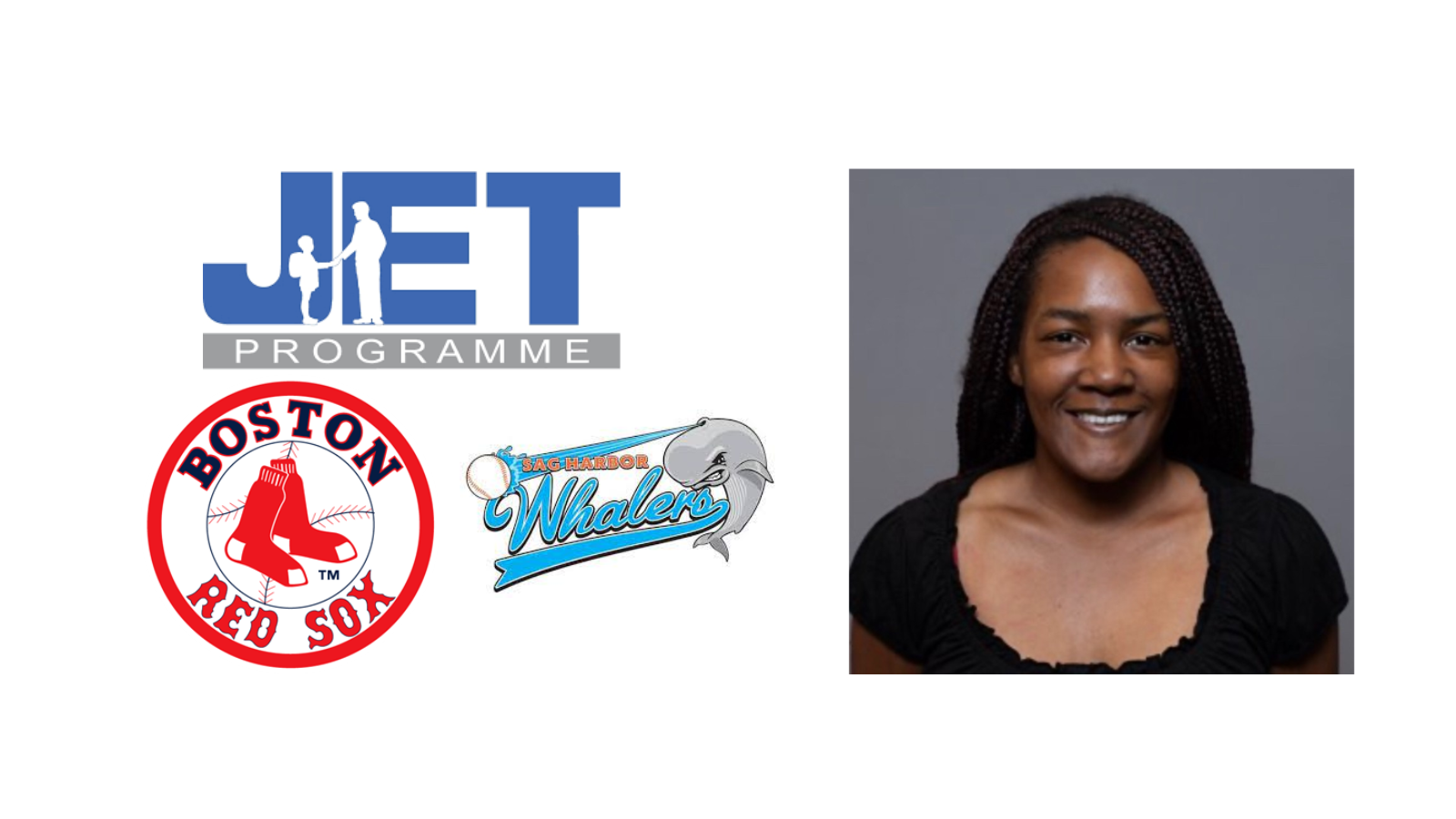
  • Defensive Excellence Q&A: Bianca Smith

    Defensive Excellence Q&A: Bianca Smith

    Engage Bianca Smith in conversation about defense for a few minutes and you’re almost sure to think about the game in a different way when you’re done. We experienced that after talking to the former Red Sox minor league coach on Tuesday, just before she heads to Japan on a new coaching venture.

    Smith, the first African-American woman to be a pro baseball coach, has taught all aspects of the game, including defense, on the scholastic, collegiate, and professional levels. She spent two years as a coach at the Red Sox complex in Fort Myers and spent the last few months coaching a summer college team on Long Island. She’s a graduate of Dartmouth with an MBA and law degree from Case Western Reserve. You’ll get a good education in both the physical and mental side of coaching defense from reading this Q&A.

    This is the latest article in a series in which we’ve interviewed a diverse group of coaches about teaching defensive excellence. To read the others in the series, click here.

    This interview has been edited for clarity and length.

    Mark: What does defensive excellence mean to you?

    Bianca: It’s not quite like being perfect at defense, but it’s more giving 100% and knowing what you’re doing when the ball comes to you.

    Mark: Who taught you how to play defense?

    Bianca: I got the physical skills from my high school coaches.

    But the mental part I actually learned just from watching the game. I always put myself in the same position as whatever player was in my position and would go through the game as well, thinking about the situation and if the ball came to me, what would I do. That’s what prepared me for my games.

    Mark: How do you teach that and how do you teach defense?

    Bianca: A lot of it is experience, but I’ve also found just going over situations with players is going to be a lot more effective than putting them in the situations in games and just hoping they figure it out, which I’ve actually seen a lot of coaches do.

    They just kind of assume the players know. And I even found this out with the Red Sox. You get to the professional level and you assume that players know how to play and what they’re supposed to be doing. And a lot of the times, they actually don’t. So I spend a lot of my time as an outfield coach, probably more time actually, talking about situations, talking about defensive skills, rather than actually doing them.

    Once I actually explained it to them first, it was a lot easier for them to practice and pick up rather than just throw them out there and try to force them to figure it out.

    Mark: This isn’t meant to be critical of their past coaches, but is that due to where they were before, or is that due to instruction being done differently at different levels?

    Bianca: I think it’s more instruction being done differently. And like I said, I’ve seen it with coaches at higher levels. You just expect that either their previous coach or the fact that they’ve been playing so long that they already know this information. And when coaches come in with that assumption, you don’t coach it, and then they go off to the next level, and they still haven’t learned it.

    So, I don’t think it’s a lack of coaching. It’s more just that assumption that a lot of coaches have, based on whatever level they’re at. You just assume, oh, at some point they’ve learned this already, I shouldn’t have to teach them.

    So you don’t even bother bringing it up.

    Mark: Can you break down some of the things you teach and give us some specifics?

    Bianca: I’d say one of the most important things for outfield – it’s not as much the physical part.

    It’s knowing where to throw the ball and knowing how to throw it properly.  A lot of outfielders, no matter what level, they like to throw it as hard as they can because they’re trying to show off their arm.

    Giving them a situation where I explain to them that there’s a runner on base, so what is your goal?

    Are you trying to prevent them from scoring, or prevent them from moving and advancing, or are you actually just trying to get them out? Some players will say, yeah, we’re trying to get them out. Others will say they’re trying to prevent them from advancing.

    And I’ll explain it using statistics that, the majority of the time, outfielders are not going to actually throw a player out. That’s why outfield assists really aren’t as high a number as you would expect.

    And then I explain, imagine you’re in a game, you’re throwing as hard as you can, the throw technically gets to the base, but it’s too high. Or you overthrow it because you’re throwing as hard as you can because you’re trying to throw them out versus trying to just keep them from advancing. Now the runner is going to advance anyway.

    So, talking that through, explaining why we want to play a certain way, keeps them from going into a game and making those types of errors.

    And then, that’s when we start working on a long-hop drill, throwing to the base, where we’re trying to get the long hop. I’ve even had drills where half the outfielders will be in the outfield throwing, the other half will actually be fielding in the infield, to give them an idea of what it’s like to catch a long hop versus a short hop for the infielders.

    And then they really understand, okay, yeah, I need to do a long hop, because it’s a lot easier for them not only to catch it, but to apply the tag, if we do actually manage to throw them out.

    Mark: How do you get them to listen to you?

    Bianca: Ha!

    It depends on the age group, depends on the level. But one thing that I’ve found to be very effective in getting them to listen to me, but also in making sure that everybody understands what we’re working on, is that I don’t like to give drills that I haven’t tried myself at least once.

    I was never an auditory learner. If I hear something, I don’t retain it as well as if I either read it or I do it myself. So I’m a very hands-on learner. So I like to actually practice the drill before I tell the players what we’re going to work on and I show it at the same time. They learn it better, but they also have this understanding of, okay, she actually does know what she’s talking about because she’s done this before.

    I don’t believe every coach needs to have played the game. I do believe you need to at least be able to do some of the skills that you’re showing your players because it does help them, and it gives them a little bit more trust. I’m not necessarily gonna trust a coach who tells me to go run two miles, but they can’t even run a little bit. You do what you preach, pretty much. I’ve found that’s a lot of the ways that I’m going to gain trust from players.

    Mark: Do you do anything different for kids?

    Bianca: Kids are actually a lot easier to gain trust from.

    They just expect that you know what you’re talking about. But I approach it the same way. When you’re first starting out with players that you don’t know very well, you don’t know what kind of learners they are. As I get to know them a little bit more, I might change my coaching style based on what kind of learner they are, based on how they receive my coaching style.

    Once I start talking to them and get to know them, you also build trust that way because you’re just learning about them as a person versus just them as a player.

    I know the moment that I’ve really gained trust from a player is when they start asking me stuff that doesn’t have to do with baseball.

    Mark: How do you overcome the gender gap?

    Bianca: Never really had to.

    I think we’re at that point now, at least in baseball, where most players don’t really care. whether you’re a man or a woman.

    It’s funny because I would have boys and girls in my camp, and one of the girls would throw a ball really well. One of the boys would go, oh my gosh, I can’t believe she’s a girl and she could throw a ball. And I’m just looking at him thinking, you do realize that your coach is a girl, right?

    Mark: How do you talk to a potential outfielder about knowing when to leave his or her feet?

    Bianca: That’s been a fun one because I’ve had this conversation quite a bit. At least with the players that I’ve worked with, most of them are too afraid to leave their feet because they’re scared of messing up.

    So I explain it that if you think there’s like a 95% chance that you think you can catch that ball, I want you going for it. The only times you wouldn’t is if it’s a sharp line drive, you’re playing left field or right field and you’re diving towards the foul pole or foul line. Because if you miss that, that’s going to get way past you.

    If it’s in the gap,  I actually prefer them diving, even on a sharp line drive. If we’re teaching them right, your center fielder is backing you up. The center field basically has free range, meaning if you’re diving either way, hopefully the other outfielder is backing you up. So that, I don’t mind at all.

    I would rather them dive and at least try for it, than see a bloop single land in front of them that they could have caught. We actually practice just backing up. I will have two guys go out at the same time, put a ball in the machine. The guy in front will pretend like he missed it, and the guy behind has to actually back him up.

    So they have to figure out: How far am I going to be away from my other outfielder so I can be there in case he misses the ball?

    I’ll go over situations depending on, what runners are on, are they fast, what’s the score, what’s the inning? Is this a do-or-die play or is this a situation where if you dive, you catch it, we win the game? If you don’t dive and it drops, they’re gonna win anyway, so you might as well dive. I make sure that we’re gonna go through every situation. And if they do dive in a situation that I don’t think they shouldn’t have, I just bring them back in after the inning’s done, we talk about it, and then they learn from it.

    But I try to make sure players know I’m never gonna be upset with you giving 100% and diving for the ball. I’m gonna be more upset if you didn’t try at all, the ball drops and now they got a hit.

    Mark: What about teaching the technique of getting under the ball when you dive?

    Bianca: We had to do this even with the Red Sox because diving is something that’s not really practiced because of injury prevention.

    We make sure to do some kind of progression. I remember this is how I actually learned diving in the outfield and became more comfortable with diving and sliding.

    It’s just starting from your knees, actually even just starting in a diving position so you understand where to put your hands, how to keep your body up a little bit so you’re not face-planting when you dive or keeping your wrist from rolling under you. Then going from your knees and just trying to kind of get comfortable with landing on the ground.

    Then we start getting to a position where you’re going from your feet and then you’re running. We might use a diving mat or sliding mat. I ran a camp for a summer collegiate team just a few weeks ago, and we worked on sliding on a slip-and-slide. So, now that’s something I bring up with the kids, especially if it’s hot out.

    They have less of a fear of sliding now, and they’re just getting familiar and comfortable with their bodies to the point where eventually, it’s just going to become natural in a game, and they’re not thinking about it, they’re just going to do it. As soon as they start thinking, that’s when you’re risking injury, because then your body tenses up.

    Mark: Do you teach jumping at the wall too?

    Bianca: With kids it’s more just finding the wall. But as they get older, we’ve done that with the Red Sox where we have a drill where they’re not just finding the wall, they are trying to actually judge it and see if they can jump and just protect their bodies so they’re not getting hurt.

    Mark: On your website, you had a one-line reference in your ‘About Me’ section to playing soccer and dancing as you grew up. I’m curious if you have any favorite drills to teach footwork that mimic either soccer or dancing movements.

    Bianca: So, it’s not really a drill. I haven’t done it yet. I’ve brought it up once and it kind of got laughed at. But the idea that in baseball, you need rhythm. Because no matter what you’re doing, whether you’re hitting, you’re on the bases, you’re in the field, you’re dancing with the pitcher. That’s your timing.

    And I saw one team who actually warmed up with music and danced. I thought that was a great idea and that’s something I would love to do with a team. But I know it seems a little weird until you start to explain how you’re dancing with the pitcher.

    It’s literally just rhythm. You start to see it with guys when they can’t dance or they don’t have rhythm. It makes so much more sense when you see them either hitting or in the field trying to work on their pre-pitch. Because you try to tell them your pre-pitch is just going off the pitcher. But then their pre-pitch is off.

    I’m [thinking] okay, that explains so much and we can try to just work through that. But that’d be one drill. It’s not really a drill. It’s more the warm-up. But it’d be one thing I definitely want to incorporate, trying to get that rhythm and everything going at the same time.

    I love looking at other sports and trying to incorporate things that we can use for baseball. You can talk to any of the players that I’ve had in the last few years. I’ve introduced bunting with a lacrosse stick. And I love doing that. When I teach guys tracking the baseball, we do football routes. We would have the coaches actually throw footballs We put the cones out there and they’re actually just running routes.

    I’ve looked at hockey for hitting a slap shot is very similar to the body movement you use with your hips when you hit it. The same thing with golf. I’ve even started looking at volleyball for pitching and throwing. One of my brothers plays volleyball and we’ve gone back and forth about how to strengthen up his arms. It’s very similar to how pitchers do it.

    So looking at other sports, it’s fascinating how similar the movements still are.

    Mark: What about soccer?

    Bianca: This is a little different. It’s not a physical defensive skill. It’s something that I’ve also found interesting with the Red Sox. It’s not like it’s not taught, but it’s one of those things that you assume that they already know. Simple communication in the outfield, which could make a huge difference on whether a ball is caught or not.

    So rather than do your typical drill where you have two lines, you hit a ball in the gap and have them call for it, I had them juggling a soccer ball amongst themselves and calling for it.

    Anybody who was at the Red Sox complex in my first season (2021) has done the soccer ball drill.

    The first week or two that we had games, they weren’t really talking in the outfield.  They were catching balls, but it bugged me, because I’m saying there’s going to be a point where there’s a ball in the gap, nobody says anything, and you’re going to collide. Or, you’re going to think the other person has it, you’re going to back off, and nobody’s going to catch it.

    So I said okay, we’re working on this drill. You guys need to be loud. I want to hear you be loud. I want to know who’s actually got the ball. And it gave them an opportunity to kind of break out of their shells and just have a little bit of fun while still working on something that’s really important in the outfield.

    And it became a competition because if they called for it and they missed it, they’re out. We assigned our normal center fielders, they were the center fielders of the circle that started with all our outfielders lined up LF, CF, RF, LF CF, RF. You had your three outfielders and the center fielders had priority and everybody knew who the center fielders were, but they had to call for the ball. As players “lost,” they came out of the circle.

    I did see guys become a little bit louder in the outfield after that.

    Mark: What’s the hardest thing to teach defensively?

    Bianca: Actually throwing the ball.

    Because you don’t want to fall into that cookie cutter that you have to throw it this way. Just because [your arm slot] looks bad doesn’t mean they’re not doing it effectively. Some guys are more comfortable from sidearm. Some are more comfortable from three quarters. It’s all over the place.

    Mark: What’s your favorite thing to teach on defense?

    Bianca: Diving and sliding. I still do figure four slides when I’m shagging balls during BP. And the guys get really excited if I actually do manage to catch one.

    I love being able to teach that because I think once you get into their heads that it’s okay for them to dive and slide, their aggressiveness in the outfield just shoots up and it’s so much more fun.

    Mark: Anything else you would like to say about coaching defense?

    Bianca: Anybody following major league baseball now, they see the rule changes. Defense is so much more important now than it used to be and yes, offense is important. I understand that too. I was a hitting coach.

    So. being able to rely on defense, especially now that hitters are gonna have to focus more on just driving the ball, getting hits versus just hitting home runs means you have to be able to field the ball properly. You have to be able to throw the ball in. You can’t risk errors.

    Defense and baserunning were my bread-and-butter as a player. That’s why it’s so important to me.

    Mark: You’re headed to Japan – this week actually. Thank you for talking to me. What’s the coaching opportunity you have overseas?

    Bianca: Japan started this program called The JET Program in the 1980s where they would send English speakers over to teach English in their schools. The last decade or two they’ve started including sports coaches. There are 10 of us in the whole country compared to something like 3,000 English teachers.

    The baseball position opened up in February. It was perfect timing. I found out that I got it in May, so I’ll be heading over and living in Higashikawa, which is the center of Hokkaido, the northern island of Japan and I will be coaching elementary and junior high students from 5 to 15 years old. It’s kind of like their local Little League team. It’s a really good team. I do know that. And I found out the elementary school program has 52 players on the team.

    It’s been on my bucket list forever to be able to work in baseball in Japan. I’m incredibly excited. I’ve loved the culture and the country since I was a teenager. A goal of mine is to coach an NPB team someday.

    So I’m merging my three loves: baseball, Japan, and traveling.

    This is the latest article in a series in which we’ve interviewed a diverse group of coaches about teaching defensive excellence. To read the others in the series, click here.

  • Defensive Excellence Q&A: Brennan Middleton, Diamond Defense Academy

    Defensive Excellence Q&A: Brennan Middleton, Diamond Defense Academy

    Brennan Middleton runs the Diamond Defense Academy, a camp exclusively devoted to teaching infield defense to scholastic and high school players in northern Virginia. He also coaches a travel baseball team.

    Middleton grew up in Baton Rouge and won two Louisiana state baseball championships in high school, then played infield at Tulane before a two-year pro baseball career after being drafted by the Nationals in the 10th round.

    He’s passionate about teaching defense and was the ideal person for our next Q&A. His answers below have been edited for clarity and length.

    Click here to see our other 8 interviews in this series of pieces about coaching defensive excellence.

    Mark: Who are your biggest influences in teaching you how to play defense?

    Brennan: My dad would take me to the field four or five days a week outside of our normal practices and travel stuff. Fundamentals were ingrained in me early as a kid. That kind of came naturally.

    The fielding aspect came naturally to me too, and I think he saw that as a young player that I was just quicker and fast enough to be able to stay in the middle of the field. And he always kind of preached that you stay in the middle of the field, you provide a little bit more of a contribution to a team, whereas if you’re just relying on hitting you get forced to the corners and you have to execute at the plate all the time.

    So, it was in my mindset that I wanna diversify a little bit and be able to stay in the middle and provide value there, even when I’m not hitting well. That concept was important to him, and it became important to me.

    Later, Jake Gautreau was an influencer. He played at Tulane and played in the Padres organization. He was an assistant coach at Tulane University. He’s an assistant coach at Mississippi State now. And Jeff Garber, the field coordinator for the Washington Nationals who was in charge of all things defense.

    Mark: What does defensive excellence mean to you?

    Brennan: Executing on the routine plays.

    I think any coach that knows what they’re doing or played at a high level knows that you need a Top-10 play sometimes, but you need to be relied upon to make the routine plays.

    And if you’re relied upon and you field and you catch and you throw the balls that are hit in your area without relying on the extreme outside-of-scope plays, then you’re gonna play for a long time and you’re gonna be relied upon.

    Mark: So how do you teach it?

    Brennan: I teach it very compartmentalized and broken down. Specifically for the infield, I believe there’s different types of ground balls. I explain to kids and young players how to view the infield in a way that breaks down the ground balls into different types.

    And along with those different types come different types of footwork and angles and range and glove positioning. So, I break the infield down into seven core ground balls. And I believe every ground ball, unless you’re gonna dive for it, falls into one of those seven categories.

    And each one of those categories has its own footwork, has its own glove position, has its own angle to the ball. And when you break it down like that, you can work on individual ground balls all the way down to the fundamental level. And then when you build it all back up, the infielder has a better understanding of:

    ‘When this ball’s hit to me, I practiced this ground ball or that ground ball hundreds of times, and I instantly know, okay, I’m supposed to do this. I’m supposed to put my feet here, I’m supposed to put my glove here, I’m supposed to move this way.’

    And it makes it easy to understand and it makes it easy to execute.

    And if you don’t break it down like that, especially for young players, they feel overwhelmed and they get stuck or they take a different angle or they’re in the wrong position.

    They may have caught the ball, but they’re not in the right position to make the play or make the throw as the game speeds up.

    Mark: What are the seven types of ground balls?

    Brennan: You’ve got a routine ground ball, which is obviously the most commonly hit ground ball. It’s one that’s hit right at you. Any ball that you can stay to the right of, as a right-handed throwing infielder, or to the left of for a left-handed throwing infielder.

    For most infielders who are right-handed, if you can create momentum and feel that ball in between your feet with momentum going back to the left side of the infielder it’s gonna be considered routine.

    If you cannot do that and you’re gonna end up having to turn your glove over, or you cannot create momentum, it’s gonna become a different type of ground ball.

    There are three types of backhands. One, I call ‘inside the body’ and you field it inside of your body and you use momentum back towards the infield with your feet open to press through it, down and through it, and with momentum back towards the infield area.

    And then there’s two types of extension plays. One where you field it with your feet open, and then one where you filled it with your feet crossed over. The one where you field it with your feet open does not require a shuffle. You field it, you shift back to center, you shuffle towards the target, and you throw.

    And then when you cross over, you’re clearly not in a good throwing position. Plus, you’re probably extending further than you want to, but that’s needed to catch the ball. It requires a sort of gathering step to kind of slow your body down. So that is the fourth type.

    And then there’s two types of forehands. One ball that’s hit to your glove hand side that is not fielded in between your feet, but a ball that’s hit to your glove hand side that is fielded outside of your feet. You’ll field that with one hand, meaning your glove, and you’ll stay inside when you shuffle. So, turn inside, keeping your chest towards the field.

    No. 6 would be a reverse pivot, so a ball hit a little bit further than that forehand play in which the infielder is angled towards the outfield but requires more than one shuffle inside to get turned back towards the target. Whereas they would be quicker to just reverse pivot their feet, turn gloveside back towards the infield, and then release the ball towards the target (a more detailed explanation with video can be found here).

    And then No. 7 would be a slow roller. There’s three different types of slow rollers, but I bucket them into one. Ball hit to your right, ball hit to your left, and then a barehand ground ball. Each of those has different types of footwork.

    So that’s the core seven. We break those down into different fundamentals. We break it down all the way up from the glove work to the footwork to the angles, and we build it all the way back up.

    Mark: Do you have any favorite drills or games that you do with the kids that really kind of get them thinking in a good way?

    Brennan: I’ve found that it’s sort of an ‘aha’ moment when you put them on their knees, and you’ve asked them to mimic the movements of how they move their glove once they catch the ball in all these different positions.

    Because you can set a player up on their knees and you can put him in literally all six of those types of ground balls (not the slow roller) and you have them focus not just on the feet and how they’re moving, but on what are they doing with the ball once they catch it. It starts the process of them understanding.

    You have them just funneling the ball into their center on a routine, pushing down through the ball as a backhand, extending as an extension or forehand, and then you mix in short hops in a controlled environment like that where they’re just fielding the short hop and not having to worry about the feet and the movements.

    And they get really good with the glove and then you stand them up. And then you slowly work into what you want the feet to be doing in each one of these. It’s a progression that none of them have really ever been taught, in my opinion. It’s not a dig at coaches, but they don’t really know how to teach it.

    They just don’t know what to say or do and how to approach it. People know how to teach hitting. But you ask a regular coach to teach defense, not hitting fungoes, but teach defense, and they don’t know how, and they don’t know what to say or how to break it down or how to make it simple.

    When you do that, the youngest of the kids say, ‘Wow, I can understand this.’ And they become a more complete defensive player versus just a decent fielder.

    Mark: What’s the hardest thing to teach?

    Brennan: It’s the slow rollers. I think the younger kids, the ones below 13, they’re growing so fast and they’re still so uncoordinated in how their body actually moves and understanding how their body moves.

    So, it’s very difficult to teach a somewhat quirky 11-year-old, who might be athletic but might have a little baby fat still and is not really coordinated, how to run and catch and bend over and get the footwork right. You start to see the understanding of how the body moves when they’re in their early teens.

    Other Interviews In The Series

    Coach Description Link
    Dunn Muramaru Hawaiian high school coach LINK
    Darren Fenster Red Sox infield coordinator LINK
    Nelson Cooper IV Pittsburgh Hardball Academy LINK
    Loren Torres Point Park University LINK
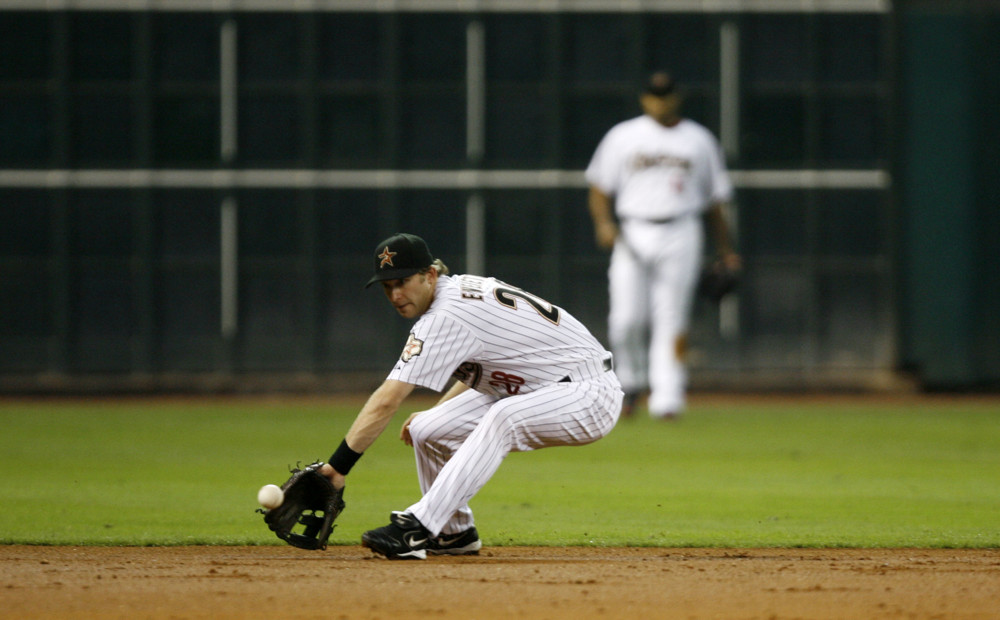
    Adam Everett Phillies minor leagues LINK
    Carlos Muñoz Team USA catching LINK
    Petr Baroch Czech Baseball LINK

    Mark: How much of an emphasis do you put on learning multiple positions?

    Brennan: A lot. Before 13, they should be playing all over the place. Catch if you want to. I don’t force catching.

    They should see the field from someone else’s viewpoint. You should understand how the right fielder sees the field. If you’re a shortstop, you should see how the first baseman sees the field. Get one of your bigger first basemen and put him at shortstop for an inning so that he can see what that position sees as the game evolves.

    Then, you have a 360-degree view of how your teammates view and understand the game.

    Mark: Explain the quote on your website: Baseball is a game of failure, but not on defense.

    Brennan: You should not fail at the routine ground balls. A fielder should be damn near perfect on balls that are hit within their range, and they should understand the fundamentals enough to where when the ball is hit to you, unless it takes a bad hop, or unless there’s some inadvertent physical breakdown where you trip over your feet or something, you should catch almost all of them.

    Mark: In summary, what would you say about your approach?

    Brennan: For me, I’ve found success when I start breaking things down into components and teaching them as if they were in a class. I’m teaching them how to prepare for the test.

    Will they be better instantly? No, they’ve got to work at it.

    You have to get scientific with it and break it down into the simplest bite-sized chunks for kids. They become more comfortable when they are prepared for anything. They come out the other side feeling more confident as an infielder.

    For more examples of what Brennan was talking about, check out the “Improve My Game” tab on his website.

  • Defensive Excellence Q&A: Petr Baroch, Czech National Baseball Teams

    Defensive Excellence Q&A: Petr Baroch, Czech National Baseball Teams

    What is it like to coach defensive excellence in European baseball?

    Petr Baroch helps run the Czech Republic national baseball program for ages 15 to 21. Petr, now 41 years old, previously played professionally for three years in the Netherlands. He talked to us about his experience in coaching baseball in his home country. The interview has been edited for clarity and length.

    Click here to see our other 7 interviews in this series of pieces about coaching defensive excellence.

    Mark: Where are you located and what is your baseball background?

    Petr: I’m the director of the Czech national baseball teams and I’m based in Kladno (a mining city in the north central part of the country, one that produced NHL legend Jaromir Jagr).

    I take care of the Czech national teams under-12, under-15, under-18, and under-23, seniors. I help with the tournaments for the guys and the European championships. If it’s possible, then I can help the team as an infield coach and hitting coach. Last year, I worked with the under-15 team. Mike Griffin was the head coach.

    Mark: Ok. So you do coach defense, right?

    Petr: Yeah. I’m the defense coach and the hitting coach. I can be the pitching coach too sometimes.

    Mark: Okay. So what does defensive excellence mean to you?

    Petr:  With a good defense, you have a better chance to win. So it’s important to the team and it’s important to me.

    When I will talk about the players, I want the guys who have the correct positioning, who read the ball and have the right timing for making plays. And I want guys that have some athletic skills and that are smart.

    Mark: So how do you teach that to people?

    Petr: I have videos of basic drills that we want for the guys. We want them all to be on the same page. We want them to be making better decisions every day.

    Mark: How much do these kids know when they come to you? Were they playing another sport or are we to a point where they’ve been playing baseball their whole life?

    Petr: When I was young, I played so many other sports. I never saw guys playing baseball when they were under 7. Now, I’ve seen a lot of change. So many players are playing only one sport. That’s not good for us because we want guys who are athletes.

    With our Kladno team, we have so many people who could make it in another sport. I think it’s important for young guys to play basketball or hockey. We have two guys who play hockey and they’re different because they can move, they’re more athletic and smarter than the other guys.

    But so many kids don’t have time for [multiple sports] because they go to school and then are running to practice and then they come home and study. They don’t have practice and games at their school. Everything we do is done in a hurry and that’s not good for us.

    Mark: Do the kids that grow up in the Czech Republic, do they all wanna be like (NHL star) David Pastrňák or are they familiar with current baseball players?

    Petr: Everybody wants to be like Pastrňák, or Jagr maybe some want to be a goalkeeper. Their family may be thinking that baseball is great for you and your body, but you will enjoy it for a couple of years and then you have to go to work, because you won’t make money for it.

    When someone asks me if it’s possible to make baseball your job, I tell them yes, but you have to go to Japan or the United States and go to school there. But even if he doesn’t get a contract, it will be very good for his life. He’ll learn to speak English and he’ll be a better person. He will know more people.

    Baseball is a big community. I’m very glad that I was a player and now I am a coach and I hope that I will be helpful for the young players.

    We have programs with the Czech Baseball Association that help guys go to the United States, pay for flights and look for contacts for them. Mike Griffin knows people who ask if our players can come to the U.S. I help them make the decisions.

    Mark: What’s the hardest thing about trying to teach the kids?

    Petr: The mentality, because baseball is very hard for kids When you have 10 times at bat, and you’re good three times, you’re hitting .300 and you’re viewed as good. But seven times out of 10, you’re bad. But that’s normal in baseball.

    But I think that the baseball and life is almost the same because sometimes you can mess up a situation in baseball, but that situation can help you for the future.

    Defense is the same because the goal is to not make so many errors and mistakes. And if you make mistakes, you have to be better next time.

    Mark: What are their favorite things to do on defense?

    Petr: Almost everyone wants to play shortstop, pitcher, and catcher because they understand that it’s very important. When they’re younger, they think that they play outfield because they’re bad. But I always said no, you’re very important to us. I think that’s an important job for a coach, make everyone feel they’re important. When you’re older, you understand the importance of playing the outfield.

    Mark: What are the things that you teach them in the outfield to kind of get them started?

    Petr: How to catch the ball, first step moving back, how to do a transfer from glove to hand, hitting the cutoff man with a four-seam throw.

    Mark: What do you teach them about shortstop right at the start?

    Petr: It’s different by age. At first, basic skills, like initial move, first step, throwing. As they get older, we make the drills harder, where they’ll get on their knees and have to catch and field balls while on their knees. And also, how to line up the ball with their chin and their eyes.

    Mark: Okay. When the kids watch video of players making plays, who are the fielders they want to be?

    Petr: Everyone wants to be Shohei Ohtani. Everybody here liked the World Baseball Classic.

    On defense they want to be Derek Jeter.

    Mark: What’s everyone’s favorite drill?

    Petr: They like playing “21 outs” [you have to make plays on ground balls, a combination of single-out plays and double plays to move on to the next inning]. It’s fun for the players but it can take a long time. Everyone likes it when you make it like a game.

    Mark: What kind of resources do you have? Do you have enough fields and equipment?

    Petr: For our older kids, almost every big city has a baseball field and that is very important for us. We’ll be hosting the European championship and we have enough fields. For the young players, I think that we have enough fields but practice sometimes is a problem because it’s tough to fit everyone on one field.

    Mark: What defensive thing do you like teaching most?

    Petr: Bunt defense, and also how to handle and first and third situations.

    This is hard for the kids. They have to understand when to go to second base, and then to always go to first base. The players have to understand their spots on the field and what they have to do in each situation.

    Mark: What do you specifically like most about coaching kids?

    Petr: I like teaching situations, like if there’s nobody on base you have to stay here. If it’s a stronger hitter, you have to move two steps to this side or that side

    You can say, “Okay, this guys is very fast,” you have to make two steps and a strong throw to first [on a ground ball].

    I also love that we have tablets [IPads] now and that I can tell kids “I will show you how to fix your problems.”

    Mark: What does the future of baseball look like for the Czech Republic?

    Petr: I think that we are going the right way. Since the WBC, we’ve been having people ask us – this sport you play, is it the same sport as in Japan? Every year we have more and more people in baseball. Once you know it, it becomes your life. Every day you see different situations. Every game is different.

  • Defensive Excellence Q&A: Alex Oglesby on Coaching Girls’ & Women’s Baseball

    Defensive Excellence Q&A: Alex Oglesby on Coaching Girls’ & Women’s Baseball

    Alex Oglesby has 25 years experience coaching baseball so she’s the ideal person for us to talk to in our latest Q&A about teaching defensive excellence.

    Alex is the first in our group who works largely with girls and women’s players, coaching them from Little League to the national level. She’s the president of Evolution Girls Baseball in the San Francisco area and is also an assistant coach for Team USA’s Women’s Baseball Team.

    Alex played boys’ high school baseball then played two years in the late 1990s in the Ladies Professional Baseball League. As a 17-year-old catcher, she was league Rookie of the Year and Defensive MVP.

    Alex shared her origin story and lessons she’s learned that she passes along to the next generation. The interview has been edited for clarity and length. Click here to see our other interviews.

    Alex: I actually did start with girls softball and a little bit opposite of most girls these days. They start with baseball and transition over to softball.

    I did the opposite and I started with softball and then got the opportunity to play high school baseball. And from there, I just fell in love with it. I declined some college scholarship offers, which in hindsight probably wasn’t really smart, but it worked out great for me. And then right out of high school there was a women’s professional league that started.

    I was lucky to get to play in that. At the beginning of my college years I met a lot of different people playing women’s baseball that I had no idea even existed. And then I got to represent the USA Baseball National Team for the first World Cup.

    Mark: When you were first learning to play, how did you learn the defensive side? 

    Alex: I started playing softball because my friends were doing it.

    Nobody raised their hand to be a catcher. And I thought, I guess I can catch the ball. I really had no idea what I was getting into. And I put the gear on, they put me back there and I started catching and I went home and told my dad and then found out that my dad actually was a catcher.

    My dad (Ed Sickinger) played minor league baseball with the Giants. And he had a huge baseball background, but I just never really was interested enough, I guess, to ask all the right questions of him. As I started catching, he really truly just had an old school train of thought and didn’t know girls what girls could play or what they did in athletics.

    So it was new to him too. He was my first true coach in the sense of teaching me the skills I needed, and I just really loved it. I loved being in the action of the game. The first thing he taught me was you just don’t let the ball get by.

    You just, whatever you do, your job is to block that ball. Whatever after you have to use, whether it be your arms, your mask, your legs, your glove, whatever it is, you just know, don’t let the ball go by you. I think that was my first lesson in defense as a catcher and as a ballplayer.

    And then it just blossomed from there. I just always will remember my dad telling me a passed ball is a run, a passed ball’s a run. That was forever drilled into my head. And even if there were no runners on and the ball got by me, in my head, that was a passed ball.

    So it could be a wild pitch, it could be whatever you want to call it. And it didn’t even have to go down in the scorebook as such in my head. Somehow a run was gonna score if that ball got by me. I’m not gonna let my team down, and that ball was not gonna be by me.

    Mark: You were the defensive player of the year when you were 17 in that women’s professional league.

    Was that for your blocking, was that for your basestealing prevention? Was that for your framing? What was it for? 

    Alex: I think my blocking was my strong point. Having a passed ball was like the end of the world to me. 

    With that, I gained a huge trust in my pitchers. And they knew that they could keep the ball low, right? I framed really well. I received really well. I think runners didn’t really steal off me, but it wasn’t because of my arm’s strength as much as just my quickness and agility.

    But my strength was for sure my blocking and receiving. 

    Mark: How do you now teach defense to kids? 

    Alex: Relearning how to coach catching took a lot of research on my end because it’s changed so much over the last five years. However, one thing remains the same. You don’t let the ball go by you.

    So your goal is to not let the ball go past you and to help your pitchers through the game. I’m really trying to pass that on. My son actually catches as well. I’ve had a fun time getting to have similar conversations with him as I have my dad.

    With every kid that I coach that catches, it’s really a lot of conversations about, okay, if this, then what? And helping them to think through the game. 

    My background is in teaching physical education. And I love teaching and coaching through guided discovery in the sense of letting them figure it out and guiding them towards the answer versus just telling them what to do.

    Your best catcher is one that really knows the game. They’re your eyes and ears and they’re your other coach out there, essentially. Being able to get them to start thinking about the game in that perspective is going to be one of the best things that you can teach them.

    If they can think on their feet, if they can direct the game, if they can handle a pitcher and help them through the game without you having to do all of that that’s gonna make them ultimately the best. 

    You are to not let that ball get past you. We want to block the ball even when there aren’t runners on, because we want your pitcher and your umpire to trust you. And then teaching the skills that go with that. 

    Mark: Do you coach infielders or outfielders too or are you almost exclusively catchers? 

    Alex: I do coach other positions. I have two sons. I coach their Little League teams as well as help out with their travel ball team. And then I also have our Girls u-18 team.

    And then I coach with the USA national team. With the women’s national team, I’m predominantly the catching coach, although we all really work together in that environment. With infielders and just overall defense, let’s just say team defense.

    Mark: What does defensive excellence mean to you?

    Alex: That aspect, is as much to do with mental as it is physical, really talking to the players about knowing the play ahead, being ready every pitch, and wanting the ball to be hit to you. And then just consistently making the routine plays.

    So that the physical side of it being the how do you make those routine plays consistently, but also not being afraid to fail on the extraordinary ones. And I teach this with the catchers as well, I really feel like if they’re afraid to take risks out there and try new things they’re never gonna grow from good to great.

    So take the chance, charge the ball, throw on the run, backhand the ball, dive for the ball, do the things that are gonna push you out of that comfort zone. As catchers, it might be back picks to first base and things like that. Even pickoffs at third. I want them to try those things, especially when they’re younger.

    They can get good at it in a situation where either the game’s not on the line or your livelihood isn’t on the line as a professional player. I want them to practice those things. I want them to fail or know it’s okay to fail because that’s just gonna get you closer to success.

    Mark: Do you have any favorite drills? 

    Alex: Blocking drills and just going through progressions all the way through. Whether they are very beginner stages or advanced, I think it’s important to make sure that you start and progress up. Obviously a more advanced player is going to be able to progress quicker through those.

    But I think it’s important to make sure that they get their work in and don’t forget the basics. With the younger players, pushing them a step past what they’re capable of, so that they have something to work towards in the progression. 

    When it comes to infield, I guess the easiest way to say it without showing it, is getting them to imagine the field less in the line from second to third. Getting them understanding they can get depth on the field and take different routes to the play that aren’t just straight-across right and straight-across left. Getting them to understand that they can work the field in a different way and imagine it less linear is huge for the younger player and then that allows you to work on different routes and paths and footwork to the ball. 

    I really feel like teaching them from the feet up is huge. So if you’re able to teach them good footwork, usually their throws are gonna be more accurate, their glove’s gonna be more relaxed. I love doing footwork drills and working on the path to the ball. 

    Mark: Okay. Is there something that someone who coaches boys could learn from watching someone who is coaching girls?

    Alex: That’s a really interesting question. We have some different girls’ events with MLB and USA Baseball, where we have a mix of female coaches, whether they are with USA Baseball, or MLB players that coach with us.

    We always say that we are the the hidden gem of baseball just because they just don’t know about us. They come out there and they absolutely love it and are blown away by how much these girls want to learn and how driven they are.

    The one thing that I find myself having to teach some of the girls is how aggressive they can be. And if I were only coaching boys and then going over to coach girls, I think having that same expectation of the girls that I have for the boys is important. Not just setting the bar lower, keeping that bar high for the girls. Always put the bar up higher versus just being like, oh, it’s a girl.

    I think the guys never know what to expect when they come over and they leave elated because these girls want to play, they want to push and they’re good. Then they realize, wow (the girls) are great students of the game.  They want to learn, they want to get better and they are already really good.

    Mark: Is there a player or former player you’d like to shout out?

    Alex: LaTroy Hawkins has been one of our biggest fans and biggest advocates. His approach with the women and the girls and just holding them in a high regard. while at the same time having the utmost respect for them. He’s the former player that would stick out for me.

    He’s approachable and open to helping us learn when we have questions. I’ve seen him do that at multiple events.

    Mark: What’s the hardest thing to teach?

    Alex: With the girls I think most of the girls are playing with boys. When the girls come out, they’re used to being in this position where they can’t mess up. If they mess up on the field, it’s because ‘she’s a girl.’ 

    Letting them not be afraid to fail. They don’t need to be perfect out there. The hardest thing is to get them away from that [be perfect] mindset.

    Mark: How do you coach the catchers on the women’s national team?

    Alex: A lot of them have been playing at a very high level for a long time, and with them it’s about fine tuning and also working with them completely differently.

    A lot of it is, how are you feeling? What things would you like to work on? Where can we, how can we work together? Maybe it’s hey, I saw this, or would it be helpful if we took this approach?

    You’re still gonna work through the fundamentals of doing drills and doing things that are gonna sharpen their skills and keep ’em sharp.

    We only get to be with them for a very short amount of time. We have our tryouts and trials, and then we get a week to train together as a team before we’re off into competition. There’s not a ton of time to get a lot of work in, but we continue our relationships off the field.

    Throughout the year. We see each other at different events as coaches together. For example, at the USA Baseball Trailblazer event. That is an event where we have girls who are 11 to 13 years old coming out, and a lot of our USA National Team are there as coaches.

    And we can have conversations throughout the year or send videos. I’ll get videos of some of our catchers saying to check out what they’ve been working on.

    Mark: Have you seen or learned anything from international baseball coaches of women’s teams? Like, did you learn anything by watching the Japanese women’s baseball team or the other countries that are involved? 

    Alex: I’m always a student of the game and I love watching. I love people watching in general, but especially in baseball and when there’s a language barrier, it’s interesting how much you can pick up.

    I recently got to go to Australia to coach. And there were players and coaches from Japan players, players from the Netherlands, and players and coaches from Australia. The girls were mixed up on the teams, so you had girls from Japan, Australia and the U.S. together. It was really fun. What I enjoyed was seeing how much everyone values the teamwork aspect. A ‘we game’ versus a ‘me game’ was consistent across the board.

    Mark: Last question: What advancements do you think we’ll see from this generation of young women’s and girls baseball players?

    Alex: I’ve definitely noticed the level of play has risen across the board. It’s not so much that the top player now is higher than the top player 10 years ago. It’s more that we’ve got 20 players at the top level versus one.

    I think that it’s become more accepting for girls to be on the field. There’s still a lot of work to be done to educate people on how many opportunities there are for girls in baseball, but I think as that education continues and as more girls continue to play longer, into high school and into college I think that we’re going to just see that level of play go up.

    Click here to see the other interviews in this series.

  • Defensive Excellence Q&A: Carlos Muñoz, Catching Coach

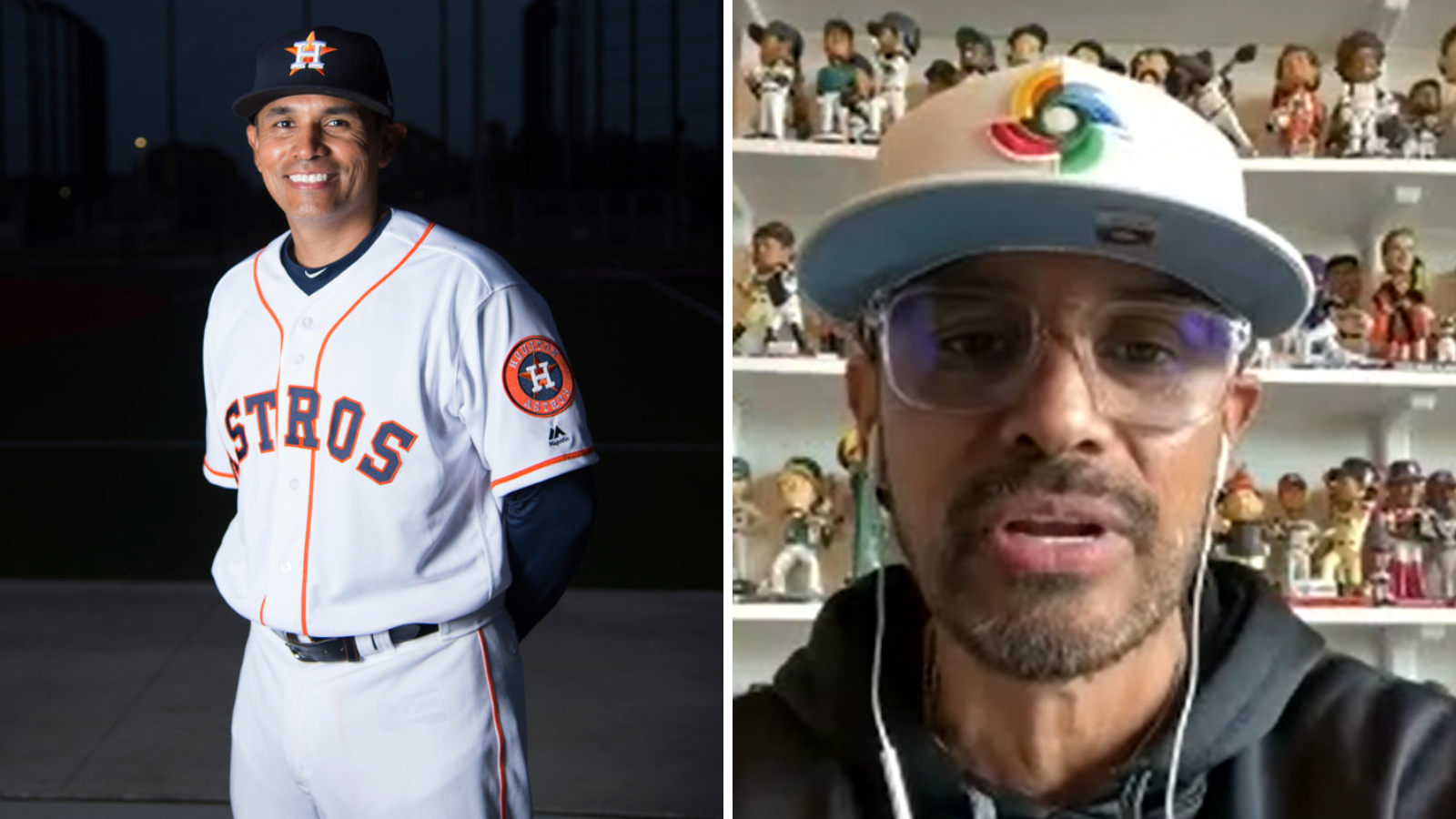
    Defensive Excellence Q&A: Carlos Muñoz, Catching Coach

    Carlos Muñoz is a native of Venezuela who moved to the states as a teenager and began his career as a Spanish-language TV anchor and then sportswriter in Houston. A career change netted him an opportunity with the Astros as an associate scout and then nine seasons as a bullpen catcher (even though Muñoz had only minimal collegiate catching experience).

    He’s since been an associate scout with the Reds and was the catching coach for Team USA at this year’s World Baseball Classic. Now, he works with catchers in the area as both a volunteer baseball coach and private instructor to kids ages 8-17. He works with up to 21 kids per week.

    We spoke to him as part of our series on coaching defensive excellence that began with four interviews last year and now two more this season. The interview has been edited for length and clarity. Thanks to Paul Carr of TruMedia Networks for the introduction.

    Mark: What does defensive excellence mean to you?

    Carlos: One thing I teach to my guys: You are a big wall behind the plate. If we have a situation where they have a runner on third base and we need to throw a breaking ball, like a low breaking ball to this batter, I trust you because we’ve been working on this. I’m not gonna worry about a passed ball or wild pitch because you’re gonna be keeping the ball in front of you and doing it for the team.

    Mark: How did you learn to be an excellent defensive catcher?

    Carlos: I caught three innings in college, in junior college. And it was because my junior college coach told me, ‘You know what, we’ve got somebody at second base, third base is covered. Why don’t you catch it today? And we’ll see what happens.’

    The leadoff guy for the other team got on base and he ran on me and then I remember catching the ball, transferring the ball, and throwing as hard as I could to second base. And I got this guy out by five feet.

    The second time I caught was when I was working with the Astros as a BP pitcher, shagging flies in the outfield, and the bullpen coach, Doug Brocail, said, ‘We need you in the bullpen.’ So, I was catching guys in the bullpen during BP. From that day on, everything started.

    Mark: What do you tell kids about the mental side of catching?

    Carlos: Well, first of all, I tell ’em, dude, you are my extra coach out there. I want you to call your game.

    Sometimes they look at me like, ‘What do I do here, coach?’ And I say, I don’t know. It’s up to you. Let’s go be smart. And then they look again after that pitch.

    I tell them that I want them to let me know when they notice their pitcher losing speed, like he’s getting fatigued. I want you to be their leader out there.

    I’m going to correct you throughout the game, but don’t take it personal. Be smart. Alright? Read tendencies from the batters.

    Mark: How do give a kid that’s eight years old, nine years old, that’s still kind of wondering if he should be doing this, the courage to squat behind the plate and take it?

    Carlos: Be involved in the game pitch by pitch and be vocal and have fun. Don’t show negative body language if an umpire calls a pitch a ball. Talk to your pitchers, talk to your infielders, talk to the outfielders.

    If you get hit, it’s part of the process. If you get hit and then you cry, it’s part of the process. If you get hit and then you get scared, pick another position. It’s part of the process. I love catching. That’s what I tell them every day.

    Mark: How do you teach blocking pitches?

    Carlos: I tell them to get on their knees, show me their target. As soon as the ball hits your chest, make sure you go after the ball. Don’t let the ball run away from you.

    I also tell him there’s no rules for blocking.

    You might get to the side, to the left or the right, and then you keep the ball in front of you and you think that was an ugly block. That’s fine as long as you keep the ball in front, that’s what really matters. Don’t try to do too much.

    Get there on time. Keep the ball in front. Don’t try to do too much.

    Mark: How do you teach receiving the ball?

    Carlos: Some guys, they show the target and then they show (the back of their hand), and then they drop the hand. I tell them that if they do that, they’re going to end up pushing away the outside pitch, turning a strike into a ball.

    I teach them to have a pre-pitch target and then drop the hand, relax your body, locate the pitch, and go from there. I tell them from the chest to the shoulders that they have 100% control of the pitch. But what I care about is from (the waist) to the ankles. Because when the pitcher throws a low pitch, they can catch the ball and bring it up in one move.

    Mark: How do you teach basestealing prevention?

    Carlos: I’m coaching an under-14 team now and this is what I tell them. It’s like a basketball pickup game. I tell the second baseman, shortstop, and first baseman to know that the runner is taking a big lead. The guy getting to second base because one of you dropped the ball on that – that’s not acceptable.

    The pitchers, they work hard during the week and when it comes to Friday and Saturday, they want to break the radar gun. They want to throw in the 80s. With a runner on first base, they say they’re going to screw the slide step. But you’ve got to go slide step and give your catcher an opportunity to throw.

    Mark: What are the most common mistakes that you see kids that you try to fix with all the things that I’ve asked about?

    Carlos: I will say it’s more consistency. We work on receiving and throws to the bases and even how we show the signs, because some catchers show signs with their knees wide open.

    We went through everything, he did everything perfectly, but in games, he forgot. But we’ve got to be patient and look for consistency in everything.

    Mark: Are there players who you show them video of – or they show video to you and say they want to be like them?

    Carlos: Yeah, they say I like the way Jose Trevino or J.T Realmuto catches. So, I tell them to go do bullpens, catch a real pitcher (as opposed to a pitching machine) and do what J.T. and Trevino are doing. Show me your target, load or relax your body, and then go from there.

    Mark: Do you have go-to drills?

    Carlos: I have an eight-pound little medicine ball that I have them do a 10-minute warmup with. After 8 minutes, some guys, they’re like, ‘Oh my god.’

    They catch the ball with two hands, and they do some full motion and footwork to second base, like six, seven reps. Okay, let’s do third base. Now let’s do first base. And then the last three, I want you to react to backpicking this guy on first base from your knees. And I put them in front of a brick wall and do the same thing. After 10 reps, they’re ready to go.

    Mark: Do you do that with 8-year-olds too?

    Carlos: Sure. I have this guy, he’s 10, he’s got some power, he’s got some real strength. So that a 2-pound ball for him.

    Mark: Is there anything you’re planning to work on with catchers more?

    Carlos: Some guys, they tend to frame strikes, like they catch the ball here (in the zone), a perfect pitch, and then they go from here (in the zone) to here (moving it away from the zone).

    I’m like, dude, didn’t you notice that was a perfect pitch from your pitcher? If the pitch is in front of your mask, leave it there.

    I’m trying to get more consistency. Consistency, because you can teach, you can spend 15 to 20 minutes on receiving or even more. And then these guys, they go back to the field, to the real action, and then they completely forget about it.

    So, I’m trying to get to how I can get guys to be more consistent on receiving. I show more videos on how big league guys are catching from pitch No. 1 to pitch No. 95 with the same receiving consistency.

    Mark: Is there anything else that you want to address?

    Carlos: For those catching coaches out there, just try to teach the consistency side of the game, just keep it simple.

    I have so many kids telling me that a catching coach told them to do this (like blocking and then sliding to the left or right). No, you’re doing too much. If you do that, the ball is going to bounce away. Keep it simple.

    Mark: You have a large knowledge base for someone who never caught.

    Carlos: It’s all about educating yourself if you want to be the best. If you see a catching coach on Twitter or Instagram and he’s in Alabama, ask him something. Don’t be afraid. Ask him why he’s doing what he’s doing in that drill. Ask in a nice way. Or ask what he recommends. You may know an answer, but maybe he gives you something different (you can follow Carlos on Twitter here and on Instagram here).

    This is the fifth interview in Mark Simon’s series on the teaching of defensive excellence in baseball.

    We’ve previously talked to Red Sox minor league infield coordinator Darren Fenster, Hawaii high school baseball coaching legend Dunn MuramaruNelson Cooper IV of the Pittsburgh Hardball Academy, and Loren Torres of Point Park University.

  • Q&A: Adam Everett Remember His Defensive Excellence & Pays It Forward

    Q&A: Adam Everett Remember His Defensive Excellence & Pays It Forward

    Former major league shortstop Adam Everett is a well-known and well-regarded figure in our world.

    Everett was ‘the other guy’ in an article Bill James wrote comparing Everett’s defense with Derek Jeter’s. That article helped lay the groundwork for our flagship metric in which Everett fared very well, Defensive Runs Saved. He was an inaugural winner of our Fielding Bible Award in 2006, though he never won a Gold Glove.

    Now retired, Everett is currently a minor league infield coordinator with the Phillies, helping coach the next generation of standout (and sometimes unheralded) defenders. We talked to him about how he played and how he teaches.

    Mark: What do you remember about how you played defense?

    Adam: I took a lot of pride in that I had a really good routine and I stuck to it. What motivated me was I didn’t wanna be embarrassed. So, I worked hard at it. There’s no secret I wasn’t the offensive player of some of the shortstops of my time in Jeter and ARod, Tejada, and Nomar but there’s one thing that I could do just a little bit better than them, and that was play defense.

    Mark: One of the things that the Jeter vs Everett article noted in particular was that you seemed to play a very deep shortstop, and I’m curious how you defined where you played and how positioning was important to you.

    Adam: So that was all part of my routine. Getting to know the field where I was playing at, whether it was at home in Houston, or whether it was on the road, say in Atlanta or Philly or whatnot, that the bases were always the same, but the cuts were different. Back in the day, you had to find your place on the field, and that’s what I did. So with all that being said, I like to play deeper for angles. I knew that I didn’t have the strongest arm, but I had a good arm.

    So I knew my limitations, but at the same time, it really doesn’t matter if I can’t get to that ball, I still can’t throw ’em out. But if I can get to it, I can still give myself a chance to throw ’em out. There’s this conception that you need to get around the ball, so you need to make this big, we call it the big banana turn and get around it and do that.

    I tried to make sure my angles were precise, that everything was where I needed to be, as opposed to, okay, so I’m gonna try and make this big looping circle to go to first base. I wanted to minimize my movements is the best way to put it.

    Mark: Were there any fields in particular that were challenging to play?

    Adam: Turner Field was challenging for me. I don’t know why. Playing in the Metrodome was extremely difficult because the seats were actually higher than the field. There were no actual field level seats. So it, I always felt like I was down in a bowl more so than you actually were. So it threw my depth perception off.

    Mark: What about Fenway?

    Adam: Fenway didn’t bother me. They used to make the front of home plate so soft and so wet. I actually played a half step in there, And one thing about U.S. Cellular is that the ball never goes foul. You roll it down the third base line, it stays fair, it doesn’t go foul.

    That was a Doug Mansolino trick. He taught me to check certain things, and that’s why I was pretty particular, I guess you could say.

    Mark: How much of the positioning that you did was on your own as opposed to being instructed from the dugout?

    Adam: I’d go over it every day. I’d go over the lineup every day. And the most important thing for me was, guys have their stats, their career stats, and they’re their career stats, and they’re gonna always be the same. But what I like to look at was what did he do the series before, the week before, possibly even 10 days to two weeks before we went to play them, or they came in to play us.

    What do most guys try to do when they’re not going? Well, back in the day it was, they tried to hit the ball the other way. In Albert Pujols’ prime, if he only got one or two hits the series before, I knew that coming into Houston, he was going to hit the ball the other way. You got to know little things like that.

    We’d go over the lineups every day and I’d want to know what we were doing in certain situations. What are we gonna do when we knock their pitcher out of the game. Who’s gonna pinch-hit. It was a little more in-depth than it is now. Because now they just say hey, here it is, go stand here. That took the instincts out of the game a little bit.

    I played with Roger Clemens later on in his career and he’d always tell me, ‘Hey, I don’t have it yet. I don’t have my velocity yet.’

    So play everybody a step to pull more so than you would. And he says, “I’ll turn around and let you know whenever I get it back.” and it would be the third inning and he would be 94 to 96, and I could move back to where normal was for whoever I was playing.

    I heard it the other day. I was just sitting around, heard a bunch of people talking. They were talking about football. And how in depth it is, and baseball it’s easy and there’s not much to it. And I was sitting there, I didn’t say anything. I just kind of let it go. But there’s way more to baseball than people think.

    What if Dansby Swanson’s hamstring is bothering him a little bit. He may not be running as well. Yep. So maybe I could play him a half step deeper. I could play him a half step one way or the other and take away a little bit more from him than he doesn’t already have.

    Mark: I was just watching some plays with an enhanced camera angle and the shortstops look a lot more impressive on plays. Does TV do justice to what playing shortstop is like?

    Adam: You’re gonna find out the guys that can really play shortstop this upcoming year. Some guys are gonna get exposed that don’t have that good first step. You’re gonna have to cover a little more ground. I like it that they’re taking [the shift] away, but at the same time, I hate the fact that they had to actually implement a rule where you take away the shift. That’s another conversation for another day.

    You’re gonna see a lot more teams that are gonna compete now because if they have that shortstop second baseman that can cover a little more ground. You can maybe move your third baseman off the line a little bit and maybe you can either pinch that hole or move your short stop to a little more straight up and you can cover that six hole. And if your shortstop has any type of range, you can kind of get that left side now without having to move guys all around.

    Mark: How aware were you of something like the Fielding Bible Award that you won?

    Adam: I knew I won, but it wasn’t that popular then.

    You look at the center fielder for San Diego [Trent Grisham]; won the Gold Glove and he hit under .200. That never happened back in my day. As a matter of fact, if you didn’t hit, or weren’t well known, you didn’t win a Gold Glove.

    So I think it’s fantastic that it’s finally people are getting the credit that they’re due and I love the fact that they’re showing how they can impact a game and how saving a run is just as impactful as sometimes driving in a runner too.

    So it’s pretty neat to see. I’m happy that they got it in the right direction.

    Mark: Were you bummed that you didn’t win a Gold Glove?

    Adam: Absolutely! I wanted to more than anything in the world. That was my goal every offseason. That’s why I trained for that. That’s the importance of playing every day.

    I’m bummed, but I’m not complaining at all. I had a great career.

    Mark: Do you have any special memories of great defensive plays?

    Adam: I’ve got a couple that come to mind immediately. The first one is the double play we turned in Game 4 of the 2005 NLCS. That was pretty spectacular. I actually thought he was going to first base and he threw it to me.

    And it was kind of one of those reactions like, oh goodness, here we go.

    And I think this one was in 2004. We were in Colorado, Clemens is on the mound and in the second or third inning, I let a ball go right between my legs.

    I can just feel him on my shoulder, like right behind me. And I don’t wanna turn around. I turn around, he’s standing at second base and he goes ‘Hey that’s alright. I got you. Let’s go right here.’

    The next batter was Matt Holliday. He hits a line drive up the middle. I dive and catch it. It sticks in my glove. We go to the dugout and Clemens is waiting for me. He won’t even cross the foul line until I get there, and I’m thinking he’s gonna be all over me. He goes ‘That’s what I’m talking about!’

    I don’t think I made another mistake behind him the rest of our time playing together. What made it memorable was the way he reacted and the way he picked me up right then.

    Mark: How do you teach defense?

    Adam: I love teaching. I love being around the guys. And I think what I do is I try to implement all of my experiences playing, all of my good and bad, and I try to implement that into molding them, but not trying to make them a clone of me or anybody else.

    One of my sayings is – you think you’re a big leaguer? They all do, of course. And we’re talking the young guys, and I’ll do this with the older guys as well, but the young guys particularly, I tell them, ‘Let’s go right to Yankee Stadium. We’re bottom of the ninth, winning, 3-2, two outs. Name a fast guy on the team. OK, what time of the year do you think it is?’ I say:

    ‘We’re in the playoffs now, it’s October. It’s a little cool right? And everybody’s running on the pitch. Okay. It’s been raining for the last three innings. It’s misty and it’s cold. You’ve gotta pick this ball up and throw it to first base.’

    They all kind of look at me with big eyes, and I say ‘That’s where I want to get you.’

    If I can get you to where you can pick that ball and I can turn my back and start shaking hands with the other coaches, that’s when we’ve got something.

    And they start to understand that there’s not secret sauce to playing infield. It takes work and it takes experience. It takes being out there and seeing balls and making mistakes, and then catching a ball that you weren’t, you didn’t even know you could get to, or you weren’t expecting to catch it. And you go, whoa, okay. That’s why we do what we do. And that’s what I love about it. I love seeing their reactions.

    They start to feel it, they start to understand it and then they really start to feel and grasp the game, almost the game within the game. And they start to play the game where they’re thinking along with the manager. They’re thinking along with the pitcher and catcher, and they’re starting to see things and read swings.

    Starting to think with the game, that’s what I really enjoy.

    Mark: How do you know whether someone is struggling in an area? Do they give you any sort of reports data-wise or is it just eye test kind of stuff?

    Adam: It’s both. They’ve got data on guys’ first steps. But there’s an eye test as well. You still gotta have somebody that can see it, understand it and explain it. And explain it in a way that they understand it.

    And you can show ’em the video and you can show ’em the stats and you can see certain things and they go, okay. Cause it’s just another tool, right? If you use it properly, everything’s a tool and it’s all can be used for good. And you go here, this is why you’re not getting to those balls.

    And then then you can explain the depths and you can explain that this is the reason why your range is last in the league. It just validates what you’re seeing.

    You can actually show it to ’em on paper or you can show it to ’em on film. And they start to grasp it and they go ‘Oh, okay. Now I’m understanding.’

    Mark: Is there an example from last season of working with a player and seeing improvement?

    Adam: Hao You Lee (a Taiwan native who played infield in A and High-A as a 19-year-old last season). The biggest thing with him was having him understand the importance of the pre-pitch setup and the importance of how you go after a ball. And he finally got it. That made my heart sing.

    Mark: Is there anything more you want to say about your current work?

    Adam: I love the game. I think it’s the best game on the planet. And take a lot of pride in what I do.

  • Defensive Excellence Q&A: Point Park University’s Loren Torres

    Defensive Excellence Q&A: Point Park University’s Loren Torres

    Loren Torres has been coaching college baseball for 25 years and will be entering his 13th season as head baseball coach at Point Park University in Pittsburgh, an NAIA school at which he’s won six conference championships and been to the national tournament four times. He’s won more than 500 games in all.

    Loren is a native of Puerto Rico and played baseball at Trinity International-South Florida. His teams have a geographic and ethnic diversity rarely seen in college baseball.

    Loren is the fourth interview in Mark Simon’s series on the teaching of defensive excellence in baseball.

    We’ve previously talked to Red Sox minor league infield coordinator Darren Fenster, Hawaii high school baseball coaching legend Dunn Muramaru and Nelson Cooper IV of the Pittsburgh Hardball Academy.

    Loren: Our team is a melting pot. It’s pretty special to see all that come together for the greater good of the team when you are able to put a uniform on and everyone think of the name on the front and you could bypass color and culture and where you’re from and everything else.

    Mark: How did that come about?

    Loren: I grew up in Puerto Rico and in the Caribbean; baseball’s a way of life. It’s like soccer in Europe. It’s in your DNA. I grew up there and have contacts there. I went to high school and college in south Florida, which is a very diverse area. And I got more creative in terms of my contacts. Coaching 25 years, those expand. I was going to Venezuela when it was safer to go there. And I made contacts in Panama and Canada. We’ve been fortunate to tap into our resources and have a diverse team.

    Those cultures come together for the greater good of the team.

    Mark: What does defensive excellence mean to you?

    Loren: Defensive excellence means that you’re not creating things like what you could consider a turnover in basketball or in football. We’re making sure that we’re making every routine play.

    We’re a unit and we’re generating synergy. We talk a lot about a synergy. Some people underestimate the power of synergy.

    Synergy is a law. When you have nine people playing defense that could play like there’s 15 out there and you have a dugout that’s involved in the game, and the whole thing is in sync. Then you could hold a team and give yourself an opportunity to win it on the offensive side.

    Mark: What’s an example of synergy in action?

    Loren: A ball is hit in the gap with a man on base and we have to do a double relay, and you’ve got the first baseman and third baseman moving and in the dugout, all the guys are saying “double relay!”

    They read it right off the bat because they’re involved in each other’s jobs. They know they’re in sync with everything that’s going on and they know to keep each other accountable.

    On that play a couple of years ago, we threw a guy out at the plate and won to go to the conference championship.

    Mark: Okay. So how do you go about teaching the defense?

    Loren: There’s a sense of community here, starting with the outfield.

    When we’re in practice, everyone’s lined up on the warning track and the outfielders are playing balls live. The outfielders are never waiting around. We maximize our time on the field.

    With ground balls, I’m a huge believer in repetition. A lot of people say quality over quantity, but the reality is that some people that say that are saying it because they don’t wanna do 300 ground balls.

    We mix the quality and the quantity and we’ll take 300 ground balls. That’s not an exaggeration.

    We have a structure. While we’re taking BP, we’re always working on something defensively. You have a coach who is a good leader, they’ll follow your lead. And if it means a lot to you, it’s gonna mean a lot to them. We talk a lot about being clean on defense and handling the baseball, playing at high level. But the preparation is where it comes from. When a routine grounder gets dropped at practice, we learn from it. We talk about concentration and making sure we’re giving it its due attention. It has to be every day. You can’t go through the motions.

    Everything we do is game speed.

    Mark: Do you have any specific drills or things that are unique to your program?

    Loren: We do tons of drills, but what’s unique to us is the amount of ground balls that we take. That’s the first thing that shocks players when they come here. We’re hitting ground balls, hitting ground balls, hitting ground balls.

    We do cone drills. Our feet are always moving. Good feet equal good hands. We have aggressive feet with soft hands. We want to cut off the distance between us and the baseball. Moving the feet forward is super important. With our outfielders, we always talk to them about keeping the double play in order [by getting the ball into second base on base hits].

    90% of what we do is mimicking something to what it looks like in a game.

    Mark: You have a diverse roster, with a lot of kids from Puerto Rico, Venezuela, and the Dominican. How were these kids coached before they got to you?

    Loren: In the Caribbean, it’s hit, throw fast, play games, no practice. When they get here, they don’t know what a bunt defense is. They don’t know what a first and third defense is. The pitchers don’t control the running game.

    We work individually with them and talk to them about some things, explain it, break it down, but it takes longer to learn those things like defensive mechanics. But they bring a certain fire that’s hard to find. It’s not a hobby for them. And when you get them to buy into the techniques and foundation, they become even better.

    That’s hard to find. Once you get them to buy into the technique and the foundation, then they become even better.

    We had a pitcher recently, Ruben Ramirez, who is now in the Royals organization. He didn’t pitch much the first two years. He threw 91 to 93 and couldn’t control the running game. He got better. He used to have a high leg kick and guys would steal on him a lot, and he’d get flustered if he gave up a hit. He got it all together his senior year and was NAIA Reliever of the Year.

    Mark: Do you have any examples like that for defense?

    Loren: They all come in pretty raw. We talk to them a lot about substance before style and that competitive strong comes before technique strong.

    Every guy has some transformation. We care about the person first and because of that, they begin the transformation process. They understand that you want them to succeed. Once they do, they buy in and do what we ask. Some guys take awhile, sometimes it takes a couple of years. Everyone goes at a different pace.

    Mark: If you could fix one thing about how young people are taught defense, like universally, what would it be?

    Loren: Not to stay back on the ball. It eliminates so much room for air when you’re moving your feet and cutting the distance. And if you bobble the ball, you’ve still got time to make the play. Staying back on the ball creates a window for mistakes.

    Mark: Is there anything else that you’d like to share?

    Loren: You have to be competitive strong before you’re technique strong,

    Mark: What’s competitive strong?

    Loren: Competitive strong is that when the bell rings, you have to go out there and use your instincts. The whole thing has to kick in. You have to go and compete and help the team win and all the practice should be automatic. We work hard in simulating so that when the game comes, we’re just competitive strong.

    We wanna have fun. We want the best parts of the day to be practice and to be games. They’ve got to be enjoying what they’re doing and be confident. Without confidence, they aren’t going to reach their potential. So we want them to be competitive strong before technique strong.

  • Defensive Excellence Interviews: Nelson Cooper IV, Pittsburgh Hardball Academy

    Defensive Excellence Interviews: Nelson Cooper IV, Pittsburgh Hardball Academy

    Photo of Pittsburgh Hardball Academy infielder Brandon McClain-Banks, who is one of the program’s success stories, courtesy of Nelson Cooper IV

    This is the 3rd in a series of interviews with people who teach defensive excellence. Our previous talks were with Hawaiian high school coaching legend Dunn Muramaru and Red Sox minor league infield coordinator Darren Fenster (click on the name to read the interview).

    Nelson Cooper IV is the executive director and co-founder of Pittsburgh Hardball Academy, an organization whose goal is to remove barriers to entry while increasing diversity, equity & inclusion in baseball and softball to create positive outcomes on the field, in the community, and in life. The emphasis is on working with underserved and underrepresented kids.

    Nelson played college baseball at North Carolina Central and is a volunteer assistant coach at Division II California University (Pa.).

    Mark: Let’s start with this: What does defensive excellence mean to you?

    Nelson: The easiest way to describe defensive excellence is the ability to consistently create efficient movements that allow players to catch and throw the ball correctly. Pretty simply, we teach our kids the importance of taking every rep.

    On the field, whether it’s practice, whether it’s in the game, whatever they’re doing, we’re making sure that they’re taking efficient routes to the balls, being very efficient in their movements, and most importantly, being able to catch it and throw correctly.

    It seems pretty simple, but we tell them before when we’re warming up and when we get loose  that if we’re able to catch and throw the ball correctly in warmups, then we can translate that over to practice and then we can translate over to the games.

    Mark: What was your origin story with defense?

    Nelson: I started playing baseball when I was probably eight or nine. My mother and father met playing on my grandmother’s softball team. My mother played baseball in high school and then went on to play softball beyond high school and college. She made her high school baseball team as a middle infielder but got voted off the team by the other kids. She was a pioneer in Washington for girls in baseball. She moved to softball.

    My mom was my first coach. My mom and my grandma. My defense story started in the backyard with them hitting ground balls and throwing the ball to me.

    I’d say the most impactful defensive work and things that I’ve learned that we try to implement a lot in our program came from my time in college at North Carolina Central. We had some really good drills and really defensive work that we did during practice.

    Mark: What are the things that you’re drilling into kids?

    Nelson: The first thing we do is really making sure that the kids understand the importance of each rep that they’re taking. We prefer for them to take high-level reps, fewer high-level reps than a massive amount of reps.

    When we step on the field, we have all of our players line their gloves up on the line. Not because that means anything in terms of defensive excellence. However, I do think it means something in terms of discipline.

    And we drill this to our kids: Take those reps when you’re warming up and instead of just kind of tossing aimlessly, really practice to make sure you’re throwing accurately with proper mechanics.

    About Pittsburgh Hardball Academy

    * Founded in 2020 by Nelson Cooper IV and Brian Jacobson
    * Program run primarily by volunteer coaches
    * Created to make high-level baseball more accessible to low-income families
    * Alumni are playing at junior colleges, NAIA, and NCAA schools

    Then, as the receiver of the ball, we have them implementing some sort of athletic game-like movement into their throwing routine. So if one player is  throwing and just getting loose, that guy catching a ball or receiving the ball can move their feet like they’re taking a relay and throw through, or they can catch the ball and put a tag down.

    We make sure every time we throw a ball on the field, it’s thrown with intent. That’s a big word in our program. We want them to make sure that there’s intent in all of their actions, even from starting our warmups.

    We do drill work every day. So if it’s a pick series, if it’s just fielding the ball, getting to a proper throwing position to ensure that kids have their weight properly distributed after they field the ball, if it’s funneling the ball, if it’s throwing overheads to outfielders, making sure they’re taking proper routes, catching the ball, shuffling their feet, all those different things.

    The one thing that we always like to end with after doing regimented drill work or  regimented positional work is some fun aspect of the defensive practice.

    One thing that’s been very successful for us, and I think the kids really like it, is trying to have 5-10 minutes at the end of all of that drill practice to make highlight plays or Web Gems.

    So we’ll hit balls that are either unreachable or very difficult, encourage the kids to lay out for a ball or to try something new to field it. We try to make the highlight plays more routine. So the more that you’re able to make those highlight plays in practice, the more when those unexpected situations come in the game that it becomes a routine play for the players.

    Baseball can be. challenging and very mentally draining. But if you give them the space to have a little bit of fun in the game, I think they can really grow and become great defenders. We tell our kids that if they limit their mistakes in high school, they’re gonna win games.

    Mark: What are the things that the younger players have the hardest time picking up?

    Nelson: Sometimes we have kids that are starting at 15 or 16 years old that haven’t had the skill or the development training from a very young age.

    They’re going from more of a recreational background into a travel organization. It’s a kind of a jump for them. I think the biggest thing some kids struggle with is knowing the pace of the game.

    You don’t have to be super quick to make plays. You don’t have to go very fast. You just need to be efficient in your movement.

    So you don’t have to sprint out the ball and run through it and make a throw on the run every time. But you have to be able to read the ball, read the runner, and know how to stay under control and move as quickly as you can within the constraints of your body.

    So if you’re super athletic, maybe you can move a little bit quicker than someone who’s not. But being able to utilize your body as efficient as possible, doesn’t mean you have to always go as fast as possible. But that also doesn’t mean you want to go very slow and methodical.

    So I think it’s difficult for kids to understand that, particularly coming from the background that they are. We try to work through those things, and we tell them over and over that you want to work quickly. You want to be able to attack the ball, get into good positions, but you need to stay under control, have some body control and make sure you control your movements on the field,

    Mark: Is that a hard thing to teach given that a lot of these kids are still going through physical growth?

    Nelson: Oh yeah. It’s way easier for me to say that than it is for them to actually execute it.

    We’ve had some kids now that we started with that started at 13, now they’re 17, 18, and you can see over time, consistent messaging, consistent practice allows those kids to be able to develop those skills.

    I think that’s the hardest thing with baseball compared to some of the other sports. You have to be able to rein in your athleticism at times and be able to use it in controlled movements.

    Mark: Are there any things that have happened recently that articulate good lessons in defensive excellence?

    Nelson: I’ll give you a good example of blending the two things that we that we were just talking about, the reining in the athleticism part.

    One just happened about a week ago. We have a 13-year-old-kid and the first time I saw him field, I was like ‘This kid’s gonna be special.’

    He had the natural ability to chop his feet to slow down to field the ground ball while still moving through it and putting his feet in good position. There’s a ground ball hit to him and he bobbled the ball.

    We usually teach our kids that if they bobble the ball to pick it up and do a full-arm fake to see if they could try to get another runner out. If you full-arm fake, you might be able to catch a runner off guard.

    Well, this very athletic kid bobbled the ball, picked it up and just immediately went into like a Derek Jeter jump throw across the infield with the batter almost at first base.

    He made a throw that was right on the money. Maybe it wasn’t the best decision to make the throw, so a learning moment for him, but a learning moment for us as coaches, as I would never have known that the kid could make that play if he didn’t make it in practice.

    I think that’s one thing that we can learn from coaching: Let them be athletic to a certain extent and see what they can do, but obviously try to rein in and put it in the most efficient package as possible.

    Mark: If you could fix something about what kids are taught with regards to playing defense, what would that be?

    Nelson: I would have kids be more aggressive defensively at a younger age. A lot of times, particularly in the outfield, you see kids run up to the ball and they just let it drop at their feet instead of leaving their feet to try to slide and make a catch. And I think it comes from the shock of maybe a time when they dove for it and it got past them and went to the fence.

    Kids are definitely gonna make errors. Pros, make errors, everybody makes errors. But there should be a space for kids to really understand that they can still be aggressive to the ball. Teach that from a young age, that even if you make that mistake, you still have to stay aggressive because the only way to really consistently make outs is to be aggressive to the ball.

    Mark: What about the idea of letting athletes be athletes?

    Nelson: You can’t just let kids run wild on the field. But I think you should make space to allow those higher-level players or those more athletic players to try to make great plays when necessary. If that ball is way up the middle and the only way you can make that plays to lay out or to dive or try to pick through it or do something, great, do it. However, on routine balls, let’s just make the routine play.

    And I’ve always said, you don’t need to be flashy. The flashiest thing to a scout or to a coach is a high fielding percentage.

    And then once we’re able to conquer or master the easy, then we can move on to the next thing.

    Mark: How are you doing and how are the kids doing for resources?

    Nelson: We always we always are looking for additional resources. I think we’ve been able to develop some pretty high-level infielders. A lot of that is because of the public parks we use in Pittsburgh, where we’re grateful to be able to permit the fields.

    But some of the kids don’t have a choice: either catch the ball or get hit by it. You can’t move out of the way of a ground ball because a coach will yell at you. So you better figure out a way to catch it.

    I think field access and field quality builds a little bit of character for our kids and the character of our program.

    We’re a non-profit organization. Brian Jacobson and I started this organization a few years ago to give more access and opportunity to kids who otherwise may not have had it, particularly underserved kids.

    Our kids are highly diverse with a majority being African American.. African Americans are severely underrepresented in baseball.

    We’ve also had situations from parents who reached out and said ‘We have financial resources and we’re willing to help the organization. We want our kids to grow up in a diverse environment with diverse friends.’ And that has been a blessing for our organizations.

    Our program is pretty much Brian and I, and primarily run by volunteer coaches. We’re able to work with more than 100 kids a year through this program.

    We’re always looking to partner with other organizations, always looking for donations, either financial or equipment, or sponsorships as well for our organization to help, continue to grow and be able to impact kids in the greater Pittsburgh region.

    Since starting the program in 2020, we’ve had more than 25 kids have the opportunity to continue their academic and athletic careers at the collegiate level. So it’s a really neat program and we’re always looking for people or organizations that can help us grow our mission

    To learn more about Pittsburgh Hardball Academy, visit PittsburghHardball.org. Portions of this interview have been edited for clarity and length.