
Category: NPB

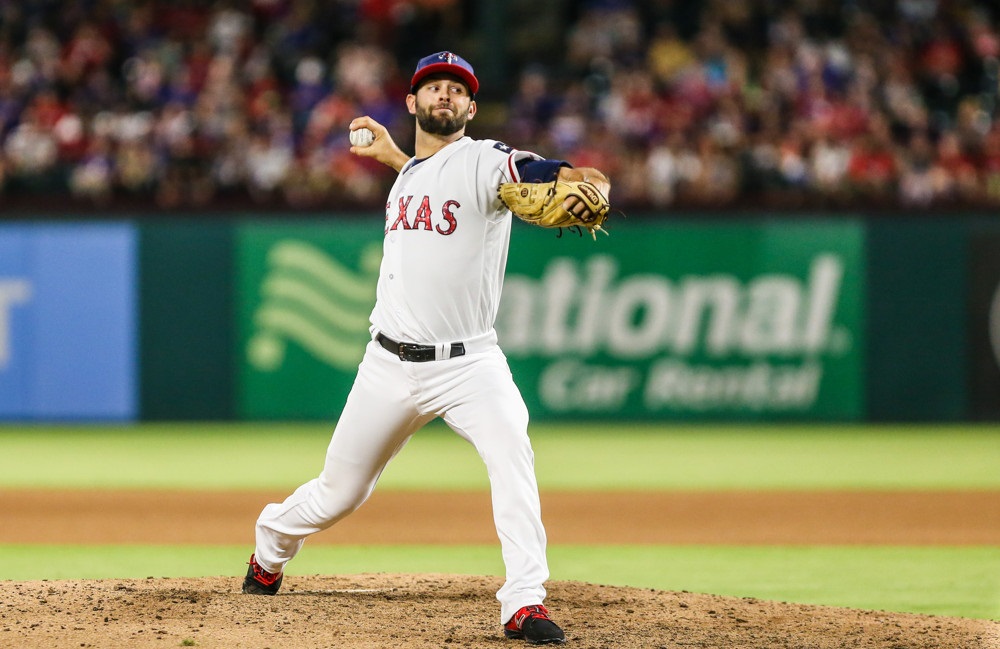
  • Nick Martinez makes his way to the Padres

    Nick Martinez makes his way to the Padres

    Just before MLB implemented a freeze on all transactions, news broke that Nick Martinez was on the verge of signing a four-year, $20 million contract with the Padres. Fans may remember Martinez from his days as a back-end starter for the Rangers from 2014-2017. Over those four years, Martinez went 17-30 with a 4.77 ERA and averaged 5.1 K/9 against 3.2 BB/9.

    After spending four years in Japan, what adjustments did Martinez make to earn such a contract? Let’s start by taking a look at his stats from his stint in Japan:

    Season Team Innings W-L ERA WHIP BB/9 K/9
    2018 Nippon-Ham 161 2/3 10-11 3.51 1.29 2.2 5.2
    2020 Nippon-Ham 76 2-7 4.62 1.53 4.7 7.8
    2021 SoftBank 140 2/3 9-4 1.60 1.04 2.4 8.8

    Nick Martinez, an overview:

    Martinez missed roughly a season and a half from 2019 into 2020 after suffering a forearm strain. He also had two Injured List assignments in his brief MLB career, so he has a bit of an injury history to beware of.

    Martinez’s biggest strength as a MLB pitcher was his ability to throw strikes. He kept that up in Japan, with the exception of 2020. While he does throw strikes, Martinez is more of a control pitcher than a command pitcher. He does a good job of leaving pitches out of the middle of the zone, but hitters can expect pitches in or near the zone. Due to this, Martinez is dependent on his defense to help him out on balls in play.

    Martinez also increased his strikeout rate while in Japan. In 2018, his 14% strikeout rate matched his MLB best from 2015 and 2017, but by 2021 he had nearly doubled it to 25%.

    Martinez was never known for working deep into games as a Ranger, but he was a workhorse when on the mound in 2021. He pitched at least 6 innings in 20 of his 21 starts. He could have added more innings to his 2021 total, but was delayed entering the country by Japan’s immigration policies. He didn’t make his season debut until May 1.

    How has he improved?

    There are two factors that have led to Martinez’s improvement, with the first being increased velocity. In 2015 Martinez averaged 90 MPH on his fastball, and increased that to 92 MPH over the next two seasons. While we don’t currently track pitch data from NPB, a look at some footage shows that Martinez was typically sitting around 94 MPH with his fastball in 2021.

    How he has done this is not immediately clear, but it could be related to his injury rehab. Since Martinez missed a full season with a forearm injury, the rehab process likely involved a focus on strengthening different muscle groups in his body. This buildup of muscle strength (and possibly also an alteration in mechanics to use his whole body in his delivery) would lead to increased velocity. (Shoutout to my wife, Autumn, who was able to go into much more detail than I could comprehend on the subject).

    The added velocity may also have given him the confidence to throw the pitch up in the zone with more regularity. As recently as 2016, Martinez was a contact pitcher who threw more two-seam fastballs than four-seams. With the added velocity, he throws more four-seam fastballs, with many at the top of the zone (and above).

    The second factor that has led to Martinez’s resurgence is his improved changeup. In his last MLB season the changeup was the least-used pitch in his repertoire (12% usage), and it averaged 86 MPH. Martinez’s changeup was not impressive when he pitched in Texas, but he appears to have changed his grip since he was last in the Majors. He now throws the pitch with a vulcan grip, with the ball between his middle and ring fingers and with those fingers spread farther apart.

    This change gives his changeup an average velocity of 81 or 82 MPH. Combined with his improved fastball velocity, Martinez now has double the speed differential between his fastball and changeup from when he was last in MLB, and that combination was much more effective in NPB.

    Since Martinez has improved his changeup, he has also increased his usage of it. He throws it as his main secondary pitch to both left handed and right handed hitters, and gets many early, ugly swings on hitters expecting fastballs.

    What to expect:

    Since Nick Martinez last pitched in MLB, he has added velocity to his fastball and improved his changeup. Combined with his cutter and curveball, he has something that resembles a traditional starter’s repertoire.

    One comparable pitcher could be Chris Flexen, who jumped from the KBO to Seattle last year, posting a 3.61 ERA (4.30 FIP) in 179 ⅔  innings in 2021. Like Martinez, Flexen limits walks and does not post gaudy strikeout totals.

    A change in home park might help Martinez too, as the Ballpark in Arlington was a hitter’s paradise, while Petco Park is more pitcher friendly. Martinez has allowed 1.5 HR/9 in his MLB career, though that number was over 2.0 if you just look at 2016 and 2017. 

    By our assessment, with improved pitches and a more-friendly home field to pitch in, Martinez could settle in as a reliable back-end starter for the Padres in 2022.
  • KBO Scouting Report: Aríel Miranda

    KBO Scouting Report: Aríel Miranda

    By TED BAARDA

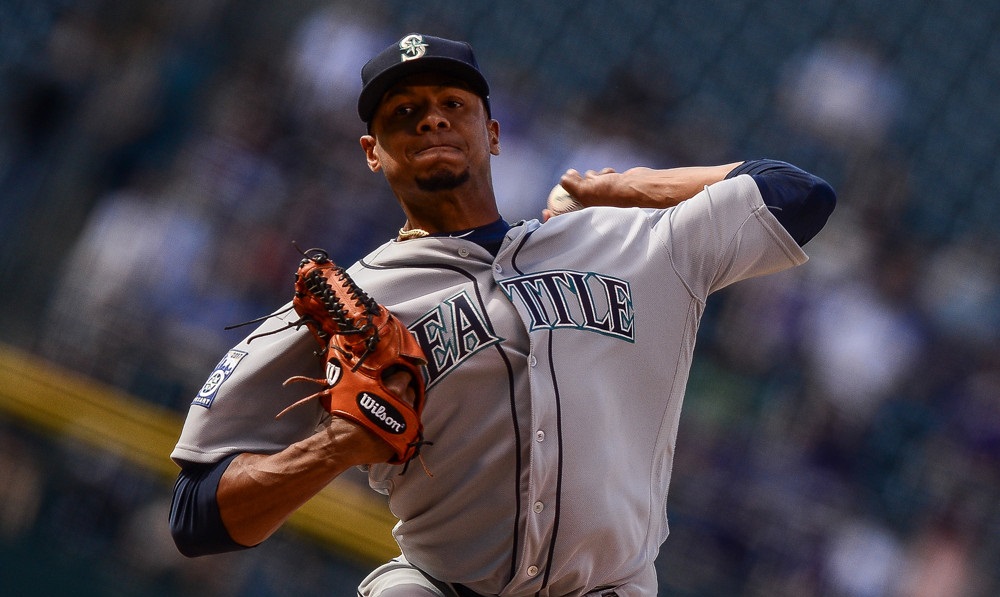
    In 2021 the KBO’s Doosan Bears signed Aríel Miranda and Walker Lockett to front their rotation, and once again they found the right pitchers to lead their staff. Lockett battled some injuries but still managed a 2.98 ERA in 124 innings.

    However the star of the pitching staff was the 32-year-old Miranda, who broke the league’s single-season strikeout record. I’m wondering if (even at his age) he could be in line for a return to the major leagues.

    No team has been better recently at identifying and acquiring top foreign pitchers in the KBO than the Doosan Bears. In 2019 Josh Lindblom won the league’s MVP award before leaving for Milwaukee on a three-year deal. In 2020, Raul Alcantara won the Choi Dong-won award, given to the league’s top pitcher, and Chris Flexen earned a two-year contract with the Seattle Mariners.

    Here’s Miranda’s stat line the last 5 seasons.

    Year League W-L ERA

    Innings

    K/9 BB/9
    2017 MLB 8-7 5.12 160 7.7 3.5
    2018 NPB 6-1 1.89 47 2/3 7.6 5.1
    2019 NPB 7-5 4.19 86 6.1 5.0
    2020 CPBL 10-8 3.80 156 1/3 9.8 3.5
    2021 KBO 14-5 2.33 173 2/3 11.7 3.3


    Miranda’s path

    A Cuban-born left hander, Miranda played seven seasons in Cuba before signing with the Orioles. He spent 2015 in their minor league system and, after a brief MLB debut with Baltimore, was sent to the Mariners during the 2016 season. He spent the whole 2017 season with the Mariners, primarily as a starter and posted a 5.12 ERA.

    In 2018, Miranda embarked on what turned out to be an adventure through the top Asian baseball leagues, pitching in NPB, the Chines Professional Baseball League in Taiwan, and now the KBO. 

    What Miranda throws

    What fueled his breakout in 2021? It looks like Miranda adjusted his approach and focused more on his strengths, as 86% of his pitches thrown this year were fastballs or splitters, his two best pitches. 

    That was up eight percentage points from 2017. That year, he threw his changeup more than twice as often as he threw it at this past season.


    Pitch Type 2021 Usage 2021 AVG Velocity
    Fastball 61% 91 MPH
    Splitter 26% 80 MPH
    Slider 7% 82 MPH
    Changeup 7% 82 MPH


    Miranda throws a lot of fastballs because it’s the pitch he controls best. He threw it for a strike 69% of the time, and started 67% of at-bats with a fastball so he could get ahead of hitters. At 91 MPH on average, it is not a blazing fastball, but for a left handed starter it has acceptable velocity and he locates it well.

    The splitter is Miranda’s best pitch. Of his KBO record 225 strikeouts, 139 came on the splitter. Only eight other pitchers in the KBO had more than 139 strikeouts in total. His splitter gets good downward break on it, and will run away from right handed hitters, or in on lefties. At times its movement will resemble that of a screwball. Despite it being a primary pitch of his, Miranda’s splitter still got hitters to whiff on 46% of their swings. It was his go-to pitch with two strikes.

    Even when hitters did make contact with his splitter, they could not do much with it. Opposing hitters managed a .127/.179/.172 line against his splitter with a 11% hard hit rate. Results-wise, Miranda’s splitter was to the KBO what Kevin Gausman’s was in MLB (opponents hit .139 with a 14% hard-hit rate against one of the top pitches in the game).

    While his splitter is the star of his repertoire, it does not come without concerns. Due to the nature of its grip, the splitter tends to be a harder pitch to control than most others, and that is definitely the case with Miranda. His splitter control can come and go, which can make him depend more on his weaker pitches on days where he can’t locate the splitter. 

    While splitters tend to be a pitch that pitchers want to throw low and have batters swing over, Miranda actually threw a lot of his up in the zone. 30% of his strikeouts on the splitter were strikeouts looking, and many of those were belt-high that hitters gave up on and watched fall into the top of the zone. He only gave up 2 HR with the splitter all season but against stronger competition the volume of splitters left up in the strike zone could be a problem.

    As for his other pitches, Miranda’s changeup would normally be considered fairly unimpressive. It does not feature much drop or fade and rides relatively flat. That doesn’t sound like a good thing, until you consider how it plays off his two main pitches. The changeup has similar movement to his fastball, but is 9 MPH slower, so if a hitter is looking for a fastball, he will be ahead of the changeup. If the hitter is looking for a splitter, he will be under the changeup since the splitter has much more downward break.

    Comparable #1 – Tyler Clippard

    A good example of a pitcher who can play these pitches off each other like this is veteran reliever Tyler Clippard, though Clippard’s changeup features more movement than Miranda’s.

    Miranda managed a 61% whiff rate on swings against his changeup, but that is mostly a product of him using it sparingly and catching hitters by surprise. He cut his changeup usage dramatically, from 16% in 2017 to 7% in 2021, and throws it exclusively to right handed hitters.

    Miranda’s slider is also a pedestrian offering, but it is the only pitch he has that runs away from left handed hitters. Used as his third pitch against lefties, it gives hitters a different look in an at-bat. He also would occasionally throw it to run in against right handed hitters.

    Injury Concerns

    Miranda missed his club’s first two post-season series with shoulder fatigue, though he did return in time to start Game 3 of the Korean Series. While the results were there (5 IP, 1 ER, 6 K), Miranda’s fastball was lacking its customary zip. He was sitting around 89 MPH for most of the game, though he was able to reach back for 92-93 occasionally.

    Given his command and health concerns, he may fit better on a MLB team as a reliever than as a starter. He will also turn 33 in January, so if a team wants him to start, it needs to be confident he can step into that role immediately, as he doesn’t have time on his side to work through issues as a longer-term project.

    Comparable #2 – Héctor Neris

    Teams now are prioritizing diversity in their bullpens, trying to vary handedness, release points and pitch mixes among their relievers. This works in Miranda’s favor as very few left handed pitchers throw splitters, and even fewer feature a splitter and a changeup. A good relief comp to Miranda might be a left handed version of Héctor Neris of the Phillies, who relies on his splitter but can struggle with command at times.

    After the season he just had, Miranda would be welcomed back to the KBO by any team, but he could be looking at some MLB offers for 2022. What role teams will consider him for might still be up in the air. But keep an eye out for where he could land.