Category: Basketball

  • Potential Assists And Cade Cunningham’s Overall Excellence

    Potential Assists And Cade Cunningham’s Overall Excellence

    Every great modern offense needs an engine. In today’s NBA, potential assists can provide clarification on who’s driving their team’s machine and how effective they actually are.

    Assists are recorded. Points are counted. But one thing that people can overlook is the opportunity that never converts. That is where potential assists can help portray the whole picture.

    Potential assists measure the number of times a pass directly leads to a shot attempt, regardless of whether the shot actually went in. While traditional assist numbers rely on teammates shot-making, potential assists isolate playmaking volume and opportunity creation.

    Note: When we say “assist” in this article, we are using stats based on our tracking and not the NBA’s official assists totals

    The following table looks at the current NBA leaders in potential assists per game.


    Volume Creators: The Engine of Modern Offense  

    NBA Leaders in Potential Assists Per Game

    Player Potential APG APG/

    Missed APG

    FG%

    Off Pass

    Cade Cunningham 19.5 11/8.5 56%
    Ja Morant 16.9 8.8/8.1 52%
    Josh Giddey 16.6 9.1/7.5 54%
    Nikola Jokic 16.4 9.7/6.7 59%
    Luka Doncic 16 9.5/6.5 59%

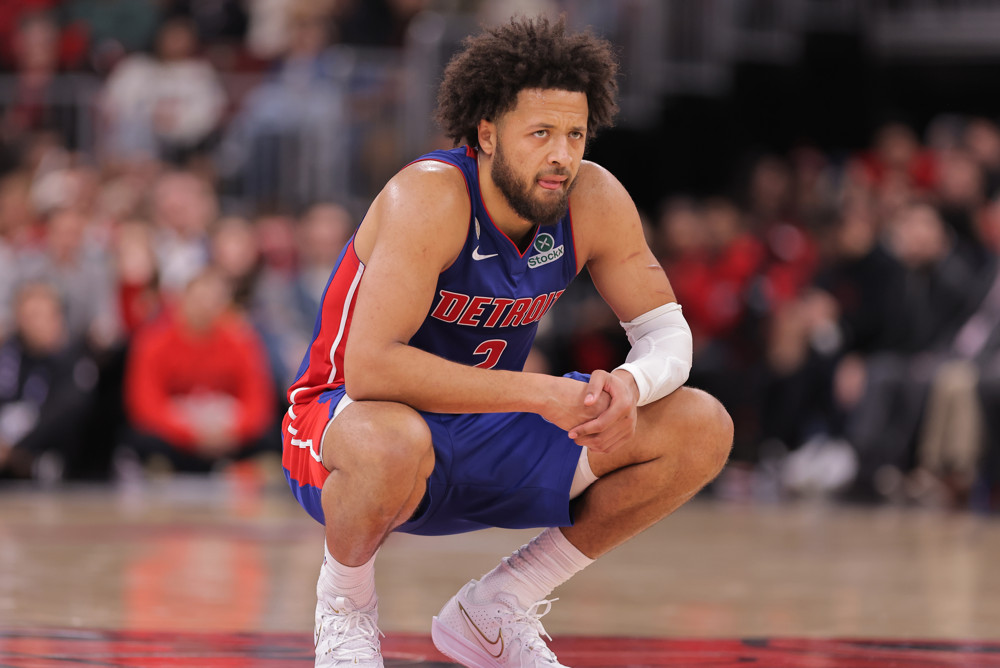
    Cade Cunningham leads all NBA players by a wide margin at 19.5 potential assists per game which is a massive creation workload. Most fans see 11 assists per game and don’t even realize that 8.5 potential assists are left on the table every single game. The Pistons jump to 1st in the East this year certainly makes more sense after seeing these statistics. 

    Not only does Cade lead the league in potential assists but he does it while maintaining a high FG% off of his passes. The Pistons have found a formula to win and that formula seems to revolve around giving the ball to Cade and letting him create opportunities for himself and the rest of the team.

    The most interesting thing about this list is the FG% off passes. The clear story of this chart is just how efficient their teammates are off of their chances created. Although Nikola Jokic and Luka Doncic are 4th and 5th respectively in this table, they are both at the top in terms of efficiency.

    This elite group of distributors are putting their teammates in position to score and they are delivering. The NBA average FG% is just below 47% so it shows just how impactful this group is when setting up their teammates in advantageous positions.

    When the Shot Doesn’t Fall

    Since we have established that potential assists measure opportunity creation, FG% can be used to establish how advantageous the chances are that the passer creates, as well as his teammates’ ability to hit shots.

    This table looks at which players should be averaging more assists based on FG% off of their pass.

    Player Lowest FG% Off pass Potential APG  APG
    Egor Demin 43.8 8 3.5
    Shaedon Sharpe 43.9 6.6 2.9
    Anfernee Simons 45 6 2.7
    Trey Murphy III 45.3 8.6 3.9
    Zach Lavine 45.5 5.5 2.5

    >> Min 5 Potential Assists Per Game

    These numbers actually reveal something important. Not all assisted opportunities are equal. From what we saw in the table before, it actually highlights just how impressive and difficult it is to be an elite passer with high volume.

    There are also a few interesting correlations that are presented here. All these players are on teams that are below .500 win percentage. The only exception is Simons who played the majority of his games for Boston before being traded to Chicago. Also, most of these players, if not all of them, are considered scorers that are looking for their own shot so it is interesting to see that player archetype dominate this list.

    Outlier Performances: When Opportunity Explodes

    Single game potential assist explosions show how dramatically offensive ecosystems can shift on any given night. 

    Most Potential Assists in Game – This Season

    Player Potential Assists Assists/

    Assists Missed

    I. Collier vs ATL 38 14/24<<
    C.Cunningham vs UTA 37 19/18
    I. Collier vs IND 33 20/13
    D. Booker vs UTA 32 18/14
    L. Doncic vs UTA 32 17/15

    >> Jazz shot 37% off Collier’s passes

    One thing that jumps out right away is that all of these games were against the Jazz and the other 2 were by Isaiah Collier who plays for the Jazz. Even though the Jazz give up the most PPG in the NBA at 125.9 per game, it is still surprising to see every single one of these players in one of those games. The pace of play is obviously very high in these games and the Jazz seem to give the opponent’s offensive initiator a lot of freedom to create.

    Collier’s ridiculous 38 ‘potential assist’ game resulted in only 14 assists. Using the word “only” may seem surprising given the 14 assists number but it occurred with a FG% of 36.8%. In a later outing, he recorded 20 assists with fewer potential assists.

    Same player but with vastly different results. The difference between those performances? Creating open shots for his teammates and their ability to make those chances count.

    This underscores a key truth about assists: They rely on pass creation but most importantly, shot making. Assists are not just simply a personal statistic.

  • How Zach Edey Makes A Massive Difference For The Grizzlies

    How Zach Edey Makes A Massive Difference For The Grizzlies

    At Purdue, Zach Edey collected nicknames that spoke to his size and dominance—“The Big Maple,” “Shaq Edey”—but the broader question surrounding his NBA future remained. When the Memphis Grizzlies selected him in the lottery following back-to-back National Player of the Year campaigns, the debate wasn’t about production. It was about translation. 

    In an NBA increasingly defined by pace, space, and defensive versatility, would Edey’s throwback skillset translate to winning basketball games? Fortunately for Memphis, early returns from Edey’s rookie and abbreviated sophomore seasons suggest those concerns may be overstated.

    Improvement from year 1 to 2

    Although his sophomore season has been limited by injuries to 10 full games so far (excluding an 11th game limited to 6 minutes due to a migraine), Edey has demonstrated significant improvement. His per game averages have increased from 9 points and 8 rebounds per game to around 15 points and 12 rebounds per game, while playing about 6 extra minutes. He’s also upped his blocked shots to better than 2 per game. 

    Using data collected by our team of Data Scouts, we can see that Edey has improved on both the offensive and defensive sides of the ball.

    Season FGA  True Shooting% Effective FG%+
    2024-2025 12.8 62.3% -2.3
    2025-2026 15 65.8% 2.1

    *data shown per 100 possessions


    Edey’s role in the offense has grown substantially. He’s taking more shots and scoring with improved efficiency. Net effective field goal percentage measures the difference between a player’s actual versus expected field goal percentage in the context of shot selection. Last year Edey was shooting less efficiently than expected, but this year he is converting at a positive rate.


    Season Defensive FG % Minus Contests* BLK 

    Percentile

    Fouls*
    2024-2025 42% 3.8 92 1.6
    2025-2026 34% 1.4 93 0.5

    *data shown per 100 possessions

    His defensive improvement is arguably even more impressive. This year, opponents are only shooting 34% against Edey as the primary defender, placing him in the 84th percentile of all players, compared to 42% last year in the 34th percentile. Despite playing more, Edey also remains an elite shot blocker while registering poor shot contests and fouls at a lower rate.

    Edey is Memphis’ best center

    Without Edey, Memphis has primarily relied on Jaren Jackson Jr. as its starting center with Jock Landale and Santi Aldama as the backups. So far this season, Edey outpaces them all.

    2025-2026 Points Per Chance PPC 

    Percentile

    Defensive 

    FG %

    BLK 

    Percentile

    Zach Edey 1.12 80 34 93
    Jaren Jackson Jr. 1.02 37 34.8 87
    Jock Landale 1.07 60 41.9 36
    Santi Aldama 1.11 75 39.4 50

    *data shown per 100 possessions

    Within the SIS framework, Points Per Chance (PPC) is defined as points scored per opportunity that leads to a result in the same offensive sequence. Offensive sequences involving Edey are scoring at 1.12 PPC this season, which ranks him in the 80th percentile of all players. Landale and Aldama are both above average in the 60th and 75th percentile respectively, while Jackson is below average in the 37th percentile. 

    Defensively Jackson may be an excellent defender, but Edey still holds a slight edge as a post defender and shot blocker. While Aldama is an average defender, both he and Landale measure far below Edey in our defensive metrics. 

    What is Edey’s impact on the court

    There’s no denying that Edey’s individual stats have improved and compare favorably to Memphis’ other centers, but the real question is whether Edey’s presence on the floor leads to wins.

    2025-2026 Off Rating Def Rating Offensive Advantages Created+* Defensive Advantages Prevented+*
    Edey On Court 115.9 (16th) 99.3 (1st) 2.04 (18th) 1 (2nd)
    Edey Off Court 113.6 (22nd) 119.1 (26th) 1.88 (23rd) 0.68 (25th)

    *data shown per 100 possessions, estimated league rank in ()


    Offensive and defensive ratings are defined as points scored or allowed per 100 possessions. With Edey off the court, Memphis has an offensive rating of 113.6 which would rank 22nd in the NBA. When on the court, the Grizzlies have a modest improvement to 115.9, which would rank 16th. 

    Defensively, the contrast is eye-popping. With Edey on the court to anchor Memphis’ interior defense, the Grizzlies have a defensive rating of 99.3, outperforming the current league-leading Thunder at 106.1. When off the floor, their defensive rating plummets to 119.1, which would rank 26th. 

    This means that the Grizzlies net efficiency this season improves by a whopping 22.1 points per 100 possessions with Edey in the game!

    At SIS, the foundation of basketball data collection is advantage creation, maintenance and prevention. In other words, what do players do on the court to create and prevent high value shots? SIS Data Scouts tag four different advantage levels, and define a big swing as moving two or more levels. 

    When comparing big offensive advantages created and big defensive advantages prevented, we see similar trends with Edey on and off the court. There is a modest improvement in big advantages created, but defensively Memphis would rank 2nd in big advantages prevented with Edey versus 25th without.

    It’s worth reiterating that Edey’s data this season comes from a sample of only 10 full games. However, Memphis is 7-3 in those games and 11-20 otherwise, and its drastic leap in defense with Edey should signal optimism about their outlook. While the Grizzlies are currently battling for a play-in spot, their postseason hopes would undoubtedly see a massive 7’4” boost when Edey returns.

  • Star On The Rise: Pistons center Jalen Duren

    Star On The Rise: Pistons center Jalen Duren

    Photo: Melissa Tamez/Icon Sportswire

    There was no shortage of questions surrounding Jalen Duren and the Detroit Pistons heading into the season. Could the Pistons continue to build off the surprise success they achieved the season prior while bringing in some new faces? Would the inability to come to a contract extension for Duren linger over the team negatively? Could the young core continue to improve?

    Thankfully for Detroit, all of these questions can be answered in a positive way. The Pistons are currently sitting atop of the Eastern Conference with a record of 25-8. Duren has improved his play on both ends of the court, positioning himself well for a lucrative contract extension this summer. Young players have shown signs of growth, while end-of-roster players like Daniss Jenkins and Javonte Green have contributed when called upon.

    A large portion of the Pistons’ early-season achievements can be credited to Duren.

    At Sports Info Solutions, our Video Scouts watch and  track every play of every NBA game in great detail. This includes things like ‘Advantages Created*’ on the offensive end and Altered Shots (in addition to blocked shots) on the defensive end. Thus, we can find and note the improvements in Duren’s game from a statistical perspective.

    Advantage creation is defined by SIS as an action from a player which results in a situation where the team can generate a high-value shot.

    Offense

    Offensively, Duren has honed his self creation and usage while only taking a marginal hit in his efficiency – a worthy tradeoff for a player as efficient as Duren. In Isolation and Post Ups there has been significant improvement, specifically:

    2024-25 2025-26
    Opportunities (per 100 possessions) 3 6.7
    Advantage Created (per 100) 1.1 2.9
    Points Per Chance* (per 101) 1 1.1
    True Shooting Percentage** 62% 59%

    *Points scored per offensive opportunity that leads to a result in the same sequence

    **Scoring efficiency adjusted for value of 3-pointers and free throws

    Physical tools have always been a calling card for the chiseled Duren. This season he has taken pride in utilizing them a bit more. 

    During a recent appearance on The Zach Lowe Show, Duren stated that the Pistons coaching staff and players have frequently repeated the phrase “hand to rim” to Duren in practices and games. It is as simple as it sounds: they want Duren to get as close to the rim as possible when taking a shot. 

    This desire is reflected in Duren’s shot diet so far this season. Duren’s rim attempts per 100 possessions are up from 10 to 13.5, and his paint attempts more than doubled from 1.4 to 3 when compared to his 2024-25 campaign.

    Here Duren leverages his strength advantage to get a good look close to the rim in a self-created setting.

    Additionally, it is impossible to talk about the Pistons without mentioning Cade Cunningham, the all-NBA offensive engine for this young squad. Duren and Cunningham have become a potent duo during their time in Detroit. An off-season wilderness retreat is one of several bonding moments the pair has shared over their time as teammates. When you watch them run a pick and roll, it’s easy to see their shared synergy. Cunningham, a deft passer, and Duren, a tremendous lob target, are a match made in heaven.

    Cunningham is responsible for 2.3 assists to Duren per game, per NBA.com. Several look like the clip above, a pinpoint pass at a height that only Duren can reach.

    Duren’s physical tools do not end there either. NBA teams are utilizing offensive rebounding more than any season in recent history and rebounding has always been his bread and butter. He is currently in the top 15 in Contested Offensive Rebounds per 100 possessions, while placing in the top 25 in the same stat for defensive rebounds, a well-rounded combination. 

    Defense

    On the other side of the ball, Duren is imposing his will more as well. Coming into the league at 18 years old, Duren’s body was far ahead of his feel and awareness. These aspects of his game have slowly improved, as he is more attentive to his help responsibilities. 

    As an off-ball and screener defender he has shown significant growth in his help capabilities, allowing .91 Points Per Chance so far this season as opposed to 1.04 the season prior. 

    Duren’s defense has been enhanced by his improvement as a shot contester. He is also giving up fewer advantages than seasons past. 


    2024-25 2025-26
    Shots Defended (per 100) 38 41.2
    Block + Alter Rate (per 100) 4.2 5.3
    Advantages Allowed (per 100) 11.6 7.8

    In the clip below, Duren does his job by rotating early while displaying verticality, altering a shot at the rim by the high flying Shaedon Sharpe.


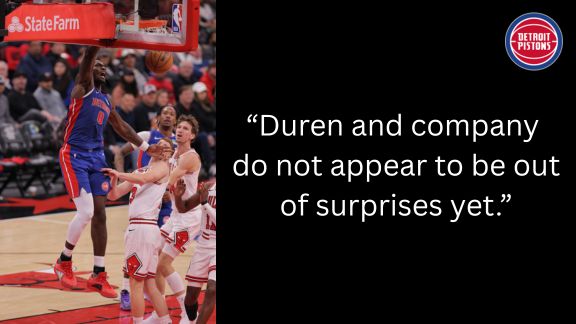
    Things are looking rosy in Detroit. Duren’s ascension has him firmly in the running for his first All-Star spot. The Pistons are looking like real contenders who have filled the void left at the top of the Eastern Conference. Duren and company do not appear to be out of surprises yet.

  • What Do We See When We Scrutinize NBA Defense More Closely?

    What Do We See When We Scrutinize NBA Defense More Closely?

    Photo: Jevone Moore/Icon Sportswire

    As NBA offenses continue to evolve, defenses have to adjust constantly and find ways to be successful. In such an offense-driven league, sometimes great defense can be overshadowed, but finding ways to excel on that end can easily be the difference between winning and losing on any given night.

    One of the things that we do that makes us distinct in how we cover basketball is how we chart positive and negative defensive plays. These may be things that don’t show up in the box score, such as disrupting a shot or deterring a player from attacking the rim or making a bad gamble on defense that leads to an open shot for an opponent.

    We refer to these as positive and negative DPLAYs.

    Unsurprisingly, the NBA-torching Oklahoma City Thunder lead the league in positive defensive playmaking, averaging 15.2 positive DPLAYs* per 100 possessions. Meanwhile, the Toronto Raptors (14.3), Detroit Pistons (14.2), Cleveland Cavaliers (14.2) and Phoenix Suns (13.8) round out the top five.

    *Positive DPLAY = Player makes a significant positive Defensive Play that deters the opposing team’s chances of scoring

    While those teams are at the top of the list when it comes to making plays on the defensive end, the makeup of their totals can vary quite drastically. For example, the Thunder have six players who have played at least 1,000 possessions averaging at least 2 positive DPLAYs per 100 possessions, with Cason Wallace’s 5.5 and Ajay Mitchell’s 4.0 carrying much of that total. Meanwhile, the Raptors have seven players averaging at least 2 DPLAYs, with Gradey Dick’s 4.6 marking the high end of Toronto’s defensive playmaking.

    Wallace’s high number of DPLAYs not only lead his team, but the entire NBA. As arguably the most disruptive defensive player in the league, Wallace even stands out among some of the league’s other top disrupters.

    Player Positive DPLAYs per 100 possessions
    Cason Wallace (OKC) 5.5
    Dru Smith (MIA) 5.1
    Dyson Daniels (ATL) 5.1
    Jalen Suggs (ORL) 4.8
    Herbert Jones (NOP) 4.6

    As seen above, DPLAYs are typically more slanted toward perimeter players, which can make it a bit more difficult to rely on them in terms of judging interior impact. Considering teams in today’s NBA are continuing to play big, with teams such as the defending champion Thunder using double-big lineups, centers are still often the anchors of elite NBA teams. Of course, that isn’t reflected in the DPLAY rankings, with the first qualifying big man on the leaderboard unsurprisingly being San Antonio’s Victor Wembanyama, who averages 3.9 positive DPLAYs per 100 possessions.

    While the overall number of DPLAYs doesn’t always reflect the impact of big men on the defensive end, one specific DPLAY can give a better look at that area of the floor. Rim deterences, defined as an active attempt by the opposing ball-handler diminished by the defender’s presence, paints a solid picture of who some of the league’s most impactful big men are. And yes, no one is close to Wembanyama, who has 16 rim deterences overall. No one else is in double figures.

    Player Rim Deterrences per 100 possessions
    Victor Wembanyama (SAS) 1.5
    Wendell Carter Jr. (ORL) 0.51
    Jalen Duren (DET) 0.51
    Rudy Gobert (MIN) 0.42
    Quinten Post (GSW) 0.42

    The Dark Side of Defense

    While the NBA has plenty of elite defenders who make their mark on that side of the floor for the better, not every team is poised to be among the best of the best at stopping its opponents. Still, not being a great defender isn’t necessarily a sign of poor play.

    Take Dallas’ Klay Thompson, for example. Among roughly 200 qualified players this season, Thompson is the only one to not average at least 1 positive DPLAY per 100 possessions (0.6). While he isn’t the All-Defensive star he once was, his lack of creating havoc on that end doesn’t necessarily mean he’s a poor defender. 

    However, some players take their defensive issues a step further and commit miscues, which are defined as a player making a significant negative Defensive Play that improves the opposing team’s chances of scoring. While there are plenty of negative DPLAYs that can add up, perhaps the most costly are bad gambles** and breakdowns***.

    **Bad Gamble = Defender gambles to force a turnover or disrupt the offense and fails, putting their team in a difficult defensive position

    ***Breakdown = Player makes a defensive miscue through poor communication, understanding of scheme, or decision-making leading to a significant offensive advantage

    Player Breakdowns per 100 possessions
    James Harden (LAC) 2.1
    Michael Porter Jr. (BKN) 1.8
    Alex Sarr (WAS) 1.7
    Russell Westbrook (SAC) 1.8
    Derik Queen (NOP) 1.6

    With a mix of veterans known for occasional defensive lapses and some young players still finding their way around the league, breakdowns paint a solid picture of who can sometimes cost their teams some points.

    On the other side, bad gambles can often be just as, if not more, costly to a team’s defense, but some players have a longer leash to gamble if they can at least get some results more often than not. Of the players who take the most gambles, most are also among the best in creating positive DPLAYs otherwise.

    Player Bad Gambles per 100 poss. Percentile (category)
    Reed Sheppard (HOU) 0.8 100th (Deflections)
    Jalen Suggs (ORL) 0.8 93rd (Deflections)
    Kawhi Leonard (LAC) 0.7 97th (Steals)
    Bobby Portis (MIL) 0.7 32nd (Deflections)
    Dru Smith (MIA) 0.6 99th (Steals)

    Although Portis’ gambles aren’t often offset by positively correlated DPLAYs, the others who make the cut in the top five are also among the NBA’s elite in wreaking havoc on that end. Considering where the leaders in bad gambles rank in other categories defensively, it’s effectively a worthy tradeoff for teams to allow their top defensive players to gamble, so long as the results remain the same.

    The same can be said on a teamwide level as well. Taking another look at the Thunder, they lead the league in positive DPLAYs overall and are first in steals and deflections while committing the fewest breakdowns in the league. Yet, they still account for the 9th-most bad gambles in the association.

    Of course, teams or players that commit bad gambles aren’t necessarily guaranteed to have a worthy tradeoff. The LA Clippers, Houston Rockets and Sacramento Kings are among the 10 teams with the most bad gambles and all rank in at least the top half of the league in either steals or deflections, seemingly following the trend. However, those three teams are also among the top four in breakdowns in the league, showing that their defenses might simply be undisciplined instead of a high-risk, high-reward unit.

    Ultimately, defensive playmaking is one of many factors going into how a team or player performs on that end of the floor. And while it might not be a perfect way to judge the entirety of a defensive performance, it provides a clear look into who is making a significant impact, whether it be for better or for worse.

  • Winning The Old-Fashioned Way

    Winning The Old-Fashioned Way

    Photo: Jevone Moore/Icon Sportswire

    If your primary understanding of the NBA landscape comes from talking heads on TV and browsing social media, you could be forgiven for believing that the league has become homogenous in terms of offensive approach.

    It’s undeniably true that the three-point revolution is here and ongoing, but as with all things, growth isn’t linear. 

    The Miami Heat is one example of a team eschewing the norms to create its buzzsaw offense, a topic SIS’ Jack Klein recently dove into, but it’s not the only one.

    Nearly a quarter of the way through the 2025-26 season, there are a handful of teams showing that high-volume shooting isn’t necessarily needed to carve out a high-level offense or a winning system.

    Of the top-10 teams in wins, six are bottom-10 in three point attempts: The Rockets, Pistons, Raptors, Lakers, Nuggets, and Heat.

    Of the top-10 teams in offensive rating (ORting) in the same span, four are bottom-10 in three point attempts: the Rockets, Lakers, Magic, and Nuggets.

    As you may have surmised by cross-comparing those lists, three teams are top-10 in both wins and offensive rating despite being bottom-10 in three-point attempts: the Rockets, Lakers, and Nuggets. The Raptors, who are 11th in ORting, are a close fourth.

    So how have these teams managed to buck the modern conventions and find success despite their apparently non-modern shot profile?

    Back To The Post

    All four teams represent some of the most post-heavy offenses the league has to offer. 

    The Nuggets create the most field goal attempts off of post-ups in the league at 5.9 per game (as tracked by our Data Scouts, who watch every play of every game) and are wickedly efficient on those shots, ranking 5th in true shooting percentage (TS%) at 65%.

    Not far behind are the Rockets, who are 2nd in field goal attempts off post-ups at 5.6, and 7th in TS% at 62%. 

    These attacks are fueled primarily by Alperen Sengun and Nikola Jokic, who represent the two most dominant post presences in the league this season.

    FGA Off Post-Ups True Shooting Percentage
    Alperen Sengun 3.8 (1st in NBA) 64%
    Nikola Jokic 3.5 (2nd) 70%

    The Lakers come in tied at 7th with 3.3 FGA out of the post per game, and are tied with the Nuggets for 5th in efficiency, while the Raptors are 10th in attempts but only 25th in efficiency.

    Midrange Maestros

    Any team losing what is commonly referred to as “the math battle” (for those who need a remedial lesson, 3>2) will need to find ways to dominate in other areas, which is why it’s not surprising that these four teams are all lethal when it comes to scoring from the mid-range.

    Some teams do it by volume, others by efficiency. 

    The Rockets and Raptors are 3rd and 5th in the league in total FGA that come in the midrange. The Raptors convert these shots at the 5th-best efficiency in the league, while the Rockets are considerably less efficient, posting the 22nd-best TS% on these shots.

    The Lakers and Nuggets are just outside the top 10 when it comes to volume, with the Lakers taking the 14th-most midrange shots and the Nuggets the 11th-most. However, they are elite at converting these looks, with the 1st and 3rd-highest true shooting marks (the Thunder are 2nd).

    Fourth-Quarter Fiends

    Perhaps unsurprisingly, these teams are all also some of the most effective the league has to offer when it comes to closing out games. With little room for error in their scoring profile, they’ve leaned on elite fourth-quarter efficiency to secure their places at the top of the standings.

    The Rockets boast the league’s highest fourth-quarter TS% at 64%, while the Nuggets are hot on their heels at 62%. The Raptors and Lakers come in tied for 6th at 60%, just 0.1% behind the fifth-ranked Bucks.

    The Rockets’ late-game dominance is also evidenced by the fact that they lead the league in clutch-time offensive rating, advantage creation, and have the 2nd-lowest turnover rate. 

    Their late-game execution, spearheaded by Kevin Durant who ranks 8th in clutch advantage creation per game*, is undoubtedly one of their keys to success as they’ve dealt with injuries and spacing issues.

    *Advantage creation is defined by SIS as an action from a player which results in a situation where the team can generate a high-value shot.

    Of the 62 players to take at least 50 fourth-quarter field goal attempts this season, Jokic stands as the most elite finisher in the league, scoring at a 71.9% TS%. Reaves is 3rd (71.5%) and Sengun 4th (70.5%), while the most efficient Raptor is Scottie Barnes, who comes in 10th at 66.9%.

    Finding ways to win

    Of course, each team has its own unique way of carving out wins in addition to these similarities.

    The Rockets, who emphasized size this offseason, make a point to bludgeon teams on the glass.

    Houston Rockets Ranks – 2025-26 Season

    Stat Rank
    Offensive Rebound Pct 1st
    Second-Chance Points 1st

    The Lakers are the most efficient rim finishing team, and the best when it comes to drawing free throws in the clutch.

    They’re also the most efficient team in terms of self-created shots in the league. They rely on their star guards in Reaves and Doncic to create offense for themselves while generating the second-fewest field goal attempts off closeouts of any team.

    While the Nuggets are only 7th in advantage creation, they’re 2nd in the league when it comes to protecting their advantages – only the Celtics and Knicks have a lower advantage reduction rate, per SIS data.

    Finally, the Raptors know their strengths and weaknesses, and use their length and activity to get out on the break and make up for their half-court game.

    The Raptors are 1st when it comes to FGA in transition and 1st in terms of fast break points, per the NBA’s tracking data. They’re 3rd in assists and 5th in assist-to-turnover ratio, prioritizing ball movement and security to find cracks in the defense.

    Possessions reign supreme

    When you look at these profiles together, a theme begins to emerge. In addition to dominating the post and/or midrange, possessions are a crucial battleground for teams that don’t prioritize three-point volume.

    Whether creating extra possessions via the offensive glass, prioritizing a lack of turnovers, or ensuring that any advantages created are taken advantage of, the focus is clear: no possession can be taken for granted.

  • Heat Check: A Different Offensive Approach Than Any Other Team

    Heat Check: A Different Offensive Approach Than Any Other Team

    One of the NBA’s most effective offenses is doing it differently than everyone else. The Miami Heat rank 5th in Points Per Chance (PPC), up from 18th last season, and have done so with an offense that has abandoned screening to an extent without recent precedent. In our five seasons of tracking NBA data, the 2025-26 Heat’s 27.8 Ball Screen’s per 100 possessions through their first 10 games is the lowest we’ve seen by a wide margin. 

    Fewest Ball Screens/100 possessions (2021-22 to 2024-25 seasons)

    Team (Year) Ball Screens per 100 possessions
    Memphis Grizzlies (2024-25) 63.4
    Denver Nuggets (2024-25) 77.1
    Sacramento Kings (2022-23) 78.5
    Golden State Warriors (2024-25) 81.4
    Golden State Warriors (2021-22) 81.6

    >> Miami Heat (2025-26): 27.8 Ball Screens per 100 possessions

    Yes, you’re reading that correctly. The team that used the fewest Ball Screens per 100 possessions still used over double what this Miami Heat team is using. Not only that, but this is quite the deviation for Miami, who ranked 14th last season with 99.9 Ball Screens per 100. 

    Here’s this year’s bottom five teams in ball screen usage.

    Team Ball Screens per 100 possessions
    Heat 27.8
    Jazz 62.9
    Nuggets 72.3
    Rockets 74.9
    76ers 75.6

    So how has Miami’s offense found such early success? Notably, the Heat have relied on creating advantages through 1-on-1 matchups more than any other team. They rank 1st in the NBA in Closeout, Downhill*, Initiation** and Isolation Opportunities (Opps) per 100 possessions.

    * Downhill = the attacking player catches on the perimeter with momentum going toward the basket pre-catch

    **Initiation = the attacking player brings the ball into the frontcourt and makes an initial 1-on-1 attack in a non-transition possession.

    In the clip below, Miami immediately looks to space the floor and gives it to Jaime Jaquez Jr. on the wing. With his teammates and their defenders all on the weak side of the court, Jaquez Jr. can attack the defender downhill in a 1-on-1 and get to his spot in the paint.


    Interestingly, when the Heat does choose to create through a Ball Screen, they’re incredibly good at it. The 2025-26 Heat’s 1.13 Points Per Chance on Ball Screen Opportunities is very high. If maintained for 82 games (a big ‘if’), it would be the best we’ve seen in the last five seasons, meaning the team that runs the least Ball Screens also happens to be the most effective when running them.

    Some may have the preconceived notion that an offense predicated on 1-on-1 matchups means an offense that lacks fluidity and ball movement, but such is not the case in Miami. The Heat rank 5th in Passes, 2nd in Assists and 1st in Hockey Assists*** per 100. 

    ***Hockey assists = shots or shooting fouls directly created for teammates one pass prior to the result

    Miami’s passing proficiency has plenty to do with the ability of Davion Mitchell as a creator in its offense. A look at this table shows just how efficient Mitchell has been as a passer despite a relatively low number of opportunities.

    Category (all per 100 possessions) Percentile 
    Assists 96th
    Potential Assists 96th
    Hockey Assists 96th
    Assist:Turnover Ratio 97th
    Opportunities 75th

    >> minimum 500 possessions to qualify

    In the situation shown below, many offenses would opt for an early screen to get into their action. With Miami’s approach, Mitchell has space to go 1-on-1 at the defender and kick to the corner when the defense rotates. 


    The emergence of Jaquez Jr. has also played a key role in Miami’s early season success. Jaquez Jr. has seen an increase in creation responsibilities, going from 49.2 Opps per 100 in the 2024-25 season to 60.9 through 10 games this season. With the additional offensive duties, Jaquez Jr.’s main improvement has not come from creating more advantages, but rather in his ability to maintain created advantages and capitalize as a scorer.

    Season Advantages Reduced

    (per 100 possessions)

    Advantages Maintained

    (per 100 possessions)

    PPC (percentile)
    2024-25 6.9 5.5 19th
    2025-26 4.9 9 81st

    It must also be mentioned that Jaquez Jr. has increased his value with his play on the defensive side of the ball, specifically as an on-ball defender. Last season, he was in the 55th percentile in Points Per Chance against when defending the ball-handler (minimum 1,000 possessions). So far this season, he ranks 1st in the NBA in PPC against.

    In the clip below, we see Miami’s philosophy on display again, with Jaquez Jr. attacking in space with the initial attack of the possession. Even though Jaquez Jr. doesn’t beat his man off the dribble, the penetration draws defensive eyes and allows for Pelle Larsson to cut from the slot resulting in a simple look at the basket. 


    Miami’s unique offensive scheme has helped it achieve a 7-4 record, good enough for 3rd in the Eastern Conference. Will the Heat keep up this rate of avoiding Ball Screens? Can they? Recent NBA history suggests it unlikely, but recent NBA history has not seen a team play the way this Miami Heat team is playing.

  • Some Clues On How The Mavericks Will Defend Against The Celtics

    Some Clues On How The Mavericks Will Defend Against The Celtics

    The Dallas Mavericks are coming into their first Finals appearance of the Luka Doncic era as underdogs against a Celtics team that spent the entire season as the unquestioned best in class. 

    Boston finished the regular season with a 7-game cushion over the second-place Nuggets, a lead that was never remotely in doubt at any point of the year, thanks to an incredibly well-balanced roster that features one of the most pure distillations of 5-out offense in league history while not making any sacrifices to their defense.

    It’s rare for a team to feature so many shooters while also lacking any real holes defensively, and it leaves the Mavs with a tall task if they want to take home their first championship since 2011. 

    Luckily for Dallas, their previous two series have given them some practice at defending well-spaced, potent offenses with dynamic isolation threats.

    The Thunder are probably the closest facsimile to the Celtics given Chet Holmgren’s abilities as a spacer from above the break, but the Timberwolves also offered some interesting 5-out looks when Rudy Gobert sat and Karl-Anthony Towns shared the floor with Naz Reid.

    So what can we take away from how Dallas defended those two offenses and apply to their upcoming series?

    Lessons from the Thunder series

    Throughout the previous two rounds, Jason Kidd’s team made calculated decisions in identifying points of concession, players they could help off of and trust their long-limbed perimeter defenders to recover to in time to prevent any real damage. 

    Against the Thunder, Dallas would often leave Lu Dort parked in the weakside corner and have his defender function as the low man, flashing to the strong side to deter drives or slipped screens before recovering to his assignment. 

    The Mavericks were even comfortable letting an elite shooter like Isaiah Joe get loose as his defender stunted at a driver, counting on their combination of rim deterrence and perimeter length to not allow a single drive to put them into a fatal rotation.

    One decision that really slowed the Thunder’s potent offense was Dallas’ willingness to switch everything on the perimeter and weather mismatches in the post, knowing that the young, slightly undersized frontcourt of Chet Holmgren and Jalen Williams would struggle punishing smaller defenders.

    By switching across the court and not sending doubles on perceived height mismatches, the Mavs forced hesitation by Thunder drivers. These momentary hesitations clogged lanes and helped keep Dallas from being put in full-on scramble situations, instead operating in semi-scrambles that were tricky but manageable.

    Because of Dallas’ length and emphasis on keeping a help defender at the nail, the Thunder struggled to consistently drive deep into the paint, instead relying on a series of drive-and-kicks that failed to get much deeper than the free throw line.


    Key in the above clip is PJ Washington’s ability to stay in front of Shai Gilgeous-Alexander in isolation – no easy feat for a good guard defender, let alone a big man – but we’ll come back to that later.

    Lesson from the Timberwolves

    In the Western Conference Finals, the Mavericks faced a much different style and size of offense, but there were still relevant data points we can take away. 

    The Wolves played 62 minutes with Naz Reid and Karl-Anthony Towns on the court and Gobert off, a sample that isn’t massive but neither is it insignificant. In that time, with the self-proclaimed best big man shooter of all time and the newly-crowned, sweet-shooting 6’9 Sixth Man of the Year, the Mavericks managed to outscore the Timberwolves by 18 points.

    Once again, Jason Kidd’s preference to switch everything on the perimeter and not overreact to mismatches in the post paid off. In ball screens, they became adept at having their guard defender peel-switch onto the popping big while trusting their big to stay in front of the ball handler for long enough to let the defense recover and the low man to come over and provide back-line help.

    Whether it was Doncic stuck guarding Towns on the block or Washington or Kyrie Irving guarding Anthony Edwards in space, the Mavs stunted and stayed home, preferring to let the driver blow by the defender and be met by one of their two rim protectors rather than compromise the shell of their defense by getting into scramble situations.

    One key in this series was the return of Maxi Kleber from a shoulder injury. Kleber’s ability to stay in front of even dynamic ball-handlers like Anthony Edwards added another layer of versatility to the already-impressive PJ Washington/Derrick Jones Jr. combination.

    Facing the Celtics

    While the Thunder and the Wolves both offered different looks that might mimic the Celtics’ attack, the Mavericks are about to find out that it’s different when you go up against the real thing.

    The Thunder had multiple players the Mavericks could cheat off of in Dort and Josh Giddey, and the Wolves tended to run Kyle Anderson in the dunker spot when Gobert wasn’t on the floor, another slow-release player they could feel comfortable leaving and recovering to without sacrificing devastating looks.

    The Celtics, on the other hand, go seven or eight men deep, and every one of them is a dynamic shooting threat who can get their shot off quickly. There will be nowhere safe to hide, only a choice to make as to who Kidd is most comfortable daring to shoot.

    Another interesting choice to monitor will be whether Washington opens the series primarily guarding Tatum or Porzingis. 

    Tatum is Washington’s positional equivalent, and as mentioned earlier, PJ’s ability to move his feet in space at his size makes him a good foil for Tatum’s isolation game, but keeping one of Daniel Gafford or Derek Lively II on Porzingis, one of the league’s best deep three-makers, would make it much more difficult for the Mavs to execute their funnel-and-recover scheme.

    Boston, with veteran players comfortable playing in the post such as Kristaps Porzingis, Jayson Tatum, Jaylen Brown, and even Jrue Holiday, will punish smaller players more than either the Thunder or Wolves could, though Doncic and Kyrie are both surprisingly stout post defenders when locked in, as they have been during this playoff run.

    The switchability of Jones, Kleber, and Washington on the perimeter will be key to containing actions run between Tatum or Brown and Porzingis, as will replicating the at-the-nail help that helped stymie so many Thunder drives, especially in Game 6. 

    If the Mavericks can keep the Celtics from getting too deep on drives, it will go a long way to preventing the kind of chaos the Celtics thrive on, where a single extra pass can lead to an open shot from a 40% three-point shooter. 

    The 2024 NBA Finals will be an interesting match as the Mavs have been forged in the fire of multiple close, hard-fought series, while the Celtics have skated through the East relatively unchecked. Kidd’s defensive schemes have proved sound until now, but it will be fascinating to see how they hold up against the best-spaced team in the league.

  • Unsung Playoff Star: Andrew Nembhard

    Unsung Playoff Star: Andrew Nembhard

    Photo: Melissa Tamez/Icon Sportswire

    If you like watching high-octane NBA offense, the Indiana Pacers are your team. They find ways to bend the defense and constantly push the pace in transition. 

    They led the league in points and assists per game and ranked first, first, and second in advantages inherited, maintained, and created throughout the regular season.

    Tyrese Haliburton is the primary catalyst who sparked this offensive combustion and deserves all the credit. But I want to shine the spotlight on another name, Andrew Nembard, who took another leap through the first round of the playoffs. 

    Nembhard is sustainably solid. Solid might be an understatement, but everything about his game feels sustainable. There is something very mature about how he operates on the floor, deliberate and consistent on offense, dogged on defense.

    His controlled cadence with the ball, footwork, and change of pace has always been an enjoyable watch. Aesthetics aside, Nembhard also takes on thankless tasks. Most of these tasks come on defense.

    Nembhard’s Defense

    There is still room for the second-year guard to grow on this end. He gambles on a lot, but his willingness not only to guard the primary offensive engine, but also to defend up and down on the positional spectrum needs to be highlighted. 

    Defensive versatility matters. Nembhard gets this. One night, he’s chasing Steph Curry off the ball; the next night, a Luka Doncic post-up, high ball screens from Darius Garland one game, Shai Gilgeous-Alexander iso’s the next. 

    Maybe we could coin Nembhard as a high usage defender.  He was in the 89th percentile in opportunities defended, higher than Aaron Nesmith and Pascal Siakam and in the 83rd percentile in opponents’ points per chance, also leading Indiana in this department.

    Again thankless tasks, but Nembhard takes them on willingly. 

    Offense

    Let’s pivot to offense and hone in on his steadiness and ability to generate offense for himself. 

    Sure, it might play a little into small sample-size theater, but through round one, Nembhard turned the ball over five times in 208 total minutes. That’s 35 minutes a game, and remember, these are Pacers high-flying, high-cardio, style minutes. 

    Was he just running out there? No. Are his turnovers so low because he didn’t touch the ball? No. He totaled 28 assists throughout these six games. He has the third-highest assist-to-turnover ratio throughout these playoffs and also ranked in the 94th percentile in playoff hockey assists and 76th percentile in playoff potential assists

    * Hockey Assists: Number of shots or shooting fouls directly created for teammates one pass prior to the result.

    ** Potential Assists: Number of shots or shooting fouls directly created for teammates.

    Yes, everything needs context. Despite the lack of home-court advantage, it was against the Giannis-less and sometimes Lillard-less Bucks. However, it is still an interesting data point for his development as a game manager. 

    The second-year combo guard picks his spots and picks them well. They are within the flow of the offense, but when the offense breaks down, he has that extra late-clock off-the-dribble creation juice.

    Let’s touch on the flow of the offense. We already mentioned his stellar playoff potential assists, and hockey assists numbers, which also ring true in the regular season. Still, Nembhard’s ability to bend the defense and create high-quality looks by himself has been a fun development.  

    When Nembhard touches the ball, good things happen. He ranked in the 81st and 74th percentile in advantages created+ and advantages created throughout the regular season, and he’s kept this same consistency in round one.

    *Advantage Created: Player creates an advantage for their team; an advantage is deemed to be created if the team can generate a high-value shot off of the player’s action.

    **Advantage Created+: Ratio between Advantages Created and Advantages Lost

    What about when the offense breaks down? 

    Well, the Pacers trust him. Even with the midseason addition of Pascal Siakam, they trust him to explore this mid-range studio space. A trust teams give sparingly these days and Nembhard has shown improvement. 

    Mid-range efficiency (TS%) Mid-range volume 
    Regular Season (2022-23) 57th percentile 57th percentile
    Regular Season (2023-24) 69th percentile 67th percentile

    Still room for growth? Yes, but it’s a notable data point and a vital sign that Indiana trusts him when things break down.

    The sky’s the limit for Nembhard, but right now, it’s playoff time. The focus shifts to the Knicks, the Eastern Conference semis and avoiding the Jalen Brunson foul-drawing tactics while helping keep Brunson’s scoring down. The challenge is there for him to take on.

  • Chet Holmgren: Foundation Of The Thunder

    Chet Holmgren: Foundation Of The Thunder

    After the Oklahoma City Thunder swept their first round matchup against the New Orleans Pelicans, it is easy to look back on their season as full of sure things. The Thunder finished the regular season with the best record in the West, led by a finalist for the MVP award. 

    There was not always a belief that the Thunder would achieve to this extent though. The Thunder surpassed their pre-season over/under win total more than any team in the league. No player better embodies this surpassing of expectations more than Chet Holmgren.

    Standing in the middle as a skinny, sound foundation of the Thunder’s identity, Holmgren is having a tremendous rookie year. In a normal season, without the infusion of Victor Wembanyama, Holmgren would be the runaway favorite for Rookie of the Year. As alluded to before, this was far from a sure thing.

    Seeing the success Holmgren has had this year, it is easy to forget the trials and tribulations he faced before ever setting foot on an NBA court. The summer he was drafted by the Thunder he suffered a Lisfranc injury to his foot, leaving him sidelined for the entire season. Unfortunately the injury also amplified some existing questions about his durability and ability to thrive in the physical environment of the NBA.

    After playing in all 82 games this past season, Holmgren has effectively put those doubts – fair or not – to rest. Holmgren has blossomed into a two-way stud, impacting both ends of the floor at a high level. With the ability to shoot efficiently from three and put the ball on the floor, Holmgren is able to keep the core beliefs of the Thunder’s offensive philosophy alive as a center. Paired with his elite rim protection, Holmgren has proven to be a rare commodity colloquially referred to as a “unicorn,” a term Kevin Durant once used to describe 7-footers proficient at shooting, protecting the rim, and making connective plays.

    Shooting and Playmaking

    Capable of spacing the floor, Holmgren finished the season shooting a respectable 37% on over 4 3-point attempts per game. He was heavily called upon as a spacer too, ranking in the 90th percentile for centers in a stat we track, on-ball closeout opportunity frequency. With these ample opportunities he has produced:

    Closeouts Average (per 100 possessions) Percentile (regular season among Centers)
    Advantages Created* 2 90
    Advantages Inherited** 9.2 82
    Advantages Maintained*** 3.9 84

    *Advantage Created: Player creates an advantage for their team; an advantage is deemed to be created if the team can generate a high-value shot off of the player’s action.

    **Advantage Inherited: Player inherits at least a semi-advantageous situation in their on-ball chance.

    ***Advantage Maintained: Player inherits at least a semi-advantage and at minimum maintains their team’s advantage on their on-ball chance.

    Simply spacing the floor is not Holmgren’s only offensive responsibility. After catching the ball behind the arc, he is able to put the ball on the floor and make sound decisions. Sometimes these drives end emphatically, like this highlight dunk after his patented spin-move.


    Passing has been a budding skill for the young center as well, fitting in well with OKC’s drive-and-kick style of offense. 

    Average

    (per 100 possessions)

    Percentile 

    (regular season among Centers)

    Assists 3 68
    Potential Assists* 5.8 71
    Hockey Assists** 1.3 80

    *Potential Assists: Number of shots or shooting fouls directly created for teammates.

    **Hockey Assists: Number of shots or shooting fouls directly created for teammates one pass prior to the result.

    When called upon, Holmgren can potentially be a straw that stirs the drink by creating an advantage for his teammates resulting in a high-value shot. Among centers, Holmgren is in the 69th percentile, averaging 9.3 advantages created per 100 possessions. 

    Defense and Rim Protection

    Holmgren has been able to utilize his elite length and sound mobility to make defense his calling card. A large part of this is his ability to contest shots as a primary on-ball defender and as a help defender off-ball. 

    Holmgren had a block/alter rate that is in the 97th percentile among centers with a contest frequency in 86th percentile and has kept those numbers steady in the playoffs, making him an active and effective defender. Helping this is a utilization of Holmgren’s unique length: the use of two hands when contesting a shot. 

    In February we used pose data to look at Holmgren’s two-handed contest rate. At the time, he had the most two-handed blocks in the league while ranking in the 98th percentile for all players in two-handed contests. 

    Although he is known for his shot blocking, Holmgren provides winning defensive plays in additional areas:

    Average 

    (per 100 possessions)

    Percentile 

    (regular season among Centers)

    Advantages Allowed* 10.9 90
    Advantages Prevented** 12.9 93

    *Advantage Allowed: Opponent creates an advantage on an on-ball opportunity.

    **Advantage Prevented: Player significantly decreases the opposing team’s chances of scoring.

    Defensive numbers like these are impressive enough without factoring in Holmgren’s status as a rookie. We track defensive breakdowns, when a player makes a defensive miscue that leads to a significant advantage for their opponent, and Holmgren performs far beyond his years of experience, ranking in the 97th percentile among centers in breakdown frequency. 

    Holmgren’s multi-faceted excellency as a center has given the Thunder a huge boost in their regular season and early playoff success. 

    Playoffs and Beyond

    As the Thunder get deeper into the playoffs, the tests will become more strenuous. Their 2nd round opponent, either the Clippers or the Mavericks, will be a greater challenge than the Pelicans, who were missing their best player. 

    Amid the team’s recent success, it is important to look back and not take this for granted. Holmgren surpassed even the greatest expectations placed on him, delivering quality play on both ends that goes far beyond what is expected of a rookie. 

    In large part, this Thunder team will go as far as their rookie center will take them. Even if it ends in Round 2, this should just be the start of an extended Oklahoma City run and a promising young career for Holmgren.

  • NBA Playoff Preview (Eastern Conference)

    NBA Playoff Preview (Eastern Conference)

    By Eli Cohen, Reecca MaWhinney, and Blake Benjamin (graphics by Noah Edwards-Thro)

    With the Eastern Conference Playoffs beginning Saturday, we wanted to break down each first-round matchup using our proprietary data. Each tile chart below outlines how the teams fared in their head-to-head matchups this season including all possessions played, All metrics given are Per 100 Possessions and do not include garbage time unless otherwise stated.

    For a primer on Advantage Creation and some of the other metrics mentioned in these articles, check out our Twitter, @SIS_Hoops, and reach out if you have any questions.

    1. Celtics vs. 8. Heat

    The Celtics are ranked very highly in almost all categories of SIS data except positive defensive playmaking. They play solid defense and defend well around the rim. The Celtics are tied with none other than the Spurs (shoutout Wemby) for the highest alter contest % in the league.

    Along with that, they have the highest offensive rating and 2nd-highest defensive rating in the league. Another thing the Celtics do surprisingly well is rebound the basketball on both ends of the floor. They do all of this while turning the ball over the least in the NBA at a clip of 9.6 per 100 possessions.

    Defensively, specifically contesting shots is where the Cs are disciplined. Porzingis and Kornet are both top 10 in block/alter per 100 possessions, with Derrick White not far behind them at 19th. As a team the Celtics protect the rim well, blocking/altering 6.1 shots per 100 at the rim and in the paint. And they do so without fouling, only 5.1 fouls per 100 at the rim or in the paint.

    With the Celtics being a juggernaut on both ends of the floor it will take a David vs Goliath effort just to extend the series. They play as a team well and this makes them extremely tough to beat, especially in a 7 game series.

    The Heat will have their work cut out for them facing this Celtics team without Jimmy Butler. The Heat offense has struggled much of the season, with or without Butler, but where it will really miss him is drawing fouls. With Butler playing the Heat rank 6th in the league in FT rate (20.9 per 100). Without him they rank 17th (18.5 per 100).

    Furthermore, the Heat defense will take a major hit, with Butler playing they are 20nd in the league in steals (3.8 per 100). Without Butler on the court the Heat rank last in the NBA with a dismal 1.7 steals per 100. With Butler playing, the Heat rank 10th  in the NBA in positive defensive plays (13.6 per 100) while without him on the court they rank 30th (6.5 per 100).

    With that being said, for some reason you can never count this Heat team out no matter who takes the floor as long as Erik Spoelstra is the head coach. On the flip side, the Celtics will be out for revenge after the Heat ended their season in the Eastern Conference Finals last year.

    2. Knicks vs 7. 76ers

    This matchup will come down to whether or not Joel Embiid can stay healthy.

    The Knicks have had their own injury trouble this season, losing Julius Randle for the season and Mitchell Robinson and OG Anunoby missing many games. Jalen Brunson is the driver for this Knicks offense. Brunson ranks 4th in advantages created (28.4 per 100 poss.) among guards and forwards. He will need to be this player throughout the series for the Knicks to beat the reigning MVP.

    One thing to look out for this series is the defense on Embiid. The Knicks struggled to contest shots well this year. New York is 22nd in the NBA in block/alter% and is also tied for 10th in poor contests. The Knicks do well defending without fouling, which is important because of how well Embiid and the Sixers draw fouls.

    The Sixers have missed their star but still have had some bright spots during his absence. Even with Embiid missing significant time, the Sixers still ranked 2nd in the NBA in FT rate (21.9 per 100). This balances out with how often they foul during contests. They rank 23rd in the NBA in foul%, especially with Brunson’s ability to draw fouls similar to Embiid.

    The Sixers have maintained a solid defense throughout the regular season, ranking 1st in deflections and positive defensive plays, 2nd in disruptions, and top 6 in block/alter%. With a solid Philadelphia defense matching up with an underwhelming Knicks offense this will be an interesting matchup to watch as the series goes on.

    Finally, the battle on the boards is always important for this Knicks team, which ranks 1st in contested offensive rebounds. While Philadelphia ranks 9th in contested defensive rebounds on the season, the 76ers will have their work cut out for them.

    3. Bucks vs 6. Pacers

    This matchup once again will be determined by if/when Giannis Antetokounmpo is healthy. Even with the changes Milwaukee has made since Doc Rivers became the coach, the health of their megastar is the most important thing.

    Without Giannis on the floor the Bucks struggled to create advantages. The Bucks ranked 30th in the NBA with Giannis off the court (17.8 per 100) and 9th (58.4) with Giannis on the floor. Even with this difference the Bucks still hold the 5th-best offensive rating (119 per 100). This should bode well against a Pacers team that is not known for their defense.

    Unlike in years past, the Bucks are not a defensive juggernaut. They ranked 17th in defensive rating (116) compared to last season when they were 3rd in the league (111.9). Without Giannis on the floor it hurts this defensive unit even further. When Giannis is not on the floor the Bucks tend to foul at a higher rate, going from 12th in the league (18.7) to 22nd (20.2).

    The Pacers are one of the fastest paced teams in the NBA, The Bucks forcing the Pacers to play at a slower pace could help mitigate Giannis’ absence. In addition to creating far fewer advantages without Giannis on the floor, the Bucks offensive rating falls from 5th (119) to 22nd (113.5), another number showing how much the all-star will be missed.

    It’s no secret that the Pacers have a great offense built around Tyrese Haliburton. Haliburton is 2nd in the league to Luka Doncic in total on-ball opportunities. Haliburton leads the league by a large margin in almost all of our passing stats (passes, assists, potential assists, hockey assists) while doing so with a top-10 assist-to-turnover ratio.

    There’s been much discussion about the pre/post Haliburton injury that occurred on Jan. 8. Prior to the hamstring strain, every Pacers rotation player was doing better than expected, led by Haliburton. Haliburton was shooting 11% better than expected based on his shot profile.

    But with Haliburton off the floor, the Pacers were dead last in advantages created.

    Defense will be huge for the Pacers, who rank 24th in defensive rating (118.6). Myles Turner does better than the expectation defensively, but the problem is how low the expectations are for him. His teammates force him to clean up after their mistakes.

    This series will be a fun one to watch play out, especially since the last time these two teams met there was a fiasco post-game about who got the game ball.

    4. Cavaliers vs 5. Magic

    This Cleveland-Orlando series might be one of the most fun matchups in the playoffs. Both of these teams are physical, defensive, fundamental teams that play older-school basketball compared to the rest of the league.

    Neither of these teams are offensive juggernauts. Cleveland ranks 17th (115.6) in offensive rating while Orlando comes in tied for 21st (114.4). Both of these teams lean greatly on their stars to create offense. Orlando relies on All-Star Paolo Banchero to create advantages, creating 41 per 100 possessions with him on the court compared to 16.5 per 100 with him off the court.

    The Cavaliers have more options to create offense but Donovan Mitchell is the engine. Mitchell ranks 17th among guards and forwards in True Shooting% when facing plus, altered, or fouled contests. This Cleveland offense likes to move the ball and get everyone involved, producing the most hockey assists in the league (8.6 per 100 possessions). The Cavaliers are also 5th in the league in assists (25.5 per 100), even with many of their main offensive drivers missing significant time throughout the season.

    The Cavaliers are going to have to defend the rim and paint well in this series. Cleveland was 3rd in the league this year in rim deterrence, and 2nd in the league in opponents’ FG% at the rim or in the paint. But they also have the 3rd-highest poor contests in this area. The Magic have the 10th-highest FG% in the paint and at the rim while shooting the 9th-most attempts.

    The Magic have one of the league’s youngest cores with exciting talents on the offensive end of the floor. But what sticks out in our data is the defensive statistics. The Magic rank tied for 2nd in defensive rating (111.7 per 100) and are 5th in positive defensive plays. The only defensive playmaking metric in which the Magic weren’t top-6 is rim deterrence in which they came in at 22nd (.53 per 100). Orlando also plays sound defense. The Magic rank 3rd in the NBA in least miscues per 100 possessions (15.2). Even with these eye popping numbers on defense they have their weaknesses on defense as well.

    Orlando is not among the best contesting shots. The Magic rank 14th in the NBA in block/alter% even though they have one of the taller starting lineups in the league. The Magic also foul at a higher clip than most teams and rank 24th in opponent FT Rate. With all this taken into account the Magic still rank 1st in expected points per chance defensively (1.019).

    On the flip side, on offense the Magic turn the ball over at a high rate ranking 6th in the league (12 per 100). They do get to the foul line at a good rate coming in at 3rd (21.7 per 100). Orlando is middle of the road in many of our offensive statistics and will have its hands full against a very solid and capable defensive team like the Cavs. The Magic will have to make tightly contested shots in order to win this series.