Category: Defense

  • In Year 2, Fernando Tatis Jr. is Looking Like A First-Year Right Fielder

    In Year 2, Fernando Tatis Jr. is Looking Like A First-Year Right Fielder

    Fernando Tatis Jr. had an extraordinary 2023 defensively in his first season as a right fielder for the Padres. He led all players with 29 Runs Saved at the position. No one else had more than 10. He won the Fielding Bible Award and MLB’s Platinum Glove Award for the National League.

    It was all the more remarkable given that Tatis had never previously played right field before. He went from complete newbie to within 1 Run Saved of matching the most in a season by a right fielder in the 21-year history of the stat.

    But through the first two months-plus of 2024, Tatis Jr. has not been able to replicate that excellence.

    Entering today, Tatis Jr. has -3 Runs Saved. He’s been more Nick Castellanos than Mookie Betts on defense this season.

    Before looking into the whys and hows of this, I want to get slightly more specific on how good Tatis was last season.

    Of those 29 Runs Saved, 21 came from his range. The only other right fielders to post 20 Range Runs Saved in the 21-plus year history of Runs Saved are Betts and Jason Heyward.

    Twenty one Runs Saved from range means you made a lot of catches that other outfielders didn’t make. Here are a few of them.


    That last one, which happened to be against Betts, was worth about 0.8 Runs Saved. It was Tatis’ 4th-highest-valued catch in 2023. In our system, that play has a 22% out probability.

    Tatis doesn’t have any catches with that high of a run value yet this season. And if we dip down further Tatis has only 6 catches worth even one-quarter of a run this season. That’s lowering the bar beyond just considering his great catches to now counting ones that our system would consider good catches. He had 47 catches worth at least one-quarter of a run in 2023.

    Plays Worth >=.25 runs Plays Worth <=-.25 runs
    2023 47 18
    2024 6 13

    For the purposes of simplicity of this article, I’m going to largely stick to evaluating his range rather than his throwing. It’s worth noting, though, that he’s had worse results there as well. His Runs Saved from throws has dropped from 7 in 2023 to 0 in 2024.

    In 2023, Tatis allowed only 48 of 118 baserunners (41%) to advance an extra base. He threw out 9.

    This year, he’s allowed 27 of 51 to advance (53%) and thrown out 3.

    Arm strength isn’t a factor. He’s currently No. 1 in average throw velocity. So while there might be something amiss here, it’s a pretty short time frame to evaluate throwing if we don’t see a smoking gun in his throwing speed.


    So what did I notice about his range from film watching and stat studying*?

    *thanks to our Video Scouts who chart all this information

    1) Tatis has been less effective in just about any type of effort play, though the effort to make those plays is absolutely still there. He’s still sprinting for balls plenty.

    2023 2024
    Sprinting 44% (24/54) 28% (9/32)
    Sliding 67% (6/9) 20% (1/5)
    Jumping 67% (10/15) 33% (3/9)


    That last play brings up a point that maybe Tatis’ aggressiveness has gotten the better of him a few times. He’s been tagged with 18 Defensive Misplays & Errors in right field by our Video Scouts. He totaled 24 last season.

    2) Besides those above, there have been a few odd-looking plays that had the opposite issue.

    In taking notes on the 12 balls for which Tatis was penalized the most, I wrote “pulls up on it” for 4 of them.

    These kinds of balls were probably no-problem catches for Tatis last year.

    But this year, those catches aren’t sure things.

    3) I don’t think there’s anything “wrong” with Tatis physically.

    Per MLB’s stats, he’s done better at covering ground in the first 1.5 and second 1.5 seconds in 2024 than he did in 2023. And he’s down only a smidge in route efficiency.

    He’s only 25 years old. For a player that age there shouldn’t be any sort of significant decline in these numbers and there isn’t.

    4) You can make a case that some of the dip in Tatis’ Runs Saved is a product of opportunities or lack thereof.

    Just look at the number of chances he’s had on balls with out probabilities ranging from 25 to 75%.

    Plays Made Opportunities Plays Above Expected
    2023 42 60 +11**
    2024 6 16 -2

    ** Read this as: Tatis made 42 of 60 plays. He had 11 more made plays than an average fielder would have.

    He’s playing at a pace that would produce 34 opportunities if he played the same number of innings in which he got 60 in last season.

    On one hand, that would have given up more chances to make the great plays last season. On the other, there’s no guarantee of that given what he’s done with the opportunities he faced.

    Flipped The Script

    So in the end, I generally like to have a solid conclusion to these articles. This is one case where I don’t. He’s playing hard, but the results aren’t coming together.

    It does feel like if Tatis had played like he’s currently playing in right field last year, we’d have said, “That makes sense.” The issues we’re seeing are ones we’d have expected to see from a player in his first year at a position.

    That the script has flipped and that these issues have come in Year 2 have me thinking that I truly have no idea what will happen next.

  • May’s Defensive Players of the Month: Ezequiel Tovar and Jo Adell

    May’s Defensive Players of the Month: Ezequiel Tovar and Jo Adell

    It’s been rough sledding all season for the Rockies and Angels, two teams at the bottom of their respective divisions through two months with little hope of catching the contenders.

    But we recognize defensive excellence wherever it comes, and even on these struggling teams there are examples to be found at different spots on the field.

    Our Defensive Players of the Month for May are Rockies shortstop Ezequiel Tovar and Angels right fielder Jo Adell.

    Tovar was terrific in the field in 2023 and has again been great in 2024. His 7 Defensive Runs Saved ranked 1st among shortstops this month. His 18 Runs Saved since the start of last season rank tied for the most among shortstops with Anthony Volpe and his 6 this season are tied for the most at shortstop with Brayan Rocchio and Masyn Winn.

    Tovar is particularly adept at turning the double play. He’s converted 40 double plays in 50 opportunities. The 80% success rate ranks 3rd in MLB and is 18 percentage points above MLB average for the position.

    Tovar has made quick slide-and-turn plays like this one against Marcus Semien regularly throughout his brief career. He’s also shown he can go back on popups (watch) and snag line drives (here). Tovar handled almost everything flawlessly. He had only 1 Defensive Misplay and no errors the entire month.

    “From last May to now, I can’t imagine any shortstop that’s played better than Ezequiel,” said Rockies manager Bud Black. “He’s steady. He’s dependable. He makes every play. And he does it his way. He’s got great instincts.”

    Added Rockies pitcher Kyle Freeland: “He’s an incredible infielder. We love having him there as our leader on the infield. The sky’s the limit for a guy like that.”

    Most Defensive Runs Saved By Shortstop – 2024 Season

    Player Team Runs Saved
    Ezequiel Tovar Rockies 6
    Brayan Rocchio Guardians 6
    Masyn Winn Cardinals 6
    Gunnar Henderson Orioles 5
    Bobby Witt Jr. Royals 5
    Orlando Arcia Braves 5

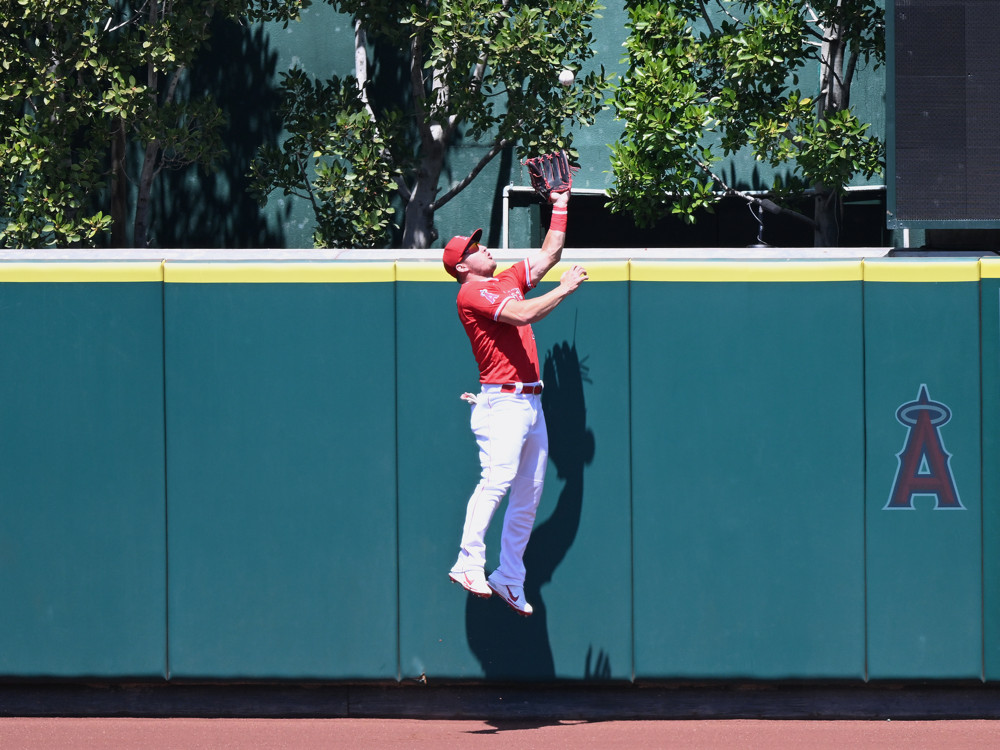
    Adell led all players with 9 Runs Saved for May, a number boosted by a home run robbery (watch it). But that wasn’t his only great defensive play during the month. He had a fantastic catch against the Astros (here) and also made a great throw to preserve a tie in extra innings (here). His 5 Good Fielding Plays for the month ranked 2nd among right fielders to Starling Marte’s 8.

    Adell is still trying to figure things out as a hitter (he had a big slump at the end of May) but he looked the part of a star defender in May. He leads all right fielders with 7 Runs Saved this season.

    “It’s his work ethic,” said Angels third base coach Eric Young Sr., who works with first base coach Bo Porter on helping the team’s outfielders. “This guy came into camp on a mission to be the best all-around player he could be. He worked on his defense vigorously. That was his main focus when he came to the park. A total commitment to make it happen.”

    Most Defensive Runs Saved By Right Fielder- 2024 Season

    Player Team Runs Saved
    Jo Adell Angels 7
    Wilyer Abreu Red Sox 6
    Kyle Tucker Astros 6
    Max Kepler Twins 5
    Mike Yastrzemski Giants 5
    Andy Pages Dodgers 5
  • Stat of the Week: 2024 MLB Defensive Runs Saved Leaders

    Stat of the Week: 2024 MLB Defensive Runs Saved Leaders

    Photo: Rick Ulreich/Icon Sportswire 

    BY MARK SIMON

    We’re two months into the season and we’re just getting to the point where defensive stats tell us a little bit about what’s been going on so far.

    Injuries to some prominent players have opened up some space atop the Defensive Runs Saved leaderboard, though if you take a look, you’ll notice several familiar faces at the top of their positions.

    Here are the Defensive Runs Saved Leaders at each of the infield and outfield spots, as well as catcher.* If you want to follow along, head over to the Fielding Bible leaderboard page here. You can also click the hyperlinked names to see a top play that player has made.

    * 25 pitchers have either 2 or 3 Runs Saved, some in very small samples, so we’ll save that position for a future leaderboard look. And we’ll give some of the multi-position leaders standalone coverage in the next few weeks.

    First Base

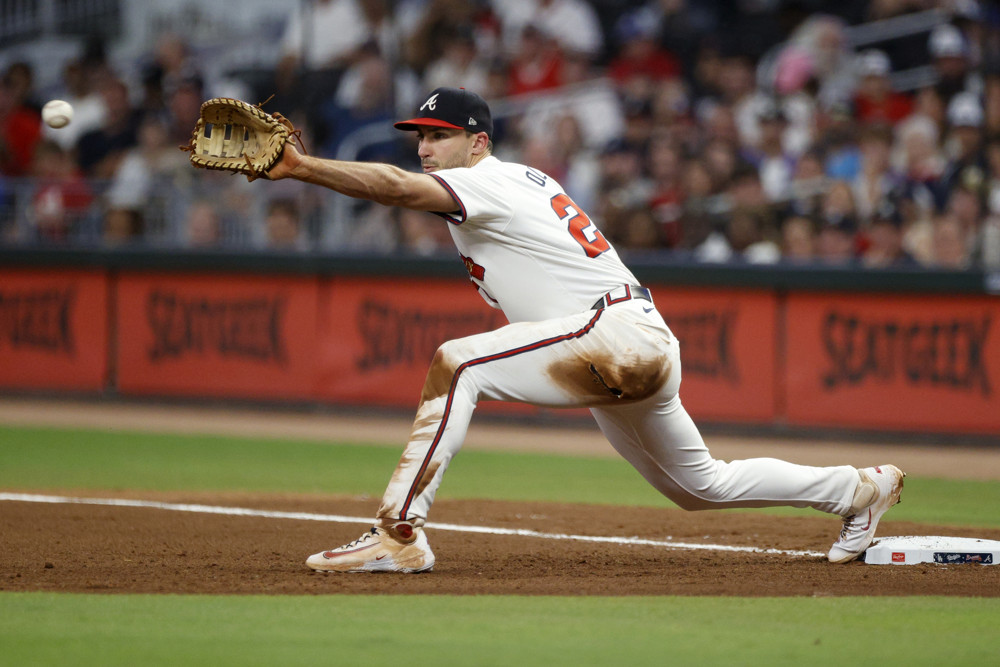
    Christian Walker of the Diamondbacks is going for his third consecutive Fielding Bible Award and he’s currently the position leader in Runs Saved with 6, ahead of Joey Gallo (5 Runs Saved), Bryce Harper (4), and Wilmer Flores (4).

    The last two winners before Walker, Matt Olson and Paul Goldschmidt, have some ground to make up. They each have 2 Runs Saved.

    Second Base

    Four different players have won the Fielding Bible Award at second base the last four years. Marcus Semien of the Rangers has come close but has never won one. He’s currently the position leader with 10 Runs Saved, edging out Ketel Marte (8).

    Andrés Giménez, who was last year’s Fielding Bible Award winner on the strength of a strong close to the season, is well behind with 2 Runs Saved.

    Third Base

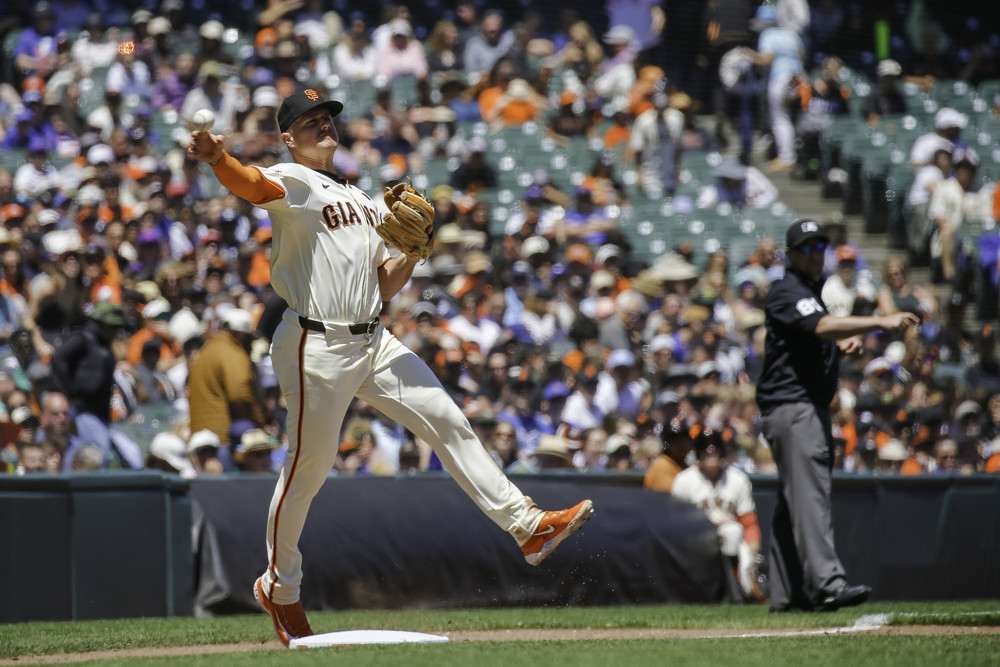
    Matt Chapman of the Giants has very much looked the part of a two-time Fielding Bible Award winner the last few weeks. He’s made some terrific plays at the hot corner. With 7 Runs Saved, he’s 3 runs ahead of Max Muncy and Oswaldo Cabrera. Last year’s Defensive Player of the Year, Ke’Bryan Hayes, has missed time due to injury and currently has 3 Runs Saved.

    Missing from the list of contenders is five-time Fielding Bible Award winner Nolan Arenado, whose -6 Runs Saved are the worst at the position (and worth examining at another time).

    Shortstop

    Shortstop is very much a young man’s game and it’s 22-year-old Cardinals rookie Masyn Winn leading the way with 6 Runs Saved. This is likely going to be a crowded top of the leaderboard at season’s end. It is right now with Brayan Rocchio, Ezequiel Tovar, Bobby Witt Jr., Gunnar Henderson, and Mookie Betts all with 5 Runs Saved.

    Last year’s Fielding Bible Award winner, Dansby Swanson, is off to a slow start with the bat and glove. He has -1 Run Saved.

    Left Field

    Alex Verdugo of the Yankees moved back to left field after spending 2023 exclusively in right field for the Red Sox, where he ranked second in Runs Saved. The move is working. Verdugo’s 9 Runs Saved lead all left fielders. Daulton Varsho’s 7 Runs Saved rank second.

    Varsho was our April Co-Defensive Player of the Month and is the overall MLB leader in Runs Saved with 12 (7 in left field, 5 in center field). He co-led all players in Runs Saved last season along with Fernando Tatis Jr.

    Steven Kwan, who has won the last two Fielding Bible Awards in left field, has missed time due to injury and currently sits at 4 Runs Saved.

    Center Field

    It’s tight at the top, with three players leading the way with 6 Runs Saved: Michael A. Taylor (Pirates), Jarren Duran (Red Sox), and Pete Crow-Armstrong (Cubs). Interestingly, none of them ranks higher than 18th in innings played there this season. Duran has played left field in 7 of the last 8 games. Crow-Armstrong just got called back up from the minors. Taylor is barely hitting .200.

    Last year’s Fielding Bible Award winner, Kevin Kiermaier, is in position to pounce. He currently has 3 Runs Saved after missing time due to injury earlier this season.

    Right Field

    A couple of surprising names lead the way here. Jo Adell of the Angels and Red Sox rookie Wilyer Abreu pace the field with 7 Runs Saved. Kyle Tucker and another rookie, Andy Pages of the Dodgers (who has played more center field than right field), are each just behind with 5 Runs Saved.

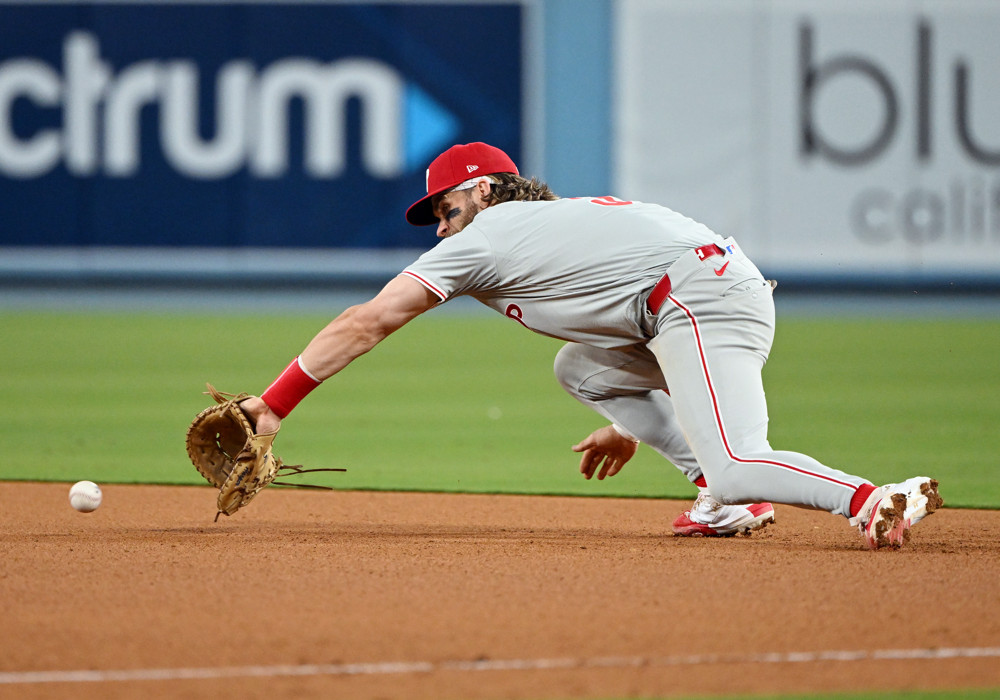
    Last year’s runaway Fielding Bible Award winner, Fernando Tatis Jr., similar to Arenado, is off to a rough start this season. He’s racked up a considerable number of Defensive Misplays and Errors and stands at -4 Runs Saved.

    Catcher

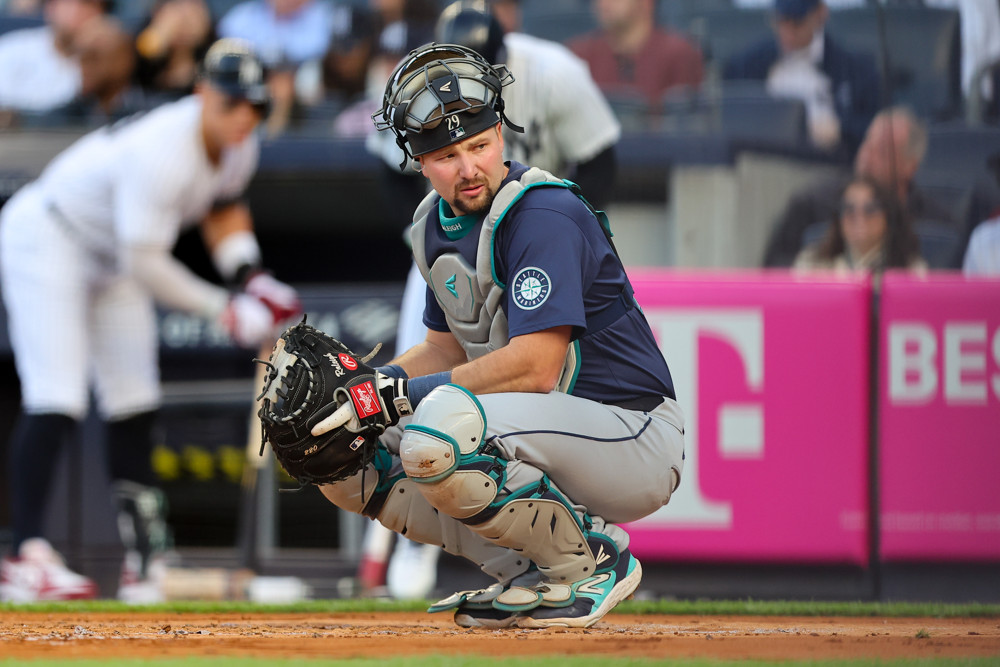
    Cal Raleigh of the Mariners has been a top catcher the last three seasons when it comes to both pitch framing and limiting basestealing. This year, that’s placed him atop the Runs Saved leaderboard with 8. Jose Trevino, who won a Fielding Bible Award in 2022, and Patrick Bailey are just behind with 7 Runs Saved.

    Last year’s Fielding Bible Award winner, Gabriel Moreno, has not been able to match last year’s performance yet. He has 1 Run Saved.

    2024 Defensive Runs Saved Leaders

    Position Name Runs Saved
    1B Christian Walker 6
    2B Marcus Semien 10
    3B Matt Chapman 7
    SS Masyn Winn 6
    LF Alex Verdugo 9
    CF (tie) Michael A. Taylor 6
    CF (tie) Jarren Duran 6
    CF (tie) Pete Crow-Armstrong 6
    RF (tie) Jo Adell 7
    RF (tie) Wilyer Abreu 7
    C Cal Raleigh 8
  • What’s Making The Guardians So Good on Defense? Finding Extra Outs

    What’s Making The Guardians So Good on Defense? Finding Extra Outs

    Photos: Frank Jansky and Joe Robbins/Icon Sportswire

    The Cleveland Guardians are 37-18 and leading the AL Central. It’s fair to say that we didn’t see this coming, particularly after Shane Bieber suffered a season-ending injury earlier this season.

    You can certainly point to the Guardians leading the AL in runs scored as the most important reason for their success this season. They also have a bullpen that has pitched very well and the starting rotation has survived Bieber’s absence.

    But I want to point out a couple of defensive improvements that have resulted in the Guardians having more Runs Saved in 2024 (23, which ranks 6th) than they had in 2023 (21, which ranked 13th)

    Catcher

    Without looking, you’re probably thinking this is an Austin Hedges thing. Hedges is arguably the best pitch framer in MLB (Jose Trevino, Patrick Bailey, and a few others have good cases too). He returned to the Guardians this past offseason after winning a World Series ring with the Rangers in 2023.

    It’s not a Hedges thing though. It’s a Bo Naylor thing.

    Naylor wasn’t a good or bad pitch framer last season. He was an average one. But in 2024, he’s been pretty good. He’s among the MLB leaders in our pitch-framing stat, Strike Zone Runs Saved. As a result he’s flipped his overall Runs Saved total from -3 to 3.

    With help from Baseball Savant, we can tell you that where Naylor is earning his value is in two spots:

    – On pitches at or a smidge below the bottom of the strike zone right in the middle of the plate.


    – On pitches to his arm side (rather than glove side) running the height of the strike zone vertically

    Bo Naylor Called Strike Percentage – MLB’s Shadow Zone

    2023 2024
    Low, mid-height 44% 55%
    Arm side, within height of zone 66% 75%

    The practical impact of Naylor of this can be seen in games like Tuesday’s win over the Rockies when Naylor and his pitchers got 13 strikeouts, including 5 looking.

    Shortstop

    For about two-thirds of last season the Guardians had to deal with the well below-average defense of shortstop Amed Rosario (-16 Runs Saved).

    Rosario was eventually traded to the Dodgers and is now primarily playing right field for the Rays. And the Guardians have replaced him with rookie Bryan Rocchio.

    Rocchio, who has 4 Runs Saved this season, is a considerable upgrade over Rosario. He’s far better than Rosario at getting to balls and turning them into outs and far better at turning double plays with fellow Venezuelan Andrés Giménez.

    Statistically speaking, Rosario couldn’t crack 60% of double play opportunities converted in any of his 3 seasons in Cleveland. Rocchio is currently at 77% and is nearly perfect at getting them when he’s the one fielding the initial batted ball.

    The Guardians turned the 5th-fewest double plays last season. In 2024, they’ve turned the 9th-most.


    Extra outs keep ERAs low and help teams win games. The Guardians have a starting catcher and starting shortstop who are getting them through pitch framing and through double play turning. Combined, Naylor and Rocchio aren’t even hitting .200 and they’re not even slugging .300. But they’re still on the field and contributing in a big way.

  • An Infield Trending Towards Positionlessness: The Defensive Experimentation that Kansas Baseball Embraced in 2024

    An Infield Trending Towards Positionlessness: The Defensive Experimentation that Kansas Baseball Embraced in 2024

    Photo by John Rivera/Icon Sportswire

    University of Kansas baseball coach Dan Fitzgerald remembers reading Moneyball in one sitting the night he bought the book.

    He would go to football games and notice the different situational packages teams would utilize on defense. When he’d go watch the Dallas Stars play, he took notice of a new approach to defensive zone breakouts.

    And he has an appreciation for Lawrence, Kansas, knowing it’s the home of not just the school at which he coaches, but also sabermetric pioneer Bill James.

    So with a KU program that finished no better than 5th place in the Big 12 in the last eight seasons, and 20-52 in league play in the last three seasons Fitzgerald knew that to be competitive, he needed to think a little outside the box.

    For much of a two-month stretch, Kansas tinkered with how it approached infield defense, The coaching staff had second baseman Kodey Shojinaga and third baseman Michael Brooks flip positions based on whether a left or right-handed hitter was up. Two other infielders, Chase Diggins and Collier Cranford, have also occasionally been parts of defensive shifting. The Jayhawks have had upwards of a couple dozen moves per game in games in which the opponent’s lineup is balanced between left and right-handed hitters.

    There is an acknowledgement within the team that Brooks has the best range of their infielders and that actually fits well with Shojinaga, who is versatile enough to play both catcher and shortstop when circumstances dictate but also has the best reactions to catch hard-hit opposite-field line drives.

    “We started looking at ground ball profiles of hitters and ground ball profiles of our pitchers, and if so-and-so’s pitching and a left-handed hitter’s up, the range they need to play second base is huge,” Fitzgerald said. “The plays at third base become more standard. If they hit it the other way, they stay on it and scorch it.

    “We asked ourselves, if we look at the skill sets of our players and we match them up with the best position they can be in to make a play, and we pretend we’re not stuck to the laws of baseball, what would we do?”

    The move didn’t make Kansas a powerhouse, but the Jayhawks did go 15-15 in the Big 12 during the regular season, only the 2nd time in the last 9 seasons that they finished .500 or better in league play. They’re the No. 7 seed in the Big 12 Tournament, which opens Tuesday morning.

    Brooks broke his hand in late April and hasn’t played since, so the positional maneuvering is on pause for now. We actually called Fitzgerald just after Brooks got injured and figured we’d share this story even in Brooks’ absence because at SIS, we’re interested in anything that is motivated by the pursuit of defensive excellence.

    The origins of this maneuvering date back to Fitzgerald’s days coaching at Dallas Baptist University with head coach Dan Heefner and pitching coach Wes Johnson (former Twins pitching coach and now head coach at Georgia) and Josh Hopper (now the Pirates pitching coordinator).

    Fitzgerald also noticed that LSU did something similar last year with middle infielders Jordan Thompson and Gavin Dugas and third baseman Tommy White, largely to protect Dugas’ arm after he returned from a dislocated shoulder.

    It makes sense that the roster on Kansas’ website doesn’t list anyone by a specific position. Anyone who plays an infield position is listed simply as “INF.”

    “When we recruit them, they’re gonna come in and we’re gonna train them,” Fitzgerald said. “We’re just gonna figure out where they should play after that.”

    One aspect of the training is their primary infield drill in which any right-handed throwing infielder takes ground balls all across the diamond multiple times per week.

    “If you saw us do our infield work, you’d be like ‘Dude, they never played a position,’” Fitzgerald said. “If you asked our guys, they’d say they’re infielders. They wouldn’t say ‘I play shortstop’ or ‘I play second base.’ I think they all see themselves as combo guards.”

    The tinkering is not just limited to infield defense. Fitzgerald has thought about playing a four-man outfield but thinks his outfield is good enough that it isn’t necessary. One recent unusual decision was taking one pitcher and telling him a few weeks ago to throw sidearm. That pitcher is now game ready.

    Within the roster itself, there isn’t that much talk about the strategic approach.

    “It’s interesting but I don’t mind it,” Brooks said. “I’ve been asked by players on other teams what’s going on here, why do you guys do that? Coach Fitz didn’t even really tell me why we did it but I guess he just trusted and knew that I could do it. Third base is more reaction but if your reaction times are really good then playing up the middle shouldn’t be a problem.

    I don’t think anybody cares what’s going on if we’re winning.”

    We don’t have any Defensive Runs Saved numbers at the college level that we can share (and the sample size of impacted plays was small relative to the rest of the season), but Kansas’ all-around defense and pitching both improved considerably from 2023. The Jayhawks went from averaging 8.6 runs allowed in Big 12 play last year to 5.5 in 2024.

    If you’re wondering about the implementation of this in MLB, it’s not happening. The NCAAA doesn’t have any shift ban rules. But MLB’s new shift ban rules, implemented last season, forbid this, with a memo specifically stipulating “Infielders may not switch sides. In other words, a team cannot reposition its best defender on the side of the infield that the batter is more likely to hit the ball.”

    Even if Fitzgerald doesn’t use this strategy again this year, he’s a believer that it worked and that it will be worth doing in the future.

    “I’m in on it, man,” Fitzgerald said. “I wish I would have been bolder to do it even sooner because I think it makes sense.”

  • What’s Led To James Paxton’s Success? The Dodgers’ League-Leading Defensive Positioning

    What’s Led To James Paxton’s Success? The Dodgers’ League-Leading Defensive Positioning

    Photos by Mark Goldman and Brian Rothmuller/Icon Sportswire

    Dodgers starter James Paxton will enter his next start later this week with a 2.58 ERA despite 24 walks and only 22 strikeouts in 38 1/3 innings. His FIP is nearly 5.

    The two things we’d usually point to in this case are defense and luck as the factors keeping Paxton’s ERA down. But in this instance, there’s something else at work: the Dodgers’ defensive positioning.

    Paxton has gotten the most support from that this season, 4.5 Defensive Runs Saved from positioning by our count. The actual skill of his defensive players at turning batted balls into outs has been worth a combined 0 Runs Saved.

    That’s not to say that there haven’t been excellent defensive plays behind Paxton. There have been. But in the aggregate, positioning has been more valuable behind him than playmaking.

    The Dodgers lead MLB with 13 Runs Saved combined from their infield and outfield positioning, one run ahead of the Mariners. Other teams doing well in that stat are the Padres, Guardians, Cardinals, and Blue Jays.  You can find the numbers for every team at FieldingBible.com.

    What does league-leading positioning both behind a pitcher and for a team actually look like?

    Take this hard liner to right field by Fernando Tatis Jr. in the 3rd inning of Paxton’s last start last Saturday. The batted ball characteristics of where the ball was hit and how hard it was hit give it a high hit probability in our system.

    But Pages was positioned just right by the Dodgers’ defense such that he had to move only 25 feet to be waiting for the ball when it arrived. Not knowing where Pages was positioned, that ball had a 43% catch probability in our system. But knowing where Pages was, the out probability jumped to 88%.

    The 45% gap from 43% to 88% represents the value of defensive positioning in plays saved, which we then convert to a Runs Saved value. 

    Pages’ positioning has been a boon to Paxton wherever Pages has been. Four of the top five boosts in a player’s out probability that have come from defensive positioning with Paxton on the mound have been on balls that were caught by Pages.

    Here’s another example and if you watch this clip, you’ll hear Joe Davis note a reference to Pages’ positioning.

    Just to show you one non-Pages example, here’s another good one, with Gavin Lux stationed in the right spot to handle Wilmer Flores’ grounder up the middle. This positioning turned a ball with a 30% out probability into one with a 66% out probability.

    Paxton’s defensive positioning support is a little out of line with his teammates.

    There have been 14 instances of a fielder having a 20% or better increase in out probability due to positioning for Paxton and only 5 instances of a 20% or larger decrease due to positioning.

    How does that compare to his mound mates?

    Plays With Increase/Decrease in Out Probability From Defensive Positioning

    2024 Season (Among Dodgers with most IP)

    Plays with 20% Increase Plays With 20% Decrease
    James Paxton 14 5
    Yoshinobu Yamamoto 10 9
    Tyler Glasnow 9 9
    Ryan Yarbrough 10 4
    Gavin Stone* 8 11

    * Not including Stone’s start on Tuesday.

    In sum, we weren’t looking to be anything other than descriptive here. We’re not going to use this in some sort of predictive fashion. For now, your biggest takeaway can be that, for at least a few starts, the Dodgers have done a nice job supporting Paxton defensively. Just not in the way we’d typically describe it.

  • The Defensive Dynamic Duo: Christian Walker and Ketel Marte

    The Defensive Dynamic Duo: Christian Walker and Ketel Marte

    Photo: Rick Ulerich/Icon Sportswire

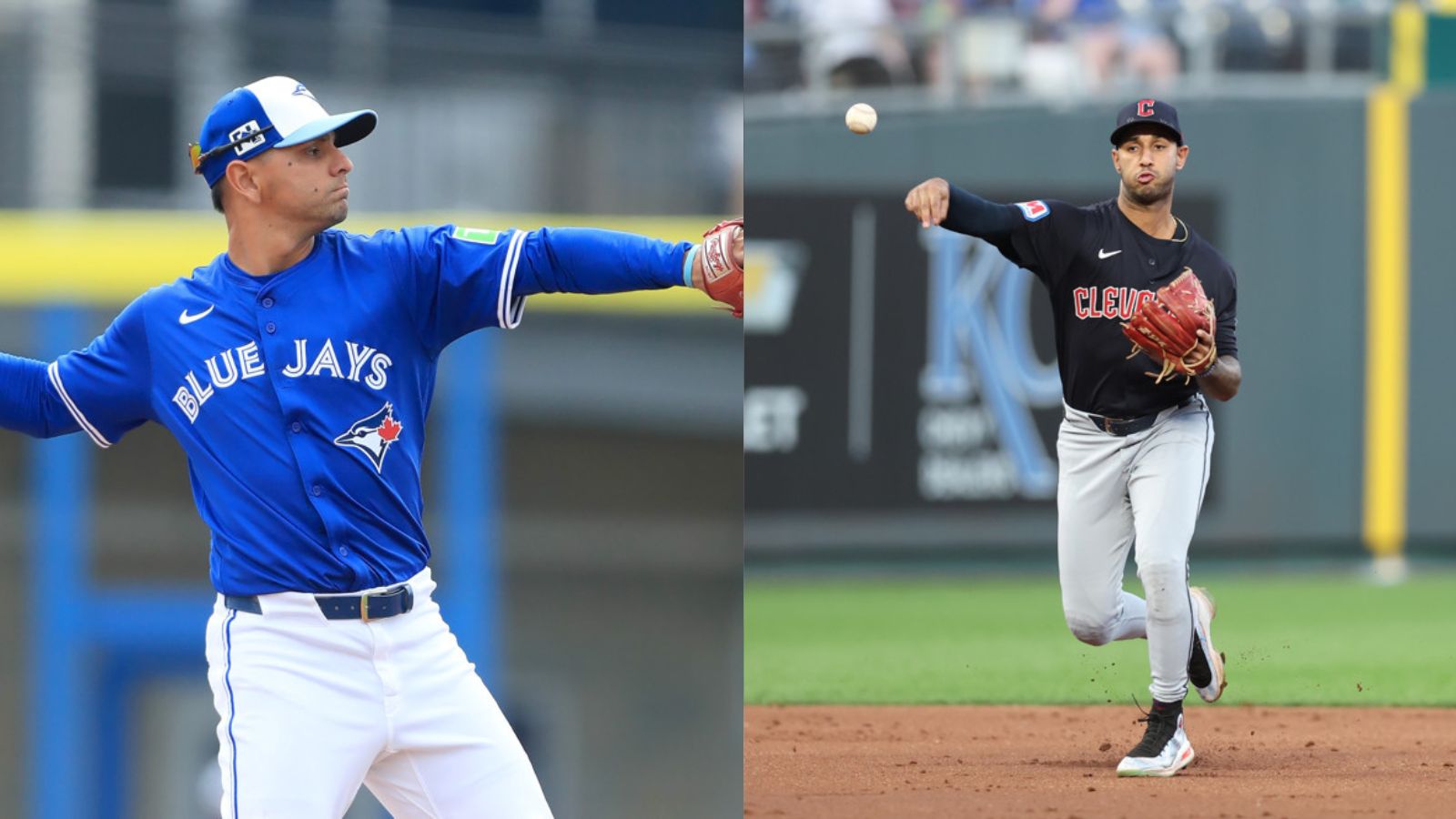
    Today we named Blue Jays outfielder Daulton Varsho and Rangers second baseman Marcus Semien as our Defensive Players of the Month. If it had been the Defensive Duo of the Month, we would have gone in another direction.

    Diamondbacks first baseman Christian Walker and second baseman Ketel Marte were each worthy on their own of being given the top honor. Together, the Diamondbacks right side of the infield was terrific, even if the team sputtered to a 14-18 start.

    The Diamondbacks have had more ground balls and bunts hit from the first base line out from home plate at an angle that roughly replicates the midpoint between home plate and second base. They’ve been the 2nd-best team at turning those balls into outs.

    Both Walker and Marte have 8 Defensive Runs Saved this season. Walker, a 2-time Fielding Bible Award winner, easily leads first basemen in Runs Saved. Marte is second to Semien at second base.

    Christian Walker

    You know how it’s said that the best players make the routine plays routinely?

    Walker has had 52 opportunities to make plays with an out probability of at least 64%. He’s completed 51 of them, the lone one he didn’t was because Brandon Pfaadt dropped Walker’s throw at first base (Walker still gets credit for successfully fielding the ball). Those “routine” plays account for 5 of Walker’s 8 Runs Saved.

    Walker has also made the tough plays when needed, like this one.

    Ketel Marte

    Marte has usually been a good defensive second baseman, though he’s only played more than 100 games in a season at the position twice. He’s averaged about 6 Runs Saved per 1,000 innings, which is a solid total. He’s totaled as many as 14 Runs Saved in a season though he had only 2 last season.

    What’s separated Marte through the first 15 to 20% of the season is that he’s minimized his mistakes in a way that runs counter to the last 2 seasons.

    Season Innings Misplays & Errors Misplays & Errors Per 1,000 Innings
    2022 806 1/3 18 22.3
    2023 1,210 1/3 28 23.1
    2024 228 2 8.8

    And he’s sprinkled in a few nice plays too.


    That the Diamondbacks entered Thursday ranked 4th in Runs Saved as a team is basically entirely the duo’s doing. The rest of the Arizona team has a combined 3 Runs Saved.

    What they’ve done on defense has basically mirrored what they’ve done on offense. Marte and Walker lead the Diamondbacks in the batting runs component of Baseball-Reference’s Wins Above Replacement too. They’re legit MVP candidates for multiple reasons.

  • Stat of the Week: March/April Defensive Players of the Month

    Stat of the Week: March/April Defensive Players of the Month

    Blue Jays outfielder Daulton Varsho and Rangers second baseman Marcus Semien are our co-Defensive Players of the month for March/April.

    The two have an additional common bond. Despite gaudy defensive statistics, they’ve never won a Fielding Bible Award.

    By our eyes, Varsho has the best highlight reel of any player in MLB this season. He finished April tied for the MLB lead among all players with 8 Defensive Runs Saved and 10 Good Fielding Plays. He’s split his time between left field (5 Runs Saved) and center field (3 Runs Saved) and thus does not lead either position individually in Runs Saved.

    Blue Jays fans (and Toronto media) shared their annoyance at Varsho not winning a Fielding Bible Award last season. Varsho led all outfielders in Runs Saved but finished 2nd in the voting to Steven Kwan of the Guardians for left field and 4th in our inaugural Defensive Player of the Year voting to Pirates third baseman Ke’Bryan Hayes. Varsho didn’t win a Gold Glove either.

    Since the start of the season, Varsho has made a statement with how good his defense has been. He’s had a knack for making great plays against great hitters. Check out his fence-crashing catch against Shohei Ohtani and his diving catches against Bobby Witt Jr. and Kyle Tucker.

    Varsho has 55 Defensive Runs Saved as an outfielder since the start of 2022 season. No one else is within 20 runs of him. It’s not just catches either. In that time, he has 11 Outfield Arm Runs Saved, 1 shy of the MLB lead.

    Semien has finished 2nd in the Fielding Bible Awards voting twice, in 2021 and 2023. Perhaps this is the season that Semien wins it as he’s off to a pretty good start.

    Semien has 7 Defensive Runs Saved this season for an infield that has turned the highest percentage of grounders and bunts into outs of any MLB team. His defensive work has been less about fancy plays (though he has this one and this one) and more about just getting to balls without issue and accumulating outs. That’s not calling him a compiler. That’s calling him good at his job.

    Semien has made just about every play he should make. Most of the balls he’s missed fielding, other second basemen have a history of missing similar balls too. Last season, Semien had 30 plays on which he was debited more than 0.4 runs. In March and April, he had only one. He’s made 19 of 19 plays with a 60% to 80% out probability and is 47-of-48 fielding balls with a greater than 80% out probability.

    By a bizarre coincidence, Semien also ended April ranked No. 1 in Defensive Runs Saved against him as a hitter. Teams have saved a combined 6 runs against his batted balls.

    Semien ended April hitting .258 but should probably be doing better than he is.

    Here are a bunch of examples of very good plays being made against him: a running catch by Cubs left fielder Mike Tauchman, a sliding snag by Astros right fielder Kyle Tucker, a play from deep in the hole by Cubs shortstop Dansby Swanson and a nifty play by Braves shortstop Orlando Arcia. Defensive positioning has also gotten Semien a couple of times, including on this catch by Mark Canha.

    There’s no shortage of good defense being played against Semien at the moment. But there’s no shortage of good defense being played by him either.

    Most Defensive Runs Saved By Position

    Through End of April 

    Player Team Runs Saved
    1B – Christian Walker Diamondbacks 7
    2B – Ketel Marte Diamondbacks 8
    3B – Trey Lipscomb Nationals 4
    SS – Masyn Winn Cardinals 6
    LF – Riley Greene Tigers 7
    CF – Kyle Isbel (Tie) Royals 5
    CF – Parker Meadows (Tie) Tigers 5
    RF – Wilyer Abreu Red Sox 4
    C – Cal Raleigh Mariners 7
    P – Josh Fleming Pirates 3

  • Going Deep with Kyle Isbel, Who Goes Deep Better Than Anyone

    Going Deep with Kyle Isbel, Who Goes Deep Better Than Anyone

    Photo: Keith Gillett/Icon Sportswire

    One of the things we liked about talking to Royals center fielder Kyle Isbel was that he takes an analytical approach to playing center field without explicitly saying he’s taking an analytic-based approach. He processes data points – ones he estimates as he sees them.

    “Being able to read swings and the different pitches guys throw, you can get certain outcomes based on certain guy’s swing paths,” Isbel said in our podcast interview last week. “You can pretty much see where a ball’s going before a guy even makes contact.”

    The play on which Isbel gained the most value towards his Defensive Runs Saved this season was not a jumping, sliding, or diving catch, but one on which he got a great jump. Statcast measured him as being 7.7 feet ahead of the average major league center fielder within the first 1.5 seconds of Luis Robert Jr. making contact.

    That allowed Isbel to turn a ball with a 29% out probability into an out.

    Being able to do that and do it well is vital for any MLB center fielder. Isbel is one of the best outfielders in baseball when it comes to covering ground with immediacy. By Statcast’s jump stats he’s nearly 3 feet ahead of the average center fielder within the first 1.5 seconds of ball hitting bat.

    And as he keeps running (in a manner honed by Olympian Maurice Greene this spring), he’s still processing and analyzing estimated data points.

    “The wind is a factor, the sun is a factor,” he said. “How you perceive the ball. How does it spin?”

    That last one explains why Isbel doesn’t rank as well in another aspect of what Statcast tracks, routes.

    Watch Isbel make catches and you’ll see that sometimes he’s taking indirect paths to the ball. He goes back or comes in first and then does other things second. Relative to other center fielders it seems that there’s more in-the-moment adjustment going on.

    By Statcast’s measures, he takes among the least direct routes to a ball of any center fielder. And that doesn’t bother him.

    “You can’t necessarily see the spin off the bat at contact,” Isbel said. ”You can just kind of see the direction, so as you make your move in the direction, you figure out how the ball is spinning and that’s how your route is getting altered. The ball’s not hit straight every single time.”

    “Back or in is the first thing that pops into your head. You can see if a guy gets jammed. You can see if he hits it well, takes a big swing. The more you really watch, I try to do it in BP every day, just watch a guy’s swing. See the ball flight. Is it top spun off the bat, is it side spun, is it back spun? Did he get everything into it?”

    Isbel has the 3rd-most Defensive Runs Saved among center fielders since the start of the 2023 season.

    Most Defensive Runs Saved – CF since start of 2023

    Player Runs Saved
    Daulton Varsho 20
    Kevin Kiermaier 19
    Kyle Isbel 18
    Johan Rojas 14
    Brenton Doyle 13

    That’s driven largely by how well he’s done catching balls hit to the deepest part of the ballpark and making plays like the one he made against Robert.

    Entering Tuesday, Isbel had caught 87 of 100 balls classified as “deep” by our data tracking in the last 2 seasons. Based on out probabilities, the average center fielder would have caught 75.

    He’s 12 percentage points better than expectations. There’s no center fielder better among the 40 who have had the most opportunities since the start of 2023.

    Biggest Differential – Out Rate vs Expected Out Rate – CF Since Start of 2023

    Player Out Rate Expected Rate Difference
    Kyle Isbel 87% 75% 12%
    Daulton Varsho 93% 82% 11%
    Kevin Kiermaier 90% 82% 8%
    Johan Rojas 86% 80% 6%

    Stats through games of April 29, 2024

    The other thing we liked about talking to Isbel was that he played along with some of our questions. He opened the interview by sharing his defense origin story, playing “Impossibles” with his father as a kid (he’d have to try to make difficult catches). And he closed it by indulging us on a hypothetical.

    Isbel has a heavily tattooed left arm and says he’s done with body art. But what if he added one to commemorate his defense. What would it be?

    “I would get a lock,” he said. “That’s what comes to me when I play center field. If you get the ball over here, you’re out. It doesn’t matter where it’s at. I’m gonna lock it down. That’s just my mindset.”

    He’s got the mindset. The analytical approach is the key that unlocks the skill.

  • Stat of the Week: Trey Lipscomb Makes A Good First Impression

    Stat of the Week: Trey Lipscomb Makes A Good First Impression

    Early this season baseball fans are celebrating big starts at the plate from Mookie Betts, Juan Soto, and Bobby Witt Jr. 

     But what about recognizing a good start in the field?

     It’s an oft-said baseballism that when you’re newly in a game, the ball finds you. The ball has found Nationals third baseman Trey Lipscomb a lot. In his first 3 major league games, Lipscomb has already handled 15 chances cleanly.

     That’s busy for a third baseman. Ke’Bryan Hayes led the position in range factor last season. He had a few three-game stretches last season like the one Lipscomb just did, but his range factor last season was an average of just under 3 chances per game.

     Now you may ask why we’re bringing up an unknown rookie on a 1-3 team that may finish at the bottom of the NL East this season. Fair question. 

     It’s easy to get excited by the superduperstars and the hyped rookies, like Jackson Chourio and Wyatt Langford. But part of the fun of baseball is about the under-the-radar guys who might catch some people by surprise.

     And while maybe Lipscomb won’t be Hayes or Nolan Arenado in the field, he could still be someone you’ll want to watch. Reds broadcaster and Hall of Famer Barry Larkin was impressed and said so during during the telecasts of the last 2 games of the Reds-Nationals series. Larkin’s a 3-time Gold Glove winner, so when he says a player has been “impressive,” we listen.

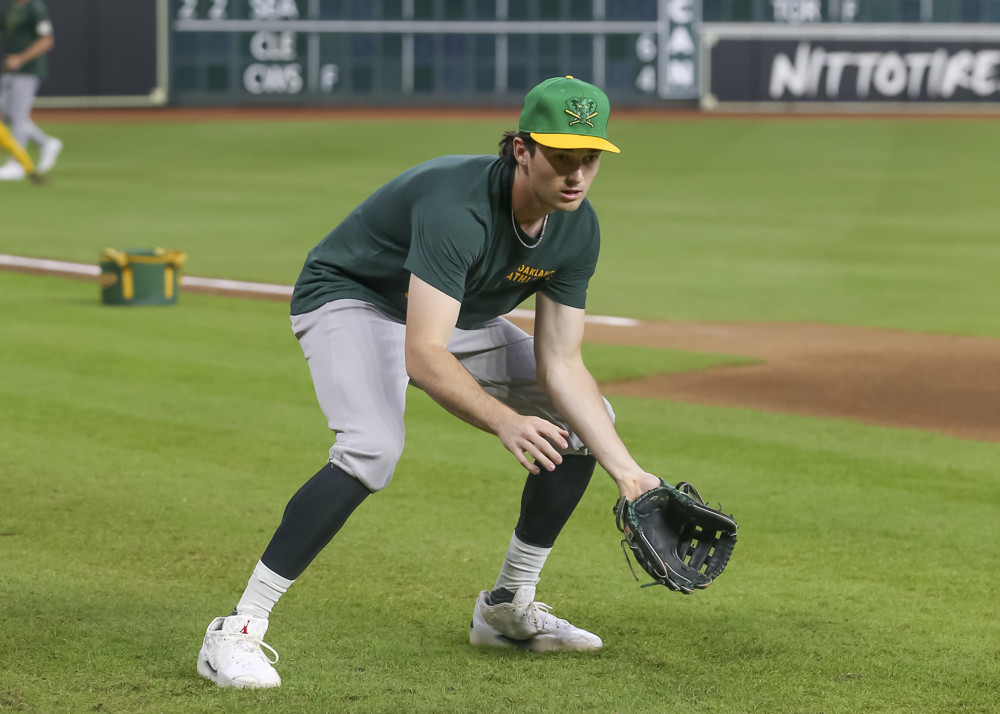
    We talked to Lipscomb last year after he won a minor league Gold Glove at third base in a season in which he played every infield position. He was among the Nationals’ final cuts after hitting .400 in spring training but was almost immediately recalled when Nick Senzel suffered an injury that required an IL stint.

    Lipscomb made a couple of nifty plays on ground balls, getting an initiation in the first inning of his first game at third base on a Christian Encarnacion-Strand grounder that took a high hop. Lipscomb handled it well and got the out.

    Lipscomb’s best play by Runs Saved was also against Encarnacion-Strand, one that he turned into a 5-4-3 double play. That play was worth nearly 3/4 of a Run Saved by itself.

    Lipscomb and Encarnacion-Strand had quite the batter-fielder relationship for a couple of days, with Lipscomb retiring Encarnacion-Strand 5 times.

    Lipscomb said in our interview that he wanted to be a fielder who dominated the routine plays. He had his share in his first 3 games and looked comfortable.

    But there were a couple of interesting challenges. On one play Lipscomb made, against Bryan Reynolds of the Pirates, he chose not to throw home in a situation in which he may have had a play at the plate. For those unaware, that decision is factored into Lipscomb’s Defensive Runs Saved. He gets a credit for retiring Reynolds at first base but also loses some run value within his Runs Saved for what we call “Giving Away a Lead Runner” in our cataloging of Defensive Misplays.

    Lipscomb also was unable to make a play on a hard-hit ball down the third base line. However, by diving and reaching the ball, Lipscomb held Santiago Espinal to a single rather than a double.

    Lipscomb got penalized within Defensive Runs Saved for not making the play on Espinal, but he gets a chunk of that run value back because he recorded a “Keeping The Ball In The Infield” in our tracking of more than 30 types of Good Fielding Plays.

    All in all, Lipscomb got through his first 3 days in the major leagues pretty well. He experienced a variety of plays and handled them. He wasn’t perfect but he made a strong impression.

    “The game of baseball is not about perfection,” Lipscomb said in our offseason conversation. “But if you can be as physically sound and mentally sound on defense as you can, it can help you a lot.

     So far so good. Let’s see if he can keep it up.