Category: NFL Draft

  • A Comparison of the Top 3 QBs in the 2025 NFL Draft Class

    A Comparison of the Top 3 QBs in the 2025 NFL Draft Class

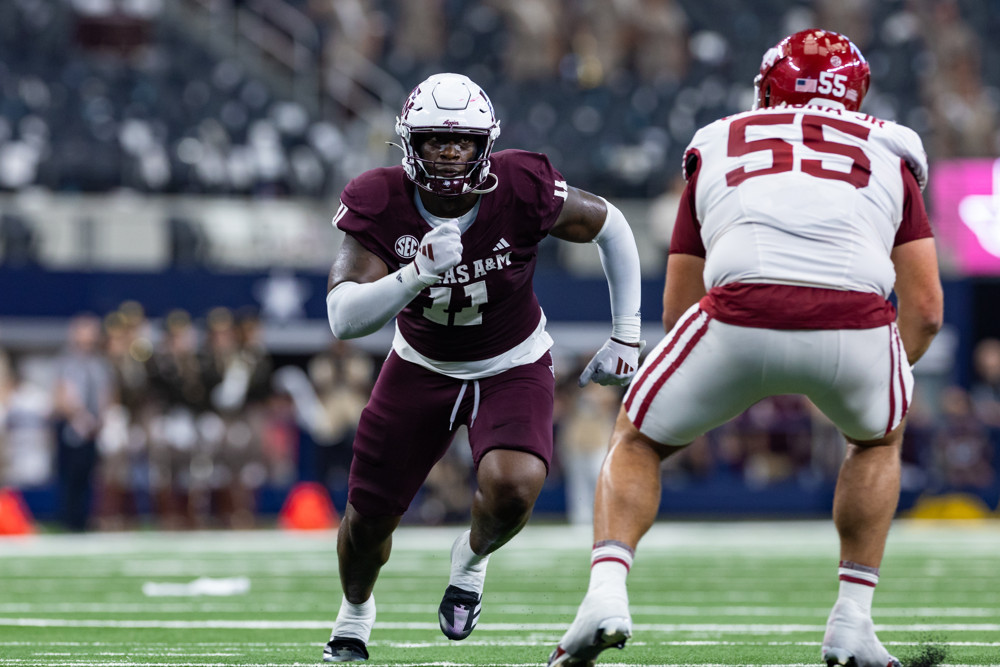
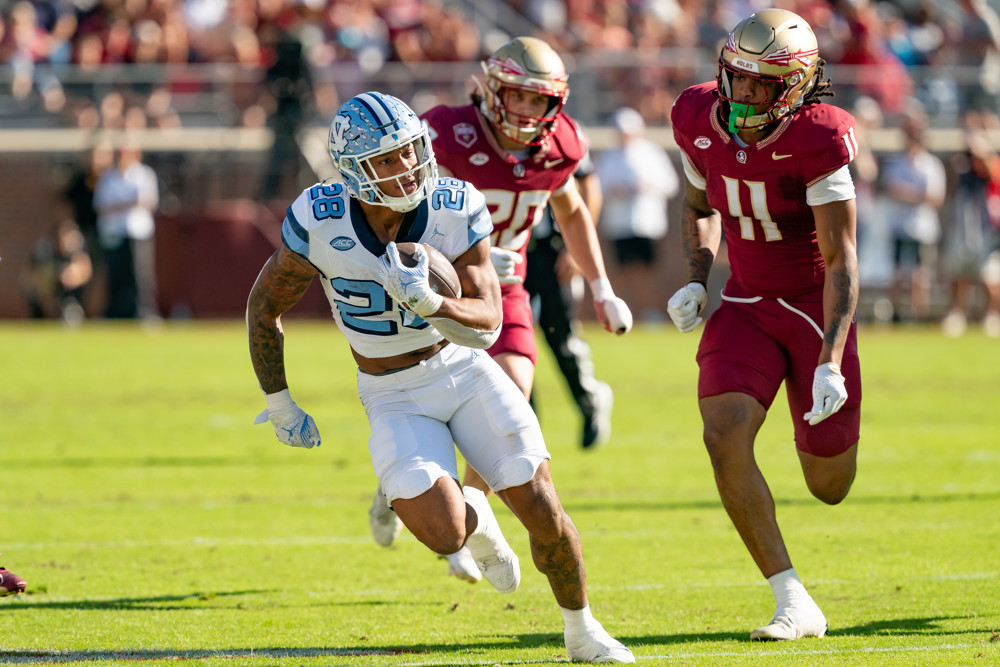
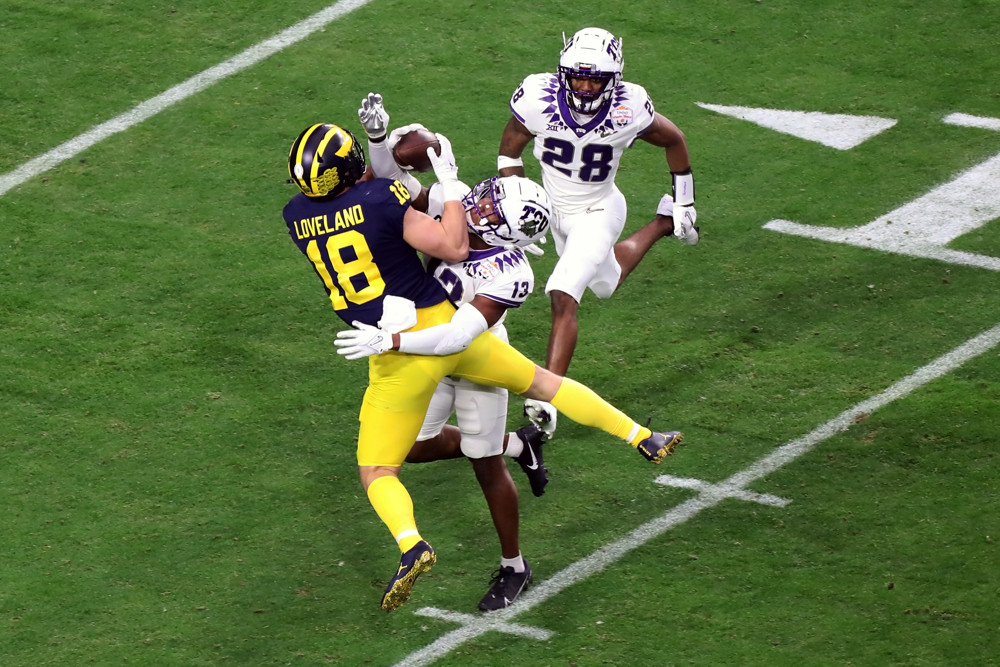
    Photos: David Rosenblum (left, right), David Buono (middle)/Icon Sportswire

    It will be years until we determine what prospects pan out to be the best of this upcoming class, but that isn’t going to stop us from making predictions. Cam Ward, Shedeur Sanders, and Jaxson Dart are projected to be the top 3 quarterbacks taken in this class, but we don’t know the order in which they’ll be selected.

    What we do know is how they performed in their collegiate careers from a statistical and scouting perspective, and that is what will be used to project them forward. 

    Without a true consensus No. 1 like we have seen in past seasons (e.g. Trevor Lawrence, Joe Burrow), teams will have to look at the fit in their schemes to see which one will have the best potential to succeed. 

    A quick pass RPO scheme? Dart would be the look. 

    A more mobile playmaker? Ward’s your guy. 

    Someone who can avoid pressure and throw on the move? That would be Sanders. 

    Using the reports from our scouting department and the metrics from our charting operation, let’s take a look deeper into how these three compare (and contrast) and why we think each fits as they do.

    Overall

    From a statistical perspective, Dart had the better season in yards per attempt, interceptions, and SIS’ Independent Quarterback Rating (IQR, an SIS quarterback metric that builds on the traditional Passer Rating formula by considering the value of a quarterback independent of results outside of the his control such as dropped passes, dropped interceptions, throwaways, etc.). His success is all the more impressive when considering he also had the higher average depth of target by 2 yards over Ward and almost 4 higher than Sanders.

    Under Pressure and On the Move

    Most of Dart’s success comes from a clean pocket, as his IQR dips significantly when under pressure and falls behind his two counterparts. As Max Nuscher and Brandon Tew highlighted in Dart’s scouting report, When under pressure, he throws too often off his back feet and will put the ball in dangerous places.”

    Sanders is the one who led the pack in IQR when pressured, but Ward led in accuracy with a 73% on-target percentage. Dart’s was a measly 61%, which was 44th in FBS among 116 QBs with 50 attempts under pressure (put another way, he was in the 63rd percentile of those QBs).

    All three of these guys have talent on the move according to our scouts…

    “He does a good job with his accuracy on the move and has shown the ability to make good throws across his body and down the field if can’t get set.”

    – Max and Brandon on Dart


    “He is accurate on the move as long as he can get enough into the throw.”

    – Matt Manocherian on Sanders


    “His ability to extend plays is phenomenal. He scrambles with a pass-first mindset, constantly keeping his eyes downfield on broken plays.”

    – Zach Somma and Vincent Shipe on Ward

    IQR and On-Target Percentage while on the move

    Player IQR On-Target Percentage
    Shedeur Sanders 125.8 78%
    Jaxson Dart 112.9 68%
    Cam Ward 75 71%

    However, Sanders has the advantage while on the move, leading in both IQR and on-target percentage on those passes. Ward is accurate but made too many poor decisions that resulted in 4 interceptions, the most out of the three. Dart’s accuracy was better when on the run than it was while pressured, meaning he can benefit from having better pocket awareness and escaping when able.

    Accuracy on Throws to Different Areas of the Field

    My colleague Chris Lee wrote a great piece projecting accuracy from college to the pros and highlighted the on-target percentages of the quarterbacks of this year’s class. He found that, out of the three, Dart had the best accuracy on intermediate throws at 74%, followed by Sanders at 69% and Ward at 67%. On deep throws, Sanders had the edge at 55% with Dart at 51% and Ward at 46%.

    Ward’s deep ball accuracy being worse than 50% is at the low end of the spectrum. The vast majority of those misses are on overthrows, over 70 percent of them. The trend is less stark on intermediate throws, but he is still more prone to sailing a throw when he misses. According to our scouts, his footwork may be the main culprit.

    “Mechanically, Ward has decent footwork, but relies upon an extra hitch often in order to fully set his feet rather than throwing at the top of his drop consistently. Additionally, he often fails to transfer his weight toward his target, throwing off his back foot or while falling to one side or the other.”

    – Zach and Vincent on Ward’s mechanics

    Inside vs. Outside Throw On-Target Percentage

    When comparing accuracy on inside and outside throws, Dart’s is 7 percentage points higher on outside throws than the next closest in Sanders.

    Player Middle On-Target Percentage Outside On-Target Percentage
    Cam Ward 85% 64%
    Jaxson Dart 82% 80%
    Shedeur Sanders 82% 73%

    Dart shines on a specific sideline throw according to our scouts:

    “He throws with good accuracy throwing to the back shoulder along the sideline where only his receiver can get to it.”

    – Max and Brandon

    Snap to Throw Times

    All of these guys had clean-pocket snap-to-throw times in 2024 ranging between 2.43 and 2.49 seconds.  Ward had the fastest at 2.43 seconds followed by Dart at 2.47 seconds and Sanders at 2.49 seconds. However, the way that they got to those numbers differs considerably.

    In 2023, Cam Ward recorded the fastest clean-pocket snap-to-throw time we have recorded at 2.13 seconds, following up the 8th-fastest in 2022 at 2.20 seconds. The jump this year is certainly notable given that he played in a new offense in Miami. 

    Part of the reason might be a change in his drop type distribution. The number of deep drops he had last season increased to 49 in 2024 from 31 in 2023 while his short drops decreased to 351 in 2024 from 395 in 2023.

    Shedeur had nearly 3 times the amount of deep drops than the other two in 2024. According to our scouts, deep drops can get him into trouble…

    “However, he tends to hold the ball for much too long on deep drops. He doesn’t always trust his reads and will miss some on-schedule opportunities, extending plays unnecessarily and getting himself into trouble.”

    – Matt on Shedeur’s deep drops

    His 3.1 second snap-to-throw time on deep drops is roughly average. However his on-target percentage on deep drops falls to 63.4%, the lowest out of the group.

    Conclusion

    This quarterback class certainly is more up-in-the-air than ones in the past. Ward, Sanders, and Dart each have plenty of strengths and flaws. If one is provided a system that highlights their best traits (the ones we’ve noted here), we think they’ll have a better chance to thrive. There is a long time until we know the answer of who is the best, so set your predictions now and see where they take you.

  • Analytics Scouting Report: Travis Hunter, Wide Receiver

    Analytics Scouting Report: Travis Hunter, Wide Receiver

    Photo: Chris Leduc/Icon Sportswire

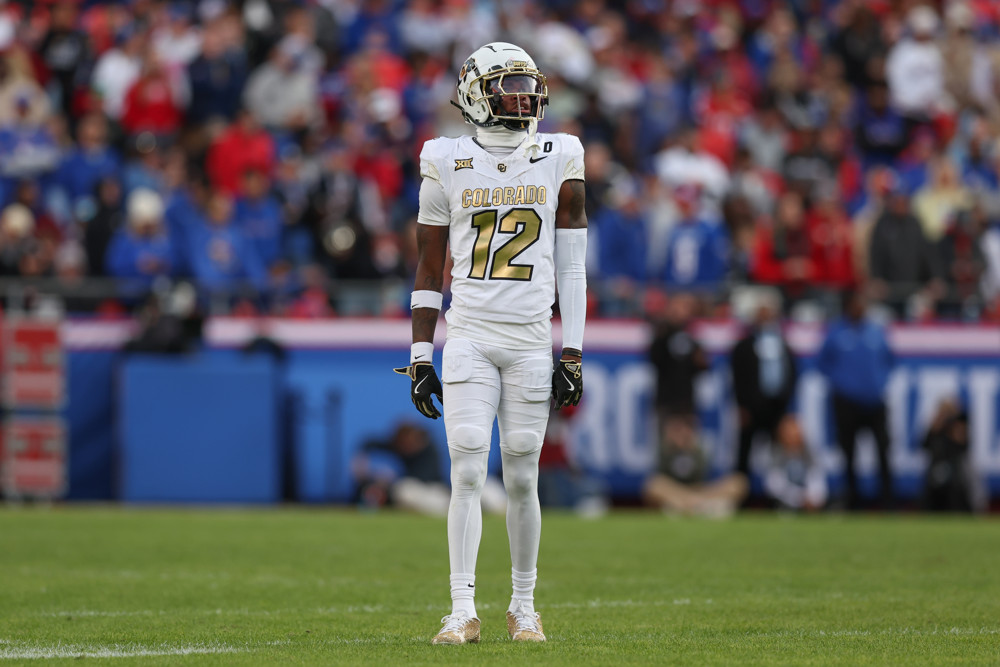
    Usually, the saying goes that players who are athletes but can’t catch the ball play cornerback. Well, a cornerback who won the Chuck Bednarik Award as the nation’s best defender also took home the Fred Biletnikoff Award as the nation’s best receiver (and something else called the Heisman Trophy).

    Travis Hunter is an incredible athlete whose versatility reached unprecedented levels while playing at Jackson State and Colorado. In his final year, Hunter played 700-plus snaps on both offense and defense, rarely coming off the field at any point in time.

    Even though Hunter’s intentions are to play both sides of the ball 100% of the time in the NFL, it will be rather difficult to excel at both on a full-time level. Covering the best receivers in the world AND trying to become one of the best receivers in the world is something nobody has seen and would be a monumental task to achieve. 

    Assuming he will pick one side as primary, our scouting department believes he will provide the most value as a cornerback and scouted him as such. But to capture the full picture of who Hunter is, we wanted to break down his receiving ability from a metrics perspective to find where his best part-time value can be applied on the offensive side of the ball. Playing both sides all the time may be impossible, but there will come opportunities that having one of the freakiest athletes on the field can pay dividends on the scoreboard.

    Here is what his Stats Overview would look like on our draft site if he were coming out as a receiver.

    Stat Value Rank (out of 22) Percentile
    TPTS Per Game 2.5 4 87th
    TPTS RTG Overall 91 9 57th
    TPTS Per Gm Slot 0.9 8 65th
    TPTS Per Gm Wide 1.5 3 87th
    Catchable Catch % 94% 2 96th
    Target% +/- 5.7% 11 57th
    Target Share 27% 8 61st
    Deep Route% 26% 22 0
    Unique Routes 31 17 30th
    YAC Per Rec 5.0 18 26th
    Brk+Miss Tkl Per Rec 0.28 7 74th

    Hunter comes into the draft with some of the surest hands we have seen since we started collecting data in 2016. Hunter’s 2024 ranked 14th in catchable catch percentage at 94% and 19th in on-target catch percentage at 97% among the nearly 1,200 receivers with 75 or more targets in a season since 2016. Not too bad for a corner! 

    From a Total Points perspective, Hunter led the Buffaloes with 31 Receiving Total Points, which was also good for 9th in FBS last season. The majority of this production was from out wide, notching 21 Receiving Total Points on 103 targets compared to only 9 Receiving Total Points on 22 targets from the slot, with the former being good for 6th in FBS last season.

    Travis Hunter’s Top 10 Routes Run

    Route Type Percent of Routes Percent of All Completions
    Curl 32% 25%
    Fade 10% 3%
    Slant 9% 8%
    Dig 9% 16%
    Screen 6% 19%
    Post 5% 3%
    Deep Cross 4% 4%
    Out 4% 5%
    Go/Fly 3% 4%
    Drag 2% 4%

    Hunter’s route tree is pretty concentrated to the curl route, accounting for about one-third of his routes in 2024. Colorado had to get the ball out quick with a below-average pass protection unit, so throwing to your best player on a simple curl route with hands as sure as his proved to be successful. This also could help explain his low rate of running deep routes generally.

    Even though he ran more fades and slants, the percent of his completions are lower than digs and screens. Fades make sense, as that is a lower catch probability than others and can be used as a clearout route for underneath targets. However, the gap between slants and the others is significant given that was his third most common route, but was only targeted 9 times.    

    Given that the majority of his receptions come on the curl route, it isn’t a shock that his yards after catch per reception were so low (18th out of 22 qualifying players SIS scouted this year). His ability to make people miss and break tackles is above average, so hitting him more in space where he can show that athleticism can help his YAC.

    Hunter starred on both sides of the ball in college, both with his production (most Total Points among receivers and corners in FBS in 2024) and pure athleticism. He made plenty of highlight reel catches and has sure hands in got-to-have-it situations. He has room to grow as a receiver and was not fully unleashed at Colorado on that side of the ball. It will be intriguing to see if a team lets him play both sides in some capacity, as there is a path to success with his profile.

  • Evaluating How A Quarterback’s College Accuracy Projects To The NFL

    Evaluating How A Quarterback’s College Accuracy Projects To The NFL

    Photo: Andy Altenburger/Icon Sportswire

    The NFL Draft is always a tricky thing to figure out. Drafting well can propel a franchise for sustained success, but whiffing on picks, especially at the top of the draft, can set a team back for years. This applies even more so when it comes to quarterbacks. Teams are constantly trying to find the slightest edge over their competition, and so there is great value in discerning if an aspect of a player’s play in college can reliably indicate how they will perform in that same aspect in the NFL.

    For that purpose, we wanted to investigate how strong of a correlation existed between a quarterback’s accuracy in college and in the NFL. To give it a little more specificity, we compared on-target percentage between college and the NFL at three specific depths. When running correlation and linear regression tests, we got results that are in line with what one would have expected, in terms of on-target percentage for short passes having the strongest correlation between college and the NFL.

    On-Target Percentage Depth Correlation Coefficient Adjusted R2
    Short (< 11 yards) 0.73 0.50
    Intermediate (11-20 yards) 0.36 0.09
    Deep (> 20 yards) 0.34 0.07

    The above table shows how career college on-target percentage at different depths predicts NFL on-target percentage in the first 2 to 3 years (at least 2 years and 300 passing attempts, at most 3 years). SIS started tracking college football in 2016 and 22 quarterbacks qualified by these criteria since then.

    While the order of correlation may not be the most exciting discovery, just how strong the correlation is for short passes is worth paying attention to. At the very least, a prospect’s college on-target percentage for short passes is a good piece of context to include when considering how accurate he could be at that depth at the next level.

    When observing the graph above, there are other interesting bits of information to take away. Let’s take a moment to compare Josh Allen and Zach Wilson. Both came out of college being described as boom-or-bust prospects with big arms and a penchant for big plays, but questionable accuracy, decision making, and reliance on hero ball at times. We can see that in college they had similar accuracy on short throws (and intermediate throws as well, as seen in the graph below), but at the next level Allen has been able to deliver accuracy above expectations while Wilson’s accuracy has been underwhelming. This offers insight on one potential factor out of many for why their careers have taken different directions.

    Results for correlation testing at the intermediate and deep levels are not as strong, though not insignificant and therefore still worth mentioning. One note to take away from all three charts is that Baker Mayfield was the most accurate at all three depths in college and that has translated into him now being one of the more accurate passers in the NFL, a trait that belies his gunslinger reputation.

    On-Target Percentage and Overall QB Performance

    With these results in mind, we wanted to discover whether they could tell us anything in terms of performance, and therefore we performed correlation testing between on-target percentages and IQR (Independent Quarterback Rating, an SIS quarterback metric that builds on the traditional Passer Rating formula by considering the value of a quarterback independent of results outside of the his control such as dropped passes, dropped interceptions, throwaways, etc.).

    NFL Accuracy by Depth Correlation with NFL IQR
    Short (< 11 yards) 0.55
    Intermediate (11-20 yards) 0.74
    Deep (> 20 yards) 0.24

    First, we wanted to test with NFL accuracy numbers because if there was no significant correlation, then there would not be much reason to check for correlation between college on-target percentage and NFL IQR. We can see that short and especially intermediate accuracy share a strong correlation to QB performance and therefore being more accurate on intermediate throws could be a little more valuable when evaluating prospects than at other depths.

    College Accuracy by Depth Correlation with NFL IQR
    Short (< 11 yards) 0.34
    Intermediate (11-20 yards) 0.38
    Deep (> 20 yards) 0.16

    When testing with college accuracy numbers, the results are understandably not as strong. However, the strength of correlation follows the same order with intermediate on-target percentage coming in first, followed by short, and then lastly deep. Deep accuracy showing weak correlation to QB performance makes some sense on an intuitive level even if solely because long throws are rarer and more volatile in nature.

    2024 Draft Class

    The 2024 draft class was not included in the study above due to having only one season under its belt. However, evaluating their rookie seasons against their college careers (both with a minimum of 300 attempts) could prove useful in terms of identifying bounce back or regression candidates. Among these players, when taking a look at Caleb Williams, his intermediate on-target percentage had the largest drop off at any depth between college and the NFL. If his intermediate accuracy bounces back, we could see better production from him in year two.

    Stats Bo Nix Caleb Williams Drake Maye Jayden Daniels
    Coll OnTgt% Short 83% 84% 79% 78%
    NFL OnTgt% Short 83% 81% 83% 80%
    College OnTgt% Intermediate 60% 63% 63% 63%
    NFL OnTgt% Intermediate 61% 48% 55% 64%
    College OnTgt% Deep 52% 47% 50% 49%
    NFL OnTgt% Deep 44% 40% 43% 54%
    NFL IQR 92.7 88.0 84.8 104.6

    2025 Draft Class

    Looking ahead to the 2025 draft class, outside of Riley Leonard and Tyler Shough, the other eight prospects are fairly bunched together in terms of their short accuracy in college, so making any meaningful predictions for how they will compare to each other at the next level could prove difficult. One nugget to file away is Jaxson Dart’s lead in accuracy on intermediate throws, potentially one positive indicator for his overall performance if he is able to replicate that level of precision in the NFL.

    Player OnTarget% Short OnTarget% Intermediate OnTarget% Deep
    Cameron Ward 82% 67% 46%
    Dillon Gabriel 84% 64% 58%
    Jalen Milroe 82% 56% 51%
    Jaxson Dart 84% 74% 51%
    Kurtis Rourke 83% 62% 51%
    Kyle McCord 81% 61% 55%
    Quinn Ewers 82% 66% 48%
    Riley Leonard 79% 59% 45%
    Shedeur Sanders 83% 69% 55%
    Tyler Shough 79% 58% 47%
    Will Howard 81% 60% 49%

    Conclusion

    While recognizing the limitations of sample size and various factors outside of a quarterback’s control, our study shows there is some value in considering a quarterback’s accuracy in college, especially on short throws, when projecting how accurate he may be at the same distances in the NFL.

    Separately, we found that accuracy on intermediate throws had the strongest correlation with a quarterback’s overall performance, with short throw accuracy coming in second. Deep accuracy had a significantly weaker correlation, presumably due to deep throws inherently being more volatile, at least in part. While dropping a 60 yard bomb right into a receiver’s hands may draw the most applause, a quarterback’s accuracy at shallower depths may prove to be more insightful when projecting how he might perform in the NFL.

  • What Do Analytics Show For Edge Rushers In NFL Draft?

    What Do Analytics Show For Edge Rushers In NFL Draft?

    Quarterbacks, tackles, edges, and corners – those are the premium positions in the NFL right now. The consensus seems to be that, among those positions, this year’s edge group is the deepest, with ESPN ranking six edge prospects in its top 32 and sixteen in its top 100. Both are the highest among any position group, and there are lots of flavors to be had within this class.

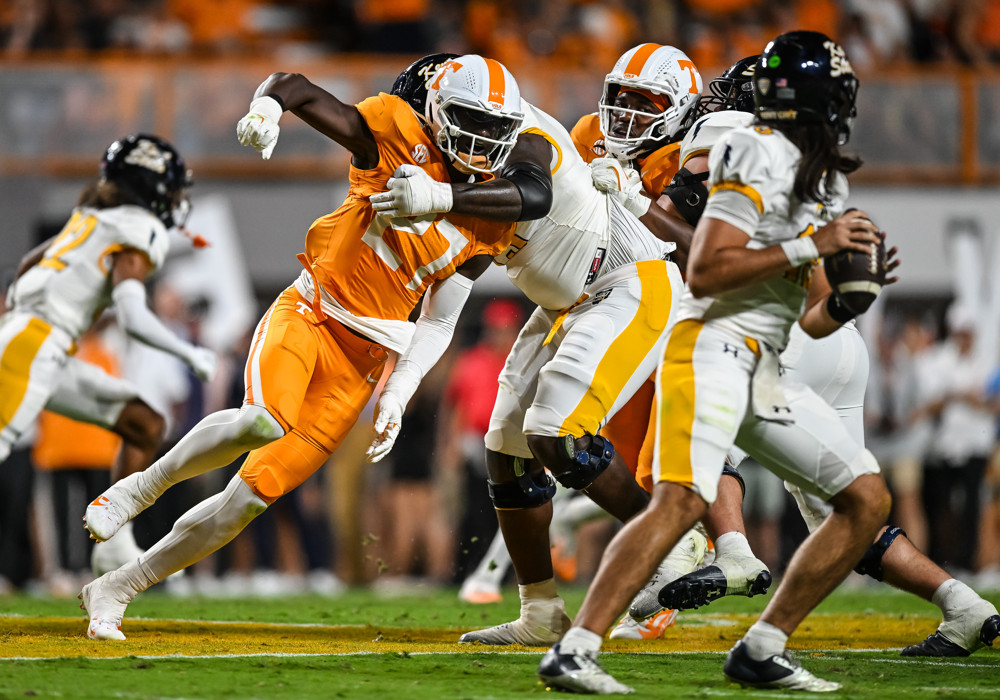
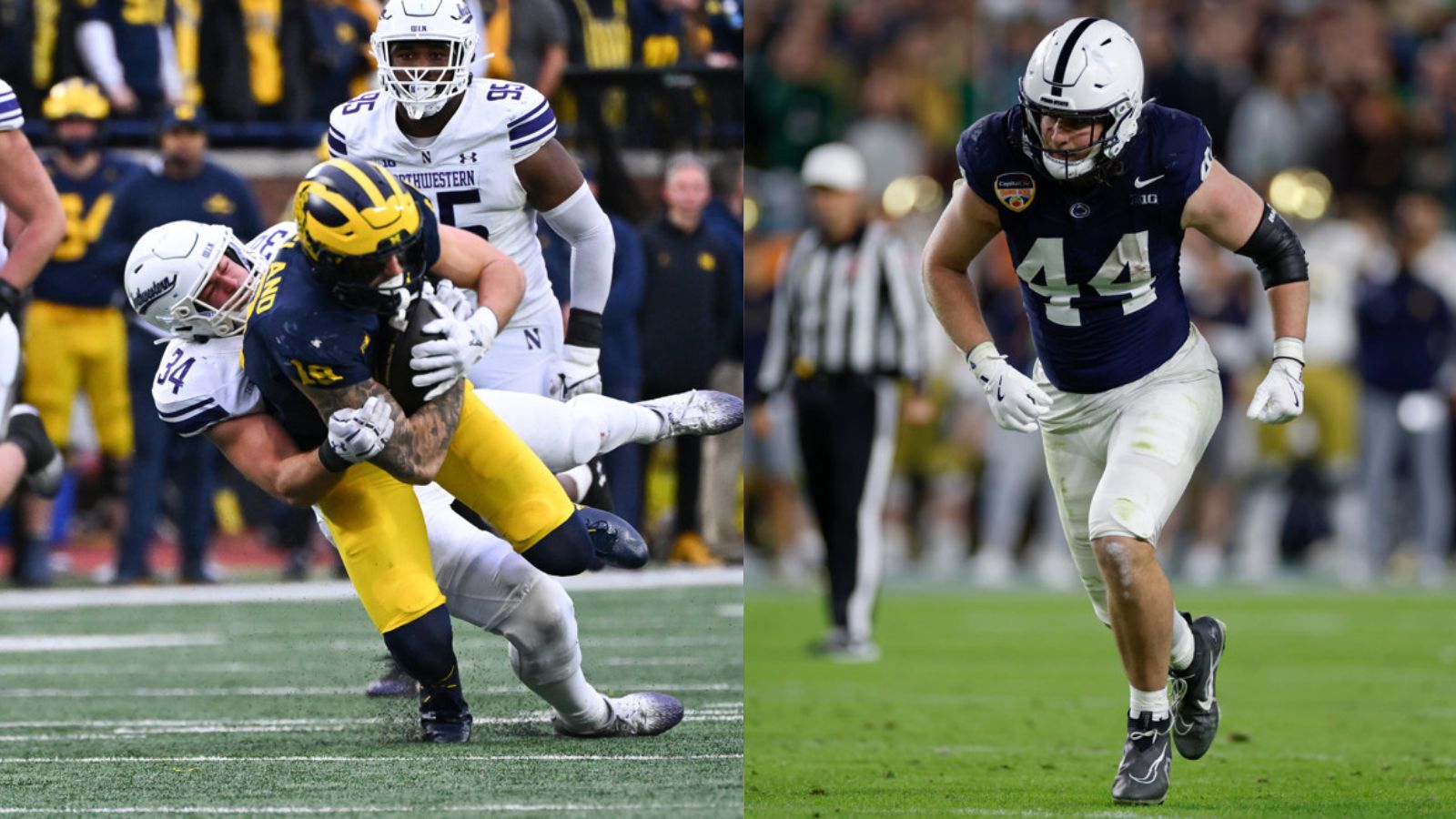
    Penn State’s Abdul Carter and Tennessee’s James Pearce Jr. are finesse rushers with a lot of burst off the edge. Texas A&M’s Shemar Stewart and Georgia’s Mykel Williams are long, explosive ends with questions about their production. Mike Green of Marshall is a short, bendy player who led the FBS in sacks. The point of this article is not to give detailed reports on each of these players, but to look at how this year’s edge class fares in some of our advanced metrics, so let’s get into it.

    Pressures Above Expectation

    In the 2020, and 2023, 2024 NFL drafts, the NCAA leader in Expected Pressure Rate +/- (xPressure Rate +/-) among draft prospects was the first EDGE off the board (and in 2022, Aidan Hutchinson was the 2nd EDGE off the board.)

    Player Draft Year xPressure Rate +/-
    Chase Young 2020 +12%
    Tyree Wilson 2023 +11%
    Laiatu Latu 2024 +14%

    For the uninitiated, xPressure Rate +/- (and its analog Pressures Above Expectation) is a metric that measures the probability of a player generating a pressure on a play given factors like down and distance and alignment, and then compares that to whether or not they actually generated a pressure. 

    Were the aforementioned trend to repeat this year, Pearce, Jr. (+8%) would be the first EDGE taken, although that seems unlikely considering Carter is the consensus best player at the position (at least among media).

    Player School Rank Expected Pressure Rate +/-
    James Pearce Jr. Tennessee 2nd +8%
    Mike Green Marshall 4th +8%
    Princely Umanmielen Ole Miss 11th +7%
    J.T. Tuimoloau Ohio State 12th +7%
    Donovan Ezeiruaku Boston College 13th +6%
    Josaiah Stewart Michigan 14th +6%
    Abdul Carter Penn State 16th +6%

    Snap to Pressure Times

    Carter also holds the distinction of having the fastest average time to pressure of any draft-eligible player with at least 20 pressures at a blistering 2.31 seconds, a testament to his get-off and explosiveness. The second-fastest player was at ‘just’ 2.45 seconds. 

    Of course, things aren’t as easy in the pros, but the best NFL pass rushers in this metric any given year typically hover at around 2.5 seconds. Furthermore, the 2023 collegiate leader was Carter’s former teammate Chop Robinson at an insane 2.11 seconds.He averaged 2.69 seconds in his rookie season with the Dolphins (still good for top 15).

    Player School Pressures Avg. Snap to Pressure
    Abdul Carter Penn State 52 2.31s
    Shemar Stewart Texas A&M 21 2.45s
    Mike Green Marshall 50 2.52s
    James Pearce Jr. Tennessee 32 2.54s
    Princely Umanmielen Ole Miss 32 2.55s

    Stewart is a notable inclusion here considering that he’s been knocked for his lack of production. The length, size, and explosion flashed both on tape and at the combine, but it hasn’t shown up in the stat sheet – he had just 11 TFLs and 4.5 sacks in three seasons – and these advanced stats don’t exonerate him either.

    At the other end of this is Arkansas’ Landon Jackson, the only one of the group to exceed an average snap to pressure time of 3 seconds. On top of that, his xPressure Rate +/- is negative. That’s not a great combination, and his pass rush Total Points/snap rank was good but not great (57th among qualifying edge players last season).

    Total Points

    Some notable players from the 2024 draft class fared pretty well in Total Points in 2023. Robinson (1st), Laiatu Latu (2nd), Jared Verse (6th), and Dallas Turner (30th) are sure to be familiar names. It might also be noted that Pearce Jr., who was extremely hyped at the beginning of last fall, trailed only Robinson and Latu in this metric that year. As for the 2024 leaderboard:

    Player School Pass Rush Points/Snap Rank
    Princely Umanmielen Ole Miss 0.16 2nd
    Josaiah Stewart Michigan 0.15 3rd
    Mike Green Marshall 0.14 6th
    Abdul Carter Penn State 0.13 7th
    Donovan Ezeiruaku Boston College 0.11 12th

    Meanwhile, Pearce Jr. lurks at 54th and Stewart lags behind at 168th among qualifying players at their positions after ranking 3rd and 29th last year, respectively.

    It’s not a good year to need a quarterback, but it is a good year to need someone to affect the quarterback. While there’s not a blue chip like a Myles Garrett in this class, there are lots of traitsy, high-upside players. And when you’re dealing with players who you have to project a bit more, advanced stats like the ones we’ve laid out can help paint a more complete picture.

  • New Podcast Episode: NFL Draft’s Top Defenders

    New Podcast Episode: NFL Draft’s Top Defenders

    David Rosenblum /Icon Sportswire

    On this week’s Off The Charts Football Podcast, members of the SIS football operations team analyzed some of the defensive players they liked the most in this year’s NFL Draft.

    Here are some excerpts from their analysis. Click the links to see the individual player scouting reports from our NFL Draft Website.

    Mason Graham, DT- Michigan

    “ He wins late in the down with his effort. He can win early with his hand technique. Overall, again, he’s just one of those players that he’s just gonna come in and be a starter from day one … no matter what team gets ’em, they’re gonna get a stud in the middle. He, again, he’s gonna play all three downs right off the bat and he’s gonna be a player that your team loves and you’re gonna be very happy you get ’em.”

    – Jeff Dean

    Abdul Carter, EDGE- Penn State

     ”He has probably the highest ceiling in this entire draft. I’ve never seen anybody get off the snap under control in his manner. He beats anybody to the edge and jumps across a lineman’s face. I compare it to Jalen Green in transition basketball. He’s just so smooth and so explosive. He could go in any direction at any moment.” 

    – Ben Hrkach

    Will Johnson, CB, Michigan

     ”I think this is a No. 1 corner. The instincts are really there. Being able to play in a zone coverage scheme will benefit him the most, playing in a heavy man coverage scheme will be a little more volatile for him.”

    – Jordan Edwards

    The crew also talked about Jihaad Campbell, Derrick Harmon, and Shemar Stewart. Tune in to hear what they had to say (click here and pick your podcast app) and find all our scouting reports, rankings, and stats at NFLDraft.SportsInfoSolutions.com.

  • Analyzing Ashton Jeanty’s Eye-Popping & Head-Scratching Stats

    Analyzing Ashton Jeanty’s Eye-Popping & Head-Scratching Stats

    Photo: Steve Nurenberg/Icon Sportswire

    If you haven’t already, check out the SIS NFL Draft website at NFLDraft.SportsInfoSolutions.com. You can find scouting reports, stats, and rankings for the top NFL prospects. Click the hyperlinked names here to see the scouting reports for those players.

    Former Boise State running back Ashton Jeanty set the world aflame with his 2024 performance, starting the year with a six-game stretch of over 200 yards per game and 10 yards per attempt. He finished up with a pedestrian 180 yards per game and 7 yards per attempt, which were good enough to be a finalist for the Heisman.

    He might not be the “generational” talent that caused people to drool over the likes of Saquon Barkley and Bijan Robinson in recent years, but he is plenty exciting and still given a strong starting grade by our scouting staff.

    Of course, with all that hype comes some extra scrutiny, the perennial nitpicking that convinces people not to take a player as high as some might want. I’m here to offer just a little dab, a splash, of cold water based on how others with his rushing profile have performed at the next level.

    Elusiveness

    Jeanty showcased an incredible ability to break tackles in his college career, with a per-carry rate eclipsed by only Javonte Williams among rushers from the 2020 Draft to now with at least 100 NFL carries. His overall elusiveness (broken and missed tackles per attempt) puts him behind only Williams and Bijan Robinson.

    That said, his missed tackle rate is in the middle of the pack, at least among NFL-caliber prospects. And that’s relevant because the results are a bit discouraging for players who had at least 5 percentage points more broken tackles than missed tackles in college (admittedly arbitrary), with worse performance measures and more injuries forcing missed time.

    College Elusiveness Similar (+/- 5%) BT/A > MT/A
    Players 26 14
    EPA per 100 att -2.4 -6.6
    Total Points per 100 att 6.1 3.7
    Games per injury 20.0 14.7

    (For more info on Total Points, see our primer here.)

    Dominance on outside runs

    Jeanty had incredible success rates on outside runs in his last two years at Boise State, roughly 10 percentage points above average. On the flip side, he was less and less successful running between the guards each year.

    Ashton Jeanty Success Rate on inside vs. outside runs

    Inside Outside
    2022 53% 34%
    2023 50% 55%
    2024 42% 57%
    Career 47% 49%

    I’m not sure if you’d expect this, but in general inside runs and outside runs have roughly the same success rate. So when a player shows a tendency to be out of balance with that, it feels like something we should look a little deeper into.

    Jeanty’s outside-inside profile—namely, his success coming more from outside runs—suggests that he might underperform, although he might also be a little healthier. Among players in the last several drafts with at least 200 college carries and 100 NFL carries in their first two years, outside-favoring players in college have been a little worse on a per-carry basis with slightly fewer injuries that have caused missed time.

    College Success% Inside better Similar (+/- 2%) Outside better
    Players 18 9 13
    EPA per 100 att -1.1 -5.5 -5.8
    Total Points per 100 att 5.9 6.0 4.3
    Games per injury 17.1 16.2 21.0

    So you’re out on this guy?

    I’ve somehow put this really exciting player into two buckets that suggest he’s less exciting. That doesn’t mean I’m out, but it does mean I’m glad we’re not hearing top-5-pick level hype.

    Of course, sample size is something we need to be mindful of; we just don’t have a ton of backs to judge on (at least over the years SIS has charted everything above). Have to mention that.

    And not all of these players had the same overall grade coming out. Jeanty’s comps in terms of the combination of these splits are J.K. Dobbins, Javonte Williams, Kenneth Gainwell, Dameon Pierce, Zamir White, and Cam Akers. None of them had the high-level projection that Jeanty does.

    But by the same token, the characterization we’re looking at is stylistic, and not about performance. Yes, we’re using success rate and broken and missed tackles, all of which express skill, but it’s the relative success across splits that we actually care about here. So I think we’re at least justified in bringing some suspicion to the table.

    Little bonus nugget

    To whatever extent you buy what I’m selling above, you might be interested in which of this year’s backs fall into the cluster that has the best historical production. The one that features Jonathan Taylor, Bijan Robinson, Jahmyr Gibbs, Devon Achane, Kyren Williams, Jaylen Warren, and Bucky Irving.

    North Carolina’s Omarion Hampton is in there, although just barely. His career broken tackle rate is 4.9 percentage points higher than his missed tackle rate. He has the same grade from our staff as Jeanty.

    Similar story with Arizona State’s Cam Skattebo, except with a 4.8 and a low-end starter grade from our staff.

    If you want someone who clears the thresholds easily, Oklahoma State’s Ollie Gordon II fits the bill. He has a three-down backup grade, along with a lot of other backs on our board.

  • NFL Scouting Report: Michael Penix Jr.

    NFL Scouting Report: Michael Penix Jr.

    Photo: Joe Robbins/Icon Sportswire

    Michael Penix Jr., QB Atlanta Falcons

    6-2, 216

    Overall Grade: 6.4

    Scouting Report by Jeremy Percy

    Summary

    Michael Penix Jr. is an older, more experienced prospect with good leadership ability and an extensive injury history who excels at pushing the ball down the field, but his inconsistent accuracy to the short and intermediate areas will limit him to being a top backup and circumstantial starter.

    Penix is a sixth-year, left-handed quarterback prospect who ran a spread-based offense for the majority of his collegiate career. He spent his first four seasons at Indiana where he suffered season-ending injuries all four years, two to his right ACL and one to each of his shoulders. He transferred to Washington prior to the 2022 season and responded by setting the school passing yards record and finished second in Heisman voting in 2023. Penix has great playing experience and played in 48 games, starting 45 of them. He played almost exclusively in shotgun, but has shown he can take snaps from under center, though he did not pass often out of those looks. He is a good leader and stepped up massively in clutch situations his final year in college. He is a tough player overall but has a merely sufficient body composition for an NFL quarterback, especially for someone with his injury history.

    Pass Game

    Penix has shown great improvement as a passer during his time in college. He is at his best throwing down the field due to his high-level arm talent and consistently hits his mark on deep back-shoulder throws. Despite his improvements, he still shows merely sufficient spot-on accuracy and can be inconsistent with short and intermediate accuracy. His deep accuracy is better. He throws a gorgeous deep ball. He can put the ball on a rope deep down the field to the outside shoulder from the opposite hash or loft it up with plenty of air to let his receiver run underneath it. Overall, Penix is a good decision maker who takes care of the ball and is mature enough to realize when he needs to hit his checkdown or throw the ball away, though he can be prone to chucking it into coverage when needing to make a play while trailing. He has good footwork, and it helps him greatly in the pocket. He shows plus ability to manipulate the pocket and slip away from defenders. He is above average under pressure and is not afraid to stare down the barrel and take a hit when releasing the ball. His release is sufficient overall; it is quick but unorthodox with a lower release point. He has a slight tendency to extend the ball low and behind his body in his motion which could lead to some fumbles at the next level. Penix can throw the ball from a variety of arm angles and bases which will directly translate to the NFL game. He also has good eye discipline and is capable of manipulating defenders while going through his reads before snapping back to his target.

    Run Game

    Penix was much more explosive as a runner and used in this capacity more early in his career, but that usage waned at Washington due to his injury history. Still, when he was called on as a runner, he was effective, and he has above-average mobility for an NFL quarterback.

    Last Word

    Penix projects as a top backup or circumstantial starting quarterback at the next level. He can function in most systems but fits best into an offense that utilizes his quick release in the RPO game and also allows him to take shots down the field off play action. Penix has had a ton of time to develop while in college but has spent a good amount of that time rehabbing from injuries, so he may not yet be at his full ceiling. He has above-average mobility and can make throws from awkward arm angles/bases. He also will be able to throw the ball deep at a high level. His short and intermediate accuracy can be spotty and inconsistent, but when he is on, he can make any throw on the field.

    Critical Factors

    Graded on 1-9 scale

    Accuracy 5
    Decision Making/Mental 6
    Clutch Performance 6


    Positional Factors

    Short Accuracy 5
    Deep Accuracy 6
    Pocket Awareness 6
    Footwork 6
    Under Pressure 5
    Mobility 5
    Arm Strength 6
    Release 5
    Awkward Throw 6
    Eye Discipline 6
    Leadership 6
    Body Comp 5

     Strengths

    Beautiful deep ball
    Excels at throwing back shoulder
    Slippery in the pocket

     Weaknesses

    Inconsistent short-to-medium accuracy
    Can get rattled
    Injury risk


  • NFL Scouting Report: Bo Nix

    NFL Scouting Report: Bo Nix

    Photo: Brian Murphy/Icon Sportswire

    Bo Nix

    6-2, 214, Denver Broncos QB

    Overall Grade: 6.3

    Scouting Report by Bryce Rossler

    Summary

    Nix is an athletic, gun-shy backup with sufficient accuracy, whose comfort in the quick game is offset by his apprehension to consistently challenge the second-and third-levels of the defense.

    Bo Nix is a two-year starting quarterback at Oregon after playing his first 3 seasons, including the 2020 COVID year, at Auburn. In all, Nix played in and started 61 career games. The Ducks were primarily an 11 personnel spread team with a gap-heavy run game and a passing game that emphasized low and high horizontal stretch concepts, with lots of screen and RPO elements. He missed the final 3 games of the 2021 season with a broken ankle. Nix is a good athlete who has the speed and elusiveness to threaten a defense when needed. He has a sufficient build for the position. He is visibly emotional on the field and is a tough competitor, with players rallying behind him at Auburn and Oregon.

    Pass Game

    Nix displays sufficient footwork and a compact release. He is a good, efficient processor in quick-game concepts, particularly against zone coverages. He demonstrates mediocre anticipation against man coverage and has to see the break to trigger. He is generally avoidant of challenging “NFL open” windows downfield and tends towards checking it down. He works with good eye discipline to hold safeties, and he maintains downfield vision while climbing the pocket or breaking contain. Nix displays sufficient accuracy to the first and third levels of the field, but did not  target the intermediate MOF. His ability to make layered throws to that area is a question mark. He has good body control and flexibility to access different arm slots and throw off-platform. Nix looks uncomfortable working from tighter pockets and has a tendency to spray the ball with pressure in his lap. He has sufficient arm strength, but might struggle to consistently make some of the more difficult throws in the NFL (e.g. field outs/comebacks, seams, layered throws into dig windows, fades vs. Cover 2).

    Run Game

    Nix is a good athlete with the requisite speed to be deployed in QB run game, and he successfully executed zone and gap schemes at Oregon. He has a good burst to get to the corner and is generally more of a one-cut runner than an elusive open-field threat. Nix protects himself and does not typically lower the shoulder to challenge in space. He is unlikely to be consistently effective at sneaks at the NFL level due to his build and lack of power.

    Last Word
    Nix projects as a quality backup at the next level who has enough ability to be an effective quarterback in standard down-and-distance situations, but will struggle in obvious dropback situations when teams tend to play tighter coverage and/or dial up pressure. He is proficient in the quick game, but his accuracy will not help optimize YAC, which is not ideal for West Coast offenses that would otherwise suit his skillset.

    Critical Factors

    On 1-9 scale

    Accuracy 5
    Decision Making/Mental 5
    Clutch Performance 5

     Positional Factors

    Short Accuracy 5
    Deep Accuracy 5
    Pocket Awareness 5
    Footwork 5
    Under Pressure 4
    Mobility 6
    Arm Strength 5
    Release 5
    Awkward Throw 6
    Eye Discipline 6
    Leadership 5
    Body Comp 5


    Strengths

    Mobility
    Eye discipline
    Awkward throw


    Weaknesses

    Anticipation vs Man
    Accuracy under pressure
    Willingness to work 2nd and 3rd levels


  • NFL Scouting Report: Caleb Williams

    NFL Scouting Report: Caleb Williams

    Caleb Williams

    6-1, 214, Chicago Bears QB

    Overall Grade: 7.0

    Scouting Report by Michael Morgan

    Summary

    Caleb Williams is the accurate, off-script playmaking franchise quarterback who can dictate a team’s success in today’s NFL, with the belief that he can solidify his mechanics in a timing-based offense.

    Williams is an off-script, big-play waiting to happen quarterback who played in Lincoln Riley’s shotgun-based RPO/one-read offense. At USC, Williams started all 26 games he played. Before USC, he spent his first year under Lincoln Riley at Oklahoma, playing in 11 games and starting the final seven games of 2021. During his career, Williams has a relatively clean injury history other than a 2022 PAC-12 title game hamstring injury and a finger injury he dealt with through 2023. Although slightly undersized, he withstands hits with a toughness, which his teammates rally around. This leads to a hero-ball mentality that, with his accuracy, often leads to big plays.

    Pass Game

    Williams operates at a high level, whether in the rhythm of his offense or in broken plays. Operating exclusively from shotgun, Williams does not show traditionally clean footwork or lower-body mechanics. However, this has not affected his accuracy on short or deep throws. His accuracy is pinpoint to all three levels, and he doesn’t show any signs of aiming or straining to make any throws. Pressure and hits do not seem to bother him either, as he seems to naturally avoid rushers in the pocket. If forced, Williams excels outside of the pocket, keeping his eyes downfield and has the accuracy and arm strength to make special plays. At times, he will try to keep plays alive too long when the checkdowns are available for easy completions and yards. As a decision maker, Williams seems to make the right reads at the right time, but questions of the simplicity of Lincoln Riley’s RPO/one-read system will follow Williams into the NFL. 

    Run Game

    Whether with designed runs or scrambles, Williams has the mobility to be a threat. While not possessing game-changing speed, Williams has the pocket awareness and feel for pressure to take advantage of edge rushers that get out of their rush lanes. Once he breaks the pocket, he knows how to run and take advantage of bad angles by second-level defenders, making tackling him easier said than done. He shows the ability to make the right read on option plays, as well as RPOs, which adds to the vice he puts defenders in when running.

    Last Word

    Williams projects as a ”win because of” franchise quarterback who can thrive in an offense that blends RPOs with traditional dropbacks and will utilize his athleticism. His dynamic playmaking ability and 3-level accuracy will dictate his early success, or struggles, as he develops NFL-level footwork and mechanics. His offensive line forced him to be special at USC, and a better one in the NFL should limit the amount of special plays he has to make. He will not throw many interceptions due to his ball placement and decision making, but if he starts big play hunting, he could be susceptible to throwing more.

    Critical Factors

    (All grades on 1-9 scale)

    Accuracy 8
    Decision Making/Mental 7
    Clutch Performance 6


    Positional Factors

    Short Accuracy 8
    Deep Accuracy 8
    Pocket Awareness 7
    Footwork 5
    Under Pressure 7
    Mobility 6
    Arm Strength 7
    Release 6
    Awkward Throw 8
    Eye Discipline 6
    Leadership 7
    Body Comp 6

     Strengths

    Accuracy to all 3 levels
    Off-script playmaking ability
    Consistency

     Weaknesses

    Inconsistent mechanics
    Big-play hunter
    Non-traditional college offense


  • NFL Scouting Report: J.J. McCarthy

    NFL Scouting Report: J.J. McCarthy

    Photo: Joe Robbins/Icon Sportswire

    J.J. McCarthy

    6-3, 219, Minnesota Vikings quarterback

    Overall grade: 6.4

    Scouting Report by Jordan Edwards.

    Summary

    J.J. McCarthy is an athletic quarterback who displays toughness and a winning mentality, but must continue to develop his anticipation and decision-making as he moves to the NFL.

    McCarthy was the quarterback for the Michigan Wolverines and led them to a National Championship in 2023. He was the point guard in an offense that relied heavily on its power-run game and play-action passing. Michigan utilized a good amount of pre-snap motion to scheme up receivers downfield as well. McCarthy played in 40 games during a three-year span and was a starter for 28 consecutive games in the past two seasons. He suffered an ankle injury in the middle of the 2023 season but did not miss any game time. McCarthy is a well-rounded athlete who can extend plays out of structure and shows some twitch and speed in his movements. He has sufficient height for the position, but dons a slimmer frame than desired.

    McCarthy is a leader through and through. Even though he was not eligible to be a captain for his team, he was a clear leader of a national championship winning team.

     Pass Game

     When McCarthy is working in structure, he can manage an offense quickly and efficiently. He shows good short accuracy and can zip the ball out quickly to his receivers to let them create after the catch. That accuracy and zip can also reach the intermediate parts and occasionally the opposite side of the field, too. He can correctly decipher half-field reads and put the ball on the spot quickly in these situations. His mental processing is still a work in progress (working full-field reads and throwing with anticipation). He sparingly throws his receivers open and waits for them to present themselves open downfield. His point-and-shoot throwing style can lead to inaccurate throws downfield. While his arm strength is good, there is clearly a cap on the velocity in which he throws the ball. He has sufficient arm talent but when his base underneath him isn’t set, his velocity and accuracy dip. He can rifle the ball into windows, but all of his throws are at one speed. He struggles to throw with touch when layering throws across the field is required.

    McCarthy can deliver the ball on time over the middle of the field. However, he is hesitant to put the ball in between the hashes consistently. He doesn’t have a natural feel for maneuvering the pocket, but his athleticism shows this is an area that has promise with development. His toughness stands out in the pocket, as he will stand in and take a jarring hit when delivering the ball. Out of structure, his athleticism is on display. He can extend plays with his legs and deliver the ball with good zip on the run. While his willingness to extend plays is admirable, it can be a detriment to him at times. He will exhaust every second and blade of grass on the field to try and throw the ball downfield. This will lead to some questionable decision making, as he is willing to put the ball in harm’s way on occasion.

    Run Game

    McCarthy can add some value to an offense using his legs when necessary. His athleticism can be used on designed runs and scrambles when a play breaks down. While he shouldn’t be asked to be a pivotal part of a run scheme at the next level, his ability to threaten the defense with his legs must be noted.

    Last Word

    McCarthy projects to be a circumstantial starting quarterback with the potential of developing into a “win-with” level quarterback. He will be best served to play in an offensive scheme that utilizes motions and play action to a high degree.

    While the flashes of playmaking ability stand out, the level of consistency in which McCarthy plays with must improve. He won’t be the most talented quarterback at the next level, but if he can improve his decision making and ability to play with anticipation, he can raise his floor.

    Critical Factors 

    Accuracy 5
    Decision Making/Mental 5
    Clutch Performance 5

    Positional Factors

    Short Accuracy 6
    Deep Accuracy 5
    Pocket Awareness 5
    Footwork 5
    Under Pressure 5
    Mobility 6
    Arm Strength 6
    Release 5
    Awkward Throw 4
    Eye Discipline 4
    Leadership 7
    Body Comp 5

    Strengths

    Athleticism to extend plays
    Leadership and toughness
    Short accuracy

    Weaknesses

    One-speed thrower
    Throwing with anticipation
    Stares down receivers