Category: MLB

  • Oral History: Ichiro Suzuki’s Defensive Legacy

    Oral History: Ichiro Suzuki’s Defensive Legacy

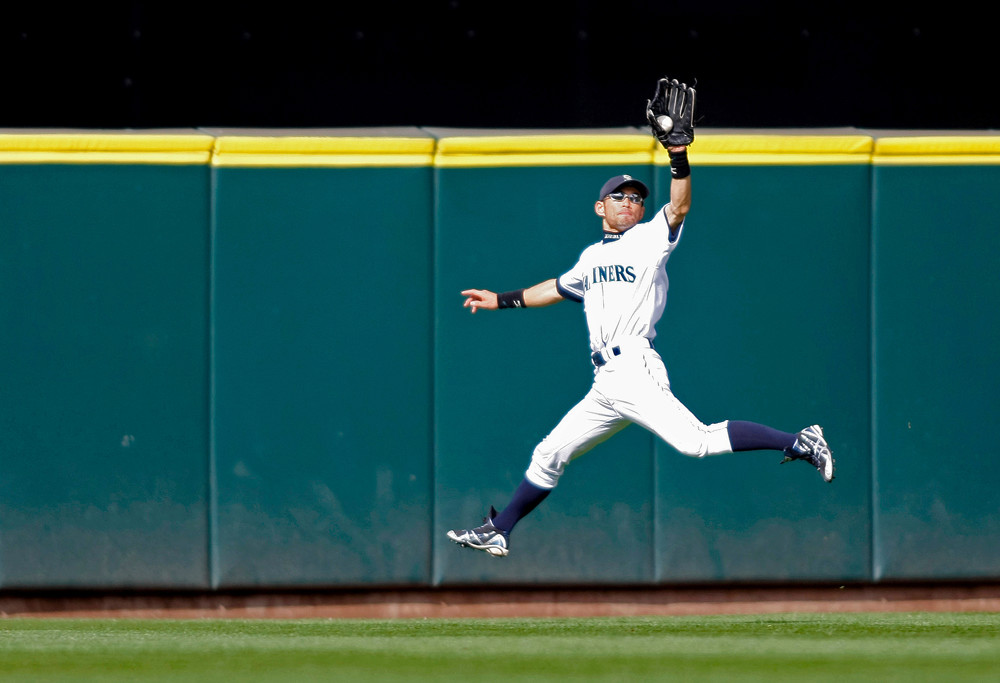
    Photo: John Froschauer/Icon Sportswire

    As we’ve done with Scott Rolen and Adrian Beltré the last two years, we wanted to tell the story of new Hall-of-Famer Ichiro Suzuki’s defensive excellence through those who saw him close-up.

    Over the last couple of months, we talked to several of Ichiro’s teammates, rivals, and former managers to get a better sense of his defensive legacy.

    Our tale begins with a scene from Ichiro’s Japanese rookie season, when he was an 18-year-old kid with the Orix Blue Wave in Nippon Professional Baseball.

    Kelvin Torve, ex major leaguer and Orix Blue Wave teammate (1992-1993) – “I get to the ballpark and go down to the field to stretch. Ichiro’s standing in center field by himself. He’s got his hat over his heart and he’s facing the center field stands, screaming at the top of his lungs for 5, 10 minutes.

    I asked our interpreter, ‘What’s gotten into Ichiro?’ And he said that yesterday there was a fly ball behind second base. Ichiro and our second baseman ran into each other.

    So, what Ichiro was screaming was ‘My name is Ichiro Suzuki and I’m learning to use my voice.’ It was a punishment.

    I coach American Legion baseball in South Dakota now and I use that story with my outfielders – that if you don’t talk, I’d hate to do what did to Ichiro. It was a teaching lesson for him and a coaching lesson for me.”

    The message gets through to Torve’s outfielders and it certainly got through to Ichiro by the time he joined the Mariners in 2001 after nine seasons in Japan.

    Mariners broadcaster Rick Rizzs – “He was so disciplined. He did everything right.

    Before he was posted and signed with the Mariners, he came here for a few days in 1999 to work out with the ballclub. I’ll never forget. He went out to right field with Jay Buhner and was taking outfield practice.

    I saw a fly ball to right field. He grabs it and throws a seed to home plate. And it had such my life on it. And it was accurate, so accurate. I remember thinking to myself, ‘Who is this guy? If he hits a baseball as well as he throws one, he’s going to be a great player.’”

    There were two components to Ichiro’s excellence – preparation and execution.

    Regarding the former, one of the things Ichiro told his teammates about was the importance of a Japanese word, ‘kaizen.’

    Mike Cameron (Mariners teammate, 2001-2003): “It is a Japanese business philosophy to emphasize continuous improvement across an organization. The goal of Kaizen is to gradually improve processes, products, and services. Always improving, continuously working, no matter good or bad.

    By the time he got to the ballpark, he had already probably worked out one time and then he would come to the ballpark, he would get the massage then he would go through another training workout with those special machines.

    I tried to do it a couple of times and I was sore for two weeks. My body wasn’t accustomed to it. But those machines were made for him and the movements he’d want to have over the course of time.”

    Willie Fraser (Orix teammate, 1996-1998): “I’ve never seen anyone stretch as much as him.”

    Casey Kotchman (Mariners teammate, 2010; also once thrown out at home plate by Ichiro): “He really reaped what he sowed as far as all the work that he put in. He was always working and getting ready for his next move to put himself in a position of success.”

    Doug Jennings (Orix teammate, 1995-1997): “He was the hardest-working superstar I ever played with.”

    Willie Bloomquist (Mariners teammate, 2002-2008): “He’d take his shoes off and he’d have this little wooden tool that he would dig into his feet. He was a big believer in keeping his feet healthy and loose. He would dig this little wooden tool into his feet and then he would sit, his ankles would be up on his thighs. He’d sit there reading and eating his rice ball with a plum in the middle of it. He’d do that every day.”

    Cameron: “I used to tell him every day, make sure his wife makes two extra rice balls. Because I want to try it.”

    He took care of himself as well as he could take care of himself. He ate the right foods and got the proper rest. His preparation, concentration and determination were top notch.”

    Bob Melvin (Mariners manager, 2003-2004) “Everything he did, starting with when he woke up in the morning, was all about preparing for a game. The work ethic made him who he is.”

    John McLaren (Mariners manager, 2007-2008): “He would take balls off the bat in batting practice. A lot of outfielders do that. He did it to the extreme.”

    Melvin: “Whether it was balls off the wall or balls in the gap, he was like a handball player. The ball was hit, and he knew where it was going to go.”

    And Ichiro could catch it too. You don’t post a standard-setting 30 Runs Saved in a season in right field (as he did in 2004) without making some improbable defensive plays.

    Bloomquist: “He never made a bad route to a baseball.

    He covered a lot of ground. He never dove head-first for a ball in all the years I saw him play. That frustrated some teammates every once in a while. But his philosophy was that he was faster running through than he was diving or sliding. I asked him once, ‘Why don’t you dive?’ And he said ‘Do you ever see a sprinter diving through the finish line?

    When you heard him, it made sense. He was the guy that you knew that if it was hit anywhere out there, it’s an out.”

    Cameron: “He was playing so fast, but he played so poised. He was twisting and bending and everything and he never allowed his hat to come his head either. He’d hold onto his hat while making plays.

    I used to try to get him to dance all the time. I called him the dancing cat, because he could bounce around, he could climb walls, and he had amazing flexibility. But he couldn’t dance a lick. I would die laughing when we’d try to get him to dance.”

    Arguably Ichiro’s best catch came in 2005 against the Angels, robbing Garret Anderson of a two-run home run.

    Cameron: “I saw him make plays that were crazy. His back to the fence in right field, jumping into the wall like Spiderman and reaching back, holding onto the ball and catching the ball over his right shoulder. That’s so hard.”

    Bloomquist: “He had to twist his body around and still caught it over the top of the wall.”

    Ichiro didn’t just track balls down. In his early years, He could throw better than any outfielder in MLB.

    Melvin: “Off the charts: 80 arm, 80 accuracy. It was all wrapped in one package that was about as perfect as you get.”

    Kotchman: “A cannon.”

    Jennings: “Him and our left fielder, So Taguchi, had such remarkable arm strength. One of the things they would do between innings is throw the ball from corner to corner in long toss. They did it to thrill the fans, see how far they could throw the ball.”

    Rizzs: “He threw with every inch of his body, from his toes to the tip of his cap to his fingertips. That’s why he was able to get that incredible whip and backspin on the ball to make it so true and never had a hump on it.”

    Kotchman: “He threw the ball straight and true. Some outfielders or infielders will cut it or sink it, and it doesn’t have a nice ball flight. His ball would just really take off.”

    Ichiro’s signature defensive play happened in his eighth major league game, a throw from right field to third base to nail Terrence Long of the A’s.

    McLaren: “I can see it like it was yesterday.”

    Melvin: “That’s when it all came into play. Reading the ball off the bat, charging the ball quickly, corralling it really quickly, getting rid of it with his arm strength. I think that particular play showed baseball, that’s a guy you’re not going to run on.”

    McLaren: “He threw one knee-high to David Bell. Bell didn’t move his glove.”

    Ichiro passed on his knowledge about how to play defense to his teammates, including Cameron, who won his first Gold Glove Award in Ichiro’s rookie MLB season, 2001.

    Cameron: “We had an instant chemistry playing amongst each other. I understood him, he understood me.

    “He told me about what I needed to start using body-wise when I threw and we worked on it every day. Every day. I used to get on top of the ball. He helped me lower my arm angle, which allowed it to have more accuracy. He made me use my lat and my back and my torso a lot more. He forced me to improve those things. He made my arm more accurate and stronger, and I got better as an outfielder.”

    Ichiro was that rare player who was a baseball phenomenon. His popularity was off the charts, both with the American and Japanese baseball audience.

    Cameron: “It was almost like I got a chance to play with Michael Jordan, baseball-wise.”

    Melvin: “A big part of what he did was entertain people that came to watch him. That’s why he never wanted to take a day off.”

    Cameron: “I’ve never seen a baseball player with that much cachet. When Ichiro showed up, the madness that he created was unbelievable.”

    Melvin: “He felt like if someone was there to watch him on that day and he wasn’t performing, he wasn’t doing his job. The first time I tried to give him a day off, I told him when it was gonna be. We were in Chicago, and I said, ‘Look, just try to take it easy. Come out here in the seventh or eighth inning and see if I need you.’

    Fifteen minutes before the game, he’s sitting on the bench, gloves on, he’s got his bat next to him, rocking up and down. Right then, a kid walked by wearing an Ichiro jersey. Ichiro didn’t even say anything. He just nodded his head to the kid, and I got it. That was part of who he was. He felt he needed to be out there to entertain the people who came to watch him.”

    Ichiro finished his MLB career with more than 3,000 hits, 500 stolen bases, 10 Gold Glove Awards, and three Fielding Bible Awards in over 2,600 games. His defense made him a complete major league player. Now, he still plays and coaches in Japan. When he’s in Seattle, he’s Julio Rodriguez’s pre-game throwing partner. He can’t help but stay connected to the game.

    Melvin: “He’s one of a kind. Probably one of my favorite guys ever.”

    Cameron: “It was a gift to see and play with him. He was special. So special.”

  • Stat of the Week: New Year’s Resolutions With A Defensive Twist

    Stat of the Week: New Year’s Resolutions With A Defensive Twist

    Photos: Nick Wosika (left), Charles Brock (right)/Icon Sportswire

    It’s the middle of January and most of us have probably broken or abandoned our New Year’s Resolutions by now. But the subject (and a lack of notable transactions recently) got me to thinking about defense-minded New Year’s Resolutions for 2025.

    Here are a few that came to mind:

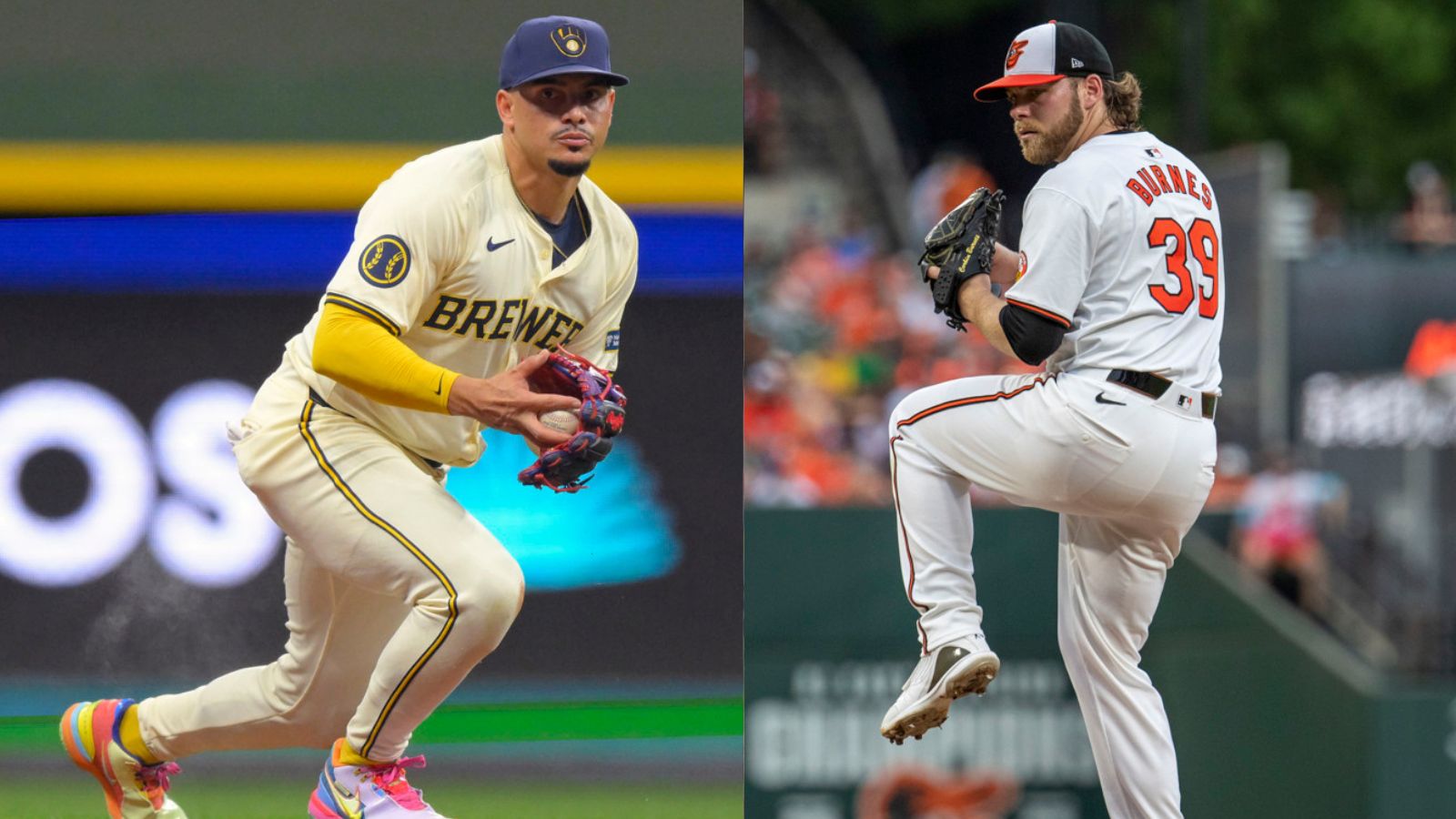
    For Corbin Burnes: I will do my part to hold baserunners better

    Corbin Burnes allowed an MLB-high 41 stolen bases last season, more than double his prior career high of 18. This was an issue regardless of whether Adley Rutschman or James McCann was catching him. Burnes’ average time to the plate was about .13 seconds slower in 2024 than it was in 2023 and he ranked in the bottom 10% of pitchers in that stat last season.

    This season, he’ll primarily be throwing to one of MLB’s best defensive catchers, Gabriel Moreno of the Diamondbacks. Moreno won a Fielding Bible Award two years ago, largely on the strength of his limiting basestealing. Last year, Moreno allowed 40 stolen bases, one fewer than Burnes, catching almost 550 more innings than Burnes pitched.

    For Aaron Judge: I won’t let my World Series blunder impact my return to form in right field

    Aaron Judge had such a ridiculous season as a hitter that it overshadowed his poor defensive numbers in center field (-9 Runs Saved). Judge’s center field defense came back to get him in the World Series, when he dropped a fly ball during the Dodgers’ five-run rally in the fifth inning of the series-clinching Game 5.

    With the Yankees signing Cody Bellinger and losing Juan Soto to the Mets, Judge will move back to right field, a position where he’s twice led the majors in Runs Saved and won a Fielding Bible Award, albeit as a younger player. Judge turns 33 in April and has dealt with injuries that have slowed his defensive game down. So, he’ll be challenged by more than just the stigma of that one miscue.

    For Willy Adames: I’ll fix my forehand

    Willy Adames went from being a reliable shortstop to a defensive issue last season. He totaled an MLB-worst -16 Defensive Runs Saved at shortstop.

    Adames had the same number of touches on his forehand (balls he touched in the field) in 2024 as he had in 2023 but was successful in recording at least one out 20 fewer times. He went from being one of the best defenders on those balls to one of the worst.

    Adames is now on a team that is hungry for good defense at the position. The Giants have gotten -38 Runs Saved at shortstop the last three seasons, the second-worst total in MLB.

    For the Minnesota Twins: We’ll have a better backup plan

    The Twins got exposed defensively when some of their regular players went down with injuries or didn’t play. Byron Buxton had 2 Runs Saved in the 94 games he played in center field. The Twins got -11 Runs Saved at the position when he didn’t play. There was a similar issue at shortstop with Carlos Correa and his injury replacements as well.

    One problem for the Twins was that though they had good defensive versatility with Willi Castro and Austin Martin, those players didn’t perform at a high level relative to their peers. Castro totaled -18 Runs Saved split between five positions. Martin had -13 split between left and center field (we should note he was a rookie and was drafted as an infielder).

    The Twins haven’t had a particularly active offseason but there’s still time to attack these issues if they choose.

  • NPB to MLB Scouting Report: Shinnosuke Ogasawara

    NPB to MLB Scouting Report: Shinnosuke Ogasawara

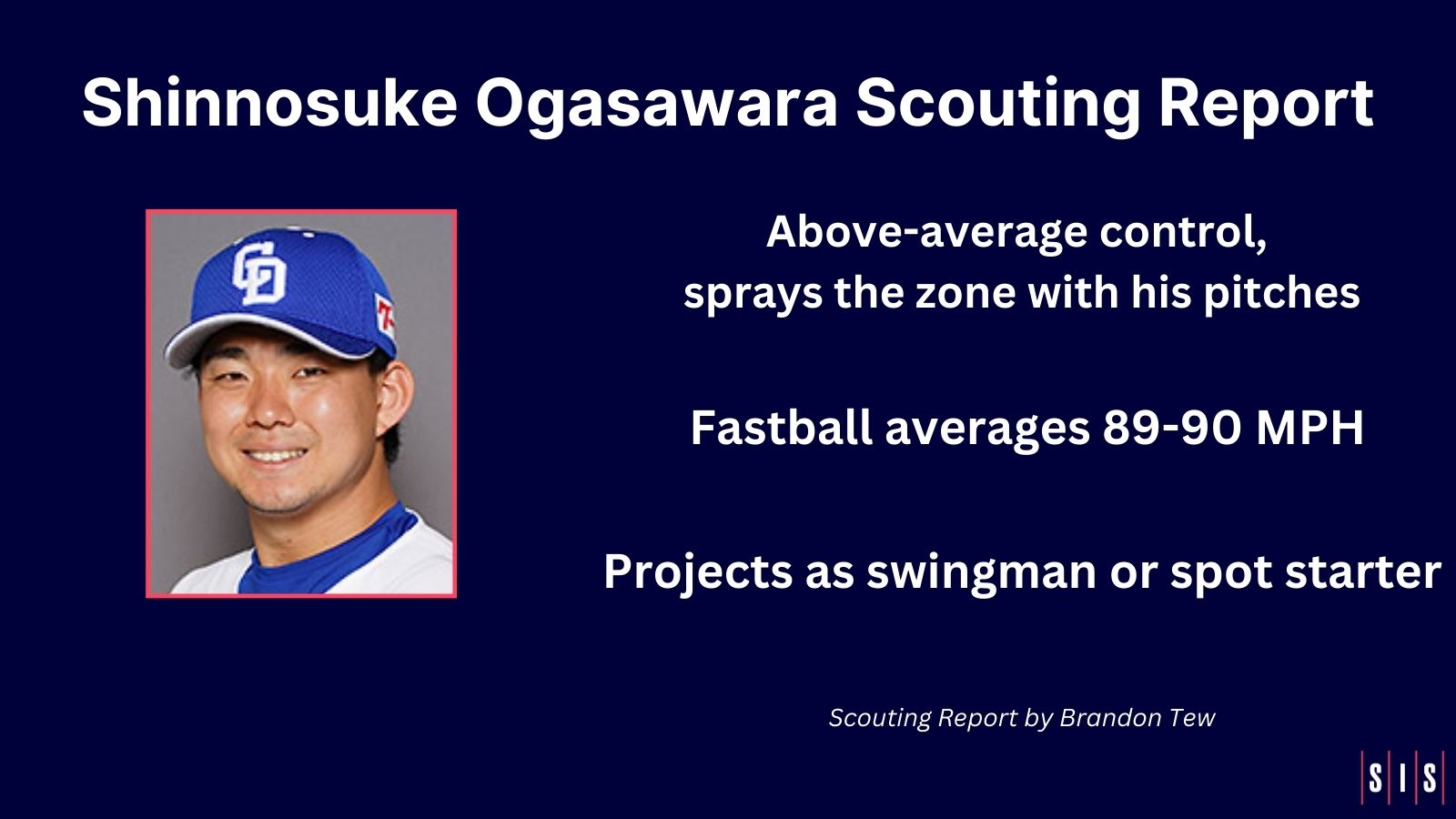
    Shinnosuke Ogasawara requested that the Chunichi Dragons post him this offseason after nine seasons with the club and the team obliged. He’s still a free agent, available for any MLB team to pursue.

    Ogasawara, once considered a top prospect in NPB, has had up-and-down results for the Dragons but has shown glimmers of promise as a stocky lefty. I saw almost all of his starts from the last two seasons and this is my scouting report for him.

    In sum: Ogasawara projects as a swingman or spot starter in MLB but will get the opportunity, as a strike-throwing lefty, to compete for a rotation spot.

    Ogasawara’s Recent Seasons (2022-2024)

    Season IP ERA ERA+ K-BB
    2022 146.2 2.76 111 142-39
    2023 160.2 3.59 82 134-41
    2024 156.2 3.12 88 82-22

    Ogasawara is 5’11’’ and 185 pounds with a strong lower half. He is similar in build to Shota Imanaga. While some might want to compare the two Japanese lefties, the gap between Ogasawara’s stuff and Imanaga’s is significant. He’s more Kolby Allard than Imanaga. Though Imanaga and Ogasawara both have high IVB (induced vertical break) lower-slot fastballs, Ogasawara’s secondary pitches and command lag behind Imanaga’s. 

    Ogasawara did post a slightly higher K% than Imanaga in 2022, with a 24% strikeout rate to Imanaga’s 23.6%. He has not captured that type of swing-and-miss production since, dropping to 20% in 2023 and 14% this past season.

    And note that while ERAs of 3.59 and 3.12 the last two seasons may not look bad, context matters. He had a below-average ERA+, as NPB’s deader baseball keeps ERAs low.

    Biggest Strength?

    Ogasawara possesses above-average control and sprays the zone with his pitches. He mixes speeds well with his six- to seven-pitch arsenal, though he really focuses on just four pitches, with three of those secondaries. 

    He uses his four-seam about 50% and splits the rest of his usage between his knuckle curve, changeup, and slider – with less usage of his changeup against right-handed hitters.

    Since he possesses fringe-average stuff throughout most of his arsenal, Ogasawara must pound the zone with first-pitch strikes and mix speeds.

    Mechanics

    via GIPHY

    Ogasawara has dabbled with a rhythmic foot move at points in the last two seasons, but he primarily throws out of the stretch. Starting with his glove at his belt, he raises it to his hat brim. He pulls the ball out of his glove with a tiny tap back into the mitt during his initial move forward.

    via GIPHY

    Pushing his hip towards the plate, he stays closed down the mound, Ogasawara uncoils his energy as he shows the bottom of his cleat into front foot strike. Landing in a solid power position, he uses his lower half to drive energy through his lead leg block.

    via GIPHY

    He’s under control and will vary his finish now and then, but he usually lands in a similar position ready to field. Ogasawara throws with tempo and timing more in mind than aggressively transferring energy into his delivery. His timing and sequencing create consistency and repeatability in his mechanics. He will also vary his arm angle, dropping it slightly in a given at-bat.

    An overlay showing one arm angle that is more three-quarters and one that is more overhand

    Pitch Velocity (MPH):

    Pitch 2024 2023
    Fastball  89 MPH 90 MPH
    Knuckle Curve 70 MPH 73 MPH
    Changeup 78 MPH 83 MPH
    Slider 79 MPH 79 MPH
    Splitter 82 MPH 81 MPH
    Hard Slider/ Cutter 84 MPH 84 MPH

    Pitch Usage:

    Pitch RHB: 2024 (2023) LHB: 2024 (2023)
    Fastball  48% (49%) 54% (55%)
    Knuckle Curve 17% (21%) 17% (21%)
    Changeup 24% (25%) 4% (8%)
    Slider 5% (5%) 23% (15%)
    Splitter 5% (<1%) 1% (<1%)

    The Arsenal (2024 usage and Average Velocity)

    Fastball  52%, 89 mph   CSW% 26%   Strike% 75%

    Ogasawara features a high-ride, low-slot fastball though it lacks Imanaga’s 2023 specs in NPB.  The two fit the same mold in terms of usage though. Ogasawara throwing over 50% four-seam is unsurprising given the spin and IVB around 19 inches with an NPB ball from a lower slot. The problem is that the two ticks in velocity Imanaga has on him are vital. Thus, Ogasawara’s fastball command must be cleaner to attack the zone.

    via GIPHY

    In 2024, Ogasawara sprayed his fastball locations more than in 2023, when he was more glove-side with his command. The heat maps from this NPB Pitch Profiler show how spray-heavy his entire arsenal was in 2024.

    Ogaswara sprinkled in a few sinkers with 3 percent usage in 2023, although he basically scrapped the pitch in 2024. He may need to throw the pitch more often in MLB given the sheer velocity of his fastballs; he needs a change in movement between his four-seam and two-seam. Ultimately, he will likely shrink his four-seam usage in MLB, mixing speeds even more. When he does throw his fastball, he will need to stay out of the middle of the plate and get over the top of the ball to drive it to his glove side more.

    via GIPHY

    Knuckle Curve 17%, 70 mph  CSW% 32%   Strike% 58%

    Ogasawara’s slow and loopy knuckle curve is not impressive in velocity or stuff metrics but it is a vital pitch to his arsenal. He needs the slow knuckle curve as a change of pace for his fastball, to survive being in the zone as much as he is.

    Ogasawara utilizes it around 20% of the time on the first pitch to steal strikes and keep hitters honest. While he might drop its usage in MLB, around 15% usage will be important for Ogasawara since he lacks a whiff-pitch glove side.

    2023 Count Usage

    PITCH 1st Pitch Usage 2-Strike Usage
    Fastball  53% 47%
    Knuckle Curve 21% 30%
    Changeup 13% 15%
    Slider 11% 6%
    Splitter 1% 2%
    Harder Slider/Cutter 1%

    2024 Pitch Usage

    PITCH 1st Pitch Usage 2-Strike Usage
    Fastball  52% 45%
    Knuckle Curve 20% 18%
    Changeup 14% 15%
    Slider 11% 13%
    Splitter 2% 9%
    Harder Slider/Cutter 1%

    As seen in the count usage charts above, Ogasawara’s big drop from 2023 to 2024 in two-strike counts was in his use of his knuckle curve late in the count. His two-strike knuckle curve usage plummeted from 30% to 18% between the last two seasons. His curve did provide relief in a high ground-ball rate at 70% in 2024.

    Ogaswara’s curveball has a loopy quality causing batters to swing over the top and pound it in the dirt, because of the velocity differential and mixing speeds rather than pure pitch shape. He also locates the curveball below the zone leading to more grounders. 

    Ogasawara must avoid doubling up on the pitch. If he does, location will be key. These back-to-back curves to Munetaka Murakami display poor location on consecutive pitches.

    via GIPHY

    via GIPHY

    Changeup 16%, 78 mph   CSW% 34%   Strike% 70%

    Ogasawara’s changeup and splitter are his two best pitches. Ogasawara leans heavily on his changeup to righties, throwing it around a quarter of the time the last two seasons. He throws the pitch as more of a straight change with a tiny amount of fade. Throwing it with a two-seam grip he’s able to sink it down and away from right-handed hitters.

    His catcher doesn’t just sit on the outside corner either. There are a lot of times when Ogasawara’s catcher will set up more in the middle of the zone and will try to sink the change below the zone off of a knuckle curve that was middled or a pitch that looks juicy as a middle fastball.

    via GIPHY

    via GIPHY

    Splitter 3%, 82 mph   CSW% 34%   Strike% 63%

    Ogasawara’s splitter is his most intriguing pitch because its characteristics make it a slightly harder offspeed pitch than his changeup. The two pitches will overlap in velocity, though, and the splitter has more sidespin than the backspin of his two-seam change.

    via GIPHY

    The small percentage of pitches he has thrown creates a cause for concern if he can consistently command the pitch and even zone the splitter. There is way more comfort in throwing the changeup with his three-fingered grip rather than the splitter, where he’s splitting more across the horseshoe. His middle finger is not stabilizing in the middle of the ball with his splitter grip.

    Finding more consistency in throwing his splitter and even constant velocity separation could help Ogasawara drop his fastball usage and throw more offspeed. Having an offspeed around 84 mph with a slower one around 79-80 mph could be a valuable weapon for a pitcher who doesn’t have much going for him stuff-wise.

    via GIPHY

    Slider 13%, 79 mph   CSW% 34%   Strike% 57%

    Ogasawara throws a sweeper with a two-seam grip and it hovers in the upper 70s in velocity; it’s an average pitch, in shape and velocity. 

    Living in the glove-side shadow zone, Ogasawara tries to nail the bottom corner at the knees against righties but also pushes the locations more thigh and belt high with the pitch. Ogasawara exclusively throws the pitch away from left-handed hitters, using the sweep he gets on the pitch as a contact suppressor rather than a strikeout pitch. Though he generates some whiffs on the pitch, he throws it late in counts as a putaway pitch.

    via GIPHY

    A close-up of how he throws the slider, with his first 2 fingers touching both sets of seams.

    In MLB, Ogasawara’s slider will need either refinement in his sweeper shape or he could add a harder cutter or slider-type pitch. In fact, Ogasawara threw a rare glove-side breaking ball that was about 84 mph and resembled a cutter-like shape. He throws it with a four-seam grip on the outer side of the ball but he tries to pull down on the top seam heavily. A team could push the harder breaking pitch alongside his sweeper to get more usage out of a pitch other than his four-seam and knuckle curve.

    MLB Projection and Future

    Ogasawara has been a steady performer in NPB since making his debut as an 18-year-old, providing solid yet unspectacular production in Chunichi’s rotation. With lesser velocity and more average to fringe-average pitches, Ogasawara’s control of the zone and mixing of speeds gives him a fighting chance at production stateside.

    In 2022 he got more strikeouts and whiffs, but since then he has not been able to bottle that recipe of success with more of a contact-minimizing and grounders formula the past two seasons. As I noted atop the article, Ogasawara projects as a swingman or spot starter in MLB but will get the opportunity, as a strike-throwing lefty, to compete for a rotation spot.

    His signing with a team might hinge on his promises of starting opportunities, though with his ability to mix speeds and change pace in at-bats, he could be successful in a more prominent bullpen role.

    MLB comparison: Kolby Allard

  • Stat of the Week: Chase Utley and the Hall of Fame

    Stat of the Week: Chase Utley and the Hall of Fame

    Photos: Chris Livingston/Icon Sportswire

    BY MARK SIMON

    I’m still a few years away from having a vote for the Baseball Hall of Fame and I’ve been wondering recently whether Chase Utley will still be on the ballot when I do have a vote.

    Utley got just below 30% of the vote last year in his first year on the Baseball Writers Association of America ballot. He’s probably going to do better than that this year, but he’s still going to be well short of the 75% needed for election to the Hall of Fame. The ballots are in for this year’s class, which will be announced on January 21.

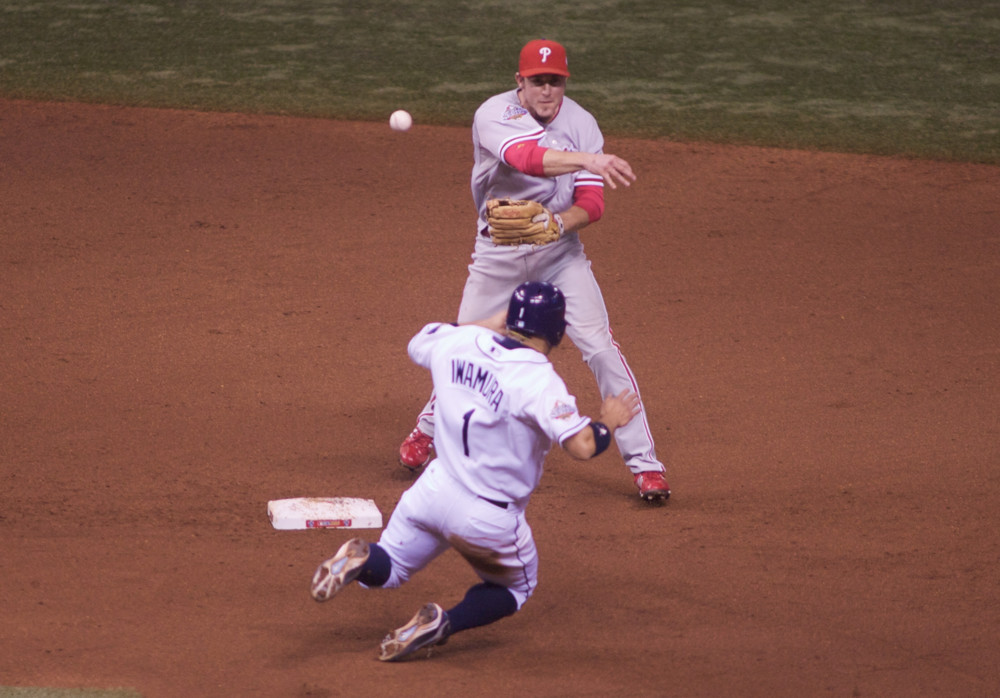
    Utley’s candidacy is driven by his six-year peak from 2005 to 2010 when he was the most complete player in baseball. He totaled 45.5 WAR per Baseball-Reference, a figure surpassed in that span by only Albert Pujols.

    Most Wins Above Replacement – Position Players

    2005 to 2010 (Baseball-Reference Version)

    Player WAR
    Albert Pujols 52.1
    Chase Utley 45.5
    Alex Rodriguez 38.3
    Mark Teixeira 33.4
    Joe Mauer 31.8
    David Wright 30.0

    Utley averaged 27 home runs and 15 stolen bases per season and played an average of 145 games per year in those six seasons. His OPS was 33% better than MLB average when adjusted for ballpark and his OPS as a second baseman was at least 40% better than the average second baseman in five of the six years.

    Additionally, Utley’s 119 Defensive Runs Saved and 14.2 Defensive WAR (another figure calculated by Baseball-Reference) were also the best in the majors in that time.

    Within the years Defensive Runs Saved has existed (it dates back to 2003) only three other players have tallied that many Runs Saved over a six-season span: Andrelton Simmons, Kevin Kiermaier, and Mookie Betts.

    In those six seasons, Utley finished in the top three in Runs Saved among second basemen five times. His 126 career Runs Saved rank second overall at second base behind Mark Ellis (128).

    In 2008, Utley had 35 Runs Saved from his range and positioning (we give him and not the team credit for where he was positioned) and saved 46 plays more than the average second baseman would have against the same assortment of batted balls. The 35 Range Runs Saved are tied with Simmons (2017) for the most at any position in a season since the stat was first compiled.

    In the postseason from 2007 to 2010, Utley had a .902 OPS, 10 home runs, 25 RBI, and 38 runs scored in 46 games. He was a statistical superstar from April to September and he was one in October too.

    Utley was still a good player in the first four years post-peak (2011 to 2014). Where he fizzles is in the last four seasons of his career when he posted a .682 OPS, had -12 Runs Saved, and totaled 2.3 WAR. He went 0-for-30 in his last 15 postseason games.

    A stronger finish would have allowed him to clear 2,000 hits (he finished with 1,885), 300 home runs (he totaled 259), and 70 Wins Above Replacement, which would have made his candidacy stronger.

    As it is, his career stats are still good enough to clear Bill James’ Hall of Fame Value (HOF-V) benchmark. HOF-V is defined as the sum of a player’s Win Shares (Utley tallied 291) and four times his Wins Above Replacement (64.5). Utley scores a 549.2. The only players on this year ballot with a higher score and who are untainted by either PED use allegations, a cheating scandal, or domestic violence allegations are Bobby Abreu (596.7) and Ichiro Suzuki (564.0). A score of 500 is generally the bar for Hall of Fame worthiness.

    Utley isn’t one of those slam-dunk, easy-decision candidates. But he has the credentials in 2025 and any year moving forward to be Cooperstown worthy. If he’s still on the ballot when I have a vote, I’ll be checking off his name.

  • Stat of the Week: 2024 Year-End Awards

    Stat of the Week: 2024 Year-End Awards

    Photos: Melissa Tamez, Mark Goldman/Icon Sportswire

    Happy holidays and Happy New Year!

    Every year at this time we do some supplemental, statistically-driven MLB awards. These will salute some of the leaders in specific areas of our recordkeeping as our way of putting a bow on the season. Here are the 2024 winners:

    The Hard Hitter Award

    Sports Info Solutions charts every batted ball as hard-, medium- or soft-hit, based specifically on the ball’s location, velocity and batted-ball type (note that this differs from how Statcast tracks hard-hit rate).

    The winner of the Hard-Hitter Award is the player who had the highest percentage of batted balls that were hard-hit among batters with a minimum of 350 plate appearances in 2024.

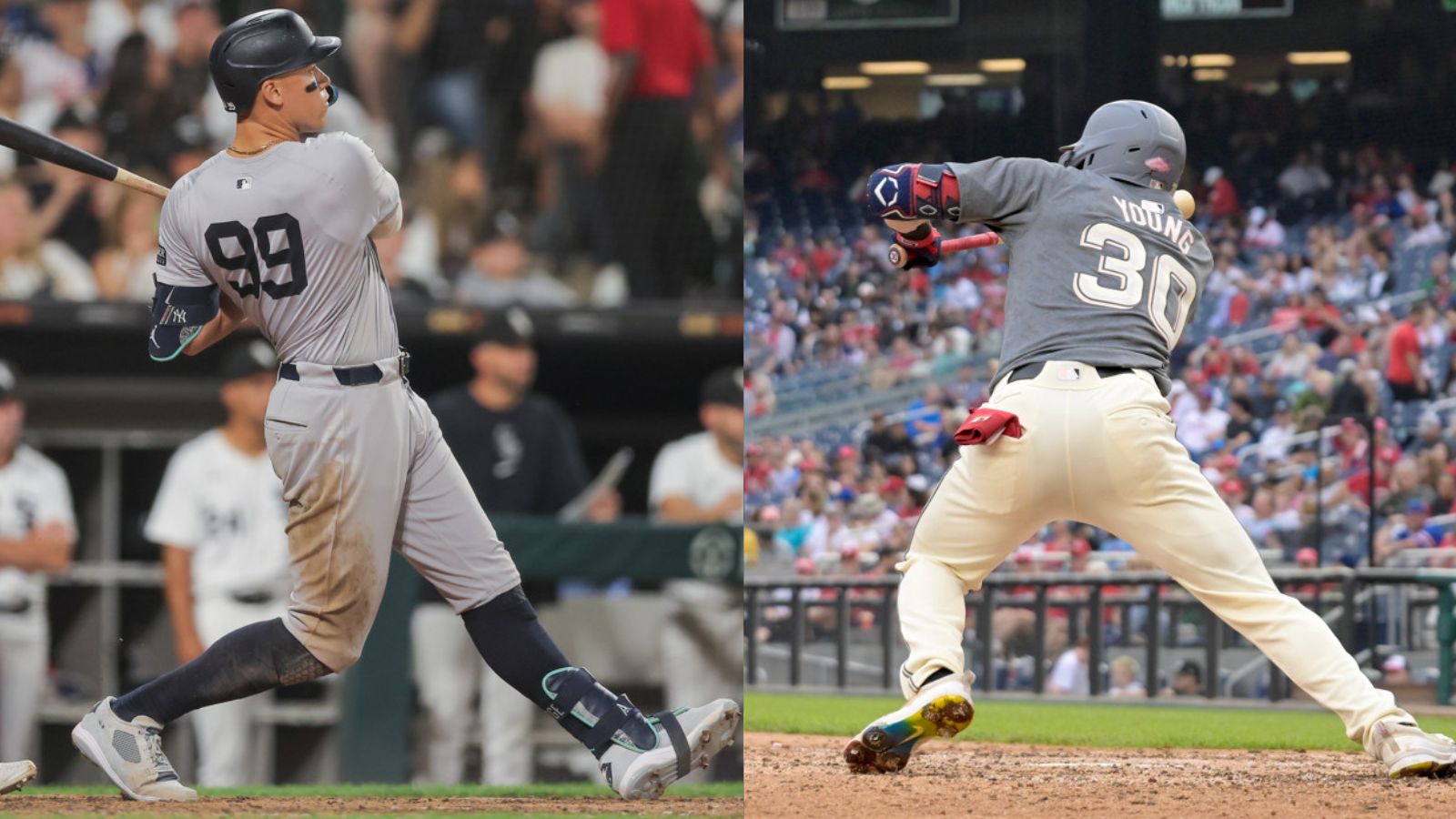
    Yankees outfielder Aaron Judge won the award for the 3rd straight year, recording a hard-hit ball on 48% of his batted balls. The runner-up is someone you probably didn’t expect. Michael Toglia of the Rockies had a hard-hit ball on 45% of his batted balls. The leading team was the Braves, who had a hard-hit ball in 35% of their batted balls, a smidge ahead of the Orioles, Phillies, and Rockies, all at 34%.

    You can see the full player leaderboard here and team leaderboard here.

    The Contact Minimizer Award

    The Contact Minimizer goes to the pitcher who most limited hard contact in 2024 (minimum 100 innings pitched). The winner was Astros pitcher Hunter Brown, who limited batters to a hard-hit ball in 22% of the batted balls against him. Brown also made last week’s Stat of the Week as the pitcher whose expected OPS was furthest below his actual OPS.

    Reds pitcher Nick Martinez ranked second, at 23%. Perhaps that’s why the Reds extended a qualifying offer to him this offseason (which Martinez accepted rather than pursue free agency).

    Martinez and Hunter Greene (11th, 27%) helped make the Reds the team leader in this stat (29%), ahead of a surprise squad, the A’s (29.5%), and the team you might have expected to be No. 1, the Mariners (29.5%).

    You can see the full pitcher leaderboard here and team leaderboard here.

    The Flat Bat Award

    The Flat Bat Award is given annually to the best bunter of the year. To determine the winner, we look at run value–run expectancy gained or lost–for both successful and unsuccessful sacrifice bunt and bunt-for-hit attempts for each player.

    This year’s leader was Nationals rookie center fielder Jacob Young, who had 9 successful sacrifices and an MLB-best 11 bunt hits against only 1 failed sacrifice and 5 failed bunt hit attempts. The runner-up was Jake McCarthy of the Diamondbacks, who had 5 sacrifices (no failed attempts) and 10 bunt hits (5 failed attempts). 

    Click here to read about the methodology behind the Flat Bat Award.

    The Vacuum Cleaner Award

    SIS Video Scouts also track what are known as “Good Fielding Plays,” which are often those that lead to the unlikely recording of an out. Those can be broken up into different subtypes, including one just for ground balls. The leader in Good Fielding Plays on ground balls is the winner of our Vacuum Cleaner Award.

    This year’s winner is Yankees shortstop Anthony Volpe, who had 21 such Good Fielding Plays. Volpe won a Gold Glove in 2023 but was not honored for his defense in 2024. Rockies third baseman Ryan McMahon and Rays and Cubs third baseman Isaac Paredes each had 18.

    The Fly Swatter Award

    The Fly Swatter Award is a similar award to The Vacuum Cleaner, except it’s for Good Fielding Plays resulting in outs on fly balls and line drives.

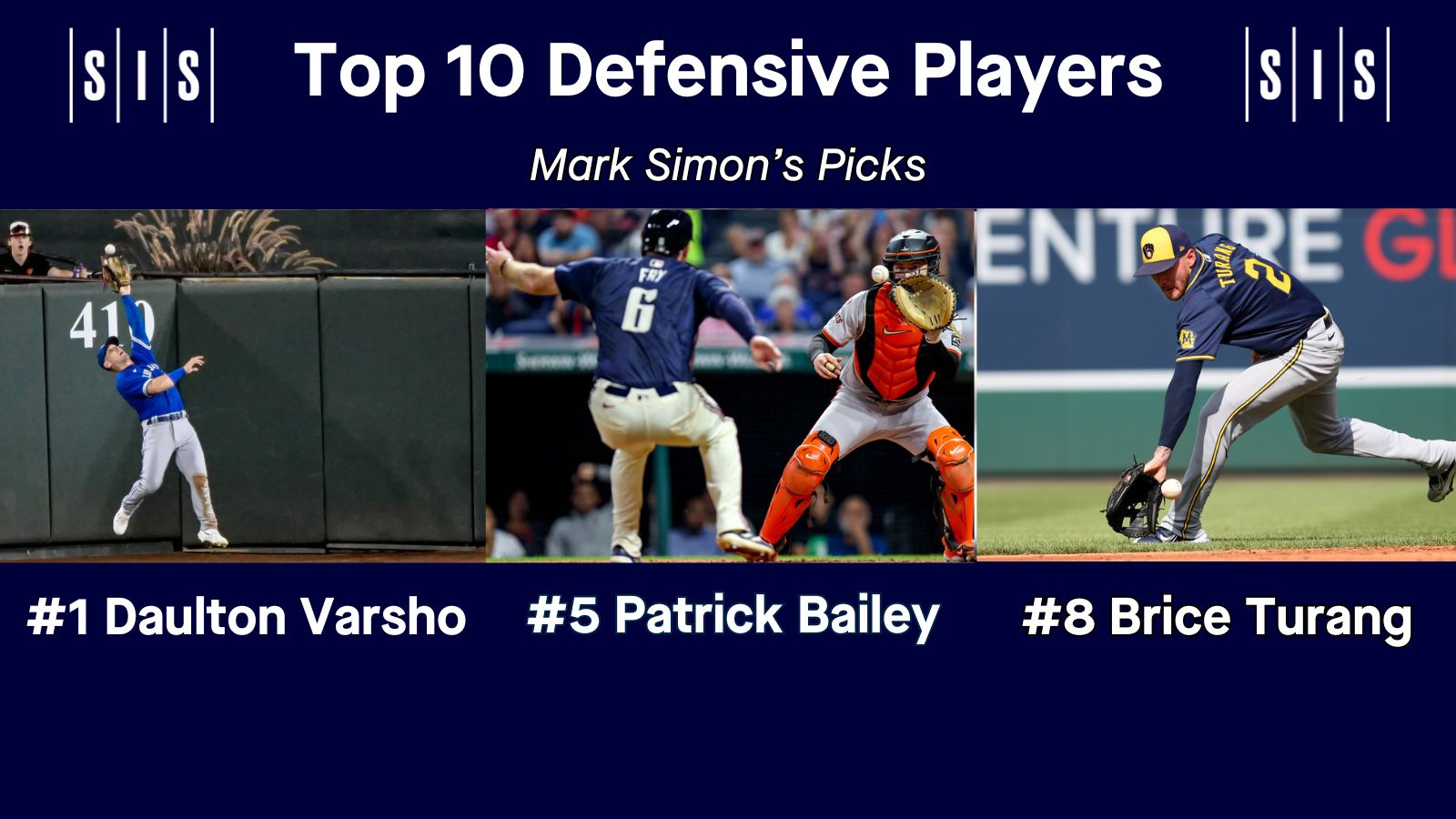
    This year’s winner was Blue Jays outfielder (and SIS Defensive Player of the Year) Daulton Varsho, with 19. Varsho also led the majors with 6 Good Fielding Plays involving collisions with the outfield wall. The runner-up in Good Fielding Plays on flies and liners was Marlins and Yankees utility man Jazz Chisholm Jr. with 17. Chisholm and Stuart Fairchild of the Reds had the second-most Good Fielding Plays involving colliding with an outfield wall with 4.

    Stolen Base Stopper

    The award for the Stolen Base Stopper goes to the catcher and pitcher who had the most Stolen Base Runs Saved in 2024. This year’s winners were Dodgers catcher Will Smith (8 Stolen Base Runs Saved) and a five-way tie among pitchers between Tanner Bibee of the Guardians, Griffin Canning of the Angels, Chris Flexen of the White Sox, Charlie Morton of the Braves, and Shota Imanaga of the Cubs (3 Stolen Base Runs Saved apiece).

    Smith threw out 28% of potential basestealers, had 25 caught stealing and 1 catcher pickoff and allowed 64 stolen bases. The MLB caught stealing rate for catchers this season was 17%. 

    Bibee won the Fielding Bible Award for pitchers in 2024. He allowed 6 stolen bases but had 6 caught stealing and 4 successful pickoffs. Of the other pitchers who tied, Imanaga had the best numbers: 3 stolen bases allowed, 2 caught stealing, and 2 pickoffs.

    You can see the leaderboards for catchers and pitchers here.

    The Hall of Framer

    The Hall of Framer award goes to the catcher who had the best pitch-framing numbers in 2024. In our world, that means the catcher who had the most called strikes above expectations (we call this stat Strike Zone Plus-Minus).

    The runaway leader in this stat was Giants catcher Patrick Bailey, who had 123 more called strikes than expected, the most for a catcher since Austin Hedges had 150 in 2019. Bailey won this year’s Fielding Bible Award at catcher after nearly winning it in 2023. He was the leader both in total and if you measured performance on a per-pitch basis.

    Most Called Strikes Above Expectations (Strike Zone Plus-Minus)

    2024 Season

    Catcher Strike Zone Plus-Minus
    Patrick Bailey 123
    Cal Raleigh 96
    Jake Rogers 78
    Bo Naylor 77
    Jose Trevino 65
    Christian Vázquez 65
  • Stat of the Week: 2024’s Underachieving Pitchers

    Stat of the Week: 2024’s Underachieving Pitchers

    Photo: Allan Dranberg/Icon Sportswire

    Hunter Brown finished 2024 with a 3.49 ERA in 170 innings pitched, but there was much more to his season than reducing it to those numbers.

    In his last 19 starts, Brown pitched to a 2.20 ERA and averaged six innings per start. He allowed only 7 home runs in 114 2/3 innings pitched. From June 8 on, he was as good as just about anyone.

    That Brown’s season ERA was considerably higher than 2.20 was the product of some rough early-season starts, one in particular against the Royals when he allowed 9 runs and 11 hits in 2/3 of an inning.

    Brown made the Top 10 list for the pitchers who underachieved the most in 2024. He’s a bit of an outlier in that he’s the one pitcher on that list who had—in sum—a good season by stats like ERA. It could have been a great one.

    Brown’s .667 OPS allowed was 68 points higher than his expected OPS. His .599 expected OPS was 11th-lowest in baseball among pitchers with at least 300 batters faced (starting pitchers ahead of him were Paul Skenes, Chris Sale, Blake Snell, Tarik Skubal, Tyler Glasnow, and Bryan Woo). His .667 actual OPS was still pretty good, but by rank, it was 54th.

    A brief point of explanation:

    Sports Info Solutions tracks its own version of a player’s expected stats (similar to what you can find on Baseball Savant). Rather than basing a player’s hit probability (and therefore single, double, triple, and home run probability) on a batted ball’s exit velocity and launch angle, SIS’ version estimates probabilities based on where balls are hit, how hard they are hit, and how long they spend in the air.

    This allows us to compare a player’s actual stats to his expected stats to see if they fared better or worse than perhaps they could have.

    Here’s the list of pitchers with the greatest differential between their actual OPS and their expected OPS. Think of them as a group whose actual 2024 numbers could have been better under different circumstances.

    Biggest Difference Between Actual OPS and Expected OPS

    Minimum 300 Batters Faced in 2024

    Pitcher Actual OPS Expected OPS Difference
    Carson Spiers .887 .793 .094
    Walker Buehler .862 .772 .090
    Reid Detmers .864 .777 .087
    Logan Allen .918 .843 .075
    Slade Cecconi .863 .792 .071
    Hunter Brown .667 .599 .068
    Chris Flexen .824 .760 .064
    Taijuan Walker .975 .913 .062
    Marcus Stroman .780 .718 .062
    Mitch Spence .786 .727 .059

    Carson Spiers (No. 1), Chris Flexen (No. 7) and Mitch Spence (No. 10) can all point to a lack of defensive support. Flexen’s teams had -17 Runs Saved behind him in 2024, the worst total in MLB. Spence’s -16 ranked second. Spiers’ -11 ranked third. Brown’s numbers may have been more of a case of bad luck than bad defense. The Astros had 2 Runs Saved behind him. 

    Speaking of defense, there’s the case of Yankees pitcher Marcus Stroman.

    Stroman’s OPS against last season was .780, 62 points higher than his expected OPS. The Yankees defense didn’t help him out. They totaled -7 Runs Saved on the batted balls against him. They also had 29 Defensive Misplays and Errors behind him, the most for any team behind any pitcher in 2024.

    Without much effort we found four potential fly ball outs that the Yankees outfielders didn’t catch that  cost Stroman a run (or more) specifically on that play or within the rest of the inning (here, here, here, and here). Three of those four balls had out probabilities of 90 percent or higher.

    Given how reliant Stroman is on his defense because of a lack of strikeouts, he and the Yankees were a bad combination in the back half of the 2024 season (he had a 5.88 ERA in his last 16 appearances).

    Another free agent in the Top 10 was Walker Buehler, who was touched for 16 home runs in 75 1/3 innings last regular season, and his OPS allowed was 90 points higher than expected. By our calculations, he was expected to allow 12 home runs, which would have helped bring his 5.38 ERA down a little, though he was still a bit removed from even being an average pitcher. Here’s one example of an unlikely home run against him.

    Of course, what’s most memorable about Buehler isn’t his regular season, but his postseason, in which he allowed no runs in 10 innings in his last three appearances and got the final out of the World Series.

  • NPB/MLB Scouting Report: Tomoyuki Sugano

    NPB/MLB Scouting Report: Tomoyuki Sugano

    Tomoyuki Sugano is one of the best Japanese pitchers of the past decade. The 35-year-old had spent his professional career with Japan’s most recognizable baseball brand the Yomiuri Giants. 

    After 12 seasons in Tokyo, Sugano exercised his rights as an international free agent and signed a one-year-deal. Sugano previously tested MLB waters during the winter of 2020, when he was posted by the Yomiuri Giants, but ended up signing a player-friendly contract with Yomiuri, where his uncle, Tatsunori Hara, was manager.

    The decision to move to MLB comes as somewhat of a surprise but there’s less holding Sugano in Tokyo now than there used to be, after Hara resigned after the 2023 season.

    Having watched and charted every Sugano start in the last two seasons my evaluation of him is more tied to pitchability and command rather than overall stuff. You can also check out my report on Roki Sasaki from last month.

    Sugano’s Recent Seasons (2022-2024)

    Season IP ERA Strikeouts Walks K-BB%
    2022 147.0 3.12 104 26 13%
    2023 77.2 3.36 54 15 12%
    2024 156.2 1.67 111 16 16%

    A two-time Sawamura award winner (NPB’s Cy Young award equivalent), Sugano also won four Central League ERA titles and a 2018 pitching triple crown, He also has three Central League MVPs including a recent 2024 one. While past his prime, Sugano’s 2024 resurgence gives some hope that he can stick with the Orioles.

    Biggest Strength

    Sugano is a command artist who paints both edges and paints masterpieces on his canvas that is the pentagonal plate. He spots the ball with precision, or, at the very least, keeps it out of dangerous spots with his misses. While Sugano’s stuff has diminished over the years, he has a knack for cutting and sinking the ball to miss barrels.

    He utilizes the breadth of his arsenal and mirrors the locations of some pitches both to righties and lefties  Sugano’s plan of attack each outing is clear to him and there’s a confidence with which he pitches. The heat maps, which you can find on NPB Pitch Profiler, illustrate the command of his secondary pitches.

    Against same-handed hitters, Sugano peppers the glove side exclusively with his cutter and slider. The two pitches tunnel well, with a slight velocity difference between each and similar shapes. The pitches work in tandem on the left side of the plate.

    Against opposite-handed hitters, Sugano seems more comfortable throwing his cutter and slider in the zone and will backdoor both pitches around the thighs. Sugano occasionally sprinkles traditional cutters up and in to keep hitters from leaning out over the plate. This also protects him for when he goes inside with four-seam fastballs. 

    His command at times borders on exceptional, as he stays on the outer edges of the plate when he needs to and tries to keep the ball out of the middle third unless he is significantly behind in the count.

    via GIPHY

    via GIPHY

    Mechanics

    Sugano starts in a slightly open position with his feet and his body turned slightly to his right. As he steps to the side with a slower pace he pauses for a beat in his windup before raising his left leg.

    There’s not a lot of momentum built up in his delivery but he counter-rotates his pelvis a tiny bit right after peak leg lift, around chest height. He drives his momentum to the plate with his back pocket facing the batter ever so slightly. Sugano opens earlier than most and doesn’t sink deep into his lower half, rather throwing from a more upright position. 

    As he lands into front foot strike, his arm is up at a close to 90-degree angle and he sequences his movements well. With a firm lead leg block, his chest is out over his knee in a solid position, driving his energy down the slope of the mound. With smooth and repeatable actions and consistency in his arm swing, Sugano never looks rushed or off, timing-wise. Sugano also keeps his head incredibly quiet with minimal movement, which plays a big part into his command.

    via GIPHY

    Sugano rarely quick-pitched to throw the timing off of the hitter, something he might try more with the Orioles if he feels like timing is more valuable to MLB hitters.

    via GIPHY

    Pitch Usage (2023-2024):

    Pitch 2024 2023
    Fastball  34% 40%
    Cutter 21% 20%
    Slider 20% 17%
    Splitter 16% 11%
    Curveball 9% 12%

    Pitch Velocity (MPH):

    Pitch 2024 2023
     Fastball  92 MPH 91.5 MPH
    Cutter 87 MPH 87 MPH
    Slider 82 MPH 83 MPH
    Splitter 86 MPH 86 MPH
    Curveball 77 MPH 78 MPH

    Against Right-Handed Batters (RHB):

    Pitch 2024 2023
     Fastball  39% 45%
    Cutter 25% 22%
    Slider 21% 16%
    Splitter 12% 10%
    Curveball 3% 7%

    Against Left-Handed Batters (LHB):

    Pitch 2024 2023
     Fastball  30% 35%
    Cutter 18% 18%
    Slider 19% 18%
    Splitter 20% 12%
    Curveball 13% 17%

    The Arsenal (2024 usage and Average Velocity)

    Fastball   34%, 92 mph   CSW% 30%   STRIKE% 68%

    Sugano throws both a sinker and a four-seam fastball, the usage of which is grouped above, but he throws his sinker about 8% of the time and the four-seam 26%. His four-seam is not spectacular in shape or velocity but he pounds the zone with the pitch against righties and-as mentioned-dots the edges of the zone against lefties.

    The Orioles may utilize Sugano more in a five-and-dive role, rather than the innings eater he was in NPB. With this outcome, there’s a possibility of throwing one or two ticks harder stateside. I would bet on him trying to eat innings some outings and provide value going as deep as he can into games.

    Sugano’s biggest path to success is superb fastball command. When he gets hit hard, he usually leaves fastballs more middle, where he’s susceptible to the long ball. He allowed 6 home runs last season, 3 on fastballs (it was a lot harder to hit a home run in Japan due to the deadened ball there).

    In contrast, he allowed 10 home runs in less than half the innings pitched in 2023. Home run suppression will be vital to his success since he doesn’t produce a lot of strikeouts.

    via GIPHY

    via GIPHY

    Cutter 21%, 87 mph  CSW% 32%   STRIKE% 68%

    Sugano’s cutter is the key pitch in his arsenal; it helps his other pitches out when it’s thrown well and spotted well. While attacking the glove side away from right-handed hitters he slices the outside edge of the zone with the pitch. 

    via GIPHY

    The pitch is a setup for his slider. He starts the tunnel with the cutter and then follows up with his slider in a similar spot that’s competitive but just a little more off the edge. This creates options for him to either go to a different pitch or ride the same rail with his fastball for a take. Sugano will then change the looks batters get throughout a game. He changes up the variety at which he throws his slider and cutter, especially to righties.

    2024 Count Usage

    Pitch 1st Pitch Usage 2-Strike Usage
    Fastball  39% 31%
    Cutter 26% 12%
    Slider 19% 20%
    Splitter 7% 25%
    Curveball 9% 12%

    2023 Count Usage

    Pitch 1st Pitch Usage 2-Strike Usage
     Fastball  46% 35%
    Cutter 19% 20%
    Slider 13% 18%
    Splitter 15% 12%
    Curveball 7% 15%

    Sugano upped his first-pitch usage of the cutter this season. While individually the pitch performed possibly worst out of all his pitches, the upping of the usage, especially early in the count, helped his slider perform better later in the count. He used the slider as a whiff pitch and a two-strike pitch in 2024. The cutter produces a decent amount of ground balls, utilized primarily down in the zone. Its ground ball rate was 56% in 2024 and 49% in 2023.

    Slider 20%, 82 mph   CSW% 34%   STRIKE% 71%

    While his cutter is key against right-handed batters, Sugano’s slider is his bread and butter. While a barrage of glove-side cutters and fastballs establishes the eye level and attack zone, Sugano uses his slider to stay in that same attack zone. With a bit more sweep and lower velocity than his cutter, it stays in that outer lane to righties before sweeping and dropping more as it approaches the plate.

    When Sugano rips a beautifully-located slider it’s become harder for hitters to stay disciplined. Last season his whiff rate jumped to around 25% on the pitch whereas in 2023 and even 2022 his slider whiff rate hovered around 20%.

    via GIPHY

    Sugano started using the cutter and slider in tandem, throwing both pitches around the same usage in 2021. However, his concerted effort to throw more cutters early in the count last season shows a shift in his thinking that he needs to tunnel both the cutter and slider more to protect his fastball and improve his slider’s performance.

    He loves the glove-side cutter and slider tunnel though and has for the last five seasons or so. His propensity to throw his slider and even his cutter more in the zone and backdoor to left-handed hitters also creates a tunnel for his arm-side sinker.

    He also honed his slider and cutter command more this season than in past years, which could explain his boost in success with both pitches.

    Splitter 16%, 86 mph   CSW% 22%   STRIKE% 57%

    A mainstay in Sugano’s arsenal has been his splitter, which he has always been able to pinpoint below the zone. There’s the occasional miss up with the pitch but Sugano has a feel for keeping the pitch just below the zone to try and get grounders and swings over the top of the pitch.

    The bump in usage from Sugano in 2024 compared to 2023 is significant enough with a 5 percentage-point  overall usage bump in 2024 on his splitter and an 8-point bump against left-handed hitters. He threw his splitter the least of any pitch in his shorter 2023 season. However, Sugano started to lean on his splitter in putaway situations in 2024.

    Sugano’s decision to throw his best pitch more in high-leverage situations was a welcomed change. Even increasing the usage of the pitch versus same-handed hitters returned good results.

    Sugano’s walk rate did not spike either, in fact, it lowered from 4.8% in 2023 to 2.6% in 2024, and his splitter, just because of the nature of the pitch, has the lowest strike rate in his entire arsenal. Deciding to throw more cutters and sliders in the zone when behind in the count, and then attack with a splitter when he has a chance to put both righties and lefties away garnered real success for him.

    The pitch doesn’t drop below the zone as violently as other splitters but with its spin and characteristics, it mimics his sinker a lot, with backspin but at lower spin rates, causing more drop to the pitch. He loves to throw the pitch when he needs a whiff or a double-play ball.

    via GIPHY

    via GIPHY

    Curveball 9%, 77 mph   CSW% 27%   STRIKE% 63%

    Sugano’s least-used pitch last season in terms of secondaries was his curve. While he dropped the usage of his curveball in 2024  it was thrown with better spin, and a tick harder velocity, which improved the overall performance of the pitch.

    He did expand the usage of the pitch against same-handed hitters last season, again using the pitch as a first-pitch strike stealer but also burying it down and away from righties to keep hitters off of his cutter and slider tunnel.

    There’s a real possibility that Sugano lessens his fastball usage in the majors, especially the four-seam, and leans more on his breaking balls away from right-handed hitters while dropping the occasional in-zone or backdoor curve to left-handed hitters.

    It will be intriguing to track his curve next season and if it even takes another step forward as a possible putaway pitch after performing quite well in 2024. This is not only because of the wrinkle it provides in his repertoire but also because the velocity disparity keeps hitters off balance. He will need to continue to locate the pitch well and can’t just loop in breaking balls unless he protects it with his other pitches beforehand.

    MLB Projection and Future

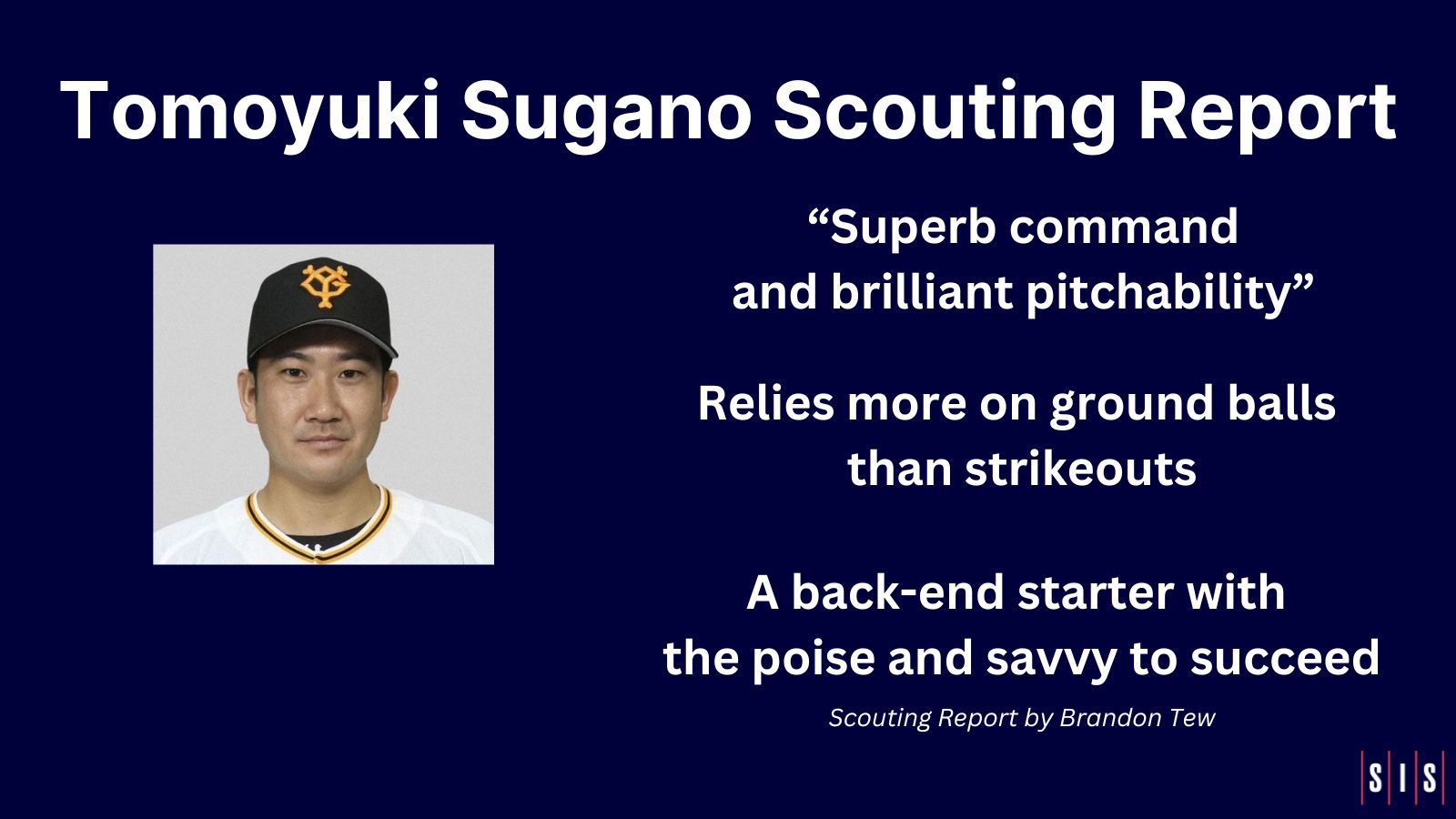
    Sugano has been a mainstay at the top of Yomiuri’s rotation and it will be odd to see him don a different uniform. A command specialist with just enough stuff to get hitters out, Sugano projects as a back-end starter with the poise and savvy to succeed as a rotation piece for the Orioles.

    He relies more on ground balls than strikeouts needs to mix speeds and tunnel his pitches well, showcasing his superb command and brilliant pitchability. Sugano is one of the most accomplished Japanese pitchers and should be in the conversation as a Top 10 all-time NPB pitcher. At the tail end of his career, there’s some skepticism, but an outstanding 2024 season provides hope that he has enough left in the tank to yield solid value as he moves stateside.

    MLB comparison: Paul Blackburn, but with Zack Greinke-like command

  • Stat of the Week: Who Were 2024’s Most Overachieving Pitchers?

    Stat of the Week: Who Were 2024’s Most Overachieving Pitchers?

    José Berríos did it again!

    For the second consecutive season, the Blue Jays starting pitcher made our list of pitchers who most outperformed their expected stats.

    Opponents had a .706 OPS against Berríos in 2024. The expected OPS against him was .788. The 82-point differential was tied with his teammate, Bowden Francis, for the second-highest differential among pitchers. Another Berríos teammate, long reliever Ryan Yarbrough, who split the season between the Dodgers and Blue Jays, led the way with a 104-point differential.

    A brief point of explanation:

    Sports Info Solutions tracks its own version of a player’s expected stats (similar to what you can find on Baseball Savant). Rather than basing a player’s hit probability (and therefore single, double, triple, and home run probability) on a batted ball’s exit velocity and launch angle, SIS’ version estimates probabilities based on where balls are hit, how hard they are hit, and how long they spend in the air.

    This allows us to compare a player’s actual stats to his expected stats to see if they fared better or worse than perhaps they could have.

    Here’s the list of pitchers with the greatest differential between their expected OPS and their actual OPS. Think of them as a group whose actual 2024 numbers could have been worse under different circumstances. 

     Greatest Differential – 2024 OPS Allowed and Expected OPS Allowed

    Minimum 300 Batters Faced in 2024

    Pitcher Expected Opp OPS Opp OPS Difference
    Ryan Yarbrough .718 .614 .104
    José Berríos .788 .706 .082
    Bowden Francis .707 .625 .082
    Luis L. Ortiz .741 .660 .081
    Tyler Holton .579 .500 .079
    Kevin Gausman .765 .688 .077
    Merrill Kelly .785 .720 .065
    David Peterson .732 .669 .063
    Austin Gomber .855 .794 .061
    Derek Law .702 .642 .060

    That Blue Jays pitchers took the top three spots isn’t that surprising given that the team led the majors in Defensive Runs Saved (and Yarbrough’s other team, the Dodgers, ranked 3rd).

    Another stat we track, Defensive Runs Saved on batted balls against a pitcher, had the Blue Jays with 24 Runs Saved for Berríos, the most by any team for a pitcher in 2024. Their 13 Runs Saved for Francis ranked eighth, which is notable given that Francis didn’t even rank in the top 100 in innings pitched last season. Neither did Yarbrough, for whom the Dodgers and Blue Jays saved 10 runs.

    Both Berríos and Francis allowed 1.5 home runs per 9 innings, a rate that usually yields a problematic ERA. Of the 30 pitchers who pitched at least 100 innings and allowed 1.4 homers per 9 in 2024, Francis’ 3.30 ERA was second-lowest and Berríos’ 3.60 ERA was fourth-lowest.

    The most direct example of Berríos’ getting help from his defense was this home run robbery by Daulton Varsho against Ryan O’Hearn of the Orioles. Varsho also likely saved the Blue Jays and Berríos two runs with this catch against Brandon Lowe of the Rays. Berríos was also helped by an infield that turned 80% of grounders and bunts into outs for him (MLB average is 73%).

    In Francis’ case, 78% of balls hit in the air against him were turned into outs. MLB average is 68%. He also benefited more than once from Varsho’s MLB-leading Runs Saved season.

    Berríos wasn’t the only pitcher to make the overachievers top 10 for a second straight year. Tyler Holton did too. Holton had an incredible season for the Tigers, allowing 57 hits in 94 1/3 innings. Similar to Berríos, he benefited from an infield that turned 83% of grounders and bunts against him into outs. There’s a common thread here. Yarbrough, the leading overachiever, also got an 83% out rate on grounders and bunts from his teams.

    We’ll look at the top underachieving pitchers next week.

  • Stat of the Week: Who Were 2024’s Most Underachieving Hitters?

    Stat of the Week: Who Were 2024’s Most Underachieving Hitters?

    Photo: Nick Wosika/Icon Sportswire

    Adam Duvall and Whit Merrifield weren’t as bad as their numbers looked in 2024.

    That’s not to say that either was good but that there was a vast difference between their actual OPS and their expected OPS.

    Merrifield and Duvall were the two biggest statistical underachievers of 2024 in terms of actual stats and expected stats.

    A brief point of explanation:

    Sports Info Solutions tracks its own version of a player’s expected stats (similar to what you can find on Baseball Savant). Rather than basing a player’s hit probability (and subsequently single, double, triple, and home run probability) on a batted ball’s exit velocity and launch angle, SIS’ version estimates probabilities based on where balls are hit, how hard they are hit, and how long they spend in the air.

     This allows us to compare a player’s actual stats to his expected stats.

     Here’s the leaderboard for the hitters with the biggest negative differential between OPS and expected OPS (you can see the positive differential leaderboard in our article last week).

    Sports Info Solutions tracks its own version of a player’s expected stats (similar to what you can find on Baseball Savant). Rather than basing a player’s hit probability (and subsequently single, double, triple, and home run probability) on a batted ball’s exit velocity and launch angle, SIS’ version estimates probabilities based on where balls are hit, how hard they are hit, how long they spend in the air, and the speed of the batter, as well as the ballpark in which the ball was hit. 

     This allows us to compare a player’s actual stats to his expected stats.

    Biggest Negative Differential – 2024 OPS and Expected OPS

    Minimum 250 Plate Appearances in 2024

    Player OPS Expected OPS Differential
    Adam Duvall .569 .675 -.106
    Whit Merrifield .625 .729 -.104
    Eddie Rosario .531 .633 -.102
    Bo Bichette .598 .697 -.099
    TJ Friedl .690 .788 -.098
    Javier Báez .516 .612 -.096
    Maikel Garcia .614 .701 -.087
    Patrick Bailey .637 .723 -.086
    Zach McKinstry .614 .698 -.084
    Marcus Semien .699 .781 -.082

    In Duvall’s case, part of the 106-point gap between his .569 OPS and .675 OPS was that by our expected numbers, he should have had 15 home runs instead of 11 (the most clearcut example of a homer he should’ve had is this one that was snagged by Chris Taylor but there’s also this and this).

    But even with those homers and other additional hits, Duvall would still have been a below-average MLB hitter. However, in Merrifield’s case, the difference between a .625 actual OPS and a .729 expected OPS was the difference between being a well below-average MLB hitter and an above-average one. Merrifield was 14 hits and 4 doubles short of his expected totals, with a good chunk of that coming on at-’em balls, balls on which fielders were well-positioned (coincidentally here’s a play by Taylor to deny Merrifield as well).

    There are three other hitters on this list that I’m going to point out. One is Giants catcher Patrick Bailey, who finished with a .637 OPS but a .723 expected OPS. Bailey’s OPS was 41 points lower than the MLB average for catchers but if he’d hit at his expected OPS, it would have been 45 points higher.

    The other two hitters of note are TJ Friedl of the Reds and Marcus Semien of the Rangers. Friedl had a .750 OPS in 2022 and .819 in 2023. He dropped to .690 in 2024 but probably deserved better. People wouldn’t be wondering why Friedl had dipped had he hit at the level of his .788 expected OPS.

    Opposing defenses were key to shutting Friedl down. Teams had 11 Range Runs Saved against Friedl (here’s one play that contributed). In other words, defenses were making plays against him that they weren’t making against others. Only three players had teams accumulate more Range Runs Saved against a player last season (15 against Bryson Stott was the most in MLB).

    Similarly, Semien finished with a .699 expected OPS, a little better than an average second baseman (.684) but a drop from .826 and .733 the previous two seasons.

    Semien’s .781 expected OPS for 2024 indicated that he was still a good hitter last season. He just wasn’t getting balls through or down that other hitters were. Teams had 11 Runs Saved from defensive positioning against Semien, tied for most by teams against a player in MLB (Yandy Díaz and Luis Arraez are those with whom he tied).

  • Stat of the Week: Who Were 2024’s Most Overachieving Hitters

    Stat of the Week: Who Were 2024’s Most Overachieving Hitters

    Red Sox catcher Connor Wong played in the same number of games in 2024 as he did in 2023. But it was a much different season for him as a hitter.

      At-Bats Hits K BA OPS
    2023 371 87 134 .235 .673
    2024 447 125 114 .280 .758

    Now rather than proclaim that Wong had some sort of breakthrough, we’re going to tell you something different. Wong was by our measures – the biggest overachiever of 2024.

    A brief point of explanation:

    Sports Info Solutions tracks its own version of a player’s expected stats (similar to what you can find on Baseball Savant). Rather than basing a player’s hit probability (and subsequently single, double, triple, and home run probability) on a batted ball’s exit velocity and launch angle, SIS’ version estimates probabilities based on where balls are hit, how hard they are hit, how long they spend in the air, and the speed of the batter. Ballpark is also taken into account.

     This allows us to compare a player’s actual stats to his expected stats.

    And when we compare Wong’s actual and expected stats, there are big differences. Wong had a .758 OPS and a .645 expected OPS. His OPS differential between his real and expected numbers was 113 points, the biggest difference for any player with at least 250 plate appearances in 2024.

    Biggest Differential – 2024 OPS and Expected OPS

    Minimum 250 Plate Appearances in 2024

    Player OPS Expected OPS Differential
    Connor Wong .758 .645 .113
    Matt Wallner .894 .788 .106
    Tyler O’Neill .847 .734 .100
    Xavier Edwards .820 .720 .100
    Jose Iglesias .830 .734 .096
    Rob Refsnyder .830 .734 .096
    Carlos Correa .905 .814 .091
    Bryce Harper .898 .811 .087
    Parker Meadows .743 .659 .084
    Bobby Witt Jr. .977 .894 .083

    Your first instinct might be that playing in Fenway Park boosted Wong’s numbers. That’s a component, but there’s something else involved here.

    Wong had 7 hits on batted balls with a hit probability of 10% or lower in 2024. He had none in 2023. All of those hits were on ground balls or bunts (examples include this and this). Wong had 48 ground ball or bunt base hits in 2024. By SIS’ expected numbers, he was projected to have 36.

    Wong’s 10 hits on fly balls and line drives that had the lowest hit probability all came at home. Though ballpark is taken into account, “wall balls” at Fenway Park aren’t fully neutralized by our system (balls like this and this)From those 10 balls, Wong was expected to record only 1.7 hits. On all his other fly balls and line drives, his actual hits total and expected hits total were close to the same.

    In sum, Wong had 12 more ground ball/bunt hits than expected and 8 more hits than expected on line drives and fly balls. He had the biggest difference in OPS above expected OPS and the second-biggest difference in BABIP versus expected BABIP.

    Wong is one of three Red Sox to rank among the top 10 overachievers in OPS in 2024. The others were also right-handed hitters, Tyler O’Neill and Rob Refsnyder.

    Luck is one reason that a hitter could outperform his expected numbers. Hustle can help too. Jose Iglesias of the Mets came up fifth on this leaderboard. His effort won him a few more hits than expected, such as this one against the Athletics and this one against the Diamondbacks.

    In fact, as was noted on a Mets broadcast late in the season, Iglesias’ hustle on that latter play, in a game his team was losing 10-2 with two outs in the ninth inning on June 1 set an example for how the Mets needed to play the rest of the season. They had the best record in MLB from the next day to the end of the season.

    Iglesias totaled 36 ground ball hits in 2024. He had an expected total of 27 based on how hard and where those balls were hit, accounting for much of his overachieving numbers.

    We’ll look at the most underachieving hitters next week.