Category: MLB

  • Fielding Bible Awards Preview (Part I – Catcher and Infield)

    Fielding Bible Awards Preview (Part I – Catcher and Infield)

    We spend most of the year in these newsletters talking up defensive excellence across baseball. Now, we’re nearing time to reward those who were most excellent in 2024.

    Our next two Stat of the Weeks will focus on the top candidates for The Fielding Bible Awards, which will be announced later this month.

    The Fielding Bible Awards is voted on by a panel of experts who can vote based on whatever criteria they choose, including observation and subjective judgement, as well as statistical analysis. Each position has one overall winner, different from the Gold Gloves which has one in each league.

    This week, Part I of our preview looks at catchers and infielders from the perspective of the top Fielding Bible Awards and Gold Glove favorites and contenders.

    (Defensive Runs Saved totals in parentheses)

    Catcher

    Fielding Bible Award Favorite: Patrick Bailey (20)

    NL Gold Glove Favorite: Bailey

    AL Gold Glove Favorites: Cal Raleigh & Freddy Fermin (16)

    NL Top Contenders: Gabriel Moreno (10), William Contreras (6)

    AL Top Contenders: Alejandro Kirk (14), Jake Rogers (13),  Austin Wells (11), Bo Naylor (11)

    After finishing second in Fielding Bible Awards voting last year, Bailey became this year’s favorite by ranking first in our pitch-framing stat, Strike Zone Runs Saved (15), and tied for third in Stolen Base Runs Saved (5).

    Raleigh and Fermin are formidable competition and will be in a tight race for AL Gold Glove honors. Raleigh ranked second in Strike Zone Runs Saved. Fermin matched Bailey in Stolen Base Runs Saved and had the highest catcher block rate in MLB, blocking 96.3% of potential wild pitches.

    First Baseman

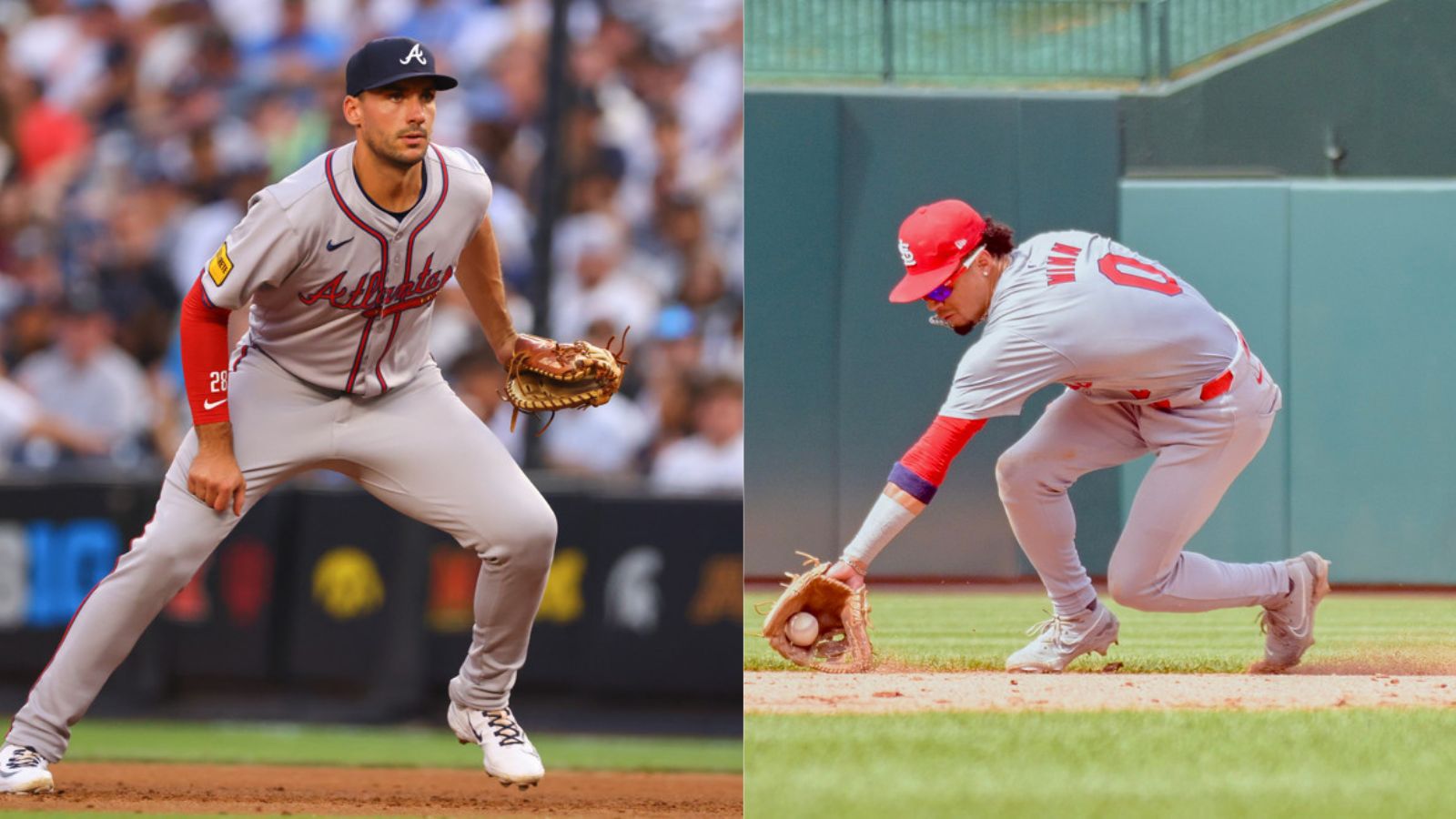
    Fielding Bible Award Favorite: Matt Olson (14)

    NL Gold Glove Favorite: Olson

    AL Gold Glove Favorites: Carlos Santana (8), Ryan Mountcastle (8)

    NL Top Contenders: Michael Toglia (10), Christian Walker (7), Bryce Harper (5), Michael Busch (5)

    AL Top Contenders: Nathaniel Lowe (1), Nolan Schanuel (1)

    Olson won the Fielding Bible Award in 2018, 2019, and 2020 and is the favorite to snare another after leading his position in Defensive Runs Saved. As has been his norm, Olson excelled at getting to balls in the ‘3/4’ hole and turning them into outs and led all first basemen in the range component of Runs Saved.

    As to who wins the AL Gold Glove at first base, Santana had his second straight strong season and has a decent chance at winning as a 38-year-old, though Mountcastle had a good year as well. There’s also intrigue in the NL as to whether Harper will be a finalist for a Gold Glove. He did a nice job in his first full season at first base. 

    Second Baseman

    Fielding Bible Award Favorites: Brice Turang (21), Andrés Giménez (20)

    NL Gold Glove Favorite: Turang

    AL Favorite: Giménez

    NL Top Contender: Ketel Marte (10)

    AL Top Contender: Marcus Semien (10)

    This should be an extremely close vote for the Fielding Bible Award. Turang had a fantastic defensive year for a Brewers team that finished with the 4th-most Runs Saved in MLB. Giménez, who won not only the Fielding Bible Award last year, but also the Platinum Glove for best AL defensive player, was right there with Turang for most of the season.  

    Both should be favored to win the Gold Glove Award in their respective leagues, though Marte and Semien are highly-credible defensive players in their own right.

    Shortstop

    Fielding Bible Award Favorite: Masyn Winn (14)

    NL Gold Glove Favorite: Winn

    AL Gold Glove Favorites: Zach Neto (11), Brayan Rocchio (10)

    NL Top Contenders: Ezequiel Tovar (9), Dansby Swanson (7)

    AL Top Contenders: Anthony Volpe (6), Gunnar Henderson (5), Bobby Witt Jr. (2)

    Winn led shortstops in Runs Saved based on the combination of his range and his leading the position in Double Play Runs Saved (6). The 6 Double Play Runs Saved matched the most for a shortstop in the 22-year history of Defensive Runs Saved.

    Shortstop is a rich position for Gold Glove contenders. By Defensive Runs Saved, Neto is the AL favorite, but the inclusion of other defensive stats in the Gold Gloves’ Sabermetric Defensive Index (SDI, which accounts for about 25% of the vote) may give others who didn’t fare as well in Runs Saved (like Swanson and Witt) a better chance.

    Third Baseman

    Fielding Bible Award Favorite: Matt Chapman (17)

    NL Gold Glove Favorite: Chapman

    AL Gold Glove Favorite: Ernie Clement (10)

    NL Top Contender: Ryan McMahon (10), Ke’Bryan Hayes (10)

    AL Top Contender: Alex Bregman (6), José Ramírez (6)

    Chapman was the runaway leader in Runs Saved in a season in which he looked similar to how he played when he won the Fielding Bible Award in 2018 and 2019. He played the second-most innings of any third baseman in 2024 and showed he is fully recovered from his 2020 hip surgery.

    Chapman’s replacement in Toronto, Ernie Clement, has a decent chance to win an AL Gold Glove, though a couple of veterans—Bregman and Ramírez—are aiming for their first Gold Glove and have a reasonable chance given their numbers. 

    Next week we’ll look at outfielders, pitchers, and the multi-position award.

  • Stat of the Week: 2024 Minor League Defensive Standouts

    Stat of the Week: 2024 Minor League Defensive Standouts

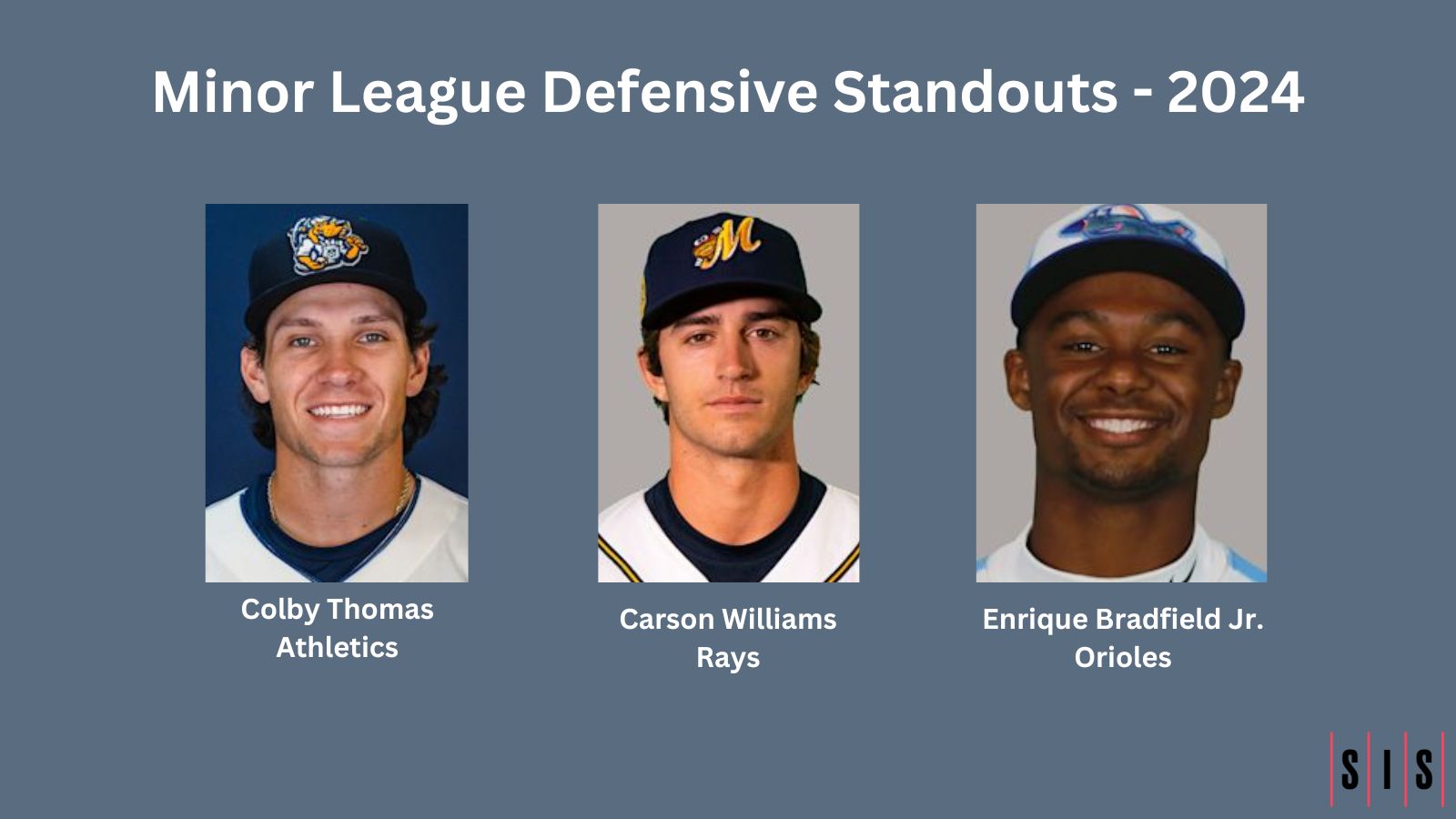
    Athletics outfield prospect Colby Thomas likes to play the outfield like he’s playing another sport.

    “The plays that you’re just full sprint and you fully extend and grab one,” Thomas said in a recent interview on The Sports Info Solutions Baseball Podcast. “I feel like those are really cool. I feel like a receiver in football, like I’m going to get it, and it looks like I’m reeling it in going for a touchdown.”

    Thomas made a bunch of catches like that this season in the corner outfield spots for the Midland RockHounds of the Texas League and the Las Vegas Aviators of the Pacific Coast League. He made some impressive throws too.

    SIS tracks Defensive Runs Saved for minor league players and teams in addition to tracking the stat for the major leagues. Thomas, the A’s No. 7 prospect per MLB Pipeline, led all left fielders with 13 Runs Saved in 2024. He also had 2 Runs Saved in a shorter stint in right field.

    Thomas had 7 Runs Saved in left field thanks to his outfield arm. That and his 8 assists that didn’t need the help of a cutoff man matched the most of any minor league left fielder.

    “I wouldn’t say I have a cannon for an arm,” Thomas said. “I’d like to think I’m more accurate. I had labrum surgery on my throwing arm that ended my junior year of college. Coming back from that, I didn’t really know if it’s gonna be a plus arm. I had the same manager in Low-A and Double-A and we threw to bases a lot. I think that started to get it more accurate and you also build up the arm strength.”

    Thomas had 31 home runs and 44 doubles split between the two minor league levels and his bat-glove combination makes him a legit candidate to play for the Athletics next season.

    Thomas isn’t the only prime prospect who had a strong defensive year. Here are two others:

    Carson Williams, Rays shortstop

    The 21-year-old Williams is the No. 4 prospect in all of baseball and he looks close to major league ready defensively. He had 6 Runs Saved at shortstop in 2024 for the Montgomery Biscuits of the Double-A Southern League. Only one minor leaguer had more Runs Saved there (28-year-old Jackson Cluff had 9).

    The minor league baseball world is already familiar with Williams’ defensive excellence. He won a minor league Gold Glove at shortstop in 2022.

    Enrique Bradfield Jr., Orioles outfielder

    Bradfield, the Orioles’ No. 4 prospect, had 7 Runs Saved in 106 games in the outfield for the High-A Aberdeen Ironbirds of the South Atlantic League, and the Bowie Baysox of the Eastern League, all of those Runs Saved coming in center field.

    Bradfield’s strengths were chasing down the shallow fly ball and also his throwing arm. Only 17 of 53 baserunners took an extra base against him as a center fielder, a 32% advance rate. An average minor league advance rate is typically in the low 50s, so Bradfield fared far better than average in that area.

  • Stat of the Week: Shohei Ohtani And How MLB Players Slide Into Bases

    Stat of the Week: Shohei Ohtani And How MLB Players Slide Into Bases

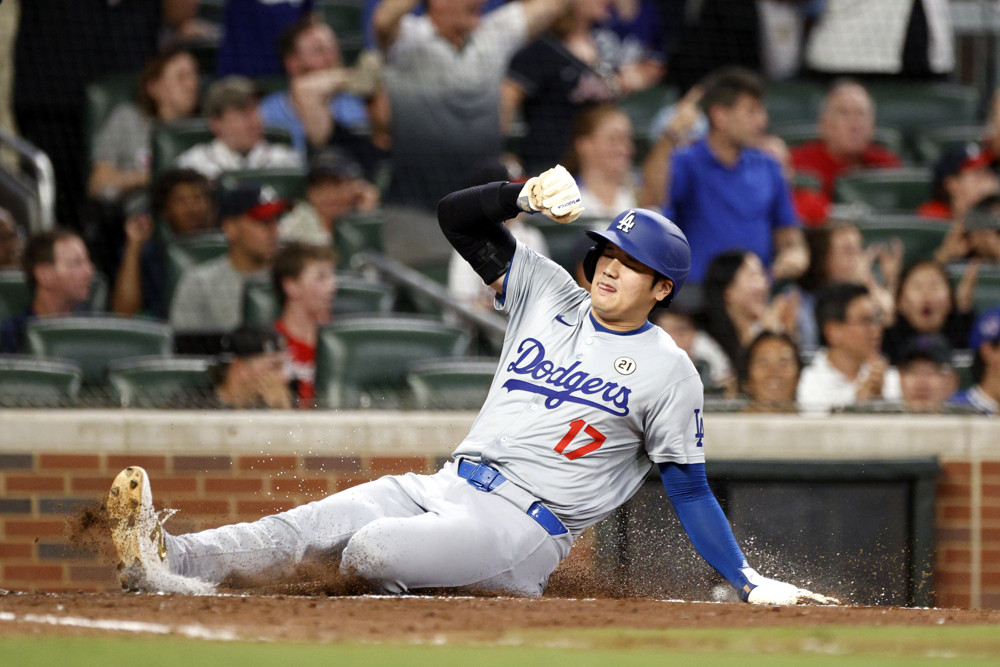
    Shohei Ohtani’s first season with the Dodgers has basically been perfect. He’s the first player in major league history to hit 50 home runs and steal 50 bases in a season. He leads the NL in runs, RBI, total bases, slugging percentage, and OPS.

    There’s one other way in which Ohtani’s season has been perfect and we thank a baseball fan named Elliott, who wrote in to the podcast Effectively Wild, to remind us. Ohtani has had 79 competitive slides into a base this season (not including pickoffs). All 79 have been what we refer to as normal feet-first slides.

    This isn’t new. In fact, it dates back to Ohtani’s time playing in Japan, when his team, the Nippon-Ham Fighters, banned headfirst sliding.

    Sports Info Solutions has done complete tracking of slides by type since 2021. We track slides on all balls hit to the infield, all balls hit to the outfield in which there is a long throw or relay to a base, stolen bases, and slides of any other type that result in injury.

    Ohtani has slid feet first 98% of the time (220 times out of 224 slides) in that span. He had 3 true head-first slides and one of what we categorize as hook slide, hand reach.

    Here’s a list of players with at least 20 slides this season who have used a normal feet-first slide the most frequently.

    Highest Percentage of Normal Feet-First Slides

    Minimum 20 Slide Attempts

    Player Pct (Feet First-Total)
    Shohei Ohtani 100% (79-79)
    Michael Busch 100% (39-39)
    Wyatt Langford 100% (39-39)
    Alex Bregman 100% (26-26)
    Lenyn Sosa 100% (25-25)
    Lars Nootbaar 100% (24-24)
    Adam Duvall 100% (21-21)
    Jeimer Candelario 100% (20-20)
    Gavin Sheets 100% (20-20)
    Corbin Carroll 98% (61-62)
    Jonny DeLuca 97% (36-37)
    Adley Rutschman 97% (35-36)
    Jake Cronenworth 97% (33-34)
    Teoscár Hernandez 97% (33-34)
    Cody Bellinger 97% (32-33)
    Andy Pages 97% (29-30)
    Alec Bohm 97% (28-29)

    Going back to last season, Corbin Carroll —who has 61 feet-first slides out of 62 total slides this season—has slid feet first 144 times and head-first only twice.

    In contrast to this, Ronald Acuña Jr. slid into a base 19 times this season prior to his injury and never slid in a normal feet-first manner. He had 16 head-first slides and 3 hook slide, hand reaches (these start as feet-first slides). This wasn’t anything new for Acuña, who slid feet first only 7% of the time in 2023.

    Mike Trout, before his season ended, had 1 feet-first slide and 8 head-first slides. That was a significant change in approach for Trout, who slid feet first on 23 of his 25 slides in 2023.

    Among players with more than 20 slides, José Caballero is the most frequent at sliding in what we categorize as a normal head-first slide, doing so 88% of the time. Four players slide head first 80% of the time or higher: Caballero, Johan Rojas (84%), David Hamilton (82%), and Dairon Blanco (81%). MLB’s most prolific basestealer, Elly De La Cruz, slides that way 74% of the time.

    The average major leaguer has slid feet first 62% of the time this season, head-first 34% of the time. The other 4% is hook slide, hand reach (3%), swim moves (1%), and hook slide, foot reach (less than 1%). Hook slide with a hand reach is used most often on slides into home plate, accounting for 14% of those slides.

    If you’re curious how often a player slides feet first by base, here’s the data on that.

    Type of Slide By Base- 2024 Season

      Feet First Head First Other
    1st Base 34% 63% 3%
    2nd Base 68% 30% 2%
    3rd Base 46% 48% 5%
    Home Plate 46% 38% 16%

    SIS also tracks injury type and severity for all plays (including slides). Over the last four seasons, there have been 122 injuries recorded on slides, 67 on feet-first, 48 on head-first and 7 on hook slide, hand reach. That’s a rate of 5.6 injuries per 1,000 slides on the hook, hand reach slides, 3.6 on head first, and 2.3 on feet first.

    However, this season, there have been more than twice as many injuries on feet-first slides (29) as head-first ones (14). The injury rate this year for head-first slides is 3.6 per 1,000 but the injury rate on feet first is 4.1, more than double what it was from 2021 to 2023.

  • Stat of the Week: The Roaring Tigers

    Stat of the Week: The Roaring Tigers

    The Tigers have snuck up on a lot of teams in the latter part of the season. They have played their way into Wild Card contention by going 27-14 since August 3, tied with the Padres for the best record in baseball in that time. 

    They’ve also snuck up in the defensive metrics. They rank 6th in MLB in Defensive Runs Saved this season.

    The Tigers’ defensive metrics are driven by three things:

    Defensive Positioning

    The Tigers’ four infield positions have combined for -8 Runs Saved this season in terms of their skill. But the Tigers’ staff has needed its infield to be good given the team’s ground ball rate (44% for the season, 7th in MLB). Where the team has made up for skill shortcomings is in its infield defensive positioning and use of what we call partial defensive shifts.

    That’s an alignment in which at least two infielders deviate significantly from straight-up positioning (think of the at-bats where the shortstop or second baseman is almost behind second base).

    The Tigers have used a partial shift on 77% of the ground balls and short line drives against them this season–the 6th-highest rate in MLB–and they’re not afraid to play that alignment versus both left- and right-handed hitters. The positioning helps make potentially-difficult plays routine ones.

    Since August 3, the Tigers have yielded the 2nd-highest ground ball rate (47%). They have turned 76% of grounders and bunts into outs. 

    That’s the 4th-highest rate in MLB over roughly one-fourth of the season, a significant improvement from earlier this season. Rookie shortstop Trey Sweeney (4 Runs Saved) has been a standout of late.

    Getting ground balls and turning them into outs over and over again: That’s how you end up with easily the best ERA in baseball over a six-week stretch (2.55).

    Tigers Defense – Out Rate On Ground Balls & Bunts

    Date Range Pct
    Through August 2 71% (4th-worst)
    Since August 3 76% (4th-best)

    Jake Rogers

    Jake Rogers is a standout defensive catcher. He ranks tied for 4th at the position with 13 Defensive Runs Saved.

    Rogers is a pretty good pitch framer who doesn’t have any defensive weaknesses. He rates average or better at handling the running game, defending bunts, and blocking pitches to prevent wild pitches or passed balls. He’s also shepherded Tarik Skubal through his likely Cy Young season, catching every pitch Skubal has thrown in 2024.

    Riley Greene and Parker Meadows

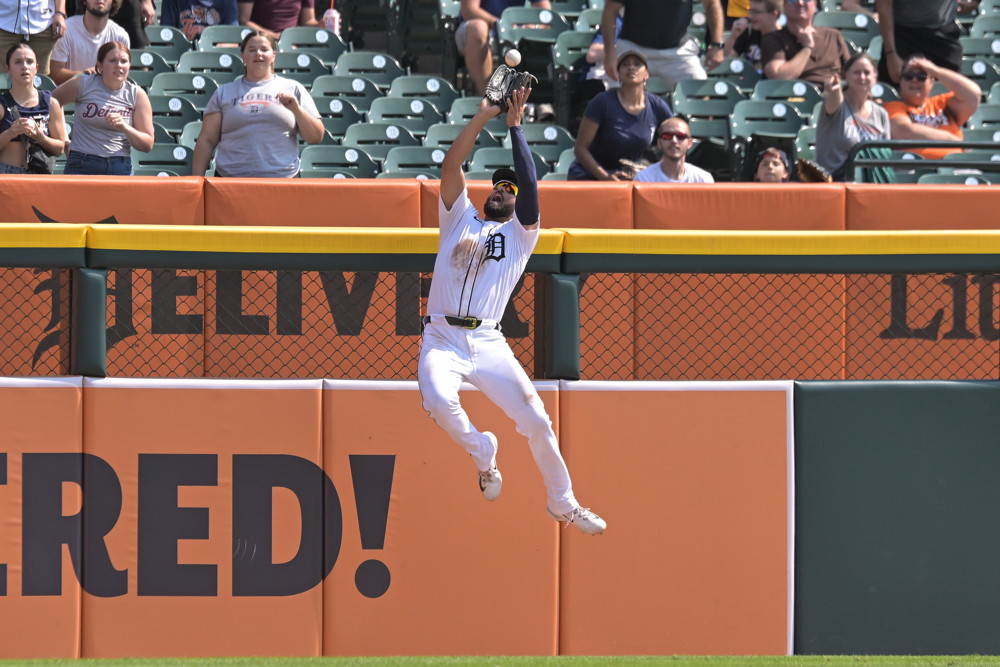
    Riley Greene’s 12 Runs Saved in left field, which are tied with Daulton Varsho for most in the majors, are boosted by 3 home run robberies (2 shy of Blake Perkins’ MLB lead). Nonetheless, he’s ultra-important to the Tigers as a left fielder, as his presence essentially gives Detroit two outfielders with center field-like athletic ability (Greene and Parker Meadows).

    The Tigers are a much better defensive team when they play Parker Meadows (2 Runs Saved) in center field and play Greene, who doesn’t rate well in center, in left field than when they play other combinations.

    The other players that the Tigers have played in left field this season have -8 Runs Saved.

    Since Meadows returned to the lineup on August 3, the Tigers have turned approximately two-thirds of balls hit in the air to the outfield into outs, the 3rd-highest rate in the majors and a nearly 6-percentage point increase from what they’d done prior to that point.

    They’re 42-23 when Meadows starts.

    This move up the standings by the Tigers is one that has almost no margin for error. Their playoff probability was in single digits not long ago and to overcome those kinds of long odds, you’re looking for perfection in your performance.

    The Tigers have overcome some of their imperfections through smart management and execution. It will be a tall order to continue this for the next week and a half but it’s a much smaller one than it was a couple weeks ago. Especially if they keep playing defense like this.

    Most Defensive Runs Saved – 2024 Season

    Team Runs Saved
    Blue Jays 92
    Guardians 81
    Brewers 65
    Dodgers 59
    Royals 53
    Tigers 42
  • Stat of the Week: Potential Playoff Teams Ranking Worst in Defensive Runs Saved

    Stat of the Week: Potential Playoff Teams Ranking Worst in Defensive Runs Saved

    Photo:Leslie Plaza Johnson/Icon Sportswire

    Of the 12 teams that would make the playoffs if the season ended today, 4 rank in the bottom 10 in Defensive Runs Saved.

    This is more teams than 2022 (1) and 2023 (2) combined. The Phillies, who were bottom 10 in each of the previous two seasons, are not among them, as they rank 15th. But let’s take a quick look at those who are in that bottom 10 group.

    Orioles (21st, -1 Runs Saved)

    The Orioles have totaled their most negative Runs Saved at second base, third base, center field and right field.

    Third base has been a problem spot injury wise, with both Jordan Westburg and Luis Urias out, though both could return soon. Westburg (0 Runs Saved in 67 games there) could solve their issues. Second base will likely be manned by Jackson Holliday (-2 Runs Saved in a small sample) or Westburg (-6).

    In center field and right field, they’re locked in with Cedric Mullins (-3) and Anthony Santander (-6). Mullins has a track record of reliability (12 Runs Saved in 2022 and 2023 combined). Santander’s 41 home runs outweigh any defensive shortcomings he has.

    Astros (22nd, -6 Runs Saved)

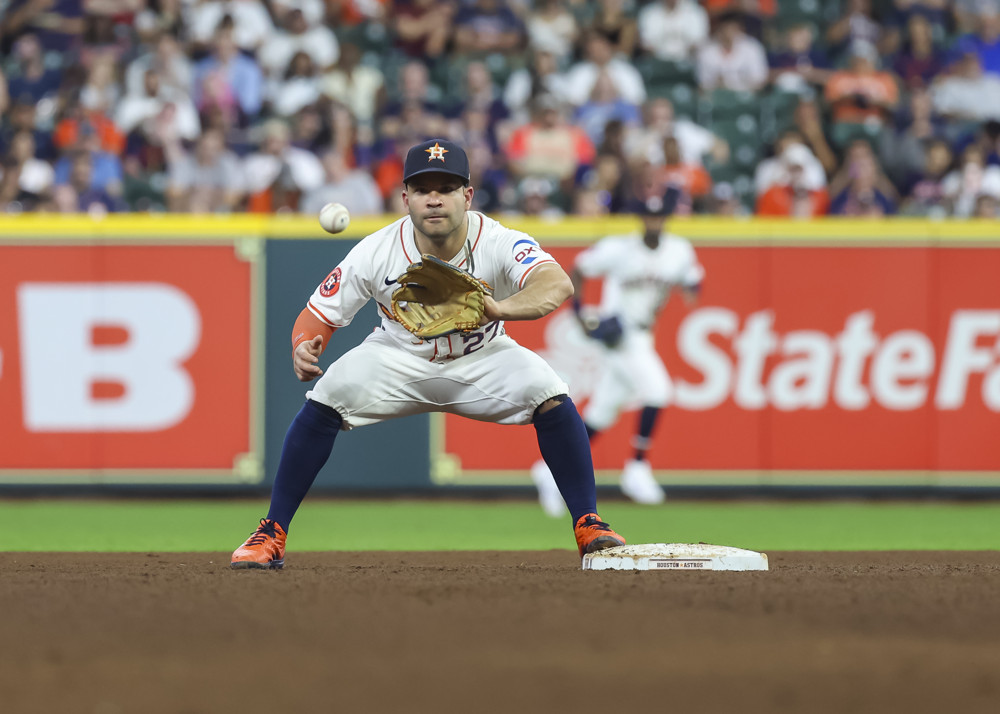
    The right side of the Astros infield has cost the team 20 runs with its defense this season. This is the third straight season that second baseman Jose Altuve (-10 Runs Saved) has struggled in the field, though his bat certainly offsets some of those issues.

    At first base, Jon Singleton’s first season as a full-time starter has been a below-average one, as he currently stands at -7 Runs Saved. Houston doesn’t have many alternatives to choose from.

    Twins (23rd, -7 Runs Saved)

    Byron Buxton’s return from the injured list on Friday alleviates one potential problem for the Twins. Buxton has 4 Runs Saved in center field this season. The others who have played center field for the Twins have combined for -13. So if Buxton is healthy and able to play there, that fixes one of their biggest concerns.

    Middle infield is the other statistical trouble spot. The Twins are tied for last in Defensive Runs Saved at 2nd base (-13 Runs Saved, split between Edouard Julien, Willi Castro, and Kyle Farmer). They also rank among the worst teams at shortstop (-10), though Brooks Lee has been formidable in a small sample in Carlos Correa’s absence. Correa, who may be returning soon, has a great track record though his numbers this season don’t reflect that (-1 Runs Saved).

    Padres (25th, -22 Runs Saved)

    The Padres may actually have just fixed their most notable defensive issue by sending catcher Luis Campusano, who ranked last among MLB catchers with -15 Runs Saved, to the minor leagues. For now they’ll go with Kyle Higashioka, who has graded out average or better defensively throughout his career, and Elias Díaz, who has had one of the best defensive seasons of his career (5 Runs Saved).

    The next-biggest defensive issue is left field where Jurickson Profar has -9 Runs Saved. Fellow outfielders Jackson Merrill (-2) and Fernando Tatis (-2) also haven’t matched up well with their positional peers. The Padres will live with this and hope that the bats do more damage than their defense brings about for them.

    Fewest Defensive Runs Saved – Teams (2024 Season)

    Team Runs Saved
    21. Orioles -1
    22. Astros -6
    23. Twins -7
    24. Pirates -14
    25. Padres -22
    26. Marlins -23
    27. Nationals -28
    28. Reds -30
    29. Athletics -53
    30. White Sox -84
  • Crown The Royals Pitchers No. 1 in Defensive Runs Saved

    Crown The Royals Pitchers No. 1 in Defensive Runs Saved

    Photo: William Purnell/Icon Sportswire

    In his second season as Royals pitching coach, Brian Sweeney had a new item for his priority list. He wanted his pitchers to be standouts defensively but he didn’t want to put them through the same basic drills they’d gone through in years past.

    “They’ve covered first a million times, they’ve turned double plays,” said pitching coach Brian Sweeney. “Can we make it fun?”

    The Royals have made it fun and – pardon the pun – they’ve made it work.

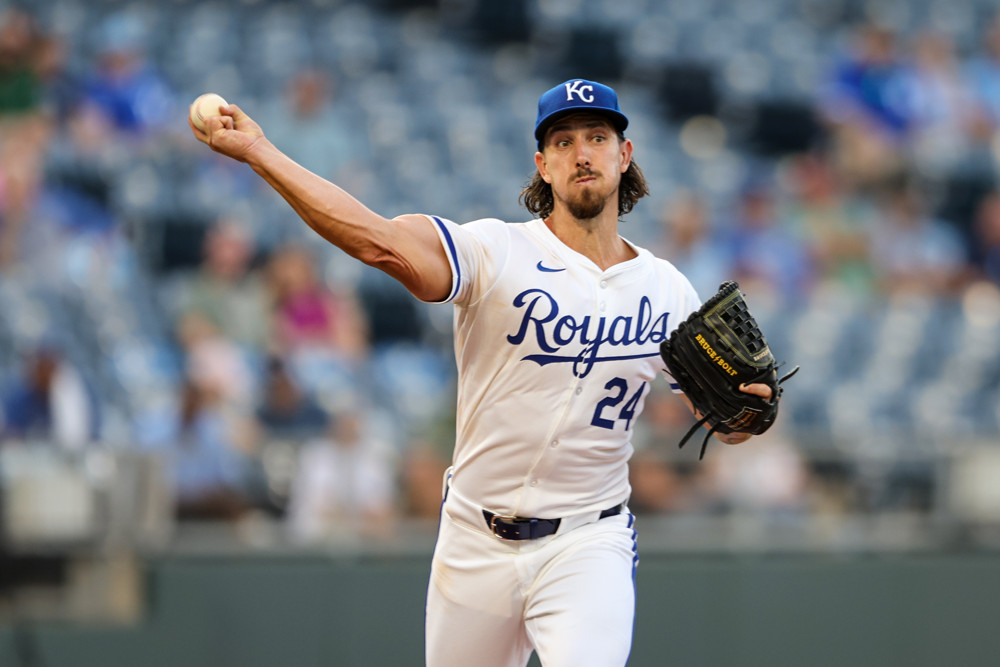
    They have 25 Defensive Runs Saved from their pitchers this season. That comes from a combination of fielding balls and limiting basestealers. No other team is even close to them. The second-most Runs Saved is 10 by the Mets and Guardians.

    If this sounds familiar, we wrote about it earlier this season, when we said the Royals had a staff of Zack Greinke’s. We’re bringing it up again because the Royals total is now the highest in the 22-year history of Defensive Runs Saved.

    They currently share the mark set by the 2008 Tigers. That team was led by Kenny Rogers, whose 15 Runs Saved that season are the individual best in the history of the Runs Saved stat. Rogers won 5 Gold Gloves in his career, all but one of which pre-dates the Fielding Bible Awards, which he did win in 2008. 

    The Royals are a little different. Their success is more spread out. They have 6 pitchers with at least 3 Runs Saved.

    Most Defensive Runs Saved – Royals Pitchers

    Pitcher Runs Saved
    Seth Lugo 5
    Brady Singer 4
    Michael Wacha 4
    Cole Ragans 4
    Chris Stratton 3
    James McArthur 3

    The success is the payoff for the work the team did in spring training, with the coach staff adding a layer of emphasis by creating a defensive competition for the pitchers.

    Infield coach José Alguacil, rehab coach Ryan Eigsti and bullpen coach Mitch Stetter devised some games that incorporated the pitchers fielding balls at second base and shortstop and catching fly balls. These drills in the form of games ingrained footwork and glovework into each pitcher that has come in handy as the season has gone along. 

    Look at some of the plays their pitchers have made this season.

    Pitchers get points for implementing PFP tactics in games. Seth Lugo was the best of the bunch in spring training (one example of a prize he won was a day off). There will be a tallying of the results in the regular season too.

    “Guys like to play for something,” Sweeney said.

    As mentioned, the other component of this is limiting basestealers, which the Royals have been fantastic at this season. In a season in which the average team has allowed 108 stolen bases and has been caught at a 21% rate, the Royals have held opponents to 53 stolen bases and thrown out 34%. The Royals’ stolen bases allowed total is 35 better than the next-closest team (Red Sox and Tigers 88). And the next-best percentage is 27% by the Tigers

    Defensive Runs Saved gives a portion of the credit to the pitchers and a smaller chunk to the catchers (Salvador Perez and Freddy Fermin) for thwarting stolen bases. Royals pitchers have received 10 Runs Saved for stolen base deterrence and 16 runs for their fielding batted balls. Both totals are easily best in MLB. 

    Though our stats show that most of the Royals pitchers have a better-than average time to the plate, Sweeney deferred much of the success on stopping steals to the catchers and third base/catching coach Vance Wilson. 

    He pointed out that the Royals have both advance scouted the opposition thoroughly and done some self-scouting on their pitchers to stay ahead of their opponents.

    “Of course, being quick to the plate is good but there’s more to it than that,” Sweeney said. “Eliminating tells (ways their pitchers tip off baserunners that they’re going to attempt a pickoff or throw a pitch), knowing who’s gonna run in what counts, having that awareness puts us in a better position.”

    Said Michael Wacha: “We have two catchers who have bazookas that are quick as well. It’s not a crow hop going down to second base. They’re quick with transfer and pop times. Guys won’t even attempt against us.”

    It was telling that Sweeney paused for a full two seconds before responding after we asked him his thoughts on the Royals’ stolen base stats relative to other teams. His answer summed up the mood of our conversation.

    “When you make it important and see [results] on the field it makes a pitching coach pretty happy,” Sweeney said.

     Most Defensive Runs Saved – Pitchers (2024 Season)

    Team Runs Saved
    Royals 25*
    Guardians 10
    Mets 10
    Orioles 9
    Pirates 5
    Padres 5
    Red Sox 5

    * Tied with 2008 Tigers for most since Runs Saved first tracked in 2003


  • The Best Thing Going For The White Sox: Dominic Fletcher’s Defense

    The Best Thing Going For The White Sox: Dominic Fletcher’s Defense

    Photos: Melissa Tamez and Leslie Plaza Johnson/Icon Sportswire

    It’s admittedly very hard to find anything positive about the White Sox season, but we do have to tip our cap to the play of right fielder Dominic Fletcher.

    Entering Monday, Fletcher ranked tied for second among right fielders with 9 Defensive Runs Saved, despite not even being in the Top 50 in innings played there (he’s played just over 200 innings).

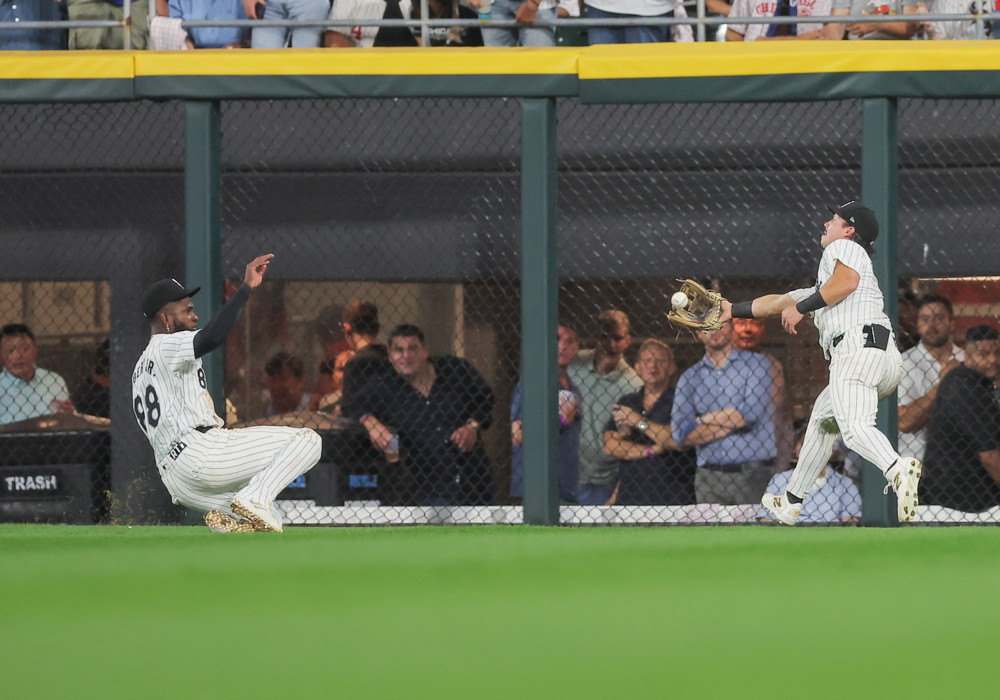
    Racking up that many Runs Saved in that short an amount of time is unusual. It’s not like he’s on pace for 50 Runs Saved over a full season. Defensive Runs Saved doesn’t work like that. But his collection of highlight-worthy plays is impressive. We track Good Fielding Plays encompassing catches requiring extraordinary efforts, outfield assists, and also plays like cutting a ball off in the gap to prevent an extra base. Fletcher has an abundance of Good Fielding Plays while avoiding Defensive Misplays & Errors.

    One of those Good Fielding Plays was this home run robbery against Yainer Diaz of the Astros. A player receives around 2 Runs Saved for any home run robbery (we don’t take into account the number of men on base) and he was fully worthy of it here.

    This was Fletcher’s second home run robbery of the season. He had one against William Contreras of the Brewers that was actually more impressive than the Astros one. It came as a center fielder.

    Fletcher can do a lot of things defensively.

    He can make diving catches

    Sliding catches

    He can handle outfield walls

    Side walls too.

    He can even dodge teammates

    And he can throw

    So while everyone else is feeling bad about the White Sox and their chance to set an MLB record for losses, there’s at least one player doing everything he can to try to prevent that – and doing it really well.

    Most Good Fielding Plays – Right Fielders

    Name Team Good Plays-Misplays & Errors
    Anthony Santander Orioles 15-16
    Hunter Renfroe Royals 13-11
    George Springer Blue Jays 13-8
    Wilyer Abreu Red Sox 12-16
    Mike Yastrzemski Giants 12-13
    Juan Soto Yankees 11-22
    Dominic Fletcher White Sox 11-4


  • Stat of the Week: One of the Most Complete Players in Baseball

    Stat of the Week: One of the Most Complete Players in Baseball

    Photo: Larry Placido/Icon Sportswire

    The signature play of Matt Chapman’s season came against the Mets on May 24. The Giants had a one-run lead with the bases loaded and two outs in the ninth inning, with Mark Vientos facing Giants reliever Camilo Doval.

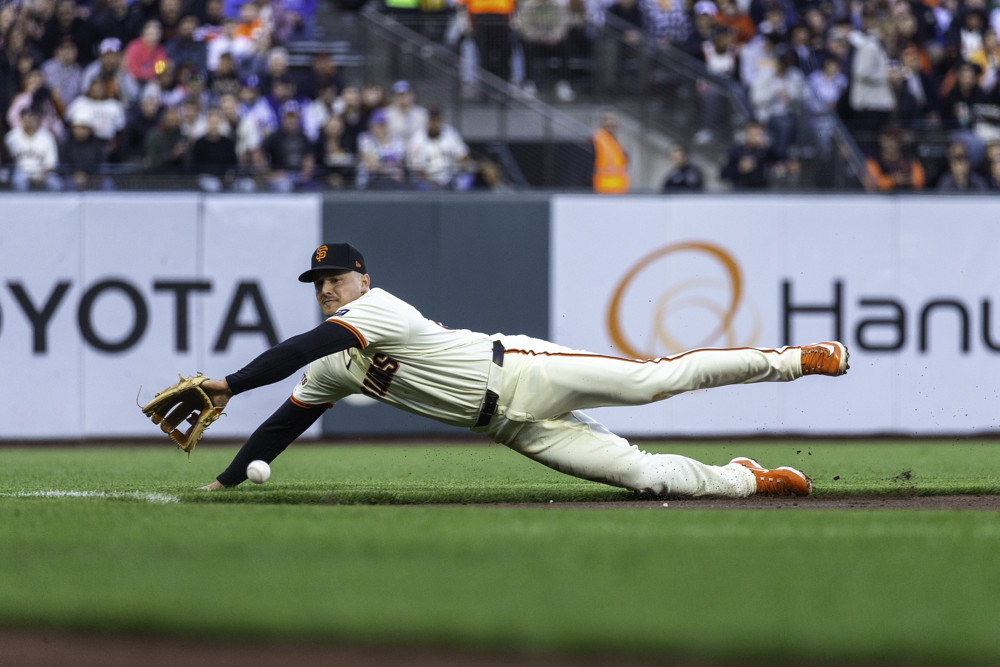
    Vientos hit a slow roller along the third base line. Chapman raced in to make a barehand play and his throw beat Vientos by a hair. It was as impressive a play as any third baseman has made in 2024.

    And it fits with Chapman’s season. He’s been one-of-a-kind at his position.

    Chapman ranks tied for No. 3 in the National League and No. 1 among all third basemen with 6.0 bWAR. In terms of the individual components, Chapman has been 18 Runs Above Average as a hitter, 15 Runs Above average as a fielder (that’s his Defensive Runs Saved), and a somewhat surprising 6 Runs above Average as a baserunner.

    We say somewhat surprising because Chapman had never totaled more than 1 baserunning run in a season prior to 2024. But this season, he has 13 stolen bases in 15 attempts. Those 13 steals are more than he had in his entire seven-year career entering the season.

    Chapman also ranks 6th in a Bill James-devised stat, Baserunning Net Gain, which measures a variety of things, including how often a runner takes an extra base on a hit, advances on a wild pitch or passed ball, and avoids getting thrown out on the bases.

    Chapman’s defense isn’t really a surprise. He’s a two-time Fielding Bible Award winner and four-time Gold Glove winner. He’s been at or near the top of the third base leaderboard consistently throughout this season.

    If you think it’s odd that Chapman has a better WAR than players like Rafael Devers, José Ramírez, and Manny Machado, look to their respective Defensive Runs Saved numbers. Chapman is 10 Runs Saved better than Ramírez, 15 better than Machado and 22 better than Devers.

    Hitting-wise, Chapman’s 2024 has been the opposite of his 2023 when he started super-strong and then faltered as the season moved along. This season, Chapman started slow. He entered May 17 with a .599 OPS in 44 games. He’s had an .864 OPS since then.

    The top hitting third basemen don’t field like Chapman does and the top fielding third basemen (Ernie Clement, Ryan McMahon, Ke’Bryan Hayes among them) don’t hit like Chapman does.

    Chapman’s combination at third base is so distinct that with 6.0 bWAR, he’s at least 2 bWAR ahead of every third baseman other than Ramírez.

    In fact, the only other player this season to contribute as much run value as Chapman in hitting, fielding, and baserunning is Red Sox outfielder Jarren Duran.

    Remember that Chapman had trouble finding a team as a free agent this past offseason. He came into spring training needing to prove that he was an elite player. To this point, he’s been both an elite player and a complete one.

    The Giants gave Chapman a 6-year, $150 million contract this week, a reward for his track record and his relative health since coming back from hip surgery in 2021. He’s played in nearly 93% of all games in the last four seasons.

    That said, Chapman will be 32 next April. Only three players in their age-32-or-older season have played even 70 games at third base this season (Nolan Arenado, Eugenio Suárez, and Gio Urshela). Four did so in 2023. Chapman’s next prove-it opportunity will be showing he can remain a complete player as he travels the downward slope of baseball’s aging curve.

    Most bWAR Among Third Basemen- 2024 Season

    Name Team bWAR
    Matt Chapman Giants 6.0
    José Ramírez Guardians 5.3
    Rafael Devers Red Sox 3.8
    Alec Bohm Phillies 3.4
    Josh Smith Rangers 3.3
    Ernie Clement Blue Jays 3.2
  • Guardians Defense Key To Emmanuel Clase Standing Out

    Guardians Defense Key To Emmanuel Clase Standing Out

    Photo: Frank Jansky/Icon Sportswire

    On May 1, Guardians closer Emmanuel Clase was protecting a one-run lead in the bottom of the 10th inning against the Astros. With a runner on second, Mauricio Dubon poked a breaking ball to left center field that looked like it was going to be a game-tying hit.

    But two-time Fielding Bible Award-winning left fielder Steven Kwan did what Fielding Bible Award winners do. He ranged well over to left center, made a diving catch and subsequent throw to second base for a game-ending double play.

    That’s part of the story of Clase’s amazing 2024 season – how good the Guardians defense, which ranks second in the majors in Defensive Runs Saved, has been behind him.

    Clase has been one of the top closers in MLB since first taking on the role in 2021. He’s on pace to lead the AL in saves for a third straight season. His ERA currently stands at 0.70 and he hasn’t allowed more than one run in any of the 64 games he’s pitched this season.

    Clase isn’t a high-strikeout pitcher but he also doesn’t walk anyone. His strikeout-to-walk ratio is just under 7-to-1 and he’s allowed 2 home runs in 64 1/3 innings pitched all season. Clase is supposed to be good but he’s not necessarily supposed to be this good. His FIP is 2.34.

    Clase has allowed 35 hits in 64 1/3 innings pitched, a rate of fewer than 5 hits per 9 innings, and only 2 batters have reached via error.

    The Guardians have recorded 10 Defensive Runs Saved against the batted balls hit versus Clase. He’s one of 19 pitchers for whom teams have saved at least 10 runs with defense, with two other relievers in that group (Ryan Yarbrough slightly ahead of Clase and Bryan Hudson slightly behind).

    Clase has gotten the most defensive support among Guardians pitchers despite ranking 7th on the team in innings pitched.

    Because the circumstances of Clase’s appearances are often do-or-die, every play is important. The particularly good-looking ones for the Guardians with Clase on the mound have been of varied types.


    Good positioning matters too


    Clase got a similar level of defensive support in 2022 when the Guardians saved 9 runs behind him, but their defense didn’t do much for him in 2021 or 2023 (-1 and -3 Runs Saved, respectively)

    This whole presentation hasn’t been meant to devalue Clase’s effort. He’s done a much better job this season in terms of contact quality than he had last season (his hard-hit rate has dropped from 38% to 31%, a rate that ranks in the 96th percentile). He’s legitimately been the best relief pitcher in baseball this season. If there’s one thing to take away from this piece it’s that the Guardians have lived up to their name in how they’ve played behind him.

  • Braves Have Been Defensively Challenged in Right Field

    Braves Have Been Defensively Challenged in Right Field

    The Braves seem to have righted themselves after their record dropped to 61-56 following a loss to the Rockies on August 11. They’ve won 12 of 16 since.

    However, they have one significant flaw that they haven’t been able to fix this season no matter what they’ve tried. 

    Braves right fielders have cost the team 19 runs in Defensive Runs Saved. Their -19 matches the worst total for any team at any position. The White Sox entered today having gotten -19 Runs Saved from their shortstops.

    You don’t want to be sharing a leader spot with the 2024 White Sox.

    The Braves have one of the biggest defensive weaknesses for a team contending to win the World Series.

    They’re not the only ones with a defensive issue. 

    The Phillies have had problems at both right field and shortstop where Nick Castellanos has had his annual regular season issues and Trea Turner has taken a considerable dip in performance. The Brewers also have a veteran shortstop not playing up to his usual standards in Willy Adames. Gleyber Torres is once again well below-average defensively at second base for the Yankees. The Diamondbacks have a similar problem to the Braves in center field where no one has a positive Runs Saved total, and the player who’s there the most, Corbin Carroll, has -6 Runs Saved.

    The current Runs Saved breakdown in right field for the Braves is Ronald Acuña Jr. -7 (out for the season), Jorge Soler -5 (in only 15 games), Ramón Laureano -4, and Adam Duvall -3.

    For now, the Braves have accepted the trade-off of offense for defense and are starting Soler regularly in right field. He’s rewarded them with an .868 OPS. But they know he’s not a good option late in a game, even though he threw a runner out at home yesterday. 

    In all 3 games of their recently-concluded series with the Twins, he was pulled, once at the start of the 6th inning and twice entering the 7th inning. In all 3 instances Laureano moved from left field to right field.

    Laureano and Duvall both have good track records (Soler doesn’t). Laureano actually saved 9 runs with his right field defense last season and had 5 Runs Saved there in 2024 before coming to the Braves midseason. His value is often centered around the value of his arm. 

    Despite having a positive Runs Saved total overall in right field this season, he has -4 Range Runs Saved in right field in 2024. To his credit, he did make two very nice catches to preserve a ninth-inning lead against the Phillies last week.

    Duvall has had as many as 18 Runs Saved in left field and 7 Runs Saved in right field in a season. But given both his defensive numbers and his sub-.600 OPS, he’s not done a lot to merit considerable playing time.

    Soler has a combined -10 Runs Saved in right field in just over 350 innings over the last two seasons.

    Castellanos proved in the past that in a small sample a statistically problematic defensive player can have a good few weeks in the postseason. But that’s not exactly something you want to count on. 

    It’s entirely possible that in two months the Braves could be on the verge of winning a World Series and that this was a non-issue. The Braves are very good defensively at the infield corners with Matt Olson and (when healthy) Austin Riley. Michael Harris can chase down balls in center field. Their defense is generally pretty good elsewhere. 

    But if there’s one play to be made to win a game in October and you’re a Braves fan, you’re probably gonna be a little nervous if the ball is hit to right field.