Category: MLB

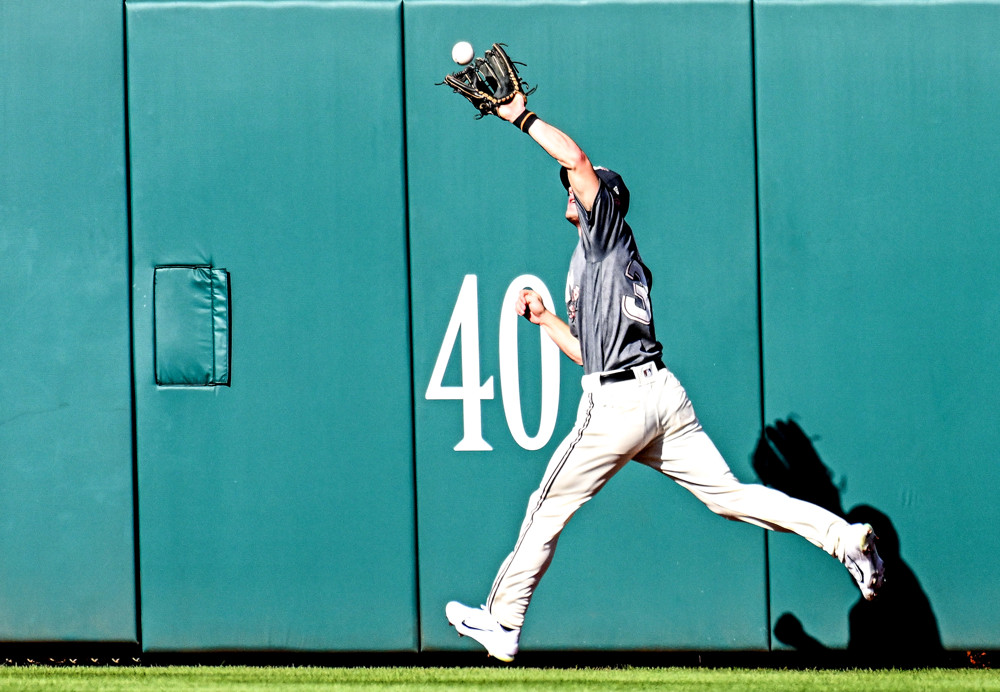
  • For Jacob Young, Great Catches Start with Great Jumps

    For Jacob Young, Great Catches Start with Great Jumps

    Nationals center fielder Young doesn’t just get good jumps. He gets great ones. His average distance covered in the first 1.5 seconds after a fly ball is hit is 4 feet more than the average outfielder. There are only three other outfielders whose average distance is 2 feet above average, none greater than 2.2.

    Young’s jumps are what have put him in position to be one of the best defensive center fielders in baseball this season. Even though Young may not rate as well when it comes to his route running as he does his jumps, he’s so good in the latter that he co-leads the majors in Runs Saved at his position, making many catches that others don’t.

    Young talked on our baseball podcast about the work that goes getting great jumps, which involves a cone drill implemented in spring training by outfield instructor Coco Crisp

    “You’re working on taking a step one way and being able to course correct back to that original spot. It gives you the freedom to try to get a great jump and course correct back to center and give yourself time to readjust. Gerardo Parra is our outfield coach. If you ask him what he cares about, he says ‘The only thing I care about is your first step.’ The best time to work on it is batting practice. You just try to make it natural and be as ‘on time’ as you can be.”

    To hear the rest of Young’s interview, check out the latest episode of The SIS Baseball Podcast.

  • June’s Defensive Players of the Month: Jose Siri & Brice Turang

    June’s Defensive Players of the Month: Jose Siri & Brice Turang

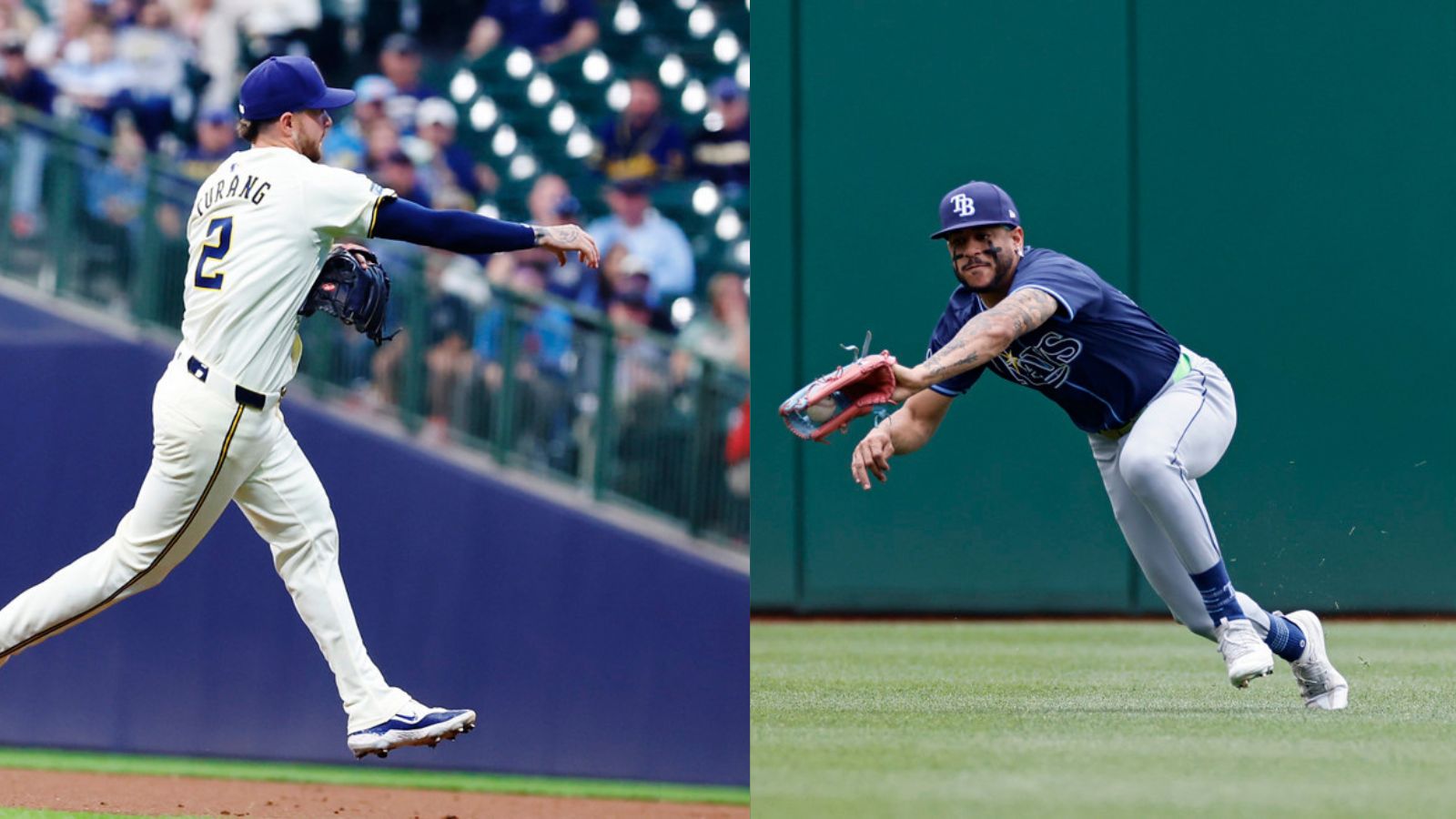
    June’s Defensive Players of the Month, Rays center fielder Jose Siri and Brewers second baseman Brice Turang, won the award on the strength of both their overall defensive value and plays that wowed and showed off their best skills.

    Jose Siri

    Siri led all center fielders with 6 Defensive Runs Saved in June and tied Jacob Young of the Nationals for the monthly lead in Good Fielding Plays at the position with 7.

    The most impressive-looking of those plays was a game-ending leaping catch at the fence against the Pirates on June 21 (while avoiding the arms of a fan who reached over the railing).

    But there were others too, including a full-speed sprinting catch earlier in that same game.

    A day earlier he’d shown off his arm with a fantastic throw to third base (with his momentum going in the opposite direction) to get Royce Lewis of the Twins at third base to help preserve a one-run lead in the 10th inning. As Rays TV analyst Brian Anderson said of that one “You’ve got to be kidding me!”

    Siri’s run of terrific defensive plays really began with this leaping catch at the fence to keep a game tied in the 9th inning on May 29 (while avoiding a teammate). He actually entered June with -2 Runs Saved for the season but is now well onto the positive side of that stat.

    In this hot defensive stretch, Siri has shown off his speed and acceleration. He ranks 2nd in Statcast’s ‘burst’ stat, which measures how many more feet a fielder covers than the average defender when a batted ball has been in the air from 1.6 to 3 seconds. He also ranks in the top 15 in ‘reaction’ which measures how many feet a fielder covers in the first 1.5 seconds after contact.

    Brice Turang

    Turang led all second basemen with 7 Runs Saved in June. That matched the most Runs Saved for any player at any position. Turang’s teammate Jackson Chourio as well as Zach Neto and Taylor Ward of the Angels also each had 7.

    Turang is also tied with Ketel Marte of the Diamondbacks and Marcus Semien of the Rangers for the MLB season lead in Runs Saved at second base with 11. He finished 3rd in Runs Saved as a rookie second baseman last season.

    There was some versatility among Turang’s top defensive plays in June. His highlights included this leaping catch against the Reds on June 14, a play on which he went well up the middle to get an out 10 days later against the Rangers and then one the next day in which he dove to his left.

    Since making his MLB debut last season, Turang’s strength has been those plays on balls hit to his right. He’s gotten at least one out on 72 of 112 opportunities. An average fielder would have converted only 61 of those opportunities into outs. Turang’s +11 plus-minus on those balls (our version of outs above average) is best of anyone at second base.

    2024 MLB Defensive Players of the Month

    Month Players
    March/April Daulton Varsho & Marcus Semien
    May Jo Adell & Ezequiel Tovar
    June Jose Siri & Brice Turang
  • Stat of the Week: Paul Skenes Is Quick To The Plate

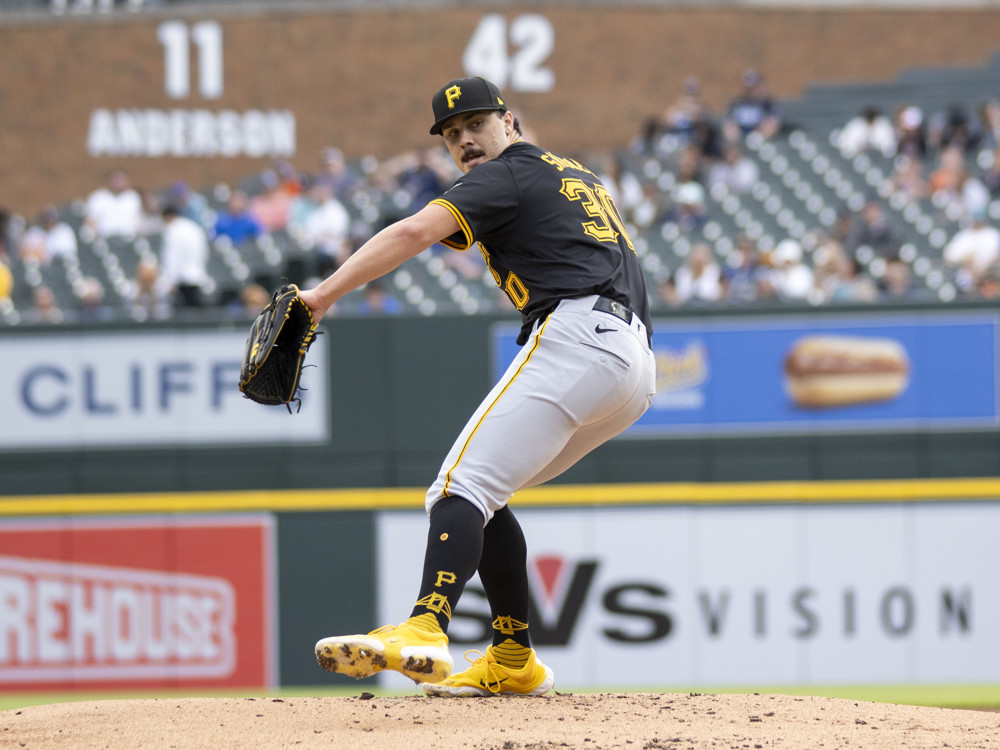
    Stat of the Week: Paul Skenes Is Quick To The Plate

    Photo: Joseph Weiser/Icon Sportswire 

    Have you checked out The Paul Skenes Experience yet?

    The Pirates rookie is baseball’s latest phenom. He’s 4-0 with a 2.14 ERA in eight starts heading into a matchup with Max Fried and the Braves on Saturday.

    Skenes throws a fastball 99 MPH with considerable movement. Opponents are hitting .140 against a splitter that averages 94 MPH. He’s struck out 34% of the hitters he’s faced, the 4th-highest rate among pitchers with at least 40 innings pitched.

    When you’re facing Skenes you need to be ready to take advantage of anything you can. The Pirates’ defense has shown a few holes in his eight starts. They’ve been charged with -4 Runs Saved on the batted balls against him.

    But Skenes has done something in his pitching approach to help limit that damage beyond a strikeout-to-walk ratio that’s nearly 8-to-1. He gets the ball to the plate quickly.

    SIS does frame-by-frame analysis of video to ascertain when a pitcher makes his first movement with a man on base and when a pitch hits the catcher’s glove. Our average times may not jibe with those of others who are often using stopwatches to do similar tracking. But we feel confident in the precision of our numbers.

    The average time for a pitcher from first move to their pitch hitting the catcher’s mitt, combining all delivery types that we categorize (slide step, full leg kick, in-between a slide step and leg kick) is 1.62 seconds for a right-handed pitcher and 1.67 seconds for a left-handed pitcher. We show you this down to hundredths of seconds because every hundredth of a second matters when it comes to basestealers.

    Skenes, who has almost entirely used either a full kick or something in between a slide step and full kick, ranks 19th in time to plate at 1.46 seconds. That’s among more than 450 pitchers with at least 50 measured times to the plate. Skenes is not at the level of Yankees reliever Ian Hamilton (MLB-low 1.32 seconds), but he’s still very good. 

    The payoff for Skenes is that he’s very hard to run on. In those eight starts, there have been only 2 stolen base attempts against him (one successful, one not). He’s picked one runner off.

    At a time when teams are stealing bases at higher frequencies than they have in decades, pitchers who can limit the running game are at a premium. Skenes is one of them. It’s another way that facing him is almost unfair.

  • The Royals pitcher defense has been Zack Greinke-like

    The Royals pitcher defense has been Zack Greinke-like

    Photo: Scott Winters/Icon Sportswire

    I’ve written a lot about the Royals this year, whether it be a preseason piece about Bobby Witt Jr., a look at Kyle Isbel’s penchant for catching deep fly balls or their second base by committee approach.

    My interest in this team isn’t some sort of ‘Middle America bias’ as it is a middle-of-the-diamond bias. I like writing about teams with good defense up the middle. And I’m writing about the Royals yet again because of their defense at an up-the-middle position that we might not think about – pitcher.

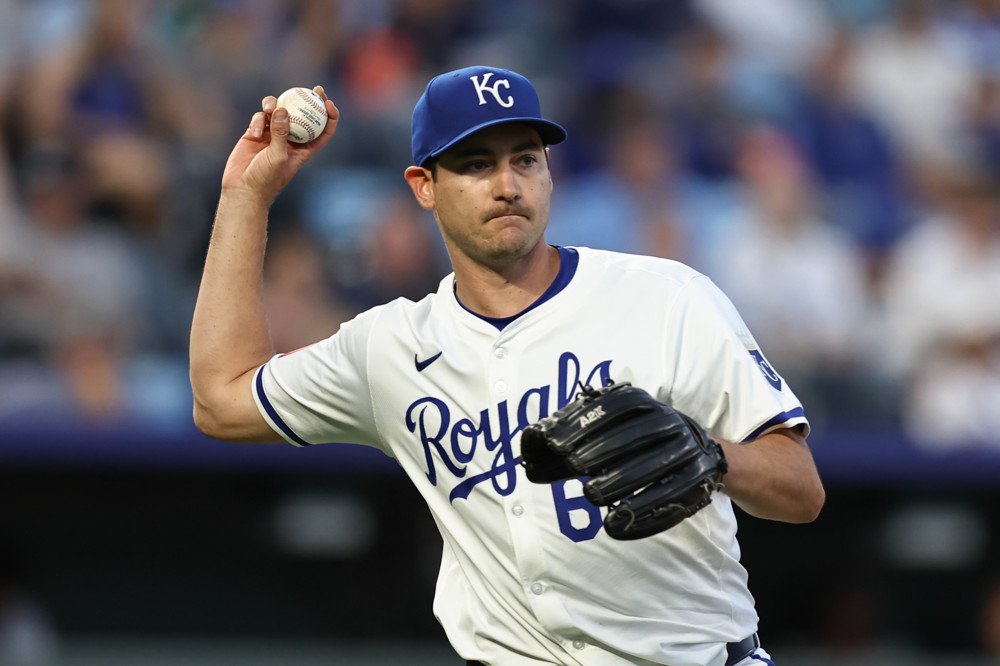
    Royals’ pitchers rank 1st in MLB with 14 Defensive Runs Saved this season. No other team is in double figures. That’s Zack Greinke-like contributions there*.

    * Greinke has the most Runs Saved of any pitcher (98) dating to the first season the stat was tracked, 2003.

    How does a team’s pitching staff help itself defensively as much as the Royals have?

    I’m glad the Apple announcing team praised this play from May 9 because it is a terrific play, one worth 0.6 runs saved by our measures. Props to Daniel Lynch for making it.

    But Lynch is not the only one who is athletically adept off the mound. Here’s a play John Schreiber made against the Angels the very next day, valued at 0.45 runs.

    Here’s another one by Angel Zerpa a week earlier.

    Lastly, this looks like nothing much for Seth Lugo, but there are plenty of pitchers whose follow-through would make this a tougher play or one requiring the second basemen to try to make it. But because Lugo’s in position to make the play, he can without issue. Thus, the play has a value of 0.5 runs.


    Now, sometimes the Royals get a little lucky, though I’m sure Chris Stratton would say this play was all skill.

    And if you’re going to be as good as the Royals have been, sometimes you’ve got to use more than your glove, as Brady Singer demonstrated.

    In all, an MLB-best 9 of the 14 Runs Saved for the Royals pitchers come from their turning batted balls into outs. Some of this is the product of opportunity. They’ve fielded 91 batted balls this season, the most in MLB and 20 more than the average team. And they’ve, for the most part, made the most of those opportunities.

    As for where the other 5 Runs Saved come from, that’s a credit to the team’s success limiting opponents stolen bases. But that feels like something where I’ve got to give credit to the catchers too.

    Looks like I have an excuse to write about the Royals’ defense if I want to again sometime in the near future. 😊

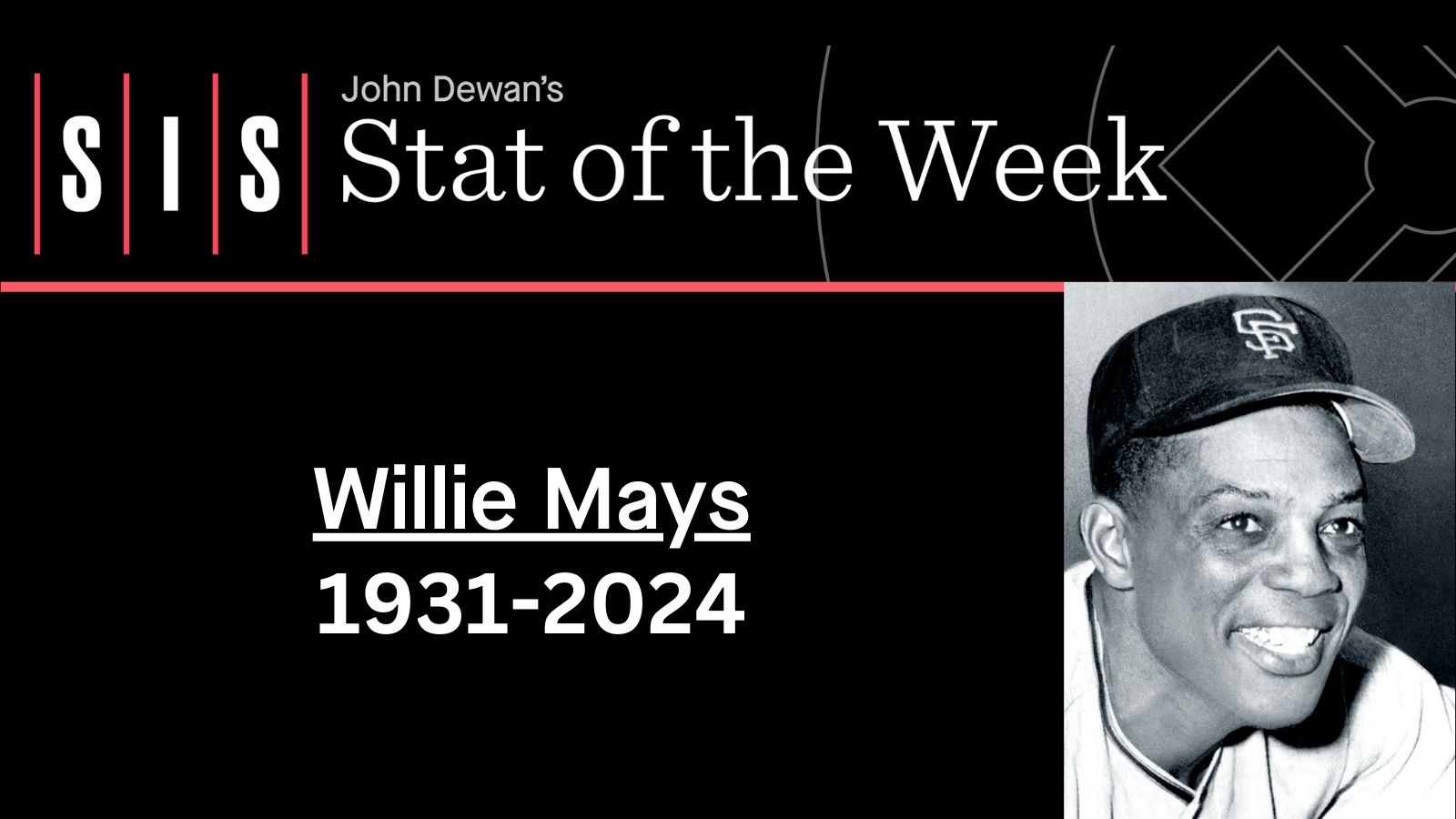
  • The Legacy of Willie Mays

    The Legacy of Willie Mays

    Photo: New York World-Telegram and the Sun staff photographer, William C. Greene, Public domain, via Wikimedia Commons 


    Baseball lost an icon in Willie Mays, who died on Tuesday at age 93. Mays, referred to by many as the sport’s all-time best player, left an impact that is easy to measure and hard to match. The term 5-tool player basically exists because of him. He could hit, hit for power, run, field, and throw, all at the highest level.

    Think about it.

    You wouldn’t reach Mays’ career totals if your career began with 16 straight seasons of 40  homers or 200 hits, 19 seasons of 100 RBI, or 20 seasons of 150 games played.

    The MLB outfield leader in putouts last season was Brenton Doyle with 373. Doyle could match that total for 18 straight seasons and still catch fewer balls in the outfield than Mays did.

    Mays’ 156.2 career WAR (the Baseball-Reference version), is greater than that of Mike Trout and Mookie Betts combined (they’re at 154.9).

    Mays had epic seasons at different stages of his career. At age 23 and 24, he hit 41 and 51 home runs, respectively. At age 33 and 34, he hit 47 and 52 home runs. Mays won 2 MVP awards. Had modern advanced metrics existed when Mays played, he would have almost certainly won more. He finished 1st or 2nd in the NL in WAR 11 times. He made the All-Star team in each of his last 20 MLB seasons.

    Beyond the numbers, Mays was a presence wherever he was. He made an impact on baseball fans from coast to coast. As a young player in the early stages of his career, he was known for playing stickball with neighborhood kids in the streets of New York City. As an elder statesman, he’d hang out in the Giants’ clubhouse to talk to players and coaches. He was revered and that’s not a word used lightly.

    We’re sad for Mays’ passing but we celebrate his excellence and the standard he set by which others can be measured. Rest in peace, Willie.

    If you would like to read about the defensive excellence of Willie Mays, check out this article, which Mark wrote for The Society for American Baseball Research.

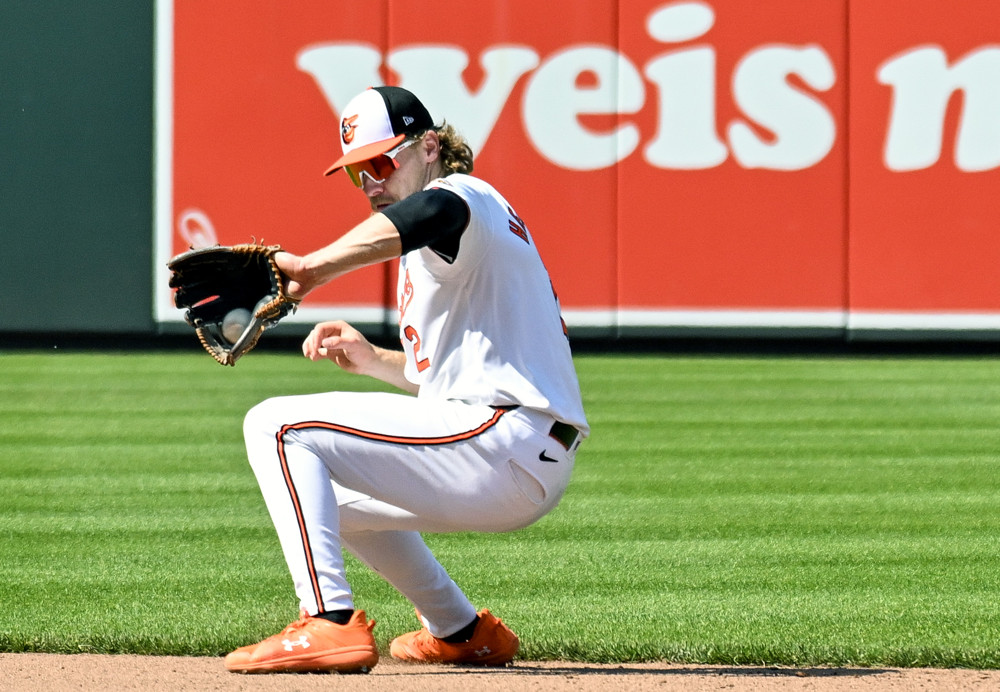
  • Gunnar Henderson’s Defense Lives Up To Its Billing

    Gunnar Henderson’s Defense Lives Up To Its Billing

    Photo: Mark Goldman/Icon Sportswire

    Orioles shortstop Gunnar Henderson is halfway to a 10-WAR season (Baseball-Reference version), which is important because the last shortstop to have one was Alex Rodriguez in 2000 and the last before that was Cal Ripken Jr. for Henderson’s Orioles in both 1984 and 1991.

    Henderson’s WAR being that high at this point in the season is partly a credit to his defense. He ranks tied for 2nd among shortstops with 6 Defensive Runs Saved. He’s contributed 1.1 Defensive Wins Above Replacement to that 5.0 overall, one of 15 players this season whose value on defense is at least 1 WAR.

    Tuesday night, Henderson will play his 160th career game at shortstop. He has 16 career Runs Saved there. In the last 2 seasons he ranks tied for 4th in Runs Saved at the position even though he ranks 21st in innings played there.

    Moreover, there’s such a nice aesthetic to Henderson’s defensive game. Even though Henderson has made his share of mistakes this season, he’s got such a good look to the way he makes plays.

    What makes him so good


    What separates Henderson from other shortstops is how well he handles balls hit to his right. That often means a ball hit in the 56 hole, ones that require him to throw either while moving away from first base or for him to plant and throw from the outfield grass.


    When your broadcasters are describing your plays as “ridiculous” and “insane” that’s usually a pretty good sign. Even 78-year-old Jim Palmer, who has seen past Orioles Gold Glove shortstops Luis Aparicio, Mark Belanger, Ripken, and J.J. Hardy, joins in on the hype.

    There are a handful of guys of whom you could say that they are among the best in baseball at making those types of plays. Henderson is definitely one of them.

    This season Henderson has made 70 plays on balls hit to his right in 112 opportunities*.

    * Opportunities are balls on which he has a >0% probability to record an out.

    If we combine the out probabilities of those batted balls, an average shortstop would be expected to make 62 plays on those balls. 

    He’s thus 8 plays better than the average shortstop on balls hit to his right (+8 in our version of Outs Above Average). That’s best in MLB and it remains the best even when we look at it on a per-play basis. The only other shortstop who is more than 4 plays above average is Elly De La Cruz (+7).

    The Orioles are also maximizing Henderson’s value by giving him the best chance to make a play. Our Defensive Runs Saved separates the elements of each batted ball to isolate the value of positioning. They’ve received 7 runs of positioning credit for Henderson, matching the most that any team has received for any player this season. 

    Here’s a good example of the combination of positioning and skill producing an out, this on a ball hit to his left. 


    A ball up the middle like this has a 34% out probability for Henderson if we don’t know where he’s positioned. That jumps to 60% knowing the Orioles put him where they did. And it’s up to Henderson’s range and throwing ability to get that from a 60% play to a 100% out, which he did.

    Much was made of Henderson’s size when he came up to the majors. He’s 6-foot-3, maybe 6-foot-4 and he’s been using that to his advantage since he came through the minor leagues


    “It helps with range being a little bit taller,” Henderson told us when we interviewed him in 2022 before his recall to the Orioles. “A shorter person might have a quicker first step but length helps a lot.”

    Playing big allows him to put up big numbers on defense.

    Outlook

    I don’t know that I’d deify Henderson and rate him as the best defensive shortstop in the game just yet. He hasn’t been as good on balls to his left as he was last season and his numbers on turning double plays are a little off. He has 17 Misplays and Errors as tracked by our Video Scouts. That’s a total and rate that is a little higher than some other elite defensive shortstops like Ezequiel Tovar and Anthony Volpe this season and it’s not tracking to the career norms of someone like Miguel Rojas, who is consistently good. That’s why Henderson at 6 Runs Saved and not 10 or more right now.

    But nonetheless he’s really, really good and just to be talking about 10 WAR about 70 games into the season is a big deal. If he’s getting there, defense is going to have something to do with it.

    Most Defensive Runs Saved – 2024 Season

    Player Team Runs Saved
    Masyn Winn Cardinals 7
    Gunnar Henderson Orioles 6
    Zach Neto Angels 6
    Orlando Arcia Braves 6
    Brayan Rocchio Guardians 6
    Ezequiel Tovar Rockies 6

  • Stat of the Week: Most Runs Saved At One Position (Teams)

    Stat of the Week: Most Runs Saved At One Position (Teams)

    Photo: Nick Wosika/Icon Sportswire

    Last week we looked at the overall Defensive Runs Saved leaderboard from an individual player perspective.

    But in 2024, there are a lot of teams using platoons or timeshares due to injury or other reasons that have been highly productive defensively.

    So rather than look at which players are contributing the most defensive value to their team, let’s look at a team’s positional group and see which have the most Runs Saved. This ranking could be largely the work of one player but often it’s the work of more than one.

    Diamondbacks second base (12 Runs Saved) – Our team leader isn’t the product of a timeshare so much as it is one guy who’s been really good, Ketel Marte. He has been great, leading all NL players in bWAR thanks in part to 11 Runs Saved at second. His teammates who have filled in on occasion have combined for 1.

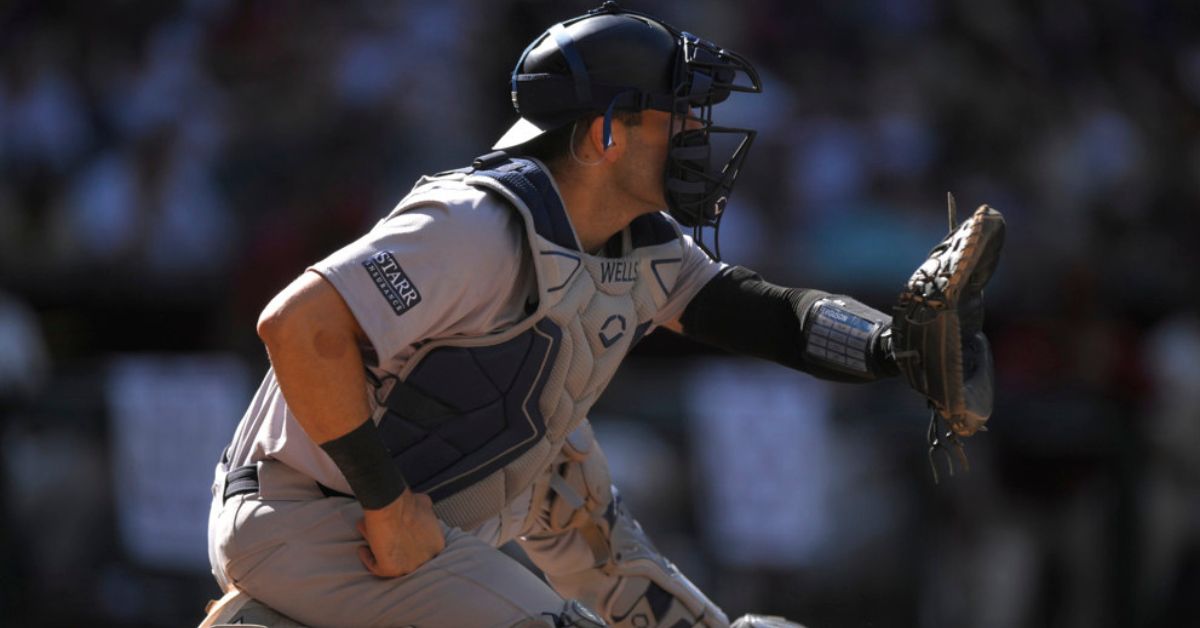
    Yankees catcher (11 Runs Saved) – The Yankees have two excellent defensive catchers in Jose Trevino (7 Runs Saved) and Austin Wells (4 Runs Saved), who have split time almost equally. They’ve earned their value with their pitch framing this season. Trevino ranks tied for 2nd in our stat that measures that, Strike Zone Runs Saved. Wells is tied for 5th.

    Dodgers right field (11 Runs Saved) – This has been a true group effort between Andy Pages (5 Runs Saved), Jason Heyward (3 Runs Saved), and Teoscar Hernández (3 Runs Saved). The Dodgers have had their problems defensively in center field and left field, but this combination in right field – as odd as it is to say – probably matches or betters what Mookie Betts would have been doing had he not moved to the infield.

    Red Sox center field (11 Runs Saved) – Circumstance has resulted in a time split here between Ceddanne Rafaela (5 Runs Saved), who also plays three infield positions, and Jarren Duran (6 Runs Saved) ,who also plays left field and ranks among the overall leaders in Runs Saved. Both are standout athletes who have handled center field well so far. Red Sox outfielders lead the majors with 25 Runs Saved.

    Blue Jays center field (10 Runs Saved) – The Blue Jays are fortunate enough to have an outfield with three players capable of playing center field well in Kevin Kiermaier, Daulton Varsho, and George Springer. Kiermaier (4 Runs Saved) and Varsho (5 Runs Saved) have split time there due to Kiermaier’s hip injury. Springer filled in once and his 4 putouts that day were good enough to be credited with 1 Run Saved.

    Phillies left field (10 Runs Saved) – The Phillies have played 6 players there this season with Brandon Marsh (5 Runs Saved) getting the most innings. But when he doesn’t play, the Phillies have capable alternatives in Cristian Pache (3 Runs Saved), David Dahl (2 Runs Saved), and Whit Merrifield (0 Runs Saved). Most importantly, defensive liability Kyle Schwarber has played only one game there this season.

    Royals pitchers (10 Runs Saved)Seth Lugo, Daniel Lynch, and Cole Ragans each have 2 Runs Saved and a bunch of pitchers have 1. The Runs Saved are a product of two things: fielding batted balls (their pitchers have combined for 10 more plays made than expected) and doing their part in conjunction with their catchers to limit stolen bases (the Royals have caught 14 of 36 would-be basestealers).

    Royals second base (9 Runs Saved) – We wrote about this group earlier this week. Michael Massey (3 Runs Saved), Nick Loftin (3 Runs Saved), Adam Frazier (2 Runs Saved), and Garrett Hampson (1 Run Saved) have all been good playmakers who have flipped the position’s -9 Runs Saved last year around.

    Rangers second base (9 Runs Saved) – This is one of the other instances of one player driving the total and that’s because when their best defensive player, Marcus Semien, misses a game, it’s a story. Semien, who plays just about every day, has 10 Runs Saved this season. He’s battling Marte for the position lead.

    Rangers shortstop (9 Runs Saved) – You might think this was one player too, but it isn’t just Corey Seager and his 5 Runs Saved. It’s also our most recent podcast guest, utility man Josh Smith, who has been highly adept at turning double plays and has 4 Runs Saved in limited action there.

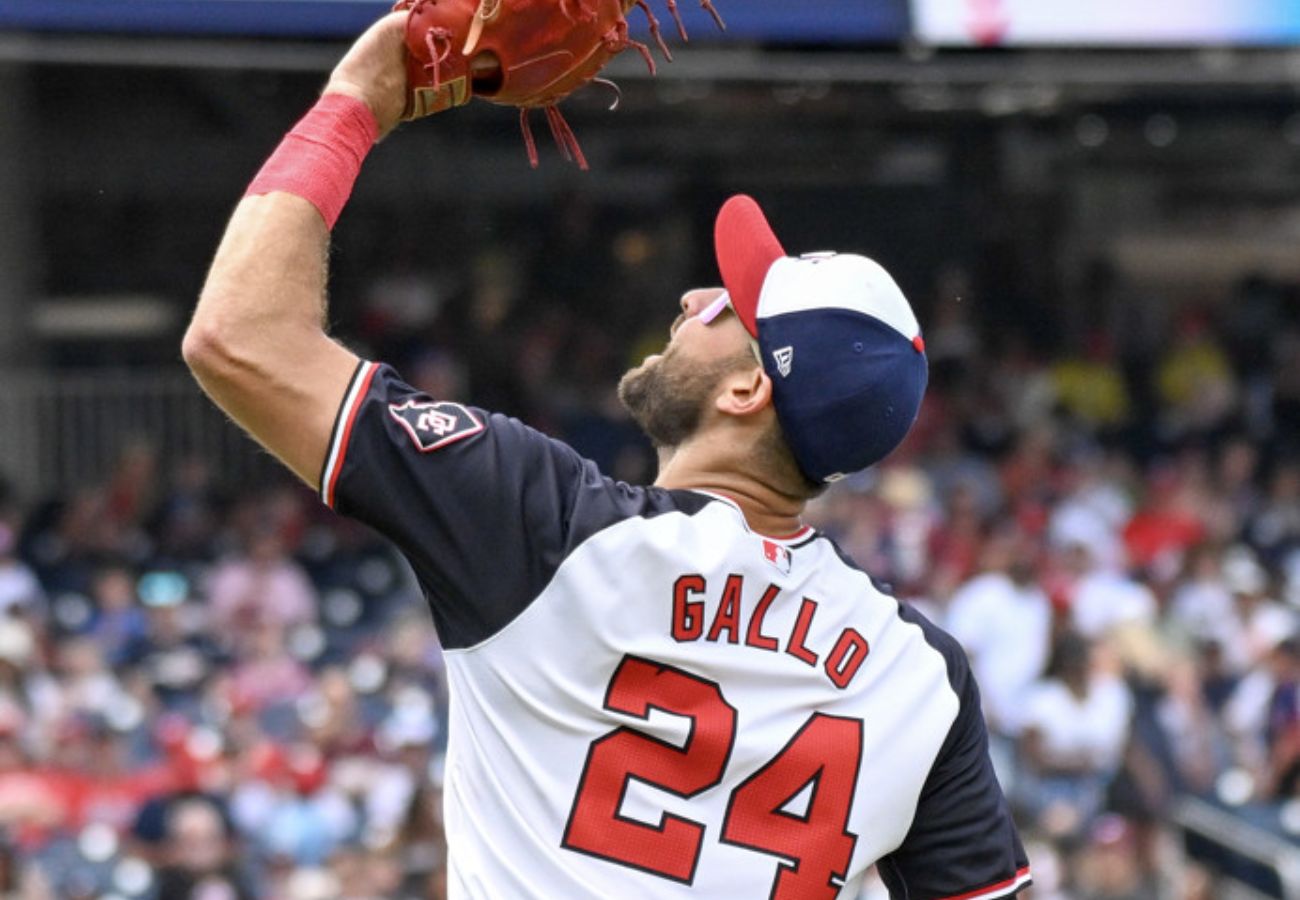
  • Yes Baseball Fans, Joey Gallo Has A League-Leading Defensive Runs Saved Total

    Yes Baseball Fans, Joey Gallo Has A League-Leading Defensive Runs Saved Total

    Photo: Mark Goldman/Icon Sportswire

    We posted a Defensive Runs Saved leaderboard on both Twitter and Reddit yesterday and some people got very worked up when they saw that the first base leader was Joey Gallo of the Nationals.

    In honor of Gallo’s 6 Defensive Runs Saved at that position, I have 6 thoughts on that number (and yes, we know Gallo got hurt, but this is intended to be instructive in how DRS works).

    1- It’s a 38-game, just over 300-inning sample. That’s a small number of innings which means a few good plays or bad plays can skew the sample. Just because he has 6 Runs Saved in 300+ innings doesn’t mean you can project out to 1,200 innings and multiply those 6 Runs Saved by 4.

    2- Just because Gallo has 6 Runs Saved and Christian Walker have 6 Runs Saved doesn’t mean the two rate as equals defensively. Walker’s track record of excellence runs thousands of innings. Gallo’s doesn’t. Equal in Runs Saved doesn’t necessarily mean equal in overall skill. 

    3- That said, in these 316 innings, Gallo has done some things right. 


    Gallo has 6 plays made, including this one, on batted balls with an out probability of less than 50%. These have come mostly on hard-hit balls, with this one below registering 105 MPH. 


    A play like this one looks more impressive if you see it in person than on TV where the camera switch doesn’t come until after Gallo has made his initial move for the ball.

    4- Gallo may have missed some balls, but by our calculations entering Tuesday he’d failed to make a play on only one with an out probability of 27% or higher (and that was on a ball that his second baseman got to). In other words, the balls that have gotten through have cost him a very small amount of Runs Saved because most first basemen aren’t fielding those balls. 

    He’s 41-of-42 in making plays on balls with an out probability of at least 27%.

    5- Evaluating first base defense is difficult because we have the tools to focus on range more than we do catching throws. Throw handling is a small component of Defensive Runs Saved. 

    Our Video Scouts reward first basemen for “scoops” and throw handling on balls using a specific set of rules. 

    Gallo has been credited with 7 of these, tied for 7th-most, which is pretty good considering he ranks 25th in innings played. The leaderboard can be found here. The net value of these is approximately 1 Run Saved.


    6- Let’s not forget that there was a time when Gallo’s defense was highly valued, largely for his arm but he could make plays too. From 2020 to 2021, Gallo led all right fielders in Defensive Runs Saved.

    Now he’s trying to put up those kind of numbers at another spot. He may not be hitting, but he’s still contributing.

  • For The Royals At 2nd Base, It Takes A Village … A Good One

    For The Royals At 2nd Base, It Takes A Village … A Good One

    Photo: Joe Robbins/Icon Sportswire

    If you haven’t heard by now, the Royals are doing a lot of things well. They’re 39-27 entering their game with the Yankees tonight. And while you can certainly say that the stars like catcher Salvador Perez and shortstop Bobby Witt Jr. have starred, there’s something to be said for group efforts.

    I’m referring specifically to second base, which has been manned by four players this season – Michael Massey, Adam Frazier, Nick Loftin, and Garrett Hampson. None entered Monday having played more than 29 games at the position.

    Combined, those four players rank 4th in Baseball-Reference’s Wins Above Average, which (like WAR) measures player value in all areas but gauges it on the basis of an average player. Last season, Royals second basemen rank 26th in Wins Above Average.

    The improvement is part offense, part defense.

    Royals Second Basemen

      2023 2024
    OPS .676 (21st) .740 (5th)
    Defensive Runs Saved -9 (T-27th) 9 (2nd)

    Offensively, all but Frazier have hit better than an MLB average second baseman. Defensively, none of them have more than 3 Runs Saved but all four of them have a positive Run Saved number.

    For balls hit past the pitcher’s mound, but between first base and second base, the Royals have turned 77% of batted balls into outs. That ranks 5th in MLB. Last year, that percentage was 72% and the Royals ranked 25th. The five percentage-point differential is worth about an extra 15 outs so far this season.


    Where this has come into play specifically has been on balls hit to the right of wherever any of these four happened to be playing. They’ve been best in MLB relative to the number of outs they were expected to get.

    Royals 2B on Balls Hit To Their Right

    Plays Made Attempts Plays Above Avg MLB Rank
    61 112 +7 1st

     And what’s cool about that is that we can find an example for each player within the 10 most-valued plays made by the Royals second basemen this season.


    To pardon the pun, the Royals have gotten it right with their second basemen this season. In more ways than one.

  • In Year 2, Fernando Tatis Jr. is Looking Like A First-Year Right Fielder

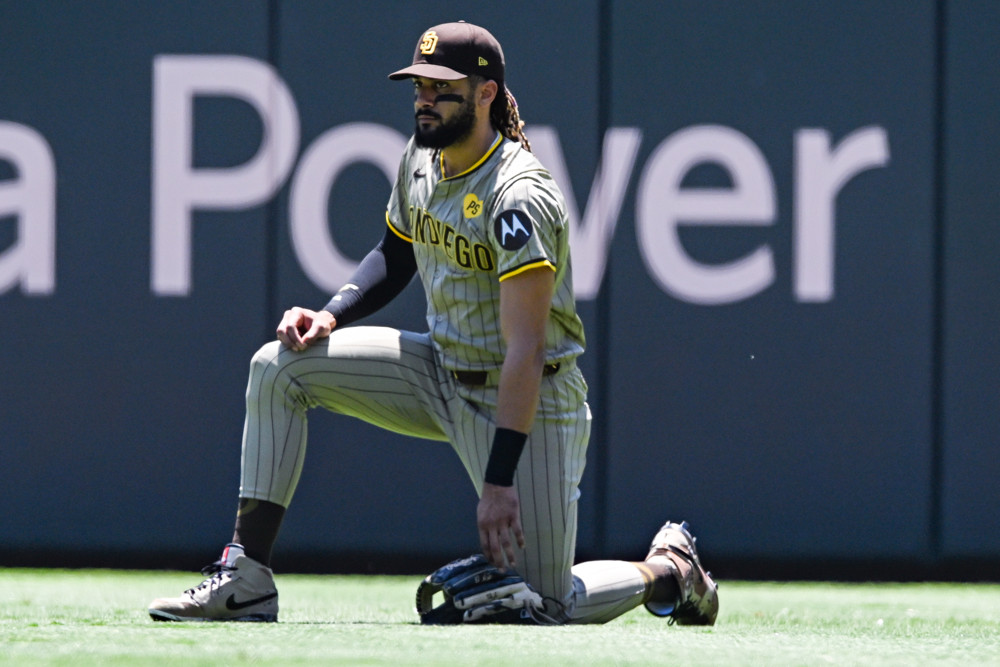
    In Year 2, Fernando Tatis Jr. is Looking Like A First-Year Right Fielder

    Fernando Tatis Jr. had an extraordinary 2023 defensively in his first season as a right fielder for the Padres. He led all players with 29 Runs Saved at the position. No one else had more than 10. He won the Fielding Bible Award and MLB’s Platinum Glove Award for the National League.

    It was all the more remarkable given that Tatis had never previously played right field before. He went from complete newbie to within 1 Run Saved of matching the most in a season by a right fielder in the 21-year history of the stat.

    But through the first two months-plus of 2024, Tatis Jr. has not been able to replicate that excellence.

    Entering today, Tatis Jr. has -3 Runs Saved. He’s been more Nick Castellanos than Mookie Betts on defense this season.

    Before looking into the whys and hows of this, I want to get slightly more specific on how good Tatis was last season.

    Of those 29 Runs Saved, 21 came from his range. The only other right fielders to post 20 Range Runs Saved in the 21-plus year history of Runs Saved are Betts and Jason Heyward.

    Twenty one Runs Saved from range means you made a lot of catches that other outfielders didn’t make. Here are a few of them.


    That last one, which happened to be against Betts, was worth about 0.8 Runs Saved. It was Tatis’ 4th-highest-valued catch in 2023. In our system, that play has a 22% out probability.

    Tatis doesn’t have any catches with that high of a run value yet this season. And if we dip down further Tatis has only 6 catches worth even one-quarter of a run this season. That’s lowering the bar beyond just considering his great catches to now counting ones that our system would consider good catches. He had 47 catches worth at least one-quarter of a run in 2023.

    Plays Worth >=.25 runs Plays Worth <=-.25 runs
    2023 47 18
    2024 6 13

    For the purposes of simplicity of this article, I’m going to largely stick to evaluating his range rather than his throwing. It’s worth noting, though, that he’s had worse results there as well. His Runs Saved from throws has dropped from 7 in 2023 to 0 in 2024.

    In 2023, Tatis allowed only 48 of 118 baserunners (41%) to advance an extra base. He threw out 9.

    This year, he’s allowed 27 of 51 to advance (53%) and thrown out 3.

    Arm strength isn’t a factor. He’s currently No. 1 in average throw velocity. So while there might be something amiss here, it’s a pretty short time frame to evaluate throwing if we don’t see a smoking gun in his throwing speed.


    So what did I notice about his range from film watching and stat studying*?

    *thanks to our Video Scouts who chart all this information

    1) Tatis has been less effective in just about any type of effort play, though the effort to make those plays is absolutely still there. He’s still sprinting for balls plenty.

    2023 2024
    Sprinting 44% (24/54) 28% (9/32)
    Sliding 67% (6/9) 20% (1/5)
    Jumping 67% (10/15) 33% (3/9)


    That last play brings up a point that maybe Tatis’ aggressiveness has gotten the better of him a few times. He’s been tagged with 18 Defensive Misplays & Errors in right field by our Video Scouts. He totaled 24 last season.

    2) Besides those above, there have been a few odd-looking plays that had the opposite issue.

    In taking notes on the 12 balls for which Tatis was penalized the most, I wrote “pulls up on it” for 4 of them.

    These kinds of balls were probably no-problem catches for Tatis last year.

    But this year, those catches aren’t sure things.

    3) I don’t think there’s anything “wrong” with Tatis physically.

    Per MLB’s stats, he’s done better at covering ground in the first 1.5 and second 1.5 seconds in 2024 than he did in 2023. And he’s down only a smidge in route efficiency.

    He’s only 25 years old. For a player that age there shouldn’t be any sort of significant decline in these numbers and there isn’t.

    4) You can make a case that some of the dip in Tatis’ Runs Saved is a product of opportunities or lack thereof.

    Just look at the number of chances he’s had on balls with out probabilities ranging from 25 to 75%.

    Plays Made Opportunities Plays Above Expected
    2023 42 60 +11**
    2024 6 16 -2

    ** Read this as: Tatis made 42 of 60 plays. He had 11 more made plays than an average fielder would have.

    He’s playing at a pace that would produce 34 opportunities if he played the same number of innings in which he got 60 in last season.

    On one hand, that would have given up more chances to make the great plays last season. On the other, there’s no guarantee of that given what he’s done with the opportunities he faced.

    Flipped The Script

    So in the end, I generally like to have a solid conclusion to these articles. This is one case where I don’t. He’s playing hard, but the results aren’t coming together.

    It does feel like if Tatis had played like he’s currently playing in right field last year, we’d have said, “That makes sense.” The issues we’re seeing are ones we’d have expected to see from a player in his first year at a position.

    That the script has flipped and that these issues have come in Year 2 have me thinking that I truly have no idea what will happen next.