Category: NFL

  • NFL Week 1 Injury Fallout

    NFL Week 1 Injury Fallout

    Photo: Matthew Pearce/Icon Sportswire

    The NFL is back, and with all the excitement of the season starting, we’re quickly reminded of how injuries can impact teams. Here’s what we can share about some of the most notable injuries from Week 1.

    Jordan Love

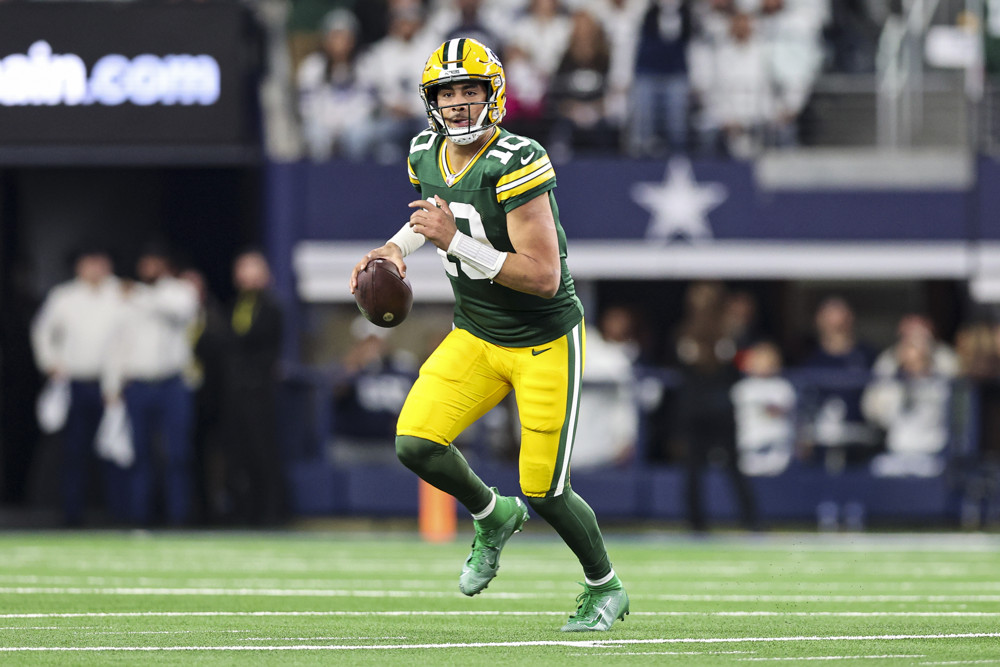
    The biggest scare of the week happened to Packers quarterback Jordan Love. After fears he could have suffered a season ending knee injury, MRI results revealed an MCL sprain, which shouldn’t sideline him for too long. 

    Looking back at other quarterbacks who have suffered MCL sprains, most were either able to play through them or only miss limited time. Aaron Rodgers suffered the injury in Week 1 of 2018 and he didn’t miss any starts. After the Buccaneers’ Super Bowl win in the 2020 season, it was revealed that Tom Brady played through an MCL tear throughout the season.

    Looking further back Jacoby Brissett and Teddy Bridgewater both only missed one game in 2019 and 2020 respectively. These are all good signs for Jordan Love, as the Packers aren’t planning on placing him on injured reserve and should hopefully resume playing sooner rather than later. 

    Josh Allen

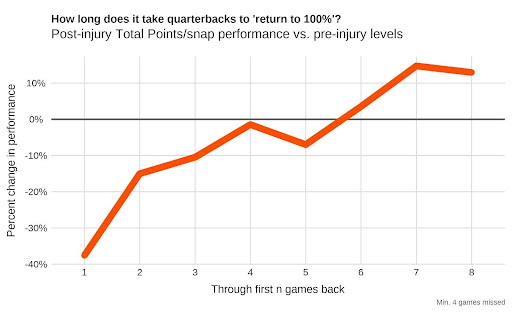
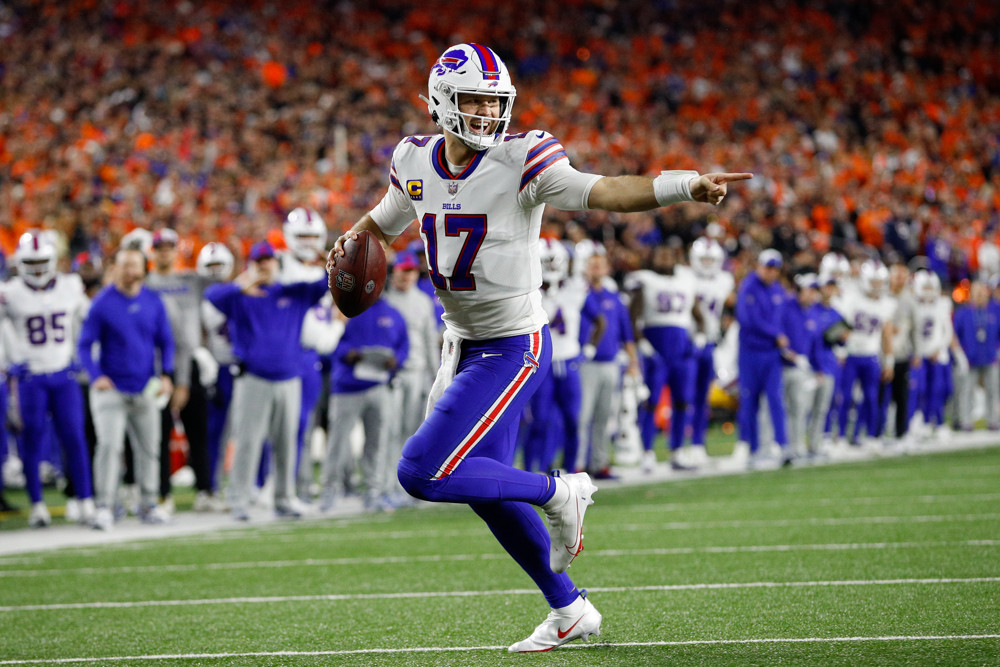
    Another quarterback who suffered a more minor injury was Josh Allen. He injured his non-throwing hand, and while he was cleared for his Week 2 game, it’s still something worth monitoring. 

    Justin Herbert suffered an injury to his non-throwing hand early last season that he played through before another injury ended his season. There was a dip in Herbert’s overall production while playing through his injury.

    Justin Herbert before and after left hand injury, 2023 (Passing)

    Before Injury (Week 1-4) After injury (Week 6-14)
    Completion % 71% 62%
    On-Target % 80% 75%
    Yards per attempt 7.6 6.5
    Yards per game 277 225
    Interception % 0.7% 1.9%
    Passer rating 106.3 87.1
    EPA 15 -13

    Josh Allen is such an effective runner of the football, you can imagine that any physical ailment could limit his effectiveness in pushing for extra yards as a rusher. I took a look to see if Herbert, who runs way less, had any differences before and after that injury.

    Justin Herbert before and after left hand injury, 2023 (Rushing)*

    Herbert before left hand injury

    (Week 1-4)

    Herbert after left hand injury

    (Week 6-14)

    Attempts per Game 3.8 3.3
    Broken/Missed Tackles / Att 47% 19.2%
    1st Down % 53% 31%
    Rushing TDs 3 0

    * QB sneaks removed


    Allen shouldn’t be physically limited by his hand injury, but it could be something in the back of his mind as he makes decisions throughout the game and overall just how comfortable he is. We can see that Herbert didn’t try to run any less, but he was much less effective after the injury.


    Puka Nacua

    Puka Nacua was slowed by a knee injury during training camp and quickly re-aggravated it in Week 1. With his placement on injured reserve, the Rams will be without one of their main pass catchers for the foreseeable future. This is a little role reversal from last season as Cooper Kupp missed the first four games of the 2023 season. On passing plays last season the Rams felt the effects when Kupp wasn’t on the field.

    Kupp On the Field 2023 Kupp Off the Field 2023
    TD% 5.5% 2.8%
    INT% 1.7% 3.2%

    It’ll be interesting to see moving forward if the loss of Nacua has similar effects on the Rams’ passing game, especially when they’re dealing with a multitude of offensive line injuries to start the year. The line had the second most blown blocks on pass plays in Week 1 with 12, only one behind the Titans.

    Derrick Brown and Marshon Lattimore

    Speaking of linemen, the biggest loss for the Panthers wasn’t losing by almost 40 points, but the loss of defensive tackle Derrick Brown. He has a meniscus injury that will require surgery and sideline him for the season. Brown led all DTs last season in snaps and combined tackles. He had the highest Total Points Saved on run plays among DTs with 33, and was top 5 in Points Saved per play (amongst DTs with at least 10 tackles), signaling it wasn’t just his sheer volume/endurance that made him effective.

    On the flip side of that game Marshon Lattimore had to leave early with a hamstring injury, unfortunately a recurring theme for him and the Saints. He missed the final seven games of last season with an ankle injury and was limited in training camp with a hip injury. If he’s forced to miss time I’d expect offenses to challenge the Saints defense with deeper throws down the field. Last season without Lattimore teams threw downfield much less (10% vs 15%) when he was playing. 

    When looking at individual defenders for the Saints last season, both Alontae Taylor and Paulson Adebo had similar completion percentages when targeted with or without Lattimore on the field. However the yards allowed per target for each of them jumped significantly. Taylor going from 5.4 to 8.6, and Adebo going from 5.2 to 7.4. This furthers the point that teams are more comfortable throwing down the field without Lattimore on the field. They added Kool-Aid McKinstry in the draft this year, and he might get thrown into the deep end earlier than anticipated.

    There was a lot to unpack after Week 1, and as the season rolls on we’ll be able to uncover more trends and changes as teams deal with injuries to all different positions.

  • Using Accuracy and Openness to Provide Context for Receiver Play

    Using Accuracy and Openness to Provide Context for Receiver Play

    Over the last few years, analysis of the passing game has advanced quite a bit. We’ve been moving away from completions and yards and towards Success Rate and Expected Points Added, and now ideas like Completion Percentage Over Expected are somewhat commonplace. 

    At SIS, we add flavor to the discourse by analyzing catchable throws and on-target throws. We can assess a quarterback’s Catchable Throw Rate, a receiver’s On-Target Catch Rate, and a defensive back’s Deserved Catch Rate (which filters out uncatchable throws, among other things). In the last couple years, we’ve also been tracking the openness of the receiver at the time the ball got to him.

    We obviously understand that accurate throws into open windows are the goal. How much of a difference are we talking about?

     Completion Percentage by Accuracy and Openness, 2022-23

    Inaccurate Accurate
    Contested 9% 52%
    Normal 27% 78%
    Wide Open 45% 95%


    Yards after Catch by Accuracy and Openness, 2022-23

    Inaccurate Accurate
    Contested 2.0 2.0
    Normal 2.8 4.4
    Wide Open 6.7 8.5


    In a completely-unsurprising development, passes are more likely to be completed and have better yards after catch if they are more accurate and/or open. The only exception is with yards after catch on contested throws, but that’s because accuracy doesn’t matter much if there’s a defender in arm’s reach.

    To put a finer point on the completion percentage results, this is why judging a receiver based on his catch rate is insufficient. Regardless of how close defenders are, passes are some 40 percentage points less likely to be completed if they’re inaccurate. You have to isolate accurate throws to judge a receiver on his catch rate.

    (That said, you also can’t take a quarterback’s inaccuracy and just assume that’s the reason a receiver has a poor catch rate. Garrett Wilson caught just 56% of passes that went his way in 2023, which was obviously driven by poor quarterback play. But if you isolate on-target passes, he actually ranked even worse league-wide. It wasn’t all Zach Wilson.)

    Setting Expectations

    These ideas are incorporated into our player value metric Total Points by comparing a player’s performance on a given target to the average of similar targets in the past. That calculation takes into account the accuracy and openness of the throw but also what route was run and where the receiver lined up. 

    With all of these elements included in the baseline expectation, we can be confident that a player’s performance above or below that expectation is more attributable to his skill than some schematic or quarterback element. 

    We can even split up the value a player gained from catching the ball and from yards gained after the catch. Total Points handles these bits a little differently than what you see below—division of credit and edge cases and all that—but this is a good illustration of what goes into our player value system.

    Receiving Yards Plus-Minus, 2023

    Player Catching Yds Above Avg YAC Above Avg Total Yds Above Avg
    Nico Collins 163 169 333
    Puka Nacua 122 122 244
    Rashee Rice 16 216 232
    Deebo Samuel 60 159 219
    Amon-Ra St. Brown 89 106 195
    DJ Moore 111 82 193
    George Kittle 4 184 188
    George Pickens 48 140 187
    David Njoku -6 187 181
    CeeDee Lamb 113 66 179

    Texans receiver Nico Collins wasn’t in the top five in receiving yards in 2023, but he had one of the better On-Target Catch Rates among high-target players and paired that with elite elusiveness (trailing only Zay Flowers in Broken+Missed Tackle Rate among 100+ target receivers). On the whole, he had the best receiving season in the NFL on a per-route basis.

    Collins’ balanced production is somewhat of an anomaly, with half of the leaders being strongly YAC-heavy. In general the Total Points system favors after-catch production because it’s mostly owned by the receiver, but that does leave several top pass-catchers conspicuously absent because of their more limited after-catch production: Brandon Aiyuk, Amari Cooper, Justin Jefferson, A.J. Brown, and Tyreek Hill. (Don’t worry, most of them are in the top 20.)

    Hill highlights a limitation of our approach given the data we are working with; he gets open because of his speed and agility more than the scheme. We don’t have a way to separate these elements out, though, so these sub-calculations of Total Points will undervalue a player who creates his own shot, so to speak.

    CeeDee Lamb had crazy volume and produced with that volume, but he fell into a funky space where statistically he didn’t have a ton of room to overperform. Dak Prescott was so accurate that Lamb’s completions were reasonably likely, and a high percentage of his targets came into a tight window, which left little room to get going after the catch.

    Where we go next

    Total Points just got a facelift so we’re not likely to overhaul things on that front in the immediate future, but we have some ideas kicking around.

    We did some research a couple years ago on specific kinds of throw inaccuracy affecting pass outcomes. We found that throws we might call “too strong”—overthrown or in front of a laterally-moving receiver—are less likely to be completed than “too weak” throws—underthrown or behind a receiver. That would be relatively easy to incorporate into the above methodology, although we’d need to be careful not to cut our sample sizes too fine.

    The aforementioned receiver openness conundrum is an important one. We can try to split the difference when it comes to giving the receiver or the playcaller credit for an open throw, but ideally we would have specific markers that would indicate whom we should be patting on the back. Modeling route concepts or some openness predictions using tracking data might get us in that direction.

  • 2024 World’s No. 1 Quarterback Ranking – Entering Week 1

    2024 World’s No. 1 Quarterback Ranking – Entering Week 1

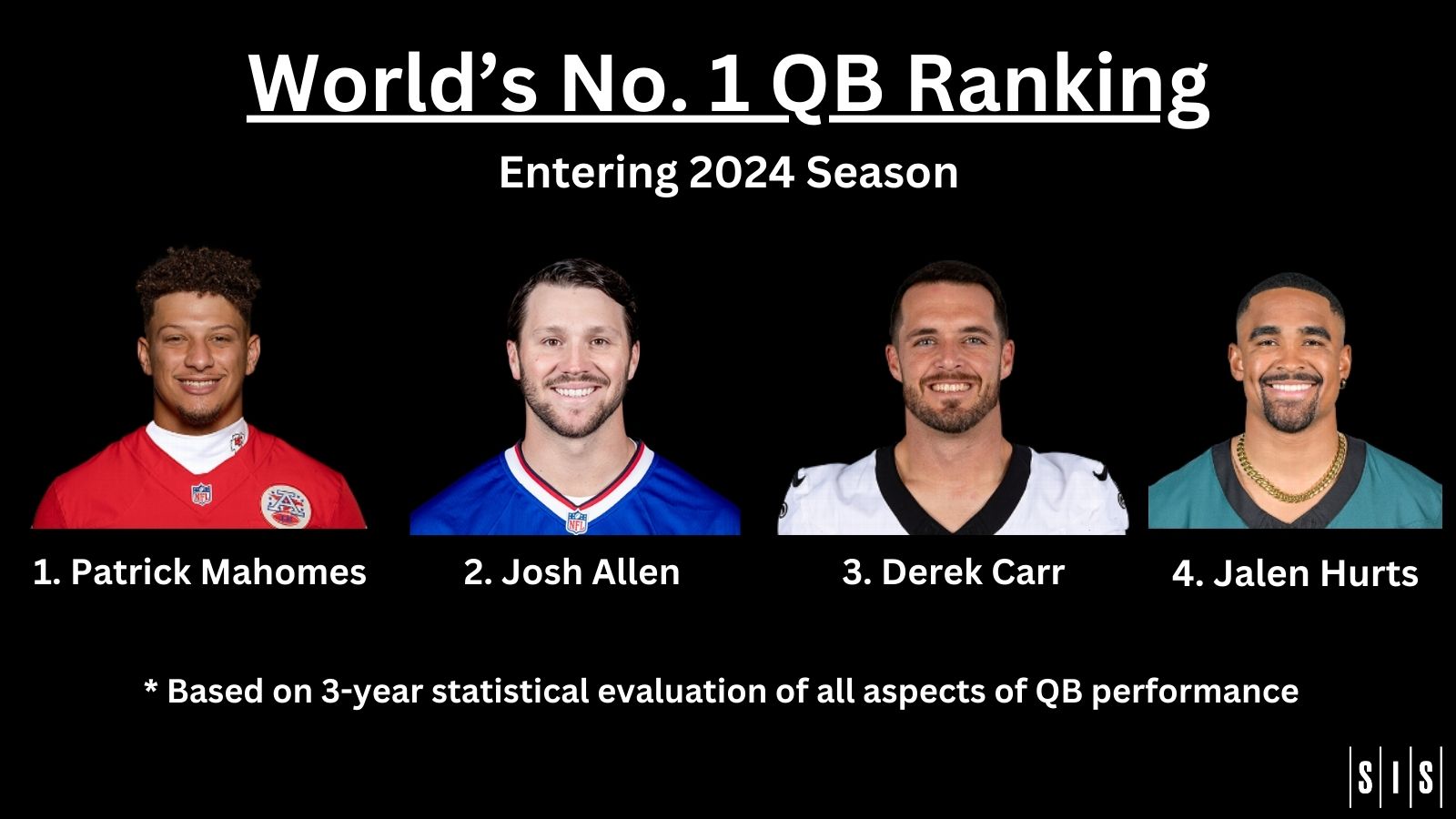
    The World’s No. 1 Quarterback Ranking is based on a model devised by Bill James to evaluate The World’s No. 1 Starting Pitcher. Bill’s model was based on cumulative evaluation of individual starts over an extended time period using the metric Game Score.

    The World’s No. 1 Quarterback Ranking uses our player value stat, Total Points to make a cumulative evaluation of game performance over a three-year period. The key to our calculation is Points Above Average (PAA), the statistical underpinning of Total Points that is centered at zero so that positive numbers are above average and negative numbers are below average.

    Success over time is key to maintaining a good ranking. Prolonged inactivity results in a ranking drop. The most recent performances carry the most weight.

    Here are the rankings entering the 2024 regular season

    Rank Player PAA Per 60
    1 Patrick Mahomes 7.6
    2 Josh Allen 6.8
    3 Derek Carr 4.2
    4 Jalen Hurts 3.9
    5 Lamar Jackson 3.7
    6 Jared Goff 3.3
    7 Justin Herbert 3.3
    8 Jordan Love 3.2
    9 Dak Prescott 2.2
    10 Trevor Lawrence 1.6
    11 Joe Burrow 1.5
    12 Matthew Stafford 1.5
    13 Brock Purdy 1.4
    14 Kirk Cousins 0.9
    15 Justin Fields 0.8
    16 Geno Smith 0.7
    17 Baker Mayfield 0.1
    18 C.J. Stroud 0.0
    19 Tua Tagovailoa -0.2
    20 Kyler Murray -0.2
    21 Gardner Minshew -0.3
    22 Jake Browning -0.8
    23 Andy Dalton -0.8
    24 Jacoby Brissett -0.9
    25 Joshua Dobbs -1.3
    26 Tyrod Taylor -1.4
    27 Joe Flacco -1.4
    28 Deshaun Watson -1.6
    29 Mason Rudolph -1.7
    30 Kenny Pickett -1.8
    31 Aaron Rodgers -2.0
    32 C.J. Beathard -2.0
    33 Sam Howell -2.1
    34 Mitch Trubisky -2.1
    35 Aidan OConnell -2.1
    36 Sam Darnold -2.4
    37 Teddy Bridgewater -2.4
    38 Carson Wentz -2.5
    39 Anthony Richardson -2.5
    40 Jameis Winston -2.5
    41 Skylar Thompson -2.5
    42 Mike White -2.6
    43 Blaine Gabbert -2.6
    44 Josh Johnson -2.6
    45 Cooper Rush -2.6
    46 Drew Lock -2.6
    47 Nathan Peterman -2.6
    48 Davis Mills -2.6
    49 Brian Hoyer -2.6
    50 Sean Mannion -2.7
    51 Trey Lance -2.7
    52 Brandon Allen -2.7
    53 Jake Fromm -2.7
    54 Jarrett Stidham -2.7
    55 Ryan Tannehill -2.7
    56 Tyson Bagent -2.8
    57 Dorian Thompson-Robinson -2.8
    58 Russell Wilson -2.8
    59 Tyler Huntley -2.8
    60 Brett Rypien -2.8
    61 John Wolford -2.9
    62 Marcus Mariota -2.9
    63 Taylor Heinicke -2.9
    64 Anthony Brown -2.9
    65 Malik Willis -3.0
    66 Sam Ehlinger -3.0
    67 Case Keenum -3.0
    68 Kyle Allen -3.1
    69 Jaren Hall -3.1
    70 Jeff Driskel -3.2
    71 Tim Boyle -3.3
    72 Trace McSorley -3.3
    73 Daniel Jones -3.5
    74 Trevor Siemian -3.6
    75 Jimmy Garoppolo -3.7
    76 Tommy DeVito -4.0
    77 Nick Mullens -4.1
    78 Easton Stick -4.1
    79 Will Levis -4.1
    80 Mac Jones -4.1
    81 Clayton Tune -4.2
    82 Zach Wilson -4.4
    83 P.J. Walker -4.7
    84 Bryce Young -5.0
    85 Desmond Ridder -6.0
    86 Bailey Zappe -6.3
  • Which Quarterback Does Total Points Prefer Among the 2020 NFL Draft Class?

    Which Quarterback Does Total Points Prefer Among the 2020 NFL Draft Class?

    SIS recently updated its Total Points calculation methodology. You can find a complete explanation of what Total Points is and how it works here.

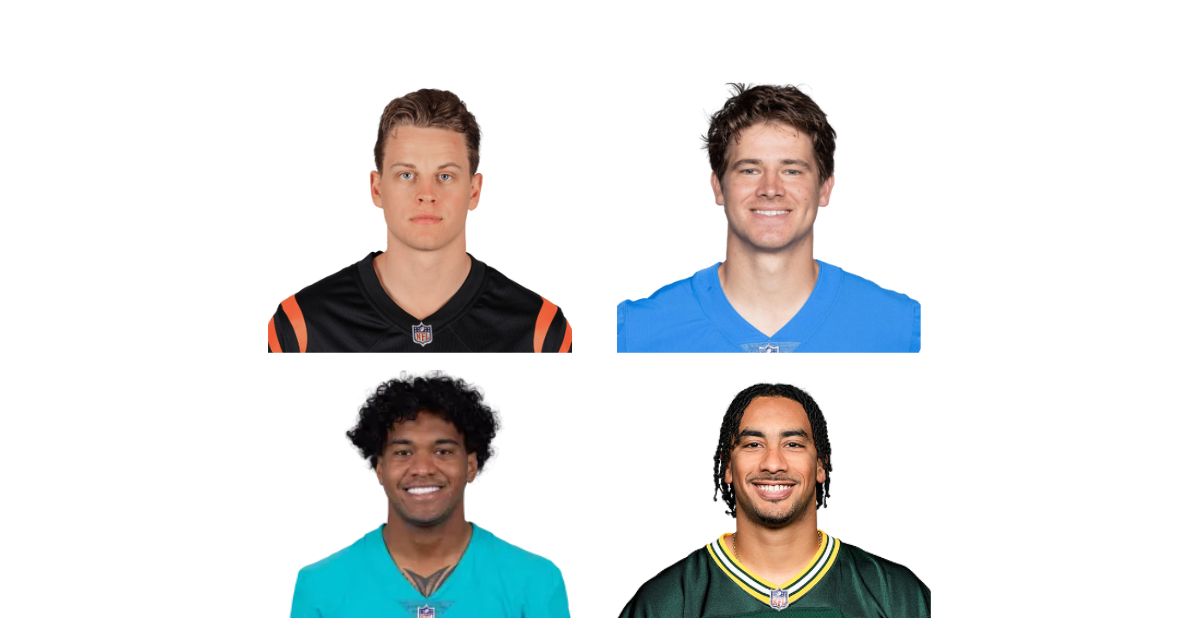
    The top group of quarterbacks taken in the NFL Draft doesn’t always give us a 100% hit rate. But Joe Burrow, Tua Tagovailoa, Justin Herbert, and Jordan Love have each been given championship-caliber-quarterback money over the last year, solidifying the 2020 group as one of the better classes of recent vintage.

    That said, this collection of first rounders haven’t necessarily hit the ceiling that you’d want from a rookie contract. Only Burrow made the conference championship on his rookie contract—with two injury-shortened seasons surrounding those two campaigns. But a lot of fanbases would be happy to have any of these guys, even if the price tag seems shocking on its face.

    With all of their contracts quite similar at this point, which would you take heading into 2024? 

    Total Points has a pretty strong opinion on the subject with the recent enhancements to the passing game calculation. If we take the last few years and weigh the seasons 3/2/1 to lean on recent production, Justin Herbert easily leads. Jordan Love enters the conversation based on his 2023 season, but he didn’t have a starting opportunity before that and we can only be so confident in his partial season of excellence.

    2020 NFL Draft First Round Quarterback Total Points

    Three-year recency-weighted average and 2023 results (including playoffs)

    Total Points (3yr) TP/G (3yr) TP (2023) TP/G (2023)
    Herbert 125 8.2 106 8.2
    Burrow 105 7.2 74 7.4
    Tagovailoa 70 4.6 77 4.3
    Love 69 4.2 134 7.1

    Given that the Chargers haven’t been a very good team with Herbert at the helm, he could be pegged as one of those guys who hasn’t put it together despite his arm talent and athleticism. But his on-field productivity as measured by Total Points outpaces each of his draft class peers in both volume and output, and he’s done so consistently over the last few years.

    What makes Herbert stand out

    Even with all the loud tools that he can wow scouts with, Herbert’s 2023 was most notable for accuracy. He finished third in Expected On-Target Rate +/-, our measure of accuracy relative to an expectation based on throw depth, route, and some other elements. 

    Total Points accounts for accuracy by combining the expected on-target rate from above with an expected value of the throw with and without pinpoint accuracy. Those couple percentage points of accuracy per throw that Herbert offered added up to a roughly 10-point advantage over the other three in 2023. He wasn’t quite so excellent in previous years, but still above average.

    Burrow deserves kudos here, because over the last three years he has the best accuracy numbers in the league. Even with a little bit of missed time, his accuracy has been worth 15 to 20 points per season compared to the average quarterback. His issue has been a combination of availability and a tendency to get himself into trouble with sacks, fumbles, and the like.

    We mentioned Herbert’s athleticism, and at least among this group he separates quite easily. He isn’t a threat as a designed runner, but he scrambles more than any of these guys, and in 2023 those carries were worth 12 EPA more than the other three quarterbacks combined.

    Why is Tagovailoa lagging behind?

    Obviously the end of the 2023 Dolphins’ season put a sour taste in people’s mouths, but there’s no doubt that Tagovailoa helmed a dangerous offense. 

    It’s surprising to see a player who led the league in passing and finished fifth in passer rating sit in the middle of the pack in Total Points. At the same time, to anyone who has watched the Dolphins the last couple years it isn’t surprising that he’s brought down to earth by factors like blocking, turnover-worthy throws, and yards after catch. 

    The combination of good-enough line play and quick-hitter play design meant that Miami’s line blew 20 fewer blocks in the passing game than any other team in 2023. Total Points takes that information and docks Tagovailoa to the tune of about a half a point per game for the clean pockets he was afforded. Even with that, he had the same sack rate as Jordan Love; beyond the blocking itself, Love out-earned him by almost a point per game in sack avoidance.

    After being afforded those clean pockets, Tua introduced quite a bit of risk once the ball left his hands. The combination of 14 actual picks and 7 near-interceptions puts him in good company, I suppose, given that some of the best quarterbacks in the league had high interception totals last year. But he did that on throws that had much lower expected value than those guys. Patrick Mahomes threw passes over a yard shorter on average, but Total Points valued Mahomes’ specific choices of route, depth, and openness 30 points better than Tagovailoa’s in 2023.

    One of the bigger changes we made to Total Points this offseason was to remove the quarterback’s ownership of yards after catch performance—at least, performance above or below the expected amount based on the route, accuracy, and openness. The quarterback still gets credit for the expected YAC when evaluating the throw, accuracy, and catch, but on a Dolphins team that finished second in average YAC before contact per reception in 2023, that’s a lot of quality production that the receivers are claiming from Tagovailoa with the new calculation.

    What to expect in 2024

    In short, a lot of uncertainty in the following … 

    – Burrow’s health. 

    – Tagovailoa’s offensive line. 

    – Herbert’s skill players, San Diego’s coaching change, and a preseason injury.  

    – Love’s limited exposure to the NFL and young skill group. 

    These all present question marks for these well-compensated signal callers. If we assume a full season for everyone, I’d expect Burrow or Love to have the best surface stats, given that their team context feels more bankable. If healthy, I still assume Justin Herbert will deliver the best package in terms of what a quarterback can control, based on his body of work over multiple years.

  • Announcing Updates To Total Points Methodology

    Announcing Updates To Total Points Methodology

    Photo: Ian Johnson/Icon Sportswire

    A new football season brings a fresh start and a reset on our perceptions of teams and players. This year, our favorite metric, Total Points, gets a reset as well, with a lot of enhancements that affect the past and future.

    In short, Total Points is our answer to the question, “How much was each player worth in terms of points on the scoreboard?” It uses our charting data to attribute Expected Points Added to every player on nearly every play.

    We last made substantive updates to Total Points in 2020. Over the last few years, we’ve learned a lot about our own data and added several new data points to our collection operation, especially in support of evaluating the passing game. Naturally, we want to imbue those learnings into our metrics, so every couple years we aim to update the Total Points methodology to account for this new information.

    These updates aren’t just going forward, either. We’re applying as many of these changes as we can retroactively, even if most of the updates can’t be backfilled completely because they involve data that was only collected within the past few years. 

    The nitty gritty details are integrated into our living primer that details the metric, but here are the highlights of the new and improved version:

    Passing Game

    • Building granular throw accuracy and openness information into our evaluation of each throw. This not only improves our estimates of expected performance, but also allows us to more accurately assign responsibility for the actual result.
    • Incorporating metrics we’ve created over the last few years, like Expected On Target Rate and Expected Pressure Rate.
    • Using quarterback drop type and snap-to-throw timing to evaluate pass blocking with more specificity.
    • Because play action isn’t dictated by the players themselves and has an impact somewhat outside of the players’ performance, we are making an adjustment to pull back the offensive value on those plays. 

    Running Game

    • The tracking of Forced Blown Blocks allows us to precisely assign responsibility to defenders for blowing up a play, instead of using their initial alignment to make guided assumptions.
    • Pre-snap safety depth affords more precision in evaluating how likely they are to make a tackle.
    • Better measurement of the value of broken or missed tackles thanks to our tracking of the depth at which they occur.
    • Adjusting yards before contact when there’s a missed tackle before first contact, leaning the credit for that run towards the rusher.

    General

    • Beyond the Total Points impact of this, we are also updating our Expected Points framework in one specific way. In general, that model doesn’t take into account time when judging the expected points scored from a particular game state, but to prevent situations where we overestimate in a late-half situation, we are considering plays inside the two minute warning as a separate category. 

    Some examples of how our play-level evaluation changes

    We’ll start with an example of a receiver getting more credit because of the tough play he had to make. On this play, Jalen Hurts heaves the ball downfield but doesn’t step into it, underthrowing the ball and forcing DeVonta Smith to come back towards the coverage to make the catch.


    In the previous version of Total Points, Hurts was credited with 2.2 points compared to 1.8 for Smith. With the accuracy and openness info brought in, we’d now credit Hurts with 0.4—still a positive play—but give Smith a much more robust 2.7 for making this play.

    Next, an example where the offensive line value changes as well, which is more subtle on a play-to-play basis. This is a deep dropback that Justin Herbert throws downfield with good accuracy but the receiver isn’t able to make the catch. 

    Herbert’s value on this play increases by 0.3 points—a direct credit for the accurate throw, and an indirect credit because the ball came out quickly, earning the line less credit than we gave them previously. 

    In the running game, we’re doing a lot better assigning responsibility when a player blows up a play. 

    For example, on this play, Kwity Paye (51)—lined up way out wide as a pass rusher—blows right through the tackle’s outside shoulder and forces the running back to pause and adjust, resulting in no gain. 

    In the past, we used each player’s initial alignment to try to split responsibility for the right tackle’s blown block, which resulted in some credit going to Julian Blackmon (32), who was lined up opposite the tackle but got caught in traffic early in the play. Now, we are assigning the appropriate credit for forcing the blown block to Paye.

    Typically we use yards before contact to inform how well the offensive line did in setting up a clean lane for the rusher. Now, when a defender gets into the backfield and the rusher is able to elude the tackle without being contacted, we’re considering that the point of contact for the purpose of evaluating the offensive line. 

    On this play where Joe Mixon is able to make an edge defender miss behind the line and get to the outside for a first down, we used to be giving about 50/50 credit to the line and to Mixon. But with this adjustment in place, Mixon is actually getting more than 100% of the credit for the first down and the line is being debited, because he could have easily been brought down for a loss on third down.

    Our new NFL leaderboards

    A lot of things changed here, both in college and the NFL, so we’re not going to go through everything. But it’s useful to know where we stand in terms of valuing players. So here are a handful of updated leaderboards for the 2023 season.

    Quarterback Leaders

    Player Old Total New Total
    Josh Allen 161 172
    Patrick Mahomes 139 139
    Lamar Jackson 120 129
    Jordan Love 103 128
    Dak Prescott 154 124

    Jordan Love is getting a lot of, er, love heading into the 2024 season. After the Packers’ Week 6 bye, Love was a top five quarterback by almost any measure you can come up with, but Total Points is giving him as much credit as anyone just for the throws he attempted (which is calculated before even knowing whether the throw was catchable). We take a mix of the route, throw depth, and receiver openness for this, so he was making good decisions within the context of the scheme. He finished 4th overall in Total Points.

    Dak Prescott falls off a bit for the opposite reason, although he’s kept in the top five because he gets great marks for his accuracy relative to the difficulty of his throws. He dropped from 2nd to 5th on this leaderboard.

    Top Non-QB Offensive Players in 2023

    Player Pos Old Total New Total
    Derrick Henry RB 48 49
    Puka Nacua WR 37 48
    Connor McGovern G 50 47
    CeeDee Lamb WR 58 47
    James Conner RB 45 47
    Deebo Samuel WR 39 46
    Christian McCaffrey RB 44 45
    Amon-Ra St. Brown WR 46 45
    George Kittle TE 47 44
    Jason Kelce C 41 40

    We wrote not that long ago about the somewhat controversial conclusion by Total Points that Derrick Henry is still one of the most valuable non-quarterbacks in the league, but James Conner is assuredly the more surprising presence above, just 2 points from the top spot. 

    Conner’s calling card is that he tied for the NFL lead in yards after contact per carry with De’Von Achane (with twice as many carries). Total Points splits rushing performance among the line and rusher, but after-contact productivity is mostly owned by the running back, so Conner (and Henry) more than make up for poor pre-contact performance.

    Puka Nacua and CeeDee Lamb go in opposite directions with the update. We mentioned Dak Prescott’s accuracy before; that ends up pulling Lamb’s contribution down, while Matthew Stafford’s relative inaccuracy buoys Nacua.

    Top Defenders in 2023

    Player Pos Old Total New Total
    T.J. Watt DE 69 73
    Khalil Mack LB 54 70
    Antoine Winfield Jr. S 76 67
    Jessie Bates S 73 64
    DaRon Bland CB 78 61
    Aidan Hutchinson DE 60 60
    Kyle Hamilton S 67 59
    Rasul Douglas CB 63 54
    Myles Garrett DE 51 54
    Bradley Chubb DE 37 52

    Big changes on the offensive side in the passing game lead to big changes on the defensive side as well, with safeties affected the most. Total Points has generally favored playmaking safeties quite a bit, so it might be a justifiable tempering of enthusiasm for that position. 

    The big drops for coverage players are often coming from better assessment of throw accuracy and correspondingly how difficult the defender’s job was. Picture a key third down stop where the passer throws behind the receiver, making it very difficult to convert. The defender makes the tackle short of a first, but the off-target throw made that work a lot easier.

    For pass rushers, employing the Pressures Above Expectation framework gives us a much better assessment of how well players get to the passer. Khalil Mack and Bradley Chubb are not alone among big gainers from this addition.

    Where can I learn more?

    We’ll be posting more “How Total Points Works” articles over the coming weeks, with specific breakdowns of why players are valued the way they are. And let us know @football_SIS if you have any requests!

    If you want to check out individual players and positional leaderboards, the SIS DataHub has you covered. If you’re looking for more in-depth analysis, the SIS DataHub Pro could work even better for youl! We offer free trials when you sign up.

    If you’re interested in more of the specifics of how the metric works, make sure to check out our primer, which is updated whenever the calculation changes.

  • 2024 NFC East Preview

    2024 NFC East Preview

    Photo: Lee Coleman/Icon Sportswire

    A lot of ink gets spilled every year talking about the NFC East. This year there will be questions about Dak Prescott’s contract, a reshaped Eagles defense, a bunch of new coaches, some existing ones on the hot seat, and a whole new world in Washington.

    Bryce Rossler brought on newly-minted ESPN football writer Ben Solak (previously of The Ringer) to talk shop about the division that hasn’t had a repeat champion in 20 years. Let’s look at some of the questions and storylines they raised for each team. 

    Was Jason Kelce the straw that stirred the drink for the Eagles’ offense?

    Apart from being a team leader and a remaining tie to their Super Bowl win, Jason Kelce was an outstanding—and singular—center. He retired after a year in which he was the most valuable center and second-most valuable lineman overall by Total Points.

    Solak peeled back the layers of the impact of his departure. 

    Protection issues on the inside are obvious. Cam Jurgens was drafted as the heir apparent at center a couple years ago, so maybe he can slot in competently. Second-year player Tyler Steen fills in for Jurgens.

    Kelce was calling a lot of the running game as well. Per Solak:

    “Their blocking schemes were very specific to the fronts and alignments they were getting. They would say, ‘OK, we’re running zone, but if we get this front the center is gonna go under the guard, it’s a wipe call, right? There were a lot of adjustments on the field because Kelce could call those from the pivot once he lines up.”

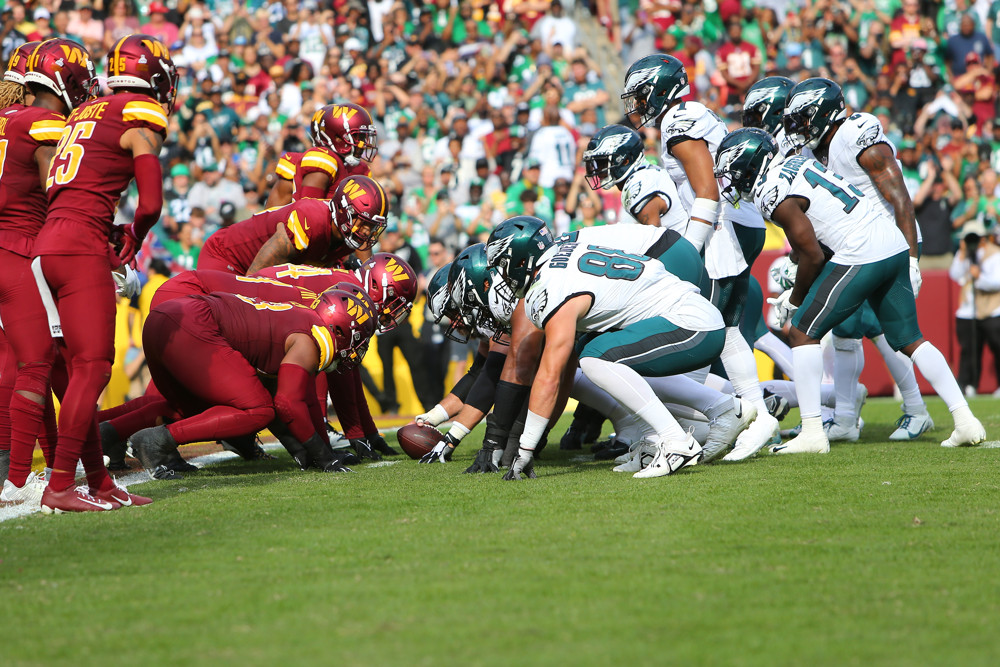
    Another layer is leadership and veteran presence, which is tough to nail down in terms of actual value of course. But if things go sideways to start the year, more of the burden will be on Jalen Hurts to right the ship.

    Where Solak has his biggest concern is that Kelce had been weaponized based on his ability to get out in space as a puller and to anchor their elite quarterback sneak game. Last year, the Eagles ran nearly double the quarterback sneaks of any other team, with a success rate over 80 percent. We’ll get a sense for how much responsibility Kelce had for the success of the <insert play nickname here> based on not just their early conversion rates but also how often they go for it (and thus their implied confidence).

    Regardless of the change in coordinator, is the Cowboys’ defense built to win a Super Bowl?

    The Dallas defense under Dan Quinn lived and died by the big play. Trevon Diggs and DaRon Bland led the NFL in interceptions in 2021 and 2023, respectively, with Bland close to the top in 2022. Micah Parsons and DeMarcus Lawrence are forces when it comes to getting after the quarterback. 

    New coordinator Mike Zimmer has a similar philosophy in terms of creating chaos for the offense, but he does it a bit differently. Per Solak:

    “Dan Quinn was, ‘We’re always going to put four guys down on the line of scrimmage, we’re always going to rush those four.’ Mike Zimmer says, ‘We’re going to put five, six, seven guys on the line of scrimmage, and four of those are going to come and you’re not going to be sure who. And sometimes five or six of those guys are going to come.’ The Cowboys are going to go from one of the lower blitz rate teams in the league to one of the higher blitz rate teams.”

    The Cowboys have absolutely been a boom-bust defense, and they’ve done it well. But the issue with winning the Super Bowl is that the defense might need to hold up for a few games in a row, which puts pressure on the back end to not give up an explosive play in a key spot. 

    The change in coordinator may make them better suited in a matchup against a team like the 49ers, at least, because Shanahan-style offenses have shown themselves to be a good matchup for a Dan-Quinn-in-Seattle style Cover-3-heavy defensive scheme, and they can create a more “bespoke” game plan.

    The Giants’ front four is scary, but will the defense as a whole be able to make up for a potentially shaky offense?

    New York’s defensive front now has Brian Burns and Kayvon Thibodeaux on the outside and Dexter Lawrence on the inside, making for one of the more compelling starting groups in the league. 

    That front will need to dominate to compensate for a back seven that has a lot of question marks. The loss of safety Xavier McKinney (Packers) is a problem, and second-year first round pick Deonte Banks isn’t necessarily ready to provide a steady hand as CB1 in the absence of Adoree’ Jackson, who himself had a down year in the last year of his Giants contract.

    They brought in Shane Bowen (coming from Tennessee) to coach the defense, continuing the theme of new defensive coordinators who are more likely to mix it up schematically than their predecessors.

    “Bowen really likes to build a one-week game plan. When they played the Dolphins last year, they were pretty good for how outmanned and outgunned they were. They were just throwing out coverage rotations and dropping guys into zones they aren’t typically in. He built a very custom game plan for a Dolphins offense that’s a very custom offense…I’m looking forward to what it looks like. I’m not convinced there’s enough talent to really push the defense into ‘We win games’ territory.” 

    – Ben Solak

    “When you look across the league, that’s how most defenses are. I’m talking about the best units in the league. You look at Baltimore, the Chiefs…they mix it up, and they have access to different tools at their disposal.” 

    – Bryce Rossler

    Bowen will have to make lemonade out of lemons if he wants to help this team push for a .500 season.

    Was there a plan when constructing the Commanders’ roster?

    At the end of the day, Washington’s fate is going to be determined by whether first round pick Jayden Daniels is legit. But while we’re figuring that out, Bryce points out that it’s kind of a weird roster that lacks the single core competency that the Giants have (their front four on defense).

    The additions of Tyler Biadasz and Nick Allegretti on the offensive line, Zach Ertz at tight end, Austin Ekeler at running back, and Bobby Wagner at linebacker look like the moves of a team striving to fill out the back end of a solid roster, not dart throws that give the team a chance to grow into the future. They did add safety Jeremy Chinn from the Panthers, who showed some promise but hasn’t grown much after a solid first couple years.

    Bordering on a rant, Solak put it well: “There was absolutely no reason for the Commanders to go about doing this this way. They spent so much money on so many players who might have a year of good football left. For why? New ownership group, new GM, new head coach. Who is forcing you to try to win ball games right now?” 

    Both Solak and Rossler have questions about what Daniels will look like in Year 1, and they have questions about whether the Commanders’ free agency additions are good enough to justify the expenditure. They seem likely to be in a position to add a blue chip prospect in the draft next year, and assuming things don’t go catastrophically they can avoid using it on a quarterback.

    Conclusion

    The SIS Betting Model—which leans on late season results heading into the following year—likes the Cowboys in this division by 3 games, with the Giants and Eagles sitting around .500. It won’t take much for the Eagles to outdo that projection and for the Giants to undershoot, but it’s hard to argue that for this season Dallas is in the most solid position in the division.

    Check out the full breakdown of each team on the Off the Charts Football Podcast!

  • 2024 NFC North Preview

    2024 NFC North Preview

    Photo: Rich Von Biberstein/Icon Sportswire

    If you were tasked with predicting the team records of everyone in the NFL, the NFC North might be the hardest division to nail down with confidence. The Bears and Vikings are starting over with rookie quarterbacks, the Packers’ outlook hinges on what you think of their second half offensively, and the Lions’ dominant 2023 might be a bit of a mirage.

    Bryce Rossler and Justis Mosqueda of the SB Nation blog Acme Packing Company recently discussed this on the Off The Charts Football Podcast. Let’s look at some of the questions and storylines they raised for each team. 

    The Packers’ defensive front has breakout potential, but who will head that charge?

    On both sides of the ball, the Packers feature potential breakout players. We highlighted the prospects of Rashan Gary, Jayden Reed, Dontayvion Wicks, and Devonte Wyatt in a podcast earlier this offseason. And that’s not to mention the guy at the helm of the offense, Jordan Love, who was one of the best passers in the NFL over the second half of 2023.

    Gary has established himself as a highly productive edge rusher, ranking towards the top of our Pressure Rate +/- and Pass Rush Total Points leaderboards for multiple years. Wyatt had the best Pressure Rate +/- in the league among interior linemen last year. 

    “[Gary] got hurt in his ‘All-World’ season…In aggregate, Rashan Gary had a breakout season, but he hasn’t had a full 17 games. It’s interesting to me that they’re not having Wyatt be the starter opposite Kenny Clark right now. 

    In camp, Kenny Clark has played next to T.J. Slaton a whole lot, and they’re kind of rotating Wyatt and [Karl] Brooks into that Slaton spot. I wouldn’t have thought Slaton would have been a guy that they would’ve loved this much for the 4-3 defense because he’s not really a penetrator. His TFL numbers are not nearly as high as Karl Brooks, who they drafted in the 6th round last year, or Devonte Wyatt, on a per-snap basis.”

    – Justis Mosqueda

    There are some pieces around Gary and Wyatt that need to coalesce, but if they both have the kind of seasons they’re capable of then this is a scary group.

    Have the Lions broken out of their post-Darius-Slay funk at cornerback?

    Immediately after trading cornerback Darius Slay to the Eagles in 2020, the Lions selected Jeff Okudah third overall to fill that hole. In that following season, Lions cornerbacks allowed 137 Expected Points Added, which is by far the worst of any team since we began tracking that stat in 2016. 

    It’s been a bit better since then—it had to be—but there hasn’t been too much optimism on the back end of that defense until now. With a Defensive Rookie of the Year caliber season from Brian Branch and an incoming class of multiple high draft picks at cornerback (first rounder Terrion Arnold and second rounder Ennis Rakestraw Jr.), there are a lot of pieces in place.

    However, a big part of Branch’s success in 2023 was his play in the nickel corner spot. A big question is how Branch’s utilization changes if Rakestraw can crack the lineup early on, and what the long-term outlook is for a prospect like Rakestraw.

    ”I really like [Branch] in the nickel, but you also spent a second round pick on the nickel (Rakestraw). Is that going to be justified? There are only a couple teams leaning into that nickel spot being the primary position that everyone talks about. Now everyone’s talking about ‘Nickel is base, yadda yadda yadda.’ But if you look how players are actually deployed, you graduate out of that nickel spot in the same way that you graduate out of punt returning and kick returning.” 

    – Justis Mosqueda

    Is the Vikings’ roster built to win, regardless of the quarterback?

    Minnesota drafted Michigan quarterback J.J. McCarthy early in the first round and brought in Sam Darnold to compete with him early on. Whoever the quarterback will be, the weapons around him look like those of a playoff-caliber team. 

    The trouble is, the defense ranked 29th in Total Points per play last year, and 30th in pass coverage. Up front, the Vikings drafted Dallas Turner and added Jonathan Greenard and Andrew Van Ginkel in free agency (and lost Danielle Hunter), so they will look to take pressure off the back end by bringing the heat. 

    They need to create a pass rush without having to scheme it up. The Vikings blitzed more than anyone else in the league last year, but they were among the worst teams in terms of the pressure rate they generated off of the blitz.

    “Maybe they feel like Flores can scheme a lot of stuff up, and to his credit he did a lot of cool stuff last year with manufacturing pressure looks and doing some wild stuff on defense. But I just don’t think they have the horses. I guess they brought in Van Ginkel, but there’s not a ton of juice on the edge and I’m not a big fan of their secondary.” 

    – Bryce Rossler

    “They have a lot of offensive firepower. It’s gonna be more perimeter stuff than between the tackles; their tackles are better than their interior linemen, Aaron Jones is more an outside runner than an inside runner, all that stuff. You’re thinking fireworks on the outside. They don’t have a good defense, this team’s going to have to win in shootouts. But then you come back to Sam Darnold and JJ McCarthy are the quarterbacks. So how does that all fit together?… We’ve never seen McCarthy as a high-volume passer. At Michigan he never had to be that guy, so what is that even going to look like?” 

    – Justis Mosqueda

    Is the Bears’ defense good enough to support the offense as it figures itself out?

    While the pass rush edge (pardon the pun) might go to the Vikings, the Bears have the overall edge on defense. After an 0-4 start in 2023 they allowed more than 20 points just three times, and that was with an offense that had less firepower than it will this season.

    “I like Gervon Dexter, I think he’s gonna be pretty good in this league. I know grabbing Montez Sweat was a pretty big deal for them. I’m still not a believer in those linebackers, T.J. Edwards and Tremaine Edmunds is not moving the needle for me. Jaylon Johnson is good—we’ll see what happens with the whole contractual situation. Jaquan Brisker has flashes of good and then he plays the Packers and gets embarrassed after running his mouth every single time leading up to it. I liked Tyrique Stevenson coming out as a draft pick…I’m sure there’s still some upside there.” 

    -Justis Mosqueda

    Total Points has more optimism about the linebacking group, with Edwards and Edmunds ranking among the top quartile among projected starting off-ball linebackers. But regardless, it’s a solid group across the depth chart, and while there’s reason to be enthusiastic about an offense headed up by a top overall pick at quarterback with multiple top-flight options at receiver, there will be some bumps in the road and having a more complete roster will help smooth out the path to contention.

    Conclusion

    The SIS Betting Model considers this division as tight as any at the top, with the Lions edging out the Packers by less than a win (12.0 to 11.2). Those are both relatively optimistic projections, somewhat impacted by a pessimistic view of the Vikings (4.8 expected wins). The Bears could easily contend for the division or face serious offseason questions depending on Caleb Williams’ development, and we project them right in the .500 range (8.8 expected wins).

    Check out the full breakdown of each team on the Off the Charts Football Podcast!

  • NFL Scouting Report: Michael Penix Jr.

    NFL Scouting Report: Michael Penix Jr.

    Photo: Joe Robbins/Icon Sportswire

    Michael Penix Jr., QB Atlanta Falcons

    6-2, 216

    Overall Grade: 6.4

    Scouting Report by Jeremy Percy

    Summary

    Michael Penix Jr. is an older, more experienced prospect with good leadership ability and an extensive injury history who excels at pushing the ball down the field, but his inconsistent accuracy to the short and intermediate areas will limit him to being a top backup and circumstantial starter.

    Penix is a sixth-year, left-handed quarterback prospect who ran a spread-based offense for the majority of his collegiate career. He spent his first four seasons at Indiana where he suffered season-ending injuries all four years, two to his right ACL and one to each of his shoulders. He transferred to Washington prior to the 2022 season and responded by setting the school passing yards record and finished second in Heisman voting in 2023. Penix has great playing experience and played in 48 games, starting 45 of them. He played almost exclusively in shotgun, but has shown he can take snaps from under center, though he did not pass often out of those looks. He is a good leader and stepped up massively in clutch situations his final year in college. He is a tough player overall but has a merely sufficient body composition for an NFL quarterback, especially for someone with his injury history.

    Pass Game

    Penix has shown great improvement as a passer during his time in college. He is at his best throwing down the field due to his high-level arm talent and consistently hits his mark on deep back-shoulder throws. Despite his improvements, he still shows merely sufficient spot-on accuracy and can be inconsistent with short and intermediate accuracy. His deep accuracy is better. He throws a gorgeous deep ball. He can put the ball on a rope deep down the field to the outside shoulder from the opposite hash or loft it up with plenty of air to let his receiver run underneath it. Overall, Penix is a good decision maker who takes care of the ball and is mature enough to realize when he needs to hit his checkdown or throw the ball away, though he can be prone to chucking it into coverage when needing to make a play while trailing. He has good footwork, and it helps him greatly in the pocket. He shows plus ability to manipulate the pocket and slip away from defenders. He is above average under pressure and is not afraid to stare down the barrel and take a hit when releasing the ball. His release is sufficient overall; it is quick but unorthodox with a lower release point. He has a slight tendency to extend the ball low and behind his body in his motion which could lead to some fumbles at the next level. Penix can throw the ball from a variety of arm angles and bases which will directly translate to the NFL game. He also has good eye discipline and is capable of manipulating defenders while going through his reads before snapping back to his target.

    Run Game

    Penix was much more explosive as a runner and used in this capacity more early in his career, but that usage waned at Washington due to his injury history. Still, when he was called on as a runner, he was effective, and he has above-average mobility for an NFL quarterback.

    Last Word

    Penix projects as a top backup or circumstantial starting quarterback at the next level. He can function in most systems but fits best into an offense that utilizes his quick release in the RPO game and also allows him to take shots down the field off play action. Penix has had a ton of time to develop while in college but has spent a good amount of that time rehabbing from injuries, so he may not yet be at his full ceiling. He has above-average mobility and can make throws from awkward arm angles/bases. He also will be able to throw the ball deep at a high level. His short and intermediate accuracy can be spotty and inconsistent, but when he is on, he can make any throw on the field.

    Critical Factors

    Graded on 1-9 scale

    Accuracy 5
    Decision Making/Mental 6
    Clutch Performance 6


    Positional Factors

    Short Accuracy 5
    Deep Accuracy 6
    Pocket Awareness 6
    Footwork 6
    Under Pressure 5
    Mobility 5
    Arm Strength 6
    Release 5
    Awkward Throw 6
    Eye Discipline 6
    Leadership 6
    Body Comp 5

     Strengths

    Beautiful deep ball
    Excels at throwing back shoulder
    Slippery in the pocket

     Weaknesses

    Inconsistent short-to-medium accuracy
    Can get rattled
    Injury risk


  • 2024 AFC West Preview

    2024 AFC West Preview

    Photo: Peter Joneleit/Icon Sportswire

    The kings of the AFC West have been the Kansas City Chiefs for the past 8 years. By the looks of things, it seems as if the streak will not end this year, as the Chiefs are -230 favorites to win the division again according to DraftKings. The other 3 teams, meanwhile, will all have a different head coach and starting quarterback combination from what they had at the beginning of the year last year. Not ideal.

    To help break it all down, Bryce Rossler and Matt Manocherian debate what we can expect from the defending Super Bowl champion Chiefs and new-look Chargers, Raiders, and Broncos on the Off the Charts Football Podcast.

    Here are a few takeaways from each team on what they discussed.

    Can the Chiefs receiving core improve?

    The defending Super Bowl champions Kansas City Chiefs will look to bring home a third straight Lombardi Trophy. In order to do so, there needs to be improvement from their receiving core. Last year, the Chiefs receivers had the 2nd-highest drop percentage at 7.8% and the 10th-lowest on-target catch percentage at 88.4%. 

    Patrick Mahomes was able to mask the issues last year, but Bryce feels that the passing game will hinge on the Chiefs pass catchers this season.

    “The Chiefs’ offense is a powerhouse, but without a reliable receiving core, Mahomes might struggle to maintain his usual high level of play. We need to see some young players step up this season.”

    Matt agrees, but believes that it’s not about plugging in bigger names, as he states:

    “It’s not just about having big names; it’s about how they fit into the system. The Chiefs have to ensure that their receivers can create separation and make big plays down the field.”

    Even with the poor showing by the receivers, the Chiefs offense still ranked 8th in EPA per pass play last year and 5th in Total Points per play. If the pass catchers play even a fraction better than they did last season, there’s no reason to believe this team can’t go for three in a row.

    Bo Nix leaves a lot to be desired in year one

    It’s a new dawn in Denver, as rookie quarterback Bo Nix will try to take the reins of Sean Payton’s offensive system. Matt, who was a scout for the Saints in the Payton days, knows what it takes to succeed as a quarterback under Payton.

    “The thing that was non-negotiable for him was accuracy. The ability to put the ball where it needed to go. There were quarterbacks that Payton brought in that surprised me. Players like T.J. Yates who weren’t particularly accurate in college. Bo Nix is that for me.”

    Bryce, who wrote our scouting report on Nix, said

     “His willingness is a problem. He leaves a lot of throws on the field past 10 yards. He makes good decisions in the quick game, but they are slow decisions. What is he doing to march the ball down the field other than the dink and dunk they did at Oregon?”

    Last season, Nix had the 3rd-worst average depth of target (6.3 yards) among the 133 FBS quarterbacks with at least 150 pass attempts. Yes, he was successful in the offense, but there wasn’t much on his end trying to push the ball down the field.

    There are some decent weapons there, but everything falls back on Nix, and the guys are concerned that he won’t be able to get the job done in year one.

    The Raiders pass rush will need to mask the deficiencies on the back end of the defense

    Bryce and Matt highlighted the Raiders’ strong pass rush but expressed concerns about the rest of the roster. The Raiders have some standout players who can pressure the quarterback, but other areas of the team might not be as solid.

    Bryce believes the Raiders pass rush as a whole is underrated. He pointed out that they were 2nd in Team Pressures Above Expectation in 2023 and have 3 players in 2024 who were in the Top 20 (Maxx Crosby 2nd, Malcolm Koonce 16th, Christian Wilkins 19th).

    The pass rush is a strength going into 2024, especially if Tyree Wilson can break out in year 2. However, the pass coverage unit is going to be an issue. The Raiders coverage unit was 29th in Pass Coverage Total Points in 2023 and didn’t do much to improve it in the offseason. 

    Said Bryce:

     “This is not a very inspiring back end. Also, the linebackers aren’t good in coverage. They are towards the bottom in Pass Coverage Total Points as well.”

    The pass rush will need to be elite for the Raiders defense to be a formidable stop unit, as the rest of the defensive roster leaves a lot to be desired.

    Justin Herbert will be limited with Greg Roman as his OC…or will he?

    Matt and Bryce disagreed on the outlook of the Chargers offense under Greg Roman, citing how good of a fit he is for Justin Herbert. 

    Bryce went the negative route 

    “I feel bad for Justin Herbert because the offensive line is trending in the right direction and now you have nothing at receiver and you also have Greg Roman as your offensive coordinator.”

    Matt disagreed and likes the perspective of Roman taking over this offense. 

    “I really like this for Justin Herbert. Harbaugh and Roman made Kaepernick look good back in the day. These two are capable of putting a good offense together. 

    I believe the right way to build an organization is with the quarterback and the guys up front. I think the Chargers are acknowledging they aren’t a Super Bowl contender this year, but they are interested in making the playoffs. They aren’t interested in having the most productive Justin Herbert, but the most efficient Justin Herbert.” 

    Bryce disagreed, as he believes Kaepernick and Lamar Jackson (who Roman coached) are much different quarterbacks then compared to Herbert, and he believes the Roman scheme won’t fit Herbert well.

    We’ll know which one was right in a few months.

    Conclusion

    The SIS Betting Model has spoken when it comes to the win totals for these teams. 

    The model has the Chiefs at 10 wins, while the market has them at 11.5. With the injury risk and depth issues, the under is intriguing to the guys.

    The Raiders are projected at 9.8 wins, well above the 6.5 line in the market. Matt buys the over because they are gonna be in close games and believes that Minshew is a quarterback that can win games.

    The Chargers are projected to finish 3rd at 8.7 wins, a mere 0.2 wins higher than the line. The Broncos are projected last at 4.7, 0.8 less than the line. Generally, the guys agree with the model and see more negative outcomes for the Broncos than positive ones.

    Check out the entire podcast to get a more in-depth analysis of each team.

  • Off The Charts Division Preview: AFC South

    Off The Charts Division Preview: AFC South

    Photo: Ken Murray/Icon Sportswire

    The AFC South is going through a renaissance, as 3 out of the 4 teams have replaced their head coach and starting quarterback since the end of 2022. Every team believes it has their quarterback of the future and have made personnel upgrades at key positions in free agency and the draft.

    The Texans caught everyone by surprise in 2023 in the first year of the Ryans/Stroud duo, winning both the division and a playoff game. Now as the division champs, they are no longer the young team looking to make a leap, but are now the hunted.

    With a young team being chased by 3 formidable opponents, this division has all the makings of a wild and wacky race in 2024. To help bring some clarity, Bryce Rossler welcomed John Shipley of Jaguar Report SI to the Off the Charts Football Podcast to break down each team and how it will fare in 2024.

    Here’s one thing the two discussed about each team and how that will impact them this season.

    The Texans receiving core is really good and maximized by their scheme

    Last season, the Texans had the 4th-most Receiving Total Points. Now, C.J. Stroud moves into year 2 with another top tier receiver in Stefon Diggs. With all of this talent, there is a legitimate argument the Texans can have the most prolific passing attack in the league this year.

    Nico Collins returns as WR1 after posting a top 10 Receiving Total Points season last year. Collins is a big play waiting to happen, as he ranked behind only Brandon Aiyuk in Boom Percentage last year (plays with 1 EPA or greater) among players with at least 100 targets.

    Two other Texans receivers, Tank Dell and Noah Brown, finished high in Boom Percentage too. The big play of these Texans receivers comes from both their talent and the scheme. 

    “I think their scheme impacts a lot of things. For example, the motions and play actions they did against the Jaguars last year led to two 50+ yard catches from Tank Dell where there wasn’t a DB within 10-15 yards of him because it was a complete coverage bust.”

    – John Shipley

    All eyes will be on the Texans offense in 2024 to see if it can replicate the success o 2023 and potentially make a deeper run into the playoffs.

    Ryan Nielsen is an upgrade at defensive coordinator for the Jaguars

    Ryan Nielsen takes over for Mike Caldwell to lead the Jaguars defense in 2024. Nielsen comes over from the Falcons where he improved a defense that ranked T-29th in EPA per Play in 2022 to T-7th in 2023. The pass rush doubled its sack total from one year to the next.

    The Jaguars have talent in the pass rush department that is looking to take the next step as well. Josh Hines-Allen is a legitimate Defensive Player of the Year candidate (T-8th in odds at Draft Kings) and had the 4th-highest pressure rate among players with at least 300 pass rush snaps in 2023. They also added former 49ers defensive linemen Arik Armstead who is coming off a 5-sack season in only 12 games from the interior.

    A big question will be whether or not Travon Walker can take the next step as a former number 1 overall pick. 

    John believes that he has the opportunity to be more versatile in Nielsen’s scheme. 

    ”He is this freak athlete who you can try to get mismatches against guys across the offensive line. Now that there is a guy there who has shown he is willing to move guys around, I think that will be good for their front overall.” 

    – John Shipley

    With the talent up front and the pedigree from a defensive coordinator to improve defenses quickly, the Jaguars defensive arrow is pointing up heading into 2024.

    Colts’ athletes on offense will look to push the ball downfield

    “They have some absolute freaks between Jonathan Taylor, A.D. Mitchell, and Anthony Richardson. These guys are absolute mutants.” 

    – John Shipley

    In adding Anthony Richardson back into the fold as the signal caller, this offense will look to take advantage of Richardson’s athleticism and big arm to push the ball downfield, per Bryce. 

    “I think he wants to push the ball. We saw some of that when Richardson was active. With Richardson healthy, I think they will be more vertically oriented.” 

    – Bryce Rossler

    Both of them need to see it from Richardson before anointing him as an MVP contender, but they both buy into him as a guy who can get there.

    Will Levis is in for a rough time

    Both Bryce and John are very low on Titans quarterback Will Levis going into this season. They see too much inconsistent play and questionable decision making, which leads them to think the Titans are in for a bad year.

    “He was 24th in On-Target Rate Above Expectation among 34 quarterbacks with 200+ attempts. He was 32nd out of 41 quarterbacks in sack to pressure ratio. 33rd out of 35 in positive play rate and bust percentage. The lowlights are hilarious. I think it’s gonna be a trainwreck.” 

    -Bryce Rossler

    “The best way I can describe Will Levis is that he plays like a Vince Vaughn movie character playing quarterback. There was one start against the Jags last year where he took a sack because he turned to hand the ball off the wrong way. I would be surprised if it ended up working out for him.” 

    -John Shipley

    Yikes, not good. One thing going for Levis is that he can throw the ball downfield. He ranked 1st in average depth of target and was middle of the pack in boom percentage. He has the cannon arm, but he needs to limit all of the mistakes and ill-advised plays if the Titans offense is going to succeed. The addition of Calvin Ridley will provide some additional upside in a receiving group that was surprisingly above average by Total Points in 2023.

    Conclusion

    The SIS Betting Model sees the Texans as the division favorite with a projected 8.5 wins, but the Jaguars are close behind at 8.3. A clear dropoff ensues with the Colts at 5.8 and Titans at 4.3. A Texans repeat will be difficult with the Jaguars breathing down their necks, and if Richardson can play at that MVP level, this division can get crazy. In regards to the Titans, it might be time to pump the brakes on what this team can achieve offensively even with the weapons they added.

    Check out the full breakdown of each team on the Off the Charts Football Podcast!