Tag: Vladimir Guerrero Jr.

  • Stat of the Week – Ultimate Winner of the World Series: Great Defense

    Stat of the Week – Ultimate Winner of the World Series: Great Defense

    If you had told me before the season that I was going to write the following sentence, I would have laughed at you.

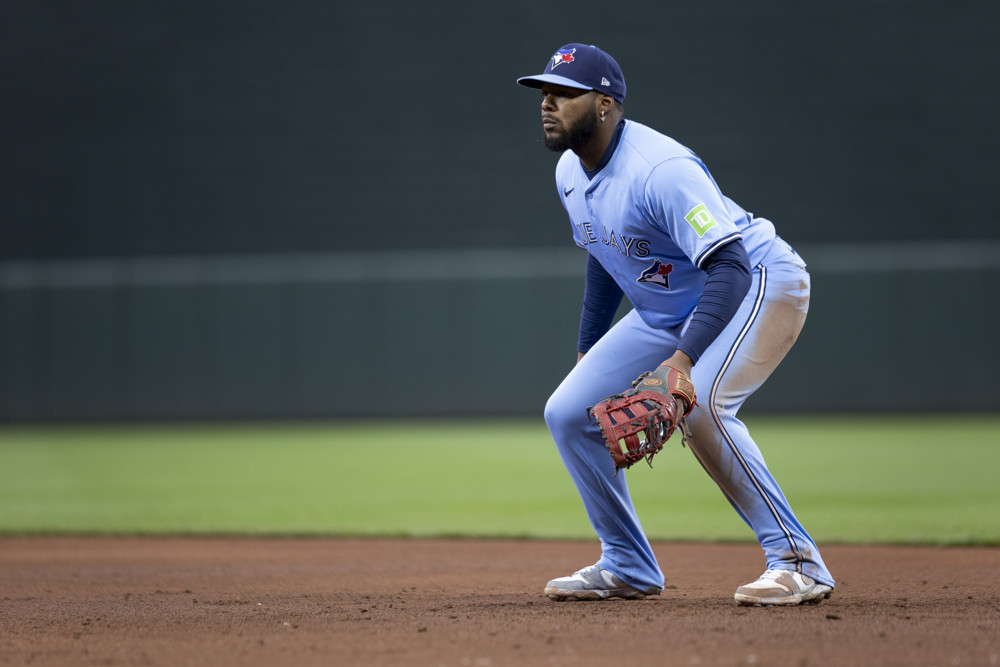
    Vladimir Guerrero Jr. was the most impressive-looking defensive player in the World Series.

    He was!

    This was a great World Series for great defense. We don’t track Defensive Runs Saved in the postseason, but our Data Scouts do award Good Fielding Plays and Defensive Misplays when warranted. In all, they awarded 24 Good Fielding Plays. to 12 different players. Guerrero had 4 of them, one shy of Freddie Freeman for most in the postseason (4 of Freeman’s 5 Good Plays were for scooped throws).

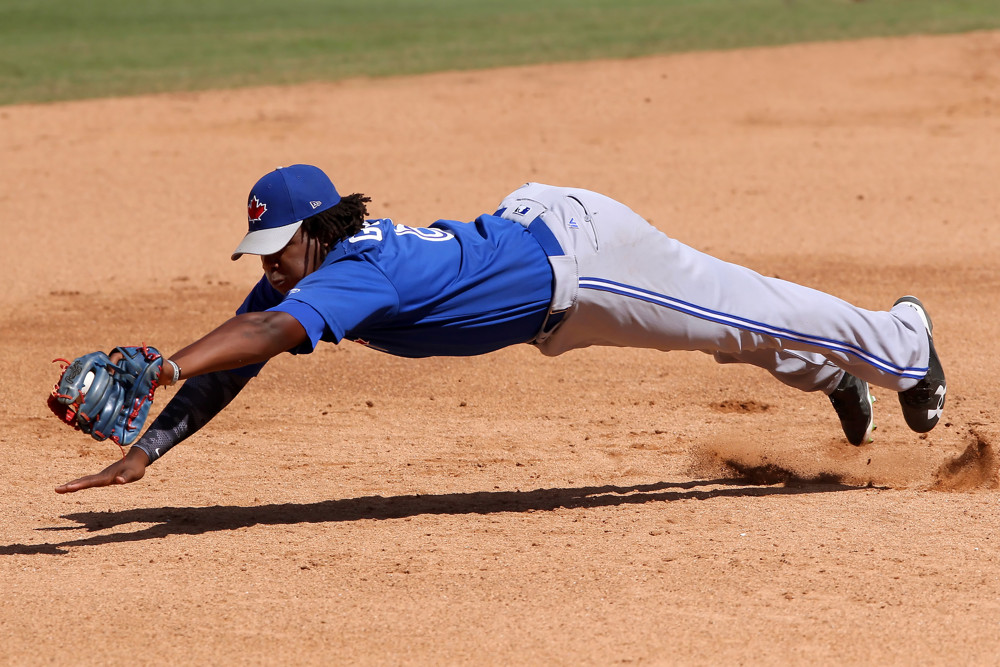
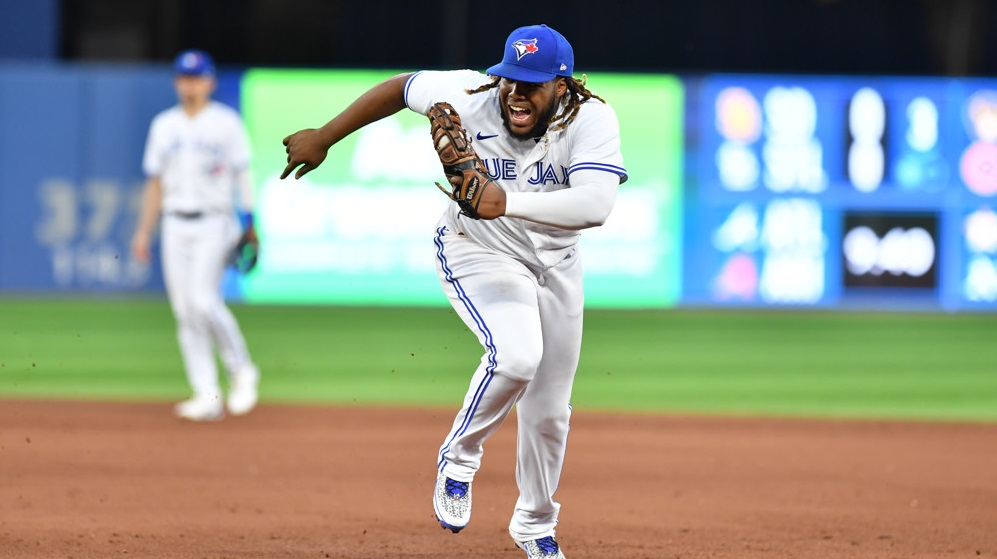
    Vlad Jr. put on a defensive variety show. In Game 2, he made an over-the-shoulder catch on a popup. In Game 3 he came off the bag and made a throw across the diamond to get a runner who trying to go first to third on an infield hit. That came in a tie game in the sixth inning. He then made a diving stop and a flawless flip to first base for the first out of Game 7 and a diving stop in the other direction to take away a likely extra base hit and at least one Dodgers run in the fourth inning.

    This wasn’t a fluke. Guerrero Jr. had his best defensive season, finishing fourth among first basemen with 8 Defensive Runs Saved, a big improvement from the -7 and -1 from the last two seasons. The punchline here, I suppose, is that the team’s backup first baseman, late-season acquisition Ty France, won the AL Gold Glove Award. But Guerrero showed just how much better he’s gotten.

    A strong honorable mention goes to the combination of Dodgers second basemen Tommy Edman and Miguel Rojas, who for the purposes of this exercise could basically be morphed into one player. For one thing, they were part of a Dodgers infield that turned 75% of grounders and bunts into outs in the World Series (basically matching the team’s regular season rate, which ranked 4th-best overall), including 9-of-9 in Game 7.

    For another, they combined for 3 Good Fielding plays of note. Edman atoned for a critical error in Game 3 by throwing Isiah Kiner-Falefa out at third base on a ball that deflected off Freeman, which helped keep the score tied in the ninth inning. Then he made a relay throw to cut down Davis Schneider at the plate as the potential go-ahead run in the 10th inning.

    Then in Game 6, Rojas scooped a Kiké Hernández throw from left field to complete a game-ending double play.  This was a heck of a play on multiple fronts. The Dodgers had Hernández positioned perfectly in left field and he had a great jump on the ball off the bat, which allowed him to make the catch.

    And yes, Rojas hit the game-tying home run in the ninth inning of Game 7 and Will Smith hit the series-winning home run in the 10th. It seemed like the only way someone was going to win that game was by hitting a ball that was not defensible.

  • World Series Defensive Scouting Report: Toronto Blue Jays

    World Series Defensive Scouting Report: Toronto Blue Jays

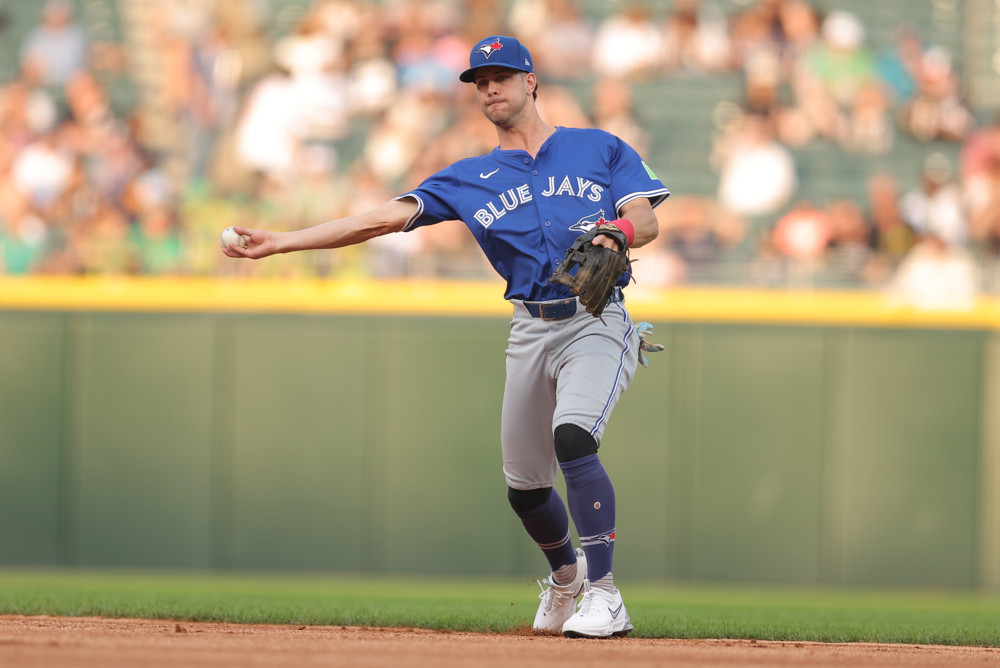
    Photo: Melissa Tamez/Icon Sportswire

    The Blue Jays finished second in the voting for our Defensive Team of the Year award, which was part of The Fielding Bible Awards. And that was for good reason. The Blue Jays have an abundance of strengths on their roster and very few weaknesses. 

    Here’s our scouting report on their defense heading into the World Series.

    Strengths

    Daulton Varsho

    The Blue Jays have a center fielder who would run through walls to catch balls if he could. Varsho was the 2024 Fielding Bible Defensive Player of the Year and put up great Runs Saved numbers in limited action in 2025. He’s the MLB leader in Runs Saved since the start of both 2022 and 2023 (and 1 run shy of being the leader since the start of 2024). 

    Their other outfielders

    We previously said that Myles Straw was worthy of being named ‘Reliever of the Year’ as a late-game defensive replacement. He’s played in nine games this postseason, played a full game once and closed seven others. Straw tied for second in Runs Saved in center field despite playing barely more than 500 innings. You’ll likely see him finish games in left field. He’s very aggressive at going after fly balls.

    There’s also Nathan Lukes, who played both corner outfield spots in each of the last five games of the ALCS. He had 7 Runs Saved in 446 innings in right field and 4 Runs Saved in 249 innings in left field. Between the three outfield spots he had 26 Good Fielding Plays (including 9 assists without the aid of a cutoff man, tied for fifth-most in the majors). 

    Of the 20 outfielders with at least 18 Good Fielding Plays, Lukes had by far the fewest Misplays and Errors (5). The next-closest was 11.

    Ernie Clement

    Clement won a Fielding Bible Award for multi-position play this season after becoming the second player to record at least 10 Runs Saved at two different infield positions (second baseman/third baseman Ryan McMahon is the other). 

    Clement can play shortstop or fill in at first base (admittedly unlikely) as well and he does it all with one glove, a Mizuno that’s at least a decade old and looks it, that he purchased on EBay (we talked to him about it, but a hat-tip to ESPN’s Tim Kurkjian for finding that out).

    Alejandro Kirk and Tyler Heineman

    Blue Jays catchers had 19 Runs Saved this season, more than any other team. Kirk ranked second in our pitch framing metric and tied for the top spot among catchers in Runs Saved from Good Fielding Plays, which largely consists of blocking pitches. Should anything happen to him, 

    Heineman is more than capable of filling in defensively. He ranked tied for fourth among catchers with 10 Runs Saved despite ranking 47th in innings caught. He’s better at throwing out basestealers than Kirk, who’s a smidge below average at that.

    Andrés Giménez

    Giménez is MLB’s leader in Defensive Runs Saved among second basemen the last four seasons. He’s one of the most fun to watch defensive players in the sport and seamlessly slid over to shortstop (which he’d played in the past) when Bo Bichette got hurt. Wherever he’s going to play in the World Series, he’s capable of making a nifty, wow-inducing play. Giménez told us in a past interview that he loves to dance. It’s evident from how he plays in the field.

    Vladimir Guerrero

    Guerrero had the best defensive season of his career, finishing with 8 Runs Saved after back-to-back seasons of -7 and -1. He’s going to make his share of errors but he’s been particularly good rangewise in 2025.

    Weaknesses

    The Bo Bichette Quandary

    With Bichette injured earlier this postseason and Springer at DH the Blue Jays were able to start their best possible defensive lineup. But as Bichette returns, the Blue Jays have a dilemma. Do they want to mess with a good thing and weaken their defense?

    Bichette’s value as a hitter far outweighs his defensive shortcomings (-12 Runs Saved) so long as he’s healthy. But Toronto seems to be giving consideration to playing Bichette at second base, which would keep Gimenez on the field but take another good defender, Isiah Kiner-Falefa, out. Bichette’s pro history at that position is 30 games, the last one in 2019 

    Wherever Bichette plays, there will be questions, and it will be the most worrisome defensive thing for Toronto in this series.

    Addison Barger’s range

    Barger is best suited for third base, but that spot is currently occupied. So he’s playing right field in the postseason, where he totaled -11 Runs Saved related to range in only 57 games during the regular season. That’s why he came out of the game late in games for defense in each of Toronto’s four ALCS wins.

    On the positive side the top 10% of his throws averaged 96.5 MPH, the third-fastest average in MLB, and he had 6 assists without a cutoff man. His 5 Outfield Arm Runs Saved matched the most of any right fielder. 

    George Springer 

    This one comes with a “don’t worry about it.” Springer hasn’t played the field in a month as he’s been almost exclusively a DH in that time. It’s probably for the best. He totaled -6 Runs Saved in right field this season.

    Defensive Positioning

    The Blue Jays actually ranked last in the amount of value (Runs Saved) they got from defensive positioning. They rated poorly both in their infield positioning when playing straight-up and in their outfield positioning. The Blue Jays have such good athletes that they make up for how they set up. The Blue Jays may have been last in Runs Saved from positioning but they were first in Runs Saved from the skills of their players.

    Also of note, only 43% of balls hit against the Blue Jays were hit against a defensive shift, the second-lowest rate in MLB (we consider it a shift when the second baseman or shortstop is playing unusually close to second base and at least one other fielder is significantly deviating from straight-up positioning).

    Kevin Gausman and Chris Bassitt limiting steals

    The Dodgers have attempted only 2 stolen bases this postseason, so this may not be a big deal, but baserunners stole 17 times in 20 attempts against Gausman in the regular season and they were 14-for-17 against Bassitt.

  • What Makes The Blue Jays So Good Defensively? A Lot Of Skill

    What Makes The Blue Jays So Good Defensively? A Lot Of Skill

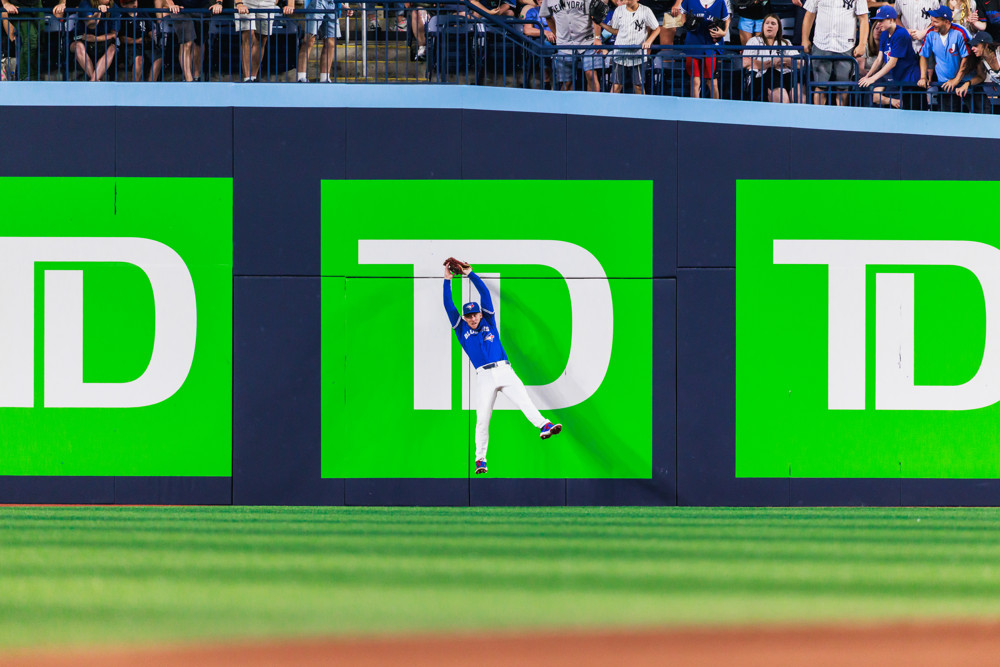
    Photo: Matthew Tsang/Icon Sportswire

    The Blue Jays have led the majors in Defensive Runs Saved in each of the last two seasons. They rank 4th overall in 2025 and it’s going to be tough to claim a three-peat, since they’re 11 Runs Saved back of the Braves. But they’re having an impressive season nonetheless.

    Team Runs Saved
    Braves 50
    Cubs 48
    Rangers 43
    Blue Jays 39
    Dodgers 33
    Yankees 32

    Their recent hot streak that pushed them to the top of the AL East has us reflecting on what makes them so good.

    This is a Blue Jays team with a lot of defensive skill. They have seven players with at least 5 Runs Saved this season. That’s the most of any team in MLB.

    One of their best defensive players is one of the least recognizable to fans outside Toronto. Ernie Clement has been deployed at all four infield positions, and has totaled 11 Runs Saved. Most significantly he’s totaled 6 Runs at his main position, third base, and then 5 runs at second base filling in when Andrés Giménez was injured.

    In fact, Clement ranks tied for 5th in Runs Saved at second base despite ranking 50th in innings played .

    Ke’Bryan Hayes and Matt Chapman are probably blocking Clement’s path to a Fielding Bible Award at third base, but he should be a strong contender for an AL Gold Glove there. And he’ll be a top candidate for The Fielding Bible’s award for multi-position excellence.

    Giménez, for his part, has 4 Runs Saved and still looks pretty good, if not like the guy who won a Platinum Glove a couple of years ago. The only AL second basemen with more Runs Saved than him are David Hamilton (7) and Clement. This kind of playmaking is why the Blue Jays traded for him this past offseason.

    Gimenez’s former Guardians teammate is the Blue Jays leader in Runs Saved, center fielder Myles Straw.

    Watching Straw’s highlight reel makes me think he’s determined to match or better last year’s success of Daulton Varsho and Kevin Kiermaier by himself. Straw looks a lot like the guy who ranked 2nd among center fielders in Defensive Runs Saved in 2022.

    This season he ranks 3rd with 11 Runs Saved and has played almost flawlessly at the position. Straw has only 1 Defensive Misplay & Error all season. By comparison, the two center fielders ahead of him in Runs Saved: Ceddanne Rafaela and Pete Crow-Armstrong each have at least 10 Misplays & Errors

    Straw has been a blessing because Varsho, has missed most of the season, first recovering from shoulder surgery and then out with an injury. Varsho was the SIS Defensive Player of the Year last year and has 5 Runs Saved even though he’s barely played (22 games).

    Another position at which the Blue Jays have gotten good value from multiple players is catcher. The combination of Alejandro Kirk and Tyler Heineman have been great, combining for  11 Runs Saved there. The only team to get more from its catchers is the Red Sox (14).

    Kirk, who has 7 Runs Saved, is a good all-around catcher with solid numbers in pitch framing, pitch blocking, and limiting stolen bases. This isn’t a first-time thing. His 46 Runs Saved are the most among catchers in the last 4 seasons.

    Most Runs Saved By Catcher – Last 4 Seasons

    Name Runs Saved
    Alejandro Kirk 46
    Patrick Bailey 45
    Jose Trevino 37
    Gabriel Moreno 34
    Adley Rutschman 31
    Cal Raleigh 30
    Freddy Fermin 30
    Austin Hedges 29

    The one other player among those who have at least 5 Runs Saved is first baseman Vladimir Guerrero Jr., who has 6 Runs Saved. Guerrero has shown more range this year than past years, particularly on balls hit to his right. He’s never finished a season with that many Runs Saved so we’ll see if he can carry it through for 162 games.

    The Blue Jays have had a few defensive issues to overcome. Only 4 shortstops have done worse than Bo Bichette’s -5 Runs Saved. The Jays also seem to have realized that George Springer’s best defensive days are behind him (he was pretty good in his prime). He’s totaled -6 Runs Saved in right field this season but has now DH’d in 6 of his last 7 starts.

    Additionally, the Blue Jays ranks 28th in Runs Saved from defensive positioning. This is largely the product of cutting their usage of infield shifts. There is often a statistical reward for good positioning provided the team is successful in recording outs in shifts (an example of a team who benefits from shift usage is the Dodgers). Our Video Scouts track how often a team uses a partial shift. The Blue Jays’ usage is well down from last year.

    A partial shift is one in which the second baseman or shortstop is playing adjacent to second base and other infielders deviate from traditional positioning.

    How Often A Ball Was Put In Play Against A Shifted Blue Jays Defense

      Usage Rank
    2023 57% 19th
    2024 69% 14th
    2025 40% 29th

    Nonetheless, the Blue Jays are so good defensively because their fielders are so good. And their success could be long lasting. All of their top defensive players are either signed for the long term or under team control for several years.

  • Stat of the Week: 2023’s Leading Underachiever

    Stat of the Week: 2023’s Leading Underachiever

    BY MARK SIMON

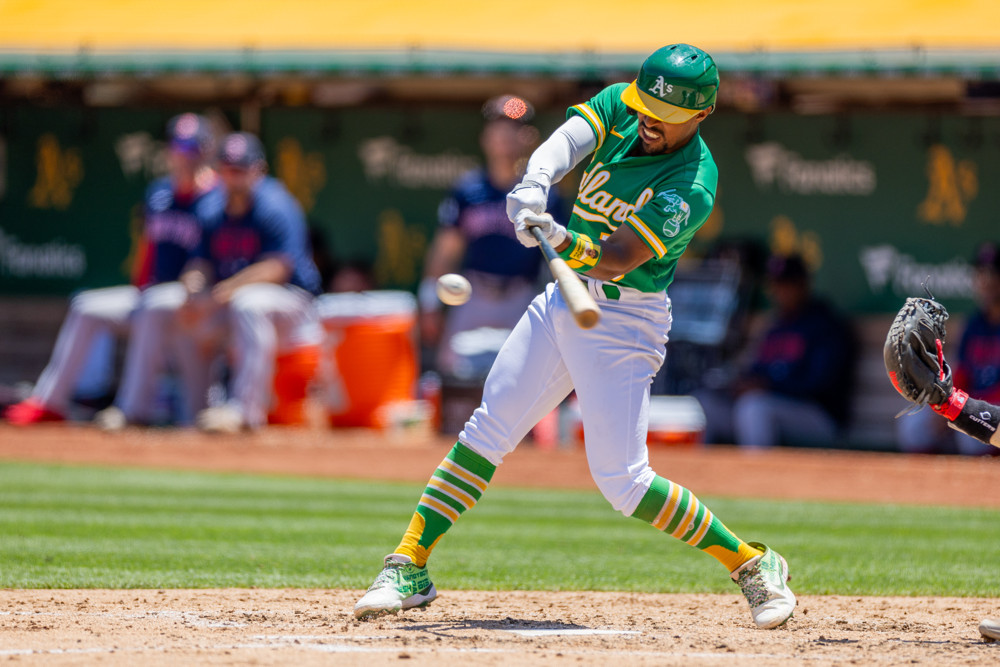
    Tony Kemp had a really, really rough go of it in 2023. Kemp, one of the veteran leaders of an Athletics team that lost 112 games, hit .209, slugged .304, and had a .607 OPS.

    But it probably shouldn’t have been anywhere near that bad.

    Last week, we explained how Luke Raley was 2023’s leading overachiever, posting an OPS 123 points higher than his expected OPS.

    Kemp was 2023’s leading underachiever. His .607 OPS was 136 points lower than his .743 expected OPS

    A brief point of explanation:

    Sports Info Solutions tracks its own version of a player’s expected stats (similar to what you can find on Baseball Savant). Rather than basing a player’s hit probability (and subsequently single, double, triple, and home run probability) on a batted ball’s exit velocity and launch angle, SIS’ version estimates probabilities based on where balls are hit, how hard they are hit, and how long they spend in the air.

    This allows us to compare a player’s actual stats to his expected stats.

    Here’s the list of players with the largest negative differential between their 2023 OPS and their expected OPS. This stat is the other end of the list that we presented last week.

    Biggest Negative Differential – 2023 OPS and Expected OPS

    Minimum 250 Plate Appearances in 2023

    Kemp’s ledger consists of a fair number of instances in which he hit a line drive that hung up long enough (for example: here and here). There were also some nice defensive plays both on fly balls and ground balls (here and here), and a couple instances of balls that hit the pitcher and caromed right to a fielder (here and here).

    There’s also an instance of losing a would-be hit to a force play (here). And, of course, he got bit by the abundance of foul territory in his home ballpark (though not often; only here).

    Here is what Kemp’s actual batting line looks like compared to his expected batting line.

    There is a huge difference between what Kemp was and what he could have been. By his performance, Kemp was one of the worst-performing hitters in baseball. By his expected performance, Kemp’s OPS would have been better than the average second baseman (.724) and almost a match for an average-hitting left fielder (.751).

    This graph shows the range of outcomes in expected BABIP differential and expected OPS differential. Kemp’s stats are outliers. They’re represented by the blue dot in the lower left of the graph.

    One more example on how Kemp’s hit total was less than expected: If you take all the batted balls he hit with an expected hit rate of between 20% and 60%, Kemp was expected to net 42 hits. He totaled only 26, a 16-hit difference.

    There are some prominent players among the others on the underachievers list. Among them is Vladimir Guerrero Jr. who hit .264 and slugged .444. His expected numbers would have made his season look a lot different. He tallied a .302 expected batting average and .507 expected slugging percentage.

    Guerrero Jr.’s loss of hits on those 20% to 60% balls isn’t quite as extreme as Kemp’s but was still prominent. He was expected to net 72 hits on those batted balls. He totaled 62.

    The usual disclaimer applies: We’re not necessarily saying that Kemp’s or Guerrero’s numbers will be better such as to make up for what happened in 2023 (though the Steamer projection on FanGraphs suggests a nice bounceback). We’re just pointing out that it would be difficult for an average player to put up Kemp’s line and Guerrero’s line, much like it would be tough to put up Raley’s overachieving line.

  • It’s Early … But A Few Thoughts on Team Defensive Runs Saved Leaders

    It’s Early … But A Few Thoughts on Team Defensive Runs Saved Leaders

    It’s early!

    We’ve heard and read a lot of references to Defensive Runs Saved in the first couple of weeks and that’s great. We appreciate our data being consumed.

    But looking at Defensive Runs Saved numbers now is kind of like looking at a hitter who is 15-for-45 or a team that is 9-6 to start the year. You hope it means something, and if the track record is good, you think it’s going to mean something, but you can’t attach much certainty to it.

    Nonetheless, the small sample size does give you at least a small indication of what did happen and from that, we can make a few observations.

    You can find the team leaders in Defensive Runs Saved here and the individual leaders here at FieldingBible.com.

    In the meantime, here’s a look at some of the top teams in the stat so far.

    Diamondbacks

    The Diamondbacks have been gobbling up ground balls and bunts at the highest rate of any team, 80.4% (the season leader usually ends up at 77-78%). Let’s not forget that they have two Fielding Bible Award winners out there in first baseman Christian Walker and shortstop Nick Ahmed and fellow shortstop Geraldo Perdomo is off to a good start.

    But it’s not just that.

    Arizona has not just run rampant on the bases (18-of-20 in stolen base attempts), it has shut down the opposing running game. Gabriel Moreno hasn’t hit, but he’s thrown out 4-of-7 attempted basestealers.

    Brewers

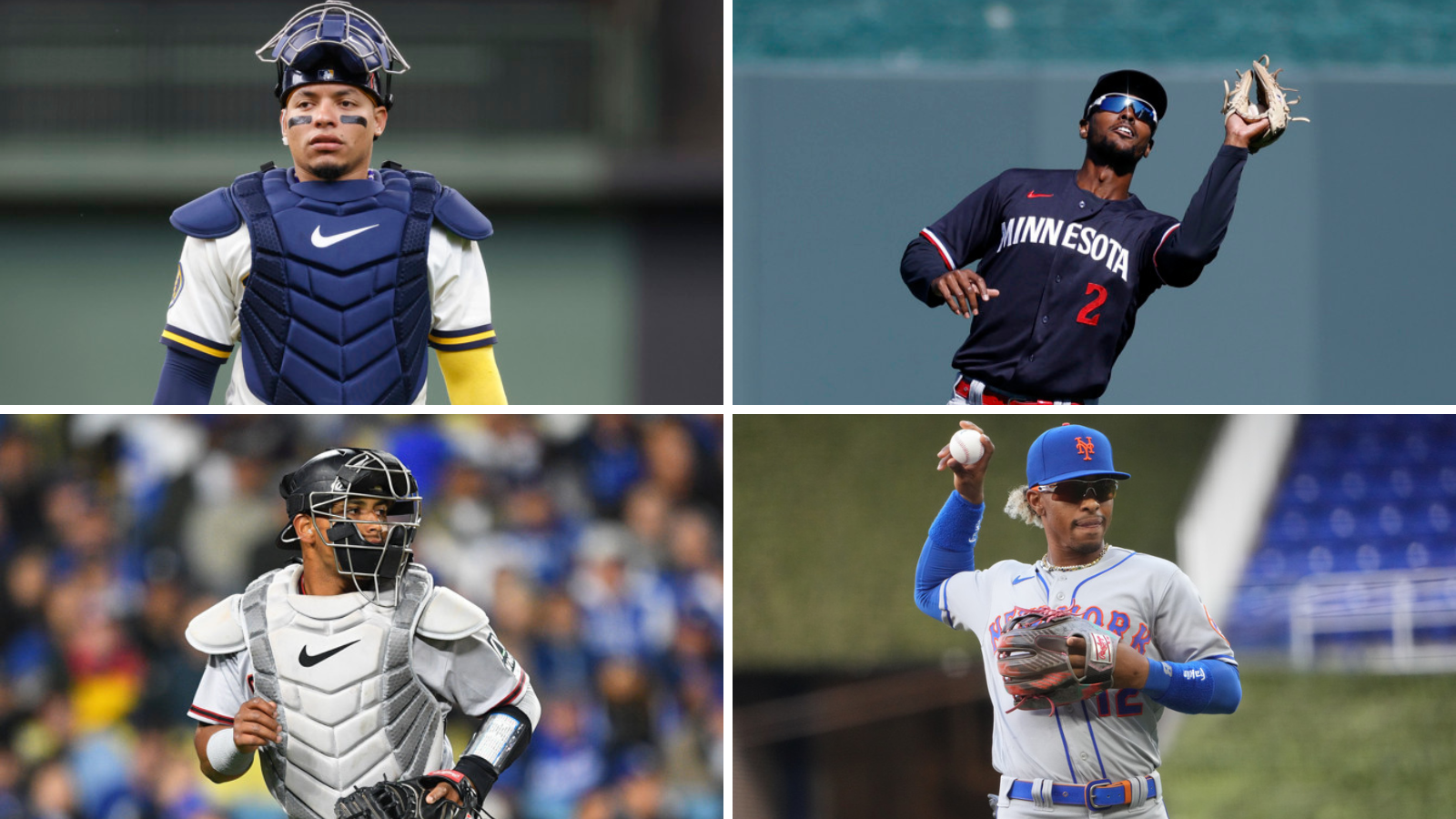
    A couple of things have happened here. For one, catcher William Contreras looks a lot better than he did the last two seasons, when he combined for -6 Strike Zone Runs Saved (our framing metric). He’s been stealing strikes very well so far.

    For another, the Brewers outfielders – specifically Joey Wiemer, Garrett Mitchell, and Christian Yelich – have made some nifty catches. Wiemer in particular has 5 Good Fielding Plays, 3 on catches, 2 on throws.

    Blue Jays

    Before the season started, we noted that the Blue Jays had an abundance of defensive talent, albeit aging defensive talent.

    Center fielder Kevin Kiermaier was one of those guys. He’s looked pretty spry, as has a younger guy, outfielder Daulton Varsho.

    And Vladimir Guerrero has shown that his improvements last season are no fluke.

    Twins

    There’s not a lot of flash or pizazz out there. The Twins have the fewest Good Fielding Plays in MLB. But they also have the lowest opponents’ batting average on balls in play.

    Twins outfielders have the best out rate on fly balls and line drives in MLB. They’ve caught what they’re supposed to and maybe a couple that they weren’t supposed to.

    Additionally, catcher Christian Vazquez came with a sterling defensive reputation and he hasn’t disappointed. Twins pitchers have a 2.20 ERA and a nearly 5-to-1 strikeout to walk ratio with Vazquez catching.

    Mets

    Defensive Runs Saved didn’t rate Francisco Lindor well last season, largely attributing that to how he fared when the Mets used a defensive shift.

    This year, with full shifts (3 infielders on the pull side of second base) abolished and the Mets using partial shifts (2 infielders moved distinctly from straight-up positioning) less often than they used any shift last season, Lindor has thrived. He’s made a host of good plays on ground balls and line drives.

    The Mets have turned grounders and bunts into outs at an 80.3% rate, which ranks 3rd in MLB, a smidge behind the Diamondbacks and Yankees.

    Yankees

    Speaking of ground ball defense, the Yankees are off to a great start after finishing second in ground ball and bunt out rate last season. As noted above, they rank second this year as well. Anthony Volpe has had a few bumps but has handled shortstop alright so far.

    At the corners, Anthony Rizzo has played his usual solid first base and displaced and maligned shortstop Isiah Kiner-Falefa has slid back to third base to fill in for Josh Donaldson’s injury without issue.

    Mariners

    If you had Teoscar Hernández as the Mariners’ best defensive player before the season started, congratulations. He’s never finished with a positive season in Defensive Runs Saved but is off to a great start this year and is basically the reason why we’re even acknowledging Seattle here. He’s already got an MLB-best 7 Good Fielding Plays (he totaled 10 last season) and has 3 assists without the cutoff man.

    As Mariners broadcaster Dave Sims says here, “Well done!”

    You’d like to believe that this is the start of a defensive renaissance for him but, as we noted it the beginning of the piece, it’s way too early to determine if that’s the case.


  • Vladimir Guerrero Jr. Has Found His Defensive Game

    Vladimir Guerrero Jr. Has Found His Defensive Game

    I will admit to some surprise when I looked at the list of Defensive Runs Saved leaders at first base.

    That Christian Walker of the Diamondbacks ranked first with 10 – and first by a wide margin – wasn’t what got me. It was that Vladimir Guerrero Jr. ranked No. 2. Better than Matt Olson, and Freddie Freeman, and Anthony Rizzo and many others (see the full list here)

    Yep, Guerrero has 6 Defensive Runs Saved at first base (he had -4 in 2020 and 2 in 2021). And there are a few things to point out about that.

    One is that Guerrero is pretty good at going to his right. The Blue Jays give him a lot of responsibility when a right-handed batter is up because of how aggressively they shift some of those hitters. Guerrero is often left to cover a wide swath of ground and he has been up to the challenge.


    And though some of his tosses to the pitcher covering may be a little askew, he does have a rifle arm when it’s needed.

    Over the last three seasons, Guerrero has converted 43% of opportunities on balls hit to his right into outs (he’s at a still-robust 40% this season). Only Walker (50%) and Evan White (44%) rank higher among first basemen among the 35 players with the most opportunities in that time.

    With as good as Guerrero was at going to his right, that came with meh numbers on ‘at-em balls’ and balls hit to his left. But this season, Guerrero has cleaned that up. He’s turned 45 of 47 opportunities on those balls into outs this season (96%). His success rate on them in 2020 and 2021 was 78%.

    While we can give Guerrero credit for good range, he’s also been much better at handling throws.

    In 2021, our Video Scouts charged Guerrero was 15 Defensive Misplays & Errors for failing to catch a throw from a teammate. In 2022, he has only 2 such Misplays & Errors.

    Part of that is that the Blue Jays are situated better, with Matt Chapman now regularly at third base and Bo Bichette’s throwing a little bit better than it was last season at shortstop.

    But that’s not to say that Vlad can’t pick it.


    We’ve credited Guerrero with 13 Good Fielding Plays related to catching throws – in line with the 19 he had last season – but without all those mistakes that brought down his and the Blue Jays’ defensive numbers.

    So yes, Guerrero hasn’t hit like he did last season, when he walloped 48 home runs and was an MVP candidate. But it does seem like – at age 23 – he’s still growing as a player – just in a little bit of a different way than you might have expected.