Author: Anthony Haage

  • Who Are The Frontrunners For NFL Protector Of The Year?

    Who Are The Frontrunners For NFL Protector Of The Year?

    Awards races are won and lost down the stretch, and that’s exactly where we are right now. Most people will be paying close attention to the MVP race, but there are plenty of other ones that deserve recognition as well. One of which is the NFL’s newest player award, the Protector of the Year.

    If you are tired of awards season being mostly about quarterbacks, then this is the award for you. Let’s take a look at our current frontrunners for the 2025 Protector of the Year, as well as some players who have been surprisingly good or bad. We’ll use a couple of metrics to compare different linemen, including our all-encompassing player value stat, Total Points (click the link to learn more).

    Total Points Leaderboard – Offensive Linemen

    Player Position Team Total Points Blown Block %
    Joe Thuney LG Bears 36 0.9%
    Darnell Wright RT Bears 34 2.2%
    David Edwards LG Bills 32 1.4%
    Penei Sewell RT Lions 32 1.4%
    Zach Frazier C Steelers 32 0.8%
    Drew Dalman C Bears 31 1.6%
    Creed Humphrey C Chiefs 30 0.6%
    Peter Skoronski LG Titans 30 1.2%
    Damien Lewis LG Panthers 30 1.5%
    Patrick Mekari RG Jaguars 29 2.0%

    For a little context on these metrics, let’s start with blown block rate. SIS charts blown blocks as cases where a defender physically beats a blocker and disrupts the play within a few seconds of the snap. The typical rate for a player might be 3-5 percent.

    Total Points takes blown block rate into account but also incorporates relevant details about the play beyond that. For rushing, we consider which blockers a run went behind and the balance of yards before and after contact. For passing, we consider the dropback type and how much time the quarterback had to operate.

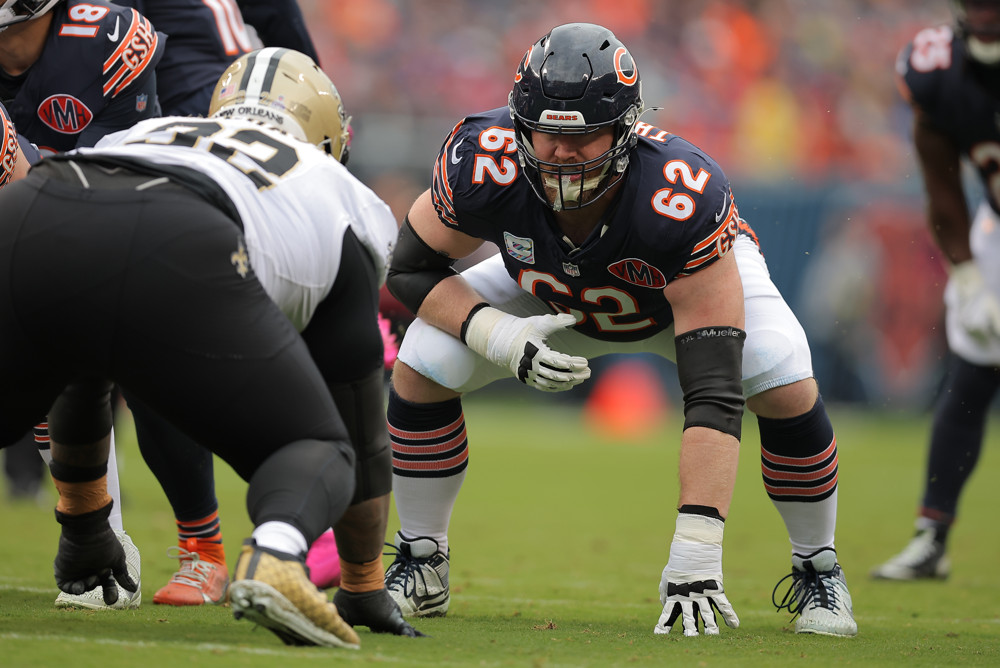
    Chicago’s offensive line has taken a massive step forward this season. Caleb Williams was sacked a league-leading 68 times in 2024, but his sack rate has dropped by more than half thanks in part to Joe Thuney, Darnell Wright, and Drew Dalman. Thuney is leading the pack in Total Points, and he doesn’t have any holding penalties on the year either. As a unit, the Bears also rank first in run blocking Total Points (105).

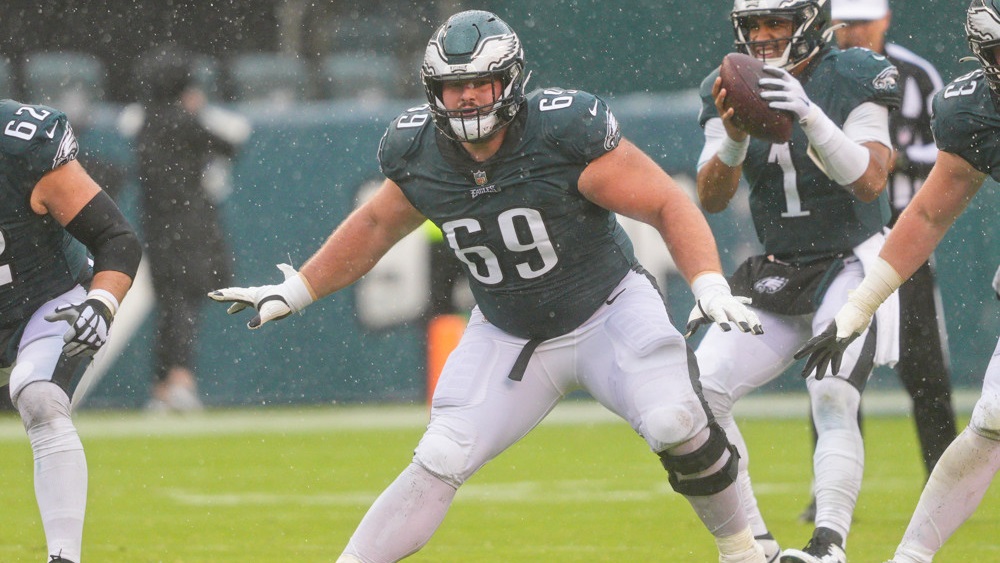
    Dion Dawkins was one of the biggest advocates for the Protector of the Year award, and his teammate David Edwards is a top candidate so far in 2025. Dawkins also ranks first among left tackles in Total Points, slightly ahead of Philadelphia’s Jordan Mailata.

    Penei Sewell is one of the best players in the NFL, regardless of position. It’s not a surprise that he’s one of the leaders after 14 weeks. Our very own Nathan Cooper picked him to win this year when I wrote about who would’ve won Protector of the Year in 2024, and he’s well within striking distance.

    Zach Frazier and Creed Humphrey have been two of the top centers in all of football this year. Frazier has the slight edge in Total Points, but Humphrey has the lowest blown block rate of all linemen. It’s worth noting that interior linemen tend to have lower blown block rates on average.

    Tennessee’s offensive line has struggled as a whole (28th in Total Points), but Peter Skoronski has been playing very well in his 3rd season. In fact, he’s at the top of the list for pass blocking Total Points. Having a young and talented left guard will do wonders for Cam Ward’s development.

    The Panthers rank 4th in run blocking Total Points (84), and Damien Lewis is a big reason why. He also has just 2 blown blocks on 418 pass blocking snaps. Lewis ranks 12th as a pass blocker and 19th as a run blocker across the league.

    Jacksonville is averaging 20 more rushing yards per game than they were last season. They have also already surpassed their run blocking total points with time to spare. Their right guard, Patrick Mekari, leads the unit in Total Points, and 4 of their 5 starters rank within the top 50.

    Landon Dickerson was the SIS-voted winner of the 2024 Protector of the Year, but he’s taken a step back in 2025. He has been dealing with several injuries this season, and his production has taken a hit.

    Predicting The Winner

    It’s shaping up to be a very close race for the inaugural Protector of the Year. Not only are there tons of offensive linemen having great seasons, we also don’t know how the committee is going to vote.

    The left tackle position is widely regarded as the most important, but does the committee think the same? If they do, perhaps they don’t think a left tackle is deserving simply due to the position he plays. It’s also incredibly difficult to compare the value of a guard or tackle on one side of the line to the other, in addition to the center position.

    Luckily for us, Total Points is an all-encompassing statistic that allows us to compare players that don’t play the same position.

    Joe Thuney is the current leader and has been a model of consistency throughout his career. He’s been a major reason why the Bears’ offensive line has significantly improved in both pass protection and run blocking. My prediction is for Thuney to win, but like I said earlier, awards are won and lost down the stretch.

  • 2025 SIS MAC All-Conference Team

    2025 SIS MAC All-Conference Team

    It’s been an exciting year for the MAC, and now it’s time to acknowledge the top players from the conference with the selection of our all-conference team. A number of different variables are taken into consideration, including our all-encompassing player value stat, Total Points.

    You can learn more about Total Points and the statistics referenced within this article here.

    We also use other metrics and our scouting work to accurately determine the most deserving players from the conference, and we also have some honorable mentions.

    Without further ado, here is the 2025 SIS MAC All-Conference Team.

    Offense

    Position Name School
    QB Parker Navarro Ohio
    RB Sieh Bangura Ohio
    WR Junior Vandeross III Toledo
    WR Kam Perry Miami-OH
    TE Decorion Temple Central Michigan
    FLEX Dontae McMillan Eastern Michigan
    OT Drew Terrill Miami-OH
    OT Nate Pabst Bowling Green
    OG Tyler Doty Buffalo
    OG Carter Fouty Toledo
    OC Anthony Boswell Toledo

    The Ohio backfield was the best in the MAC, led by quarterback Parker Navarro and running back Sieh Bangura. Navarro led the MAC in Total Points (117) across all positions, while Bangura (38) won a close race against Eastern Michigan’s Dontae McMillan (34).

    The Bobcats led all of college football in Total Points earned via rushing (108). Navarro was also the top rusher in Total Points, while Bangura led the MAC with 1,247 rushing yards and 14 touchdowns.

    Junior Vandeross III led the MAC with 75 receptions, 11 touchdowns, and 27 Total Points. Kam Perry was first in the conference in yards per route run (3.1), 1st down percentage (79.4%), and average depth of target (17.8).

    Tyler Doty ranked 3rd in the MAC with 792 snaps and had an elite blown block percentage of just 1.8%.

    Defense

    Position Name School
    DT Martez Poynter Toledo
    DT Julien Laventure Akron
    EDGE Adam Trick Miami-OH
    EDGE Nadame Tucker Western Michigan
    LB Gideon ESPN Lampron Bowling Green
    LB Red Murdock Buffalo
    CB Malcolm DeWalt IV Akron
    CB Andre Fuller Toledo
    S Eli Blakey Miami-OH
    S Emmanuel McNeil-Warren Toledo
    FLEX Corban Hondru Miami-OH

    Adam Trick was the top Total Points earners across all positions other than quarterbacks with 51. He was also the leader in pressures (76) and ranked 4th in combined sacks with 7 solos and 2 half-sacks.

    Nadame Tucker ranked first with 12 combined sacks (10 solos, 4 half sacks), and forced 3 fumbles. Gideon ESPN Lampron was the MAC leader in Points Saved (33) for run defense, and was tied for first with 17 tackles for loss.

    Red Murdock was the heart and soul of Buffalo’s defense. He was on the field for an incredible 816 snaps, which ranks 4th in all of college football. He led the MAC in assisted tackles (89) and forced fumbles (6).

    Eli Blakey was targeted 25 times and allowed only 7 completions for 69 yards all year.

    Specialists

    Position Name School
    K Dom Dzioban Miami-OH
    P Keegan Andrews UMass
    Returner Da’Realyst Clark Kent State

    Miami-Ohio’s Dom Dzioban was tied for first in the MAC with 19 field goals made, but was slightly more accurate than Jackson Kleather of Bowling Green with one fewer miss. He was 100% on his 33 extra points, and 1 of his 2 misses on the year was from 50+ yards.

    Keegan Andrews was tied for first in punts with 69, but led the MAC in punt yards, punt average, and punts inside the 20.

    Kent State’s Da’Realyst Clark was electrifying as a returner this year. He was the one of three players in all of NCAAF with multiple kick returns for touchdowns, alongside Chauncy Cobb of Arkansas State and Jadarian Price of Notre Dame.

    Honorable Mentions

    Name School
    S Jalen Thomeson Ohio
    QB Noah Kim Eastern Michigan
    WR Nik McMillan Buffalo
    LB Nathan Voorhis Ball State
    S Braden Awls Toledo
    QB Tucker Gleason Toledo

    There are a lot of other players who deserve recognition for their performances this year. Here are a few more players from the MAC who made our ‘Honorable Mention’ list.

    Jalen Thomeson ranked second among safeties in Points Saved, while adding 79 combined tackles, 5 tackles for loss, a forced fumble, and fumble recovery. Braden Awls, however, was the MAC leader in INTs (5) and didn’t allow a touchdown all year.

    Noah Kim led the MAC in pass attempts (402), completions (247), and yards (2,821). However, Toledo’s Tucker Gleason was the leader in passing touchdowns with 21. Nik McMillan was the MAC leader in receiving yards (983) and air yards (711).

    Rounding out our honorable mentions is Ball State’s Nathan Voorhis. He had 10.5 combined sacks, 15 tackles for loss, 2 forced fumbles, and 51 total pressures.

    Total Points, stats, and ranks as of 12/4/2025

  • The Best 4th Down Decision Maker is Still in Detroit

    The Best 4th Down Decision Maker is Still in Detroit

    The NFL is often referred to as a “copycat” league, and the trendsetter this time around is Dan Campbell. Campbell is not the NFL’s most recent head coaching hire, but his aggressiveness on 4th down is now catching on with the rest of the league. Turns out, it’s hard to stop a team when they are playing with four downs instead of three.

    Surprisingly, other NFL teams have been more efficient than the Lions, in addition to going for it more frequently. Does that mean Dan Campbell is no longer the King of Fourth Down? Let’s find out.

    Who’s the Best on 4th Down?

    When you remove 4th down tries with a less than 10% chance of winning, the Lions lead the NFL in attempts dating back to the beginning of last season with 39. They converted on 67% and their attempts averaged 2.7 eventual points on drives with a successful conversion.

    Despite its reputation, Detroit has not been the most efficient team in the league on 4th down. The Commanders have been especially impressive over the last season and a half. Let’s take a look at the top five most efficient teams on fourth down dating back to the start of 2024.

    Team 4th Down Attempts Avg Yards to Go 1st Down Rate Score Rate Eventual Drive Points
    Commanders 26 2.8 85% 77% 4.3
    Chiefs 30 1.7 77% 60% 2.9
    Eagles 37 3.1 73% 54% 2.8
    Bills 25 2.0 73% 54% 3.5
    Buccaneers 16 2.4 69% 63% 3.4

    Washington’s efficiency on 4th down has been remarkable, and the other teams in the top 5 are interesting as well. All of these teams have great quarterbacks that can get first downs in the air or on the ground.

    The Commanders, Bills, and Buccaneers have made the most of their successful 4th down conversions. They have the highest averages of eventual drive points across the NFL at 3.4 and above.

    The main takeaway here is that you’ll have a much better chance of converting on 4th down when you have a great quarterback. If you are a struggling team that doesn’t have a franchise guy under center, maybe it’s better to punt or take the points.

    Field Position Value

    Detroit’s 4th down reputation is also interesting when you take the field position into consideration. The Lions tend to go for it right around their opponents 29 yard line, which is tied for the second-closest average with the Texans, and slightly behind the Vikings. So the Lions aren’t necessarily a team that is making these big aggressive moves on their own side of the field, but are doing so in a more calculated manner when looking to score points. 

    Not only that, but Dan Campbell and the Lions understand that it’s more difficult for their opponents to score when they have to drive the length of the field.

    Across the NFL, teams averaged 1.7 points when the drive started at its own 30. That number jumps to 2.4 when they get to midfield, and again when they get to the opposing 35 (2.8).

    The Raiders have the highest average yards to the end zone at 46.4, and they’ve only converted on 47% of their tries (fourth-worst). So far in 2025, they have 7 attempts with a 52.4 average yards to the end zone, so they haven’t made any adjustments.

    A few other teams that play risky include the Cowboys, Cardinals, and Giants. They tend to go for it when they are roughly 42-43 yards from the end zone. New York has been the most successful (58% first down rate), but all three teams only scored on 43% or below of those drives.

    The difference between the Raiders and the Lions is that Detroit is going for it roughly 17 yards closer to the end zone. That 17 yards is worth more than one point on average per drive.

    Kicking Impact

    Kickers and punters play a massive role in every game, whether it’s field goals, extra points, kickoffs, or punts. Field goals get most of the attention because they directly add (or don’t add) 3 points to the score, but the other kicks are still impactful, just in more of an indirect way.

    Thanks to Ryan Rubinstein’s study of the NFL’s kickoff rule changes, we know that the average drive start is still around the 29 yard line in 2025. Touchbacks kicked into the end zone bring the ball out to the 35, but the increase in kick returns have kept the average drive start in the same range as last year.

    Another hot topic this year is the increased field goal distance, highlighted by Brandon Aubrey’s record of 5 60+ yard field goals. When you have a kicker with a range like Aubrey’s, it could impact your decision to go for it on 4th down. The decision could be either to go for it in your own territory to try and get within range, or kick it since you are already in it.

    It also helps to have a great punter that can pin the opposing team inside its own 15 yard line. The eventual net drive points from drives with 85 yards to go is an average of 1.1. It’s around 2.4 points when you are close to midfield, and around 3 points at the opponents 35 yard line.

    The current leader of punts inside the 20 and 10 yard lines is none other than the Detroit Lions’ punter, Jack Fox. Fox has 22 total punts on the year, with 13 ending up inside the 20, and 7 inside the 10.

    Dan Campbell’s Mastery of 4th Down Decisions

    Most people around the NFL will point to Dan Campbell and the Lions when it comes to the increase of 4th-down attempts across the NFL. That might make you think that they go for it all the time, which isn’t totally wrong, but it’s also not the entire truth.

    They are still the top team in 4th down attempts dating back to last season, but other teams have caught on.

    Detroit is not the leader in 4th down attempts in the early goings of 2025, and they aren’t the most efficient team either. The Chiefs lead the NFL in 4th down attempts prior to Week 8 with 14, while the Lions have 9. The Commanders have kept up their efficiency this year, converting on 80% of attempts, but they only have 5. The Chiefs converted on 79% of their league-leading attempts, and the Patriots have an 82% first down rate on their 11 tries. Detroit has picked up a first down 67% of the time, which is average compared to the rest of the league.

    Despite not being the league leader in attempts or conversions, the Lions are still making great decisions whether they convert or not. When they don’t go for it, they are pinning their opponent deep in their own territory, giving their defense more opportunities to get a stop.

    There are so many different variables in place when it comes to 4th downs, but if you’re doing it like Dan Campbell, you are doing it right.

  • World’s No. 1 QB Rankings 2025 – Do We Buy Bo Nix?

    World’s No. 1 QB Rankings 2025 – Do We Buy Bo Nix?

    In the 2024 NFL Draft quarterbacks went early and often, and it didn’t take long to find out why. We saw some impressive rookie campaigns last season and it’s clear that these quarterbacks have bright futures ahead.

    One of those quarterbacks is Bo Nix, who Denver took with the 12th overall pick a year ago. He was actually the sixth quarterback taken in the draft, behind Caleb Williams, Jayden Daniels, Drake Maye, Michael Penix Jr., and J.J. McCarthy.

    Nix went on to finish third in NFL Offensive Rookie of the Year voting, but how much did his play justify that?

    Well, by our World’s No. 1 Quarterback Rankings methodology, he’s pretty much arrived.

    The World’s No. 1 Quarterback Ranking uses our player value stat, Total Points, to make a cumulative evaluation of game performance over a three-year period. The key to our calculation is Points Above Average (PAA), the statistical underpinning of Total Points that is centered at zero so that positive numbers are above average and negative numbers are below average.

    Success over time is key to maintaining a good ranking. Prolonged inactivity results in a ranking drop. The most recent performances carry the most weight.

    Here are the rankings heading into 2025, grouped into tiers:

    Tier 1

    1. Lamar Jackson

    Tier 2

    2. Josh Allen

    3. Joe Burrow

    Tier 3

    4. Jayden Daniels

    Tier 4

    5. Justin Herbert

    6. Patrick Mahomes

    Tier 5

    7. Bo Nix

    8. Jordan Love

    Tier 6

    9. Jared Goff

    10. Baker Mayfield

    You might be able to quibble with the order of some of these names, but the inclusion of Nix here is the most surprising thing. Is that a reasonable assessment of his value?

    Nix’s Rookie Season Stats and Analysis

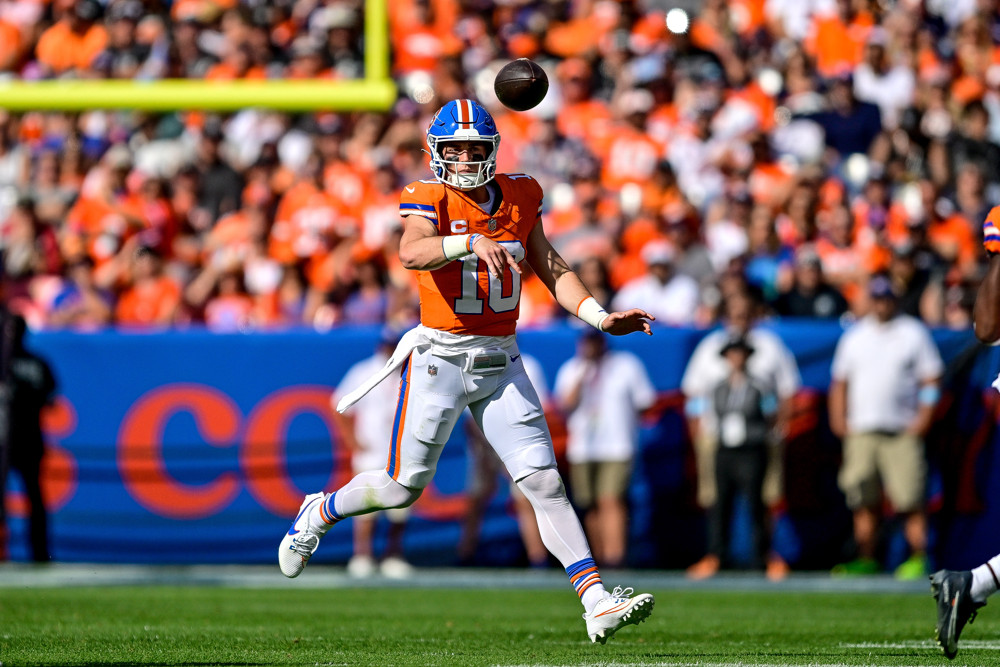
    The Broncos’ quarterback had some solid counting stats last season, especially his 29 passing touchdowns.

    He also proved he can make plays happen with his legs, picking up 41 first downs by rushing, which ranked 29th among all players, not just quarterbacks.

    Counting stats move the needle for awards voting, but by taking a closer look at Nix’s Total Points and other advanced metrics, we can get a better idea of just how good he was last season.

    First, let’s take a look at some general advanced statistics, with Nix’s rank among the 46 quarterbacks with at least 100 attempts:

    Stat Value QB Rank
    Passing Total Points Per Play 0.166 9th
    Positive Play % 48% T-20th
    Boom % 25% 26th
    Bust % 19% 20th

    * Boom and Bust Rate are the rate of plays gaining or losing at least one EPA, respectively.

    Nix was 9th in Total Points Per Play last season, but he wasn’t particularly consistent, and he wasn’t frequently making splash plays either. You would think that a good quarterback would fit into at least one of these categories, but Nix didn’t last season.

    So why did Nix rank so highly in terms of Total Points? Well for that, we have to dig a little deeper.

    Pass Attempts

    Nix’s average throw depth was 7.3 yards last season, which ranked 27th among QBs. A big reason for this was the number of screens he threw (90, 3rd-most). On non-screen passes, Nix’s average throw depth was 9.7 (tied for 15th).

    There was a solid effort for big plays in Denver, the Broncos just struggled to convert on them. In fact, Nix was 5th in Intended Air Yards, but he ranked a lot lower in completed Air Yards at 17th. Broncos receivers had the fifth-most targets of at least 20 yards, but they posted a 10.3% drop rate (7th-worst). Total Points gives Nix credit for being aggressive downfield, and those drops get credited to him as though they were completed. But he was below average in how often he delivered an accurate throw on those deep targets.

    And finally, his completion percentage was right in the middle of the pack (66%), and his catchable pass percentage was tied for 21st (85%).

    Sack and Turnover Avoidance

    Young quarterbacks tend to struggle with pressures, sacks, and turnovers. Caleb Williams, Drake Maye, and Jayden Daniels all had a sack rate at or above 7.8%, which ranks 34th or worst among quarterbacks.

    This is an area where Nix shined. His sack rate was 3.8%, which was 5th-best in the NFL. He threw 12 interceptions, but he did not lose any fumbles on the year.

    Sacks are drive killers, and they hurt most quarterbacks more than Nix last year. If you exclude sacks from the ledger of every quarterback, Nix’s rank in Passing Total Points per play drops from 9th to 20th.

    Nix is a tough player to sack, despite not forcing a lot of broken or missed tackles like Daniels and Williams. Instead, Nix would find a way to gain positive yardage on a scramble, rather than take a drive-killing sack. He had 49 scrambles last season, which was second-most in the NFL (Daniels had 72). Nix was also the league leader in pass attempts on designed rollouts (65). Combine these with the high amount of screen passes, and you have a good idea of how Denver kept Nix on his feet last season.

    Looking Ahead to 2025

    Is there a sophomore slump in store for Bo Nix in 2025? He still has Sean Payton calling the plays, a stellar offensive line, and some new pass catchers to throw to as well. They got a big upgrade at tight end when they signed Evan Engram, and they drafted Pat Bryant in the third round of the 2025 NFL Draft as well.

    Marvin Mims made some big plays in the second half of last season, and Troy Franklin is also entering Year 2. Denver also added J.K. Dobbins and RJ Harvey in the backfield, which will make defenses have to respect the run.

    One thing Nix will have to deal with this year is that opposing defenses now have a year’s worth of film on him. Screens and designed rollouts can only get you so far. Nix is going to have to prove he can make throws in the pocket and to all three levels of the field.

    Is Bo Nix a Top 10 Quarterback?

    Bo Nix was the 6th QB taken in the draft just a year ago, but are the teams who passed on him already regretting their decision?

    Our advanced metrics show that Nix has desirable traits that Sean Payton’s offensive scheme can take advantage of. However, there are some underlying statistics that make it difficult to rate him as a top 10 quarterback already.

    If you remove screens, Bo Nix drops from 6th to 11th in passing Total Points. He’s willing to push the ball downfield, but he’s not particularly strong at it. From a rushing perspective, he’s got enough mobility to extend plays and scramble for additional yardage, but he’s not evading tackles at an elite rate. That very low sack rate might not hold up.

    Nix could have a very solid career as an NFL quarterback, but let’s not rush to place MVP bets on him just yet.

  • Who would have won NFL Protector of the Year in 2024?

    Who would have won NFL Protector of the Year in 2024?

    Photo: Andy Lewis/Icon Sportswire

    When talking about the NFL’s biggest superstars, it’s almost always quarterbacks and skill players that are in the discussion. Patrick Mahomes, Josh Allen, Saquon Barkley, Ja’Marr Chase, and others are frequently brought up, as they should be, but they also overshadow other great players. With the NFL’s introduction of the Protector of the Year award, one of the league’s most underappreciated position groups will be getting more of the spotlight.

    Advocates, Panel, and Criteria

    There are a few people who deserve special recognition for creating an award that honors offensive linemen. Troy Vincent, the NFL’s executive vice president of football operations said Dion Dawkins and Andrew Whitworth were “truly instrumental” in putting things into motion.

    Whitworth was a Super Bowl champion, Walter Payton NFL Man of the Year, multi-time All-Pro and Pro Bowler, and had two of the best seasons for left tackles in terms of Blocking Total Points since we began charting in 2016. His 2021 season (41 Total Points) ranks 1st since then, while his 2019 season (40 Total Points) ranks 3rd.

    Whitworth will be on the voting panel for the Protector of the Year, alongside Jason Kelce, Orlando Pace, Will Shields, Shaun O’Hara, and LeCharles Bentley. Kelce’s 2022 season was legendary by SIS standards. He recorded 49 Blocking Total Points, which is our highest single-season total, regardless of position.

    The criteria that these NFL legends will use to vote includes “skills, metrics, impact, leadership, durability, and strength of opponent.” It will be especially interesting to see how they measure positional impact, given that they have more former interior offensive linemen (Kelce, Shields, O’Hara, Bentley) than tackles (Whitworth, Pace) on the panel.

    Dion Dawkins, who heavily advocated for the award to be created, is coming off a terrific season himself. He ranked 4th among all offensive linemen in Total Points (38) last season but was first for left tackles specifically. Josh Allen’s blind-side protector is coming off his fourth consecutive Pro Bowl season, and he was also on the 2024 SIS NFL All-Pro Second Team.

    How SIS Evaluates Offensive Linemen

    SIS has tracked every NFL play from every game since 2015, which allows us to capture a wide variety of data points for every position. For offensive linemen, we chart everything from simple stats (games played, holds, false starts, pass/run blocking snaps) and that, along with play results, allows us to calculate more advanced data (blown block percentage, Total Points, stats when run behind, etc.).

    Our most useful statistic is Total Points, which is essentially an all-encompassing data point.  Using Total Points, we can easily compare different players to see who was worth more over the course of a season.

    For offensive lineman, we can look at how many Blocking Total Points a player has earned overall, or we can break it down into run plays or pass plays. In the run game, most of the evaluation comes from yards-before-contact performance above expectation, giving the most responsibility to the blockers at the point of attack. In the pass game, the ability to sustain blocks given the depth of the quarterback’s drop is key. In both cases we leverage our blown block charting heavily, because blown blocks are drive-killers.

    The panel is going to use a number of different factors to determine the winner of the Protector of the Year award. Total Points is well-suited to measuring two of these in particular, metrics and durability.

    Who Would Have Won in 2024?

    The first Protector of the Year is still a few months away, but luckily, we have Total Points data that goes all the way back to 2016. If we take a look at last year specifically, we can make an educated guess on who might have won in 2024.

    Here are the top 10 offensive linemen from last season in terms of Total Points, along with their position, team, and blown block percentage:

    Player Position Team Total Points Blown Block %
    Landon Dickerson LG Eagles 40 1.2%
    Hjalte Froholdt C Cardinals 40 1.2%
    Kevin Zeitler RG Lions 39 1.1%
    Dion Dawkins LT Bills 38 2.1%
    Brian O’Neill RT Vikings 38 1.9%
    Quinn Meinerz RG Broncos 37 1.6%
    Jake Brendel C 49ers 37 1.4%
    Joel Bitonio LG Browns 37 2.2%
    Aaron Brewer C Dolphins 36 1.6%
    Tristan Wirfs LT Buccaneers 35 1.7%

    As you can see, Landon Dickerson and Hjalte Froholdt were our top-rated offensive lineman from 2024. Dickerson gets the slight edge due to rounding his Total Points down to 40, while Froholdt rounded up. Either way, both players rank within the top 25 of single-season Total Points earners since 2016.

    Joel Bitonio was the top pass blocker (26 Total Points), while Dickerson was the top run blocker (26 Total Points).

    Kevin Zeitler had the lowest blown block percentage from this list at 1.1%, with just 11 total on the year. Erik McCoy only had 1 blown block on the season (0.4% blown block percentage), but only played 276 snaps compared to Zeitler’s 1,007. Given that the panelists want to reward durability, McCoy wouldn’t have qualified.

    For some perspective, Patriots’ right tackle Demontrey Jacobs was one of the worst performers in this category. He led the NFL with 53 blown blocks (6.6% blown block percentage), despite playing in 15 of 17 games.

    Falcons C Drew Dalman was the leader in Total Points per game (2.7), but he only played 525 snaps. Dickerson and Dawkins both played at least 897 snaps and had the same Total Points per game (2.6).

    Since we already have the data, our staff went ahead and voted on a 2024 Protector of the Year:

    Staff Picks

    Name 2024 Protector of the Year Pick
    Anthony Haage Landon Dickerson
    Jordan Edwards Landon Dickerson
    Conner Hrabal Hjalte Froholdt
    Jeremy Percy Dion Dawkins
    Jeff Dean Landon Dickerson
    Nathan Cooper Landon Dickerson

    Dickerson got 4 of the 6 votes from our football operations crew, which rewarded him for outstanding run blocking for a Super Bowl winner.

    Who Will Win the First Ever Protector of the Year?

    Looking ahead to 2025, our staff have made their predictions for the first ever Protector of the Year. Six voters picked five different players, so it’s fair to say the race is wide open.

    Staff Picks

    Name 2025 Protector of the Year Prediction
    Anthony Haage Dion Dawkins
    Jordan Edwards Tristan Wirfs
    Conner Hrabal Christian Darrisaw
    Jeremy Percy Lane Johnson
    Jeff Dean Christian Darrisaw
    Nathan Cooper Penei Sewell


  • How Does Omarion Hampton Fit With The San Diego Chargers?

    How Does Omarion Hampton Fit With The San Diego Chargers?

    Jim Harbaugh’s first season as the Chargers’ head coach featured a lot of smashmouth football on offense. They are looking to take a step forward in Year 2, and their first-round pick in the 2025 NFL Draft, running back Omarion Hampton, will help them do exactly that.

    What Hampton Brings to the Table

    Hampton has the skills to be a star at the next level. Jeremy Percy’s scouting report highlighted his contact balance, big-play ability, and attitude with the ball. He has true three-down potential due to his ability as a rusher, receiver, and pass blocker.

    In 2024, Hampton ranked second in rushing yards per game (138.3), which only trailed Ashton Jeanty’s otherworldly average (185.8). He was also one of three college running backs who had over 1,000 yards after contact last season (Jeanty, Cam Skattebo). The 22-year-old forced a broken or missed tackle on 26.3% of his attempts from last season, which ranked 6th among the nation’s top rushers (minimum 200 carries).

    In the passing game, Hampton ranked 11th in yardage among RBs with 363. He was 4th in terms of Total Points (16.5), and 13th in yards per target (8.3). These numbers were especially impressive considering he caught most of his passes behind the line of scrimmage (-2.2 Average Depth of Target, 2nd-lowest).

    Overall, Hampton has the skillset to be a three-down back with the Chargers.

    Analyzing the Chargers’ Rushing Attack

    The Chargers put a major emphasis on their rushing attack last season, and it started when they hired Greg Roman as their offensive coordinator. Most NFL teams are running ‘11’ personnel, which means 1 running back, 1 tight end, and 3 wide receivers. Los Angeles went in the other direction, using more ‘21’ and ‘22’ personnel.

    They ran 21p on 17% of plays (4th-most), and 22p on 13% of plays (2nd-most). Despite their efforts, they had mediocre results in these heavy packages. Los Angeles ranked 20th in success rate out of 21p, and 13th out of 22p.

    From a schematic standpoint, the Chargers leaned more towards man/gap blocking schemes over zone. They ranked 5th in usage for gap runs, but 24th in success rate. For zone runs, they ranked 27th in usage, and 31st in success rate.

    The run-first offense didn’t result in elite offensive output for the Chargers last season. They are hoping that by bringing in a potential star running back like Hampton can take them to the next level.

    How Should the Chargers Use Hampton?

    Hampton figures to play a healthy amount in his rookie season, even with the Chargers adding Najee Harris to the mix on a one-year deal worth up to $9.25 million. The other running backs on their roster include Hassan Haskins, Kimani Vidal, Jaret Patterson, and Raheim Sanders. In terms of Total Points for running backs, Harris ranked 7th as a rusher and 20th as a receiver last season.

    Los Angeles has two running backs in Harris and Hampton that are capable of playing on all three downs. This should keep both running backs relatively fresh, or the Chargers can do the ‘ride the hot hand’ approach. Harris might get more work this season since he has more NFL experience and is on the one-year deal, but Hampton is the clear running back of the future and could get the lead role if Harris fails to impress.

    The Chargers had a diverse rushing approach last season, with 55% of their runs being zone schemes, and 44% being man/gap. Their zone-run success rate was just 34%, which was second-worst in the NFL. North Carolina had a zone-heavy rushing scheme (82% of runs) and had a higher success rate at 47%. Hampton’s effectiveness and experience in a zone-heavy scheme should give the Chargers a boost.

    Another area that Hampton might have some influence in on screens. The Chargers ran the 4th-fewest screens in 2024 (43), while Hampton led all NCAA receivers by a wide margin with 10 Total Points off screen passes.

    Is Hampton a Good Fit for Los Angeles?

    A successful rushing attack requires above-average play out of your offensive line, quarterback, and running back. The Los Angeles Chargers are hoping that they added the final piece to their puzzle with Omarion Hampton.

    Their offensive scheme last season was mainly under-center, man/gap run schemes, with play-action. Hampton is coming out of an offense that ran a lot of inside/outside zone out of shotgun, so the Chargers would be wise to diversify their rushing gameplan. Not only that, but Hampton’s impact on screens should have Los Angeles running more of those in 2025 as well.

    Overall, Hampton is a great fit for the Chargers’ offensive plan-of-attack.

  • How Malaki Starks Fits With The Baltimore Ravens

    How Malaki Starks Fits With The Baltimore Ravens

    Photo: Jeffrey Vest/Icon Sportswire

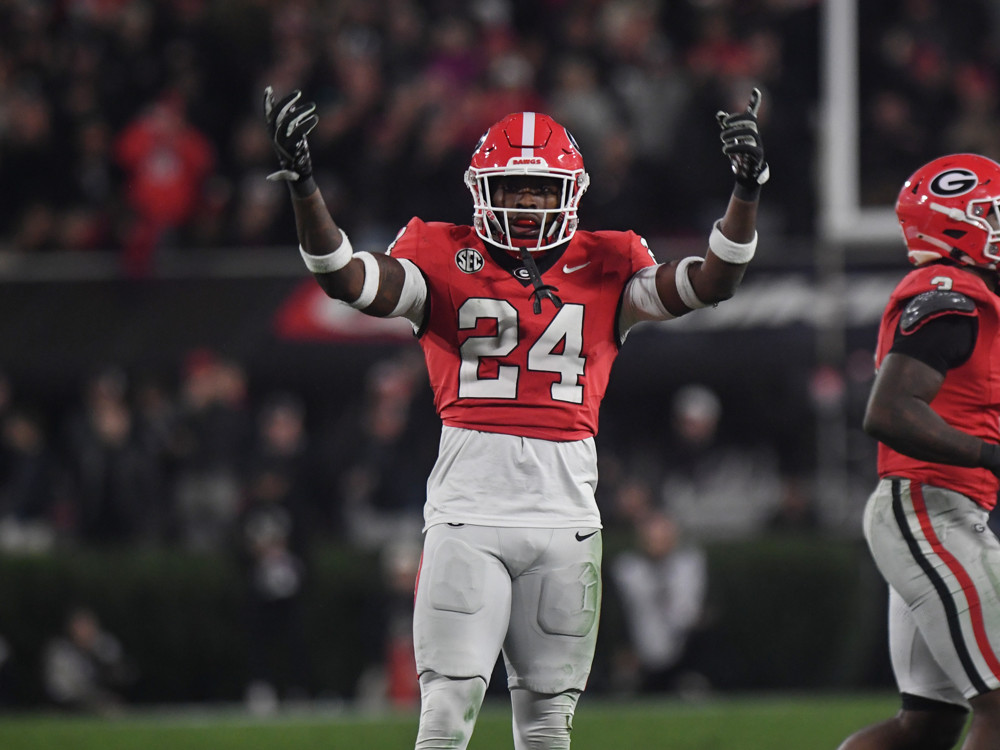
    Malaki Starks was a player that had a wide range of possible outcomes coming into the 2025 NFL Draft. Some mock drafts had him going around the top 10, while others had him going towards the end of the first round. Eventually, the Baltimore Ravens scooped him up with the 27th overall pick, and he should make an immediate impact in their secondary.

    Let’s take a look at how the former Georgia Bulldog will fit in with his new team.

    Starks’ Strengths and Weaknesses

    Malaki Starks is an incredibly well-rounded player who can help out the Ravens’ defense in a variety of ways. Nathan Cooper’s scouting report of Starks highlights his 3-level impact, FBI/instincts, ball skills, zone coverage, and more. He will create headaches for opposing quarterbacks in coverage, and he’s also an aggressive run defender.

    Starks is not an outlier in terms of size and speed, and he also lacks consistency as a tackler. He’s not as reliable in man coverage as he is in zone either, but he’s adequate enough to get the job done.

    Overall, Starks does have the skills to be a playmaker in the secondary for Baltimore.

    Baltimore Ravens’ Team Needs

    The selection of Starks got even more important after the NFL Draft. Unfortunately, Baltimore’s starting free safety from last year, Ar’Darius Washington, suffered a torn Achilles while conditioning for the upcoming season. Although he plans to make a comeback later in the season, this is still a huge blow to the Ravens’ secondary.

    Washington’s injury happened after the NFL Draft, so why did free safety feel like a position of need for Baltimore before then? The main reason is because the Ravens use Nickel (5 DBs) and Dime (6 DBs) personnel at a very high rate. Baltimore mainly used a 3-3-5 personnel last season, which accounted for 37% of its defensive snaps (3rd-most). The Ravens also ranked 4th in Dime usage.

    In addition to safety, Baltimore needed to address its offensive line, defensive line, and interior linebackers in the draft. After drafting Starks, the Ravens also took edge rusher Mike Green (59th overall), offensive tackle Emery Jones Jr. (91st overall), and linebacker Teddye Buchanan (129th overall).

    The Ravens did a good job addressing their needs with their first four selections. However, they were not one of the top teams when it came to our 2025 SIS NFL Draft Grades.

    How Should the Ravens Use Starks?

    The injury to Ar’Darius Washington essentially makes Malaki Starks the starting free safety immediately. Prior to the injury, it might’ve been a positional battle between the two players, but that’s not the case anymore.

    Starks has the ability to play in both one-high and two-high safety schemes, but there should be a preference for the latter. The decision to draft Starks makes sense because the Ravens played out of two-high looks on 62% of snaps last season (7th-most).

    Starks is an incredibly smart player, which will allow him and Kyle Hamilton to disguise coverages and confuse opposing quarterbacks. Last season, Baltimore mainly played in two-high looks, but used Cover 1 or 3 on 52% of snaps (6th-highest). This means the defense likes to give a two-high shell look before they rotate into a coverage that the quarterback might not be expecting.

    Baltimore allowed 264 passing yards per game last year, which ranked 3rd-worst in the NFL. Adding Starks to the mix will give the Ravens a better chance to shut down opposing aerial attacks. Starks will also get some reps in the slot, as a blitzer, and in the box, but Kyle Hamilton will get more work in these areas between the two Ravens’ safeties.

    Is Starks a Good Fit in Baltimore?

    The Ravens were already an elite team heading into the draft, which is why they had the 27th overall pick in the first place. However, they still had areas of need: offensive line, defensive line, and inside linebacker. Instead of drafting one of those positions with their first-round pick, they opted to take Starks.

    Baltimore’s heavy use of Nickel and Dime personnel, as well as two-high shells, requires smart, physical, and instinctive players. Starks has the exact traits that fit the Ravens’ scheme and the injury to Ar’Darius Washington only makes him more important to their roster.

    It’s clear that the Ravens want to improve their pass defense from last season, and Starks will help them do exactly that. The real question is, will it be enough to help take the Ravens to the Super Bowl?

  • Should Brock Purdy be NFL MVP? He’s Good But Not That Good

    Should Brock Purdy be NFL MVP? He’s Good But Not That Good

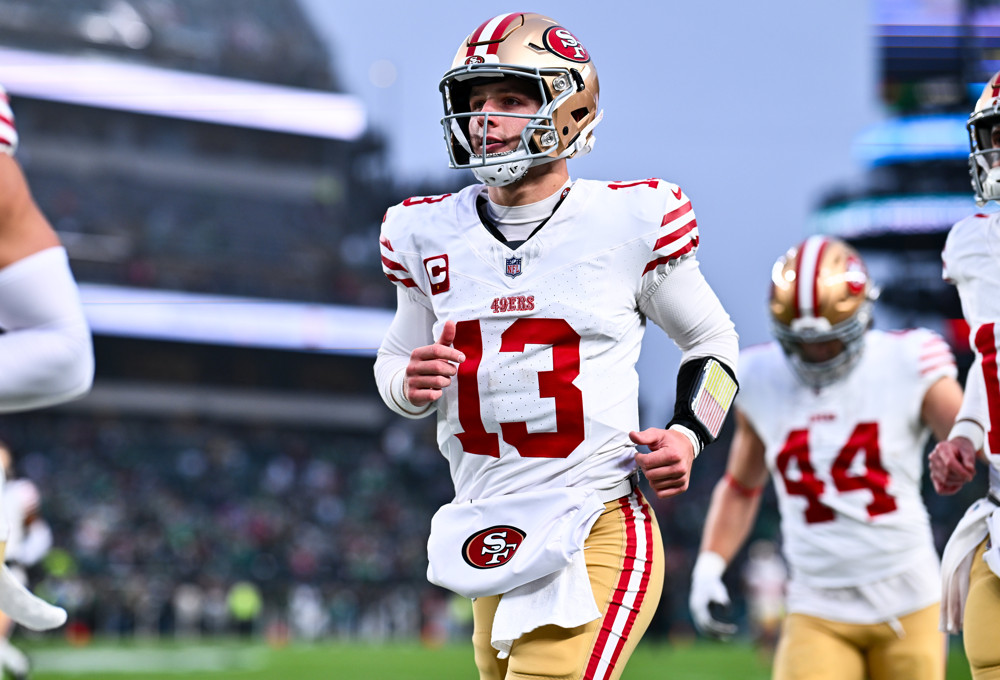
    It was unclear what the 49ers were going to do with Trey Lance prior to the season start, but they gave Brock Purdy a vote of confidence when they traded the former No. 3 overall pick to the Dallas Cowboys back in August.

    Fast forward to now, this turned out to be the right decision for the 49ers. Purdy has put up some impressive numbers and the 49ers have one of the best records in the NFL. The soon-to-be 24-year-old has put himself on the map, to say the least.

    In fact, he’s the betting favorite to win the NFL’s Most Valuable Player award. We still have a long way to go before the winner is announced, but it’s currently Purdy’s to lose.

    The real question is, would he deserve this honor? He’s been playing well enough to at least be in the MVP conversation, but are we sure that he is worthy enough to win and not some industry plant by the oddsmakers?

    As discussed in the latest episode of the Off the Charts Football Podcast, you can make the argument that he’s not even the most valuable player on his own team. It would be a disservice to give the award to Purdy when players like Trent Williams and Christian McCaffrey deserve recognition as well.

    Not only that, but Kyle Shanahan is one of the best offensive minds in the league. His play designs are so good that all Purdy pretty much has to do is not screw it up. When the play doesn’t go as designed, it’s typically McCaffrey, Brandon Aiyuk, Deebo Samuel, or George Kittle who picks up the slack.

    The 49ers rank as the number one team in receiving Total Points (105), our best measure of the pass catchers’ value alone, by a wide margin. That dynamic quartet deserves the most recognition for the team’s production, not Purdy exclusively.

    Also, Williams missed Weeks 7 and 8 for the 49ers and they ended up losing both games to the then 2-4 Vikings and 3-3 Bengals, respectively.

    San Francisco doesn’t have a great record solely because of its offense either. The 49ers’ defense ranks best in points allowed per game (15.8). It’s a lot easier to win in the NFL when you only have to muster up 16 points each week.

    For every statistical category that Purdy is excelling in, there appears to be one that offsets it.

    Category Purdy’s 2023 Stats NFL Rank
    Completion % 70.2% 1st
    On-Target % 75.3% 11th
    Adjusted Net Yards Per Attempt 9.9 1st
    Average Throw Depth 8.0 8th (tied)
    Passing EPA 93.7 1st (by a mile)
    Passing Total Points 100.3 5th

    Purdy is the league leader in completion percentage, ANY/A, and EPA. However, he ranks a little lower when it comes to on-target percentage, average throw depth, and Total Points.

    The latter statistics separate the quarterback from his receivers more than the former group. He rates well, but maybe not MVP level.

    In the end, the MVP award would need to be renamed if Purdy were to win. If you were to take Purdy out of the 49ers’ lineup and insert a replacement-level quarterback, this team is probably still a strong contender.

    I challenge you to apply that same way of thinking to the Chiefs, Cowboys, and even the Texans (and we’ve got an article coming about Dak Prescott). Their quarterbacks do a lot more for their teams with less supporting talent. They are players you win because of, not players you simply win with.

    Purdy is having a great year, but I wouldn’t say he’s the main reason for San Francisco’s success. The MVP award should be given to a player who carries his team to victory, not one whose teammates and coach are giving him a boost.