Category: Defense

  • Stat of the Week: 2024’s NL Defensive Stories

    Stat of the Week: 2024’s NL Defensive Stories

    BY MARK SIMON

    With Opening Day approaching, we wanted to preview the 2024 season from a defensive perspective. So to be fair to all 30 teams, we’ve got a stat-driven theme or story to watch for each team. Here’s our look at the National League teams after we did our tour through the American League last week.

    Braves – The Braves were generally average or better through much of their defensive lineup last season. The big exception was shortstop, where Orlando Arcia and Vaughn Grissom didn’t do well. Arcia had -6 Runs Saved last season due to poor range numbers. He is back for another go and looking to return to the form he showed in 2018 when he totaled 8 Runs Saved.

    Brewers – The Brewers ranked 2nd in MLB in Defensive Runs Saved last season but they’ve got some unknowns on this year’s roster with Jackson Chourio in right field and Joey Ortiz at third base. Last year’s Brewers rookies played very well (Brice Turang, Joey Wiemer, Blake Perkins) and the defensive success of this year’s team may hinge on their young players again.

    CardinalsNolan Arenado went from overwhelmingly awesome to decidedly average at third base overnight (from 20 Runs Saved in 2022 to 0 in 2023). So the big question this season is whether he can return to the standard-setting level of excellence of years past.

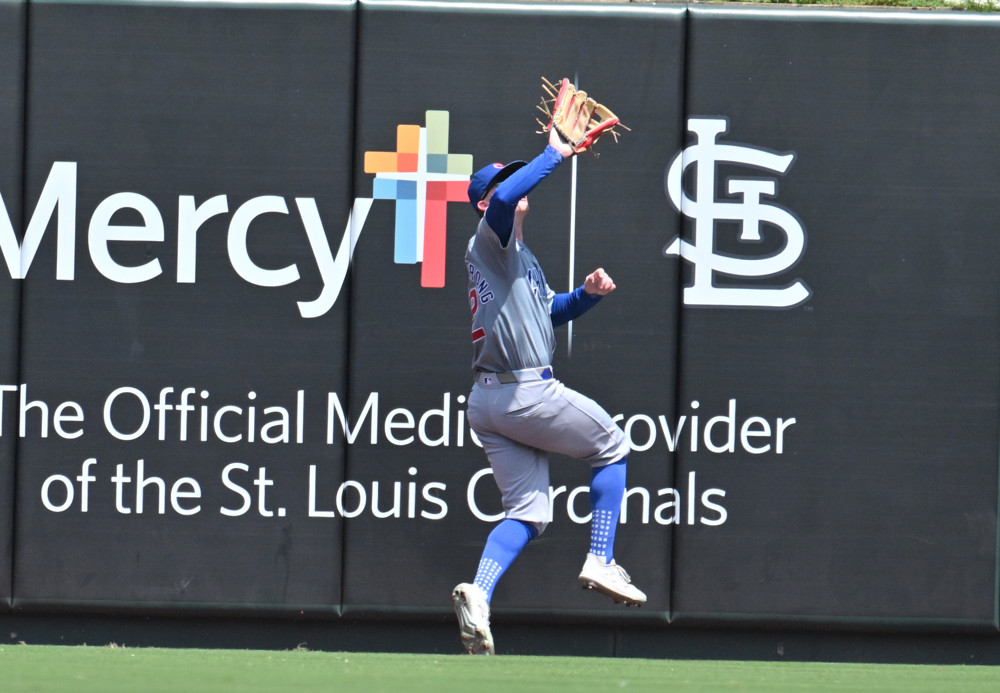
    Cubs – The Cubs have the best double play combination in baseball with shortstop Dansby Swanson and second baseman Nico Hoerner. Given that they also have two-time Gold Glove winner Ian Happ in left field, Mike Tauchman and Cody Bellinger in center field, with Bellinger likely also at first base, the Cubs could be pretty good defensively. They finished tied for 8th in Defensive Runs Saved last season and could better that.

    Diamondbacks – It’s reasonable to suggest that the Diamondbacks are the NL’s best defensive team. They finished 4th in Defensive Runs Saved last year and have very good defenders at catcher (Gabriel Moreno), first base (Christian Walker), and center field (Alek Thomas). Shortstop and third base may determine whether that suggestion becomes reality. Runs Saved has not viewed Geraldo Perdomo or Eugenio Suárez favorably, so those are the positions to watch entering 2024.

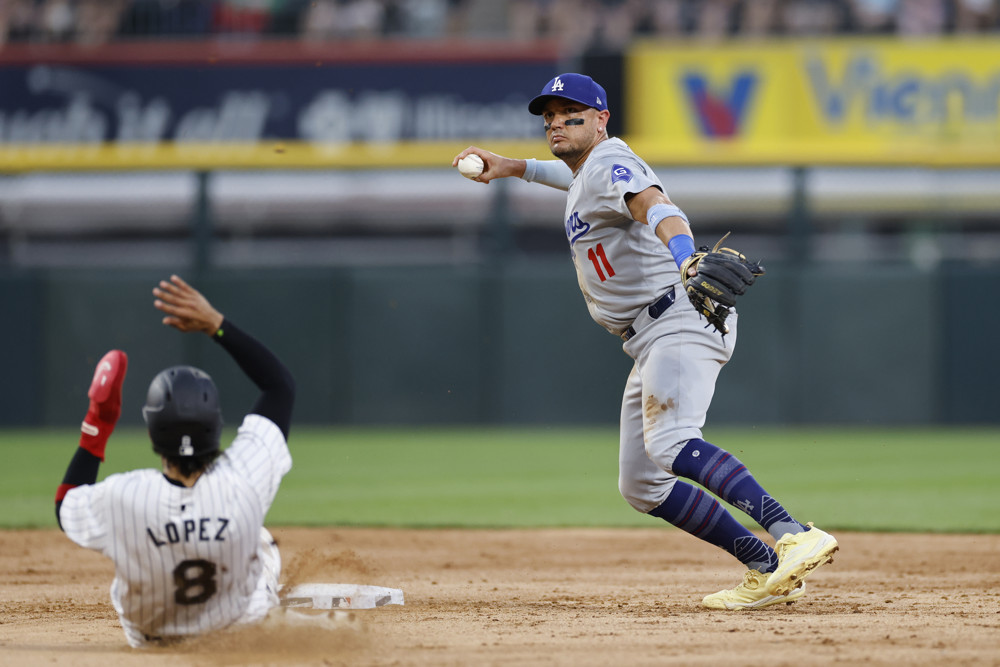
    Dodgers – The Dodgers have been a Top 10 team in Defensive Runs Saved in each of the last 8 seasons. They always seem to make the right moves and in 2024 they’re making a bold one by making Mookie Betts their everyday shortstop. Betts, who won the Fielding Bible Award last year for multi-position play, handled second base very well last season. The Dodgers do have some flexibility here. They could move Betts back to second and play one of the game’s best defensive shortstops, Miguel Rojas, if things don’t work out.

    Giants – In theory, the Giants should be a lot better defensively than they were last season. Their 3 weakest defensive positions by Runs Saved were shortstop, third base, and center field. They signed 2 standout infield defenders in Matt Chapman and Nick Ahmed and signed Jung Hoo Lee, who led all KBO center fielders in Runs Saved last season. Those could be a boon to pitchers like Blake Snell and Logan Webb.

    Marlins – What can infield coach Jody Reed do for Tim Anderson? The new Marlins shortstop has totaled -22 Runs Saved the last 2 seasons, which ranks 2nd-worst at the position. Reed will do his best to maximize what Anderson can do. The Marlins ranked as one of the best-positioned infields in MLB last season.

    Mets – One year after signing Brandon Nimmo to a long-term contract, they’ve moved him from center field to left field and attempted to turn a defensive weakness into a strength by signing Harrison Bader as their new primary center fielder. Bader has twice totaled at least 15 Runs Saved in a season in center field. His 5 Runs Saved there the last 2 years are 16 more than Nimmo in that span.

    Nationals – The Nationals have finished 29th and 28th in Runs Saved the last 2 seasons and need a few things to happen in order to improve on that in 2024. One would be to see some improvement from catcher Keibert Ruiz. The Nationals ranked last in MLB in Runs Saved from their catchers. It would also behoove them to find playing time for minor league Gold Glove winner Trey Lipscomb, who can play any of the infield positions (read our interview with him here).

    Padres – Two things: One is whether Fernando Tatis Jr. can replicate his 2023 season, when he blew away everyone else at the position with 29 Runs Saved. Two, the position switch of Xander Bogaerts to second base so as to put their best infield defender, Ha-Seong Kim, at shortstop. Bogaerts has managed a positive Runs Saved total once in the last 10 years. Second base may be a better fit for him but time will tell.

    Phillies – Johan Rojas didn’t have a particularly good spring training with his bat but he’s arguably too valuable to even consider sitting. He’s by far the Phillies’ best defensive player. Rojas ranked 4th in Runs Saved among center fielders despite ranking 37th among them in innings played.

    Pirates – The Pirates ranked 28th in Defensive Runs Saved from their center fielders last season, but that could change significantly if Michael A. Taylor hits enough to stay in the lineup there. Taylor leads all center fielders in Runs Saved over the last 3 seasons.

    Reds – The Reds ranked 27th in Defensive Runs Saved last season. They’re running out most of the same players this season, save for Jeimer Candelario at third base, which could be a small improvement in Defensive Runs Saved. But they may be a bottom-10 team again.

    Rockies – The most watchable thing the Rockies have right now is their defense. They have Fielding Bible Award-caliber players at second base (Brendan Rodgers), shortstop (Ezequiel Tovar), third base (Ryan McMahon), and center field (Brenton Doyle), and a left fielder with a terrific arm (Nolan Jones). This will probably be the team with the biggest difference between the quality of its defense and its win-loss record.

  • Stat of the Week: AL Defensive Stories In 2024

    Stat of the Week: AL Defensive Stories In 2024

    Photo: Chris Leduc/Icon Sportswire

    BY MARK SIMON

    With Opening Day approaching, we wanted to preview the 2023 season from a defensive perspective. So to be fair to all 30 teams, we’ve got a stat-driven theme or story to watch for each team. We’ll do the AL teams this week, the NL next week.

    Angels – The Angels ranked 19th in Defensive Runs Saved last season and didn’t make any significant improvements on the defensive side. Mike Trout hasn’t been moved off center field but Mickey Moniak fared well there when Trout was out, so it’s worth wondering if anything could happen on that front in 2024. For now, Trout is in center field and Moniak is in right field.


    Astros – The Astros finished 17th in Defensive Runs Saved last season but have the capability to be better than that, given a roster of players with good track records (Kyle Tucker, Chas McCormick, Jake Meyers, Alex Bregman). The thing to watch will be a potential trouble spot, the right side of their infield, in particular José Altuve, who has totaled a positional-worst -28 Runs Saved over the last 2 seasons.


    Athletics – The A’s best defensive player is shortstop Nick Allen, who has saved 9 Runs in a little over 1,300 innings at the position the last 2 seasons. If his bat keeps him on the field, he’s Oakland’s best shot at a Fielding Bible Award.


    Blue Jays – The Jays are basically running it back from last season, when they led the majors in Runs Saved. The only exception is third base where Isiah Kiner-Falefa is slated to be the primary replacement for Matt Chapman. IKF has a very good history at the position so if he plays (likely contingent on how he hits), the drop-off at that position might be very small and the Blue Jays could again contend to be the top defensive team.


    Guardians – The Guardians have 3 outfielders who are capable of winning a Fielding Bible Award. Left fielder Steven Kwan already has two. Myles Straw came close. And Ramón Laureano has a great history in right field in a little more than a season’s worth of innings. The Guardians, in the eyes of some, are MLB’s top defensive team entering the season.


    Mariners – The Mariners have a couple of players who have contended for or won Gold Gloves in the past but didn’t put up the best defensive numbers last season. We’re referring to first baseman Ty France and shortstop J.P. Crawford. For the Mariners to contend, it would help if they excelled at their respective spots.


    Orioles – The Orioles ranked tied for 6th in Defensive Runs Saved last season because they were basically average or better at every position. They’re capable of matching that with their current roster particularly because they have 2 defensive standouts, Ramón Urias and Jorge Mateo who can come in late in games if needed for youngsters Jordan Westburg at third base and top prospect Jackson Holliday at second base.


    Rangers – After looking great in the 2023 postseason, making several highlight-reel plays, Josh Jung could step up a level defensively. He may become one of the game’s elite defenders in 2024.


    Rays – Rays shortstops tied for the MLB lead with 19 Runs Saved last season. With Wander Franco in significant legal trouble and Taylor Walls injured, will new acquisition José Caballero perform at a high level? Caballero looked the part at both middle infield spots last season and he seems like a good fit on a team that typically maximizes the talent of its roster.


    Red Sox  There’s a lot to watch throughout the Red Sox outfield. They’ll have a new player standing in front of the Green Monster in left fielder Tyler O’Neill, who won the Fielding Bible Award at that position in 2020 and 2021. Rookie Ceddanne Rafaela will be the center fielder. Jarren Duran, who played mostly center field and left field the last two seasons, will now try right field. It will be interesting to see how all three mesh in Fenway Park.


    Royals – Bobby Witt Jr. was one of the most improved defensive players in MLB in 2023. Is he capable of making the jump to being one of the top shortstops by Defensive Runs Saved?


    Tigers – Tigers third basemen combined to have the worst Runs Saved total of any infield position. The addition of Gio Urshela should make things considerably better there. And we’ll see how things shake out with rookies Parker Meadows and Colt Keith and how well they fare at center field and second base.


    Twins – After a year away from center field, Byron Buxton is going to return to playing the position in 2024. When healthy, Buxton is as good as it gets in center field. But his injury history is a concern. The Twins are ready for potential issues though with Manuel Margot available to back up at multiple spots.


    White Sox  The White Sox ranked 29th in Runs Saved last season, so they have nowhere to go but up. Their weakest spots included right field, where for now they have newcomer Dominic Fletcher, and shortstop, which will be manned by Paul DeJong. They’ll also have a new catching tandem in Martín Maldonado and Max Stassi. Maldonado has something to prove after a career-worst -10 Runs Saved in 2023.


    Yankees – The Yankees’ outfield Runs Saved numbers last season were among the worst in MLB. How will that change in 2024? They’ve got two new acquisitions to acclimate in Alex Verdugo (typically a good defender) and Juan Soto (typically not as good), and they’re giving Aaron Judge another try in center field, where he’s rated basically as average in the past.

  • Oral History: Adrián Beltré’s Defensive Legacy

    Oral History: Adrián Beltré’s Defensive Legacy

    Photo: Matthew Pearce/Icon Sportswire

    New Hall of Fame inductee Adrián Beltré is the overall leader in Defensive Runs Saved since the stat was first tracked in 2003. 

    His 203 Runs Saved at third base far surpass the next-closest player. Beltré won 5 Gold Gloves and 4 Fielding Bible Awards (he could have won more of the latter if the Award existed prior to 2006).

    This is the story of Beltré’s defensive excellence. Over the last several months we talked to 17 of Beltré’s former teammates, coaches, managers, and friends to get a better sense of what made him into the defensive player he became. 

    It’s a story that began in 1979 when he was born in Santo Domingo, Dominican Republic. The Dodgers signed him in July 1994, at age 15. He began his minor league playing career in 1996.

    John Shoemaker (Beltré’s Class-A minor league manager, 1996-1997): “Seventeen years old. Full of energy, full of talent, full of the player who could make a play when a big play was needed.”

    “One game that came to mind, he hit an extra-inning home run to give us the lead, then made two consecutive terrific defensive plays with a runner in scoring position. One was a check-swing from a left-handed batter that was like a bunt. I doubt many people could have made that play except Adrián. He followed that up by fielding a high bouncer over the mound. I doubt any third baseman would have made that play, except Adrián.”

    Beltré was called up to the Dodgers from Double-A San Antonio at age 19 in 1998 and, at the very beginning, he had a rough patch.

    Shoemaker: “Sometimes he tried to make a play when there wasn’t a play. Gradually his errors became less and less just because of the experience and playing on better fields and just having a better idea of what he was doing.”

    Alex Cora (Dodgers teammate, 1998-2004): “I think Tommy Lasorda kind of rushed him into the scene. He was just erratic, not making the routine play. But little by little, the game slowed down for him and became the guy he became. He was a freak athlete, a gigantic guy with big thighs who moved like a smooth shortstop. He had an uncanny way of learning on the job and gradually he became a beast.”

    One thing that was immediately impressive was Beltré’s throwing arm. He had a nontraditional way of throwing to first base. It stung a lot of hands but it was highly effective.

    Travis Barbary (coach, Savannah Sand Gnats, 1996): “He’s just firing the ball across the infield with very little effort and it’s just like oh my gosh, this guy’s got a bazooka attached to his shoulder.”

    Ian Kinsler (Rangers teammate, 2011-2013): “He had a unique way of getting the ball to first base with a little step that he did to stop his momentum. We asked him why he does that, and he said his arm was too good when he was younger, that he would throw the ball into the stands all the time, or the first baseman couldn’t catch it. He had to figure out how to control his live arm and that’s what he came up with.”

    Barbary: “You wouldn’t teach a guy to throw to first base by coming to a standstill and just throwing it over there.”

    Cora: “For feeds to second base, it was the toughest for me. It was a low arm slot, sinking, like 100 miles-per-hour. Catching it was like trying to hit Kevin Brown.”

    Colby Lewis (Rangers teammate, 2011-2016) “He said he could never throw the ball soft because he would mess up.”

    By 2003, the first year Defensive Runs Saved was calculated, Beltré was a stud defender. He saved 25 runs that season. In 2004, which also happened to be the best offensive season of his career, he saved 22. Each year, his total ranked 2nd among third basemen.

    That offseason, he signed a big free agent contract with the Mariners and his run of defensive success continued. He won the Fielding Bible Award in its first year, 2006, then won his first Gold Glove the next year. In 2008, he won both Awards. He had two more seasons in his career with at least 20 Runs Saved and another season with 19.

    After five seasons in Seattle and one year in Boston, Beltré signed with the Rangers and was beloved in Texas both by the fans and his teammates. He played with the Rangers from 2011 until his retirement in 2018 and was consistently one of the top defensive players at third base in MLB. 

    Kinsler: “My wife did not like him when he was on Seattle. He took away countless hits from me.”

    The hitter who hit into the most outs on balls fielded by Beltré was both an AL and NL rival who had a lot of respect for his nemesis.

    Jason Kendall (MLB catcher, 1996-2010): “He was fun to watch as long as it wasn’t me. But apparently it was me, often. There are certain guys that you know if you hit a ball towards, you’re out. I’ve done that 50 times (actually, 48, per the Elias Sports Bureau). I knew I was out before I even ran down the baseline.”

    Most Defensive Runs Saved, 3rd Base

    Player Runs Saved
    Adrián Beltré 203
    Nolan Arenado 160
    Scott Rolen 114
    Manny Machado 104
    Evan Longoria 98

    One of the things that Beltré became best known for was making plays when he had to come in to field the ball.

    Eric Young (Dodgers teammate, 1998-1999): “The best at coming in on balls that I’ve ever seen.”

    Eduardo Perez (Mariners teammate, 2006): “He was one of those guys you couldn’t take your eyes off of on defense.”

    Willie Bloomquist (Mariners teammate, 2005-2008): “The play that he often made coming in on a bunt or a slow roller where he would literally be moving toward the third base dugout, drive back across his body and try to throw a frozen rope to first base, I don’t think I’ve seen anybody do it that way.

    “He was phenomenal at it. I would go try and imitate it and I’d hurt myself.”

    Cora: “I was in awe [of his bunt defense]. Talking about it now, I’m still in awe.”

    Eric Nadel (Rangers broadcaster): That’s the indelible memory that I have of him defensively, making that off balance throw from down under and then going flying.”

    6-foot-8 Mariners first baseman Richie Sexson had a game he would play with Beltré when they took infield practice.

    Richie Sexson (Mariners teammate, 2005-2008) “I would just hold my glove in a certain area, off to the side. I literally wouldn’t move my glove. If he missed it with a throw, I let it go. I wouldn’t catch it because it wasn’t perfect. He had to hit the glove, or it didn’t count.”

    Beltré could field the hard-hit balls well too. He developed a pre-game routine early in his career where he’d take ground balls in large volumes.

    Pedro Grifol (Mariners various roles, 2005-2009) He absolutely wore me out because he wanted me to hit the hardest ground balls I could ever hit. And he wanted ball after ball, and bucket after bucket.”

    Nadel: “He made every type of play. And you get to a point where you weren’t surprised by any kind of miraculous play that he made.”

    And yes, the stories you’ve heard are true.

    Kinsler: “He really did not wear a protective cup. That is correct. He said his hands were good enough that he didn’t need a cup.”

    Beltré played at a time when the player was more responsible for his positioning than he is now (that is reflected in much of his Defensive Runs Saved total, as SIS started giving teams—rather than players—credit for positioning in 2013).

    Ron Washington (Beltré’s Rangers manager, 2011-2014): He was just very anticipative. He knew the league. He knew what these guys did when they did it. He didn’t have what you might call a ton of range, like in today’s game, the way they talk about range. But he was an expert at positioning himself.”

    Sexson: He didn’t need a chart. He knew where everyone was gonna hit it, where to stand, how deep to play.”

    Elvis Andrus (Rangers teammate, 2011-2018): “He used to help me with positioning myself. We didn’t have cards like we have now. He taught me how to read swings. He taught me how to play the guy who was 0-for-3 versus the guy who was 3-for-3. 

    He would say, ‘Always put yourself in the hitter’s mind. If you want to be a good defender, you have to think like a good hitter.’ And you know how you feel when you’re 3-for-3, you know how you feel when you’re 0-for-3. The guy that’s 0-for-3 probably isn’t going to pull the ball. He’s probably going to try to go up the middle. The guy who’s 3-for-3 is thinking big and trying to pull the ball or hit a home run. Those little insights mean a lot when you’re playing defense. They can change the game in a lot of ways.”

    Most Defensive Runs Saved – All Positions

    Player Runs Saved
    Adrián Beltré 203
    Andrelton Simmons 200
    Yadier Molina 170
    Kevin Kiermaier 165
    Mookie Betts 162

    Beltré’s garnered a reputation for incredible durability. From his age-23 to age-27 seasons, Beltré averaged 157 games played. From his age-33 to age-37 seasons, he averaged 152. 

    Cora: “When he really took off in 2004, he did it on one leg. I think it was his ankle. He was banged up the whole time. He was limited, but 75% of Adrián Beltré was a lot better than whoever else we had.”

    Bloomquist: “I do remember there was a time that (Mariners manager) Mike Hargrove gave him the day off. He said to Beltré, ‘I’m giving you a day off.’ And Beltré said, ‘No, you’re not.’ I watched him play a whole season with a torn UCL.”

    Washington: “He had a rib cage injury, and we wanted to put him on the DL, but he fought it. We wanted to take him out the lineup. He fought it. So one day, (Rangers GM) Jon Daniels and I decided that we’re just going to take him out the lineup and not tell him. So he came to the ballpark. Of course, he was upset. And when he came over telling me about it, he said he’ll let me know when he can’t play. I got down on my knees and I said, ‘I’m down on my knees. I’m begging you to take the night off.’ 

    That did it.

    Suddenly everyone wanted to play through pain and injuries because Beltré did it.”

    As Beltré aged, he seemed to have more fun on the field. He appreciated that he was playing a game and visibly showed how much he enjoyed it.

    Bloomquist: “Elvis Andrus was the Rangers shortstop and he’d call off Adrián on a popup. Beltré would still pretend to make the catch and Elvis would catch it right next to him.”

    Emily Jones (Fox Sports Southwest sideline reporter): “On balls that were well over his head, he would toss his glove in the air.”

    Andrus: “(At the end of innings), we were always looking at the fans, trying to find funny fans, or see if a couple was fighting or having a discussion. Adrián and I would be asking each other, ‘What are they talking about?’”

    Jonathan Lucroy (Rangers teammate, 2016-2017): “He was just a big kid out there. I think that’s why he played so long is because he treated the game like it was a game, it wasn’t a job to him.

    Matt Vinnola (Rangers director of baseball operations, 2009-2017): “He went above and beyond with my family, like throwing BP and playing wiffleball with my kids. He was incredibly kind. And his son, A.J. was the most professional and respectful kid I ever encountered.”

    Lewis: “Three words to describe Beltré? Intense, fun, and fearless. He was so intense, but he’d make it look fun, you know?”

    Jones: “It was that rare combination of being an elite player at your position and just being comfortable in your own skin that you can just go out and play and display the amount of joy that he was able to play with.” 

    The legacy of Adrián Beltré is that of an all-time great player, and in a few months, he’ll have a plaque in Cooperstown to immortalize his well-rounded career.

    Kinsler: I think when you play with a player of Adrián’s caliber, you tend to take a lot of things for granted until you have another third baseman standing over there and you realize the difference that he made in the game day in and day out.”

    Bloomquist: “I’ve never seen anybody remotely that good defensively at third base.”

    Vinnola: “I remember when we were signing him, Don Welke (who worked in baseball for 50 years), when we were talking about Beltré, he just said ‘special.’ When Don Welke said ‘special,’ it got people’s attention.

    Nadel: “I came back to the hotel one night at the Hall of Fame and Brooks Robinson called out to me from across the lobby. He said, ‘Eric, I’d like you to do me a favor. Tell Adrián Beltré that I watch as many games of yours as I can so I can watch him play third base.’ I told Adrián that and he was really moved by it. Brooks Robinson said that? A huge smile came across his face.”

    Grifol: “He wanted to be a Hall of Famer. He trained like it, he worked like it, and he lived like it.”

  • Stat of the Week: Dancing With The Star

    Stat of the Week: Dancing With The Star

    Let’s talk dancing for a moment.

    Not NCAA Tournament dancing. Even though that’s pertinent these days, that’s another sport. I’m talking about baseball and dancing.

    Several years ago, I interviewed Hall of Fame manager Casey Stengel’s grand niece, Toni Harsh, who told me how much Stengel loved dancing, to the point of showing off the waltz to his family with his wife Edna. He passed on the importance of dancing to his players, encouraging them to take lessons.

    “Dancing taught shifting weight, turning, and stretching,” Harsh said. “It was about staying light on your feet.”

    Stengel would have loved the answer Guardians second baseman Andrés Giménez gave us when we asked him how he stayed in good physical shape during the offseason, besides doing basic baseball work. He likes to dance.

    “First of all, it’s a way to enjoy the moment, enjoy the music, enjoy your family,” Giménez said on the latest episode of The Sports Info Solutions Baseball Podcast. “Dance is an easy way to show love. And if you move your feet, you’re going to be in a great position to dance or to catch a ground ball. When I have the opportunity to dance with my wife or other family members, I do it, because you move your feet there. When the ball is coming, you kind of dance with it.”

    Giménez brought to mind similar thoughts from former Red Sox minor league coach Bianca Smith, who is now coaching in Japan. A few months ago she told us, “No matter what you’re doing, whether you’re hitting, you’re on the bases, you’re in the field, you’re dancing with the pitcher.”

    Said Giménez: “I’m with her. If you move your feet when you’re dancing, it’s going to be easier to take a ground ball. I’m not the best dancer, but I can do it, so it helps me for my defense.”

    Giménez danced his way into the hearts of Guardians fans in 2022 with an MVP-caliber season. He wasn’t quite as good a hitter in 2023 but he dominated in the field. His 22 Defensive Runs Saved led the majors at his position. He won both our Fielding Bible Award at second base and the Rawlings Platinum Glove Award as the top AL defensive player last season. Giménez’s deft athleticism led to him making 23 sliding defensive plays, most in MLB in 2023.

    This season, Giménez has a new middle-infield partner to tango with, as fellow Venezuelan Brayan Rocchio is slated to be the Guardians’ everyday shortstop and another Venezuelan, Gabriel Arias, is a possible backup. Notable all-Venezuelan double play combinations of the past include Elvis Andrus and Rougned Odor, Alcides Escobar and Omar Infante, and Ozzie Guillén and Fred Manrique.

    If Giménez is at the top of his game his double play combo has a chance to be the best all-Venezuelan one ever. And perhaps they’ll give a new meaning to ‘dancing with the stars.’

  • Spencer Torkelson’s Clear Areas For Improvement

    Spencer Torkelson’s Clear Areas For Improvement

    Photo: John Jones/Icon Sportswire

    This play kind of sums it up how it went defensively for Tigers first baseman Spencer Torkelson in 2023.

    Torkelson ranked last among first basemen with -10 Defensive Runs Saved last season. Though his offense improved decently from his rookie season, his defense took a step back from 2022 (-4 Runs Saved). As a result, he was one of two 30-homer hitters to finish with a bWAR less than 1 (Kyle Schwarber was the other).

    Torkelson was a rough watch at first base, relatively speaking. That throw from the video atop this article wasn’t the only one he had trouble with. We credited him with 7 mishandles of throws (another example is this one).

    Torkelson also had a few issues trying to catch foul balls this season (here, here, and here). But most significantly, he repeatedly got eaten up by ground balls. Here’s one example:

     Here are a few others (here, here, here, here, and here). Most of those plays are balls either hit straight at him or to his right and that’s where the numbers were most problematic. The table below shows how many plays were made, how many opportunities he had to make a play, and how many plays below average Torkelson was based on our out probability data.

    Balls hit Plays Made/Opportunities Plays Saved
    To his right 59/212 -7
    At him 54/72 -7

    In other words, Torkelson made 59 plays on balls hit to his right. An average first baseman would have made 66. And he made 54 plays on balls hit at him. An average first baseman would have made 61. That’s where the damage to his statistical ledger was done.

    That’s not to say that he was all bad. Torkelson’s 43 Good Fielding Plays were the most of any first baseman last season. He was able to offset those mishandles of throws with an MLB-best 29 Good Plays on handling throws (we call those “scoops”).

    But based on his Runs Saved total, Torkelson has no shortage of work to do prior to the start of the 2024 season. He’s got some clear issues as a hitter too.

    In 2023, Torkelson hit .106 in AB ending with a pitch that we classified as down-and-away. That’s 13-for-123.

    Of the 251 hitters who saw the most down-and-away pitches in 2023* Torkelson ranks …

    – 238th in batting average

    – 198th in slugging percentage

    – 57th-highest in percentage of swings that missed (the higher you are, the worse you’re doing)

    * We’d have done 250 hitters, but there was a 3-way tie for 249th

    Hitting down-and-away pitches is hard, really hard. A lot of those are tough sliders, sweepers, and changeups. This is what we’re talking about (here) and this (here) and this (here). But most major leaguers are at least a little better than Torkelson is.

    Torkelson’s teammate Riley Greene is right around the midpoint of our player sample in batting average against down-and-away pitches. He hit .190 against them. Torkelson was about 10 hits away from hitting .190 against down-and-away pitches in 2023. If he plays every day, replacing 10 outs with 10 hits would be  one more hit every 15-16 games. Finding his way to a few more hits on those pitches would certainly make Torkelson a better player. So would making fewer outs.

    As we wrote about with Bobby Witt Jr. not too long ago, one of the biggest lessons for a young player is learning what pitches he can hit, what pitches he can’t, and making the necessary adjustments in his swing tendencies. Torkelson could be best served by a few more takes, even if those pitches are in the strike zone, in the hopes that he’ll get something in one of his hot zones later in the at-bat.

    One thing Torkelson does well that bodes well is that he hits the heat. He hit .279 and slugged .549 against fastballs that were 95 MPH or faster on the TV radar gun, missing on 17.5% of his swings. The MLB averages against those pitches were a .244 batting average, .397 slugging percentage, and 21% miss rate, respectively.

    Also similar to Witt, if Torkelson were to more fully figure things out at the plate and in the field, his ascent could go a long way in determining his team’s ascent in 2024 in an AL Central that doesn’t seem to have a dominant team.

  • Stat of the Week: The Top 5 Defensive Center Fielders in MLB

    Stat of the Week: The Top 5 Defensive Center Fielders in MLB

    Photo: Nick Wosika/Icon Sportswire

    BY MARK SIMON

    The other day, I wanted to rank the top defensive center fielders in MLB entering 2024, so I pulled up The Fielding Bible leaderboards along with a pen and paper and got to work.

    I put Brenton Doyle No. 1. Doyle led all center fielders in both Defensive Runs Saved and Good Fielding Plays last season and won the NL Gold Glove at the position. If he hits even a smidge, he’s going to play and play a lot because he’s so good in the field. And he’s still young. He turns 26 in May and should still have fresh legs.

    I’m guessing that Kevin Kiermaier won’t like that I’m putting him No. 2 given that he’s the reigning Fielding Bible Award winner and the overall leader in Runs Saved by a center fielder since we started tracking the stat in 2003. But Kiermaier turns 34 in April and has a substantial injury history. So we’re going with the young buck ahead of the reigning champ and encouraging the older guy to prove us wrong. (We’ll own up to it if we are!)

    No. 3 is another veteran, Michael A. Taylor. Though he’s currently unsigned, we’ll still put our faith in Taylor, who ranks first among center fielders in Runs Saved over the last 3 seasons. We wrote about him in great detail last week and encourage you to check that out to learn more about what makes him good (spoiler: he’s been really good at chasing the deep fly ball). The track record of success is there.

    My No. 4 defensive center fielder entering 2024 is another young’un, Johan Rojas. Rojas ranked 4th among center fielders in Runs Saved despite ranking 37th in innings. He also had the most Runs Saved of any minor league center fielder in 2023. There’s every reason to think he’ll be great in 2024.

    No. 5 is the one that was hardest to pick and I’m going to go with the wildest of wild cards, Byron Buxton. Buxton is going to return to playing outfield after solely playing as a designated hitter last season.

    Buxton is as good as it gets on a per-inning basis. From 2020 to 2022 he played about the equivalent of one MLB season in center field and saved 29 runs. That’s a league-leading caliber season for a center fielder. In that 3-year span, Buxton ranked 2nd among center fielders in Runs Saved and 20th in innings played.

    Buxton is a potential make-or-break player for the Twins this season and also a high-risk, high-reward pick in Defensive Runs Saved fantasy leagues (yes, those leagues exist). I feel good enough about him to rank him in the No. 5 slot. If he’s healthy for most of the season, he’ll be a difference maker.

    Who are your Top 5 defensive center fielders entering 2024? Tweet your picks at us.

    Mark’s Top 5 Defensive CF Entering 2024

    1. Brenton Doyle
    2. Kevin Kiermaier
    3. Michael A. Taylor
    4. Johan Rojas
    5. Byron Buxton
  • Michael A. Taylor, The Top Defensive CF The Last 3 Seasons, Still Has No Home

    Michael A. Taylor, The Top Defensive CF The Last 3 Seasons, Still Has No Home

    Photo: Rick Ulreich/Icon Sportswire

    We recently wrote about how the best defensive shortstop in the game, Miguel Rojas, was somehow thriving at a young man’s position while defying the statistical aging curve that brings down most players his age.

    The top-performing defensive center fielder over the last 3 seasons is doing the same. He just doesn’t have a home yet for 2024. 

    I’m referring to current free agent Michael A. Taylor.  

    I imagine it is going to generate a lot of responses of “Best center fielder? What about ___?” (insert Brenton Doyle, John Rojas, Kevin Kiermaier and many other options here).

    But it’s Taylor who has the best 3-year track record. Taylor saved 19, 19, and 5 runs the last 3 seasons. He was not in Doyle or Kiermaier’s class last year but he was still good. 

    And of particular importance when comparing him to a lot of these other players, Taylor has played more than them. He ranks 4th among center fielders in innings played the last 3 seasons. Kiermaier ranks 10th.

    Name Innings DRS
    Michael A. Taylor 3,156 43
    Kevin Kiermaier 2,358 33
    Myles Straw 3,882 27
    Daulton Varsho 1,040 21
    Brenton Doyle 1,023 19

    What I watch when I watch Taylor

    At his best, Taylor is a great sprinter who can chase balls down deep in the gaps. When he’s doing this well, he’s a highly valuable defender.

    From 2021 to 2023, Taylor caught 323 of 386 balls classified as “deep” in our shallow/medium/deep classification system. Based on historical out probabilities, he was expected to catch 308 of them. 

    So over these 3 seasons, he’s +15 plays saved (our version of Outs Above Average) just on deep fly balls (323 plays made minus 308 expected plays made). That was No. 1 in MLB in that time.

    The last 3 seasons, Taylor was 6, 9, and 4 plays above average on deep balls. 

    But there’s no shame in being +4 in 2023. It’s tied for 10th-best among all center fielders. 

    The arm

    Outfield assists are important because you get credit both for netting an out and erasing a baserunner. Preventing runners from taking an extra base is too. 

    Taylor’s arm was notable to his value in both 2021 and 2022, netting him 5 and 4 Runs Saved, respectively. He dropped to 1 Run Saved in 2023. That happened because his assist total dipped, from 8 assists without a cutoff man in 2021 and 5 in 2022 to 1 in 2023.

    Though he dipped to 1 Runs Saved in 2023, there don’t appear to be any red flags with his arm. He averaged 92 MPH on the top 10% of his throws in both 2021 and 2022, 91.5 MPH in 2023. That doesn’t feel like a significant difference. And the percentage of runners 

    In fairness to Taylor, there was one factor beyond his control. He played a comparable number of innings in 2022 and 2023, but in 2022 he had 45 more opportunities to deny a baserunner an advance because the 2022 Royals pitching was not great and the 2023 Twins were much better than them. So he didn’t have as many chances to put his arm to use.

    What was the difference between Taylor 2021-22 and 2023?

    Baseball Savant’s jump numbers indicate that Taylor’s “burst” (the number of feet above average that he was covering at the point in which the ball is in the air from 1.5 to 3 seconds) is down by about a foot from 2021. However, he did improve a little bit in the route-running component of the jump stats. 

    Taylor also had a few more miscues and just misses. He had a career high 22 Defensive Misplays & Errors in 2023 and committed them at a little higher rate than in 2021 or 2022.

    Taylor will turn 33 in late March, so perhaps with age comes some slowing down. But even so, he seems to still have something left to give.

    The bat

    I imagine the concerns with Taylor are more with the .220 batting average and .279 on-base percentage last season than anything else. 

    Taylor had a big hole at the area that we classify “down and away,” going 8-for-83 in at-bats that ended with a pitch there (his .096 batting average and 56% rate of swings missed) were bottom 10% in that stat). His overall contact rate decreased nearly 5 percentage points from 2022. He basically accepted some missed swings in return for more home runs (a career-high 21). 

    The result: Even with the issues Taylor had, it was still his best offensive season since 2017. He had an OPS of .720, a smidge below MLB average for a center fielder (.730). 

    The fits

    That Taylor is unsigned is somewhat surprising. 

    One of his best potential fits, the Mets, who decided to move Brandon Nimmo to left field, went for Harrison Bader rather than Taylor. The Reds, a defensively-challenged team in 2023, have not gone for Taylor, who would be a useful late-inning replacement that would immediately improve their outfield defense. 

    Taylor’s best current fit might be with the Padres, who are currently projected to replace Trent Grisham (traded to Yankees) with Jose Azocar, who has a .633 career OPS in a little more than 300 plate appearances. Taylor, who has averaged better than 2.5 bWAR the last 3 seasons, would absolutely be an upgrade there.

    Taylor isn’t Blake Snell or Matt Chapman, but he’s still a useful player who could be a key piece for a winning team. As someone who writes about good defense as his beat, I can without question say he still deserves a legitimate role on an MLB team in 2024. 

  • Stat of the Week: Gio Urshela Is A More Meaningful Signing Than You Think

    Stat of the Week: Gio Urshela Is A More Meaningful Signing Than You Think

    Photo: Melissa Tamez/Icon Sportswire

    The biggest defensive hole in MLB team infields last season was third base for the Tigers. Detroit tried 9 players at that position and those players combined for -22 Defensive Runs Saved. Not only did the Tigers rank last in MLB in Runs Saved by their third basemen, they also ranked 26th in Baseball-Reference’s Wins Above Average at the position.

    Tigers general manager Scott Harris chipped away at his team’s roster construction all winter. He traded for Mark Canha to give the team a bat that could control the strike zone and improve the offense’s production. And he added a pair of veteran arms for the starting rotation in Kenta Maeda and Jack Flaherty.

    These additions supplement a young core that could have 2 prime prospects— center fielder Parker Meadows and infielder Colt Keith— as everyday players.

    Harris didn’t do much about third base until Thursday when the Tigers signed Gio Urshela to a one-year contract. If the Tigers wanted to be really ambitious there, they could have pursued free agent Matt Chapman on a long-term deal, but for the short term, Urshela is a good fit.

    If fully recovered from the pelvis injury that limited him to 62 games last season, Urshela, an 8-year veteran, will be a massive upgrade at the hot corner for whatever number of games he plays in 2024. He totaled 6 Defensive Runs Saved in limited action at third base last season and 4 Runs Saved there in 2022. He’s had only one bad stretch there, in 2021 when he totaled -4 Runs Saved for the Yankees.

    Urshela had a .703 OPS in those 62 games last season. That doesn’t sound impressive, but that would also be a big upgrade. Tigers third basemen combined for a .624 OPS last season, 3rd-worst in MLB.

    There is risk with the 32-year-old Urshela, but it’s inexpensive risk. He signed for a base salary of $1.5 million. He may just play in a platoon role. But even if he plays part time, the Tigers improving to 0 Runs Saved and a .700 OPS at third base this season as a result of his production would be noticeable. If Urshela could reach his past peak (he’s twice been a 3-bWAR player), the change would be significant.

    This signing isn’t by itself going to win a division title. But it potentially makes a big hole on the team look much more respectable. Winning championships isn’t just about signing star players. It’s about making sure you have a roster of players that aren’t costing you potential wins. In an AL Central where 85 to 90 wins may be enough to win the division, a move like signing Urshela looks like a pretty smart one.

  • Miguel Rojas is the Best Defensive Shortstop in Baseball

    Miguel Rojas is the Best Defensive Shortstop in Baseball

    Photo: Joe Robbins/Icon Sportswire

    The most remarkable defensive player in the game is an old man playing a kid’s position. An ageless wonder, you might say. He might rank last or next-to-last among his team’s position players in offensive production and he’s not even currently projected as his team’s regular starter.

    The Dodgers have a lot of luxuries on their roster, but the one that’s the most under-the-radar is the best defensive shortstop in baseball, Miguel Rojas. 

    The Numbers

    “Best defensive shortstop in baseball” is not a term we throw around lightly. We come with evidence. Rojas is either a leader or co-leader in Defensive Runs Saved at shortstop if we measure the last 2, 3, or 4 seasons. 

    Here are the shortstop leaders in Defensive Runs Saved over the last 3 seasons.

    Player Runs Saved Innings
    Miguel Rojas 32 3,140
    Jeremy Peña 23 2,493
    Taylor Walls 23 1,358
    Wander Franco 22 2,095
    Ha-Seong Kim 22 1,505
    Carlos Correa 21 3,562
    Isiah Kiner-Falefa 21 2,553
    Dansby Swanson 20 4,084

    Rojas ranked 5th in Runs Saved last season as a 34-year-old. The 4 shortstops ahead of him were a 29-year-old (Dansby Swanson) and three 22-year-olds (Wander Franco, Ezequiel Tovar, and Anthony Volpe). The shortstop who ranked right behind Rojas was Gunnar Henderson, who turned 22 midseason (and seems destined for third base with Jackson Holliday on the way). 

    The defensive aging curve is not kind to most players, but Rojas has defied it. He is the only shortstop who had at least 10 Runs Saved in both 2022 and 2023. He was plugged into the shortstop spot after Gavin Lux got hurt and though he didn’t hit, his glove kept him on the field as a regular.

    Could we have picked someone else as baseball’s best defensive shortstop? 

    Sure. 

    This is the part of the story where Cubs and Braves fans tell me “Dansby Swanson would like a word.” Swanson’s terrific and was a unanimous selection for a Fielding Bible Award last year. Rojas almost matched him on a Runs Saved per-inning basis in 2023 and bettered him when we took a longer view of multiple years. 

    Jeremy Peña is very good but is just a little bit behind Rojas in Runs Saved Per Inning. Ha-Seong Kim might’ve been the pick had he not moved to second base. Wander Franco doesn’t look like he’ll be playing in MLB anymore given the criminal charges he faces. One of his potential replacements on the Rays, Taylor Walls, just had hip surgery and we don’t know what he’s going to be when he returns. Anthony Volpe won an AL Gold Glove last year as a rookie. Ezequiel Tovar played well enough to win one in 2023 but lost out to Swanson. Maybe we’re talking about them as the best in MLB next year. Jorge Mateo was excellent two years ago, a little less so in 2023, so he’s a ‘not quite.’

    And the Defensive Runs Saved numbers just don’t back it up over the last 3 years for Carlos Correa, Javier Báez, Francisco Lindor, and Bobby Witt Jr. (yes, I know, Statcast rated Witt highly in 2023 … but it didn’t in 2022). 

    What I see when I watch Rojas

    I wanted to give Rojas a comprehensive lookover not just statistically, but with video. So, I watched 150 plays from the 2023 season.

    They included

    – Every batted ball that either added or subtracted at least 0.25 runs from his Runs Saved

    – Every Good Fielding Play or Defensive Misplay & Error that wasn’t among the previous set of plays

    – A group of randomly selected plays to get me to 150

    What did I see from watching all that video? (Click the links to watch the plays)

    * He goes to his left and right well whether with shuffle-steps or other means. The various broadcasters I heard praised his quick hands and smooth hands. His reactions are quick and his anticipation gives him the head start he needs to reach balls. I saw a good number of balls hit to the first base side of shortstop that he handled easily. As our VP of Baseball, Bobby Scales noted, his movements are still fluid.

    Without concern for the numbers, I thought that Rojas looked better at going to his left than going to his right but the numbers provided context to add to that assessment. He ranked No. 1 among shortstops at converting batted balls to his left into outs in 2023, doing so 62% of the time. 

    But he also ranked 2nd among shortstops in getting outs on balls hit to his right (68%) and that was worth more when it came to his end-year Runs Saved. 

    Out Conversion Rate Runs Saved
    Balls Hit To His Right 68% (2nd) 8
    Balls Hit To His Left 62% (1st) 3

    * I once interviewed an older college basketball player who brought up the “old man tricks” he employed to keep up with younger players. For Rojas, one of his ‘old man tricks’ is the sliding stop

    Rojas slid to reach 20 batted balls in 2023. Of those 20, he got at least one out on 17 of them (85% success, MLB average is 60%). The slides served to extend his range on the toughest plays. Of the 4 batted balls worth the most positive value to Rojas’ Runs Saved, 3 of them were plays that required Rojas to slide to make them.

    * Rojas’ misses aren’t for lack of effort. The 4 defensive plays that cost Rojas the most in Runs Saved this season were all batted balls in which the effort was there, whether it be a leap, dive, reach, or charge. Speaking of diving, Rojas isn’t shy about doing that, even at his age and even though he misses on dives a lot more than he succeeds. He dove for 38 balls last season (getting at least one out on 7 of them). Only 4 shortstops had more diving attempts than Rojas did. When he does make a diving play, it’s usually a really good one.

    Did you know: 25 shortstops played at least 100 games at the position last season. Miguel Rojas was the oldest of those 25.

    * He doesn’t have a strong arm … and that’s ok. 

    Per Statcast’s leaderboards his 84.5MPH average velocity on the top 5% of his throws ranks 29th. His 90.5 MPH maximum speed ranks 26th. This lack of zip comes into play sometimes though not a lot. 

    But eye-popping velo isn’t a necessity for the position. Though Tovar and Henderson throw harder than Rojas does, Peña and Volpe both throw slower to first base on average than Rojas does. Swanson, who has beaten out Rojas for the last 2 NL Gold Glove Awards, throws almost 5 MPH slower than Rojas does (79.7). And Rojas still can make a hard throw when it’s most needed.

    * Our stat tracking provided considerable help when it came to watching video of Rojas’ mistakes, as it turned out that it was rare that we saw any. 

    Our Video Scouts watch every play of every game and track plays we previously mentioned, known as “Good Fielding Plays” and “Defensive Misplays.” Good Plays include your typical dives, slides, and jumps to get outs, but also things like keeping the ball on the infield to prevent a runner from taking an extra base. Defensive Misplays are errors but also are plays  not scored errors but that could be, like failing to complete a double play, or initially breaking back on a ball that lands just in front of you.

    In the last 3 seasons, Rojas ranks 2nd in both most Good Fielding Plays and fewest Misplays & Errors per 1,000 innings among shortstops (24 and 17). 

    In 2023 by itself, he ranked 6th in Good Plays and 1st in Misplays and Errors per 1,000 innings, respectively (19 and 15).

    2024 Outlook

    Currently, Rojas is a backup, not just to a now-healthy Lux at shortstop, but at the other 3 infield positions for the Dodgers too, as he has at least 70 career games of experience at each. He’ll report to spring training in a few weeks, turn 35, and will try to keep himself healthy and useful.

    Hitting a little more would help. Rojas actually hit better than his final results indicated. That’s another story for another time (or click here to read the article and leaderboard and see what I’m talking about).

    There’s a funny thing in all of this. While we feel definitive about our perspective about how well Rojas plays defense, there’s much less certainty when it comes to how much he’ll play in 2024.

  • Stat of the Week: 2023 MLB Year-End Awards

    Stat of the Week: 2023 MLB Year-End Awards

    Happy holiday season!

    Every year at this time we do some supplemental, statistically-driven MLB awards. These will salute some of the leaders in specific areas of our recordkeeping. Here are the 2023 winners:

    The Hard Hitter Award

    Sports Info Solutions charts every batted ball as hard-, medium- or soft-hit, based on the ball’s location and velocity (note that this differs from how Statcast tracks hard-hit rate).

    The winner of the Hard-Hitter Award is the player who had the highest percentage of batted balls that were hard-hit among batters with a minimum of 350 plate appearances in 2023.

    Yankees outfielder Aaron Judge won the award for the 2nd straight year, recording a hard-hit ball in 53.8% of his at-bats. No one else reached 50%. J.D. Martinez (49.0%), Corey Seager (48.4%), Ronald Acuña Jr. (46.1%), and Yordan Álvarez (45.0%) ranked 2nd through 5th. For those curious, recent Dodgers signee Shohei Ohtani ranked 8th (42.9%).

    The top 5 teams were the Braves (38.3%), Rangers (36.7%), Rockies (34.8%), Cardinals (34.6%), and Dodgers (34.5%).

    The Contact Minimizer Award

    The Contact Minimizer goes to the pitcher who most limited hard contact in 2023 (minimum 100 innings pitched).

    The winner was Cubs starter Kyle Hendricks, who allowed a hard-hit ball in 24.9% of at-bats against him. He was followed by Nick Martinez (25.1%), Kyle Bradish (26.9%), Mike Clevinger (26.9%), and Justin Steele (27.8%). Perhaps the most interesting finish was Zack Greinke placing 9th (29.0%) despite posting a 5.06 ERA in 2023.

    The team leaders were the Padres (29.6%), Orioles (31.0%), Mariners (31.0%), Mets (31.0%), Phillies (31.3%), and Cubs (31.3%).

    The Flat Bat Award

    The Flat Bat Award is given annually to the best bunter of the year. To determine the winner, we look at run value–run expectancy gained or lost–for both successful and unsuccessful sacrifice bunt and bunt-for-hit attempts for each player.

    The runaway leader this year was Reds outfielder T.J. Friedl, who had an MLB-best 17 bunt hits (against 5 failed attempts) and 8 successful sacrifices (versus 1 failed sacrifice).

    The runner-up for the 2nd straight year was Blue Jays outfielder Daulton Varsho, who had 11 bunt hits (5 failed attempts) and 1 sacrifice (no failed attempts).

    Click here to read about the methodology behind the Flat Bat Award.

    The Vacuum Cleaner Award

    SIS Video Scouts also track what are known as “Good Fielding Plays,” which are often those that lead to the unlikely recording of an out. Those can be broken up into different subtypes, including one just for groundballs. The leader in Good Fielding Plays on groundballs is the winner of our Vacuum Cleaner Award.

    This year’s winners are Guardians second baseman Andrés Giménez, and Mets first baseman Pete Alonso. Each had 19 such Good Fielding Plays, one more than Cubs second baseman Nico Hoerner and Brewers/Pirates first baseman Carlos Santana. Giménez was rewarded at season’s end with a Fielding Bible Award and the Platinum Glove Award.

     The Fly Swatter Award

    The Fly Swatter Award is a similar award to The Vacuum Cleaner, except it’s for Good Fielding Plays resulting in outs on fly balls and line drives.

    This year’s winners were Rockies center fielder Brenton Doyle and Cardinals outfielder/infielder Tommy Edman, who each had 17 Good Fielding Plays on flies and liners. That’s one more than Blue Jays outfielder George Springer. Doyle won a Gold Glove Award this season and finished 2nd to Kevin Kiermaier in Fielding Bible Award voting for center field.

    Stolen Base Stopper

    The award for the Stolen Base Stopper goes to the catcher and pitcher who had the most Stolen Base Runs Saved in 2023. This year’s winners were Diamondbacks catcher Gabriel Moreno (7 Stolen Base Runs Saved) and Mets pitcher David Peterson  (4 Stolen Base Runs Saved).

    Moreno threw out 21 baserunners and had 2 pickoffs, netting a caught stealing percentage of 38% in a season in which it became much more challenging to throw out potential basestealers. That was a big reason why he won the Fielding Bible Award as baseball’s best defensive catcher.

    Peterson allowed 4 stolen bases, but his catchers caught 2 would-be basestealers and he caught 3 himself. He also had 3 successful pickoffs.

     The Hall of Framer

    The Hall of Framer award goes to the catcher who had the best pitch-framing numbers in 2023. In our world, that means the catcher who had the most called strikes above expectations (Strike Zone Plus-Minus).

    We split this award between 2 catchers. Francisco Álvarez of the Mets had an MLB-leading 92 more called strikes than expected. So did Pirates and Rangers catcher Austin Hedges, who had the most on a per-pitch basis (1.82 per 100 pitches).

    To learn more about our pitch-framing methodology, read the paper from our award-winning presentation at the Sloan Sports Analytics Conference.