Category: 2025 MLB

  • What’s Happening To The Advantage For Right-Handed Batters vs Left-Handed Pitchers?

    What’s Happening To The Advantage For Right-Handed Batters vs Left-Handed Pitchers?

    There’s something going on within baseball right now for which I don’t have a good explanation. I’ve shared it with a few statistically-inclined friends of the company and I’m hoping they’ll be able to suss out the reasons for this.

    For now, I’m just going to point out what’s going on because I don’t know if it’s just a small-sample anomaly or something bigger.

    In a sentence: Right-handed batters are having a much rougher go of it against left-handed pitching than they typically do.

    In a table:

    Right-Handed Batters vs Left-Handed Pitchers – Last 5 Seasons

      BA OBP Slug Pct
    2021 .257 .328 .438
    2022 .252 .320 .416
    2023 .259 .326 .434
    2024 .249 .318 .410
    March-May 2025 .243 .313 .385

    Note the extreme drop-off from 2023 to the first two months of 2025. That doesn’t exist if we flip things and look at left-handed batters versus right-handed pitching.

    The gap between those hitter results in 2023 and the start of 2025 is 2 points of batting average (instead of 16), 2 points of on-base percentage (instead of 13) and 10 points of slugging percentage (instead of 49). Ten points is a deficit that could be made up as the weather gets warmer and offense increases. Forty-nine points of slugging percentage is a bigger crater.

    Let’s look at this from a more micro perspective.

    Yankees right-handed batters are hitting .304/.398/.535 against left-handed pitching for a league-leading .952 OPS and a large chunk of that is obviously Aaron Judge (.444/.565/1.111 in 46 plate appearances). But it’s also Paul Goldschmidt (24-for-45 with 10 walks) and Anthony Volpe (.328 BA, .929 OPS).

    And Yankees left-handed pitchers are dominating right-handed hitters, holding them to a .191 opponents’ batting average (2nd-lowest) and .562 opponents’ OPS (lowest). Carlos Rodón (.153 BA allowed, .499 OPS) and Max Fried (.207 BA, .521 OPS) are dominating. Ryan Yarbrough (.177 BA, .604 OPS) has been pretty good too.

    Meanwhile Orioles right-handed batters collectively have MLB worsts in batting average (.199) and OPS (.540). against southpaw pitching. There’s a six-player group with a smattering of 72 plate appearances headed by Tyler O’Neill and Gary Sánchez that is a combined 4-for-63.

    And Orioles left-handed pitchers have allowed the 3rd-highest batting average (.283) and OPS (.821) to right-handed hitters (Cade Povich and Cionel Pérez have been especially ineffective).

    I also want to give a shout-out to the left-handed relief pitchers who are thriving against right-handed hitters. We’re only a few years into the three-batter rule that all but eliminated the existence of the LOOGY. Lefty relievers wanting to stick around know they have to be really good against right-handed hitters.

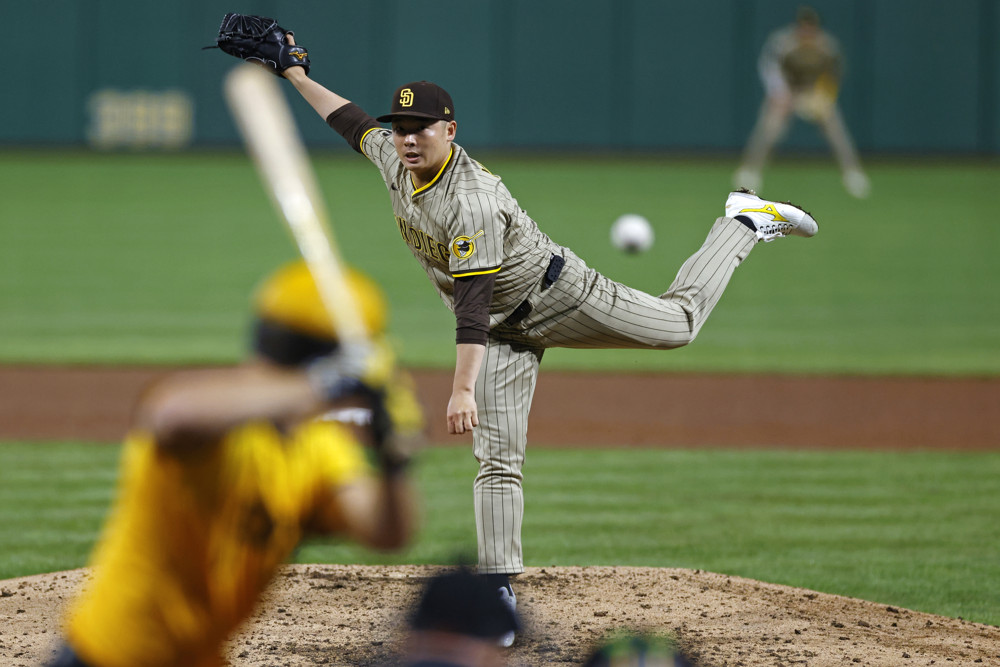
    You may not know their names, but you should know their stats. Brendon Little (Blue Jays), Mason Fluharty (Blue Jays), Steven Okert (Astros), Garrett Cleavinger (Rays), Danny Coulombe (Twins), Yuki Matsui (Padres), Bryan King (Astros) and Brennan Bernardino (Red Sox) have the eight lowest opponents’ batting averages against right-handed hitters.

    Combined, right-handed batters are hitting .136 and slugging .211 against that group, with specialty pitches such as King’s sweeper and Matsui’s splitter repeatedly shutting hitters down. They are a small piece but nonetheless an interesting one to consider in trying to figure out what the heck is going on with this trend at the moment.

    If you want to see stats for right-handed hitters versus left-handed pitchers, click the links to see them on Baseball-Reference and FanGraphs.

  • The Yankees Pitchers Are Runs Savers

    The Yankees Pitchers Are Runs Savers

    Photo: Cliff Welch/Icon Sportswire

    Pitcher defense is one of those things where it’s hard to gauge if your team is doing well or doing poorly just based on the eye test. That’s where something like Defensive Runs Saved comes in handy.

    Let’s use the 2024 and 2025 Yankees as an example. This year, their pitchers are doing well, leading the majors with 11 Runs Saved. Last year, they did poorly, finishing with -9 Runs Saved. Only five teams fared worse.

    Their pitchers have been as valuable as almost any defensive unit in MLB.

    Most Defensive Runs Saved – Position Group in 2025

    Position Group Runs Saved
    Rays shortstops 17
    Braves first basemen 12
    Yankees pitchers 11
    Cubs second basemen 11
    Dodgers right fielders 10

    So what does “doing well” in pitcher defense look like?

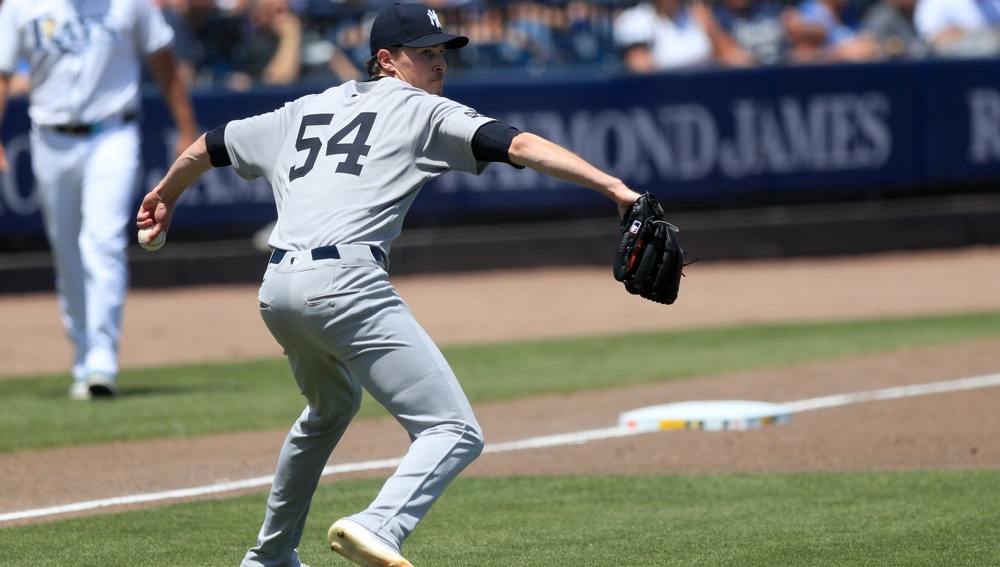
    It’s a mix of this

    This


    And this

    The two pitchers in those videos are a big part of the turnaround. Offseason signee Max Fried‘s 4 Runs Saved are tied for the MLB lead. Reliever Tim Hill somehow ranks 9th among pitchers with 10 assists despite ranking tied for 235th in innings pitched.

    Fried is a baserunning eraser. He has 3 pickoffs and 3 pitcher caught stealings. Add that to 9 assists on batted balls and his 15 assists are the most in MLB entering Tuesday and only 3 shy of the most by a Yankees pitcher in 2024.

    The Yankees lead the majors in pitcher assists as well, as yes, part of the Yankees success is in their pitchers having had the most opportunities to make plays. They’ve done this without an abundance of mistakes. Their 6 Defensive Misplays & Errors rank tied for 10th in MLB. And it’s not just Fried and Hill. Their other pitchers have combined for 4 Runs Saved between them.

    Another component to the Yankees defensive numbers is attrition- the Yankees had 6 pitchers who finished the season with -2 Runs Saved apiece in 2024- Gerrit Cole, Marcus Stroman, Dennis Santana, Phil Bickford, Tom Kahnle, and Clay Holmes. That’s six pitchers combining for -12 Runs Saved. The only one of those to throw a pitch for the Yankees in 2025 is Stroman and he’s pitched only 9 innings.

    The payoff for good pitcher defense is this: The Yankees rank tied for 5th in the majors overall in Defensive Runs Saved. No one wanted to talk about the Yankees’ defense after the disastrous end to the 2024 World Series, but with their pitching staff’s help there hasn’t been a carryover effect this season.

    Most Defensive Runs Saved – 2025 Season

    Team Defensive Runs Saved
    Braves 38
    Rays 36
    Rangers 33
    Blue Jays 31
    Yankees 24
    Cardinals 24


  • Stat of the Week: 1st In Their Division, 29th in Defensive Runs Saved

    Stat of the Week: 1st In Their Division, 29th in Defensive Runs Saved

    Photo: Kyle Ross/Icon Sportswire

    Here are the current MLB division leaders and how they rank in Defensive Runs Saved.

    Division Leader DRS Rank Runs Saved
    Dodgers 5th 24
    Tigers 7th 19
    Cubs 8th 17
    Yankees 9th 16
    Mariners 24th -6
    Phillies 29th -34

    You’ll notice that one is far removed from the others here.

    The Phillies, who just jumped ahead of the Mets for the NL East lead this week, rank 29th among teams in Runs Saved.

    It looked like the Phillies had made considerable strides defensively last season. The primary starters on the right side of the infield—Bryce Harper at first base and Bryson Stott at second—were Gold Glove finalists and the numbers backed up their legitimacy, as well as that of another finalist, left fielder Brandon Marsh.

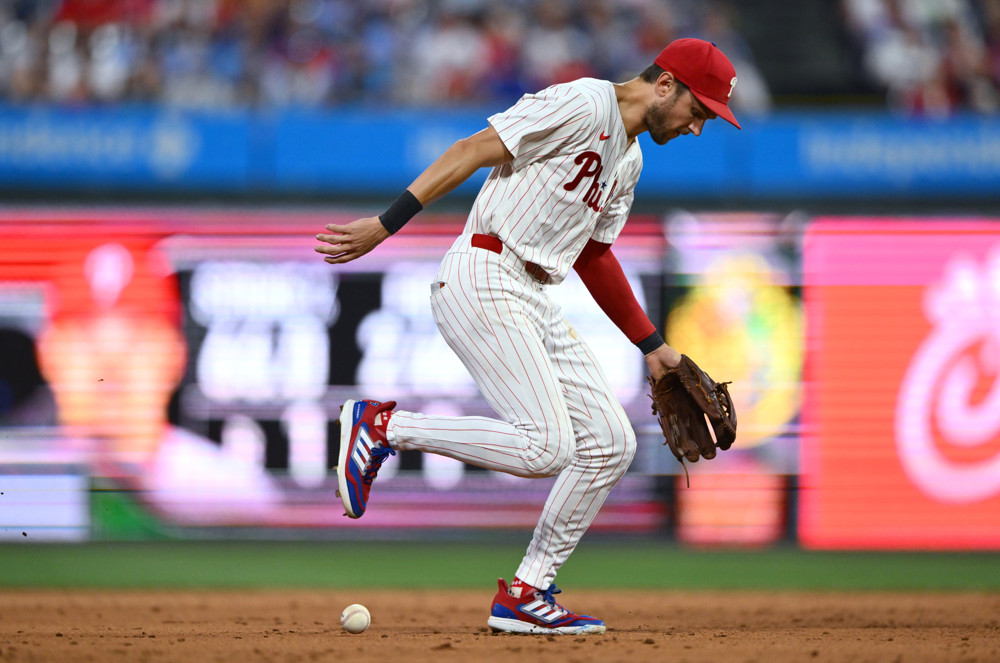
    The Phillies have gotten negative Defensive Runs Saved from every position other than left field (which is at 0). That includes first base and second base where Harper and Stott are slightly below average (-2 Runs Saved apiece). They are the worst team in terms of effectiveness turning double plays. Only one team rates worse in Outfield Arm Runs Saved. Only one rates worse in our pitch-framing stat, Strike Zone Runs Saved. Only one team has done worse in value from defensive positioning.

    The Phillies are not bereft of good defenders. Max Kepler has a good history in left field and has 3 Runs Saved there this season. Pitchers Taijuan Walker and Zack Wheeler have 3 and 2 Runs Saved, respectively. But there are 17 players with negative Runs Saved.

    So how are the Phillies managing to be so good without having a good defense?

    It’s simple. They don’t let opponents hit the ball. They lead the majors in strikeout percentage.

    They also outhit their mistakes. They rank 7th in the majors in runs per game. And they’ve won the close games. They’re 9-3 in one-run games.

  • Matt Olson Is Making All The Plays

    Matt Olson Is Making All The Plays

    In a typical season, one or two first basemen total 10 Defensive Runs Saved. The stat puts a priority on defensive range and though throw-handling is a component within the stat, it’s not one that results in large swings of positive or negative value.

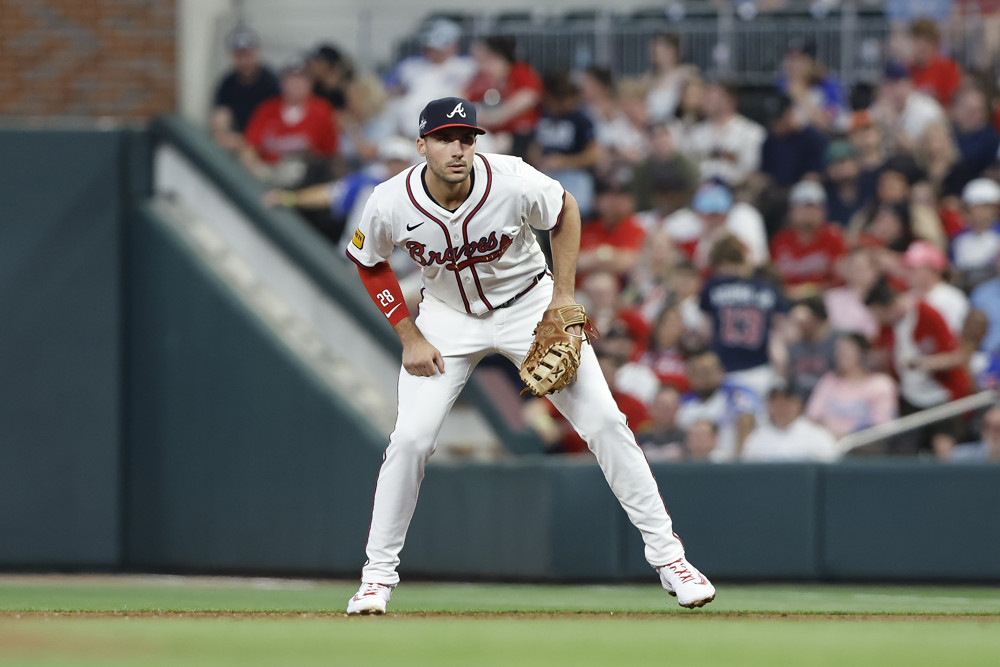
    But what we’ve seen so far from Braves first baseman Matt Olson is unusual, even for him. He’s already at 11 Runs Saved and we still have nearly three-quarters of the season to go.

    Not only that, he’s lapped the field. No other first baseman has more than 4 Runs Saved.

    Player Runs Saved
    Matt Olson 11
    Spencer Steer 4
    Vinnie Pasquantino 3
    Emmanuel Valdez 3

    So what the heck is going on here?

    Let’s make a list:

    1) It’s early. It’s a small sample. Odd things can happen.

    2) Matt Olson is pretty good

    Let’s look at balls hit to his right as an example. The average first baseman converts 36% of plays on balls hit to his right into outs. Look at two other prominent NL East first basemen. Pete Alonso converts 30%. Bryce Harper is at 33%.

    This is where Olson has separated himself from his positional peers. Through Wednesday there had been 59 balls hit to his right. Olson turned 35 of them into an out. His 35-for-59 is a 59% success rate.

    Per our out probabilities, he was expected to turn 28 into an out. Olson was 7 plays better.

    Here are a couple of examples, starting with this one, in which a safe call was overturned on replay review.


    3) It’s still early. Hot streaks happen for hitters, for pitchers, and yes, for fielders.

    4) Matt Olson is still pretty good.


    This isn’t a one-year thing.

    Olson has led first basemen in Runs Saved three other times: 2018, 2019, and 2024. He could stop playing right now and there’s a good chance his 2025 total would hold up as the MLB lead. (In fact, the MLB leader has saved 11 runs or fewer as often as not over the past 15 years.) But we know he’s not going to suddenly stop playing, given that he played every game in 2022, 2023, and 2024.

    5) If you’re a Braves fan you’re probably running through what you’ve seen of his play log in your head. Maybe you’re not that impressed?

    Olson has made only 3 plays via slide, dive or jump this year. His one diving play was one in which a subsequent bad throw home was more memorable. On his one jumping catch this season, you don’t even really see him jump. But then again, he’s 6-foot-4. He doesn’t need to jump often.


    There are 19 first basemen who have made more sliding, diving, and jumping plays this season. It’s not his thing. It doesn’t need to be his thing. This is more his thing.


    His ‘thing’ this year has been volume and a high percentage of plays converted to outs. We’ve credited him with 90 plays made. The only other player with more than 55 is Michael Toglia with 67.

    Additionally, Olson has 52 assists this season. That’s about half as many as he had last season. No one else has more than 33 in 2025. Olson’s more than a quarter of the way to the record for most assists by a first baseman in a season, 185, a mark set by Albert Pujols in 2009.


    6) So let’s multiply his Runs Saved by 4. He’s going to finish with more than 40 Runs Saved!

    Um, no. Let’s not do that. There really isn’t such a thing as playing at a 40-Runs Saved pace defensively. The numbers are much less predictable than that such that “on pace for” doesn’t really work.

    The record for most Runs Saved by a first baseman is 31 by Pujols for the Cardinals in 2007. That’s going to be a tough record for anyone to break.

    The next-best total is 21 by Mark Teixeria in 2008. The record at any position is 41 by shortstop Andrelton Simmons in 2017.

    Something to remember about the time when Pujols did that: more balls in play means more opportunities for plays.

    In 2007, Cardinals pitchers struck out 6 per 9 innings (15% of batters). Pujols, who was an ultra-aggressive first baseman in his prime (we’ve written about it), had a lot more chances to make plays than Olson should get, the last 44 games notwithstanding.

    Braves pitchers in 2025 are striking out nearly 9 batters per 9 innings (23% of batters), though they do have the 5th-highest ground ball rate in the majors.

    That’s going to be a tough record to break. But it’s fun to imagine that it’s possible, no?

    Move over Aaron Judge, there’s another historic season to keep an eye on. It’s just one that isn’t as obvious.

  • Stat of the Week: Teams Making Major Defensive Improvements

    Stat of the Week: Teams Making Major Defensive Improvements

    There were a few dozen instances in 2024 of a team’s position group finishing the year with -10 Defensive Runs Saved or worse. For example, Giants center fielders totaled -24 Runs Saved, Padres catchers had -17, and Phillies shortstops tallied -13. There were more than 30 others.
    It’s reasonable to say that the teams in those situations would benefit from specific defensive improvements, like trying out new players at those spots or working with the struggling defenders to find ways to improve.
    Some teams are still having trouble defensively at those positions. Some have improved. And some have improved a lot.
    In fact, as of Thursday, there are three teams that totaled at least -10 Runs Saved at a position in 2024 that have the most Runs Saved at that position in 2025.
    Tigers 3rd base
    -13 Runs Saved in 2024
    7 Runs Saved in 2025 (MLB leader)
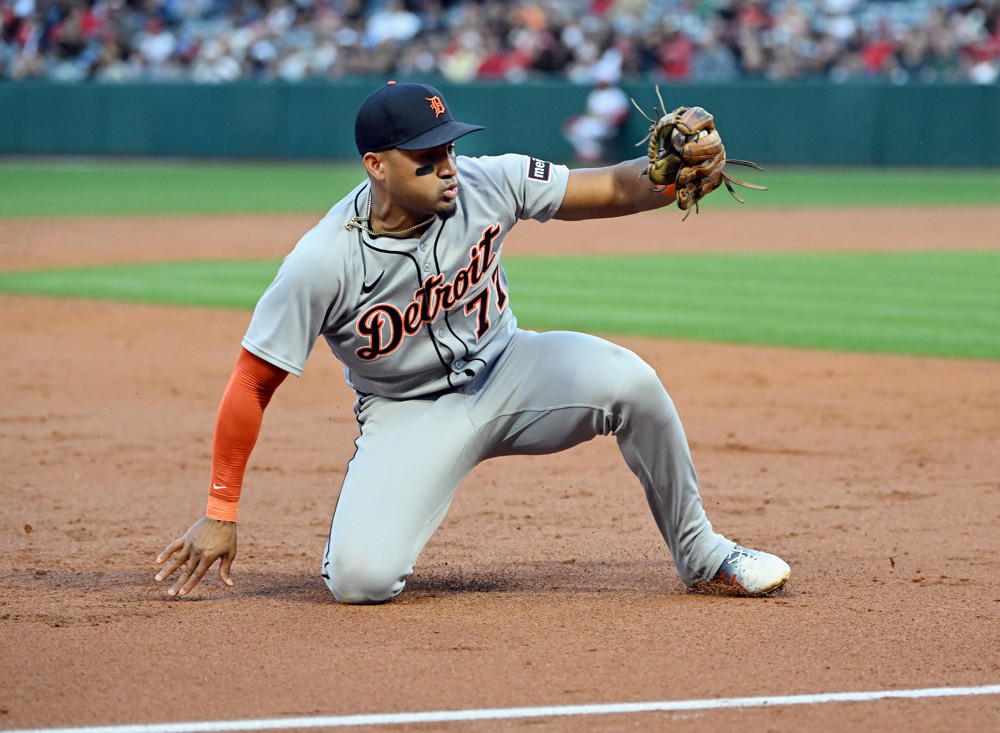
     Seven players combined for -13 Runs Saved at the hot corner for the Tigers last season, with Gio Urshela and his -5 being the chief culprit. This year, sans Urshela, four Tigers have combined for a major-league best 7 Runs Saved at third base.
     There’s been a playing time split among the quartet of Jace Jung, Andy Ibáñez, Zach McKinstry and Javier Báez. None of them have started more than 14 games there but each of them has at least 1 Run Saved. Jung, a top prospect whom the Tigers wanted to win the starting spot, was just sent to the minors because he wasn’t hitting.
    Red Sox catcher
    -14 Runs Saved in 2024
    9 Runs Saved in 2025 (MLB leader)
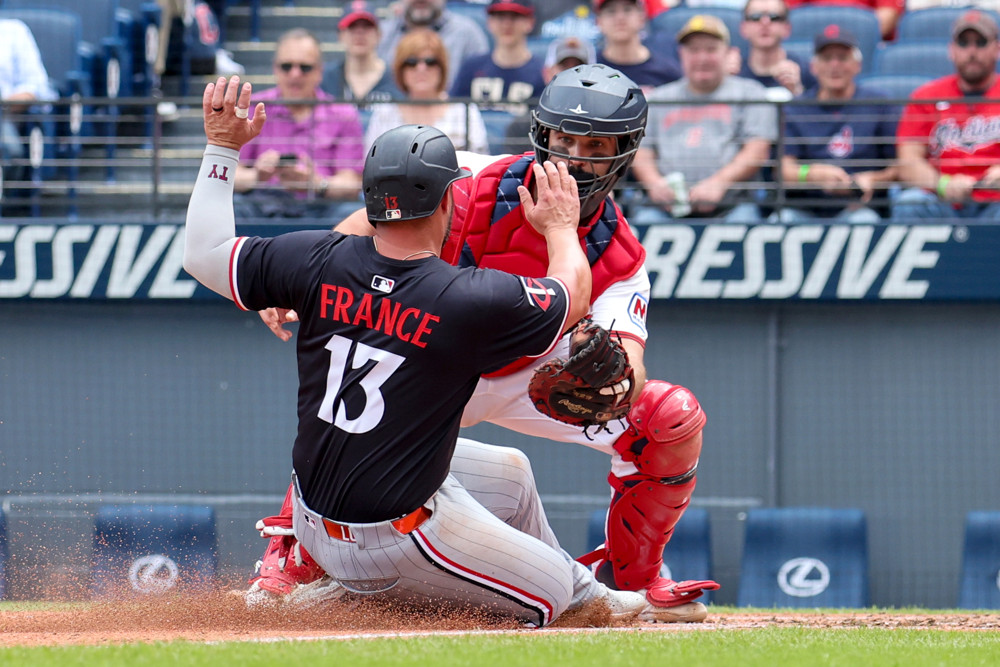
    With Connor Wong missing nearly a month due to injury, Boston turned to Carlos Narváez, who was touted as a strong defensive catcher when he was obtained from the Yankees this past offseason. Narváez has thus far delivered with 6 Runs Saved. Wong has looked better than he did last season. In 2024, he had -14 Runs Saved. In 2025 he has 3.
    Pirates left field
    -13 Runs Saved in 2024
    8 Runs Saved in 2025 (tied for MLB lead)
    The Pirates’ shortcomings this year are pretty much all on their offense. The defense has actually been pretty good in most spots. In left field, Tommy Pham, who had a rough time with the White Sox last season, has 7 Runs Saved, including a home run robbery. It’s been a while since Pham managed a full season of numbers that good. He had 11 Runs Saved as a left fielder in 2017.
    Honorable Mentions
    Twins left field
    -11 Runs Saved in 2024
    7 Runs Saved in 2025 (1 shy of MLB lead)
    The Twins took a good center fielder in Harrison Bader and moved him to left field. That fixed their defensive issues there. Bader has 5 Runs Saved in left field and 3 in center field filling in for Byron Buxton.
    Yankees pitchers
    -9 Runs Saved in 2024 (1 shy of our criteria)
    8 Runs Saved in 2025 (MLB leader)
    Bringing in Max Fried (3 Runs Saved) and Ryan Yarbrough (2) paid dividends. Fried has a strong defensive history. He won a Fielding Bible Award in 2020. Also, props to Carlos Rodon, who allowed 21 stolen bases against 4 caught stealing last season but has yielded only 2 stolen bases with 2 caught stealing in 2025.
  • Guardians Defense Does A Lot Well (Except For Fielding)

    Guardians Defense Does A Lot Well (Except For Fielding)

    Photo: Frank Jansky/Icon Sportswire

    I like to tell people that Defensive Runs Saved is about more than isolating a batted ball, determining whether you got an out, and assessing how much value that batted ball had.

    When the stat was invented in the mid-2000s, that component (turning batted balls into outs) was the dominant one. But John Dewan and Bill James were careful in adding other considerations both at the time of invention and in the future, such as value for turning double plays, both blocking and framing pitches, and how well an outfielder prevented runners from taking extra bases.

    I bring this up because of the 22-15 Cleveland Guardians, whose defensive performance has been unusual.

    I thought the Guardians would be one of baseball’s best defensive teams. But they haven’t exactly played like one yet. They rank 26th in how often they turn grounders and bunts into outs. They rank 24th in how often they turn balls hit in the air into outs (22nd on balls hit in the air into the outfield).

    They rank 29th in the Range (and Infielder Throwing) component of Runs Saved, which is basically our equivalent of Outs Above Average (converted to a run value)

    And yet, they’re not at the bottom in overall Runs Saved. They’re at the front of the middle of the pack, 11th overall.

    So what the heck is going on here

    The Guardians aren’t necessarily turning batted balls into outs at a high rate, but …

    They’ve converted a few more double play chances into two outs than the average team. They have 2 Double Play Runs Saved. Twenty seven teams have 0, 1, or a negative number That helps a little bit.

    They lead the majors with 13 outfield assists and have done well enough at deterring baserunner advancement to rank tied for 2nd with 4 Outfield Arm Runs Saved. That helps a little more.

    They rank tied for 2nd in our pitch framing metric, Strike Zone Runs Saved, thanks to Bo Naylor and Austin Hedges.

    They also rank tied for 2nd in Stolen Base Runs Saved. Hedges has thrown out 4 of 14 would-be basestealers and picked off two others. Gavin Williams, Logan Allen, and Tanner Bibee have all been good at holding baserunners. The Guardians catchers rank 3rd with 5 Runs Saved and that helps considerably.

    Lastly, their defensive positioning has been good, which is something that gets credited to the Guardians as a team. The way Defensive Runs Saved works, you can even get credit for positioning when your players don’t make the play (idea being: you put them in a better position to make one, so you get rewarded). Between the infield and outfield, Cleveland ranks tied for 5th in positioning.

    Most Runs Saved – Other Than From Range and Infielder Throwing

    Team Runs Saved
    Guardians 23
    Mets 22
    Cubs 17
    Dodgers 16
    Tigers 15

    Add all that up and it pushes a negative defensive performance to one that – as we said – is middle of the pack. The Guardians and Phillies, to use one example, are comparable in the Range component of Runs Saved. The Phillies are 4 runs better than the Guardians. But they diverge considerably because Cleveland does a lot of other things well. The Guardians are 33 Runs Saved better than the Phillies in other aspects of defense.

    The Guardians are better than what they’ve shown, at least based on their history. Third baseman José Ramírez and shortstop Brayan Rocchio have Runs Saved numbers so far that are distant from their track record. If they ever get it going, the Guardians defense should be pretty good and they may just hang with the Tigers and Royals in the AL Central.

  • Familiar Names atop Defensive Runs Saved Leaderboards

    Familiar Names atop Defensive Runs Saved Leaderboards

    5 past Fielding Bible Award Winners Currently Lead Their Position in Defensive Runs Saved.

    If you’re someone who looks at the Defensive Runs Saved player leaderboards this early in the season, you should know that the numbers have not reached any sort of predictive level yet.

    But if you look at the names of the early-season positional leaders, you might notice that the best defensive players of recent vintage are already the best defensive players in 2025, particularly in the infield and outfield.

    There are five past Fielding Bible Award winners currently leading their positions in Defensive Runs Saved. And those that aren’t past winners seem worthy of their top spot early-on in 2025.

    Here are the current positional leaders.

    MLB Defensive Runs Saved Leaders

    Position Name Runs Saved
    1st Base Matt Olson 5
    2nd Base Andrés Giménez 5
    3rd Base Matt Chapman 5
    Shortstop Taylor Walls 7
    Left Field Steven Kwan 7
    Center Field Ceddanne Rafaela 6
    Center Field Pete Crow-Armstrong 6
    Center Field Victor Scott II 6
    Right Field Fernando Tatis Jr. 6
    Catcher Carlos Narváez 6
    Pitcher Sean Burke 4

    Click the name to see an example of some good defense this season.

    Matt Olson is a four-time Fielding Bible Award winner at first base. Winning another would give him five, matching Albert Pujols for most at the position.

    Andrés Giménez has won the last two Fielding Bible Awards. The only second baseman to win three in a row is Kolten Wong (2018-2020).

    Matt Chapman has won three Fielding Bible Awards. Have you seen some of the throws he’s made this year???

    Taylor Walls doesn’t have any hardware, but he has the most Defensive Runs Saved of any shortstop since the start of the 2024 season, though he ranks 24th in innings played in that time.

    Steven Kwan has won two Fielding Bible Awards. He currently leads all outfielders with 6 assists.

    Ceddanne Rafaela, Pete Crow-Armstrong, and Victor Scott II are the new kids on the block, so to speak. Crow-Armstrong and Scott each won minor league Gold Gloves. Rafaela twice won the Red Sox minor league defensive player of the year.

    Fernando Tatis Jr. won a Fielding Bible Award two years ago when he was the runaway leader in Runs Saved among right fielders.

    Carlos Narváez earned rave reviews from the Yankees for his defense prior to their trading him to the Red Sox this past offseason (Yes, the Yankees and Red Sox made a trade). We’ll see if he gets the playing time needed to stay atop the leaderboard with Connor Wong back from injury.

    Sean Burke went from unknown to Opening Day White Sox starter pretty quickly. He hasn’t allowed a stolen base in 39 1/3 innings and leads the AL with 11 assists.  

    A reminder that you can find all the defensive leaderboards at FieldingBible.com and past leaders at our archive site.

  • Harrison Bader, Pete Crow-Armstrong Named Defensive Players of the Month

    Harrison Bader, Pete Crow-Armstrong Named Defensive Players of the Month

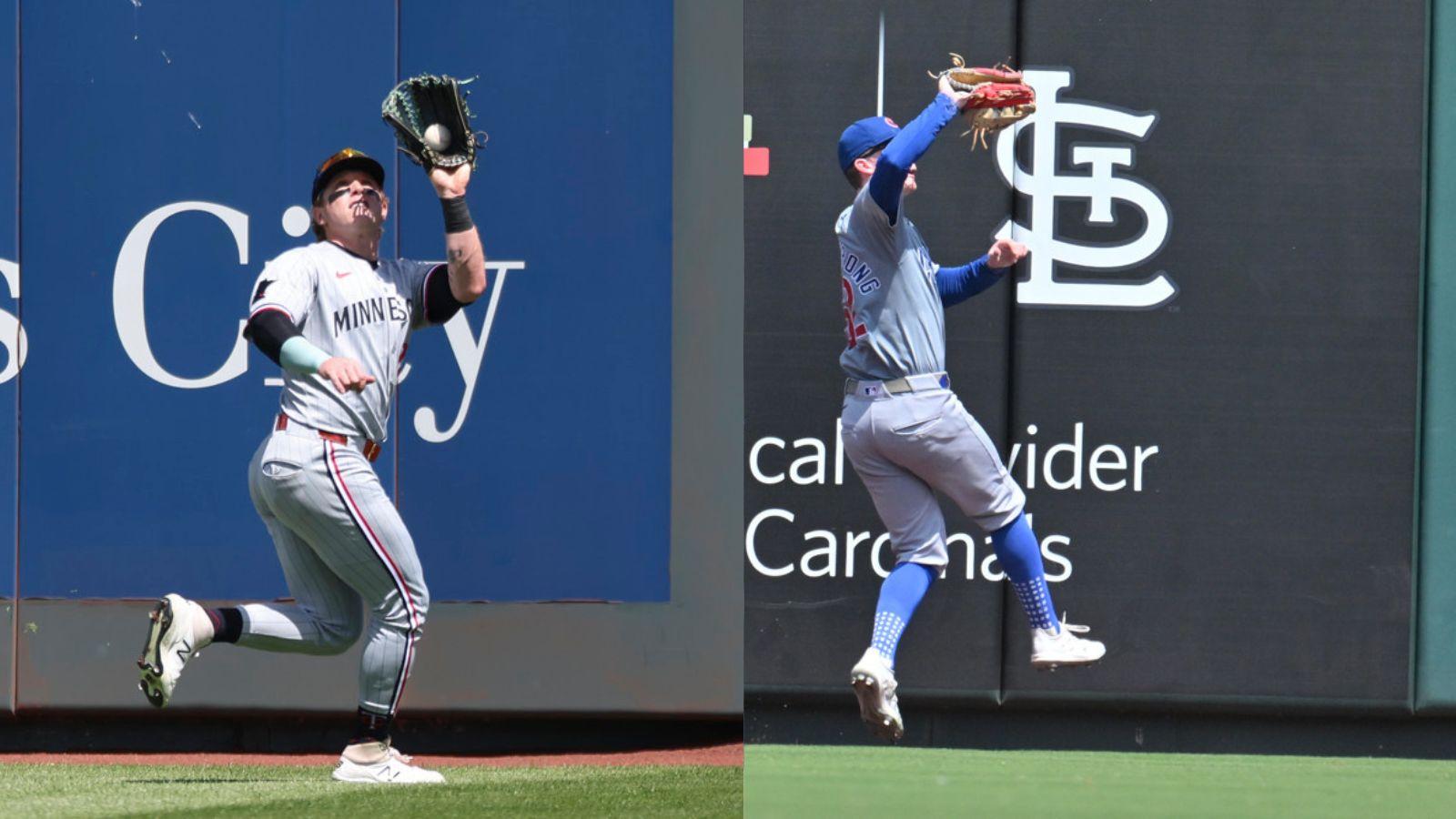
    Twins outfielder Harrison Bader and Cubs center fielder Pete Crow-Armstrong are the SIS Defensive Players of the Month for March/April.

    In his first month-plus with the Twins, Bader led all players with 7 Defensive Runs Saved and led all outfielders with 9 Good Fielding Plays.

    The Twins signed Bader this past offseason knowing that they could use him in a couple of ways. They could play him in left field, giving themselves a pair of highly-skilled outfielders if Byron Buxton stayed healthy in center field. And they knew that they could slide Bader over to center if Buxton had any issues.

    Thus far, though the team is struggling, Bader’s defense has given it a boost. He has 4 Runs Saved in 22 games in left field and 3 in six games in center field. His specialty has been coming in to make a diving catch, as he earned a Good Fielding Play for doing that 6 times (like this run-saving one).

    He has 5 Runs Saved for his range and 2 Outfield Arm Runs Saved, for plays like this one against the Mets.

    Crow-Armstrong finished April with 6 Runs Saved, the most by any center fielder. He’s tied with Red Sox center fielder Ceddanne Rafaela with 17 Runs Saved for the most by anyone at the position since the start of last season.

    Crow-Armstrong has made a couple of nifty grabs on deep fly balls (like this one).

    He has 5 Runs Saved from his range and 1 Run Saved via a couple of assists (here’s one that wowed the announcers and was overturned to an out on replay review).


    Crow-Armstrong’s strong start on defense has helped the Cubs rank second in Runs Saved, trailing only the Rays. His strong start at the plate, with an OPS 170 points higher than his 2024, has buoyed the team as well.

    Other strong contenders for Defensive Player of the Month were Red Sox catcher Carlos Narváez, who leads the position with 6 Runs Saved, shortstop leaders Anthony VolpeCorey Seager, and Taylor Walls, left field leader Tommy Pham, and Padres right fielder Fernando Tatis Jr.

    Sports Info Solutions has been naming Defensive Players of the Month since 2012 (with ESPN from 2012 to 2017 and then on its own since then), using a combination of statistical analysis and the eye test. Defensive Runs Saved has tracked MLB player defensive value since the 2003 season and is considered one of the industry-leading defensive stats.

  • Stat of the Week: Early Observations – Impressive Outfielders

    Stat of the Week: Early Observations – Impressive Outfielders

    We’re hesitant to make any proclamations about anything defense-related a few weeks into the season. But we like to honor defensive excellence regardless of what time of year it is. So we’ll point out a few things we’ve found notable. Here are a few of them from outfielders. We’ll try to look at infielders (and maybe catchers) next week.

    Mark April 24 on your calendar as it’s the day that Cubs center fielder Pete Crow-Armstrong led the majors in a stat that our company invented some years back, Total Runs.

    Total Runs combines hitting, baserunning and defensive performance into one number in a manner similar to the run component used by Wins Above Replacement.

    And yes, it’s Crow-Armstrong, not Aaron Judge or Pete Alonso, who ranks No. 1 and defense is a part of that. Crow-Armstrong plays one of the most important positions on the field and he plays it like someone wanting to win a Platinum Glove. His 16 Runs Saved since the start of last season (including 5 in 2025) are tied for the most among center fielders.

    Shameless plug: He was one of a few topics of conversation on this week’s edition of The SIS Baseball Podcast.

    Most Total Runs – 2025 Season

    Total Runs
    Pete Crow-Armstrong 32
    Aaron Judge 31
    Fernando Tatis Jr. 30
    Corbin Carroll 30
    Pete Alonso 29

    Fernando Tatis Jr. is back to chasing down fly balls like he did two years ago when he co-led the majors with 27 Defensive Runs Saved. Former major leaguer and current ESPN broadcaster Doug Glanville said on our podcast that Tatis is a player who would most likely be a good gymnast too, because of his flexibility. He’s made five catches that earned “Good Fielding Play” tallies from our Data Scouts, including this one that Glanville loved.

    “He slid for the ball and he kept sliding, and while he was sliding he threw a rocket to first base,” Glanville said. “I was like ‘wait, how did he even get that ball?’”

    The Padres rank No. 2 in MLB in terms of turning fly balls hit to the outfield into outs (among balls that stay in the park), trailing only the Reds.

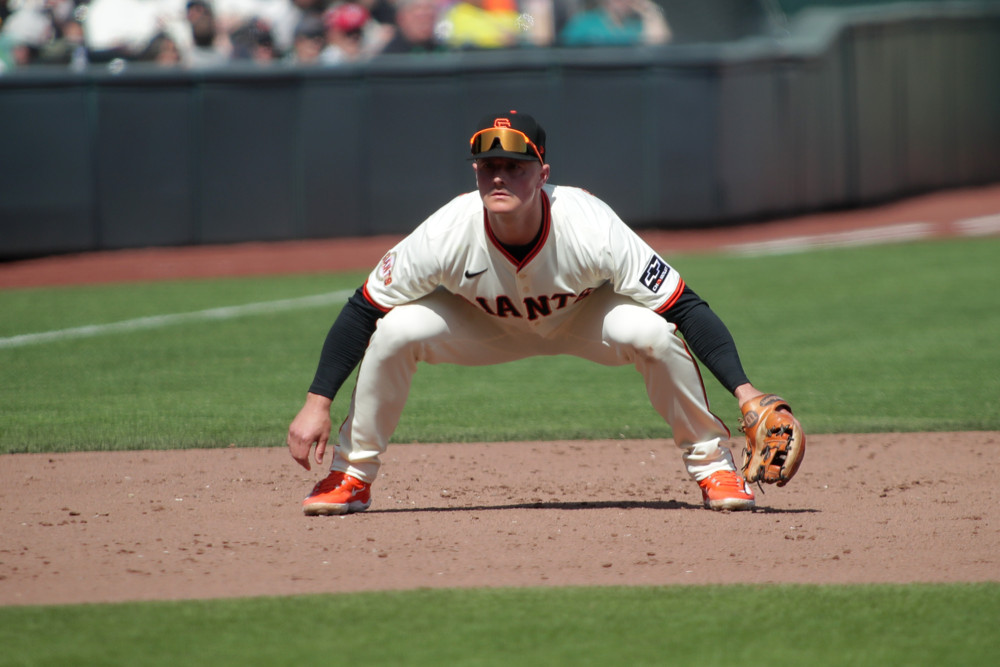
    Staying out West and staying in the outfield, Giants center fielders had the worst Runs Saved of any team in baseball in 2024. In fact, they were the worst defensively of any team at any position. But fan-favorite Jung Hoo Lee is healthy now after missing most of last season with an injury. And he’s good enough such that the negative Runs Saved total may turn positive for the Giants in 2025.

  • Stat of the Week: The All-Scrapes Team

    Stat of the Week: The All-Scrapes Team

     Photo: Melissa Tamez/Icon Sportswire


    Did you happen to see this catch by Blue Jays right fielder George Springer against the Red Sox last week? We did and we weren’t particularly surprised by it.

    From 2022 to 2024, no right fielder dove for a ball more than the 30 times that Springer did. In fact, only one other right fielder had even half as many diving attempts in that span as Springer did, his teammate, Anthony Santander (25).

    In those 30 times that Springer dove, he caught the ball 22 times, a success rate of 73%, pretty good given that the average right fielder was successful at making a catch on 54% of his dives (center field and left field have similar rates of effectiveness).

    If you were listening to our most recent episode of The SIS Baseball Podcast, you heard our guest, Hannah Keyser, and I run through “The All-Scrapes Team.” That’s the list of players who dove the most at each infield and outfield position over those three seasons.

    We’re still largely working in small sample sizes for 2025, so we thought it would be fun to review that All-Scrapes squad with some comments related to each of the leaders and positions.

    First Base Pete Alonso dove for balls 139 times from 2022 to 2024. The next-closest first baseman was Carlos Santana (81). Alonso was a little better than average at getting outs on his dives (41% of the time, MLB average was 37%).

    The most effective divers by percentage were Ryan Mountcastle and a relative newcomer to the position, Bryce Harper, both with 60% success rates. Harper ranked second to Alonso in dives by a first baseman last season with 39.

    Second Base – Three second basemen dove more than 100 times in the last three seasons – Andrés Giménez (140), Bryson Stott (113), and Nico Hoerner (112). Of those, Giménez is the most successful, recording an out on 25% of his dives (MLB average is 24%).

    Brendan Rodgers had the best track record at getting outs on dives (45%). At the other end is Jeff McNeil, who got an out just five times on 60 diving attempts (8%).

    Shortstop – The leaders in dives are Geraldo Perdomo and C.J. Abrams with 111. The average shortstop is successful on only 21% of his dives, so Perdomo’s 32% looks pretty good.

    Perdomo and Abrams played the position differently from a lot of shortstops. The average shortstop dives every 2.5 times for every time he slides to make a play, but Perdomo and Abrams almost never slid, doing so just 7 and 3 times, respectively.

    Third Base – Alec Bohm (115) and Rafael Devers (96) ranked 1-2 in dives in that time. Before you say, ‘Only bad fielders dive for balls,’ you should know that the next five players in diving attempts are Matt Chapman, Austin Riley, Ryan McMahon, Ke’Bryan Hayes, and Alex Bregman.

    Of the 20 third basemen who dove the most, the one who got an out most often was Manny Machado (38%).

    Left field – Jurickson Profar (27) and Ian Happ (26) are the top two here. Happ goes all out for balls in all sorts of ways. His 133 slides, dives, and jumps in that span were miles ahead of the player with the second-most, Lourdes Gurriel Jr., 78. Shout-out to Brandon Nimmo, who has split time center field and left field and has recorded an out on 80% of his dives over the last three seasons.

    Center field – Brenton Doyle is another outfielder who goes all-out, so much so that he had more dives in two seasons (34) than any other center fielder had in three. He won a Fielding Bible Award last year for playing with a high effort level. Standouts at getting outs when they played center field and dove included Riley Greene (79%) and Cedric Mullins (78%)

    Right field – As mentioned above, Springer leads the way in dives here and is highly effective when he does dive.

    All Players – Because some players switch positions, we thought it was worth checking the overall leaderboard, and in fact, the top diver was a position switcher – Nico Hoerner of the Cubs has 155 dives for balls over the last three seasons. However, we’re wondering if he might be able to save his body a little bit. He’s been successful at getting an out on only 15% of his diving attempts.

    Here are the leaders by position:

    Most Diving Attempts – 2022 to 2024

    Player Dives
    1B- Pete Alonso 139
    2B- Andrés Giménez 140
    SS- Geraldo Perdomo (tie) 111
    SS- C.J. Abrams (tie) 111
    3B- Alec Bohm 115
    LF- Jurickson Profar 27
    CF- Brenton Doyle 34
    RF- George Springer 30
    Overall- Nico Hoerner 155