Category: 2025 NFL

  • Dissecting The Returns of Lamar Jackson & Joe Burrow

    Dissecting The Returns of Lamar Jackson & Joe Burrow

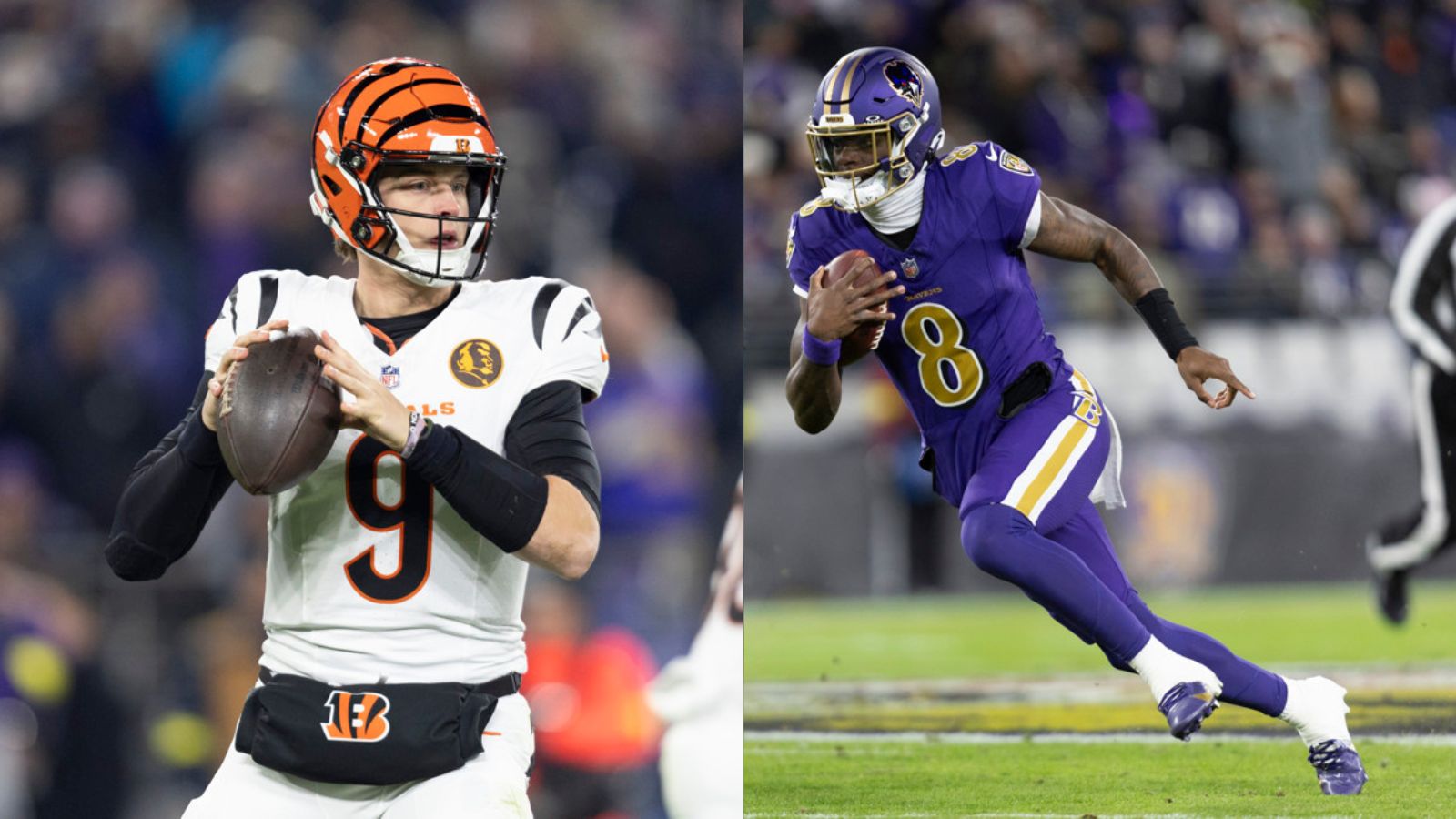
    The AFC North has been playing a game of musical chairs at quarterback this season outside of the Steelers who have maintained some stability. The Browns, Ravens, and Bengals have all started three different QBs due to injury and insufficient performance from their backups. This has set up a dramatic division race to end the season as Lamar Jackson and Joe Burrow have returned from early season injuries.

    The Bengals and Ravens met on Thanksgiving night, and the Ravens squandered a prime opportunity to solidify their position and knock the Bengals out of the division race. Fortunately for the Ravens, they will have the chance to avenge their loss in two weeks in Cincinnati.

    Let’s take a look at how these top signal callers have fared in their returns.

    Lamar Jackson

    Lamar suffered a right hamstring strain in Week 4 against the Chiefs that caused him to miss three games. Unfortunately, Jackson continues to pop up on the weekly injury report since his return with knee, ankle, and toe designations. He does not look fully healthy and his performance is suffering because of it. 

    Part of what makes Jackson such a dynamic QB is his rushing ability, and that has suffered since the lower body injuries piled up. The table below shows the rushing stats for Jackson on designed QB runs (run plays that aren’t QB sneaks, kneels, or scrambles):

    Lamar Jackson on Designated QB Runs

    Pre-Injury Post-Injury
    Att/G 3.0 1.8
    Yds/Att 6.3 3.5
    BT+MT/Att 0.25 0.11
    Total Points 2 -2

    The Ravens are calling designed QB runs at a slightly lower rate and understandably so. Jackson’s efficiency in the run game has been almost cut in half and his inability to make defenders miss seems to be a driving factor. His effectiveness on scrambles has also taken a hit:

    Pre-Injury Post-Injury
    Att/G 2.3 2.8
    Yds/Att 10.0 5.4
    BT+MT/Att 0.33 0.29
    Total Points 9 3

    Jackson has had to scramble a bit more since his return, but without the same impact when healthy. It’s definitely a good thing that he hasn’t avoided scrambling altogether as it shows he still has faith in his legs, despite all the injuries. The threat of him being able to extend plays and scramble opens up things in the passing game. 

    However, Jackson has been struggling throwing the ball, as well. Among 36 QBs with 50 or more pass attempts since Week 9, Jackson ranks 2nd-worst in On-Target% at 61%. The only QB worse than him? JJ McCarthy. 

    The Ravens will need Jackson to step up his play at the end of the season if they want to win the AFC North. Their defense has struggled against the pass this season, ranking in the bottom half of our Total Points player value stat. Their inability to sack the QB has been a big issue, as they rank in the bottom 5 in both pressure rate and sack rate. The Ravens have not been able to rely on their defense like they have in the past.

    Joe Burrow

    Burrow made his return from a Grade 3 turf toe injury that required surgery and will look to build upon a huge Thanksgiving win to make an improbable comeback to win the division. Burrow wore a “hard plate” to protect his injured left toe, so it does seem like he is still battling the injury to some extent.

    Looking at the table below, we can compare Burrow’s Week 1 performance to his recent Thanksgiving performance: 

    Joe Burrow – 2025 Season

    Pre-Injury Post-Injury
    Dropbacks 28 48
    On-Target% 91% 79%
    Total Points/Play 0.19 0.17

    The Bengals didn’t limit Burrow at all in his return as he dropped back to pass 48 times in a game they won comfortably in the second half. His accuracy dropped a bit in his first game back, but his effectiveness only dropped marginally. He doesn’t appear to be having issues throwing to any one side of the field as the On-Target% remains similar to both directions. 

    Similar to the Ravens, the Bengals will need their star QB to carry the load as the Bengals defense against the pass has been putrid. They rank last in Total Points in pass coverage with 24. For comparison, the Commanders are the next worst with 45 Total Points. That’s a  concerning difference. They also have not been able to rush the passer at an effective rate, with pressure and sack rates right in line with the aforementioned Ravens. 

    It wasn’t a vintage Burrow performance by any means, but it was an encouraging first game back after missing a significant portion of the season. My colleague, Bryce Rossler, wrote an article last year about QB performance when returning from a significant injury. A key takeaway is that it takes about four games for a QB to return to his pre-injury form. Lamar Jackson doesn’t quite meet the threshold of missing at least four games that this article is based on, but I think it is still useful for what to expect for the rest of the season.

    AFC North Ramifications

    While talking about the AFC North division race, we’d be remiss not to mention the Pittsburgh Steelers. After a hot start to the season and a commanding lead in the division, they now sit tied with the Ravens at 6-6. Aaron Rodgers has gotten banged up recently dealing with a left wrist injury that caused him to miss a game before re-injuring it upon his return. They desperately need him to stay healthy to try and right the ship, which says something because he has been below-average on the whole this year. 

    This division race might come down to whichever QB can find their pre-injury form the fastest. Historical data says Jackson should have the advantage there, but lingering lower-body injuries may prevent us from seeing Jackson at his best the rest of this season. 

    Can Burrow, the two-time Comeback Player of the Year, lead the Bengals to an improbable division comeback? They will need Burrow to buck the four-game trend as they head to Buffalo this week before a rematch at home against Baltimore that may decide their fate.

  • The Seahawks Are Down, But Their Defense Has Shown They’re Not Out

    The Seahawks Are Down, But Their Defense Has Shown They’re Not Out

    Photo: Lee Coleman/Icon Sportswire

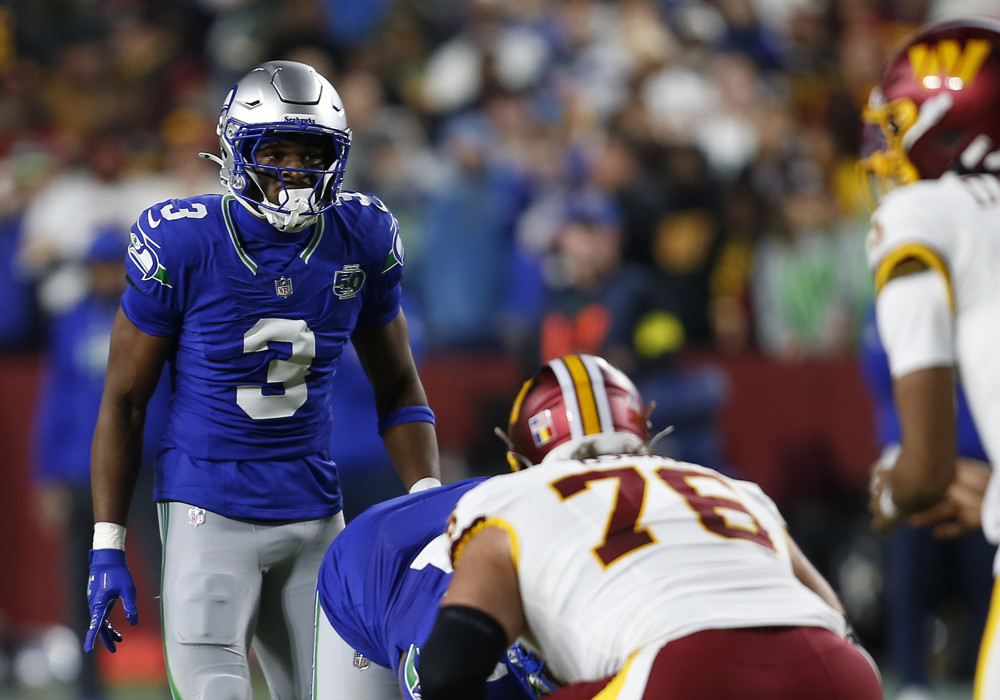
    The Seattle Seahawks did not get what they were looking for when they visited Los Angeles, leaving town with a loss to an excellent Rams team and taking a significant blow to their odds of capturing the NFC West crown. Much has been made about Sam Darnold’s poor performance in big time games – rightfully so – and that will continue to be the case until he can flip the script. 

    All is not lost in the Emerald City, however. Despite all four interceptions ending up giving the ball back to the Rams in Seattle territory, the Seahawks managed to somehow still have a chance to win it with a kick as time expired, mostly thanks to their defensive unit. 

    Let’s take a deeper look into what makes them one of the best defenses in the league and why they still have a shot to make some noise come January. 

    The Rams came into the matchup ranked as the 2nd-best offense in our Total Points Per Play metric and had been on a heater, dropping 34 points or more in each of their previous three games. The Matthew Stafford MVP campaign was in full swing, with him tossing 13 touchdowns against no interceptions in that span. 

    Stafford had a much less enjoyable time this past Sunday, mustering just 130 yards on 28 pass attempts. 

    Stafford was pressured on 46% of those dropbacks, more than 10 percentage points above his season average. His on-target rate was also down more than 10 percentage points below his season average when pressured, and his average throw depth was four yards shallower than usual. 

    A graph showing the jump in pressure rate and the drop in on-target rate for Matthew Stafford Pressure Rate vs Stafford Through Week 10 35% Week 11 46% On-Target Rate Week 1- 10 67% Week 11 58%

    In a press conference a few days before the game, Seahawks head coach Mike Macdonald said he “agreed to a large extent” when asked about Greg Olsen’s comments on how he would deploy defensive units based on down and distance tendencies rather than match up based on personnel. 

    The Rams deploy 13 personnel (1 running back and 3 tight ends) more than any other team in the league, which is something that could be awkward for a defense to handle if it were inclined to sub players to match. From Weeks 1 to 10, the Rams had both quantity and quality when passing out of 13 personnel, posting a top five success rate.

    So one could think that the deployment based on down and distance approach is better suited to stopping this sort of attack, but it is not so simple. The Rams also posted a top five rushing success rate out of 13 personnel before Week 11. They want to dictate the terms of the matchup. 

    If the opponent tries to meet size with size, they will get those bigger bodies out in space and pressure them to cover. If the defense goes lighter with nickel or dime to defend the pass, they will force those defensive backs to make tackles and defend the run. 

    The Seahawks do have the personnel to win with this aforementioned approach. They play in nickel more than any team in the league, including against 13 personnel. They rank 1st in passes defensed, sacks, and pressures. And in this game, the Rams were able to gain only 4 yards on 6 pass attempts in 13 personnel against the Seahawks (the Rams did score a passing touchdown).

    A graph showing where teams stand in pressures and passes defensed in nickel. The primary point of the chart is to show that the Seahawks have the most in both statistical categories

    Perhaps more impressively, against the run, Seattle ranks 2nd in EPA per carry allowed and 7th in run stuff rate (rushes resulting in 0 or fewer yards).  Kyren Williams did break a 30-yard run, but outside of that, he and Blake Corum were held to 15 yards on 10 carries while in 13 personnel. With Uchenna Nwosu, DeMarcus Lawrence, Leonard Williams, and Byron Murphy II, Seattle has a four-man front capable of stopping the run even when in nickel. 

    A player to keep an eye on is Nick Emmanwori, the South Carolina safety the Seahawks traded up for to take at near the top of the second round in last year’s draft. Emmanwori came into the league with a bit of that athletic but raw stereotype, but he has shown he can still be an all-around playmaker as he continues to develop his game. 

    In seven games, he has already recorded seven passes defensed and five tackles for loss against the run, showcasing the type of versatility necessary to make Macdonald’s scheme soar. They are stylistically different, but one can see what type of impact they envision him to be capable of when you think back about Macdonald’s deployment of a certain All-Pro safety he coached in Baltimore, Kyle Hamilton. 

    In order for the Seahawks to truly be taken seriously and considered among the league’s elite, they must prove that they can dictate the terms on offense. 

    Seattle has enjoyed offensive success up to this point in large part due to its ability to complete explosive plays against base defenses. The Seahawks rank 1st in passing EPA and boom rate when facing base. However, last week’s game showed that teams will not make it so easy for them going forward.

    The Rams invited the Seahawks to try to run on them, primarily playing in dime and nickel. Though not a poor showing overall, Seattle could not truly take advantage when the Rams brought in lighter bodies, gaining only 20 yards on six carries against their dime defense. 

    On the season, Seattle ranks in the bottom 10 in rushing EPA per attempt against both dime and nickel. Teams will continue to encourage the Seahawks to run the ball until they can prove they can punish defenses on the ground.

    Until that happens, Seattle will continue to have to be overly reliant on its passing game to make up ground, which in this matchup turned out to be its death knell. The Seahawks had the most pass attempts versus dime personnel in Week 11. They have a negative passing EPA for the season when facing dime. Darnold needs to demonstrate he can perform consistently when in obvious passing down situations. 

    The Rams visit Seattle for another clash in Week 16. The Seahawks defense will be ready. The question is will the offense be? The answer to that will determine whether or not the result will be different for their rematch that could decide the NFC West crown.

  • Find Us A Good Stat on J.J. McCarthy … Believe Me, We’ve Tried

    Find Us A Good Stat on J.J. McCarthy … Believe Me, We’ve Tried

    I’m not quite sure how we got here. 

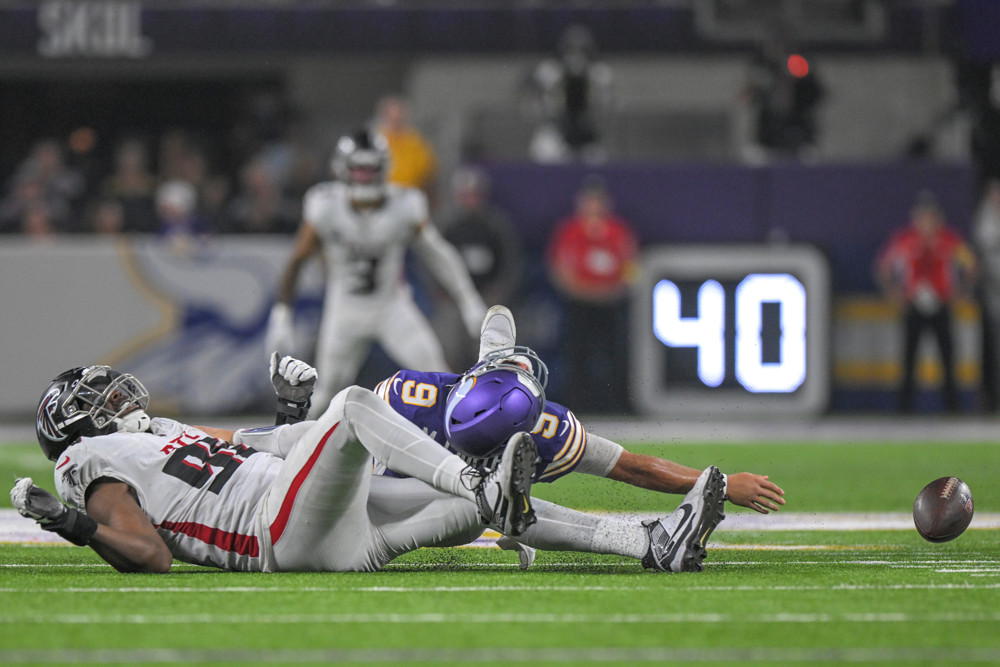
    In the summer of 2023, Jonathan James McCarthy, 22, of Evanston, Illinois, was not a player very many people considered to be a future first-round pick. Third-wheeling it on Michigan’s run-first national championship team was probably part of his rise, and he appeared 30th on the consensus mock draft five days after the Wolverines hoisted the CFP Trophy. He’d eventually be taken 10th overall by the Vikings and go on to miss his entire rookie season with a torn right meniscus, but you probably already know all this. 

    What you might not know is: What has inspired the bizarre mythmaking about this particular player? And, furthermore, is there any reason to believe he’ll ever be any good?

    Let’s first set the stage here. Among 37 quarterbacks with 100+ attempts, McCarthy currently ranks 33rd in passing Total Points per play with a number that rounds to 0 from the nearest hundredth. 

    What this means, effectively, is that he has been a replacement-level passer through the first four games of his career (minimum 20 snaps each game), something that can be said of just 24 other quarterbacks in the SIS era (2015-present). 

    This list is filled with names like Nathan Peterman, Josh Rosen, Paxton Lynch, DeShone Kizer, Dorian Thompson-Robinson, Ryan Finley, and Mitch Trubisky. Just two of them ever became long-term NFL starters: Jared Goff and Josh Allen, with the former playing on a hapless Rams team under Jeff Fisher and the second being a consensus developmental guy with freakish physical ability. Neither of those things can be said about McCarthy.

    The highs have been low and the lows have been really low. On plays with an above average Total Points value, he ranks 27th on a per-play basis; on plays with a zero or negative Total Points value, he ranks 34th. Furthermore, his overall positive play rate ranks 32nd at 38%. If your starting quarterback is going to be inconsistent down-to-down with low valleys, these are not the peaks you want. 

    In aggregate, this produces a quarterback who’s 35th in both boom rate (producing high EPA plays) and bust rate (limiting low EPA plays).

    McCarthy has the highest sack rate in the NFL at 11% and the second-highest interception rate at 6%. If those hold, he would be the only player in the SIS era (2015-present) with a sack rate above 10% and an interception rate above 5% in a single season. Before this year, only 11 players ever had a season in which their sack rate was above 8% and their interception rate was above 4%. The last player to do that was Will Levis last season. He was subsequently replaced after just 21 starts.

    It’s not readily apparent what he has to hang his hat on. I’ve seen people claim he’s a good athlete and that he’s been good under pressure, but the numbers certainly don’t bear that out. He turns pressures into sacks 26% of the time, 3rd-worst in the league, and his Independent Quarterback Rating under pressure of 32.5 is 2nd-worst in the league. The only QB with a lower positive play rate on scrambles this year (minimum 5 attempts) is his teammate, Carson Wentz.

    McCarthy’s expected on-target throw rate +/-, which accounts for factors like throw depth, is the worst in the NFL at an atrocious -13%. (For context, -5% is enough to make you one of the worst any given year).

    He barely has a dozen reps of quick game this year, so who’s to say if he’s any good at something his coaching staff isn’t really asking him to do much of? Quick game is typically thought of as easy-to-execute but requires quick processing, touch, and good ball placement, and I think people should be reluctant to prescribe it as a cure-all for struggling, young quarterbacks.

    He has the worst Total Points per play on deep throws (20+ yards) besides a 32-year-old Marcus Mariota.

    So, what’s the excuse? Kevin O’Connell just won Coach of the Year, if that means anything to you.

    The three-deep at wide receiver is one of the best in the NFL with Justin Jefferson, Jordan Addison, and Jalen Nailor; as a group, they rank 6th among top receiving trios in receiving Total Points per route run. 

    The offensive line is missing Ryan Kelly but has four other veterans holding down the fort, and that unit ranks 19th in pass blocking Total Points per snap. Their blown block rate is 9th-worst, but that’s counterbalanced by the fact that McCarthy faces one of the slowest average times to pressure in the NFL and is just one of four QBs who average 3 seconds or more before pressure arrives on their pressured dropbacks.

    It is true that there are things advanced stats can’t capture in McCarthy’s game, like his pre-snap cadence being so bad that the Vikings committed eight false starts at home, the most by any home team in 16 years, per ESPN’s Kevin Seifert.

    More seriously, a lot of these splits are admittedly small sample or, in the case of throwing performance vs pressure, statistically volatile. The point is more so that the film says he’s been bad, the stats say he’s been bad, and that there’s currently nothing encouraging to point to outside of the fact that it’s only been four games. 

    People say that ‘stats don’t lie,’ but if you do enough filtering, you can usually find a split that reflects well on a player. That’s been really difficult to do with McCarthy. For example: on un-pressured throws between 10-19 yards – something a quarterback should look really good at under Kevin O’Connell – he’s 38th in Total Points/pass among 39 quarterbacks with 10 or more attempts.

    We’ve seen people make points about his rookie year injury and even about his recent fatherhood, but caveats like that aren’t that unique, and even with that it should be easier to find a slice of success from his statistical record. We’ve looked at this from a few different angles that should afford him some grace, but so far there isn’t anything too encouraging. All Vikings fans really have right now is mythmaking and wishcasting positive regression.

  • Patrick Mahomes Is Still The King Of Clutch (Despite the Bills Loss)

    Patrick Mahomes Is Still The King Of Clutch (Despite the Bills Loss)

    Photo: Rich Graessle/PPI/Icon Sportswire

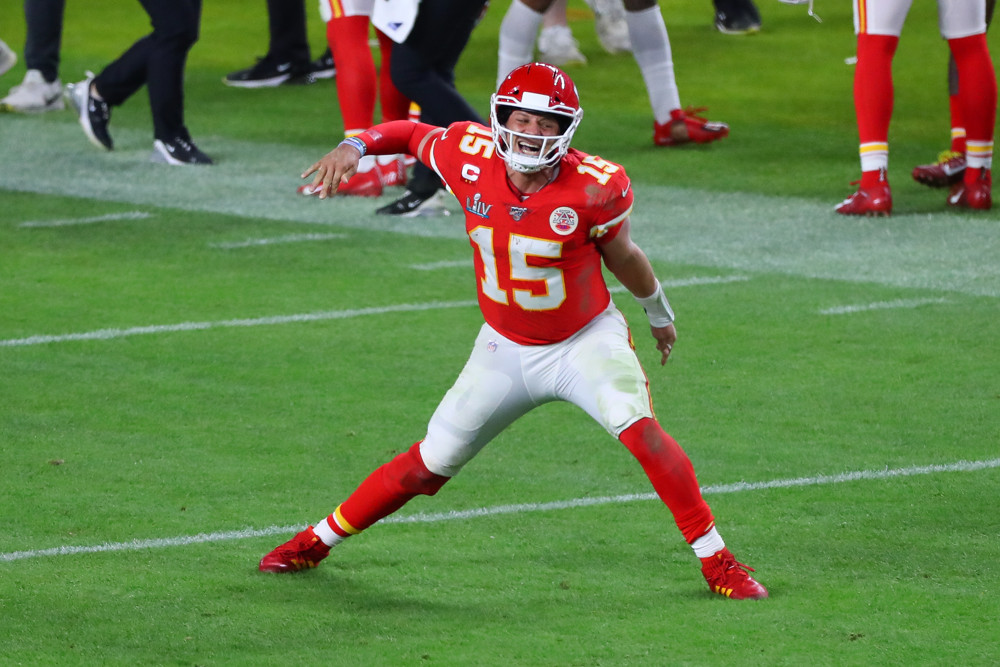
    The Chiefs once again lost to the Bills in the regular season, something that they’ve grown accustomed to despite having no issue dismissing Buffalo from the playoffs in recent years. Even as they were sitting a score or two behind for much of the game, the specter of Mahomes Magic loomed, but it didn’t quite manifest in this contest.

    In a world where Bo Nix seems to post a big fourth quarter (after a questionable first three) every week, I thought it’d be helpful to talk about quarterback clutch performance and put Patrick Mahomes into some perspective with others in the league.

    First off, how might we operationalize clutch? I thought of it two ways, in both cases using our player value metric Total Points to draw the comparison. 

    The simple one is performance late in games, comparing fourth quarter production to first-three-quarters production. 

    The more complex one is comparing high-leverage situations to low-leverage ones, building in an understanding that a fourth quarter touchdown when you’re down by 28 points isn’t very clutch. For this we borrow methodology from the baseball world, where we can label a situation’s “leverage index” by comparing how much a team’s win probability can swing in a given situation compared to the average. 

    Leverage can get really high in some situations (like 10x a typical play), but values above 2 are pretty rare in football, so samples get small. So for this purpose I am considering high leverage to be 1.5x and low leverage to be 0.5x an average situation.

    To put that in slightly more concrete terms, here are three 1st-and-10 situations around midfield that have different leverage indices by our calculations.

    Average leverage: 1st quarter, 4 minutes left, 7 point lead

    High leverage (1.5x average): 4th quarter, 4 minutes left, tie game

    Low leverage (0.5x average): 2nd quarter, 4 minutes left, 13 point lead

    I took each quarterback’s relative success in fourth quarters and high-leverage situations (compared to the rest of their plays) and simply averaged them together to come up with a “clutch composite”, if you will. And if we look at current quarterbacks with at least 1,500 evaluated plays in their career so far (roughly two-plus full seasons), it’s not surprising who we find at the top.

    Most clutch current quarterbacks, minimum 1,500 career dropbacks / carries

    Plays TP/play difference*
    Patrick Mahomes 5,890 0.10
    Tyrod Taylor 1,844 0.09
    Kyler Murray 3,633 0.08
    Carson Wentz 4,053 0.07
    Jalen Hurts 3,326 0.06

    * The average of the gap between fourth-quarter and other-quarter performance and high-leverage and all-other-leverage performance

    Would you look at that: Mahomes sits above the rest of his peers in terms of how well he rises to the situation. And he’s done so across a much greater sample size. Josh Allen has had similar overall production, but it’s been more balanced between the low-leverage and high-leverage spots.

    And lest we think that early-career Mahomes is coloring the picture, his most clutch seasons by this measure are the three most recent.

    An aside on other players

    In looking at this research, I figured I’d poke around to see other interesting trends. 

    Bo Nix has had a lot of “no no no yes” games this year, but his performance from a Total Points perspective hasn’t been appreciably better in big-time situations. The Broncos have averaged fourth-quarter scoring that’s almost a touchdown better than the first three quarters, but Nix hasn’t shown that kind of productivity jump on his own.

    Justin Fields has been one the least clutch quarterbacks this year. He’s basically become less clutch every year he’s been in the league. In general, it’s fair to assume that a player’s clutch performance has an outsized impact on the vibes surrounding his season, and that feels particularly relevant when a player gets benched. 

    Drake Maye and Sam Darnold are obvious counterexamples to that last point, as players who have had really strong seasons so far. Maye has been excellent in low-to-medium leverage and quite poor in high leverage. Darnold has been elite in the first three quarters but the worst quarterback in the league in the fourth quarter.

    Of the players who have been the most clutch by this composite measure this year, Michael Penix Jr. is the only one who has been worse in high-leverage spots (and therefore very good in fourth quarters). He’s run up the score or turned it on in garbage time but has not risen to the big moments.

  • A Midseason Review of the Micah Parsons Trade

    A Midseason Review of the Micah Parsons Trade

    Photo: Matthew Pearce/Icon Sportswire

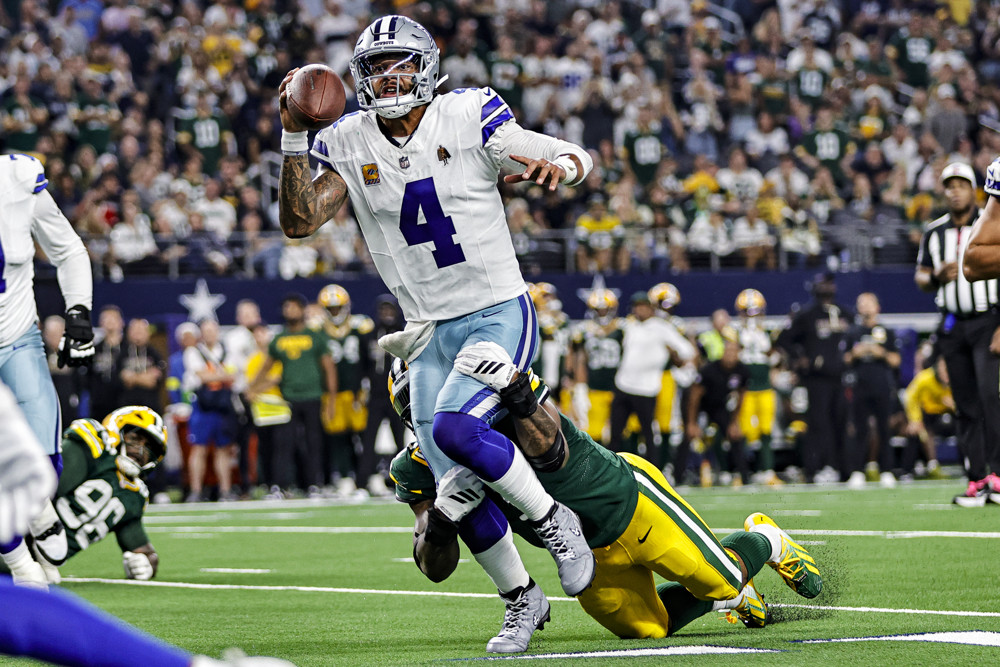
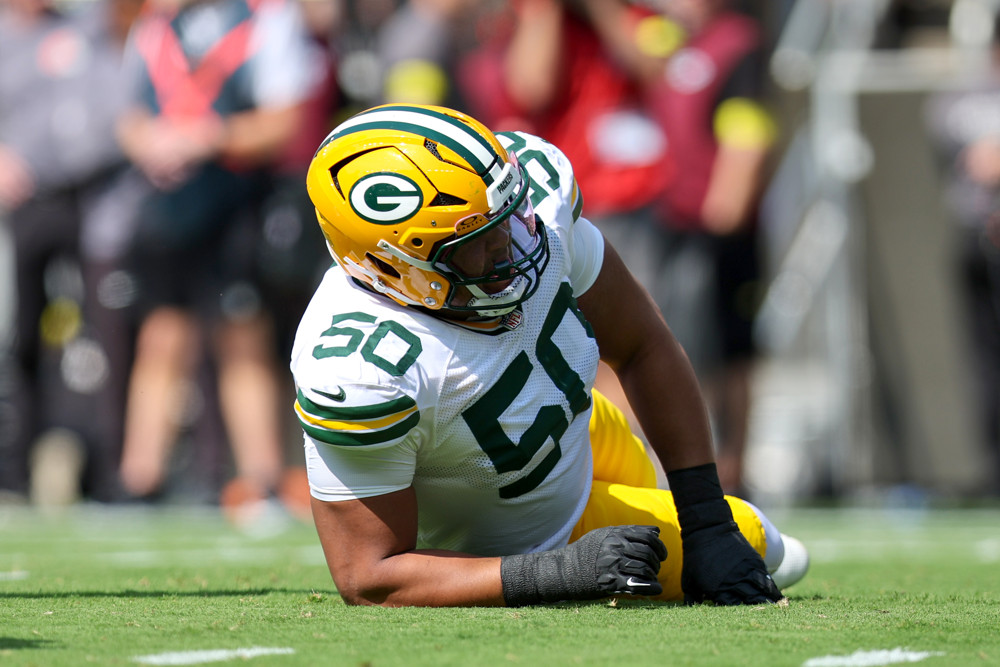
    Now that the dust has settled, we can start to examine the impact of the Micah Parsons trade that happened this offseason. Both teams are experiencing significant changes with their defense this season and not only in terms of results like pressure rate and success rate, but also with how they are structured and operate as a unit. Green Bay’s decision to acquire Parsons addressed its pass rush need, while Dallas believes that Kenny Clark will help improve its run defense.  

    With the Cowboys, Micah Parsons was asked to line up all over the defensive formation but was especially effective as a stand up rusher. In 2024, The Cowboys had pressure rates of 12.9% for stand up rushers on the left and 15% for stand up rushers on the right. This year, those numbers are 13.6% and 11.5%, respectively. 

    Sacks aren’t coming as easy for the Cowboys either. Micah was often asked to mug over the A gap, and rushers from that technique sacked the quarterback 3% of the time with a staggering 21.5% pressure rate for the Cowboys. This year, mugging linebackers don’t have any sacks for the Cowboys and they are only generating pressure on 12.5% of passing plays. 

    Parsons’ versatility was a big part of how the Cowboys were able to generate pressure in 2024, and they are changing how they present themselves to offenses to try and make up for it this year. The Cowboys are lining up with stand-up edge rushers more frequently in order to try and conceal where the rush may be coming from. 

    As the Cowboys try to hunt for a comparable replacement strategy off the edge, the player they got in return, Kenny Clark, does not seem to be living up to expectations in Dallas. He has not been the difference-making run stuffer that Dallas had dreamed of, as the Cowboys defense is giving up 0.9 EPA/30 Rushes with him on the field and 0.6 EPA/30 Rushes when he’s off the field. In other words, he is not improving their run defense like the Cowboys had hoped. The last five games they’ve allowed an average of nearly 170 rushing yards allowed.

    Additionally, the Cowboys are significantly worse against the pass when Clark plays as well, giving up 9.0 EPA/30 Passes when he is on the field and -0.6 EPA/30 Passes when he’s off the field, yet the Cowboys are still playing him on 68% of passing downs. 

    Conversely, and as expected, Micah Parsons is transforming the Packers passing defense. He is a major factor against the pass, as the average EPA/Play on passing downs is nearly a full 0.1 per play better when he is on the field. The Packers’ defense also performs better as a unit against the run while he is in, allowing -3.6 EPA/60 Plays when he is on the field and -2.4 EPA/60 Plays when he isn’t.

    In tangible terms, he is more than doubling Kenny Clark’s pressure percentage as a pass rusher with a 23% pressure rate compared to Clark’s 9%.

    It remains to be seen who will ultimately prosper the most from this trade as the Cowboys are owed multiple first-round picks. But the initial returns have an immensely positive effect for Green Bay as the Packers have ultimately found their star pass rusher while maintaining success against the run. Meanwhile Dallas not only failed to improve its run defense, but is now struggling to replace the passing rushing success it once had with Parsons.

  • The Best 4th Down Decision Maker is Still in Detroit

    The Best 4th Down Decision Maker is Still in Detroit

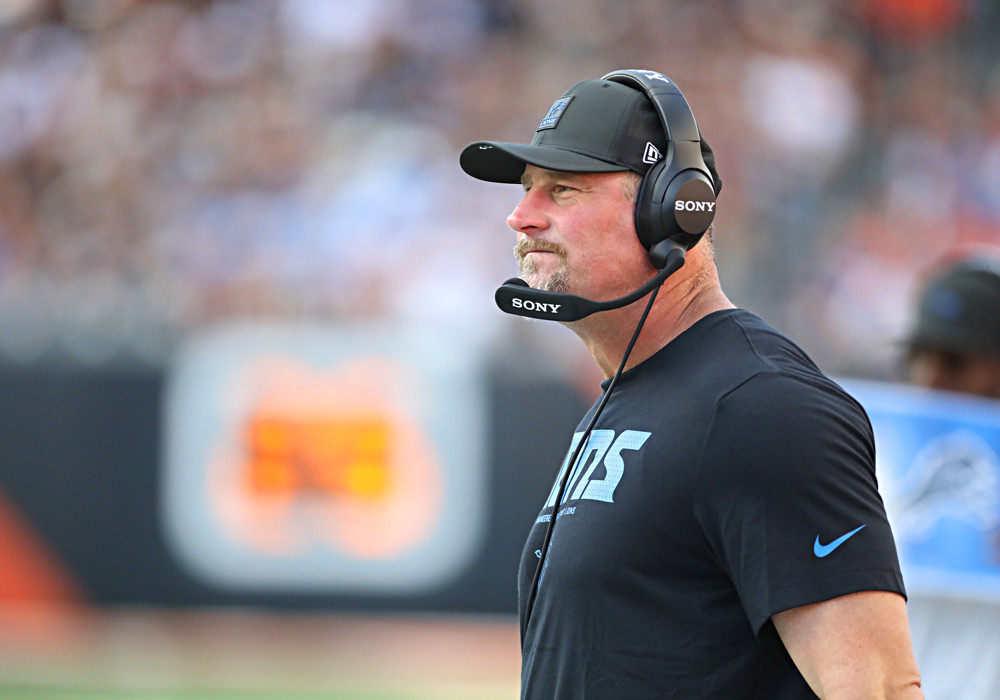
    The NFL is often referred to as a “copycat” league, and the trendsetter this time around is Dan Campbell. Campbell is not the NFL’s most recent head coaching hire, but his aggressiveness on 4th down is now catching on with the rest of the league. Turns out, it’s hard to stop a team when they are playing with four downs instead of three.

    Surprisingly, other NFL teams have been more efficient than the Lions, in addition to going for it more frequently. Does that mean Dan Campbell is no longer the King of Fourth Down? Let’s find out.

    Who’s the Best on 4th Down?

    When you remove 4th down tries with a less than 10% chance of winning, the Lions lead the NFL in attempts dating back to the beginning of last season with 39. They converted on 67% and their attempts averaged 2.7 eventual points on drives with a successful conversion.

    Despite its reputation, Detroit has not been the most efficient team in the league on 4th down. The Commanders have been especially impressive over the last season and a half. Let’s take a look at the top five most efficient teams on fourth down dating back to the start of 2024.

    Team 4th Down Attempts Avg Yards to Go 1st Down Rate Score Rate Eventual Drive Points
    Commanders 26 2.8 85% 77% 4.3
    Chiefs 30 1.7 77% 60% 2.9
    Eagles 37 3.1 73% 54% 2.8
    Bills 25 2.0 73% 54% 3.5
    Buccaneers 16 2.4 69% 63% 3.4

    Washington’s efficiency on 4th down has been remarkable, and the other teams in the top 5 are interesting as well. All of these teams have great quarterbacks that can get first downs in the air or on the ground.

    The Commanders, Bills, and Buccaneers have made the most of their successful 4th down conversions. They have the highest averages of eventual drive points across the NFL at 3.4 and above.

    The main takeaway here is that you’ll have a much better chance of converting on 4th down when you have a great quarterback. If you are a struggling team that doesn’t have a franchise guy under center, maybe it’s better to punt or take the points.

    Field Position Value

    Detroit’s 4th down reputation is also interesting when you take the field position into consideration. The Lions tend to go for it right around their opponents 29 yard line, which is tied for the second-closest average with the Texans, and slightly behind the Vikings. So the Lions aren’t necessarily a team that is making these big aggressive moves on their own side of the field, but are doing so in a more calculated manner when looking to score points. 

    Not only that, but Dan Campbell and the Lions understand that it’s more difficult for their opponents to score when they have to drive the length of the field.

    Across the NFL, teams averaged 1.7 points when the drive started at its own 30. That number jumps to 2.4 when they get to midfield, and again when they get to the opposing 35 (2.8).

    The Raiders have the highest average yards to the end zone at 46.4, and they’ve only converted on 47% of their tries (fourth-worst). So far in 2025, they have 7 attempts with a 52.4 average yards to the end zone, so they haven’t made any adjustments.

    A few other teams that play risky include the Cowboys, Cardinals, and Giants. They tend to go for it when they are roughly 42-43 yards from the end zone. New York has been the most successful (58% first down rate), but all three teams only scored on 43% or below of those drives.

    The difference between the Raiders and the Lions is that Detroit is going for it roughly 17 yards closer to the end zone. That 17 yards is worth more than one point on average per drive.

    Kicking Impact

    Kickers and punters play a massive role in every game, whether it’s field goals, extra points, kickoffs, or punts. Field goals get most of the attention because they directly add (or don’t add) 3 points to the score, but the other kicks are still impactful, just in more of an indirect way.

    Thanks to Ryan Rubinstein’s study of the NFL’s kickoff rule changes, we know that the average drive start is still around the 29 yard line in 2025. Touchbacks kicked into the end zone bring the ball out to the 35, but the increase in kick returns have kept the average drive start in the same range as last year.

    Another hot topic this year is the increased field goal distance, highlighted by Brandon Aubrey’s record of 5 60+ yard field goals. When you have a kicker with a range like Aubrey’s, it could impact your decision to go for it on 4th down. The decision could be either to go for it in your own territory to try and get within range, or kick it since you are already in it.

    It also helps to have a great punter that can pin the opposing team inside its own 15 yard line. The eventual net drive points from drives with 85 yards to go is an average of 1.1. It’s around 2.4 points when you are close to midfield, and around 3 points at the opponents 35 yard line.

    The current leader of punts inside the 20 and 10 yard lines is none other than the Detroit Lions’ punter, Jack Fox. Fox has 22 total punts on the year, with 13 ending up inside the 20, and 7 inside the 10.

    Dan Campbell’s Mastery of 4th Down Decisions

    Most people around the NFL will point to Dan Campbell and the Lions when it comes to the increase of 4th-down attempts across the NFL. That might make you think that they go for it all the time, which isn’t totally wrong, but it’s also not the entire truth.

    They are still the top team in 4th down attempts dating back to last season, but other teams have caught on.

    Detroit is not the leader in 4th down attempts in the early goings of 2025, and they aren’t the most efficient team either. The Chiefs lead the NFL in 4th down attempts prior to Week 8 with 14, while the Lions have 9. The Commanders have kept up their efficiency this year, converting on 80% of attempts, but they only have 5. The Chiefs converted on 79% of their league-leading attempts, and the Patriots have an 82% first down rate on their 11 tries. Detroit has picked up a first down 67% of the time, which is average compared to the rest of the league.

    Despite not being the league leader in attempts or conversions, the Lions are still making great decisions whether they convert or not. When they don’t go for it, they are pinning their opponent deep in their own territory, giving their defense more opportunities to get a stop.

    There are so many different variables in place when it comes to 4th downs, but if you’re doing it like Dan Campbell, you are doing it right.

  • State of the Steel Curtain: Paid To Be The Best, Still Getting There

    State of the Steel Curtain: Paid To Be The Best, Still Getting There

    Photo: Mark Alberti/Icon Sportswire

    The Steelers are sitting at a surprise 4-1 and leading the AFC North after the first 6 weeks of the season. This is even more of a surprise when considering the subpar performance on defense the first two weeks, allowing 32 points on 394 yards to the Jets and 31 points (24 on offense) on 395 yards to the Seahawks.

    At a cool $163.1 million, the Steelers defense is the highest paid in the league by $23 million. At that price tag, relinquishing 30 points in back-to-back games to start the season is unacceptable.

    Since then, this unit has been able to rebound and only allowed 14, 21, and 9 points over the last 3 games. After struggling in both the run and pass phases the first two weeks, it has been able to settle in just in time for a stretch in which the team will see a string of potent offenses (leaving a Joe Flacco-led Bengals offense to your imagination).

    How exactly has the defense improved? Will it be sustainable against better competition? Is the Steel Curtain back? Only one of these is a definitive no, but let’s dive into the former two.

    Looking at things from a personnel perspective, the Steelers defense has primarily utilized three groupings. However, the allowed success rates vary drastically.

    Personnel Grouping Usage % Usage Rank Success % Success Rank
    3-3-5 30% 9 57% 31
    2-4-5 29% 14 40% 8
    3-4-4 27% 5 41% 15

    Obviously, the 3-3-5 has yielded the worst results. This the result of the pass defense, which has allowed a 58% success rate in this grouping, the 4th worst in the league. This result is in stark contrast when compared to the 2-4-5 in which the Steelers defense allows a 33% success rate against the pass, which is good for 5th in the league.

    When looking at men in the box, the Steelers may want to consider simplifying things a bit.

    Men in Box Usage % Usage Rank Success % Success Rank
    7-Man 25% 25 34% 1
    Light (< 7) 49% 16 54% 32
    Stacked (> 7) 26% 8 48% 26

    The Steelers have the most success in the league when operating out of a 7-man box. They are the worst and 7th-worst when operating out of a light and stacked box, respectively. This is not lopsided either in regards to the run or the pass, as they are 1st and 5th out of a 7-man box and 2nd- and 4th-worst with a light box in success rate allowed against the run and pass, respectively. Essentially, adding in the extra defensive back has not yielded the dividends that they hoped to get thus far.

    Last season, the Steelers blitzed at a 25% clip, the 15th-highest rate in the league. So far in 2025, they are at a 35% rate which is the 3rd-highest in the league. Not only are they blitzing more, but they are also playing man coverage 39% of the time, the 7th-highest rate.

    Yes, Blitzburgh might be back, but this isn’t the zone blitz that legendary defensive coordinator Dick LeBeau utilized time and time again with the great defenses of the early 2000s. Adding veteran corners Jalen Ramsey and Darius Slay to the fold has allowed the defense to bring the heat and put those guys on islands against guys like Justin Jefferson and Jaxon Smith-Njigba. And Joey Porter Jr. has recently come back from injury and will play into the mix going forward.  

    Overall, the Steelers are pressuring the quarterback at a 39% rate, the 10th-highest in the league. When bringing the blitz, they are getting pressure 55% of the time, good for 6th. When bringing the standard 4-man pass rush, that number drops to 30%, only the 22nd-best.

    So far, T.J. Watt has been solid, but has not produced to his standard Defensive Player of the  Year type numbers. He ranks 18th in pressures with 21 and his 3.5 sacks are tied for 23rd. He has a pressure rate +/- of -2%, meaning that he should be applying pressure more than he is given factors like his alignment, game situation, etc. 

    Watt has struggled with his bull rush move this year. He has used it the most out of his repertoire, but has yet to log a pressure when utilizing it. The speed and speed-to-power rushes are where he has made his hay thus far, logging a total of 10 pressures and 2.5 sacks.

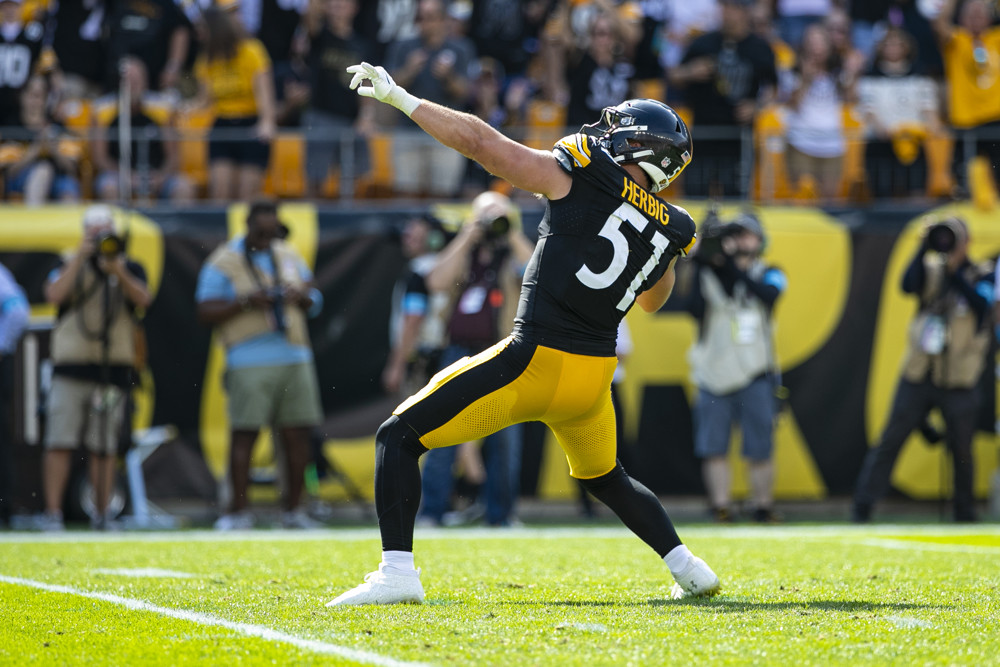
    The pass rusher who has made the most noise this year is Nick Herbig, whose role increased after Alex Highsmith was injured in Week 2. Herbig is 6th in Pass Rush Total Points and is tied for 8th in sacks with 4.5. 

    Herbig’s speed rush is his go-to as he has given it a go on 30 pass snaps and has generated 5 pressures and a sack. After this, he has a pretty robust repertoire where he has attempted 6 other moves at least 10 times this year. The inside cross, cross chop, and rip moves have all generated at least 3 pressures for him this season and an additional 2 sacks. He’s trying the rip much more often, though, so his success rate has not been as good with that move.

    The defensive line is what has been the main issue early on for this unit. With Cam Heyward sitting out the majority of camp and rotating in some young guys like Derrick Harmon (who missed the first two games), Yahya Black, and Logan Lee, the Steelers needed guys like Keeanu Benton and Isaiahh Loudermilk to step up.

    Early on, they did not do that, as both of them had negative Total Points Above Average in Run Defense, the lowest values on the team through the first two weeks. Benton was also a negative in pass rush. Both of these guys were getting blown off the ball and unable to disrupt any runs that came their way. The struggling interior was the main culprit of the vulnerabilities in the run game.

    Derrick Harmon has now made his debut and has contributed 3 tackles for loss. Benton has also improved slightly in the run game, but he has made his presence felt on the pass rush, accounting for 1.5 sacks in the last 3 games.

    Overall, this defense has begun to show flashes of the top unit it intends (and is paid) to be. The growth of Harmon and Black will help fortify the trenches for the likes of Patrick Queen and Payton Wilson to roam free. The returns of Alex Highsmith and Joey Porter Jr. will bolster a pass defense that is looking to attack the quarterback while playing man on the back end. There are plenty of tests to come, the question is: Will this unit be able to cash in?

  • Ravens, Bills, Packers Line Injuries Can Have A Major Impact

    Ravens, Bills, Packers Line Injuries Can Have A Major Impact

    Photo: Frank Jansky/Icon Sportswire

    Injuries are an unfortunate part of football and can derail a team’s season before it even gets started. We’ve seen it over the years at quarterback with Joe Burrow and the Bengals. This year, we are also seeing teams suffer after losing key players in the trenches. 

    We’re going to take a look at three teams that entered the season with Super Bowl aspirations who have lost key players on the offensive or defensive lines. The Ravens and Bills have been without their top defensive tackles while the Packers have had to reshuffle their offensive line. 

    Ravens

    The Ravens were hit with a tsunami of injuries before Week 5, but they lost 2 key players on the DL in Nnamdi Madubuike and Kyle Van Noy at an inopportune time after Week 2. We’re going to ignore what happened in Week 5 as the Ravens were missing a majority of their best players on both sides of the ball. We’ll focus on Madubuike because he’s out for the season with a neck injury, while Van Noy was able to return in Week 5.

    Madubuike was on pace to have another great season in 2025. After 2 weeks, he ranked 3rd in Pass Rush Total Points and was above average in Rush Defense Total Points among defensive tackles. 

    The table below shows the impact of Madubuike on the Ravens defense through the first four games: 

    On Field Off Field
    EPA/60 Plays -6 16
    Pressure % 37% 25%
    AVG Rushing YBC 1.3 1.9

    The Ravens defense has been 22 points worse with Madubuike off the field (remember, EPA is from the offense’s perspective, so negative is good in this case). Their pressure rate has been cut by a third and the defense is allowing a little more than half a yard more before contact on run plays.

    Part of this is due to the fact that teams are calling more interior runs with Madubuike absent. The 2025 league average rushing YBC on inside and outside runs is 1.2 and 1.5, respectively. Madubuike’s impact is clear as they’ve gone from league average to well below league average on rushing YBC. 

    The table below clearly shows the impact of his absence on opposing offensive coordinators in terms of run direction.

    Opponent Run Direction with and without Madubuike in 2025

    On Field Off Field
    Inside 17% 48%
    Off Tackle 48% 37%
    Outside 35% 15%

    In the first two games, the Bills and Browns were trying to attack the edges in the run game to avoid the impact of Madubuike up the middle. The Lions and Chiefs didn’t have that problem and chose to test the depth of the Ravens interior, especially the Lions. Ravens DTs ranked 26th in Pass Rush and Rush Defense Total Points in the two games after Madubuike’s injury. 

    The Lions ran Duo 15 times against the Ravens for 156 yards and 2 touchdowns. Duo is an interior run predicated on hard doubles on the defensive line that get pushed back into their linebackers to create rushing lanes. The Lions and OC John Morton called it over and over again as the Ravens had no answer while missing their defensive stalwart on the interior. 

    Kyle Hamilton and Roquan Smith lead the back 7 of that defense and both missed last week’s game. The Ravens are experiencing an injury crisis on the defensive side of the ball similar to what we saw with the Lions at the end of last season. They still have time to salvage the season, but they will need to get healthy to overcome the massive loss, literally and figuratively, of Madubuike in the middle of their defense. 

    Bills

    Another great AFC DT has missed time this year, Ed Oliver for the Bills. Oliver is hopeful to return this week after suffering an ankle injury in Week 1 that caused him to miss the last 4 games. 

    Unlike the Ravens, the Bills have had a relatively easy start to the season allowing them to start off 4-1 despite some key injuries on defense. However, the Bills have Super Bowl aspirations and they will need to address some issues if they want to achieve their goals. 

    The Bills’ run defense has been a problem to start the year. Through 5 weeks, it has given up 728 rushing yards at an average of 5.6 yards per carry, both ranked in the bottom 5. The Bills have been able to mitigate this problem so far with splash plays. They are tied for 10th with 17 tackles for loss and have recovered 2 fumbles. 

    Oliver is more of a threat as a pass rusher, but his loss exposes some lack of depth in terms of interior run defense. 

    Against the run, four other Bills defensive tackles have been 2 points below average in 2025 (per Total Points), while Oliver has been a smidge above average since the start of 2024. 

    The 4-1 Bills don’t need to panic like the 1-4 Ravens, but they will need to find answers to tighten up the run defense and they do have the luxury of time to find those answers, internally or externally. The last thing Buffalo needs come playoff time is a defense that can’t get off the field and leaves Josh Allen stranded on the sideline. 

    Packers

    To the offensive side, the honeymoon phase for the Packers after the Micah Parsons trade appears to be over. Despite hopes and talks of a perfect season, the Packers find themselves at 2-1-1 coming off a well-timed bye week, which is rare to say for a Week 5 bye. 

    The Packers have invested a lot of resources into their offensive line. They rewarded RT Zach Tom with a lucrative contract extension this offseason and also brought in LG Aaron Banks in free agency from San Francisco. 2024 1st-round pick Jordan Morgan and 2025 2nd-round pick Anthony Belton both entered the season as backups to solidify a strong unit on paper. Despite all the resources invested, they are struggling with injuries to Banks and Tom. Belton getting injured while filling in only complicated matters. 

    Offensive line depth in the NFL comes at a premium. Even the Packers struggle to replace their starters despite having young, early draft picks on their bench. The injuries have caused drastic changes to the Packers offense. The table below shows the effect of a depleted offensive line:

    Week 1 & 2 Week 3 & 4
    ADoT 12.8 (1st) 3.9 (31st)
    OL Blown Block% 1.5% (4th) 4.4% (19th)
    Sack% 3.5% (6th) 7.8% (23rd)
    OL Total Points per play 0.21 (6th) 0.11 (25th)

    The first thing that really popped out to me was the drastic decrease in throw depth along with an increase in sack percentage. The first two weeks of the season, Jordan Love and the Packers were pushing the ball downfield and avoiding sacks. The next two weeks with a depleted offensive line? The exact opposite. 

    This table shows how important the offensive line is in establishing an identity for your offense. In certain situations it can have a similar effect to losing your quarterback.

  • Nevermore? The 1-3 Ravens’ Playoff Path

    Nevermore? The 1-3 Ravens’ Playoff Path

    Photo: William Purnell/Icon Sportswire

    Prior to the season kicking off, the Baltimore Ravens were +400 to win the AFC. Those were the second-best odds behind only the Buffalo Bills, to whom they lost in the opener despite having a 99.1% win probability with 8:36 to go in the fourth quarter. Since then, not much has gone their way and they stand at 1-3 at the quarter pole with injury issues to boot. Even so, ESPN puts their chances of making the playoffs at 70% and their chances of winning the division at 47%, which puts them neck-and-neck with the 3-1 Steelers (71%/46%).

    So, what gives? Let’s start with the fact that, in the past ten years, there have been 11 instances of 1-3 teams going on to make the playoffs. The 2024 Rams were the most recent team to do so, and the Patriots, Steelers, and Eagles all cracked the playoffs in 2021 after dropping three of their first four. That said, 88 teams have gotten off to a 1-3 start over that period, so very few of them have reached the postseason. Put another way: it may not be uncommon, but it is unlikely.

    How teams that started 1-3 finished (2015-2024)
    1-3 Teams 88
    Made Playoffs 11
    Percentage 12.5%

    Now let’s deal with the particulars: The Ravens are dealing with quite a few injuries at the moment and have a two-game homestand before their bye week. Their schedule was a bit frontloaded and is quite soft after the bye, with those first six opponents sporting a combined 8-16 record. All told, they have the sixth-easiest schedule in terms of opponent net EPA/play after the bye – whereas the Steelers have the sixth-hardest – but they certainly don’t want to be 2-4 or 1-5 heading into it.

    In the meantime, they’re missing a lot of key contributors. Nnamdi Madubuike has been ruled out for the season, and several starters did not participate in practice on Wednesday: quarterback Lamar Jackson, left tackle Ronnie Stanley, cornerback Marlon Humphrey, linebacker Roquan Smith, and cornerback Nate Wiggins. 

    With the exception of Wiggins, who currently ranks 7th among corners in Pass Coverage Total Points/snap, all those players are tenured Ravens who have combined for roughly 5 wins above replacement (WAR) over the past two seasons. That’s a lot of firepower missing, with Jackson deemed ‘unlikely’ to play against the Texans, and Humphrey and Smith both expected to miss at least a few weeks with calf and hamstring injuries.

    Assuming they can tread water over the next few weeks, they’ve got some things they’ll have to clean up moving forward. With the caveat being that they’ve faced some of the best passing offenses in the NFL and also the Chiefs, some of their defensive efficiency numbers aren’t the best.

    Defensive coaches usually soapbox about tackling, stopping the run, preventing big plays, getting offenses into long down and distances, and creating turnovers, and the Ravens check only one of those boxes. They rank 6th in broken + missed tackle rate, but rank 27th in EPA allowed/rush, have neither forced nor recovered any fumbles, and have just 1 interception to 3 dropped interceptions. 

    Worse though is the fact that opposing offenses have consistently been in manageable situations. In terms of opponents’ average distance to go on 2nd and 3rd down, the Ravens defense is in the 8th and 15th percentiles, respectively, of all defenses since 2016. That probably has something to do with them allowing a 43% 3rd down success rate, which is 6th percentile over the same timespan. Put more simply: opposing offenses have stayed on schedule and converted 3rd downs at a high rate accordingly.

    There’s also the problematic dynamic of giving up a lot of big plays and not generating any to offset them. The Ravens pass D ranks 30th in boom rate (offensive plays which generate 1+ EPA) and 30th in bust rate (offensive plays which generate -1 EPA or less), which isn’t a great combination. Part of this is they’ve seen the second-most passes of 15+ air yards and have given up the third-most EPA on those passes. They had this problem last year in the aggregate, but corrected in the second half of the year when they ranked 3rd in boom rate and 2nd in bust rate from Week 10 onward.

    Ravens Pass Defense: Big Play Breakdown (2025)
    Big Play Type Rate Rank
    Boom (big play for O) 31st 30th
    Bust (big play for D) 30th 30th

    On the offensive side of the ball, there have been some bad breaks in big games. The Derrick Henry fumbles were particularly unfortunate considering that he had fumbled just three times in the two previous seasons, and Baltimore lost a total of 36 percentage points of win probability on his fumbles against Buffalo and Detroit.

    Matters were made worse by two three-and-outs against the Bills (-17% WPA) and one against the Lions (-14%), and the Ravens offense has just generally taken a downturn in 4th quarters this year. They’re the 7th-best offense in EPA/play through the first three quarters, and the 22nd-best in the 4th quarter. Stripping out turnovers lifts all offenses, but doing so suggests that theirs have been particularly untimely because their 4th quarter EPA/play looks pretty comparable.

    There are also some run game balancing issues. Last year, they were top six in success rate on both zone and gap runs and were top 10 in gap usage, but this year they’ve skewed zone-heavy and have simultaneously fallen to 27th in zone success rate. And we should beware of small samples, but Derrick Henry is also tracking for the lowest broken + missed tackle rate of his career at just 4%.

    The Ravens’ margin for error going forward is slim, especially in light of the injuries they’ve sustained. However, most 1-3 teams have not been as talented as Baltimore and have not had a two-time MVP quarterback. This is also a particularly weak division with Joe Burrow being out and the Browns being in, so the potential to claw back from down two games is there. Some of this stuff should work itself out over the long-term (e.g. fumble luck on both sides of the ball), but they’ll have to win more early downs on defense, which they should be able to do against their remaining schedule. But first, they have to get to the bye in one piece.

  • Study: The Impact Of The NFL’s Kickoff Rule Changes

    Study: The Impact Of The NFL’s Kickoff Rule Changes

    Through one month of the NFL season the changes to the kickoff have seemingly divided football fans. This year, the NFL decided that a touchback that first lands outside the landing zone (20 yard line back to the goal line) is brought to the 35 yard line rather than the 30 yard line like in 2024.

    Is one minor change producing higher return rates, better average field position, and shorter kick hang times? Kickers are even kicking the ball in different ways to try and combat excelling return rates. We’ll look back and compare to last season to see just how much things have changed. 

    Kick Type

    The 2025 season has featured the highest use of non-normal kick types on kickoffs that we have seen. At SIS, we track kick types, and we classify a “normal” kickoff as a kick with a typical trajectory having a hang time between 3.3 – 3.8 seconds. 

    Through the first four weeks of the season, there has been a non-normal kick on 28% of kickoffs (not including squib or onside kicks). Comparatively in 2024, there was a non-normal kick on only 7% of kickoffs. Kickers are actively reducing their hang time and changing the way they kick the ball to either add or take away spin. 

    Hang time

    The increased frequency of line drive kicks is manifesting itself in the hang time as well. During the 2024 season, the average hang time on NFL kicks was 3.86 seconds. Through the first month this season, the average hang time is down to 3.37 which is about half a second shorter than last season. The difference between 2024 and 2025 gives kick returners more opportunity to create explosive returns with increased return lanes available. 

    The average hang time the two seasons before the Dynamic Kickoff was implemented was 4.00. A big part of this is the kicker allowing the ball to hit the ground before it can be caught by the returner, which in turn gives the kick coverage more time to cover potential return lanes. 

    Even if you look within a given kick type, the kicks are spending less time in the air. On non-line-drives, the average hang time is about a third of a second shorter than it was a year ago.

    Returns

    The decreased hang time on kickoffs is encouraging teams to take a chance and return the ball at a much higher rate than 2024. Last season 65% of kickoffs resulted in touchbacks, whereas so far in 2025 only 17% of kickoffs have resulted in touchbacks. 

    However, the results of returned kicks have been basically the same. The average length of returns are slightly down from last year (27 yards in 2024 and 25 in 2025). That’s made up by the average start of the return increasing from the 2 yard line to the 4 yard line between seasons. With touchbacks outside the landing zone being brought out to the 35, kickers are incentivized to make sure the kick lands in the landing zone thus producing returns at a significantly higher rate and those returns starting slightly farther from the end zone. 

    If you incorporate the touchbacks and returns into a single average, the resulting field position has nudged forward a bit, but not by much. From 2016 to 2024, teams started their drive somewhere between the 23 and 24 yard line on average every year. In 2025 so far, the average is the 26 yard line.

    Injuries

    One of the big talking points around the use of the dynamic kickoff was the potential for getting more action without increasing the rate of injury. Through four weeks of kickoffs, the per-play injury rate has been consistent with previous years, but the dramatic spike in returns leads to more total injuries. 

    SIS has charted more injury events on kickoffs through Week 4 than the previous three years combined. But those have come on a similar increase in returns. If you look per-return, the injury rate is a bit higher than 2023-24 but right in line with 2021-22. 

    Findings

    It’s still early, but a simple change of moving a touchback from the 30 yard line to the 35 yard line is producing some consequential effects in how the game looks, but it may not be changing as much as people initially thought. Contrary to popular belief, the average starting field position for all returned kicks is the 29 yard line, which is the same for both 2024 and 2025. Injuries are up, but that’s just a factor of there being more football happening. 

    One thing we know for sure: return rates are dramatically increasing and kickers are kicking the ball with less hang time in order to keep the length of return down. So far it’s been working.