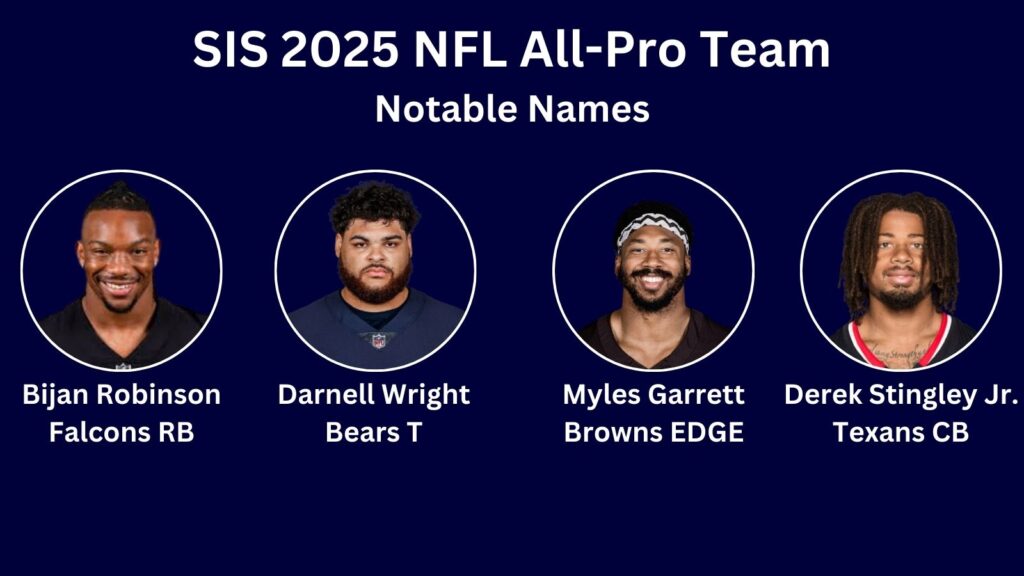
The NFL trade deadline has come and gone, and the takes will fly. You’ll have plenty of places to look to talk about the fits and what’s left behind the traded players, but one thing that you won’t see as much is an evaluation of the player’s value against the draft pick compensation going the other way. We won’t look at every trade, but will look at the ones with second-day draft compensation or a big name involved.
To evaluate these trades, I’m using a draft pick value curve that we developed several years ago that uses our total player value metric, Total Points, aggregated over similar picks historically. (Don’t worry, the values themselves update with time.)
We can compare the player’s production to the expected production from the draft pick compensation, and apply some nuance based on the length of the player’s contract or the teams’ spots on the win curve.
DT Jeffery Simmons traded from Titans to Bears
Return: 2027 first-round pick, 2027 fourth-round pick, 2028 first-round pick
This is the big one, and honestly it seems pretty fine to me. Simmons is a game-wrecker who has ranked no worse than third among defensive tackles in Total Points the last three years. He’s putting up Aaron Donald type production that takes him out of the realm of typical defensive tackles.
You can probably expect 40 Total Points per season from him for the next few years (he’s averaged 50 of late), and with four years of the draft pick compensation that gets you to right around 40 points per season.
The financials tip the scales there ($35M versus a rookie deal), but that’s balanced out by three mitigating factors: Tennessee ate some of the money on the contract, the Bears’ picks this year are likely to be worse than a mid-rounder, and teams’ actual behavior tends to show more disdain for future picks than what we’re using here.
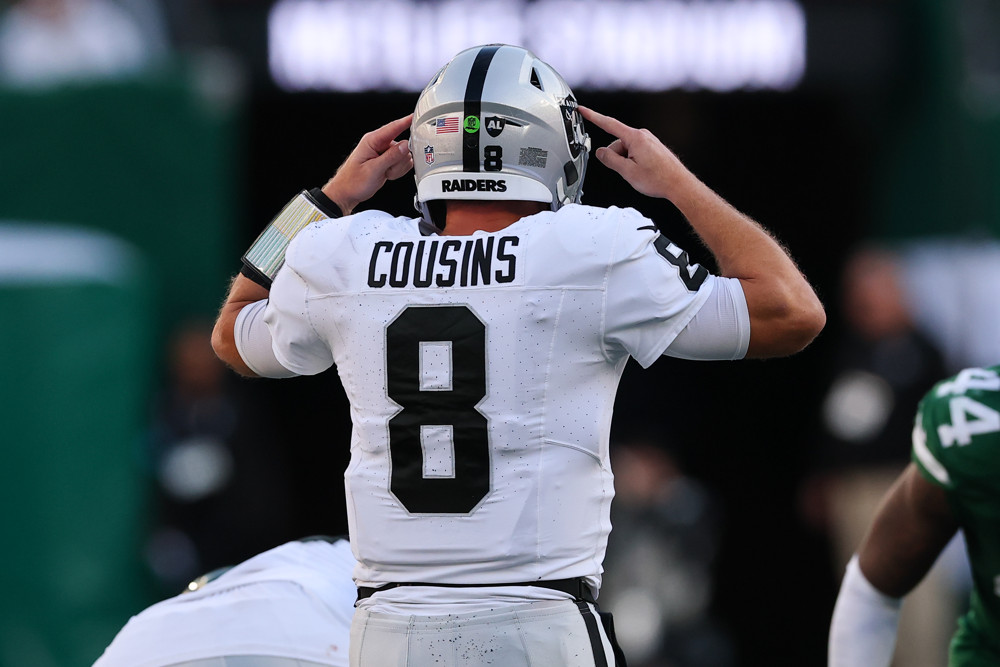
QB Kirk Cousins traded from Raiders to Vikings
Return: 2027 third-round pick
Cousins is one of a few players returning from whence he came. The Vikings’ hand was forced by a horrific Carson Wentz outing on Monday night, and bringing Cousins back into the fold after a pretty solid start to 2026 seems like a decent option.
The desperation of leveraging this excellent defense is absolutely a thing here, but in terms of the cost it’s pretty fair. A third rounder only averages about 30-40 Total Points over a four-year deal, and that’s about what you might expect from the second half from Cousins (who has totaled 50+ points in a resurgent first half). Take the balance between the time deferral of the draft pick’s value and Cousins’ added salary in 2026 and it’s a pretty square deal.
Cousins is quite likely to fall off a bit as we go, but we’re talking about an offense that has seen a league-worst 46% on-target rate on throws at least 10 yards downfield. Cromulence is the goal here.
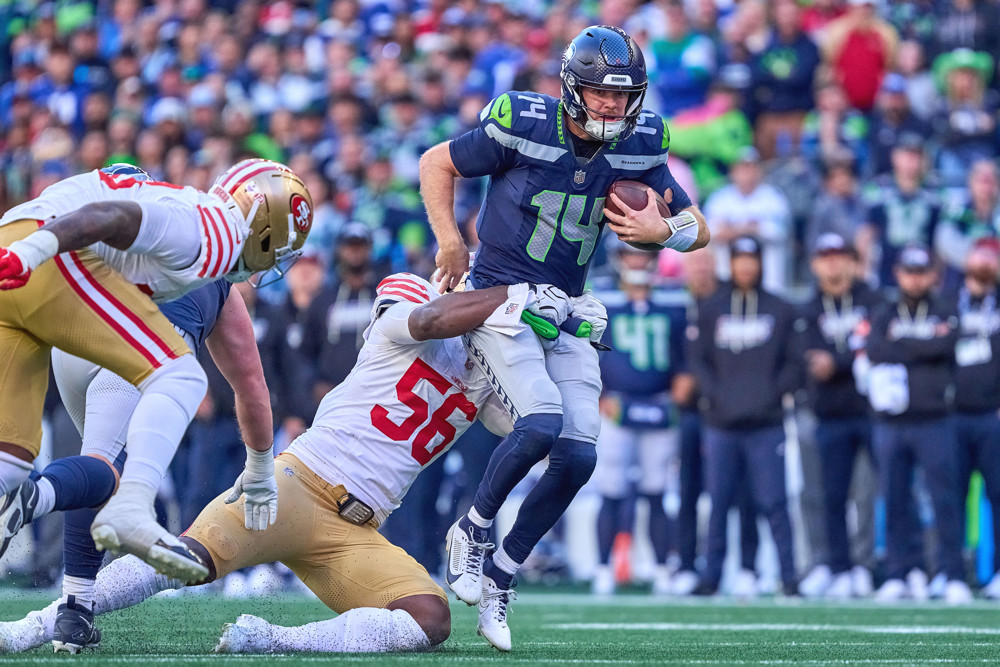
G Quenton Nelson traded from Colts to Seahawks
Return: 2027 third-round pick, 2028 fifth-round pick
Nelson had been a stalwart in the middle of the Colts line, ranking in the top 10 at the position in Total Points in five of his nine seasons (including this one). He’s a free agent this offseason so presumably the Seahawks will look to re-sign him, or else this really isn’t a conversation.
The value of the two picks would average about 11 Total Points per season for four years, which is dwarfed by Nelson’s recent average of 36 per season. He’s young enough that we might not assume a big drop-off in production going forward, so unless Seattle fails to re-sign him or sign him to a particularly big deal, this is a nice add. They ranked in the bottom 10 in blocking Total Points per play prior to his arrival.
DT DeForest Buckner traded from Colts to 49ers
Return: 2027 fourth-round pick
As with Cousins, it’s always fun when a player returns to the place that he started his career, and it’s especially fun when he’s still a productive player. Buckner has never ranked outside the top 20 at the position in Total Points, and he ranks 4th this year, although obviously we wouldn’t expect him to continue that into his mid-30s. He’s been less effective against the run in recent years, but we’re still talking about ranking in the top 30 at the position.
The compensation is light enough that the Niners might not expect to keep him around after this year, but he’s definitely in position to command (and deserve) a solid midrange multi-year deal. A fourth-rounder might average 40-50 Total Points across four seasons, which is less than two seasons’ work for Buckner.
S Jessie Bates traded from Falcons to Jaguars
Return: 2027 second-round pick, 2028 fifth-round pick
Bates has long been a favorite of the Total Points system, ranking among the best defensive players at any position at times over the last several years. He’s been a top 10 safety by Total Points each of the last five seasons (including 2026), which is the sort of consistency you just don’t see in the secondary. Only two other defensive backs have had even three top-10 seasons at their position in that span.
This is definitely the sort of compensation that speaks to a potential extension or re-signing, and if Bates can cash in on one last solid deal this should work for all parties. Four years of a couple of draft picks would average about 15 Total Points per season and sum to 60 Total Points over four years, and Bates would easily clear that even with a two- or three-year deal and pretty substantial decline.
DT Jordan Davis traded from Eagles to Jaguars
Return: 2027 first-round pick, 2029 second-round pick
I wouldn’t grade this one as harshly as some have. The on-paper numbers here look worse than what will actually happen, because the Jags will have a late first rounder this year and a second rounder in 2029 is more like a mid-to-late rounder this year in terms of present value.
Davis has averaged around 20 Total Points per season of late, which is right around the four-year value we might project for the draft pick compensation here. He’s under contract at a reasonable rate and hasn’t missed a game in years, which is nice in terms of being able to plan your roster going forward. Jacksonville already ranked second in EPA per rush and sixth in success rate allowed in the run game, but they just lost defensive tackle DaVon Hamilton for the season, so Davis can slot right in.
S Amani Hooker traded from Titans to Bills
Return: 2027 second-round pick (2027 fifth-round pick goes back to Buffalo)
Another safety on the move, although with less elite play (and compensation). Hooker is signed to a multi-year deal so this is not a rental, and it’s a pretty good one for a Bills secondary that doesn’t have the names it used to.
While Bates has been consistent year to year, Hooker exemplifies the common fluctuations of defensive backs. His Total Points per play ranks among safeties over the last 3 seasons (including the first half of 2026) are 2nd, 77th, and 3rd. He has had 10 interceptions in those two good years and 0 in the one bad year.
That said, if he’s averaging 30-40 Total Points per season through those fluctuations, that’s roughly the four-year value of the pick coming back (subtracting the fifth rounder from the second rounder). So even a year and a half of solid play would make this a good situation for Hooker to try to get a ring and for the Bills to get an above-average boost to their back end.