Tag: Kiké Hernández

  • Stat of the Week – Ultimate Winner of the World Series: Great Defense

    Stat of the Week – Ultimate Winner of the World Series: Great Defense

    If you had told me before the season that I was going to write the following sentence, I would have laughed at you.

    Vladimir Guerrero Jr. was the most impressive-looking defensive player in the World Series.

    He was!

    This was a great World Series for great defense. We don’t track Defensive Runs Saved in the postseason, but our Data Scouts do award Good Fielding Plays and Defensive Misplays when warranted. In all, they awarded 24 Good Fielding Plays. to 12 different players. Guerrero had 4 of them, one shy of Freddie Freeman for most in the postseason (4 of Freeman’s 5 Good Plays were for scooped throws).

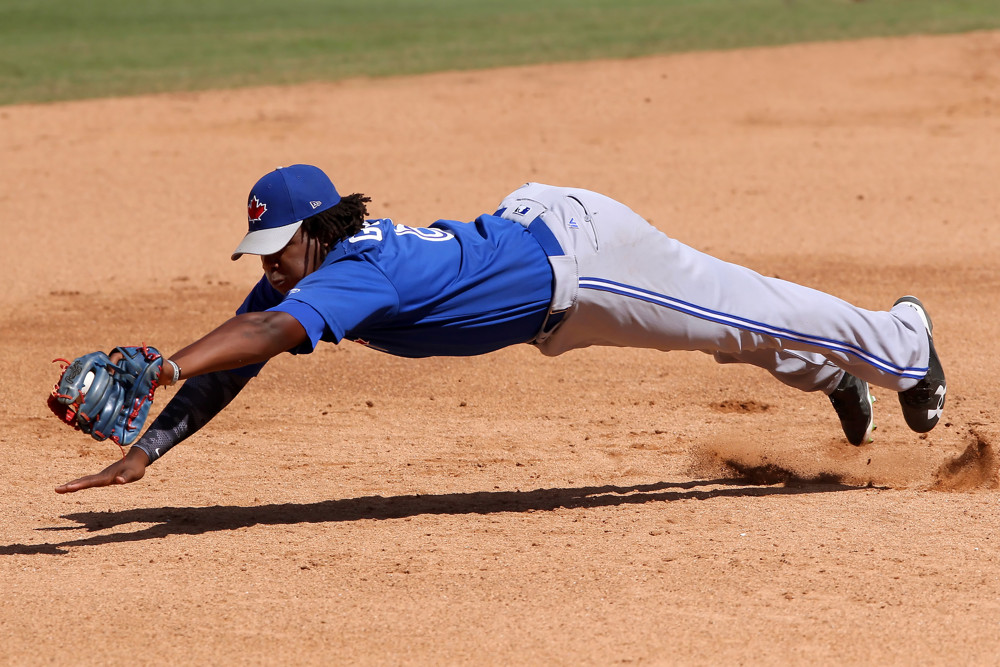
    Vlad Jr. put on a defensive variety show. In Game 2, he made an over-the-shoulder catch on a popup. In Game 3 he came off the bag and made a throw across the diamond to get a runner who trying to go first to third on an infield hit. That came in a tie game in the sixth inning. He then made a diving stop and a flawless flip to first base for the first out of Game 7 and a diving stop in the other direction to take away a likely extra base hit and at least one Dodgers run in the fourth inning.

    This wasn’t a fluke. Guerrero Jr. had his best defensive season, finishing fourth among first basemen with 8 Defensive Runs Saved, a big improvement from the -7 and -1 from the last two seasons. The punchline here, I suppose, is that the team’s backup first baseman, late-season acquisition Ty France, won the AL Gold Glove Award. But Guerrero showed just how much better he’s gotten.

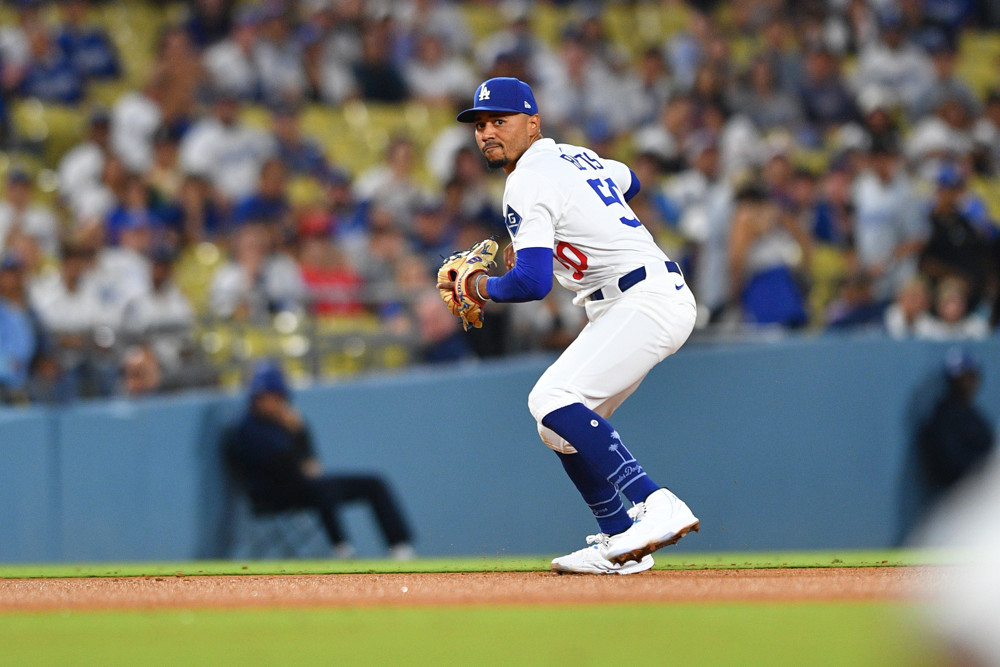
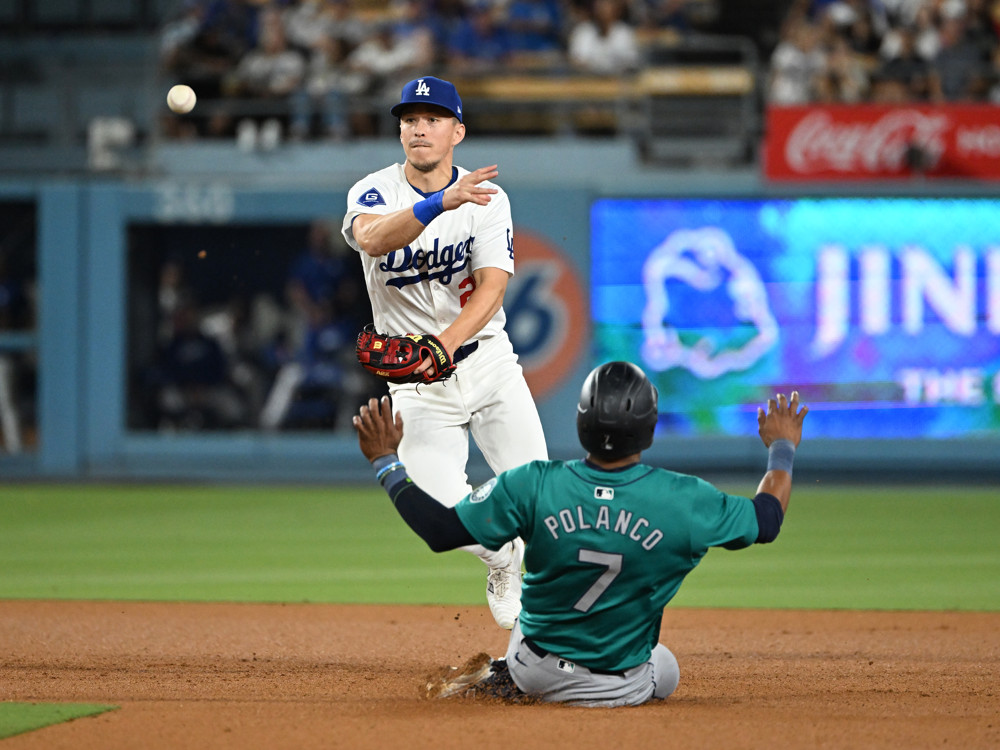
    A strong honorable mention goes to the combination of Dodgers second basemen Tommy Edman and Miguel Rojas, who for the purposes of this exercise could basically be morphed into one player. For one thing, they were part of a Dodgers infield that turned 75% of grounders and bunts into outs in the World Series (basically matching the team’s regular season rate, which ranked 4th-best overall), including 9-of-9 in Game 7.

    For another, they combined for 3 Good Fielding plays of note. Edman atoned for a critical error in Game 3 by throwing Isiah Kiner-Falefa out at third base on a ball that deflected off Freeman, which helped keep the score tied in the ninth inning. Then he made a relay throw to cut down Davis Schneider at the plate as the potential go-ahead run in the 10th inning.

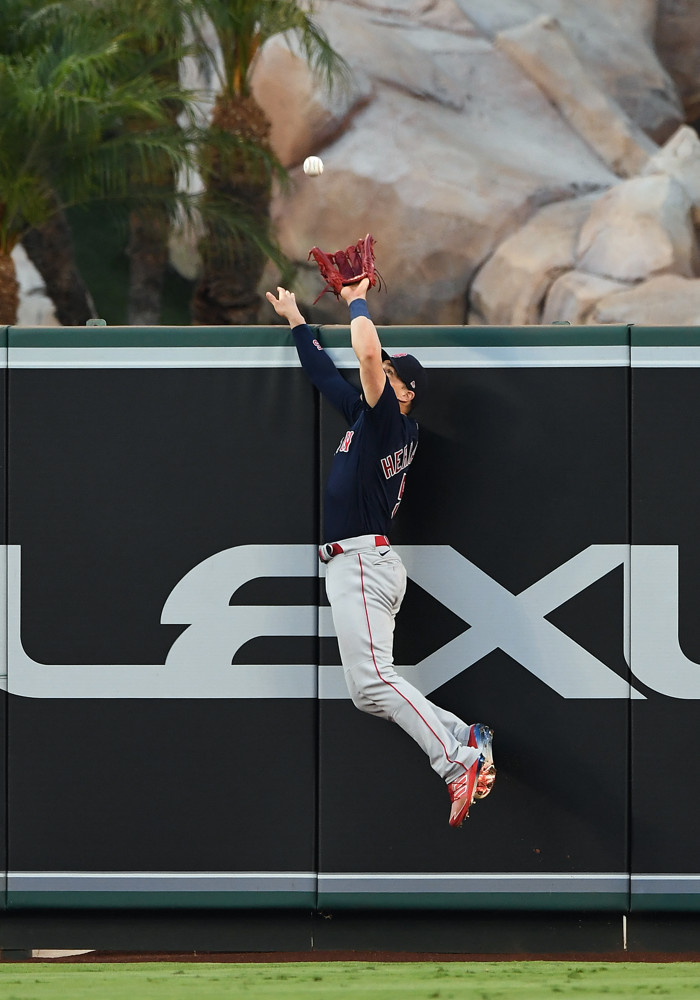
    Then in Game 6, Rojas scooped a Kiké Hernández throw from left field to complete a game-ending double play.  This was a heck of a play on multiple fronts. The Dodgers had Hernández positioned perfectly in left field and he had a great jump on the ball off the bat, which allowed him to make the catch.

    And yes, Rojas hit the game-tying home run in the ninth inning of Game 7 and Will Smith hit the series-winning home run in the 10th. It seemed like the only way someone was going to win that game was by hitting a ball that was not defensible.

  • Defensive Scouting Report: Los Angeles Dodgers

    Defensive Scouting Report: Los Angeles Dodgers

    The Dodgers ranked 3rd in the majors in Defensive Runs Saved in 2024, which, given the names on the roster, probably leads you to think that certain players must have had big defensive seasons.

    But that’s actually not the case. The Dodgers’ success was a collective effort, one they’ll try to carry through the World Series beginning Friday night.

    Here’s a deeper look at the team’s performance in 2024.

    Strengths

    Defensive Positioning

    We wrote about this back in May. What makes the Dodgers’ defense so good is not so much the skill of their players but that their players are often situated in the best spots to make plays.

    The Dodgers led the majors with 51 Positioning Runs Saved this season. Both their infield positioning total (34) and outfield positioning total (17) ranked No. 1 in MLB.


    Though the sport has made changes to try to limit the usage of shifts, teams still play partial versions of them. They’ll move their shortstop or second baseman adjacent to second base to try to cut balls off and move other infielders around to limit the damage on pulled ground balls.

    During the regular season, the Dodgers had a partial shift on against 83% of the balls in play, the second-highest rate in MLB (Mariners 86%). Against left-handed batters, they had it on for 97% of balls in play, basically matching the Mariners for the highest rate. And it paid off.

    Track record

    The Dodgers have four past Fielding Bible Award winners on their roster in Mookie Betts, Tommy Edman, Kevin Kiermaier, and Kiké Hernández. 

    They also have several other players with strong defensive reputations. Freddie Freeman has been one of the game’s best throw-scoopers. At age 35, Miguel Rojas, even hampered by a thigh strain, is putting up numbers better than his peers, most of whom are at least 5 years younger than him. Will Smith and Max Muncy also have good defensive histories.

    Kiermaier had 10 Runs Saved in center field this season. Edman has 11 Runs Saved in about the equivalent of one season in his career at shortstop. Rojas had 8 Runs Saved at shortstop. Hernández played 6 positions this season (not counting pitcher) and was average or better at all of them. Betts has only 3 Runs Saved over his last 150 games in right field (2023 and 2024 combined) but would have had more if he wasn’t at shortstop for much of the year.

    These players may not be at their peak, but if you’re looking for one good defensive moment from them in a key spot, these players are capable of excellence.

    And this goes hand in hand with …

    Versatility

    If you want to play for the Dodgers you have to be flexible. When someone significant gets hurt (see Freddie Freeman), the Dodgers can replace him without losing as much as other teams would. 

    Look at the Dodgers’ starters around the infield and outfield in Game 6 of the NLCS.

    (career totals)

    1B- Max Muncy: 

    Has made at least 90 starts at 3 positions

    2B- Chris Taylor: 

    Has made at least 10 starts at 6 positions

    SS- Tommy Edman: 

    Has made at least 50 starts at 5 positions

    3B- Kiké Hernández: 

    Has made at least 10 starts at 7 positions

    LF- Teoscar Hernández: 

    Has made at least 75 starts at all 3 outfield positions

    CF- Andy Pages: 

    Has made at least 4 starts at all 3 outfield positions (in less than a full season)

    RF- Mookie Betts: 

    Has made at least 70 starts at 4 positions

    We mentioned that Edman, Kiké Hernández, and Betts have won Fielding Bible Awards. They’ve each won for multi-position play.

    Weaknesses

    Andy Pages and Teoscar Hernández as currently situated

    Andy Pages has posted good defensive numbers in right field this season. So has Tesocar Hernandez. But neither is likely to play there this series barring an injury to Mookie Betts.

    So the Dodgers will live with Pages’ -8 Runs Saved in center field (much of which was accumulated early in the season) and Hernández’s -8 in left field and hope that their bats outweigh whatever happens in the field. 


    Pitch Blocking and Pitch Framing

    This one surprised us because it hasn’t been a noticeable issue in the NLDS or NLCS. Will Smith, normally a solid defensive catcher, had a rough year when it came to both pitch blocking and pitch framing, totaling -5 Runs Saved in each. Only three catchers were worse by Runs Saved in framing, 2 were worse in blocking. Neither of these had been a significant problem for Smith in the past.

    And it should be pointed out that Smith makes up for this. His 8 Runs Saved on stolen bases led MLB (his caught stealing percentage is 28% at a time when average is around 21%).

    Three other things

    * Speaking of stolen bases, here’s a look at how some of the Dodgers’ prominent pitchers fared when it came to limiting them.

    Pitcher SB-CS
    Walker Buehler 12-2
    Blake Treinen 8-1
    Jack Flaherty 5-2 (with Dodgers)
    Alex Vesia 5-5
    Yoshinobu Yamamoto 3-1

    * Gavin Lux’s return from a knee injury this year didn’t go well on the defensive side. Lux had defensive issues in spring training that necessitated his flipping positions with Mookie Betts. 

    Lux played regularly at second base in 2024 but didn’t live up to his past numbers (15 Runs Saved spaced out over four seasons). He totaled -2 Runs Saved, in particular not doing well statistically on balls hit in the 3-4 hole.  He didn’t start Games 4, 5 or 6 of the LCS and it will be interesting to see what his World Series role is.

    * Austin Barnes had a bigger role in postseasons past as Clayton Kershaw’s catcher. He’s appeared in only one game this postseason and probably won’t see the field unless Will Smith is hurt. Though Barnes is a standout pitch framer and pitch blocker, in today’s game he’s a liability. He allowed 48 stolen bases and had only 3 caught stealings during the 2024 regular season.

  • The 2021 Fielding Bible Award Winners

    The 2021 Fielding Bible Award Winners

    SIS is pleased to announce the winners of the 2021 Fielding Bible Awards. This marks the 16th season that we have honored the best defensive players in MLB. The awards are voted on by a panel of experts who consider statistical analysis, the eye test, and any other factors that they wish to consider.

    This year’s winners are:

    Position Name Team
    1B Paul Goldschmidt Cardinals
    2B Whit Merrifield Royals
    SS Carlos Correa Astros
    3B Ke’Bryan Hayes Pirates
    LF Tyler O’Neill Cardinals
    CF Michael A. Taylor Royals
    RF Aaron Judge Yankees
    C Jacob Stallings Pirates
    P Dallas Keuchel White Sox
    Multi-Position Kiké Hernández Red Sox


    Paul Goldschmidt was the anchor of the infield, as he won his fourth Fielding Bible Award. Only Albert Pujols (5) has more. Goldschmidt finished tied for the MLB lead in Defensive Runs Saved at the position.

    The Cardinals infield led MLB at turning ground balls and bunts into outs, both because Goldschmidt could make plays and because he helped his teammates make plays by catching their throws.

    Whit Merrifield won a close vote, edging out Marcus Semien of the Blue Jays to win his first Fielding Bible Award. He ended a three-year run at second base by Kolten Wong. After playing a considerable amount of center field in 2019 and 2020, Merrifield was basically the Royals’ everyday second baseman in 2021 (save for a few cameos in the outfield).

    Everyday is the optimal word for Merrifield, who has played in every game the Royals have played the last three seasons. Merrifield’s MLB-leading 14 Runs Saved were 11 more than his previous high at second base. He led all second basemen in Good Fielding Plays and in double plays turned.

    Carlos Correa won his first Fielding Bible Award, with a breakthrough season in which his 20 Defensive Runs Saved at shortstop were five more than the next-closest player. Correa ranked third in Good Fielding Plays per 1,000 innings and had the fourth-fewest Defensive Misplays & Errors per 1,000 innings.

    Over the last three seasons, he has the second-highest rate of Good Plays and the second-lowest rate of Misplays & Errors. Correa is the second Astros player to win this award at shortstop, joining Adam Everett, who won in 2006, our first year of voting.

    Ke’Bryan Hayes dethroned Matt Chapman and Nolan Arenado as Fielding Bible Award winners to win for the first time. It was the first not won there by those two other guys since Josh Donaldson won in 2014.

    Hayes ranked first in Defensive Runs Saved at third base while ranking 17th in innings played. He finished with a three-run lead in DRS, which probably would have been more had he not been injured earlier in the season. But when he was on the field, he wowed. And now he’s the new standard setter.

    Tyler O’Neill became the first repeat winner in left field since Starling Marte in 2015 and 2016. O’Neill received the highest vote total of any player, with 14 of a possible 17 first place votes. O’Neill was the only left fielder to reach double figures in Defensive Runs Saved and had the best combination of Range Runs Saved (tied for first) and Outfield Arm Runs Saved (tied for second).

    O’Neill’s arm numbers improved considerably. He had seven assists without the aid of a cutoff man in 2021 (tied with Raimel Tapia for the most at the position) after having none in left field in 2020.

    Michael A. Taylor went 3-for-5 with a home run and two outfield assists in his Royals debut on Opening Day against the Rangers. That game didn’t set a tone for his season as a hitter, but it did set one for his season as a fielder. Taylor led all center fielders with 19 Defensive Runs Saved and he edged out Harrison Bader by one point in the voting to win his first Fielding Bible Award.

    Taylor was rewarded for having the second-best Range Runs Saved as a center fielder and the second-best Outfield Arm Runs Saved. His eight assists without the help of a cutoff man were the most at the position.

    Aaron Judge is best known for his bat, but he’s an excellent defender too. He won his first Fielding Bible Award in an interesting way, as he edged out his teammate, Joey Gallo, in a tight vote (Gallo did his work in right field for the Rangers). Judge’s defensive strength in 2021 was the deterrent value of his arm. His 5 Outfield Arm Runs Saved tied for second most by a right fielder.

    Judge also tied for the MLB lead with two home run–robbing catches and had a third robbery where he didn’t catch the ball but got his glove on it to turn a would-be home run into a triple. Our record-keeping is sophisticated enough to reward Judge for that play. Little things like that helped him win the award.

    Jacob Stallings ended the two-year run of Roberto Pérez of the Indians with a dominant defensive season and his first Fielding Bible Award. Stallings’ 21 Defensive Runs Saved were nine better than second place Austin Hedges. Stallings’ nine-run margin was the biggest for any positional winner.

    Stallings’ strengths in pitch blocking AND pitch framing were what carried him to that advantage. He led all regular catchers with a 95.5% block rate and ranked second in pitch blocks overall. He also ranked tied for fourth in our pitch-framing metric, Strike Zone Runs Saved.

    Dallas Keuchel won his fifth Fielding Bible Award and passed Mark Buehrle for the most won by a pitcher since SIS first gave out the award in 2006. Keuchel did this with a career-high 12 Defensive Runs Saved, the most by a pitcher since Buehrle had 12 in 2012, and three shy of Kenny Rogers’ record 15 in 2008.

    Keuchel’s 41 assists were the most by a pitcher in 2021. He also led MLB in Range Factor per 9 Innings. And as has been standard for him, he limited the running game, allowing only two stolen bases in six attempts.

    Kiké Hernández won the multi-position award for the second straight year. What’s impressive is that in 2020, Hernández was a second baseman who sometimes played the outfield or other spots. In 2021, he was a center fielder who sometimes played second base.

    Hernández has shown that he can handle either of those two primary spots very well. In 2020 he tied for the MLB lead in Runs Saved at second base. In 2021, he finished third in that stat among center fielders, no easy feat given the complexities of playing the outfield at Fenway Park.

    The awards are determined by a panel of 17 baseball experts, who ranked the top 10 players at each defensive position (including the multi-position players left out of Gold Glove voting) on a scale from one to 10. A first-place vote gets 10 points, second place gets nine points, third place gets eight points, etc. Total up the points for each player, and the player with the most points wins the award. A perfect score is 170 points.

    Our voting panel consisted of SIS chairman John Dewan and baseball stat pioneer Bill James, along with Emma Baccellieri (Sports Illustrated), Dan Casey (SIS), Chris Dial (sabermetrician), Peter Gammons (MLB Network/The Athletic), Christina Kahrl (San Francisco Chronicle), Zach Kram (The Ringer), Moses Massena (MLB Network), Eduardo Perez (ESPN), Hal Richman (Strat-O-Matic), Meg Rowley (FanGraphs), Travis Sawchik (The Score), Joe Sheehan (longtime writer), Mark Simon (SIS), Chris Singleton (ESPN), and the SIS Video Scout staff.

    “This year’s Fielding Bible Award winners are an impressive and well-deserving group,” said SIS chairman, John Dewan. “We expanded our voting panel to include a broader cross-section of people covering baseball and I’m confident that their vote has produced a standout collection of honorees.”

    A complete list of ballots and the history of the Fielding Bible Awards (which began in 2006) can be found online at FieldingBible.com and in The 2022 Bill James Handbook, which is available at ACTASports.com.

  • Kiké Hernández is a defensive gem

    Kiké Hernández is a defensive gem

    By MARK SIMON

    Free (up) Kiké Hernández.

    What exactly are we saying here? This isn’t a plea to get Hernández on a team that will give him more playing time. He played in 80% of the Dodgers’ games the last two seasons. This is a suggestion to whomever signs this free agent to play him at second base and just let him be.

    It’s understood that part of Hernández’s value is in his utility (heck, he won a Fielding Bible Award in 2020 for multi-position play) and that he’s not a great hitter against right-handed pitching (.235 BA, 25 HR in 553 at-bats the last three seasons). But let’s counter that with the fact that the last two seasons he’s played like an all-world second baseman in the field. Yes, we’d still take Andrelton Simmons as the best defensive player in this free agent class but Hernández has a pretty good highlight reel too.

    Hernández has saved 21 runs with his defense in that time in just over 800 innings. By comparison, three-time Fielding Bible Award winner Kolten Wong has three more runs saved than Hernández does, but in nearly twice as many innings. We’ll add that Hernández is one of two infielders to amass at least 10 Range Runs Saved in fewer than 1,000 innings at a position in that span. The other is Rangers third baseman Isiah Kiner-Falefa (who incidentally will be a full-time shortstop in 2021).

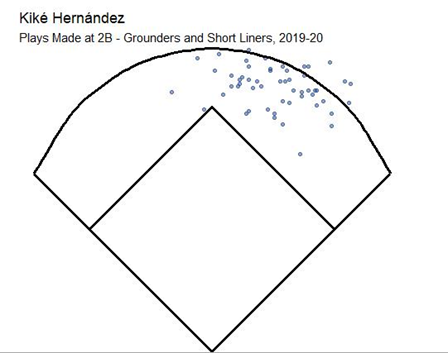
    It’s hard to fully capture Hernández’s range value visually, but here’s a look at everywhere in which he made a play the last two seasons.

    When you watched Hernández play second base in 2020, the thing that stood out the most was his hustle. He was aggressive in going after balls. According to charting by SIS Video Scouts, Hernández sprinted for 26 balls as a second baseman last season and successfully made the play on 22 of those attempts. His 85% success rate was easily the highest among the 20 second basemen with the most attempts last season.

    Highest Success Rate on Sprints – 2020 Season

    NamePlays Made/Opportunities%
    Kiké Hernández22/2685%
    Kolten Wong32/4473%
    Keston Hiura18/2669%
    Danny Mendick15/2268%

    This is partly a product of how the Dodgers used their second basemen. The Dodgers weren’t shy about placing them deep on the outfield grass when in a shift. That gives them more time to field a hard-hit ball and allowed Hernández to sprint when others wouldn’t have time to do so. The three players who played the deepest second base last season per Statcast were Dodgers, with Hernández placing second between Chris Taylor and Gavin Lux.

    “To be a good infielder, you definitely have to have good hands,” Hernández said on the SIS Baseball Podcast earlier this year. “But on the defensive side, you do everything with your legs … Whether you catch ground balls or don’t catch ground balls, that’s based on your footwork. For me, moving my feet constantly. I just want to get to every balls. The quicker I get to the ball in the infield, the more time I have to set my feet and make a good, strong throw.

    Here’s an example of what we’re talking about with his sprints. Dodgers broadcaster Joe Davis has gotten used to this kind of play. He makes it sound almost routine, even though that’s not a way by which most second basemen make plays.

    Hernández was able to make the play on that and similar balls. He can also come in on the ball. As Angels broadcaster Mark Gubicza points out, his glove-to-hand transfer is excellent and allows him to make plays like this.

    “A lot of practice and a lot of preparation,” Hernández said of the build up of that skill. “Something I take a lot of pride in is practicing with intent. Every throw I make in practice, I’m making it with intent.”

    And just to complete the package, Hernández can make the unusual play without issue. In this one from last season, he’s playing in a defensive shift on the shortstop side of second base. The ball is hit to the right of second base, which under normal circumstances means that the runner on second can go to third base without issue. Not so fast.

    In short, Hernández can do just about everything you would want a second baseman to do. Yes, you can have DJ LeMahieu and Kolten Wong and you’ll do extremely well. But Hernandez should be a good first choice at second base for someone.

  • 10 Free Agents Whose Defense You Should Know About

    By MARK SIMON

    With free agency just underway, you’ve probably looked over the rankings list and made judgements on players. Perhaps you’re using Wins Above Replacement to get a snapshot of a player’s overall value. But it’s human baseball-fan nature to place a priority on how good the player is as a hitter in assessing his overall value

    With that in mind, let’s look at things a little differently. Let’s examine the defensive value of 10 free agents – five premier free agents (star players) and five premier defenders.

    Premier Free Agents

    J.T. Realmuto, C

    What are we supposed to make of Realmuto catching 4-of-19 (21%) runners stealing in 36 games, a year after nailing potential baserunners at a 43% clip in 2019?

    How you answer that question answers what you think of Realmuto’s defense as a whole, as his numbers are largely driven by the stolen base stats. Realmuto had 10 Stolen Base Runs Saved in 2019 after totaling 4 such Runs Saved in his four previous seasons combined. His track record as a pitch-framer is average to below-average. He’s had two good seasons blocking pitches but he’s also had three full seasons in which he rated average.

    George Springer, OF

    Springer is going to get paid for the total package. He’s a good center fielder by the numbers, maybe not Kevin Kiermaier or Byron Buxton, but still decidedly above average. Over the last two seasons he’s averaged just under 15 Runs Saved per 1,000 innings, within striking distance of Kiermaier’s 16.5 and in the top-third among center fielders overall.

    Springer can also play right field if needed. Some stories link Springer to Boston, which makes sense given his Connecticut roots. He’s also an outfielder used to playing quirky field dimensions in Houston, which may make him a good candidate to adapt well to Fenway Park.

    Marcell Ozuna, OF

    Premature wall climbs and other odd plays aside, Ozuna is probably going to come out a little better than he looks. In his three seasons playing left field full time (2017 to 2019 for the Marlins and Cardinals), he totaled 13 Runs Saved. When Ozuna played well, his arm helped him along (he has 11 career Outfield Arm Runs Saved).

    If your team signs Ozuna, we’ll guess that he’ll likely be a DH, but don’t shudder if he has to play the field.

    Marcus Semien, SS

    If Semien had been a free agent after the 2019 season, he’d have been poised for a huge deal after posting his best offensive season and his second straight season with at least 10 Runs Saved. But in 2020, Semien struggled at the plate and in the field with a .679 OPS and -5 Runs Saved.

    The biggest concern for Semien is his arm. As you can see in the chart below: From 2016 to 2020, Semien ranks second to Andrelton Simmons among shortstops in Runs Saved from Range but ranks tied for next-to-last ahead of only Xander Bogaerts in Runs Saved from Throwing.

    NameRange Runs Saved
    Andrelton Simmons61
    Marcus Semien*48
    Paul DeJong45
    Trevor Story43
    * Ranks next-to-last in Throwing Runs Saved

    Seems like he’ll need a good first baseman (like a Matt Olson) to maximize his value.

    DJ LeMahieu, INF

    LeMahieu is 32, a time when infielders often decline considerably in defensive value. The good news for him though is that there’s a track record of success, though his best seasons, 2017 and 2018, are a few years removed. LeMahieu has shown a little bit of a dip in performance in that his rate of making mistakes (what we call Defensive Misplays) is up. He’s had 16 in about 850 innings the last two seasons, compared to the 12 he had in over 1,100 innings in 2018.

    LeMahieu’s versatility is important to note too. He comes out average statistically at both first base and third base, where he could move if he is determined to have lost some of his skill.

    Premier Defenders

    Andrelton Simmons, SS

    Simmons’ track record is that of an all-time great. He’s the leader among shortstops in Runs Saved since we began tallying the stat in 2003. The concern is in the recent injuries that have shortened his last two seasons.

    The -2 Runs Saved in 2020 presents an interesting thought exercise for teams, which can be articulated by this arbitrary-endpoint based stat.

    In 2020, Simmons made 3 plays on ground balls with an out probability of 34% or less. He failed to make plays on 8 plays on ground balls with an out probability of 66% or higher.

    In 2018 and 2019 combined, he had a near-even split between the two (38 vs 40).

    I watched the 8 ground balls that dinged his numbers the most this year and said to myself “when he’s right, he makes that play” for almost all of them.

    So it’s a matter of Simmons doing what he needs to do to get himself right moving forward.

    Yadier Molina, C

    No Yadi, there was no conspiracy against you to keep you from winning a Gold Glove. Just a few catchers whose numbers were better than yours (especially Tucker Barnhart and Jacob Stallings).

    Molina is still elite when it comes to stolen base prevention (he allowed 6 steals against 5 caught stealing and 1 pickoff in 2020) and he’s an above-average pitch blocker. Where Molina doesn’t match up with top catchers is in pitch framing. In 2019 and 2020, he graded out as average. His last above-average season was 2017.

    We’d take Molina on our team every time, but a realistic assessment of his defense would be that he’s just plain good. Which is great for a 38-year-old.

    Kiké Hernández, 2B and Kolten Wong, 2B

    Hernández and Wong are arguably the two best defensive second basemen in baseball right now. Wong has won three straight Fielding Bible Awards there but Hernández could make a case that he’s better given that over the last two seasons he’s played nearly 800 fewer innings there than Wong, but only trails him in Runs Saved, 24-21.

    Wong’s value is in his consistency. He’s reached a level of excellence in getting to ground balls that he’s maintained for three seasons.

    Hernandez has enhanced value in a utility role. He has a positive Runs Saved total at each of the three outfield spots, as well as shortstop.

    In each case, defense is extremely important to their overall value. Each posted an OPS below .700 last season, so their ability to field is a big part of what warrants their being in the lineup.

    Jackie Bradley Jr. CF

    Bradley had a bounceback season in 2020 both with his bat, where he cut back on how often he pulled the ball and added hits without sacrificing power, and in the field, where he saved 5 runs and tied Kevin Kiermaier for the lead among center fielders with 11 Good Fielding Plays (he had 3 Misplays & Errors to Kiermaier’s 8).

    On his best day, Bradley is a top-end defensive center fielder who adds value with his bat and arm. He came out as average defensively in 2018 and 2019, so the key for him will be getting to balls (like the one below) and making great throws as he ages beyond his prime.

  • New podcast: Kiké Hernández on defensive excellence

    LISTEN HERE

    On this episode of the Sports Info Solutions Baseball Podcast, Mark Simon (@MarkASimonSays) is joined by Dodgers second baseman Kiké Hernández (@kikehndez), who is off to a great defensive start to 2020. 

    Kiké explains about how his work was impacted by the pandemic (0:51) and then ‘talks shop’ on how he covers ground laterally, how playing deep impacts his play, taking pride in his sprinting, which coaches impacted him the most, and the importance of keeping a soft base (2:43). 

    Kiké also shares which play he’s most proud of (which can be viewed HERE) (10:18) and what it’s like to play with Mookie Betts playing behind him (11:57). He lists the top defensive players he’s gotten to watch (14:09), shares how many gloves he’s had (15:21), answers whether we’d ever see him catch (15:53), and explains (or didn’t) how he hits Madison Bumgarner so well (16:29). 

    To close the show, Mark shares the history of great defensive players from Hernández’s native Puerto Rico (17:42).

    Thanks for listening as always. Please rate and review if you can. Stay safe and stay well.