Author: Alex Vigderman

  • How To Find An Edge In Evaluating Edge Rushers

    How To Find An Edge In Evaluating Edge Rushers

    If this year’s draft class formed its own league with just the current set of eligible players, the quarterbacks would be in trouble.

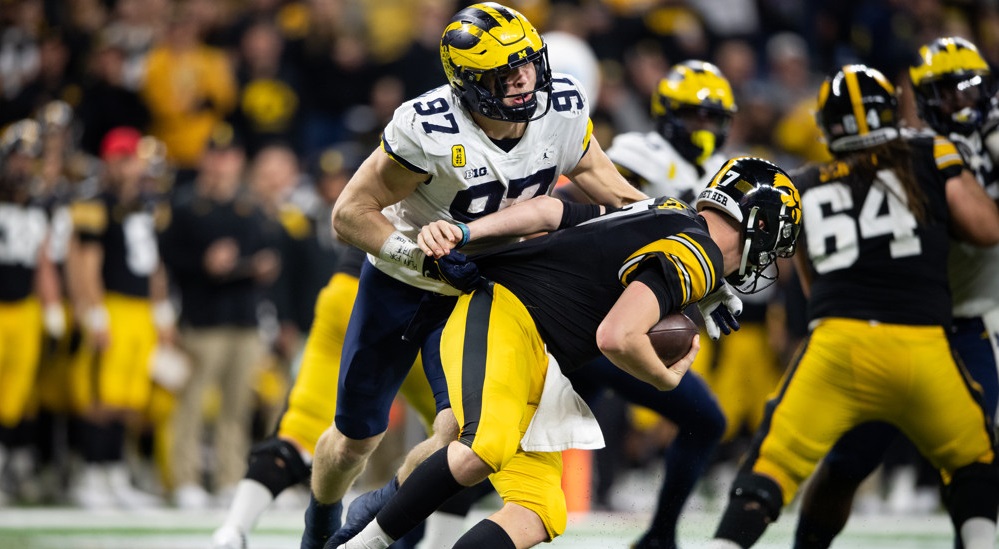
    The 2022 class of edge rushers features seven edge rushers with at least a strong starting grade according to SIS scouts (6.7 or higher). That includes two players who are at the top of many draft boards, Aidan Hutchinson from Michigan and Kayvon Thibodeaux from Oregon.

    In this article, we’ll explore more than just that elite pair, finding the big producers and hidden gems at the position from a statistical angle.

    Much more than was the case in previous decades, edge rushers vary in terms of how often they rush from a two-point or three-point stance. (For those unfamiliar, the number of points is just the number of points of contact with the ground. Standing up is two-point, one hand on the ground three-point, two hands four-point.)

    In general, edge rushers who stand up more often have better results rushing the passer. Those who play more often with their hand on the ground have better results defending the run. These aren’t large differences, but it’s something to keep in mind when looking at these prospects.


    If we look at the last four years of drafts, nearly half of all edge prospects played from a three- or four-point stance at least two-thirds of the time over their careers. But if we look just at their platform season, that number is closer to 40 percent, showing a lean towards standing up to rush as their careers progress.


    Of the top players on the board, there has been a shift over their careers. Both Hutchinson and Thibodeaux played from a down stance more than 75% of the time prior to this year, but they did so less than 20% of the time this year. South Carolina’s Kingsley Enagbare also transitioned towards stand-up rushing from a more mixed repertoire the previous two years, and his advanced pressure metrics jumped.

    But I’m getting ahead of myself; let’s start with the basic pressure metrics.

    Basic Pressure Rate

    Getting into the quarterback’s face, even without getting home for a sack, is incredibly valuable. Pressured dropbacks in FBS games in 2021 resulted in an average loss of nearly half an Expected Point. Even if you exclude the sacks, the other types of pressure come with an average loss of a quarter of an Expected Point.

    In terms of pure production on a rate basis, situational pass rushers lead the way. Among players SIS evaluated for this draft class, three players stand out in terms of the pressure they generated over their college careers, but they also rushed the passer more selectively.

    Best Career Pressure Rate by Edge Rushers in 2022 NFL Draft

    Player School Rush% Rush Snaps

    Pressure%

    Nik Bonitto Oklahoma 63% 517 23%
    Adam Anderson Georgia 65% 274 23%
    Kayvon Thibodeaux Oregon 87% 750 16%
    Myjai Sanders Cincinnati 97% 987 15%
    George Karlaftis Purdue 99% 787 15%

    Nik Bonitto was very productive as a pass rusher for an Oklahoma team that faces a lot of tough competition. He might not have the frame to be an every-down player at the NFL level, but he’s a disruptive force and was able to finish plays off with sacks as well.

    While pressure production is the more important metric than sack production because it’s much more reliable year-over-year, we can still learn something from sacks—if nothing else, who had anomalous sack production relative to their pressure generation.

    One example of this is Myjai Sanders from Cincinnati. Sanders is one of our top-graded edge rushers this year, and you can see his name on the Pressure Rate leaderboard above. Despite that, he got home for a sack just 1.4% of the time in his career. If his sack production followed the typical relationship with pressure generation, he’d have twice as many sacks.

    Correcting Biases in Pressure Statistics

    I mentioned before that situational pass rushers led the way in terms of Pressure Rate. This isn’t entirely surprising. The most obvious situational factor is the likelihood of the play being a pass, so if you’re disproportionately on the field on obvious passing downs, it stands to reason you’ll pin your ears back on the way to a higher pressure rate.

    In a similar vein, a player can receive undue credit for hurrying the quarterback several seconds into a play after things have broken down. Or the offense could run a lot of quick passing concepts that take the pass rush out of the play, tempering the stats for the pass rushers.

    To that end, SIS has three stats that better represent how a player generates pressure in a more consistent, neutral context.

    True Pressure Rate

    True Pressure Rate is relatively simple in concept. Many plays present either impossible or very awkward situations for a pass rusher to get after the quarterback, so True Pressure Rate evaluates pressure only on plays that did not feature a Run-Pass Option (RPO), play action, or a screen.


    Because we’re mostly just trimming the fat in the sample of Pressure Rate, the True Pressure Rate leaders look pretty much like the Pressure Rate leaders, but with slightly higher rates on average.

    If you find a player with a lower True Pressure Rate than Pressure Rate, that means that a disproportionate amount of their pressure came from non-traditional dropbacks.

    Players who have a True Pressure Rate more than one or two percentage points higher than their Pressure Rate have done very well on traditional dropbacks, which is a more consistent sample of plays to evaluate. Texas A&M’s Tyree Johnson is an example on that side of things.

    Quick Pressure Rate

    SIS started tracking the timing of the first pressure on a play in 2020. This allows us to examine how quickly a play was disrupted.

    In the case of pass rushers, we care about this for two reasons. Obviously, getting to the quarterback as soon as possible is the goal. The less opportunity for the offense to get itself set up, the better. But on the other side of things, pressure after the first few seconds of the play is as likely to be a result of other things going wrong than the pass rusher doing his job well.

    So, we now calculate Quick Pressure Rate, which is the percentage of pass rush snaps in which the player generated pressure within the first 2.5 seconds. This 2.5 second threshold is consistent with our internal research on the inflection point at which the nature of pressure changes.

    Career Quick Pressure% Leaders, 2022 Edge Rusher Prospects

    Player School Rush Snaps Quick Pres%
    Nik Bonitto Oklahoma 517 11%
    Kayvon Thibodeaux Oregon 750 7%
    Ali Fayad Western Michigan 1193 7%
    Sam Williams Ole Miss 829 7%
    Aidan Hutchinson Michigan 871 7%
    Alex Wright UAB 557 7%

    This leaderboard has many of the same names on it, including Hicks and Bonitto remaining at the top by a significant margin. We do start to see the top prospects show their faces, however, with Thibodeaux and Hutchinson in the tier below.

    Sam Williams should also be acknowledged here. He was in the top ten in FBS in total pressures this season playing against the best of the best in the SEC.


    Pressure Rate +/-

    Let’s get back to those situational factors mentioned above.

    Think about the kinds of scenarios that might affect a pass rusher’s ability to get to the quarterback. 

    • How likely is the offense to be passing?
    • Where are they lined up?
    • What kind of drop is the quarterback taking?

    All of these come into play in SIS’s Pressures Above Expectation metric. We take the factors above and create an expected pressure rate for each pass rush snap, and then compare that expected pressure rate to the actual pressure rate on those snaps. The result is Pressure% +/-.

    Career Pressure% +/- Leaders, 2022 Edge Rusher Prospects

    Player School Rush Snaps Pres% +/-
    Aidan Hutchinson Michigan 871 7.0%
    Nik Bonitto Oklahoma 517 6.8%
    Adam Anderson Georgia 274 6.2%
    Ali Fayad Western Michigan 1193 6.1%
    Cameron Thomas San Diego State 1083 5.0%

    That’s more like it, Aidan Hutchinson!

    The top pass rush prospect made hay relative to what his alignment and the game situation might have suggested. And he did so on many more pass rush snaps than the players around him on the leaderboard, which is more encouraging for his long-term outlook.

    It’s not surprising to see the overall Pressure Rate leaders here as well because they were so far out in front. A couple more new names, Ali Fayad and Cameron Thomas, have differing projections according to our scouting staff. Fayad projects to be more backup-caliber, while the SIS staff expects Thomas to contend for a starting role.

    For more on the NFL’s Pressures Above Expectation leaders in 2021, check out this article on Sharp Football Analysis.

    Takeaways

    The SIS NFL Draft site offers a bevy of metrics for all kinds of positions. For pass rushers, we really hone in on pressure stats, because they’re the driving force of value for those players. It’s encouraging as an analyst to see when the more advanced stats we create align better with scouting grades than the more basic ones (in this case Pressure Rate alone). Use the whole suite of stats to get the best picture of what a player does well relative to his peers.


  • Celebrating Women at SIS

    Celebrating Women at SIS

    On the final day of Women’s History Month, let’s introduce you to the women of SIS. They’re an integral part of all different areas of operation – from watching film to inventing stats, to building products, to making sure everything runs smoothly, and much more.

    Lauren Baksa – Bath, PA, Accounting Associate, 6 months at SIS

    What do you do in a typical day? I process invoices, reconcile bank statements, assist with payroll and various other accounting duties as needed.

    What’s the best part of the job? Working with individuals with various backgrounds.  

    What’s the favorite thing you’ve worked on so far?  I really do not have one favorite thing that I have worked on.  I have enjoyed all things that I have worked on so far.

    What’s the hardest part of your job?  Reconciling payroll in ADP with Quickbooks.

    Why SIS?  I worked in the Healthcare field for over 20 years.  Due to life-changing circumstances, I found Healthcare was no longer a good fit for me. I thought I would branch out and since I like sports, I thought SIS would be a good fit. 

    What’s a fun fact about you?  When I was a kid I went to a lot of Phillies games.  At one game my parents arranged for me to meet the Philly Phanatic.  I got to sit on his lap and as a kid this meant the world to me.

    Kelsea Benoit – Central Massachusetts, Marketing Specialist, 6 months at SIS

    What do you do in a typical day? Each day is different in marketing! Typically, I’ll take a look at my project board and address any top priority projects first, then meet with various departments to determine their marketing needs. This could range from writing a press release, drafting a marketing plan for a product launch, creating graphics to support our social media efforts, and everything in-between!

    What’s the best part of the job? Getting to connect with people from every department! It’s exciting to hear about how each team operates, the products they’re bringing to market, and their passion for sports. SIS and our products have grown so much since I started, so getting to witness that and connect with the people who make it possible is amazing.

    What’s the favorite thing you’ve worked on so far? The SIS rebrand! The project was huge and is still ongoing. It’s been great to tie together exciting pieces with new ideas under the same umbrella with the new brand guidelines.

    What’s the hardest part of your job? Prioritizing requests from different departments. There are so many exciting things happening from new partnerships to new products across each sport, it can be tough to determine which project to tackle first. I want to be sure to give each project the attention it deserves and deliver campaigns in a time that makes most sense.

    Why SIS? Two major things: my love for sports and the start-up feel of the company. I’m a HUGE sports fan – football and basketball being my two favorites. So being able to tie my love for sports and love for marketing into one position has always been a dream. And, while SIS isn’t a start-up, with the rebrand and additional sports and products, it feels a bit like one. I love the challenge of wearing different hats that a start-up-feeling company brings.

    What’s a fun fact about you? Outside of my job at SIS, I’m also a family photographer! I took a bit of a break after my baby was born in January, but I can’t wait to get back at it this Spring and Summer!

    Barbara Jewell – from Belem, Brazil, currently resides in Timnath, CO, Product Designer, 5 months at SIS

    What do you do in a typical day? In a typical day I go through any particular step in the product design process, whether it’s conducting an interview, reviewing product requirements, ideating a solution, wireframing, or testing a product that SIS will build.

    What’s the best part of the job? The best part of the job is that I get to mix data and creativity to create something people will use. 

    What’s the favorite thing you’ve worked on so far? The NBA Data Collection Tool. The basketball folks were a pleasure to work with, and I can’t wait to see the final product.

    What’s the hardest part of your job? The hardest part of my job is adjusting to constraints when designing a product. Constraints can range from a tight timeline, engineering resources, budget, prioritization…

    Why SIS? The combination of a sports-focused company with a start-up feel are very appealing to me! Also, seeing how knowledgeable, collaborative, and passionate my coworkers are is inspiring.

    What’s a fun fact about you? Born and raised in Brazil, make a mean brigadeiro, and a lifelong tennis player.

    Rebecca MaWhinney – Midway, Utah, Basketball Operations Associate, 1 year at SIS

    What do you do in a typical day? I ensure our basketball operations run smoothly. I mainly focus on the NBA side and making sure our data is the highest quality possible, which includes a lot of time spent watching basketball (a dream). I also work with our scouts to ensure we are constantly improving and pushing each other to be the best we can. I am also currently working internally on a new project within basketball that I’ve been quite passionate about.

    What’s the best part of the job? The best part of the job is working so closely with people who know and think the game at such a high level. It has pushed me to understand the game more than I ever thought I would.

    What’s the favorite thing you’ve worked on so far? The development of our NBA product. The public is just now starting to see some of the things we have been working on, but there are so many people that have been working towards this product for a while. It’s awesome to see some public recognition for that hard work.

    What’s the hardest part of your job? SIS does a great job at encouraging the employees to think big picture and push the envelope. I am someone who gets very focused on what I am currently doing, so it’s been a challenge to push myself to pursue the “big picture” projects that might not see immediate gratification.

    Why SIS? I’ve always enjoyed basketball and understood it to a certain point, so I applied for the Video Scout position. I really enjoyed the people I was working with and the work I was doing, so I jumped at the chance to come on full-time, and here I am! 

    What’s a fun fact about you? I got really into Survivor during the pandemic. I watched ~20 seasons during 2020 and have been watching the current seasons as they come out. Although I think I would be too trusting to make it far if I went on the show myself lol.

    Danielle Moore – Lorton, Virginia, Basketball Video Scout, 5 Months at SIS

    What do you do in a typical day? In a typical day, I watch 3+ hours of college basketball film and scout different draft prospects (current and old) using our tagging framework. My day typically starts around 12:00pm or 12:30pm and then I like to be done by 7:30pm, but that’s not always the case. If I’m scheduled to watch an NBA game that night, my day will end a little later.

    What’s the best part of the job? The best part of the job is being paid to watch and scout basketball for majority of my day, and knowing that my work is valuable to the company. There are very few places where you’re offered the opportunity watch basketball as often as I do at SIS.

    What’s the favorite thing you’ve worked on so far? So far, my favorite thing would have to be working on the 2022 draft class. It’s fun to see the different skills each prospect has and trying to figure out if or how their game will translate to the next level.

    What’s the hardest part of your job? I would say the hardest part is finding the balance between being very detailed when I’m 2nd-passing games and making sure I’m not overdoing it with some of the labels. Also, making sure that while I’m watching a clip of a prospect, that I’m not just trying to find something because I feel like something should be there.

    What’s a fun fact about you? I can play 2 very different instruments: the euphonium and saxophone. I’ve been reading music since the 4th grade, and I’ll probably never forget. I can read music in treble and bass clef.

    Carol Olsen – Whitehall Twp., PA, Office Manager, 8 years at SIS

    What do you do in a typical day? The position “Office Manager” covers a lot of ground. The day starts with E-mails and any communication sent to me by staff. The tasks completed in a day range from building maintenance issues, like snow removal or the cleaning crew to helping an employee with his/her medical benefits or their pay to administrative tasks like payroll item, a visit to the office retrieving mail, banking, budgeting and maintaining office supplies. On any given day, I will take care of some or all of these items and everything in-between.

    What’s the best part of the job? I love to help the staff, answer questions and resolve issues they run into. Sometimes we’re busy with other things, but I usually will take the time out to help right away with their concerns. I want to eliminate the frustration. This is very satisfying to me.

    What’s the favorite thing you’ve worked on so far? I have always loved coordinating employee engagements; birthday celebrations, cooking contests, trivia nights, picnics, the holiday party, etc. With COVID this area has been challenging, but luckily, our new HR director, Matt Bergey is killing it, kicking off some virtual contests and events and I get to assist!

    What’s the hardest part of your job? Adapting to the remote work environment has been challenging. Dealing with multiple state with business registrations & taxes is testing my patience, for sure and the lack of in-person staff interaction is difficult, but being able to use apps like Teams to make a virtual call really helps.

    Why SIS? I have been doing office administration for a long time. When I moved to PA, I looked for something closer than my long commute to NJ. SIS was close to home and I was fascinated by what SIS was doing with sports analytics. The people were talented and passionate and I loved the family-like atmosphere. The job grew from answering phones and opening mail part time to a full-time position. I’ve enjoyed watching the company grow up over the years!

    What’s a fun fact about you? My love of musicals began when I was 4-5 years old, when my dad took my family to see the movie, “The Sound of Music”. NYC was just 30 miles away from my NJ home, but was not affordable with 6 kids. In the 60’s, musicals were aired on network TV and my family would watch them together (the reason that we can sing the entire score of them, word for word). This past Christmas, the remake of “West Side Story” was released in theaters, and there we were, glued to the screen. A trip down memory lane.

    Cassie Sosnovich – ​From New Jersey, currently lives in Scottsdale, AZ, Product Owner, ​7 Months at SIS

    What do you do in a typical day? Plan, Communicate, ​​Organize is my 3-word summary. I am the gatekeeper for ideas and requests that come from those outside of Engineering/Product to create a short and long future Roadmap. With that comes meeting regularly with our Engineering teams (OG and Kraken), ensuring what we have planned is on pace and review any tasks they made need some re-prioritizing.

    What’s the best part of the job? The Planning…I tend to be an overplanner outside of work, so getting to build Roadmaps and help ​prioritize the future of SIS is fun to me.

    What’s the favorite thing you’ve worked on so far? I’m a part of a lot of overarching things, so I can’t say if there is one specific item that is my favorite. But I am very excited for the future and potential of our ‘Consumption Platform’ that we are starting with the NFL Draft, I think will be a game changer.

    What’s the hardest part of your job? Maintaining a communication with those outside of Engineering, my job is heavily involved with making sure our backlog and roadmaps are going to be worked through, that it can be a challenge to keep open communication with those on the outside who potentially would get bad news on delays, etc.

    Why SIS? I’m a very very competitive person, and I always want to be the best or 1st at something. I think SIS has the opportunity to be at the forefront of the sports data world. It’s exciting to be a part of a Company that can do a lot of firsts ​or even perfect some of the things already out there.

    What’s a fun fact about you? I was a swimmer in College (go UMass) but that immediately means I hated running. So after I graduated, I needed some athletic challenge, and I went to the extreme and decided to run a Half Marathon or 10k in every state. I have done 12 states so far and have my 13th planned for April.       

    Sarah Thompson Suburbadelphia, PA, Research Associate, 1 year, 4 months at SIS

    What do you do in a typical day? In short, I take our baseball data and turn it into actionable analysis. This can range from improving existing calculations of our proprietary metrics to building applications that streamline intake of our college baseball data.

    What’s the best part of the job? Solving problems, but specifically baseball problems.

    What’s the favorite thing you’ve worked on so far? I’ve worked on both of our public- and client-facing Defensive Runs Saved metrics, which is always a lot of fun. Defense is a complex aspect of the game and I savor the challenge of breaking it down to just a couple of numbers and improving the accuracy of those numbers whenever we can.

    What’s the hardest part of your job? Any time a number doesn’t line up with video warrants a deep dive of why. Those deep dives can be tough, but they’re worthwhile.

    Why SIS? SIS has been at the forefront of baseball analytics since the early 2000s, which certainly has a coolness factor, but I especially like the fact that some model I built somewhere along the way could be helping a team draft a difference-maker or win a few more games than expected.

    What’s a fun fact about you? I like to play golf and have played some of the oldest golf courses in the world in Scotland. A couple of years ago I made an albatross (2 on a par 5), which is harder to accomplish than a hole-in-one (Million-to-one odds or so. But mine was no luck, all talent 😉)


  • Get to know our VP of Baseball, Bobby Scales

    Get to know our VP of Baseball, Bobby Scales

    Mark Simon sat down with our new VP of Baseball, Bobby Scales, to learn about his background, why he came to SIS, and his favorite MLB moments!

    Where did you grow up – tell us about your family?

    Bobby Scales: My dad, Bobby Sr., has been in some form of sales his entire adult life. Once we moved to Atlanta, he and my Uncle Harvey got into insurance and he did that for 30 plus years. My mom Edith worked for 10 years at Highland Park High School in Detroit then for Georgia Power in Supplier Diversity for 28 years. I’m an only child and I grew up in Roswell, Ga. Graduated from Milton High School class of 1995.

    (Milton High Big Leaguers are: Kyle Farnsworth ‘94, Me ‘95, Dexter Fowler ‘04, Dylan Cease ‘14).

    Where do you live now and tell us about your current family?

    BS: I live just north of Atlanta, GA and I have an eight year old son named Bobby III, we call him Trey.

    Why are you coming to SIS?

    BS: I’m at SIS because my “why” has always been to have an impact on the sports world. Baseball to this point has been my vehicle and my area of expertise. In coming to SIS, I believe that I will impact baseball in a different way than the previous 23 years of my career.

    What skills do you bring?

    BS: My ability to communicate with people, listen, and help drive solutions to issues is my strong suit. I was always the “glue guy” in most teams I played on. Building a cohesive unit and moving the team or individual to the next dot is something that I take a tremendous amount of pride in. SIS is no different. There is a long history of success in the data-driven solutions industry. My job is to help SIS Baseball stay on that path!

    Why do you like baseball as much as you do?

    BS: The game is beautiful in that there are individual battles combined with team choreography on virtually every play. The tactical battles between the managers, the battle between the pitcher and hitter both physically and mentally, the choreography of a ball that goes in the gap and the teamwork and decision making that goes into a great relay to a base.  It can be beautiful or it can be a debacle. The possibility of these things happening on virtually every play is the beauty of baseball to me.

    You had 5,000 pro at-bats, but only a little over 100 in MLB. What kept you going in your pro career? 

    BS: The honest belief that there were players that were getting major league opportunities that I knew in my soul weren’t as good as me. Especially in the middle and end of my career, looking at games on television and having just played a series against a given guy or a given pitcher.

    “That guy had nothing for me last week and now he’s got the ball in the show….c’mon man!!!”

    I said that so many times in my career, I had to get there.

    You played every position but catcher and pitcher – did you have a favorite? 

    BS: Second base. My favorite thing was turning a double play because back then they could come get you at second. When a guy came in hard, wiped you out and you still turned it… there’s nothing better.

    You’re at SIS – so with our being a company that was built on defensive stats – you’re obligated to tell us about your best defensive play. What was it? 

    BS: Houston, 2009 Miguel Tejada was making a bid for his 2,000th hit and he hit a one-hopper off the pitcher’s mound, back up the middle. I was shaded that way and I caught the ball about two steps off the back of the infield, then made the “Jeter” jump throw to Derrek Lee at 1st to get Tejada out.

    What was your ‘Welcome to the Big Leagues’ moment? 

    BS: Getting absolutely wiped out on a double play turn by Lance Berkman…..hell yeah I turned it though!

    You hit 3 major league HRs. What do you remember about them?

    BS: Well, I only hit three, so I remember everything about all of them!

    No. 1: Wrigley Field at night, a pinch-hit homer against San Diego in the 7th. Edwin Moreno’s first pitch was a heater up over the plate. I knew I touched it, but because it was windy at Wrigley and I hadn’t played there a ton, I didn’t know for sure. It went in the seats and I was flying around the bases and didn’t break stride.

    When I got in the dugout Alan Trammell gave me the throat slash-sign meaning I was done. So, I walked in the clubhouse to change out of my spikes and the MLB doping was there and asked to drug test me!

    I thought the guy was kidding, but he was dead serious.

    By the time I got out they had already got the ball. A 20-year-old Northwestern student caught it and wanted to meet me. They brought him to the clubhouse and we spoke briefly. I think he ended up with a Derrek Lee jersey and bat for my ball! 

    No. 2: Wrigley at night, batting right-handed, pinch-hit off Randy Wolf. Battled him for eight pitches, he hung a changeup and I hit it in the seats in left field.

    Fun fact: Bobby was 7-for-17 with 5 runs scored and 2 home runs as a pinch-hitter for his career

    No. 3 Matt Maloney in Cincinnati. Batting right-handed. It was a fastball in on a 1-1 count and very possibly the longest homer I hit in my life.

    Which teammates served as the best example for you in terms of being a good teammate and a good leader?

    BS: Derrek Lee, Ryan Dempster, Alfonso Soriano. They all lead in different ways, but if you’re looking at examples of true professionalism, those guys are at the top of the heap.

    You’ve spent a considerable amount of time in player development. What do you enjoy most about that?

    BS: The best thing about PD is the day-in and day-out quest to help an individual get to the next dot in their career. Whether it was a player, a coach, or a young intern in the office, doing whatever needed to help people advance their careers is something that I really enjoyed. Regardless of what people think, this game is about relationships. Building those relationships is essential to anything we are trying to do!

    What are the challenges a player has to deal with mentally when he goes into a slump?

    BS: The biggest mental hurdle, when it isn’t going well, is truly remembering that you can hit. When you are in a deep one there are times where you think you are the worst player on the planet and it’s a constant struggle not to go down every rabbit hole you can think of just to get a hit.

    For me the worst was all of the people telling you “it’s going to be okay.” Literally everyone in your life is trying to make you feel better and, at the moment, the last thing you need is more voices. Obviously, everyone is different but I used to tell people “If I’m in a bad one…do not call because I’m not answering, let me be mad…I’ll be okay.”

    What sorts of things does baseball need to do moving forward to grow the sport?

    BS: Let go of the past and do what’s best for today’s baseball!

    Baseball holds on to the past as much as any sport I know.

    “Honor the past, live in the present and have an eye for what’s next.”

    That isn’t the exact quote and I don’t know who to attribute it to but I think it’s very applicable. We have such a reverence for the way things were that it’s held us back from growth. From the written rules, unwritten rules, format/length of the season, marketing of players, hiring practices, etc.

    There are a ton of things that are in need of evolution. 

    Quick-hitters

    Favorite player growing up? Barry Larkin….not close.

    Favorite little-known player growing up? Tony Womack because as I started to get older I felt like I could model my game after him and be successful doing it.

    Favorite teams? Detroit Pistons/ Liverpool Football Club/ Mercedes Benz F1

    Favorite moment rooting for your team? Jan. 1, 1998, Michigan against Washington State in the Rose Bowl. I was a junior at Michigan and it was everything it was supposed to be. We beat WSU, won the Rose Bowl, and the National Championship.

  • Sports Info Solutions Announces Partnership With Northwoods League

    Sports Info Solutions Announces Partnership With Northwoods League

    COPLAY, PA  – March 22, 2022 – The Northwoods League, a leader in the development of elite college baseball players and SIS, a leading sports data and analytics provider, today announced a partnership naming SIS as the exclusive Official Data Provider of the league.

    As part of the partnership, SIS will collect, analyze and distribute historical and live real-time Northwoods League Sports and Betting Data. SIS will be granted the exclusive right to license and distribute the relevant data to sports betting operators and media. The deal also awards SIS limited rights to distribute video highlights via SIS platforms and through licensed sports betting operator platforms. 

    Dan Hannigan-Daley, CEO of Sports Info Solutions, said, “Baseball is in our blood at SIS and to be able to support the Northwoods League with data and betting products as the US sports betting market grows is something we’re exceptionally excited about, for all parties – the Northwoods League and its teams, SIS, sportsbooks and most of all baseball fans!” 

    “We are extremely excited about this game changing partnership with SIS. I’m particularly pleased that SIS is so invested in the game of baseball and look forward to them helping to bring a whole new level of exposure to the Northwoods League.”, said Northwoods League Chairman, Dick Radatz, Jr.

    SIS will support Northwoods’ integrity and social responsibility efforts, including efforts regarding bet types, anti-piracy, and problem gambling, alongside partner operators and those offering wagering on the Northwoods League.

    ###

    About SIS

    Pioneers in the sports data space since 2002, their mission is to enrich and optimize the decision-making process for sports teams, sportsbooks, and sports fans. Learn more at www.sportsinfosolutions.com.

    About Northwoods League

    The Northwoods League is the proven leader in the development of elite college baseball players. It is the largest organized baseball league in the world with 22 teams, drawing significantly more fans, in a friendly ballpark experience, than any league of its kind. 

    CONTACTS:

    SIS

    Kelsea Benoit

    kbenoit@ww2.sportsinfosolutions.com

    Northwoods League

    Matt Bomberg

    matt@northwoodsleague.com

  • Sports Info Solutions And Combat Registry Announce Partnership With Bare Knuckle Fighting Championship

    Sports Info Solutions And Combat Registry Announce Partnership With Bare Knuckle Fighting Championship

    COPLAY, PA – March 1, 2022 – Bare Knuckle Fighting Championship is the fastest growing, most exciting combat sport in the world, rapidly ascending into the hearts and minds of fight fans since its official launch in 2018, and it just got more exciting still. SIS, a leading sports data and analytics provider, and Combat Registry, a combat sports data provider, today announced a partnership with Bare Knuckle Fighting Championship, naming the two organizations as the exclusive Official Data Providers of the BKFC. In addition, Combat Registry has been sourced to provide exclusive BKFC Media Rankings for the organization.

    As part of the partnership, Combat Registry and SIS will collect and distribute live data, and historical data, along with betting-enabling data and analytics for each BKFC event. SIS will be granted the exclusive right to license and distribute the relevant data to sports betting operators. In addition, SIS will work with BKFC as consultants to ensure both regulatory compliance and that betting and media partnerships are appropriately forged. The deal also awards SIS limited rights to distribute video highlights via SIS platforms and through licensed sports betting operator platforms.

    Dan Hannigan-Daley, CEO of Sports Info Solutions, said, “This is a landmark moment for both SIS and BKFC, as both parties are aligned and set for considerable growth, with enablement of sports betting as a key focus in that growth strategy. We’re extremely excited by this true partnership, which will highlight the excitement of BKFC, alongside our best in class technology, operations, and analytical capabilities.”

    Dave Feldman, President of BKFC, enthused, “A key factor in the worldwide growth of bare knuckle fighting will be cutting-edge technologies that allow fans to engage with our sport in exciting new ways. An important component of these new experiences depends on rich fight data and compelling activities built around gaming. We are excited to partner with SIS and Combat Registry because our growing fan base wants to show their knowledge of combat sports, and there is no better way to do that than fantasy games, micro-bet games, and betting. This is going to be an incredibly exciting year for fight fans.”

    Chris Palmquist, President of Combat Registry, stated, “Combat Registry is excited to partner with the fastest-growing promotion in combat sports, and with a leader in the sports betting industry, to help use data to drive story-telling for live events, and help build engaging, data-driven products for fans of BKFC. We are confident that we will be able to help further drive BKFC’s growth as a global combat sports company.”

    As part of the collaboration, SIS will support BKFC’s integrity and social responsibility efforts by working alongside appropriate third parties.

    ###

    About SIS
    Pioneers in the sports data space since 2002, their mission is to enrich and optimize the decision-making process for sports teams, sportsbooks, and sports fans. Learn more at www.sportsinfosolutions.com.

    About BKFC
    BKFC is the first promotion to hold a legal, sanctioned, and regulated bare knuckle event in the United States since 1889. Based in Philadelphia, and headed by President and former professional boxer David Feldman, BKFC is dedicated to preserving the historical legacy of bare knuckle fighting, while utilizing a specifically created rule set that emphasizes fighter safety. Learn more at www.bareknuckle.tv.

    About Combat Registry
    Founded in 2008, Combat Registry has been an internationally prominent company in the collection and distribution of historical combat sports data, and is today the industry-leading provider of media rankings services for the biggest combat sports promotions in the world.

    Press Kit

    CONTACTS:

    SIS
    Kelsea Benoit
    kbenoit@ww2.sportsinfosolutions.com

    BKFC
    Steve Souhrada
    ssouhrada@bareknuckle.tv

    Combat Registry
    Chris Palmquist
    chris@combatreg.com

  • Matthew Stafford’s 7-Step Program

    Matthew Stafford’s 7-Step Program

    Clearly Sean McVay’s confidence in his offense with Matthew Stafford at the helm was well-founded.

    The Rams passing offense had a down couple years after the explosive 2018 campaign, but it rebounded substantially this season.

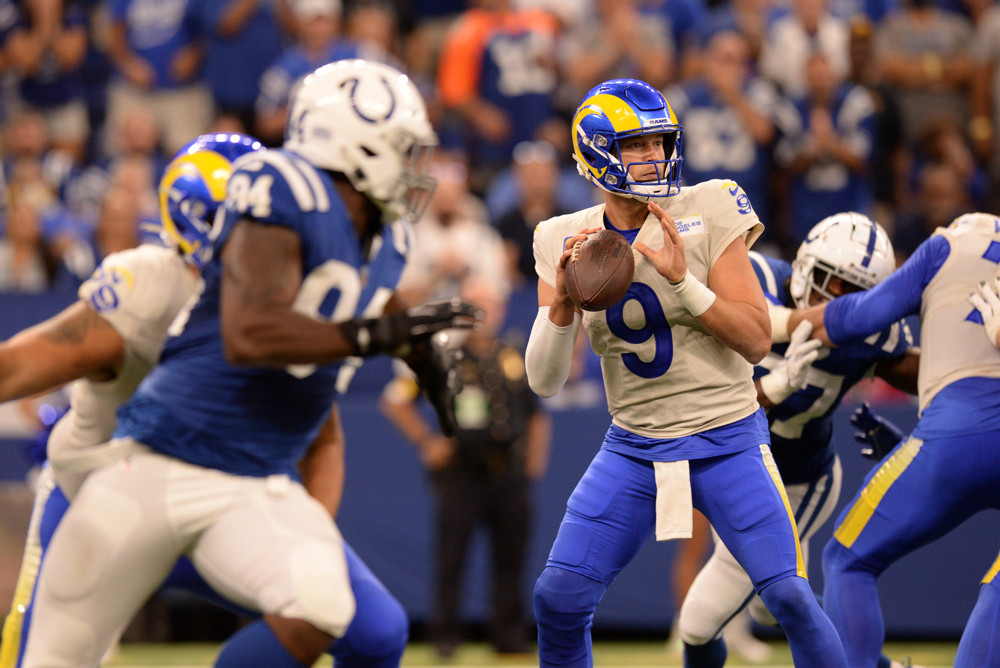
    A key element in that was the use of the 7-step drop. The Rams totaled 43 Expected Points Added on their 69 uses of 7-step dropbacks.

    That’s more than the Rams generated on all other 2021 dropbacks combined!

    For more on this subject and how this might play out against pass rushers Sam Hubbard and Trey Hendrickson, check out our detailed piece at Sharp Football Analysis

  • Assessing the relative strengths and weaknesses of NFL playoff contenders

    Assessing the relative strengths and weaknesses of NFL playoff contenders

    As we get to the end of the season, hot topics tend to run themselves into the ground. Particularly as we hone in on the teams and games that matter most and let the rest fall into the background.

    So let’s take a step back as we head into the postseason and look at what each playoff contender is doing well or poorly.

    Often when we refer to team performance we take things at a season level, or we take arbitrary slices of time (first half / second half, month-by-month, and so on). For this discussion wanted to measure how well teams have been playing recently but not entirely disregard early-season performance.

    To do that we took inspiration from our World’s No. 1 Quarterback Rankings. It uses Points Above Average, the statistical underpinning of Total Points that sets average performance at 0, and measures how good a quarterback currently is by combining multiple years of data but with recent performance weighted more heavily.

    So, in identifying which teams are doing well in which ways, we took recency-weighted Points Above Average across four dimensions:

      1) Passing game (including blocking and QB scrambles)
      2) Running game (including blocking and excluding scrambles)
      3) Pass Defense
      4) Run Defense


    Here’s where we stand with the biggest contenders heading into Week 18.

    AFC

    Recency-Weighted Points Above Average by Team (NFL ranks)

    Team Pass Run Pass Def Run Def Overall
    Chiefs 3 11 3 7 1
    Bills 9 2 10 22 4
    Patriots 6 4 16 16 5
    Bengals 1 23 20 25 9
    Chargers 5 15 12 31 12
    Colts 13 1 22 18 14
    Titans 20 19 9 10 16
    Raiders 12 17 29 12 19
    Steelers 26 14 6 27 21

    Chiefs

    We’ve talked about the Chiefs so much this year, and there’s not much new to say. The offense was never as bad as it appeared, and our numbers reflect that. They rank third in the NFL in passing effectiveness, and if you didn’t weight for recency they’d rank second.

    But the defense has improved a lot. Through the first half, they were bottom-five in EPA per play allowed in the passing game. They’re in the top 10 since. In the running game, Kansas City has gone from second-worst to middle of the pack. This is now a complete team that is every bit the threat we thought they’d be.

    Titans

    On the other side of things are the Titans. When was the last time we saw a shakier 1-seed? The 2006 Grossman-led Bears? If we take the sum of their recency-weighted Points Above Average, they’d rank 16th in the NFL. They’ve been dealing with injuries all year, and might get Derrick Henry back at exactly the right time. Especially so if they can get a bye.

    Whatever the situation, Tennessee’s offense is not the reason that it is in this position. The Titans rank in the bottom half of the league in both passing and rushing. But their defense has been consistently solid, and they rank in the top 10 in both pass and rush defense. If they can get a bye and find a groove with Henry back, maybe that’s enough.

    Patriots

    One team whose offense ranks better than you might think is the Patriots. Their passing game is ranked sixth despite Mac Jones’ Rookie of the Year campaign taking a hit in recent weeks. Starting with the Bills game where Jones barely threw the ball, the Pats are in the top ten in Passing EPA and Positive%. They have virtually the same boom/bust profile—the percentage of plays with +1 or -1 EPA—as the Chiefs.

    New England’s defense has been fine, but is slipping a bit. Both its pass and rush defense rank middle-of-the-pack. When people talk about complementary football, this is the sort of team you think of. The way that New England’s offense has held onto the ball, sustained drives, and shortened games has helped the defense play above their skis, particularly after divesting itself of Stephon Gilmore.

    Bills

    The Bills still lost to the Patriots in Week 13 when they barely threw the ball, but if it had been normal weather they might still have had some issues on the back end. Their recency-weighted pass defense rank is 10th, while their unweighted rank would have been 3rd. We know their secondary was excellent to start the year, and that Tre’Davious White got hurt in Week 12. But they have really only had one excellent game in terms of pass defense over the last couple months, and that started before White’s injury. Through Week 10, White, Jordan Poyer, Levi Wallace, and Taron Johnson were all in the top 25 DBs in Pass Coverage Points Saved. None of them can say that in the weeks since.

    The Bills have one of the more surprising results using this methodology. They rank second in the running game. While they don’t run a lot, they’ve been pretty effective with it. Excluding QB runs, they’re at the top of the list in Broken/Missed tackles per attempt over the second half of the season, and only a few teams have gotten stuffed less frequently.

    Bengals

    One of the big topics we might have been discussing in this space if I hadn’t already shown disdain for the notion is Joe Burrow’s MVP candidacy. The Bengals are unsurprisingly the top-ranked pass offense, 200 passing yards ahead of the next-best Chiefs over the last three games. But they rank in the 20’s in the other three dimensions, and that’s the big question for them. Can a team that’s gotten this hot sustain it, and can its one awesome dimension overcome average-surrounding context?

    If the Bengals do, it’ll likely be the result of a few key playmakers on defense. Trey Hendrickson and Sam Hubbard each rank in the top 15 in Pass Rush Points Saved, although it’s been more from splash plays than consistent pressure, which is harder to rely on. Chidobe Awuzie has been one of the more-targeted corners in the NFL, making opponents pay because he’s been better at limiting damage than basically everyone in the top 20.

    NFC

    Recency-Weighted Points Above Average by Team (NFL ranks)

    Team Pass Run Pass Def Run Def Overall
    Buccaneers 4 6 7 11 2
    Packers 2 8 5 32 3
    Cardinals 7 22 14 3 6
    Rams 11 10 15 4 7
    Cowboys 14 24 1 15 8
    49ers 8 16 24 1 10
    Eagles 10 3 19 20 11
    Saints 23 30 2 6 15

    Packers

    Despite not topping the list above, the Packers still sit quite pretty in the NFC hierarchy. They have had pretty consistent ranks throughout the year. This is a great example of what is important in the NFL, though, because they’ve been good all year while being pretty bad defending the run. They’ve had three above-average run defense games according to Total Points. Maybe it’s good news that they were all in the second half of the year? But it hasn’t mattered much.

    Buccaneers

    The Buccaneers are certainly not feeling like the second-best team in the NFL, as these numbers suggest. It remains to be seen what they will look like with the knowledge that Antonio Brown won’t be returning, but let’s not forget that this team had elite underlying metrics last year before they won it all, and they were doing it again this year before a bit of a swoon. But there is a swoon. All of their rankings above are worse than they would be if we didn’t weigh for recent performance.

    Cardinals

    Whether it’s a direct consequence or not, the Cardinals losing DeAndre Hopkins coincides with a drop-off in offensive effectiveness. Their pass offense looks 2 points worse per game when you weigh recent games more heavily.

    And it’s a similar story on the defensive side (probably without Hopkins as an explanation). Just using first half / second half splits, Arizona is allowing two-tenths of an expected point per play more than it was in the first eight weeks. So 8 points per game if you assume 40 plays per game. In the first half of the year, they were causing more “Bust” plays than “Boom” plays. Only the Bills could have claimed that. Not so much anymore.

    Rams

    The Rams haven’t been quite as explosive in the pass game of late. They had a 32% Boom Rate (plays with an EPA greater than 1) through the first half of the year, but just 20% since. More sacks, more picks, not the “more” you’re looking for. On the whole, with recency-weighting they now sit basically a point per game above average in each of passing, rushing, pass defense, and run defense. They are a bit of a counter to the teams that don’t mind too much being deficient in one dimension (think the Packers).

    Cowboys

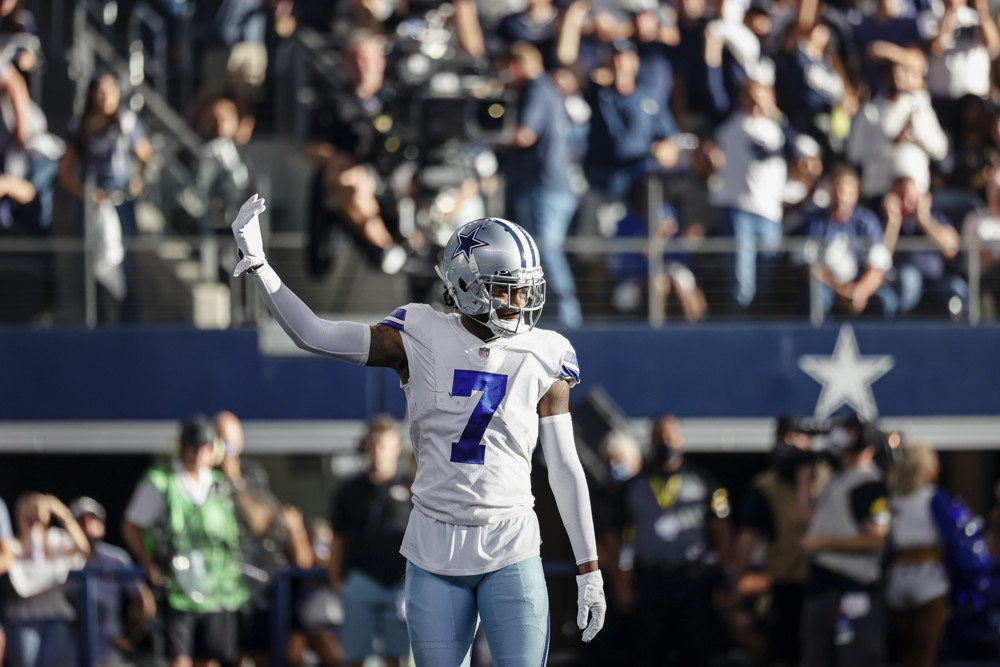
    We expected more from the Cowboys pass offense, for sure. It’s not particularly hot right now. But the pass defense is where they’ve looked a lot better. Obviously Trevon Diggs had an exciting start to the year, but he was masking some pretty questionable results on the rest of his snaps. That’s even more extreme now, with four picks but 11 yards per target in the second half of the year. Anthony Brown and Jourdan Lewis have been a lot more productive overall, and Micah Parsons has started to show his ability to do it all, allowing 6 yards on 137 coverage snaps in the second half of the year.

    49ers

    In theory, the 49ers are a run-and-stop-the-run team. And they are a top run defense. But in practice, their passing game has actually been a bit better than their running game. They’ve obviously had a rotating cast of characters in the backfield, so we can give them a bit of a pass there. But the passing game has been much more explosive than you’d expect if you knew Jimmy G had started most of the year. They trail only the Rams in Boom% through the air.

    Eagles

    Another team whose passing rank might surprise you is the Eagles. In terms of Points Above Average per game, they are about the same passing and rushing. But the same amount of value in terms of points ranks you 10th in passing and 3rd in rushing. They are among the best ten teams in limiting points and yards, but more middle-of-the-road by EPA-based metrics. Remember their last five games have come against both New York teams and Washington. Darius Slay had a nice resurgent season going, but he’s produced literally zero Points Saved each of the last four weeks. With a relatively meaningless game against Dallas this week we still might not see them tested until next week.

  • World’s #1 QB: Justin Herbert Makes His Move

    World’s #1 QB: Justin Herbert Makes His Move

    By ALEX VIGDERMAN

    Earlier this week, Timo Riske of Pro Football Focus tweeted the names of nine quarterbacks that everyone should have in their Top 10 QB list.

    SIS’s World’s #1 QB Rankings differ slightly from that list, but that’s partly due to some extenuating circumstances.

    Here’s where we stand after Week 5:

    SIS World’s #1 Quarterback Rankings Through Week 5 2021

    1. Patrick Mahomes
    2. Tom Brady
    3. Aaron Rodgers
    4. Kirk Cousins
    5. Lamar Jackson (up by 1)
    6. Justin Herbert (up by 2)
    7. Josh Allen (up by 2)
    8. Deshaun Watson (down by 3)
    9. Matthew Stafford (up by 1)
    10. Russell Wilson (down by 3)
    11. Kyler Murray (up by 1)

    14. Dak Prescott

    A reminder that The World’s No. 1 Quarterback Ranking is based on a model devised by Bill James to evaluate The World’s No. 1 Starting Pitcher. Bill’s model was based on cumulative evaluation of individual starts over an extended time period using the metric Game Score.

    The World’s No. 1 Quarterback Ranking uses our player value stat Total Points to make a cumulative evaluation of game performance over a three-year period. The key to our calculation is Points Above Average (PAA), which is the statistical underpinning of Total Points that is centered at zero so that positive numbers are above average and negative numbers are below average.

    Success over time is key to maintaining a good ranking. Prolonged inactivity results in a ranking drop. The most recent performances carry the most weight


    As the model looks at multiple years of data, availability plays a big part in a player’s ranking. That explains why Russell Wilson fell a bit (and will continue to fall through his injury absence). Dak Prescott has the same fate, thanks to his 2020 shoulder injury. And we know the story with Deshaun Watson, who has slowly dropped down the rankings as the season has gone on.

    Kirk Cousins crashes the party at 4, which we probably understand is overstating his talent relative to the names behind him, but is reflective of a consistency in availability and performance that he hadn’t attained previously.

    Given recent returns, it’s very likely that Cousins’ hold on that 4 spot isn’t long for this world. We have already written about Lamar Jackson’s big year in this space, and he went ahead in Week 5 and had his best game by Points Above Average since his MVP season. Throwing for more than 10 yards per attempt on 40 attempts with four touchdowns and no interceptions will do that for you.

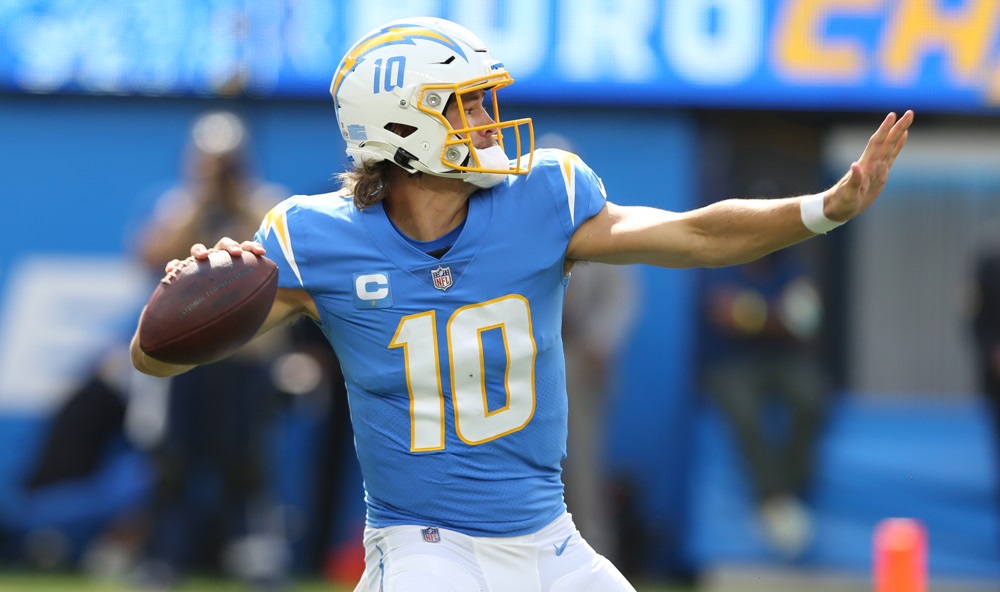
    Justin Herbert is the next name to have crashed the preseason top 10. He’s posted two of the five best starts of his (admittedly brief) career in just the last three games, trailing only Jackson and Cousins in Passing PAA in that span. He hasn’t been quite as hyper-efficient as Jackson, but his 128.5 Independent Quarterback Rating since Week 3, and that’s with more attempts than all but one of the players with a similarly impressive rating (that darn Tom Brady…).

    Conveniently enough, Herbert and Jackson face off in Baltimore in Week 6, so expect to see some fireworks.

    Another thing to watch out for this week is the fight for the #1 spot. Patrick Mahomes has quickly lost his strangehold on the position after poor performances in two of his last four games, leaving him vulnerable to being supplanted this week (that darn Tom Brady…).

    In case you are curious, here are the complete rankings through Week 5. We’re using Points Above Average per 60 snaps to give a sense for what each player’s weekly average is; in essence, the number of points he contributes above an average QB in each start.

    Player PAA/60 Rk Last Start of Season
    Patrick Mahomes 6.65 1 1 2
    Tom Brady 6.60 2 2 3
    Aaron Rodgers 5.30 3 3 1
    Kirk Cousins 4.63 4 4 9
    Lamar Jackson 4.57 5 6 12
    Justin Herbert 4.06 6 8 10
    Josh Allen 3.75 7 9 6
    Deshaun Watson 3.28 8 5 4
    Matthew Stafford 3.20 9 10 14
    Russell Wilson 2.96 10 7 5
    Kyler Murray 2.45 11 12 15
    Derek Carr 2.33 12 11 7
    Teddy Bridgewater 1.67 13 13 18
    Dak Prescott 0.71 14 14 17
    Ryan Tannehill 0.46 15 15 8
    Matt Ryan 0.39 16 16 11
    Baker Mayfield -0.47 17 17 13
    Jacoby Brissett -0.85 18 24 21
    Ryan Fitzpatrick -0.94 19 18 16
    Jameis Winston -0.99 20 22 55
    Tyrod Taylor -1.00 21 19 56
    Joe Burrow -1.19 22 21 22
    Taysom Hill -1.22 23 20 20
    Mac Jones -1.39 24 25 N/A
    Cam Newton -1.45 25 23 19
    John Wolford -2.15 26 27 24
    Daniel Jones -2.19 27 28 71
    Jimmy Garoppolo -2.21 28 29 25
    Jalen Hurts -2.22 29 26 70
    Mason Rudolph -2.34 30 30 26
    Marcus Mariota -2.35 31 31 27
    Chad Henne -2.38 32 32 29
    C.J. Beathard -2.44 33 33 30
    Geno Smith -2.49 34 41 N/A
    Jeff Driskel -2.50 35 35 32
    Gardner Minshew -2.51 36 36 33
    Kyle Allen -2.56 37 37 35
    Tua Tagovailoa -2.59 38 38 50
    Blaine Gabbert -2.60 39 39 37
    Brett Hundley -2.62 40 40 36
    Matt Schaub -2.63 41 41 38
    Josh McCown -2.63 42 42 39
    Chase Daniel -2.67 43 43 40
    Nathan Peterman -2.67 44 44 44
    Joe Webb -2.67 45 45 42
    Joshua Dobbs -2.67 46 46 43
    Blake Bortles -2.68 47 47 45
    Sean Mannion -2.68 48 48 46
    AJ McCarron -2.72 49 49 48
    Matt Barkley -2.72 50 50 49
    Colt McCoy -2.73 51 51 51
    Nate Sudfeld -2.80 52 52 52
    Garrett Gilbert -2.80 53 53 54
    Tyler Huntley -2.83 54 54 57
    Josh Rosen -2.87 55 55 58
    Brian Hoyer -2.89 56 56 59
    Case Keenum -2.92 57 57 60
    Jared Goff -2.93 58 34 31
    David Blough -2.96 59 59 61
    Chris Streveler -2.96 60 60 62
    Joe Flacco -2.99 61 61 63
    Robert Griffin III -3.08 62 62 64
    Drew Lock -3.11 63 63 23
    Brett Rypien -3.12 64 64 65
    Jarrett Stidham -3.17 65 65 66
    Carson Wentz -3.17 66 74 81
    Phillip Walker -3.19 67 66 67
    Will Grier -3.20 68 67 69
    Ben DiNucci -3.22 69 68 68
    Nick Mullens -3.35 70 69 72
    Alex Smith -3.41 71 70 74
    Andy Dalton -3.43 72 71 47
    Brandon Allen -3.50 73 73 75
    Nick Foles -3.68 74 75 76
    Mike Glennon -3.68 75 72 73
    Ryan Finley -3.70 76 76 77
    Trey Lance -3.82 77 58 N/A
    Dwayne Haskins -3.98 78 77 78
    Zach Wilson -4.16 79 78 N/A
    Jake Luton -4.19 80 80 79
    Mitchell Trubisky -4.47 81 82 80
    Davis Mills -5.30 82 86 N/A
    Trevor Lawrence -5.36 83 84 N/A
    Sam Darnold -5.39 84 81 82
    Justin Fields -5.81 85 85 N/A
    Ben Roethlisberger -6.07 86 83 53
    Taylor Heinicke -6.13 87 79 28


  • Why Trevon Diggs hasn’t been the most valuable cornerback in 2021

    Why Trevon Diggs hasn’t been the most valuable cornerback in 2021

    By ALEX VIGDERMAN

    Cowboys corner Trevon Diggs has been one of the most talked-about defensive players this season, starting with the opening game of the season in which he allowed one completion for 10 yards on four targets and picked off Tom Brady.

    Since then, he’s followed that up with at least one interception in each game (with two in one of those games). That gives him twice as many interceptions (6) as anyone else in the NFL. He has the best total EPA on attempts as the primary defender in the league (-17 on 33 targets).

    Despite all that, he’s not the leader among cornerbacks in Pass Coverage Points Saved.

    Pass Coverage Points Saved Leaders, Cornerbacks, 2021

    Cov Snaps Points Saved
    Marshon Lattimore 174 24.8
    Trevon Diggs 207 23.2
    Asante Samuel Jr. 156 22.7


    How is Diggs not the leader in Pass Coverage Total Points when he has six picks through five games?

    To be honest, I would have expected him to lead because of that. Total Points gives defensive players credit for interceptions based on the EPA of the play, and interceptions are incredibly impactful from an EPA perspective. Diggs has accrued 23 Points Saved on those six plays alone.

    Given that he only has 23 Pass Coverage Points Saved in total, that means that he has been roughly replacement-level on the plays where he doesn’t end up with the ball in his hands.

    Given that he only has 23 Pass Coverage Points Saved in total, that means that he has been roughly replacement-level on the plays where he doesn’t end up with the ball in his hands.

    Diggs is a bit hampered statistically by the fact that he’s covering top guys every week. He’s been targeted 33 times, third-most among cornerbacks in 2021. He has allowed a relatively high yards per coverage snap (1.4) because not only has he been targeted a lot, but receivers under his purview have been pretty successful overall (8.9 yards per target).

    You could squint and see Jalen Ramsey of recent vintage—a quality defender who is put into spots that make it hard for him to maintain a good statistical profile. But it’s also a guy who has flashed every week with a big play that will outshine the rest of his performance.

    That’s all well and good, but that doesn’t explain how a guy with many fewer interceptions (Lattimore) is able to jump him.

    The biggest reason is that Lattimore has been targeted about as frequently as Diggs, but he has been much more successful in preventing completions overall. Lattimore’s Deserved Catch Rate—the percentage of catchable passes that the receiver either caught or dropped—is 48%, best in the NFL. As a part of that, he leads the league with nine passes defensed. Diggs, by way of comparison, sits at 76%.

    Perhaps as relevant is that Total Points, as an EPA-based metric, gives players a lot of credit for performing on money downs. Lattimore has been targeted 12 times on 3rd and 4th downs so far, allowing just two completions and producing his one interception and eight of his nine defensed passes. At a team level, those 12 plays cost the offense 19 Expected Points.


    I wouldn’t want to talk about the best cornerbacks of 2021 without also giving Asante Samuel Jr. some love, even if he’s a fairly convincing third place so far.

    He’s been good on third and fourth down—but not as good as Lattimore.

    He’s intercepted two passes—obviously much fewer than Diggs.

    He’s allowed a Deserved Catch Rate of 82%, worse than either of the other two.

    But what he has done very successfully is limit big plays against him. Of the 13 plays where any of these three has cost themselves at least one Point Saved, Samuel owns only two of them. He’s allowed three fewer yards after the catch per reception than Diggs with a comparable average depth of target (and if you’re worried, none of them has an outlier 70-YAC play skewing the average).

    Samuel does have the lowest average depth of target against him of the three. Total Points accounts for that by evaluating the primary pass defender against the expectation of that play given factors like the throw location and coverage scheme. So he’s being judged relative to the job he’s being asked to perform.

    The point of this isn’t to say that Diggs has had a bad season. Far from it. But just like referring to a quarterback’s TD:INT ratio only describes a small percentage of his throws, citing Diggs’ crazy interception numbers doesn’t tell the whole story, and other guys deserve to be discussed in the same breath as him through the first quarter-ish of the season.

  • The Art of Passing

    The Art of Passing

    There’s Beauty in the Details

    By Spencer Pearlman

    When my mother was growing up, she trained professionally to join a ballet company. She would spend hours upon hours practicing the tiniest details to make sure every aspect of her performance was perfect — nothing was viewed in isolation.

    A tour jeté, though one movement, is composed of multiple building blocks. You start in the correct position, slide backward, kick your leg up high, turn yourself around in the air, and then land on one leg with the other extended in the back.

    She would repeat this movement across the studio, breaking down the whole into its component parts. Her teacher would point out areas for improvement in each specific component of the step. For example, the leg could be higher; the turn could be sharper; the arm could be positioned better; or the landing could be softer.

    Even if well executed, there was always room for improvement. 

    My mom instilled in me that evaluation of the whole is really an analysis of the component parts — to do otherwise betrays the beauty and depth of the whole.

    In all aspects of basketball analysis, I keep this wisdom in mind, but it is no more relevant than when examining passing. If the angle of delivery is slightly off, the player receiving the ball might not be able to get a shot off; if the pass is soft rather than zipped through the defense, it might get deflected or picked off; if the wrong pass is used (lob instead of pocket), the ball may never reach the target.

    By saying “____ is a great passer” rather than breaking passing down into its sub-skills, we are doing a disservice to the art of passing (and inaccurately assessing the player’s true ability). 

    “By saying ____ is a great passer … we are doing a disservice to the art of passing …”

    Rather than saying someone is a “good” passer, we must focus on the components that make the passer good — maybe it is the craft, the accuracy, or the variety of passes made. But, if you want to honestly quantify passing with existing metrics, you are at a loss.

    Assists neglect perfectly executed passes resulting in missed shots; assists treat both complex and straightforward passes producing makes as equivalent. Meanwhile, turnovers are much more a symptom of usage than a passing metric.

    A picked handle or fumbled dribble, though having to do with ball-control, has nothing to do with passing ability. Neither assists nor turnovers, though the closest things to passing metrics the box score offers, provide much insight into passing.

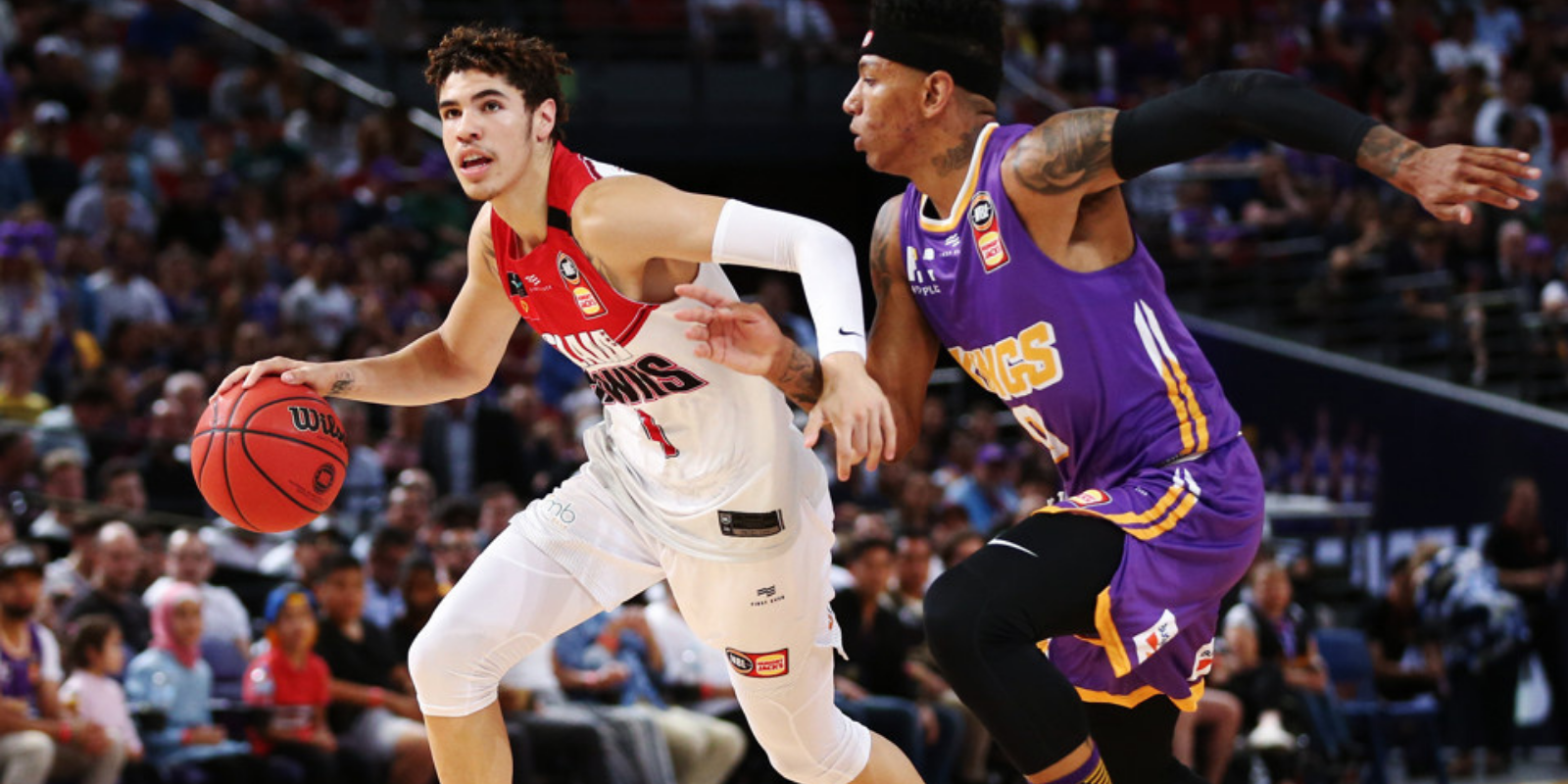
    The 2020 Draft presents instructive examples of how the passing whole is distinct from its parts. LaMelo Ball and Tyrese Haliburton were two of the best passers in the draft and Isaac Okoro and Patrick Williams were two of the best among wings. However, the wings had little in common with the ball-handlers in terms of raw box score output. 

    2020 Wing AST/TO Ratio

    Player AST/TO
    Devin Vassell 2.13
    Desmond Bane 1.68
    Saddiq Bey 1.61
    Josh Green 1.59
    Aleksej Pokusevski 1.56
    Elijah Hughes 1.49
    Skylar Mays 1.43
    Leandro Bolmaro 1.36
    Deni Avdija 1.25
    Jahmi’us Ramsey 1.11
    Isaac Okoro 1.04
    Isaiah Joe 1.00
    Robert Woodard .69
    Jaden McDaniels .65
    Patrick Williams .58
    Cassius Stanley .56
    Aaron Nesmith .54

    Using traditional metrics to draw conclusions on passing ability misses the mark because there is no way to divide passing into its parts. However, by breaking passing down into its sub-skills, we can show that a “good” passer might have holes in his passing repertoire that need to be improved, and a “bad” passer might have legitimate passing acumen. By approaching passing through a more nuanced lens, we better understand each skill in actionable ways. 

    Micro-skills of “Good” and “Bad” Bad Box Score Passers

    While at Auburn, Isaac Okoro showed legitimate skill as a second-side creator due to his ability to make intelligent passing reads against a moving defense. However, his passing aptitude did not show in the box, as he was barely above a 1:1 AST/TO ratio.

    SIS Passing Metrics Ranks

    Metric Isaac Okoro Patrick Williams
    Complex % 2nd 15th
    Pass to Result 1st 16th
    Moving Dribble % 7th 4th
    Simple Inaccurate % 14th 16th
    Complex Inaccurate % 5th 14th
    + Pass Craft 7th 1st

    Okoro had real passing acumen in a few areas. He often made complex passes (2nd among wings), quick decisions (3rd among wings), and put zip on the ball to ensure it reached the intended target on time.

    However, Okoro also had a genuine shortcoming as a passer: accuracy. Though he ranked 5th in our accuracy metric as a complex passer among wings, he was 14th out of 17 in simple pass accuracy, 10th in defensive manipulation, and 13th in touch passes. He completed complex passes and possessed some passing craft, but he would also whiff on simple ones and lacked craft in other areas. 

    A casualty obscured by role, Patrick Williams played almost exclusively off-ball at Florida State and had fewer passing opportunities than Okoro (13th among wings for Williams vs. 6th for Okoro). In the limited chances he was tasked with creating for others — despite a very poor AST/TO ratio — Williams showed valuable passing skills, including those that did not show up in the box score.

    Williams was 4th  among wings in our Pass Expected PPP[1], 4th in both Complex Success % and % of Passes Off Dribble, and ranked 1st in our +Pass Craft and Zip metrics.

    Williams flashed advanced passing ability but also had legitimate flaws, most notably in Volume of Complex Passes[2] (15th) and overall accuracy (12th, including 16th in Simple and 14th in Complex). From our data, we can conclude that Williams’ main shortcomings were accuracy and pure volume[3]

    Williams also had the 2nd lowest Pass to Result rating among wings in our database. This means that his passes often did not play a role in the result of the possession. Despite Williams’s passing craft, he struggled in the only dimension that assists capture: results, the element of passing the passer controls the least. Williams threw valuable passes, but his teammates failed to realize that value in results. 


    Even passers who put up gaudy box score numbers are not perfect.

    LaMelo Ball’s room for improvements were his accuracy with simple passes (18th of 18 ball-handlers), quick passes (18th of 18), and ability to fit the ball in tight spots (11th of 18).

    Tyrese Haliburton’s passing skill gaps were in zip (12th of 18 ball-handlers), accuracy on simple passes (15th of 18), and passes off dribble penetration[4] (15th of 18). Haliburton and Ball routinely threw elite passes and had the box score numbers to support the narrative that they were top-level passers. However, as good as they were, they still had areas for improvement.

    Accurately Evaluating Passing

    Nothing in basketball is black and white.

    You would not describe a good pick-and-roll defender who misses rotations and is prone to losing his man off the ball as a great defender.

    You would not regard an elite pick-and-roll defender in a drop scheme who is not a good defender in a soft-hedge or switch-heavy scheme as a terrible pick-and-roll defender.

    You would not label a great catch-and-shoot shooter who cannot fire off movement or off the bounce a great shooter overall, but great in a single subset of the entire skill.

    Passing is no different.

    By recognizing the nuance of the sub-skills within passing, evaluators can provide more accurate representations of the entire skill. In doing so, we can project and develop players precisely. The great catch-and-shoot shooter who cannot shoot off movement is not drafted to sprint off screens or told to work on “shooting,” but is selected to hoist spot-ups and told to work on movement shooting.

    Projecting and developing passing must go beyond the rigid world of “good” and “bad.” Players must be considered in contexts and roles as passers. Perhaps a ball-handler is elite at hooking passes to popping big men but cannot execute accurate lobs; the pick-and-roll partner he will be paired with will prove crucial to his projection.

    Likewise, a player development coach would be remiss to work on pick-and-roll passing with that ball-handler, instead needing to focus on particular deliveries. Through all phases of player evaluation, projection, and development, we owe it to players to be precise. Only then can we put them in the best positions to succeed. 


    While speaking with my mom to get the proper ballet terms needed for this piece[5], she said movement in ballet is never perfect and the ballet dancer is always on that quest for perfection, constantly breaking down each piece of the movement to improve the whole. It’s time for passing evaluation to match that same energy[6].


    [1] This indicates that he set his team up with good shots that may not have been capitalized upon by his teammates

    [2] Williams showed the ability to complete complex passes, but the volume was not high

    [3] Volume can at least be partially attributed to his role at Florida State

    [4] Passes from the paint that came off dribble penetration

    [5] I know absolutely nothing about ballet except for what a tour jeté is (thanks mom for laying it out in layman’s terms!)

    [6] If it doesn’t, I won’t hear the end of it from my mom