Author: Brent Minta

  • WHAT IS WRONG WITH JASON HEYWARD?

    WHAT IS WRONG WITH JASON HEYWARD?

    Jason Heyward’s offensive performance—or lack thereof—in 2016 has been very well documented. He is currently on pace to finish the year with career lows in just about every offensive category, including batting average, slugging percentage, and on-base percentage. To that point, his current wRC+ of 70 is by far the worst of his career, and well below the league average of 100. Needless to say, Heyward’s arrival on the North Side of Chicago has been rather underwhelming, especially when you consider that the Cubs are paying him $184 million over the next 8 years.

    If you ask anybody who has seen even five of Heyward’s at-bats in 2016, he will most likely tell you the same thing: he’s consistently late on pitches.  You cannot hit when you are late.  Hitting is partially the batter reacting to what he sees, but the actual swing should be an attacking movement, not a reacting one.  But what is causing Heyward to be so late on all of his swings?  Is his swing simply out of whack because he is feeling the pressure of his lucrative contract? Perhaps, but it seems to me like Heyward’s offensive production could return to its previous all star level with a few mechanical tweaks.

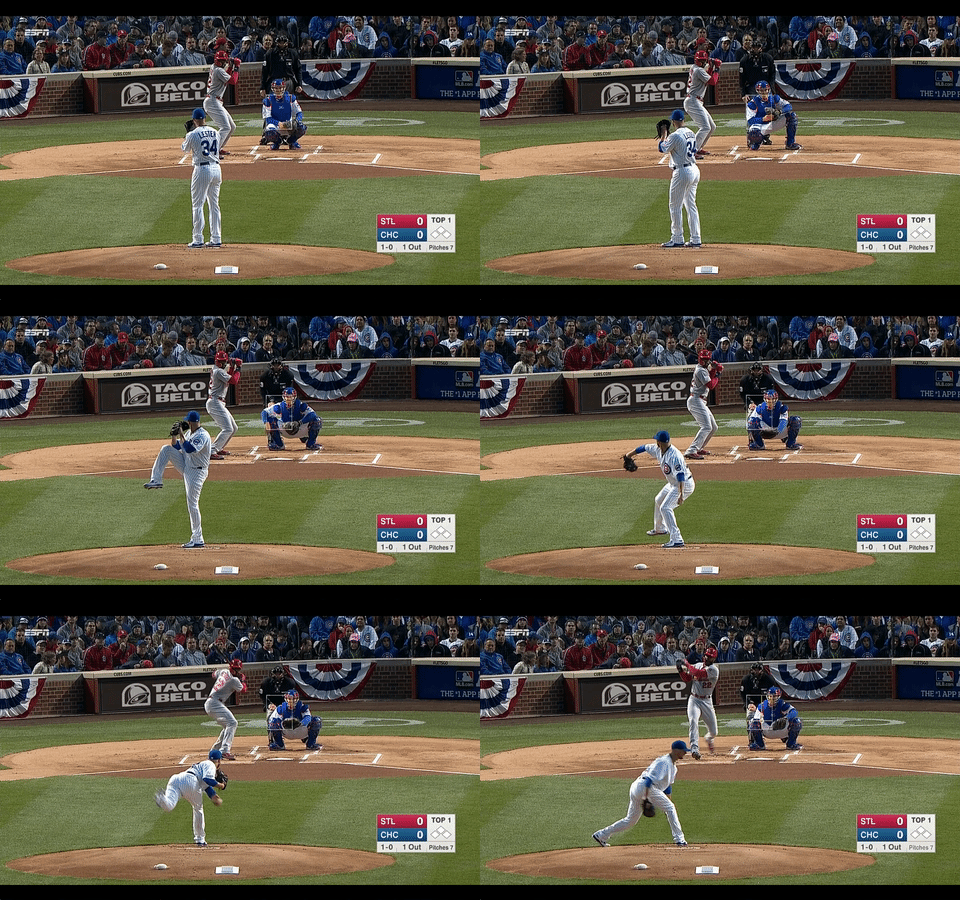
    Not all hitters hit the same way, but all great hitters do share one common trait: they hit the ball on the barrel with consistency. Although Heyward’s swing has always been more “hitchy” than a classic swing, he has found a way to consistently barrel baseballs in each of his previous six big league seasons leading up to this season. So what has gone wrong this season? Let’s take a look.

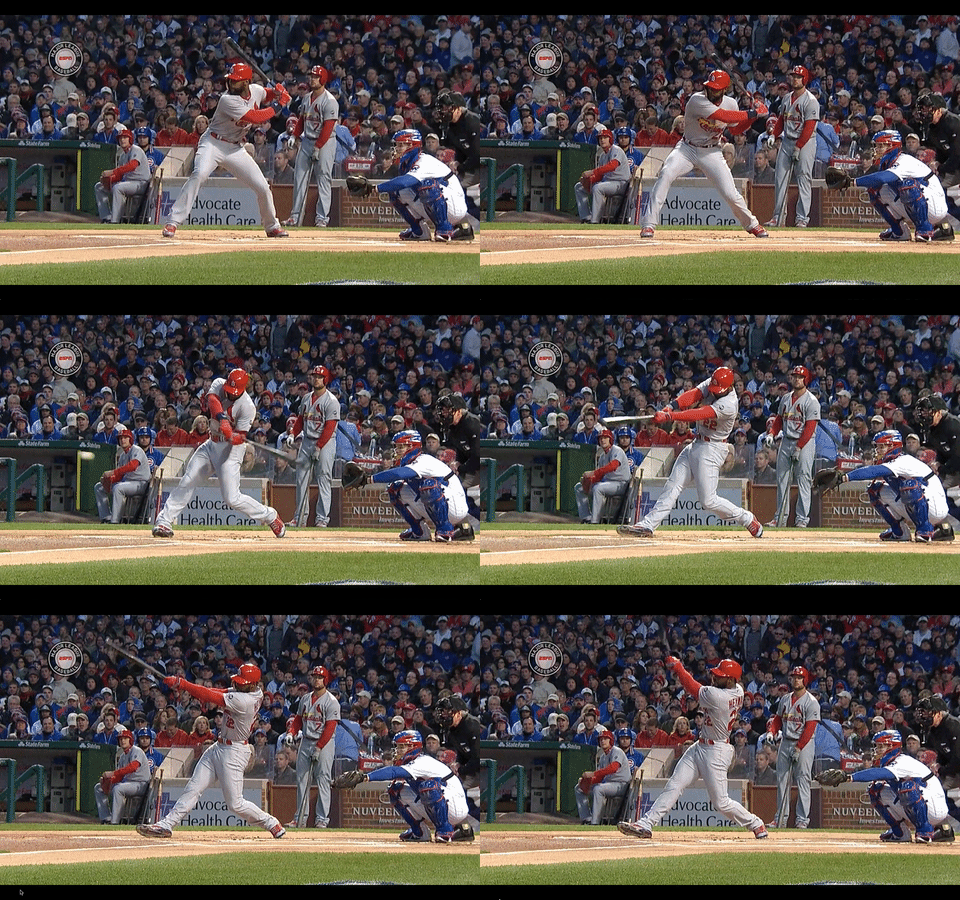
    This is a swing on a double that Heyward hit on Opening Day in 2015.
    5wfqjbvuovhyixuob9ajid5zqw
    Videos courtesy of mlb.com

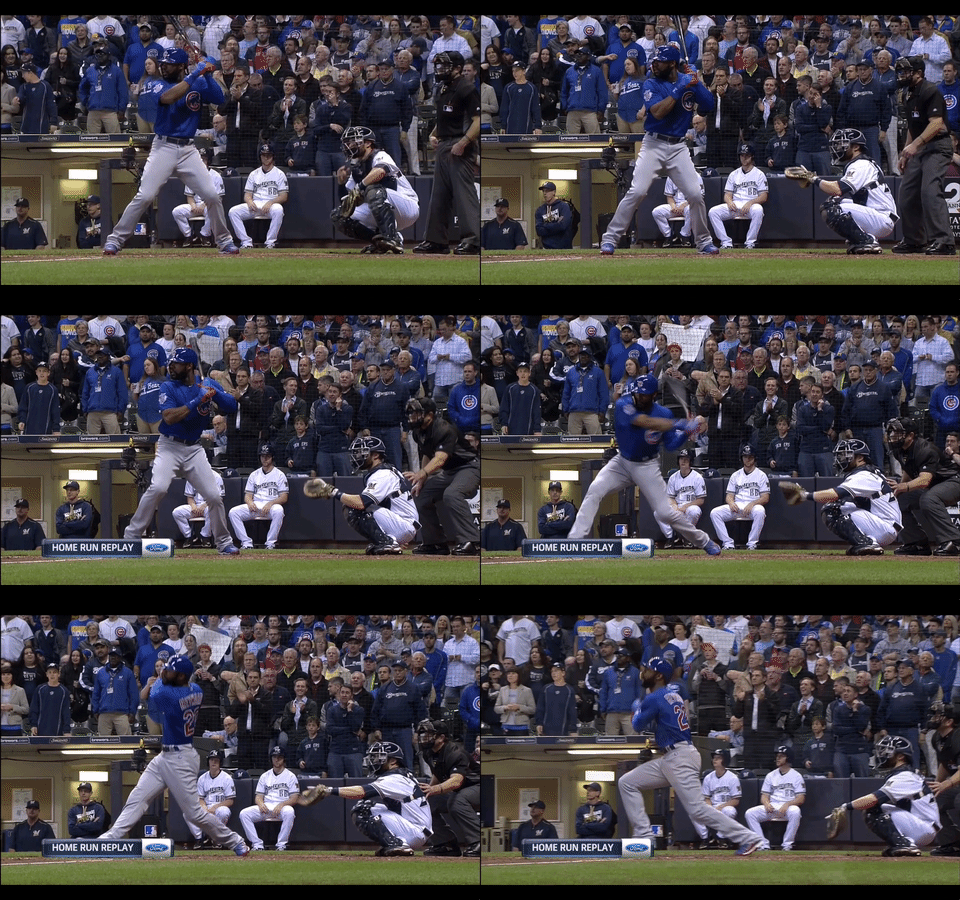
    Meanwhile, this swing comes from a home run that Heyward hit this year on May 17 in a game against the Brewers.
    105na9aimjn6ec
    Video courtesy of mlb.com

    The two biggest differences between these two swings that I see are 1) his new toe tap, and 2) his hand positioning.  The first point that I want to analyze is the part that worries me the least: the toe tap.  Heyward didn’t have a toe tap for the first six years of his career.  According to Tom Verducci of USA Today, he added it in mid-April after he found himself hitting .188 after two weeks with the Cubs.  Despite the result of the swing, Heyward looks terribly uncomfortable with his new toe tap in the swing on May 17.  Many hitters use a toe tap as a timing mechanism to get their bottom and top halves loaded on time.  The key to the toe tap is to keep your front foot moving throughout the whole motion, creating rhythm within your load.  As you can see, Heyward’s toe tap is broken up into two distinct movements, causing him to overstride, throwing his timing off, and, you guessed it, causing him to be routinely late on pitches.

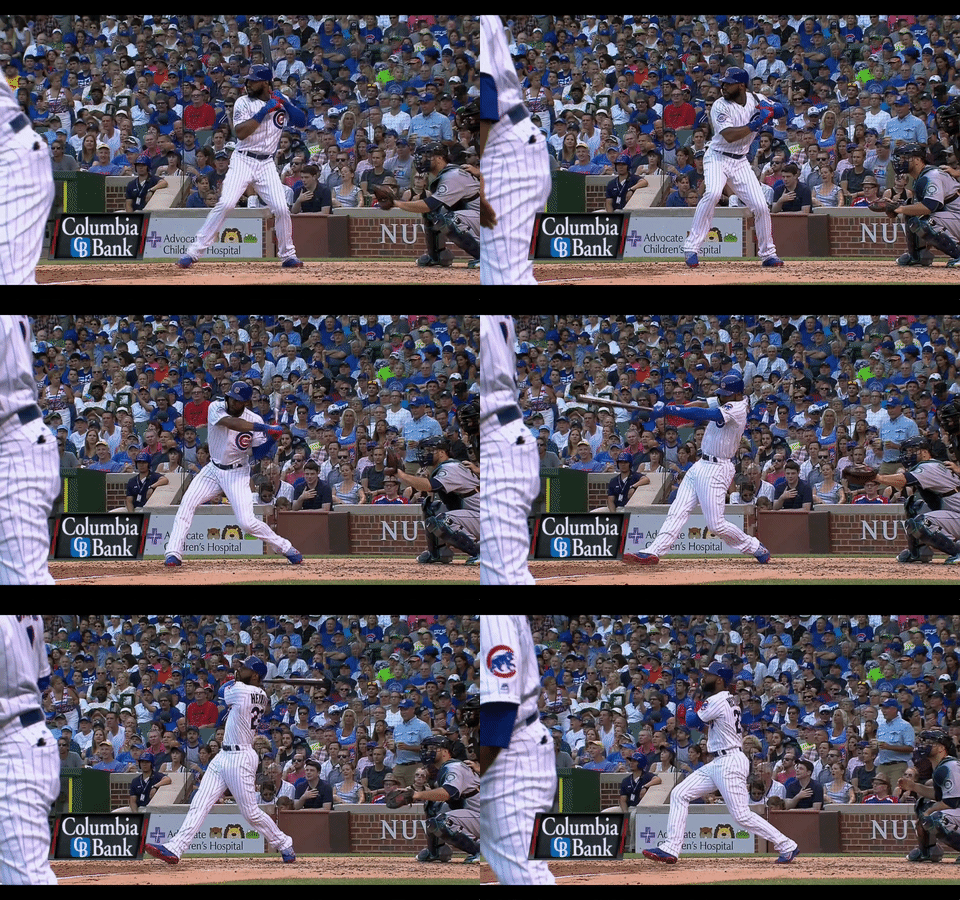
    Still, I am not worried about Heyward’s toe tap, and this home run against the Mariners on July 29 shows why:
    7uartfkzym1bc
    Video courtesy of mlb.com

    As you can see, the toe tap has become one fluid motion, and Heyward is no longer overstriding.  His toe tap is now actually a useful timing mechanism, and he has been more on time recently.  So why is Heyward still not hitting?

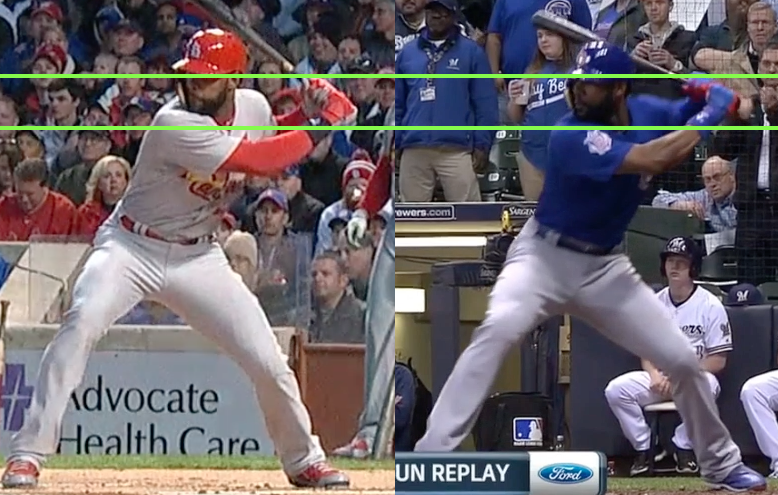
    The second major change in Heyward’s swing this season is his hands, specifically how high they are.  As you can see below, Heyward’s top hand is on the same plane as before, but his bottom hand is much higher in the swing from May, which is flattens out his bat angle.  This is causing his swing to become longer to the ball since his hands have to travel farther to get to the baseball.
    Screen Shot 2016-08-04 at 5.54.46 PM
    Courtesy of mlb.com

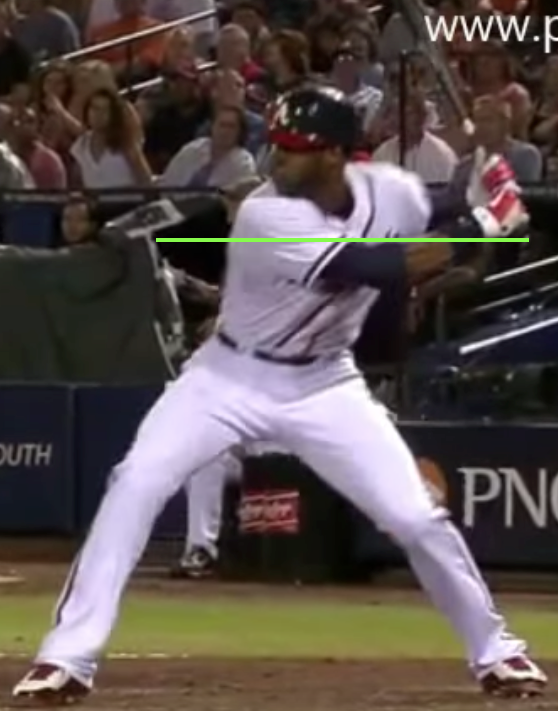
    The picture below is from 2012, the year that Heyward hit a career high 27 home runs as a member of the Atlanta Braves.  Heyward’s hands were even lower then than they were in St. Louis.
    Screen Shot 2016-08-04 at 8.25.19 PM
    Courtesy of pastimeathletics.com

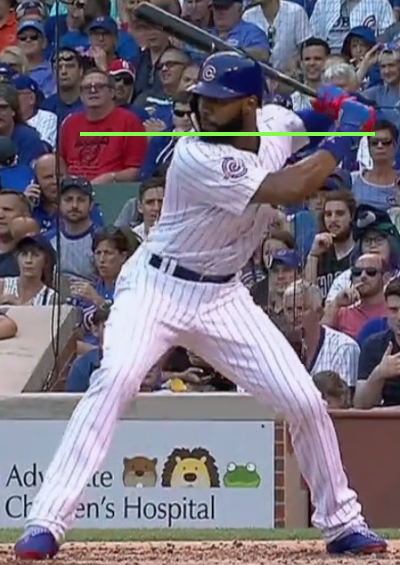
    Following his in-season adjustments, Heyward’s lower body is now in rhythm, and his foot is getting down on time.  However, his swing is still too long because of his hand positioning, and that is why he’s still not hitting with any consistency.
    Screen Shot 2016-08-04 at 9.19.03 PM
    Courtesy of mlb.com

    Some players have success with higher hands—Bryce Harper has high hands and he won the MVP in 2015—but that approach is clearly is not working for Heyward.  As I said earlier, the key to hitting is “finding the barrel” consistently and, with his hands in a lower position, Heyward consistently barreled up baseballs for six years before coming to the Cubs.  I think that if he would simply lower his hands by 4-6 inches, Heyward’s swing would shorten, he would be more on-time, and he would start to hit the way that the Cubs hoped that he would when they signed him in December.  If Heyward could make those adjustments in time to get hot for the playoffs, Cubs fans would no doubt be quick to forgive Heyward’s poor regular season.

  • Adam Eaton is Quietly Becoming a Star

    Yes, you read that correctly.  Adam Eaton, the minuscule 5′ 8″ leadoff hitter for the Chicago White Sox, is one of the best right fielders in all of baseball.  Sounds crazy, right?  Most think of Eaton as a solid, speedy outfielder for a White Sox team that has been rather underwhelming for the past several seasons.  Few think of him as a star, especially at a position that features real star power in players like Giancarlo Stanton and Bryce Harper.  Eaton’s power numbers don’t match up with those heavyweights, but he’s a different type of player.  Jason Heyward showed us this past offseason that you don’t have to hit 40 home runs to be considered an elite player.  So, let’s take a look at how Eaton stacks up to the $184-million man who plays right field some 10 miles to the north of Eaton’s home park.

    Below is a table that compares each player’s stats since Eaton’s first full season in 2014 (per FanGraphs):

    [googleapps domain=”docs” dir=”spreadsheets/d/1ORay82T4nEH-BDgQ3-oCbvCVofz6xkpiI583o_bj6bU/pubhtml” query=”widget=true&headers=false” width=”928″ height=”133″ /]

    As you can see, Eaton’s numbers are at least as impressive as Heyward’s when it comes to most offensive categories.  Eaton even has a higher slugging percentage despite hitting fewer home runs.  Heyward is widely regarded as one of the better baserunners in the league, and FanGraphs’ Ultimate Base Running (UBR) metric shows that Eaton is an even better baserunner than Heyward.

    The number that jumps out at me is that Heyward’s Wins Above Replacement total is a win and a half better than Eaton’s, and that is mostly because of Heyward’s elite defensive ability.  In 2014 and 2015, Eaton played center field for the White Sox, and he was, statistically, one of the worst defensive outfielders in all of baseball during that time.  In fact, according to Baseball Info Solutions, only 10 outfielders had a worse Scout’s Defensive Rating than Eaton’s -7.4 from 2014 to 2015.  Meanwhile, Heyward posted a Rating of +19.2 in those two years, second only to four-time Gold Glove winner Alex Gordon.

    In this past offseason, the White Sox signed free agent center fielder Austin Jackson and decided to move Adam Eaton to right field.  Players’ defensive metrics almost always improve when they move from center field to right field, and Eaton has been no exception to that trend.  Through the first two months of the season, Eaton has actually been one of the best defensive outfielders in all of baseball. He currently owns the third best Scout’s Defensive Rating among outfielders this season (+5.7), while also leading baseball with 15 Defensive Runs Saved.

    Unlike many of my fellow Cubs fans, I still believe that Heyward is one of the better right fielders in baseball.  But, I also remember receiving a text message from a White Sox fan who is a friend of mine after the Cubs signed Heyward.  He pointed out that Eaton’s offensive numbers rivaled those of Heyward in recent seasons, and the White Sox are only paying him $4.7 million per year, a fraction of the $23 million the Cubs put into Heyward’s bank account each season.  At the time, I believed that Heyward separated himself from Eaton defensively, but if Eaton can continue to play defense the way he has so far in 2016 and still produce offensively the way he has over the course of his career, he will soon be known as one of the best all-around players in baseball and a true star in this league.

  • The Story Nobody is Talking About

    Last week, Colorado Rockies shortstop Trevor Story set the Major League record by hitting seven home runs in his team’s first six games of the 2016 campaign, passing hall of famers Mike Schmidt and Willy Mays, along with former Rockies great, Larry Walker, each of whom had hit six home runs in the first week of a season. What makes his barrage of round trippers even more impressive is that those six games just happened to be his first six games in a Major League uniform. This torrid start to his MLB career has certainly garnered plenty of media attention; any time you break a record held by all-time greats like Schmidt, Mays, and Walker it should absolutely be talked about.

    During his first week in Major League baseball, the 2011 first round draft pick collected a .333 batting average with those seven home runs and slugged a whopping 1.111.   If you’re more into the sabermetric numbers than the traditional numbers, Story’s start to the season isn’t any less remarkable: His weighted runs created plus (wRC+) stands at 243 according to Fangraphs, meaning that he more than doubled the average league production last week, and his weighted on base average (wOBA) currently stands at .598 (anything over .400 is considered excellent). All in all, Trevor Story’s start to his career has surely been one to remember. But what if I told you that another rookie actually outproduced him last week?

    While Story exploded onto the scene with his seven home runs last week, Astros first baseman Tyler White was quietly having a statistically more productive week. No, he didn’t hit more than a half-dozen home runs, but, after his first six games, White had a higher batting average (.556) and a higher slugging percentage (1.167) than Story. Just take a moment to appreciate that: Tyler White had a better slugging percentage through his first six games than a player who hit seven home runs. The advanced metrics tip the scale in White’s favor even more as he has produced a .690 wOBA and a wRC+ of 383. wRC+ measures a player’s offensive performance, with 100 being average, so, while Story was more than doubling league average last week, Tyler White almost quadrupled the Major League average over the past week.

    All in all, I am not trying to deny the fact that Trevor Story’s seven home runs to start his career are remarkable, but I believe that White has been the better hitter over the past week, and he has not gotten near the attention that Story has. Chicks do dig the long ball, so it makes sense why Story has captured the attention of so many people across the nation, but if I had to pick one to have on my team, based solely on their first six games, I would take White in a heartbeat.