Author: Jeff Dean

  • Jordan Addison: Great Solution, Too Many Problems

    Jordan Addison: Great Solution, Too Many Problems

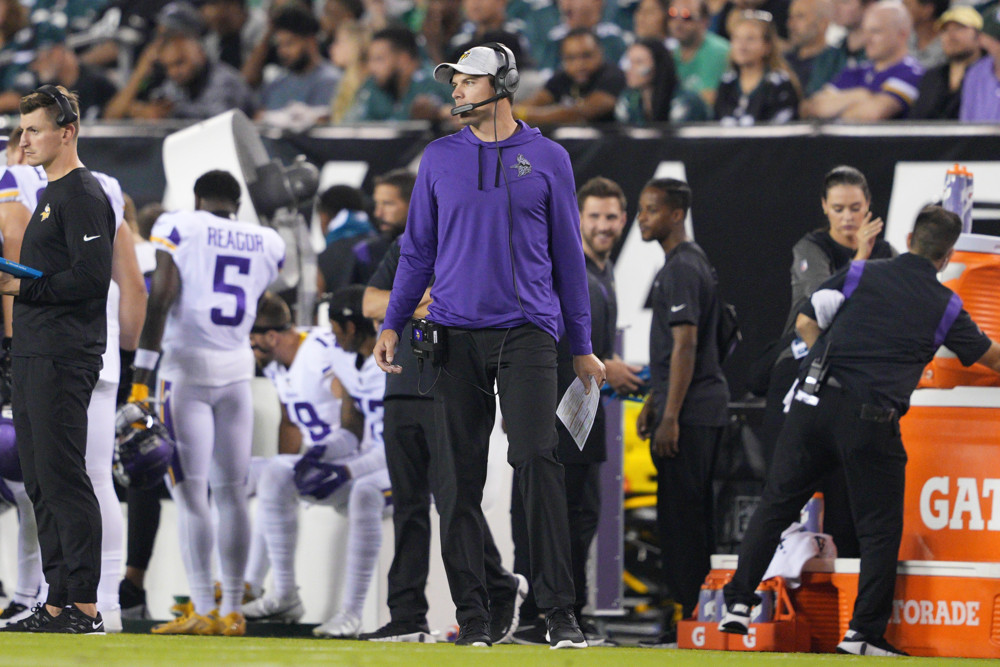
    The Minnesota Vikings are facing an important season. Kirk Cousins is in the final year of his contract, and while he is a polarizing player, he has at least provided stability at the quarterback position. Whether Cousins re-signs with the Vikings could hinge on the success of the team this season, but are the Vikings going to take a step forward, backward, or laterally this year? Let us take a step back and see why this question is difficult to answer.

    After finishing with 10+ losses 3 times in a 4-year stretch between 2010-2013, with the one exception being due to an All-World performance by Adrian Peterson, the Vikings decided to hire Mike Zimmer. 

    While the Vikings are remembered as an overall “good” team during his tenure, the team went to the playoffs only 3 times in his 8-year tenure. To understand Kevin O’Connell’s impact, we need to see what he was stepping into. Basic stats do not tell the whole story, but they can be useful in the right context. Below is a table showing the year-by-year comparison with ranks in the NFL.

    Season Coach Off Points Off Yards Def Points Def Yards Points Dif Yards Dif
    2014 Zimmer 20th 27th 11th 14th 18th 24th
    2015 Zimmer 16th 29th 5th 13th 9th 21st
    2016 Zimmer 23rd 28th 6th 3rd 15th 18th
    2017 Zimmer 10th 11th 1st 1st 5th 1st
    2018 Zimmer 19th 20th 9th 4th 12th 7th
    2019 Zimmer 8th 16th 5th 14th 7th 13th
    2020 Zimmer 11th 4th 29th 27th 22nd 15th
    2021 Zimmer 14th 12th 24th 30th 18th 22nd
    2022 O’Connell 8th 7th 28th 31st 15th 26th

    The Vikings last season were not remarkable in basic stats. Their numbers were quite similar to their 2020 season when the team went 7-9 and their point differential was eerily similar to their 2021 season. The 2022 team scored 1 fewer point and gave up 1 more point than the 2021 season, but its win total jumped by 5 wins. The difference was, as it has been pointed out many times before, their one-score game record. They went 11-0 in one-score games in the regular season last year and 6-8 the year before. The logical thought process shows a future where they regress to the norm if given the same team. 

    But maybe they got better over the off-season. Let’s examine their moves.

    One of the clearest writings on the wall was letting defensive coordinator Ed Donatell go. That defense was atrocious and the numbers may not do it justice with how bad it truly was. They brought in Brian Flores to take the vacant job which should provide a big jolt, but a complete overhaul of a defense is always risky. Below is a list of defensive players lost and added over the offseason along with their 2022 Total Points.

    Player 2022 Total Points Added/Lost
    Patrick Peterson 67 Lost
    Za’Darius Smith 39 Lost
    Chandon Sullivan 33 Lost
    Duke Shelley 28 Lost
    Eric Kendricks 28 Lost
    Dalvin Tomlinson 16 Lost
    Byron Murphy Jr. 14 Added
    Marcus Davenport 13 Added
    Cameron Dantzler Sr. 11 Lost
    Dean Lowry 7 Added
    Mekhi Blackmon Added
    Jay Ward Added
    Jaquelin Roy Added

    Now there may not be a sure-fire “big loss” in the group depending on personal preference, but losing 6 defensive starters in one offseason with almost all of the spots being filled with unproven talent is a bold strategy. 

    Four experienced secondary members will not be a part of the 2023 team with those spots being up for grabs. Murphy fills one spot, but the other positions are up for grabs between mid-round rookies and a very underwhelming 2022 draft class. Injuries were a major factor for sure, but banking on immediate success from Lewis Cine, Andrew Booth, and Akayleb Evans is a long-odds play.

    While the secondary is a crapshoot, the linebacking core is a little more stable. Letting Eric Kendricks go paves the way for Brian Asamoah to step up, and while there is a lot to like about the former Oklahoma linebacker, losing a reliable, veteran presence like Kendricks leaves big shoes to fill and is in no way a slam dunk improvement. The defensive line, including EDGE, is currently limited. Danielle Hunter is a monster (at the time of publishing, he is still a Viking, and losing him would further emphasize the points made here), but losing Za’Darius Smith means the other EDGE position is between a player on a one-year-prove-it deal in Marcus Davenport, a couple reserve players, or maybe an undrafted rookie in Andre Carter. 

    The other EDGE player opposite Hunter has to get pressure because the entire defensive front is full of run-stuffing, line-controlling, space eaters. Harrison Phillips, Khyiris Tonga, and Dean Lowry are not going to get after the quarterback consistently, which puts more pressure on the EDGEs. While the Vikings need help all over the field on defense, they used their only top-100 selection in the 2023 NFL Draft on a wide receiver.

    Yes, the Vikings lost Adam Thielen, and yes, they needed help at wide receiver, but this should not have been a No. 1 priority. Thielen accumulated 15 Total Points last season; 0.8 per game. KJ Osborn accumulated 1.1 per game, and a significant Year-3 leap is not out of the question. Losing Dalvin Cook is a big blow, and while he may not have been the most effective running back last year, he is an electric playmaker who is hard to replace. Unless Alexander Mattison can exceed the wildest expectations, and Jordan Addison is a significant upgrade from Adam Thielen, the offense will be marginally better, if at all. 

    Jordan Addison was graded as a solid starting wide receiver by our scouting department, taken right where he should have been, and he should be a quality NFL player, but he likely will not be talked about like Justin Jefferson and Ja’Marr Chase’s rookie impact. Addison and Thielen’s skillsets actually align fairly well, but Thielen was significantly bigger, had more top-end speed, showed better hands in college, and was a menace on special teams. A Thielen-esque impact is likely the ceiling for Addison early in his career, and this does not look like an offense-changing weapon. This leads to a fairly logical conclusion that the Vikings misused their resources.

    The whole argument comes down to “Did the Vikings get better over the offseason?” Their offense was average to above-average last year, but elite in very few areas. Their defense was, to put it mildly, an eye-sore. The basic stats did not show an exceptional team, and their 2022 advanced stats below do not inspire confidence either.

    Stat Off Value Off Rank Def Value Def Rank
    Overall EPA/Play -0.05 19th -0.02 25th
    Overall Positive % 44% 17th 44% 24th
    Early Down EPA/Play -0.04 19th 0.03 29th
    Early Down Positive % 44% 17th 45% 25th
    Late Down EPA/Play -0.06 16th -0.16 7th
    Late Down Positive % 44% 14th 41% 5th
    Red Zone EPA/Play 0.00 10th -0.03 19th
    Red Zone Positive % 46% 9th 51% 32nd
    Middle of Field EPA/Play -0.06 21st -0.02 23rd
    Middle of Field Positive % 43% 21st 42% 15th

    Those stats do not scream “13-win team.” Their offensive talent is relatively the same as last season—again depending on personal preference—with O’Connell’s growth as a head coach as a wild card, but it is still not anywhere near “elite.” The defense will be a bigger mystery, but having a bad defense, removing most of the quality players, and replacing them with unknowns is not a proven strategy. Not to mention that Danielle Hunter may not be a part of their 2023 defense which would be a big loss. Flores should have been given carte blanche to remake this defense, but instead, for the 2nd offseason in a row, the Vikings missed the mark on meaningful changes.

    In a division that is ripe for the taking, Minnesota appears to have been passed this offseason. The Bears, Lions, and Packers forge ahead in their new identities while the Vikings cling to hope, and hope is not a strategy. The 13 wins last season look impressive, until you look at the facts—that team severely overperformed.

    Final summary: The Minnesota Vikings will take a lateral step in terms of play quality, but unless lady luck blankets them like Sauce Gardner, they will see a regression in the win column. A 9-8 finish and no playoffs will lead the Vikings and Kirk Cousins to part ways without a quarterback plan in place (Jaren Hall is not a high-upside pick). Justin Jefferson will cost more than $30 million a year (rightfully so) leaving the organization cash-strapped, and a Top-10 draft pick in the 2025 NFL Draft may not be far behind.

  • 2022 SIS All-Independents Teams

    2022 SIS All-Independents Teams

    It’s finally time to release our SIS All-Conference teams. We used our all-encompassing player value stat, Total Points, along with other metrics and our scouting work as leading references in putting together our team of selections for 2022, plus a few honorable mentions.

    You can learn more about Total Points and the statistics referenced here.

    These picks are meant to honor this season’s best-of-the-best among the FBS Independents.

    Offense

    Position Name School
    QB Jaren Hall BYU
    RB Dae Dae Hunter Liberty
    RB Audric Estime Notre Dame
    WR Demario Douglas Liberty
    TE Michael Mayer Notre Dame
    FLEX Joshua Lingenfelter Army
    OT Joe Alt Notre Dame
    OT Blake Fisher Notre Dame
    OG Connor Finucane Army
    OG Josh Lugg Notre Dame
    OC Connor Bishop Army

    Jaren Hall had more Passing Total Points than every other Independent QB COMBINED. The group of independents makes this team slightly unique as there were 4 highly effective running backs and a pair of top tight ends so this team utilizes a heavy personnel package. Among backs (RB and FB), Dae Dae Hunter and Audric Estime were 1st and 2nd respectively in Rushing Total Points by a wide margin. Army RBs Ay’Jaun Marshall and Braheam Murphy earned significant Total Points as run blockers which kept them in contention.

    Demario Douglas had nearly 50 more targets than the next most-targeted receiver and he led the Independents in Blocked Tackles + Missed Tackles.

    Michael Mayer was one of the easiest selections in any conference as he was far and away the most impactful pass-catcher among the Independents and finished with the 5th-most Total Points among ALL Independent players.

    Joshua Lingenfelter was used almost exclusively as a run-blocker, but he was extremely effective in that role, earning more Run Blocking Total Points than every LINEMAN, with the exception of his teammate Connor Finucane.

    The entire OL is made up of Army and Notre Dame players as Joe Alt, Connor Finucane, Josh Lugg, Connor Bishop, and Blake Fisher were top-5 in Blocking Total Points in order.

    Defense

    Position Name School
    DT Jayson Ademilola Notre Dame
    DT Kendy Charles Liberty
    EDGE Durrell Johnson Liberty
    EDGE Isaiah Foskey Notre Dame
    LB Jalen Mackie UMass
    LB Brandon Bouyer-Randle UConn
    CB Tre Wortham UConn
    CB Syrus Dumas New Mexico State
    CB Benjamin Morrison Notre Dame
    S Marquel Broughton Army
    FLEX TaRiq Bracy Notre Dame

    Jayson Ademilola and Kendy Charles were 1st and 2nd in both Pass Rushing Total Points and Overall Total Points among DTs. Durrell Johnson and Isaiah Foskey both finished the season top-3 among Independent players in pressures and Pass Rushing Total Points and Johnson also led the FBS in TFLs. Jalen Mackie and Brandon Bouyer-Randle were the only 2 LBs to obtain 14+ Total Points in both Pass Defense Total Points and Run Defense Total Points.

    Syrus Dumas was 2nd among Independent defenders in EPA with -14.2. Benjamin Morrison and TaRiq Bracy were 1st and 2nd in Coverage Total Points with Morrison snagging 6 INTs as well. Marquel Broughton led all Independent defenders in Run Defense Total Points. Tre Wortham gave up 6 TDs in coverage, but was 3rd among Independent defenders with 4 INTs, T-4th in passes defensed, and gave up under 7 yards per target to make the team.

    Specialists

    Position Name School
    K Blake Grupe Notre Dame
    P Jon Sot Notre Dame
    Returner Shedro Louis Liberty

    Blake Grupe went 14-of-19 on FGs and 49-of-49 on extra points to lead Independent players in scoring. Jon Sot was 2nd in punt average and had 10 punts inside the 10. Shedro Louis had the highest kickoff return average (minimum 3 returns) and took one kickoff back for a touchdown.

    Honorable Mentions

    Name School
    Ay’Jaun Marshall Army
    Braheam Murphy Army

    Total Points, stats, and ranks as of 2/1/2023

  • 2022 SIS Conference USA All-Conference Teams

    2022 SIS Conference USA All-Conference Teams

    It’s finally time to release our SIS All-Conference teams. We used our all-encompassing player value stat, Total Points, along with other metrics and our scouting work as leading references in putting together our team of selections for 2022, plus a few honorable mentions.

    You can learn more about Total Points and the statistics referenced here.

    These picks are meant to honor this season’s best-of-the-best in Conference USA.

    Offense

    Position Name School
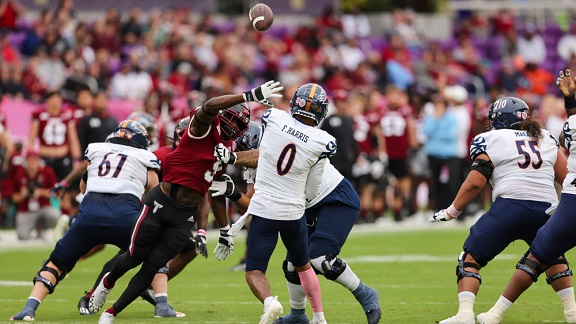
    QB Frank Harris UTSA
    RB DeWayne McBride UAB
    WR Luke McCaffrey Rice
    WR Trea Shropshire UAB
    TE Oscar Cardenas UTSA
    FLEX Jaylin Lane Middle Tennessee
    OT Ethan Onianwa Rice
    OT Kadeem Telfort UAB
    OG Gabe Blair North Texas
    OG Matthew Trehern UAB
    OC Manase Mose North Texas

    Frank Harris of UTSA was one of the easiest selections in any conference. He had more than TRIPLE the Total Points of the next highest QB in the conference while leading UTSA to another conference championship. DeWayne McBride had an impressive 28.3% Blocked Tackle and Missed Tackle % this season on his way to over 1,700 rushing yards. 

    Luke McCaffrey, Trea Shropshire, and Jaylin Lane all finished top-8 in the conference in Drop% (minimum 50 targets), and they finished 1st, 2nd, and 3rd in Receiving Total Points respectively. Oscar Cardenas narrowly edged out Jake Roberts due to his incredible 96.7% On-Target Catch%.

    Gabe Blair, Manase Mose, Matthew Trehern, and Ethan Onianwa were the Top-4 offensive linemen in Total Points in the conference and Kadeem Telfort was T-4th lowest BB% among offensive linemen with at least 200 snaps.

    Defense

    Position Name School
    DT Marley Cook Middle Tennessee
    DT Brodric Martin Western Kentucky
    EDGE Jordan Ferguson Middle Tennessee
    EDGE JaQues Evans Western Kentucky
    LB Myron Morrison Rice
    LB Cal Wallerstedt UTEP
    CB Corey Mayfield Jr. UTSA
    CB Starling Thomas V UAB
    S Kaleb Oliver Western Kentucky
    S Clifford Chattman UTSA
    FLEX Decorian Patterson Middle Tennessee

    Marley Cook led all DTs in pressures and Pass Rush Total Points in the conference while Broderic Martin finished 2nd in Pass Rush Total Points. JaQues Evans led the conference in pressures as well as holds drawn. Jordan Ferguson finished 2nd in pressures and led the conference in passes deflected/batted at the line of scrimmage. Barely missing the team was Jadrian Taylor who, despite leading the conference in sacks, was 9th in pressures.

    Myron Morrison led all linebackers by a large margin in Total Points and had a QB Rating Against of just 15.6 (2nd in the conference, regardless of position). Cal Wallerstedt led off-ball linebackers in Run Defense Total Points. Corey Mayfield Jr. led the conference in Pass Coverage Total Points while his teammate Clifford Chattman was 2nd in the conference with 5 INTs. Starling Thomas V led all CBs in Deserved Catch% at a stingy 48.6% and Kaleb Oliver was T-2nd among DBs in Yards Per Coverage Snap with 0.2. Decorian Patterson tied for the FBS-lead with 7 INTs, but he also allowed a conference-high 8 TDs which almost kept him off the team.

    Specialists

    Position Name School
    K Gavin Baechle UTEP
    P Kyle Ulbrich Middle Tennessee
    Returner Smoke Harris Louisiana Tech

    Gavin Baechle went 22-of-24 on FGs including 9-of-11 on 40+ yard FGs. he was also 31-of-31 on extra points. Kyle Ulbrich led the conference in punt average as well as punts downed inside the 20. Smoke Harris led the conference in punt return yards, was 4th in kick return yards, and had a top-5 average in both return types.

    Honorable Mentions

    Name School
    Jake Roberts North Texas
    Jadrian Taylor UTSA

    Total Points, stats, and ranks as of 2/1/2023

  • Preseason All-American Team: Offensive Guards

    Preseason All-American Team: Offensive Guards

    As we approach the start of the college football season we will be releasing our 2022 Preseason All-American team.  Our two guards and two honorable mentions were selected and discussed.

    Check out our other selections in these links.

    Offense: QB RB WR TE OC OT

    Defense: DL Edge LB CB

    Entire series

    The guards selected are…

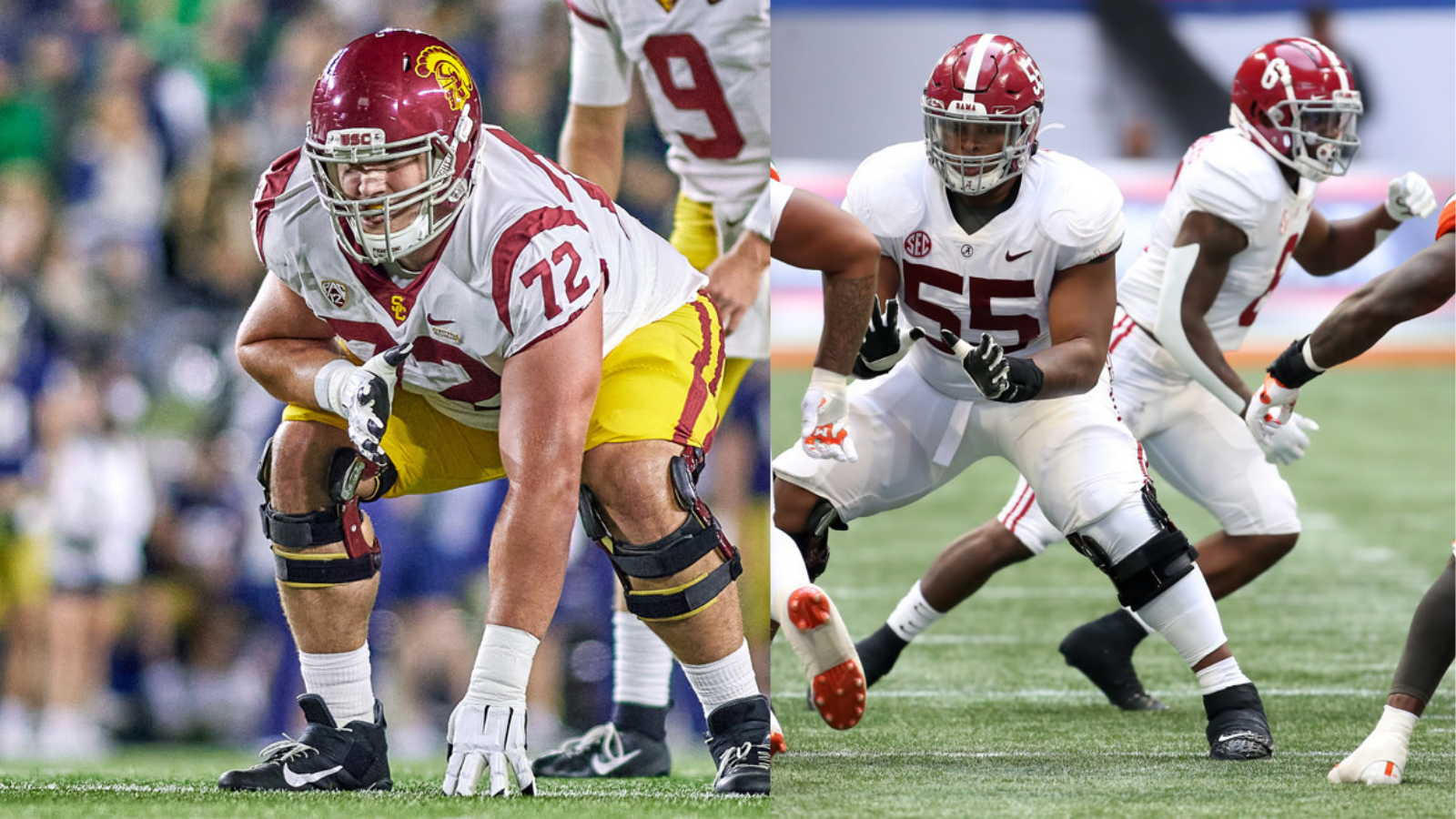
    OG Andrew Vorhees – USC

    OG Emil Ekiyor Jr. – Alabama

    Andrew Vorhees enters his 6th year at USC as their most experienced lineman. He has started at both guard positions and left tackle in his collegiate career. Injuries have hindered his career, but he has fought back each time and was named the the AP All-American 3rd team after last season.

    With Lincoln Riley and Caleb Williams coming over from Oklahoma, Jordan Addison coming from Pitt, and Travis Dye coming from Oregon, USC expects an offensive juggernaut. Vorhees will be the leader of the offensive line and may have a chance to do something that has alluded him in his career, make the CFP.

    Emil Ekiyor Jr. has 29 career starts entering the 2022 season and has been a part of a few high-powered offenses at Alabama. He will look to improve his NFL draft stock with another solid season and could finish the season as one of the top guard prospects in the country.

    Alabama has a long list of NFL offensive linemen and Ekiyor has improved leaps and bounds over his career. Combine his stellar play with national championship aspirations, and you get a prime candidate to become an All-American at the end of the season.

    Honorable Mentions

    OG O’Cyrus Torrence – Florida

    OG Caleb Chandler – Louisville

    OG Willie Lampkin – Coastal Carolina

    OG Nathan Monnin – Kent State

    Torrence followed Billy Napier from Louisiana to Florida this offseason and looks to take his talents to the SEC. He was an outstanding tackle at Louisiana and could continue at that position, but it’s looking more likely that he will kick inside to guard.

    His size, athleticism, and temperament should make the transition a success and he will look to continue the recent trend of Ragin’ Cajun offensive linemen who are drafted in the NFL.

    Chandler will look to lead Louisville’s offensive line in his 5th season. He has been a mainstay on the offensive line for the last several years and has a chance to earn national recognition with another strong campaign.

    Lampkin is an undersized guard, but he is a joy to watch. He is a fluid athlete with a wrestling background and he is a menace at the guard position. He was named 2nd Team All-Sun Belt last season and with Grayson McCall returning, the Coastal Carolina offense will continue to wreck havoc in the Sun Belt.

    Monnin dominated the SIS metrics last season and looked comfortable against top 10 opponents Texas A&M and Iowa last year. His name might not be well-known to casual fans, but NFL evaluators have their eye on him and he has a chance to show he belongs on NFL draft boards.

  • Preseason All-American Team: Linebackers

    Preseason All-American Team: Linebackers

    As we approach the start of the college football season, we will be releasing our 2022 Preseason All-American team.  Two linebackers were selected (not including Edge rushers). We also picked three honorable mentions and discussed them in-depth as well.

    Check out our other selections in these links.

    Offense: QB RB WR TE

    Defense: DL Edge CB

    Entire series

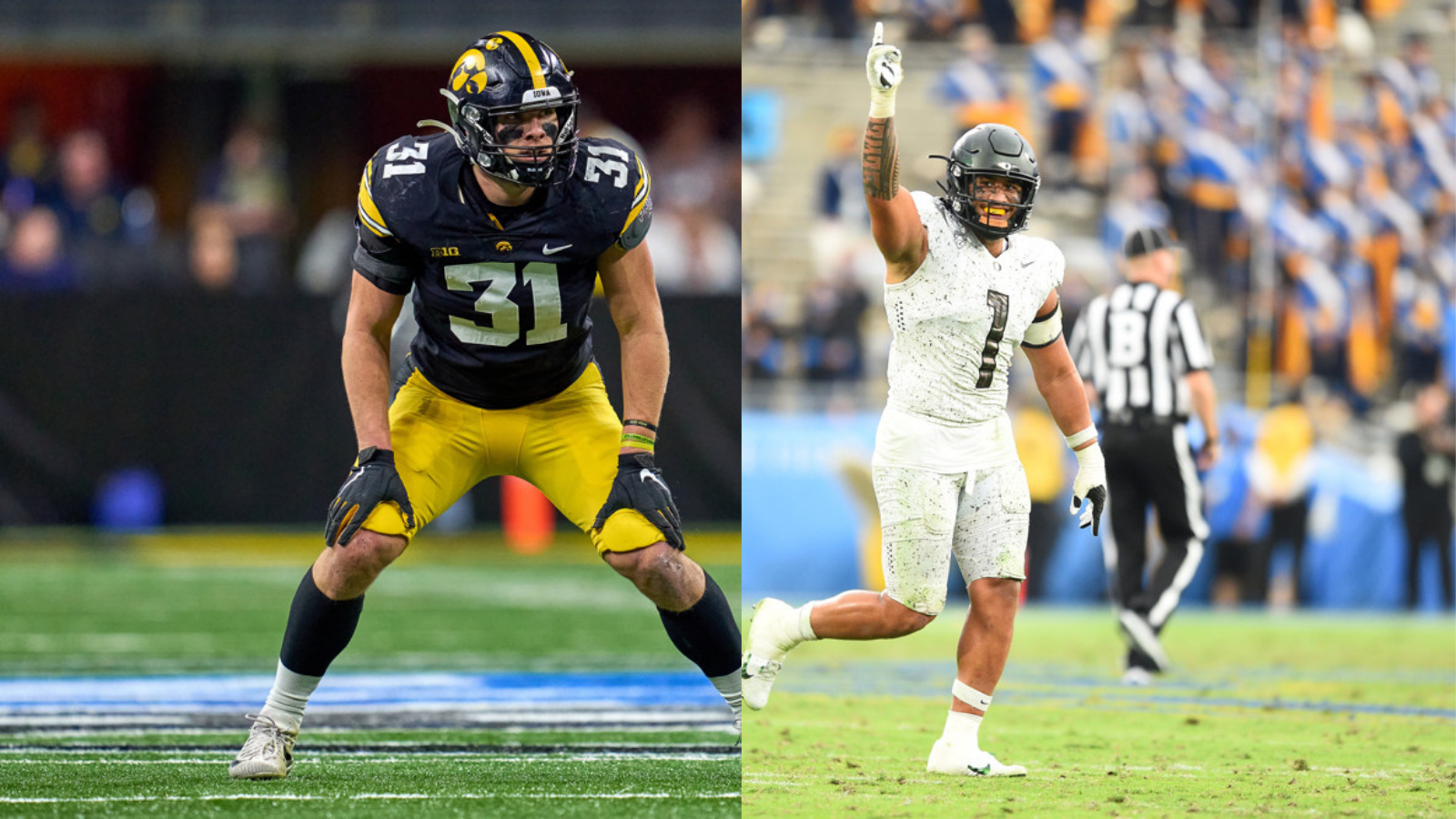
    LB Noah Sewell – Oregon

    LB Jack Campbell – Iowa

    Noah Sewell quickly made a name for himself at Oregon. As a true freshman in 2020, he was named Pac-12 Freshman Defensive Player of the Year and was on numerous Freshman All-American teams. In 2021, he took it a step further and was named First Team All-Pac-12 as well as a Butkus Award semifinalist (nation’s top linebacker). He is riding incredible momentum heading into his 3rd season and he could hear his name called early in the 2023 NFL Draft with another strong year. He is big, fast, and intelligent and has a chance to wreak havoc on the Pac-12 all over again.

    Jack Campbell continues the trend of high-end linebackers that come out of Iowa. His massive 6’5″ 250 pound frame allows him to handle the physical Big Ten. His presence is felt in both the run and pass games as he ranked 2nd in the Big Ten in tackles last season. His impact for the Hawkeyes is immense as he was named to the Player Council, Leadership Group, and received the Roy Carver Most Valuable Player (defense). He heads into his 4th season looking for the elusive Big 10 title.

    Honorable Mentions

    LB Henry To’o To’o – Alabama

    LB Trenton Simpson – Clemson

    LB Deshawn Pace – Cincinnati

    To’o To’o transferred to Alabama from Tennessee before last season and immediately stepped into the starting role. He was named All-SEC Second Team after leading the Crimson Tide in tackles, while contributing 4 sacks as well. He is in line to have a massive season and will have the luxury of playing with high-end talent all around him.

    Simpson does it all for Clemson. He is an explosive player who can rush the passer, drop in coverage, and stop the run. His versatility is key for the Tigers’ defense and he should see an expanded role this season as a contributor to one of the best pass rushing units in the country.

    Pace was a massive force on one of the top defenses in the country last season at Cincinnati. With so many players departing for the NFL, he will be asked to take an even bigger role. He is another guy that can do it all, with 9 TFLs and 4 INTs last season.

  • Why Kansas Should Embrace The Triple Option

    Why Kansas Should Embrace The Triple Option

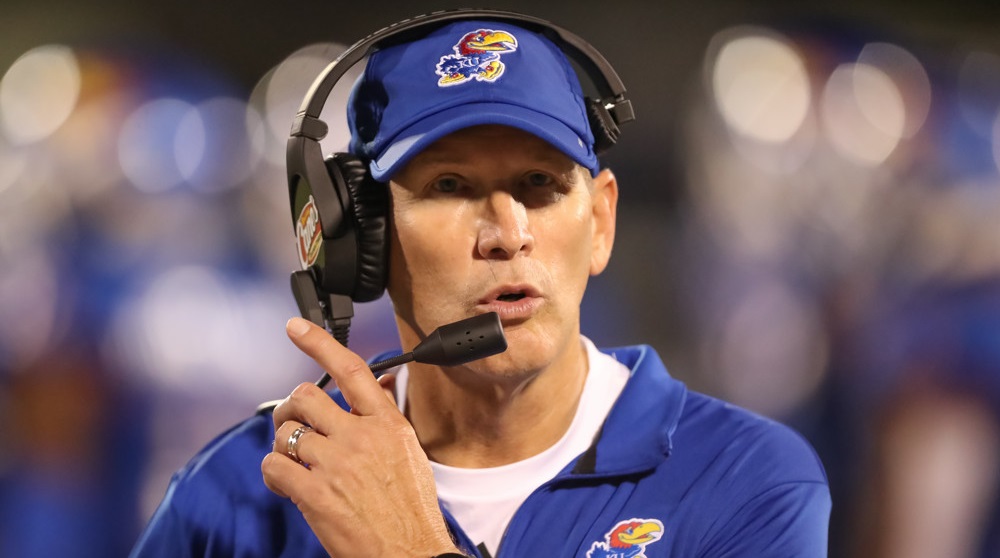
    Kansas football over the last decade has been, to put it mildly, less than stellar. Since the end of the 2009 season, Kansas has gone 23-118 overall and 7-99 in the Big 12. The Jayhawks had lost 56 consecutive Big 12 road games, before beating Texas this past season, and 44 consecutive games against AP-ranked teams. 

    During this stretch, they also set the FBS football record for most consecutive road losses with 46 until they beat Central Michigan in 2018. Lance Leipold is the sixth head coach of the program since Mark Mangiano resigned and inherited a program that hasn’t been ranked since 2009. 

    Leipold has his work cut out for him as Kansas struggled in just about every area in 2020 and continued to do so in 2021. The Jayhawks were outscored by almost 22 points per game in 2021.

    They averaged 3.8 yards per rush while allowing 6.0. They’ve completed 61% of their passes to their opponents 70%. It’s a rough watch.

    Kansas has become the laughingstock of college football and is a non-threat year in and year out.

    So how does a team that has gone winless in two of the last seven seasons compete in the high-octane Big 12? 

    Embrace the triple option

    The triple option is not a glamorous offensive scheme, but it can still be highly effective. Kansas doesn’t attract the same level of recruits as the more successful Big 12 teams so it can’t play the same game at their level. Instead, Kansas should slow the game down and run the ball in a conference historically known for poor, or at least exposed, defenses. 

    Let’s start with some of the triple option principles.

    Triple option offenses need their linemen to get after the opposing defensive linemen, a smart quarterback who can make the correct read, and several effective running backs. The entire offense needs to be well-disciplined, but because players aren’t asked to win one-on-one battles in space often, the scheme can help eliminate some of the talent gap. 

    Offenses move at a slower pace in the triple option, which will allow the Kansas defense to rest more and take the ball out of the opposing quarterback’s hands. Running this scheme will result in some negative plays, but they aren’t as prevalent and are usually minor losses, putting the offense in a lot more short-yardage third-down situations.

    Since 2017, triple option runs have averaged more yards per carry (5.5) than non-triple option designed runs (4.9). In addition, they have a significantly higher positive yard percentage and a significantly lower negative yard percentage.

    Triple Option Runs  Non-Triple Option Runs
    Positive Yardage 87% 80%
    Negative Yardage 7% 12%
    No gain 6% 8%

    Triple Option in the NCAA Today

    Army, Navy, and Air Force are some of the most recognizable triple option teams in college football and have had a lot of recent success running the scheme. Army has had at least 8 wins in five of the last six years, Navy has had at least 8 wins in 15 of the last 19 years, Air Force has had a winning record in 10 of the last 15 years, and Georgia Tech in the late 90’s and early 2000s had 13 straight seasons with a winning record, running primarily the triple option. 

    Some of the positive effects can be clearly seen with 2021 data.

    Air Force ranked 1st out of 130 FBS teams in time of possession, Army was 2nd, and Navy was 5th, while Kansas was 38th. This keeps the opposing offenses off the field and slows the game down for teams that struggle to stay with high powered offenses.

    Two of the most telling stats are plays per game and opponent plays per game. Air Force, Navy, and Army were 34th, 85th, and 97th respectively in offensive plays per game while Kansas was 124th. 

    Army, Navy, and Air Force were 2nd, 3rd, and 4th respectively in opponent plays per game while Kansas was 43rd. When you combine those numbers, the average Air Force game and Kansas game had about the same amount of plays, but Air Force ran about 10 more offensive plays a game while their defense conversely was on the field for 10 fewer plays.

    Keeping the defense fresh and establishing a running game early are major factors in a triple option offense, and over the course of a season, it adds up.

    Triple Option in the Power 5

    All of these stats are nice, but could it actually work in a Power 5 football conference? 

    Oklahoma had firsthand experience with the difficulty of a triple option team in 2018.

    Oklahoma was ranked 5th in the country heading into a home game with Army. Oklahoma was favored by 28.5 points at kickoff and its fanbase was expecting an easy win. Army had other plans. Though the Sooners ended up winning the game, they needed to go to overtime to defeat the pesky Black Knights. 

    The reason it was so close wasn’t that Oklahoma couldn’t move the ball on offense. The opposite in fact. Oklahoma averaged nearly 9 yards per play, but Army kept the ball out of future Hesiman winner Kyler Murray’s hands. 

    Army had the ball for an unbelievable 45 minutes of game time. It averaged 4.3 yards per play, putting itself in a lot of 3rd-and-short situations. It converted 13-of-21 3rd-down conversions and 4-of-5 4th-down conversions. Oklahoma only had three 3rd downs all game and Army ran 87 plays to Oklahoma’s 40.

    There were a total of 16 possessions, including overtime, in the game. While Army did lose, it did everything right to keep the game within reach and an extra turnover was the only real thing that kept them from winning.

    Even in games where the time of possession is more balanced, triple option teams have a way of hanging around. Michigan was favored by 22.5 points against Army in Ann Arbor in 2019, but still needed double overtime to win the game. 

    While playing sound defense was a major part of this game, Michigan only had two tackles for loss in the game which allowed Army to have 3rd and short frequently. Even when the Army offense was struggling, they took time off the clock and shortened the game which was nearly enough to pull off the massive upset.

    Kansas’ Recruiting Advantage

    While the service academies may not face Power 5 opponents on a weekly basis, they have been generally effective when they do play. Army, Navy, and Air Force have had the luxury of perfecting their offense over a lengthy period of time, where Kansas would be starting from square one, so where can Kansas make up some ground?

    One advantage Kansas could have against the service academies is recruiting. According to 247Sports, Kansas hasn’t finished above 8th in the Big 12 recruiting classes since 2011 and more often than not, finds itself in last. The vicious cycle is tough to break. Kansas doesn’t win so recruits don’t want to go to Kansas. Kansas doesn’t get recruits so Kansas doesn’t win. It perpetuates year in and year out. They can’t offer the national exposure or NFL development that teams like Oklahoma or Texas can offer so it’s tough to compete against those schools. It can offer a few things the service academies can’t however. 

    Service academies don’t award full scholarships for football, Kansas can. The requirements to get into a service academy are much higher than at Kansas. Players looking to play in a triple option offense in college will now have a more difficult choice which could steer a few talented players towards Kansas.

    If recruits are motivated to play at the next level more by football than serving their country, Kansas can be an attractive alternative. Triple option offense can still be found in high school programs and giving those players a familiar offensive scheme can benefit both sides. Kansas should be able to recruit better players than Army, Navy, and Air Force giving them a chance at a high-functioning triple option team despite a lack of tradition.

    The triple option is not the most exciting offense in the world. It’s an old school, lunch pail style offense, but it can give Kansas a chance to compete, something that it hasn’t done for awhile. The road back to relevance is a long and arduous one, but it is achievable. Kansas has had so little success trying the conventional ways so honestly, what does it have to lose?

  • NFL Draft Pick AnalySIS: Tennessee Titans

    NFL Draft Pick AnalySIS:
    Tennessee Titans

    The State of the Titans:

    The Tennessee Titans secured the No. 1 seed in the AFC last year, but lost their 1st playoff game to the Bengals. Derrick Henry coming back from injury will be a welcomed sight, but losing Rodger Saffold creates a hole in their offensive line. Losing Jayon Brown and Rashaan Evans will also have the Titans looking to bolster their linebacker depth.

    The skill positions are basically set, adding Robert Woods and Austin Hooper should help take pressure off of Henry. 

    The Titans are likely only a couple pieces away from being a threat in the AFC again and will look to improve their offensive line in the draft.

    #26 Overall

    Zion Johnson – Guard – Boston College

    Johnson is a plug-and-play left guard at the next level with the anchor and hand usage to pass protect at a high level and the scheme versatility to excel in the run game.

    The Titans have a hole at guard and Johnson can step in and start day 1. This isn’t the sexiest pick, but it works so well and Derrick Henry will be the first to welcome him.

    Kenyon Green – Guard – Texas A&M

    Green can have inconsistent hand placement and needs more refined technique against finesse rushers, but he is a physical and athletic guard with the footwork, sheer strength, and awareness to be a difference maker on the inside.

    Green will immediately improve the offensive line and has all the traits teams look for in a zone-scheme guard.

    #90 Overall

    Marcus Jones – Cornerback – Houston

    Jones is an excellent, fluid athlete with the speed, quickness, and mirror-match ability to excel at the next level, but his size and issues against bigger receivers may prove difficult to overcome from time to time.

    Jones’ ability to be a starting slot cornerback and a kick returner should make him a valuable player in his first year.

    Brian Asamoah – Linebacker – Oklahoma

    Asamoah makes up for his lack of size and play strength with explosive speed, an alpha-dog mentality, and desire to enforce his will on his opponents on his way to claiming a starting spot at the next level.

    The Titans lost some linebacker depth this offseason and Asamoah is a tone-setting linebacker that can elevate other players around him.

    To learn more about the Titans and their needs, visit their team page on our NFL Draft website here.

  • Minnesota’s O-Line Dominates Metrics But Not Draft Boards

    Minnesota’s O-Line Dominates Metrics But Not Draft Boards

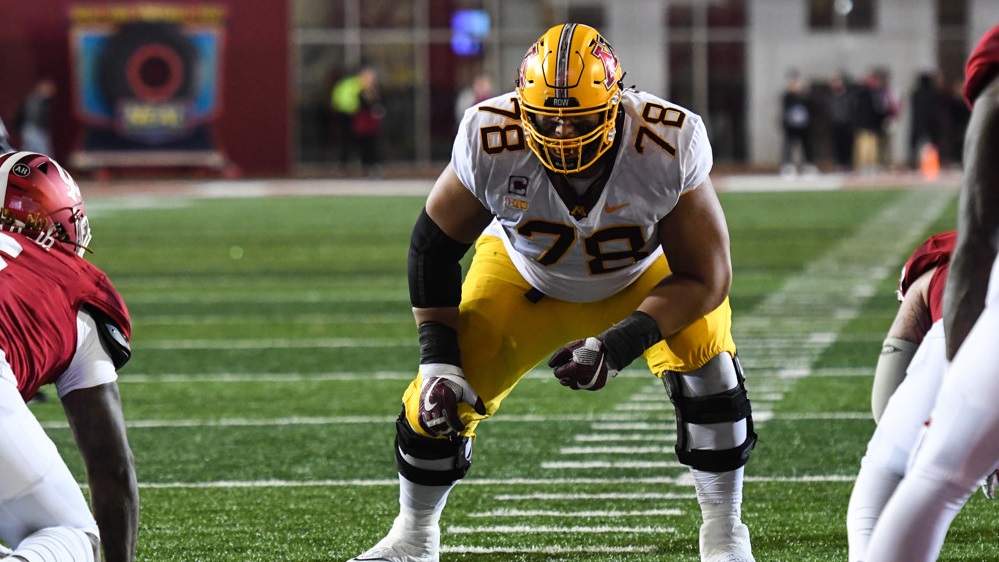
    The Minnesota Golden Gophers have been the embodiment of Big Ten football the last couple of seasons. They led the FBS in 2021 in the number of plays with 6 offensive linemen and 7 offensive linemen on a play, usually accompanied by a tight end or two as well. Their offensive line was the most experienced in college football with 204 combined starts between the 5 starters. Not only were they experienced, they were massive as well; bigger than the Minnesota Vikings’ offensive line. Unsurprisingly, the team was very effective at running the ball and the metrics illustrate that.

    When it comes to overall  Points Earned, all 5 Minnesota starters rank in the top 18 in the Big Ten for blocking with 4 players in the Top 8. While they did earn some points for pass blocking, the run blocking aspect is where they dominate. Minnesota has 5 of the top 6 Big Ten linemen when it comes to points earned for run blocking. With 4 of its 5 linemen in this year’s draft, why are those players not being talked about more?

    While metrics can tell a very interesting story, it can be easy to overlook the elements that factor into it. Minnesota is an extremely run-heavy team who also relies heavily on RPOs and has a stable of high-quality running backs. The entire offensive line was healthy for the whole year and they often had help blocking with massive tight ends or extra linemen. This isn’t to say the offensive line isn’t good, but rather that they are just perfectly situated to dominate in Minnesota’s offensive scheme.

    Cohesiveness between an offensive line is paramount to their success and Minnesota was able to keep a fairly consistent offensive line together over the last couple of years. Players understand each other’s assignments and how to communicate stunts and blitzes effectively. When the linemen are looked at individually compared to as a whole, there are some strengths and weaknesses that begin to emerge.

    Daniel Faalele is the best pro prospect on the Minnesota offensive line. He is an absolute mountain of a man with athleticism not seen in men his size very often. While he has been only playing football a few years, he shows immense potential. 

    One of the things Minnesota coaches is the 45-degree set. The offensive line treats the line of scrimmage like a 45-degree angle which allows the tackles to keep up with speed rushers on the outside, but leaves them vulnerable to inside moves. The vertical set is much more common in the NFL and this is a new technique for Faalele. Faalele showed a lot of upside while at Minnesota, but Minnesota’s offensive scheme is not what the NFL uses and he will need to adjust to this.

    Blaise Andries and Conner Olson both had a ton of starts in college and were very effective in their roles. They are being viewed as Day 3 picks at best with a good chance of going undrafted. 

    Similar to Faalele, Minnesota’s offensive scheme highlighted their strengths while masking any deficiencies. 

    Olson set the Big Ten record for most collegiate starts and was as durable as they come, but he’s close to his ceiling already and lacks fluidity in open spaces that teams want to see out of their interior linemen. 

    Andries was a valuable piece that could be moved just about anywhere and be counted on, but he doesn’t drive defenders off the ball and struggles with leverage on the interior. Sam Schlueter was another linemen who helped pave the way for Minnesota, but he received a low grade and likely saw his best football at the collegiate level. 

    These players had great college careers, but playing in a scheme that fit their strengths, and having the entire offensive line in sync was a big reason for their success.

    The Golden Gophers have not had an offensive linemen drafted to the NFL since 2006. That’s likely to end this year. Minnesota’s offensive line is filled with NFL-level players, but there will be plenty of players drafted higher or have bigger NFL roles that don’t show up as metric darlings. 

    Metrics are a great tool to dissect a game, a team, a player, but it is important to remember that these players are still humans with strengths and weaknesses. Evaluating a player requires individual film analysis along with metrics. While the Minnesota offensive line will be broken up and find various roles at the next level, it is fun to sit back and take in just how dominant they were together during the 2021 season.

  • NFL Draft Picks AnalySIS:Minnesota Vikings

    NFL Draft Picks AnalySIS:
    Minnesota Vikings

    The State of the Vikings:

    The Minnesota Vikings have a new head coach, Kevin O’Connell, and a new general manager, Kwesi Adofo-Mensah, looking to establish their new regime with a strong draft. The Vikings switched to a 3-4 defense, and while their edge pairing is strong, they need some reinforcements along the defensive line and at cornerback. Their offense is essentially set at the skill positions, but their offensive line could still use some work, particularly at guard.

    #12 Overall

    Derek Stingley Jr. – CB – LSU

    Stingley has the man coverage, athleticism, and ball skills to be an NFL defense’s No. 1 cornerback, but his injury history and dip in on-field production since his freshman year are concerns that need to be vetted.

    The Vikings have a glaring need at cornerback and have a former All-Pro in Patrick Peterson to help mold Stingley into the high-upside player he can become.

    Kyle Hamilton – S – Notre Dame

    Hamilton is a versatile safety who impacts all three levels of the field and is a rangy playmaker with the cover skills, speed, and athleticism to be an elite-level defender against both the run and pass.

    Hamilton has been falling in recent projections, but he adds a ton of value on the back end of a defense and if the Vikings aren’t sold on Camryn Bynum as Harrison Smith’s running mate, the fellow Fighting Irishman offers a ton of value.

    #46 Overall

    DeMarvin Leal – DT – Texas A&M

    Leal is an athletic and agile defensive lineman at his size, who offers great versatility as a pass rusher but needs to work on his interior run defense to keep that flexibility on all three downs.

    With the Vikings moving to a 3-4, they need quality 5-techs who can handle the linemen and allow Danielle Hunter and Za’Darius Smith to rush the passer. Leal could be a great fit with quality run defenders all around him to help take some of the run burden off his shoulders.

    Skyy Moore – WR – Western Michigan

    Moore is a lightning-quick receiver with room to grow and the innate skills that allow him to be a dynamic playmaker for a creative offense at the next level, especially if his refinement and development go as planned.

    Kevin O’Connell usually had three high-end receivers to work with while in Los Angeles and adding Moore to the Vikings offense would take them to another level. While K.J. Osborn did well in the role last year, Moore gives Cousins another explosive playmaker to utilize.

    #77 Overall

    Cole Strange – OG – Chattanooga

    Strange has the reactive athleticism to mirror defenders, consistent leg drive to move them, and the nastiness to finish through the whistle, but he’ll need to improve his balance, footwork, and awareness to maximize his potential.

    The Vikings had a revolving door of revolving doors at right guard last year, and Cole Strange could be a great fit. A small-school player who has the athleticism to work in a zone scheme and some much-needed nastiness.

    Greg Dulcich – TE – UCLA

    Dulcich isn’t the shiftiest route runner or most technically refined run blocker, but he’s a converted wide receiver with good competitive toughness and the strong all-around skill set of a potential starter.

    One of the underrated players on the Vikings’ 2021 team was Tyler Conklin, and with him moving on to the Jets, the Vikings could look for his replacement here. Pairing him with Irv Smith would give the Vikings flexibility and keep their offensive dynamic.

    To learn more about the Vikings and their needs, visit their team page on our NFL Draft website here.