Category: Baseball

  • Stat of the Week: Dancing With The Star

    Stat of the Week: Dancing With The Star

    Let’s talk dancing for a moment.

    Not NCAA Tournament dancing. Even though that’s pertinent these days, that’s another sport. I’m talking about baseball and dancing.

    Several years ago, I interviewed Hall of Fame manager Casey Stengel’s grand niece, Toni Harsh, who told me how much Stengel loved dancing, to the point of showing off the waltz to his family with his wife Edna. He passed on the importance of dancing to his players, encouraging them to take lessons.

    “Dancing taught shifting weight, turning, and stretching,” Harsh said. “It was about staying light on your feet.”

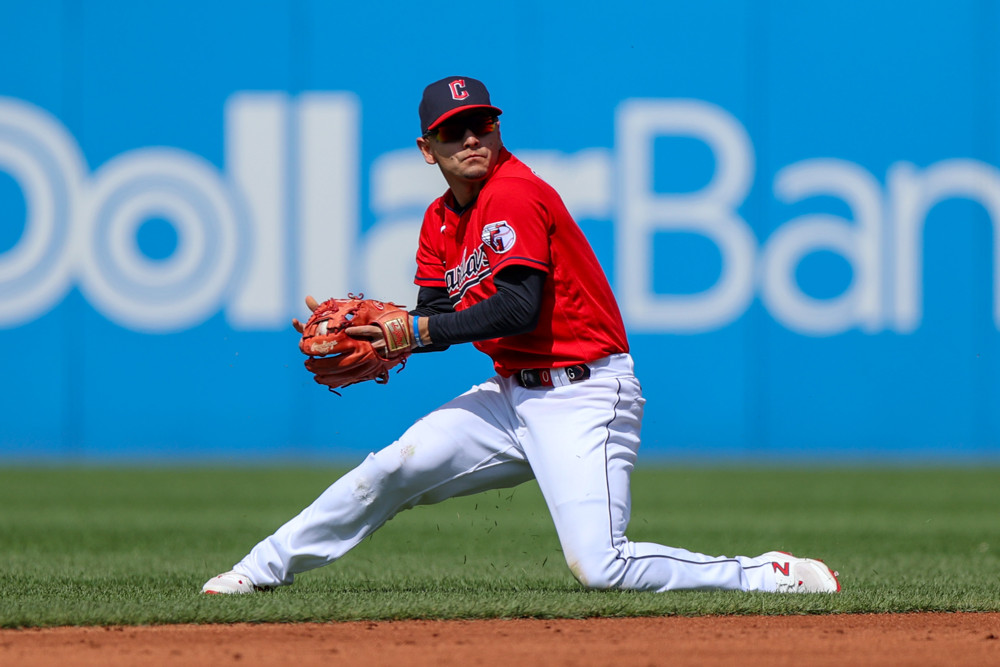
    Stengel would have loved the answer Guardians second baseman Andrés Giménez gave us when we asked him how he stayed in good physical shape during the offseason, besides doing basic baseball work. He likes to dance.

    “First of all, it’s a way to enjoy the moment, enjoy the music, enjoy your family,” Giménez said on the latest episode of The Sports Info Solutions Baseball Podcast. “Dance is an easy way to show love. And if you move your feet, you’re going to be in a great position to dance or to catch a ground ball. When I have the opportunity to dance with my wife or other family members, I do it, because you move your feet there. When the ball is coming, you kind of dance with it.”

    Giménez brought to mind similar thoughts from former Red Sox minor league coach Bianca Smith, who is now coaching in Japan. A few months ago she told us, “No matter what you’re doing, whether you’re hitting, you’re on the bases, you’re in the field, you’re dancing with the pitcher.”

    Said Giménez: “I’m with her. If you move your feet when you’re dancing, it’s going to be easier to take a ground ball. I’m not the best dancer, but I can do it, so it helps me for my defense.”

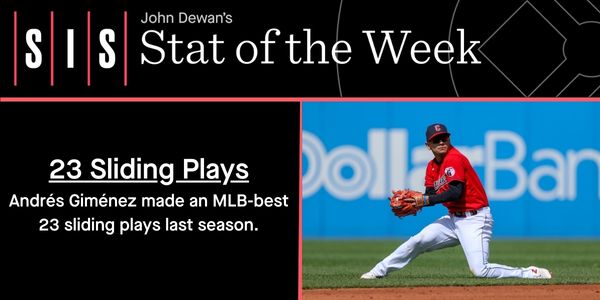
    Giménez danced his way into the hearts of Guardians fans in 2022 with an MVP-caliber season. He wasn’t quite as good a hitter in 2023 but he dominated in the field. His 22 Defensive Runs Saved led the majors at his position. He won both our Fielding Bible Award at second base and the Rawlings Platinum Glove Award as the top AL defensive player last season. Giménez’s deft athleticism led to him making 23 sliding defensive plays, most in MLB in 2023.

    This season, Giménez has a new middle-infield partner to tango with, as fellow Venezuelan Brayan Rocchio is slated to be the Guardians’ everyday shortstop and another Venezuelan, Gabriel Arias, is a possible backup. Notable all-Venezuelan double play combinations of the past include Elvis Andrus and Rougned Odor, Alcides Escobar and Omar Infante, and Ozzie Guillén and Fred Manrique.

    If Giménez is at the top of his game his double play combo has a chance to be the best all-Venezuelan one ever. And perhaps they’ll give a new meaning to ‘dancing with the stars.’

  • Spencer Torkelson’s Clear Areas For Improvement

    Spencer Torkelson’s Clear Areas For Improvement

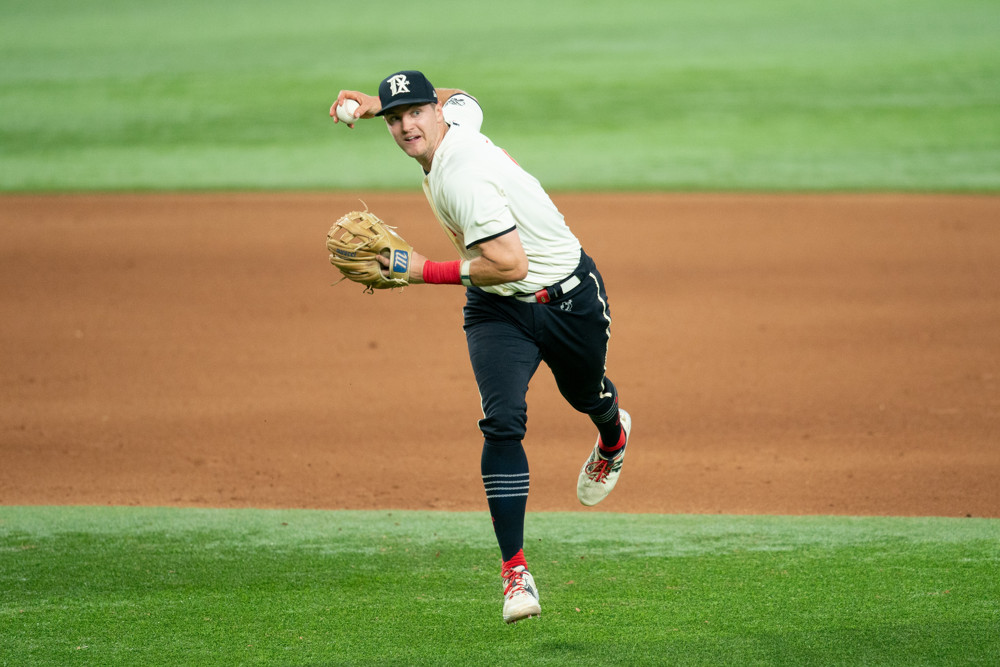
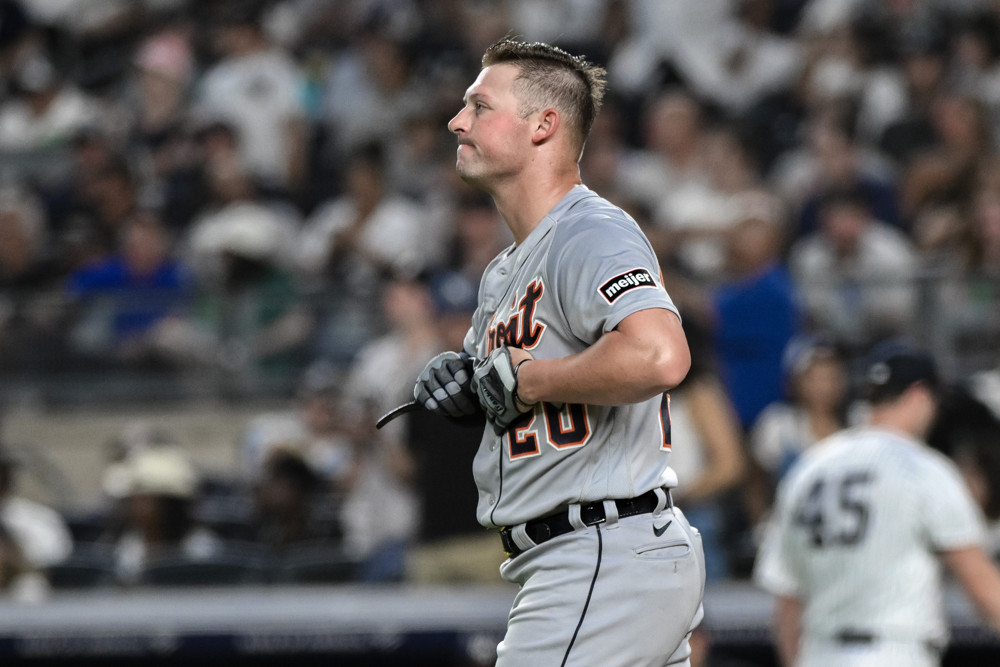
    Photo: John Jones/Icon Sportswire

    This play kind of sums it up how it went defensively for Tigers first baseman Spencer Torkelson in 2023.

    Torkelson ranked last among first basemen with -10 Defensive Runs Saved last season. Though his offense improved decently from his rookie season, his defense took a step back from 2022 (-4 Runs Saved). As a result, he was one of two 30-homer hitters to finish with a bWAR less than 1 (Kyle Schwarber was the other).

    Torkelson was a rough watch at first base, relatively speaking. That throw from the video atop this article wasn’t the only one he had trouble with. We credited him with 7 mishandles of throws (another example is this one).

    Torkelson also had a few issues trying to catch foul balls this season (here, here, and here). But most significantly, he repeatedly got eaten up by ground balls. Here’s one example:

     Here are a few others (here, here, here, here, and here). Most of those plays are balls either hit straight at him or to his right and that’s where the numbers were most problematic. The table below shows how many plays were made, how many opportunities he had to make a play, and how many plays below average Torkelson was based on our out probability data.

    Balls hit Plays Made/Opportunities Plays Saved
    To his right 59/212 -7
    At him 54/72 -7

    In other words, Torkelson made 59 plays on balls hit to his right. An average first baseman would have made 66. And he made 54 plays on balls hit at him. An average first baseman would have made 61. That’s where the damage to his statistical ledger was done.

    That’s not to say that he was all bad. Torkelson’s 43 Good Fielding Plays were the most of any first baseman last season. He was able to offset those mishandles of throws with an MLB-best 29 Good Plays on handling throws (we call those “scoops”).

    But based on his Runs Saved total, Torkelson has no shortage of work to do prior to the start of the 2024 season. He’s got some clear issues as a hitter too.

    In 2023, Torkelson hit .106 in AB ending with a pitch that we classified as down-and-away. That’s 13-for-123.

    Of the 251 hitters who saw the most down-and-away pitches in 2023* Torkelson ranks …

    – 238th in batting average

    – 198th in slugging percentage

    – 57th-highest in percentage of swings that missed (the higher you are, the worse you’re doing)

    * We’d have done 250 hitters, but there was a 3-way tie for 249th

    Hitting down-and-away pitches is hard, really hard. A lot of those are tough sliders, sweepers, and changeups. This is what we’re talking about (here) and this (here) and this (here). But most major leaguers are at least a little better than Torkelson is.

    Torkelson’s teammate Riley Greene is right around the midpoint of our player sample in batting average against down-and-away pitches. He hit .190 against them. Torkelson was about 10 hits away from hitting .190 against down-and-away pitches in 2023. If he plays every day, replacing 10 outs with 10 hits would be  one more hit every 15-16 games. Finding his way to a few more hits on those pitches would certainly make Torkelson a better player. So would making fewer outs.

    As we wrote about with Bobby Witt Jr. not too long ago, one of the biggest lessons for a young player is learning what pitches he can hit, what pitches he can’t, and making the necessary adjustments in his swing tendencies. Torkelson could be best served by a few more takes, even if those pitches are in the strike zone, in the hopes that he’ll get something in one of his hot zones later in the at-bat.

    One thing Torkelson does well that bodes well is that he hits the heat. He hit .279 and slugged .549 against fastballs that were 95 MPH or faster on the TV radar gun, missing on 17.5% of his swings. The MLB averages against those pitches were a .244 batting average, .397 slugging percentage, and 21% miss rate, respectively.

    Also similar to Witt, if Torkelson were to more fully figure things out at the plate and in the field, his ascent could go a long way in determining his team’s ascent in 2024 in an AL Central that doesn’t seem to have a dominant team.

  • NPB Scouting Report: Kona Takahashi

    NPB Scouting Report: Kona Takahashi

    Kona Takahashi put up the best two seasons of his nine-year NPB career in 2022 and 2023. These seasons vaulted him into the conversation of the next Japanese pitchers primed to move stateside. After the Seibu Lions denied his off-season request to be posted, he will assuredly be posted come the winter of 2024 if he puts up another productive season at age 27.

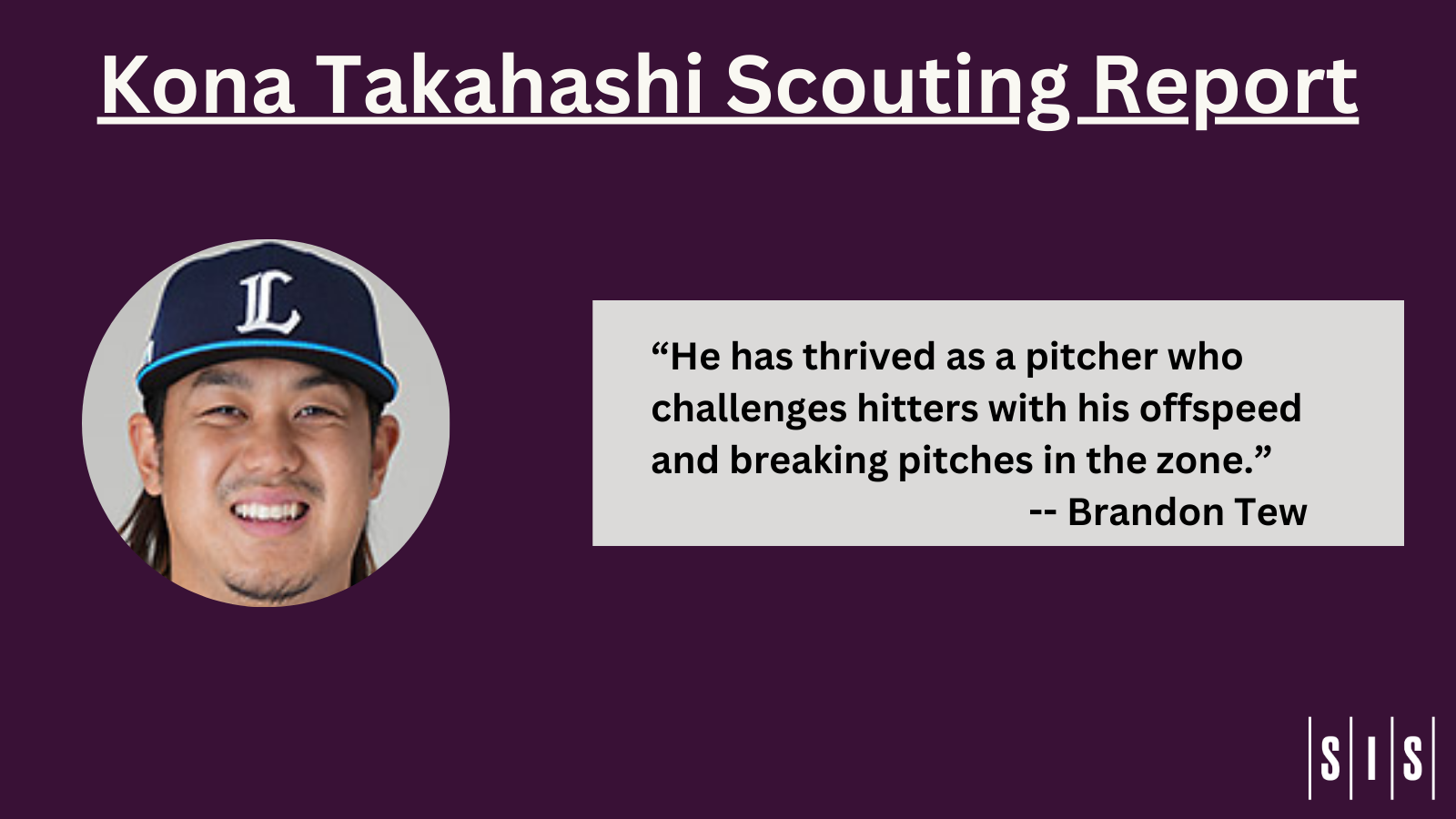
    While Takahashi doesn’t post the strikeout numbers of other top pitchers in NPB, he prevents runs as well as nearly anyone. And in the lower run-scoring environment, he has thrived as a pitcher who challenges hitters with his offspeed and breaking pitches in the zone.

    Season IP ERA Strikeouts Walks K-BB%
    2022 175.2 2.20 128 51 10.9 %
    2023 155.0 2.21 120 47 11.6 %

    Why he’s good

    Takahashi throws enough strikes to pepper the zone and minimize walks with around a 7% BB rate the last two seasons. In 2023, he had a 63% strike rate working the ball in and out against hitters to stretch the plate. 

    He does not give in when behind in the count, especially later in the year when he went to his slider and splitter in 2-1 and 2-0 counts. Here’s a splitter to Kensuke Kondoh to get back into the at-bat when down 2-0.

    via GIPHY

    Mechanical changes and velocity increase

    After training at Driveline before the 2023 season, Takahashi cleaned up his mechanics with his arm action and lead leg block. He started throwing harder, sitting around 93 mph on his fastball instead of 91 mph, and touched the upper 90s deep into games.

    At times especially in July when he threw back-to-back shutouts, he threw all of his pitchers harder. Getting better as the game went on, fueled by adrenaline, and seeing the finish line, he ripped this 87 mph slider for a sword.

    While his fastball garnered modest whiff rates at about 11% last season, his splitter and slider became real weapons with a solid whiff rate of around 32% on both of the pitches last season. He mixed those pitches in during two-strike counts when he wasn’t trying to sneak a fastball underneath the hands of a batter.

    via GIPHY

    The Arsenal (2023 usage and Average Velocity)

    Fastball  39 %  93.3 mph 

    Juicing a couple of clicks out of his fastball last season elevated his game and helped his slider and splitter perform better. With above-average command of the pitch, he tries to stay out of the middle of the zone. 

    He also doesn’t lean on fastball usage like most Japanese pitchers. He might throw any of his pitches to start an at-bat and use the fastball more as a surprise. 

    Here is another example of bringing the ball back over the plate armside as he throws this four-seam at 95.6 mph to get the freeze and finish the game:

    via GIPHY

    The four-seam has decent run and he uses the horizontal movement to his advantage both in looking for strikes but also missing barrels moreso than creating the swing and miss. He can dial up the fastball high in the zone when needed and it performs best when sequenced with his other pitches.

    via GIPHY

    Splitter 25%   87.5 mph

    Takahashi’s splitter is his next best pitch as he not only gets chases on it but also limits damage with a .460 OPS against, and a .161 opponents’ batting average in 2023. His grip works both seams with his fingertips and as he pronates, creating either a slight dip to the pitch as it moves arm side or a sharper dive away from hitters. 

    He can steal a strike against batters in the zone but the pitch is at its absolute best when it’s darting towards the dirt. Here’s an at-bat against Kondoh, the best pure hitter in NPB. Takahashi uses two different looks at his splitter to get the swinging strikeout.

    via GIPHY

    The pitch had an outrageous 78% ground ball rate last season, so even when batters make contact they just pound it into the dirt. This means it’s hard to get singles up the middle even on turf fields. Takahashi uses the defense to his advantage and will keep the splitter at the bottom of the zone to get ground balls.

    Slider 20% 82.8 mph    Slurve 3.4% 79 mph

    Takahashi has two slider variations, one that’s more horizontal and gyro spin-based that he will use at any point to get a strike. Along with what I would classify as a slurve with some horizontal sweep but a lot of depth to it at a lower velocity.

    Slider:

    via GIPHY

    Slurve: 

    via GIPHY

    The slight variation is enough to call it two separate pitches. He also uses two separate signs for both pitches as well. He will use the slurve as a wrinkle but heavily leans on the slider in situations where he needs a strike. He also throws the slider at his highest strike rate with a 67.5% rate last season. 

    The velocity of the pitch will fluctuate, but when he wants he can rip some gnarly sliders with higher-end velocity and sweep. He makes the pitch a bat-misser and weak-contact merchant. 

    Cutter 11%    88 mph 

    Takahashi’s cutter is an intriguing pitch he uses to get himself back into count leverage and as a putaway pitch at times. He will bury the pitch on the hands of left-handed hitters in a more traditional sense but will also try to dot the pitch away from right-handed hitters, glove side. 

    There’s enough variance from his slider that the pitch has more carry and stays vertical along with the velocity difference. However, there are times that he will have the pitch leak back over the plate, arm side.

    via GIPHY

    The cutter is a pitch that Takahashi will throw with enough confidence and conviction that he might ride the pitch for a few innings, even more than his slider in some games.

    Curveball 2%  75 mph  (Knuckle Curve 76.5 mph)

    This is a pitch that Takahashi might look to incorporate more into his arsenal, especially to lefties. He threw a more traditional curve in 2023 with a 12-6 shape but also dabbled with a knuckle curve. He threw the traditional one 25 times and the spiked grip 23 times in 2023. 

    via GIPHY

    He threw the knuckle curve a little harder than the traditional one but tried to find consistency with the pitch to add another offering. He is primarily trying to steal a strike with the pitch as a first-pitch offering, and that’s all he needs right now. It serves as  something to keep in the back of hitters’ heads or a way to get up early in the count.

    via GIPHY

    What to expect this season.

    Takahashi has been an excellent run-preventer for the last two seasons. His jump in velocity last season helped produce more whiffs, but he will never be a high-end strikeout guy. 

    What makes him great is his bulldog mentality along with good control of his slider and splitter. He seems to raise the level of his pitching as he gets deeper into games. If he’s able to provide another successful season for the Lions they may have a tough decision coming next winter about whether he should be posted.

  • Stat of the Week: The Top 5 Defensive Center Fielders in MLB

    Stat of the Week: The Top 5 Defensive Center Fielders in MLB

    Photo: Nick Wosika/Icon Sportswire

    BY MARK SIMON

    The other day, I wanted to rank the top defensive center fielders in MLB entering 2024, so I pulled up The Fielding Bible leaderboards along with a pen and paper and got to work.

    I put Brenton Doyle No. 1. Doyle led all center fielders in both Defensive Runs Saved and Good Fielding Plays last season and won the NL Gold Glove at the position. If he hits even a smidge, he’s going to play and play a lot because he’s so good in the field. And he’s still young. He turns 26 in May and should still have fresh legs.

    I’m guessing that Kevin Kiermaier won’t like that I’m putting him No. 2 given that he’s the reigning Fielding Bible Award winner and the overall leader in Runs Saved by a center fielder since we started tracking the stat in 2003. But Kiermaier turns 34 in April and has a substantial injury history. So we’re going with the young buck ahead of the reigning champ and encouraging the older guy to prove us wrong. (We’ll own up to it if we are!)

    No. 3 is another veteran, Michael A. Taylor. Though he’s currently unsigned, we’ll still put our faith in Taylor, who ranks first among center fielders in Runs Saved over the last 3 seasons. We wrote about him in great detail last week and encourage you to check that out to learn more about what makes him good (spoiler: he’s been really good at chasing the deep fly ball). The track record of success is there.

    My No. 4 defensive center fielder entering 2024 is another young’un, Johan Rojas. Rojas ranked 4th among center fielders in Runs Saved despite ranking 37th in innings. He also had the most Runs Saved of any minor league center fielder in 2023. There’s every reason to think he’ll be great in 2024.

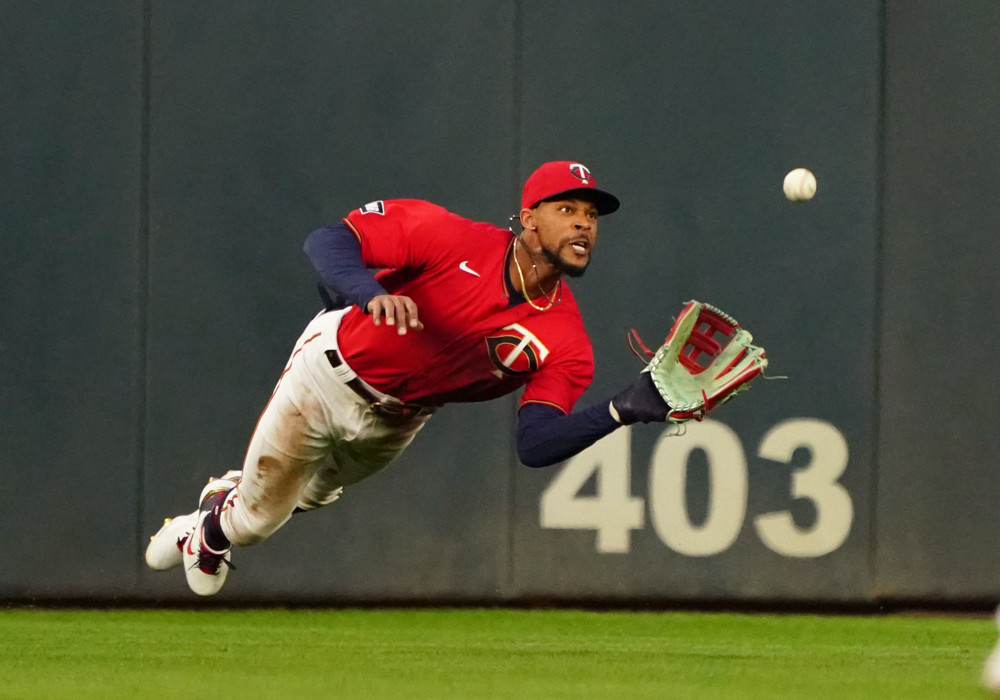
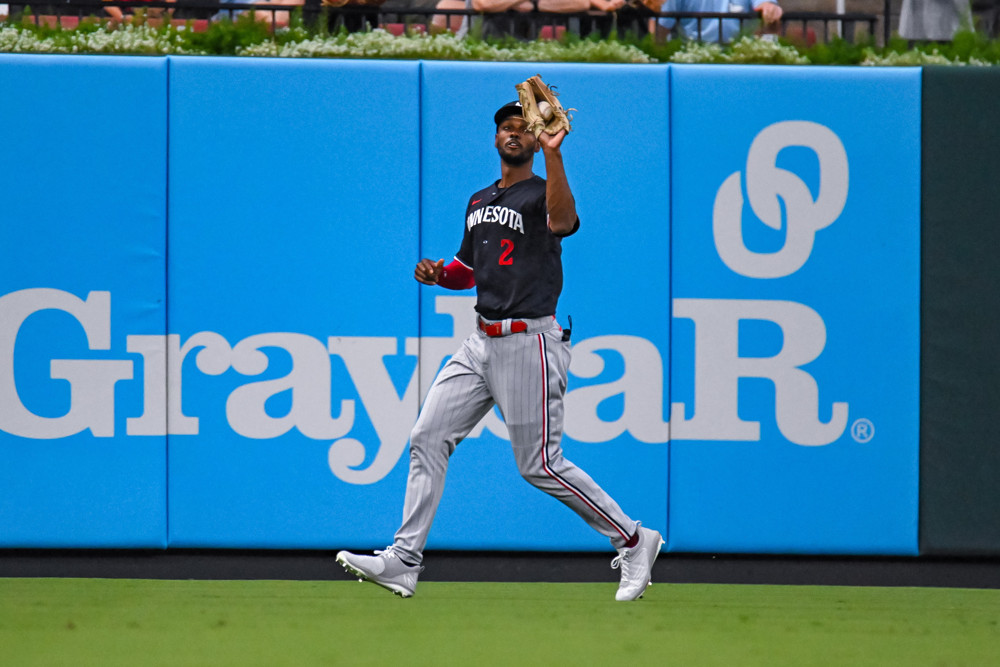
    No. 5 is the one that was hardest to pick and I’m going to go with the wildest of wild cards, Byron Buxton. Buxton is going to return to playing outfield after solely playing as a designated hitter last season.

    Buxton is as good as it gets on a per-inning basis. From 2020 to 2022 he played about the equivalent of one MLB season in center field and saved 29 runs. That’s a league-leading caliber season for a center fielder. In that 3-year span, Buxton ranked 2nd among center fielders in Runs Saved and 20th in innings played.

    Buxton is a potential make-or-break player for the Twins this season and also a high-risk, high-reward pick in Defensive Runs Saved fantasy leagues (yes, those leagues exist). I feel good enough about him to rank him in the No. 5 slot. If he’s healthy for most of the season, he’ll be a difference maker.

    Who are your Top 5 defensive center fielders entering 2024? Tweet your picks at us.

    Mark’s Top 5 Defensive CF Entering 2024

    1. Brenton Doyle
    2. Kevin Kiermaier
    3. Michael A. Taylor
    4. Johan Rojas
    5. Byron Buxton
  • Stat of the Week: MLB’s Rising Defensive Stars

    Stat of the Week: MLB’s Rising Defensive Stars

    Photo: Brandon Sloter/Icon Sportswire


    A year ago at this time I wrote about MLB’s rising defensive stars, and now seems like a good time to do that again looking to 2024.

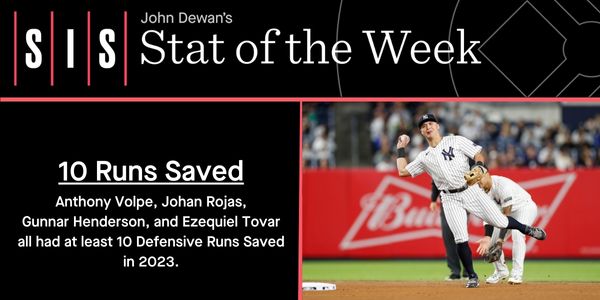
    There are 4 players on active rosters this spring who will be in their age-23-or-younger season in 2024* and who had at least 10 Defensive Runs Saved in the major leagues in 2023. They’re in our spotlight heading into the upcoming season.

    * Age 23 or younger as of June 30, 2024

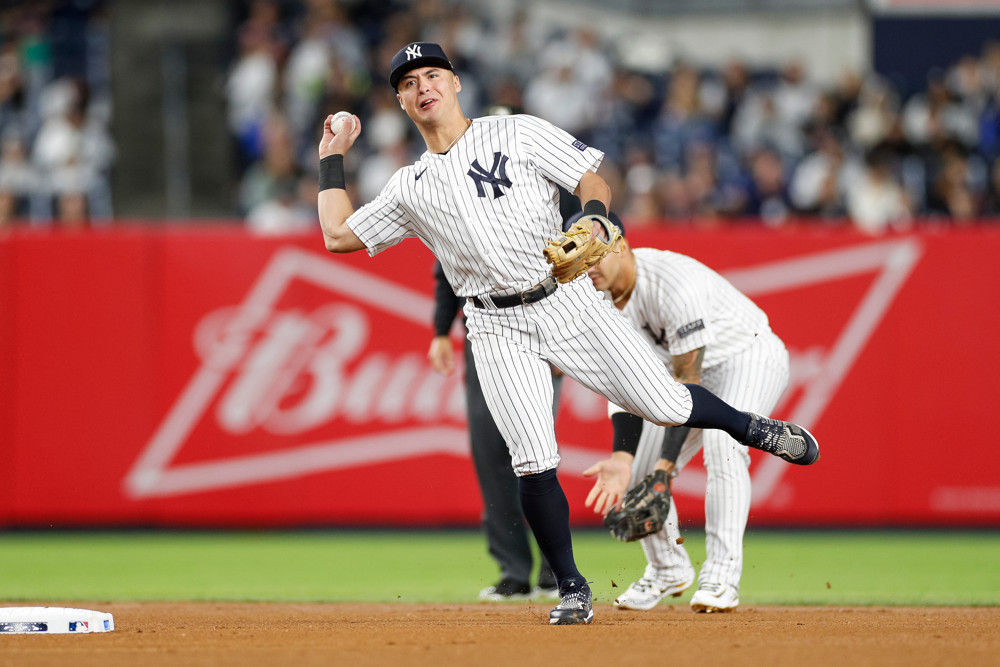
    Yankees shortstop Anthony Volpe totaled 15 Runs Saved and won the AL Gold Glove last season. Volpe played the 2nd-most innings of any shortstop in the majors (only Francisco Lindor played more). With his defense solid (he’s particularly good on balls hit to his left), improving his hitting figures to be a high priority in 2024. He had a .666 OPS in 2023.

    Phillies center fielder Johan Rojas was outstanding after being recalled from the minor leagues, amassing 15 Runs Saved in 57 games. Combine that with his minor league-best total of 15 Runs Saved and Rojas had an epic defensive season. Rojas placed 9th in The Fielding Bible Awards voting among center fielders last year. It wouldn’t surprise me if he was 1st, 2nd, or 3rd in 2024.

    Orioles infielder Gunnar Henderson played an almost identical number of innings at shortstop and third base last season. He was better at shortstop, amassing 10 of his 13 Runs Saved. Henderson finished with 6.2 bWAR in 2023. With a good defensive season and solid offensive numbers again, he may be in line for something better in 2024.

    Rockies shortstop Ezequiel Tovar’s defensive play was one of the highlights of a rough season for a last-place team. His 13 Runs Saved ranked 4th at the position. Like Volpe, Tovar played a lot. He ranked 5th among shortstops in innings played and had an impressive reel of standout defensive plays.

    One other player I want to point out is Nationals shortstop CJ Abrams who finished with 4 Runs Saved in 2023. Abrams’ defensive game took a major step forward in 2023 as he improved from -5 Runs Saved in 2022. Though his throwing issues kept him from being in the same class as the quartet above, his defensive stock is up heading into 2024.

  • Michael A. Taylor, The Top Defensive CF The Last 3 Seasons, Still Has No Home

    Michael A. Taylor, The Top Defensive CF The Last 3 Seasons, Still Has No Home

    Photo: Rick Ulreich/Icon Sportswire

    We recently wrote about how the best defensive shortstop in the game, Miguel Rojas, was somehow thriving at a young man’s position while defying the statistical aging curve that brings down most players his age.

    The top-performing defensive center fielder over the last 3 seasons is doing the same. He just doesn’t have a home yet for 2024. 

    I’m referring to current free agent Michael A. Taylor.  

    I imagine it is going to generate a lot of responses of “Best center fielder? What about ___?” (insert Brenton Doyle, John Rojas, Kevin Kiermaier and many other options here).

    But it’s Taylor who has the best 3-year track record. Taylor saved 19, 19, and 5 runs the last 3 seasons. He was not in Doyle or Kiermaier’s class last year but he was still good. 

    And of particular importance when comparing him to a lot of these other players, Taylor has played more than them. He ranks 4th among center fielders in innings played the last 3 seasons. Kiermaier ranks 10th.

    Name Innings DRS
    Michael A. Taylor 3,156 43
    Kevin Kiermaier 2,358 33
    Myles Straw 3,882 27
    Daulton Varsho 1,040 21
    Brenton Doyle 1,023 19

    What I watch when I watch Taylor

    At his best, Taylor is a great sprinter who can chase balls down deep in the gaps. When he’s doing this well, he’s a highly valuable defender.

    From 2021 to 2023, Taylor caught 323 of 386 balls classified as “deep” in our shallow/medium/deep classification system. Based on historical out probabilities, he was expected to catch 308 of them. 

    So over these 3 seasons, he’s +15 plays saved (our version of Outs Above Average) just on deep fly balls (323 plays made minus 308 expected plays made). That was No. 1 in MLB in that time.

    The last 3 seasons, Taylor was 6, 9, and 4 plays above average on deep balls. 

    But there’s no shame in being +4 in 2023. It’s tied for 10th-best among all center fielders. 

    The arm

    Outfield assists are important because you get credit both for netting an out and erasing a baserunner. Preventing runners from taking an extra base is too. 

    Taylor’s arm was notable to his value in both 2021 and 2022, netting him 5 and 4 Runs Saved, respectively. He dropped to 1 Run Saved in 2023. That happened because his assist total dipped, from 8 assists without a cutoff man in 2021 and 5 in 2022 to 1 in 2023.

    Though he dipped to 1 Runs Saved in 2023, there don’t appear to be any red flags with his arm. He averaged 92 MPH on the top 10% of his throws in both 2021 and 2022, 91.5 MPH in 2023. That doesn’t feel like a significant difference. And the percentage of runners 

    In fairness to Taylor, there was one factor beyond his control. He played a comparable number of innings in 2022 and 2023, but in 2022 he had 45 more opportunities to deny a baserunner an advance because the 2022 Royals pitching was not great and the 2023 Twins were much better than them. So he didn’t have as many chances to put his arm to use.

    What was the difference between Taylor 2021-22 and 2023?

    Baseball Savant’s jump numbers indicate that Taylor’s “burst” (the number of feet above average that he was covering at the point in which the ball is in the air from 1.5 to 3 seconds) is down by about a foot from 2021. However, he did improve a little bit in the route-running component of the jump stats. 

    Taylor also had a few more miscues and just misses. He had a career high 22 Defensive Misplays & Errors in 2023 and committed them at a little higher rate than in 2021 or 2022.

    Taylor will turn 33 in late March, so perhaps with age comes some slowing down. But even so, he seems to still have something left to give.

    The bat

    I imagine the concerns with Taylor are more with the .220 batting average and .279 on-base percentage last season than anything else. 

    Taylor had a big hole at the area that we classify “down and away,” going 8-for-83 in at-bats that ended with a pitch there (his .096 batting average and 56% rate of swings missed) were bottom 10% in that stat). His overall contact rate decreased nearly 5 percentage points from 2022. He basically accepted some missed swings in return for more home runs (a career-high 21). 

    The result: Even with the issues Taylor had, it was still his best offensive season since 2017. He had an OPS of .720, a smidge below MLB average for a center fielder (.730). 

    The fits

    That Taylor is unsigned is somewhat surprising. 

    One of his best potential fits, the Mets, who decided to move Brandon Nimmo to left field, went for Harrison Bader rather than Taylor. The Reds, a defensively-challenged team in 2023, have not gone for Taylor, who would be a useful late-inning replacement that would immediately improve their outfield defense. 

    Taylor’s best current fit might be with the Padres, who are currently projected to replace Trent Grisham (traded to Yankees) with Jose Azocar, who has a .633 career OPS in a little more than 300 plate appearances. Taylor, who has averaged better than 2.5 bWAR the last 3 seasons, would absolutely be an upgrade there.

    Taylor isn’t Blake Snell or Matt Chapman, but he’s still a useful player who could be a key piece for a winning team. As someone who writes about good defense as his beat, I can without question say he still deserves a legitimate role on an MLB team in 2024. 

  • Stat of the Week: Gio Urshela Is A More Meaningful Signing Than You Think

    Stat of the Week: Gio Urshela Is A More Meaningful Signing Than You Think

    Photo: Melissa Tamez/Icon Sportswire

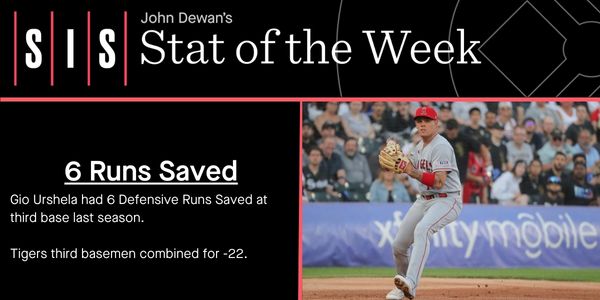
    The biggest defensive hole in MLB team infields last season was third base for the Tigers. Detroit tried 9 players at that position and those players combined for -22 Defensive Runs Saved. Not only did the Tigers rank last in MLB in Runs Saved by their third basemen, they also ranked 26th in Baseball-Reference’s Wins Above Average at the position.

    Tigers general manager Scott Harris chipped away at his team’s roster construction all winter. He traded for Mark Canha to give the team a bat that could control the strike zone and improve the offense’s production. And he added a pair of veteran arms for the starting rotation in Kenta Maeda and Jack Flaherty.

    These additions supplement a young core that could have 2 prime prospects— center fielder Parker Meadows and infielder Colt Keith— as everyday players.

    Harris didn’t do much about third base until Thursday when the Tigers signed Gio Urshela to a one-year contract. If the Tigers wanted to be really ambitious there, they could have pursued free agent Matt Chapman on a long-term deal, but for the short term, Urshela is a good fit.

    If fully recovered from the pelvis injury that limited him to 62 games last season, Urshela, an 8-year veteran, will be a massive upgrade at the hot corner for whatever number of games he plays in 2024. He totaled 6 Defensive Runs Saved in limited action at third base last season and 4 Runs Saved there in 2022. He’s had only one bad stretch there, in 2021 when he totaled -4 Runs Saved for the Yankees.

    Urshela had a .703 OPS in those 62 games last season. That doesn’t sound impressive, but that would also be a big upgrade. Tigers third basemen combined for a .624 OPS last season, 3rd-worst in MLB.

    There is risk with the 32-year-old Urshela, but it’s inexpensive risk. He signed for a base salary of $1.5 million. He may just play in a platoon role. But even if he plays part time, the Tigers improving to 0 Runs Saved and a .700 OPS at third base this season as a result of his production would be noticeable. If Urshela could reach his past peak (he’s twice been a 3-bWAR player), the change would be significant.

    This signing isn’t by itself going to win a division title. But it potentially makes a big hole on the team look much more respectable. Winning championships isn’t just about signing star players. It’s about making sure you have a roster of players that aren’t costing you potential wins. In an AL Central where 85 to 90 wins may be enough to win the division, a move like signing Urshela looks like a pretty smart one.

  • Q&A Steve Williams, Pirates VP and President, Buck O’Neil Professional Scouts & Coaches Association

    Q&A Steve Williams, Pirates VP and President, Buck O’Neil Professional Scouts & Coaches Association

    With February being Black History Month, our baseball podcast featured Black guests who have made a significant impact on baseball. One of those is Pirates vice-president of player personnel Steve Williams.

    Steve has been working in baseball scouting since 1988. He’s also the president of The Buck O’Neil Professional Baseball Scouts & Coaches Association, which you can learn more about at this link.

    The conversation below between Mark Simon, SIS VP of Baseball Bobby Scales, and Steve Williams, has been edited for length and clarity. You can hear the full interview on our podcast (click here to listen).

    Bobby: Steve Williams is on my Mount Rushmore of mentors, not just in the game, but just in my own life. There’s nothing I can’t call this man about.

    Walk us through the early part of your career. How you got into scouting and how you got to helping Black folks inside the game get the opportunities they deserve.

    Steve Williams: I never thought I would be a VP starting in 1988 as a young scout. I played at Clemson and my college coaches were very integral in my, in my life. My head coach was more of a father figure than anything else.

    And he was really supportive of me as a player, as a person, becoming a man, just like my father was. Coach (Billy) Wilhelm and one of our assistant coaches who lived in Minnesota (heard) the Twins were looking for an area scout. I just finished playing as a college player. They recommended me. I interviewed with Terry Ryan in January 1988. I never thought he would call me on that Monday and offer me the opportunity to do it.

    I didn’t have any experience. Back then, all those scouts were older. There weren’t many young scouts at that time. And Terry hired me, and I jumped into this business.

    The first year my dad asked, ‘Hey, you know, how do you like this gig?’ I said, dad, if I could double my salary, I’d do this forever. And I’ve been very blessed, starting year 37, just enjoying the journey, doing things. I never thought a little country boy from North Carolina would do. Can I get to 40? It would be great.

    One of my drives is to mentor, help develop people and that’s, you know, some of the things that we do with ‘The Buck.’ We’ve been doing ‘The Buck for 25-plus years.

    It’s an organization, grassroots, Danny Montgomery, Fred Wright, and myself. We were area scouts in the Carolinas. We just wanted to get people together. We wanted to get like-minded Brown and Black people together. There weren’t many of us in the game at that time. You could count people in scouting that looked like me on one hand.

    It was meant as more of a support staff, support group, you know, just, hey, what do you eat in this town? Where do you get a haircut in this town? Simple, little things. Our first meeting was 15 hours!

    Fred Wright idolized Buck O’Neil and said let’s name this after Buck because Buck was one of the best ambassadors in baseball, Buck was one of the first Black coaches and scouts, and everybody loved Buck. We didn’t want to be known as a Black organization; we weren’t a Brown organization. We’re a baseball organization. Anybody that’s a baseball person can be a part of ‘The Buck.’ Our membership is very diverse. We have over 200 members.

    We told Buck what we were, what our dream was, what we were trying to do, what our vision was for this group and the man just about jumped out of his chair. He understood what was needed in the game. What we were trying to do, he did a lot of by himself.

    I met Buck in my first year scouting, in Sarasota, I was in awe. He started talking to me like I’d known him all his life. He gave me advice about how to work, being nice to people, being respectful, respecting the game, making sure you always look presentable. Years later, we brought ‘The Buck’ to Kansas City. He walked into the room; he didn’t realize there were 50 or so of us in the meeting. And they had to usher him out eventually because he didn’t want to stop talking to everybody.

    Mark: What inspires you, watching baseball at your age?

    Steve Williams: I still love to hunt for players. That’s always gonna be the biggest thing. To hunt for players, to hunt for talent, trying to walk into a ballpark and figure that out is still one of my biggest motivations.

    My other passion is helping develop people.

    Mark: Can you give us a favorite hunt-the-player story

    Steve Williams: My favorite one is probably Orlando Hudson. When I was with Toronto, I was an area scout and I inherited Orlando’s draft-and- follow.

    Every game I saw him play in those two years, I never saw him swing-and-miss. And if you know Orlando, he never stops talking as well. He’s one of the best instinctive baseball players that I’ve ever seen.

    He went to Spartanburg Men’s Junior College in South Carolina. And when you talk to him, you see his passion for the game and his overall intelligence for the game. His baseball IQ was unbelievable. And just the way he played, he was always in the right spot, always around the game. He believed in himself tremendously.

    I think a lot of people, because he was so vocal, they didn’t really understand how good a baseball player this man was. He had a tremendous career.

    Every time I saw him play, it was just, wow, always in the right spot, always talking, always a leader around his people. And that’s how his career played out.

    Bobby: You are a scout by trade. And I always tell people that the original form of data is what scouts see. Right? How have you evolved personally, combining what you know to be true in 37 years of being inside the game with what analysts say and what the data tells you about a player?

    Steve Williams: This has always been a numbers game. What the evolution has been is that we’ve taken those numbers and we put them on steroids. And we just dive into them even more. When we take the scouting report and the objective information, how can we blend them together? When they don’t come together, the question that we have to continue to ask ourselves is why?

    Why is this changing? Why is this different? What are we looking at? How can we dig into this a little bit more? What questions should our scouts be asking now at the ballpark? What questions should our analysts be asking our scouts? What should we be giving them to focus on?

    For example, fastball playability. Normally, if I go to the ballpark and I’m sitting there and I’m watching a guy’s fastball play at the top of the zone, my eyes are telling me that this guy’s fastball plays different at the top of the zone.

    Now, when I go back and open my computer, I want to see those same numbers. I want to see the same thing, the spin rate, vertical, all those things. What does it look like? Now, if it’s different from a scouting standpoint, if those numbers are different, there’s a history that his ball doesn’t play that way, the next day I need to ask why is it different?

    Did he make an adjustment? Are they focusing on something different? What is the philosophy of the organization? So we take it as, this is another tool in our tool bag, the objective information, and try not to get, for our scouts to be over analytical, but we want them to understand the numbers so when they walk into the ballpark, they can be extremely focused and targeted about what we feel that we can influence. Every organization can influence different things. Some organizations are really good with hitters. Some organizations are really good with pitchers.

    We want to take the information that we have and advance the evaluation skills that our scouts have as well.

    It’s another tool. It’s not the end all, be all. All this technology, all this information is still very new, but we’re trying to blend all of it together.

    Mark: To close, what more would you like to say about ‘The Buck’ and its goals, which are supporting the Negro Leagues Baseball Museum, promoting baseball in the inner cities by educating coaches and mentoring players through annual clinics, awarding scholarships to students who have excelled in academia and who exhibit an interest in baseball and continual education of scouts and coaches within the association.

    Steve Williams: We have reached those goals. We talk about giving back to the community. We’ve seen a shift in ‘The Buck.’ We’ve seen a shift in the membership of ‘The Buck,’ which has gotten younger. College coaches and high school coaches are coming to our meetings and we’re feeding them information that they need to be better at coaching younger players as well.

    So, we’re getting younger coaches, younger scouts, younger front office execs to be able to mentor, to continue to do that. We talk about our coaching staffs from our college coaches to our high school coaches. They’re coming to the meetings and we’re feeding them the information that they need to be better and learn how to coach these young players as well.

    Between going into communities and going to clinics, with the young men and coaching staffs we’ve helped, we’ve probably produced over 400 young players that have been touched by ‘The Buck. We meet once a year, but we’re in touch with our membership all year.

    Bobby: Steve’s impact on this game in 2024 is immeasurable. If you’re in a scouting situation, in a ballpark, if you say ‘Steve Williams,’ someone there is gonna know who he is.

    And it’s not because he’s famous, it’s because he’s been unbelievably impactful in helping guide the careers of so many people inside this game, on the field, off the field, in the front office.

    It’s been my contention that Steve Williams could have, could have been a GM many years ago, 10, 15 years ago, because of his ability to lead people, to make decisions that are driven by information and not emotion and just his command of a room. His ability to command a room is legendary. He is one that’s able to get consensus. People may not like the outcome, but they respect him.

    Listen to the full interview at the link below or click here to listen on other podcast apps.

  • NPB スカウティングレポート:佐々木朗希

    NPB スカウティングレポート:佐々木朗希

    Translation by Yuri Karasawa and @takumabbetc

    世界トップクラスのピッチャーの一人が、なるべく早くMLBでプレーすることを希望している。現時点で彼はどのようなピッチャーなのだろうか。弊誌のライター、ブランドン・テューは、すべての登板を観察し、評価を行った。

    佐々木朗希は、理想的な球種と優れたコントロールを兼ね備えた、世界で最高の投手の一人だ。彼は競争力の高い日本プロ野球において三年連続で圧倒的な投球を見せている。今オフ山本由伸がロサンゼルス・ドジャースと契約した後、佐々木はNPBで最高の投手と言えるだろう。

    佐々木はMLBでプレーする意志をロッテ球団に知らせているが、今のところ、彼は日本で少なくとも2024年シーズン、打者たちを苦しめ続けることになる。佐々木の最大のハードルは、シーズン全体を通じて健康を維持し、ローテーションを守ることだ。昨年佐々木は、7月下旬に左斜筋の怪我で2か月間欠場し、9-10月の先発登板はわずか3度だった。過去2シーズンの佐々木の先発を全て観た私の評価は以下の通りである。

    Season IP ERA Strikeouts Walks K-BB%
    2022 129 1/3 2.02 173 23 30.6%
    2023 91 1.78 135 17 34.2%

    佐々木の卓越した速球とフォークにより、 100マイル (160キロ) を超えるストレートから鋭く落ちるフォークボールを使い、2つの球種で相手を圧倒する投手だ。佐々木は2023年に質の高いスライダーを加えたが、半分以上はストレートに頼り続けた。

    佐々木のストレートのコントロールと、ストライクゾーンの下にフォークを投げる安定性により、打者から多くの空振りを奪うことができる。 昨シーズンの彼のフォークの空振り率51.5%は、日本だけでなく、世界の全投手が投げるあらゆる球の中でも最高の球種の一つだと言える。

    メカニクス

    via GIPHY

    佐々木は、常にセットポジションから投げ、細い体から爆発的な運動能力を発揮する。 右腕の彼はピッチャープレートの三塁側から前足を拾い上げ、膝を肩の高さ近くまで上げ、その背丈は188cmを誇る。

    足を前に出して膝を軽く曲げ、空に向かってつま先を上げる。彼は足と膝を胸へと引き戻すことで、マウンドから降りる際に勢いを生み出す。この最初の前進動作中、彼は腰をとぐろを巻いて逆回転させている。足をセンターに向けて、前腰で体重を落として後ろ足を曲げるような動きをする。これは「ドロップアンドドライブ」と呼ばれる。

    足が地面に着くとき、腕は必ずしも 90 度になるわけではないが、胸を三塁側に向け、腰を打者の方に向けることで、腰から肩までの距離は理想的である。彼のシーケンスは非常に理に適っていて、エネルギーがうまく流れるようになっている。車のアクセルを踏むかのような脚の動きにより、エネルギーを腕に伝えることができる。スムーズかつリズミカルな投球フォームにより、身体がアスリートのように流れ、スリークォーターのスロットから引き裂くような球が放出される。マウンドから降りるまで体が開かない。

    球種別

    ストレート 50.3%、 99 マイル (159.3 キロ)

    佐々木の速球は彼の2つの傑出した球種のうちの1つである。 彼のフォーシームは、昨シーズン規定投球回数をクリアしたMLBの先発投手の中では、平均時速99.1マイルを記録したボビー・ミラーに次いで2位だ。 佐々木のストレートも最高時速162.5マイルを記録した。 彼は昨年3月のWBCで、世界の舞台でその豪快なストレートを披露した。

    球速だけでなく、縦と横の変化も相まって、打者にとっては大きな凶器となる。 彼の速球には19 インチを超える Induced Vertical Break (速球の垂直変化量) と 15 インチの arm side run (投げ手側への横の変化) がある。彼はゾーンの上部に速球を投げ込むことで、理想的な一球を生み出すことができる。

    佐々木は通常、ストライクゾーンの上部3分の1に向かってストレートを投げ、打者はボールの下を振ってしまう。彼がゾーン下部に投げる時、速球の横変化が打者のソフトコンタクトを生み、ゴロを打たせることができる 。彼がアームサイド(投手の投げ腕側、右投手の場合右側)の低めに制球できれば、右打者は詰まらされ、左打者にとってはボールが外角に逃げていく。

    昨シーズンのストレートの空振り率は24%、ゴロ率は56%だった。打者は、ヒットを打てる唯一のチャンスと見て、ストレートに山を張って待つだろう 。 それでも、佐々木は昨シーズン、本塁打を1本しか許しておらず、彼のストレートは被打率.222、被OPS.592を記録した。

    佐々木は通常、ストレートを打者から遠ざけようとし、たとえシュート回転があるとしても、グラブ側(右投手から見て自身のグラブがある左側)に一貫して投げ続ける。 より優れた左打者に対しては、打者の腕の下、つまり内角を狙うこともある。 彼はゾーンから数インチ離れた位置で投球を開始し、ゾーンの隅に戻そうとする。

    佐々木に必要なのは、それなりのコントロールのみだ。。彼はゾーンの隅にストレートを完璧に配置する能力はある。 しかし、試合のほとんどで、彼はゾーン内で打者に挑戦し、ベース上を垂直または水平に二分割するように投げ分ける。速球の球速と変化は信じられないほどで、とにかくストライクを多く投げ込むだけで抑えることができる。彼の捕手は、捕手は、彼にただストライクゾーンに投げさようと、ストライクゾーンのど真ん中に構えることもあった。

    フォーク 33.9%、89.7 マイル (144.3 キロ)
    佐々木のフォークは彼の最高の球種であり、世界最高のスプリットかもしれない。千賀滉大選手のゴーストフォークに匹敵し、打者が空振りしたり追いかけたりする確率は驚異的に高い。佐々木選手のフォークの 2023 年の空振り率は 51.5% だった。比較すると、2022 年の NPB シーズンの千賀選手のフォークボールの空振り率は 52.3% であった。
    佐々木のフォークは、ストレートと同じ角度で打者へ向かい、最後の瞬間で地面に向かって急降下する。彼のスプリットが生み出すトンネル効果により、特に低めのストレートとの見分けが非常に困難だ。メキシコ代表のランディ・アロサレーナ選手は、WBC で佐々木選手と対戦したときにこれを経験した。

    佐々木は主にゾーン低めにフォークを集めるが、時折左打者に対して見逃しストライクを狙って高めに投げたり、ボールが抜けてしまってゾーン甘めに入ってしまうこともある。変化の仕方は不安定ながらも、佐々木はスプリットに対して一貫した感覚を持っているようだ。

    ある程度意図的に行っていると思われるのは、右打者に対してはグラブサイドにカット気味に変化させ、左打者に対してはシュート気味に逃げてるように変化させるということだ。 彼はこれを頻繁に行っているため、スプリットの投球の際に指先で加える圧力を調整していると思われるが、意図的に行っているという確証は得られていない。彼がこの特定の球種で見せる投球術は、彼を野球界で唯一無二の怪物にしており、その投球に対する一貫性も同様に印象的である。

    Pitching Ninja によるこのビデオでは、佐々木がフォークで生み出すカットの動きと、右打者としてその球捉えるのがいかに難しいかを見ることができる。

    ゴロ率70.5%、被OPS.272という驚異的な数字と、被打率.101を誇る投球は特別な武器だ。

    スライダー 14%、87.5 マイル (137.9 キロ)

    佐々木が頼もしい3球目として取り組んでいる球種はスライダーだ。 2022年にはカーブとスライダーをそれぞれ5パーセント程度使用していたが、昨シーズンはスライダーの使用率を14パーセントに増やし、カーブを廃止した。

    彼は主にスライダーでゾーンの底、グラブ側をターゲットにし、主に右打者にそれを使用して投球構成を多様化した。スライダーの制球が定まらなかったこともあったが 、それは秘密兵器として試合を通して定期的に登場するピッチとなった。

    Sequence to LHH (Slider backdoor, Fastball in, Splitter Down):

    via GIPHY

    彼のスライダーはより大きな可能性を秘めている。2023年の空振り率は47%で、横変化と球速を兼ね備えた素晴らしいオフスピードピッチになる可能性がある。彼に必要なのは、スライダーに対して自信を持ち続けることだ。 最初の 2 球が非常に優れているため、現状から使用頻度をそれほど増やす必要はない。

    佐々木も球速80マイルのカーブボールを持っていることは注目に値するが、昨シーズン彼が投げたのはわずか2回だった。 以前はカウントの早い段階で時折サプライズ投球として投げていたが、それはほぼ廃止された。

    今シーズンに期待できること

    佐々木朗希の他を圧倒するような投球はおそらく2024年も続くだろう。健康を維持してマウンド上にいること以外、彼には何の欠点もない。 彼が健康であれば、NPB で彼より優れた投手は誰もおらず、22 歳の天才は、おそらく今年最も楽しみな投手となるだろう。 日本での彼の将来とMLBへの移籍の可能性については、今は待たなければならないが、彼の投球はいつ見ても感動を与えてくれる。

  • NPB Scouting Report: Rōki Sasaki

    NPB Scouting Report: Rōki Sasaki

    Rōki Sasaki is one of the best pitching talents on the planet with a combo of nasty stuff and good command. He has obliterated his competition in Japan for three seasons now. He firmly holds the title of the best pitcher in NPB after Yoshinobu Yamamoto signed this offseason with the Los Angeles Dodgers.

    Season IP ERA Strikeouts Walks K-BB%
    2022 129 1/3 2.02 173 23 30.6%
    2023 91 1.78 135 17 34.2%

    Sasaki has made his MLB aspirations known to the Lotte Marines, but for now, he will continue to torment hitters for at least one more season in Japan. Sasaki’s biggest hurdle is staying healthy throughout an entire season and continuing his stellar production. Sasaki most recently missed two months with a left oblique injury in late July before pitching sparingly with 3 more starts in September and October.

    I’ve watched all of Sasaki’s starts the last 2 seasons and from that I’ve made the following evaluation:

    What makes him so special?

    Sasaki’s exceptional fastball and splitter allow him to be a dominant two-pitch pitcher using his devastating splitter off of his triple-digit fastball. Sasaki added in a good slider during 2023 but continued to lean on his fastball over half the time.

    His command of the fastball and consistency in throwing his splitter below the zone have batters guessing and whiffing a bunch. With a 51.5% whiff rate on his splitter last season it’s one of the best pitches in Japan, if not all of baseball.

    Mechanics

    via GIPHY

    Sasaki shows explosive athleticism out of a wiry frame on the mound while throwing exclusively out of the stretch. Working from the third base side of the rubber as a right-hander he picks up his front leg and brings it high into the air with his knee finishing close to shoulder height for his 6’2” frame. 

    With his leg and foot out in front of him and a slight knee bend, he points his toes to the sky. He creates momentum down the mound with his leg and knee returning to his chest. He’s coiling and counter-rotating his hips during this initial move forward. With his foot turned towards center field, he leads with his front hip in a drop-and-drive delivery sinking into his back leg. He stays closed throughout this move down the mound.

    At foot strike his arm doesn’t always get to 90 degrees, but the hip-to-shoulder separation he creates with his chest facing third base and his hip towards the plate is good. He sequences extremely well, letting the energy flow. A firm lead leg block, allows him to transfer energy to his arm. Throwing with a smooth and rhythmic delivery, he’s letting his body flow athletically to rip the baseball from a 3/4 arm slot.

    The Arsenal (2023 usage and Average Velocity)

    Fastball   50.3%, 99 mph

    Sasaki’s fastball is one of two unicorn-type pitches for him. The average velocity is hard to match, as his four-seamer would have put him second among qualified starters in MLB last season behind only Bobby Miller who averaged 99.1 mph on his four-seamer last season. Sasaki’s fastball has also touched 102.5 mph. He showcased his electric fastball on the world stage during the World Baseball Classic last March.

    To go along with the velocity is a deadly combo of vertical movement and horizontal run. The pitch has over 19 inches of IVB (induced vertical break) and 15 inches of horizontal movement arm side. He can carry the ball through the top of the zone, creating an elite pitch. 

    Sasaki routinely throws his fastball toward the upper third of the zone, with hitters swinging underneath the pitch in all quadrants of the zone. When he does pitch down in the zone the run on the pitch creates weak-contact grounders as well. The pitch is jamming righties, or moving away from lefties as he spots it down and arm side. 

    The fastball garnered a 24% whiff rate last season and a 56% GB rate. Hitters would sit on the pitch as it was their only chance to pick up a hit. He surrendered only 1 home run with it all last season and his fastball had a .592 OPS against with a .222 batting average against.  

    Sasaki will usually try to keep his fastball away from hitters and, even with the run he gets, he locates the pitch glove-side on the outer part of the plate consistently to righties. Against better left-handed hitters he will also target the inside part of the plate underneath the hands. He starts the pitch a couple of inches off the plate and tries to bring it back to the edge.

    Sasaki just needs decent command of the pitch. When he wants to, he can dot a fastball on the corner. However, most of the game he challenges hitters in the zone and will split the plate in half vertically or horizontally. 

    The pitch has ridiculous velocity and movement, and he just needs to fill up the zone like a buffet plate. His catchers sometimes set up in the middle of the plate just to get him back into the zone.

    Splitter 33.9%, 89.7 mph

    Sasaki’s splitter is his best pitch and it might be the best splitter in the world. It rivals Kodai Senga’s ghost fork and racks up the whiffs and chases at an astronomical rate. Sasaki’s splitter had a 51.5% whiff rate in 2023. By comparison, Senga had a 52.3% whiff rate on his forkball in his 2022 NPB season.

    Sasaki’s splitter darts toward the ground at the last second, as it holds plane with his fastball. It creates a tunnel effect that is hard to decipher, especially down in the zone with his four-seam. Randy Arrozarena experienced this when Sasaki faced him in the WBC.


    Sasaki peppers the bottom of the zone with the pitch but also will leave it up versus left-handed batters occasionally trying to steal called strikes or just throwing a pitch that slips and catches too much of the zone. Sasaki still has a consistent feel of the pitch, even with its volatile nature in movement.

    In what I have decided is intentional to some extent, Sasaki will cut the splitter to his glove side away from right-handed batters, and pronate more to fade it away from lefties. He does this often enough to almost have a feel for his finger pressure on the pitch, though I can’t confirm this. The pitchability he displays with this specific pitch makes him a unique oddity in baseball and his consistency with it is just as impressive.

    This video from Pitching Ninja earlier shows the cut Sasaki can create on his splitter and how hard it is to barrel the pitch as a right-handed batter.

    With a 70.5% GB rate and an absurd .272 opponents’ OPS along with a .101 batting average against, the pitch is an unhittable menace.

    Slider 14%, 87.5 mph

    A pitch that Sasaki has been working on as a reliable third pitch is his slider. In 2022, he used his curveball and slider at around 5 percent each, but last season he upped his slider usage to 14 percent and scrapped his curveball. 

    He mainly targeted the bottom of the zone, glove side with his slider, and used it primarily to righties to keep them off of his splitter and fastball. He did have inconsistent command of the pitch at times but it became a pitch that he would routinely feature throughout a game as a wrinkle.

    Sequence to LHH (Slider backdoor, Fastball in, Splitter Down):

    via GIPHY

    The pitch has great projectability and when he snaps one off it can be a nasty breaker with sweep and velocity, with a 47% whiff rate in 2023. The next step for him is continued belief in the pitch. With how good his first two pitches are, he doesn’t need to up the usage that much more from where it currently sits in his repertoire.

    It’s worth mentioning that Sasaki has a curveball that sits at 80 mph but he threw the pitch only twice last season. He used to throw it more as a strike stealer early in counts but has all but scrapped it.

    What to Expect this season.

    Sasaki’s utter dominance should likely continue in 2024. There are no flaws in his game other than staying healthy and on the bump. When he’s pitching there’s nobody better than him in NPB and the 22-year-old phenom will likely be the most exciting pitcher to watch come this spring. As for his future in Japan and possible move to MLB, that will have to wait for now, but he’s sensational to watch every time he pitches.