Category: Baseball

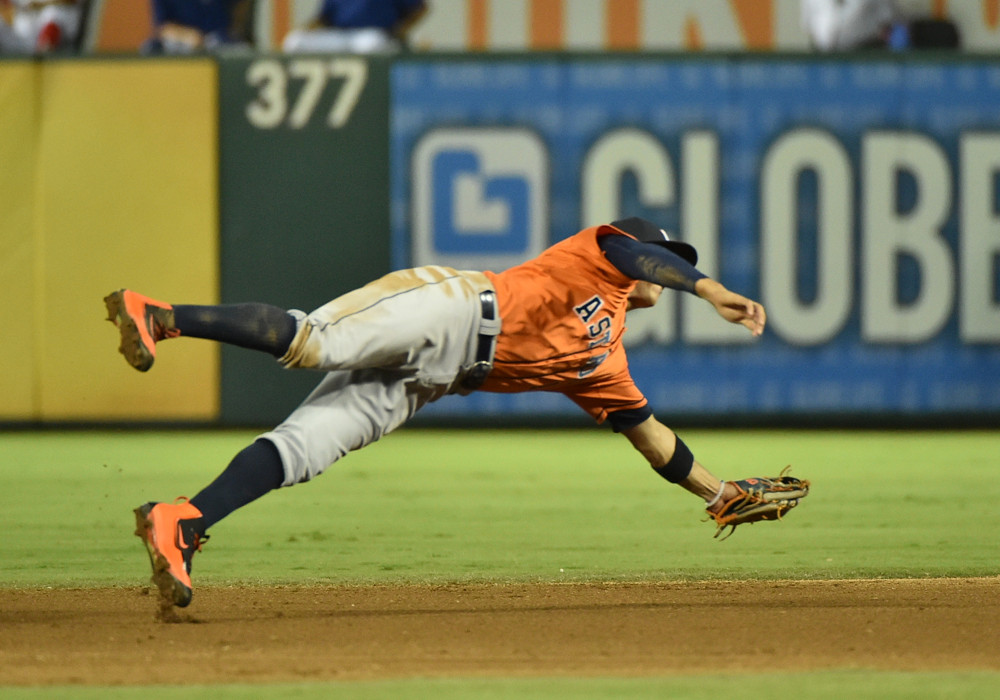
  • Carlos Correa’s Amazing Slides, Dives, and Jumps

    Carlos Correa’s Amazing Slides, Dives, and Jumps

    Carlos Correa is someone who values advanced stats. He’s spoken about it both on TV and radio and even criticized Derek Jeter’s repeated selection as a Gold Glove winner (perhaps influenced by this article from Bill James?).

    So I think Correa might like what I’m going to present here.

    Our company tracks all sorts of things related to how a player makes (and fails to make) plays. One of my favorites is our charting a player’s approach to the ball – specifically whether he slid, dove, or jumped to try to make the play.

    For curiosity’s sake, I was wondering how shortstops fare and rank when it comes to making plays in this manner. I previously called the slide, dive, and jump combo “telegenic plays” in an article for The Athletic, so we’ll stick with that moniker for now.

    And let’s begin with a leaderboard on which Correa’s numbers will jump out.

    Most Telegenic Plays Made by Shortstop – 2019 to 2021

    Name Telegenic Plays Made Telegenic Attempts Success Rate
    Xander Bogaerts 70 178 39%
    Carlos Correa 63 101 62%
    Dansby Swanson 56 155 36%
    Trevor Story 52 124 42%
    Miguel Rojas 51 127 40%

    >> Telegenic Plays – Plays involving a slide, dive, or jump

    Correa’s 63 plays made rank second overall, which is impressive given that he ranks 14th in innings played among shortstops in that time.

    Additionally, the 62% success rate is much better than everyone else on this list and considerably better than anyone else at the position.

    That warrants a little more explanation. A deeper dive if you will.

    A Macro Look

    How Often Does It Happen?

    Shortstops in Last 3 Seasons

    Plays Made Attempted Plays Success Rate
    Diving 560 2,572 22%
    Sliding 504 943 53%
    Jumping 464 1,189 39%

     This chart shows how often you might see a shortstop might make a successful diving, sliding, or jumping play, and how often such a play is attempted.

    Some takeaways if you do a little math:

    * The average team’s shortstops made a 36 diving attempts, 13 sliding attempts and 17 jumping attempts in a season.

    * A shortstop dives almost three times as often as he slides and a little more than twice as often as he jumps.

    The success rates are listed alongside those numbers. A sliding attempt has a much better chance of getting an out than both a diving attempt and a jumping attempt

    This is one of those things that is intuitive, though you probably didn’t know how the percentages played out.

    Diving plays are largely hard. Sliding plays and jumping plays don’t necessarily have the same degree of difficulty (among other things, it’s easier to get upright quickly for a throw from a slide than a dive).

    Carlos Correa’s Approach

    Correa’s numbers are a little different than the average shortstop.

    How Often Does It Happen?

    Carlos Correa in Last 3 Seasons

    Plays Made Attempted Plays Success Rate

    (MLB SS Rate)

    Diving Plays 26 47 55% (22%)
    Sliding Plays 23 28 82% (53%)
    Jumping Plays 14 26 54% (39%)

    There are a lot of things to take in here and I’ll start with this:

    Correa plays the position differently than other shortstops.
    If we took Correa’s numbers from 280 games at shortstop these last three seasons and prorated them against MLB averages (There were 5,756 games played the last three seasons), you would get this:


    Correa Diving Attempts Per 162 Games      27.2

    MLB Average Per 162 games                      36.2


    Correa Sliding Attempts Per 162 Games     16.2

    MLB Average Per 162 games                      13.3


    Correa Jumping Attempts Per 162 Games     15.0

    MLB Average Per 162 games                         16.7

    Correa dives a lot less than other shortstops do. That’s probably smart (especially given his pending free agency). A diving play is often a tough play. You can waste a lot of energy and put a lot of strain on your body by diving.

    We know from our previous studies that injury risk can be increased by the volume of diving, sliding, and jumping. Correa’s been hurt enough over the course of his career. He doesn’t need to raise that risk any higher than it already is.

    Correa’s Dives

    When Correa dives, his rate of completing a play is extremely high. In watching all of Correa’s dives from the last three seasons I can tell you, there aren’t a lot of wasted ones in there.

    One caveat here: Eight of the 26 diving plays made came on ground balls that Correa fielded when he was playing to the first base side of second base in a defensive shift.

    In other words, he was playing something resembling a traditional second base, thus making for a shorter throw and a higher out probability.

    However, there is only a small difference in how often a dive resulted in an out between second base (26%) and shortstop (22%). The throw is only one component. You still have to reach the ball, which isn’t easy.

    Correa’s slides

    We noted earlier that the average shortstop dives nearly 3 times as often as he slides. In Correa’s case, the gap between dives and slides is smaller. It’s only 1.7 times more often (47 vs 28).

    Correa likes to slide, relative to other shortstops. And he’s excellent at it, converting 23-of-28 sliding attempts in that time, including 14-of-16 last season.

    You can see that Correa is in his comfort zone when he slides to try to make a play. He executes the skid & pop-up very well.

    Correa made six sliding plays on nine chances when he was positioned on the first base side of second base, again creating a shorter throw for himself and thus a better chance of recording an out. But even if we take the plays in which he was positioned, he was 17-of-19 when positioned on the shortstop side.

    Wow.

    Correa’s jumps

    Correa’s also pretty good when he jumps, though the success differential between him and the average shortstop isn’t quite as great as it is for sliding or diving.

    Being 6-foot-4 helps.

    Overall

    Correa’s out rate on telegenic plays being higher than other shortstops is a product of a few things.

    Since Correa slides more often than others and dives and jumps less often, his overall percentage should be higher, just because of the mathematics behind the maneuvers. Sliding is a more productive manner of out-getting than the other two.

    There’s also definitely a component of knowing his body and understanding the risks of a low-probability attempt. Correa seems able to instinctively recognize when he should and shouldn’t leave his feet to make a play. It’s impressive to watch him in action.

    And let’s not forget: He’s a really good athlete.

    Let’s close with this stat:

    Correa has made 63 sliding, diving, and jumping plays on 101 attempts the last three seasons.

    By our traditional Defensive Runs Saved calculations, knowing nothing about how he approached the ball, he would have been expected to make 53 plays.

    He’s 10 plays above expectations in that time.

    No other shortstop rates positively in plays above expectations on their sliding, diving, and jumping attempts.

    Carlos Correa – Plays Above Expectations

    On Diving, Sliding, Jumping Attempts

      Plays Made Expected Plays Made Plays Above Expectations
    Diving Plays 26 24 +2
    Sliding Plays 23 17 +6
    Jumping Plays 14 12 +2


  • Making the Hall-of-Fame Case

    Making the Hall-of-Fame Case

    There’s so much consternation about the Hall of Fame at this time of year that perspective on potential inductees can become a secondary story.

    So let’s wade through the PED scandals and other transgressions and point to some Hall of Fame candidates for whom there is statistical support for Hall of Fame election, though not the popular support necessary for induction yet.

    A few years ago, Bill James began calculating Hall of Fame Value, a player’s Win Shares plus his Baseball-Reference WAR times four. He found that a score of 500 usually indicates a Hall-worthy candidate.

    There are four players on this ballot, not known to be tainted by scandal or other issues, who are well above that mark, standing at 550 or higher.

    Bobby Abreu exceeds that total by a comfortable margin. His 356 Win Shares and 60.2 WAR give him an HOF-V of 597, just behind new Hall-of-Famer Larry Walker’s 599. From 1998 to 2011,

    Abreu hit .295 with a .399 on-base percentage, and he averaged 20 home runs, 39 doubles, and 28 stolen bases per season. He’s one of seven players to record at least 250 home runs and 350 stolen bases in his career. Abreu received just shy of 9% of the vote last year, up from 5.5% in his first year on the ballot.

    Scott Rolen’s starting point on the Hall of Fame ballot was just over 10% of the vote in 2018. That’s increased five-fold to 52.9% last year. And early returns look favorable for this year.

    It’s good to see Hall of Fame voters looking favorably upon Rolen, whose 304 Win Shares and 70.1 WAR give him an HOF-V of 584. Rolen ranks 10th among third basemen in Runs Created. He also ranks third at the position in Defensive Runs Saved despite that stat not tracking his performance until 2003, seven years after his career began. His eight Gold Glove Awards rank fourth among third basemen.

    Todd Helton hit .316 with a .953 OPS and 369 home runs in a 17-year career, all with the Rockies. His support has spiked considerably, going from 16.5% in 2019 to just shy of 45% last season.

    Helton has an HOF-V of 565, with 318 Win Shares and 61.8 WAR. He ranks 22nd all-time in OPS and 20th in doubles.

    Helton’s biggest obstacle is perception – that his home ballpark, Coors Field, inflated his stats to a level that he wouldn’t have come close to otherwise. Six of Helton’s eight most similar players by Bill James Similarity Score are in the Hall of Fame, including his former teammate Larry Walker.

    Jeff Kent had a nine-year run as an elite offensive second baseman, averaging 28 home runs and 110 RBIs with an .895 OPS that was 32% better than MLB average when accounting for ballpark. His 351 home runs as a second baseman (among his 377 total) are the most all-time.

    Kent is at an HOF-V of 561, with 339 Win Shares and 55.4 WAR. Now in his ninth year on the ballot, Kent’s peak voting share was the 33% he garnered last year. He’s been hurt by a lack of other dimensions to his game, as he doesn’t rate well in speed and defense.

    Here’s a list of players on this year’s Hall-of-Fame ballot with an HOF-V score of 500 or higher.

    Highest Hall of Fame Value Among Candidates on 2022 Hall of Fame Ballot

    Player HOF Value
    Barry Bonds 1355
    Roger Clemens 994
    Alex Rodriguez 961
    Manny Ramírez 685
    Gary Sheffield 672
    Bobby Abreu 597
    Scott Rolen 584
    Curt Schilling 570
    Todd Helton 565
    Jeff Kent 561
    Sammy Sosa 555
    David Ortiz 537
    Andruw Jones 527

    To see the Hall of Fame Value for your favorite player, go to Bill James Online.

  • Bo’s Throws A Major Woe

    Bo’s Throws A Major Woe

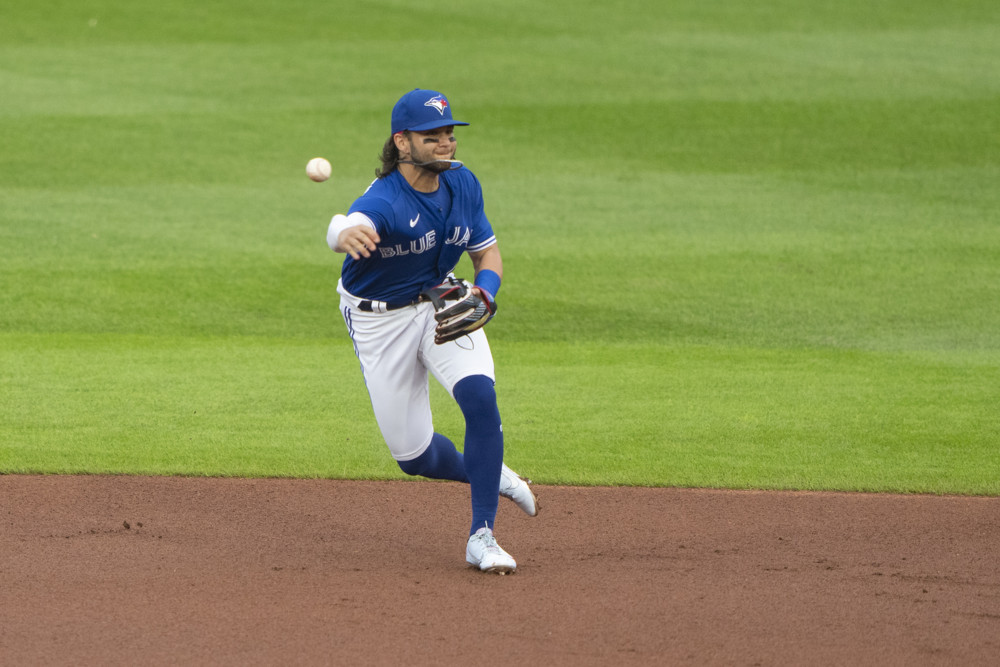
    Blue Jays shortstop Bo Bichette is a very, very, very good baseball player. He’s coming off a season in which he led the AL in hits and had 29 home runs, 102 RBIs, and 25 stolen bases in 26 attempts.

    There’s just one thing missing from Bichette’s game. Though he rates well at getting to balls, he does not rate well at throwing them and completing plays.

    In our PART system, we’re able to separate performance in both range and throwing which can tell us if a player is particularly good or bad at one or the other.

    Here are the leaders at Range Runs Saved among shortstops over the last three seasons.

    Most Range Runs Saved – Shortstops Since 2019

    Player Range Runs Saved
    Trevor Story 35
    Paul DeJong 26
    Javier Báez 20
    Bo Bichette 17
    Carlos Correa 14
    Willy Adames 14

    Bichette’s numbers are impressive here. He’s in excellent company.

    And here are the trailers in Throwing Runs Saved at that position since 2019.

                   Fewest Throwing Runs Saved – Shortstops Since 2019

    Player Throwing Runs Saved
    Fernando Tatis Jr. -16
    Xander Bogaerts -15
    Bo Bichette -11
    Jorge Polanco -10
    Luis Urías -10

    And therein lies the issue.

    In 2021, the split for Bichette was 7 Runs Saved from range and -6 Runs Saved from throwing. He finished the season a positive overall at shortstop with 2 Runs Saved after factoring in the other components that go into that stat (particularly Good Fielding Plays, which allows us to make additions for things like keeping balls in the infield and throwing runners out at the plate, and Double Plays).

    He was alright overall… but he left a lot of room to be better.

    Bichette had 16 throwing-related Misplays & Errors last season.

    Three players had more. Isiah Kiner-Falefa had 20, Fernando Tatis Jr. had 18, and Javier Báez had 17.

    On the opposite end of the spectrum, Pirates shortstop Kevin Newman had only two. Fielding Bible Award winner Carlos Correa had 6.

    The thing that I got to wondering was – what if Bichette had been a better fielder and had turned half of those plays (8 of them) into outs? What would his Runs Saved total have been?

    We plucked eight Bichette throwing miscues from his defensive ledger. They include a couple of wide throws, a few high throws, and a couple of low throws (and yes, you could make a case that a better defensive first baseman might’ve helped a little bit).

    Here’s video of three of them:

    A wide one with slow catcher Pedro Severino running. This one cost him nearly three-quarters of a run in Defensive Runs Saved (-.74 from a 95% out probability)

    An airmail with Jahmai Jones running. This one also cost him nearly three-quarters of a run (-.73 via a 94% out probability)

    Another airmail with arguably the slowest player in baseball, Miguel Cabrera, running. This one dinged him about two-thirds of a run (-.65 via an 84% out probability).

    Had Bichette made those three plays, he would have gotten back the .74, .73, and the .65 Runs Saved that he lost for each of those hitter’s being safe, a combined 2.1 runs.

    He would have also been rewarded for getting the out on each of those plays. Given that those plays had out probabilities of 95%, 94% and 84%, that gain isn’t much, about 0.2 runs. The value gains are small because those plays don’t rate as difficult.

    Repeating that process for the other five plays on our eight-play list and Bichette gains about 3.5 runs back for the runner not reaching base and another .4 runs for recording an out on each of those plays. In other words, about 4 runs.

    Take the 2.3 runs from the three plays for which we showed video and add them to the 4 runs from the five other plays and you get 6.3 runs.

    If Bichette had been 6 runs better on throws from shortstop, he would have rated right around MLB average as a thrower. And he would have gone from 2 Defensive Runs Saved for the 2021 season to a more solid and well-regarded 8 Runs Saved.

    That’s from eight throws, or about one for every 20 games that Bichette played last season.

    You could look at that in a couple of ways.

    He’s not that far from being a standout defensive shortstop.

    And it also goes to show that it doesn’t take a lot of plays to change how we might perceive a player’s defensive performance.


  • Stat of the Week: 2021 MLB Year-End Awards

    Stat of the Week: 2021 MLB Year-End Awards

    As 2021 ends, it’s once again time for our supplemental MLB awards, ones that are statistically driven. These will salute some of the leaders in specific areas of our recordkeeping.

    The Hard-Hitter Award

    Sports Info Solutions charts every batted ball as hard-, medium- or soft-hit, based on the ball’s location and velocity. The winner of the Hard-Hitter Award is the player who had the highest percentage of batted balls that were hard-hit among those batters with a minimum of 350 plate appearances.

    For the second straight year, our winner is Fernando Tatis Jr., who recorded a hard-hit ball on 48% of his batted balls in 2021. He edged out Aaron Judge (47%) for the overall lead. Miguel SanoPatrick WisdomShohei Ohtani, and Joey Votto (all at 46%) rounded out the top six.

    The Dodgers led the majors in team hard-hit rate for the third straight season with 35% of their batted balls classified to be hard-hit. They were followed by the TwinsReds, and Blue Jays (34%).

    The Contact Minimizer Award

    The Contact Minimizer goes to the pitcher who most limited hard contact in 2021 (minimum 100 innings pitched).

    The winner is Zack Wheeler, who allowed hard contact in 22% of the batted balls against him. He was followed by Brewers teammates Adrian Houser and Corbin Burnes (both 25%). Six pitchers were at 26%, a list that included up-and-comers Alek ManoahRyan YarbroughRanger Suarez, and Logan Webb, as well as standouts Max Fried and Wade Miley.

    The Dodgers (29%) edged out the GiantsAstrosPhillies, and Yankees (each at 30%) for the lowest hard-hit rate among team pitching staffs.

    The Flat Bat Award

    The Flat Bat Award is given annually to the best bunter of the year. To determine the winner, we look at run value–run expectancy gained or lost–for both successful and unsuccessful sacrifice bunt and bunt-for-hit attempts for each player.

    This year’s winner is Nicky Lopez of the Royals, who had an AL-best 12 successful sacrifice bunts and only one failed attempt, along with six bunt hits (and no failed bunt hit attempts).

    The runner-up was Daulton Varsho of the Diamondbacks, who also had six bunt hits without an unsuccessful one, though only one sacrifice bunt. Joey Gallo, of the Rangers and Yankees, who tied with Garrett Hampson of the Rockies for most bunt hits, finished third.

    Click here to read about the methodology behind the Flat Bat Award.

    The Vacuum Cleaner Award

    SIS Video Scouts also track what are known as “Good Fielding Plays,” which are often those that lead to the unlikely recording of an out. Those can be broken up into different subtypes, including one just for groundballs. The leader in Good Fielding Plays on groundballs is the winner of our Vacuum Cleaner Award.

    For this year, that honor goes to Braves third baseman Austin Riley. He led all players with 18 Good Fielding Plays on groundballs, one more than Nolan Arenado and Luis Urías.

    Riley also made a significant jump in Defensive Runs Saved at third base from 2020 to 2021, going from -10 to 13.

    The Fly Swatter Award

    This is a similar award to The Vacuum Cleaner, except it’s for Good Fielding Plays resulting in outs on fly balls and line drives.

    The MLB leader in this stat was Pirates outfielder Bryan Reynolds, who had 16. Cardinals utility man Tommy Edman ranked second with 13, just ahead of teammate Harrison Bader and Astros/Indians outfielder Myles Straw, who each had 12.

    The Stolen Base Stopper

    The award for the Stolen Base Stopper goes to the pitcher and catcher who had the most Stolen Base Runs Saved in 2021.

    Elias Díaz of the Rockies was the leader among catchers with 6 Stolen Base Runs Saved, edging out Tomás Nido and Salvador Perez (5 each). Díaz made tremendous all-around defensive improvements the last two seasons, going from -21 Runs Saved in 2019 to 9 Runs Saved in 2021. Díaz had 14 caught stealings against 22 stolen bases allowed (a 39% caught stealing percentage) and also picked off five baserunners.

    Ryan Weathers of the Padres led all pitchers with 4 Stolen Base Runs Saved, one more than Wade Miley of the Reds. Weathers had an MLB-best 9 combined pickoffs and pitcher caught stealings in 94 2/3 innings pitched in 2021.

    The Hall of Framer

    The Hall of Framer award goes to the catcher who had the best pitch-framing numbers in 2021. In our world, that means the catcher who had the most called strikes above expectations (Strike Zone Plus-Minus).

    The runaway leader for that was Angels catcher Max Stassi, who was credited with 81 more strikes than expected. Mike Zunino of the Rays and Will Smith of the Dodgers ranked second with 65.

    You can hear Stassi talking about pitch framing in an appearance on The Sports Info Solutions Baseball Podcast from September.

    On a per-pitch basis, among catchers with at least 2,000 pitches caught, Nido edges Stassi out. He’s at 1.4 strikes more than expected per 100 pitches caught. Stassi is at 1.3.

    To learn more about our pitch-framing methodology, read the paper from our award-winning presentation at the Sloan Sports Conference.

    For more statistical leaders, check out The Bill James Handbook – 2022  which makes a great holiday gift.

  • Stat of the Week: Appreciating Mark Buehrle and Tim Hudson

    Stat of the Week: Appreciating Mark Buehrle and Tim Hudson

    By MARK SIMON

    Four pitchers threw at least 200 innings in 2021. Sandy Alcantara, Walker Buehler, Adam Wainwright, and Zack Wheeler deserve a special salute for doing so in MLB’s first full season since the start of the COVID pandemic.

    We are in the dinosauring-out stage of the 200-inning pitcher. As recently as 2005, 50 pitchers threw at least 200 innings in a season. By 2015 that number had dropped by nearly half, but was still at 28. From 2016 to 2019, the number ranged from 13 to 15.

    I mention that in the context of the downballot portion of the 2022 Hall of Fame ballot, where we find Mark Buehrle and Tim Hudson. Buehrle got 44 votes and 11% of the vote in 2021, his first year on the ballot. Hudson barely met the 5% threshold needed to stay on the ballot, netting 21 votes among the 401 ballots cast.

    Buehrle and Hudson didn’t pitch that long ago. But they’re products of a different era, one in which the starting pitcher was the long link in the chain from the first inning to the ninth.

    Buehrle pitched at least 200 innings 14 times in his career and had he gotten four more outs in 2015, his final season, he would have done so in 15 straight seasons. Hudson had eight 200-inning seasons and cleared 3,100 innings for his career.

    The 3,000-inning benchmark is significant. Among active pitchers, Zack Greinke has cleared it. Justin Verlander is 12 innings shy. Max Scherzer needs 463 1/3 innings and Clayton Kershaw needs 545 1/3. They should get there. But after that … ? Does David Price have 900-plus innings in his arm? Does Madison Bumgarner?

    Mark Buehrle & Tim Hudson

    Category Buehrle Hudson
    Seasons 16 17
    200-IP Seasons 14 8
    ERA 3.81 3.49
    Hall of Fame Value 456 450


    This is not to argue that Buehrle and Hudson are Hall-of-Famers. By the criteria often applied to the Hall of Fame ballot by those using traditional stats or analytics, they come up short. Bill James’ Hall of Fame Value stat scores Buehrle at 456 and Hudson at 450 when considering their Win Shares and Baseball-Reference WAR, with 500 being the standard for Hall-of-Fame worthiness.

    But we can still make these guys look pretty good.

    Buehrle had eight seasons with 200 innings pitched and an ERA+ of 120 or better (that’s an ERA 20% better compared to league average, when factoring in the ballpark in which they pitched).

    Only six pitchers have had more such seasons since 1990. Buehrle has the same number as Roy Halladay, though Halladay’s combined efforts were much more dominant.

    Hudson had five such seasons. He outdoes Buehrle, four seasons to two, if we move the qualifier to a 130 ERA+. Neither quite put him in an elite class. He’s more along the lines of Hall-of-Very-Good.

    With each year, pitchers like Buehrle and Hudson are going to look better and better as they’re compared to contemporary pitchers because their pitching type – the workhorse – is becoming extinct. They should be respected for the work they did, which might not be Hall-of-Fame worthy, but still reached a level of excellence that should net them considerable praise.

  • 2021 NPB & KBO Fielding Bible Award Winners

    2021 NPB & KBO Fielding Bible Award Winners

    For the second straight year, Sports Info Solutions made the 2021 Fielding Bible Awards a global affair. Today, we announce the winners of the NPB and KBO Fielding Bible Awards for defensive excellence.

    The awards were voted on by panels of experts and SIS Video Scouts, who spent the entire season tracking NPB and KBO games. Among our voters were Jeeho Yoo (Yonhap News Agency, South Korea), John Gibson (Japanese Baseball Weekly Podcast), and Jason Coskrey (Japan Times).

    Each voter ranked their top four players at each position in the league they covered, with 4 points awarded for a first-place vote, 3 for second and so forth. The panel also voted on a multi-position award given to a player who played less than 70% of his innings at any one position. Eligibility for voting was based on playing-time requirements.

    2021 NPB Fielding Bible Award Winners

    Position Name Team
    C Yuhei Nakamura Yakult Swallows
    1B Sho Nakata Yomiuri Giants
    2B Tetsuto Yamada Yakult Swallows
    3B Yuma Mune Orix Buffaloes
    SS Sosuke Genda Seibu Lions
    LF Takashi Ogino Chiba Lotte Marines
    CF Daiki Asama Hokkaido Nippon Ham Fighters
    RF Aito Takeda Saitama Seibu Lions
    P Yuya Yanagi Chunichi Dragons
    Multi-Position Takashi Ogino Chiba Lotte Marines

    The Yakult Swallows and Chiba Lotte Marines each had two Fielding Bible Award wins. Yakult was led by catcher Yuhei Nakamura and second baseman Tetsuto Yamada. Takashi Ogino won two awards for the Marines, winning as a left fielder and also taking the multi-position award for his combined work in left field and center field.

    The NPB’s standout defender, shortstop Sosuke Genda of the Seibu Lions, won after leading all players with 22 Defensive Runs Saved. For reference, the MLB leader in Runs Saved at shortstop was Carlos Correa with 20.

    Two other NPB winners had double-figure Runs Saved totals at their positions. Ogino had 14 in left field and right fielder Aito Takeda had 14 for the Saitama Seibu Lions.

    2021 KBO Fielding Bible Award Winners

    Position Name Team
    C Jae-hoon Choi Hanwha Eagles
    1B Bo-gyeong Moon LG Twins
    2B Kyung-su Park KT Wiz
    3B Jun-young Park NC Dinos
    SS Ji-hwan Oh LG Twins
    LF Sang-kwon Byeon Kiwoom Heroes
    CF Ji-hoon Choi SSG Landers
    RF Jared Hoying KT Wiz
    P Odrisamer Despaigne KT Wiz
    Multi-Position Bon-ki Shin KT Wiz

    The KBO champion KT Wiz posted the top Defensive Runs Saved total in the league and had four Fielding Bible Award winners. Two of them were former major leaguers, pitcher Odrisamer Despaigne and right fielder Jared Hoying.

    Despaigne, the Wiz leader in wins and innings pitched, spent six seasons in the majors, last with the White Sox in 2019. Hoying, who started 2021 in the Blue Jays organization, returned to the KBO in midseason. He had previously played for Hanwha from 2018 to 2020. Despite only playing a half-season, he led right fielders in Defensive Runs Saved.

    They were joined by teammates, second baseman Kyung-su Park, and utility infielder Bon-ki Shin, who won the multi-position award.

    The other KBO team to have multiple winners was the LG Twins, who finished second in the league in Runs Saved. Their winners were Bo-gyeong Moon at first base and Ji-hwan Oh at shortstop, each of whom led the league in Defensive Runs Saved at their respective position.

    “It’s important that we continue to recognize that baseball is a global game,” said SIS chairman John Dewan. “Defensive excellence should be universally recognized and we’re glad to play a part in doing that. Congratulations to all the winners.”

  • Stat of the Week: New Hall-of-Famers

    Stat of the Week: New Hall-of-Famers

    by MARK SIMON

    With little positive news to report on the MLB lockout, Sunday was a good day to celebrate baseball history.

    It was also a good day for those who like to celebrate great defense in baseball.

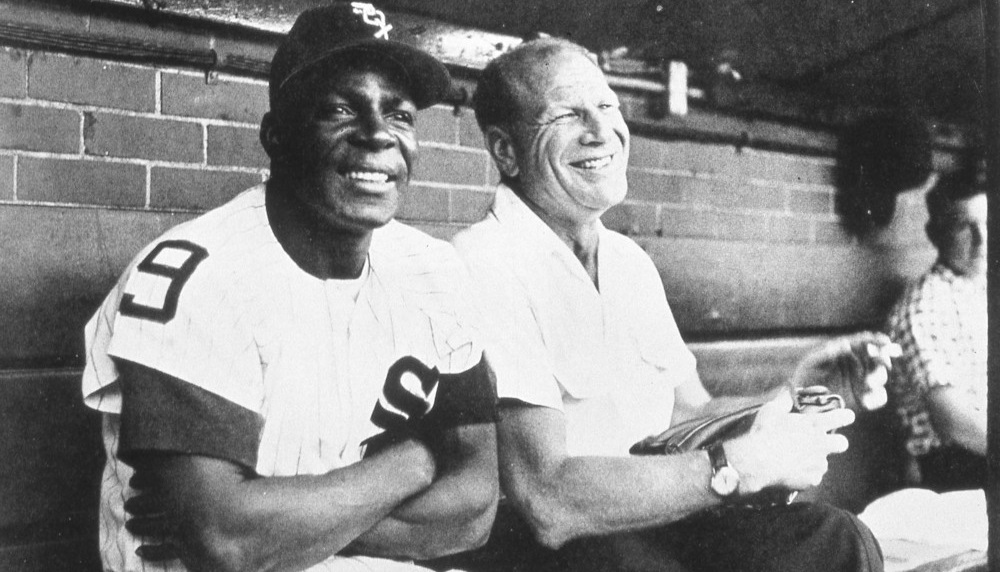
    The Baseball Hall of Fame elected six candidates – Bud Fowler and Buck O’Neil were voted in by the Early Baseball Era Committee. Gil Hodges, Minnie Miñoso, Tony Oliva, and Jim Kaat were elected by the Golden Days Era Committee.

    Fowler is regarded as baseball’s first African-American pro player. He played 10 seasons of organized professional baseball in the latter part of the 19th century. The street leading to Doubleday Field in Cooperstown is named in his honor.

    O’Neil was a first baseman in the Negro Leagues who later became MLB’s first Black coach, and as a scout he signed future Hall of Famer Lou Brock for the Cubs. He later became one of the greatest ambassadors for the sport and was best known in his later years for his appearance in the Ken Burns documentary, Baseball.

    We mentioned it being a great day to celebrate defense. O’Neil was heralded for his glovework. It was a key talking point for Negro League Hall of Fame president Bob Kendrick in promoting O’Neil’s election.

    “There were very few who played defense like Buck O’Neil,” Kendrick said.

    The election was a long time coming for Hodges, whose candidacy had been considered since his first appearance on the BBWAA ballot in 1969.

    Hodges hit 370 home runs and won three Gold Gloves in an 18-year career in the 1940s, 50s, and 60s, then won a World Series managing the 1969 Mets. He likely would have won more Gold Gloves had the award existed in the earlier part of his career. He was a three-time leader in a predecessor to Defensive Runs Saved, Total Zone Runs (found on Baseball-Reference.com).

    As a hitter, Hodges’ prime years were with the Dodgers from 1950 to 1957, during which he hit .283 with an .897 OPS and averaged 33 home runs and 107 RBI. He won a World Series with them in 1955 and 1959.

    Miñoso is another player who would have won more Gold Gloves than the three he copped in the latter part of his prime years. Including three seasons in the Negro Leagues, he hit .299 with a .387 on-base percentage for his career, primarily with the White Sox. He played from 1946 to 1964 then had a couple of plate appearances in cameo appearances in later years).

    Miñoso led his league in triples four times, stolen bases three times, and hit by pitches 10 times. He was a 13-time All-Star whose No. 9 was retired by the White Sox in 1983.

    Oliva was a base hit machine in his prime with the Twins, the only team he played with over 15 seasons. He led the AL in hits five times in seven seasons from 1964 to 1970 and he won the batting title three times. Like Hodges, he was a three-time leader in Total Zone Runs. He won a Gold Glove in 1966. Newspaper stories from the time salute his “rifle arm” and defensive improvement due to hard work.

    Oliva’s longtime teammate, Kaat, won 16 Gold Gloves as a pitcher in a career that lasted from 1959 to 1983. He ranks 17th all-time in games started, 25th in innings pitched, and he won 283 games with five teams. In a 2018 interview with Cardinals broadcaster Dan McLaughlin, Kaat said he modeled his fielding after a pitcher he grew up admiring, Bobby Shantz of the Philadelphia Athletics, throwing a baseball against a garage door to practice his reactions.

    Congratulations to all the new Hall of Famers!

  • KBO Scouting Report: Aríel Miranda

    KBO Scouting Report: Aríel Miranda

    By TED BAARDA

    In 2021 the KBO’s Doosan Bears signed Aríel Miranda and Walker Lockett to front their rotation, and once again they found the right pitchers to lead their staff. Lockett battled some injuries but still managed a 2.98 ERA in 124 innings.

    However the star of the pitching staff was the 32-year-old Miranda, who broke the league’s single-season strikeout record. I’m wondering if (even at his age) he could be in line for a return to the major leagues.

    No team has been better recently at identifying and acquiring top foreign pitchers in the KBO than the Doosan Bears. In 2019 Josh Lindblom won the league’s MVP award before leaving for Milwaukee on a three-year deal. In 2020, Raul Alcantara won the Choi Dong-won award, given to the league’s top pitcher, and Chris Flexen earned a two-year contract with the Seattle Mariners.

    Here’s Miranda’s stat line the last 5 seasons.

    Year League W-L ERA

    Innings

    K/9 BB/9
    2017 MLB 8-7 5.12 160 7.7 3.5
    2018 NPB 6-1 1.89 47 2/3 7.6 5.1
    2019 NPB 7-5 4.19 86 6.1 5.0
    2020 CPBL 10-8 3.80 156 1/3 9.8 3.5
    2021 KBO 14-5 2.33 173 2/3 11.7 3.3


    Miranda’s path

    A Cuban-born left hander, Miranda played seven seasons in Cuba before signing with the Orioles. He spent 2015 in their minor league system and, after a brief MLB debut with Baltimore, was sent to the Mariners during the 2016 season. He spent the whole 2017 season with the Mariners, primarily as a starter and posted a 5.12 ERA.

    In 2018, Miranda embarked on what turned out to be an adventure through the top Asian baseball leagues, pitching in NPB, the Chines Professional Baseball League in Taiwan, and now the KBO. 

    What Miranda throws

    What fueled his breakout in 2021? It looks like Miranda adjusted his approach and focused more on his strengths, as 86% of his pitches thrown this year were fastballs or splitters, his two best pitches. 

    That was up eight percentage points from 2017. That year, he threw his changeup more than twice as often as he threw it at this past season.


    Pitch Type 2021 Usage 2021 AVG Velocity
    Fastball 61% 91 MPH
    Splitter 26% 80 MPH
    Slider 7% 82 MPH
    Changeup 7% 82 MPH


    Miranda throws a lot of fastballs because it’s the pitch he controls best. He threw it for a strike 69% of the time, and started 67% of at-bats with a fastball so he could get ahead of hitters. At 91 MPH on average, it is not a blazing fastball, but for a left handed starter it has acceptable velocity and he locates it well.

    The splitter is Miranda’s best pitch. Of his KBO record 225 strikeouts, 139 came on the splitter. Only eight other pitchers in the KBO had more than 139 strikeouts in total. His splitter gets good downward break on it, and will run away from right handed hitters, or in on lefties. At times its movement will resemble that of a screwball. Despite it being a primary pitch of his, Miranda’s splitter still got hitters to whiff on 46% of their swings. It was his go-to pitch with two strikes.

    Even when hitters did make contact with his splitter, they could not do much with it. Opposing hitters managed a .127/.179/.172 line against his splitter with a 11% hard hit rate. Results-wise, Miranda’s splitter was to the KBO what Kevin Gausman’s was in MLB (opponents hit .139 with a 14% hard-hit rate against one of the top pitches in the game).

    While his splitter is the star of his repertoire, it does not come without concerns. Due to the nature of its grip, the splitter tends to be a harder pitch to control than most others, and that is definitely the case with Miranda. His splitter control can come and go, which can make him depend more on his weaker pitches on days where he can’t locate the splitter. 

    While splitters tend to be a pitch that pitchers want to throw low and have batters swing over, Miranda actually threw a lot of his up in the zone. 30% of his strikeouts on the splitter were strikeouts looking, and many of those were belt-high that hitters gave up on and watched fall into the top of the zone. He only gave up 2 HR with the splitter all season but against stronger competition the volume of splitters left up in the strike zone could be a problem.

    As for his other pitches, Miranda’s changeup would normally be considered fairly unimpressive. It does not feature much drop or fade and rides relatively flat. That doesn’t sound like a good thing, until you consider how it plays off his two main pitches. The changeup has similar movement to his fastball, but is 9 MPH slower, so if a hitter is looking for a fastball, he will be ahead of the changeup. If the hitter is looking for a splitter, he will be under the changeup since the splitter has much more downward break.

    Comparable #1 – Tyler Clippard

    A good example of a pitcher who can play these pitches off each other like this is veteran reliever Tyler Clippard, though Clippard’s changeup features more movement than Miranda’s.

    Miranda managed a 61% whiff rate on swings against his changeup, but that is mostly a product of him using it sparingly and catching hitters by surprise. He cut his changeup usage dramatically, from 16% in 2017 to 7% in 2021, and throws it exclusively to right handed hitters.

    Miranda’s slider is also a pedestrian offering, but it is the only pitch he has that runs away from left handed hitters. Used as his third pitch against lefties, it gives hitters a different look in an at-bat. He also would occasionally throw it to run in against right handed hitters.

    Injury Concerns

    Miranda missed his club’s first two post-season series with shoulder fatigue, though he did return in time to start Game 3 of the Korean Series. While the results were there (5 IP, 1 ER, 6 K), Miranda’s fastball was lacking its customary zip. He was sitting around 89 MPH for most of the game, though he was able to reach back for 92-93 occasionally.

    Given his command and health concerns, he may fit better on a MLB team as a reliever than as a starter. He will also turn 33 in January, so if a team wants him to start, it needs to be confident he can step into that role immediately, as he doesn’t have time on his side to work through issues as a longer-term project.

    Comparable #2 – Héctor Neris

    Teams now are prioritizing diversity in their bullpens, trying to vary handedness, release points and pitch mixes among their relievers. This works in Miranda’s favor as very few left handed pitchers throw splitters, and even fewer feature a splitter and a changeup. A good relief comp to Miranda might be a left handed version of Héctor Neris of the Phillies, who relies on his splitter but can struggle with command at times.

    After the season he just had, Miranda would be welcomed back to the KBO by any team, but he could be looking at some MLB offers for 2022. What role teams will consider him for might still be up in the air. But keep an eye out for where he could land.

  • Which Players Have High Injury Risk in 2022? (Bill James Handbook Excerpt)

    Which Players Have High Injury Risk in 2022? (Bill James Handbook Excerpt)

    The following essay is an excerpt from The Bill James Handbook 2022, which is available at bookstores now and can be purchased at ACTASports.com. The book features essays, stats, leaderboards, contained within 640 pages of baseball goodness. 

    by ALEX VIGDERMAN

    Orioles center fielder Cedric Mullins wildly outperformed expectations in 2021. You might hear more about that in the Bill James Projections recap later in the book, because he hit for an OPS nearly 200 points higher than what we projected him for, going 30-30 when we projected him for fewer than 30 total homers and steals.

    Yes, Mullins improved a great deal as a hitter. But the reason Mullins was able to put up an MVP-caliber campaign is that he stayed on the field. He appeared in 159 games, which was more than his career total up to that point. Two other AL MVP candidates through the first month of the season, Mike Trout and Byron Buxton, couldn’t say the same.

    Mullins led the league in defensive opportunities as an outfielder, saved runs at a representative rate for a center fielder, and did so with one of the lowest rates of dives, slides, and jumps, which look great on highlights but are big factors in injury risk among outfielders.

    He (literally) outran his projection of being one of the likeliest position players to suffer an IL-worthy injury in 2021, per last year’s Handbook.

    The same could not be said for most of his comrades on those lists. We listed 10 pitchers and 10 position players who our model found to be most likely to suffer an injury and miss at least 10 days in 2021, and seven players on each list endured such a fate. That includes Spring Training losses like Mike Clevinger’s Tommy John surgery.

    How are we going about projecting something as timeless in its unpredictability as physical injuries?

    Well, we have collected and aggregated injury data for some years now. It started with just noting when a player suffered some kind of injury event during a game: getting hit by a pitch, pulling up lame while beating out a groundball, or crashing into the wall on a deep fly.

    We combine that information with Injured List stints and media reports to create as comprehensive an injury history as anyone outside an MLB organization has. And starting in 2020, we began leveraging that data to investigate injury risk.

    If you read last year’s edition of this book, you’ll recall John Shirley’s introduction to the model we built and the different elements involved. In short, we take injury data and combine it with playing time, position, body type, and play style information to create a daily estimate of how likely a player is to suffer an IL stint or miss at least ten days with an injury over the next week, month, two months, and season.

    For more info on the model, its inputs, and the kinds of insights we’ve already gained, check out our presentation from the 2021 SABR Analytics Conference.

    So, who are we most concerned about heading into 2022?

    As of the end of the 2021 regular season, here’s who we have our eye on.

    Pitchers With The Highest Predicted Injury Risk
    Entering 2022

    1. José Alvarado
    2. Ryne Stanek
    3. Max Scherzer
    4. Aroldis Chapman
    T5. Peter Fairbanks & Genesis Cabrera
    T7. Jake Brentz & Michael Kopech
    T9. Edwin Díaz, Diego Castillo & Jonathan Loaisiga

    Alvarado, Stanek, Fairbanks, and Castillo were Rays teammates two years ago, and they have eight IL stints between them in the two years since. Perhaps it’s not a coincidence that only Fairbanks remains with the team.

    Fans of power pitching shouldn’t be surprised to see some favorites on this list given the risks associated, but some of the more compelling pitchers to watch over the last few years have warning signs for missed time in 2022.

    Chapman and Kopech have arguably the fastest fastballs of all time. Scherzer is on the back side of his career (pun intended); he has served time on the IL three times with a back injury over the last three seasons.

    Hitters with the Highest Predicted Injury Risk
    Entering 2022

    1. Alcides Escobar
    2. Kolten Wong
    3. Miguel Cabrera
    T4. Carlos Santana & Salvador Perez
    6. Raimel Tapia
    7. Xander Bogaerts
    8. Aledmys Diaz
    T9. Jorge Soler, Franmil Reyes, Didi Gregorius & Jordy Mercer

    What you should notice from the hitter list is that three big risk factors for injury are playing an up-the-middle position, being a bulky corner player / DH, and failing to discover the Fountain of Youth.

    Alcides Escobar hadn’t played in the majors for two years but has already re-signed for a one-year deal with the Nationals, who gave him a bit more than a coffee this season. He doesn’t have a dramatic injury history, but his position and age make him something less than a sure bet in ‘22.

    Salvador Perez and Xander Bogaerts would be huge losses to their respective teams if they were to miss time.

    Perez missed 2019 to injury and after the short 2020 season was able to start 160 games (120 at catcher) this season. That’s not something we expect to continue in 2022.

    Bogaerts has played in at least 136 games in every full season of his career, so it’d be a turn for the surprising for him to miss a big chunk of time, but he plays a tough position and his mix of size and just-past-his-prime age make for a cocktail of injury risk.

  • Bill James Handbook Excerpt: Shohei Ohtani

    Bill James Handbook Excerpt: Shohei Ohtani

    By MARK SIMON

    The following essay is an excerpt from The Bill James Handbook 2022, available now from ACTA Sports.

    Sometimes in baseball, things happen early in the season that set a tone for the entire
    year.

    In Shohei Ohtani’s case, his first series of the season foreshadowed much of what
    followed. He lived up to the hype.

    The Home Run

    Ohtani homered in the ninth inning of his second game of the season. I’d categorize it
    as impressive since it came off White Sox closer Liam Hendriks, but it wasn’t
    necessarily memorable.

    His second home run of the season—hit 451 feet off a 97-MPH eye-approaching
    fastball from Dylan Cease—that one was something else.

    You know how sometimes you’ll hear a baseball analyst say a player’s home runs
    sound different than everyone else’s?

    This one did.

    “A POWWWW with an echo to it,” said Angels broadcaster José Mota, who worked most
    games at home from field level and got to see and hear much of Ohtani’s work
    close up.

    Ohtani’s 46 home runs were one shy of his total in 254 games from 2018 to 2020. They
    were one shy of Troy Glaus’ Angels franchise record set in 2000.

    The Triple

    One thing that may have slipped under your Ohtani radar this year is that he led
    the American League and tied for the major league lead in triples.

    His first one of the season came in the Angels’ second game. It was a rocket ground
    ball that took its first bounce about halfway to José Abreu and then zipped
    past his glove at about 108 MPH. Abreu had no chance to get in front of the
    ball. By the time he put his glove down, it was well past him.

    “Thank god that ball didn’t find José Abreu’s chest,” Mota said “Oh my gosh, oh my goodness. There’s no human being that could have stopped that ball.”

    A little baseball history lesson:

    In 1902, a pitcher/utility player, Harry Howell, hit 11 triples for the Baltimore
    Orioles (not the current ones, the predecessor to the Yankees franchise).

    In 1918, pitcher/outfielder Babe Ruth did the same for the Red Sox.

    Two Negro League players—Harry Kenyon and Bullet Rogan—hit eight in 1921. Rogan did
    it for the Kansas City Monarchs and Kenyon for the Indianapolis ABCs. Rogan did
    it again for the Monarchs in 1925.

    It took 96 years for another player to come along who pitched 20 games in a season
    and hit at least eight triples.

    Ohtani was that player.

    The Stolen Base

    In the fifth inning of the third game of the Angels–White Sox season-opening
    four-game series, Ohtani stole second base against pitcher Lance Lynn and
    catcher Zack Collins. It was his first stolen base of the season.

    Ohtani’s 46-home run, 26-stolen base combination has been matched by only four other
    players—Barry Bonds (1993 Giants), Hall-of-Famer Larry Walker (1997 Rockies),
    Jose Canseco (1998 Blue Jays), and Alfonso Soriano (2006 Nationals).

    The Splitter and the Slider

    So that first start of the season had foreshadowing, but that requires some
    specificity not contained within his pitching line. In 4 2/3 innings he allowed
    three runs and walked five.

    But there was something in that start that foretold the future—Ohtani’s unhittable
    splitter and nasty slider.

    Ohtani got five outs with his splitter that day, all strikeouts.

    The .233 OPS against the pitch was second-best among the 30 pitchers who threw at
    least 100 splitters last season. Only Aroldis Chapman, who threw one-third as
    many splitters as Ohtani, was better.

    After allowing seven runs and four walks in 2/3 of an inning against the Yankees on
    June 30, Ohtani’s wildness abated.

    Ohtani had started throwing his slider more often a few weeks prior to that game, and
    after that start it really became a difference maker when it was paired with
    the splitter.

    It gave him better options to throw off a fastball that sometimes reached 100 MPH.
    He walked 35 batters in his first 60 innings, but only nine in his last 70 1/3
    innings.

    Opponents hit .171 against the slider from July 6 to the end of the season.

    The Total Package

    Ohtani was a top-25 hitter AND a top-25 pitcher, but perhaps the best thing about his
    season was that his best ability was availability.

    Yes, the best foreshadowing to come from Ohtani’s season-opening series against the
    White Sox was that he played all four games. He played in 155 out of a possible
    162, which meant that we got to see him at his best just about every day of the
    season.

    It was quite a treat.