Category: Defense

  • Red Sox Defense Is Better Than Its Errors

    Red Sox Defense Is Better Than Its Errors

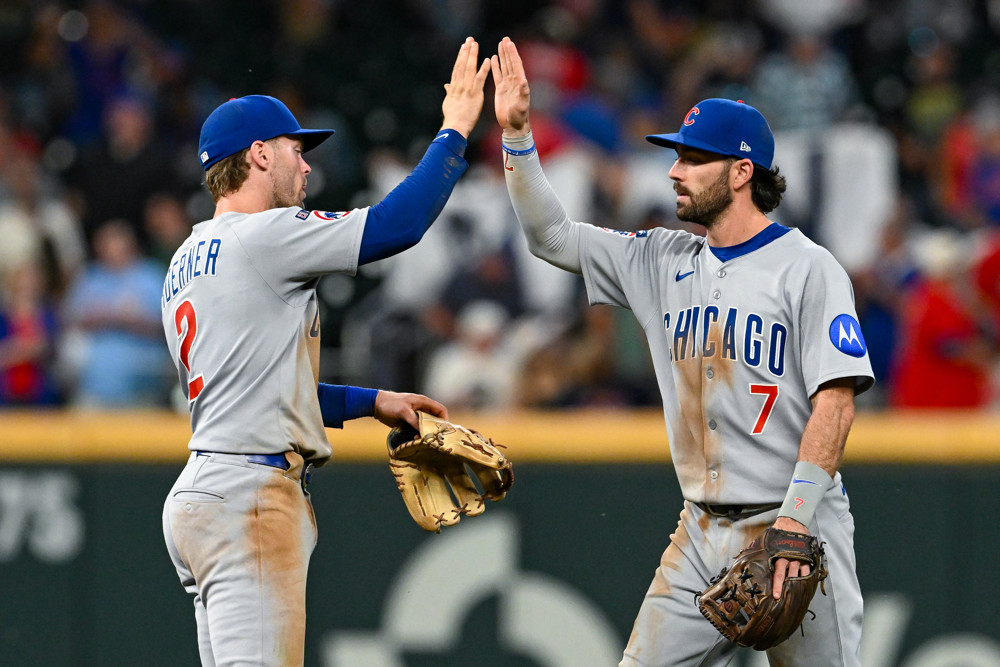
    Photo: Gavin Napier/Icon Sportswire

    The Red Sox season has pinballed like a bouncycastle, starting with a 5-game winning streak after a 1-4 start, a 10-2 stretch in June after bottoming out at 5 games under .500, and now a 10-game winning streak, which immediately followed a 3-8 stretch.

    When we’ve brought up the Red Sox defense on social media, we’ve often gotten negative reactions, as fans have dwelled on specific misgivings they have with the roster and the team’s 78 errors (2nd-most in MLB). But we’re here to tell you that as defense’s go, Boston’s is not so bad.

    The Red Sox currently ranks 11th in Runs Saved. They have an outfield overloaded with defensive talent, a veteran left side of the infield, and an excellent starting catcher.

      Position Individual Runs Saved Rank
    Carlos Narváez C 1st
    Ceddanne Rafaela CF 1st
    Wilyer Abreu RF 3rd
    David Hamilton 2B T-3rd

    The Outfield

    The Red Sox have – by Defensive Runs Saved – the best defensive outfield in baseball. Ceddanne Rafaela leads all center fielders (including the much-heralded Pete Crow-Armstrong) with 14 Runs Saved. Wilyer Abreu ranks 3rd among right fielders with 9 Runs Saved and when he missed time with an injury, Roman Anthony saved 5 runs in 17 games there. Left fielder Jarren Duran, who tallied an MLB-best 17 Runs Saved in center field last season but then moved to left field to accommodate Rafaela, has 4 Runs Saved there.


    It’s not just about making catches. Red Sox outfielders co-lead in MLB in Runs Saved from their outfield arms with 11. Here’s an example of why from Abreu.


    Boston has such a strong supply of defensive outfielders, they’ve moved Rafaela to other spots: shortstop last season and then briefly to second base prior to the break. But he’s most valuable in center field.

    The Infield

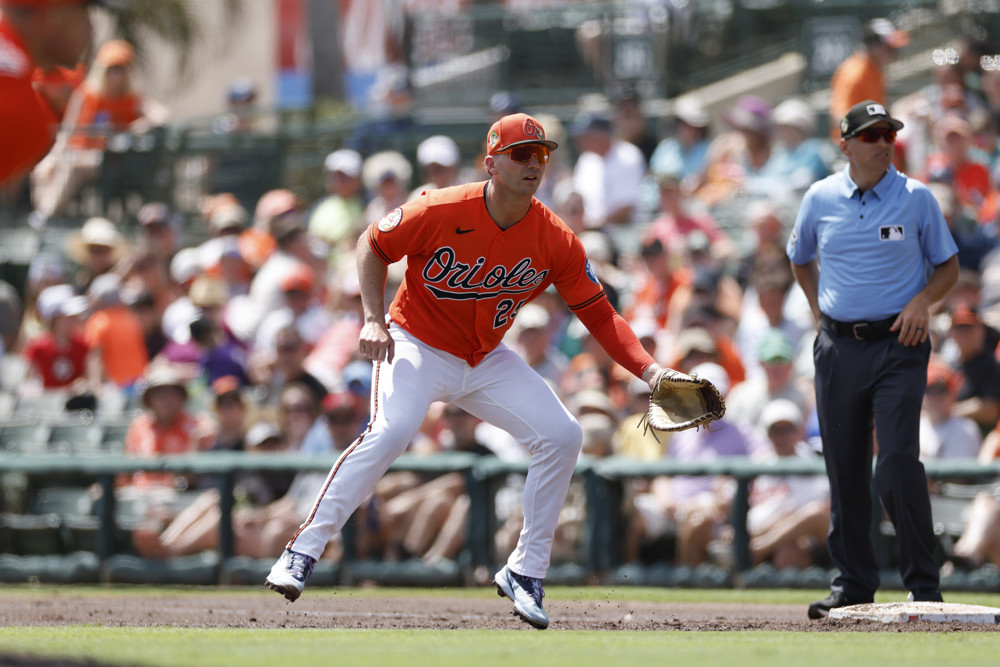
    Boston has a quandary at second base. Its best defensive player by far is David Hamilton, who has 15 Runs Saved in 86 games there over the last two seasons. But he’s also hitting .179 with a .505 OPS in 133 plate appearances in 2025.

    Hamilton has 7 Runs Saved in part-time play. The player who has played the most there, Kristian Campbell has -14 Runs Saved, the worst total in MLB this season.

    Similarly at first base, there seems to be a gap between Romy Gonzalez (0 Runs Saved) and Abraham Toro (-4). Both are trying to replace Triston Casas, who wasn’t doing well defensively prior to getting hurt (-5 Runs Saved).

    There’s a little more certainty on the left side of the infield with Alex Bregman back in the lineup at third base (4 Runs Saved) and Trevor Story (1 Run Saved) at shortstop. Both are players with good defensive track records. Fans don’t shudder if a ground ball or line drive is hit their way.


    Pitcher and Catcher

    Fans do worry on balls that don’t make it to shortstop or third base or are hit back up the middle because that means Red Sox pitchers have to make a play. And that’s been a problem. Red Sox pitchers rank last among pitching staffs with -17 Runs Saved, -11 of which are attributable to range.

    Behold a few examples.


    But you could make a strong case that the Red Sox defensive MVP this season and maybe the defensive MVP for all MLB is catcher Carlos Narváez (apologies to him that it’s taken us 500-plus words to get to this). The Red Sox ranked 27th in Runs Saved from their catchers last season and their solution to fix that was to make a trade with the rival Yankees for Narváez.

    This deal may help both teams in the long term (the Yankees got their No. 6 prospect, Elmer Rodriguez Cruz in return) but for the short term, it’s been a boon to the Red Sox.

    The Red Sox lead the majors in Runs Saved from their catchers. Narváez ranks 1st individually with 13. Narváez is a decent pitch framer whose strength is throwing out potential basestealers. He’s been a standout all-around player. Boston is 42-25 when he starts, 11-20 when he doesn’t.

    We suspect that if the Red Sox are in the hunt that they’ll be a team looking to make moves at the trade deadline and that valuing defense will be a priority. The team isn’t that far from having one of the best defensive lineups in baseball and if they do, that might stabilize their season … and perhaps send them into the postseason.

  • What Makes The Blue Jays So Good Defensively? A Lot Of Skill

    What Makes The Blue Jays So Good Defensively? A Lot Of Skill

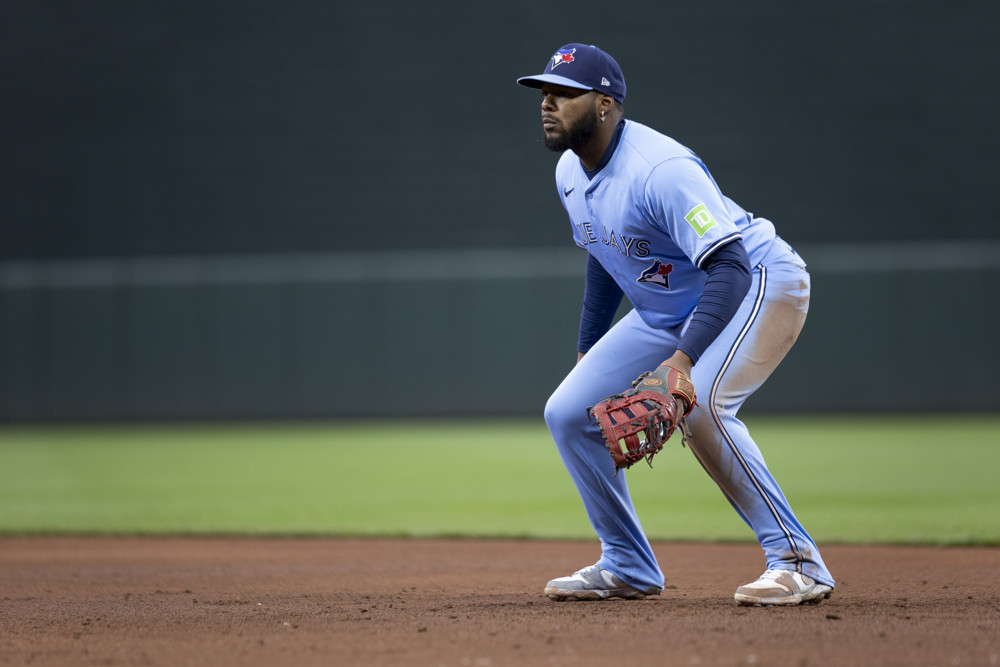
    Photo: Matthew Tsang/Icon Sportswire

    The Blue Jays have led the majors in Defensive Runs Saved in each of the last two seasons. They rank 4th overall in 2025 and it’s going to be tough to claim a three-peat, since they’re 11 Runs Saved back of the Braves. But they’re having an impressive season nonetheless.

    Team Runs Saved
    Braves 50
    Cubs 48
    Rangers 43
    Blue Jays 39
    Dodgers 33
    Yankees 32

    Their recent hot streak that pushed them to the top of the AL East has us reflecting on what makes them so good.

    This is a Blue Jays team with a lot of defensive skill. They have seven players with at least 5 Runs Saved this season. That’s the most of any team in MLB.

    One of their best defensive players is one of the least recognizable to fans outside Toronto. Ernie Clement has been deployed at all four infield positions, and has totaled 11 Runs Saved. Most significantly he’s totaled 6 Runs at his main position, third base, and then 5 runs at second base filling in when Andrés Giménez was injured.

    In fact, Clement ranks tied for 5th in Runs Saved at second base despite ranking 50th in innings played .

    Ke’Bryan Hayes and Matt Chapman are probably blocking Clement’s path to a Fielding Bible Award at third base, but he should be a strong contender for an AL Gold Glove there. And he’ll be a top candidate for The Fielding Bible’s award for multi-position excellence.

    Giménez, for his part, has 4 Runs Saved and still looks pretty good, if not like the guy who won a Platinum Glove a couple of years ago. The only AL second basemen with more Runs Saved than him are David Hamilton (7) and Clement. This kind of playmaking is why the Blue Jays traded for him this past offseason.

    Gimenez’s former Guardians teammate is the Blue Jays leader in Runs Saved, center fielder Myles Straw.

    Watching Straw’s highlight reel makes me think he’s determined to match or better last year’s success of Daulton Varsho and Kevin Kiermaier by himself. Straw looks a lot like the guy who ranked 2nd among center fielders in Defensive Runs Saved in 2022.

    This season he ranks 3rd with 11 Runs Saved and has played almost flawlessly at the position. Straw has only 1 Defensive Misplay & Error all season. By comparison, the two center fielders ahead of him in Runs Saved: Ceddanne Rafaela and Pete Crow-Armstrong each have at least 10 Misplays & Errors

    Straw has been a blessing because Varsho, has missed most of the season, first recovering from shoulder surgery and then out with an injury. Varsho was the SIS Defensive Player of the Year last year and has 5 Runs Saved even though he’s barely played (22 games).

    Another position at which the Blue Jays have gotten good value from multiple players is catcher. The combination of Alejandro Kirk and Tyler Heineman have been great, combining for  11 Runs Saved there. The only team to get more from its catchers is the Red Sox (14).

    Kirk, who has 7 Runs Saved, is a good all-around catcher with solid numbers in pitch framing, pitch blocking, and limiting stolen bases. This isn’t a first-time thing. His 46 Runs Saved are the most among catchers in the last 4 seasons.

    Most Runs Saved By Catcher – Last 4 Seasons

    Name Runs Saved
    Alejandro Kirk 46
    Patrick Bailey 45
    Jose Trevino 37
    Gabriel Moreno 34
    Adley Rutschman 31
    Cal Raleigh 30
    Freddy Fermin 30
    Austin Hedges 29

    The one other player among those who have at least 5 Runs Saved is first baseman Vladimir Guerrero Jr., who has 6 Runs Saved. Guerrero has shown more range this year than past years, particularly on balls hit to his right. He’s never finished a season with that many Runs Saved so we’ll see if he can carry it through for 162 games.

    The Blue Jays have had a few defensive issues to overcome. Only 4 shortstops have done worse than Bo Bichette’s -5 Runs Saved. The Jays also seem to have realized that George Springer’s best defensive days are behind him (he was pretty good in his prime). He’s totaled -6 Runs Saved in right field this season but has now DH’d in 6 of his last 7 starts.

    Additionally, the Blue Jays ranks 28th in Runs Saved from defensive positioning. This is largely the product of cutting their usage of infield shifts. There is often a statistical reward for good positioning provided the team is successful in recording outs in shifts (an example of a team who benefits from shift usage is the Dodgers). Our Video Scouts track how often a team uses a partial shift. The Blue Jays’ usage is well down from last year.

    A partial shift is one in which the second baseman or shortstop is playing adjacent to second base and other infielders deviate from traditional positioning.

    How Often A Ball Was Put In Play Against A Shifted Blue Jays Defense

      Usage Rank
    2023 57% 19th
    2024 69% 14th
    2025 40% 29th

    Nonetheless, the Blue Jays are so good defensively because their fielders are so good. And their success could be long lasting. All of their top defensive players are either signed for the long term or under team control for several years.

  • Stat of the Week: MLB’s Defensive All-Stars

    Stat of the Week: MLB’s Defensive All-Stars

    If we were to pick a lineup of the Defensive All-Stars for each league to this point in the season, who would we pick?

    The cleanest way to do this is to look at the Defensive Runs Saved leaderboards and select the top players, so that’s what we’ll do.

    Here are the NL leaders:

    (stats via fieldingbible.com)

    Position/Player Team Runs Saved
    1B- Matt Olson Braves 14
    2B- Nico Hoerner Cubs 11
    3B- Ke’Bryan Hayes Pirates 11
    SS- Nick Allen Braves 11
    LF- Tommy Pham Pirates 8
    CF- Pete Crow-Armstrong Cubs 13
    RF- Fernando Tatis Jr. Padres 12
    C- Patrick Bailey Giants 11
    P- Spencer Schwellenbach Braves 6

    1B- Matt Olson is one of three Braves representatives on the team. He’s had a terrific season, with twice as many Runs Saved as AL leader Carlos Santana. Olson’s 88 assists at first base are 16 more than the next-closest player (Pete Alonso, 72).

    2B- Nico Hoerner has a three-run lead in Runs Saved over the next-closest NL contenders, Brice Turang and Tyler Fitzgerald. He’s already matched his career high in Runs Saved at second base.

    3B- Ke’Bryan Hayes is 4 runs ahead of Matt Chapman for the NL lead. Hayes has won 2 Fielding Bible Awards and will be a strong contender to win a 3rd.

    SS- Nick Allen has met all the defensive expectations that came when he was initially a prospect with the A’s. He’s 3 runs ahead of Mookie Betts for the NL shortstop lead.

    LF- Tommy Pham is ahead here, though the competition is tight with James Wood just a run behind and 3-time Gold Glove winner 2 runs behind. Pham has totaled as many as 11 Runs Saved in a season, so this isn’t necessarily new territory for him.

    CF- Pete Crow-Armstrong is looking like the heir to Kevin Kiermaier as a regular Defensive Runs Saved leader in center field with a wide-ranging assortment of great catches. He’s already exceeded his 2024 Runs Saved (11) in 27 fewer games and has a 4-run lead on Michael Harris for the NL center field lead.

    RF- Fernando Tatis Jr. was one of the top defensive players in baseball two seasons ago and has returned to form in 2025. The next-closest NL right fielder is 5 runs behind him (Mike Yastrzemski).

    C- When Patrick Bailey isn’t hitting walk-off inside-the-park homers, he’s winning games with his defense. With 11 Runs Saved he’s 5 runs ahead of the next-closest NL catcher (Pedro Pagés, 6).

    P- Spencer Schwellenbach is currently injured, but he’s a deserving choice here. The former college shortstop nearly won a Fielding Bible Award last season and was going to contend for one this year before his injury (still could if he returns in September). He’s 2 Runs Saved ahead of fellow National Leaguers, Logan Webb, Colin Rea, and David Peterson.

    Here are the AL leaders:

    Position/Player Team Runs Saved
    1B- Carlos Santana Guardians 7
    2B- David Hamilton Red Sox 7
    3B- Ben Williamson Mariners 7
    SS- Taylor Walls Rays 18
    LF- Steven Kwan Guardians 13
    CF- Ceddanne Rafaela Red Sox 13
    RF- Adolis García Rangers 10
    C- Carlos Narváez Red Sox 11
    P- Max Fried Yankees 7

    1B- Carlos Santana is defying the defensive aging curve. He’s leading AL first basemen in Runs Saved at age 39, two years after leading everyone at the position. It’s close though. He’s currently 1 run better than Vladimir Guerrero Jr.

    2B- David Hamilton is No.1 though he’s made only 28 starts at second base for the Red Sox. He’s going to need to play more to qualify for a Gold Glove or Fielding Bible Award but he’s definitely shown he can handle the position. He had 8 Runs Saved in a similar small sample last season. Hamilton has a 2-run lead on Ernie Clement, who is more likely to qualify at third base. Among AL regulars, Andrés Giménez is closest to Hamilton, 3 runs behind.

    3B- Rookie Ben Williamson leads the way, 1 run ahead of the just-mentioned Clement. He’s been good fielding balls hit both to his left and right and has looked the part of a solid defender.

    SS- Taylor Walls not only has the most Runs Saved by a shortstop this season. He has the most Runs Saved by shortstops over the last 5 seasons, amazing given that he’s never played more than 100 games there in a season. He’s crushing the field in 2025, 10 runs better than closest AL counterpart, Jeremy Peña.

    LF- Steven Kwan, a two-time Fielding Bible Award winner, has a 5-run lead on Wyatt Langford for No. 1 in the AL. Kwan’s value has come not just from making catches but also from throws. His 6 assists without a cutoff man are already a career high.

    CF- Ceddanne Rafaela is such a good defensive player that the Red Sox moved the 2024 MLB center field leader in Runs Saved, Jarren Duran, to left field to allow Rafaela to play full-time there. Rafaela is tied for the MLB lead in Runs Saved in center field and has a 2-run edge on Julio Rodríguez for the AL lead.

    RF- Adolis García had a rough year in right field in 2024 but has bounced back in a big way, going from -5 to 10 Runs Saved. He has a 2-run lead for No. 1 in the AL over newcomer to the position Cam Smith and 2024 Fielding Bible Award winner Wilyer Abreu.

    C- Carlos Narváez has been a defensive star as a rookie for the Red Sox this season, matching Bailey in Runs Saved and leading the closest AL catchers, Adley Rutschman and Alejandro Kirk, by 4 runs.

    P- Max Fried won Fielding Bible Awards in 2020 and 2021, so we’re used to seeing defensive excellence from him, regardless of what team he’s on. He’s currently 1 run better than Luis Severino for the AL lead.

  • Giants Second Basemen Have Not Had A Season Like This

    Giants Second Basemen Have Not Had A Season Like This

    Photo: John McCoy/Icon Sportswire

    I wasn’t going to publish this story today.

    After learning that San Francisco Giants second baseman Tyler Fitzgerald got sent to the minors on Monday afternoon, I thought for a little while that the point of this piece was now moot.

    But then Casey Schmitt, in his first start of the season at second base, made a couple of nice plays on Monday night and I realized what I’d written still made sense.

    So here goes …

    Ask a Giants fan about a long streak that the team is going through and they’ll likely lament the team’s lack of a 30-home run hitter. Barry Bonds had the last such season for them in 2004.

    But there’s another run that goes back longer than that.

    In 2003, the combination of Ray Durham, Neifi Pérez, Eric Young Sr., and Edgardo Alfonzo combined for 10 Runs Saved at second base for Giants. They haven’t finished a season with more than 10 Runs Saved at second base since then.

    The team has gone through many years of that position being a defensive hole. They’ve had 7 seasons in which their second basemen have combined for at least -10 Runs Saved.  

    Yes, there was a Gold Glove winner at second base in Joe Panik in 2016 (his single-season career-high was 6 Runs Saved, but other than that it’s largely been a rough go. In fact, from 2003 to 2024 Giants second basemen rank 28th in Runs Saved, better than only the Astros and Mets. From 2019 to 2024, only the A’s have fared worse. 

    But things have changed in 2025. Giants second basemen rank first in the majors with 15 Runs Saved.

    Most Defensive Runs Saved By Second Basemen – 2025 Season

    Team Runs Saved
    Giants 15
    Cubs 13
    Blue Jays 10
    Brewers 8
    Mariners 8
    Dodgers 8

    The signing of free agent shortstop Willy Adames moved Fitzgerald to second base, the position at which he had the most experience in the minor leagues. Though Fitzgerald hasn’t hit like he did last season, he’s provided standout value with his glove. His 8 Runs Saved are already more than any Giants second baseman has had in one season. 

    Fitzgerald excels on balls hit to his right. He’s converted 62 of 101 opportunities into outs, 6 outs more than his expected rate. Fitzgerald ranks 1st in how often he turns an opportunity on a ball hit to his right into an out despite rating in the bottom half of MLB in arm strength among second basemen. 


    Christian Koss has played a solid second base as well. He’s arguably better defensively than Fitzgerald and is adept at moving both left and right to make plays. 


    Koss had 5 Runs Saved in 26 games at second base and has as many Good Fielding Plays as Fitzgerald (6) has in 26 games. Koss has only 2 Defensive Misplays & Errors to Fitzgerald’s 9.

    * SIS Video Scouts award Good Fielding Plays to 30 different types of events  and Defensive Misplays to roughly 60 types of mistakes.

    Brett Wisely also filled in at second base when Fitzgerald was initially sent to the minors in late June and Koss was needed to play third base in place of Matt Chapman. He’s chipped in a Run Saved in 11 games there, giving him 6 in 98 games for his career.

    Now, with Koss out with a strained hamstring and the Giants needing some offensive punch in the lineup, Schmitt got the initial call over Wisely on Monday night and passed the first test.

    Schmitt has played 41 career games at second base and has 0 Runs Saved. He’s now a true utility infielder after playing mostly on the left side in the early part of his career. We’ll see if he can hold his end of the bargain up in this upcoming stretch. 

    The play of their second basemen is particularly important given that the Giants pitching staff ranks 4th in the number of ground balls it has given up. The team’s infield ranks 6th in how often it turns grounders and bunts into outs this season, a good percentage given that the shortstop, Adames, doesn’t have good defensive numbers. Chapman is terrific, of course, but he can’t do it all himself.

    So the next time a Giants fan talks to you about the team’s run of a lack of a 30-homer hitter continuing through this season, point out to them that there’s always hope, because a longer streak just might come to an end in 2025.

  • June’s Defensive Players of the Month

    June’s Defensive Players of the Month

    Mariners manager Dan Wilson says that Julio Rodríguez wants to be the best player in baseball.

    That’s a tough hill to climb given the competition of Aaron Judge and Shohei Ohtani. For now Rodríguez will have to settle for being the best defensive player in baseball, at least for a month and maybe more.

    Rodríguez heads our list of Defensive Players of the Month for June. The month’s other honorees as top defenders are Pirates third baseman Ke’Bryan Hayes and Dodgers shortstop Mookie Betts.

     ”He’s just made so many of those catches, covered a lot of ground in the outfield, and has really taken charge out there,” Wilson said before a recent game. “You really don’t understand how many runs that saves.”

    With all due respect to the Mariners manager, we are able to put a number on it.

    Rodríguez led all center fielders with 9 Runs Saved in June and ranks third at the position with 11 Runs Saved this season. The highlight was a home run robbery against Chris Taylor of the Angels, his 2nd home-run-robbing catch this season.

    Rodríguez had previously fared well in MLB’s suite of defensive stats but he’s never had a breakout season in Runs Saved until now.

    One of the biggest things for him is that he’s reduced the number of mistakes he’s made this season. Rodríguez had 17 Defensive Misplays & Errors in 131 games in 2024 but has only 7 through 83 games this season.

    * SIS has 60 categories of Defensive Misplays that it gives to fielders for things such as slipping, dropping a transfer on a double play, or overthrowing a cutoff man.

    Ke’Bryan Hayes

    Hayes led third basemen with 7 Runs Saved during the month. Hayes, who won the Fielding Bible Award for defensive excellence in 2021 and 2023, seems to be the frontrunner for the honor just past the midway point of the season. His 11 Runs Saved lead the field by a comfortable margin. Ernie Clement and Caleb Durbin are second among third basemen with 6 Runs Saved.

    Hayes has saved at least 10 Runs in each of the last 5 seasons. He’s already surpassed his 2024 totals for Runs Saved (10) and Good Fielding Plays (10, 3 more than last year). As has been key for him in the past, one area where Hayes stands out for playmaking is on balls hit to his right (like this one), often along the third base line.

    Mookie Betts

    Betts tallied 6 Runs Saved in June, one shy of Trevor Story for the most by a shortstop. Just past the season’s midpoint, Betts and Nick Allen of the Braves look like frontrunners for the NL Gold Glove Award. Allen has 9 Runs Saved this season, one more than Betts. Both are chasing Rays shortstop Taylor Walls, who leads all shortstops with 18 Runs Saved.

    The biggest thing that Betts has done at shortstop is similar to what Rodríguez has done in center field: cut down on his mistakes. He had 19 Defensive Misplays & Errors in 65 games there last season. He has 9 through 77 games entering July.

    The Dodgers coaching staff has also done its part in helping Betts acclimate to a new position (remember, he’s won 5 Fielding Bible Awards in right field). The Dodgers have been credited with 7 Runs Saved for how they’ve positioned Betts, tied for the most for any team in positioning its shortstop. That has allowed Betts to do what he does best (click the link to see what we mean).

  • Stat of the Week: Which Team Positions Its Outfielders Best?

    Stat of the Week: Which Team Positions Its Outfielders Best?

    Photo: Steven King/Icon Sportswire

    You’ve heard of the game-saving defensive play, right?

    How about game-saving defensive positioning?

    Go back about a month to the bottom of the eighth inning at Busch Stadium in a matchup between the Cardinals and Tigers. The score was tied with two men on and two outs. Pedro Pagés hit a 107-MPH line drive to right center that looked like it could be a go-ahead hit. But center fielder Javier Báez sprinted over to make the running catch. The Tigers went ahead in the top of the ninth inning and won the game.

    You can see that catch here.

    But what you don’t see in watching the TV broadcast was how the Tigers put Báez in position to make the play. This image from MLB helps provide a better understanding. The filled in black dot shows where he was stationed prior to the pitch.

    By our calculations, balls hit to that spot at that speed in the last two years have been caught 43% of the time. But that out probability jumps to 95% when we know where Baez was positioned.

    This was one of several examples of how the Tigers outfield has been the best positioned in baseball this season. They lead the majors with 12 Outfield Positioning Runs Saved.

    We explained this in a couple of recent articles and will reiterate it again here. Pre-2013, SIS awarded positioning Runs Saved credit to the player. That credit now goes to the team as with the advent of shifting and positioning cards, the team has more control over where its players play.

    The data we collect allows us to establish:

    A) An overall out probability for a ball hit to a certain spot at a determined velocity without knowing where the fielder is positioned

    B) An out probability for which we do know where the fielder is positioned.

    The formula calculates the difference between A and B and converts it to a run value based on the characteristics of the batted ball. That value is credited to the defensive team rather than the player.

    This happens whether the play is successfully completed or not, because positioning can be good even when a play is not made.

    In other words, if we know a fly ball hit at 107 miles per hour to a designated spot Y is an out 43% of the time overall, but 95% of the time when the outfielder is positioned in location Z, then the team gets credit for improving the out probability by 52%, which is worth some fraction of a run. That’s the example with which we led this article.

    Most Runs Saved – Outfield Positioning

    2025 Season

    Team Runs Saved
    Tigers 12
    Guardians 8
    Braves 7
    Rays 5
    White Sox 5

    The Tigers’ success isn’t new. They led the majors with 18 outfield positioning runs two years ago before slipping to 2 such Runs Saved last season. We should note too that this year’s results are not the product of high volume. Tigers outfielders have faced the 20th-most balls hit in the air.

    Here are a couple other examples of plays from 2025 in which positioning resulted in a significant payoff for the Tigers.

    This ball was tagged 108 MPH and Riley Greene’s positioning in left field upped the out probability from 45 to 93%. You can see why. He barely had to move from where he was playing.

    Sometimes positioning and playmaking go hand in hand. On this ball hit by Drew Waters of the Royals, right fielder Kerry Carpenter goes deep to make a tough catch.

    Carpenter’s positioning upped the out probability of that play from 20% to 41%. Carpenter gets credit for the remaining 59% for making the catch that resulted in an out.

    Though the positioning Runs Saved totals are relatively small, the numbers do matter. The Tigers rank 8th in Defensive Runs Saved overall.

    They rank 19th in the skill components of Runs Saved but rank 1st in combined Runs Saved from infield and outfield positioning.

    The team is in first place in the AL Central and its outfielders can rejoice as they did in the picture atop this article. Good positioning is the key to their defense.

  • Stat of the Week: Which Team’s Infield Defense Has Been Best?

    Stat of the Week: Which Team’s Infield Defense Has Been Best?

    Photo: John Cordes/Icon Sportswire

    The naysayers will tell you that the Pirates are worth watching once every five days, only on the days that their phenom, Paul Skenes, pitches.

    But for as bad as the Pirates have been, and it’s been a rough year in Pittsburgh, there’s actually something that the team excels at. They lead MLB in Defensive Runs Saved from their infielders.

    It’s actually not even that close.

    Most Runs Saved From Infielders

    Team Runs Saved
    Pirates 36
    Dodgers 26
    Cubs 24
    Braves 23
    Rangers 21

    That defensive excellence starts with third baseman Ke’Bryan Hayes, who leads the position with 9 Runs Saved. Over the last four seasons, Hayes’ 65 Runs Saved are 22 better than the next-closest third baseman, Ryan McMahon.

    Hayes is good at making the hard plays look routine and has excelled at turning balls hit down the third base line into outs this season, which was also true in 2022 and 2023. Hayes has won 2 Fielding Bible Awards and it wouldn’t be a surprise if he won another.

    The other top defender within the Pirates infield is Jared Triolo, who won the NL Gold Glove for utility infielders in 2024. Triolo has 3 Runs Saved at second base, 2 at third base, 2 at first base and -1 at shortstop this season, giving him a combined 6 Runs Saved. If he played second base full time, he’d probably be among the league leaders. He has 10 career Runs Saved in 71 games there.

    But what has led to the Pirates doing so well at turning ground balls into outs (they rank 3rd in that stat behind the Rangers and Braves) and leading in Runs Saved is the defensive positioning of their infield. The Pirates have 18 infield positioning Runs Saved, the most of any team.

    They’ve been particularly well positioned when playing what we call a partial shift,* They rank 8th in terms of how often they’ve used a shift against a batted ball but tied for 1st in infield positioning Runs Saved from shifts.

    * Partial shifts are ones in which the second baseman or shortstop is near second base and other infielders have significantly adjusted positioning as well.

     The Pirates have a veteran second baseman in Adam Frazier and a shortstop in Isiah Kiner-Falefa who have been reliable defenders in the past. They’re players who may not have the most range but, if positioned well, are going to make plays. That’s what’s happened this season.

    Frazier has 2 Runs Saved from the Range & Throwing component of Runs Saved but the Pirates have saved 5 runs in how they’ve positioned him, tied for the most for any second baseman in MLB.

    Similarly, Kiner-Falefa also has 2 Range & Throwing Runs Saved but the Pirates have 6 Runs Saved from positioning him, one run shy of the most in MLB (the Padres have 7 Runs Saved in how they’ve positioned Xander Bogaerts).

    Pre-2013, SIS awarded positioning Runs Saved credit to the player. That credit now goes to the team as with the advent of shifting and positioning cards, the team has more control over where its players play. If we gave that credit to the player now, both Frazier and Kiner-Falefa would rank among the leaders in Runs Saved at their position.

    In terms of what we’re specifically talking about, here are two good examples of infield positioning by the Pirates involving Frazier and Kiner-Falefa (here and here). The first example is a play that’s routine because of where Frazier is stationed. The other is a tougher play, but one made possible by how the Pirates positioned Kiner-Falefa and the scoop by Emmanuel Valdez, who is part of a committee effort at first base that has produced 3 Runs Saved.

    The shame of all this is that the Pirates are 30-46 and in last place in the NL Central entering Friday. The team is averaging an MLB-worst 3.2 runs per game and their infield has the lowest OPS in MLB (.616) by 26 points.

    For as good as the infield defense has been in trying to make up for the team’s deficiencies, the rest of the team’s defense has been problematic. The Pirates otherwise have a combined -18 Runs Saved this season.

  • Ways Of The Rays: Right Fielders Making Plays

    Ways Of The Rays: Right Fielders Making Plays

    Per our statistics, the best outfield defense this season has been played by Tampa Bay Rays right fielders.

    But there’s something unusual about this, just as there often seems to be something unusual about the successful Rays teams. Rather than the work of one player, this right field performance has been a group effort. 

    Eight players have played right field for Tampa Bay this season. Four of them have played at least 15 games there and they’re the ones who have combined for the MLB-best Defensive 12 Runs Saved. None have played more than 22 games in right field.  

    Projected starter Josh Lowe strained an oblique on Opening Day and didn’t play another game until May 15. It took a village to fill in for him and that group, which includes José Caballero, Jake Mangum, and Kameron Misner, was impressive in Lowe’s absence.

    This is how the Rays function. They don’t have the big money to pay an Aaron Judge or even a George Springer. So they build depth and versatility and find players who didn’t get to the major leagues right away.

    Caballero has done the Ben Zobrist thing and then some. He’s the superutility man, having played second base, shortstop, third base, left field, center field, and right field, the latter for the first time in his pro career.


    Mangum is a 29-year-old rookie who has started between 8 and 13 games at the three outfield spots. He’s got speed (10 stolen bases) and it looks like he can play a little defense too.

    Misner is a 27-year-old rookie who has primarily played center field in place of injured Jonny DeLuca but has played both of the other outfield spots too. He’s got 4 Runs Saved in center field and 2 in right field.


    Each of those plays above was judged as a “Good Fielding Play,” as tracked by our Data Scouts. The Caballero catch was a home run robbery, which added 1.6 runs to the value of making the play. 

    Rays right fielders are tied for the lead at the position with 13 Good Fielding Plays. Just as important, they also have 3 Defensive Misplays & Errors, the fewest of any team. 

    Rays Right Fielders in 2025

    Good Fielding Plays Runs Saved
    Josh Lowe 1 5
    José Caballero 4 4
    Kameron Misner 5 2
    Jake Mangum 3 1

    Since Lowe returned he’s gotten most of the playing time there and he’s been good too. 

    Lowe has 5 Runs Saved, which isn’t unusual for him. He had 6 Runs Saved there in 2023, though he slipped to -2 last season. His best defensive moment was this play, which earned a “What a throw from Lowe” from Marlins broadcaster Rod Allen.


    Lowe’s return coincided with the Rays getting hot. Tampa Bay is 17-4 when he starts this season. 

    But it’s fair to say what the Rays got both in his presence and in his absence has been highly valuable. The Rays haven’t missed a beat at the position. Once again, it’s typical Tampa Bay Rays, which means getting things done in unexpected ways and winning regardless of how they do it. The team as a whole has done it too. It ranks 4th overall in Runs Saved this season.

    For more Rays talk, check out the latest episode of The Sports Info Solutions Baseball Podcast.

  • Which Hitters are Teams Positioning Best Against?

    Which Hitters are Teams Positioning Best Against?

    Photos: Allan Dranberg (Semien), Joe Robbins (Raleigh), Rich Graessle (Arraez), Leslie Plaza Johnson (Adell)/ Icon Sportswire

    If you’ve watched baseball the last few years, you’ve inevitably seen the shot of a player pulling a card out of his back pocket, studying it, and then going back to his position.

    The cards, customized at the major league level for each pitcher and each batter, identify how far and in which direction a fielder moves off a starting point that was likely designated before the first game of a series.

    I’ve seen this for long enough now that I’m curious against which hitters the cards have been most successful.

    At SIS, we actually have a way to identify that. The out probabilities we use in establishing a player’s Defensive Runs Saved include a value specific to positioning.

    Here are the hitters against whom teams have gotten the most positioning Runs Saved per 100 balls in play from the start of last season through the end of May 2025.

    Player Runs Saved Per 100
    Marcus Semien 2.5
    Cal Raleigh 2.5
    Luis Arraez 2.4
    Jo Adell 2.4
    Freddy Fermin 2.2
    Matt Olson 2.1
    Mark Vientos 2.1
    Hunter Renfroe 2.1

    Simply put, the data we collect allows us to establish:

    A) An overall out probability for a ball hit to a certain spot at a determined velocity without knowing where the fielder is positioned

    B) An out probability for which we do know where the fielder is positioned.

    The formula calculates the difference between A and B and converts it to a run value based on the characteristics of the batted ball. That value is credited to the defensive team rather than the player.

    This happens whether or not the play is successfully completed, because positioning can be good even when a play is not made.

    In other words, if we know a ground ball hit at X miles per hour to a designated spot Y is an out 50% of the time overall, but 70% of the time when the shortstop is positioned in location Z, then the team gets credit for improving the out probability by 20%, which is worth some fraction of a run.

    To illustrate, here’s a play from earlier this week, Jerar Encarnacion’s game-ending 101-mile-per-hour line drive to perfectly-positioned Padres first baseman Luis Arraez.

    The characteristics of this batted ball were such that it had a 59% probability of being an out without knowing where Arraez was positioned. But with Arraez where he was, the out probability was 100%. Arraez gets no Defensive Runs Saved credit for making the catch but the Padres get a credit for improving the out probability by 41 percentage points (from 59% to 100%).

    I want to examine a few of the players from that leaderboard more in-depth to give you a sense of what we’re talking about here.

    Marcus Semien

    I’ve seen Marcus Semien pop up on a couple of “unluckiest hitter” lists the last couple of years as his numbers have collapsed since the start of 2024. But I think there’s something more to it than that.

    Semien has played in almost every one of his team’s regular season games since 2018. That provides a lot of data from which to make educated guesses on where Semien is going to hit balls. For the last year-plus they’ve made good decisions.

    Here’s a good-looking double play that the Giants turned on Semien in April. Our calculation is that Willy Adames’ positioning at shortstop increased the Giants’ out probability on this ball from 20% to 61%.


    That’s a hefty credit that ends up worth about one-third of a run. There were only two other ground balls hit by Semien this season on which a team got more positioning Runs Saved than that. One of them was this one, after which Semien had to be wondering what the heck just happened. The Rays’ positioning improved the out probability by 75%!

    But there was a good reason that play happened. The coaching staff knows that Semien hits 87% of ground balls and short line drives to the left of second base. Thus, their second baseman plays close to the base, which gives him a chance to make that play. Here’s a spray chart of his last 120 ground balls entering Wednesday.

    These spray charts are rather rudimentary and just look at the hitter’s tendencies. Team charts are more sophisticated and factor in the pitcher (and sometimes the count) too. For ground balls and short line drives, we consider the last 120 hit. For balls hit to the outfield, we look at the last 135.

    But in this case, the hitter’s tendencies give you a good look at what he’s going to do.

    Those plays are admittedly at the higher end when it comes to team credit. Most plays aren’t like that. A more basic example of good positioning against Semien would be this fly ball struck pretty well to right center field but run down with ease by Brenton Doyle, who was playing 331 feet deep and a little bit to the right of second base. The positioning allowed him to make up for a slightly delayed jump. It upped the out probability of the play by 22%.


    Semien had a career-worst .250 BABIP last season. He’s at .242 in 2025.

    Cal Raleigh

    Cal Raleigh is having an amazing season despite the fact that the cards are stacked against him (you had to figure that pun was coming, right?).

    Here’s a play against the Blue Jays where they positioned their right fielder about as well as they could, so much so that he was able to get to the ball and throw Raleigh out at second base. Everyone wins at least a little bit here. Raleigh gets a hit. The right fielder gets an assist. And the Blue Jays get 47% (0.47 plays) credit for putting the right fielder in a good spot.


    A look at Raleigh’s last 135 outfield flies and liners shows he hits the ball toward the right field line enough that defenses need to be ready for it.


    Here’s another instance with Raleigh where the team gets a reward for positioning even when the player makes an error. The Giants got this one right. It’s not their fault that Tyler Fitzgerald didn’t field this ball.


    It’s weird to say that teams are defending Raleigh well given the year that he’s having.  But what we’re seeing is that Raleigh is getting more hits than he usually does (a .278 BABIP entering Thursday) and that’s attributable to fielder skill issues rather than positioning ones. Perhaps another subject for another time.

    Luis Arraez

    Just before a pitch, the Padres broadcast showed us how Pete Crow Armstrong was positioned well over towards left center field against Luis Arraez.

    And here’s what happened.

    Crow-Armstrong makes most catches without this kind of positioning help, but in this case, the Cubs got a 52% credit for upping the out probability of this ball from 19% to 71%.

    Arraez’s spray chart is different from Raleigh’s. The Cubs want to give Crow-Armstrong a chance to get those balls in the left center gap so they play him accordingly, with Arraez’s tendencies helping to guide the decision.

    And because turnabout is fair play, here’s an example of Giants first baseman Dominic Smith being placed just right for an Arraez line drive and doing to Arraez what Arraez did to them a few days ago.


    The spray chart shows that Smith was in the right spot based on Arraez’s grounder/short liner tendencies. While he doesn’t hit more balls down the line than he does towards the hole, those balls often end up as doubles so you want to account for them a little bit more.

    Arraez has a .279 BABIP on balls hit in the air this season (.016 on fly balls!) He’s never finished a year below .372.

    Jo Adell

    Here’s an example of everything coming together. The fielder makes a good play on a ground ball and is rewarded (as is the player who catches the throw). But that play almost surely doesn’t happen if the scouting report isn’t heeded.

    Anthony Volpe’s positioning on Jo Adell changed the out probability by 25%, turning it from a 24% out probability to a 49% one – basically making this a 50-50 play for which Volpe was on the right side.

    Adell’s grounder/short liner spray chart is such that the shortstop is going to cheat to the 5-6 hole a lot.

    Some people may say that Adell’s issue is that he strikes out too much. But he’s also a very predictable hitter when he does make contact, especially on the ground. And he’s paying for it – he’s hitting less than .200 on ground balls over the last two seasons. MLB average is .245.

    We’ll take a look at which hitters are good at beating what the card says for positioning sometime in the near future.

  • The Yankees Pitchers Are Runs Savers

    The Yankees Pitchers Are Runs Savers

    Photo: Cliff Welch/Icon Sportswire

    Pitcher defense is one of those things where it’s hard to gauge if your team is doing well or doing poorly just based on the eye test. That’s where something like Defensive Runs Saved comes in handy.

    Let’s use the 2024 and 2025 Yankees as an example. This year, their pitchers are doing well, leading the majors with 11 Runs Saved. Last year, they did poorly, finishing with -9 Runs Saved. Only five teams fared worse.

    Their pitchers have been as valuable as almost any defensive unit in MLB.

    Most Defensive Runs Saved – Position Group in 2025

    Position Group Runs Saved
    Rays shortstops 17
    Braves first basemen 12
    Yankees pitchers 11
    Cubs second basemen 11
    Dodgers right fielders 10

    So what does “doing well” in pitcher defense look like?

    It’s a mix of this

    This


    And this

    The two pitchers in those videos are a big part of the turnaround. Offseason signee Max Fried‘s 4 Runs Saved are tied for the MLB lead. Reliever Tim Hill somehow ranks 9th among pitchers with 10 assists despite ranking tied for 235th in innings pitched.

    Fried is a baserunning eraser. He has 3 pickoffs and 3 pitcher caught stealings. Add that to 9 assists on batted balls and his 15 assists are the most in MLB entering Tuesday and only 3 shy of the most by a Yankees pitcher in 2024.

    The Yankees lead the majors in pitcher assists as well, as yes, part of the Yankees success is in their pitchers having had the most opportunities to make plays. They’ve done this without an abundance of mistakes. Their 6 Defensive Misplays & Errors rank tied for 10th in MLB. And it’s not just Fried and Hill. Their other pitchers have combined for 4 Runs Saved between them.

    Another component to the Yankees defensive numbers is attrition- the Yankees had 6 pitchers who finished the season with -2 Runs Saved apiece in 2024- Gerrit Cole, Marcus Stroman, Dennis Santana, Phil Bickford, Tom Kahnle, and Clay Holmes. That’s six pitchers combining for -12 Runs Saved. The only one of those to throw a pitch for the Yankees in 2025 is Stroman and he’s pitched only 9 innings.

    The payoff for good pitcher defense is this: The Yankees rank tied for 5th in the majors overall in Defensive Runs Saved. No one wanted to talk about the Yankees’ defense after the disastrous end to the 2024 World Series, but with their pitching staff’s help there hasn’t been a carryover effect this season.

    Most Defensive Runs Saved – 2025 Season

    Team Defensive Runs Saved
    Braves 38
    Rays 36
    Rangers 33
    Blue Jays 31
    Yankees 24
    Cardinals 24