Category: NFL Draft

  • How Does Nic Scourton Fit With The Carolina Panthers?

    How Does Nic Scourton Fit With The Carolina Panthers?

    Photo: Matthew Visinsky/Icon Sportswire

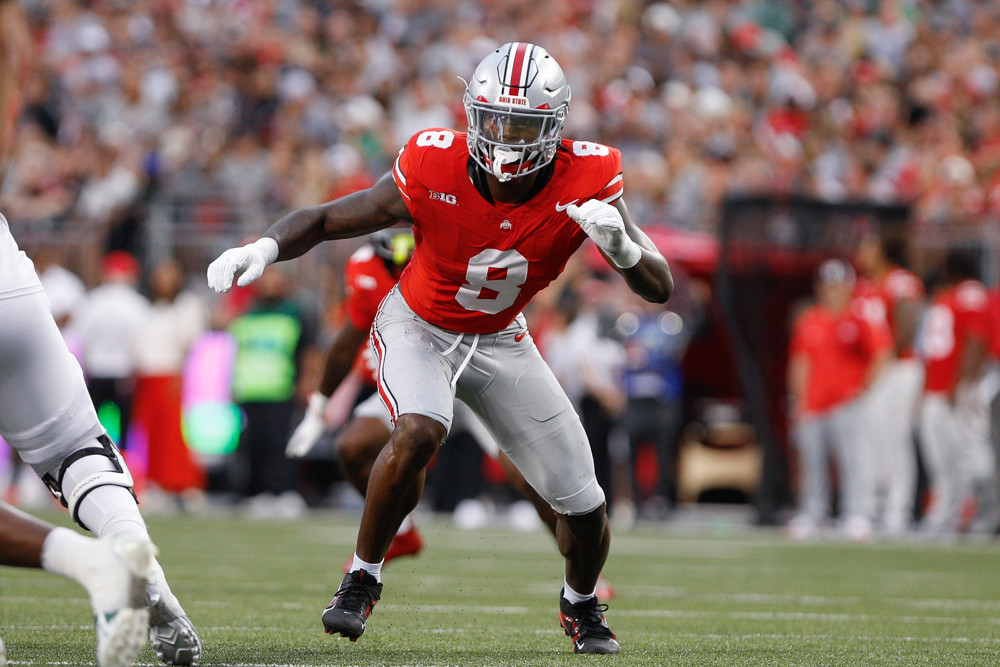
    The Panthers addressed a couple of needs on the first two days of the Draft. After selecting wide receiver Tetairoa McMillan with their first pick, they doubled down at edge rusher in the second and third rounds with Nic Scourton and Princely Umanmielen, respectively. We will focus on Scourton in this article as he is a great fit to fill the void in their pass rush after they traded Brian Burns to the Big Apple. 

    What He Brings

    Our scouting report describes Scourton as a big, physical, explosive EDGE who should earn a starting job early on and could develop into a high-end player if he continues his trajectory. His explosive power and expansive pass rush repertoire are certainly strengths in his game. He also possesses a hair-on-fire mentality, but this can get him in trouble with his positioning in the run game. He has all the tools to be a reliable run defender on the edge if he can become more disciplined in his run fits. 

    After two productive years at Purdue including 8.5 sacks in 2023, he had a disappointing 2024 season at Texas A&M where his numbers fell in a new scheme and conference. The table below highlights these differences: 

    Nic Scourton – Last 2 Seasons

    2023 2024
    Sacks 8.5 5
    Pressures 40 27
    Pressure Percentage 18% 10%
    Pass Rush Total Points 21 10

    Despite a disappointing 2024 season, Scourton’s production in 2023 at Purdue gives us reason to believe that the Panthers can develop him at the next level. He is not just a pass rusher as he earned 18 and 12 Total Points against the run the past two seasons (click the link to learn more about Total Points, our all-encompassing player value stat). His ability to play the pass and run should earn him a starting role early on, as the Panthers desperately need talent off the edge. 

    The Need He Fills

    The Panthers pass rush was non-existent last season after the departure of Brian Burns and an early season injury to star DT Derrick Brown. The table below highlights the struggles of the Panthers pass rush last season: 

    Carolina Panthers

    2024 League Rank
    Sacks 32  T-29
    Pressures 153 Last
    Pressure Percentage 26% Last
    Pass Rush Total Points 21 Last

    It doesn’t paint a pretty picture. The Panthers need their young additions to inject some life into their pass rush. To be fair to last year’s group, it wasn’t pretty the year before either with Burns and Brown, as the team ranked last in 2023 with 27 sacks. 

    How Scourton Fits What Carolina Does

    Scourton played in college around 280 pounds before weighing in at the combine at 255. Our scouting report mentioned body composition work to help improve functional strength. It doesn’t seem like this was just for combine testing either as the Panthers roster lists him at 257 pounds. The weight loss should prepare him well for his new role with the Panthers as a stand-up EDGE. 

    Panthers EDGEs primarily play in a 2-point stance instead of putting their hand in the dirt. The aforementioned weight loss should help as he played exclusively with his hand in the dirt at Purdue and 71% of his snaps at Texas A&M. If he can maintain his strength, the weight loss could help him unlock some speed and bend to raise an already high ceiling even higher. 

    Scourton is a perfect fit for the Panthers and great value to address a need in the second round. They get a player who plays unbelievably hard and should see the field early and often while possessing a high ceiling. His drop in weight at the Combine was certainly unique, but a body transformation could unlock new parts of his game, as long as he can maintain his strength. 

    Bryce Young and the Panthers started to turn the corner at the end of last season. To build on that success and challenge Tampa Bay for the NFC South crown, they desperately need to find some pass rush success. Scourton might just be the guy to provide it.

  • How Does Carson Schwesinger Fit With The Cleveland Browns?

    How Does Carson Schwesinger Fit With The Cleveland Browns?

    Photo: Gregory Fisher/Icon Sportswire

    The Cleveland Browns were our top graded draft class this year, so it wouldn’t have felt right to not highlight one of their selections. After taking our top-graded DT in Mason Graham, the Browns continued to reinforce their defense by selecting linebacker Carson Schwesinger with the first pick of the second round.

    Schwesinger graded out as a 6.6 on our draft site, ranking second among WLBs behind Jihaad Campbell (click the link to read the full scouting report). The Browns had no shortage of other needs, but taking a linebacker with this selection proved that they were not shying away from what they do best: winning against the run.

    Here is a look at Schwesinger and how he fits this Browns defense.

    Schwesinger’s Strengths

     Despite only one full season as a starter at UCLA, Schwesinger has the instincts of a veteran with excellent awareness for where the receivers are around him. He is able to drop back into coverage and make life difficult for the quarterback, while also having the athleticism to move sideline-to-sideline and chase down runners from behind. He has an explosive first step and can pivot downhill quickly, allowing him to make a difference in almost all facets of the game.

    He is not going to blow anyone away with his power or pass rush ability. His game is predicated on his motor and competitiveness off the ball. His effort level is unwavering and he will consistently play until the final whistle.

    Schwesinger is more of a lanky-sized linebacker, but his fluid athleticism and high football intelligence should allow him to contribute immediately on defense and also be a core special teams player.

    How Schwesinger Fits With Cleveland

    Cleveland looked directionless following an abysmal season in 2024. The team sustained numerous injuries and there were a lot of questions heading into the offseason. However, when they made Myles Garrett the highest-paid non-quarterback in NFL history with a contract extension worth $160 million, it was clear that they weren’t going to be throwing in the towel for 2025.

    There was one thing that Cleveland did exceptionally well during its disastrous season: defend the run. The Browns led the entire NFL in Total Points against the run by a relatively wide margin.*

    * Total Points is our all-encompassing player value stat that attempts to capture everything that happens on a football field. You can learn more about it here.

    Team Points Saved
    Browns 189
    Colts 180
    Giants 180
    Bills 175
    Jets 173

    While this was to some extent the result of playing behind often while the other team ran the clock out, it still displayed an area of strength in an otherwise unremarkable season. With too many holes on both sides of the ball, the Browns were likely thinking of taking the best player overall with their early picks.

    After swapping first round picks with the Jaguars and moving back three spots, the Browns elected to take Graham out of Michigan. Coincidentally, Graham led all NCAA defensive tackles in Total Points against the run, giving Cleveland more strength along the interior defensive line. The rich get richer, so they say.

    PLAYER SCHOOL POINTS SAVED
    Mason Graham Michigan 26
    Ty Hamilton Ohio State 23
    Alfred Collins Texas 23
    Walter Nolen Ole Miss 23
    Blake Boenisch Rice 22

    Which brings us back to the topic of this article, Cleveland’s second round selection, Schwesinger. It was somewhat of a surprise selection, with many expecting them to take a player on the offensive side of the ball. However, here is one reason why this pick made sense: he can defend the run. Schwesinger was second among all NCAA linebackers in Total Points against the run, giving Cleveland even more firepower against run-heavy offenses.

    Player School Points Saved
    Shaun Dolac Buffalo 43
    Carson Schwesinger UCLA 41
    Jackson Woodard UNLV 37
    Jack Kiser Notre Dame 37
    Jaylen Smith North Texas 35

    This gives Cleveland two bona fide studs on the defensive side of the ball who can play tough and dominate in the trenches. Schwesinger will be able to use his elite instincts and hot motor to snuff out runs from inside the box, while also possessing the ability to move sideline to sideline when the situation calls for it.

    How can Cleveland use Schwesinger?

    With Jeremiah Owusu-Koramoah set to miss the 2025 season, Schwesinger will have the opportunity to contribute immediately in Week 1. He will step right into that WLB role where he’ll be asked to cover tight ends and running backs in man coverage. His fluidness and overall athleticism will come in handy for him, and he should be able to compete against the best early and often.

    He will likely be an every-down player, but they may use him on a rotational basis to start the season. He will be effective on third downs and can be used as a blitzer off of the weak side. Since Cleveland operates out of a base 4-2 S/W, Schwesinger will spend most of his time playing off the line of scrimmage in coverage or being used in various blitz packages.

    Cleveland also utilized a stacked box (8 or more players) at a 32% clip last season, which led all NFL teams in 2024. Schwesinger will need to be comfortable with congestion while still keeping his eyes open through contact and traffic, as he operated out of a stacked box only 13% of the time at UCLA.

    Schwesinger is a well-rounded player overall, so Cleveland has a lot of options on how to use him. For the most part, he should be a plug-and-play LB with few limitations early on. He also projects to be a core special teams player for the whole season.

    How Good A Fit is Schwesinger?

     Ultimately, Schwesinger is an ideal fit for Cleveland’s defense as they both play to each other’s strengths. Cleveland was great against the run in 2024, and they drafted a LB who was one of the best against the run in college. It’s a perfect match for both the player and team, and Schwesinger will have an opportunity to prove himself early in his career.

  • How Does Omarion Hampton Fit With The San Diego Chargers?

    How Does Omarion Hampton Fit With The San Diego Chargers?

    Jim Harbaugh’s first season as the Chargers’ head coach featured a lot of smashmouth football on offense. They are looking to take a step forward in Year 2, and their first-round pick in the 2025 NFL Draft, running back Omarion Hampton, will help them do exactly that.

    What Hampton Brings to the Table

    Hampton has the skills to be a star at the next level. Jeremy Percy’s scouting report highlighted his contact balance, big-play ability, and attitude with the ball. He has true three-down potential due to his ability as a rusher, receiver, and pass blocker.

    In 2024, Hampton ranked second in rushing yards per game (138.3), which only trailed Ashton Jeanty’s otherworldly average (185.8). He was also one of three college running backs who had over 1,000 yards after contact last season (Jeanty, Cam Skattebo). The 22-year-old forced a broken or missed tackle on 26.3% of his attempts from last season, which ranked 6th among the nation’s top rushers (minimum 200 carries).

    In the passing game, Hampton ranked 11th in yardage among RBs with 363. He was 4th in terms of Total Points (16.5), and 13th in yards per target (8.3). These numbers were especially impressive considering he caught most of his passes behind the line of scrimmage (-2.2 Average Depth of Target, 2nd-lowest).

    Overall, Hampton has the skillset to be a three-down back with the Chargers.

    Analyzing the Chargers’ Rushing Attack

    The Chargers put a major emphasis on their rushing attack last season, and it started when they hired Greg Roman as their offensive coordinator. Most NFL teams are running ‘11’ personnel, which means 1 running back, 1 tight end, and 3 wide receivers. Los Angeles went in the other direction, using more ‘21’ and ‘22’ personnel.

    They ran 21p on 17% of plays (4th-most), and 22p on 13% of plays (2nd-most). Despite their efforts, they had mediocre results in these heavy packages. Los Angeles ranked 20th in success rate out of 21p, and 13th out of 22p.

    From a schematic standpoint, the Chargers leaned more towards man/gap blocking schemes over zone. They ranked 5th in usage for gap runs, but 24th in success rate. For zone runs, they ranked 27th in usage, and 31st in success rate.

    The run-first offense didn’t result in elite offensive output for the Chargers last season. They are hoping that by bringing in a potential star running back like Hampton can take them to the next level.

    How Should the Chargers Use Hampton?

    Hampton figures to play a healthy amount in his rookie season, even with the Chargers adding Najee Harris to the mix on a one-year deal worth up to $9.25 million. The other running backs on their roster include Hassan Haskins, Kimani Vidal, Jaret Patterson, and Raheim Sanders. In terms of Total Points for running backs, Harris ranked 7th as a rusher and 20th as a receiver last season.

    Los Angeles has two running backs in Harris and Hampton that are capable of playing on all three downs. This should keep both running backs relatively fresh, or the Chargers can do the ‘ride the hot hand’ approach. Harris might get more work this season since he has more NFL experience and is on the one-year deal, but Hampton is the clear running back of the future and could get the lead role if Harris fails to impress.

    The Chargers had a diverse rushing approach last season, with 55% of their runs being zone schemes, and 44% being man/gap. Their zone-run success rate was just 34%, which was second-worst in the NFL. North Carolina had a zone-heavy rushing scheme (82% of runs) and had a higher success rate at 47%. Hampton’s effectiveness and experience in a zone-heavy scheme should give the Chargers a boost.

    Another area that Hampton might have some influence in on screens. The Chargers ran the 4th-fewest screens in 2024 (43), while Hampton led all NCAA receivers by a wide margin with 10 Total Points off screen passes.

    Is Hampton a Good Fit for Los Angeles?

    A successful rushing attack requires above-average play out of your offensive line, quarterback, and running back. The Los Angeles Chargers are hoping that they added the final piece to their puzzle with Omarion Hampton.

    Their offensive scheme last season was mainly under-center, man/gap run schemes, with play-action. Hampton is coming out of an offense that ran a lot of inside/outside zone out of shotgun, so the Chargers would be wise to diversify their rushing gameplan. Not only that, but Hampton’s impact on screens should have Los Angeles running more of those in 2025 as well.

    Overall, Hampton is a great fit for the Chargers’ offensive plan-of-attack.

  • How Does Colston Loveland Fit With The Chicago Bears? (Spoiler: Quite Well)

    How Does Colston Loveland Fit With The Chicago Bears? (Spoiler: Quite Well)

    Photo: Zacbon Durant/Icon Sportswire

    It is easy to see why Colston Loveland was the first draft pick of the Ben Johnson era in Chicago. He is a lengthy TE with enough athleticism to cause mismatches all over the field. Adding Loveland to a skill group of DJ Moore, Rome Odunze, and D’Andre Swift creates endless possibilities for Johnson to create advantageous looks for Caleb Williams. 

    What Loveland Brings

    Loveland possesses a lot of traits to excel in the NFL. Our NFL Draft scouting report describes him as an aggressive blocker and powerful receiver who seeks to win on every play. His experience in a pro-style offense makes it easy to see how he will translate to the next level. Recently, we compared Loveland to fellow 1st round TE Tyler Warren. At the end of the article, there is a great graphic showing the completeness of Loveland’s game not only as a receiver, but as a blocker, too.  

    Bears tight ends ranked 26th with 4 receiving Total Points* last season. To fit Ben Johnson’s style of offense, the Bears needed an injection of talent to the room. Cole Kmet is a fine blocker, but he has not become a presence in the passing game like expected.

    * Total Points is our all-encompassing player value metric that attempts to capture everything that happens during a play. You can read about it here or watch a short video about it here.

     How He Fits With What Ben Johnson Did In Detroit

    The Lions added a dynamic, young TE in Sam Laporta before Johnson’s first full season as offensive coordinator. Loveland offers more of a natural downfield receiving threat while being less dynamic with the ball in his hands. The Loveland/Kmet duo is similar to the Laporta/Brock Wright pairing Johnson had in Detroit. Kmet, akin to Wright, is a better blocker while Loveland, akin to Laporta, brings the mismatch and receiving ability. 

    Johnson utilized 12 personnel (1 RB, 2 TE, 2 WR) at a high rate in Detroit, even doubling down on it last season to quite a bit of success. The table below highlights the usage and impact of 2 TE sets in Johnson’s offenses, compared to what the Bears put out there:

    2023 Lions 2024 Lions 2024 Bears
    12 Personnel% 22% (13th) 38% (2nd) 19% (20th)
    12 Personnel Success Rate 52% (2nd) 49% (6th) 36% (32nd)

    The Bears were a disaster in 12 personnel last year, ranking last in success rate. That is an area where Johnson clearly wanted to address as 12P was a staple of his offenses in Detroit. Pairing Loveland and Cole Kmet together will allow Johnson to deploy each player to his strengths.

    Kmet established himself as a top blocking TE last season, finishing fifth at the position with 12 Blocking Total Points. This will take the pressure off Loveland and he can add strength and grow as a blocker, all while allowing Johnson to get creative with formations to attack defenses based on how they counter. He can line up both tight ends attached to the line of scrimmage and pound the rock against nickel defenses or split Loveland out wide against base defenses to create a mismatch against a linebacker or safety. The possibilities are endless for an offensive mastermind like Johnson. 

    Johnson and the Lions had a lot of success throwing over the middle of the field, partly due to Jared Goff’s skills. Johnson will tweak his offense to fit Caleb Williams’ skills and preferences, but we can expect Johnson to continue finding creative ways to access the middle of the field. 

    The table below shows the stats for Goff and Williams when throwing between the numbers during the 2024 season:

    Throwing Between The Numbers

    Jared Goff Caleb Williams
    Attempts 336 269
    On-Target% 81% 77%
    IQR* 114.0 96.4
    Success% 62% 55%
    Total Points per att 0.23 0.23

    * IQR (Independent Quarterback Rating) is an adjusted version of the traditional Passer Rating that emphasizes competitive throws and removes factors outside the passer’s control, like dropped passes.

    As you can see, Goff did a lot more damage over the middle than Williams, but on a per-play basis Williams held his own when you focus on his contributions. The addition of Loveland should help as his frame offers a big, reliable target over the middle. On in-breaking routes (digs, posts, slants, crossing routes), his yards per route run (YPRR) was 3.5 in 2024, compared to 2.9 on all routes. Laporta had a 2.6 YPRR along with 11 Total Points on these in-breaking routes in his rookie season with Johnson. Expect Loveland to have a similar impact in his rookie season.

    Another area where Loveland’s addition should elevate their offense is his ability to help Williams on broken plays. Loveland accumulated 4 Total Points on broken plays in 2023 with JJ McCarthy as his QB. This is an area where Williams struggled last year despite his success off-script in college. Williams ranked 8th in broken play attempts last year but 18th in Total Points per play, suggesting there is ample room for growth. 

    Summing it up

    Loveland to the Bears is a perfect match. His skillset will allow him to play early while landing in a situation where he can improve on his weaknesses without them getting exposed. Kmet and his blocking skills will allow Loveland to add strength before he becomes the main guy at the point of attack. Johnson’s creativity will generate Loveland free releases and leverage advantages while he refines his separation abilities. 

    The Bears not only added a top talent in the draft, but at a position that will allow Ben Johnson to use 12P to the extent he did in Detroit. The Bears have brought in plenty of reinforcements to help Williams reach his full potential. Securing Loveland after fortifying the interior offensive line in free agency is the cherry on top.

  • 2025 SIS NFL Draft Grades

    2025 SIS NFL Draft Grades

    If you want our full thoughts on the players your team has added plus any UDFA, you can check out our Big Board for tons of great information. And if you’d like to contribute to next year’s draft cycle, consider applying to our Football Data Scout position.

    Welcome to our annual NFL Draft Report Card, in which we grade both the teams and ourselves on how well they fared in this NFL Draft.

    Using our grades, we attempted to rank each team’s draft class. Just like in our article from last season, we assigned all players who were drafted but not on the site a 5.4, which is the equivalent to a training camp body. We took those grades for each player and divided that by the number of selections the team had.

    These rankings do not account for positional value, the value of where players were drafted, or trades teams made; it is literally based on the grades we gave the players who were drafted and how much talent we feel teams got from their selections compared to the number of picks they made.

    And with that, the 2025 Best Draft Class, with an average grade of 6.50, goes to the Cleveland Browns. Much of the talk will be getting Shedeur Sanders in the 5th Round, but they grabbed our No. 2 overall prospect, Mason Graham, at pick No. 5 as well.

    The Browns draft class is in the table below.

    Cleveland Browns 2025 Draft Class
    Pick Position Player College Grade
    5 DT Mason Graham Michigan 6.9
    33 WLB Carson Schwesinger UCLA 6.6
    36 RB Quinshon Judkins Ohio State 6.6
    67 TE Harold Fannin Jr. Bowling Green 6.6
    94 QB Dillon Gabriel Oregon 5.9
    126 RB Dylan Sampson Tennessee 6.2
    144 QB Shedeur Sanders Colorado 6.7

    The Browns take our top spot after having our 2nd-worst spot in 2024. They made a shocking trade early in the draft by trading away the chance to take Travis Hunter and moving back three spots with the Jaguars. However, they did still get the chance to take the No. 2 overall player on our board in DT Mason Graham.

    Due to the trade with Jacksonville, Cleveland ended up with 2 of the first 4 picks in Round 2. The Browns used the first one on Carson Schwesinger out of UCLA. The linebacker class was thin overall. Schwesinger was our No. 2 WLB behind Jihaad Campbell.

    Cleveland doubled up at two separate positions during the draft, and running back was one of them. With their second Round 2 selection, they took Quinshon Judkins out of Ohio State, 1 of 2 in-state players they drafted. We had Judkins ranked No. 4 among RBs, just behind his Ohio State teammate, who was still on the board. Then, in the 4th round, they selected Dylan Sampson (SIS No. 13 RB) out of Tennessee.

    Arguably the most notable thing to come out of the entire draft was the fact the Browns selected two quarterbacks, and not only that, but who they were and the order they took them in. Late in Round 3, they opted to take Dillon Gabriel from Oregon, who was the 5th QB taken to that point, but the No. 10 QB on our board. Then, they traded up in the 5th round to finally end Shedeur Sanders’ fall. Both Gabriel and Sanders create a very crowded and competitive QB room, as they join Joe Flacco, Kenny Pickett, and Deshaun Watson.

    Not to be forgotten is Harold Fannin Jr. (SIS No. 3 TE, No. 44 Overall), who they selected early in Round 3. Another in-state player from Bowling Green, Fannin crushed numerous TE records in 2024 and should look to compete for snaps in the passing game from day 1.

    SIS Top Draft Classes
    Year Team Previous Season Following Season 2nd Season
    2019 Tennessee Titans 9-7 (No Playoffs) 9-7 (L, AFC Champ) 11-5 (L, Wild Card)
    2020 Cleveland Browns 6-10 (No Playoffs) 11-5 (L, Divisional) 8-9
    2021 Detroit Lions 5-11 (No Playoffs) 3-13-1 9-8
    2022 New York Jets 4-13 (No Playoffs) 7-10 7-10
    2023 Carolina Panthers 7-10 (No Playoffs) 2-15 5-12
    2024 Chicago Bears 7-10 (No Playoffs) 5-12 ?
    2025 Cleveland Browns 3-14 (No Playoffs) ? ?

    Since we grade players based on what they will be at the beginning of Year 2, let’s widen the table of our recent Draft Class winners. 

    After winning as top class in 2019, the Titans made consecutive playoff appearances. While the Browns made the playoffs the next year, the turmoil in that locker room in 2021 forced a fall to 8-9. The Lions did take a dip in 2021 in the first year of a new regime, but they took a huge step forward in 2022, nearly making the playoffs, and then making consecutive playoff appearances the past two seasons. 

    As for the Jets, they improved their record in 2022 and had both the Offensive (Garrett Wilson) and Defensive (Sauce Gardner) Rookies of the Year, but expectations fell in 2023 when Aaron Rodgers went down in Week 1. The Panthers were tough to watch in 2023, but he showed a lot of confidence and a big turnaround in the back half of 2024. The Bears and Caleb Williams went through some growing pains during his rookie season, but they’ve revamped the roster under new head coach Ben Johnson to be able to compete with the rest of the NFC North.

    What does that mean for the Browns this time around? This is the second time they’ve made our top spot immediately after the draft. The last time, they made the playoffs the next season. They now have five QBs competing for the starting job. They’ve revamped the RB room with Nick Chubb’s recent injury history. And, they added Graham and Schwesinger to a defense that already has Myles Garrett, and his new contract, and Denzel Ward. The AFC North is a tough division, and whether or not they are banking on one of these QBs to be their franchise guy or wait for next year’s class, they are building a solid foundation.

    Now, let’s check out how the rest of the teams fared in our rankings. Here are the draft classes ranked in order of their grade:

    2025 Final Rankings
    Rank Team # of Picks Draft Grade
    1 Browns 7 6.50
    2 Falcons 5 6.44
    3 Bengals 6 6.42
    4 Giants 7 6.34
    5 Chiefs 7 6.33
    6 Titans 9 6.30
    7 Cardinals 7 6.29
    8 Jets 7 6.27
    9 Panthers 8 6.26
    10 Saints 9 6.24
    11 Jaguars 9 6.23
    12 Cowboys 9 6.23
    13 Bears 8 6.23
    14 Buccaneers 6 6.22
    15 Bills 9 6.17
    16 Eagles 10 6.16
    17 Dolphins 8 6.15
    18 Steelers 7 6.14
    19 Lions 7 6.14
    20 Texans 9 6.12
    21 Commanders 5 6.12
    22 Seahawks 11 6.12
    23 Raiders 11 6.11
    24 Colts 8 6.09
    25 Vikings 5 6.08
    26 Packers 8 6.08
    27 Ravens 11 6.07
    28 Chargers 9 6.06
    29 Rams 6 6.05
    30 Patriots 11 6.02
    31 Broncos 7 6.01
    32 49ers 11 6.00

    The Falcons were aggressive to address their edge group, drafting Jalon Walker (SIS No. 2 ED, No. 9 Overall) and then trading back into the 1st round for James Pearce Jr. (SIS No. 7 ED, No. 29 Overall), en route to our No. 2 class. The Bengals, Giants, and Chiefs rounded out the top 5. New York took Abdul Carter (SIS No. 1 ED, No. 4 Overall) at pick No. 3 and then traded back into Round 1 for their potential franchise quarterback in Jaxson Dart, then took three straight players with a 6.5 grade. Additionally, the Titans got Cam Ward No. 1 overall on their way to our No. 6 class.

    The bottom three teams for 2025, listed 30 to 32, were the Patriots, Broncos, and 49ers

    Philadelphia had our No. 30 class last year and won the Super Bowl. Much like the Eagles last year where they crushed their first two picks (Quinyon Mitchel and Cooper DeJean), the Patriots took LSU’s Will Campbell (SIS No. 1 OT, No. 5 Overall) and Ohio State’s TreVeyon Henderson (SIS No. 3 RB, No. 33 Overall) with their first two picks. They also drafted Georgia’s Jared Wilson (SIS No. 2 OC), Florida State’s Joshua Farmer (SIS No. 5 DT), and LSU’s Bradyn Swinson (SIS No. 14 ED), who we had graded at 6.4 or 6.5. While Kyle Williams (SIS No. 13 WR) has some upside, we felt he’s a No. 4 receiver and they took him early in Round 3. Their final four selections weren’t included on our site and included two special teamers.

    The top 2 players on our board that the Broncos took were Texas’ Jahdae Barron (SIS No. 3 CB, No. 36 Overall) and Illinois’ Pat Bryant (SIS No. 11 WR). UCF’s RJ Harvey (SIS No. 17 RB) and LSU’s Sai’vion Jones (SIS No. 19 ED) graded out as versatile backups for us. Their other selections included a top backup edge rusher, a punter, and a multi-sport developmental tight end.

    This year’s worst class goes to the 49ers. San Francisco had 11 selections, and while grading out high for us can be difficult with a lot of selections, they still had a chance to do so. Georgia’s Mykel Williams (SIS No. 8 ED, No. 34 Overall) was a solid 1st round selection, despite them having their pick of any EDGE besides Abdul Carter. Texas’ Alfred Collins (SIS No. 4 DT) and Oregon’s Jordan James (SIS No. 7 RB), both with 6.5 grades, should be strong role players. Their other eight selections graded out as 5.9 top backups or worse according to our scouts, including Nick Martin (SIS No. 6 MLB) and Upton Scout (SIS No. 16 CB) who were both selected in Round 3.

    How we did

    We always grade ourselves on how many players were drafted that we had featured on our NFL Draft website. 

    On Site/Drafted Pct
    2025 241-of-257 94%
    2024 241-of-257 94%
    2023 238-of-259 92%
    2022 226-of-262 86%
    2021 218-of-259 84%
    2020 199-of-255 78%
    2019 174-of-254 69%

    When taking out specialists, which we currently don’t write up, there were only 12 players drafted who weren’t on the site and only 5 of which we didn’t formally watch. That’s over 98% of the NFL Draft covered! Plus, many players we had on the site who didn’t get drafted have already signed free agent deals with teams.

    Key Facts

    * With only 16 players drafted this year who weren’t featured on the site, many teams added a lot of talent in this year’s draft. Only four teams drafted more than one player who wasn’t featured on the site: the Patriots (4), Bears (2), Packers (2), and Broncos (2), though New England and Denver selected special teamers, who we don’t feature.

    * All four teams in the NFC South ranked in our top 14 this year, further suggesting that it can be any team’s division this year and moving forward.

    * The Panthers still have the best average SIS Draft Class rank and grade average over our seven seasons doing this. While it certainly hasn’t translated to wins, maybe this class will get them back on track in an open division. The Titans, Lions, Bengals, and Falcons round out the top 5 draft class ranks. 

    The Colts continue to bring up the rear. Their No. 11 ranking in 2023 is the only time they’ve ever ranked better than this year’s No. 24, so it may be a while before they climb up the rankings and the standings.

    * For the first time ever, our entire Top 100 Big Board was selected during the draft. Our top 5 UDFAs were Cobee Bryant (SIS No. 12 CB, No. 101 Overall), Seth McLaughlin (SIS No. 3 OC, No. 103 Overall), Xavier Restrepo (SIS No. 12 WR, No. 105 Overall), Zy Alexander (SIS No. 15 CB, No. 111 Overall), and Logan Brown (SIS No. 11 OT, No. 114 Overall). Restrepo has reportedly signed a UDFA deal with the Titans, pairing him up with his former QB in Cam Ward. The top UDFA on our board the past two seasons (Ivan Pace Jr. in 2023 and Leonard Taylor III in 2024) made our All-Rookie Team, so that could bode well for Bryant this year.

    How the NFL Draft Site Compared to the Draft

    Let’s take a look at how the website stacks up to the NFL’s thinking of where players were selected. 

    On offense, the first player drafted at every position except TE was the No. 1 player on our board. Colston Loveland was the first TE off the board, but was our No. 2 ranked TE.

    On defense, the top player at each position matched the first player drafted for all except MLB. Demetrius Knight Jr. was the first MLB taken, while he was our No. 2 player at the position.

    Wide receiver and offensive tackle were the only two positions in which the top 5 drafted matched our top 5 of the position in some order. Every other position with the exception of NT, ED, MLB, WLB, and CB had only one player off, while those just mentioned each had two.

    Overdrafted?

    Only two players graded below a 6.6 were drafted in Round 1. Jaxson Dart (SIS No. 4 QB, No. 90 Overall) by the Giants at No. 25 and Maxwell Hairston (SIS No. 9 CB, No. 94 Overall) by the Bills at No. 30 were both given a 6.4 grade by our scouts.

    Only two non-Top 100 players were drafted in Round 2: Louisville’s Tyler Shough (SIS No. 5 QB) and the aforementioned RJ Harvey. Shough has a great shot to start in New Orleans and just missed our Top 100 while we feel Harvey is a three-down backup.

    Two players graded at 5.8 were selected by the end of Round 3. Minnesota’s Justin Walley (SIS No. 25 CB) by the Colts and USC’s Jaylin Smith (SIS No. 27) by the Texans. Both were near the top of our 5.8 CBs, but that was a bit rich based on who we had graded higher.

    The first eligible player (non-specialist) taken who we did not give a strong enough grade to reach the threshold we set for the website was Maryland LB Ruben Hyppolite II, drafted by the Bears in the 4th round, No. 132 overall. There were only four other players drafted that we didn’t get a formal look at. Those were Tommy Mellott, Marcus Bryant, Junior Bergen, and Kobee Minor.

    Underdrafted?

    The only 6.7 or better player not drafted in the top three rounds was Shedeur Sanders (SIS No. 2 QB, No. 32 Overall), and he went No. 144 to Cleveland.

    Kyle Kennard (SIS No. 9 ED, No. 43 Overall) was the only 6.6 not drafted by day 3, and he was selected No. 125 by the Chargers.

    All of our 6.5 or better players were drafted by the end of Round 5, so there wasn’t much top-end talent left for picking in the final rounds of the draft this year.

    Conclusion

    Every year the SIS scouting department looks to make improvements, and this year was no different. With the SIS Football Operation growing the way it is and us assisting some other departments for much of the draft process this year, our time scouting was even more limited than normal. However, we got a huge help from some of our Data scouts and Live Data scouts in January and February to knock out many of the final first looks we needed to get on players.

    Our six-man scouting team, consisting of Nathan Cooper, Jordan Edwards, Jeff Dean, Ben Hrkach, Chad Tedder, and Jeremy Percy, with the help of the rest of our full-time football operations staff, put in the hard work to finalize over 625 reports, of which 389 were featured on our NFL Draft site, plus get looks at another 60+ players to see if they were worthy of being written up.

    Having nearly the same amount of players on the site this year compared to last year, seeing the same amount of players drafted who were featured on the site is encouraging. While the number of players we didn’t get looks on grew from 2 to 5, we still consider this year a success. As we noted, our Top-100 evaluations were a big success with 82 of our top 100 drafted in the first 100 picks, a 10-point improvement from our previous best from last year. Plus, it was great to see all of our Top 100 players off the board by the end of Round 5.

    We want to thank the hard work our engineering, R&D, and product teams put in this year to get our own internal draft site back up and running and looking better than ever! We’re excited to continue to grow it each year and make it the best one out there.

    Please continue to check out our NFL Draft website as the offseason continues. If you’d like to be involved in our scouting and charting processes next year, consider applying to our Football Data Scout position. We’re taking applications and interviewing for next year’s class now.

  • Future First Round Pick Trades Are Back In The NFL Draft!

    Future First Round Pick Trades Are Back In The NFL Draft!

    Photo: Brian Lynn/Icon Sportswire

    The first handful of picks in the 2025 NFL Draft were pretty chalky in terms of who was picked in what order, but not in terms of which teams took those picks.

    The Jaguars offered up essentially a 2026 first round pick and a second rounder (with some late-round picks going both directions as well) for the privilege to select Colorado’s Travis Hunter with the second overall pick. 

    A lot had been made about the fact that each team owned its first round pick at the start of the draft, which hadn’t happened in modern NFL history. I know at least one person (me) thought that there had been somewhat of a reckoning with how teams had viewed those picks, because there had been only one draft-pick-for-draft-pick trade involving a future first rounder over the previous three drafts (the Texans moving up for Will Anderson Jr.)

    However, this first round featured both the Hunter deal and a later trade where the Falcons landed edge rusher James Pearce Jr. Atlanta moved up 20 spots to get back into the first round, which cost them next year’s first.

    Why might I have taken the relative lack of such deals as an indication that teams have re-evaluated their stance on trading future first round picks? In part because the math is pretty hard to reconcile.

    At SIS we have a model for draft pick value, which is based on our Total Points player value system. Using that model, we can compare the projected four-year value of each pick to approximate how fair a draft-pick-only trade was.

    Models of draft pick value generally agree that trading up is bad practice. Teams pay a premium over a fair deal to “get their guy”, when there isn’t that much certainty about whether any one player will pan out over another (with similar grades at least). 

    Taking the first round trades over the last handful of drafts, the average trade involving only current picks involved moving up 5 slots and cost 24 Total Points of excess expected production over the next four years. That’s the equivalent of what you’d expect for the 109th pick, an early fourth-rounder. If a team truly had more certainty in the production or fit for a player, then that extra value should exceed that premium they’re paying compared to a fair deal.

    For the purposes of this article, I’m going to ignore the potential imbalance there, the whole “always trade down” thing. Let’s just say that’s the cost of doing business if you want to trade up.

    Those trades are apples-to-apples though. Future picks have an (understandable) implied discount relative to current picks, so the math gets funkier.

    There have been nine trades in the first round involving future picks over the last five drafts. We can’t do the same math as we did for the other trades, because there’s a discount rate that we need to build in, but we don’t know what that is. 

    What we can do, though, is try to infer what the discount rate would need to be to make the deal fair by the standards of trades teams make. 

    One way we might conceive of this (using the data we have available) is to say that a future pick is worth one less year of production than the equivalent pick in the current year. If we compare pick values over four years to those over three years for the same pick, first rounders are worth about 72 percent of their current value a year later.

    But if we use a discounting function like that, the excess value given by teams trading up is much higher than that of current-pick-only trades. Instead of a fourth-rounder, teams would be averaging giving up an early second-rounder in value. And that checks out, considering trading anything close to an additional current first round pick to move up a handful of spots is excessive.

    So what rate are teams actually using (roughly)? If we try to tune the discount rate so that the excess value for future-pick trades matches with what we see with current-pick trades, future picks are discounted to just one-third of their current counterparts. 

    In a world where a front office doesn’t have a ton of confidence that they’ll be around for more than a year or two it does make sense to discount the future a bit, but to assume a loss of more than half the value in the span of a year feels like a bit much.

    To me, teams trading next year’s first round pick should have to answer multiple of these questions in the affirmative:

    – Are you acquiring a known-quantity star player?

    – Are you a great team with a high chance of that pick being in the back end of the round?

    – Are you getting a top 10 pick, and moving up more than 10 picks?

    – Are you getting additional value back that mitigates the cost?

    That last bit I added to account for the Falcons’ trade for Pearce, because by our math this deal actually works out in favor of Atlanta, which is the only one in this sample that can claim such a thing.

    Of course, the market bears what the market bears, and the team moving down has to agree to it. But that’s the sort of calculus I’d want to see teams adopting when mortgaging the future.

  • 2025 Sports Info Solutions Operations Staff 3-Round Mock Draft

    2025 Sports Info Solutions Operations Staff 3-Round Mock Draft

    In an NFL Draft that possesses a lot of talent at the top with really good depth in a handful of positions, what are teams going to do come Draft night?

    How many QBs go in Round 1? When does the first RB come off the board? How many trench players will we see in the first round?

    Using traditional scouting and analytics in conjunction with the NFL Draft site, the Sports Info Solutions Operations department tried its hand at attempting to answer all the burning questions and more in a 3-Round Mock Draft.

    Where are your favorite players going to land?

    Who is your favorite team going to select?

    Those questions and more are about to be answered. Find out now!

    Round 1
    Pick Team Scout Player College
    1 Titans Nathan QB Cam Ward Miami FL
    2 Browns Nathan CB/WR Travis Hunter Colorado
    3 Giants Jared ED Abdul Carter Penn State
    4 Patriots Stephen OT Will Campbell LSU
    5 Jaguars Jeremy RB Ashton Jeanty Boise State
    6 Raiders Chad DT Mason Graham Michigan
    7 Jets Anthony OT Armand Membou Missouri
    8 Panthers Jordan ED Jalon Walker Georgia
    9 Saints Chad QB Shedeur Sanders Colorado
    10 Bears Anthony OT Kelvin Banks Jr. Texas
    11 49ers Jordan DT Walter Nolen Ole Miss
    12 Cowboys Chad WR Tetairoa McMillan Arizona
    13 Dolphins Conner OT Josh Simmons Ohio State
    14 Colts Jeremy TE Colston Loveland Michigan
    15 Falcons Jordan ED Mike Green Marshall
    16 Cardinals Ben ED Mykel Williams Georgia
    17 Bengals Ben WLB Jihaad Campbell Alabama
    18 Seahawks Jeff WR Emeka Egbuka Ohio State
    19 Buccaneers Conner ED Donovan Ezeiruaku Boston College
    20 Broncos Jeremy TE Tyler Warren Penn State
    21 Steelers JD QB Jalen Milroe Alabama
    22 Chargers Ryan NT Kenneth Grant Michigan
    23 Packers Jeff CB Will Johnson Michigan
    24 Vikings Jeff S Malaki Starks Georgia
    25 Texans Ryan OT Josh Conerly Jr. Oregon
    26 Rams JD CB Jahdae Barron Texas
    27 Ravens Kyle OG Tyler Booker Alabama
    28 Lions Nathan ED Shemar Stewart Texas A&M
    29 Commanders Kyle ED James Pearce Jr Tennessee
    30 Bills Evan CB Trey Amos Ole Miss
    31 Chiefs Nathan DT Derrick Harmon Oregon
    32 Eagles Ben RB Omarion Hampton North Carolina
    Round 2
    Pick Team Scout Player College
    33 Browns Nathan QB Jaxson Dart Ole Miss
    34 Giants Jared OC Grey Zabel North Dakota State
    35 Titans Dan WR Luther Burden III Missouri
    36 Jaguars Jeremy WR Matthew Golden Texas
    37 Raiders Chad OG Donovan Jackson Ohio State
    38 Patriots Stephen WR Jayden Higgins Iowa State
    39 Bears Anthony RB TreVeyon Henderson Ohio State
    40 Saints Chad ED Nic Scourton Texas A&M
    41 Bears Anthony S Xavier Watts Notre Dame
    42 Jets Anthony TE Harold Fannin Jr. Bowling Green
    43 49ers Jordan OT Aireontae Ersery Minnesota
    44 Cowboys Chad RB Quinshon Judkins Ohio State
    45 Colts Jeremy WLB Carson Schwesinger UCLA
    46 Falcons Jordan CB Shavon Revel Jr. East Carolina
    47 Cardinals Ben NT Tyleik Williams Ohio State
    48 Dolphins Conner CB Azareye’h Thomas Florida State
    49 Bengals Ben S Nick Emmanwori South Carolina
    50 Seahawks Jeff OG Jonah Savaiinaea Arizona
    51 Broncos Jeremy WR Jaylin Noel Iowa State
    52 Seahawks Jeff CB Benjamin Morrison Notre Dame
    53 Buccaneers Conner ED Princely Umanmielen Ole Miss
    54 Packers Jeff OG Wyatt Milum West Virginia
    55 Chargers Ryan RB Kaleb Johnson Iowa
    56 Bills Evan WR Elic Ayomanor Stanford
    57 Panthers Jordan TE Mason Taylor LSU
    58 Texans Ryan WR Kyle Williams Washington State
    59 Ravens Kyle S Kevin Winston Jr Penn State
    60 Lions Nathan OG Tate Ratledge Georgia
    61 Commanders Kyle CB Maxwell Hairston Kentucky
    62 Bills Evan DT Alfred Collins Texas
    63 Chiefs Nathan OT Anthony Belton NC State
    64 Eagles Ben DT Darius Alexander Toledo
    Round 3
    Pick Team Scout Player College
    65 Giants Jared QB Tyler Shough Louisville
    66 Chiefs Nathan WR Tre Harris Ole Miss
    67 Browns Nathan WR Jack Bech TCU
    68 Raiders Chad RB Cam Skattebo Arizona State
    69 Patriots Stephen ED Jack Sawyer Ohio State
    70 Jaguars Jeremy DT Joshua Farmer Florida State
    71 Saints Chad CB Quincy Riley Louisville
    72 Bears Anthony ED Kyle Kennard South Carolina
    73 Jets Anthony OG Marcus Mbow Purdue
    74 Panthers Jordan S Andrew Mukuba Texas
    75 49ers Jordan ED JT Tuimoloau Ohio State
    76 Cowboys Chad ED Landon Jackson Arkansas
    77 Patriots Stephen RB Dylan Sampson Tennessee
    78 Cardinals Ben CB Darien Porter Iowa State
    79 Texans Ryan OG Miles Frazier LSU
    80 Colts Jeremy OG Dylan Fairchild Georgia
    81 Bengals Ben DT Omarr Norman-Lott Tennessee
    82 Seahawks Jeff WR Savion Williams TCU
    83 Steelers JD DT T.J. Sanders South Carolina
    84 Buccaneers Conner MLB Danny Stutsman Oklahoma
    85 Broncos Jeremy C Jared Wilson Georgia
    86 Chargers Ryan TE Elijah Arroyo Miami FL
    87 Packers Jeff ED Barryn Sorrell Texas
    88 Jaguars Jeremy OT Emery Jones Jr. LSU
    89 Texans Ryan DT Shemar Turner Texas A&M
    90 Rams JD OT Ozzy Trapilo Boston College
    91 Ravens Kyle ED Bradyn Swinson LSU
    92 Seahawks Jeff S Malachi Moore Alabama
    93 Saints Chad WR Jalen Royals Utah State
    94 Browns Nathan DT Deone Walker Kentucky
    95 Chiefs Nathan MLB Demetrius Knight Jr. South Carolina
    96 Eagles Ben TE Terrance Ferguson Oregon
    97 Vikings Jeff CB Jacob Parrish Kansas State
    98 Dolphins Conner OT Charles Grant William & Mary
    99 Giants Jared DT Ty Robinson Nebraska
    100 49ers Jordan ED Oluwafemi Oladejo UCLA
    101 Rams JD S Jonas Sanker Virginia
    102 Lions Nathan WR Pat Bryant Illinois

    The members of the SIS Operations staff who took part in this Mock Draft are: Nathan Cooper, Jordan Edwards, Jeff Dean, Ben Hrkach, Chad Tedder, Jeremy Percy, Conner Hrabal, Ryan Rubinstein, Jared Maslin, JD Allen, Kyle Shatto, Anthony Haage, Dan Foehrenbach, Stephen Marciello, and Evan Butler.

  • Nathan Cooper’s 2025 First & Final 7-Round Mock NFL Draft

    Nathan Cooper’s 2025 First & Final 7-Round Mock NFL Draft

    Photo: Scott Winters/Icon Sportswire

    Every year since before I can remember, I do my own Mock Draft. I only do one, and it’s done within a day or two prior to Draft Day.

    Not only do I try to tackle the first round, but I predict the entire draft, all 257 picks.

    When do the QBs get taken? How many offensive tackles and edge rushers land in Round 1? Who will be Mr. Irrelevant?

    Without projecting trades and, instead, trying to match some players to teams, I attempt to answer those questions and more now.

    Round 1
    Pick Team Player College
    1 Titans QB Cam Ward Miami FL
    2 Browns CB/WR Travis Hunter Colorado
    3 Giants ED Abdul Carter Penn State
    4 Patriots OL Will Campbell LSU
    5 Jaguars RB Ashton Jeanty Boise State
    6 Raiders OL Armand Membou Missouri
    7 Jets TE Tyler Warren Penn State
    8 Panthers ED Jalon Walker Georgia
    9 Saints CB Jahdae Barron Texas
    10 Bears OL Kelvin Banks Jr. Texas
    11 49ers DT Walter Nolen Ole Miss
    12 Cowboys WR Tetairoa McMillan Arizona
    13 Dolphins DT Mason Graham Michigan
    14 Colts TE Colston Loveland Michigan
    15 Falcons ED Mykel Williams Georgia
    16 Cardinals CB Will Johnson Michigan
    17 Bengals ED Mike Green Marshall
    18 Seahawks OL Grey Zabel North Dakota State
    19 Buccaneers LB Jihaad Campbell Alabama
    20 Broncos RB Omarion Hampton North Carolina
    21 Steelers QB Shedeur Sanders Colorado
    22 Chargers DT Kenneth Grant Michigan
    23 Packers WR Matthew Golden Texas
    24 Vikings S Malaki Starks Georgia
    25 Texans OL Josh Simmons Ohio State
    26 Rams CB Trey Amos Ole Miss
    27 Ravens ED Shemar Stewart Texas A&M
    28 Lions ED Donovan Ezeiruaku Boston College
    29 Commanders ED James Pearce Jr. Tennessee
    30 Bills WR Emeka Egbuka Ohio State
    31 Chiefs OL Donovan Jackson Ohio State
    32 Eagles TE Mason Taylor LSU
    Round 2
    Pick Team Player College
    33 Browns QB Jalen Milroe Alabama
    34 Giants QB Jaxson Dart Ole Miss
    35 Titans WR Luther Burden III Missouri
    36 Jaguars DT Derrick Harmon Oregon
    37 Raiders RB TreVeyon Henderson Ohio State
    38 Patriots ED Nic Scourton Texas A&M
    39 Bears RB Quinshon Judkins Ohio State
    40 Saints OL Tyler Booker Alabama
    41 Bears ED JT Tuimoloau Ohio State
    42 Jets S Nick Emmanwori South Carolina
    43 49ers LB Carson Schwesinger UCLA
    44 Cowboys CB Maxwell Hairston Kentucky
    45 Colts ED Barryn Sorrell Texas
    46 Falcons OL Josh Conerly Jr. Oregon
    47 Cardinals OL Wyatt Milum West Virginia
    48 Dolphins CB Azareye’h Thomas Florida State
    49 Bengals DT Alfred Collins Texas
    50 Seahawks ED Princely Umanmielen Ole Miss
    51 Broncos WR Jaylin Noel Iowa State
    52 Seahawks OL Aireontae Ersery Minnesota
    53 Buccaneers CB Shavon Revel Jr. East Carolina
    54 Packers OL Jonah Savaiinaea Arizona
    55 Chargers DT Joshua Farmer Florida State
    56 Bills DT Tyleik Williams Ohio State
    57 Panthers CB Benjamin Morrison Notre Dame
    58 Texans DT Darius Alexander Toledo
    59 Ravens OL Tate Ratledge Georgia
    60 Lions WR Jayden Higgins Iowa State
    61 Commanders S Xavier Watts Notre Dame
    62 Bills CB Jacob Parrish Kansas State
    63 Chiefs RB Kaleb Johnson Iowa
    64 Eagles OL Marcus Mbow Purdue
    Round 3
    Pick Team Player College
    65 Giants OL Emery Jones Jr. LSU
    66 Chiefs OL Anthony Belton NC State
    67 Browns ED Oluwafemi Oladejo UCLA
    68 Raiders WR Tre Harris Ole Miss
    69 Patriots DT Omarr Norman-Lott Tennessee
    70 Jaguars CB Darien Porter Iowa State
    71 Saints QB Tyler Shough Louisville
    72 Bears OL Miles Frazier LSU
    73 Jets OL Ozzy Trapilo Boston College
    74 Panthers WR Jack Bech TCU
    75 49ers OL Charles Grant William & Mary
    76 Cowboys RB Cam Skattebo Arizona State
    77 Patriots OL Dylan Fairchild Georgia
    78 Cardinals WR Elic Ayomanor Stanford
    79 Texans CB Quincy Riley Louisville
    80 Colts LB Danny Stutsman Oklahoma
    81 Bengals WR Kyle Williams Washington State
    82 Seahawks DT T.J. Sanders South Carolina
    83 Steelers OL Jared Wilson Georgia
    84 Buccaneers DT Shemar Turner Texas A&M
    85 Broncos OL Jackson Slater Sacramento State
    86 Chargers CB Nohl Williams California
    87 Packers CB Zah Frazier UTSA
    88 Jaguars ED Josaiah Stewart Michigan
    89 Texans WR Savion Williams TCU
    90 Rams TE Elijah Arroyo Miami FL
    91 Ravens DL Deone Walker Kentucky
    92 Seahawks WR Jalen Royals Utah State
    93 Saints ED Bradyn Swinson LSU
    94 Browns RB Jordan James Oregon
    95 Chiefs ED Landon Jackson Arkansas
    96 Eagles S Kevin Winston Jr. Penn State
    97 Vikings CB Cobee Bryant Kansas
    98 Dolphins TE Terrance Ferguson Oregon
    99 Giants LB Demetrius Knight Jr. South Carolina
    100 49ers ED Kyle Kennard South Carolina
    101 Rams DT Jordan Phillips Maryland
    102 Lions S Jonas Sanker Virginia
    Round 4
    Pick Team Player College
    103 Titans ED Jordan Burch Oregon
    104 Browns OL Chase Lundt UConn
    105 Giants RB Dylan Sampson Tennessee
    106 Patriots RB Bhayshul Tuten Virginia Tech
    107 Jaguars LB Barrett Carter Clemson
    108 Raiders CB Zy Alexander LSU
    109 Bills LB Jeffrey Bassa Oregon
    110 Jets WR Tai Felton Maryland
    111 Panthers S Andrew Mukuba Texas
    112 Saints OL Logan Brown Kansas
    113 49ers CB Upton Stout Western Kentucky
    114 Panthers DT Jamaree Caldwell Oregon
    115 Cardinals OL Seth McLaughlin Ohio State
    116 Dolphins WR Isaiah Bond Texas
    117 Colts CB Bilhal Kone Western Michigan
    118 Falcons WR Pat Bryant Illinois
    119 Bengals LB Teddye Buchanan California
    120 Titans DT Vernon Broughton Texas
    121 Buccaneers WR Jaylin Lane Virginia Tech
    122 Broncos OL Hollin Pierce Rutgers
    123 Steelers RB DJ Giddens Kansas State
    124 Packers LB Cody Simon Ohio State
    125 Chargers RB Devin Neal Kansas
    126 Jaguars TE Harold Fannin Jr. Bowling Green
    127 Rams ED Jack Sawyer Ohio State
    128 Commanders CB Caleb Ransaw Tulane
    129 Ravens DT Jay Toia UCLA
    130 Lions OL Joshua Gray Oregon State
    131 Saints WR Xavier Restrepo Miami FL
    132 Bills ED Ashton Gillotte Louisville
    133 Chiefs WR Isaac TeSlaa Arkansas
    134 Eagles DT Ty Robinson Nebraska
    135 Dolphins OL Cameron Williams Texas
    136 Ravens OL Ajani Cornelius Oregon
    137 Seahawks CB Tommi Hill Nebraska
    138 49ers RB RJ Harvey UCF
    Round 5
    Pick Team Player College
    139 Vikings DT JJ Pegues Ole Miss
    140 Panthers OL Caleb Rogers Texas Tech
    141 Titans TE Gunnar Helm Texas
    142 Jaguars WR Dont’e Thornton Tennessee
    143 Raiders S Malachi Moore Alabama
    144 Patriots DT CJ West Indiana
    145 Jets LB Nick Martin Oklahoma State
    146 Panthers ED Tyrion Ingram-Dawkins Georgia
    147 49ers WR Tory Horton Colorado State
    148 Bears LB Cody Lindenberg Minnesota
    149 Cowboys OL Joe Huber Wisconsin
    150 Dolphins QB Quinn Ewers Texas
    151 Colts OL Luke Kandra Cincinnati
    152 Cardinals OL Jalen Rivers Miami FL
    153 Bengals S Maxen Hook Toledo
    154 Giants CB Robert Longerbeam Rutgers
    155 Dolphins OL Drew Kendall Boston College
    156 Steelers WR Tez Johnson Oregon
    157 Buccaneers OL Thomas Perry Middlebury
    158 Chargers TE Oronde Gadsden II Syracuse
    159 Packers RB Jaydon Blue Texas
    160 49ers WR Kobe Hudson UCF
    161 Eagles OL Xavier Truss Georgia
    162 Jets CB Jaylin Smith USC
    163 Panthers RB Jarquez Hunter Auburn
    164 Eagles WR Arian Smith Georgia
    165 Eagles RB Donovan Edwards Michigan
    166 Texans OL Clay Webb Jacksonville State
    167 Titans OL Jalen Travis Iowa State
    168 Eagles CB Mac McWilliams UCF
    169 Bills OL Bryce Cabeldue Kansas
    170 Bills RB Ollie Gordon II Oklahoma State
    171 Patriots LB Smael Mondon Jr. Georgia
    172 Seahawks LB Chris Paul Jr. Ole Miss
    173 Bills WR Ricky White III UNLV
    174 Cowboys OL Carson Vinson Alabama A&M
    175 Seahawks DL Cam Jackson Florida
    176 Ravens WR Nick Nash San Jose State
    Round 6
    Pick Team Player College
    177 Bills ED Sai’vion Jones LSU
    178 Titans CB Marcus Harris California
    179 Browns TE Jackson Hawes Georgia Tech
    180 Raiders DL Rylie Mills Notre Dame
    181 Chargers WR KeAndre Lambert-Smith Auburn
    182 Jaguars OL Myles Hinton Michigan
    183 Ravens S Lathan Ransom Ohio State
    184 Saints S Marques Sigle Kansas State
    185 Steelers RB Damian Martinez Miami FL
    186 Jets TE Moliki Matavao UCLA
    187 Vikings QB Will Howard Ohio State
    188 Titans OL Garrett Dellinger LSU
    189 Colts RB LeQuint Allen Syracuse
    190 Rams WR Konata Mumpfield Pittsburgh
    191 Broncos TE Thomas Fidone II Nebraska
    192 Browns LB Francisco Mauigoa Miami FL
    193 Bengals CB Justin Walley Minnesota
    194 Jaguars OL Hayden Conner Texas
    195 Rams QB Kyle McCord Syracuse
    196 Lions CB Alijah Huzzie North Carolina
    197 Broncos S Sebastian Castro Iowa
    198 Packers DL Nash Hutmacher Nebraska
    199 Chargers OL Branson Taylor Pittsburgh
    200 Browns S Jaylen Reed Penn State
    201 Rams OL Caleb Etienne BYU
    202 Rams DL Howard Cross III Notre Dame
    203 Ravens LB Jack Kiser Notre Dame
    204 Cowboys S Billy Bowman Jr. Oklahoma
    205 Commanders OL Jack Nelson Wisconsin
    206 Bills OL Aiden Williams Minnesota-Duluth
    207 Jets ED Tyler Baron Miami FL
    208 Broncos LB Collin Oliver Oklahoma State
    209 Chargers OL Connor Colby Iowa
    210 Ravens CB Fentrell Cypress II Florida State
    211 Cowboys OL Willie Lampkin North Carolina
    212 Ravens ED Que Robinson Alabama
    213 Raiders ED Jalen McLeod Auburn
    214 Chargers ED Antwaun Powell-Ryland Virginia Tech
    215 Raiders OL Marcus Tate Clemson
    216 Browns DL Tonka Hemingway South Carolina
    Round 7
    Pick Team Player College
    217 Cowboys LB Shemar James Florida
    218 Falcons OL Jonah Monheim USC
    219 Giants ED Fadil Diggs Syracuse
    220 Patriots QB Kurtis Rourke Indiana
    221 Jaguars S Malik Verdon Iowa State
    222 Raiders WR Isaiah Neyor Nebraska
    223 Seahawks ED Ahmed Hassanein Boise State
    224 Dolphins ED David Walker Central Arkansas
    225 Cardinals LB Kobe King Penn State
    226 Chiefs DL Aeneas Peebles Virginia Tech
    227 49ers OL Jake Majors Texas
    228 Lions DL Ty Hamilton Ohio State
    229 Steelers CB Dorian Strong Virginia Tech
    230 Panthers QB Dillon Gabriel Oregon
    231 Dolphins WR Ja’Corey Brooks Louisville
    232 Colts WR Andrew Armstrong Arkansas
    233 Bears CB Johnathan Edwards Tulane
    234 Seahawks RB Woody Marks USC
    235 Buccaneers OL Jordan Williams Georgia Tech
    236 Texans S Craig Woodson California
    237 Packers OL Gerad Christian-Lichtenhan Oregon State
    238 Patriots ED Jared Ivey Ole Miss
    239 Cowboys CB Melvin Smith Jr. Southern Arkansas
    240 Bears WR Jackson Meeks Syracuse
    241 Texans LB Chandler Martin Memphis
    242 Falcons DL Nazir Stackhouse Georgia
    243 Ravens K Andres Borregales Miami FL
    244 Lions ED Elijah Ponder Cal Poly
    245 Commanders RB Trevor Etienne Georgia
    246 Giants OL Torricelli Simpkins III South Carolina
    247 Cowboys WR Bru McCoy Tennessee
    248 Saints DL Cam Horsley Boston College
    249 49ers K Ryan Fitzgerald Florida State
    250 Packers CB BJ Adams UCF
    251 Chiefs LB Kain Medrano UCLA
    252 49ers TE Jake Briningstool Clemson
    253 Dolphins ED Elijah Roberts SMU
    254 Saints DL Jared Harrison-Hunte SMU
    255 Browns WR Theo Wease Jr. Missouri
    256 Chargers CB Denzel Burke Ohio State
    257 Chiefs OL Brandon Crenshaw-Dickson Florida

    Be sure to check my pre-Draft content on Twitter @ncoopdraft, the SIS Football account @football_sis, and check out all of our content on this year’s class on the NFL Draft site.

  • 2025 SIS Final Big Board Rankings

    2025 SIS Final Big Board Rankings

    For rankings and player profiles on all the players, and much more, go check out the Big Board, Draft Matrix, and Stats Leaderboards.

    Edge rushers, offensive linemen, and defensive linemen dominate our Top 100 this year, while the expected No. 1 overall pick is the No. 20 player on our board.

    There are 18 edge rushers who appear in our Top 100, led by Abdul Carter from Penn State and Jalon Walker from Georgia.

    Offensive line will be a position teams target the first two days of the draft, as we have 19 who are ranked in our Top 100, including Will Campbell (No. 4) and Armand Membou (No. 8), who are in the Top 10.

    Along with ED on defense, this year’s defensive tackle/nose tackle class is heavy as well. Mason Graham leads the way as our No. 2 ranked player overall and 1 of 12 at the position in our Top 100.

    Cam Ward, the front-runner for the No. 1 overall pick, is our No. 20 ranked player overall. At quarterback, just Ward, Shedeur Sanders (No. 32), Jalen Milroe (No. 65), and Jaxson Dart (No. 90) rank in our Top 100.

    For rankings and player profiles on all the players, and much more, go check out the Big Board, Draft Matrix, and Stats Leaderboards.

    Check out the entire list of 389 players below:

    Rank Position Name College Grade
    1 CB Travis Hunter Colorado 7.2
    2 DT Mason Graham Michigan 6.9
    3 RB Ashton Jeanty Boise State 6.9
    4 ED Abdul Carter Penn State 6.8
    5 OT Will Campbell LSU 6.8
    6 TE Tyler Warren Penn State 6.8
    7 RB Omarion Hampton North Carolina 6.8
    8 OT Armand Membou Missouri 6.7
    9 ED Jalon Walker Georgia 6.7
    10 CB Will Johnson Michigan 6.7
    11 WR Tetairoa McMillan Arizona 6.7
    12 WILL Jihaad Campbell Alabama 6.7
    13 TE Colston Loveland Michigan 6.7
    14 OG Tyler Booker Alabama 6.7
    15 WR Emeka Egbuka Ohio State 6.7
    16 OT Kelvin Banks Jr. Texas 6.7
    17 WR Luther Burden III Missouri 6.7
    18 OT Josh Simmons Ohio State 6.7
    19 DT Walter Nolen Ole Miss 6.7
    20 QB Cam Ward Miami (FL) 6.7
    21 ED Mike Green Marshall 6.7
    22 ED Shemar Stewart Texas A&M 6.7
    23 S Malaki Starks Georgia 6.7
    24 ED Donovan Ezeiruaku Boston College 6.7
    25 OG Donovan Jackson Ohio State 6.7
    26 DT Derrick Harmon Oregon 6.7
    27 NT Kenneth Grant Michigan 6.7
    28 ED Nic Scourton Texas A&M 6.7
    29 ED James Pearce Jr. Tennessee 6.7
    30 S Xavier Watts Notre Dame 6.7
    31 NT Tyleik Williams Ohio State 6.7
    32 QB Shedeur Sanders Colorado 6.7
    33 RB TreVeyon Henderson Ohio State 6.7
    34 ED Mykel Williams Georgia 6.6
    35 OT Josh Conerly Jr. Oregon 6.6
    36 CB Jahdae Barron Texas 6.6
    37 WR Matthew Golden Texas 6.6
    38 CB Trey Amos Ole Miss 6.6
    39 CB Azareye’h Thomas Florida State 6.6
    40 OG Wyatt Milum West Virginia 6.6
    41 OG Jonah Savaiinaea Arizona 6.6
    42 RB Quinshon Judkins Ohio State 6.6
    43 ED Kyle Kennard South Carolina 6.6
    44 TE Harold Fannin Jr. Bowling Green 6.6
    45 CB Benjamin Morrison Notre Dame 6.6
    46 WR Jayden Higgins Iowa State 6.6
    47 TE Elijah Arroyo Miami (FL) 6.6
    48 OC Grey Zabel North Dakota State 6.6
    49 WILL Carson Schwesinger UCLA 6.6
    50 RB Kaleb Johnson Iowa 6.6
    51 TE Mason Taylor LSU 6.5
    52 OG Tate Ratledge Georgia 6.5
    53 ED JT Tuimoloau Ohio State 6.5
    54 DT Alfred Collins Texas 6.5
    55 ED Landon Jackson Arkansas 6.5
    56 WR Jaylin Noel Iowa State 6.5
    57 ED Barryn Sorrell Texas 6.5
    58 CB Shavon Revel Jr. East Carolina 6.5
    59 OT Aireontae Ersery Minnesota 6.5
    60 WR Tre Harris Ole Miss 6.5
    61 OT Emery Jones Jr. LSU 6.5
    62 ED Princely Umanmielen Ole Miss 6.5
    63 DT Joshua Farmer Florida State 6.5
    64 ED Bradyn Swinson LSU 6.5
    65 QB Jalen Milroe Alabama 6.5
    66 RB Cam Skattebo Arizona State 6.5
    67 DT Omarr Norman-Lott Tennessee 6.5
    68 WR Elic Ayomanor Stanford 6.5
    69 WILL Barrett Carter Clemson 6.5
    70 OT Ozzy Trapilo Boston College 6.5
    71 DT Darius Alexander Toledo 6.5
    72 TE Terrance Ferguson Oregon 6.5
    73 DT T.J. Sanders South Carolina 6.5
    74 DT Shemar Turner Texas A&M 6.5
    75 OG Marcus Mbow Purdue 6.5
    76 TE Gunnar Helm Texas 6.5
    77 RB Jordan James Oregon 6.5
    78 ED Jordan Burch Oregon 6.5
    79 OT Anthony Belton NC State 6.5
    80 ED Ashton Gillotte Louisville 6.5
    81 MIKE Danny Stutsman Oklahoma 6.5
    82 ED Oluwafemi Oladejo UCLA 6.5
    83 ED Jack Sawyer Ohio State 6.5
    84 MIKE Demetrius Knight Jr. South Carolina 6.5
    85 CB Quincy Riley Louisville 6.5
    86 DT Deone Walker Kentucky 6.5
    87 WILL Jeffrey Bassa Oregon 6.5
    88 WR Savion Williams TCU 6.5
    89 RB Bhayshul Tuten Virginia Tech 6.5
    90 QB Jaxson Dart Ole Miss 6.4
    91 S Nick Emmanwori South Carolina 6.4
    92 WR Jack Bech TCU 6.4
    93 OG Miles Frazier LSU 6.4
    94 CB Maxwell Hairston Kentucky 6.4
    95 CB Jacob Parrish Kansas State 6.4
    96 S Kevin Winston Jr. Penn State 6.4
    97 S Andrew Mukuba Texas 6.4
    98 CB Darien Porter Iowa State 6.4
    99 OC Jared Wilson Georgia 6.4
    100 OG Dylan Fairchild Georgia 6.4
    101 CB Cobee Bryant Kansas 6.4
    102 S Malachi Moore Alabama 6.4
    103 OC Seth McLaughlin Ohio State 6.4
    104 WR Pat Bryant Illinois 6.4
    105 WR Xavier Restrepo Miami (FL) 6.4
    106 S Jonas Sanker Virginia 6.4
    107 OC Drew Kendall Boston College 6.4
    108 S Lathan Ransom Ohio State 6.4
    109 CB Zah Frazier UTSA 6.4
    110 CB Denzel Burke Ohio State 6.4
    111 CB Zy Alexander LSU 6.4
    112 OT Charles Grant William & Mary 6.3
    113 QB Tyler Shough Louisville 6.3
    114 OT Logan Brown Kansas 6.3
    115 QB Quinn Ewers Texas 6.3
    116 OT Chase Lundt UConn 6.3
    117 RB LeQuint Allen Syracuse 6.3
    118 RB Jaydon Blue Texas 6.3
    119 RB Brashard Smith SMU 6.3
    120 RB Woody Marks USC 6.3
    121 OT Hollin Pierce Rutgers 6.3
    122 ED Sai’vion Jones LSU 6.2
    123 ED Tyrion Ingram-Dawkins Georgia 6.2
    124 DT Ty Robinson Nebraska 6.2
    125 DT JJ Pegues Ole Miss 6.2
    126 RB Dylan Sampson Tennessee 6.2
    127 RB Devin Neal Kansas 6.2
    128 S Billy Bowman Jr. Oklahoma 6.2
    129 S Sebastian Castro Iowa 6.2
    130 OT Cameron Williams Texas 6.2
    131 RB DJ Giddens Kansas State 6.2
    132 OT Jalen Rivers Miami (FL) 6.2
    133 RB Jarquez Hunter Auburn 6.2
    134 RB RJ Harvey UCF 6.2
    135 OG Jackson Slater Sacramento State 6.2
    136 WILL Smael Mondon Jr. Georgia 6.2
    137 RB Donovan Edwards Michigan 6.2
    138 QB Will Howard Ohio State 6.2
    139 RB Raheim Sanders South Carolina 6.2
    140 RB Damien Martinez Miami (FL) 6.2
    141 ED Jalen McLeod Auburn 6.2
    142 OT Ajani Cornelius Oregon 6.2
    143 OG Joshua Gray Oregon State 6.2
    144 RB Ollie Gordon II Oklahoma State 6.2
    145 OT Xavier Truss Georgia 6.2
    146 OG Joe Huber Wisconsin 6.2
    147 RB Ja’Quinden Jackson Arkansas 6.2
    148 OC Thomas Perry Middlebury 6.2
    149 RB Trevor Etienne Georgia 6.2
    150 RB Corey Kiner Cincinnati 6.2
    151 OG Luke Kandra Cincinnati 6.2
    152 OG Caleb Rogers Texas Tech 6.2
    153 RB Tahj Brooks Texas Tech 6.2
    154 MIKE Cody Simon Ohio State 6.2
    155 RB Kyle Monangai Rutgers 6.2
    156 OG Bryce Cabeldue Kansas 6.2
    157 OG Clay Webb Jacksonville State 6.2
    158 OG Garrett Dellinger LSU 6.2
    159 RB Phil Mafah Clemson 6.2
    160 RB Kalel Mullings Michigan 6.2
    161 ED Josaiah Stewart Michigan 5.9
    162 WR Kyle Williams Washington State 5.9
    163 DT Vernon Broughton Texas 5.9
    164 WR Jalen Royals Utah State 5.9
    165 QB Kyle McCord Syracuse 5.9
    166 WILL Teddye Buchanan California 5.9
    167 WR Tai Felton Maryland 5.9
    168 ED Tyler Baron Miami (FL) 5.9
    169 S Maxen Hook Toledo 5.9
    170 WILL Shemar James Florida 5.9
    171 WR Jaylin Lane Virginia Tech 5.9
    172 WR Isaiah Bond Texas 5.9
    173 ED Antwaun Powell-Ryland Virginia Tech 5.9
    174 WR Tory Horton Colorado State 5.9
    175 WILL Chris Paul Jr. Ole Miss 5.9
    176 NT Jamaree Caldwell Oregon 5.9
    177 NT Jay Toia UCLA 5.9
    178 CB Upton Stout Western Kentucky 5.9
    179 ED Fadil Diggs Syracuse 5.9
    180 WR Tez Johnson Oregon 5.9
    181 NT Jordan Phillips Maryland 5.9
    182 ED Ahmed Hassanein Boise State 5.9
    183 TE Mitchell Evans Notre Dame 5.9
    184 NT CJ West Indiana 5.9
    185 ED Tyler Batty BYU 5.9
    186 WILL Jack Kiser Notre Dame 5.9
    187 WR Nick Nash San Jose State 5.9
    188 WILL Collin Oliver Oklahoma State 5.9
    189 WR Kobe Hudson UCF 5.9
    190 DT Rylie Mills Notre Dame 5.9
    191 CB Nohl Williams California 5.9
    192 WILL Tyreem Powell Rutgers 5.9
    193 CB Bilhal Kone Western Michigan 5.9
    194 MIKE Francisco Mauigoa Miami (FL) 5.9
    195 DT Aeneas Peebles Virginia Tech 5.9
    196 WR Arian Smith Georgia 5.9
    197 MIKE Cody Lindenberg Minnesota 5.9
    198 MIKE Nick Martin Oklahoma State 5.9
    199 ED Que Robinson Alabama 5.9
    200 DT Howard Cross III Notre Dame 5.9
    201 ED Jared Ivey Ole Miss 5.9
    202 CB Fentrell Cypress II Florida State 5.9
    203 CB Tommi Hill Nebraska 5.9
    204 DT Tonka Hemingway South Carolina 5.9
    205 OT Jalen Travis Iowa State 5.9
    206 ED Elijah Ponder Cal Poly 5.9
    207 WR Konata Mumpfield Pittsburgh 5.9
    208 S Malik Verdon Iowa State 5.9
    209 CB Robert Longerbeam Rutgers 5.9
    210 NT Cam Jackson Florida 5.9
    211 ED David Walker Central Arkansas 5.9
    212 CB Marcus Harris California 5.9
    213 MIKE Matt Jones Baylor 5.9
    214 WR Ricky White III UNLV 5.9
    215 WR Isaac TeSlaa Arkansas 5.9
    216 CB Caleb Ransaw Tulane 5.9
    217 CB Dorian Strong Virginia Tech 5.9
    218 WR KeAndre Lambert-Smith Auburn 5.9
    219 DT Ty Hamilton Ohio State 5.9
    220 S Jaylen Reed Penn State 5.9
    221 NT Nash Hutmacher Nebraska 5.9
    222 S Hunter Wohler Wisconsin 5.9
    223 QB Kurtis Rourke Indiana 5.9
    224 NT Cam Horsley Boston College 5.9
    225 WR Ja’Corey Brooks Louisville 5.9
    226 WILL Kain Medrano UCLA 5.9
    227 S Keondre Jackson Illinois State 5.9
    228 ED Kaimon Rucker North Carolina 5.9
    229 QB Dillon Gabriel Oregon 5.9
    230 OT Gerad Christian-Lichtenhan Oregon State 5.9
    231 QB Taylor Elgersma Laurier 5.9
    232 OT Carson Vinson Alabama A&M 5.9
    233 WR Jackson Meeks Syracuse 5.9
    234 QB Graham Mertz Florida 5.9
    235 WR Andrew Armstrong Arkansas 5.9
    236 S Marques Sigle Kansas State 5.9
    237 WR Will Sheppard Colorado 5.9
    238 NT Nazir Stackhouse Georgia 5.9
    239 NT Zeek Biggers Georgia Tech 5.9
    240 WR Zakhari Franklin Illinois 5.9
    241 S Kenny Gallop Jr. Howard 5.9
    242 TE Thomas Fidone II Nebraska 5.9
    243 OT Myles Hinton Michigan 5.9
    244 OT Jack Nelson Wisconsin 5.9
    245 TE Oronde Gadsden II Syracuse 5.8
    246 WR Dont’e Thornton Jr. Tennessee 5.8
    247 CB Justin Walley Minnesota 5.8
    248 ED Jah Joyner Minnesota 5.8
    249 TE Jackson Hawes Georgia Tech 5.8
    250 TE Moliki Matavao UCLA 5.8
    251 CB Melvin Smith Jr. Southern Arkansas 5.8
    252 S Jordan Hancock Ohio State 5.8
    253 TE Jake Briningstool Clemson 5.8
    254 TE CJ Dippre Alabama 5.8
    255 CB Jaylin Smith USC 5.8
    256 WR Isaiah Neyor Nebraska 5.8
    257 WR Daniel Jackson Minnesota 5.8
    258 MIKE Kobe King Penn State 5.8
    259 S Craig Woodson California 5.8
    260 WILL Eugene Asante Auburn 5.8
    261 CB Jason Marshall Jr. Florida 5.8
    262 NT Yahya Black Iowa 5.8
    263 CB Johnathan Edwards Tulane 5.8
    264 CB Jermari Harris Iowa 5.8
    265 CB Mello Dotson Kansas 5.8
    266 S Alijah Clark Syracuse 5.8
    267 OT Branson Taylor Pittsburgh 5.8
    268 TE Joshua Simon South Carolina 5.8
    269 WR Sam Brown Jr. Miami (FL) 5.8
    270 CB Zemaiah Vaughn Utah 5.8
    271 S R.J. Mickens Clemson 5.8
    272 ED Elijah Roberts SMU 5.8
    273 NT Elijah Simmons Tennessee 5.8
    274 DT Andre Jefferson Lenoir-Rhyne 5.8
    275 QB Riley Leonard Notre Dame 5.8
    276 DT Jared Harrison-Hunte SMU 5.8
    277 S Akili Arnold USC 5.8
    278 DT Thor Griffith Louisville 5.8
    279 DT Tim Smith Alabama 5.8
    280 MIKE Carson Bruener Washington 5.8
    281 WR Jordan Watkins Ole Miss 5.8
    282 WR Jacolby George Miami (FL) 5.8
    283 DT James Carpenter Indiana 5.8
    284 MIKE Chandler Martin Memphis 5.8
    285 DT Junior Tafuna Utah 5.8
    286 DT Eric Gregory Arkansas 5.8
    287 CB Alijah Huzzie North Carolina 5.8
    288 WILL Bam Martin-Scott South Carolina 5.8
    289 TE Gavin Bartholomew Pittsburgh 5.8
    290 QB Max Brosmer Minnesota 5.8
    291 QB Seth Henigan Memphis 5.8
    292 WR JP Richardson TCU 5.8
    293 DT Warren Brinson Georgia 5.8
    294 ED Ethan Downs Oklahoma 5.8
    295 WR Elijhah Badger Florida 5.8
    296 WILL Justin Barron Syracuse 5.8
    297 S Dan Jackson Georgia 5.8
    298 DT Paris Shand LSU 5.8
    299 CB Mac McWilliams UCF 5.8
    300 DT Simeon Barrow Jr. Miami (FL) 5.8
    301 WILL Jackson Woodard UNLV 5.8
    302 CB Jabbar Muhammad Oregon 5.8
    303 WR Da’Quan Felton Virginia Tech 5.8
    304 TE Jalin Conyers Texas Tech 5.8
    305 S Dante Trader Jr. Maryland 5.8
    306 WILL Jailin Walker Indiana 5.8
    307 WR Theo Wease Jr. Missouri 5.8
    308 S Rayuan Lane III Navy 5.8
    309 MIKE Jay Higgins Iowa 5.8
    310 MIKE Karene Reid Utah 5.8
    311 S Kitan Crawford Nevada 5.8
    312 CB BJ Adams UCF 5.8
    313 MIKE Jamon Dumas-Johnson Kentucky 5.8
    314 QB Brady Cook Missouri 5.8
    315 WR Chimere Dike Florida 5.8
    316 CB Aydan White NC State 5.8
    317 DT Omari Thomas Tennessee 5.8
    318 DT Sean Martin West Virginia 5.8
    319 MIKE D’Eryk Jackson Kentucky 5.8
    320 CB Jakob Robinson BYU 5.8
    321 S Donovan McMillon Pittsburgh 5.8
    322 TE Brant Kuithe Utah 5.8
    323 WR Traeshon Holden Oregon 5.8
    324 WR Bru McCoy Tennessee 5.8
    325 CB Korie Black Oklahoma State 5.8
    326 TE Luke Lachey Iowa 5.8
    327 TE Ben Yurosek Georgia 5.8
    328 WR Silas Bolden Texas 5.8
    329 WR Jimmy Horn Jr. Colorado 5.8
    330 WR LaJohntay Wester Colorado 5.8
    331 TE Bryson Nesbit North Carolina 5.8
    332 DT Payton Page Clemson 5.8
    333 S Shamari Simmons Arizona State 5.8
    334 CB Nikko Reed Oregon 5.8
    335 ED J.J. Weaver Kentucky 5.8
    336 CB Corey Thornton Louisville 5.8
    337 DT Jahvaree Ritzie North Carolina 5.8
    338 DT Xavier Carlton California 5.8
    339 QB Cam Miller North Dakota State 5.8
    340 CB Dontae Manning Oregon 5.8
    341 WR Antwane Wells Jr. Ole Miss 5.8
    342 ED Johnny Walker Jr. Missouri 5.8
    343 ED BJ Green II Colorado 5.8
    344 TE Carter Runyon Towson 5.8
    345 WR Taylor Morin Wake Forest 5.8
    346 S Bryan Addison UCLA 5.8
    347 OT Jordan Williams Georgia Tech 5.8
    348 WR Dominic Lovett Georgia 5.8
    349 WR Kaden Prather Maryland 5.8
    350 OT Brandon Crenshaw-Dickson Florida 5.8
    351 S Deshawn Pace UCF 5.8
    352 TE Kole Taylor West Virginia 5.8
    353 DT Octavious Oxendine Kentucky 5.8
    354 WR Beaux Collins Notre Dame 5.8
    355 WILL R.J. Moten Florida 5.8
    356 CB O’Donnell Fortune South Carolina 5.8
    357 WR Efton Chism III Eastern Washington 5.8
    358 WILL Shaun Dolac Buffalo 5.8
    359 ED Nate Matlack Pittsburgh 5.8
    360 ED Chico Bennett Jr. Virginia 5.8
    361 DT Kyonte Hamilton Rutgers 5.8
    362 OT Aiden Williams Minnesota-Duluth 5.8
    363 WR Roc Taylor Memphis 5.8
    364 TE Mark Redman Louisville 5.8
    365 OC Willie Lampkin North Carolina 5.7
    366 OC Jonah Monheim USC 5.7
    367 OG Hayden Conner Texas 5.7
    368 OG Marcus Tate Clemson 5.7
    369 OG Connor Colby Iowa 5.7
    370 OC Jake Majors Texas 5.7
    371 OC Jacob Bayer Arkansas State 5.7
    372 NT DeAndre Jules South Carolina 5.7
    373 OT Esa Pole Washington State 5.7
    374 MIKE Debo Williams South Carolina 5.7
    375 NT Joe Evans UTSA 5.7
    376 OT Dalton Cooper Oklahoma State 5.7
    377 OT Caleb Etienne BYU 5.7
    378 MIKE Jestin Jacobs Oregon 5.7
    379 OC Gus Hartwig Purdue 5.7
    380 TE Robbie Ouzts Alabama 5.7
    381 OC Eli Cox Kentucky 5.7
    382 OG Tyler Cooper Minnesota 5.7
    383 MIKE Noah Martin Samford 5.7
    384 DT Tommy Akingbesote Maryland 5.7
    385 OG Torricelli Simpkins III South Carolina 5.7
    386 OC Joe Michalski Oklahoma State 5.7
    387 RB Jacory Croskey-Merritt Arizona 5.6
    388 RB Marcus Yarns Delaware 5.6
    389 RB Montrell Johnson Jr. Florida 5.6
  • How Do Tyler Warren and Colston Loveland Compare As Draft Prospects

    How Do Tyler Warren and Colston Loveland Compare As Draft Prospects

    Photo: Steven King (left) and David Rosenblum (right)/Icon Sportswire

    It has been six years since two tight ends were last taken in the first round of the NFL Draft, when Noah Fant and TJ Hockenson went 8th and 20th overall, respectively. But that trend is likely to change this week, as Penn State’s Tyler Warren (scouting report) and Michigan’s Colston Loveland (scouting report) are both all but guaranteed to have their names called on Day 1.

    These players make an interesting case study because they have similar profiles in a general sense – they’re both F tight ends – but are quite different once you dive into the particulars. 

    Warren is the more powerful of the two and is better with the ball in his hands, whereas Loveland is the better athlete and has true mismatch ability. Both have issues as blockers that we’ll get into.

    Let’s begin with the broad strokes and take a quick look at how their teams deployed them in 2024:

    As you can see, Loveland spent more time lined up as a traditional tight end, but the rates at which they moved out wide (including as an X) or into the slot were pretty similar (41% for Warren, 44% for Loveland). It’s also worth noting that the on-ball and off-ball splits are meaningfully different, particularly because they speak to the types of blocks these players were being asked to execute, which we’ll return to in a moment.

    For now, let’s focus on them as receivers since their positional breakdown indicates they’re receiving threats first and foremost.

    Let’s start with Warren, whose big selling point is that he’s a YAC monster. He had a 22% broken + missed tackle rate (BMT)  and averaged 6.8 yards after the catch in 2024. That’s not quite Brock Bowers territory (31% BMT and 8.7 YAC in 2023), but both are top-15 marks for qualifying Power 5 tight ends (minimum 50 receptions) over the past 10+ years.

    Warren does have some ability to get up the seam and did run a high percentage of vertical routes (19%), but he’s at his best working the short-to-intermediate areas of the field, with his most efficient work from a Total Points perspective coming on out-breakers and under routes (i.e. slants and drags). A middling average depth of target (ADoT) of 6.6 yards rounds out the statistical profile here, although that number is admittedly sandbagged by the fact that screens made up nearly 10% of his targets in 2024.

    Loveland, on the other hand, is a better athlete and more threatening at the second and third levels of the defense. 2023 is more instructive in his case because the Wolverines were largely dysfunctional on offense in 2024 even before his season was cut short by a shoulder injury. 

    During Michigan’s championship season, Loveland ranked 8th among Power 5 tight ends in ADoT (9.6) and was extremely efficient on seams and fades, which made up 10% of his routes. His yards per route run of 2.6 that season was third among tight ends, trailing only Bowers and Jatavion Sanders among tight ends with 50+ targets.

    Loveland has a better catch radius and body control in the air but Warren is much stronger at the catchpoint. Take a look:

    Catch Percentage

    Loveland Warren
    Off-Target but catchable 63% 47%
    Contested but catchable 45% 64%

    There are some similarities, though. Both Loveland and Warren are natural hands catchers who had similar drop rates in 2024 (4.8% and 5.2%, respectively), and both are good route runners who ranked top 10 among tight ends in open rate, although Loveland is the better man separator.

    As I noted atop the article: Warren is the more powerful of the two and is better with the ball in his hands, whereas Loveland is the better athlete and has true mismatch ability. The picture that’s been painted of the former thus far may make him seem more like a traditional Y, but both have shortcomings as blockers that are worth discussing.

    Circling back to the point that was previously alluded to, Warren played off the ball a lot in a zone-heavy Penn State offense and was largely tasked with cutting off the back side – either by initial alignment or by splitting across – or widening out the front side of outside zone. His blocking skills require some projection considering he has mostly been responsible for generating lateral movement on zone runs and executing 2-back run game. He had a lot of good reps from a backfield alignment tracking to the second level but has seldom been a true point of attack player, with just 26 reps blocking power/duo in 2024. While he has the requisite strength and demeanor to grow into such duties and vertically displace edges at the NFL level, his length is a concern (31 ¾” arms).

    Despite having the thinner frame, Loveland was base and down blocking more in Michigan’s offense, especially in 2023 under Harbaugh. He is also a willing blocker and has superior length to Warren, so the question here is not one of experience or length but of functional strength to root out NFL bodies on the edge.

    It could be said that Loveland could get stronger whereas Warren’s arms will not grow anymore, but it may be difficult to accomplish the former without compromising one of his biggest selling points – his quickness and fluidity. Ultimately, both these players project better to zone schemes, albeit for different reasons. That said, most NFL teams skew zone-heavy anyway, and would be perfectly happy to settle for tight ends who are willing blockers provided they check enough boxes as receivers.

    Warren and Loveland are very talented and at this point it should be clear that team fit may be more important than anything in terms of who comes off the board first. However,  we can still tie this off with a general statistical comparison of Loveland and Warren to both each other and tight ends who have been drafted since 2016:

    As you can see, both are pretty good receivers even in comparison to the pool of tight ends who have been drafted over the years, although interestingly enough Warren falls just below the median as a run blocker.

    It should be reiterated that these players excel at different functions and therefore, that this is more of a 1A/1B situation than an exercise in picking a clear-cut better prospect. Risk tolerance likely factors in, as well, with Warren’s game feeling more familiar and therefore more bankable as a security blanket and YAC threat, whereas Loveland seems to have a higher ceiling and more game-breaking potential.

    Both players are worthy of being taken in the top half of the first round, but who ends up TE1 seems like an exercise in picking your poison, and whoever lands these players will be hoping to force defenses to do just that.