Category: KBO

  • KBO (Alumnus) Scouting Report: Aaron Brooks

    KBO (Alumnus) Scouting Report: Aaron Brooks

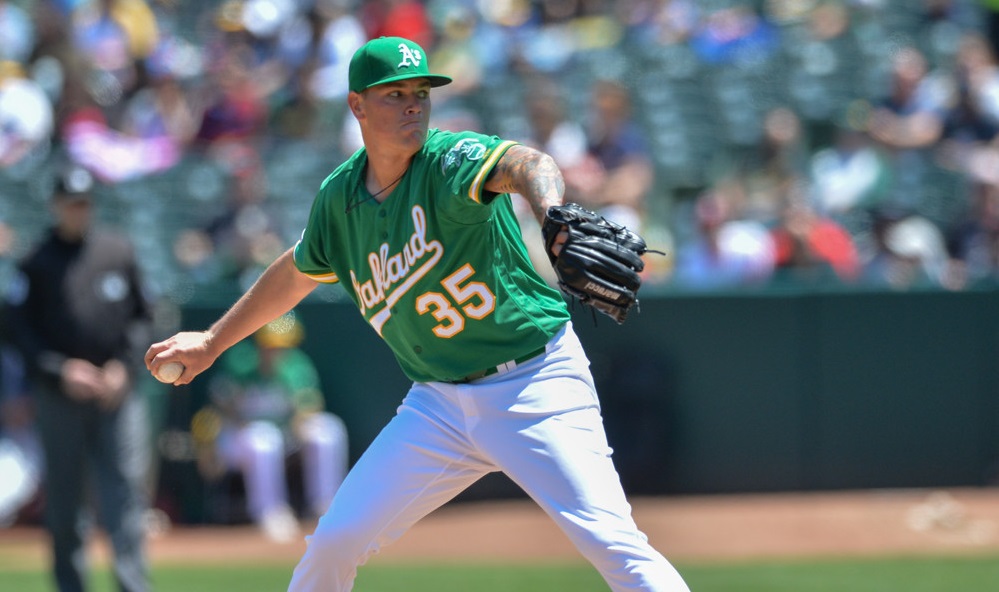
    Newest St. Louis Cardinals pitcher Aaron Brooks has much less of a MLB track record than fellow MLB-turned-KBO pitcher Dan Straily, but they had quite similar results in the KBO. 

    Brooks spent parts of four seasons in the Majors, putting up a 9-13 record and 6.49 ERA while pitching for the Royals, Athletics, and Orioles. When he moved to his new league, those numbers improved considerably

    Season W-L ERA IP WHIP BB/9 K/9
    2020 KBO 11-4 2.50 151 1/3 1.02 1.4 7.7
    2021KBO  3-5 3.35 78 1.40 1.8 6.3

    Brooks is a strike thrower who has never put up big strikeout numbers. He has struggled to limit hits since he is around the zone so much. He had only one full season where he allowed less than a hit per inning, and that was his 2020 season in Korea.

    Pitch Mix

    Pitch Type Usage (2021) Average Velocity (MPH)
    Fastball 46% 92
    Changeup 24% 84
    Slider 22% 86
    Curveball 8% 80

    Despite not generating a lot of strikeouts, Brooks does have some traits that should get him noticed. His fastball is not overpowering, averaging 92 MPH, but that is a little deceptive. He throws a four-seam and two-seam fastball, and his four-seam tends to be a couple MPH harder than his two-seam. His four-seam averages around 93, and topped out at 96 MPH in 2021. His four-seam and two-seam fastballs also have a large separation in movement, allowing them to function as two distinct pitches.

    For a contact-inducing pitcher, Brooks does have some swing-and-miss pitches in his arsenal. In 2021 hitters swung and missed on 33% of swings against his slider, and 35% of swings on his curveball (KBO miss rates are 29% and 27% respectively). However, his fastballs produced whiffs on only 10% of swings (league average is 14%). Since he threw so many fastballs, that limited his ability to strike hitters out.

    Brooks’ three most-used pitches were all good at generating ground balls, as his fastball produced grounders on 52% of balls in play, his slider 53%, and his changeup produced 73% thanks to its noticeable vertical drop (all well above the league averages for those pitch types). Each pitch actually had a higher ground ball rate in 2020 than in 2021.

    One note on Brooks that explains why his 2021 innings total was so low. He was released from the Kia Tigers in 2021, due to an issue with a product he had shipped from the US to Korea. He ordered a vape pen that customs found to contain traces of marijuana, which is illegal in South Korea. After his release, Brooks reportedly signed a minor league deal with the Padres, though he did not get into any games for the Padres or their affiliates.

    Outlook

    Brooks could fill a depth starter role for the Cardinals, but he might have a bit more upside than Straily. 

    If he changes his pitch mix to throw more of his secondary pitches, he’ll need them to be as successful as they were in the KBO to boost his strikeout rate (which will be harder against tougher competition). That could make him a viable fourth or fifth starter. He could also try to convert to a bullpen role as a groundball-inducing middle reliever.

    The Cardinals were able to turn Miles Mikolas from a successful starter in NPB to an effective one in the states. They’ll be trying to work the same magic with Brooks here.

  • KBO Scouting Report: Dan Straily Worthy of an MLB Return?

    KBO Scouting Report: Dan Straily Worthy of an MLB Return?

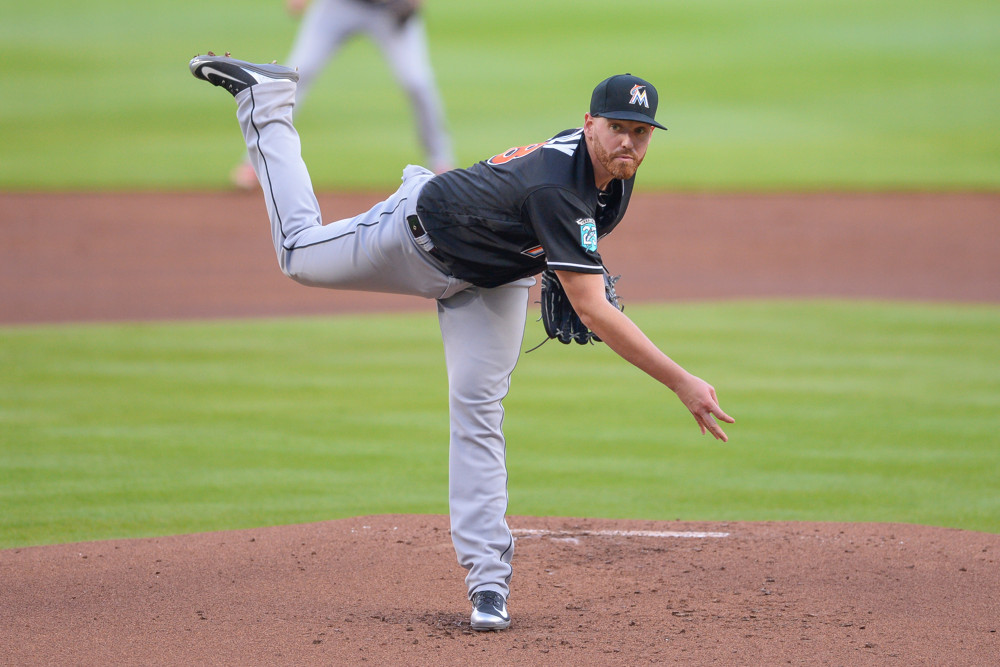
    While MLB’s lockout continues, this hasn’t stopped other leagues around the world from making moves and shoring up their rosters for the coming season. In the KBO, all roster spots for foreign players have now been filled, and two pitchers with MLB experience were not signed by any team in the league. Both Dan Straily and Aaron Brooks come with questions, but they could end up being useful depth options for MLB teams, or look to catch on in another league. 

    We’ll look at Straily in this article and Brooks in a separate piece in the near future.

    Straily came to the KBO with high expectations, as he easily had the most MLB experience of any pitcher looking to prove themselves in Korea.

    From 2012-2019 Straily was 44-40 with a 4.56 ERA in just over 800 career innings. The best stretch of his career was from 2016-2018, when he was a roughly league-average starter over almost 500 innings for the Reds and Marlins. However, his 2019 season was a disaster, as he had a 9.82 ERA that was fueled by allowing 4.2 HR/9.

    Season W-L ERA IP WHIP BB/9 K/9
    2020 KBO 15-4 2.50 194 2/3 1.02 2.4 9.5
    2021 KBO 10-12 4.07 165 2/3 1.38 3.6 8.9

    As the chart shows, Straily appeared to right the ship in 2020. He became the first KBO pitcher in 8 seasons to reach 200 strikeouts in a season (Hyun-jin Ryu had been the last pitcher to do so), and produced a great ERA in a league with defense well below the MLB standard. While his 2021 results were not as excellent as 2020, there were some positives to take from the season as well. Straily is now hoping to return to MLB for the 2022 season.

    Pitch Type Usage (2021) Average Velocity (MPH)
    Fastball 44% 91
    Slider 31% 84
    Changeup 15% 85
    Curveball 6% 76
    Cutter 4% 88

    Straily was aware that the league would adjust to him for a second season. He added a cutter to his repertoire, which he had not thrown before in either MLB or in Korea. He did scrap the pitch by July, but it shows his willingness to adapt and stay ahead of hitters. He also added a tick of velocity to his fastball, despite having thrown over 3,000 pitches in 2020.

    Straily’s changeup also became a better pitch in terms of limiting significant damage in 2021. His changeup features good downward break and armside run, which would typically make it more effective against left-handed hitters. But lefties hit the pitch surprisingly well with a .326 average against, while right-handed hitters only hit .121. 

    However, despite the high batting average by left-handed hitters, it’s worth notingthat no hitter managed an extra-base hit against his changeup all season.

    What led to the drop in his performance was some regression in control. Straily was pitching from behind more often, and had fewer opportunities for strikeouts. 

    Look at his best breaking pitch, the slider. It was his most used pitch with two strikes in both 2020 and 2021, and in both seasons his whiff rate on the pitch was around 30%.

    However, he dropped from 114 strikeouts with the slider in 2020 to only 62 in 2021. Part of the drop is likely attributed to hitters expecting the slider with two strikes in 2021, but the biggest factor was that he didn’t have as many opportunities to pitch with two strikes. His slider strike rate dropped from 70% in 2020 to 65% in 2021.

    The dip in control also contributed to a loss of effectiveness with his fastball. Despite adding 1 MPH to his average velocity, his OPS versus his fastball rose from .706 in 2020 to .890 in 2021.

    It wasn’t so much that his fastball was a worse pitch, just that his command wasn’t as sharp, and he was forced to throw it in the zone more as he fell behind in more counts.

    Overall, let’s keep the expectations reasonable.

    Straily looks like a potential back-end or depth starter candidate. Given his experience, and his having to make several adjustments throughout his career, he could be a good mentor who soaks up innings on a younger team, or he could be used as a swingman type on a competitive team that needs more pitching depth.

  • KBO Scouting Report: Aríel Miranda

    KBO Scouting Report: Aríel Miranda

    By TED BAARDA

    In 2021 the KBO’s Doosan Bears signed Aríel Miranda and Walker Lockett to front their rotation, and once again they found the right pitchers to lead their staff. Lockett battled some injuries but still managed a 2.98 ERA in 124 innings.

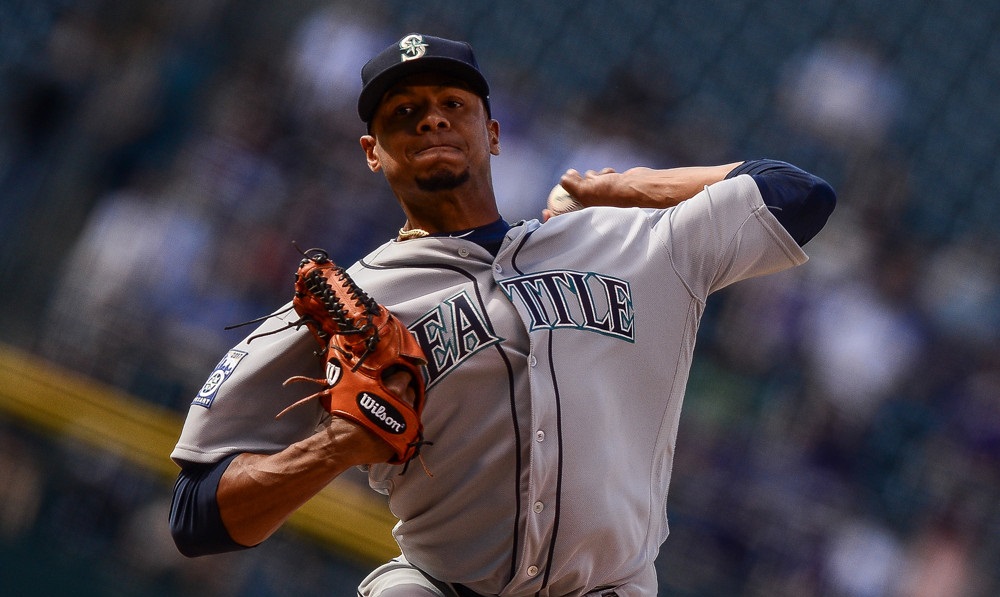
    However the star of the pitching staff was the 32-year-old Miranda, who broke the league’s single-season strikeout record. I’m wondering if (even at his age) he could be in line for a return to the major leagues.

    No team has been better recently at identifying and acquiring top foreign pitchers in the KBO than the Doosan Bears. In 2019 Josh Lindblom won the league’s MVP award before leaving for Milwaukee on a three-year deal. In 2020, Raul Alcantara won the Choi Dong-won award, given to the league’s top pitcher, and Chris Flexen earned a two-year contract with the Seattle Mariners.

    Here’s Miranda’s stat line the last 5 seasons.

    Year League W-L ERA

    Innings

    K/9 BB/9
    2017 MLB 8-7 5.12 160 7.7 3.5
    2018 NPB 6-1 1.89 47 2/3 7.6 5.1
    2019 NPB 7-5 4.19 86 6.1 5.0
    2020 CPBL 10-8 3.80 156 1/3 9.8 3.5
    2021 KBO 14-5 2.33 173 2/3 11.7 3.3


    Miranda’s path

    A Cuban-born left hander, Miranda played seven seasons in Cuba before signing with the Orioles. He spent 2015 in their minor league system and, after a brief MLB debut with Baltimore, was sent to the Mariners during the 2016 season. He spent the whole 2017 season with the Mariners, primarily as a starter and posted a 5.12 ERA.

    In 2018, Miranda embarked on what turned out to be an adventure through the top Asian baseball leagues, pitching in NPB, the Chines Professional Baseball League in Taiwan, and now the KBO. 

    What Miranda throws

    What fueled his breakout in 2021? It looks like Miranda adjusted his approach and focused more on his strengths, as 86% of his pitches thrown this year were fastballs or splitters, his two best pitches. 

    That was up eight percentage points from 2017. That year, he threw his changeup more than twice as often as he threw it at this past season.


    Pitch Type 2021 Usage 2021 AVG Velocity
    Fastball 61% 91 MPH
    Splitter 26% 80 MPH
    Slider 7% 82 MPH
    Changeup 7% 82 MPH


    Miranda throws a lot of fastballs because it’s the pitch he controls best. He threw it for a strike 69% of the time, and started 67% of at-bats with a fastball so he could get ahead of hitters. At 91 MPH on average, it is not a blazing fastball, but for a left handed starter it has acceptable velocity and he locates it well.

    The splitter is Miranda’s best pitch. Of his KBO record 225 strikeouts, 139 came on the splitter. Only eight other pitchers in the KBO had more than 139 strikeouts in total. His splitter gets good downward break on it, and will run away from right handed hitters, or in on lefties. At times its movement will resemble that of a screwball. Despite it being a primary pitch of his, Miranda’s splitter still got hitters to whiff on 46% of their swings. It was his go-to pitch with two strikes.

    Even when hitters did make contact with his splitter, they could not do much with it. Opposing hitters managed a .127/.179/.172 line against his splitter with a 11% hard hit rate. Results-wise, Miranda’s splitter was to the KBO what Kevin Gausman’s was in MLB (opponents hit .139 with a 14% hard-hit rate against one of the top pitches in the game).

    While his splitter is the star of his repertoire, it does not come without concerns. Due to the nature of its grip, the splitter tends to be a harder pitch to control than most others, and that is definitely the case with Miranda. His splitter control can come and go, which can make him depend more on his weaker pitches on days where he can’t locate the splitter. 

    While splitters tend to be a pitch that pitchers want to throw low and have batters swing over, Miranda actually threw a lot of his up in the zone. 30% of his strikeouts on the splitter were strikeouts looking, and many of those were belt-high that hitters gave up on and watched fall into the top of the zone. He only gave up 2 HR with the splitter all season but against stronger competition the volume of splitters left up in the strike zone could be a problem.

    As for his other pitches, Miranda’s changeup would normally be considered fairly unimpressive. It does not feature much drop or fade and rides relatively flat. That doesn’t sound like a good thing, until you consider how it plays off his two main pitches. The changeup has similar movement to his fastball, but is 9 MPH slower, so if a hitter is looking for a fastball, he will be ahead of the changeup. If the hitter is looking for a splitter, he will be under the changeup since the splitter has much more downward break.

    Comparable #1 – Tyler Clippard

    A good example of a pitcher who can play these pitches off each other like this is veteran reliever Tyler Clippard, though Clippard’s changeup features more movement than Miranda’s.

    Miranda managed a 61% whiff rate on swings against his changeup, but that is mostly a product of him using it sparingly and catching hitters by surprise. He cut his changeup usage dramatically, from 16% in 2017 to 7% in 2021, and throws it exclusively to right handed hitters.

    Miranda’s slider is also a pedestrian offering, but it is the only pitch he has that runs away from left handed hitters. Used as his third pitch against lefties, it gives hitters a different look in an at-bat. He also would occasionally throw it to run in against right handed hitters.

    Injury Concerns

    Miranda missed his club’s first two post-season series with shoulder fatigue, though he did return in time to start Game 3 of the Korean Series. While the results were there (5 IP, 1 ER, 6 K), Miranda’s fastball was lacking its customary zip. He was sitting around 89 MPH for most of the game, though he was able to reach back for 92-93 occasionally.

    Given his command and health concerns, he may fit better on a MLB team as a reliever than as a starter. He will also turn 33 in January, so if a team wants him to start, it needs to be confident he can step into that role immediately, as he doesn’t have time on his side to work through issues as a longer-term project.

    Comparable #2 – Héctor Neris

    Teams now are prioritizing diversity in their bullpens, trying to vary handedness, release points and pitch mixes among their relievers. This works in Miranda’s favor as very few left handed pitchers throw splitters, and even fewer feature a splitter and a changeup. A good relief comp to Miranda might be a left handed version of Héctor Neris of the Phillies, who relies on his splitter but can struggle with command at times.

    After the season he just had, Miranda would be welcomed back to the KBO by any team, but he could be looking at some MLB offers for 2022. What role teams will consider him for might still be up in the air. But keep an eye out for where he could land.