Category: NFL

  • Optimistic and Pessimistic Takeaways for the Seahawks and Rams After Week 16

    Optimistic and Pessimistic Takeaways for the Seahawks and Rams After Week 16

    Photo: David J. Griffin/Icon Sportswire

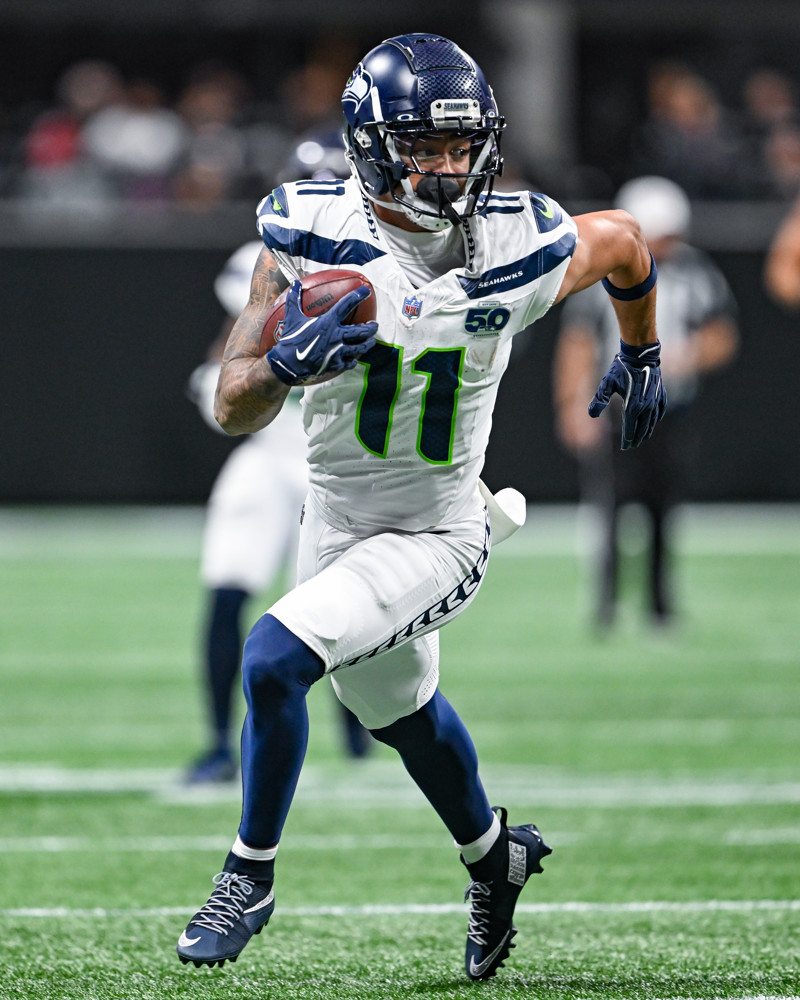
    Arguably the biggest game of the year so far took place last Thursday night and it did not disappoint. History was made, with us witnessing the first NFL game to end with a walk-off 2-point conversion. The Seattle Seahawks got their revenge and defeated the Los Angeles Rams 38-37, gaining the inside track to representing the NFC as the first seed in the process. 

    The Rams will be kicking themselves for letting go of the game that was all but theirs, but all is not lost. They should still feel confident in their chances come January, backed by the fact that they rank 1st overall in our team Total Points metric.* 

    *For a refresher, here is our primer on Total Points.

    The Seahawks came into the match ranking 2nd themselves, and the two bouts between them so far have further emphasized how neck and neck the two clubs are, well summarized by this stat

    Let’s take a deeper look into why each team should and shouldn’t feel confident about its chances to win it all.


    Why the Seahawks can win the Super Bowl: Improving rushing attack, special teams advantage

    In my previous article, I covered why the Seahawks should still feel like they’re in the mix due to their defense but in order to truly contend, they will need to answer questions about both their running and passing games, especially against elite defenses in high-stakes moments. 

    While they still have more to prove to completely quell those concerns, especially in their passing attack, their showing last Thursday was a step in the right direction. 

    The Seahawks entered the game with the 2nd worst rushing EPA per attempt in the league. Given that placement, it may seem odd that they ranked 14th in rushing Total Points per attempt, but that can be explained by them ranking as the worst run blocking unit in the same metric. 

    They arguably had their best rushing performance of the season so far, gaining 171 yards on 25 carries, with two of those resulting in touchdowns. The numbers matched what our eyes were telling us, improving across the board:

    Rushing EPA/A Rushing TP/A Run Blocking TP/A
    Weeks 1-15 -0.10 0.05 0.15
    Week 16 0.24 0.27 0.25

    Seattle must continue to demonstrate that it can punish opposing defenses on the ground and take pressure off Sam Darnold and the receiving corps. Teams that end up lifting the Lombardi trophy are often the best at problem solving and have other pitches to go to when their fastball is compromised, so to speak.  

    An area they have already proven to be among the league’s elite throughout the season is special teams. The Seahawks rank 6th in special teams Total Points per play, backing up that ranking with top 5 rankings in both punt and kickoff average return yards. 

    The momentum-shifting punt return touchdown by Rashid Shaheed upped Seattle’s combined punt and kick return touchdown total to three, tied for most in the league. They also have three combined punt and field goal blocks, again tied for most in the league, showcasing their penchant for making plays in all phases of special teams.


    Why not the Seahawks: Passing questions remain, turnovers

    To Sam Darnold’s credit, he demonstrated that he could deliver when the team needed him to and win a game with massive stakes, particularly against a team who has given him the most trouble the past couple of seasons. 

    For the last half of the fourth and overtime, Darnold went 8 for 11 (excluding a spike) for 91 yards and two touchdowns, in addition to completing two 2-point conversions. At least for one game, he was able to get the proverbial monkey off of his back. 

    For the first three-and-a-half quarters however, things didn’t seem that way, with Chris Shula and his defense seemingly flummoxing Darnold at every turn and forcing two back-breaking picks, both with disguised coverages. 

    I noted previously that up through Week 11, the Seahawks had a negative passing EPA for the season when facing dime personnel (6+ defensive backs). Things were more of the same last Thursday, with them posting a 10% success rate and -13 EPA against dime (-5 EPA against nickel as well).

    There is still time for Darnold and the Seahawks to establish whether they can perform consistently when in obvious passing down situations, but for now things don’t look fixed.

    In addition to the two aforementioned interceptions, Cooper Kupp also lost a fumble to his former team, bringing Seattle’s turnover total up to 26, second-most in the league. Denver, San Francisco, and Seattle are the only teams over .500 with a negative turnover differential. 

    Teams who have lost the turnover battle are a combined 41-143-1 so far in the 2025 season.  Needless to say, the Seahawks need to turn things around in that department to give themselves the best chance come January.


    Why the Rams can win the Super Bowl: Complete team on offense

    In a lot of ways, the Rams are who the Seahawks want to become on offense. They are 1st in offensive team Total Points per play, in large part due to having top 5 players at both quarterback and wide receiver in Matthew Stafford and Puka Nacua. 

    Even having to face an elite defense, Stafford lit up the Seahawks, throwing for 457 yards and three touchdowns with no picks. Nacua accounted for 12 of those completions, racking up a ludicrous 225 yards and two touchdowns. 

    If that wasn’t enough, they also employ the receiving touchdowns leader, Davante Adams, though it may take a while for him to return to form, as detailed in this piece by Alex Vigderman.

    The passing attack is counterbalanced by a solid run game led by Kyren Williams and Blake Corum, ranking 3rd in rushing success rate and 4th lowest in percentage of runs hit at the line. 

    Since Week 9, the midway point of the season, among tailbacks, Williams ranks 1st in rushing EPA per attempt and 11th in Total Points per play, while Corum ranks 12th and 6th in those same categories respectively. 

    Their offensive line is nothing to sneeze at either, ranking 3rd in blocking Total Points per play. They have the 4th lowest blown block percentage in the league and rank 2nd and 4th in sack and pressure percentage allowed, respectively. The Seahawks couldn’t bring Stafford down even once. 

    Over the full season, both the Rams and Seahawks are among the best teams in keeping the quarterback clean (and doing so without spamming quick game).

    Scatterplot of blown block rate and pressure rate allowed, with a slight trend between them. The Seahawks and Rams are in the bottom-left (good) end.

    * Bottom left is best


    Why not the Rams: Defensive slippage, special teams mistakes

    Honestly a bit of a nitpick here, as I would consider the Rams to employ a good defense. But no team is perfect and they are no exception. 

    The Rams are quietly 19th in run defense Total Points per play. They have allowed over 120 rushing yards in four of their past six games, and two of those four have resulted in losses, including Thursday night. 

    Against play action, they came into the game ranked T-7th-worst in EPA allowed per dropback, 8th-worst in boom percentage allowed, and 2nd-worst in bust percentage forced (where boom plays gain the offense 1 EPA or more and bust plays lose the offense 1 EPA or more). The Seahawks exploited this, with Darnold completing 10 of 13 passes for 167 yards and two touchdowns when in play action. 

    If opposing teams can establish their attacks on the ground and make hay with play action, the Rams have shown themselves to be susceptible. 

    A not-so-quiet underperforming phase of their team that reared its head in this game is special teams, and this proved to be the straw that broke the camel’s back with the firing of their special teams coordinator, Chase Blackburn. 

    The Rams rank 23rd in special teams Total Points per play. Special team blunders played a crucial role in three of their four losses this season, which include allowing two blocked field goals—one of which was returned for the game-deciding touchdown—against the Eagles, allowing a blocked extra point against the 49ers, and then giving up the punt return touchdown to the Seahawks.

    Final Words

    The Seahawks should be feeling great after wrestling away control of the NFC, but they know the job is not finished. They have questions they will need to continue to address through the end of the regular season and into the playoffs. 

    On the other side, even though they lost, the Rams have a solid argument for being the NFC’s best and most complete team. Their questions may prove to be more easily addressable as well. 

    Both the Seahawks and the Rams are top five teams by almost any overall measure of team quality. They are evenly matched through two, and there is a decent chance the two will meet again for a third and final match. 

    The winner may well represent the NFC in Santa Clara. Which of the two will come out victorious? I, for one, can’t wait to find out.  

  • A Midseason Review of the Micah Parsons Trade

    A Midseason Review of the Micah Parsons Trade

    Photo: Matthew Pearce/Icon Sportswire

    Now that the dust has settled, we can start to examine the impact of the Micah Parsons trade that happened this offseason. Both teams are experiencing significant changes with their defense this season and not only in terms of results like pressure rate and success rate, but also with how they are structured and operate as a unit. Green Bay’s decision to acquire Parsons addressed its pass rush need, while Dallas believes that Kenny Clark will help improve its run defense.  

    With the Cowboys, Micah Parsons was asked to line up all over the defensive formation but was especially effective as a stand up rusher. In 2024, The Cowboys had pressure rates of 12.9% for stand up rushers on the left and 15% for stand up rushers on the right. This year, those numbers are 13.6% and 11.5%, respectively. 

    Sacks aren’t coming as easy for the Cowboys either. Micah was often asked to mug over the A gap, and rushers from that technique sacked the quarterback 3% of the time with a staggering 21.5% pressure rate for the Cowboys. This year, mugging linebackers don’t have any sacks for the Cowboys and they are only generating pressure on 12.5% of passing plays. 

    Parsons’ versatility was a big part of how the Cowboys were able to generate pressure in 2024, and they are changing how they present themselves to offenses to try and make up for it this year. The Cowboys are lining up with stand-up edge rushers more frequently in order to try and conceal where the rush may be coming from. 

    As the Cowboys try to hunt for a comparable replacement strategy off the edge, the player they got in return, Kenny Clark, does not seem to be living up to expectations in Dallas. He has not been the difference-making run stuffer that Dallas had dreamed of, as the Cowboys defense is giving up 0.9 EPA/30 Rushes with him on the field and 0.6 EPA/30 Rushes when he’s off the field. In other words, he is not improving their run defense like the Cowboys had hoped. The last five games they’ve allowed an average of nearly 170 rushing yards allowed.

    Additionally, the Cowboys are significantly worse against the pass when Clark plays as well, giving up 9.0 EPA/30 Passes when he is on the field and -0.6 EPA/30 Passes when he’s off the field, yet the Cowboys are still playing him on 68% of passing downs. 

    Conversely, and as expected, Micah Parsons is transforming the Packers passing defense. He is a major factor against the pass, as the average EPA/Play on passing downs is nearly a full 0.1 per play better when he is on the field. The Packers’ defense also performs better as a unit against the run while he is in, allowing -3.6 EPA/60 Plays when he is on the field and -2.4 EPA/60 Plays when he isn’t.

    In tangible terms, he is more than doubling Kenny Clark’s pressure percentage as a pass rusher with a 23% pressure rate compared to Clark’s 9%.

    It remains to be seen who will ultimately prosper the most from this trade as the Cowboys are owed multiple first-round picks. But the initial returns have an immensely positive effect for Green Bay as the Packers have ultimately found their star pass rusher while maintaining success against the run. Meanwhile Dallas not only failed to improve its run defense, but is now struggling to replace the passing rushing success it once had with Parsons.

  • What Liam Coen Means When He Says It’s 100% A  Go

    What Liam Coen Means When He Says It’s 100% A Go

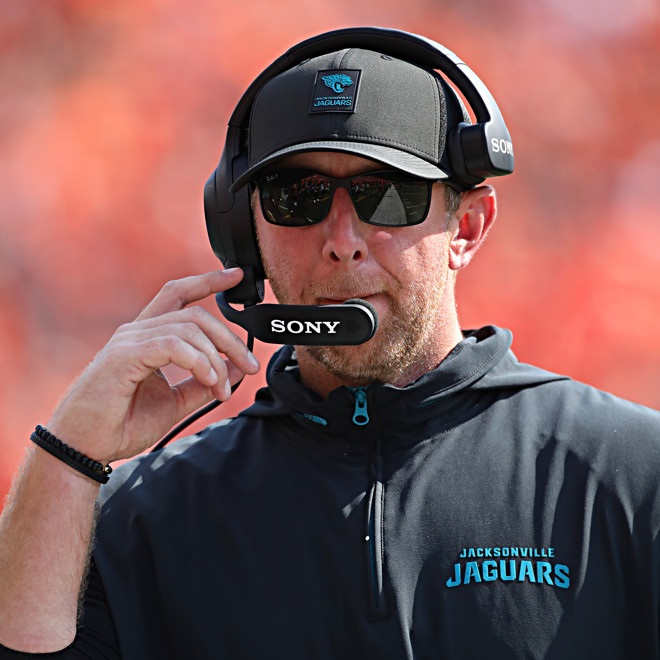
    The Jaguars seemed to pull defeat from the jaws of victory against the Bengals on Sunday, enough so that head coach Liam Coen had to answer for a particular fourth down play late in the game.

    With just under 4 minutes left and a 3-point lead, they chose to go for a 4th-and-5 from the Bengals’ 7 yard line instead of lining up for a chip-shot field goal. They failed to convert, and the Bengals proceeded to march 92 yards down the field and score the winning touchdown with barely any time left on the clock.

    Asked about it afterward, Coen said, “In all analytics, in all data, it’s 100% a go.” And in response to that, I watched a TV personality question that statement, saying you have to feel out the situation.

    But honestly, we might not even need to bring analytics into play.

    Normally, there’s a lot of Monday-morning-quarterbacking after having seen the result, and people browbeat the decision-maker in part because of the bad result. But in this spot, the eventual result presents the exact reason why going for it is a good decision! If we knew the Bengals were going to be able to go down the field and score a touchdown with no time left, obviously the Jaguars should be pushing for a touchdown in that spot.

    But let’s take a look at “the analytics” and see how we might have evaluated that question.

    SIS has a win probability model that is trained on the last few years of basic game state information, and it can also incorporate a measure of recent team strength. For fourth down decision-making purposes, we consider the three possible choices (punt, kick, and go for it) and pit them against each other based on historical performance.

    I’ll start with the top-level result: we also would have this as a “go”. I’ll explain in a bit why there could be some slight caveats there.

    Field goal: 77% win probability

    Based on recent league history, we estimate that a field goal from this spot has a 98% chance of bringing your lead to 6. The result is likely to be the Bengals starting their upcoming drive down by 6 at around their own 30, which puts the Jaguars at about a 77% chance to win according to our model, all else equal.

    The Jaguars might think their kicker is better or worse than that average, but there’s really only downside in that wiggle room, given how short the kick is. So that’s not something that makes the decision any more difficult to make.

    Would that number be meaningfully different if we incorporated the strength of the opponent? Not really, because by this point in the game there isn’t that much time for the strength or weakness of a team to exert itself. Anything can happen in a one-drive sample.

    Go for it: 84% win probability

    With the go-for-it option, there are some more considerations.

    If the Jaguars moved the chains, recent data suggests a better-than-even chance of making it into the end zone on that play, but even if they didn’t, we’re looking at a 94% chance of winning. You’re still very likely to score a touchdown, you could kick a field goal and burn a bunch of clock or timeouts, or you could burn clock and bury the Bengals in the shadow of their own goal post.

    If they don’t make it, they’ve still set the Bengals up for a long drive to make. They could force overtime with a field goal (producing a ~50/50 situation), or drive the full distance for a winning score in regulation. In that situation, the Jaguars have a 74% chance of winning.

    We estimate the success rate for a 4th-and-5 near the goal line to be 45%. Right around a coin flip, so right around halfway between the success and failure situations.

    The result is that we estimate a pretty meaningful advantage to going for it over kicking the field goal. Of course, 7 percent is a much less impactful difference late in the fourth quarter than it is in the first, so we wouldn’t have this as a 100% no-brainer, but it’s a decent chunk of value.

    Is the answer that simple?

    When we talk about sports analytics, it’s important to acknowledge two things: “analytics” isn’t some single methodology that produces a monolithic conclusion, and analytical research is not the final answer to any question.

    Our model is going to produce a different win probability for all of these situations than plenty of other models. We’re all using similar inputs, but we’re employing them differently, making different underlying assumptions, and deploying different modeling approaches. If our model is +/- 5 percent different from another model in most situations (not that much in the scheme of things), then it’s possible that another model thinks that there’s a slight lean in favor of a field goal in this spot.

    And what about factors the model doesn’t consider? Were the Jaguars playing below-average football at that time, and therefore could be assumed to have a lower expected success rate on the fourth down try? With our model, that expected success rate would need to be as low as 15% to flip the decision. That’s a tough sell on its own, but maybe a couple specific features of this situation conspire to tip the scales.

    That’s why you want a give and take between the team’s model and the decision makers on the ground. The model is going to consider a whole bunch of factors and operationalize years of relevant history, but it might not be reflecting that the Bengals’ quarterback got hurt earlier in the game, or that the Jaguars’ passing game was generating under 5 yards per attempt in the second half. NFL rules are fairly constrained on what tech can and cannot be employed during the game, so there isn’t much leeway to do in-game model adjustments.

    All of these recommendations should have a fudge factor, which is something we employ in our own fourth down reports. We’ll have some very strong recommendations but given the combination of the model’s wiggle room and the specific context of the game, there are a ton of situations in the squishy middle. It’s in that squishy middle where teams can use some of this context to their advantage; they just have to be conscious of treating that new information with the appropriate number of grains of salt.

  • A New Expected Points Model

    A New Expected Points Model

    In the dynamic world of football, there are an infinite number of variables to consider when analyzing the game. Expected Points offers a lens through which to view team performance, moving beyond simple yardage gains. By accounting for critical game state variables, Expected Points provides a robust baseline for evaluating how well a team moves (or stops) the ball.

    As an analytics service, we have our own Expected Points model, as many services do, that takes game state variables and quantifies the amount of points a team should score on the play. However, by recently digging into our original model, we found some gaps that we wanted to address when comparing the actual scoring results of the game. Before addressing those changes, let’s dive into how the original model was built.

    The Old Model

    Our previous model used down, to go distance, distance to the end zone, and whether or not the offense is the home team. Usually, the first three listed are the core of all Expected Points models, but we also added the binary “home offense” feature to add a little more context.

    Although effective, we found a phenomenon that our model was less calibrated at the end of halves, especially at the end of games. Also, we found a substantial difference between the actual results and our model in 4th quarters as to whether or not the offensive team was losing. To get to the root cause, we needed to dive deeper into the scoring environment at these times.

    Time Left vs. Scoring Percentage by the End of the Half

    In the graph above, we can see that the rate of scoring decreases as available time in the half decreases in the NFL (time left = 0 on the left side of the chart). Intuitive, yes, but we also see the severity changes given the times. 

    In the 4th quarter, we see scoring begin to decrease sharper at the 15 minute mark (beginning of the 4th quarter) and then decrease more and more sharply at the 2 minute intervals outlined above. 

    This also occurs in the first half and in overtime, but the decline starts much later. The shape in the last 4 minutes of the first half is mostly similar to the shape of the 8-10 minute mark in the second half. This same trend exists on the college side as well.

    NFL Model Calibration – Pre Changes

    In the graph above highlighting the NFL calibration before the changes, there is a distinct gap in expected scoring and actual scoring on average in the 4th quarter in all 3 scoring margin buckets. The model underpredicts scoring when a team is losing (as those teams are often hurrying to catch up), and overpredicts scoring when a team is winning and tied (as those teams are often slowing things down), but tied is a much lesser degree. At the end of the first half, there is a slight deviation inside 4 minutes, but not nearly as severe as the end of the game.

    CFB Model Calibration – Pre Changes

    From a college perspective, the model shows more deviance than the NFL. There is still an effect at the same time ranges that were previously highlighted, but there are bigger gaps in the winning and losing phases. The larger gaps in the college model might be attributed to larger gaps in team quality, which we are not addressing in this model. For the purpose of this re-work, the time and lead theories still apply here.

    After reviewing this data, we concluded that both end of half situations combined with the lead type at the end of the game factor into a pace of play component that has an effect on expected scoring in a game, and that pace takes effect at the end of the first half and in the 4th quarter.

    This is not to be confused with the rating of the teams with the lead component, which we did not want to build into the Expected Points model. This model is centered around the state of the game, factoring in average outcomes against the level at which teams are playing (NFL or college). A model that incorporates team rating is more complex and something that we did not want to attempt at this time. The general trend of “good teams are winning more” is reversed once the lack of time to score comes into play. This specific state of the game factor is what we are trying to account for.

    If we did incorporate team ratings, this would help the college model more given the larger gaps in winning and losing.

    The New Model

    To factor in pace, three new features were created for the model. These new features are described as follows:

    1. Quarter Grouping:
      1. 10 minutes and under to go in the 4th quarter
      2. 2 minutes and under to go in the 2nd quarter
      3. All other time situations
    2. Time Left in the Quarter in Minutes:
      1. Counting down from 10 by 2s (10,8,6,4,2) for the 4th quarter and only a 2 for the 2 minute mark and under in the 2nd quarter 
      2. All other times are labeled as a 15 to be the catch all
    3. Offensive Team Lead Grouping:
      1. Losing (<10 minutes left in the 4th quarter)
      2. Winning (<10 minutes left in the 4th quarter)
      3. Tied (<10 minutes left in the 4th quarter)
      4. All other cases (>10 minutes left in the 4th quarter)

    The time features were engineered this way strictly to look at the specific time periods under consideration. This is a proxy for the pace of play at the end of halves where a team may operate differently when under a time crunch and if they are winning or losing. The goal isn’t to try and find the difference in play at all times of the game, which is why the time groupings were created instead to only capture the times when the game context imposes a pace on a team.

    NFL Model Calibration – Post Changes

    CFB Model Calibration – Post Changes

    The calibrations are now more aligned at the end of halves and follow the pattern of actual scoring. The college model still sees larger disparities in the winning and losing phases with over-predicting scoring when losing and under-predicting scoring when winning. However, the end of game situations are much better. The NFL model adjusted smoothly to the actual results at the end of halves as well, especially in higher expected scoring environments when a team is losing.

    The goal of improving our models incorporating pace at the end of halves given the lead situation has been met here. The calibration to actual scoring on average has improved in both NFL and college. With this improvement at the base level of evaluation, we can now assess EPA metrics more accurately when it comes to teams as well as our Total Points metric to evaluate players.

  • Who would have won NFL Protector of the Year in 2024?

    Who would have won NFL Protector of the Year in 2024?

    Photo: Andy Lewis/Icon Sportswire

    When talking about the NFL’s biggest superstars, it’s almost always quarterbacks and skill players that are in the discussion. Patrick Mahomes, Josh Allen, Saquon Barkley, Ja’Marr Chase, and others are frequently brought up, as they should be, but they also overshadow other great players. With the NFL’s introduction of the Protector of the Year award, one of the league’s most underappreciated position groups will be getting more of the spotlight.

    Advocates, Panel, and Criteria

    There are a few people who deserve special recognition for creating an award that honors offensive linemen. Troy Vincent, the NFL’s executive vice president of football operations said Dion Dawkins and Andrew Whitworth were “truly instrumental” in putting things into motion.

    Whitworth was a Super Bowl champion, Walter Payton NFL Man of the Year, multi-time All-Pro and Pro Bowler, and had two of the best seasons for left tackles in terms of Blocking Total Points since we began charting in 2016. His 2021 season (41 Total Points) ranks 1st since then, while his 2019 season (40 Total Points) ranks 3rd.

    Whitworth will be on the voting panel for the Protector of the Year, alongside Jason Kelce, Orlando Pace, Will Shields, Shaun O’Hara, and LeCharles Bentley. Kelce’s 2022 season was legendary by SIS standards. He recorded 49 Blocking Total Points, which is our highest single-season total, regardless of position.

    The criteria that these NFL legends will use to vote includes “skills, metrics, impact, leadership, durability, and strength of opponent.” It will be especially interesting to see how they measure positional impact, given that they have more former interior offensive linemen (Kelce, Shields, O’Hara, Bentley) than tackles (Whitworth, Pace) on the panel.

    Dion Dawkins, who heavily advocated for the award to be created, is coming off a terrific season himself. He ranked 4th among all offensive linemen in Total Points (38) last season but was first for left tackles specifically. Josh Allen’s blind-side protector is coming off his fourth consecutive Pro Bowl season, and he was also on the 2024 SIS NFL All-Pro Second Team.

    How SIS Evaluates Offensive Linemen

    SIS has tracked every NFL play from every game since 2015, which allows us to capture a wide variety of data points for every position. For offensive linemen, we chart everything from simple stats (games played, holds, false starts, pass/run blocking snaps) and that, along with play results, allows us to calculate more advanced data (blown block percentage, Total Points, stats when run behind, etc.).

    Our most useful statistic is Total Points, which is essentially an all-encompassing data point.  Using Total Points, we can easily compare different players to see who was worth more over the course of a season.

    For offensive lineman, we can look at how many Blocking Total Points a player has earned overall, or we can break it down into run plays or pass plays. In the run game, most of the evaluation comes from yards-before-contact performance above expectation, giving the most responsibility to the blockers at the point of attack. In the pass game, the ability to sustain blocks given the depth of the quarterback’s drop is key. In both cases we leverage our blown block charting heavily, because blown blocks are drive-killers.

    The panel is going to use a number of different factors to determine the winner of the Protector of the Year award. Total Points is well-suited to measuring two of these in particular, metrics and durability.

    Who Would Have Won in 2024?

    The first Protector of the Year is still a few months away, but luckily, we have Total Points data that goes all the way back to 2016. If we take a look at last year specifically, we can make an educated guess on who might have won in 2024.

    Here are the top 10 offensive linemen from last season in terms of Total Points, along with their position, team, and blown block percentage:

    Player Position Team Total Points Blown Block %
    Landon Dickerson LG Eagles 40 1.2%
    Hjalte Froholdt C Cardinals 40 1.2%
    Kevin Zeitler RG Lions 39 1.1%
    Dion Dawkins LT Bills 38 2.1%
    Brian O’Neill RT Vikings 38 1.9%
    Quinn Meinerz RG Broncos 37 1.6%
    Jake Brendel C 49ers 37 1.4%
    Joel Bitonio LG Browns 37 2.2%
    Aaron Brewer C Dolphins 36 1.6%
    Tristan Wirfs LT Buccaneers 35 1.7%

    As you can see, Landon Dickerson and Hjalte Froholdt were our top-rated offensive lineman from 2024. Dickerson gets the slight edge due to rounding his Total Points down to 40, while Froholdt rounded up. Either way, both players rank within the top 25 of single-season Total Points earners since 2016.

    Joel Bitonio was the top pass blocker (26 Total Points), while Dickerson was the top run blocker (26 Total Points).

    Kevin Zeitler had the lowest blown block percentage from this list at 1.1%, with just 11 total on the year. Erik McCoy only had 1 blown block on the season (0.4% blown block percentage), but only played 276 snaps compared to Zeitler’s 1,007. Given that the panelists want to reward durability, McCoy wouldn’t have qualified.

    For some perspective, Patriots’ right tackle Demontrey Jacobs was one of the worst performers in this category. He led the NFL with 53 blown blocks (6.6% blown block percentage), despite playing in 15 of 17 games.

    Falcons C Drew Dalman was the leader in Total Points per game (2.7), but he only played 525 snaps. Dickerson and Dawkins both played at least 897 snaps and had the same Total Points per game (2.6).

    Since we already have the data, our staff went ahead and voted on a 2024 Protector of the Year:

    Staff Picks

    Name 2024 Protector of the Year Pick
    Anthony Haage Landon Dickerson
    Jordan Edwards Landon Dickerson
    Conner Hrabal Hjalte Froholdt
    Jeremy Percy Dion Dawkins
    Jeff Dean Landon Dickerson
    Nathan Cooper Landon Dickerson

    Dickerson got 4 of the 6 votes from our football operations crew, which rewarded him for outstanding run blocking for a Super Bowl winner.

    Who Will Win the First Ever Protector of the Year?

    Looking ahead to 2025, our staff have made their predictions for the first ever Protector of the Year. Six voters picked five different players, so it’s fair to say the race is wide open.

    Staff Picks

    Name 2025 Protector of the Year Prediction
    Anthony Haage Dion Dawkins
    Jordan Edwards Tristan Wirfs
    Conner Hrabal Christian Darrisaw
    Jeremy Percy Lane Johnson
    Jeff Dean Christian Darrisaw
    Nathan Cooper Penei Sewell


  • How Does Donovan Jackson Fit With the Minnesota Vikings?

    How Does Donovan Jackson Fit With the Minnesota Vikings?

    Photo: Ian Johnson/Icon Sportswire

    The Minnesota Vikings came into the 2025 NFL Draft with major needs at defensive back and offensive line. Many mock drafters, including ourselves, had Minnesota taking a safety to provide a spark for their secondary. However, Vikings general manager Kwesi Adofo-Mensah had other ideas.

    The Vikings selected left guard Donovan Jackson with their first pick to reinforce their offensive line for years to come. Jackson had a 6.7 grade on our draft site, which ranks at the top of our positional ranking next to Alabama guard Tyler Booker. He was number one in FBS for Total Points among ALL offensive linemen last season, regardless of position. The Vikings hope he can come in and start straight away, continuing his reign of terror against his opponents.

    Here is a look at Jackson and how he can contribute in Minnesota immediately:

    Jackson’s Strengths And Weaknesses

     Donovan Jackson measures out at 6’4’’ 315 pounds, which is sufficient for the left guard position. He started 40 games at Ohio State, with 9 of those starts coming at left tackle. He has some flexibility to play both sides and positions, but will do his best work from the interior.

    Jackson possesses good play strength and drive ability that allows him to move defenders on the run. He isn’t a dominant finisher, but he can certainly create run lanes. He uses his lower half well to stay balanced through contact and can recover quickly by using his fluid hips to stay upright in uncomfortable positions. He also has the mobility to combo-block up to the second level.

    In pass protection, he can anchor well against bigger defenders to give the quarterback enough space to do his work. However, he will occasionally lose leverage by keeping his hands too wide on the shoulder pads, which leaves him vulnerable to blown blocks and holding penalties in the NFL. He will need to clean that up before his rookie season or else teams will quickly learn to exploit it.

    With good coaching, Jackson has all of the tools necessary to succeed at the left guard position. There are no physical limitations for him. He will be tested early, but he should adapt to NFL competition relatively quickly.

    Minnesota Team Needs

     Last year, Minnesota’s offensive line went through a lot over the course of the season. Left tackle Christian Darrisaw went down with a torn ACL and MCL in Week 8, knocking him out for the remainder of the year. The interior offensive linemen, while mostly healthy, performed poorly

    Center Garrett Bradbury, who has since been released, led ALL interior linemen in blown blocks.

    Player Team Position Blown Blocks
    Garrett Bradbury Vikings C 43
    Alex Cappa Bengals RG 40
    Dominick Puni 49ers RG 33
    Liam Eichenberg Dolphins RG 32
    Cordell Volson Bengals LG 32

    Left guard Blake Brandel was not far behind, ranking 9th among interior offensive linemen in blown blocks with 30. If you combine Ed Ingram and Dalton Risner, who started 9 and 8 games at RG, respectively, they had a total of 33 blown blocks.

    Minnesota desperately needed some new blood in its offensive line room. This offseason, the Vikings have replaced their entire interior. Former Colts center Ryan Kelly and guard Will Fries will come in and immediately inject some stability. They both missed substantial time due to injury last year, however they were much more effective (only 12 blown blocks between them) with just under a full season of snaps.

    Jackson is coming in at the perfect time. The Vikings are competitive. The offensive line room is fresh and ready to turn the page after an ugly year. JJ McCarthy is healthy. Minnesota’s 2025 season outlook looks very promising entering training camp.

    How Jackson fits in Minnesota

     Minnesota primarily used a zone rushing scheme last season (72% zone, 8th highest clip in the NFL). They operated mainly out of 11 or 12 personnel formations and were the 2nd-most effective team in 12 personnel last year. Kevin O’Connell likes to mix things up pre-snap as well, using a motion on nearly 60% of plays last year (59% to be exact).

    Jackson has experience working in a zone-heavy scheme at Ohio State, which they ran at a 69% rate. He can pull when asked, however his strength is in his ability to move defenders and create running lanes. Last season, ball carriers averaged 3.7 yards before contact when running to his gap.

    At Ohio State, Jackson led ALL FBS offensive linemen in Total Points in 2024.

    Rank Player Team Position Total Points
    1 Donovan Jackson Ohio State G 49
    2 Josh Conerly Jr. Oregon T 44
    3 Brady Small Army C 42
    4 Aamil Wagner Notre Dame T 42
    5 Isaiah World Nevada T 41

    30 of those 49 Total Points came from his run blocking, which ranked 2nd among all FBS offensive linemen last year. His 19 pass blocking Total Points ranked 13th. His effectiveness is evident in both areas.

    Overall, Jackson is a well-rounded blocker who can be very effective in zone but still possesses the mobility to pull through to the 2nd level. He should plug right into the left guard spot next to new additions Ryan Kelly and Will Fries. If Darrisaw goes down again, the Vikings will have the option to use Jackson at left tackle as well.

    How Good a Fit Is He?

    The Vikings will get someone who has been a part of a winning culture before and knows what it takes to win at a high level. His solid base and mobility will make him effective in Minnesota’s zone-heavy run scheme. In pass protection, he can anchor well against bigger defenders to give JJ McCarthy time in the pocket.

    Since he played at Ohio State, Jackson is no stranger to cold weather and should be able to adapt to the frigid NFC North games at Soldier Field and Lambeau Field toward the end of the season.

    Final Word: Jackson is an excellent fit and should contribute immediately in Minnesota’s revamped offensive line room.

  • How Does Nic Scourton Fit With The Carolina Panthers?

    How Does Nic Scourton Fit With The Carolina Panthers?

    Photo: Matthew Visinsky/Icon Sportswire

    The Panthers addressed a couple of needs on the first two days of the Draft. After selecting wide receiver Tetairoa McMillan with their first pick, they doubled down at edge rusher in the second and third rounds with Nic Scourton and Princely Umanmielen, respectively. We will focus on Scourton in this article as he is a great fit to fill the void in their pass rush after they traded Brian Burns to the Big Apple. 

    What He Brings

    Our scouting report describes Scourton as a big, physical, explosive EDGE who should earn a starting job early on and could develop into a high-end player if he continues his trajectory. His explosive power and expansive pass rush repertoire are certainly strengths in his game. He also possesses a hair-on-fire mentality, but this can get him in trouble with his positioning in the run game. He has all the tools to be a reliable run defender on the edge if he can become more disciplined in his run fits. 

    After two productive years at Purdue including 8.5 sacks in 2023, he had a disappointing 2024 season at Texas A&M where his numbers fell in a new scheme and conference. The table below highlights these differences: 

    Nic Scourton – Last 2 Seasons

    2023 2024
    Sacks 8.5 5
    Pressures 40 27
    Pressure Percentage 18% 10%
    Pass Rush Total Points 21 10

    Despite a disappointing 2024 season, Scourton’s production in 2023 at Purdue gives us reason to believe that the Panthers can develop him at the next level. He is not just a pass rusher as he earned 18 and 12 Total Points against the run the past two seasons (click the link to learn more about Total Points, our all-encompassing player value stat). His ability to play the pass and run should earn him a starting role early on, as the Panthers desperately need talent off the edge. 

    The Need He Fills

    The Panthers pass rush was non-existent last season after the departure of Brian Burns and an early season injury to star DT Derrick Brown. The table below highlights the struggles of the Panthers pass rush last season: 

    Carolina Panthers

    2024 League Rank
    Sacks 32  T-29
    Pressures 153 Last
    Pressure Percentage 26% Last
    Pass Rush Total Points 21 Last

    It doesn’t paint a pretty picture. The Panthers need their young additions to inject some life into their pass rush. To be fair to last year’s group, it wasn’t pretty the year before either with Burns and Brown, as the team ranked last in 2023 with 27 sacks. 

    How Scourton Fits What Carolina Does

    Scourton played in college around 280 pounds before weighing in at the combine at 255. Our scouting report mentioned body composition work to help improve functional strength. It doesn’t seem like this was just for combine testing either as the Panthers roster lists him at 257 pounds. The weight loss should prepare him well for his new role with the Panthers as a stand-up EDGE. 

    Panthers EDGEs primarily play in a 2-point stance instead of putting their hand in the dirt. The aforementioned weight loss should help as he played exclusively with his hand in the dirt at Purdue and 71% of his snaps at Texas A&M. If he can maintain his strength, the weight loss could help him unlock some speed and bend to raise an already high ceiling even higher. 

    Scourton is a perfect fit for the Panthers and great value to address a need in the second round. They get a player who plays unbelievably hard and should see the field early and often while possessing a high ceiling. His drop in weight at the Combine was certainly unique, but a body transformation could unlock new parts of his game, as long as he can maintain his strength. 

    Bryce Young and the Panthers started to turn the corner at the end of last season. To build on that success and challenge Tampa Bay for the NFC South crown, they desperately need to find some pass rush success. Scourton might just be the guy to provide it.

  • How Does Carson Schwesinger Fit With The Cleveland Browns?

    How Does Carson Schwesinger Fit With The Cleveland Browns?

    Photo: Gregory Fisher/Icon Sportswire

    The Cleveland Browns were our top graded draft class this year, so it wouldn’t have felt right to not highlight one of their selections. After taking our top-graded DT in Mason Graham, the Browns continued to reinforce their defense by selecting linebacker Carson Schwesinger with the first pick of the second round.

    Schwesinger graded out as a 6.6 on our draft site, ranking second among WLBs behind Jihaad Campbell (click the link to read the full scouting report). The Browns had no shortage of other needs, but taking a linebacker with this selection proved that they were not shying away from what they do best: winning against the run.

    Here is a look at Schwesinger and how he fits this Browns defense.

    Schwesinger’s Strengths

     Despite only one full season as a starter at UCLA, Schwesinger has the instincts of a veteran with excellent awareness for where the receivers are around him. He is able to drop back into coverage and make life difficult for the quarterback, while also having the athleticism to move sideline-to-sideline and chase down runners from behind. He has an explosive first step and can pivot downhill quickly, allowing him to make a difference in almost all facets of the game.

    He is not going to blow anyone away with his power or pass rush ability. His game is predicated on his motor and competitiveness off the ball. His effort level is unwavering and he will consistently play until the final whistle.

    Schwesinger is more of a lanky-sized linebacker, but his fluid athleticism and high football intelligence should allow him to contribute immediately on defense and also be a core special teams player.

    How Schwesinger Fits With Cleveland

    Cleveland looked directionless following an abysmal season in 2024. The team sustained numerous injuries and there were a lot of questions heading into the offseason. However, when they made Myles Garrett the highest-paid non-quarterback in NFL history with a contract extension worth $160 million, it was clear that they weren’t going to be throwing in the towel for 2025.

    There was one thing that Cleveland did exceptionally well during its disastrous season: defend the run. The Browns led the entire NFL in Total Points against the run by a relatively wide margin.*

    * Total Points is our all-encompassing player value stat that attempts to capture everything that happens on a football field. You can learn more about it here.

    Team Points Saved
    Browns 189
    Colts 180
    Giants 180
    Bills 175
    Jets 173

    While this was to some extent the result of playing behind often while the other team ran the clock out, it still displayed an area of strength in an otherwise unremarkable season. With too many holes on both sides of the ball, the Browns were likely thinking of taking the best player overall with their early picks.

    After swapping first round picks with the Jaguars and moving back three spots, the Browns elected to take Graham out of Michigan. Coincidentally, Graham led all NCAA defensive tackles in Total Points against the run, giving Cleveland more strength along the interior defensive line. The rich get richer, so they say.

    PLAYER SCHOOL POINTS SAVED
    Mason Graham Michigan 26
    Ty Hamilton Ohio State 23
    Alfred Collins Texas 23
    Walter Nolen Ole Miss 23
    Blake Boenisch Rice 22

    Which brings us back to the topic of this article, Cleveland’s second round selection, Schwesinger. It was somewhat of a surprise selection, with many expecting them to take a player on the offensive side of the ball. However, here is one reason why this pick made sense: he can defend the run. Schwesinger was second among all NCAA linebackers in Total Points against the run, giving Cleveland even more firepower against run-heavy offenses.

    Player School Points Saved
    Shaun Dolac Buffalo 43
    Carson Schwesinger UCLA 41
    Jackson Woodard UNLV 37
    Jack Kiser Notre Dame 37
    Jaylen Smith North Texas 35

    This gives Cleveland two bona fide studs on the defensive side of the ball who can play tough and dominate in the trenches. Schwesinger will be able to use his elite instincts and hot motor to snuff out runs from inside the box, while also possessing the ability to move sideline to sideline when the situation calls for it.

    How can Cleveland use Schwesinger?

    With Jeremiah Owusu-Koramoah set to miss the 2025 season, Schwesinger will have the opportunity to contribute immediately in Week 1. He will step right into that WLB role where he’ll be asked to cover tight ends and running backs in man coverage. His fluidness and overall athleticism will come in handy for him, and he should be able to compete against the best early and often.

    He will likely be an every-down player, but they may use him on a rotational basis to start the season. He will be effective on third downs and can be used as a blitzer off of the weak side. Since Cleveland operates out of a base 4-2 S/W, Schwesinger will spend most of his time playing off the line of scrimmage in coverage or being used in various blitz packages.

    Cleveland also utilized a stacked box (8 or more players) at a 32% clip last season, which led all NFL teams in 2024. Schwesinger will need to be comfortable with congestion while still keeping his eyes open through contact and traffic, as he operated out of a stacked box only 13% of the time at UCLA.

    Schwesinger is a well-rounded player overall, so Cleveland has a lot of options on how to use him. For the most part, he should be a plug-and-play LB with few limitations early on. He also projects to be a core special teams player for the whole season.

    How Good A Fit is Schwesinger?

     Ultimately, Schwesinger is an ideal fit for Cleveland’s defense as they both play to each other’s strengths. Cleveland was great against the run in 2024, and they drafted a LB who was one of the best against the run in college. It’s a perfect match for both the player and team, and Schwesinger will have an opportunity to prove himself early in his career.

  • How Does Omarion Hampton Fit With The San Diego Chargers?

    How Does Omarion Hampton Fit With The San Diego Chargers?

    Jim Harbaugh’s first season as the Chargers’ head coach featured a lot of smashmouth football on offense. They are looking to take a step forward in Year 2, and their first-round pick in the 2025 NFL Draft, running back Omarion Hampton, will help them do exactly that.

    What Hampton Brings to the Table

    Hampton has the skills to be a star at the next level. Jeremy Percy’s scouting report highlighted his contact balance, big-play ability, and attitude with the ball. He has true three-down potential due to his ability as a rusher, receiver, and pass blocker.

    In 2024, Hampton ranked second in rushing yards per game (138.3), which only trailed Ashton Jeanty’s otherworldly average (185.8). He was also one of three college running backs who had over 1,000 yards after contact last season (Jeanty, Cam Skattebo). The 22-year-old forced a broken or missed tackle on 26.3% of his attempts from last season, which ranked 6th among the nation’s top rushers (minimum 200 carries).

    In the passing game, Hampton ranked 11th in yardage among RBs with 363. He was 4th in terms of Total Points (16.5), and 13th in yards per target (8.3). These numbers were especially impressive considering he caught most of his passes behind the line of scrimmage (-2.2 Average Depth of Target, 2nd-lowest).

    Overall, Hampton has the skillset to be a three-down back with the Chargers.

    Analyzing the Chargers’ Rushing Attack

    The Chargers put a major emphasis on their rushing attack last season, and it started when they hired Greg Roman as their offensive coordinator. Most NFL teams are running ‘11’ personnel, which means 1 running back, 1 tight end, and 3 wide receivers. Los Angeles went in the other direction, using more ‘21’ and ‘22’ personnel.

    They ran 21p on 17% of plays (4th-most), and 22p on 13% of plays (2nd-most). Despite their efforts, they had mediocre results in these heavy packages. Los Angeles ranked 20th in success rate out of 21p, and 13th out of 22p.

    From a schematic standpoint, the Chargers leaned more towards man/gap blocking schemes over zone. They ranked 5th in usage for gap runs, but 24th in success rate. For zone runs, they ranked 27th in usage, and 31st in success rate.

    The run-first offense didn’t result in elite offensive output for the Chargers last season. They are hoping that by bringing in a potential star running back like Hampton can take them to the next level.

    How Should the Chargers Use Hampton?

    Hampton figures to play a healthy amount in his rookie season, even with the Chargers adding Najee Harris to the mix on a one-year deal worth up to $9.25 million. The other running backs on their roster include Hassan Haskins, Kimani Vidal, Jaret Patterson, and Raheim Sanders. In terms of Total Points for running backs, Harris ranked 7th as a rusher and 20th as a receiver last season.

    Los Angeles has two running backs in Harris and Hampton that are capable of playing on all three downs. This should keep both running backs relatively fresh, or the Chargers can do the ‘ride the hot hand’ approach. Harris might get more work this season since he has more NFL experience and is on the one-year deal, but Hampton is the clear running back of the future and could get the lead role if Harris fails to impress.

    The Chargers had a diverse rushing approach last season, with 55% of their runs being zone schemes, and 44% being man/gap. Their zone-run success rate was just 34%, which was second-worst in the NFL. North Carolina had a zone-heavy rushing scheme (82% of runs) and had a higher success rate at 47%. Hampton’s effectiveness and experience in a zone-heavy scheme should give the Chargers a boost.

    Another area that Hampton might have some influence in on screens. The Chargers ran the 4th-fewest screens in 2024 (43), while Hampton led all NCAA receivers by a wide margin with 10 Total Points off screen passes.

    Is Hampton a Good Fit for Los Angeles?

    A successful rushing attack requires above-average play out of your offensive line, quarterback, and running back. The Los Angeles Chargers are hoping that they added the final piece to their puzzle with Omarion Hampton.

    Their offensive scheme last season was mainly under-center, man/gap run schemes, with play-action. Hampton is coming out of an offense that ran a lot of inside/outside zone out of shotgun, so the Chargers would be wise to diversify their rushing gameplan. Not only that, but Hampton’s impact on screens should have Los Angeles running more of those in 2025 as well.

    Overall, Hampton is a great fit for the Chargers’ offensive plan-of-attack.

  • 10 Facts About NFL Schedule Trends

    10 Facts About NFL Schedule Trends

    The 2025 NFL schedule release has come and gone. Fans are flocking to the internet to purchase their tickets, experts are analyzing every aspect to see where teams might take off or find the basement, daily fantasy enthusiasts are stacking their teams with favorable Week 17 matchups, and the players on the teams are griping over their rest or holiday plans.

    On last week’s episode on The Off the Charts Football Podcast, we decided to take a different approach. Using our data, we took a look at long term schedule trends and put our best experts to the test in a game show style episode. 

    Our host, James Weaver, put together 10 questions in regards to long-term schedule trends (mainly going back to 2015) and his R&D team members, Alex Vigderman and Bryce Rossler, made guesses and discussed the answer.

    Here is a recap on how the episode went:

    Question 1: Since 2015, what is the winning percentage of first-year coaches coming off 4 or fewer days of rest?

    The Answer: 23%

    You may refer to this as the “first-year coach Thursday Night death spot”, where the honeymoon phase goes to die for these coaches. Granted, first year coaches only win at a 44% clip overall, but this is considerably lower. The strength of the opponent is not factored in here and perhaps a better exercise would find how often these teams cover the spread.

    Question 2: Since 2018, how many more injuries per game are there on Thursday games compared to Sunday games?

    The Answer: Sunday 7.55, Thursday 7.64, Difference = 0.09 more on Thursday

    As a point of clarification, we noted that injuries with a more severe initial grade (being taken off the field) was only 0.04 higher on Thursdays. So the impact here is negligible.

    Question 3: Since 2015, what is the winning percentage for teams who take a bye coming back from international travel vs. teams that don’t take the bye (excluding Mexico)?

    The Answer: Takes a bye: 21% lower winning percentage (42% vs. 63%)

    Disclaimer: The answer is different from what was discussed in the podcast due to a calculation error. However, this is still a stunner. 45 teams who took the bye won only 42% of the time in their following game, while 19 teams who did not take the bye won 63% of their games!

    As you could imagine, this left our contestants baffled and scrambling for an explanation on how this could be.

    “The Jaguars have been bad, but not that bad.” 

    – Alex on the Jaguars being the primary team coming back from London

    Question 4: Since 2015, what is the winning percentage of road teams playing in Florida in September (non-Florida road teams)?

    The Answer: 57%

    Alex’s guess of 47% stemmed from his belief that the Florida heat would be balanced out by the fact that those teams were generally worse over this stretch of time than the average team. But even with the heat advantage, the Dolphins, Buccaneers, and Jaguars still lost more games in September than won.

    Question 5: Since 2015, what is the winning percentage of road teams playing in Denver in September?

    The Answer: 41%

    If you consider the idea that playing in the altitude early in the season before peak conditioning is difficult, that gets you close to the correct answer. And remember, the Broncos have been a below-.500 team in this span overall.

    Question 6: Since 2015, what is the winning percentage of dome teams playing in cold climates in December? Cold climates include: Maryland, New York, New Jersey, Massachusetts, Illinois, Ohio, Pennsylvania, Missouri, Wisconsin, and Washington

    The Answer: 48%

    A little bit of a shocker here, as neither of our experts thought dome teams would fare that well.

    Question 7: Since 2015, what is the winning percentage of teams playing their 2nd straight home game?

    The Answer: 57%

    Question 8: Since 2015, what is the winning percentage of teams playing their 3rd straight home game?

    The Answer: 67%

    This is a pretty high number, especially when considering that there is no reason for there to be a team quality effect here. However, in 2025, 6 of the 11 teams who have this advantage were playoff teams last year, including the Chiefs, Bills, Ravens, and Lions

    Question 9: Since 2015, what is the winning percentage of teams playing their 2nd straight road game?

    The Answer: 44%

    Question 10: Since 2015, what is the winning percentage of teams playing their 3rd straight road game?

    The Answer: 43%, higher than either of our experts thought.

    For the 3 straight home or road games, there were 166 cases of 3 straight home games and 61 cases of 3 straight road games. This does include games with a bye week in between.

    Be sure to listen to the full episode to hear what else the guys had to say about the schedule.