Category: John Dewan’s Stat of the Week

  • Stat of the Week: The All-Scrapes Team

    Stat of the Week: The All-Scrapes Team

     Photo: Melissa Tamez/Icon Sportswire


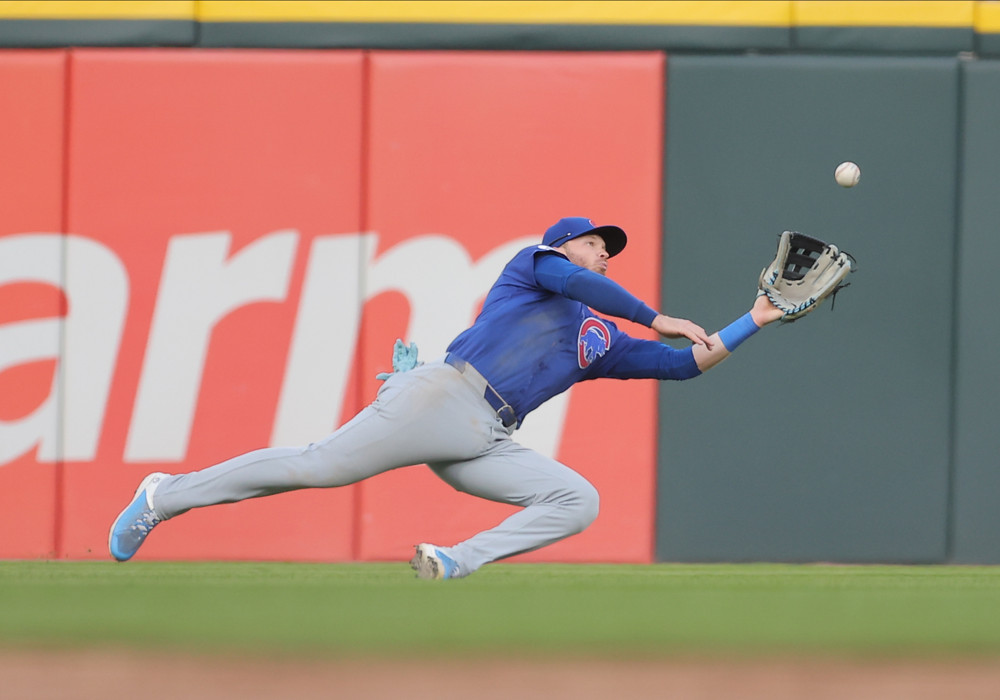
    Did you happen to see this catch by Blue Jays right fielder George Springer against the Red Sox last week? We did and we weren’t particularly surprised by it.

    From 2022 to 2024, no right fielder dove for a ball more than the 30 times that Springer did. In fact, only one other right fielder had even half as many diving attempts in that span as Springer did, his teammate, Anthony Santander (25).

    In those 30 times that Springer dove, he caught the ball 22 times, a success rate of 73%, pretty good given that the average right fielder was successful at making a catch on 54% of his dives (center field and left field have similar rates of effectiveness).

    If you were listening to our most recent episode of The SIS Baseball Podcast, you heard our guest, Hannah Keyser, and I run through “The All-Scrapes Team.” That’s the list of players who dove the most at each infield and outfield position over those three seasons.

    We’re still largely working in small sample sizes for 2025, so we thought it would be fun to review that All-Scrapes squad with some comments related to each of the leaders and positions.

    First Base Pete Alonso dove for balls 139 times from 2022 to 2024. The next-closest first baseman was Carlos Santana (81). Alonso was a little better than average at getting outs on his dives (41% of the time, MLB average was 37%).

    The most effective divers by percentage were Ryan Mountcastle and a relative newcomer to the position, Bryce Harper, both with 60% success rates. Harper ranked second to Alonso in dives by a first baseman last season with 39.

    Second Base – Three second basemen dove more than 100 times in the last three seasons – Andrés Giménez (140), Bryson Stott (113), and Nico Hoerner (112). Of those, Giménez is the most successful, recording an out on 25% of his dives (MLB average is 24%).

    Brendan Rodgers had the best track record at getting outs on dives (45%). At the other end is Jeff McNeil, who got an out just five times on 60 diving attempts (8%).

    Shortstop – The leaders in dives are Geraldo Perdomo and C.J. Abrams with 111. The average shortstop is successful on only 21% of his dives, so Perdomo’s 32% looks pretty good.

    Perdomo and Abrams played the position differently from a lot of shortstops. The average shortstop dives every 2.5 times for every time he slides to make a play, but Perdomo and Abrams almost never slid, doing so just 7 and 3 times, respectively.

    Third Base – Alec Bohm (115) and Rafael Devers (96) ranked 1-2 in dives in that time. Before you say, ‘Only bad fielders dive for balls,’ you should know that the next five players in diving attempts are Matt Chapman, Austin Riley, Ryan McMahon, Ke’Bryan Hayes, and Alex Bregman.

    Of the 20 third basemen who dove the most, the one who got an out most often was Manny Machado (38%).

    Left field – Jurickson Profar (27) and Ian Happ (26) are the top two here. Happ goes all out for balls in all sorts of ways. His 133 slides, dives, and jumps in that span were miles ahead of the player with the second-most, Lourdes Gurriel Jr., 78. Shout-out to Brandon Nimmo, who has split time center field and left field and has recorded an out on 80% of his dives over the last three seasons.

    Center field – Brenton Doyle is another outfielder who goes all-out, so much so that he had more dives in two seasons (34) than any other center fielder had in three. He won a Fielding Bible Award last year for playing with a high effort level. Standouts at getting outs when they played center field and dove included Riley Greene (79%) and Cedric Mullins (78%)

    Right field – As mentioned above, Springer leads the way in dives here and is highly effective when he does dive.

    All Players – Because some players switch positions, we thought it was worth checking the overall leaderboard, and in fact, the top diver was a position switcher – Nico Hoerner of the Cubs has 155 dives for balls over the last three seasons. However, we’re wondering if he might be able to save his body a little bit. He’s been successful at getting an out on only 15% of his diving attempts.

    Here are the leaders by position:

    Most Diving Attempts – 2022 to 2024

    Player Dives
    1B- Pete Alonso 139
    2B- Andrés Giménez 140
    SS- Geraldo Perdomo (tie) 111
    SS- C.J. Abrams (tie) 111
    3B- Alec Bohm 115
    LF- Jurickson Profar 27
    CF- Brenton Doyle 34
    RF- George Springer 30
    Overall- Nico Hoerner 155
  • Stat of the Week: 10 Seasons Of Strike Zone Runs Saved Part II

    Stat of the Week: 10 Seasons Of Strike Zone Runs Saved Part II

    Last week we looked back at 10 seasons of data for our pitch-framing stat, Strike Zone Runs Saved, which puts a run value on the result of taken pitches, and we looked at which catchers have fared best and worst in those measurements.

    One of the neat things about Strike Zone Runs Saved (SZRS) is its flexibility. It can also be used to evaluate hitters, pitchers, and umpires. We can see which batters and pitchers are getting more or fewer called strikes than expected. We can also see which umpires are calling more or fewer strikes than expected. 

    Batters

    Batters With Most Extra Called Strikes, 2015-2024 (minimum 5 seasons)

    SZRS per season
    Xander Bogaerts 1.0
    Curtis Granderson 0.9
    Wilmer Flores 0.9
    Alcides Escobar 0.9
    Luis Garcia Jr. 0.8

    Batters With Most Extra Called Balls 2015-2024 (minimum 5 Seasons)

    SZRS per season
    Rhys Hoskins -1.5
    Bryce Harper -1.4
    Charlie Blackmon -1.4
    Ryan McMahon -1.3
    Carlos Santana -1.3

    What these tables are showing is that Xander Bogaerts is getting more called strikes against him than he should be (and the most above what he should be of any hitter in the majors in the last 10 seasons). Rhys Hoskins and Bryce Harper are at the other end of the spectrum. They get a more favorably called strike zone than other hitters.

    The scale for batters isn’t mind-blowing, just a run per season at the extremes. And that’s not shocking, considering there isn’t some obvious direct mechanism by which the batter might influence a strike call, other than maybe how close he stands to the plate. 

    However, there does seem to be some kind of a reputation effect at play. You don’t see it as clearly in the top five, but here are the top 20 in each group:

    • Extra strikes: Xander Bogaerts, Curtis Granderson, Wilmer Flores, Alcides Escobar, Luis Garcia Jr., Carlos Correa, Nomar Mazara, Thairo Estrada, Ian Kinsler, Yolmer Sanchez, Mark Canha, Joey Wendle, Logan Forsythe, Isaac Paredes, Brock Holt, Jorge Polanco, Eloy Jimenez, Donovan Solano, Hunter Pence, Domingo Santana
    • Extra balls: Rhys Hoskins, Bryce Harper, Charlie Blackmon, Ryan McMahon, Carlos Santana, Russell Martin, J.P. Crawford, Jed Lowrie, Dustin Pedroia, Cody Bellinger, Freddie Freeman, Yasmani Grandal, Yadier Molina, Nathaniel Lowe, Buster Posey, Carlos Gonzalez, Corey Seager, Shohei Ohtani, Joey Votto, Yonder Alonso

    There are several MVPs and a few near-misses in the hitter-friendly group, and none in the pitcher-friendly group. That seems unlikely to be a coincidence. 

    It’s also notable that there are four catchers in the hitter-friendly group and none in the pitcher-friendly group. At a more macro level, only one player who had at least five years at catcher in the last 10 had more than a quarter of a run per season go against him (Ryan Jeffers). There were 19 catchers on the positive side of that.  

    You often hear about catchers not wanting to get into a tiff with an umpire when they’re batting because they want to get good calls as a catcher, but they seem to get a little bit of favoritism regardless.

    Pitchers

    Pitchers With Extra Called Strikes, 2015-24 (minimum 5 seasons)

    SZRS per season
    Jon Lester 1.6
    Gio Gonzalez 1.2
    Masahiro Tanaka 1.1
    Clayton Kershaw 1.1
    Steven Wright 1.0

    Pitchers With Fewer Called Strikes, 2015-2024 (minimum 5 seasons)

    SZRS per season
    Framber Valdez -1.4
    Zack Wheeler -1.2
    Yusei Kikuchi -0.9
    Eric Lauer -0.7
    Jake Arrieta -0.7

    For those who have believed that Clayton Kershaw gets strike calls because he’s Clayton Kershaw, perhaps his inclusion on the list adds a little something to that belief. He’s among the pitchers who have gotten more calls than expected. That Framber Valdez and Zack Wheeler are still succeeding in spite of having arguably the least pitcher-friendly strike zone is illustrative of their reliance on ground balls and missed swings, respectively.

    We’re not sure what to otherwise make of these lists other than that the strike zone is tighter for current pitchers. The calculation of Strike Zone Runs Saved uses a rolling two-year window, so slight changes to rules are accounted for, but it isn’t going to move immediately when guidelines change.

    Umpires

    More Called Strikes Than Expected (2015-2024, Minimum 5 Seasons)

    SZRS per season
    Doug Eddings 11.7
    Bill Miller 9.5
    Lance Barrett 6.2
    Phil Cuzzi 6.0
    Mike Estabrook 5.3

    Fewer Called Strikes Than Expected (2015-2024, Minimum 5 Seasons)

    SZRS per season
    Alfonso Márquez -6.7
    Edwin Moscoso -6.2
    Mark Wegner -5.3
    Carlos Torres -5.2
    Tom Woodring -4.6

    As we’ve previously noted in Stat of the Week, Doug Eddings and Bill Miller have and have had the most pitcher-friendly strike zones in baseball. They’ve largely gone unchanged over the years. Lance Barrett, Phil Cuzzi, and Mike Estabrook are all big strike zone umpires, though they don’t occupy the same ballpark as Eddings and Miller.

    At the opposite end of things are the umpires with the most hitter-friendly strike zones in baseball. Alfonso Márquez has been known to have a smaller strike zone than most of his peers for years. The spread among the five umpires listed above with the most hitter-friendly zones isn’t as vast as the gap between Eddings, Miller, and their fellow umpires.

    One other note about Eddings, Miller, and Márquez is that though these numbers indicate they favor either the pitcher or hitter more than any other umpires, this does not seem to have impacted how they are viewed by the MLB office. They each been given prominent postseason assignments the last few years. Miller and Márquez worked the 2023 World Series. Eddings was on the World Series crew in 2024.

  • 2025 NL Team Defensive Storylines   

    2025 NL Team Defensive Storylines  

     Photo: Cliff Welch (left) and Larry Radloff (right)/Icon Sportswire 

    Over on our website, we spent two weeks looking at the defensive strengths and weaknesses of all 30 MLB teams heading into 2025. That makes our look at the top defensive storyline for each team heading into the season easier to do. 

    We did the American League last week and now this week, we’ll touch on the National League. Click the links to read the article for each team (some things may be slightly outdated).

    Braves The Braves are pretty good to very good at the corner infield spots and center field. The questions will be at the corner outfield spots where Jurickson Profar (-19 Runs Saved in left the last two seasons) and Ronald Acuña Jr. (-11 Runs Saved in right field the last three seasons) are going to be challenged.

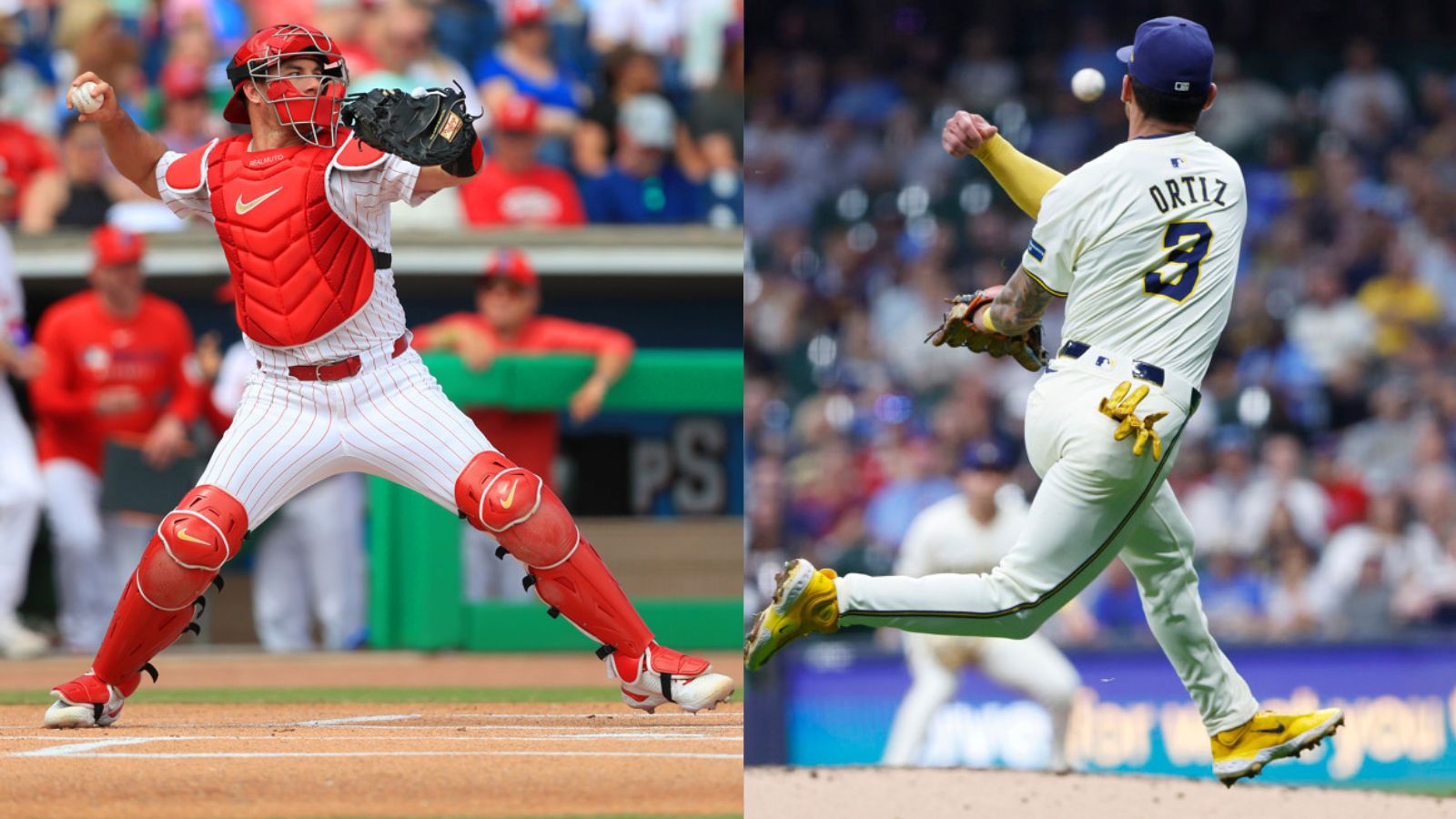
    BrewersThis should be one of the best defensive teams in the NL. They can put three standout outfielders on the field at any time. Joey Ortiz, a good defender, moves from third base to shortstop to replace Willy Adames, who ranked last in the majors in Runs Saved at the position last season.

    Cardinals A couple of concerns: Willson Contreras moves to first base, where he’s played 11 MLB games in his career and hasn’t played since 2019. The full-time catcher, Ivan Herrera, threw out 2-of-57 would be basestealers last season.

    CubsYou could make a case for the Cubs having MLB’s best defense this season. One intriguing thing could be how Kyle Tucker handles the wind playing right field at Wrigley Field. Tucker’s Runs Saved the last few seasons have been boosted by home run robberies at Minute Maid Park. He won’t be able to do that at Wrigley.

    DiamondbacksThe Diamondbacks are good up the middle but weaker at the corners. Josh Naylor replacing Christian Walker at first base represents a 13-run defensive downgrade (Walker had 7 Runs Saved in 2024, Naylor had -6). Third baseman Eugenio Suárez, though never terrible at third base, has not finished a season with positive Runs Saved in the last seven years.

    DodgersThe biggest question would be how much this team’s defense gets bitten by the aging curve. Their projected starting lineup on FanGraphs features six position players 30 or older and another starter who’s about to be (Tommy Edman). Plus everyone on the bench is over 30 too. We’ll see how the team’s positioning masterminds handle potentially declining skills.

    Giants How does shortstop Willy Adames handle the pressure of a big contract and recover from a 2024 season in which he ranked last among shortstops in Defensive Runs Saved? That and Jung-Hoo Lee in center field are the two big things to watch.

    MarlinsThis is a hard team to get a full read on because they don’t have a projected starting position player with even three years of MLB service time. The Marlins finished 27th in Runs Saved in 2024, so we don’t have much optimism. If you’re looking for one guy to watch, it’s second baseman Otto Lopez who has 9 Runs Saved in 103 career games there.

    MetsThe Mets paid a ton for right fielder Juan Sotos bat but they also get his glove, which has not rated impressively the last few seasons. Soto’s range with the Yankees left something to be desired (-6 Range Runs Saved in 2024) though his arm made up for some of that.

    Nationals Washington has a pair of young and exciting corner outfielders in James Wood and Dylan Crews. Wood had trouble in left field during his time in MLB last season (-7 Runs Saved) but Crews fared alright in right field, and on The SIS Baseball Podcast, Washington Post national baseball writer Chelsea Janes said he looked good in spring training too. He looks like he could be a complete major league player.

    PadresCan Fernando Tatis Jr. bounce back from the stress fracture that cost him considerable time last season? Tatis had 29 Runs Saved in right field in 2023 but dropped to 0 in 2024.

    Phillies The Phillies have a decent defensive team, with a solid right side of the infield in Bryce Harper and Bryson Stott. How J.T. Realmuto holds up behind the plate as he ages could be a story after a knee injury limited him last year. The team already has two notable weaknesses in the field (Nick Castellanos and Trea Turner) and the defense would be hindered if Realmuto’s performance dips.

    PiratesOneil Cruz got his feet wet with 23 games in center field last season. He had -3 Runs Saved, but more notably 9 Misplays & Errors (a high total for a small span of games). Cruz replaces Michael A. Taylor, one of the better defensive center fielders in the game.

    RedsJose Trevino was added this offseason to improve the Reds backup catcher spot and now he’s the regular starter with Tyler Stephenson injured. Trevino’s 45 Runs Saved over the last 4 seasons lead all catchers and he’s an excellent pitch framer, so what he doesn’t have in his bat, he should make up for some with his glove.

    RockiesThe Rockies have three Gold Glove/Fielding Bible Award-caliber defenders in shortstop Ezequiel Tovar, third baseman Ryan McMahon, and center fielder Brenton Doyle. But how many games can the Rockies win with defense to make up for their deficiencies elsewhere?

  • Stat of the Week: 2025 AL Team Defensive Storylines

    Stat of the Week: 2025 AL Team Defensive Storylines

    Over on our website, we’re looking at the defensive strengths and weaknesses of all 30 MLB teams heading into 2025. That makes our look at the top defensive storyline for each team heading into the season easier to do.  

    We’ll do the American League this week and the National League next week. Click on the link for each team for a more detailed analysis.

    Angels – It’s been a little while coming but Mike Trout is finally moving to right field, flipping places with Jo Adell, who will start the season in center field. Past studies that we’ve done at SIS show that center fielders improve by about 8 Runs Saved per 1,000 innings when moving to a corner spot. Meanwhile, Adell was the team’s top defensive outfielder last season, finishing with 6 Runs Saved. Corners typically decline about 7 runs per 1,000 innings when moving to center field.

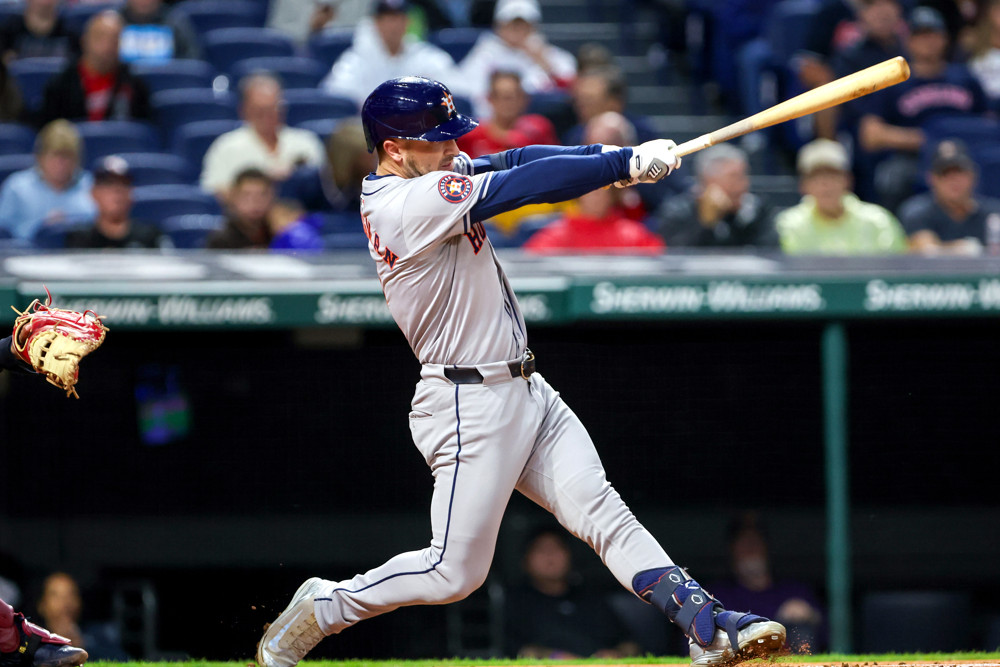
    Astros – Jose Altuve makes the move from second base to left field. This was another move that was some time in the making. Altuve totaled -41 Runs Saved over the last three seasons, the worst total for any second baseman.

    Athletics – It could be another rough year for the Athletics in the field. Their top-performing defensive player among their current projected starters is Gio Urshela, who had 0 Runs Saved last season.

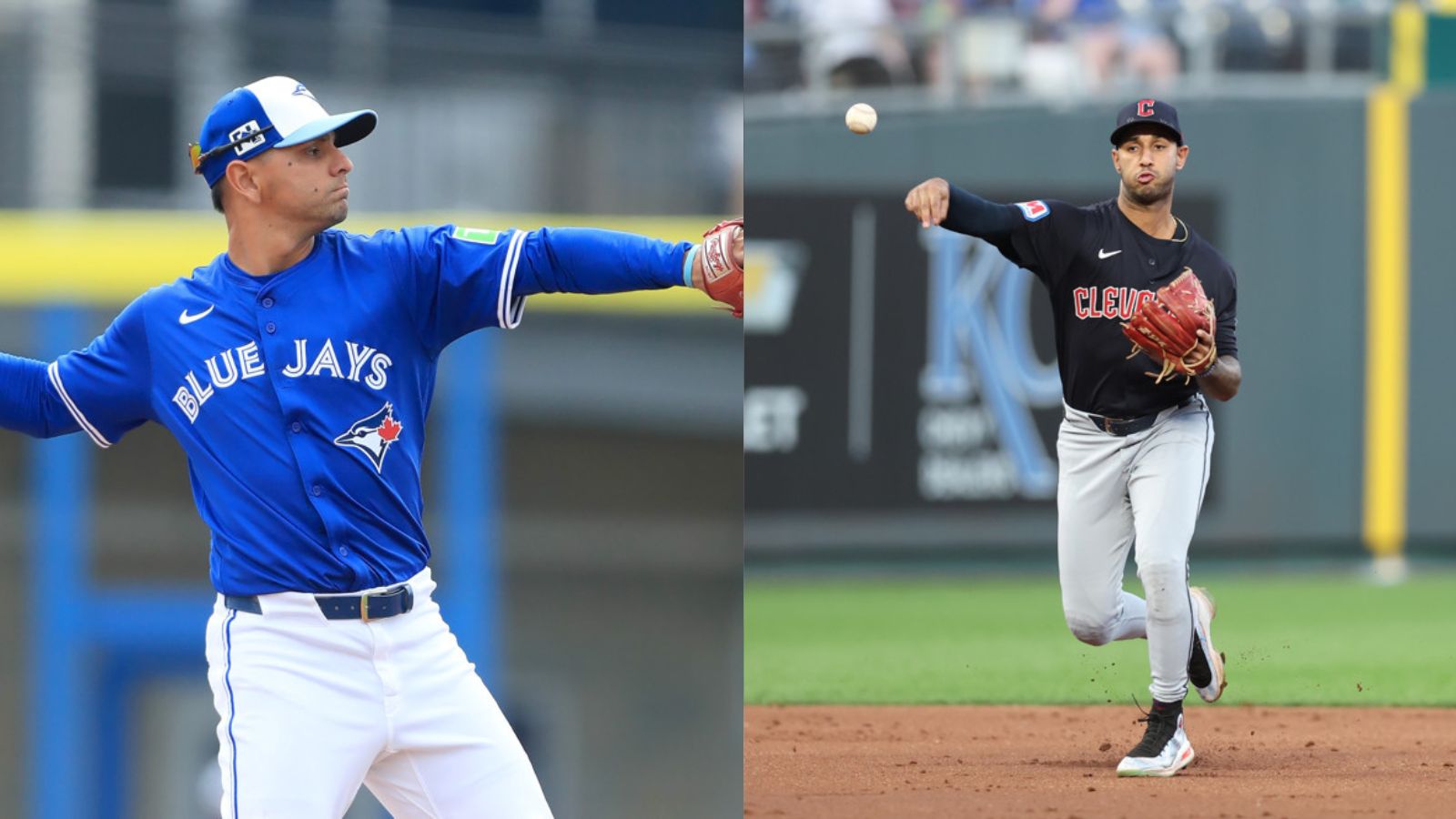
    Blue Jays – The Blue Jays have been the top team in Defensive Runs Saved the last two seasons and they traded for the best defensive second baseman, Andrés Giménez, who is a wizard when it comes to making plays. He’s still in his prime at age 26 and is the runaway leader in Runs Saved at the position over the last three seasons. 

    Guardians – The Guardians are the team that gave up Giménez and they’ll need to find a way to replace him if they want to finish among the top teams in Defensive Runs Saved again. They’ve finished in the top four twice in the last three seasons, including second last year. 

    MarinersThe Mariners could have a very good outfield if Victor Robles plays like he did after joining the Mariners in the middle of last season and If Randy Arozarena has a season more like 2021 and 2023 (7 and 4 Runs Saved, respectively) than 2022 and 2024 (-6 and -8). 

    OriolesThe Orioles were a Top 10 defensive team in 2022 and 2023 before slipping to 19th in Runs Saved in 2024. They should be better in the outfield with newcomer Tyler O’Neill in left field and Colton Cowser moving to right field, replacing Anthony Santander. And they have the potential to be better at positions like catcher (Adley Rutschman) and shortstop (Gunnar Henderson). 

    Rangers – The Rangers placed 11th in Runs Saved last season but have the pieces to be better if Josh Jung and Evan Carter, who looked so good in the 2023 postseason but dealt with injuries in 2024, are good at third base and center field, respectively.

    Rays – The Rays’ best defensive players are in the minor leagues. Top prospect shortstop Carson Williams and first baseman Tre Morgan both have earned major props from scouts for their defense. Our metrics back that up. They’ve both notched positive Runs Saved totals in the minor leagues, which isn’t that easy to do.

    Red Sox – The Alex Bregman/Rafael Devers ‘who plays third base?’ drama may play out for a little while, but there’s no contest as to which one is the better defender. Bregman, coming off a Gold Glove, will man the spot to start the season. He had 6 Runs Saved at third base last season, 15 more than Devers.

    RoyalsThe Royals will try to find playing time for Freddy Fermin behind the plate. Salvador Perez has finished with negative Runs Saved at catcher for four straight seasons. Fermin finished 3rd in Runs Saved there in 2024 despite ranking 31st in innings caught.

    Tigers – The Tigers finished 5th in Runs Saved last season, though the team got more from defensive positioning than it did from skill. One thing to watch will be how last year’s youngsters, like shortstop Trey Sweeney and center fielder Parker Meadows, follow up on impressive performances in 2024.

    TwinsIt’s said every year but keeping Byron Buxton on the field is vital for the Twins’ success. He had 2 Runs Saved in center field last season. Other Twins center fielders totaled -11 in nearly half of the available innings there.

    White SoxIt can’t be worse for the White Sox than last year, right? They should be better defensively, at least in the outfield where Michael A. Taylor seems the likeliest candidate to play center field. Taylor has the most Runs Saved among center fielders over the last four seasons.

    Yankees – Aaron Judge and Jazz Chisholm return to positions that have treated them well in the past. Judge has won a Fielding Bible Award for his play in right field. Chisholm has 6 Runs Saved in the equivalent of about a season’s worth of games at second base.

  • Stat of the Week: Which Teams Have The Best Defensive Reputations?

    Stat of the Week: Which Teams Have The Best Defensive Reputations?

    Photo: Brian Rothmuller/Icon Sportswire

    We just started a series on our website in which we’ll be asking the question for all 30 teams: Is this a good defensive team heading into 2025?

    You can find the articles here.

    But which teams have the best defensive reputations?

    To answer that, we noted each team’s average rank in Defensive Runs Saved over the last four seasons.  

    Two teams tied for the best average ranking: The Brewers and the Dodgers.

    The Brewers are the only team to rank in the top 6 in Runs Saved in each of the last four seasons. They placed 6th in 2021 and 2022, 2nd in 2023, and 4th in 2024.

    They’re in strong position to do that again. The have four very good defensive outfielders (though Blake Perkins is hurt at the moment), and a Platinum Glove winner at second base in Brice Turang, who led the position in Runs Saved last season.

    The Dodgers have ranked in the top 10 in each of the last four seasons. They’ve finished 10th in 2021, 2nd in 2022, and 3rd in both 2023 and 2024.

    The Dodgers’ success last season was more rooted in the positioning of their players than defensive skill. One of their other biggest strengths is their defensive versatility, with several prominent players (Mookie Betts and Tommy Edman among them) able to play multiple positions.

    Rounding out the top 5 in average rank are the Blue Jays, Guardians, Cardinals, and Rangers, with the latter two teams tied for 5th.

    The Blue Jays are the two-time reigning season leaders in Runs Saved and though Daulton Varsho may play the field less often due to season-ending rotator cuff surgery last season, they added another Platinum Glove winner, second baseman Andrés Giménez.

    The Guardians ranked 3rd in Runs Saved in 2022 and 2nd in 2024, but lost Giménez. They still have a terrific left fielder, Steven Kwan, an impressive young shortstop, Brayan Rocchio, and an improving catcher, Bo Naylor. The Guardians take their defensive play seriously. Both their Triple-A and Double-A affiliates led their respective leagues in Runs Saved last season.

    The Cardinals ranked 1st in 2021 and 5th in 2022, but have slipped to 20th and 13th the last two seasons. The Rangers have three finishes in the top 11, including a 2nd-place standing in 2021.

    Five teams finished with an average rank of 25 or worse. They were the Phillies, Nationals, A’s, Reds, and White Sox.

    Below are the full team rankings:

    Average Rank in Defensive Runs Saved

    Last 4 MLB Seasons

    Team Avg Rank
    Brewers 5
    Dodgers 5
    Blue Jays 6
    Guardians 9
    Cardinals 10
    Rangers 10
    Braves 11
    Astros 11
    Rockies 12
    Yankees 13
    Cubs 13
    Diamondbacks 13
    Rays 13
    Mariners 14
    Orioles 14
    Tigers 15
    Twins 15
    Mets 16
    Padres 16
    Red Sox 18
    Royals 18
    Marlins 18
    Angels 19
    Pirates 21
    Giants 21
    Phillies 25
    Nationals 25
    Athletics 26
    Reds 27
    White Sox 28


  • Stat of the Week: Defensive Standouts Among The Top 100 Minor League Prospects

    Stat of the Week: Defensive Standouts Among The Top 100 Minor League Prospects

    Earlier this week, FanGraphs published its Top 100 Prospects list and with it, current and future scouting grades. There is an overall Future Value (FV) grade on the 20 to 80 scouting scale, and then there are grades relative to skills, such as hitting, raw power, speed, and the one we’re most concerned with, fielding.

    We’re partial to these rankings given that their primary author, Eric Longenhagen, is a Sports Info Solutions alum.

    Eric and his staff had 20 prospects among their Top 100 with a Future Value in fielding of 55 or higher. These are the players that FanGraphs views as having the most defensive promise.

    In addition to charting every major league game, SIS charts the minor leagues, in full or nearly in full from Single-A to Triple-A, though we have slightly less comprehensive data for these levels, most notably outfield positioning.

    Nonetheless, we have Defensive Runs Saved totals for players using an MLB basis for evaluation (in other words, all plays are based on MLB out probabilities). Most minor leaguers have negative Defensive Runs Saved because they’re being judged against MLB players. But not all of them do.

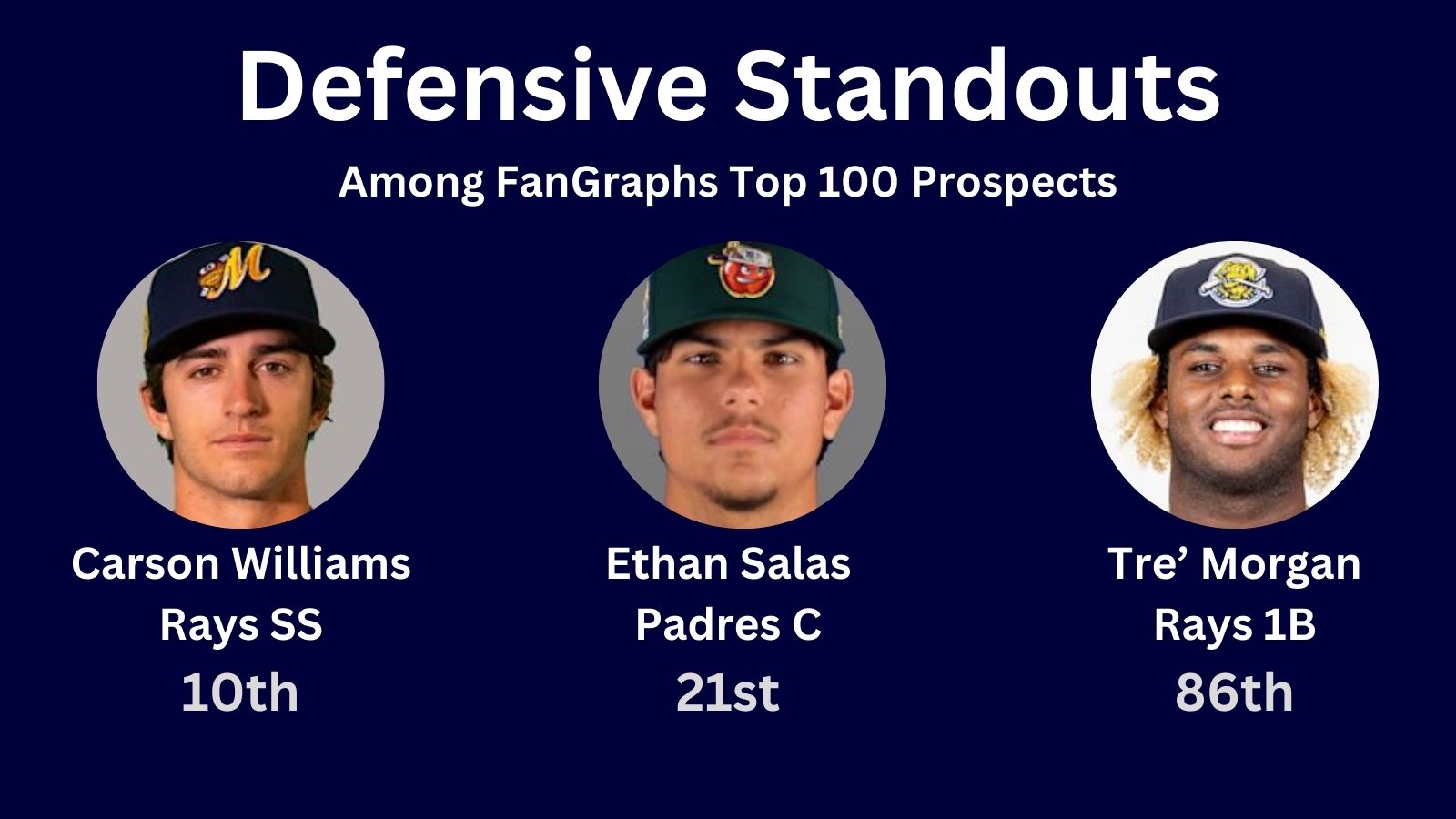
    One of the game’s top prospects is Rays shortstop Carson Williams, whom we’ve referenced here before. He totaled 6 Runs Saved, the most by any minor league shortstop prospect last season. FanGraphs gave Williams a current grade of 60 for his defense and a Future Value grade of 70. They think Williams is “a future Gold Glove shortstop” and peg him as a major leaguer in 2026. Williams ranks as the No. 10 prospect in MLB.

    The only other infielder or outfielder in the Top 100 prospects to get a 55 or higher Future Value grade for defense from FanGraphs and have a positive Runs Saved in 2024 was first baseman Tre’ Morgan. Morgan, whom we interviewed when he was playing for LSU, had 1 Run Saved at first base last season and has an 80 future grade for his defense from FanGraphs.

    Longenhagen also likes Padres catching prospect Ethan Salas—another player who may be a year away from debuting—ranking him No. 21.

    Salas fared well in both the strike-getting and limiting-basestealing components of Runs Saved last season. His 12 Runs Saved ranked in the 95th percentile among catchers in A/High-A.

    Catchers tend to post higher Runs Saved in the minor leagues than other positions do. Of the five catchers other than Salas with good scouting grades, the two with the best Runs Saved totals were Cardinals prospect Jimmy Crooks (77th) and Marlins prospect Joe Mack (69th). Crooks has a future grade of 60 for his defense. He spent 2024 with Double-A Springfield and led catchers at that level with 24 Runs Saved. Right behind him was Mack, who has a 55 future grade for defense. Mack spent 2024 with Double-A Pensacola and totaled 18 Runs Saved.

    This is not to say that these catchers will post Runs Saved totals that high in the majors—after all, single-season defensive metrics are only so predictive, and strike zone enforcement in the minors is different from the majors. But the fact that all three fared so well bodes promising for their future success.

  • Stat of the Week: Alex Bregman Fills A Big Hole Amid Position Switch

    Stat of the Week: Alex Bregman Fills A Big Hole Amid Position Switch

    Photo: Frank Jansky/Icon Sportswire

    The Red Sox signing of Alex Bregman takes the most prominent remaining free agent position player off the board and sets up an intriguing scenario in Boston for 2025.

    The Red Sox will not play Bregman at third base, where he won a Gold Glove last year, but will instead play him at second base, where he’s played 32 professional innings and none since 2018. The game will play a bit slower for Bregman, as being farther from home plate will give him more time to make plays. He’ll also need to be adept at turning the double play with a baserunner coming towards him or sliding into the base.

    There actually aren’t a lot of great recent examples of a player making the third base to second base move with almost no second base experience (most players who have done this in the last 15 to 20 years had at least 40 prior games at the hot corner).

    The best example we could find was Akinori Iwamura, who played third base full time for the Rays in 2007 then moved to second base in 2008. He went from -6 Runs Saved at third to 2 Runs Saved at second.

    In 2012, Daniel Descalso played second base for the Cardinals with only 18 games experience there after playing most of the previous season at third base. He went from -6 Runs Saved at third base to 0 Runs Saved at second base.

    Two examples doesn’t provide enough sample for any sort of prediction, though given Bregman’s skills, you’d expect him to be able to adapt to the position.

    It is worth noting that we did a study for a presentation at the 2020 SABR Analytics Conference that found second base to be a slightly more difficult position on average. A player who plays both positions in the same year is on average measured as 2 runs per 1000 Innings better at third base.

    Should the Red Sox eventually decide to play Bregman at third base, he’d represent a considerable defensive upgrade there. In the last four seasons, he’s totaled 9 Runs Saved there. Red Sox third baseman Rafael Devers ranks tied for last at the position with -38 Runs Saved.

    And speaking of upgrades …

    Biggest Positive: A HUGE Upgrade Offensively

    The move to sign Bregman and play him at second base was made more with offense in mind. Because of how poorly Red Sox second basemen hit last season, he’s more valuable to them than he would be to other teams.

    Red Sox second basemen had a .533 OPS last season, the lowest OPS at the position by 60 points. In fact, the only position groups with lower OPS’ than Red Sox second basemen in 2024 were Marlins and White Sox catchers.

    Lowest OPS – Second Basemen in 2024

    Team OPS
    Red Sox .533
    Angels .593
    Giants .603
    White Sox .620
    Orioles .628

    Bregman’s .768 OPS in 2024 was a career low but still 18% better than MLB average (adjusting for ballpark). Only three teams got a higher OPS than that out of their second baseman. As a group second basemen had a .684 OPS last season. Only catchers (.678) had a lower OPS.

    Bregman’s batting average and slugging percentage have been consistent the last three seasons. He’s hit .259, .262, and .260, and slugged .454, .441, and .453.

    Red Flag: OBP Plummeted

    The one red flag in Bregman’s game is that his on-base percentage dipped to .315 in 2024. It had been .350 or higher every year from 2017 to 2023.

    He was a more willing swinger in 2024 than he was in any of the previous six seasons and his 26.5% chase rate was his highest of any season in his career other than his debut year, 2016.

    Bregman struck out 86 times and walked only 44, a far cry from his 87 and 92 walks the previous two seasons in similar playing time (years in which he had more walks than strikeouts). Bregman’s walk rate dropped by nearly 6 percentage points from 2023, the biggest decline of any hitter in MLB.

  • Stat of the Week: Active Players & The Baseball Hall of Fame

    Stat of the Week: Active Players & The Baseball Hall of Fame

    Who are the current top Baseball Hall of Fame candidates among active players?

    A few years ago, Bill James devised a formula that works well hand-in-hand with Jay Jaffe’s JAWS system. Bill called it Hall of Fame Value (HOF-V) and it was simply the sum of a player’s Win Shares* and four times his Wins Above Replacement (Baseball-Reference version).

    * Win Shares is a player value stat that was shared publicly by Bill in 2002. You can learn more about it here and find individual player totals here. 

    After studying the data, Bill noted that an HOF-V of 500 was generally a good indicator of a player being Hall-worthy (with a caveat that, in most cases, the system evaluates position players better than pitchers). The more a player’s HOF-V is over 500, the more deserving the player is of election.

    Here are the active leaders in HOF-V:

    Player HOF-V
    Mike Trout 708
    Freddie Freeman 603
    Justin Verlander 594
    Paul Goldschmidt 567
    Clayton Kershaw 557
    Mookie Betts 547
    Max Scherzer 534
    Andrew McCutchen 530
    Jose Altuve 504
    Manny Machado 500
    Bryce Harper 483
    Nolan Arenado 459
    José Ramírez 453

    The players at the top of this list feel like locks for induction or very strong candidates: Players like Mike Trout, Freddie Freeman, Justin Verlander, Paul Goldschmidt, Justin Verlander, Clayton Kershaw, Mookie Betts, and Max Scherzer.

    The intrigue within this list is among those players who are in the 450 to 530 range. Let’s do a quick review of those.

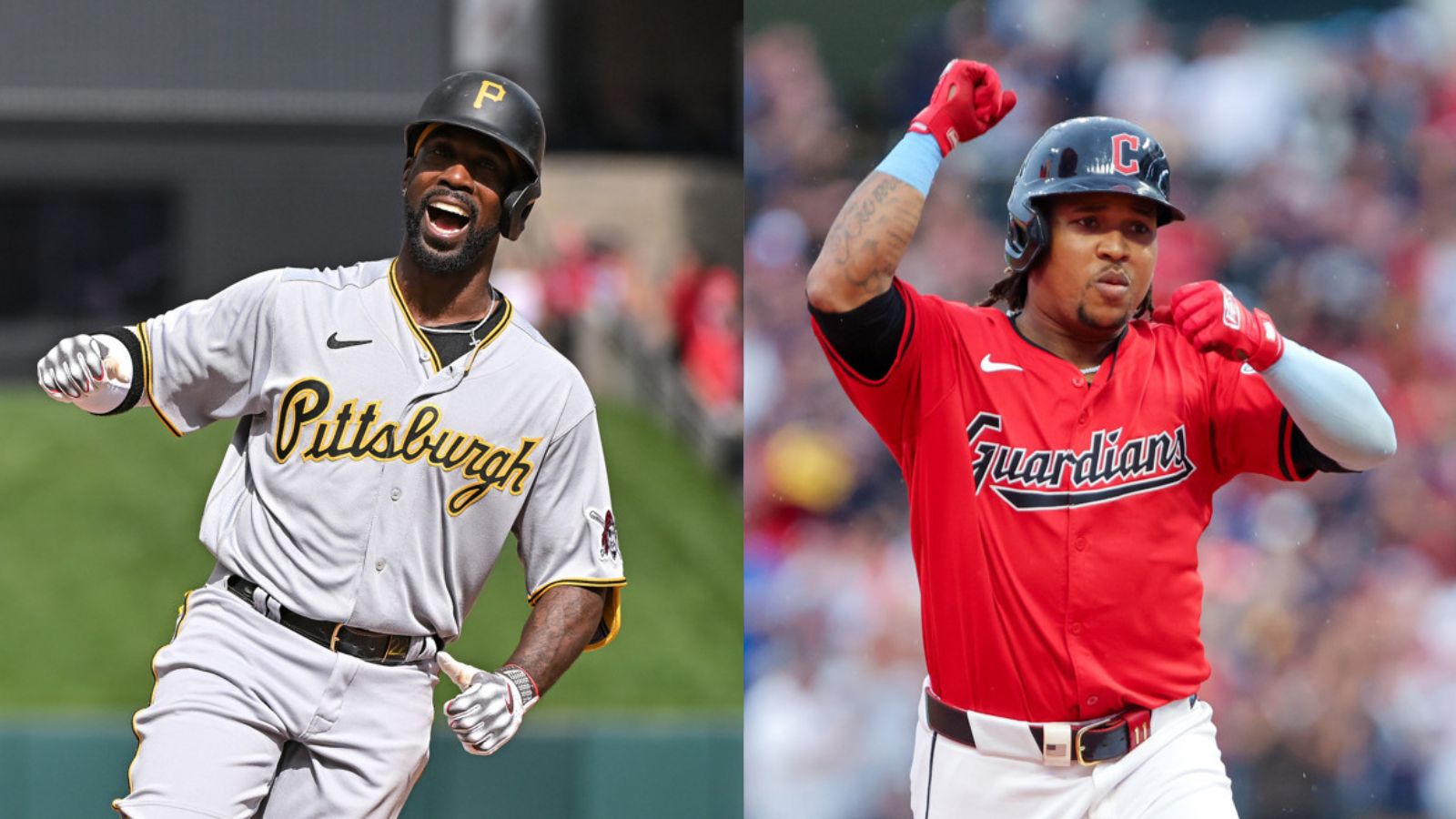
    Andrew McCutchen (530) – HOF-V likes McCutchen better than any of the publicly available Hall of Fame evaluation systems. His 333 Win Shares are better than (among others) recent Hall inductees Todd Helton, Larry Walker, Scott Rolen, and Ichiro Suzuki.

    What hurts McCutchen from a WAR perspective is his defense. He ranks 16th in the offensive component of WAR among those whose primary position was center field, but bad defensive numbers drag him down to 32nd overall at the position.

    Jose Altuve (504) – Altuve will be in his age 35 season in 2025. He’s shown he can still hit but he too has defensive deficiencies to address. And he’s also got the residual effects of the Astros cheating scandal to deal with whenever he does retire, though Carlos Beltrán’s likely Hall election next year may help clear a path for Altuve too.

    Manny Machado (500) – Machado is 32 years old and seems to still have some skill left. Another couple of good years could push him to the 600 range in which case he’d be a very strong candidate.

    Bryce Harper (483) – Barring an injury or something unusual happening, Harper will clear 500 HOF-V this season and is probably headed to a 600-plus career total. In any event, he’ll probably be undervalued by this system given that it doesn’t recognize awards and his being one of the faces of baseball.

    Nolan Arenado (459) – After a spectacular 2022, Arenado’s last two years have been blah, both as a hitter and fielder, and he’s probably going to be traded by the Cardinals before the season starts. He may need a resurgence to make himself a little more Hall-viable.

    José Ramírez (453) – Ramírez is trending up. He has a streak of four straight seasons with at least 5 WAR. Another good year at age 32 should push him past the 500 threshold and at the rate he’s going, 600 isn’t out of the question within a few years. Two years ago he was well behind Arenado in the third base pecking order, but the gap between them is much closer now.

  • Stat of the Week: New Year’s Resolutions With A Defensive Twist

    Stat of the Week: New Year’s Resolutions With A Defensive Twist

    Photos: Nick Wosika (left), Charles Brock (right)/Icon Sportswire

    It’s the middle of January and most of us have probably broken or abandoned our New Year’s Resolutions by now. But the subject (and a lack of notable transactions recently) got me to thinking about defense-minded New Year’s Resolutions for 2025.

    Here are a few that came to mind:

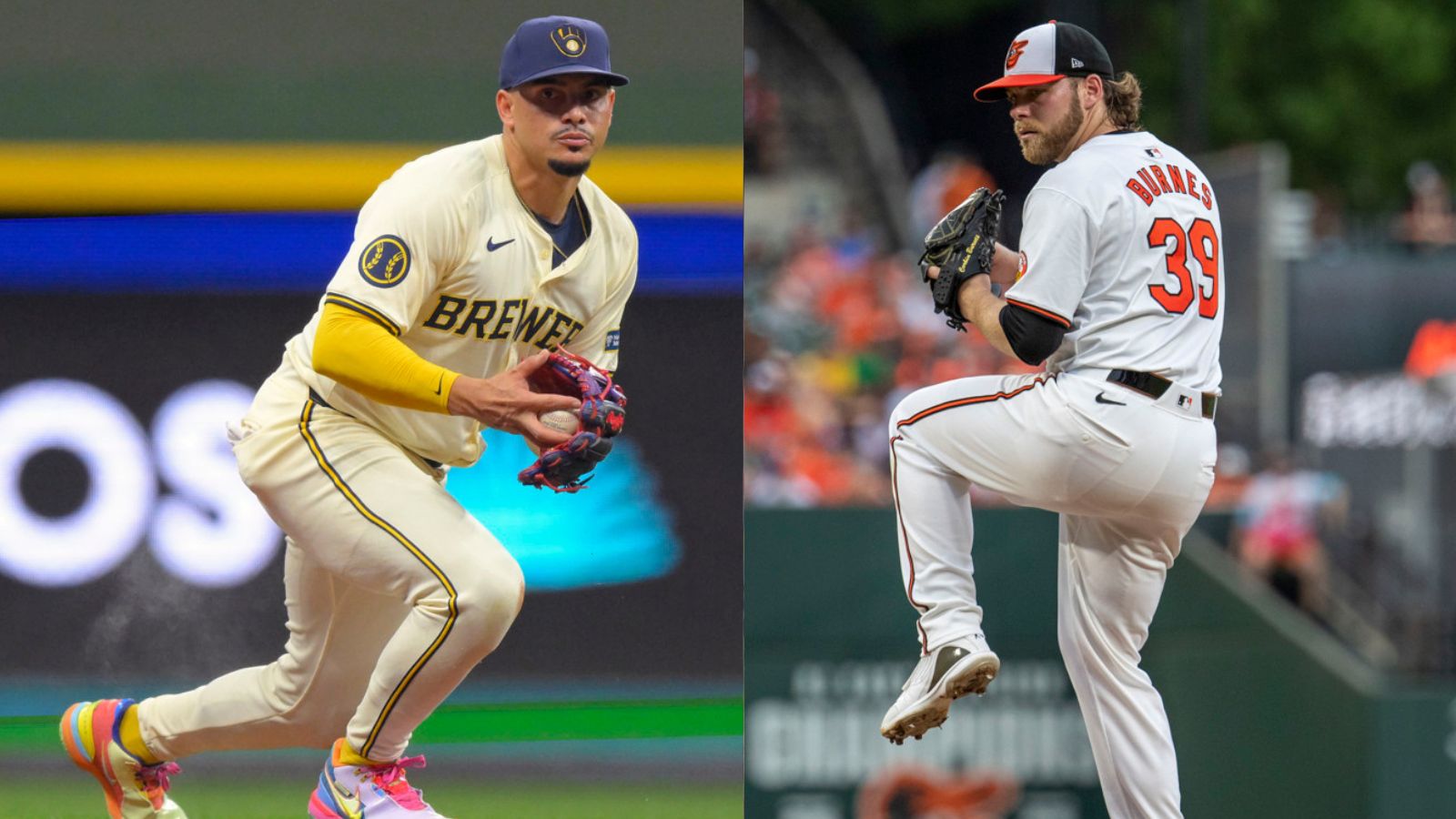
    For Corbin Burnes: I will do my part to hold baserunners better

    Corbin Burnes allowed an MLB-high 41 stolen bases last season, more than double his prior career high of 18. This was an issue regardless of whether Adley Rutschman or James McCann was catching him. Burnes’ average time to the plate was about .13 seconds slower in 2024 than it was in 2023 and he ranked in the bottom 10% of pitchers in that stat last season.

    This season, he’ll primarily be throwing to one of MLB’s best defensive catchers, Gabriel Moreno of the Diamondbacks. Moreno won a Fielding Bible Award two years ago, largely on the strength of his limiting basestealing. Last year, Moreno allowed 40 stolen bases, one fewer than Burnes, catching almost 550 more innings than Burnes pitched.

    For Aaron Judge: I won’t let my World Series blunder impact my return to form in right field

    Aaron Judge had such a ridiculous season as a hitter that it overshadowed his poor defensive numbers in center field (-9 Runs Saved). Judge’s center field defense came back to get him in the World Series, when he dropped a fly ball during the Dodgers’ five-run rally in the fifth inning of the series-clinching Game 5.

    With the Yankees signing Cody Bellinger and losing Juan Soto to the Mets, Judge will move back to right field, a position where he’s twice led the majors in Runs Saved and won a Fielding Bible Award, albeit as a younger player. Judge turns 33 in April and has dealt with injuries that have slowed his defensive game down. So, he’ll be challenged by more than just the stigma of that one miscue.

    For Willy Adames: I’ll fix my forehand

    Willy Adames went from being a reliable shortstop to a defensive issue last season. He totaled an MLB-worst -16 Defensive Runs Saved at shortstop.

    Adames had the same number of touches on his forehand (balls he touched in the field) in 2024 as he had in 2023 but was successful in recording at least one out 20 fewer times. He went from being one of the best defenders on those balls to one of the worst.

    Adames is now on a team that is hungry for good defense at the position. The Giants have gotten -38 Runs Saved at shortstop the last three seasons, the second-worst total in MLB.

    For the Minnesota Twins: We’ll have a better backup plan

    The Twins got exposed defensively when some of their regular players went down with injuries or didn’t play. Byron Buxton had 2 Runs Saved in the 94 games he played in center field. The Twins got -11 Runs Saved at the position when he didn’t play. There was a similar issue at shortstop with Carlos Correa and his injury replacements as well.

    One problem for the Twins was that though they had good defensive versatility with Willi Castro and Austin Martin, those players didn’t perform at a high level relative to their peers. Castro totaled -18 Runs Saved split between five positions. Martin had -13 split between left and center field (we should note he was a rookie and was drafted as an infielder).

    The Twins haven’t had a particularly active offseason but there’s still time to attack these issues if they choose.

  • Stat of the Week: No. 1 Team Entering NFL Playoffs: The Ravens

    Stat of the Week: No. 1 Team Entering NFL Playoffs: The Ravens

    Photos: Ian Johnson (left), Mark Goldman (center), Leslie Plaza Johnson (right)/Icon Sportswire

    Let’s take a one-week break from baseball to touch on something going on in one of the other sports we cover, the NFL Playoffs.

    Much like SIS devised Defensive Runs Saved as a way to get a better understanding of what was going on in the sport, so too did it create Total Points, a stat that puts a value to almost everything that happens on a football field, taking things into account such as broken tackles, yards after the catch, and blown blocks.

    Total Points uses the Expected Points Added (EPA) framework. EPA works by taking any given situation and finding the odds that each different scoring possibility comes next.

    Total Points is a player level stat, but similar to Wins Above Replacement in baseball, it can be summed to create an overall team value, which we do on a per-play basis.

    A much more comprehensive explanation can be found on our website here.

    So let’s apply this to the NFL playoffs. Here are the playoff teams listed with their 2024 season ranking in Total Points Per Play.

    Team Total Points Per Play Leaderboard – 2024 Season

    Team Total Points Per Play Rank
    Ravens 1st
    Lions 2nd
    Bills 3rd
    Packers 4th
    Eagles 5th
    Broncos 6th
    Chargers 7th
    Vikings 8th
    Chiefs 11th
    Steelers 13th
    Buccaneers 15th
    Commanders 17th
    Rams 19th
    Texans 22nd

    One important thing to note here: These numbers are based on the entire season, meaning that a game in which a team rests its starters counts as much as any other game.

    Case in point: The Chiefs dropped from 7th to 11th after getting shut out by the Broncos. While 11th may not be a reflection of Kansas City’s true talent, it’s worth noting they weren’t dominant in this statistic prior to that, standing about even with the Chargers and Broncos.

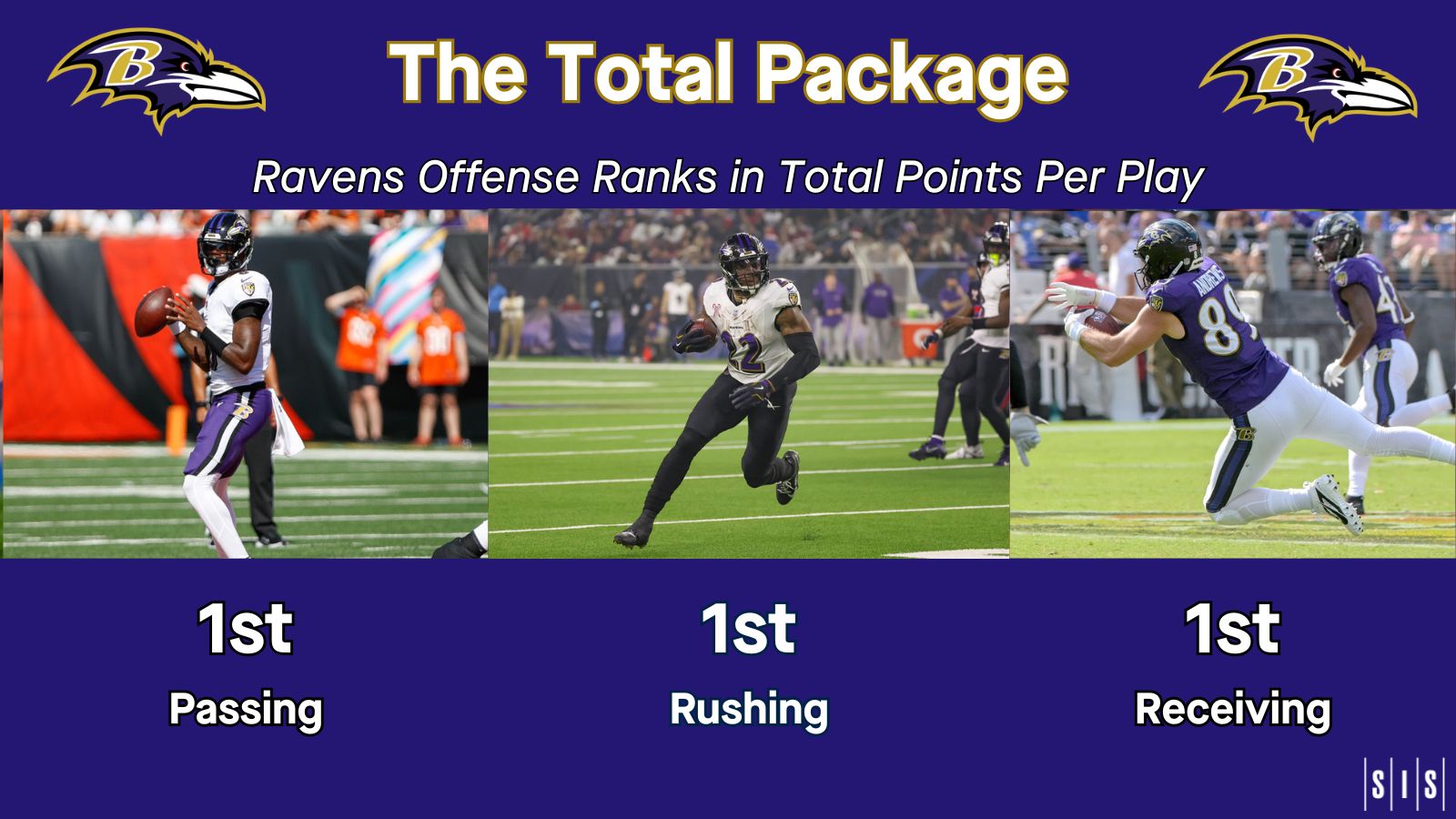
    The Ravens, not the top-seeded Chiefs and Lions, are the No. 1 team in Total Points Per Play. Between Lamar Jackson’s overall excellence passing (41 touchdowns, 4 interceptions) and rushing (915 yards) and the dominance of running back Derrick Henry and his 1,921 rushing yards and 6 yards per carry, the Ravens have the No. 1 offense by Total Points Per Play.

    In fact, they’re No. 1 in the Passing, Rushing, and Receiving Components, and No. 6 in Blocking. Jackson is the No. 1 QB on a per-play basis. Henry is the 3rd-ranked running back and Justice Hill ranks 5th.

    Defensively, the Ravens rank 12th in Total Points Per Play allowed and they’re trending in the right direction. They allowed only 43 points in the last four games of the season.

    The defense does have some imperfections. The Ravens allowed 10 points to the Bills in Week 4 but also yielded 31 to the Buccaneers and 38 and 34 in two meetings against the Bengals, so they’re at least a little susceptible to a good offensive team. Baltimore faces Pittsburgh this weekend, a team against whom it allowed 18 and 17 points, respectively, in their two meetings.

    The weakest offense among postseason teams belongs to the Texans, who rank 25th. Quarterback C.J. Stroud took a step back this year, though the Texans were still good enough to win a weak AFC South.

    The top-ranked defense by Total Points Per Play belongs to the Eagles. The Eagles ranked 3rd in all three defensive components – Run Defense, Pass Rush, and Pass Coverage. They just edged out the Broncos, who ranked 7th, 6th, and 2nd in those stats, respectively, as the top defensive team.

    Philadelphia turned it up a notch at the season’s quarter-point. The Eagles allowed 24 points per game in their first four games and 16 points per game in their last 13 games. Their top contributor by Total Points was Zack Baun, who led all NFL linebackers in that stat.

    The weakest defense in the playoffs– by these numbers– belongs to the Commanders, who rank 25th overall, 27th in Run Defense, 21st in Pass Rush, and 19th in Pass Coverage. Washington’s best defense would be to keep its top 10 offense and superstar quarterback Jayden Daniels on the field as much as possible.

    To see the full team Total Points rankings, click here for our final regular season report.