Category: John Dewan’s Stat of the Week

  • Stat of the Week: MLB’s Rising Defensive Stars

    Stat of the Week: MLB’s Rising Defensive Stars

    Photo: Brandon Sloter/Icon Sportswire


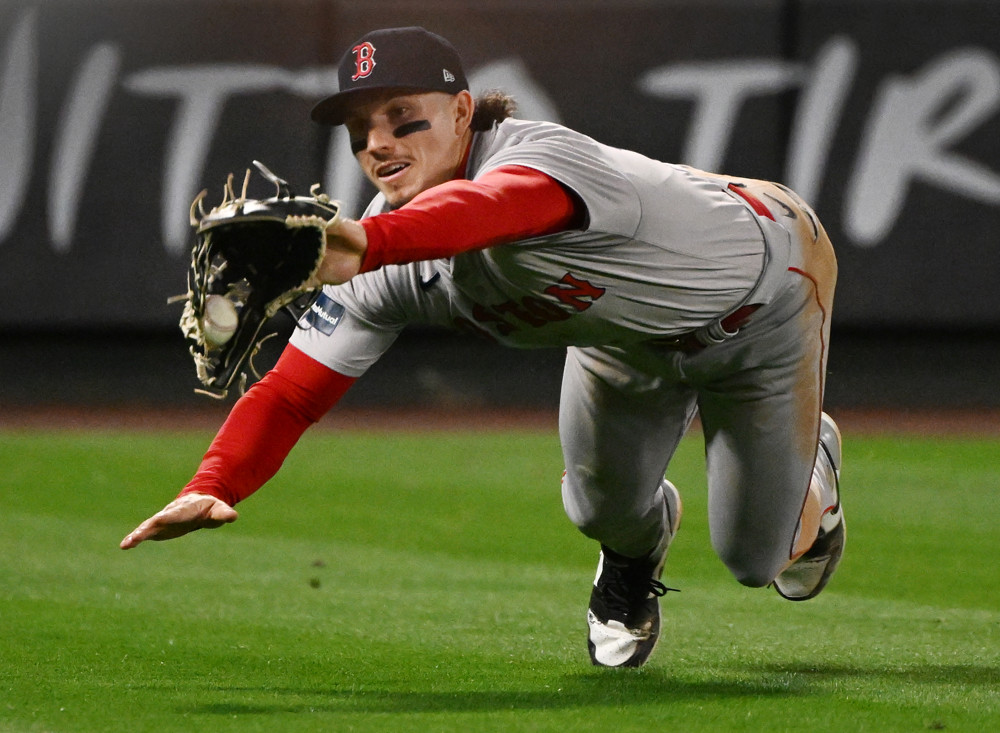
    A year ago at this time I wrote about MLB’s rising defensive stars, and now seems like a good time to do that again looking to 2024.

    There are 4 players on active rosters this spring who will be in their age-23-or-younger season in 2024* and who had at least 10 Defensive Runs Saved in the major leagues in 2023. They’re in our spotlight heading into the upcoming season.

    * Age 23 or younger as of June 30, 2024

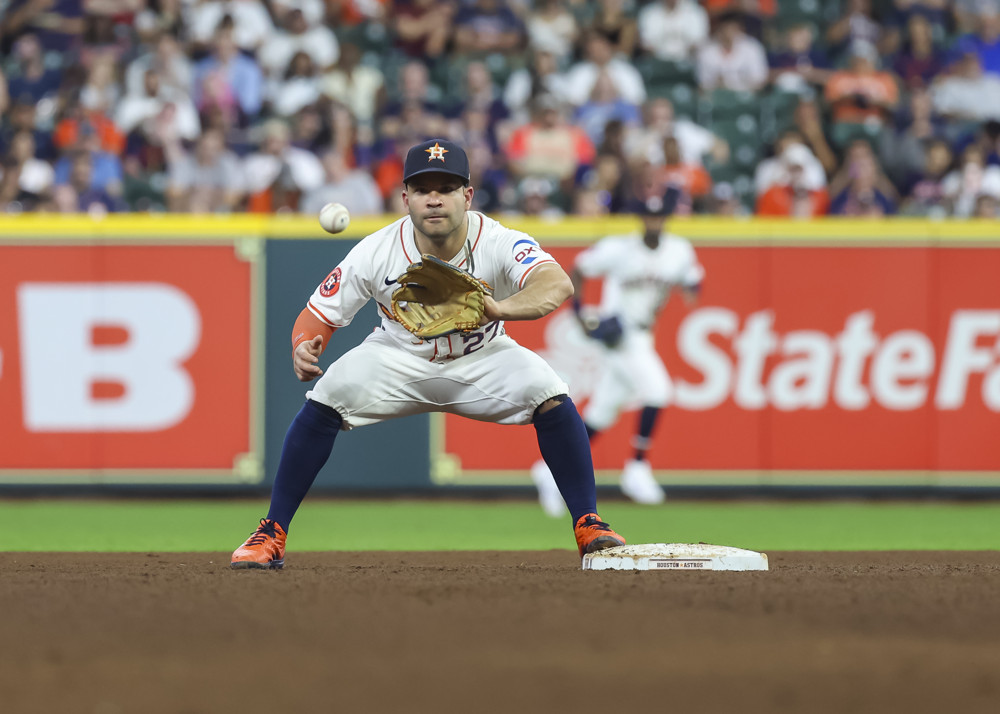
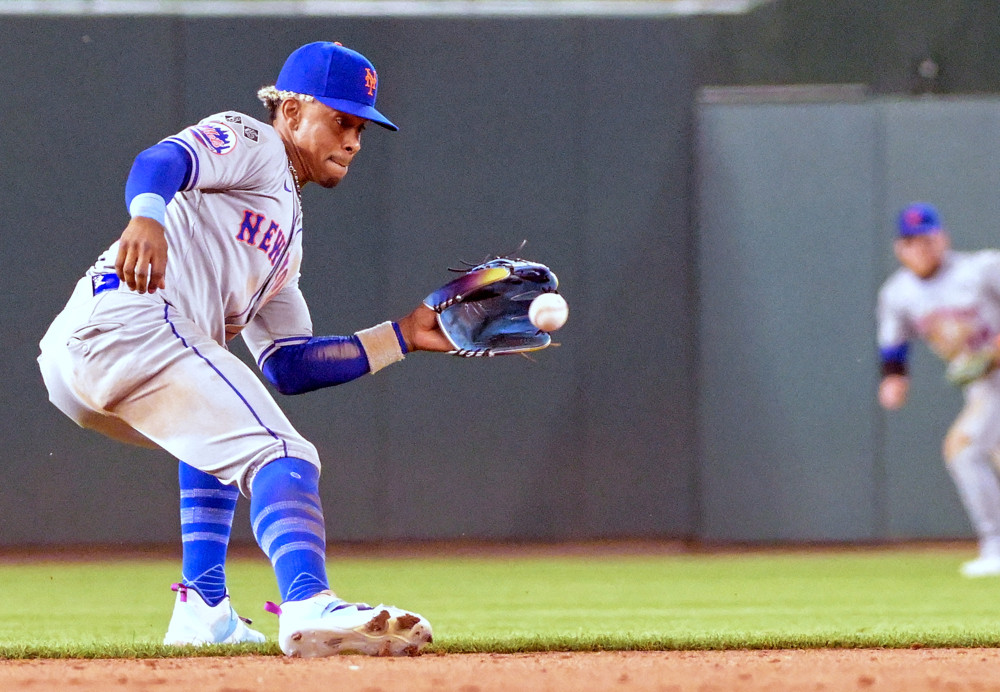
    Yankees shortstop Anthony Volpe totaled 15 Runs Saved and won the AL Gold Glove last season. Volpe played the 2nd-most innings of any shortstop in the majors (only Francisco Lindor played more). With his defense solid (he’s particularly good on balls hit to his left), improving his hitting figures to be a high priority in 2024. He had a .666 OPS in 2023.

    Phillies center fielder Johan Rojas was outstanding after being recalled from the minor leagues, amassing 15 Runs Saved in 57 games. Combine that with his minor league-best total of 15 Runs Saved and Rojas had an epic defensive season. Rojas placed 9th in The Fielding Bible Awards voting among center fielders last year. It wouldn’t surprise me if he was 1st, 2nd, or 3rd in 2024.

    Orioles infielder Gunnar Henderson played an almost identical number of innings at shortstop and third base last season. He was better at shortstop, amassing 10 of his 13 Runs Saved. Henderson finished with 6.2 bWAR in 2023. With a good defensive season and solid offensive numbers again, he may be in line for something better in 2024.

    Rockies shortstop Ezequiel Tovar’s defensive play was one of the highlights of a rough season for a last-place team. His 13 Runs Saved ranked 4th at the position. Like Volpe, Tovar played a lot. He ranked 5th among shortstops in innings played and had an impressive reel of standout defensive plays.

    One other player I want to point out is Nationals shortstop CJ Abrams who finished with 4 Runs Saved in 2023. Abrams’ defensive game took a major step forward in 2023 as he improved from -5 Runs Saved in 2022. Though his throwing issues kept him from being in the same class as the quartet above, his defensive stock is up heading into 2024.

  • Stat of the Week: Gio Urshela Is A More Meaningful Signing Than You Think

    Stat of the Week: Gio Urshela Is A More Meaningful Signing Than You Think

    Photo: Melissa Tamez/Icon Sportswire

    The biggest defensive hole in MLB team infields last season was third base for the Tigers. Detroit tried 9 players at that position and those players combined for -22 Defensive Runs Saved. Not only did the Tigers rank last in MLB in Runs Saved by their third basemen, they also ranked 26th in Baseball-Reference’s Wins Above Average at the position.

    Tigers general manager Scott Harris chipped away at his team’s roster construction all winter. He traded for Mark Canha to give the team a bat that could control the strike zone and improve the offense’s production. And he added a pair of veteran arms for the starting rotation in Kenta Maeda and Jack Flaherty.

    These additions supplement a young core that could have 2 prime prospects— center fielder Parker Meadows and infielder Colt Keith— as everyday players.

    Harris didn’t do much about third base until Thursday when the Tigers signed Gio Urshela to a one-year contract. If the Tigers wanted to be really ambitious there, they could have pursued free agent Matt Chapman on a long-term deal, but for the short term, Urshela is a good fit.

    If fully recovered from the pelvis injury that limited him to 62 games last season, Urshela, an 8-year veteran, will be a massive upgrade at the hot corner for whatever number of games he plays in 2024. He totaled 6 Defensive Runs Saved in limited action at third base last season and 4 Runs Saved there in 2022. He’s had only one bad stretch there, in 2021 when he totaled -4 Runs Saved for the Yankees.

    Urshela had a .703 OPS in those 62 games last season. That doesn’t sound impressive, but that would also be a big upgrade. Tigers third basemen combined for a .624 OPS last season, 3rd-worst in MLB.

    There is risk with the 32-year-old Urshela, but it’s inexpensive risk. He signed for a base salary of $1.5 million. He may just play in a platoon role. But even if he plays part time, the Tigers improving to 0 Runs Saved and a .700 OPS at third base this season as a result of his production would be noticeable. If Urshela could reach his past peak (he’s twice been a 3-bWAR player), the change would be significant.

    This signing isn’t by itself going to win a division title. But it potentially makes a big hole on the team look much more respectable. Winning championships isn’t just about signing star players. It’s about making sure you have a roster of players that aren’t costing you potential wins. In an AL Central where 85 to 90 wins may be enough to win the division, a move like signing Urshela looks like a pretty smart one.

  • Stat of the Week: 2023’s Overperforming Pitchers

    Stat of the Week: 2023’s Overperforming Pitchers

    Photo: Steven King/Icon Sportswire

    Tigers pitchers Matt Manning and Tyler Holton were each pretty good in their own ways in 2023.

    Manning pitched to a 3.58 ERA in about a half-season’s worth of work as a starter. Holton got some of the best results of any reliever in MLB, with a 2.11 ERA in 85 1/3 innings, almost entirely out of the bullpen.

    The two of them had something in common. They each did this with strikeout rates that were a bit below MLB average, meaning they were relying on a combination of defense, sequencing (the order in which hits, walks, and outs came), and luck to keep their numbers down. Both pitchers outpitched their FIP by a considerable amount. Manning’s FIP was 4.81. Holton’s was 3.56.

    Additionally, Manning and Holton were the pitchers whose expected OPS was the most above their actual OPS among those pitchers who faced at least 300 batters in 2023.

    This is our 4th and final Stat of the Week in a series looking at overperforming and underperforming pitchers and hitters from 2023.

    A brief point of explanation:

    Sports Info Solutions tracks its own version of a player’s expected stats (like what you can find on Baseball Savant). Rather than basing a player’s hit probability (and subsequently single, double, triple, and home run probability) on a batted ball’s exit velocity and launch angle, SIS’ version estimates probabilities based on where balls are hit, how hard they are hit, and how long they spend in the air.

    This allows us to compare a player’s actual stats to his expected stats to see if they fared better or worse than perhaps they could have.

    Here’s the list of pitchers with the greatest differential between their expected OPS and their actual OPS. Think of them as a group whose actual 2023 numbers could have been worse under different circumstances.

    Greatest Differential – Expected Opponents’ OPS vs Opponents’ OPS

    2023 Season, Minimum 300 Batters Faced

    Pitcher Expected Opp OPS Opp OPS Differential
    Matt Manning .825 .649 .176
    Tyler Holton .639 .536 .103
    Tony Gonsolin .822 .722 .100
    Ty Blach 1.005 .918 .087
    Corbin Burnes .684 .598 .086
    José Berrios .776 .696 .080
    Reese Olson .729 .649 .080
    Shohei Ohtani .697 .618 .079

    Manning had a Top-20 fly ball rate last season (47%) and the Tigers caught 76% of all balls hit in the air against him, a rate that matched Justin Verlander as 5th-highest in MLB (minimum 100 balls hit in the air).

    Manning could thank the walls in Comerica Park being lowered prior to the season for this homer-robbing catch (click here to see it) and he had some good defense played behind him (this was a pretty good catch), but perhaps not overly so. The Tigers’ defense had 3 Runs Saved on batted balls behind Manning, leading us to surmise that perhaps it was factors other than fielding skill that kept Manning’s actual numbers so low.

    Holton is not a fly ball pitcher to the level that Manning is. He got 10 Runs Saved worth of support on batted balls, a total that ranked in the Top 20 among pitchers despite his not even having pitched 100 innings.

    The Tigers turned 84% of grounders and bunts into outs with Holton pitching, the 3rd-highest rate among pitchers who got at least 100 grounders ands bunts last season, and 11 percentage points better than MLB average.

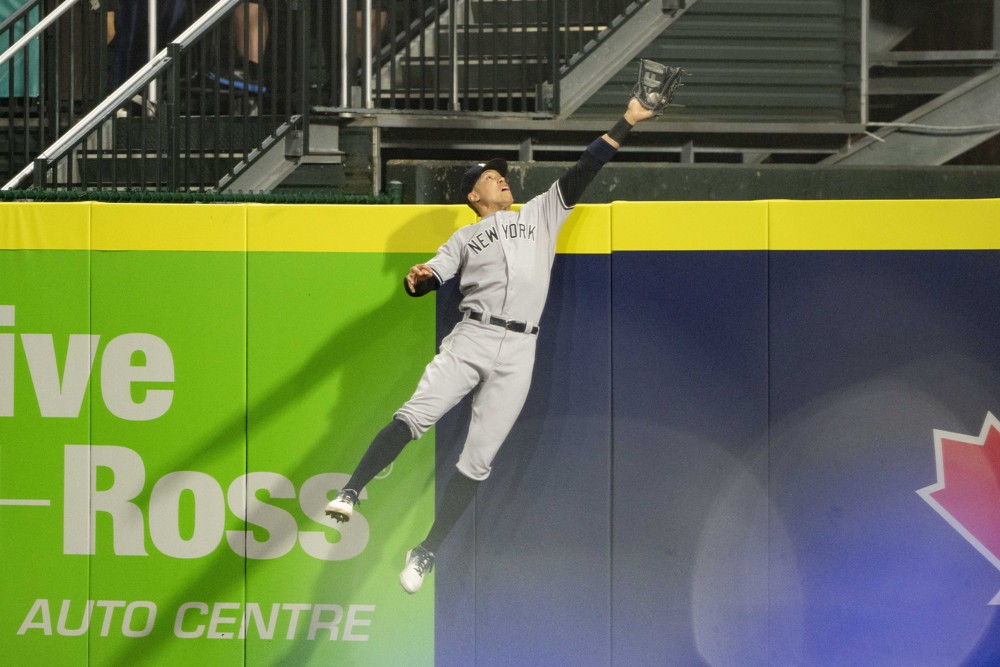
    It’s not hard to find examples of the Tigers infield performing very well behind Holton (click here, here, here, and here for examples). And for good measure, the outfield was good behind him too. Here’s a home run saving catch by Riley Greene with Holton pitching.

    Manning and Holton were just above the batters faced qualifier we set. If we look a little further down the list of pitchers with the biggest difference between expected and actual OPS, you’ll notice some notable pitchers with higher innings totals.

    The most prominent of those is Corbin Burnes, who was recently traded by the Brewers to the Orioles. In Burnes’ case, defense likely played a significant role in the difference between his expected numbers and actual numbers. The Brewers defense saved 17 runs behind him on batted balls last season, the 2nd-highest total in MLB. José Berrios, who is also on our expected vs. actual leaderboard, got the most defensive support, 19 Runs Saved.

    Regarding Burnes, the Brewers were the 2nd-best defensive team by Runs Saved in 2023. The Orioles weren’t that far behind, ranking 8th in that stat and they return most of the team that put those numbers up (with No. 1 prospect Jackson Holliday probably in the mix).

    Our usual disclaimer: Results in 2023 don’t necessarily mean that those results will repeat themselves in 2024. But perhaps our data will reset your expectations for some of these pitchers heading into the coming season.

  • Stat of the Week: Hunter Greene Deserved Better in 2023

    Stat of the Week: Hunter Greene Deserved Better in 2023

    There was a lot of hype around Hunter Greene’s debut in 2022 and follow-up season in 2023. And Greene has had some spectacular starts the last 2 seasons, but these years have also been marked by injury and disappointment.

    Though Greene posted a 4.82 ERA in 112 innings last season, he pitched better than his final numbers indicated.

    Greene was the pitcher who underperformed relative to his expected stats the most of any pitcher that faced at least 300 batters in 2023.

    A brief point of explanation:

    Sports Info Solutions tracks its own version of a player’s expected stats (like what you can find on Baseball Savant). Rather than basing a player’s hit probability (and correspondingly single, double, triple, and home run probability) on a batted ball’s exit velocity and launch angle, SIS’ version estimates probabilities based on where balls are hit, how hard they are hit, and how long they spend in the air.

    This allows us to compare a player’s actual stats to his expected stats.

    Here’s the list of pitchers with the greatest differential between their expected opponents’ OPS and their actual opponents’ OPS.

    Greatest Differential – Expected OPS and Actual OPS

    2023 Season, Minimum 300 Batters Faced

    Here is Greene’s actual line compared to his expected line.

    Greene ranked right among the worst 20% of pitchers in opponents’ OPS but ranked right around the best 20% of pitchers in expected opponents’ OPS.

    I watched the 40 hits that Greene allowed with the lowest hit probabilities. Within that I saw a combination of some bad breaks and some defense that— had it been just a little bit better— would have made a difference in Greene’s numbers.

    For example with regards to bad breaks, if this ball is hit slightly to the left, it’s an inning-ending out instead of a 2-run single. Or if this ball is hit a little to the left, Will Benson makes the catch instead of just missing it, literally saving another run from his pitching line.

    Another instance of bad breaks, though this of a different kind: In Greene’s first game back from injury on August 20, he allowed 9 runs and 5 home runs in 3 innings against the Blue Jays. Yes, that’s a bad start. But 2 of the 5 home runs barely cleared the fence and were sub-25% home run probability balls by our measures (one would have been a homer in 5 parks, another 13, per Statcast).

    As for defense, Greene had the 3rd-worst Defensive Runs Saved support on batted balls of any pitcher in MLB last season. The Reds had -11 Runs Saved on the batted balls against him.

    There’s this fly ball to center field that seemed to be lost in the lights, a ball whose spin off the bat fooled shortstop Elly De La Cruz, and a ball that Greene himself just missed on which second baseman Jonathan India could not make the play quickly enough.

    The usual disclaimer applies: Just because Greene didn’t get good breaks or good defense doesn’t mean that he will in 2024. But the knowledge that he was on the right track in 2023, even if the results weren’t there, should be reassuring to him, Reds management, and their fans heading into the upcoming season.

  • Stat of the Week: CC Sabathia and the Hall of Fame

    Stat of the Week: CC Sabathia and the Hall of Fame

    I think there’s an interesting question to be raised when the next ballot for the Baseball Hall of Fame comes out.

    The 2 new candidates on the ballot who stand the best chance of election will be Ichiro Suzuki and CC Sabathia.

    Ichiro is a no-doubt lock and it wouldn’t surprise me if he matched or bettered Adrián Beltré’s 95% from this year’s Hall of Fame class.

    But what about Sabathia?

    If we use statistical evaluation tools to evaluate his candidacy, he’s really, really close. Baseball-Reference tracks a player’s Hall of Fame Career Standards Score from a method devised by Bill James. Sabathia scores a 48. The average Hall of Famer scores a 50.

    Using more recently developed methodologies, Sabathia scores a 491.2 on Bill’s Hall of Fame Value stat, a stat devised in 2019 for which 500 was the intended target for the Hall.

    And in Jay Jaffe’s JAWS system, he ranks 55th among starting pitchers. His bWAR and 7-year peak WAR come out about 10.5 WAR below the average Hall-of-Famer.

    The question for voters is going to be, where do you set your personal bar among Sabathia’s contemporaries?

    There are some no-doubters that should be ahead of Sabathia on the Hall of Fame candidate list. Among active pitchers, Justin Verlander, Clayton Kershaw, and Max Scherzer fit that description. Zack Greinke checks out very well too even if he never throws another pitch. Some contemporaries are already in and deservedly so, like Roy Halladay.

    Statistically speaking, Sabathia slides in behind those guys but ahead of the likes of Mark Buehrle (who got 8% of the vote on the last ballot), Tim Hudson (5% and 3% on 2 ballots), Cole Hamels (not yet eligible), Adam Wainwright (not eligible), and another pitcher on the upcoming ballot, Félix Hernández.

    Sabathia’s credentials include

    – 251 wins and 3,093 strikeouts

    – The 2007 AL Cy Young Award and 4 other Top-5 Cy Young finishes

    – 6 All-Star selections

    – A World Series ring on a 2009 Yankees team for which he was an ace

    – An epic finish to his 2008 season 

    (1.65 ERA in last 17 starts, pitched the Brewers to the Wild Card)

    – Good standing in baseball as vice-president of The Player’s Alliance

    The thing that hurts his standing is his 3.74 career ERA, one that jumped almost a quarter-point in the last 7 years of his career when he was not as good as he was in his prime, as he learned to adjust to diminished velocity.

    But while 3.74 doesn’t look great on the surface, his ERA+ (ERA adjusted for the time he played and the ballparks he pitched in) is 116.

    There are definitely good pitchers with an ERA+ right around 116, guys you wouldn’t think of as Hall-of-Famers. But there are some all-time greats from other time periods too, like Hall-of-Famers Ferguson Jenkins (115) and Steve Carlton (115).

    My point here is that Sabathia’s ERA, relative to when he pitched, can be a diminishing factor but not an eliminating factor when it comes to a Hall vote. He’s still a good candidate even with a 3.74 ERA.

    I want to touch on one other point that I think favors Sabathia: his 3,577 1/3 innings pitched. No one has more among pitchers who debuted in the last 35 seasons.

    From 2007 to 2009, three years in which Sabathia was his best self, he threw 724 regular season innings and another 55 1/3 innings in the postseason. His regular season ERA, adjusted for ballpark was 44% better than league average. 

    In the last 3 seasons, the pitcher closest to Sabathia’s combined 779 1/3 total innings pitched in that time is Aaron Nola (628 innings pitched combining regular and postseason). That’s 151 fewer innings pitched. We can make a similar point if we look at 4,5, 6, or 7 seasons.

    Starting pitcher function is markedly different in 2024 than it was for most of Sabathia’s career. Once Greinke, Verlander, Scherzer, and Kershaw retire, it might be awhile before anyone reaches 3,000 innings. Gerrit Cole is probably 6 healthy years away.

    I’m of the belief that pitchers from Sabathia’s era should garner a level of appreciation commensurate with the workload those pitchers took on. That’s why I look at Sabathia with great respect. Pitchers are going to be hard pressed to pitch as much as he did and accomplish what he accomplished.

    Now, you could make a similar, perhaps even a better case about a lot of pitchers that came from other eras: Rick Reuschel, Dave Stieb, Kevin Brown just to name a few. But that’s not what we’re here for. They’re not on the BBWAA ballot anymore.

    We’re here to show that Sabathia, as good as you think he was, was arguably even better than you think. And he is a highly viable candidate for the Baseball Hall of Fame who deserves immediate consideration for the game’s top honor.

    We discuss Hall of Fame candidacies with SIS VP of Baseball Bobby Scales along with an interview of Orioles pitching strategy coach Ryan Klimek, and scouting reports on Yoshinobu Yamamoto and others from Brandon Tew on our latest baseball podcast.

  • Stat of the Week: 2023’s Leading Underachiever

    Stat of the Week: 2023’s Leading Underachiever

    BY MARK SIMON

    Tony Kemp had a really, really rough go of it in 2023. Kemp, one of the veteran leaders of an Athletics team that lost 112 games, hit .209, slugged .304, and had a .607 OPS.

    But it probably shouldn’t have been anywhere near that bad.

    Last week, we explained how Luke Raley was 2023’s leading overachiever, posting an OPS 123 points higher than his expected OPS.

    Kemp was 2023’s leading underachiever. His .607 OPS was 136 points lower than his .743 expected OPS

    A brief point of explanation:

    Sports Info Solutions tracks its own version of a player’s expected stats (similar to what you can find on Baseball Savant). Rather than basing a player’s hit probability (and subsequently single, double, triple, and home run probability) on a batted ball’s exit velocity and launch angle, SIS’ version estimates probabilities based on where balls are hit, how hard they are hit, and how long they spend in the air.

    This allows us to compare a player’s actual stats to his expected stats.

    Here’s the list of players with the largest negative differential between their 2023 OPS and their expected OPS. This stat is the other end of the list that we presented last week.

    Biggest Negative Differential – 2023 OPS and Expected OPS

    Minimum 250 Plate Appearances in 2023

    Kemp’s ledger consists of a fair number of instances in which he hit a line drive that hung up long enough (for example: here and here). There were also some nice defensive plays both on fly balls and ground balls (here and here), and a couple instances of balls that hit the pitcher and caromed right to a fielder (here and here).

    There’s also an instance of losing a would-be hit to a force play (here). And, of course, he got bit by the abundance of foul territory in his home ballpark (though not often; only here).

    Here is what Kemp’s actual batting line looks like compared to his expected batting line.

    There is a huge difference between what Kemp was and what he could have been. By his performance, Kemp was one of the worst-performing hitters in baseball. By his expected performance, Kemp’s OPS would have been better than the average second baseman (.724) and almost a match for an average-hitting left fielder (.751).

    This graph shows the range of outcomes in expected BABIP differential and expected OPS differential. Kemp’s stats are outliers. They’re represented by the blue dot in the lower left of the graph.

    One more example on how Kemp’s hit total was less than expected: If you take all the batted balls he hit with an expected hit rate of between 20% and 60%, Kemp was expected to net 42 hits. He totaled only 26, a 16-hit difference.

    There are some prominent players among the others on the underachievers list. Among them is Vladimir Guerrero Jr. who hit .264 and slugged .444. His expected numbers would have made his season look a lot different. He tallied a .302 expected batting average and .507 expected slugging percentage.

    Guerrero Jr.’s loss of hits on those 20% to 60% balls isn’t quite as extreme as Kemp’s but was still prominent. He was expected to net 72 hits on those batted balls. He totaled 62.

    The usual disclaimer applies: We’re not necessarily saying that Kemp’s or Guerrero’s numbers will be better such as to make up for what happened in 2023 (though the Steamer projection on FanGraphs suggests a nice bounceback). We’re just pointing out that it would be difficult for an average player to put up Kemp’s line and Guerrero’s line, much like it would be tough to put up Raley’s overachieving line.

  • Stat of the Week: 2023 Hall of Fame Ballot

    Stat of the Week: 2023 Hall of Fame Ballot

    Photo: Ed Wolfstein/Icon Sportswire

    Happy holidays and happy Hall of Fame voting season. Hall of Fame ballots are due on December 31 and there’s plenty of debate and discussion to be had in the week leading up to them being turned in.

    As we’ve done each of the last few years, let’s present the top candidates by Bill James’ Hall of Fame Value system (HOF-V).

    Player HOF-V
    Alex Rodriguez 961.1
    Adrián Beltré 747.0
    Manny Ramírez 685.2
    Gary Sheffield 672.2
    Carlos Beltrán 649.4
    Bobby Abreu 596.7
    Joe Mauer 590.4
    Todd Helton 565.0
    Chase Utley 549.2
    Andruw Jones 526.8
    Jimmy Rollins 493.4
    Torii Hunter 479.6
    Andy Pettitte 464.9
    Omar Vizquel 464.3
    David Wright 463.6
    Adrián González 460.0
    Mark Buehrle 456.2
    Matt Holliday 444.1

    The formula for HOF-V is a player’s Win Shares plus 4 times his bWAR. A HOF-V of 500 generally represents a player worthy of Hall election.

    Three newcomers to the ballot meet the criteria this year – Adrián Beltré, Joe Mauer, and Chase Utley. Beltre in particular has impressive numbers both as a hitter (477 home runs, 1,707 RBI) and as a fielder (200 Defensive Runs Saved are tied for the most since SIS began tracking the stat in 2003). We saluted both Beltre’s and Utley’s defensive excellence in this space a few weeks ago. Mauer was a great hitter who won 3 batting titles as a catcher before moving to first base because of injury concerns.

    In all, 10 players clear the 500 HOF-V standard, though the value system does not take into account alleged PED usage, cheating scandals, or off-field behavior. For those looking for Billy Wagner, his score checks in below 300. Bill James noted when he devised this system that it doesn’t necessarily handle relief pitchers well, so take that into account when looking at this list (even Mariano Rivera didn’t reach a 500 HOF-V).

    This may be a happy election season for Todd Helton. He received 72.2% of the vote last year, just under 3 percentage points shy of the 75% needed for election. Helton’s vote total has jumped by at least 7 percentage points in each year he’s been on the ballot since he garnered 16.5% of the vote in 2019. He took a 20-percentage point jump from 52% in 2022 to his current percentage in 2023, perhaps aided by the election of another prominent Rockies player, Larry Walker, in 2020.

    As we’ve noted multiple times, Bobby Abreu continues to head the “he was better than you think” section of the ballot.

    Abreu’s value was– in part– a product of his showing up – his 2,425 career games are more than any active player. His 13 seasons of at least 150 games are bettered only by Rafael Palmeiro among those whose careers began in the last 40 years. And when he showed up, he played well. His career OPS was 28% better than MLB average when adjusted for ballpark and era. He ranked in the Top 10 in his league in on-base percentage 8 times.

    Abreu actually has a higher HOF-V than Helton but doesn’t have anywhere near the support. He got just over 15% of the vote in 2023. But he’s still on the ballot, so we’ll see how many voters change their minds this time around.

  • Stat of the Week: 2023 MLB Year-End Awards

    Stat of the Week: 2023 MLB Year-End Awards

    Happy holiday season!

    Every year at this time we do some supplemental, statistically-driven MLB awards. These will salute some of the leaders in specific areas of our recordkeeping. Here are the 2023 winners:

    The Hard Hitter Award

    Sports Info Solutions charts every batted ball as hard-, medium- or soft-hit, based on the ball’s location and velocity (note that this differs from how Statcast tracks hard-hit rate).

    The winner of the Hard-Hitter Award is the player who had the highest percentage of batted balls that were hard-hit among batters with a minimum of 350 plate appearances in 2023.

    Yankees outfielder Aaron Judge won the award for the 2nd straight year, recording a hard-hit ball in 53.8% of his at-bats. No one else reached 50%. J.D. Martinez (49.0%), Corey Seager (48.4%), Ronald Acuña Jr. (46.1%), and Yordan Álvarez (45.0%) ranked 2nd through 5th. For those curious, recent Dodgers signee Shohei Ohtani ranked 8th (42.9%).

    The top 5 teams were the Braves (38.3%), Rangers (36.7%), Rockies (34.8%), Cardinals (34.6%), and Dodgers (34.5%).

    The Contact Minimizer Award

    The Contact Minimizer goes to the pitcher who most limited hard contact in 2023 (minimum 100 innings pitched).

    The winner was Cubs starter Kyle Hendricks, who allowed a hard-hit ball in 24.9% of at-bats against him. He was followed by Nick Martinez (25.1%), Kyle Bradish (26.9%), Mike Clevinger (26.9%), and Justin Steele (27.8%). Perhaps the most interesting finish was Zack Greinke placing 9th (29.0%) despite posting a 5.06 ERA in 2023.

    The team leaders were the Padres (29.6%), Orioles (31.0%), Mariners (31.0%), Mets (31.0%), Phillies (31.3%), and Cubs (31.3%).

    The Flat Bat Award

    The Flat Bat Award is given annually to the best bunter of the year. To determine the winner, we look at run value–run expectancy gained or lost–for both successful and unsuccessful sacrifice bunt and bunt-for-hit attempts for each player.

    The runaway leader this year was Reds outfielder T.J. Friedl, who had an MLB-best 17 bunt hits (against 5 failed attempts) and 8 successful sacrifices (versus 1 failed sacrifice).

    The runner-up for the 2nd straight year was Blue Jays outfielder Daulton Varsho, who had 11 bunt hits (5 failed attempts) and 1 sacrifice (no failed attempts).

    Click here to read about the methodology behind the Flat Bat Award.

    The Vacuum Cleaner Award

    SIS Video Scouts also track what are known as “Good Fielding Plays,” which are often those that lead to the unlikely recording of an out. Those can be broken up into different subtypes, including one just for groundballs. The leader in Good Fielding Plays on groundballs is the winner of our Vacuum Cleaner Award.

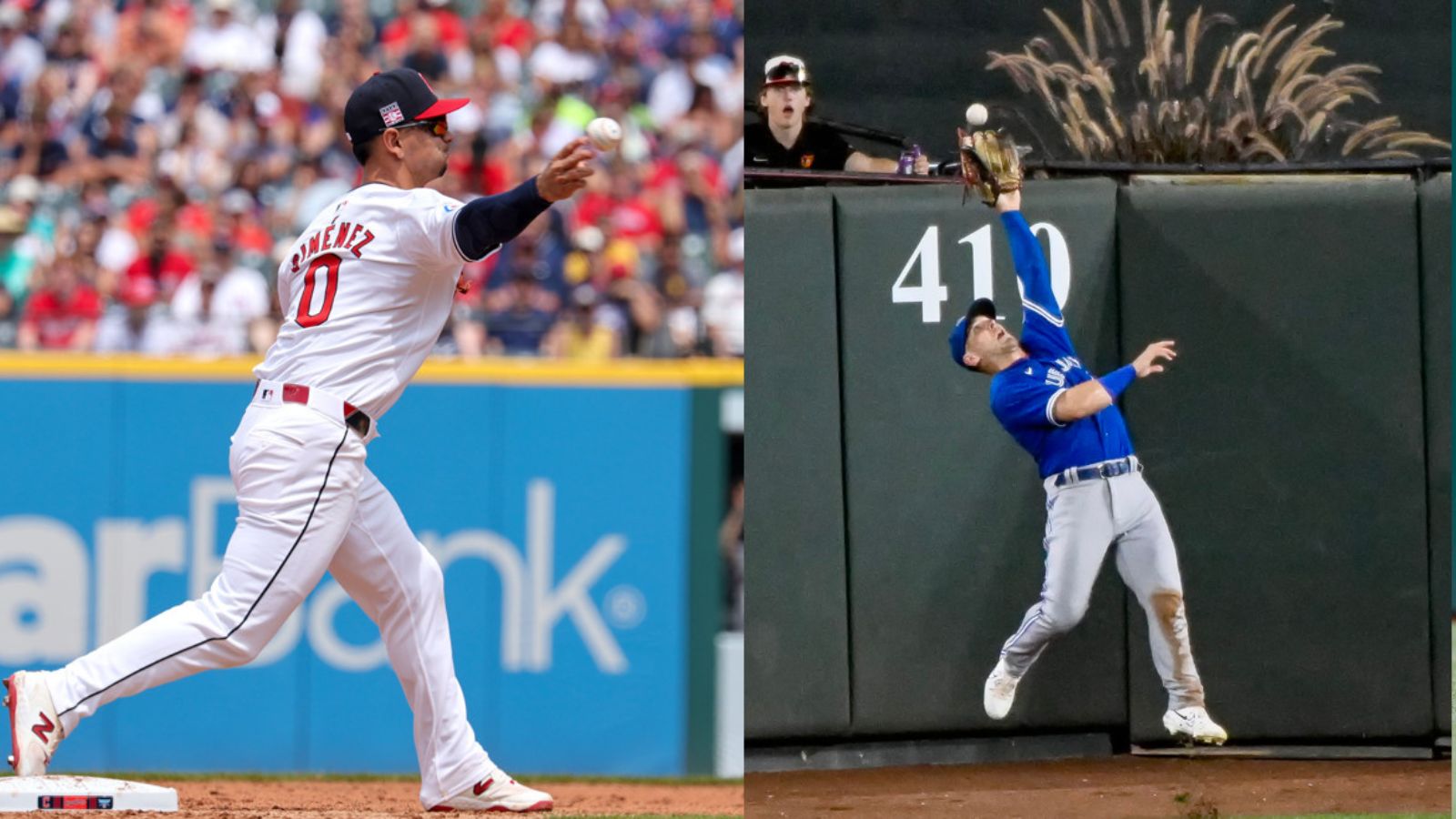
    This year’s winners are Guardians second baseman Andrés Giménez, and Mets first baseman Pete Alonso. Each had 19 such Good Fielding Plays, one more than Cubs second baseman Nico Hoerner and Brewers/Pirates first baseman Carlos Santana. Giménez was rewarded at season’s end with a Fielding Bible Award and the Platinum Glove Award.

     The Fly Swatter Award

    The Fly Swatter Award is a similar award to The Vacuum Cleaner, except it’s for Good Fielding Plays resulting in outs on fly balls and line drives.

    This year’s winners were Rockies center fielder Brenton Doyle and Cardinals outfielder/infielder Tommy Edman, who each had 17 Good Fielding Plays on flies and liners. That’s one more than Blue Jays outfielder George Springer. Doyle won a Gold Glove Award this season and finished 2nd to Kevin Kiermaier in Fielding Bible Award voting for center field.

    Stolen Base Stopper

    The award for the Stolen Base Stopper goes to the catcher and pitcher who had the most Stolen Base Runs Saved in 2023. This year’s winners were Diamondbacks catcher Gabriel Moreno (7 Stolen Base Runs Saved) and Mets pitcher David Peterson  (4 Stolen Base Runs Saved).

    Moreno threw out 21 baserunners and had 2 pickoffs, netting a caught stealing percentage of 38% in a season in which it became much more challenging to throw out potential basestealers. That was a big reason why he won the Fielding Bible Award as baseball’s best defensive catcher.

    Peterson allowed 4 stolen bases, but his catchers caught 2 would-be basestealers and he caught 3 himself. He also had 3 successful pickoffs.

     The Hall of Framer

    The Hall of Framer award goes to the catcher who had the best pitch-framing numbers in 2023. In our world, that means the catcher who had the most called strikes above expectations (Strike Zone Plus-Minus).

    We split this award between 2 catchers. Francisco Álvarez of the Mets had an MLB-leading 92 more called strikes than expected. So did Pirates and Rangers catcher Austin Hedges, who had the most on a per-pitch basis (1.82 per 100 pitches).

    To learn more about our pitch-framing methodology, read the paper from our award-winning presentation at the Sloan Sports Analytics Conference.

  • Stat of the Week: The Availability Of The Yankees Outfield Additions

    Stat of the Week: The Availability Of The Yankees Outfield Additions

    We often talk about innings eaters when it comes to a pitching staff. What about the innings eaters among position players? Specifically pertinent to today, let’s talk about innings-eating outfielders.

    These are the players who have logged the most innings in the outfield over the last 4 seasons.

    Most Innings Played In Outfield – Last 4 Seasons

    Player Innings
    Juan Soto 4,202
    Kyle Tucker 4,159
    Alex Verdugo 4,086
    Myles Straw 4,068
    Ian Happ 4,023
    Trent Grisham 3,959

    What’s interesting here is that the Yankees just traded for 3 of the players on this list: Juan Soto, Alex Verdugo, and Trent Grisham.

    Soto’s performance speaks for itself. He’s an elite offensive player with 35-homer power and one of the best batting eyes in the sport. What’s scary is that he’s only 25 years old, is entering his walk season, and may not have peaked yet. As good as he was in 2023, he was only a 5.5 bWAR player. He has room to be better as a baserunner and fielder, two areas in which he ranked below average in 2023.

    Verdugo may have gotten benched by the Red Sox last year for lack of hustle but he still found his way onto the field for 142 games. He’s basically been an average hitter by OPS+ standards and an average player by bWAR standards the last 3 seasons. But being consistently average has value because it usually means that below-average options were kept off the field.

    Grisham is an interesting one. The last 2 seasons he’s hit .184 with a .626 OPS and .198 with a .666 OPS, respectively. But he also played 148 and 153 games in the field in those two seasons. He’s clearly valued for his defense and his baserunning. He ranks 5th in Defensive Runs Saved among center fielders over the last 4 seasons and ranks 4th in our Baserunning Gain stat over the last 2 seasons, which measures how often a runner takes an extra base, how often he makes outs on the bases, and how he fares at avoiding double plays.

    Verdugo and Grisham won’t have to be everyday players in the Yankees lineup so long as both Aaron Judge and Giancarlo Stanton are healthy. But one of the key reasons Grisham is a desirable option is how often Judge and Stanton have missed time. Judge played only 106 games last season (and DH’d in 38 of them). Stanton rarely plays the outfield anymore, only 71 games the last 2 seasons.

    The Yankees essentially took care of two needs with this combination of deals. One is that they needed better players than they had last season, when their outfield ranked last in Wins Above Average. They got that, with Soto being the marquee addition. But they also needed players with a track record of simply playing, and though past performance doesn’t guarantee future results, they did well in acquiring that as well.

  • Stat of the Week: MLB’s Most Improved Defenders

    Stat of the Week: MLB’s Most Improved Defenders

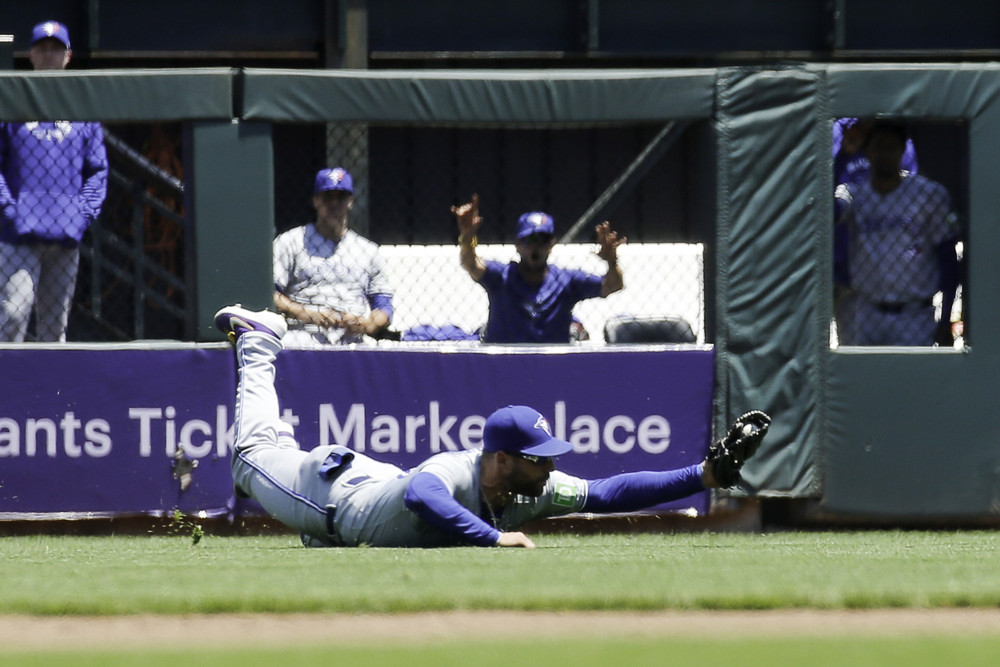
    Between social media and our website we lauded the Blue Jays outfield frequently in 2023 because they were so good defensively. But there was another big reason besides the outfield as to why the team led the majors in Defensive Runs Saved this past season. The Blue Jays had MLB’s most improved defensive player by that stat.

    Shortstop Bo Bichette went from -16 Runs Saved in 2022 to 5 Runs Saved in 2023. The 21-run improvement was the largest for anyone who played at least 500 total MLB innings in each of the last 2 seasons.

    Biggest Improvement in Defensive Runs Saved – 2022 to 2023

    Minimum 500 innings played in each season


    Player DRS Improvement
    Bo Bichette 21
    Nicky Lopez 20
    Andrew Vaughn 17
    Bobby Witt Jr. 16
    Wander Franco 16
    Thairo Estrada 14
    Alex Verdugo 14
    Yandy Díaz 14

    Bo Bichette

    Bichette’s improvement was most prominent specific to one aspect of his game – making plays on balls hit to the left of where he was initially positioned.

    Bo Bichette On Balls Hit To His Left

    Season Plays Made/Opportunities Out Rate (Plays Saved)
    2022 137/304 45% (-15)
    2023 129/219 59% (10)

    >> Opportunities = plays with a >0% out rate for the shortstop.

    To explain this chart:

    In 2022, Bichette made 137 plays on 304 balls that had a >0% out rate for the shortstop (that’s how we define an “opportunity”). According to our calculations, he made 15 fewer plays than an average shortstop would have on those balls (hence the -15 in the 3rd column of the chart).

    In 2023, he made 129 plays out of 219 opportunities. According to our calculations, he was 10 plays better than the average shortstop.

    You can see the difference in the out rates. Bichette went from a 45% out rate on balls hit to his left to 59%.

    Bichette’s throwing improvements may have played a role here. He went from 18 throwing errors and misplays (misplays being plays that weren’t scored errors but could have been) in 2022 to 7 in 2023.

    For more on Bichette, check out this Twitter thread from SportsNet Blue Jays producer Chris Black.

    Nicky Lopez

    Lopez, a utility player traded from the Braves to the White Sox this offseason, had been known as a good glove in the past but had a drop-off in 2022, particularly at second base, where he accrued -8 Runs Saved. He totaled 4 runs there in 2023 and fared better on balls hit to his right than he ever had before. Lopez also went from 1 Run Saved at third base to 5 Runs Saved there in a comparable though limited number of innings.

    Andrew Vaughn

    Vaughn’s improvement is the result of both a position switch (from corner outfield to first base) and improvement at his new full-time position. Vaughn totaled -17 Runs Saved in 2022, with -14 of those coming from his combined total in left field and right field. At first base in 2023, Vaughn rated MLB average, with 0 Runs Saved.

    Vaughn handed first base better than he did in the roughly 300 innings he played there in 2021 and 2022 when he amassed a combined -5 Runs Saved.