Tag: Javier Baez

  • Stat of the Week: Which Team Positions Its Outfielders Best?

    Stat of the Week: Which Team Positions Its Outfielders Best?

    Photo: Steven King/Icon Sportswire

    You’ve heard of the game-saving defensive play, right?

    How about game-saving defensive positioning?

    Go back about a month to the bottom of the eighth inning at Busch Stadium in a matchup between the Cardinals and Tigers. The score was tied with two men on and two outs. Pedro Pagés hit a 107-MPH line drive to right center that looked like it could be a go-ahead hit. But center fielder Javier Báez sprinted over to make the running catch. The Tigers went ahead in the top of the ninth inning and won the game.

    You can see that catch here.

    But what you don’t see in watching the TV broadcast was how the Tigers put Báez in position to make the play. This image from MLB helps provide a better understanding. The filled in black dot shows where he was stationed prior to the pitch.

    By our calculations, balls hit to that spot at that speed in the last two years have been caught 43% of the time. But that out probability jumps to 95% when we know where Baez was positioned.

    This was one of several examples of how the Tigers outfield has been the best positioned in baseball this season. They lead the majors with 12 Outfield Positioning Runs Saved.

    We explained this in a couple of recent articles and will reiterate it again here. Pre-2013, SIS awarded positioning Runs Saved credit to the player. That credit now goes to the team as with the advent of shifting and positioning cards, the team has more control over where its players play.

    The data we collect allows us to establish:

    A) An overall out probability for a ball hit to a certain spot at a determined velocity without knowing where the fielder is positioned

    B) An out probability for which we do know where the fielder is positioned.

    The formula calculates the difference between A and B and converts it to a run value based on the characteristics of the batted ball. That value is credited to the defensive team rather than the player.

    This happens whether the play is successfully completed or not, because positioning can be good even when a play is not made.

    In other words, if we know a fly ball hit at 107 miles per hour to a designated spot Y is an out 43% of the time overall, but 95% of the time when the outfielder is positioned in location Z, then the team gets credit for improving the out probability by 52%, which is worth some fraction of a run. That’s the example with which we led this article.

    Most Runs Saved – Outfield Positioning

    2025 Season

    Team Runs Saved
    Tigers 12
    Guardians 8
    Braves 7
    Rays 5
    White Sox 5

    The Tigers’ success isn’t new. They led the majors with 18 outfield positioning runs two years ago before slipping to 2 such Runs Saved last season. We should note too that this year’s results are not the product of high volume. Tigers outfielders have faced the 20th-most balls hit in the air.

    Here are a couple other examples of plays from 2025 in which positioning resulted in a significant payoff for the Tigers.

    This ball was tagged 108 MPH and Riley Greene’s positioning in left field upped the out probability from 45 to 93%. You can see why. He barely had to move from where he was playing.

    Sometimes positioning and playmaking go hand in hand. On this ball hit by Drew Waters of the Royals, right fielder Kerry Carpenter goes deep to make a tough catch.

    Carpenter’s positioning upped the out probability of that play from 20% to 41%. Carpenter gets credit for the remaining 59% for making the catch that resulted in an out.

    Though the positioning Runs Saved totals are relatively small, the numbers do matter. The Tigers rank 8th in Defensive Runs Saved overall.

    They rank 19th in the skill components of Runs Saved but rank 1st in combined Runs Saved from infield and outfield positioning.

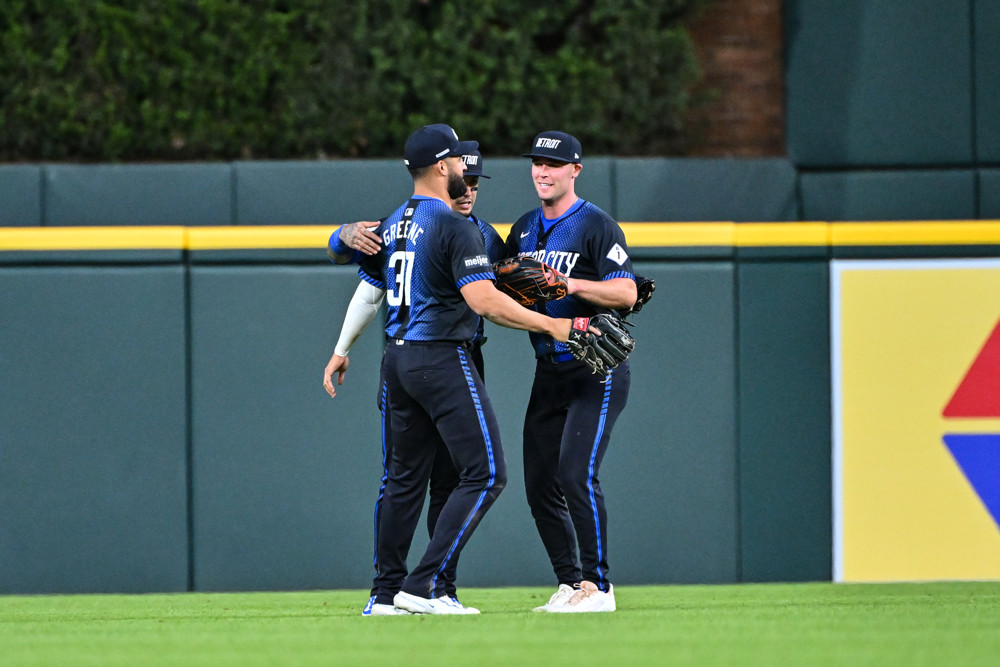
    The team is in first place in the AL Central and its outfielders can rejoice as they did in the picture atop this article. Good positioning is the key to their defense.

  • Stat of the Week: Who could be 2022’s Defensive Runs Saved Leader

    Stat of the Week: Who could be 2022’s Defensive Runs Saved Leader

    By MARK SIMON

    Rockies infielder Ryan McMahon led the majors with 22 Defensive Runs Saved in 2021. He saved 13 runs at third base and 9 runs at second base, excelling in both spots.

    And though McMahon didn’t win either a Gold Glove or Fielding Bible Award for his efforts, there was a hearty reward waiting for him this season in a 6-year, $70 million contract from the Rockies.

    Now McMahon will be trying to do something that’s never been done since we began tracking Runs Saved in 2003 – lead the majors in that stat in consecutive seasons.

    Normally we focus on positional comparisons for Defensive Runs Saved, but the overall leader makes for some fun defense-related bragging rights.

    McMahon has the skills to repeat. He’s solid at fielding balls to both sides. He also boasts a strong list of highlight-reel plays. He ranked 2nd in Good Fielding Plays per 100 Innings at both third base and second base last season. For those unfamiliar, we track approximately 30 types of Good Fielding Plays, with examples being “Ground Ball (or Line Drive) Out” which references Web Gem-caliber plays, and “Keeping the Ball in the Infield.”

    Two players on the Twins may have something to say about McMahon’s efforts to stand atop the Runs Saved leaderboard. Shortstop Carlos Correa led the position with 20 Runs Saved last season, which ranked 3rd overall in MLB.

    We wrote about Correa’s defensive excellence earlier this winter, noting how he excels at making plays in which he leaves his feet. The key for Correa and especially for his teammate, center fielder Byron Buxton, is health. Correa missed considerable time due to injuries in each season from 2017 to 2019.

    Buxton has saved 21 Runs the last two seasons but has played in only 100 out of a possible 222 games in that time. His single-season career high is 22 Runs Saved, which he did in 2017, the only time in a seven-year career that he played in at least 100 games.

    Playing time would also be a question in considering catcher Jacob Stallings as a possible overall leader. Stallings finished with 21 Runs Saved in 2021, one run shy of the lead, and was among the top pitch blockers and pitch framers in the sport. He’ll have a new team and new pitching staff to work with as he was traded in the offseason from the Pirates to the Marlins.

    There are a good number of other players who are candidates to be the MLB Runs Saved leader, including Royals center fielder Michael A. Taylor, Cardinals center fielder Harrison Bader, Blue Jays third baseman Matt Chapman, and Pirates third baseman Ke’Bryan Hayes.

    Past leaders to consider include Yankees outfielder Joey Gallo and Cardinals third baseman Nolan Arenado, who shared the Runs Saved lead in 2020, new Tigers shortstop Javier Báez, whose 32 Runs Saved in 2019 are the most by anyone in a season within the last five seasons, and Rays center fielder Kevin Kiermaier, whose 38 in 2015 led MLB.

    And speaking of overall leads, Cubs shortstop Andrelton Simmons enters the season with 197 career Runs Saved. That’s three shy of Adrián Beltré, whose 200 are the most total Runs Saved for any player since SIS began tracking the stat in 2003. Simmons, who led MLB with a record 41 Runs Saved in 2017, had 15 Runs Saved at shortstop last season, so he may still be a contender for seasonal honors too.

    MLB Defensive Runs Saved Leaders – Last 5 Seasons

    Season Player
    2017 Andrelton Simmons
    2018 Nick Ahmed
    2019 Javier Báez
    2020 Nolan Arenado & Joey Gallo
    2021 Ryan McMahon
  • Looking forward to shortstopping greatness whenever MLB returns

    By MARK SIMON

    Much like the home run robbery, I think we can all agree that great shortstopping is a baseball work of art. It’s another of those things we’re so looking forward to this season. Shortstops are referred to as wizards or magicians for their artistry at the position. And they can do it in so many ways.

    We’re looking forward to their return to the field so much, whether it be this season or in another. These players especially:

    Almighty Andrelton!

    Andrelton Simmons has 75 Runs Saved over the last three seasons and remember that he was limited to 102 games at shortstop last season due to injury. The next-most Runs Saved at the position in that span is Nick Ahmed with 52.

    There’s only one Ozzie Smith, but Andrelton Simmons is making his case that he’s this generation’s version of The Wizard of Oz. His shortstopping is way better than any other current player and even at age 30, we can’t wait to see him again.

    El Mago

    Speaking of wizardry, we have to say it will be great to watch Javier Báez’s magic in the near future. Báez has a flare to his game that should be universally appealing. He’s a three-time winner of our Fielding Bible multi-position award who more than ably made the move to being a full-time shortstop. He tied for the lead in Runs Saved at the position last season and is much more than just a guy who makes fancy tags.

    The steady hand
    In talking with Ozzie Smith for The Fielding Bible – Volume V, he noted that the likely reason that Paul DeJong tied Báez for the lead among shortstops in Runs Saved last season was because DeJong was so good at making the routine play. Indeed, DeJong isn’t flashy. He ranks last in our Good Fielding Plays per 1,000 innings tally among everyday players.  But he covers the ground he needs to and occasionally does something to make you appreciate the work he puts in.

    Ahmed falls into this category as well, though he’s a little flashier than DeJong. In particular, Ahmed excels at making the play in the shortstop-third base hole, showing off both range and his accurate arm.  But he’s also pretty good at getting to the ball hit up the middle.

    Potential for greatness

    There are some great young shortstops on the cusp of being as well regarded as the best defensive players in the game. Willy Adames and Adalberto Mondesi made great strides in their game for the Rays and Royals, respectively. But we want to single out Fernando Tatís Jr.

    Tatís looks like he’s going to be a special hitter based on his injury-shortened debut year, in which he hit .317 with 22 home runs in 334 at-bats. Defensively, he’s got a little ways to go. But the upside is promising. Tatís ranked better than Báez and Ahmed in the component of Runs Saved related to getting to balls. But he ranked last among all infielders in the throwing component of the stat.

    If Tatis can get that straightened out, he’ll be something special on the defensive side too.

  • Why Paul DeJong Belongs Among MLBs Elite Shortstops

    The following is an article that appears in The Fielding BibleVolume V. You can purchase the book at ACTASports, Amazon, or wherever books are sold.

    By Mark Simon

    Paul DeJong of the Cardinals tied for the MLB lead among shortstops with 26 Defensive Runs Saved last season.

    That is a stat that should surprise you. Javier Baez dazzles regularly on highlight reels. Nick Ahmed has won two straight NL Gold Gloves. Trevor Story is one of a few heralded as the game’s standouts.

    Most Defensive Runs Saved—Shortstops (2019)
    Player DRS
    Paul DeJong 26
    Javier Baez 26
    Nick Ahmed 17
    Trevor Story 14

    DeJong on the other hand is rather ordinary. He finished 10th among shortstops in our Scouts Defensive Rating system, which essentially serves as a proxy for the eye test. He ranked last among shortstops in Good Fielding Plays per 1,000 innings (in other words, he didn’t have a lot of Web Gems). There is nothing in watching DeJong that would make you think he was the DRS leader at shortstop in 2019.

    But what DeJong did was play and he played well. He started 156 games at shortstop. He led all shortstops in putouts, was one shy of the lead in assists, and turned 29 more double plays than anyone else at the position (the widest gap between the leader and No. 2 since 1982).

    DeJong was a product of both opportunity and of being good. In particular, DeJong rated highly on balls hit to his left (in other words, usually up the middle). He had a knack for the play in which he quickly shuffled left and fielded the ball behind second base, occasionally diving, but usually just having good anticipatory instincts and a quick first step.

    Those balls didn’t get past Cardinals infielders. They converted 62% of groundballs hit past the mound and within 10 feet to the left or right of second base into outs, the second-highest rate in the majors.

    DeJong converted 173 of 265 balls hit to his left in which he had a greater than 0% chance of making a play, a 65% out rate. Baez had a 67% rate. However, there are two things to keep in mind.

    1) The expected out rate on DeJong’s balls was 57%. The expected out rate for Baez was 65%. In other words, the balls up the middle against DeJong had a higher degree of difficulty.

    2) DeJong had 72 more opportunities on those balls, thus giving him more opportunities to be above average at making plays.

    And DeJong’s 65% out rate on balls hit to his left was much better than Story (60%) and Ahmed (53%).

    Plays Made Above Expectations
    Player To His Right Straight On To His Left
    DeJong 11 2 22
    Baez 12 6 8
    Story 5 3 7
    Ahmed 18 5 -3

    DeJong did this without sacrificing balls hit either to his right or those hit within his immediate vicinity. DeJong was 13 plays above average on those balls, which was better than Story. It wasn’t as good as Baez or Ahmed, but the gap between them wasn’t as large as the gap between the DeJong and everyone else on balls hit up the middle.

    Want to look at this another way? Here’s a look at how often the top shortstops get an out on balls with a 25 to 75% out probability. This encompasses a wide swath of types of plays: from the challenging, but not impossible, to the routine, but not easy.

     Individual Out Rate on Batted Balls – With Out Probability Between 25% and 75%
    Player Actual

    Out Rate

    Expected

    Out Rate

    DeJong 66% 51%
    Baez 66% 53%
    Story 62% 52%
    Ahmed 56% 50%

    DeJong excelled because he fulfilled the bottom line. He got outs when he was supposed to get outs and got outs when he wasn’t supposed to get outs. The damage done on balls hit near him was minimal, more so than anyone at the position, similar to his teammate, two-time Fielding Bible Award-winning second baseman Kolten Wong.

    Did this make DeJong one of the best defensive shortstops in baseball in 2019? That’s a question without a right answer. It’s a matter of opinion. There is a good case to be made for many. But if we stick to the facts, we can tell you that DeJong (and Baez) saved more runs than any other shortstop in the majors last season. It may be surprising, but it’s what the data shows.

  • Stat of the Week: The Fielding Bible All-Decade Team

    By Mark Simon

    Since 2006, Baseball Info Solutions has used The Fielding Bible Awards as its means of honoring the top defensive players in baseball. The Fielding Bible Awards have been voted on by a panel of experts – baseball writers, broadcasters, statistical analysts, and former major league players. Voting is based on both visual observation and performance in objective fielding metrics. With that in mind, we decided to take the voting from past Fielding Bible Awards and use it to come up with a team of the best defensive players in the 2010s.

    Our methodology for picking the All-Decade representatives was to use the Fielding Bible voting that was conducted annually throughout the decade. The player with the highest summed vote total from the 10 seasons was deemed the winner at that position. Note that for the years 2010 to 2012, each player’s vote total was multiplied by 1.2 to account for the use of 10 voters in those years compared to 12 in the other years.

    Fielding Bible Award Vote Leaders, 2010-2019
    PositionPlayer
    First BasePaul Goldschmidt
    Second BaseDustin Pedroia
    ShortstopAndrelton Simmons
    Third BaseNolan Arenado
    Left FieldAlex Gordon
    Center FieldLorenzo Cain
    Right FieldJason Heyward
    CatcherYadier Molina
    PitcherZack Greinke
    Multi-PositionJavier Báez

    Paul Goldschmidt starred for the Diamondbacks for most of the decade. His three Fielding Bible Awards (2013, 2015, 2017) were the most of anyone at first base in the 2010s. Goldschmidt’s 9.5 Scoop Runs Saved rank second to Freddie Freeman among first basemen this decade.

    Dustin Pedroia’s four Fielding Bible Awards (2011, 2013, 2014, 2016) are the most for any second baseman since BIS began presenting the honor in 2006. Known for a distinct and sizable crow hop that he combined with great anticipatory skills, Pedroia twice led the position in Defensive Runs Saved during the 2010s and had four straight seasons with at least 10 Runs Saved.

    Andrelton Simmons is the only player to win a Fielding Bible Award in six straight seasons. He did it in his first six full seasons in the major leagues (2013 to 2018). His 193 Defensive Runs Saved are the most of any player at any position for the decade, 115 more than the shortstop with the next-highest total (Brandon Crawford, 78).

    Nolan Arenado didn’t win a Fielding Bible Award until his third major league season, but once he did, he won three in a row (2015 to 2017). Arenado’s 105 Defensive Runs Saved were the most of any third baseman this decade, even though he didn’t start playing until 2013.

    Alex Gordon has had staying power. His four Fielding Bible Awards (2012, 2013, 2014, 2018) are the most of any left fielder, edging Brett Gardner and Carl Crawford by one. His 45 Outfield Arm Runs Saved this decade were the key to his success. They are the most by any outfielder in the 2010s.

    Lorenzo Cain became the first center fielder to win the Fielding Bible Award in consecutive seasons (2018, 2019) and also won the Multi-Position award in 2014. Cain’s specialty has been chasing down the deep fly ball. In 2019 he tied the single-season mark for home run robberies (5) since BIS began tracking them in 2004.

    Jason Heyward’s consistently excellent defense won him three Fielding Bible Awards (2012, 2014, 2015). He reached double-digits in Defensive Runs Saved in right field in each of the first eight years of the decade. His 141 Runs Saved from Range & Positioning are more than double the next-highest total of any right fielder this decade.

    Yadier Molina won three Fielding Bible Awards in the 2000s and three more in the 2010s, giving him six in total. That ties Andrelton Simmons for the most such awards won. Molina set the mark for most Defensive Runs Saved by a catcher with 30 in 2013 (since tied by Roberto Pérez in 2019). He also totaled 29 in 2012 and 26 in 2010.

    Zack Greinke’s only Fielding Bible Awards came the last two seasons. But he’s been in the hunt frequently, finishing second four times this decade. Greinke’s kept himself in top shape and been a standout athlete throughout his career. That’s allowed him to get off the mound aggressively to make plays that other pitchers don’t make.

    Javier Báez won the Multi-Position award in three consecutive seasons (2016, 2017, 2018) so he comes out on top. This award comes with an asterisk in that it wasn’t given out until 2014. Had it been awarded for the entirety of the decade, there’s a chance that Ben Zobrist, who played excellent defense at second base and in the outfield, would have edged Báez out.

    For more statistical leaders, check out the 2020 Bill James Handbook and the Sports Info Solutions blog.

  • What if Players’ Weekend nicknames were about their stats?

    By MARK SIMON

    One of the fun things about Players’ Weekend is looking at the names on the back of the jerseys and learning the stories behind the choices. Players are allowed to customize those to whatever nickname or meaningful combination of words they want.

    For example: Oakland Athletics pitcher Mike Fiers is “Smokey.” Indians pitcher Shane Bieber is “Not Justin.” Rangers outfielder Hunter Pence is the shrug emoji, ¯_(ツ)_/¯, and injured Yankees outfielder Giancarlo Stanton is “Parmigiancarlo.”

    That got us to thinking: what if players picked their weekend nicknames based on their stats?

    What would be on the backs of those jerseys?

    Here are a few thoughts.

    Chicago Cubs, Javier Baez – “El Mago”

    Ok, so we’re totally cheating to start this off. But with Baez, that choice is way too obvious and gives us an excuse to share his stats.

    Baez ranks third among shortstops with 14 Defensive Runs Saved. He’s the best shortstop at converting double plays. And you’ve seen his great tags on the biggest stage (his quick hands are like a magician’s). Oh, and he also leads the majors in something we track called “Good Baserunning Plays,” which is basically what you think it would be. He has 10 in 2019.

    Kansas City Royals, Whit Merrifield – “Mr. Line Drive”

    It’s been a rough season for the Royals, but they do have someone near the top of the leaderboard in one stat. Utility man Merrifield earns his moniker, because his 29% line drive rate ranks first among batting title-qualifiers.

    Milwaukee Brewers, Lorenzo Cain – “$teal HR”

    We’re using the $ sign as Cain does for his weekend nickname, which is “3 Kid$.”

    Cain has been the best in the majors at robbing home runs both this season (4) and over the last three seasons (7). Honorable mentions to Josh Reddick and Adam Engel, who each have five.

    New York Mets, Jeff McNeil – “Don’t Shift Me!”

    McNeil has benefited as much from defensive shifts of any hitter, doing so by hitting the ball away from the defense. He’s batting an MLB-best .400 (26-for-65) when hitting a grounder or short liner versus a shift.

    New York Yankees, CC Sabathia – “The Bat Breaker”

    There are many ways we could have gone with the Yankees, but since it’s his final season and we want to show off the suite of stats we track, we go with Sabathia’s tendency to do damage to opposing lumber with his pitches.

    Sabathia has broken 53 bats by Sports Info Solutions’ count over the last four seasons. That’s easily the most in the majors.

    New York Yankees, Aaron Judge – “96.6”

    A shout-out to our friends at Statcast. Judge’s average exit velocity of 96.6 MPH leads the majors by 2 MPH over Nelson Cruz (94.5). That number is not far removed from his uniform number, 99.

    Oakland Athletics, Matt Chapman – “Down the Line”

    Chapman is arguably the game’s top defensive player. And what makes him great is in how he takes away would-be doubles down the third base line better than anyone else in the game.

    Chapman has 64 Defensive Runs Saved over the last three seasons, easily the most of any third baseman. He has more than twice as many as second-place Nolan Arenado (31). We thought about making his nickname “Brooks” after baseball legend Brooks Robinson, but he’s not quite ready for that just yet.

    Philadelphia Phillies, J.T. Realmuto – “Don’t Run on Me”

    Realmuto has eight Defensive Runs Saved for stolen base deterrence, easily the most in the majors. He’s thrown out 29-of-69 (42%), the best rate of his career and the best rate in MLB.

    Pittsburgh Pirates, Bryan Reynolds – “Keeler”

    This one is a nod to baseball history. It was Hall-of-Famer Wee Willie Keeler who coined the term “hit ’em where they ain’t.” No one has done that better than Reynolds, who leads the majors with a .398 BABIP this season.

    St. Louis Cardinals, Dakota Hudson – “You’re Grounded”

    This has nothing to do with parental punishment and everything to do with keeping baseballs from going airborne. Hudson leads the majors with a 58% ground ball rate.

    This also could have gone to Tampa Bay Rays pitcher Ryan Yarbrough, who has gotten outs on an MLB-best 82.5% of the ground balls and bunts hit against him.

    San Diego Padres, Austin Hedges – “The Framer”

    Hedges has had a phenomenal defensive season for the Padres. He leads all catchers in our Strike Zone Runs Saved stat, representative of the best catcher at getting his pitchers more strikes than expected this season.

    San Francisco Giants, Kevin Pillar – “Superman”

    Pillar is already known by this moniker to fans, especially those in Toronto. Over the last five seasons, he has the most diving, sliding and jumping catches in the majors (112). You can listen to him talk about this on a past edition of the Sports Info Solutions podcast.

    Tampa Bay Rays, Charlie Morton – “Captain Hook”

    Charlie Morton’s curveball has been one of the most valuable pitches in baseball this season, per FanGraphs’ run values.

    His former Astros teammate Collin McHugh will be wearing what Morton’s nickname could have been, “12 to 6.”

    Washington Nationals, Max Scherzer – “FIP to Be King”

    The Nationals ace, just back from injury, has used Players’ Weekend as a means of pointing out that he was one blue eye and one brown eye. We’ve changed his name to reflect his outstanding numbers with regards to strikeouts, walks and home runs allowed. He has the lowest FIP in the majors by more than half-a-run (2.18).

    For more notable stats from Sports Info Solutions, try our Stat of the Week.

  • More valuable on D: Chapman or Baez?

    By Mark Simon

    In the course of writing our articles in this space and at The Athletic, we’ve heard from more Javier Báez fans than those supporting any other player. People love both how he plays defense and how well he plays defense.

    So with the Chicago Cubs playing the Oakland Athletics, we thought we’d pose a question: which player is more valuable to his team on defense right now, Báez or Athletics third baseman Matt Chapman?

    Defensive Runs Saved

    By Defensive Runs Saved in 2019, Chapman has a 14-to-9 advantage. Chapman, who has the most Runs Saved for a third baseman, provides a value that Báez can’t. Chapman is the best in baseball at out conversion on balls hit down the third base line. Those balls are largely would-be doubles.

    When Báez takes away a hit, it’s usually going to be a single, because he’s got an outfielder behind him who can get to the ball quickly.

    Let’s add in individual value for shift defense, which isn’t factored in our basic Defensive Runs Saved, but can be computed using our internal data.

    Of the Cubs’ Runs Saved in shifts, seven have come on plays Báez made. That bumps him to 16. But making the same calculation gives Chapman five runs.

    The advantage narrows to 19-16, still in favor of Chapman.

    Good Fielding Plays

    Our Video Scouts chart every play of ever game, categorizing some plays as “Good Fielding Plays” and “Defensive Misplays & Errors.”

    Good Fielding Plays are Web Gems – the diving, sliding or jumping catch that you’ll see in highlights, but also things like keeping the ball on the infield to prevent a baserunner from gaining an extra base, or preventing a single from being a double. There are approximately 30 categories from which to choose.

    Defensive Misplays & Errors are errors, plus plays in which a fielder’s actions had a negative consequence. These include your basic bobbles and drops, but also cover other ground. Official scorers may not give an error if a fielder fails to convert on an attempted double play, since one can’t be assumed but Video Scouts can award a Misplay for an errant throw or a drop after the catch by the relay man. There are approximately 60 categories of these kinds of plays.

    Chapman is having a phenomenal year when it comes to making the great plays and avoiding mistakes. He has 35 Good Fielding Plays and 14 Misplays & Errors.

    Chapman’s 35 are the most in MLB by a non-first baseman (first basemen tend to record more than other positions because of scooped throws). That’s a big improvement over last season, when he finished with 41 Good Plays and 35 Misplays & Errors.

    Báez has 21 Good Fielding Plays and 28 Misplays & Errors. He’s two shy of the most Good Plays at shortstop. He garners attention because his Good Plays are so good, like the one-of-a-kind tags he’s made that get shown repeatedly on TV and go viral on social media.

    In Sum

    It’s difficult to compare across positions. But we can tell you that Chapman is the top defensive third baseman in baseball by the numbers. Báez has won our Fielding Bible Award for multi-positional excellence three years running. He’ll be in for a tough fight at shortstop this season Nick Ahmed of the Diamondbacks has 20 Runs Saved plus he’s accounted for 16 of his team’s Runs Saved in shifts).

    Perhaps this article should have been one comparing Ahmed and Chapman’s value too. We’ll save that for another time.

    In the meantime, ponder where a very, very good shortstop rates compared to the top third baseman, and vote in our poll. We’re curious how people weigh the numbers in their consideration.

  • Which players do the most good & bad things on the bases?

    By PATRICK ROWLEY

    Baserunning continues to be an overlooked part of baseball that is often viewed as an ancillary aspect of the game. There tends to be an oversimplification in the narrative around good baserunning that speed and talent on the bases are one and the same. Although foot speed is certainly beneficial, it is not the best way to truly evaluate play on the bases.

    That is why at Sports Info Solutions, we evaluate baserunning on a plus/minus scale, with Good Baserunning Plays (GBP) resulting in a plus and Bad Baserunning Plays (BBP) resulting in a minus. GBP and BBP are based on review by our Video Scouts, who use specific criteria in determining good and bad baserunning. There are eight types of good plays and 16 types of bad plays.

    The most common GBP is “Baserunner takes an extra base” which is essentially just being aggressive in taking one more base in a situation where most wouldn’t. There are other, more nuanced GBPs such as “avoiding the tag” or “quick reaction to pitch in dirt/dropped pitch.”

    Here are the leaders in Good Baserunning Plays since the start of 2018:

    Player Good Baserunning Plays
    Javier Baez 15
    Ozzie Albies 10
    Billy Hamilton 9

    What is remarkable about Javier Baez’s total is that six of his GBPs have come in 2019 alone, as many as or more than the 2018 total of all but 19 baserunners (and with one more GBP, that number will shrink to six).

    Of those six GBPs, five have been from plays where Baez took an extra base. The sixth GBP was credited for avoiding a tag, which he managed to do five times in 2018 helping to reinforce his moniker as “El Mago.”

    Another way to provide value on the bases is to simply not make mistakes, or Bad Baserunning Plays. As you can see in the table above, Albies has more GBP since the start of 2018 than anyone except Baez, but the BBP leaderboard may give some insight as to why he is not heralded as one of the most disruptive baserunners.

    The most Bad Baserunning Plays since the start of 2018:

    Player Bad Baserunning Plays
    Francisco Lindor 13
    Ozzie Albies 12
    Bryce Harper 12
    Ketel Marte 12
    Willson Contreras 12

    Most of Albies’ BBP have been on plays in which he attempted to stretch a base hit an extra base or was caught trying to advance on a ground ball (which fall into two of the BBP categories). Between his GBP and BBP, Albies was one of the most aggressive players on the bases and, with slightly better decision-making, could rise the ranks and be a real nuisance on the base paths.

    Due to some players, like Albies, driving up their GBPs (or BBPs) with volume, it is best to look at Good and Bad Baserunning Plays through the context of Net Good Baserunning Plays. Looking at this leaderboard, you really start to see some of the names you would expect to see on this list based on the eye test.

    Player Good BR Plays Bad BR Plays Net
    Javier Baez 15 8 7
    Byron Buxton 6 1 5
    Jason Heyward 6 1 5
    Billy Hamilton 9 5 4
    Kolten Wong 6 2 4

    Despite being tied for 24th for BBP since the start of 2018, Baez remains the most dangerous player on the bases, due to having more than double the number of GBPs as all but three players over that same time frame.

    This year, Baez has 6 GBP already, more than double the next-closest baserunner, but also is tied for the most BBP. Still, after taking the difference, Baez is in sole possession of first place atop the Net Good Baserunning Plays in the majors.

    After finishing second in this metric behind Mookie Betts in 2017, Baez’s start has him in a good position to pace the league for a second straight year.

  • Visualizing Plate Discipline

    Visualizing Plate Discipline

    By ANDREW KYNE

    Baseball Info Solutions’ pitch charting data allows for many interesting applications — one being as a way to evaluate a player’s plate discipline.

    By checking out the plate discipline leaderboards at FanGraphs, we can do things like confirm that Joey Votto rarely swings at pitches out of the strike zone or learn that Freddie Freeman swings at a ton of pitches in the strike zone. (O-Swing% shows how frequently hitters chased pitches out of the zone; Z-Swing% shows how frequently hitters swing at pitches in the zone.)

    We can put a number on it. But what does it actually look like? Where are hitters taking their swings, and how far do they extend their zones?

    Using methods similar to what Jim Albert has demonstrated on the Exploring Baseball Data with R blog with generalized additive models and what FanGraphs has on its site, let’s visualize the swing tendencies of baseball’s most and least disciplined hitters.

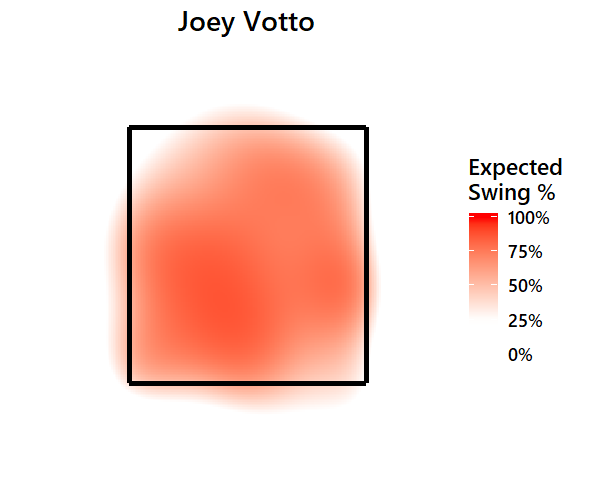
    The plots below show how likely a batter is to swing if a pitch is thrown in a certain location, using data from the 2018 season. As the legends show, anything above a 25% expected swing rate is colored in red, with darker red indicating a higher swing rate. All plots are from the pitcher’s perspective.

    Out-of-Zone Differences

    First, let’s compare some of the extreme hitters who either swung a little or a lot at pitches out of the zone last year.

    Low O-Swing%: Joey Votto

    The stat: Swung at 16% of pitches outside the zone in 2018 (lowest among qualified batters)

    Votto’s plate discipline has long been elite, and his expected swing rate locations almost perfectly fit the strike zone borders. While he covered all in-zone pitches to some degree in 2018, it appears that there’s a bit higher expected swing rate on down-and-in pitches (like this pitch he got from Edgar Santana).

    Low O-Swing%: Andrew McCutchen

    The stat: Swung at 19% of pitches outside the zone in 2018 (second-lowest among qualified batters)

    McCutchen followed Votto among the O-Swing% leaders last year. His 19.4% O-Swing was a career-best. There’s a small patch of dark red there in the heart of the zone, about belt-high, that appears to have been his most likely swing (like this one against Andrew Chafin).

    Now, a couple players who do extend beyond the zone…

    High O-Swing%: Salvador Perez

    The stat: Swung at 48% of pitches outside the zone in 2018 (highest among qualified batters)

    He’ll miss the 2019 season after undergoing Tommy John surgery, but Perez’s tendency is too extreme not to include here. The plot shows how willing he was to swing at anything within the vicinity of the zone.

    High O-Swing%: Javier Baez

    The stat: Swung at 46% of pitches outside the zone in 2018 (second-highest among qualified batters)

    Baez extends the zone in similar fashion, though maybe not as much on far outside pitches as Perez. Interestingly, the up-and-in pitch looks like one that he offers at a lot (or at least did in 2018). Here are some examples of that: a swinging strike against Brandon Woodruff; a popup against Luke Weaver; a home run against Gerson Bautista.

    Votto and Baez each had a 131 wRC+ in 2018, but took different approaches to get there. Here’s a GIF to show their swing rate differences back-to-back:


    In-Zone Differences

    Next, let’s look at two batters who were at the extremes of swinging at pitches in the zone.

    High Z-Swing%: Freddie Freeman

    The stat: Swung at 85% of pitches inside the zone in 2018 (highest among qualified batters)

    If a pitch is anywhere in the strike zone, Freeman is likely to swing. Prior to his 85% rate last year, he swung at 84% of pitches in the zone in 2017 and 81% in 2016.

    Low Z-Swing%: Brett Gardner

    The stat: Swung at 53% of pitches inside the zone in 2018 (second-lowest among qualified batters, behind the now-retired Joe Mauer)

    Gardner’s plot features a much lighter shade of red all around, indicating how much less likely he is to swing at pitches in the zone than Freeman. His Z-Swing% has consistently hovered in the 50-55% range for his career. There appears to be a slightly darker band of red across the middle of the zone, but Gardner is definitely willing to let pitches pass through everywhere.

    And here’s a GIF to compare Freeman and Gardner:

  • Which infielders are best at making the toss-up plays?

    BY HARRIS YUDIN

    Since the start of the 2017 season, 325 infielders have been the primary fielder on a ball in play with a Sports Info Solutions Defensive Difficulty rating of 3 (1-5 scale). In this piece, we will identify the best and worst at each infield position at converting such plays.

    A play with a 3 difficulty is nearly a 50/50 play— one that can go either way (the actual conversion rate is around 55 percent). Seldom is a Defensive Misplay assigned to a toss-up play, and Good Fielding Plays are more commonly associated with a difficulty rating of 4.

    While it is challenging to near impossible to eliminate all human error, the video scouts at Sports Info Solutions aim to inject as much objectivity into the process as possible. For example, Nolan Arenado is going to make a difficult play look more makable than will Jake Lamb. The goal is to assign the proper difficulty rating by envisioning a league-average defender attempting to make each play.

    In order to qualify here, a player must have at least 200 plays as the primary fielder since the start of last season. All data runs from Opening Day 2017 through May 25.

    First Base
    Joe Mauer, Minnesota Twins
    Mauer’s success rate on these plays is a whopping 84 percent, helped by his being more successful on diving attempts than any other current first baseman, turning 23 of his 57 opportunities into outs (40 percent).

    Mauer excels moving to both the left and right, often taking away potential extra base hits down the line. While he may not be particularly flashy, the 35-year-old Mauer is making enough plays for the Twins to put off moving him to DH full-time.

    Josh Bell, Pittsburgh Pirates
    On the other end of the spectrum, Bell is currently bringing up the rear as one of two first baseman with a conversion rate below 40 percent (37 percent … just worse than Justin Bour’s 39 percent)—which is unfortunate considering, of the group, he has had the second-most such balls hit in his direction (38).

    Bell is extremely vulnerable to balls hit down the first base line, with just a 31 percent success rate on plays to the right. The Pirates’ cleanup hitter owns the worst Good Fielding Play–Defensive Misplay ratio at the position, so it makes sense that he fails to convert some of the tougher plays.

    Second Base
    Javier Báez, Chicago Cubs
    Baez, the 2017 multi-position Fielding Bible Award winner, has had his most success at second base, where he’s converted 19 of the 24 plays that were considered toss-ups (79 percent).

    He’s the best at the position going back on ground balls, with a 56 percent success rate on plays that require him to break away from the plate. Baez has also fared better when sprinting than any other qualified second baseman, and perhaps most impressively, he has turned a solid 82 percent of forehanded plays into outs (which ranks among the highest for any second baseman). Baez is much more than just a quick tagger; he has great range and picks up almost any ball hit in his vicinity.

    Daniel Murphy, Washington Nationals
    The eye test tells you that Murphy is well below average defensively. The metrics (-15 Defensive Runs Saved in 2017) agree. And our Defensive Difficulty data? More of the same. The 33-year-old owns a success rate of 41 percent on these plays , the lowest among second basemen.

    He has trouble with balls hit up the middle (26 percent moving to the left) and has recorded an out on just one of his 22 diving plays (5 percent). Murphy has yet to play this season, but his body of work from last year is large enough—and concerning enough—to earn him a spot on this list.

    Third Base
    Justin Turner, Los Angeles Dodgers
    While Nolan Arenado blows every other infielder out of the water when it comes to Good Fielding Plays, he has had many more opportunities than all other third basemen. Arenado leads the way in 4-difficulty success rate, but sits fifth in the 3-difficulty category, behind Turner, (71 percent) Eugenio Suárez (71 percent), Adrián Beltré (70 percent) and Kyle Seager (70 percent).

    Turner makes a living on weakly-hit balls—his 62 percent success charging in, 54 percent on sprinting plays, and 73 percent throwing on the move are all among the leaders at the position. Watching Turner man the hot corner is less of a spectacle than watching Arenado or Matt Chapman, but the Dodgers’ No. 3 hitter is as clean defensively as you will find.

    Todd Frazier, New York Mets
    By most advanced metrics, Frazier is one of the better defensive third basemen in baseball (fourth in Defensive Runs Saved, second in Defensive Runs Above Average last year).

    So why has he fared so poorly on these plays (43 percent)? Most of his struggles have to do with positioning—specifically his guarding the line—as he owns just a 28 percent success rate moving to the left and a 59 percent rate on backhanded plays.

    The eight-year veteran has the fourth-worst Good Fielding Play–Defensive Misplay differential among third basemen, with 10 of his 45 Defensive Misplays coming on ground balls hit down the line. Nicholas Castellanos is actually lower on the list at 40 percent success on toss-ups, but he has become a full-time outfielder this season.

    Shortstop
    Trevor Story, Colorado Rockies
    We’re going to change things up and go with the leader in ‘Grade 3’ play conversions rather than success rate, because though the differential is slim at the top, Trevor Story has a notable edge in successful conversions over Carlos Correa and Miguel Rojas.

    Story ranked fourth in Defensive Runs Saved last season. The 25-year-old can be mistake-prone, with the fourth-most Defensive Misplays at the position, but he has also accumulated the most Good Fielding Plays, more than half of which have come on ground balls hit in his direction

    Story has thrown on the move 183 times—by far the most in baseball—converting on such plays at a 75 percent clip. This skill has helped him record an out on 43 of the 63 such plays for which he was responsible.

    Marcus Semien, Oakland Athletics
    Semien isn’t just the worst shortstop at cashing in on toss-up plays—at 26 percent, he’s the worst infielder by a fair margin. He has made just 29 percent of his sprinting plays. Only Travis Shaw has converted a lower rate such plays in this stretch.

    Semien was actually 16th out of 59 shortstops in sprint speed last season, so it isn’t as if he can’t reach balls hit up the middle or in the hole. He doesn’t have the skills to cash in on these borderline opportunities. He doesn’t make a ton of mistakes, but his 11 Good Fielding Plays are the 38th most at the position.