Tag: Matt Olson

  • Dominance Deep Dive: Munetaka Murakami’s Power

    Dominance Deep Dive: Munetaka Murakami’s Power

    For our series on dominance in NPB this season, we’ve taken a deep dive into some of the best pitching performances in the league.

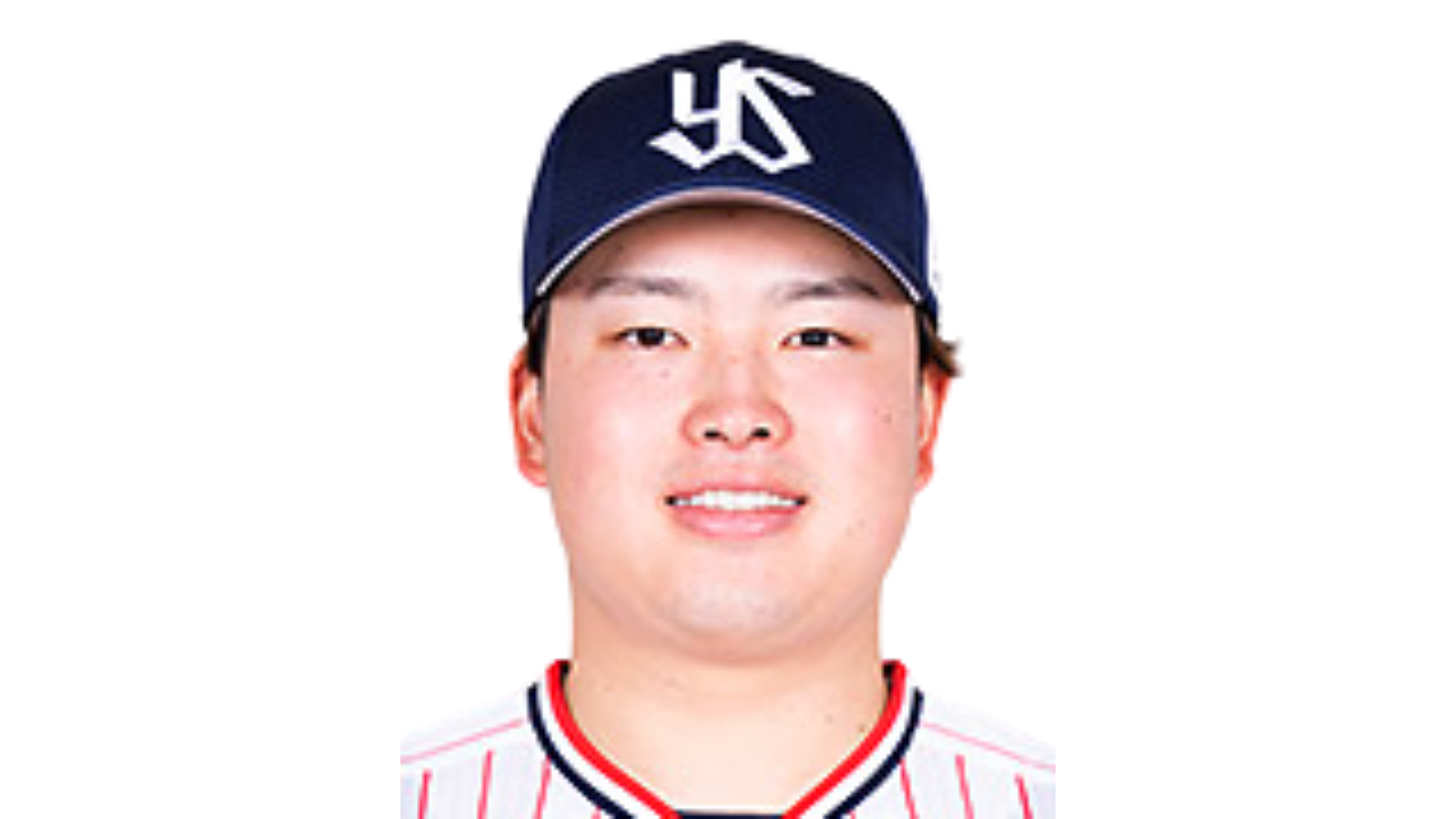
    Now, we turn our attention to the batter’s box and the NPB’s best hitter. Munetaka Murakami, the 22 year-old third baseman for the Yakult Swallows, must be considered one of the best power hitters in all of baseball with his stellar 2022 campaign. 

    Murakami won a Central League MVP in 2021 and he’s backing that up in 2022 with video game numbers during a historic season. With a .341/.477/ .760 slash line and a 1.237 OPS entering the week, he leads the entire league in the traditional Triple Crown with 51 HRs, 125 RBIs, He’s also going for the slash line Triple Crown, which he currently leads as well.

    Murakami debuted in 2018, but his first full season came in 2019 when he slugged 36 homers and slashed a respectable .231/.332/.481 with an .814 OPS. That season, his major flaw was 184 strikeouts, the most strikeouts in an NPB season by a Japanese-born player.

    Sporting a K% of 31.0% and a 12.5 BB% in 2019, Murakami caused damage but swung and missed a lot.  He’d get a lot better when it came to avoiding the latter.

    Season K% BB%
    2020 22.3% 16.9%
    2021 21.6% 17.2%
    2022 19.4% 19.6%

    Since that first full season he’s cut down on his chases and done more damage on pitches in the strike zone.

     His 47% hard-hit rate is the best in NPB. Only one other player is closer than 10 percentage points (Hotaka Yamakawa, who has 37 home runs, is at 44%)


    MONTH Hard-Hit Rate Avg Launch Angle
    APRIL 42% 11.4
    MAY 41% 12.7
    JUNE 56% 8.8
    JULY 51% 21.6
    AUGUST 46% 15.6
    SEPTEMBER 44% 3.9 (9 Balls in Play)


    Murakami has been hitting the ball hard all season, especially since the start of June. That month he had a 56% hard-hit rate and an astronomical .559 BABIP.

     In July he was still very productive but, as noted in the table above, his launch angles were off.

    Here’s an at-bat from July where the pitcher starts Murakami with a slow curve that he takes on the outer edge. Pitchers will usually start him with a slow curve or splitter to mess with his timing, then attack inside with fastballs, and righty pitchers will use cutters trying to get the ball up under his hands.


    via GIPHY


    This particular at-bat ended in a flyout to right field. The frustration on Murakami’s face was visible, as that cutter got in on him towards the handle of the bat, limiting his ability to extend his hands. 

    via GIPHY


    This is where hitters have to succeed with not only high exit velocities but also optimal launch angles. Murakami produces the most damage on down-and-in pitches and creates loft from that part of the zone. Understanding this and coaxing flyouts on pitches up in the zone against him is key.

    While he does face high velocity in the upper part of the zone regularly. He takes these pitches with ease, rocking back on his heels and maintaining great balance. He doesn’t bail or turn away and stays in against these hard pitches. 

    Teams have decided the only spot they can really attack is up near his hands. Murakami has adjusted to the league and is more selective in this area of the zone. You have to get the ball up though because he punishes mistakes that are down.

    Murakami picked up steam again in July, hitting home runs in 5 consecutive plate appearances, an NPB record.

    Murakami’s batting stance and swing remind me of Matt Olson. With slightly more bent knees to start, his bat position and stance are almost identical to Olson’s. 

    Olson and Murakami both use their hands out in front of their bodies as a timing mechanism, but also as a way to create tension and energy in the body.

    Murakami relies on a medium-high leg kick to get energy stored into his back leg and hip. Olson’s load is a toe-tap, but both of them load into the back hip and create a solid back side and foundation for stored energy. The bat is in nearly the same spot and angle in the middle of the load.

    The biggest difference is when both batters load. For Olson, his hands end up a bit higher and farther back because of a slight turn in the front shoulder. Olson has great bat speed, which he uses to great success.

    The short and compact swing by Murakami allows him to let the ball travel deeper into the zone. Murakami stays inside the ball better and pulls the ball less than Olson.

    At the point of contact, both rotate around their front half as they uncoil their stored energy through the zone. The leverage created from their attack angle downward to the ball is what helps them both hit towering home runs. Both have exceptional bat speed but also smoothness and looseness that is created by excellent rhythm at the beginning of their swings. 

    Here’s a side view of Murakami’s swing. The flow of his swing mechanics is beautiful to watch as his head also stays still through the entire process.

    via GIPHY


    Timing can be an issue, with a slight susceptibility to the splitter. Murakami will swing and miss when out on his front side, whiffing over the top of these types of offspeed pitches.

    via GIPHY


    He also flicks off-speed pitches into the gap by delaying rotation and placing the barrel on the ball. Even though he is out of sync and into his front side on this pitch, Murakami uses the strength in his arms and hands to lift the baseball into the outfield.

    via GIPHY


    Another example of his power is this mishit on this decent fastball down and in. The power to bully this ball over the wall opposite-field is impressive. The reaction of the pitcher Kodai Senga says it all. 

    via GIPHY


    Murakami is an elite hitter. What separates him from most is how often he hits the ball hard, and his knack for being able to hit well even when his timing is off. Couple this with bat speed and strength and he’s a dominating power hitter.

    The scary part is he’s only 22 years old and there are no signs of him slowing down. The confidence, patience, and talent Murakami exhibits are all culminating in one of the best seasons ever.

  • The Defensive Excellence of Matt Chapman & Matt Olson

    The Defensive Excellence of Matt Chapman & Matt Olson

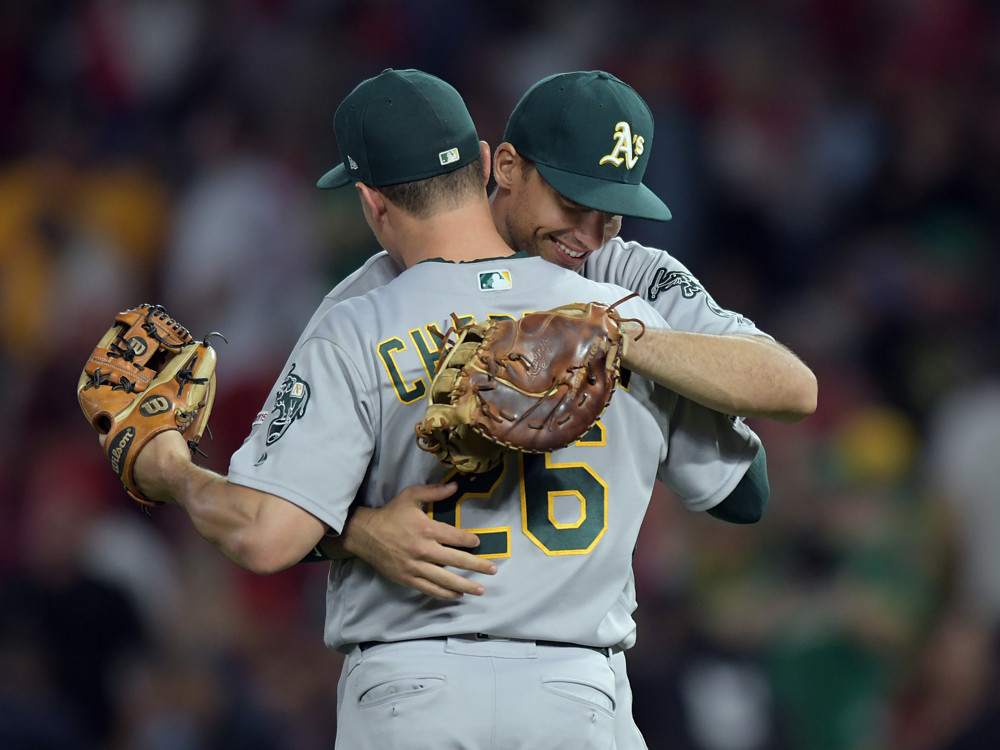
    With two big trades, the Athletics dismantled one of the great corner infield combinations in recent MLB history.

    The trades of Matt Chapman to the Blue Jays and Matt Olson to the Braves should have prominent effects on their new teams.

    After all, they are getting the standard-setters at their respective positions.

    Chapman’s 78 Runs Saved are the most at third base since his debut season, 2017. He led the position in Runs Saved in 2018 and 2019 and won the Fielding Bible Award for defensive excellence there in both those seasons.

    A hip injury and subsequent surgery slowed Chapman down in the shortened 2020 season, as he finished with 2 Runs Saved. But he rebounded to total 10 in 2021, tied for fourth-most there. Ke’Bryan Hayes led the majors with 16 Runs Saved at third base last season and won the Fielding Bible Award. Chapman finished second in Fielding Bible voting and won the AL Gold Glove.

    “Everybody I’ve talked to says that the first year back off this kind of hip surgery is a bit of a grind, where you’re still trying to learn how to use your body the right way again,” Chapman said last season in an appearance on the Sports Info Solutions Baseball Podcast. “I’ve got a good feeling that after [2021], I’m going to be fresh and ready to go in upcoming years.”

    Chapman should be a considerable upgrade for the Blue Jays, who haven’t finished a season with positive defensive value at third base since the 2016 season. Last season, Toronto played one third baseman with standout defensive numbers, Santiago Espinal (8 Runs Saved in 81 games), but that was offset by the six other players who played the position, who combined to cost the team 8 runs with their defense.

    Most Defensive Runs Saved at 3B – Since 2017

    Player DRS
    Matt Chapman 78
    Nolan Arenado 71
    Manny Machado 28
    Ryan McMahon 23
    Ke’Bryan Hayes 20

    Olson, like Chapman, has the most Defensive Runs Saved at his position since 2017. Olson’s 34 edge out Joey Votto, who has 32.

    Braves fans loved everything about their former first baseman Freddie Freeman, but by Runs Saved, there is no comparison between the old and new first basemen. Olson has Freeman by a 34-11 margin over the last five seasons.

    Olson has won three Fielding Bible Awards. He finished second in the voting in 2021 to Paul Goldschmidt.

    Olson had an odd defensive start to last season. In fact, he and Chapman were both negative (Olson -5, Chapman -2) in Defensive Runs Saved in mid-May. Both looked a lot like their old selves the rest of the way. Olson finished the season with 6 Runs Saved.

    Olson also appeared on our company podcast prior to the 2020 season and talked about the idea of getting on a roll on defense.

    “Being in that zone is much more based off preparation and focus,” Olson said, comparing fielding to hitting. “There’s a lot more factors in being at the plate and getting hot. If you’re prepared for every pitch, paying attention to who’s hitting, who’s pitching, tendencies, you can put yourself in a way-better position to succeed out there. When you’re prepared like that and the ball is hit your way, there’s never any sort of panic. I just react.”

    Most Defensive Runs Saved By 1B – Since 2017

    Player DRS
    Matt Olson 34
    Joey Votto 32
    Paul Goldschmidt 29
    Brandon Belt 23
    Anthony Rizzo 21
  • Are Matt Olson and Chapman the best corner duo in the “Runs Saved era?”

    By Mark Simon

    Talking with Matt Olson on the latest Sports Info Solutions Baseball Podcast got me thinking about great corner infield combos. And I figured there was a good chance that the A’s got more defensive value out of first and third base in 2019 (50 Defensive Runs Saved) than any team previously had from those two positions in the 17-year history of the stat.

    It turned out that a couple of teams had them beat.

    2003 Rangers (60 Runs Saved From 1B and 3B)

    What a luxury the Rangers had at first base in 2003. They had a rookie, Mark Teixeira, who went on to win five Gold Gloves and a three-time Gold Glove winner at DH in Rafael Palmeiro.

    Teixeira saved 19 runs in his debut season, living up to his status as one of the game’s top prospects with both the bat and the glove. Palmeiro gets knocked for winning a Gold Glove in a season in which he barely played (1999), but he was legit when he did take the field. He saved 11 runs in 55 games as Teixeira’s alternate. Add in a run saved each for Mike Lamb and Todd Greene and the Rangers got 32 Runs Saved from first base.

    On top of that, they got 28 more out of second-year man Hank Blalock at third base. Blalock didn’t win a Gold Glove that year, but he probably should have. Between the two-headed monster at first base and Blalock’s work at third, the Rangers got 60 Runs Saved. Olson and Chapman couldn’t quite beat that.

    2007 Cardinals (51 Runs Saved)

    I can’t knock this one. This is a season in which Albert Pujols played the best first base that anyone has played in the DRS era (I wrote about it for The Athletic). Pujols saved 31 runs by playing well off the bag, and he was still able to recover to get back to catch throws without issue. On the opposite side of the diamond, perennial defensive star Scott Rolen saved 12 runs in 112 games and five backups showed they were in sync with “The Cardinal Way,” combining to save nine more runs.

    In all, the Cardinals corner infielders combined for 51 Runs Saved, just edging out the A’s.

    So about Olson and Chapman …

    All right, so the A’s don’t come out on top here. Though Olson saved 18 runs, his backups cost the Athletics five runs. Combining their 13 with Chapman and company’s 37 gives the Athletics 50 runs, good for third best on this list. Oakland’s corner infielders also combined for 43 Runs Saved in 2018, which ranks tied for fourth with the 2005 Phillies (of Ryan Howard and Scott Rolen fame).

    However, if we just look at combos and take the backups out of the mix, Olson and Chapman combined for 52 Runs Saved last season. No other third-first combination beats them out. They’re the best of the DRS era.

  • Modeling the Subjective: 2019 Gold Glove Awards

    By Chris Weikel and Sam Weber

    The Rawlings Gold Glove, given annually to the MLB players who exhibit superior defensive performances, is a fickle and ever-changing award. Despite how much weight the Gold Glove is granted when discussing Hall of Fame careers, its actual inputs are vague and amorphous. The award has long been voted upon by MLB managers and coaches, but since 2013, in an attempt to combat its subjectivity, the SABR Defensive Index metric has accounted for 25% of the vote.

    This statistic is a combination metric that integrates Ultimate Zone Rating’s (UZR) zone-based method with the hybrid play by play/zone based formula of Defensive Runs Saved (DRS) and Chris Dial’s Runs Effectively Defended. This change has allowed us to build a model that attempts to predict the award recipients, as we now have enough seasons of winner data under the new criteria.

    Due to the award’s 75% reliance on subjective voters, we first had to test whether any public defensive statistics were actually taken into account by these managers, as they hold the most weight. Below is a visualization for all the Pearson coefficients of major defensive metrics and Gold Glove winners, bucketed into three-year stretches since 2003, the first year that DRS was available.

    The original correlations start out very weak because in 2003 the voters’ buy-in for defensive metrics was almost nonexistent. But as time goes on, they slowly pick up more and more steam, with the 2013 shift to more analytical selection methods marking the final large jump in bucket 2. The current correlations convinced us that modeling this very subjective award is now possible, as long as we also take into account voter biases like previous award winners and flashiness (we used the Good Fielding Play component of DRS for this – SIS Video Scouts reward players for making notable plays that would not be acknowledged in a box score).

    Our final model is a binary logistic regression with variables ranging from the DRS components and UZR (up to September 23) to previous Gold Gloves won. The model also incorporates a Gold Gloves-per-age factor to help weed out aging winners, while adding extra weight to young stars.

    We performed rigorous 10-fold cross validation testing and determined our model to be the best predictor with a .97 sensitivity and .44 specificity. This may seem low, but for the training and validation set, the model does not realize that only one person at each position, in each league, can win each year; it just takes a winner as anyone over a certain probability cutoff set to pick the appropriate proportion of victors for that sample.

    We then filter the winners by probability and delegate the award to the top probability player in each league, at each position, each year who played enough innings to qualify. We excluded both catcher and pitcher as their limited metrics and far more unique defensive requirements require different modeling than the other fielders.

    The MLB uses three finalists to build up suspense, so here are our model’s projected Gold Glove winner and the top three finalists for each award. We also included extra information on the top probability earner.

    NL 1B:

    1. Paul Goldschmidt
    2. Anthony Rizzo
    3. Eric Hosmer

    AL 1B:

    1. Matt Olson
    2. Ronald Guzman
    3. Carlos Santana

    Overall Probability Leader 1B: Matt Olson

    Oakland’s Matt Olson is an artist. He makes an at-times-mundane position, first base, as exciting as shortstop. Anchoring one of the better defensive infields in the league, Olson allows teammates Matt Chapman and Marcus Semien to shine while also making quite a few highlight plays himself.

    He was by far the rangiest first baseman in the league, posting 12 runs saved from the Range and Positioning DRS component alone. Where Rizzo thrives is in handling difficult throws, securing 32 of these attempts for his teammates (second to Pete Alonso’s 33). Rizzo gets a huge bump here, but unfortunately the other aspects of his defense bring him back down to the pack.

    Our model sees Olson’s consistent, across-the-board production and decided it outweighs the previous Gold Glove resumes of Goldschmidt and Rizzo, so it selected him as the top contender.

    NL 2B:

    1. Kolten Wong
    2. Max Muncy
    3. Adam Frazier

    AL 2B:

    1. DJ LeMahieu
    2. Yolmer Sanchez
    3. Hanser Alberto

    Overall Probability Leader 2B: DJ LeMahieu*, Kolten Wong

    Although the Yankees’ DJ LeMahieu was the model’s selection at second base, we decided to discuss the second highest probability winner, Kolten Wong, because of LeMahieu’s significant use this season at multiple other positions, such as first and third. Even though Wong has never won a Gold Glove, he has been seen favorably by DRS. In the past two years, he’s taken a major step forward, accumulating 19 total runs saved last season and 14  this season (his previous high was 9 in 2014). Compared to LeMahieu, he also seems to handle difficult line drive outs well, amassing five of these GFPs compared to LeMahieu’s one at the position:

    NL 3B:

    1. Nolan Arenado
    2. Evan Longoria
    3. Brian Anderson

    AL 3B:

    1. Matt Chapman
    2. David Fletcher
    3. Kyle Seager

    Overall Probability Leader 3B: Nolan Arenado

    Nolan Arenado comes in as the overall probability favorite to win the Gold Glove at third base in 2019. Three 20-plus DRS seasons in the last six years have helped the Rockie win the NL award every year since 2013. His 2013 season was particularly stunning, amassing 14.6 UZR and 17.7 Fielding Runs Above Average to go along with his 30 total Runs Saved. Since our model takes into account the subjectivity of voting, Arenado is helped tremendously by the fact he’s won the NL award every year since 2013. Second overall was Oakland’s Matt Chapman, who’s arguably had better defensive seasons at third base in recent years, though he was still great in 2019:

    Year Name UZR FRAA DRS
    2017 Nolan Arenado 6.7 5 20
    2017 Matt Chapman 9.4 12.6 19
    2018 Nolan Arenado 5.8 9.1 5
    2018 Matt Chapman 10.9 15.6 29
    2019 Nolan Arenado 7.5 10.3 7
    2019 Matt Chapman 12.8 13.5 16

    With Chapman’s sole win coming last year, the model heavily favored a five-time Gold Glover in Arenado to be the top pick. That’s not to say Arenado hasn’t been superb throughout his career, as evidenced by plays like this one that will keep him a formidable force at the position for years to come:

    NL SS:

    1. Nick Ahmed
    2. Trevor Story
    3. Javier Baez

    AL SS:

    1. Andrelton Simmons
    2. Francisco Lindor
    3. Adalberto Mondesi

    Overall Probability Leader SS: Andrelton Simmons

    At shortstop, we have another case of a perennial winner taking home the overall top spot. Andrelton Simmons of the Angels comes in as the favorite at the position. A winner in 2013, 2017, and 2018, Simmons, for a period of time, was considered possibly the best defender in Major League Baseball. His range and ability to make tough ground ball outs (like this one) contribute strongly to his Good Fielding Play totals and other metrics like UZR.

    Like Arenado, his 2013 season was pretty remarkable. Simmons totaled 14.8 UZR, 27.2 FRAA and 41 DRS, the second-highest total for the statistic behind Kevin Kiermaier’s 2015 season.

    Last year’s NL winner Nick Ahmed came in at second and, like Chapman, was hurt by the model for not winning as many previous awards.

    NL LF:

    1. David Peralta
    2. Joc Pederson
    3. Marcel Ozuna

    AL LF:

    1. Alex Gordon
    2. Andrew Benintendi
    3. Michael Brantley

    Overall Probability Leader LF: David Peralta

    David Peralta would be our theoretical overall winner in left field. Peralta’s a name that may not have gotten a lot of attention playing in Arizona this year, but the 32-year-old outfielder was an anchor at the position. He put up an impressive 6.2 UZR and 10 defensive runs saved this season, considerably better than his runner up Alex Gordon, who only had a 3.2 UZR and -1 DRS. Again, we see an example of a six-time winner in Gordon being assisted by his previous prowess, but Peralta has performed well enough to win at a position that’s slightly devoid of talent.

    NL CF:

    1. Victor Robles
    2. Lorenzo Cain
    3. Harrison Bader

    AL CF:

    1. Kevin Kiermaier
    2. Jackie Bradley Jr.
    3. George Springer

    Overall Probability Leader CF: Kevin Kiermaier

    Kevin Kiermaier of the Rays comes in as the top probability winner, with Victor Robles behind him. Both have had strong seasons, with Kiermaier leading Robles in UZR, but Robles having 22 DRS compared to Kiermaier’s 13. With what’s become a theme of this piece, Kiermaier is helped by the model favoring players with previous wins, as he’s a two-time Gold Glover compared to Robles’ none. As previously mentioned, some of Kiermaier’s seasons have been remarkable, especially his 2015 campaign in which he totaled 42 DRS, the highest total since its inception in 2003. He’s certainly not a bad choice for the award by any means.

    NL RF:

    1. Jason Heyward
    2. Cody Bellinger
    3. Hunter Renfroe

    AL RF:

    1. Mookie Betts
    2. Josh Reddick
    3. Max Kepler

    Overall Probability Leader RF: Jason Heyward

    Right field turned out as effectively a tie between the Dodgers’ Cody Bellinger and the Cubs’ Jason Heyward. Taking a quick look at their 2019 defensive stats , this might be a bit striking: Bellinger had 19 Runs Saved and a 9.5 UZR. Heyward had 7 Runs Saved and a 2.4 UZR.

    If we’re looking at this year’s numbers, the Gold Glove shouldn’t even be a contest between these two. Heyward, though, is helped tremendously, probably too much, by the fact he’s won five times by his age 29 season, whereas Bellinger has yet to win. Before any previous Gold Glove inputs were added to the model, Bellinger was the overall favorite to win, showing that subjectivity of voting and previous wins can play a major role in who ends up with the hardware.

    Conclusion

    This was our first attempt at building a Gold Glove model and it’s clear it needs some tweaking. It performs fairly well on most occasions but does tend to overvalue players who have won previous Gold Gloves. One potential way to fix this overemphasis on past winners is to eliminate more of the older years from the training data. We do need to go back in time relatively far in order to incorporate enough positive results in the sample, but voting in the pre-defensive index days was far more friendly to past winners than the current system (for example: Derek Jeter)

    Removing some of the pre-2013 years — along with adding team record as a small adjustment to account for more bias — could make the model more robust and accurate. Overall, our model appears to be a successful way to judge Gold Glove contenders. Nevertheless, the true measure of whether our model performed admirably won’t come until we see the final votes.

     

  • MLB Leaderboard: Who’s hitting it hard most often?

    By Mark Simon

    There have been a lot of hard-hit balls this season and a lot more figure to be hit tonight in the Home Run Derby.

    With that in mind, it got us to wondering: Who is hitting the ball hard most often this season? We can answer that rather easily in this age of sabermetrics. Here are the top five players in hard-hit rate in 2019 among those with at least 200 at-bats.

    Note that this version of hard-hit rate is calculated as Hard-hit balls/(At-Bats + Sacrifice Flies). Our denominator penalizes a hitter for strikeouts. Those you would see from Statcast and on Fangraphs use a denominator of “Batted Balls” which does not incorporate strikeouts.

     The number you get from our calculation allows you to say “Player X has recorded a hard-hit ball in Y% of his times at bat.”

     1. Cody Bellinger, Dodgers (42.7%)

    What’s scary about Bellinger’s numbers at the All-Star Break is that our system of assessing expected performance believes Bellinger could have been even better. He had a .353 expected batting average and .738 slugging percentage based on where and how hard-hit his batted balls were hit. Those were bumps of 17 and 46 points from his batting average and slugging percentage.

    Bellinger probably deserved a few more breaks against breaking pitches. Last season, he had 37 hard-hit balls and totaled 36 hits against them. This season, he’s recorded 35 hard-hit balls against curves and sliders, but has “only” 19 hits to show for it.

    2. Justin Turner, Dodgers (42.3%)

    Justin Turner has ranked in this top 10 virtually all season, which isn’t a surprise given that he led the majors in this stat in 2018 (38%) and ranked second in 2017 (34%). His consistency has been impressive. Turner and Christian Yelich are the only players in this top 10 who had a hard-hit rate of 35% or higher last season.

    3. Christian Yelich, Brewers (42.0%)

    There hasn’t been any drop-off for Christian Yelich, who leads the majors with 31 home runs this season. The difference between Yelich this season is that despite a bit of a dip in production against breaking balls, he’s been all over changeups. He’s hitting .440 when an at-bat ends in one. In 2018 he had 25 hard-hit balls in 81 at-bats ending with that pitch. This season, he’s had 23 in 50 changeup-ending at-bats.

    4. Anthony Rendon, Nationals (40.8%)

    Anthony Rendon has been awesome in the final year of his contract and should be one of the top free agents this offseason if the Nationals don’t sign him to an extension. That there has been an abundance of home runs for Rendon isn’t that big a surprise if you look at the jump in his fly ball rate – about six percentage points from 2018 to 49% and his average launch angle, which has shot up two degrees to 20.1.

    5. Matt Olson, Athletics (39.8%)

    Matt Olson has the lowest batting average on this list (.250), a figure comparable to how he fared in 2018 with similar hard-hit rate and exit velocity numbers (he ranks in the top 10 percent in MLB). What’s hurting Olson this season is that he’s 7-for-45 when hitting a ground ball or line drive through a defensive shift (.156 batting average). Figuring out how to counter how defenses align against him might net Olson a few more hits. Though if he continues to drive the ball as he has, the Athletics probably will be willing to live with a few fewer.

    The top 50 players at the All-Star Break are in the chart below.

    Rank Name HardHitRate
    1 Cody Bellinger 42.7
    2 Justin Turner 42.3
    3 Christian Yelich 42
    4 Anthony Rendon 40.8
    5 Matt Olson 39.8
    6 Freddie Freeman 39.6
    7 Alex Verdugo 39.3
    8 Nelson Cruz 38.5
    9 Josh Bell 38.1
    10 Carlos Santana 38
    11 Howie Kendrick 38
    12 Albert Pujols 37.8
    13 Tommy La Stella 37.8
    14 Bryan Reynolds 37.7
    15 Yasmani Grandal 37.6
    16 Marcell Ozuna 37.4
    17 Shohei Ohtani 37.3
    18 Michael Brantley 37.1
    19 Tommy Pham 36.9
    20 Hunter Renfroe 36.7
    21 Nomar Mazara 36.6
    22 Ketel Marte 36.5
    23 Max Kepler 36.1
    24 Hunter Dozier 35.9
    25 Matt Chapman 35.8
    26 J.D. Martinez 35.8
    27 Andrelton Simmons 35.7
    28 Ozzie Albies 35.6
    29 Giovanny Urshela 35.5
    30 Eddie Rosario 35.5
    31 Yadier Molina 35.5
    32 Elvis Andrus 35.3
    33 Hunter Pence 35.2
    34 Mike Moustakas 35.2
    35 Francisco Lindor 35.2
    36 Eugenio Suarez 35
    37 George Springer 34.9
    38 Mookie Betts 34.8
    39 Scott Kingery 34.7
    40 Paul Goldschmidt 34.7
    41 Joc Pederson 34.6
    42 Danny Jansen 34.6
    43 Jeff McNeil 34.6
    44 Franmil Reyes 34.5
    45 Yandy Diaz 34.5
    46 Kendrys Morales 34.5
    47 Miguel Cabrera 34.5
    48 Shin-Soo Choo 34.4
    49 Evan Longoria 34.4
    50 Mike Trout 34.4
    51 Jorge Polanco 34.4
  • Matt Olson’s quiet Gold Glove campaign

    By BRETT BITTIGER

    Few baseball pundits predicted that on August 16, the Oakland Athletics would be two games back in the AL West and in command of the second AL Wild Card spot.

    There has been ample coverage of several of the team’s sources of insurgence: Matt Chapman’s highlight reel has led an improved team defense; Blake Treinen’s turbo sinker and vanishing slider have headlined a superb relief corps; and Khris Davis and Jed Lowrie have anchored a productive lineup.

    But a main contribution has gone largely unnoticed—Matt Olson’s defense.
    Corner-of-the-field defenders usually don’t earn the lion’s share of praise. Oakland is an exception, with their top three Defensive Runs Saved leaders all manning a corner spot: Chapman at third base (+24), Matt Olson at first base (+9), and Chad Pinder in left field (+7). Chapman’s feats have been obvious—Jeff Sullivan of FanGraphs recently analyzed them. Requiring a closer look, perhaps, is the fact that Olson is the team’s second most valuable defender.

    On the surface, Olson ranks second among all first basemen on our Defensive Runs Saved leaderboard, topping the American League by a comfortable margin, and trailing only Brandon Belt overall.

    Most of this value comes from Olson’s ability to handle ground balls, especially to his glove side. In terms of range and positioning, only Belt, Joey Votto, and Freddie Freeman score higher on our leaderboard. Olson also has been very efficient on starting double plays, converting 10 out of 12 opportunities on the season. Beyond this, Olson’s value can best be assessed in how he impacts his fellow infielders.

    Consider Marcus Semien, who currently ranks 12th on our shortstop DRS leaderboard with five runs saved. Semien also ranks 26th by our Good Throw Rate metric among those who have made at least 100 throws to first base. Good Throw Rate factors in throwing errors as well as good plays by first basemen (like scoops and good tag plays) to assess an infielder’s throwing efficiency.

    The numbers show that Semien’s above average DRS figure belies his subpar throwing ability. They also indicate that his success has been largely dependent on the ability of Matt Olson (the two recently combined for this nifty play). In fact, no other shortstop this season has been picked up by his first baseman more than Semien, who has received 17 such plays. If we look at last season, six of Semien’s seven throwing errors occurred without Olson manning first base.

    Matt Chapman, the more capable left-side infielder in Oakland, ranks 11th on our Good Throw Rate among third basemen, but still has been picked up ten times by Olson this season, good for second most at his position.

    It’s also important to note that, while Olson leads the league in handling difficult throws in order to record outs (his current total of 33 easily outstrips Justin Smoak’s second-best figure of 25), his assistance to his infielders likely goes even further.

    Listed at 6’5”, Olson stands counter to NL standout Freddie Freeman as the tallest AL regular at first base. With a large wingspan even for his sizable frame, and deft footwork around the bag, Olson is often able to avoid the need to leave the bag or pick a throw out of the dirt when shorter first basemen would need to go above and beyond to record an out.

    Ultimately, there were many potential scenarios that could have played out at the corner infield spots this season for the A’s. Olson spent at least half of his minor league campaigns in 2015 and 2016 in right field, and Oakland received significant contributions at first base last year from Ryon Healy and Yonder Alonso.

    The A’s could have held onto Healy and paired him with Olson in a platoon. They could have extended Alonso and encouraged Olson to keep developing his outfield defense. Instead, they cleared their corner infield—realizing the obvious impact of Chapman and the subtler infield-wide buoying ability of Olson—and committed wholly to them both.

    Though it’s still early in both of their careers, it is already clear that Oakland’s front office deserves significant credit for their conviction.