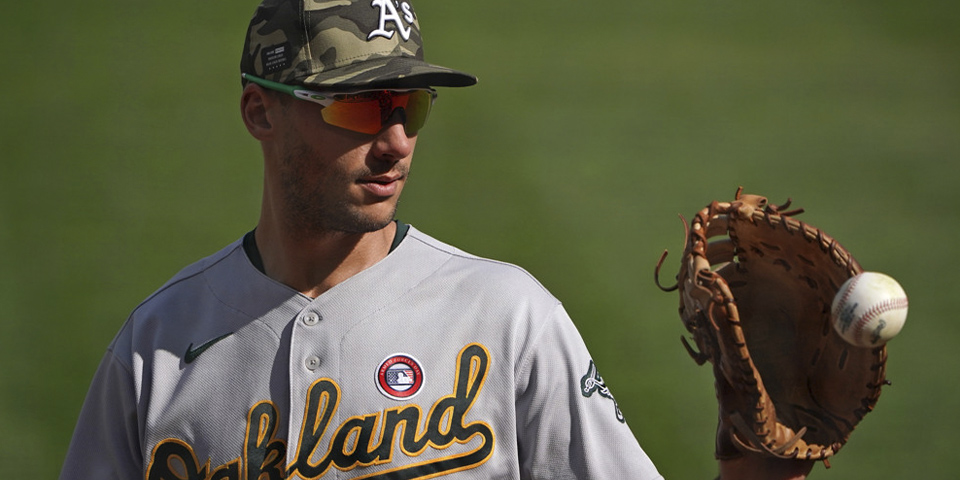
Tag: Oakland Athletics

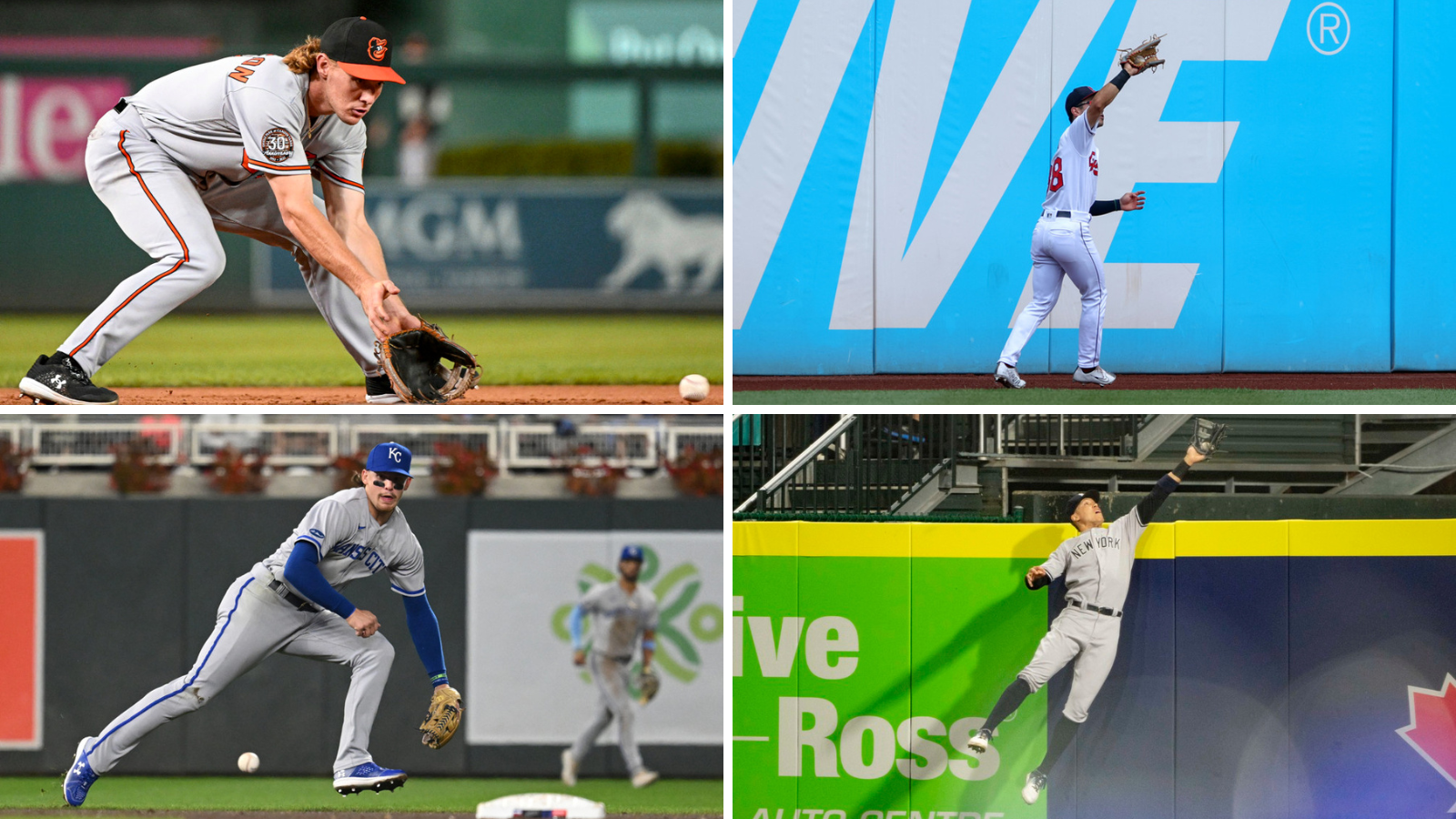
  • Stat of the Week: AL Defensive Stories In 2024

    Stat of the Week: AL Defensive Stories In 2024

    Photo: Chris Leduc/Icon Sportswire

    BY MARK SIMON

    With Opening Day approaching, we wanted to preview the 2023 season from a defensive perspective. So to be fair to all 30 teams, we’ve got a stat-driven theme or story to watch for each team. We’ll do the AL teams this week, the NL next week.

    Angels – The Angels ranked 19th in Defensive Runs Saved last season and didn’t make any significant improvements on the defensive side. Mike Trout hasn’t been moved off center field but Mickey Moniak fared well there when Trout was out, so it’s worth wondering if anything could happen on that front in 2024. For now, Trout is in center field and Moniak is in right field.


    Astros – The Astros finished 17th in Defensive Runs Saved last season but have the capability to be better than that, given a roster of players with good track records (Kyle Tucker, Chas McCormick, Jake Meyers, Alex Bregman). The thing to watch will be a potential trouble spot, the right side of their infield, in particular José Altuve, who has totaled a positional-worst -28 Runs Saved over the last 2 seasons.


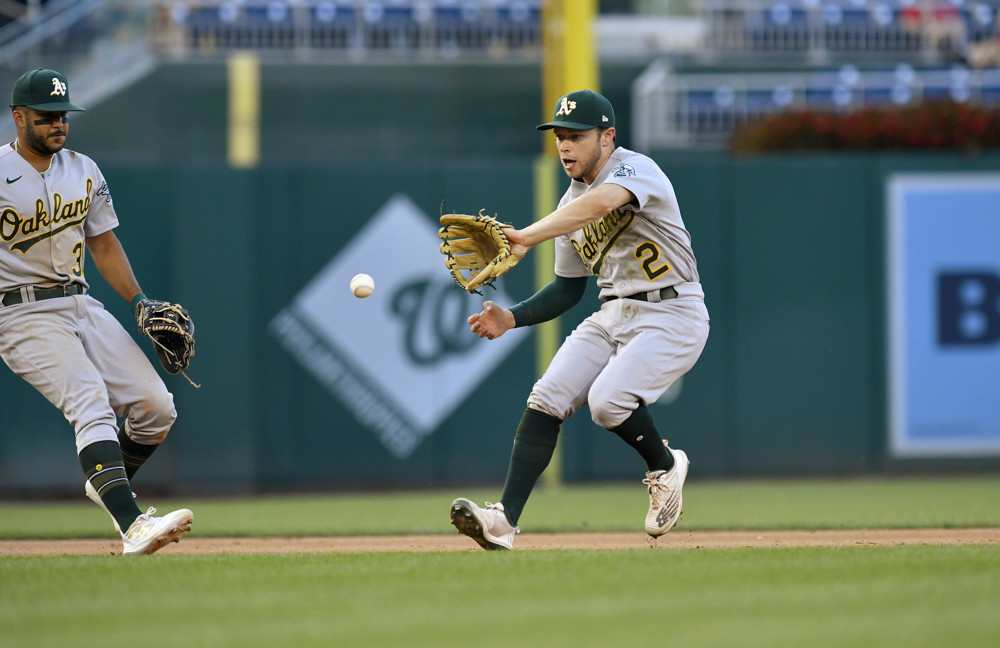
    Athletics – The A’s best defensive player is shortstop Nick Allen, who has saved 9 Runs in a little over 1,300 innings at the position the last 2 seasons. If his bat keeps him on the field, he’s Oakland’s best shot at a Fielding Bible Award.


    Blue Jays – The Jays are basically running it back from last season, when they led the majors in Runs Saved. The only exception is third base where Isiah Kiner-Falefa is slated to be the primary replacement for Matt Chapman. IKF has a very good history at the position so if he plays (likely contingent on how he hits), the drop-off at that position might be very small and the Blue Jays could again contend to be the top defensive team.


    Guardians – The Guardians have 3 outfielders who are capable of winning a Fielding Bible Award. Left fielder Steven Kwan already has two. Myles Straw came close. And Ramón Laureano has a great history in right field in a little more than a season’s worth of innings. The Guardians, in the eyes of some, are MLB’s top defensive team entering the season.


    Mariners – The Mariners have a couple of players who have contended for or won Gold Gloves in the past but didn’t put up the best defensive numbers last season. We’re referring to first baseman Ty France and shortstop J.P. Crawford. For the Mariners to contend, it would help if they excelled at their respective spots.


    Orioles – The Orioles ranked tied for 6th in Defensive Runs Saved last season because they were basically average or better at every position. They’re capable of matching that with their current roster particularly because they have 2 defensive standouts, Ramón Urias and Jorge Mateo who can come in late in games if needed for youngsters Jordan Westburg at third base and top prospect Jackson Holliday at second base.


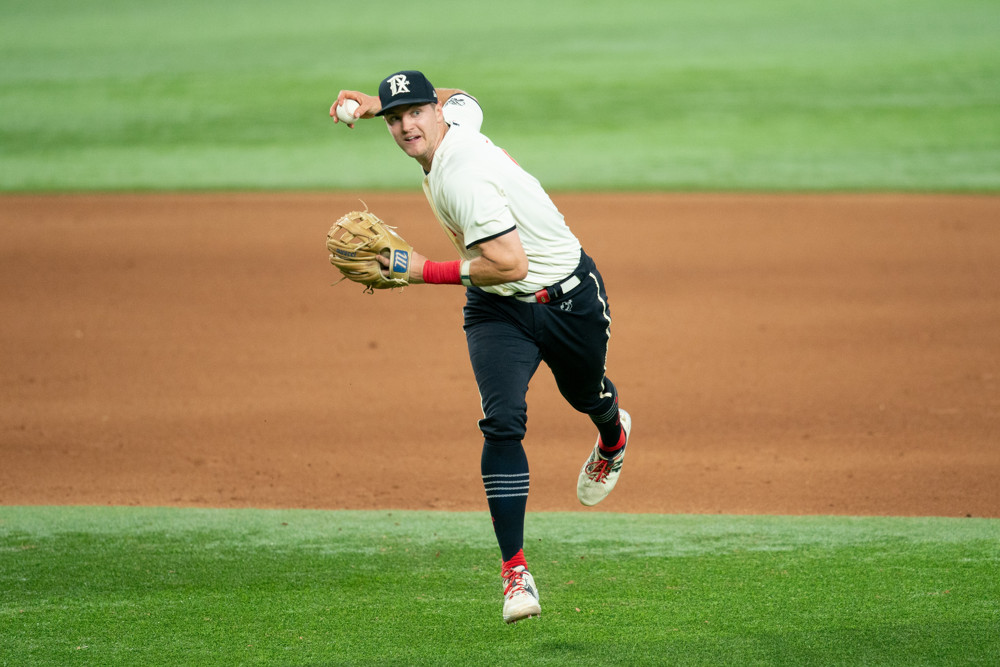
    Rangers – After looking great in the 2023 postseason, making several highlight-reel plays, Josh Jung could step up a level defensively. He may become one of the game’s elite defenders in 2024.


    Rays – Rays shortstops tied for the MLB lead with 19 Runs Saved last season. With Wander Franco in significant legal trouble and Taylor Walls injured, will new acquisition José Caballero perform at a high level? Caballero looked the part at both middle infield spots last season and he seems like a good fit on a team that typically maximizes the talent of its roster.


    Red Sox  There’s a lot to watch throughout the Red Sox outfield. They’ll have a new player standing in front of the Green Monster in left fielder Tyler O’Neill, who won the Fielding Bible Award at that position in 2020 and 2021. Rookie Ceddanne Rafaela will be the center fielder. Jarren Duran, who played mostly center field and left field the last two seasons, will now try right field. It will be interesting to see how all three mesh in Fenway Park.


    Royals – Bobby Witt Jr. was one of the most improved defensive players in MLB in 2023. Is he capable of making the jump to being one of the top shortstops by Defensive Runs Saved?


    Tigers – Tigers third basemen combined to have the worst Runs Saved total of any infield position. The addition of Gio Urshela should make things considerably better there. And we’ll see how things shake out with rookies Parker Meadows and Colt Keith and how well they fare at center field and second base.


    Twins – After a year away from center field, Byron Buxton is going to return to playing the position in 2024. When healthy, Buxton is as good as it gets in center field. But his injury history is a concern. The Twins are ready for potential issues though with Manuel Margot available to back up at multiple spots.


    White Sox  The White Sox ranked 29th in Runs Saved last season, so they have nowhere to go but up. Their weakest spots included right field, where for now they have newcomer Dominic Fletcher, and shortstop, which will be manned by Paul DeJong. They’ll also have a new catching tandem in Martín Maldonado and Max Stassi. Maldonado has something to prove after a career-worst -10 Runs Saved in 2023.


    Yankees – The Yankees’ outfield Runs Saved numbers last season were among the worst in MLB. How will that change in 2024? They’ve got two new acquisitions to acclimate in Alex Verdugo (typically a good defender) and Juan Soto (typically not as good), and they’re giving Aaron Judge another try in center field, where he’s rated basically as average in the past.

  • 2023 MLB Defensive Preview: American League

    2023 MLB Defensive Preview: American League

    BY MARK SIMON

    With Opening Day approaching, we wanted to preview the 2023 season from a defensive perspective. So to be fair to all 30 teams, we’ve got a stat-driven theme or story to watch for each team. We’ll do the AL teams this week, the NL next week.

    Angels – The Angels have a good defensive group for use at the end of games in catcher Max Stassi (one of the best pitch framers in MLB), infielder Gio Urshela, and outfielder Brett Phillips (as good as it gets on a per-inning basis in right field). The question becomes whether they’ll have enough leads at the end of games to make a full-scale deployment of those defensive resources relevant.

    Astros – The Astros led MLB in Defensive Runs Saved from their outfielders last season and should again be up among the leaders in 2023. With shifts out of the picture, we’re curious how the infield will fare, particularly on the right side with 36-year-old first baseman José Abreu and (currently injured) second baseman José Altuve. The latter ranked last in Runs Saved by a second baseman last season.

    Athletics – If Nick Allen can hit enough to stay in the lineup look out. He might be a dark horse for a Fielding Bible Award. He saved 6 Runs in ~500 innings at shortstop in 2022.

    Blue Jays – If every “if” goes their way, the Blue Jays could have the best defensive team in MLB. Those “ifs” center around second baseman Whit Merrifield, third baseman Matt Chapman, and center fielder Kevin Kiermaier. If each can defy age and play to the capabilities of their past Fielding Bible Award-winning seasons, Toronto will have highlight shows on defense almost every night.

    Guardians – The Guardians could also be the best defensive team in baseball. They return two 2022 Fielding Bible Award winners in left fielder Steven Kwan and center fielder Myles Straw, and a runner-up, second baseman Andrés Giménez.

    Mariners – We previously wrote about Julio Rodríguez and how he’s shown the potential to be a great defender, so long as he doesn’t overtax his body (he ranked 6th in sliding, diving, and jumping catches for outfielders in 2022). We look forward to seeing what he looks like in 2023

    Orioles – Just how good are Adley Rutschman and Gunnar Henderson? Rutschman ranked second among catchers in Defensive Runs Saved in 2022 and easily led catchers in DRS after the All-Star Break. He could be a Fielding Bible Award winner for years to come. Henderson could play shortstop or third base. His minor league numbers indicate he’s a better fit at third.

    Rangers – Can the Rangers provide the defensive support needed behind a starting rotation that has been remade from 1-to-5 the last two years? The Rangers should be solid at second base (Marcus Semien), right field (Adolis García) and catcher (Jonah Heim) but have regulars who rate below average at first base (Nathaniel Lowe) and shortstop (Corey Seager). 

    Rays – Left fielder Randy Arozarena was an impactful defender as a rookie in 2021 (7 Runs Saved), less so in 2022 (-4). Do any vibes from his play in the World Baseball Classic carry over to Tampa Bay for 2023?

    Red Sox Andrea Arcidipane nailed it on the latest SIS Baseball Podcast – Adam Duvall playing center field full time at age 34, with half his games in Fenway Park, will be an interesting challenge. To his credit, Duvall has 4 Runs Saved in ~600 career innings in center, so the move could turn out alright.

    Royals – Bobby Witt Jr. ranked last among shortstops in Runs Saved last season. Will he make the adjustments needed in Year 2 or is a position switch to third base in his future?

    Tigers – Javier Báez’s defense disappointed big time in what was a miserable season for the Tigers. His -4 Runs Saved at shortstop were a career worst. Is he capable of returning to the form he had in 2020 and 2021, when he combined for 9 Runs Saved there?

    Twins – We have to ask, right? How healthy is Carlos Correa and is he capable of returning to the level of play that netted him a Fielding Bible Award and a Platinum Glove in 2021? Correa had potential deals with the Giants and Mets snuffed by injury concerns. We’ll see how he holds up with Minnesota.

    White Sox – New manager Pedro Grifol has promised better attention to detail all around in 2023. So we’re looking for that on the defensive end. The White Sox need it. They ranked T-26th in Defensive Runs Saved last season and didn’t get positive Runs Saved from any position on the field. They’ll shift some parts around, with Andrew Vaughn moving to first base full-time and Elvis Andrus playing second base for the first time as an MLB player.

    Yankees – What can they do for an encore? The Yankees led MLB in Runs Saved in 2022 and it wasn’t close. They return almost the same position player roster that they had last season, so they should still be very good. No team has led the majors in Runs Saved in back-to-back seasons.

  • 2023 Defender to Watch: Nick Allen

    2023 Defender to Watch: Nick Allen

    Why is Oakland Athletics shortstop Nick Allen a defensive player to watch in 2023?

    Five different shortstops have won an Fielding Bible Award in the last five seasons: Andrelton Simmons, Nick Ahmed, Javier Baez, Carlos Correa, and Jorge Mateo.

    If there’s going to be a sixth in six years, that player could be Allen.

    Allen saved 6 runs in just over 500 innings at shortstop for the Athletics last season. He also saved 4 runs in a little more than 300 innings at second base. Shortstop will likely be his spot in 2023, particularly given that he played his last 43 games there last season.

    Allen’s strength was that he didn’t have a weakness. This is his page on FieldingBible.com. Take note of the absence of negative numbers that would indicate below-average performance.

    Aesthetically, Allen looks most impressive when he’s going deep into the shortstop-third base hole, like this one.

    We’re not sure if this is by design, but Allen went to the backhand a lot relative to other shortstops.

    We track fielding methods for players on any ball they touch. Allen had 141 forehand plays and 102 backhand plays at shortstop in 2022 (along with 2 barehand plays counted separately). Allen’s 42% rate of attempting to field the ball on his backhand was the highest of any of the 35 shortstops with the most opportunities in 2022.

    There are many ways to skin a cat, so to speak. Top defenders Allen, Andrew Velazquez, and Taylor Walls are among those with the highest backhand percentages. Peña, Crawford, and Carlos Correa are among the shortstops with the lowest percentages.

    We should point out that Allen is among the best at fielding balls on his forehand.

    Highest Success Rate on Forehand – Shortstops in 2022

    Player Success Rate
    Carlos Correa 95.5%
    Nicky Lopez 95.3%
    Xander Bogaerts 94.9%
    Miguel Rojas 94.5%
    Nick Allen 94.3%

    Allen’s out rate on backhands wasn’t up among the best in the league. At 84.3%, he ranked 20th among those 35 qualifiers, though that doesn’t take into account play difficulty and how Allen may be able to touch more balls than others.

    Regardless, he’s a little bit of an outlier in terms of approach  and it will be interesting to see if that style carries over to 2023.

  • The Defensive Excellence of Matt Chapman & Matt Olson

    The Defensive Excellence of Matt Chapman & Matt Olson

    With two big trades, the Athletics dismantled one of the great corner infield combinations in recent MLB history.

    The trades of Matt Chapman to the Blue Jays and Matt Olson to the Braves should have prominent effects on their new teams.

    After all, they are getting the standard-setters at their respective positions.

    Chapman’s 78 Runs Saved are the most at third base since his debut season, 2017. He led the position in Runs Saved in 2018 and 2019 and won the Fielding Bible Award for defensive excellence there in both those seasons.

    A hip injury and subsequent surgery slowed Chapman down in the shortened 2020 season, as he finished with 2 Runs Saved. But he rebounded to total 10 in 2021, tied for fourth-most there. Ke’Bryan Hayes led the majors with 16 Runs Saved at third base last season and won the Fielding Bible Award. Chapman finished second in Fielding Bible voting and won the AL Gold Glove.

    “Everybody I’ve talked to says that the first year back off this kind of hip surgery is a bit of a grind, where you’re still trying to learn how to use your body the right way again,” Chapman said last season in an appearance on the Sports Info Solutions Baseball Podcast. “I’ve got a good feeling that after [2021], I’m going to be fresh and ready to go in upcoming years.”

    Chapman should be a considerable upgrade for the Blue Jays, who haven’t finished a season with positive defensive value at third base since the 2016 season. Last season, Toronto played one third baseman with standout defensive numbers, Santiago Espinal (8 Runs Saved in 81 games), but that was offset by the six other players who played the position, who combined to cost the team 8 runs with their defense.

    Most Defensive Runs Saved at 3B – Since 2017

    Player DRS
    Matt Chapman 78
    Nolan Arenado 71
    Manny Machado 28
    Ryan McMahon 23
    Ke’Bryan Hayes 20

    Olson, like Chapman, has the most Defensive Runs Saved at his position since 2017. Olson’s 34 edge out Joey Votto, who has 32.

    Braves fans loved everything about their former first baseman Freddie Freeman, but by Runs Saved, there is no comparison between the old and new first basemen. Olson has Freeman by a 34-11 margin over the last five seasons.

    Olson has won three Fielding Bible Awards. He finished second in the voting in 2021 to Paul Goldschmidt.

    Olson had an odd defensive start to last season. In fact, he and Chapman were both negative (Olson -5, Chapman -2) in Defensive Runs Saved in mid-May. Both looked a lot like their old selves the rest of the way. Olson finished the season with 6 Runs Saved.

    Olson also appeared on our company podcast prior to the 2020 season and talked about the idea of getting on a roll on defense.

    “Being in that zone is much more based off preparation and focus,” Olson said, comparing fielding to hitting. “There’s a lot more factors in being at the plate and getting hot. If you’re prepared for every pitch, paying attention to who’s hitting, who’s pitching, tendencies, you can put yourself in a way-better position to succeed out there. When you’re prepared like that and the ball is hit your way, there’s never any sort of panic. I just react.”

    Most Defensive Runs Saved By 1B – Since 2017

    Player DRS
    Matt Olson 34
    Joey Votto 32
    Paul Goldschmidt 29
    Brandon Belt 23
    Anthony Rizzo 21
  • The A’s have struggled defensively

    The A’s have struggled defensively

    By MARK SIMON

    The Athletics started 0-6 but have been the hottest team in baseball since then, winning 25 of their next 36 games. They are tied for third in the AL with 47 home runs and have a standout bullpen that includes two pitchers with at least five saves (Lou Trivino and Jake Diekman). And they’ve been good so far in one-run games (10-4).

    They’ve done this without much help from their defense. The Athletics have the best record in the AL West but rank tied for 28th in the majors in Defensive Runs Saved (-18). Only the Angels (-30) rank worse.

    Oakland has gotten positive defensive value from only two positions – catcher left field. That’s odd considering that the Athletics have a three-time Fielding Bible Award winner at first base in Matt Olson, and a two-time Fielding Bible Award winner at third base in Matt Chapman.

    They also have a shortstop who has had two seasons of at least 10 Runs Saved in Elvis Andrus, a center fielder who finished fifth in the Fielding Bible Award voting last season, Ramón Laureano, and a well-regarded catcher in Sean Murphy.

    Olson has cost the Athletics three runs at first base and Andrus cost four at shortstop. Chapman and Laureano currently rate as MLB average (0 Runs Saved).

    As you might expect from these numbers, the Athletics have had a hard time converting ground balls and bunts into outs. Their infield ranks last in MLB in that stat at 69.5%. They ranked 28th last season (71%), one in which Chapman missed considerable time due to injury.

    What the Athletics are doing goes against how most teams win. As we detailed in Stat of the Week last season: Of the 16 seasons with the fewest Defensive Runs Saved from 2013 to 2019, only the 2013 Tigers and 2019 Mets had a winning record (and for much of the season, the Mets didn’t). Of the 42 lowest Runs Saved totals, there were nine teams with winning records.

    So it’s on the Athletics to either fix their defensive issues or to keep defying the odds. Over the weekend, it looked like the latter was starting to happen, as the team improve by six runs. It wouldn’t be surprising to see even more of a statistical correction to their performance given the track records of those involved.

    MLB Division Leaders ÔÇô Defensive Runs Saved

    Division Team DRS MLB Rank
    NL East Mets 14 6th
    NL West Giants 13 8th
    NL Central Cardinals 10 T-11th
    AL East Red Sox 10 T-11th
    AL Central White Sox 10 T-11th
    AL West Athletics -18 T-28th
  • 2021 MLB Previews: AL West Defenses

    By MARK SIMON

    Leading up to Opening Day, we’re going to preview all 30 MLB teams and how they could fare defensively in 2021.

    Hitting and pitching are easy to evaluate when previewing a season. Defense is a little harder because of the nature of the numbers available to assess a player’s skill.

    But that sort of thing is our specialty and we’re happy to take our best shot at it.

    Today’s look is at the AL West.

    Angels

    Greatest strengths: Second Base, Third Base

    Biggest Weakness: The Outfield

    The Angels have had problems with run prevention lately which is problematic for a team hoping to contend in the AL West.

    Let’s start with what’s good first. David Fletcher should land at second base full time this season and if he does play the whole year there, he could contend for a Fielding Bible Award. Fletcher has 13 career Runs Saved in the equivalent of a little more than a half-season there over the last three years.

    Fletcher is there because José Iglesias is at shortstop, replacing Andrelton Simmons. Iglesias is up and down. He’s had three seasons saving at least 5 runs and two seasons costing his team 5 runs at shortstop. More of a sure thing is Anthony Rendon at third base, where he’s saved at least 9 runs three times, which makes you think his -1 last season was a small-sample aberration.

    But the quality at these spots (and at catcher with Max Stassi) is hindered by the problems in the outfield. In the last two seasons, Justin Upton cost the Angels 17 runs in left field, Mike Trout cost them 13 runs in center field, and new acquisition Dexter Fowler cost the Cardinals 9 runs in right field.

    Of those, Trout has the most upside, but he’s had five seasons with a negative Runs Saved in the eight years since his 21-Runs Saved season in 2012. Jo Adell could also provide a spark, though he cost the Angels 5 runs in right field last season too. Backup Juan Lagares has previously been a defensive star, but he can’t play all three spots at once.

    Astros

    Greatest strengths: Shortstop

    Biggest Weakness: None

    The Astros could be an excellent defensive team this season, particularly if the unknowns among their regulars, Myles Straw and Kyle Tucker, handle the outfield well.

    Carlos Correa is now well established as a standout shortstop. He’s saved 37 runs the last five seasons, which ranks fifth among shortstops. First baseman Yuli Gurriel (9 Runs Saved the last two seasons and third baseman Alex Bregman (14 Runs Saved the last three) are standouts as well. José Altuve might be the weakest link, but he grades out about average the last five seasons by Defensive Runs Saved.

    Tucker’s numbers in right are good (6 career Runs Saved), but keep in mind that it’s only 21 games and not enough sample to render a verdict. Straw comes out slightly above average in sum in a little more than 300 career innings in the outfield. Veteran Michael Brantley has a consistent history in left field.

    Behind the plate, Martín Maldonado has a terrific reputation and the numbers, back that up (averaging 8 Runs Saved over the last five seasons). And on the mound, the Astros have one pitcher who is among the best fielders in recent memory in Zack Greinke.

    If things go right, the Astros could be the best defensive team in the AL and challenge the Cardinals for best in baseball.

    Athletics

    Greatest strengths: Third Base, First Base, Center Field

    Biggest Weakness: Middle infield

    The Athletics have the best corner infield defense by far with Matt Chapman at third and Matt Olson at first. Neither put up big numbers last season (Chapman got hurt and played only 36 games) but there’s nothing to indicate any issues in their performance.

    Center fielder Ramón Laureano could make a case for having the strongest outfield arm. In 2020, he eliminated a weakness from his game (handling deep fly balls) that resulted in his Defensive Runs Saved improving from -8 to 5. He could contend for a Fielding Bible Award if those improvements hold for 162 games.

    Middle infield defense could be a weak spot for the Athletics though. Tony Kemp is expected to be their second baseman. He cost them six runs there last season, though he rated as average by Defensive Runs Saved in 55 games prior to that. New shortstop Elvis Andrus cost the Rangers 12 runs the last two years. His history indicates a mix of good and bad seasons with the latter coming more recently.

    One edge the A’s have is a utility man with solid defensive value, Chad Pinder. Pinder’s value is greatest in the outfield (he has 14 career Runs Saved in left field and 7 in right) but he can also play any other position on the field save catcher and at least be adequate.

    Mariners

    Greatest strengths: First Base, Shortstop, Right Field

    Biggest Weakness: Backup catcher

    You don’t have to make a huge leap to believe that the Mariners are a very good defensive team. First baseman Evan White tied for the MLB lead by saving 7 runs with his defense last season. Shortstop J.P. Crawford ranked tied for third at the position with 6 Runs Saved.

    Two defensive keys are making MLB returns. Mitch Haniger comes back to right field after missing all of 2020 due to injury. That’s where he saved 24 runs in the equivalent of about two full seasons of playing time from 2017 to 2019. Catcher Tom Murphy saved 7 runs as a part-time player in 2019.

    And the concerns are not significant ones. Kyle Lewis graded out about average in center field last season but showed a flare for the spectacular play. Third baseman Kyle Seager’s numbers last season were a little below average and below his norm. But he’s rated as among the most reliable throwing arms in MLB and averaged 4 Runs Saved per season from 2017 to 2019.

    The player who has the biggest defensive concerns is a backup, catcher Luis Torrens, who has cost his teams 15 runs in a little more than 500 career innings behind the plate. But if your biggest worry is a backup catcher, you’re probably doing alright. Other than that, we’ll see how Taylor Trammell and Jarred Kelenic fare in MLB. We don’t have enough minor league info on them to make a guess at how they’ll do.

    Rangers

    Greatest strengths: Right Field, Center Field, Shortstop

    Biggest Weakness: Second Base

    The Rangers have the potential for a very good defensive outfield. Joey Gallo saved an MLB-high 13 runs in right field last season with a good glove and a strong arm and the early returns on Leody Taveras (6 Runs Saved in 33 games) were positive.

    But this is a team that is a puzzle in the infield. Ronald Guzmán regularly rates average at first base. He’s the only one on the infield for whom there aren’t questions. At second base, Nick Solak has cost the Rangers five runs in just under 200 innings, but he’s going to be given a chance there. Their usual second baseman, Rougned Odor, is expected to shift to third base, where he’s never played in his pro career.

    That leaves now-shortstop Isiah Kiner-Falefa. Kiner-Falefa had a breakthrough at the plate last season, as his bat caught up to his excellent glove at third base. He’s saved 17 runs in three seasons at the hot corner for the Rangers, a good enough showing that Texas thinks he can replace Elvis Andrus at shortstop. Kiner-Falefa does have 4 Runs Saved in 17 career games at shortstop, so assessing him as a standout there doesn’t seem like a reach.

  • Are Matt Olson and Chapman the best corner duo in the “Runs Saved era?”

    By Mark Simon

    Talking with Matt Olson on the latest Sports Info Solutions Baseball Podcast got me thinking about great corner infield combos. And I figured there was a good chance that the A’s got more defensive value out of first and third base in 2019 (50 Defensive Runs Saved) than any team previously had from those two positions in the 17-year history of the stat.

    It turned out that a couple of teams had them beat.

    2003 Rangers (60 Runs Saved From 1B and 3B)

    What a luxury the Rangers had at first base in 2003. They had a rookie, Mark Teixeira, who went on to win five Gold Gloves and a three-time Gold Glove winner at DH in Rafael Palmeiro.

    Teixeira saved 19 runs in his debut season, living up to his status as one of the game’s top prospects with both the bat and the glove. Palmeiro gets knocked for winning a Gold Glove in a season in which he barely played (1999), but he was legit when he did take the field. He saved 11 runs in 55 games as Teixeira’s alternate. Add in a run saved each for Mike Lamb and Todd Greene and the Rangers got 32 Runs Saved from first base.

    On top of that, they got 28 more out of second-year man Hank Blalock at third base. Blalock didn’t win a Gold Glove that year, but he probably should have. Between the two-headed monster at first base and Blalock’s work at third, the Rangers got 60 Runs Saved. Olson and Chapman couldn’t quite beat that.

    2007 Cardinals (51 Runs Saved)

    I can’t knock this one. This is a season in which Albert Pujols played the best first base that anyone has played in the DRS era (I wrote about it for The Athletic). Pujols saved 31 runs by playing well off the bag, and he was still able to recover to get back to catch throws without issue. On the opposite side of the diamond, perennial defensive star Scott Rolen saved 12 runs in 112 games and five backups showed they were in sync with “The Cardinal Way,” combining to save nine more runs.

    In all, the Cardinals corner infielders combined for 51 Runs Saved, just edging out the A’s.

    So about Olson and Chapman …

    All right, so the A’s don’t come out on top here. Though Olson saved 18 runs, his backups cost the Athletics five runs. Combining their 13 with Chapman and company’s 37 gives the Athletics 50 runs, good for third best on this list. Oakland’s corner infielders also combined for 43 Runs Saved in 2018, which ranks tied for fourth with the 2005 Phillies (of Ryan Howard and Scott Rolen fame).

    However, if we just look at combos and take the backups out of the mix, Olson and Chapman combined for 52 Runs Saved last season. No other third-first combination beats them out. They’re the best of the DRS era.

  • Fielding Bible Excerpt: Matt Chapman vs. Nolan Arenado

    The following is an excerpt from our new book, The Fielding Bible-Volume V, which is available for purchase now at ACTA Sports and Amazon.

    By Mark Simon

    The Fielding Bible—Volume IV included an essay analyzing who was the better third baseman: 2014 Gold Glove winner Kyle Seager or 2014 Fielding Bible Award winner Josh Donaldson.

    In the spirit of that essay, and using a similar methodology, we decided to look at another debate at the hot corner: Who is the better third baseman—Matt Chapman or Nolan Arenado?

    This is a topic that has come up a few times in articles we’ve written. The support for Arenado is loud and proud, largely from Rockies fans, and understandably so, given that he’s won seven Gold Gloves in seven seasons in the major leagues. The support for Chapman is passionate but seems smaller in size, perhaps because he’s only played two-and-a-half seasons and is on a small-market team on the West Coast.

    Chapman has the overall edge in Defensive Runs Saved by a considerable margin whether we measure using 2019, the last two seasons, or the last three seasons, but that doesn’t necessarily satisfy those who like Arenado. So let’s look at this through the lens of different defensive components to show where the differences lie.

    We’ll use two years of data for our evaluation to account for Chapman’s two full seasons in the majors and to give both players a more sizable sample size than just 2019.

    Who has the better arm?

    Thanks to our new PART system, we have a few ways to measure this.

    Strictly going by Throwing Runs Saved, Chapman has an 18-8 edge. This makes sense intuitively if you’ve watched Chapman at all. He’s great at making throws from along the third base line right to the target at first base. Arenado has a good arm, but he doesn’t have the power behind his throws that Chapman does.

    In terms of accuracy, Arenado does come out a smidge ahead. Our Good Throw Rate stat looks at throws to first base and how often those throws resulted in an error, misplay, or good play by the first baseman to prevent an error.

    Arenado had 502 good throws, six throwing errors, two throwing misplays and 15 throws resulting in a good play by the first baseman. His Good Throw rating is 95.6% (502 good throws out of 525 opportunities).

    Chapman had 524 good throws, seven throwing errors, no throwing misplays and 24 throws resulting in a good play by the first baseman. His Good Throw rating is 94.4% (524 good throws out of 555 opportunities).

    Who covers more ground?

    To the eye, it may look like Chapman and Arenado are comparable in terms of their range. But the numbers indicate they are not.

    Chapman has a 38-17 Range Runs Saved edge over the last two seasons.

    Why is that?

    Let’s look at how each of them does on balls hit to their left, right, and straight on:

    Nolan Arenado by Direction, 2018-19
    Direction Plays Made Opps Plays Above Avg
    Left 279 495 27
    Straight On 279 314 7
    Right 113 181 -2


     Matt Chapman by Direction, 2018-19
    Direction Plays Made Opps Plays Above Avg
    Left 274 443 35
    Straight On 253 269 18
    Right 115 156 17

    Arenado supporters will likely point to Arenado’s signature—the barehand play. Indeed, Arenado had a 20-4 edge in barehand plays over Chapman last season (the only other third baseman with more than 10 in 2019 was Kris Bryant with 11) and a 38-11 advantage the last two seasons. But remember that those plays are taking away singles. Chapman’s specialty is defending would-be doubles, as noted by the success on balls hit to his right.

    Scout’s eye

    Throughout the season, SIS Video Scouts scrutinize every ball in play and assign a primary responsibility to one fielder on each ball. Then, they assign a 1-5 rating of the difficulty of each play, from a 1 representing a routine play that every fielder is expected to make to a 5 representing a play that the fielder had zero chance at making.

    The Scouts Defensive Rating awards credit or penalty for making plays relative to how frequently players at a position convert plays of similar difficulty. Those are then summed and debited for all plays on which the fielder was responsible to get the rating.

    Using the Scouts Defensive Rating system, Chapman had a 56.0 to 43.3 advantage in Plays Saved over Arenado over the last two seasons. The next-closest to them is Anthony Rendon, 20.9.

    Chapman’s advantage was basically negligible in plays with a 1 or 2 grade. He separated himself by converting 65-of-87 Grade 3 plays (74%) and 42-of-122 Grade 4 plays (34%), both of which were the highest conversion rates among third basemen.

    Arenado converted 58-of-89 Grade 3 (65%) and 45-of-146 Grade 4 (31%) plays. Not too shabby. But not quite Chapman.

    One other thing that our scouts do is chart Good Fielding Plays and Defensive Misplays & Errors. Good Fielding Plays are largely Web Gem-like defensive plays but also include things like keeping the ball on the infield to prevent a baserunner from taking an extra base. Misplays & Errors include all plays scored errors, along with things like failing to turn a double play because of a mishandled ball.

    Arenado leads Chapman in Good Fielding Plays over the last two seasons, 92-83, but also has more Misplays & Errors, 61-54. They essentially have the same ratio of Good Plays to Misplays & Errors, 1.5-to-1.

    Overall

    There are many good arguments to be made in Chapman’s favor in this discussion. In fact, you could make the case that the difference between the two is not close.

    The best argument for Arenado is the longevity one—let’s see Chapman do this for seven straight years. The fun of this will be watching whether Chapman can sustain playing at this incredible level given how injuries, wear-and-tear, and age could impact him down the road.

  • Stat of the Week: A Surprising Win Shares Leader

    By Brian Reiff

    Everybody loves a good surprise.

    One example might be winning the lottery. You may claim that it wasn’t a surprise, that you knew playing the birthday of your father’s brother’s nephew’s cousin’s former roommate was always going to win, but you’d be lying to yourself.

    There are also things that are not all that surprising. One of those things is Mike Trout being good at baseball. He’s led MLB in Win Shares four of the last six years, with fellow AL West player José Altuve surpassing him the other two times. Therefore, it’s not all that surprising that, for a seventh consecutive season, the (as-of-yet-unreal) Win Shares trophy is staying in the division. What may be surprising is its recipient.

    Marcus Semien led the way in 2019 with 36 Win Shares, three more than any of his competitors (Trout, Christian Yelich, and DJ LeMahieu all had 33). It was a career year for the shortstop, who accumulated more Win Shares this season than in his previous two combined and increased his career total (dating back to 2013) by 50%.

    Eight other players had at least 29 Win Shares, the threshold set forth by this book’s namesake to designate MVP candidates: Trout, LeMahieu and Alex Bregman from the AL, and Yelich, Cody BellingerAnthony RendonKetel Marte and Ozzie Albies from the NL.

    The AL MVP finalists are Trout, Bregman, and Semien. The NL finalists are Yelich, Bellinger, and Rendon. The winners will be announced Thursday at 6pm ET on MLB Network.

    This essay was an excerpt from a section on Win Shares in the 2020 Bill James Handbook, which is on sale now at ACTA Sports and wherever you buy your books.

    Most Win Shares – 2019 Season
    Name Win Shares
    Marcus Semien 36
    Christian Yelich 33
    DJ LeMahieu 33
    Mike Trout 33
    Anthony Rendon 31
    Cody Bellinger 31
    Alex Bregman 31
    Ozzie Albies 29
    Ketel Marte 29
    Gleyber Torres 28
    Freddie Freeman 28
    Ronald Acuna Jr. 28

    For more baseball content, check out the Sports Info Solutions Blog or the SIS Baseball Podcast.

  • New baseball podcast: Kevin Pillar talks about sliding, diving, and jumping catches

    LISTEN HERE

    This week’s episode of the SIS Baseball Podcast highlights defensive excellence in the Bay Area.

    Senior research analyst Mark Simon (@MarkASimonSays) points out how well Chad Pinder has played recently, with help from Oakland Athletics coach Ryan Christenson (1:04).

    Then, Mark talks to San Francisco Giants outfielder Kevin Pillar (@KPILLAR4). They discuss the challenges of making sliding, diving, and jumping catches including dealing with injuries (3:00), how Pillar learned to play that way (5:13), what being the leader in those kinds of catches says about a player (10:00), learning a ballpark (11:02), how much he uses scouting information (13:24), and what advice he would give to kids who want to play defense like him (15:19).

    Mark is then joined by research associate Andrew Kyne (@Andrew_Kyne) and intern Jon Becker (@jonbecker_). They review Pillar’s comments (18:29), discuss a pitcher who changed approach upon joining a new team (20:56), answer a listener question about the Mount Rushmore of stats (22:45), preview Andrew’s presentation at Saberseminar (24:07) and challenge listeners to figure out the Ridiculous Stats of the Day (25:21).