Tag: San Francisco Giants

  • Q&A: Defensive Player of the Year- Patrick Bailey

    Q&A: Defensive Player of the Year- Patrick Bailey

    Photo: Chris Arjoon/Icon Sportswire

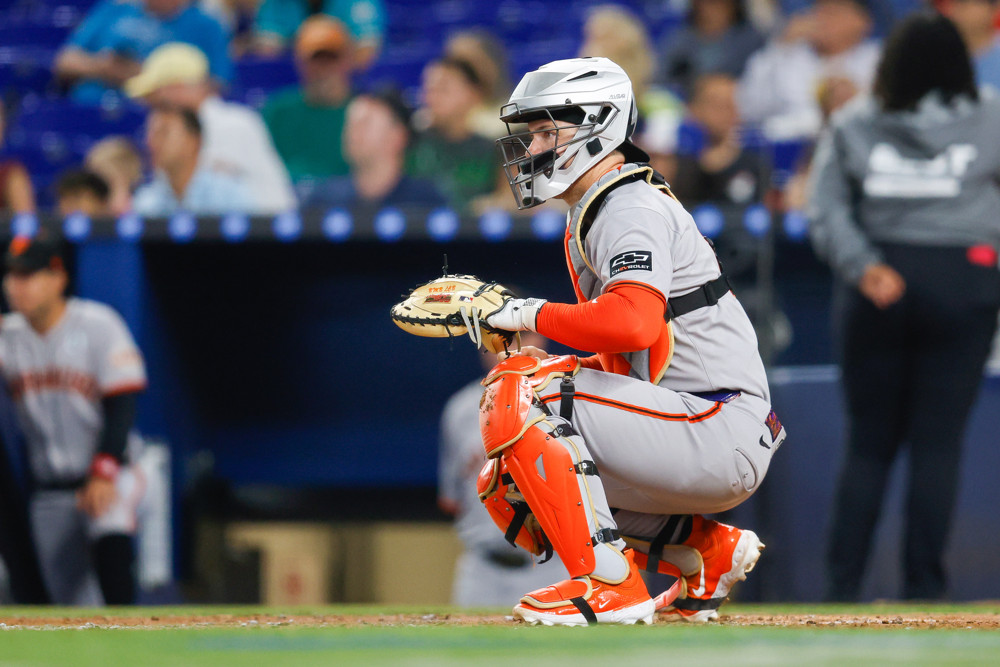
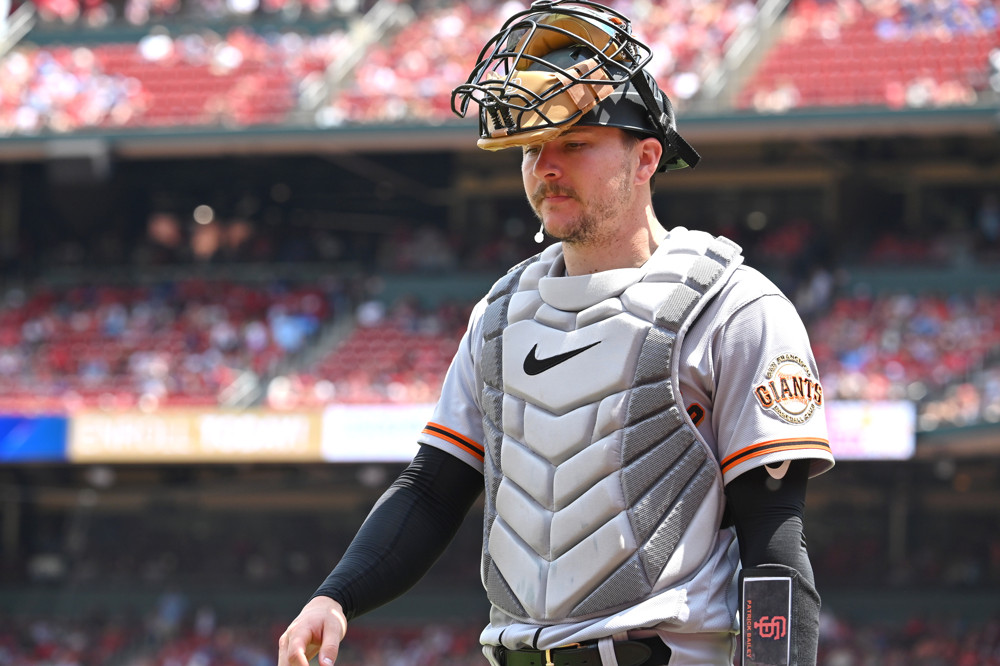
    We’ve been on top of Patrick Bailey’s defensive excellence since first writing about him just five weeks into his MLB career. He’d saved 7 Runs in his first 26 games in the majors, which seemed notable. It was foreshadowing what was to come.

    Bailey, the 2025 Fielding Bible Defensive Player of the Year, led all catchers with 19 Defensive Runs Saved this season. Since 2023 he leads all catchers and ranks second among players in Runs Saved.

    Bailey’s specialty is pitch framing. He has more Runs Saved from pitch framing since 2023 than any other catcher has total Runs Saved. He steals strikes at the top and bottom edges of the zone, and on his glove side well better than the MLB average. He doesn’t necessarily dominate when it comes to stopping stolen bases and blocking pitches, but he’s better than average at both.

    Giants GM Zach Minasian threw in one other thing about Bailey that’s a little harder to quantify: “A knack for managing pitchers and calling tough games with conviction.”

    We caught up with Bailey this week. Here’s what he had to say about his 2025 season.

    Mark: Hey Patrick. Congratulations.

    Patrick: Thank you

    Mark: So this is your second Fielding Bible Award, your first Player of the Year award from us. What was this season like for you overall from a defensive perspective?

    Patrick: It was good. Obviously winning the award in 2024 was, was awesome and a cool opportunity. But, one thing that my catching coach Alex Burg and I wanted to work on was how do I continue to develop and get better. It was cool to be able to do that this year as well.

    Mark: We last spoke to you in June 2023. We were quite impressed with how you were catching right from the get-go. What’s changed for you since then?

    Patrick: Receiving-wise, not a ton. You’re just trying to present each pitch as well as you can and give an umpire the best look.

    Blocking’s probably been the biggest change for me back to ’23. Getting out to a (one-knee down) kickstance has helped me with the blocking.

    Mark: Where do you feel you are defensively at this point? How much better can you get?

    Patrick: I don’t know, but the goal is to find little ways to continue to develop. And obviously a big part of my responsibility is working with pitchers and getting the best out of them. Game calling keeps advancing. There’s a ton of little things that catchers have the opportunity to get better at.

    Mark: Game calling is continuing to advance. How so?

    Patrick: Just with the amount of information we get as teams, with the advance scouting reports just finding the best ways for your pitchers to have success.

    And just balancing pitcher strengths and hitter strengths.

    Mark: It seemed like Logan Webb bought into you right away. You had a start with him, I think it was your first or second start as a catcher that went particularly well for him.

    What is it like to try to catch him?

    Patrick: Yeah. It’s awesome. He’s been one of the best pitchers in baseball. It’s been really cool to see him just continuing to grow and get better as well over the years with his progression adding the cutter and more four-seams.It’s a lot of fun to game plan. As much as his ball moves, it’s a challenge, but it’s fun to be back there and catch him.

    Mark: What was it like to catch Justin Verlander?

    Patrick: It was incredible, man. He’s a first-ballot Hall-of-Famer. Seeing how detail oriented he is with scouting, I think it really opened my eyes and it something that will help me continue to grow. The attention to detail he has is pretty incredible.

    Not pitching to his standards early on, but just continuing to get better and just how well that he finished, it was incredible to see the journey. He was an awesome teammate through all of that as well.

    Mark: What about Robbie Ray?

    Patrick: Robbie’s awesome. He’s the simplest of the pitchers I’ve caught, just like here’s my best stuff, good luck trying to hit it, and if you do, you’re not going to get me next time.

    Mark: Who are the people that have most influenced you in terms of your success as a catcher?

    Patrick: My catching coach now, Alex Burg has been a huge help. Craig Albernaz was working with catchers when I was drafted by the Giants in 2020. He changed pretty much everything I did as soon as I got drafted. I wouldn’t be where I am today without them. And then (former major leaguer) Scott Bankhead was the guy who owned the North Carolina Baseball Academy where I trained. He let me catch a ton of his pitching lessons when I was 12, 13, 14 years old. I got a pretty early understanding of what coaching looks like, what pitching looks like, and learning the game from that perspective.

    Mark: What would you tell a kid who wanted to catch like you, a kid who was going to that facility now?

    Patrick: Oh goodness. Just all this stuff you hear. Keep working hard. Put in the work and effort. Never feel like you know it all. I continue to learn and try to get better at as well. Catch as much as you can.

    I feel like that’s something like as a young person that I was fortunate to be able to do is just catch a lot and catch a lot of older guys that were throwing pretty hard. I feel like that helped my comfort level pretty quickly.

    Mark: One hitting question: You had an inside the park walk-off home run that pinged off the high brick wall in Oracle Park, and took essentially the perfect carom for you to get a home runs. What do you remember about that moment?

    Patrick I remember being tired. No doubt about that man. That was awesome. That was a miracle. To have that as something to remember in my career is pretty special.

    Mark: Yep. An indefensible batted ball hit by the guy who is the best in defense in 2025. Patrick Bailey, congratulations again and best of luck.

    Patrick: Thank you.

  • Giants Second Basemen Have Not Had A Season Like This

    Giants Second Basemen Have Not Had A Season Like This

    Photo: John McCoy/Icon Sportswire

    I wasn’t going to publish this story today.

    After learning that San Francisco Giants second baseman Tyler Fitzgerald got sent to the minors on Monday afternoon, I thought for a little while that the point of this piece was now moot.

    But then Casey Schmitt, in his first start of the season at second base, made a couple of nice plays on Monday night and I realized what I’d written still made sense.

    So here goes …

    Ask a Giants fan about a long streak that the team is going through and they’ll likely lament the team’s lack of a 30-home run hitter. Barry Bonds had the last such season for them in 2004.

    But there’s another run that goes back longer than that.

    In 2003, the combination of Ray Durham, Neifi Pérez, Eric Young Sr., and Edgardo Alfonzo combined for 10 Runs Saved at second base for Giants. They haven’t finished a season with more than 10 Runs Saved at second base since then.

    The team has gone through many years of that position being a defensive hole. They’ve had 7 seasons in which their second basemen have combined for at least -10 Runs Saved.  

    Yes, there was a Gold Glove winner at second base in Joe Panik in 2016 (his single-season career-high was 6 Runs Saved, but other than that it’s largely been a rough go. In fact, from 2003 to 2024 Giants second basemen rank 28th in Runs Saved, better than only the Astros and Mets. From 2019 to 2024, only the A’s have fared worse. 

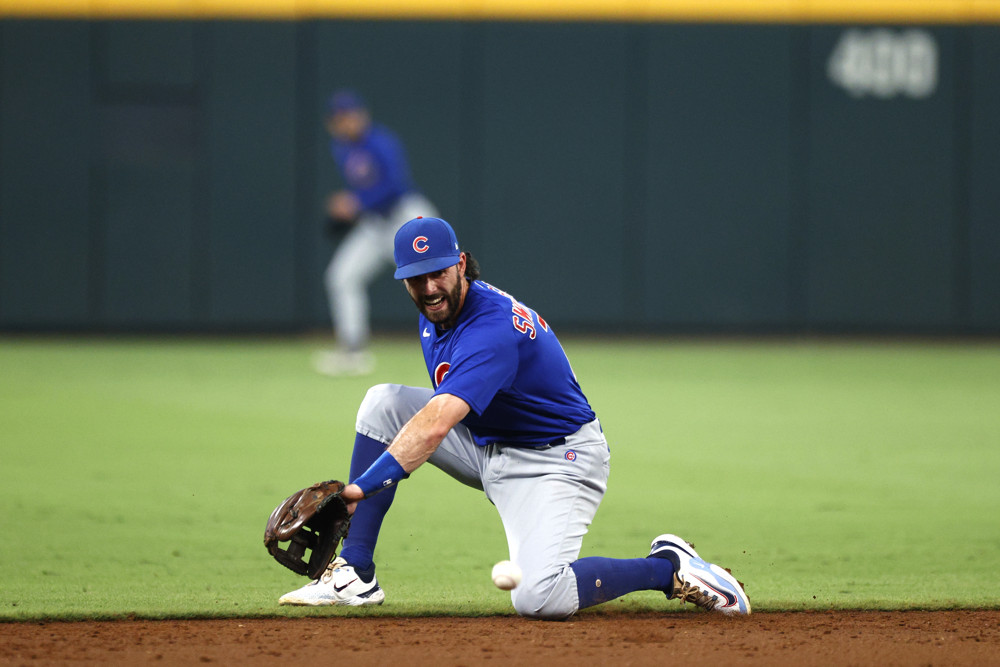
    But things have changed in 2025. Giants second basemen rank first in the majors with 15 Runs Saved.

    Most Defensive Runs Saved By Second Basemen – 2025 Season

    Team Runs Saved
    Giants 15
    Cubs 13
    Blue Jays 10
    Brewers 8
    Mariners 8
    Dodgers 8

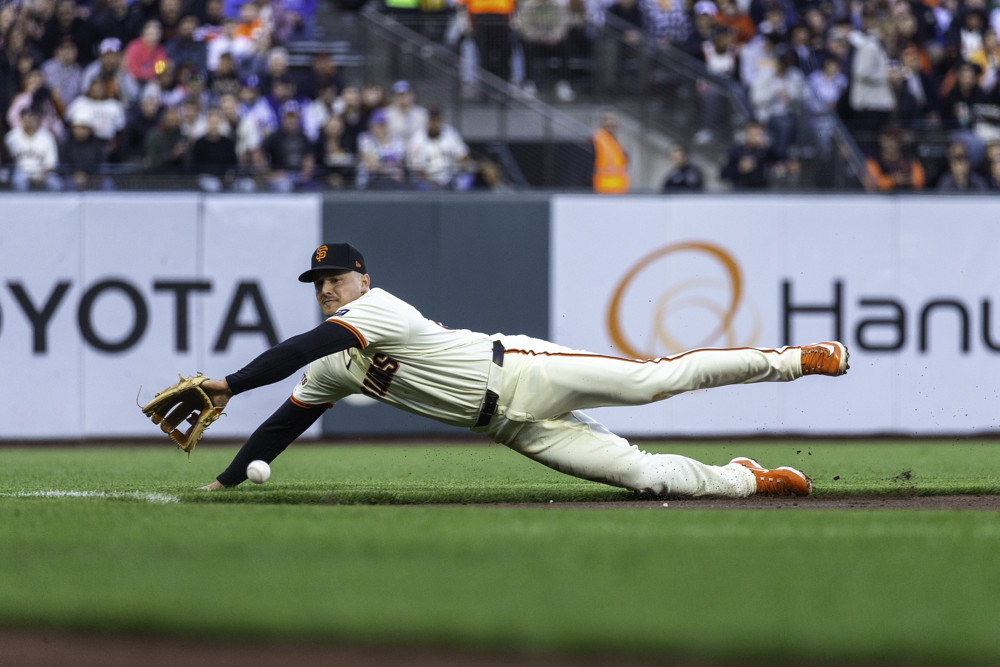
    The signing of free agent shortstop Willy Adames moved Fitzgerald to second base, the position at which he had the most experience in the minor leagues. Though Fitzgerald hasn’t hit like he did last season, he’s provided standout value with his glove. His 8 Runs Saved are already more than any Giants second baseman has had in one season. 

    Fitzgerald excels on balls hit to his right. He’s converted 62 of 101 opportunities into outs, 6 outs more than his expected rate. Fitzgerald ranks 1st in how often he turns an opportunity on a ball hit to his right into an out despite rating in the bottom half of MLB in arm strength among second basemen. 


    Christian Koss has played a solid second base as well. He’s arguably better defensively than Fitzgerald and is adept at moving both left and right to make plays. 


    Koss had 5 Runs Saved in 26 games at second base and has as many Good Fielding Plays as Fitzgerald (6) has in 26 games. Koss has only 2 Defensive Misplays & Errors to Fitzgerald’s 9.

    * SIS Video Scouts award Good Fielding Plays to 30 different types of events  and Defensive Misplays to roughly 60 types of mistakes.

    Brett Wisely also filled in at second base when Fitzgerald was initially sent to the minors in late June and Koss was needed to play third base in place of Matt Chapman. He’s chipped in a Run Saved in 11 games there, giving him 6 in 98 games for his career.

    Now, with Koss out with a strained hamstring and the Giants needing some offensive punch in the lineup, Schmitt got the initial call over Wisely on Monday night and passed the first test.

    Schmitt has played 41 career games at second base and has 0 Runs Saved. He’s now a true utility infielder after playing mostly on the left side in the early part of his career. We’ll see if he can hold his end of the bargain up in this upcoming stretch. 

    The play of their second basemen is particularly important given that the Giants pitching staff ranks 4th in the number of ground balls it has given up. The team’s infield ranks 6th in how often it turns grounders and bunts into outs this season, a good percentage given that the shortstop, Adames, doesn’t have good defensive numbers. Chapman is terrific, of course, but he can’t do it all himself.

    So the next time a Giants fan talks to you about the team’s run of a lack of a 30-homer hitter continuing through this season, point out to them that there’s always hope, because a longer streak just might come to an end in 2025.

  • Are The Giants A Good Defensive Team?

    Are The Giants A Good Defensive Team?

    Photo: Larry Placido/Icon Sportswire

    Part of a series of articles previewing the defensive performance of all 30 MLB teams by asking the question … are they good? To see the full series, click here.

    2024 Defensive Runs Saved Rank: 21st

    Team Strengths

    Patrick Bailey is the reigning Fielding Bible Award winner and was runner-up for the Award in 2023. He’s an excellent pitch framer and a good catcher when it comes to slowing down an opponent’s running game. In sum, he’s the standard-setter at the position.

    Matt Chapman looked like something close to the best version of himself in winning the Fielding Bible Award at third base last season. His MLB-leading 17 Runs Saved were his most in a season since he had 23 in 2019. He made many terrific plays at third base and covered ground well to both sides. 

    Mike Yastrzemski is a good though not great right fielder, who totaled 5 Runs Saved there last season and can play center field at an above-average level too.

    Team Weaknesses

    Newly-signed shortstop Willy Adames inexplicably finished last among shortstops with -16 Runs Saved last season. Were Adames to revert to 2022 and 2023 form (9 and 8 Runs Saved at shortstop, respectively), we’d list him as a strength. But given his most recent season, we categorize him here.

    Other Things to Know

    Center fielder Jung Hoo Lee is a wild card in this whole thing. Lee came to the states with a rep for being a great defensive outfielder in the KBO but got sidelined for the season with an injury before he could fully demonstrate it. In 37 games, he looked the part with effort, but totaled -2 Runs Saved. Without Lee, the Giants spent most of the summer playing Heliot Ramos in center field, which went badly (-15 Runs Saved). He’s much better suited for left field (4 Runs Saved).

    For that matter, so is Tyler Fitzgerald, who slides from shortstop to second base with Adames’ signing. Fitzgerald didn’t do well at shortstop last season (-6 Runs Saved) particularly when it came to double plays but gets a shot at another position.

    Are The Giants A Good Defensive Team?

    The Giants totaled -24 Runs Saved in center field and -11 at shortstop last season. If Lee and Adames can even get those numbers to 0, then the Giants could stake a claim to being a Top 10 defensive team. If not, then they’re a frustrating defensive team, one that is very, very good in a few spots but not so at some important ones.

  • Stat of the Week: New Year’s Resolutions With A Defensive Twist

    Stat of the Week: New Year’s Resolutions With A Defensive Twist

    Photos: Nick Wosika (left), Charles Brock (right)/Icon Sportswire

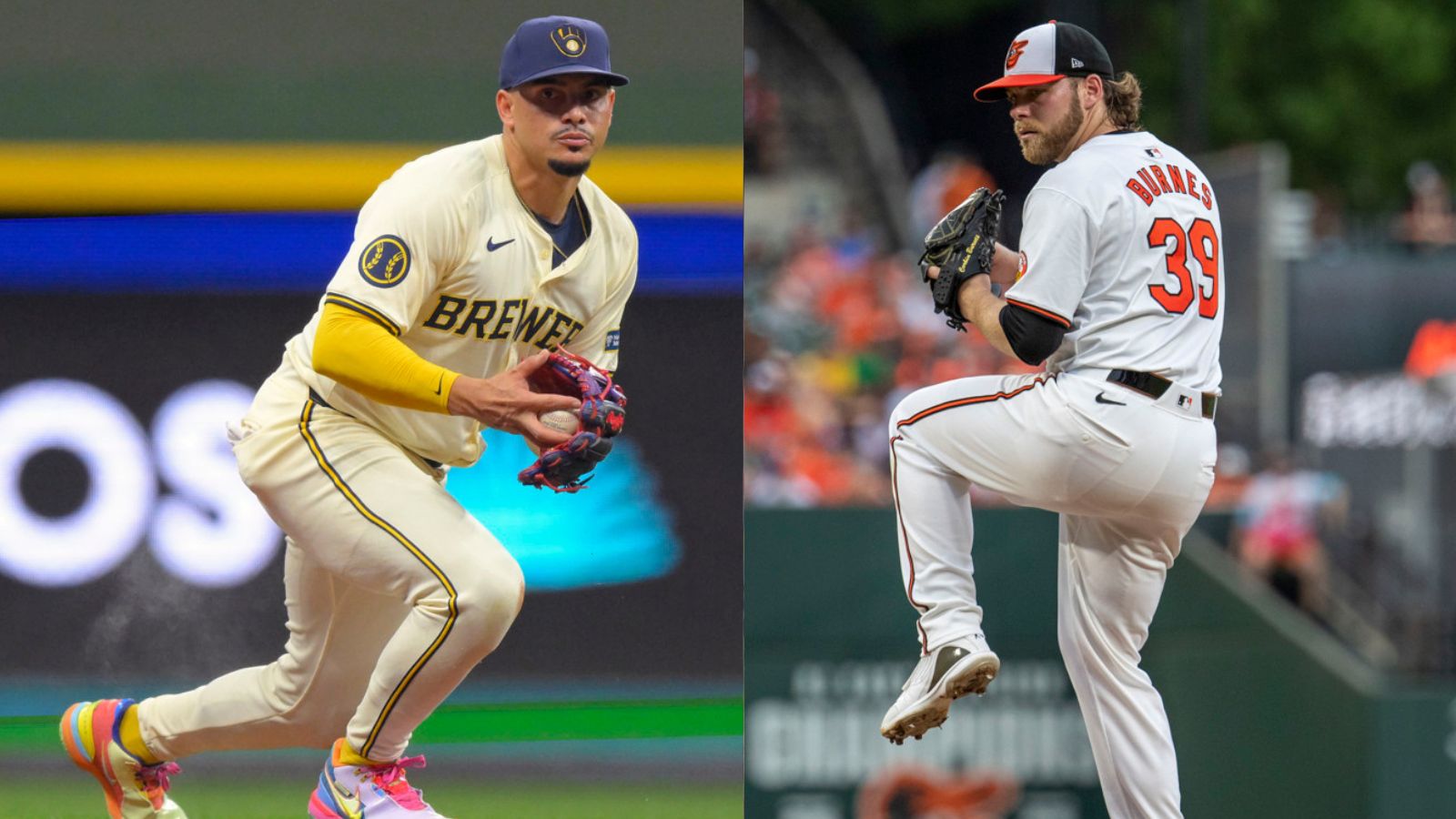
    It’s the middle of January and most of us have probably broken or abandoned our New Year’s Resolutions by now. But the subject (and a lack of notable transactions recently) got me to thinking about defense-minded New Year’s Resolutions for 2025.

    Here are a few that came to mind:

    For Corbin Burnes: I will do my part to hold baserunners better

    Corbin Burnes allowed an MLB-high 41 stolen bases last season, more than double his prior career high of 18. This was an issue regardless of whether Adley Rutschman or James McCann was catching him. Burnes’ average time to the plate was about .13 seconds slower in 2024 than it was in 2023 and he ranked in the bottom 10% of pitchers in that stat last season.

    This season, he’ll primarily be throwing to one of MLB’s best defensive catchers, Gabriel Moreno of the Diamondbacks. Moreno won a Fielding Bible Award two years ago, largely on the strength of his limiting basestealing. Last year, Moreno allowed 40 stolen bases, one fewer than Burnes, catching almost 550 more innings than Burnes pitched.

    For Aaron Judge: I won’t let my World Series blunder impact my return to form in right field

    Aaron Judge had such a ridiculous season as a hitter that it overshadowed his poor defensive numbers in center field (-9 Runs Saved). Judge’s center field defense came back to get him in the World Series, when he dropped a fly ball during the Dodgers’ five-run rally in the fifth inning of the series-clinching Game 5.

    With the Yankees signing Cody Bellinger and losing Juan Soto to the Mets, Judge will move back to right field, a position where he’s twice led the majors in Runs Saved and won a Fielding Bible Award, albeit as a younger player. Judge turns 33 in April and has dealt with injuries that have slowed his defensive game down. So, he’ll be challenged by more than just the stigma of that one miscue.

    For Willy Adames: I’ll fix my forehand

    Willy Adames went from being a reliable shortstop to a defensive issue last season. He totaled an MLB-worst -16 Defensive Runs Saved at shortstop.

    Adames had the same number of touches on his forehand (balls he touched in the field) in 2024 as he had in 2023 but was successful in recording at least one out 20 fewer times. He went from being one of the best defenders on those balls to one of the worst.

    Adames is now on a team that is hungry for good defense at the position. The Giants have gotten -38 Runs Saved at shortstop the last three seasons, the second-worst total in MLB.

    For the Minnesota Twins: We’ll have a better backup plan

    The Twins got exposed defensively when some of their regular players went down with injuries or didn’t play. Byron Buxton had 2 Runs Saved in the 94 games he played in center field. The Twins got -11 Runs Saved at the position when he didn’t play. There was a similar issue at shortstop with Carlos Correa and his injury replacements as well.

    One problem for the Twins was that though they had good defensive versatility with Willi Castro and Austin Martin, those players didn’t perform at a high level relative to their peers. Castro totaled -18 Runs Saved split between five positions. Martin had -13 split between left and center field (we should note he was a rookie and was drafted as an infielder).

    The Twins haven’t had a particularly active offseason but there’s still time to attack these issues if they choose.

  • Stat of the Week: One of the Most Complete Players in Baseball

    Stat of the Week: One of the Most Complete Players in Baseball

    Photo: Larry Placido/Icon Sportswire

    The signature play of Matt Chapman’s season came against the Mets on May 24. The Giants had a one-run lead with the bases loaded and two outs in the ninth inning, with Mark Vientos facing Giants reliever Camilo Doval.

    Vientos hit a slow roller along the third base line. Chapman raced in to make a barehand play and his throw beat Vientos by a hair. It was as impressive a play as any third baseman has made in 2024.

    And it fits with Chapman’s season. He’s been one-of-a-kind at his position.

    Chapman ranks tied for No. 3 in the National League and No. 1 among all third basemen with 6.0 bWAR. In terms of the individual components, Chapman has been 18 Runs Above Average as a hitter, 15 Runs Above average as a fielder (that’s his Defensive Runs Saved), and a somewhat surprising 6 Runs above Average as a baserunner.

    We say somewhat surprising because Chapman had never totaled more than 1 baserunning run in a season prior to 2024. But this season, he has 13 stolen bases in 15 attempts. Those 13 steals are more than he had in his entire seven-year career entering the season.

    Chapman also ranks 6th in a Bill James-devised stat, Baserunning Net Gain, which measures a variety of things, including how often a runner takes an extra base on a hit, advances on a wild pitch or passed ball, and avoids getting thrown out on the bases.

    Chapman’s defense isn’t really a surprise. He’s a two-time Fielding Bible Award winner and four-time Gold Glove winner. He’s been at or near the top of the third base leaderboard consistently throughout this season.

    If you think it’s odd that Chapman has a better WAR than players like Rafael Devers, José Ramírez, and Manny Machado, look to their respective Defensive Runs Saved numbers. Chapman is 10 Runs Saved better than Ramírez, 15 better than Machado and 22 better than Devers.

    Hitting-wise, Chapman’s 2024 has been the opposite of his 2023 when he started super-strong and then faltered as the season moved along. This season, Chapman started slow. He entered May 17 with a .599 OPS in 44 games. He’s had an .864 OPS since then.

    The top hitting third basemen don’t field like Chapman does and the top fielding third basemen (Ernie Clement, Ryan McMahon, Ke’Bryan Hayes among them) don’t hit like Chapman does.

    Chapman’s combination at third base is so distinct that with 6.0 bWAR, he’s at least 2 bWAR ahead of every third baseman other than Ramírez.

    In fact, the only other player this season to contribute as much run value as Chapman in hitting, fielding, and baserunning is Red Sox outfielder Jarren Duran.

    Remember that Chapman had trouble finding a team as a free agent this past offseason. He came into spring training needing to prove that he was an elite player. To this point, he’s been both an elite player and a complete one.

    The Giants gave Chapman a 6-year, $150 million contract this week, a reward for his track record and his relative health since coming back from hip surgery in 2021. He’s played in nearly 93% of all games in the last four seasons.

    That said, Chapman will be 32 next April. Only three players in their age-32-or-older season have played even 70 games at third base this season (Nolan Arenado, Eugenio Suárez, and Gio Urshela). Four did so in 2023. Chapman’s next prove-it opportunity will be showing he can remain a complete player as he travels the downward slope of baseball’s aging curve.

    Most bWAR Among Third Basemen- 2024 Season

    Name Team bWAR
    Matt Chapman Giants 6.0
    José Ramírez Guardians 5.3
    Rafael Devers Red Sox 3.8
    Alec Bohm Phillies 3.4
    Josh Smith Rangers 3.3
    Ernie Clement Blue Jays 3.2
  • The Legacy of Willie Mays

    The Legacy of Willie Mays

    Photo: New York World-Telegram and the Sun staff photographer, William C. Greene, Public domain, via Wikimedia Commons 


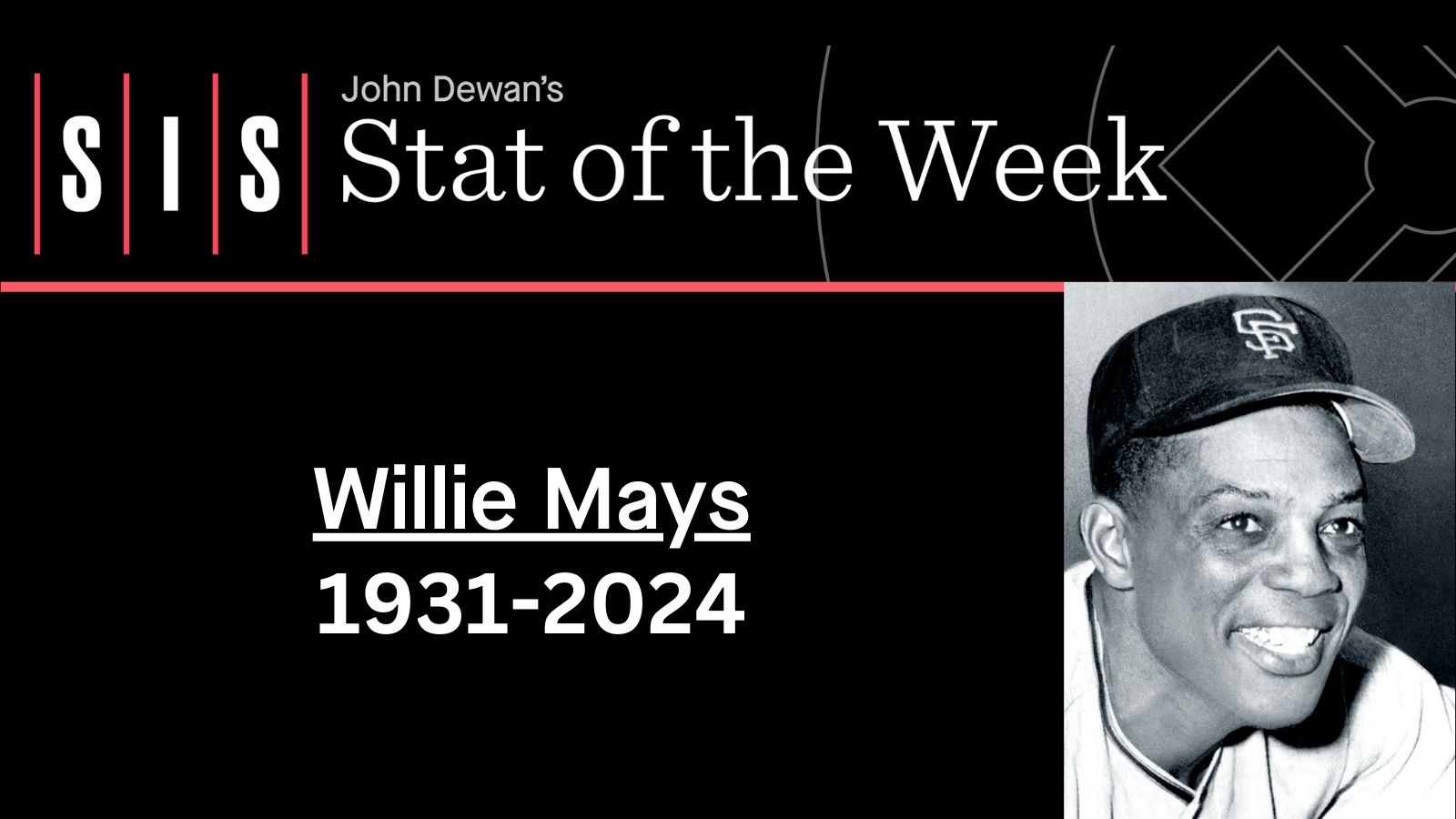
    Baseball lost an icon in Willie Mays, who died on Tuesday at age 93. Mays, referred to by many as the sport’s all-time best player, left an impact that is easy to measure and hard to match. The term 5-tool player basically exists because of him. He could hit, hit for power, run, field, and throw, all at the highest level.

    Think about it.

    You wouldn’t reach Mays’ career totals if your career began with 16 straight seasons of 40  homers or 200 hits, 19 seasons of 100 RBI, or 20 seasons of 150 games played.

    The MLB outfield leader in putouts last season was Brenton Doyle with 373. Doyle could match that total for 18 straight seasons and still catch fewer balls in the outfield than Mays did.

    Mays’ 156.2 career WAR (the Baseball-Reference version), is greater than that of Mike Trout and Mookie Betts combined (they’re at 154.9).

    Mays had epic seasons at different stages of his career. At age 23 and 24, he hit 41 and 51 home runs, respectively. At age 33 and 34, he hit 47 and 52 home runs. Mays won 2 MVP awards. Had modern advanced metrics existed when Mays played, he would have almost certainly won more. He finished 1st or 2nd in the NL in WAR 11 times. He made the All-Star team in each of his last 20 MLB seasons.

    Beyond the numbers, Mays was a presence wherever he was. He made an impact on baseball fans from coast to coast. As a young player in the early stages of his career, he was known for playing stickball with neighborhood kids in the streets of New York City. As an elder statesman, he’d hang out in the Giants’ clubhouse to talk to players and coaches. He was revered and that’s not a word used lightly.

    We’re sad for Mays’ passing but we celebrate his excellence and the standard he set by which others can be measured. Rest in peace, Willie.

    If you would like to read about the defensive excellence of Willie Mays, check out this article, which Mark wrote for The Society for American Baseball Research.

  • Stat of the Week: 2024’s NL Defensive Stories

    Stat of the Week: 2024’s NL Defensive Stories

    BY MARK SIMON

    With Opening Day approaching, we wanted to preview the 2024 season from a defensive perspective. So to be fair to all 30 teams, we’ve got a stat-driven theme or story to watch for each team. Here’s our look at the National League teams after we did our tour through the American League last week.

    Braves – The Braves were generally average or better through much of their defensive lineup last season. The big exception was shortstop, where Orlando Arcia and Vaughn Grissom didn’t do well. Arcia had -6 Runs Saved last season due to poor range numbers. He is back for another go and looking to return to the form he showed in 2018 when he totaled 8 Runs Saved.

    Brewers – The Brewers ranked 2nd in MLB in Defensive Runs Saved last season but they’ve got some unknowns on this year’s roster with Jackson Chourio in right field and Joey Ortiz at third base. Last year’s Brewers rookies played very well (Brice Turang, Joey Wiemer, Blake Perkins) and the defensive success of this year’s team may hinge on their young players again.

    CardinalsNolan Arenado went from overwhelmingly awesome to decidedly average at third base overnight (from 20 Runs Saved in 2022 to 0 in 2023). So the big question this season is whether he can return to the standard-setting level of excellence of years past.

    Cubs – The Cubs have the best double play combination in baseball with shortstop Dansby Swanson and second baseman Nico Hoerner. Given that they also have two-time Gold Glove winner Ian Happ in left field, Mike Tauchman and Cody Bellinger in center field, with Bellinger likely also at first base, the Cubs could be pretty good defensively. They finished tied for 8th in Defensive Runs Saved last season and could better that.

    Diamondbacks – It’s reasonable to suggest that the Diamondbacks are the NL’s best defensive team. They finished 4th in Defensive Runs Saved last year and have very good defenders at catcher (Gabriel Moreno), first base (Christian Walker), and center field (Alek Thomas). Shortstop and third base may determine whether that suggestion becomes reality. Runs Saved has not viewed Geraldo Perdomo or Eugenio Suárez favorably, so those are the positions to watch entering 2024.

    Dodgers – The Dodgers have been a Top 10 team in Defensive Runs Saved in each of the last 8 seasons. They always seem to make the right moves and in 2024 they’re making a bold one by making Mookie Betts their everyday shortstop. Betts, who won the Fielding Bible Award last year for multi-position play, handled second base very well last season. The Dodgers do have some flexibility here. They could move Betts back to second and play one of the game’s best defensive shortstops, Miguel Rojas, if things don’t work out.

    Giants – In theory, the Giants should be a lot better defensively than they were last season. Their 3 weakest defensive positions by Runs Saved were shortstop, third base, and center field. They signed 2 standout infield defenders in Matt Chapman and Nick Ahmed and signed Jung Hoo Lee, who led all KBO center fielders in Runs Saved last season. Those could be a boon to pitchers like Blake Snell and Logan Webb.

    Marlins – What can infield coach Jody Reed do for Tim Anderson? The new Marlins shortstop has totaled -22 Runs Saved the last 2 seasons, which ranks 2nd-worst at the position. Reed will do his best to maximize what Anderson can do. The Marlins ranked as one of the best-positioned infields in MLB last season.

    Mets – One year after signing Brandon Nimmo to a long-term contract, they’ve moved him from center field to left field and attempted to turn a defensive weakness into a strength by signing Harrison Bader as their new primary center fielder. Bader has twice totaled at least 15 Runs Saved in a season in center field. His 5 Runs Saved there the last 2 years are 16 more than Nimmo in that span.

    Nationals – The Nationals have finished 29th and 28th in Runs Saved the last 2 seasons and need a few things to happen in order to improve on that in 2024. One would be to see some improvement from catcher Keibert Ruiz. The Nationals ranked last in MLB in Runs Saved from their catchers. It would also behoove them to find playing time for minor league Gold Glove winner Trey Lipscomb, who can play any of the infield positions (read our interview with him here).

    Padres – Two things: One is whether Fernando Tatis Jr. can replicate his 2023 season, when he blew away everyone else at the position with 29 Runs Saved. Two, the position switch of Xander Bogaerts to second base so as to put their best infield defender, Ha-Seong Kim, at shortstop. Bogaerts has managed a positive Runs Saved total once in the last 10 years. Second base may be a better fit for him but time will tell.

    Phillies – Johan Rojas didn’t have a particularly good spring training with his bat but he’s arguably too valuable to even consider sitting. He’s by far the Phillies’ best defensive player. Rojas ranked 4th in Runs Saved among center fielders despite ranking 37th among them in innings played.

    Pirates – The Pirates ranked 28th in Defensive Runs Saved from their center fielders last season, but that could change significantly if Michael A. Taylor hits enough to stay in the lineup there. Taylor leads all center fielders in Runs Saved over the last 3 seasons.

    Reds – The Reds ranked 27th in Defensive Runs Saved last season. They’re running out most of the same players this season, save for Jeimer Candelario at third base, which could be a small improvement in Defensive Runs Saved. But they may be a bottom-10 team again.

    Rockies – The most watchable thing the Rockies have right now is their defense. They have Fielding Bible Award-caliber players at second base (Brendan Rodgers), shortstop (Ezequiel Tovar), third base (Ryan McMahon), and center field (Brenton Doyle), and a left fielder with a terrific arm (Nolan Jones). This will probably be the team with the biggest difference between the quality of its defense and its win-loss record.

  • Stat of the Week: Patrick Bailey Is A Defensive Difference Maker

    Stat of the Week: Patrick Bailey Is A Defensive Difference Maker

    With all due respect to Diamondbacks catcher Gabriel Moreno and Mets catcher Francisco Álvarez, the best defensive catcher in a promising group of rookie catchers may be Patrick Bailey of the Giants.

    Bailey ranks tied for 2nd among catchers with 7 Defensive Runs Saved, one behind Moreno, despite playing in only 26 games this season. His strengths have been in throwing out basestealers (3 Runs Saved thanks to 8 caught stealing in 21 attempts) and pitch framing (2 Runs Saved).

    Most Defensive Runs Saved (2023) – Catchers 

    Name Team Defensive Runs Saved
    Gabriel Moreno Diamondbacks 8
    Patrick Bailey Giants 7
    Cam Gallagher Guardians 7
    Jonah Heim Rangers 6
    Seby Zavala White Sox 6
    Alejandro Kirk Blue Jays 6

    In his 215 innings, Giants pitchers have a 3.10 ERA and 4-to-1 strikeout-to-walk ratio with Bailey catching. The Giants pitchers have combined for a 4.27 ERA and a 2.8-to-1 strikeout-to-walk ratio with their four other catchers in 2023.

    Bailey is also hitting .318 with an .867 OPS in his first 95 plate appearances. He’s a big part of why the Giants are 25-10 in their last 35 games.

    Bailey was our player guest on the most recent episode of The Sports Info Solutions Baseball Podcast on Thursday. Here are 3 things we learned from him.

    1) A catcher should understand how pitches work

    “Growing up you face guys [and think] this guy’s not throwing hard, but I can’t hit it.

    Like, it seems invisible, right? I keep fouling it off. Well now it’s either got really good vertical [movement] or it’s in the approach angle and low release. And now you can quantify that a pitcher does this well. So our gameplan should be, alright, how do we maximize his strength?

    And then do some stuff to get hitters off the strength.”

    2) Positioning his body is key to framing a pitch on the corner

    “[First] I’m angling my body back towards the plate. Then I go into what I would call my glove prep. So I would kind of position my glove towards the right foot to kind of give myself an angle back to the plate.

    And then as I’m catching the ball, just trying to make it one fluid motion back to the zone.”

    3) He feels like he belongs and that’s reflected in his hitting

    “I think a lot of the hitting has come from just not having to feel pressure where, you know, [in the] minor leagues, sometimes you feel like you gotta hit your way to certain spots here.

    I know defense and catching is gonna be a lot of the value I bring to a team. So kind of whatever I can do at the plate will be a bonus. And it’s been a nice bonus so far, but I’m gonna just try to keep at it.”

    It’s going to be difficult for a rookie catcher to win a Gold Glove Award or Fielding Bible Award, but Bailey seems to be doing something every series to both help his team win and impress voters.

    Against the Marlins, he did terrific pitch-framing work.

    Against the Dodgers he threw out Mookie Betts trying to steal.

    In their most recent series, he threw out Fernando Tatis Jr. trying to steal and initiated a rundown to catch Ha-Seong Kim off third base.

    To listen to our interview with Bailey, check out The Sports Info Solutions Baseball Podcast, which you can find here or wherever you get your podcasts.

  • Stat of the Week: NL Team Defensive Previews

    Stat of the Week: NL Team Defensive Previews

    BY MARK SIMON

    Continuing what we started last week with the AL, we’ve got a stat-driven defensive theme or story to watch for each NL team. Play ball!

    Braves – We’re curious to see what Michael Harris II’s defensive ceiling is. Harris has already won a Minor League Gold Glove and at times showed the potential to be the best defensive center fielder in MLB. His 8 Runs Saved tied for 4th-most. We wouldn’t be surprised if he led MLB in 2023.

    Brewers – Said manager Craig Counsell of rookie second baseman Brice Turang: “He showed us this camp that he is going to win games playing defense.” Counsell knows of what he speaks. His 30 Runs Saved at second base in 2005 are tied for the most by anyone at the position.

    Cardinals – The most intriguing thing to watch will be how Willson Contreras steps into the shoes of Yadier Molina as the team’s new catcher. Contreras’ throwing and blocking stats are typically top-notch but he’s historically a below-average pitch framer.

    Cubs – The Cubs seemed to prioritize defense in their offseason maneuvers. The team has the potential to be great up-the-middle, as new acquisitions Tucker Barnhart, Dansby Swanson, and Cody Bellinger all come with solid defensive pedigrees and Nico Hoerner’s move from shortstop to second base should be seamless.

    Diamondbacks The Diamondbacks will start perhaps the fastest outfield in the game with Corbin Carroll in left field, Alek Thomas in center, and Jake McCarthy in right (all three rank Top-50 in 90-foot speed). If the Diamondbacks are going to contend for a playoff spot, they’re going to need these three to turn a lot of potential extra-base hits into outs.

    Dodgers 53% of ground balls and short line drives versus the Dodgers last season were hit against full infield shifts (those with three defenders on the pull side), the highest rate in MLB. In fact, the Dodgers led the majors in how often they full shifted in each of the last four seasons. They’ll have an adjustment to make to baseball’s new rules.

    Giants – For much of last season, the Giants defense was hard to watch. The team finished last in the majors in Defensive Runs Saved. But if they can play some combo of Mike Yastrzemski, Michael Conforto, Mitch Haniger, and Bryce Johnson in the outfield, their outfield defense should be much improved from the -47 Runs Saved that it combined for last season.

    Marlins Can Jazz Chisholm make the transition from middle infield to center field without it being too costly defensively? We love Chisholm the athlete, but we’re a little skeptical based on past history of others trying to make the move (which we wrote about).

    Mets – As good as the Mets were last season, they had a defensive weakness. They ranked 26th in turning groundballs and bunts into outs. Francisco Lindor has said he doesn’t like shifts. He had -11 Runs Saved in them last season. He’ll get a chance to play straight-up a lot more in 2023.

    Nationals – The Nationals set a 20-year MLB low for Defensive Runs Saved at shortstop last season (-34). But they looked a lot better once they put C.J. Abrams there and moved Luis Garcia to second base. They’ll get a chance to grow together for a full season in 2023.

    Padres – Fernando Tatis Jr. is going to find a spot somewhere and for now that looks like it will be right field. We know from Tatis’ history at shortstop that he has great arm strength but has a hard time throwing accurately. The Padres and their fans will find out how Tatis acclimates to his new spot together.

    Phillies – Only three teams finished worse in Defensive Runs Saved by their shortstops than the Phillies did last season. They signed Trea Turner for $300 million for his bat and his speed, but watch how his glove should help too. The last two seasons, he’s played exactly average defense at shortstop, which would be a considerable step up for the Phillies.

    Pirates – Oneil Cruz can get outs that other shortstops can’t get because of his arm strength (per Statcast, his throws average nearly 94 MPH – no other shortstop exceeds 90). He just needs to limit his mistakes. On a per-inning basis, he made a lot (4.3 Defensive Misplays & Errors per 100 innings, the 6th-highest rate at the position).

    Reds – With Aristides Aquino now playing in Japan, the Reds are lacking for interesting defensive players, as the ones to watch are in the minors (top prospects Elly De La Cruz and Cam Collier). For now, the attempted bounceback of second baseman Jonathan India (-14 Runs Saved last season) serves as one notable story.

    Rockies – Top prospect Ezequiel Tovar will be the starting shortstop. The position was a problematic one for the Rockies last season (-12 Runs Saved), but the future looks bright. Tovar played close to average shortstop in the minors per our data and Fangraphs’ Eric Longenhagen gives Tovar a 60 future fielding grade on the 20-80 scouting scale.

  • Reimagining The 2022 Yankees & Giants as Average Defensive Teams

    Reimagining The 2022 Yankees & Giants as Average Defensive Teams

    We know that sometimes we’ve gotten caught up in the idea that Team Defensive Runs Saved are some sort of absolute declaration pinpointing specifically how good or how terrible an MLB team is

    But at a practical level it doesn’t quite work that way.

    Defensive Runs Saved are theoretical. A player and his team don’t receive two Defensive Runs Saved for a diving catch on a ball with runners on second and third and two outs. Our numbers are derived from out probabilities and base/out context-neutral run values.

    Also, the way Defensive Runs Saved was created was to evaluate players, not teams. Thus the combination of our use of rounding (if a player has 0.6 Runs Saved from fielding bunts, it rounds up to 1) and that team out probabilities don’t always match player out probabilities means that our numbers are good at assessing teams from top to bottom, but not necessarily exact when it comes to evaluating actual Runs Saved.

    We bring all that up to get to the fun part. We wanted to look at two MLB teams from 2022 to see how much would change if their defenses were average across the board. Those teams were the No. 1 (Yankees) and No. 30 (Giants) ranked teams in Defensive Runs Saved with 129 and -53, respectively.

    Strat-O-Matic, an industry leader in baseball simulations dating back to 1961 (and a client of ours), was able to help us out. They incorporate our defensive stats as one part of their player evaluations.

    Strat ran 50 computer simulations* of the Yankees and Giants seasons using their pre-generated season ratings and player usage information. We’ll refer to these as the “Real Life” Yankees and Giants.

    They then ran 50 simulations for both teams with every possible defensive component for every player changed to average.

    *In a scientific study, we’d do 10,000 simulations but that was not practical here

    Here’s how the numbers came out

    2022 Yankees (50 Simulations of Each)

    “Real Life Defense”  “Average Defense” 
    W-L 101-61 94-68
    Runs Allowed 583 642
    ERA 3.31 3.67
    Opponents’ BABIP .269 .278

    The Yankees team with an average defense allowed an average of 59 more runs per season and won 7 fewer games per season than their “real life” counterparts.

    They still won at least 90 games in 39 of the 50 simulations (78%) and allowed an average of 4 or more runs per game 22 times (44%), including one aberrational season in which they allowed 753 runs (51 more than any other simulation).

    One thing not mentioned in the chart above was the impact on catcher defense. The team with an average defense allowed 25 more wild pitches and 25 more stolen bases (though with 12 more caught stealing) then its standout counterparts.

    The Yankees team from which we used real-life ratings averaged 101 wins (two more than the actual 2022 Yankees had). They won at least 100 games 30 times (60% of the time), three times as often as their average defense counterparts.

    From all this, we think you can glean that the difference between being average and excellent defensively was the difference between the Yankees being a likely division winner to a near-certain one.

    2022 Giants Averages (50 Simulations of Each)

      “Real Life Defense”  “Average Defense” 
    W-L 77-85 82-80
    Runs Allowed 700 659
    ERA 3.93 3.74
    Opponents’ BABIP .316 .298

     The 2022 Giants were a problematic team defensively, struggling to turn ground balls into outs for most of the season. Fly balls to left field in particular were often an adventure for Joc Pederson and others.

    In looking at the results of 50 simulations of the Giants with their actual defense, they averaged 77 wins. The 2022 Giants won 81, so maybe there’s a message here that the real team overachieved a little bit.

    Nonetheless, within the simulations there’s an average difference of  5 wins and 41 runs allowed between a Giants team with a bad defense and one with an average defense.

    One really big improvement was that the Giants opponents’ BABIP decreased by 18 points with an average defense, which likely would have made things a lot less stressful for their pitchers. The average-defense Giants also made an average of 21 fewer errors and allowed 19 fewer stolen bases (with 2 fewer caught stealings) than their poor-performing counterparts.

    The final playoff spot in 2022 (actual results) went to the 87-win Phillies. The Giants with an average defense won 87 games 10 times (20% of the time). The “real life” team with the problematic defense got to 87 wins 3 times (6% of the time).

    So fair to say, the playoffs were not a likely proposition with an average defensive team. But there was a better path there than what actually existed based on their real-life numbers.

    The best playoff path for the Giants was arguably the best playoff path for most teams: Be one of the better defensive teams in the sport. Nine of the top 15 teams in Defensive Runs Saved made the playoffs last season, including all six division winners.