Author: Stephen Polacheck

  • What Does Your Team Need in the NFL Draft?

    What Does Your Team Need in the NFL Draft?

    Over the past couple of weeks, we’ve done in-depth pieces looking at what each NFL team needs in the upcoming draft and which players are the best fits to fill those needs.

    If you’re looking for your team, you’ve come to the right place. You can find all of the articles here.

    Team Article Link
    49ers https://ww2.sportsinfosolutions.com/2022/04/26/nfl-draft-pick-analysis-san-francisco-49ers/
    Bears https://ww2.sportsinfosolutions.com/2022/04/26/nfl-draft-pick-analysis-chicago-bears/
    Bengals https://ww2.sportsinfosolutions.com/2022/04/19/nfl-draft-pick-analysis-cincinnati-bengals/
    Bills https://ww2.sportsinfosolutions.com/2022/04/26/nfl-draft-pick-analysis-buffalo-bills/
    Broncos https://ww2.sportsinfosolutions.com/2022/04/22/nfl-draft-pick-analysis-denver-broncos/
    Browns https://ww2.sportsinfosolutions.com/2022/04/25/nfl-draft-pick-analysis-cleveland-browns/
    Buccaneers https://ww2.sportsinfosolutions.com/2022/04/19/nfl-draft-pick-analysis-tampa-bay-buccaneers/
    Cardinals https://ww2.sportsinfosolutions.com/2022/04/27/nfl-draft-pick-analysis-arizona-cardinals/
    Chargers https://ww2.sportsinfosolutions.com/2022/04/15/nfl-draft-pick-analysis-los-angeles-chargers/
    Chiefs https://ww2.sportsinfosolutions.com/2022/04/13/nfl-draft-analysis-kansas-city-chiefs/
    Colts https://ww2.sportsinfosolutions.com/2022/04/13/nfl-draft-pick-analysis-indianapolis-colts/
    Commanders https://ww2.sportsinfosolutions.com/2022/04/14/nfl-draft-pick-analysis-washington-commanders/
    Cowboys https://ww2.sportsinfosolutions.com/2022/04/19/nfl-draft-pick-analysis-dallas-cowboys/
    Dolphins https://ww2.sportsinfosolutions.com/2022/04/27/nfl-draft-analysis-miami-dolphins/
    Eagles https://ww2.sportsinfosolutions.com/2022/04/26/nfl-draft-pick-analysis-philadelphia-eagles/
    Falcons https://ww2.sportsinfosolutions.com/2022/04/27/nfl-draft-pick-analysis-atlanta-falcons/
    Giants https://ww2.sportsinfosolutions.com/2022/04/18/nfl-draft-pick-analysis-new-york-giants
    Jaguars https://ww2.sportsinfosolutions.com/2022/04/08/nfl-draft-pick-analysis-jacksonville-jaguars/
    Jets https://ww2.sportsinfosolutions.com/2022/04/18/nfl-draft-pick-analysis-new-york-jets/
    Lions https://ww2.sportsinfosolutions.com/2022/04/21/2555/
    Packers https://ww2.sportsinfosolutions.com/2022/04/25/sis-nfl-draft-pick-analysis-green-bay-packers/
    Panthers https://ww2.sportsinfosolutions.com/2022/04/12/nfl-draft-pick-analysis-carolina-panthers/
    Patriots https://ww2.sportsinfosolutions.com/2022/04/25/nfl-draft-pick-analysis-new-england-patriots/
    Raiders https://ww2.sportsinfosolutions.com/2022/04/12/nfl-draft-pick-analysis-las-vegas-raiders/
    Rams https://ww2.sportsinfosolutions.com/2022/04/15/nfl-draft-pick-analysis-los-angeles-rams/
    Ravens https://ww2.sportsinfosolutions.com/2022/04/20/sis-nfl-draft-analysis-baltimore-ravens/
    Saints https://ww2.sportsinfosolutions.com/2022/04/27/nfll-draft-pick-analysis-new-orleans-saints/
    Seahawks https://ww2.sportsinfosolutions.com/2022/04/27/nfl-draft-pick-analysis-seattle-seahawks/
    Steelers https://ww2.sportsinfosolutions.com/2022/04/20/nfl-draft-pick-analysis-pittsburgh-steelers/
    Texans https://ww2.sportsinfosolutions.com/2022/04/22/nfl-draft-pick-analysis-houston-texans/
    Titans https://ww2.sportsinfosolutions.com/2022/04/25/nfl-draft-pick-analysis-tennessee-titans/
    Vikings https://ww2.sportsinfosolutions.com/2022/04/21/nfl-draft-analysis-minnesota-vikings/


  • STUDY: Athleticism vs Production – What is Valued in the NFL?

    STUDY: Athleticism vs Production – What is Valued in the NFL?

    Throughout the draft process, the words continue to echo: production profile, athletic freak, stats dominator, elite testing numbers. But what actually matters to NFL teams? Looking at athleticism through the lens of NFL Combine testing, as well as the production found through our proprietary stat, Total Points, can we identify what NFL teams value?

    The Data

    Using the data available, college stats and combine metrics all are between 2016-2020 (as the 2021 class did not have a combine). For these 4 classes, production was measured as their stats from the preceding year (for many, their senior year).

    Every position has different stats, but at SIS we invented Total Points, a measure to explain a player’s value in the scale of points on the scoreboard. This has been tracked from 2018 onwards for college. Knowing our draft sample is of multiple years before Total Points was tracked, I had to come up with a solution to retroactively fit production metrics to a Total Points stat. 

    I built a regression model for each position using the 2019 and 2020 classes as my training set. 2021 was ignored due to the differences in schedule lengths, and the many obstacles players experienced that season. Attempting to predict the percentile rank of a player’s Total Points, I used the player’s percentile rank in each of many selected statistics relevant to the position. Rather than averaging these percentiles, this regression model gives weights to the stats more related to Total Points. This allows us to approximate their Total Points as a measure of production from any season.

    This predicted Total Points gives a “Production Score”, between 0 (bad) and 100 (good). To illustrate what it looks like, these are the top 5 WRs:

    Rank Player Production Score
    1 Andy Isabella 95
    2 Justin Jefferson 94
    3 Taywan Taylor 94
    4 Zay Jones 94
    5 Keke Coutee 93


    With a lack of sufficient stats for seasons prior to 2018, offensive linemen were excluded from the analysis.

    The athletic scores get a little bit trickier, as not every player accrues scores. It’s not uncommon for players to skip the combine for a multitude of potential reasons. Among those that do compete, some choose selective tests they have trained and know they will perform well in, while others participate in everything they are eligible for. 

    Using a similar percentile ranking format as for production, players are compared on their tests among others at their position. Players are first checked to make sure they completed 3 different tests, then their lowest percentile score is dropped to eliminate the ambiguity of selective testing, missing for injuries, or common issues like a slip. The remaining scores are averaged to get an “Athletic Score”, also between 0 and 100. To illustrate what that looks like, here are what the top RBs look like:

    Rank Player Athletic Score
    1 Justice Hill 75
    2 Saquon Barkley 71
    3 Darrynton Evans 68
    4 A.J. Dillon 66
    5 Justin Jackson 65

    This isn’t a gauge of what translates into the NFL, it’s a study into what we can learn from teams’ draft trends. We are observing how they compare to each other through the lens of athleticism and their production profiles, and seeing how they translate to draft pick overall.

    What Helps a Player Get Drafted Higher?

    The simple answer is obvious: both. But we can do better than that. In the following charts, we can see the correlation of each of the production and athletic profiles with the draft position, as well as the two together.


    So what do these tell us?

    There are a few positions that see little correlation between either score and where they end up getting drafted (Cornerback, Defensive End, Quarterback, Safety). These are positions you could consider as “film positions,” as teams may look more for traits and on-field abilities rather than their overall performances in various metrics. The non-correlation between draft pick overall and production score for these positions tell me these metrics are not an ultimate decider of whether they are picked or not.

    Five positions really jump out, and are worthy of their own breakdowns.

    There is a gigantic difference between production and testing for running backs. While looking at production (which offers both rushing and receiving stats), there is almost no correlation. But when it comes to testing, that is the higher driver of draft capital. Only one player was drafted in the top 100 that didn’t have an above average athleticism score (Devin Singletary). Regardless of college production, the NFL is looking for good combine testing in running backs.

    Tight ends weigh in similarly to running backs. Production profiles are a bit scattered and all over the place, but when it comes to athletic testing, it stabilizes. However, the combined two metrics paint a good picture as to how high a tight end may get drafted, as seen in the combined (third) chart.

    Defensive tackles come with little predictability of production and athleticism, but when paired together, there’s a better vision. Neither work as individual metrics to predict draft position, but together, they help identify the higher-valued players.

    Linebackers have the highest correlation of any position to a production score. A productive LB is more likely to be selected before a less productive player, compared to the other positions. Being athletic is also highly desirable, so the two scores together fill out a very solid predictive line. 

    Wide receivers follow a similar style, while the metrics are strong individually, they work very well when combined together. When a WR performs on the field, and backs that up with a solid combine, they get selected high.

    Generally, it seems like the combine matters more than production. Which it does, as a random player’s athleticism score compared to their overall selection number has a correlation score of 0.25, where the same metric for production is at 0.24. The two r correlation scores are so similar, a conclusion of either mattering more than the other cannot be made, and these r values are relatively low and suggest more of a non-correlation. 

    The bottom line is, no, we cannot confidently guess a player’s overall draft pick number using these scores, but together, their r correlation score comes to a respectable 0.33.

    What do Teams Value?

    One especially interesting way to use these numbers is to evaluate how teams draft. We can look to see what teams are looking for in prospects. Can you guess what a team is going to look for in a  prospect? If so, does it hold value to you as a competitor?

    In all of these charts, trending to the top right is a team who likes their selections to be proven on paper, both by production and combine testing. In the bottom left, those are teams that are more likely to look for traits on film, rather than what can be seen by metrics.

    Where a team falls on these charts is not to be taken as a positive or a negative, as there are varying degrees of success all over. It is highly likely that there are teams somewhere in the middle that don’t especially value production or the combine, but have drafted toward the league average while not paying extra attention to these inputs.

    The value in the following charts is from looking at the extremes, not the centers.

    When looking at how teams draft, there are a few teams who really like high combine testers in the Packers, Saints, Titans, Eagles, Chargers, and Jaguars. There are teams that really value college production in the Colts, Saints, Titans, Broncos, Cardinals, Chargers, and Browns.

    But that’s the whole draft—what if I only care about the early picks? Those come with some wildly different results (albeit small samples of only 4 drafts), where the 49ers and Packers seem to really stress the combine performances along with many of the teams mentioned above, except for the Eagles, who fall to the middle. The Colts, Broncos, Saints, Titans, and Cardinals are very high in looking for college production in early picks of drafts (Jonathan Taylor an example).

    When looking only at days 1 and 2, the most surprising metrics to me are the amount of teams drafting players with below-average athletic scores. 12 teams have averaged drafting sub-par athletes based on combine metrics. To be fair, the Kansas City Chiefs won a Super Bowl as one of those teams, but many of the other teams below the threshold are recent bottom-dwellers (Jets, Lions, Dolphins, Bears).

    While the entire league drafts above average producing players in these early rounds, the Chiefs, 49ers, Packers, and Texans have each taken average-producing players. 

    When the draft hits the later rounds, the emphasis turns from finding starters to more dart throws. Looking for upside, teams are trying to find low-cost players who could return in-game value, and we see teams shift their emphasis as they get to this later stage.

    The Packers, Eagles, and Titans are the only teams to draft above-average athletes at this stage. These are teams that historically bank on players’ athletic traits. The Titans, Browns, and Rams are teams that look for production in college for their picks. The Panthers, Bills, Lions, 49ers, and Steelers evidently have little emphasis on combine results. The Giants, Bears, and Panthers evidently do not care for college production. 

    The red dotted lines indicate the average/average prospect, which matches across all plots. Comparing teams over each of these charts holds some interesting results, as the Chiefs and Rams tend to draft more productive players later in the draft, and the 49ers go from a combine-heavy team to a team that doesn’t care for it as the draft progresses.

    Another big takeaway is how athleticism tails off as we approach the later stages of the draft, where production remains a bit steadier. This implies teams emphasizing the combine early, and keeping the same emphasis on production throughout. 

    Overall, the teams drift from the highly productive and highly athletic players, to the ones who don’t measure up as well. The overall takeaway and the study’s bottom line is that college production and combine results BOTH matter to NFL teams.


  • NFL Draft Pick AnalySIS: Seattle Seahawks

    NFL Draft Pick AnalySIS:
    Seattle Seahawks

    The State of the Seahawks:

    The Seattle Seahawks are yet another team at the end of an era, trading former Super Bowl winning quarterback Russell Wilson to the Denver Broncos for a haul of picks and players, including former 2nd round pick Drew Lock.

    Even with public-facing positive comments about Lock being their starter they love, their could still be a QB in the cards for the Seahawks. Pete Carroll remains the head coach, and seems to continue with his run-first mentality. However, the Seahawks have multiple holes on the offensive line, especially at both tackle spots, and are in need of a next-level edge rusher.

    #9 Overall

    Derek Stingley Jr. – CB – LSU

    Stingley has the man coverage, athleticism, and ball skills to be an NFL defense’s No. 1 cornerback, but his injury history and dip in on-field production since his freshman year are concerns that need to be vetted.

    Stingley is a bank-on-the-tools cornerback who showed the ability to anchor a secondary as a freshman, but recent lack of production could cause him to slip to the Seahawks.

    Malik Willis – QB – Liberty

    Willis is a true dual-threat quarterback with special arm talent and explosive athleticism, but needs to become a more polished and accurate passer to reach his full potential at the next level.

    The Seahawks have had plenty of success with a mobile QB, and with Willis’ elite rushing skill set, could bank on that as they move their team into a new era.

    Travon Walker – Edge – Georgia

    Walker has the physical and athletic traits that are highly coveted as a versatile defensive lineman, and if he can reach his potential as a pass rusher at the next level, he can be a special pass rushing talent.

    Walker’s off-the-charts athleticism could give Seattle the elite rusher it has long looked for.

    #40 & #41 Overall

    With back to back picks, the considered players are the same.

    Matt Corral – QB – Ole Miss

    Corral is a mobile quarterback with great pocket awareness and athletic ability, but he must refine his spot-on accuracy to all levels and decision-making skills in order to become a reason you win games in the NFL.

    Corral comes with a huge RPO background, and his abilities with his legs are reminiscent of Russell Wilson’s younger years.

    Arnold Ebiketie – Edge – Penn State

    Ebiketie is toolsy in key areas like length, athleticism, flexibility and closing speed, but he needs to improve as a run defender by adding bulk to his lower half, as well as his efficiency and variety as a pass rusher in order to see an expanded role at the next level.

    Ebiketie’s ability to make plays behind the LOS and generate pressure in pass rush make him a perfect candidate for a D-line needing that spark.

    Kyler Gordon – CB – Washington

    Gordon is an athletically gifted cover corner with good versatility inside and out, who should develop into a solid subpackage contributor with improved instincts and hand techniques.

    The local Kyler Gordon would serve as a great developmental corner who, with experience, could develop into a dependable NFL starter.

    Daniel Faalele – OT – Minnesota

    Faalele has the gargantuan size and surprising athleticism teams salivate over in a potential tackle, but he will need to continue to improve his body composition and his foot quickness to reach his high potential.

    Faalele’s dominant run blocking, massive potential with his massive size, and need of reps makes him a perfect day one insert into Seattle’s front.

    #72 Overall

    Brandon Smith – LB – Penn State

    Smith has the athleticism, coverage comfortability, and closing speed to play in today’s NFL, but he must refine his run game strength and technique to see the field consistently.

    Smith’s high athleticism and experience as a tackle machine make a great developmental stand-in for the now-Ram Bobby Wagner.

    Carson Strong – QB – Nevada

    Strong has the arm strength and leadership qualities needed to be a solid quarterback at the NFL level, but he will need to become more accurate and better under pressure to be much more than a circumstantial starter.

    Odds are low any QB will have as much experience calling the shots for their offense than Strong. There’s a lot to like, but falls a step short in accuracy and handling pressure.

    Abraham Lucas – OT – Washington State

    Lucas is a big-bodied technician that wins with savvy and anticipation on the edge, though his lack of strength and athleticism will prevent him from being a consistent starter.

    Lucas’ experience goes a long way, and his high production in pass protection fills an immediate need for right tackle.

    To learn more about the Seahawks and their needs, visit their team page on our NFL Draft website here.

  • NFL Draft Pick AnalySIS: New Orleans Saints

    NFL Draft Pick AnalySIS:
    New Orleans Saints

    The State of the Saints:

    The New Orleans Saints have found themselves at the brink of the salary cap for multiple years, and are planning to give Jameis Winston another run at the helm after tearing his ACL in 2021. With a .500 roster, the Saints have potential needs on the left side of the line, and in supporting WRs.

    After a massive trade with the Eagles, the Saints gave up plenty of future selections to add an extra 1st round pick to this season. It could be QB driven, it may not be. The now Sean Payton-less Saints head into a draft crucial to their long-term success.

    #16 Overall

    Desmond Ridder – QB – Cincinnati

    Ridder shows good decision-making ability, mobility, and leadership, but he lacks the arm talent to be an ideal starter on the NFL level.

    Trading an extra first with a shaky QB situation makes it impossible to ignore this possibility. Ridder’s leadership, experience, and evident production make him an easy candidate for a developmental future face of the franchise.

    Jameson Williams – WR – Alabama

    It remains to be seen if he can regain the elite sink and explosive force in his lower half post-injury, but Williams’ speed control, intangibles, and overall game-breaking dynamism will make for a high-quality receiving threat in the NFL.

    The Saints have had tons of success with getting Alvin Kamara the ball in space, and Williams presents those same luxuries from the lacking receiver room.

    Devin Lloyd – LB – Utah

    Lloyd has the speed, aggressive mindset, pass rushing ability, and defensive playmaking ability teams crave in a Will linebacker, and if he continues to hone his craft within the box, he has a very high ceiling.

    Lloyd’s all-around abilities and fantastic athleticism would make him a day one starting linebacker in New Orleans, likely as a Will.

    #19 Overall

    Chris Olave – WR – Ohio State

    Olave has the catch radius, catch skills, and tracking ability to be a threat at all levels of the field, but needs to become a cleaner route runner and get quicker out of breaks to take advantage of his full potential.

    With one of the weakest receiver rooms in the league, Olave’s ability to separate and win at all levels makes him an easy WR selection.

    Treylon Burks – WR – Arkansas

    Burks will have to improve as a sharp route separator as his tree expands moving forward, but his body control, catching skills, and competitive speed make him an impact player at all levels of the field.

    Burks’ physical abilities are nowhere to be found in the current receiving corps. A dynamic weapon for years to come.

    Trevor Penning – OT – Northern Iowa

    Penning is a physically dominant and imposing run blocker with an ideal frame for an NFL tackle, but he needs to keep developing his hand use and improve his pad level to round out his overall profile taking the big step up in competition.

    With a large hole at left tackle, Penning’s physicality would be a welcomed addition to the Saints.

    #49 Overall

    Bernhard Raimann – OT – Central Michigan

    Raimann is a raw athlete with good size and the strength to hold up early at the next level, though refining his hands and overall skill set as a lineman could allow him to develop into a solid starter one day.

    Betting on his traits, he would get plenty of reps to catch up to NFL speed at LT to replace Terron Armstead.

    Jaquan Brisker – S – Penn State

    Brisker is a polished, ready-made, versatile DB with a well-rounded set of physical, mental, and emotional tools that add up to a high-floor safety in the NFL.

    Brisker’s all-around game will fill the hole left by the dependable Malcolm Jenkins’ retirement.

    #98 Overall

    Alontae Taylor – CB – Tennessee

    Taylor has the speed, physicality, and cover skills to make an impact at the next level, with improvement playing off, with his transition, and his overall tackling ability in order to work himself into a starting role.

    The Saints need to ensure depth at the corner position, and Taylor’s man coverage ability and physicality make him a strong developmental candidate.

    Jelani Woods – TE – Virginia

    Woods is an adequate receiver and blocker with the smarts and physicality to see time as a backup tight end, though he’ll need to get faster and improve his functional strength once he gets to the next level.

    Woods’ receiving and YAC ability would give Jameis another much-needed weapon by virtue of the tight end position.

    Zach Tom – OT – Wake Forest

    Tom is a technical blocker who possesses the reactive athleticism, hand use, and range to be an effective player at the next level, though lack of length, lower-body strength, and overall finishing ability make him more of a backup.

    Tom’s technically sound and reactive style would make a serviceable solution to the left tackle spot, but his lacking strength will hold him to a long-term backup.

    To learn more about the Saints and their needs, visit their team page on our NFL Draft website here.

  • NFL Draft Pick AnalySIS: Atlanta Falcons

    NFL Draft Pick AnalySIS:
    Atlanta Falcons

    The State of the Falcons:

    Truly the end of an era in Atlanta. Decade-plus quarterback Matt Ryan was sent to Indianapolis for one last push at a Super Bowl, while the Falcons re-tool a roster that has continued to overachieve. Their SIS-WAR expected wins was 3.2 last year, but they won 7. All efficiency metrics rank in the 20s. This is not a good football team.

    With a hole at virtually every position besides their last two first round selections (TE Kyle Pitts and CB A.J. Terrell), the Falcons are looking for any piece of value coming their way. Trying to reunite Marcus Mariota with a coach who benched him for Ryan Tannehill in Arthur Smith is, a start. With Mariota likely just a bridge QB, the Falcons have plenty to address with their five Top 100 picks.

    #8 Overall

    Kyle Hamilton – S – Notre Dame

    Hamilton is a versatile safety who impacts all three levels of the field and is a rangy playmaker with the cover skills, speed, and athleticism to be an elite-level defender against both the run and pass.

    If there’s a slide for his testing metrics, the Falcons should jump on the incredibly versatile and dynamic safety.

    Charles Cross – OT – Mississippi State

    Cross’ transition to a more diverse offense will be an adjustment, but he’s a true pass protecting left tackle displaying outstanding athleticism and body control, whose improvements already at a young age suggest a very high ceiling.

    Cross is a franchise left tackle that can be a pre-built solution for their QB investment of the future.

    Travon Walker – Edge – Georgia

    Walker has the physical and athletic traits that are highly coveted as a versatile defensive lineman, and if he can reach his potential as a pass rusher at the next level, he can be a special pass rushing talent.

    Walker’s phenomenal athletic upside and home-grown talent would make him a fan-favorite franchise building block.

    Garrett Wilson – WR – Ohio State

    Wilson has the speed, route running, and ballcarrying traits that excite teams, and if he can work on attacking the ball when it’s in the air and improving his ability along the sideline, he will be a strong starter very early in his NFL career.

    The WR room in Atlanta is abysmal. We’ve seen the Falcons build around a WR previously (Julio Jones), and Wilson comes with the versatility to win anywhere and everywhere.

    #43 Overall

    Quay Walker – LB – Georgia

    Walker’s ability to defend the run and play in zone coverage make him an intriguing prospect at his size and athletic profile, and if he can continue to improve his instincts, he has the potential to be a high-level starter at the next level.

    The tools of a dependable LB, with pass game experience and run game excellence.

    Bernhard Raimann – OT – Central Michigan

    Raimann is a raw athlete with good size and the strength to hold up early at the next level, though refining his hands and overall skill set as a lineman could allow him to develop into a solid starter one day.

    Let him have all the reps he needs, and use his athleticism to mold him into the franchise tackle the Falcons want.

    #58 Overall

    Perrion Winfree – DT – Oklahoma

    Winfrey’s positional versatility, power, and pass rush ability will give him a chance to make an impact early on, but his body control and agility will need to improve for him to become a three-down player.

    A Senior Bowl dominator, Winfree displays a dominant athletic profile, where he can work on technicalities with plenty of reps.

    Kenneth Walker III – RB – Michigan State

    Walker isn’t the most dynamic running back, and his passing game skills will need to be improved if he wants to see an every-down workload, but his vision as a ballcarrier is excellent and should allow him to be a quality starter right away.

    Patterson is a fun, dynamic player, but the Arthur Smith Titans leaned on a fantastic pound-the-rock runner, and Walker is exactly that. 

    #74 Overall

    The Falcons WR room is this bad. Each one of these receivers is a bit different, but would all provide needed upside and ability, something necessary for Marcus Mariota if he’s getting a real shot at a long-term starting gig.

    Wan’Dale Robinson – WR – Kentucky

    Robinson is undersized and needs improved route sharpness, savvy, and overall receiving play detail, but his short-area quickness and extensive history as a ballcarrier give him an intriguing ceiling as a mismatch weapon out of the slot.

    David Bell – WR – Purdue

    Bell needs to improve his route running separation skills, but his deep ball tracking and slippery ballcarrying abilities should make for a multi-level threat and a reliable, alignment-versatile third option.

    Jalen Tolbert – WR – South Alabama

    Tolbert has the size, speed, and athletic body control to take the top off a defense at the next level, but he’ll need to improve on the finer points of receiver play to become a more versatile offensive contributor.

    #82 Overall

    Sean Rhyan – OG – UCLA

    Rhyan is strong and powerful, generating push in the run game and using accurate hand placement in pass pro, but heavy feet, a lack of quickness, and the inability to redirect against pass rushers pencil him in as a backup swing tackle.

    Could play tackle, but also projected to move inside. Smart and powerful, but technique refinement necessary.

    Myjai Sanders – Edge – Cincinnati

    Sanders has a relentless mindset with the length, repertoire, and hand use to be an effective three-down player, but he’ll need to keep his pad level down and focus on mixing up his pass rush moves in order to hit his ceiling.

    The ceiling is high for Sanders, and plenty of snaps are available for him to develop more moves.

    To learn more about the Falcons and their needs, visit their team page on our NFL Draft website here.

  • SIS NFL Draft Pick AnalySIS: Green Bay Packers

    SIS NFL Draft Pick AnalySIS:
    Green Bay Packers

    The State of the Packers:

    A wild offseason in Green Bay after falling short in the playoffs at the hands of the 49ers. Aaron Rodgers’ question marks were squashed when he was handed a large extension, but subsequent cuts had to be made to satisfy the contract requirements, with many familiar names leaving Green Bay, including star WR Davante Adams.

    Green Bay needs WR desperately and has some gaps at RT and LB. The Packers have 4 picks in the first 2 rounds to address these issues. Could this be the year they finally take a WR in the first round?

    #22 Overall

    Treylon Burks – WR – Arkansas

    Burks will have to improve as a sharp route separator as his tree expands moving forward, but his body control, catching skills, and competitive speed make him an impact player at all levels of the field.

    Burks gives the Packers a highly athletic and alpha-type receiver to be their new #1.

    Chris Olave – WR – Ohio State

    Olave has the catch radius, catch skills, and tracking ability to be a threat at all levels of the field, but needs to become a cleaner route runner and get quicker out of breaks to take advantage of his full potential.

    Olave is a well-rounded WR that can win at any level, filling the void left by Davante Adams’ departure.

    Nakobe Dean – LB – Georgia

    Dean is a smart, rangy linebacker who excels against the run and pass at all three levels of the field, but a lack of length, and inconsistencies as a tackler and disengaging blockers may prove difficult for him from time to time.

    Dean’s smarts and speed would be a perfect complement to De’Vondre Campbell’s tackling ability, and likely becomes their green-dot wearer of the future.

    #28 Overall

    Jahan Dotson – WR – Penn State

    Dotson’s size and toughness limit him in certain situations, but his explosiveness and body control allow him to make spectacular plays at all levels of the field.

    Safe hands and an all-around game would give Rodgers reliability at one of the WR spots.

    Tyler Smith – OT – Tulsa

    Smith consistently puts defenders on the ground while using heavy hands and generating tons of movement in the run game, and while he should be tabbed as a starter, he needs to clean up the holding penalties and become a better space player.

    Smith is a dominant run blocker, with good strength and athleticism. Would be a likely candidate to start at RT immediately.

    Quay Walker – LB – Georgia

    Walker’s ability to defend the run and play in zone coverage make him an intriguing prospect at his size and athletic profile, and if he can continue to improve his instincts, he has the potential to be a high-level starter at the next level.

    Very similar to current MLB De’Vondre Campbell, Quay could sure up the linebacker room with high athleticism and a well-rounded game.

    #53 Overall

    Nicholas Petit-Frere – OT – Ohio State

    Petit-Frere’s lateral mobility, innate athleticism, hand use, and pedigree are strong traits to bank on at the next level, but he’ll need to improve in pass protection and overall consistency to see time as a starter.

    Great athlete, and comes with run game strength, and workable pass protection, all giving the line depth or a potential RT starter.

    Tariq Woolen – CB – UTSA

    Woolen’s gliding strides, elite athleticism, and superior length are difficult traits to teach, but he needs to match his play strength to his size and continue growing his natural coverage skills and comfortability to reach his high ceiling.

    A future starter with great athleticism, solves the Packers’ corner depth issue while getting an impact player.

    #59 Overall

    David Bell – WR – Purdue

    Bell needs to improve his route running separation skills, but his deep ball tracking and slippery ball carrying abilities should make for a multi-level threat and a reliable, alignment-versatile third option.

    Bell’s downfield abilities with his awesome YAC skills would make for a dynamic weapon not currently seen in the Packers WR room.

    Daniel Faalele – OT – Minnesota

    Faalele has the gargantuan size and surprising athleticism teams salivate over in a potential tackle, but he will need to continue to improve his body composition and his foot quickness to reach his high potential.

    Faalele being a giant, he could easily be an elite right tackle prospect, but needs to learn how to correctly use that size.

    #92 Overall

    Darrian Beavers – LB – Cincinnati

    Beavers is a powerful, smart, and versatile linebacker that teams look for in the Mike position, but will need to work on his man coverage skills and become more consistent stacking and shedding to see time as a starter.

    Beaver’s run game physicality and smarts to redplays and navigate trash would make an excellent MLB duo.

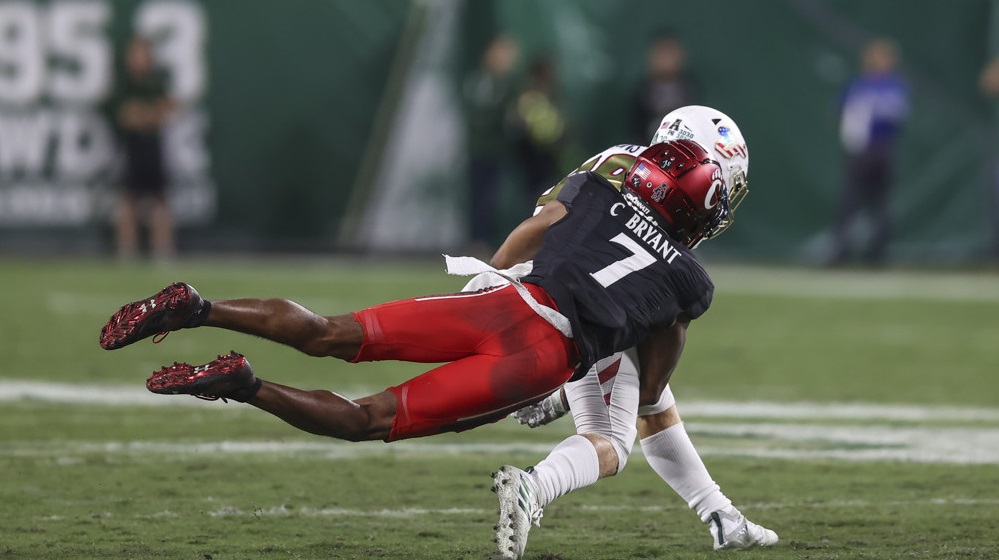
    Coby Bryant – CB – Cincinnati

    Bryant doesn’t have elite speed and needs to become a better tackler, but is an intelligent and athletic corner who has the field awareness and ball skills to be a long-time starter at the next level.

    Bryant’s smarts and ball-skills will make him a day 1 starter, even when the Packers are invested in their current corners.

    To learn more about the Packers and their needs, visit their team page on our NFL Draft website here.

  • NFL Draft Pick AnalySIS: Houston Texans

    NFL Draft Pick AnalySIS:
    Houston Texans

    The State of the Texans:

    There is not much positive to say going on in Houston, besides being free of the never-ending news cycle of Deshaun Watson rumors. Acquiring multiple years of extra draft picks, the Texans put themselves in a great spot to improve. 

    New head coach Lovie Smith looks to take a team in the bottom 5 of virtually all efficiency metrics, and turn it around. 

    Every position is a need for this team as they are certainly in “best player available” mode. Tytus Howard and Laremy Tunsil will be a capable blindside to incumbent QB Davis Mills, as well as Brandin Cooks as a No. 1 option, but both sides of the ball are desperate for talent.

    #3 Overall

    Kayvon Thibodeaux – Edge – Oregon

    Thibodeaux is a game-changing pass rusher and strong run defender who plays with heavy hands and good leverage, though he needs to improve his flexibility and run a hotter motor to become a more complete player.

    If a No. 1 overall talent is going to make it to pick number 3, Houston should spend no more than 30 seconds on the clock. The ceiling is too high.

    Evan Neal – OT – Alabama

    Neal is a young prospect with the rare combination of size and athletic ability that give him both a high floor and a Hall of Fame ceiling as a blind-side protector.

    Even with Laremy Tunsil at left tackle, Neal’s versatility and athletic abilities are too high to pass on. Get him on the team and figure out alignment later.

    #13 Overall

    Jordan Davis – DT – Georgia

    Davis is a powerful and physically imposing nose tackle with the ability to become a true game wrecker up the middle of the field as long as he improves his effort level and stamina.

    The heart of a dominant defense, Davis’ play style and build requires a ton of opposing line attention. He would make all other rusher’s lives easier while dominating on run defense.

    Jermaine Johnson II – Edge – Florida State

    With his pass rush ability, strength, and power, Johnson should make an instant impact at the next level, though he needs to become more consistent across all areas of the game to hit his full potential.

    A “best player available” selection for a team with virtually no pass rush. Johnson can step in Day 1 and play at an NFL level. 

    Garrett Wilson – WR – Ohio State

    Wilson has the speed, route running, and ballcarrying traits that excite teams, and if he can work on attacking the ball when it’s in the air and improving his ability along the sideline, he will be a strong starter very early in his NFL career.

    Wide receiver might not be a top priority, but a full audition for Davis Mills as a franchise QB requires more than just Brandin Cooks as a pass-catcher.

    #37 Overall

    David Ojabo – Edge – Michigan

    Ojabo is an excellent athlete with the speed, range, bend, and flexibility to be a force as a pass-rush specialist, but he needs to get stronger and just see more reps in order to develop into an all-around player at the next level.

    Give him all the time he needs to recover from the Achilles tear, and get a first round player at a massive discount.

    Quay Walker – LB – Georgia

    Walker’s ability to defend the run and play in zone coverage make him an intriguing prospect at his size and athletic profile, and if he can continue to improve his instincts, he has the potential to be a high-level starter at the next level.

    Walker’s diverse skill set and high athletic potential make him an easy “BPA” style pick.

    Sam Howell – QB – North Carolina

    Howell has the arm strength, mobility, and improvisational skills to be productive at the next level, but his lack of eye discipline, pocket awareness, and footwork might make it tough for him to be more than a circumstantial starter.

    Davis Mills may or may not be the answer to the Texans puzzle. But it isn’t often a QB with so much starting experience and production history is available in the 2nd round. 

    #68 Overall

    Troy Andersen – LB – Montana State

    Andersen’s versatility and FCS production may only be matched by his intangibles, but he’ll need to improve his play strength and continue growing his defensive comfortability to become more than a quality, position-fluid backup and special teamer.

    A dominant FCS linebacker who has repeatedly dominated in different draft events. Yes, please.

    Phidarian Mathis – DT – Alabama

    Mathis’ excellent length and consistent snap-to-whistle effort will get him playing time at the next level, but he’ll need to better utilize that length and improve the power in his lower half to become the three-down starter his tools suggest he could be.

    Mathis’ high work rate and competitiveness have led to excellent Total Points Ratings in both the run and pass game.

    #80 Overall

    Isaiah Spiller – RB – Texas A&M

    Spiller is a playmaker who has the vision, speed, and COD ability to become an all-down player at the next level, though he’ll need to shore up the ball-security mistakes and improve in pass pro to hit his full potential.

    Rather than a revolving door of veterans, the Texans can take a local hero and make him a centerpiece of an offense void of young talent.

    Ed Ingram – OG – LSU

    Ingram is gap-scheme-specific, and his limited athletic ability and finesse traits could hold him back if misutilized, but his pulling prowess, point-of-attack tenacity and power, and pass pro awareness should make him a starting-caliber NFL guard.

    The Texans’ usage of a gap-scheme running front gives them a valuable startable guard in Ingram, one that other teams can’t fit as well.

    To learn more about the Texans and their needs, visit their team page on our NFL Draft website here.

  • SIS NFL Draft AnalySIS:Baltimore Ravens

    SIS NFL Draft AnalySIS:
    Baltimore Ravens

    The State of the Ravens:

    The Ravens were the #1 seed in the AFC until an injury to Lamar Jackson derailed the season, on top of the horrendous injury luck that occurred in the preseason. The team comes into the 2022 draft with their area of needs being pass defense and offensive line. 

    Finishing in the bottom 10 in EPA per play while in both man and zone coverage, as well as being 28th in Nickel personnel, the Ravens need to stop the pass via the rush and in coverage. Picking higher than expected (14th), the Ravens will have a lot of options.

    #14 Overall

    Devin Lloyd – LB – Utah

    Lloyd has the speed, aggressive mindset, pass rushing ability, and defensive playmaking ability teams crave in a Will linebacker, and if he continues to hone his craft within the box, he has a very high ceiling.

    Excellent in coverage and can run sideline-to-sideline to make tackles. A perfect fit for the Ravens.

    Jermaine Johnson II – Edge – Florida State

    With his pass rush ability, strength, and power, Johnson should make an instant impact at the next level, though he needs to become more consistent across all areas of the game to hit his full potential.

    Joining a rush of Odafe Oweh and Tyus Bowser, Johnson brings depth and immediate impact.

    Trent McDuffie – CB – Washington

    McDuffie is a fluid athlete who has the speed, quickness, and transition ability to be a solid shutdown corner at the next level, though his size for the outside and limited on-ball production could be what holds him back.

    The Ravens still have Marcus Peters and Marlon Humphrey, but injuries proved a lack of depth. McDuffie’s traits make him a future starter and immediate 3rd corner.

    #45 Overall

    Jaquan Brisker – S – Penn State

    Brisker is a polished, ready-made, versatile DB with a well-rounded set of physical, mental, and emotional tools that add up to a high-floor safety in the NFL.

    A do-it-all, experienced, immediate starter that can be on the field for all 3 downs.

    Roger McCreary – CB – Auburn

    McCreary projects best as a 3rd corner with good height, speed, and athleticism to play in the slot or out wide, and despite his short arms, he is at his best in press coverage.

    Versatility to play in the slot and in press makes him a perfect 3rd corner as he develops to eventually be a starter.

    Nicholas Petit-Frere – OT – Ohio State

    Petit-Frere’s lateral mobility, innate athleticism, hand use, and pedigree are strong traits to bank on at the next level, but he’ll need to improve in pass protection and overall consistency to see time as a starter.

    A bit of a bet-on-the-tools pick, Petit-Frere can play both tackle positions well.

    #76 Overall

    Cole Strange – OG – Chattanooga

    Strange has the reactive athleticism to mirror defenders, consistent leg drive to move them, and the nastiness to finish through the whistle, but he’ll need to improve his balance, footwork, and awareness to maximize his potential.

    Strange’s experience being a 6-year player is something no other guards possess in this class.

    Kingsley Enagbare – Edge – South Carolina

    Enagbare has the hand usage, pass-rush technique, and motor to be an effective pass rusher early on, but must get stronger in his lower half and get a little more athletic to be an impact player against the run.

    Enagbare’s pass rush comes at a discount due to his lacking run game, which the Ravens can capitalize on to fill their need to stop the pass.

    Channing Tindall – LB – Georgia

    While Tindall never started a game at Georgia, he has the athleticism, man coverage skills, and tackling prowess to be a starter in the NFL and he just needs to improve his power and intelligence to hit his ceiling.

    Well-rounded linebacker with coverage skills, another perfect fit!

    #100 Overall

    Myjai Sanders – Edge – Cincinnati

    Sanders has a relentless mindset with the length, repertoire, and hand use to be an effective three-down player, but he’ll need to keep his pad level down and focus on mixing up his pass rush moves in order to hit his ceiling.

    A highly effective rotational rusher upon his arrival to the league, an area Baltimore needs.

    Coby Bryant – CB – Cincinnati

    Bryant doesn’t have elite speed and needs to become a better tackler, but is an intelligent and athletic corner who has the field awareness and ball skills to be a long-time starter at the next level.

    For similar reasons as I’ve mentioned before, an immediate depth corner that can eventually be a dependable starter.

    Thayer Munford – OG – Ohio State

    Munford is a long, experienced and versatile lineman with good pass protection skills that project better as a reserve guard with his limited flexibility and struggles with finesse.

    Experience against top competition makes him a valuable 3rd guard/spot starter.

    To learn more about the Ravens and their needs, visit their team page on our NFL Draft website here.

  • NFL Draft Pick AnalySIS: Kansas City Chiefs

    NFL Draft Pick AnalySIS: Kansas City Chiefs

    The State of the Chiefs:

    After four straight conference championship appearances, two Super Bowl appearances, and a Lombardi Trophy, the Chiefs made the decision to not cling to the past and reload.

    Trading star WR Tyreek Hill to the Miami Dolphins added a plethora of assets to help this team build again with a QB locked in for the long haul. For two seasons we have witnessed the holes in depth, the struggling defense, the cracks in the game plan. Instead of paying to keep the gang together, it’s time to reload. 

    There aren’t any glaring holes on the roster, but elite offensive efficiency and terrible defensive efficiency point towards addressing the defense, but a WR pick is a necessity. With two firsts and two seconds, it would not shock me to see them jump around the board a bit to land players of choice.

    #29 & #30 Overall

    With back-to-back selections, the candidates for these two picks will be the same.

    Jahan Dotson – WR – Penn State

    Dotson’s size and toughness limit him in certain situations, but his explosiveness and body control allow him to make spectacular plays at all levels of the field.

    Dotson’s sure hands and dynamic YAC ability make him a perfect fit in a KC offense.

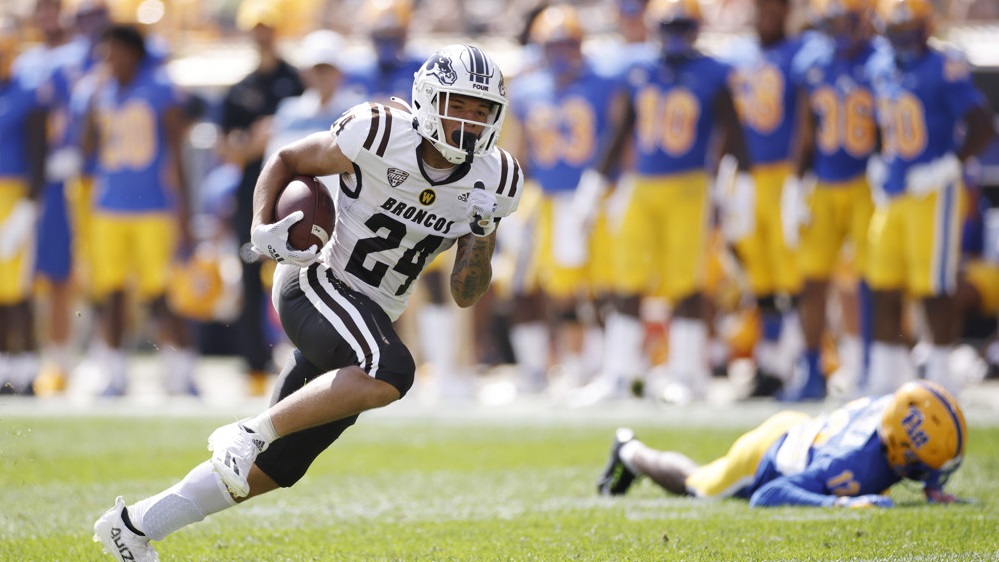
    Skyy Moore – WR – Western Michigan

    Moore is a lightning-quick receiver with room to grow and the innate skills that allow him to be a dynamic playmaker for a creative offense at the next level, especially if his refinement and development go as planned.

    Moore was voted “Most Likely to be the Next Tyreek Hill” of this draft class. Kidding, but also not.

    Andrew Booth Jr. – CB – Clemson

    Booth is a twitchy, athletic corner with the man coverage tools and ball skills to develop into a strong starter at the next level, but his tackling woes and lack of hip fluidity could hold him back early in his career.

    Booth’s ability to play in man coverage is an area Kansas City really struggled with in their AFC Title clash with Cincinnati.

    Boye Mafe – Edge – Minnesota

    Mafe has the hand use and freaky athleticism teams covet in edge defenders, but he will have to work on his pad level and round out his pass rushing plan of attack to reach his potential as a three-down starter.

    After Melvin Ingram’s departure, the Chiefs are in huge need of an edge rusher that can play with both a hand down and upright.

    Daxton Hill – S – Michigan

    Hill is a versatile and competitive defensive back who can be impactful at all levels of the field with his man coverage ability, despite his slight frame.

    Daniel Sorenson’s well-documented struggles over the top suggest a safety selection early. Hill’s abilities in coverage while being a willing competitor make him worthy of such a high pick.

    #50 Overall

    DeMarvin Leal – DT – Texas A&M

    Leal is an athletic and agile defensive lineman at his size, who offers great versatility as a pass rusher but needs to work on his interior run defense to keep that flexibility on all three downs.

    Pairing Chris Jones with another highly athletic pass rusher along the interior is an easy way to generate a lot of pressure.

    Jaquan Brisker – S – Penn State

    Brisker is a polished, ready-made, versatile DB with a well-rounded set of physical, mental, and emotional tools that add up to a high-floor safety in the NFL.

    Any team looking for a safety should be considering Brisker’s do-it-all, experienced skillset.

    Tariq Woolen – CB – UTSA

    Woolen’s gliding strides, elite athleticism, and superior length are difficult traits to teach, but he needs to match his play strength to his size and continue growing his natural coverage skills and comfortability to reach his high ceiling.

    Bet on the tools, and let Woolen add immediate depth to the CB room, with experience likely resulting in a long-term starter.

    #62 Overall

    Jalen Pitre – S – Baylor

    Pitre is a super twitched-up athlete with very good instincts for when to attack and a skill set that will have him making plays all over the field, but limited deep cover skills likely limit him to exclusively playing near the LOS.

    If the Chiefs would like to add a physical safety to replicate the play style of Tyrann Mathieu, Pitre is an excellent choice.

    Wan’Dale Robinson – WR – Kentucky

    Robinson is undersized and needs improved route sharpness, savvy, and overall receiving play detail, but his short-area quickness and extensive history as a ballcarrier give him an intriguing ceiling as a mismatch weapon out of the slot.

    Hill’s YAC ability was a huge feature of the KC offense in the past, and they lack a player with the twitch that Tyreek brought them.

    #94 Overall

    Justyn Ross – WR – Clemson

    Ross has the combination of size, athleticism, and quick-twitch to contribute in a variety of ways in a receiving room at the next level, but must overcome injury and production concerns to do so.

    Ross comes at a discount after injuries and lacking recent production, but was outstanding as a freshman.

    Cam Taylor-Britt – CB – Nebraska

    Taylor-Britt has some technical aspects to refine, but he has the athleticism, mental processing, and physicality to develop into a quality slot corner or safety.

    A defensive chess piece that can provide valuable reps in different areas of coverage.

    #103 Overall

    Khalil Shakir – WR – Boston College

    Shakir has the route running, short-area quickness, and versatility to become a slot receiver at the next level, but he will need to work on his hands and his ability to attack the ball to maximize his playing time.

    Shakir is a good depth WR, bringing desirable traits in route running to a room that lost multiple contributors.

    Max Mitchell – OT – Louisiana

    Mitchell has the frame and athleticism to become a valuable swing tackle and potentially more if he can continue to work on the technical aspects of his game.

    While not an immediate starter, he helps address a productivity hole at right tackle as a depth option and competitor, with tools that could eventually allow him to start.

    To learn more about the Chiefs and their needs, visit their team page on our NFL Draft website here.


  • NFL Draft Pick AnalySIS: Las Vegas Raiders

    NFL Draft Pick AnalySIS: Las Vegas Raiders

    The State of the Raiders:

    After trading their first- and second-round selections for Davante Adams, the Raiders still have many holes and no path to address them. Their lone third round pick at 86th overall is the first chance new head coach Josh McDaniels will have in filling the various needs the Raiders possess, specifically on the offensive and defensive lines. Had they not made the Davante trade, WR would have been at the top of the list of needs for Las Vegas. In a loaded division with the Chiefs, Chargers, and Broncos, the Raiders desperately need to find Day 1 starters.

    #86 Overall

    Dylan Parham – C – Memphis

    Parham is a smart player with the athleticism and quickness to be a versatile lineman, but will need to get stronger and more physical to maximize his potential at the next level.

    Parham is a 4 year starter with good FBI, and the Raiders could use that experience immediately.

    Cole Strange – OG – Chattanooga

    Strange has the reactive athleticism to mirror defenders, consistent leg drive to move them, and the nastiness to finish through the whistle, but he’ll need to improve his balance, footwork, and awareness to maximize his potential.

    The Raiders being a zone-based run team in 2021, Strange’s massive experience playing that for Chattanooga makes him a good fit for Vegas.

    Coby Bryant – CB – Cincinnati

    Bryant doesn’t have elite speed and needs to become a better tackler, but is an intelligent and athletic corner who has the field awareness and ball skills to be a long-time starter at the next level.

    Corner depth in a division with Patrick Mahomes, Justin Herbert, and Russell Wilson is paramount to their ability to make the playoffs.

    Matthew Butler – DT – Tennessee

    Butler has the first-step explosion, heavy hand punch, and nonstop motor to be disruptive, but his lack of strength and agility likely keep him from being a three-down starter at the next level.

    A run defender who has experience all over the defensive line, this helps the Raiders improve upon their below-average zone run defense.

    To learn more about the Raiders and their needs, visit their team page on our NFL Draft website here.