Category: MLB Draft

  • MLB Draft Scouting Report: Kaelen Culpepper

    MLB Draft Scouting Report: Kaelen Culpepper

    You can find all our MLB Draft scouting reports here.

    Photo: John Bunch/Icon Sportswire

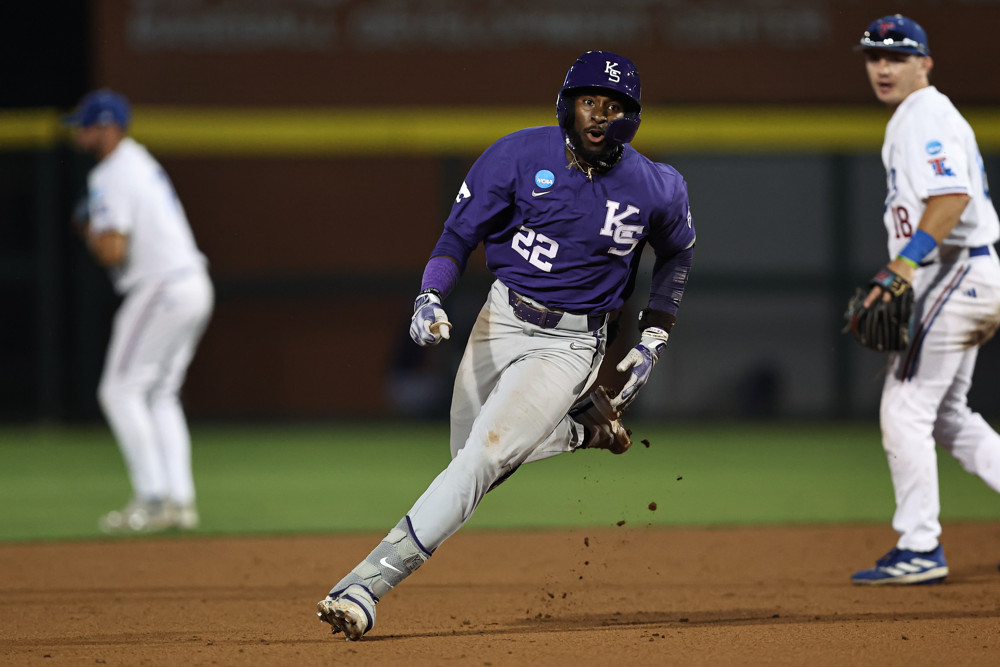
    Kaelen Culpepper is a versatile player with sound athletic traits and a solid offensive skill set whose future defensive position is a bit of a question mark.

    Name: Kaelen Culpepper

    College: Kansas State University

    Bio: R/R 6-0, 190lbs.

    DOB: 12/29/2002

     Scouting Grades on 20-80 Scale

    Skill Grade
    Hit 50
    Power 40
    Run 60
    Arm 55
    Field 45
    Future Value 45

     Analysis:

    Culpepper stepped into a starting role immediately at Kansas State, playing third base during his freshman and sophomore years before becoming the everyday shortstop in 2024. He logged over 150 games over his three years for the Wildcats and earned All-Big 12 Second Team honors this past season.

    He’s an excellent athlete who makes everything he does on the diamond look smooth. Whether it’s making a sliding stop on a ground ball or bat-flipping a towering homerun, Culpepper never looks like he’s in a hurry.

    College Career:

    Culpepper showed consistent improvement year over year at Kansas State. In 2022, he slashed .283/.356/.428 before making a significant offensive leap his Sophomore year. He upped his slash line to .325/.423/.576 and had a significant increase in his power production by doubling his home run total. His improved offensive profile saw him earn an invite to the Team USA collegiate national team trials in the summer of 2023 where he led the team with a .853 slugging percentage over 9 games.

    His exposure with the national team vaulted him up draft boards coming into 2024, and he produced another good season at the plate and in the field. He put up a .324/.416/.570 line and led the Big 12 in triples, all while making the transition to being a full-time shortstop.

    Year OPS K% BB%
    2022 .784 14% 6%
    2023 .999 15% 9%
    2024 .985 14% 12%

    Stance:

    He sets up at the plate with a slightly open stance and almost no bend in his knees. He keeps his feet wider than shoulder-width apart and evenly distributes his weight between them.

    Culpepper keeps his hands by his right ear while waiting for the pitcher to come to the plate. The first move in his action is a short leg kick that helps him stack his weight over his back leg. At the same time, he bends slightly at the hips and knees which allows him to get his upper body in a more natural hitting position. As his weight shifts back towards the pitcher his hands drift slightly back which helps him get into a powerful launch position.

    He likes to keep his hands close to his body as he fires them through the zone, allowing him to keep his barrel in the strike zone for as long as possible. He always finishes his swing on balance as his hands bring the bat over his left shoulder.

    Approach:

    Culpepper developed into a disciplined hitter over his three years at Kansas State, doubling his walk rate throughout his collegiate career. His advanced approach led him to walk almost as much as he struck out in 2024.

    He has a line-drive approach and likes to spray the ball to all parts of the field, and his tendency to keep his hands inside the baseball allows him to stay on pitches in any part of the zone. He likes to drop the barrel on the baseball and hunts pitches low in the zone, which can leave him susceptible to breaking balls that fall out of the zone late.

    He is not very explosive with his lower half and can struggle a bit to create optimal home run launch angles on pitches down in the zone which has limited his power production in college, but his plus hand speed allows him to catch up to velocity higher in the zone. The height of the pitch allows him to generate a little more lift and launch the ball out of the park like this:

    (Hello again Hagen Smith…)

    We track college baseball data across Division I, charting as many games as we can. That allows us to use what we call our “Synthetic Statcast” tool to calculate some statistics that you normally wouldn’t be able to get.

    Here’s a snapshot of his batted ball numbers from this year:

    Name Barrel % (percentile) Average Launch Angle Hard Hit %
    Kaelen Culpepper 9% (84th) 10° (41st) 33% (54th)

    Defense:

    The biggest question when drafting a shortstop is whether will they be able to stick at the position in the major leagues.

    Culpepper made the move to shortstop from third base this past year and proved that he could be more than a corner infielder at the next level. He has good lateral quickness and average range, coupled with soft hands which will allow him to be a solid defender at several positions in the major leagues.

    The biggest area for development in his game defensively will be improving his arm accuracy. He shows great arm strength from his low ¾ arm slot but tends to lose the ball high over the first baseman’s head.

    Using our “defensive misplays” stat that we track for every game we chart throughout the season, we can take a closer look at what types of misplays each fielder is making. We define defensive misplays as “any play on which the fielder surrenders a base advance or the opportunity to make an out when a better play would have gotten the out or prevented the advancement.”

    We can see the disparity between Culpepper and other top draft-eligible shortstops in this class when it comes to misplays credited to bad or offline throws compared to fielding misplays:

    Name Fielding DMs Throwing DMs
    Kaelen Culpepper 4 9
    Griff O’Ferrall 4 4
    Colby Shelton 7 1

    Projection:

    Culpepper is a smooth mover who has a knack for making every movement on the baseball field seem easy. He won’t have a gaudy offensive profile like some of the other players in this draft class, but his simple approach and reluctance to chase will allow him to consistently get on base at any level. His plus speed and athletic traits make him a factor on the basepaths and in the field, giving him the ability to play multiple spots across the infield. He projects as a utility infielder in the major leagues who can provide average defense at three positions.

    Comp: J.P. Crawford

    Draft Projection: Late 1st round/Competitive Balance Round A

  • MLB Draft Scouting Report: Tommy White

    MLB Draft Scouting Report: Tommy White

    You can find all our MLB Draft scouting reports here.

    Photo: Michael Wade/Icon Sportswire

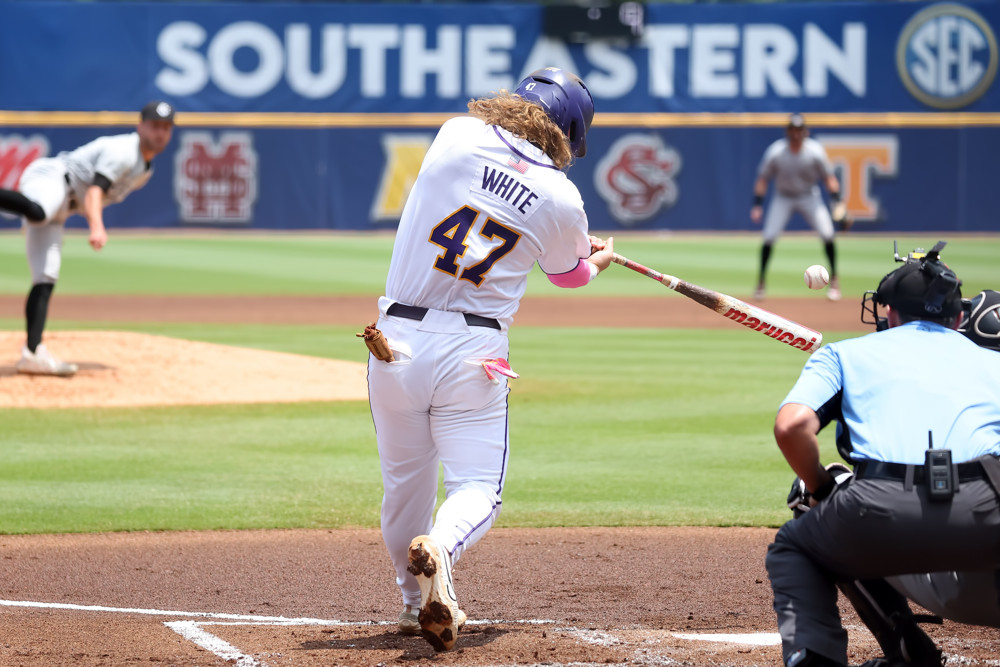
    With plus barrel control, hand speed, impressive raw strength, and an aggressive approach over 3 years at North Carolina State and LSU, Tommy White has some of the highest offensive upside of any player in this year’s MLB Draft. 

    Name: Tommy White

    College: Louisiana State University

    Bio: R/R 6-1, 228 lbs.

    DOB: 03/02/2003

    Scouting Grades on 20-80 Scale

    Skill Grade
    Hit 60
    Power 60
    Run 40
    Arm 50
    Field 40
    Future Value 55

    Analysis

    Appearing in 161 games over an illustrious three-year career, White has cemented himself as an all-time college performer. He is a three-time All-American whose 75 home runs are good for 8th all-time in NCAA history. 

    While not an explosive athlete, White is physically mature with strength throughout his frame, which helped him produce top-of-the-line hard-hit and barrel rates throughout his college career.

    College Career

    White began his collegiate career at North Carolina State, setting a new NCAA freshman home run record by swatting 27 home runs and slashing .362/.425/.757 on his way to Freshman of the Year honors from the ACC and Baseball America.  

    Then, White entered the transfer portal and headed to Louisiana to join Paul Skenes and Dylan Crews at LSU. White was a key contributor in the middle of that star-studded Tigers lineup, putting up a slash line of .377/.435/.729 with 24 home runs including one of the most historic blasts in CWS history to send LSU to the finals: 

    White enhanced his status as one of the top third base prospects in the country in 2024 by posting another excellent offensive season, slashing .330/.401/.638. 

    Year HR ISO K% BB%
    2022 27 .396 19% 9%
    2023 24 .352 13% 7%
    2024 24 .308 12% 9%

    Stance

    White sets up at the plate with an open stance and his feet wider than his shoulders. He gets into a deep knee bend and stacks most of his weight on his back leg.

    He rests the bat flat on his back shoulder as he waits for the pitcher to move towards the plate. As the pitcher breaks his hands, White flicks the bat off his shoulder and gets the barrel almost vertical as he starts his load. His hands work on two planes, coming down below his right shoulder at the beginning and then working back and up which helps him create a big stretch across his chest at his launch position.  

    Using his toe-tap timing mechanism, White gets all his weight stacked over his back leg with his first step back. As he steps back toward the pitcher, he creates significant momentum throughout his kinetic chain and fires his hands toward the baseball with a powerful punch. He posts against his front leg as his barrel works through the zone and finishes with a high one-handed finish. 

    Approach

    White said it best when describing his approach at the plate during an interview with SEC Network during the SEC Tournament in Hoover this year. “A lot of hitters decide when to swing. I decide when not to swing.” 

    He is aggressive in the zone early and often, regardless of pitch type. If he gets a pitch in the zone that he can handle, he’s going to swing, and given his advanced feel for the barrel he hits the ball hard very often. 

    We track college baseball data across Division I, charting as many games as we can. That allows us to use what we call our “Synthetic Statcast” tool to calculate some statistics that you normally wouldn’t be able to get.

    Here’s how White stacks up to some of the other premier infield prospects in this class in hard-hit rate and barrel rate for games we’ve tracked:

    Name Hard Hit % (percentile) Barrel %
    Tommy White 45% (93rd) 12.6% (93rd)
    Cam Smith 44% (92nd) 7.5% (68th)
    Seaver King 34% (60th) 3.9% (29th)

    White also has a very unique two-strike approach. He gets very wide with his base and presets the internal rotation of his back leg, allowing him to eliminate his stride without giving up all of his power. He minimizes his head movement, which helps with pitch recognition and tracking, and focuses on firing his hands at the ball.

    He doesn’t lose the ability to generate power with this setup due to the strength in his wrists and forearms. Here he is with this same approach against projected top-10 pick Hagen Smith: 

    Defense

    The only thing that will keep White from being a bona fide star at the next level will be the uncertainty of his defense. After DH’ing for most of his time his freshman year at North Carolina State, White took over every day 3B duties for LSU.The 2023 season, was a struggle defensively for him at the hot corner, with 13 errors and an .859 fielding percentage. 

    Much has been made about how he was able to make improvements defensively this year, and while he was able to decrease the number of errors he committed, down to 3, and increase his fielding percentage, up to.971, I’m still skeptical about his ability to stick at third base long-term. 

    Another stat we track is the number of “defensive misplays” that each fielder makes throughout the season. These are plays that go beyond what you would find in a normal box score. We define defensive misplays as “any play on which the fielder surrenders a base advance or the opportunity to make an out when a better play would have gotten the out or prevented the advancement.” 

    Here’s how White performed last year vs this year: 

    Year Errors  DMs  GFPs 
    2023 13 15 0
    2024 3 14 7

    We can see that while White did make improvements in cutting down on his errors and increasing his good fielding plays(think highlight reel-type plays and smart baseball plays), he still has work to do defensively to stick at the position in the major leagues. With limited range and an average arm, White is likely more suited for first base.

    Projection

    Tommy White is an extremely talented offensive prospect who is known for his above-average hand speed and advanced feel for hitting. He’s an aggressive hitter who can do damage on any type of pitch to any area of the field and organizations will love his offensive profile. His defensive shortcomings will likely force him into a 1B/DH role long term, but a college hitter with his track record of production should help him move through a minor league system quickly.  

    Comp: Pete Alonso 

    Draft Projection: Top 20

  • MLB Draft Scouting Report: Dakota Jordan

    MLB Draft Scouting Report: Dakota Jordan

    You can find all our MLB Draft scouting reports here.

    Photo: Michael Wade/Icon Sportswire

    Leading up to the MLB Draft, Sports Info Solutions Video Scouts will provide scouting reports on some of the top college players available.

    The reports will also feature some of the customized data that we’ve tracked this season. If you have any questions about that data, you can reach out to mark@ww2.sportsinfosolutions.com.

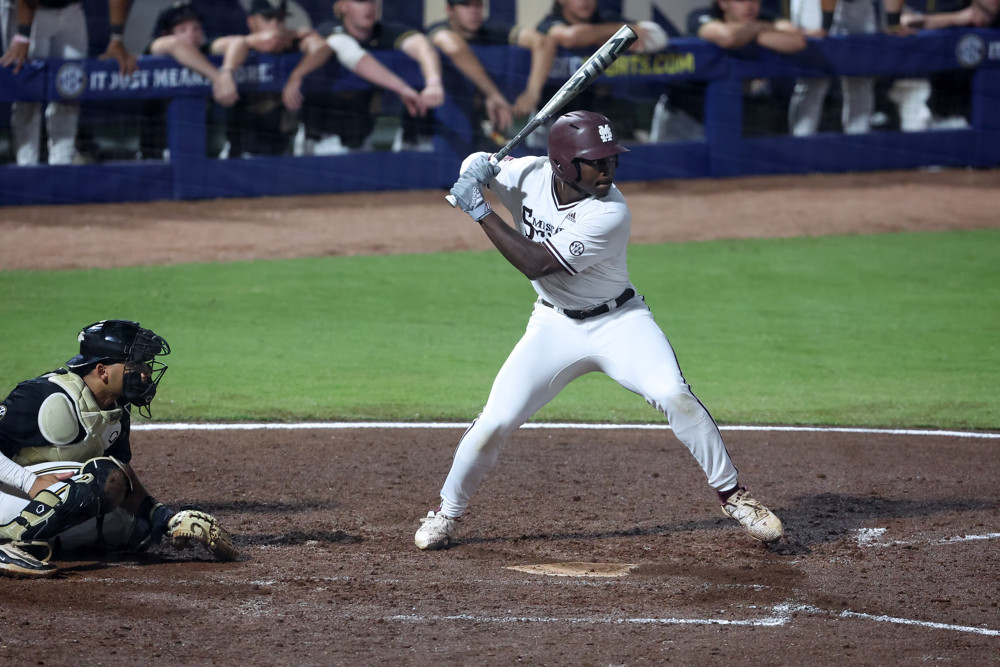
    Lightning-fast hands and thunderous raw power make Dakota Jordan one of the most captivating hitters in this year’s draft class. He has power to all fields, but struggled with strikeouts during his time in college which has left some scouts doubtful about his production at the plate.

    Name: Dakota Jordan

    College: Mississippi State University

    Bio: R/R 6-0, 220 lbs.

    DOB: 05/03/2003

    Scouting Grades on 20-80 Scale

    Skill Grade
    Hit 40
    Power 60
    Run 60
    Arm 50
    Field 50
    Future Value 50


    Analysis:

    Dakota Jordan is as intriguing as any prospect in this year’s draft class after two highly productive years at Mississippi State. He was a Day 1 contributor at State, starting 104 games across all three outfield spots.

    Jordan’s an exceptional athlete who in addition to being a highly touted baseball recruit, was a three-star wide receiver recruit who was committed to playing football at Mississippi State as well. He is known for his massive raw power and electric bat speed, both of which stem from a physically mature body in a medium-sized frame.

    College Career:

    Jordan showed marked improvement over his two years, with significant increases in his power and run production year over year.

    Year HR ISO K% BB%
    2023 10 .268 25% 14%
    2024 20 .317 29% 15%

    Jordan burst onto the scene as a freshman, earning Perfect Game Freshman All-American honors by slashing .307/.397/.575 with 40 RBI. He followed that up with an impressive .354/.459/.671 and 72 RBI’s this year, earning third team All-American team honors in 2024. While he did make strides at the plate with his quality of contact, there still was a great deal of swing and miss, with his strikeout rate increasing to 29% in 2024.

    We track college baseball data across Division I, charting as many games as we can. That allows us to use what we call our “Synthetic Statcast” tool to calculate some statistics that you normally wouldn’t be able to get.

    Here’s how Jordan stacks up to some of the other premier outfield prospects in this class in hard-hit rate and barrel rate for games we’ve tracked:

    Name Hard Hit % (percentile) Barrel %
    Dakota Jordan 50% (98th) 13% (93rd)
    Vance Honeycut 48.5% (97th) 12% (92nd)
    James Tibbs 44.5% (92nd) 12% (92nd)

    Stance:

    Jordan sets up at the plate with a very wide base, his feet wider than his shoulders. He sinks into his legs as he waits for the pitcher, which helps him tap into the raw strength in his lower half.

    He keeps his bat almost parallel to the ground as he waits for the pitcher to make his move to the plate. Once the pitcher’s hands break in his delivery, Jordan initiates his swing with a short leg kick and turns his barrel up slightly to get into his launch position. As he drifts towards the pitcher, Jordan drags his hands back to create a stretch across his midsection before firing his hands at the ball.

    Jordan creates significant force and bat speed throughout his swing and as the barrel moves through the zone his lead leg straightens as he posts against it. He concludes his swing with a one-handed finish low over his left shoulder and his back foot slightly kicking out behind him.

    Approach:

    Jordan hunts fastballs middle-up in the zone, and with his elite bat speed he is able to turn around fastballs at any level. His aggressiveness on the fastball does leave him susceptible to breaking balls from both right- and left-handed pitchers, with a tendency to get beat by curves and sliders from right handers and changeups from lefties.

    This aggressive approach and tendency to try to catch the ball out in front does lead to a lot of strikeouts. Jordan struck out over 27% of the time over his two years at Mississippi State.

    His quick hands and power do allow him to make adjustments on pitches that he is fooled on and still do damage, which may lead to an adjustment in his approach at the next level. Jordan doesn’t need to sell out for the fastball to hit the ball hard, and by letting the ball get deeper, he will be able to stay on the offspeed pitches better.

    Take this pitch for example. He’s able to delay his hands enough on this fastball that is way outside the zone and hammer it out to right-center field.

    Defense:

    Jordan isn’t an above-average outfield defender presently but has the athletic traits to become a suitable corner outfielder at the major league level. Possessing plus straight-line speed, his range will improve with more reps in the outfield as he gets more comfortable reading the ball off the bat. Coupled with an average arm, Jordan should have no problem holding down either of the corners of the outfield, with the ability to fill in at center field if needed.

    Projection:

    Oozing with physical tools, Dakota Jordan projects to be a power hitting corner outfielder at the major league level. He may experience some growing pains early in his minor league career as he adjusts to higher-level offspeed pitches, but his elite bat speed and strength should continue to produce loud contact as long as he makes better swing decisions.

    MLB Comp: Marlins outfielder Jesús Sánchez

    Draft projection: Between picks 15 and 30

  • MLB Draft Scouting Report: Miami 3B Yohandy Morales

    MLB Draft Scouting Report: Miami 3B Yohandy Morales

    To read all our scouting reports, click here.

    Yohandy Morales, 3B – Drafted No. 40 overall by Nationals

    College University of Miami (FL)
    Bio R/R 6-4, 225 lbs.
    Date of Birth 10/09/2001
    Hit 45
    Power 60
    Run 45
    Arm 60
    Field 50
    Future Value 50


    Written by Brandon Tew

    Analysis:

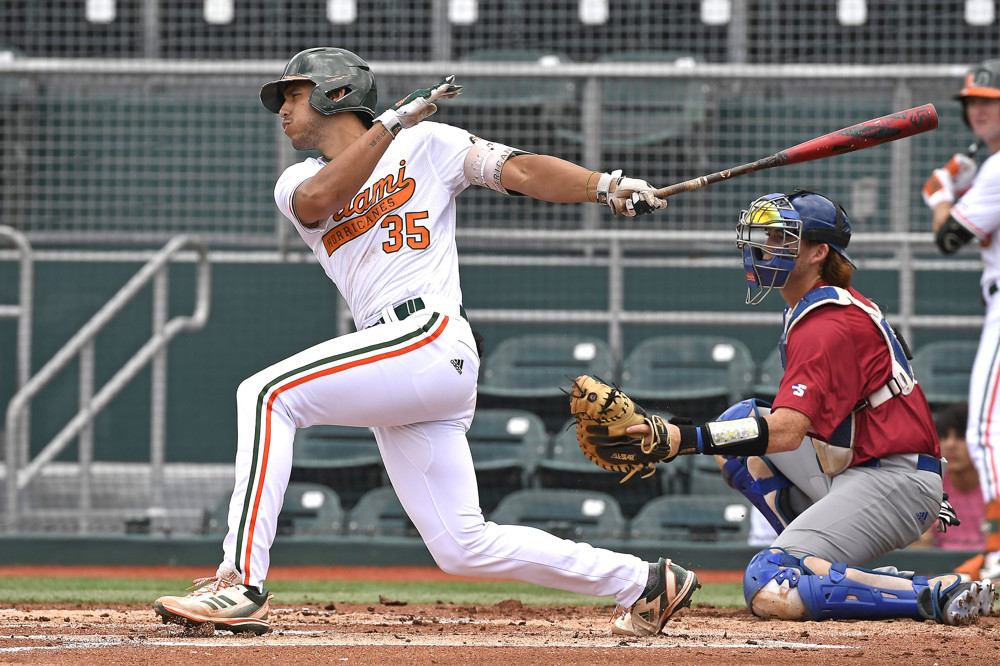
    Yohandy Morales is one of the most intriguing college bats from the 2023 MLB Draft. He was a consistent performer for three seasons at Miami (FL) starting 174 games at third base for the Hurricanes.

    Morales has big-time power from his extra-large frame, but there are concerns over his swing-and-miss. Although, he produces some eye-popping numbers in terms of exit velos with a 94.2 mph average EV and a 108.9 mph, 90th percentile mark, according to Baseball America.

    College Career:

    Morales’ slash line improved gradually every season as he grew into his role as a run producer in the middle of Miami’s lineup.

    As a freshman, Morales slashed .284/.343/.531 and backed that up with a .329/.411/.650 in his sophomore campaign. His HR and RBI totals also jumped with 11 and 18 HR and 45 and 59 RBI, respectively.

    Morales established himself as one of the best 3B prospects heading into 2023 and lived up to that as a junior, slashing .408/.475/.713 with 13 2B, 20 HR, 55 strikeouts and 30 walks.

    Batting Stance:

    Morales starts his stance with his feet shoulder-width apart and has a tiny sink into his legs, almost as a timing mechanism as the pitcher begins his delivery. He has minimal movement in his lower half, with some bend into his back hips as he stacks his back side.

    The barrel of his bat is squarely behind his head as he moves his hands back to create separation creating tension in his front shoulder and arm. The bat then turns upwards right before he starts coming forward.

    Morales keeps his hands back as he drifts forward, creating a good position of power as he rotates and unleashes a powerful punch to the baseball with his front leg straightening out at contact.

    His lower half is quiet, but some moving parts in his upper half can make it challenging to drop the barrel to the ball if he’s off time. His hands are so quick though he can still control the barrel and generate bat speed even when he’s out in front of pitches, especially non-fastballs.

    His power and quick bat make him a dangerous threat at any moment in the game, and he hit some towering home runs last season.

    Approach:

    Morales has an aggressive approach by hunting fastballs and trying to produce damage on these types of pitches.

    He’s susceptible to breaking ball spin, and good breaking balls can cause him to swing and miss. He has trouble identifying spin at points, but it’s more his swing-happy approach that can get him into trouble.

    Morales struck out in 20% of his plate appearances and walked in 11% of them. His whiff rate was 20% on fastballs, 37% on breaking balls, also per Baseball America. You would hope that seeing better breaking balls would get him thinking about being a more cautious swinger.

    Morales tends to be on his front foot on breaking balls while looking for fastballs to crush. Fastballs on the inner part of the plate can also tie him up.

    He does his most damage on pitches at the very top of the zone, though he does chase high fastballs a little too much. His fastball-first approach also causes him to freeze on slower pitches, especially curves and sliders.

    It’s a fine line because if he’s sitting fastball either down in the zone or up, he can unload on pitches and turns his raw power into home runs. Morales knows his strength, and that’s punishing fastballs.

    Two at-bats against James Tallon of Duke highlight Morales’ ability to hit the high fastball. He strikes out in the first at-bat, but in the second, he was sitting on a fastball and hit an opposite-field rocket out to tie the game.

    When Morales gets behind in the count, he uses his quick hands to let the ball travel in the zone and shoot it the other way.

    His barrel control also allows him to adjust and still square up the ball in an impressive manner during some at-bats. Morales has difficulty lifting pitches consistently at times.

    On breaking balls or even sinkers and changeups, he swings down on the ball. His hard contact still manages results as grounders sneak through the infield regularly.

    At higher levels of baseball, Morales will want to lift the ball just a tad more, but it’s fixable if his swing decisions improve.

    Defense:

    Morales is a sufficient defender at 3rd base and has good range for his size but inconsistency in making all the plays. Also, if he were to add more weight to his frame, he could be pushed off 3B to 1B or LF. With solid hands to go with athleticism and a strong arm, he should be able to provide serviceable defense wherever he plays in MLB.

     Projection:

    Morales is a big right-handed power hitter with plus power. His physicality and quick hands should produce plenty of pop from line to line. His inability to recognize good breaking ball spin may hinder him, but better swing decisions should help him cut down on swing-and-miss.

    MLB Comp: Yandy Diaz

  • MLB Draft Scouting Report: Florida Pitcher Hurston Waldrep

    MLB Draft Scouting Report: Florida Pitcher Hurston Waldrep

    School University of Florida
    Bio R/R 6-2, 225 lbs.
    Date of Birth 03/01/2002
    Fastball 55
    Slider 60
    Curveball 60
    Splitter 70
    Control 45
    Future Value 55

    >> All grades on 20-80 scouting scale

    Written by Brandon Tew

    Draft Expectation: 1st Round

    Analysis:

    Hurston Waldrep possesses the best pure stuff of any pitcher in the 2023 MLB Draft including Paul Skenes.

    Waldrep’s four-pitch mix is undeniably electric and the presence and confidence he exhibits has scouts and teams dreaming about if he can reach his extremely-high upside.

    College Career:

    Waldrep transferred from Southern Miss after his sophomore season when he compiled 90 innings over 17 starts, finishing with a 3.20 ERA and 140 strikeouts.

    His junior season at Florida was up-and-down at times. He finished with a 4.16 ERA over 101 2/3 innings and 156 strikeouts, which was good for 3rd in Division I baseball.

    One major knock on Waldrep this past season was his 12.7 BB%, as his 57 walks were the eighth most in Division I and led to some of his struggles.

    Pitch Delivery:

    Waldrep is a well-built, athletic mover on the mound. From the windup, he keeps it simple using tiny steps for rhythm and timing to put himself in the same position he is in the stretch.

    Creating momentum as he drifts slightly forward with a big leg kick, he gathers himself at the top up to his letters before dropping deep into his back leg.

    Right after peak leg lift, he turns his lead foot inwards towards second base to build tension as he rotates and uncoils his hip landing in a powerful position at stride foot contact.

    His arm gets to an almost 90-degree angle with his arm in a good position at stride foot contact, and he does a good job of blocking his lead leg out. However, the delivery is up-tempo and his long arm swing can lead to inconsistency in the timing of the delivery.

    The significant tilt in his shoulders produces a high over-the-top arm slot and he struggles with command and control at times, with a violent movement of his head off to the side and some closed-off recoil in his finish. The side-head lean causes him to miss high and arm side when he’s out of sync and late.

    Waldrep’s athleticism allows him to succeed with these movements, but a team could opt to clean up his arm action with a shorter path. There’s a lot to like about his delivery but some concerns exist around repeatability and control.

    Pitch Profiles

    Fastball:

    The fastball is a make-or-break pitch and the key to Waldrep’s success. Waldrep sits 95-96 mph most games but has touched 99 this season and the ball jumps off his hand.

    At times, the pitch is inconsistent in shape and he can struggle with location but the cut-ride action of the pitch is compelling. Waldrep’s success will come if he’s able to throw the pitch glove side with regularity.

    The cutting action of the pitch makes it very hard to square up on the bat especially up in the zone.

    Waldrep, as a supinator, with low spin efficiency could opt for more of a true cutter in the same mold as Corbin Burnes.

    The pitch is very successful up in the zone but also misses bats down and away from righties especially. Waldrep’s ability to cut the ball in on the hands of lefties could make the fastball a devastating pitch for opposite-handed hitters as well.

    With his higher arm slot, Waldrep struggles with consistently getting the pitch to the top of the zone. He lives too much in the middle third of the zone vertically around the belt and thighs with his fastball.

    Slider:

    Waldrep’s slider is a gyro pitch with gaudy spin rates that generates depth at its absolute best in the upper 80s. Waldrep threw the pitch with less frequency early in the season, relying more on his curveball and splitter.

    The slider though is a pitch that Waldrep can backfoot to left-handed hitters but also dart it away from righties.

    With Waldrep’s propensity to supinate and spin the baseball, teams could help him develop a slider shape with more sweep or even a sweeper to pair with his gyro offering for right-handed hitters. He might have to lower his arm slot to accomplish this as well but the high arm slot makes Waldrep’s slider play well down in the zone.

    This is huge because he has a true out pitch for lefties in his split and a curve that can also neutralize lefties.

    There are a lot of options on the table but as with most of Waldrep’s pitches it comes down to the command of the pitch and getting it down in the zone. The slider could be a true weapon in MLB paired with his splitter as a tunneling option down in the zone.

    Curveball:

    The curve for Waldep is a banger with a downer shape and a tight spin in the low to mid-80s. Early in the season, he used the pitch a lot and especially ahead in counts.

    The shape of the pitch is great but he threw the pitch too much. He needs to start to sprinkle in the pitch as a strike stealer early in counts instead of as a chase pitch. He can throw the pitch for a chase below the zone but possesses better offerings in terms of chase pitches.

    These back-to-back at-bats highlight how good Waldrep’s curve can be but also what happens when he commands his fastball and curve allowing them to play off each other.

    Splitter:

    Waldrep’s splitter is demonic and dives into the depths of hell to get swings and misses with a 65% whiff rate on the pitch according to 6-4-3 charts. The pitch is one of the absolute best in the country.

    The grip allows Waldrep to kill spin and both cut and fade the pitch. Watching him pitch on a good camera angle behind the mound is an absolute treat because the splitter’s movement is absurd when thrown well. This is Waldrep’s actual putaway pitch. Even when hitters know it’s coming, especially in two-strike counts, they still swing over the top of it.

    Waldrep also can drop the pitch into the zone to keep hitters honest. The splitter will be a major factor in how successful he is as a pro. The pitch is a true double plus and can expose even the best of hitters.

    Pitch Usage:

    Pitch usage has been more of a detriment than anything this past season for Waldrep, though he seemed to figure some things out later in the season.

    Dropping his curveball usage and upping his slider usage led to great success for Waldrep in his first three NCAA tournament starts.

    Over 21 innings he struck out 37 batters, surrendering two runs while walking seven. This tweet explains Waldrep’s pitch usage and how he fixed some predictability during the season.

    Pitch usage can easily be fixed by Waldrep even though he struggled through 2 1/3 innings against LSU in the CWS finals. The tweaks in pitch usage before that are promising signs that Waldrep can be dominant with his explosive pitch arsenal.

    Summary:

    With 3 plus or double-plus secondary pitches, he also has a fastball that can be more plus if he fixes its inconsistency. In its current form, it still projects as an average to above-average big-league pitch.

    Waldrep can be a truly dominant starter if he harnesses his pitches, as this will determine his MLB role and his astronomically high ceiling.

    Projection: 

    An athletic righty with an electric pitch mix. His success as a starter will be determined by his control and the ability to throw consistent strikes.

     MLB Comp: Logan Gilbert

  • 2022 MLB Draft Scouting Report: Brooks Lee

    2022 MLB Draft Scouting Report: Brooks Lee

    Part of a series of scouting reports on intriguing players in the 2022 MLB Draft. To read all the reports (including reports from past years), click here.

    College Cal Poly Sophomore
    Bio B/R 6-2, 205 lbs.
    Date of Birth 02/14/2001
    Hit 60(65)
    Power 50(55)
    Run 45(50)
    Field 45(55)
    Arm 55(60)
    Future Value 60

    Draft Projection: Top-3 pick. Wouldn’t be surprised if he goes No. 1

    Written By Dominick Ricotta

    Analysis

    In a draft with not many intriguing college bats, Brooks Lee stands out above everyone else. Lee, a switch hitter, has incredible bat-to-ball skills from both sides of the plate. He hits for average, has shown power from both sides, and is super difficult to strike out. His eye and ability to recognize pitches so well stands out immediately when watching him. Lee is smooth in the box, has quick hands through the zone, and doesn’t try to do too much. He lets his size and strength add power.  

    College Career

    Coming out of high school Lee was a highly-rated prospect, but instead of entering the draft, Lee went to play for his father, Larry, at Cal Poly. His freshman year Lee had a near career-ending surgery on his hamstring. The surgery didn’t seem to affect him once he came back healthy in 2021.

    In his first real season in college, Lee put up some big numbers.

    .342 BA, 48 R, 10 HR, 51 RBI, 34 SO, 18 BB in 222 AB

    2022 was even better, especially in his strikeout/walk totals

    .357 BA, 56 R, 15 HR, 55 RBI, 28 SO, 46 BB in 235 AB.

    Lee also played in the Cape Cod League during the summer of 2021. He continued to put up some great numbers, even against the best players in college baseball:

    .405 BA, 16 R, 6 HR, 13 RBI, 16 SO in 84 AB

     Scouting Report

    Lee is incredibly quiet in the box. There isn’t much movement in his swing and he doesn’t swing out of his shoes. He trusts his hands to reach any quadrant of the zone and can get the barrel to any pitch. His size combined with the ability to consistently barrel the ball leads to frequently hard-hit balls. 

    His stances from the left and right side are basically identical. He stands mostly straight up and doesn’t take much of a stride. There isn’t much movement in his hands. When his foot gets down, his hands reach the peak load-up and then explode through the zone. Lee keeps his front shoulder tucked for as long as possible, sometimes showing his whole number to the CF camera. 

    His timing and balance are just part of the reason why he has elite bat-to-ball skills. Lee does a fantastic job of getting into his legs on the load-up, then transferring the energy forward as he swings. His lower half and upper half stay connected which gives him his power to all fields. 

    His swing is super-short, smooth, and direct to the ball. He stays level through the zone and manipulates the barrel superbly. Lee doesn’t seem like he is trying to hit fly balls but instead just wants to get the ball in play and trust he can hit it hard. 

    In 2022 Lee struck out only 28 times in 235 AB, an incredible rate. Even more impressive, he struck out only once in his first 14 games of the season. He’s a patient hitter and waits for his pitch to drive. Lee does a great job of recognizing pitches early out of the pitcher’s hand. Even on his takes he shows how good his balance is. 

    Even though Lee is a patient hitter, he loves attacking the first pitch. It’s clear Lee goes up to the plate with a plan and knows how to execute what he wants to do. If a pitcher tries to steal a first- pitch strike with a breaking ball or offspeed pitch he’ll be ready to drive it.

    There aren’t many pitches Lee can’t cover. His level swing from both sides helps him reach the high fastballs and stay on top of them. While his pitch recognition and bat-to-ball skills helps him stay back and hit those breaking balls and offspeed pitches. He uses every part of the field from both sides of the plate and has shown pop to all fields. 

    Lee hit more homeruns from the left side totaling 11 as a lefty and 4 as a righty in 2022. It definitely seems like there is more pop in his bat as a lefty but his approach doesn’t change. As he continues to develop and get stronger, the power will definitely continue to improve. He probably will never put up huge home run numbers but that isn’t the type of hitter he is.

    Defense

    Defensively Lee has great hands and an above average arm. Due to his size his range isn’t amazing which is why he will most likely move to 3rd base. He is athletic so moving around the diamond would not affect him and his arm will make third base an easy transition. His throws are accurate and his arm is a cannon – not many throws ended up short of 1b. Even if he had to throw from awkward arm angles, the throws were consistently good.

    The only time he seemed to have issues in the field was when he would lose his release point. At times, especially routine plays, he would throw more sidearm than his usual over-the- top release. These throws would tail and not have the usual carry and accuracy to them. But more times than not his throws were spot-on and his arm certainly isn’t an issue.

    Makeup

    One thing that separates Lee even more is his high baseball IQ and his low heartbeat on the field. He’s one of those players that the game seems to be going slower for. He never seems rushed and always stays within himself. It definitely helps coming from a baseball family. His father, Larry Lee, has been coaching Cal Poly for 20 seasons. He also had two uncles drafted into the Giants organization. 

    Summation

    Lee has all the tools to be a top draft pick. His elite bat-to-ball skills and eye are the top tools in his bag. Those are skills that are difficult to teach. Lee is highly advanced in those areas, which will make his journey through the minors fairly short. His power will continue to increase and make him an even tougher hitter to face. He gives teams a coach on the field and would be a great addition for any locker room. 

    Projection

    He’s an everyday player and the perfect No. 2 hitter, who will most likely play third base, but could stick at shortstop or even play second base.

    Ceiling: Eduardo Escobar in batting stance; Corey Seager in approach and body type

    Floor: Johan Camargo


  • 2022 MLB Draft Scouting Report: Chase DeLauter

    2022 MLB Draft Scouting Report: Chase DeLauter

    Part of a series of scouting reports on intriguing players in the 2022 MLB Draft. To read all the reports (including reports from past years), click here.

    Chase DeLauter, OF

    College James Madison University (RS SO. 2022)
    Bio L/L 6-5, 235 lbs.
    Date of Birth 10/08/2001
    Hit 45(55)
    Power 50(60)
    Run 55(55)
    Arm 50(50)
    Field 45(50)
    Future Value 55

    Draft Expectation: 1st Round

    Written by Brandon Tew

    Analysis:

    DeLauter burst onto the scene after a dominant Cape Cod League performance in the summer of 2021. He produced one of the best stat lines on the Cape when he hit .298/.397/.589 with 9 home runs, and 21 walks to 18 strikeouts with Orleans. The big left-handed hitter mashed the baseball with big exit velocities, with the wooden bat rocketing him up draft boards before this spring.

    College Career:

    After two very good college seasons with James Madison and his breakout performance on the Cape, DeLauter was putting together the best stretch of his career. In 2022, he hit .437/.576/.828 in 24 games before breaking his foot, while sliding into second base for a double, ending his Dukes career.

    DeLauter committed to James Madison as a pitcher before a growth spurt in his junior year of high school pushed him to 6-foot-5. The lefty would end up trying his hand as a two-way player but excelled as a hitter who has all the physical tools and potential.

    Batting Stance:

    DeLauter has a unique batting stance and finish to his swing, but his setup is smooth and balanced. Starting shoulder width apart, he gets great separation from his hands that don’t trigger until his right heel touches down. His head drops slightly during extension but he’s quiet throughout his swing.

    He’s able to be creative with his barrel and swing path at times, even when fooled by pitches. The manipulation of his hands and backside help him stay on pitches longer.

     On the pitch below he gets a 3-2 changeup and is able to stay back and rope the pitch for a single. 

    via GIPHY

    DeLauter has had his struggle with high fastballs at times. Early in 2022, especially in the first series of the year against FSU, he was beaten by high velocity by both of Florida State’s left-handed starters.

    via GIPHY

    He did not look as comfortable timing-wise, but on the Cape when his timing was brilliant he showed no issues. The consistency in plate performance against high velocities will be key for him.

    His scissor kick finish and all the movement at the end of his swing means  Delauter’s timing needs to be synced up with his top and bottom half. When he does this he can hit the ball hard from foul pole to foul pole. 

    via GIPHY

    There’s a lot of movement, but he optimizes the power he can inflict on the baseball by having his entire body moving forward up the box with momentum. He uses the entirety of the batter’s box to attack the baseball and hit hard line drives.

    Approach:

    DeLauter has described his approach as trying to hit the ball to center for a home run every single swing. The thought process of producing damage on every swing is there, and whenever he gets into a hitter’s count, he’s trying to hit the ball as hard as he can.

    His power is noticeable with a big physical frame, and he is a presence in the batter’s box with the ability to hit for average and hit the ball hard as well. DeLauter’s ceiling as a pro will ultimately be determined by his returns as a hitter.

    via GIPHY

    With more walks than strikeouts (62 to 45) during his 66-game college career DeLauter has the plate discipline to work himself into hitter’s counts. While Delauter is susceptible to the breaking ball away due to his swing path, he’s still able to lay off pitches away from him forcing the pitcher over the plate.

    Defense: 

    DeLauter played an average-to-abov-average center field at JMU and as a bigger CF was able to cover the ground needed with long strides. He projects more as a corner outfielder in pro ball and has an accurate and strong enough arm to play right field. 

    He gets decent jumps on balls going back towards the wall but, like most, is more comfortable coming in than going back, which should help him if he moves to a corner. With his high athleticism, he runs well and a team might let him play CF as long as he can before making the transition.

    via GIPHY

    Projection:

    A big strong left-handed power hitter with plus power as a tall physical outfielder. Has the ability to hit for average while producing a lot of damage in the middle of an MLB lineup.

    Ceiling: Christian Yelich

    Floor: Gregory Polanco


  • 2022 MLB Draft Scouting Report: Blade Tidwell

    2022 MLB Draft Scouting Report: Blade Tidwell

    Part of a series of scouting reports on intriguing players in the 2022 MLB Draft. To read all the reports (including reports from past years), click here.

    Blade Tidwell, RHP

    College University of Tennessee (RS SO. 2022)
    Bio R/R 6-4, 207 lbs.
    Date of Birth 06/08/2001
    Fastball 55(60)
    Slider 50(60)
    Curveball 40(45)
    Changeup 40(50)
    Control 45(50)
    Future Value 50

    Draft Expectation: 1st round or Compensatory round

    Written by Brandon Tew

    Analysis:

    Blade Tidwell had an abbreviated 2022 season coming back from shoulder soreness. Tennessee, with the best pitching staff in the country, worked him back slowly. 

    However, Tidwell started to peak towards the end of the season and showed his potential as a promising right-hander with a potential plus fastball-and-slider combo.

    College Career:

    Tidwell began his career in Knoxville as the Sunday starter in 2021 and posted a 3.74 ERA with 90 strikeouts in 98 ⅔ innings pitched in 18 starts. He reached double-digit wins with a 10-3 record, the second most wins by a Freshman in Vols history behind R.A. Dickey

    Pitching well in an abbreviated 2022 season, Tidwell finished with a 3.00 ERA in 9 starts and 13 appearances, striking out 51 in 39 innings pitched. With two really good college seasons, Tidwell has set himself up as a potential 1st rounder in this year’s draft.

    Pitch Delivery

    Tidwell has a simple windup and repeats the delivery well. With a tiny step to his left, he pivots on his back leg and brings his knee up past his belt tucking his foot behind his back leg. He then glides forward after a small gather as he straightens his front leg out for landing.

    Releasing the ball from a high ¾ arm slot, he comes from over the top with minimal effort. This creates a downhill plane with his pitches, especially his fastball low in the zone.

    Pitch Profiles

    The fastball jumps off of Tidwell’s hand as he lights up the radar gun constantly. He sits about 93-95 but can work at 97-98 often and has touched 99 mph at times. 

    via GIPHY


    His fastball is electric at the top of the zone and he’s able to create backspin and ride towards the plate, making it a menace to hit. In the winter of 2021, after a stint with the Collegiate National Team, Tidwell worked to improve his fastball’s vertical break to get more whiffs on the pitch.

    Tidwell has a blow-it-by-them mentality with his fastball and when the shape is on and the fastball has good backspin, it explodes by hitters. The confidence in the pitch is really high and he goes full-throttle at hitters all game with his fastball and slider.

    The command of his fastball is iffy at times as he sometimes misses with the pitch high and arm side.

    While his fastball is plus, his best pitch is the slider. At its best, the slider can bend underneath barrels or sweep out of the zone. Tidwell has a really good feel for the pitch and manipulates it for a strike or as a chase pitch.

    Here’s a look at the two variations of the slider:

    via GIPHY

    via GIPHY

    The first slider possesses more tilt and sweep to it and zooms out of the zone away from right-handed batters. The second breaks less and is tighter starting in the same tunnel as his high fastball before dipping under the swing.

    The two different shapes lead to a pitch that can be dominant when paired with his fastball. Tidwell could provide more value as a two-pitch reliever. He flashed potential as a closer or high-leverage setup man in MLB.

    Whether Tidwell develops his curveball and changeup will be important in his growth as a potential starter candidate. He will get a chance to start with two plus pitches and a potential 50-grade changeup and curve.

    The changeup sinks and has enough separation in velocity to get swings and misses. He does have a tendency to leave the pitch up but can induce weak contact choppers and grounders as batters try to cheat to his fastball.

    via GIPHY

    Getting hitters out on the front foot helps the effectiveness of his changeup. Tidwell will need to improve his arm speed on the pitch and match it to his fastball he will also need consistency with its location down in the zone.

    His curve is a work in progress and much like the changeup, he leaves it up in the zone too much. Tidwell uses it as a change-of-speed pitch and a strike stealer early in the count. He does get some swings and misses on it.

    via GIPHY

    Tidwell cut his curveball usage drastically in favor of more sliders and the formula worked his sophomore season. In pro ball, just giving hitters the thought that he might drop in a curve with a nice break will go a long way. He does have a higher upside than most college pitchers in this draft class and that’s because of the potential of his changeup and curve.

    Projection:

    Tidwell has all the makings of a big, athletic righty in the majors. He could be a starter, but may see himself turned into a high-leverage setup man or closer with his plus slider and fastball. How MLB teams use him will depend on the improvements in command and his changeup or curveball will determine 

    Ceiling: Mike Foltynewicz

    Floor: Dinelson Lamet

    Draft Expectation: 1st Round – Compenatory Round

  • 2022 MLB Draft Scouting Report: LHP Parker Messick

    2022 MLB Draft Scouting Report: LHP Parker Messick

    Part of a series of scouting reports on intriguing players in the 2022 MLB Draft. To read all the reports (and reports from past years), click here.

    PARKER MESSICK, LHP

    College Florida State University (RS SO. 2022)
    Bio L/L 6-0, 225 lbs.
    Date of Birth 10/26/2000
    Fastball 40(45)
    Slider 40(50)
    Curveball 40(45)
    Changeup 55(60)
    Control 50(55)
    Future Value 45

    >> Number in parentheses represents Future Value projection

    Scouting Report Written by Brandon Tew

    Draft Expectation: 2nd – 3rd Round

    Analysis:

    Why are we writing about a guy who may not go in the first round?

    Because Parker Messick is one of the most intriguing arms in the 2022 MLB Draft. He possesses a fastball with a touch below average velocity, but a true plus weapon in his changeup. Messick attacks hitters with extreme competitiveness and has succeeded at every level in his career. 

    College Career:

    Messick was one of the best freshman pitchers in college baseball but then he raised his game in 2021. He was named ACC Pitcher of the Year with 126 strikeouts in 90 innings pitched and a 3.10 ERA. 

    Messick backed up his 2021 performance with a very good 2022 season. His numbers dipped slightly to a 3.38 ERA in 98⅔ innings pitched with 144 strikeouts this spring (5th in Division I).

    Pitch Delivery

    Messick is a sturdily-built 6-foot left-handed pitcher who goes right after hitters, pounding the zone with fastballs.

    Messick works at a high tempo and with a funky delivery. The windup is simple yet deceptive as he gets his arm back behind him in a unique position and hides the ball well until he comes toward the plate. 

    The drop and drive Messick creates off the rubber helps him release the ball with good extension as he whirls his back leg around his front half. This allows Messick’s fastball to play up. He has pretty good carry through the zone too and will sneak high fastballs by hitters when thrown at the very top of the zone.

    Pitch Profiles

    The fastball, as with any pitcher, is a key for Messick. There was an increase in his velo up one to two mph from the 2021 season. In 2022 Messick sat more 90-93 MPH, touching 94, whereas in 2021 he was more 88-91. 

    At times Messick’s command will flash plus and really stand out. When at his best, Messick can control both sides of the plate with not only his fastball, but also his changeup. Messick also has a great understanding of working up and down in the zone throwing to all quadrants.

    After giving up only six dingers in 2021 Messick surrendered 15 home runs in 2022 mostly due to poor fastball location. The execution of his fastball is what has made him such a productive pitcher but he needs even more consistent command of the pitch at the next level. 

    Messick has never had an issue throwing strikes, with a 66.5% strike rate in his college career and a 6.7 K/BB ratio. It has always been command of his fastball that has hurt him at times.

    His changeup is one of the best in college baseball, as batters are left looking foolish in its wake. His 14-strikeout performance against Duke on March 25 showed just how lethal the fastball and changeup combo can be.

    The changeup is a plus pitch, one that just dies, hitting a wall in front of the plate. Messick’s ability to kill spin and create incredible depth with the pitch is what makes swings look awful against it.

    But what makes it really effective is the arm speed he generates on the pitch. The combination of that arm speed and movement masks the velocity difference between his fastball and changeup really well. 

    Messick has a great feel for the pitch and can throw it below the zone with good fade, or down at the knees to steal a strike. He can also cut it if he wants a different action on the pitch, which shows an advanced feel.

    Messick separates himself from most other pitchers with his confidence to throw a changeup to both sides of the plate to any batter. 

    Pitchers will usually work down and away from hitters with changeups. But Messick has no fear with it as it routinely dives underneath barrels as a true swing-and-miss pitch for him.

    Messick’s breaking pitches are vital for continued success. He has improved the shape of his slider and added sharpness to it. The pitch keeps hitters off of his changeup. 

    His curveball has a tendency to become more of a slurve-type pitch from his arm slot and blends at times with his slider. He could scrap the pitch altogether. 

    The shape of his slider, when thrown well, is effective and should continue to improve for him. It has become a pitch he’s more and more comfortable with. The tunneling of the fastball and changeup down is already very good, so a breaking pitch that he can pair with his fastball, both high and low, will be important.

    Makeup

    Messick wants the ball, oozes confidence, and commands the mound every time he pitches. That level of competitiveness and mentality is what will carry him long term. Messick turns into an electric factory when he’s on the mound, complete with celebratory air punches.

    Messick’s strikeout reactions are passionate and that’s how he approaches pitching, with a fierce mentality that he is better than the batter in the box. There’s no denying that he has the competitiveness and attitude of a pro.

    Summary:

    Messick is a left-handed strike-thrower with extreme competitiveness. The improvement of his breaking pitches will determine his future, but his changeup is one of the best in the draft.

    Projection:

    A left-handed pitcher with a plus changeup and starter or swing-man potential depending on the development of his breaking pitches.

    Ceiling: Matthew Boyd

    Floor:  Jalen Beeks

  • College Baseball Prospect Rankings: No. 1 – Jack Leiter

    College Baseball Prospect Rankings: No. 1 – Jack Leiter

    Leading up to the 2021 MLB Amateur Draft, Sports Info Solutions will be publishing a series of scouting reports from three of our Video Scouts for the top-10 collegiate draft prospects. Each player is graded by the 20-80 scouting scale, given a comprehensive evaluation, and assigned a floor and a ceiling comparison, which indicate–if a player makes the Major Leagues–the range of the type of player into which he can develop.

    To read all the reports, click here.

    Jack Leiter

    College Vanderbilt (Jr. 2021)
    Bio R/R 6-1, 205
    Date of Birth 4/21/2000
    Fastball 70 (70)
    Curveball 60 (65)
    Slider 50 (60)
    Changeup 45 (50)
    Control 55 (60)
    Future Value 65

    Written by Dominick Ricotta

    Analysis:

    Jack Leiter is one of those pitchers that everytime he is on the mound there could be something special happening. He not only has the physical abilities of a top pitcher but he already has the mental abilities of a top pitcher. The 2021 season was essentially his freshman season after making only 3 starts and 4 appearances in 2020.

    He certainly did not look like a freshman. He looked like a seasoned veteran on the mound all season long. His dad Al Leiter and uncle Mark Leiter were both successful MLB pitchers. It’s easy to see that Jack has been able to pick up some important things from them along the way.

    2021:

    Leiter used a 4 pitch mix of fastball, curveball, slider, and changeup to a tune of a 2.13 ERA in 18 starts. In those 18 starts Leiter pitched 110 innings and tallied 179 strikeouts, which is good for 14.6 K/9. Just for some context Jacob DeGrom, the best pitcher on the planet, has a 14.3 K/9 (as of July 8). Really the only knock on Leiter is that he gave up 45 BB and 14 HR in those 110 innings. He has a tendency to lose control at moments throughout a start.

    Leiter did some amazing things during the 2021 campaign, most notably throwing a no-hitter in his first SEC start against a powerful South Carolina offense. That game was part of a 20 2/3 innings hitless streak over 3 games for Leiter. He was completely dialed in. Leiter finished the season with 2 CG, the no-hitter and a CG loss to NC State in Omaha at the College World Series. He had 10 starts with at least 10 strikeouts and pitched less than 5 innings in only one start. He was an absolute workhorse all season long. With Leiter and Kumar Rocker it is easy to see why Vanderbilt was so close to a National Championship.

    Scouting Report:

    There really isn’t such a thing as “perfect mechanics” but Leiter comes as close as you can get. He has great rhythm and balance in his delivery, and can repeat it every single pitch. He throws from the 1st base side of the rubber, with a high 3/4 arm slot. From the windup he takes his hands over his head and pauses, to do a couple of toe taps to collect himself, then gets after it with great momentum going toward home.

    He brings his knee all the way up to his chest on the leg kick. When he is in the stretch he varies the type of leg kick he uses, he does a great job of keeping the runner and batter off balance. 

    One thing you notice when you look at Leiter are his legs. He has an incredibly strong lower half and he knows how to use them to his advantage. At 6’1” Leiter is on the smaller side for a pitcher but he uses all of his frame in his delivery. He uses his back leg to push off the mound before releasing the ball and gets great extension down the mound. This makes his explosive fastball appear even faster to the hitters because he’s able to throw it from a couple inches off the rubber. 

    Leiter’s fastball is his best pitch and potentially the best fastball in the nation. It appears like it’s being shot out of a cannon once he releases the ball. It usually sits around 90-95 mph but because of his extension down the mound it appears even harder. He gets rising movement on the pitch, which causes hitters to swing under it very often. It’s his best swing-and-miss pitch because of that rise, and it also helps that he can dial it up to 98 mph.

    His control is usually spot-on with his fastball, he lives on the edges of the plate or anywhere up in the zone. He loves to use it in big spots, he trusts that his fastball can beat whoever is at the plate. Whenever he needed a big strike he would go right at the hitter with his fastball. Mentally, Leiter is ahead of every college pitcher in that he is extremely polished. He shows this when around pitch No. 100, he can throw his hardest fastball of the entire game. He knows he doesn’t have to be all-out every time he throws it, because even at 92mph it’s still elite.

    Mentally, Leiter is ahead of every college pitcher in that he is extremely polished

    Leiter’s second best pitch is his sharp 12-6 curveball (74-80mph) that he can throw in two different ways. Similar to Tyler Glasnow’s curveball, he can bounce it or drop it out of the sky for a strike. When he wants to bounce the pitch, the ball will start around the belt or chest for the batter, then disappear below the strike zone. The pitch stays on a straight plane before dropping off a cliff. It tunnels exceptionally well with the fastball and has great depth to it, which translates to frequent swings-and- misses. Even if the pitch is 58 feet and bounced he can still get whiffs. 

    The curveball that he throws to drop in for a strike starts above the strike zone, usually above the batters head, then drops right into the middle of the zone. Because it starts so high the batter will give up on it right out of Leiter’s hand. Then all of a sudden the ball will be right in the zone, leaving hitters baffled. 

    To really become a No. 1 starter Leiter will need to improve either his slider or changeup to give him a legit 3rd pitch. Throughout 2021 he threw his slider way more than his changeup and at times that slider looked very good but it was too inconsistent. He used the slider mostly outside to RHB and the changeup mostly to LHB. 

    At its best the slider (78-85mph) has sharp horizontal movement, almost more like a cutter. Occasionally he would get more vertical drop to it and it would appear more slurvy. The slider he throws that is more similar to the cutter will most likely be the better one.

    When it’s slurvy it appears similar to his curveball and doesn’t have that much of a speed differential to throw hitters off. Either way he wants to throw it, it will be important for him to develop a pitch that can work horizontally off of his fastball and curveball to both RHB and LHB.

    When he struggled to command the slider it would back up and have lazy break. This is obviously a big problem when throwing a slider because it backs up right into the middle of the zone and sits on a tee for the hitter. It would not be a surprise to see him develop a nasty slider as he progresses through the minors, he’s shown he has the ability to do it. Consistency will be the key. 

    Leiter’s other option of developing a reliable 3rd pitch is his changeup. The changeup (77-86mph) has good fade to it but doesn’t have that “pulling the string” movement that the best changeups have. When he struggles to throw the changeup it floats out of the zone to Leiter’s arm side or he spikes it into the dirt. He would try to throw it at least once every start but never used it as part of his gameplan. It’s a good sign that he still wants to use it to keep hitters off balance, he needs that speed differential and horizontal movement. 

    Leiter’s control is extremely on point most of the time. The amount of times he can throw a pitch right to the catcher’s glove throughout the game is impressive. He does it more frequently than some MLB pitchers do. He can attack any part of the zone to RHB and LHB and he can use any pitch. Of course, he has better control of his fastball and curveball, he can throw them anywhere he wants.

    He does run into control issues at times. For some reason he gets wild and struggles to throw strikes. He had 11 starts with at least three walks.

    The thing that really separates Leiter is on the mental side of the game. Having a dad and uncle that were both MLB pitchers gives Jack insight that many college players don’t have. It’s easy to tell Leiter is comfortable and confident on the mound but he is also as intense as it gets. He is only 6”1’ but he is an intimidating figure on the mound when he is peering through his glove, waiting for his signs, ready to attack whoever is in the box. When they show him on the mound compared to when he’s on the bench, he looks like a completely different person. 

    Between the lines he looks like a polished professional. If a call doesn’t go his way or he gives up a home run or walks a couple hitters he never wavers. He stays even keeled whenever he is out on the mound, he never shows the opposing team that he is vulnerable. He always attacks hitters with whatever pitch he feels is working the best that day and can adjust to what the opposition’s game plan is. Teams tried to be aggressive and attack his fastball early so Leiter would pitch backwards and throw his curveball, slider, or changeup early in the count. Some teams tried to be patient and force Leiter to beat himself but he would recognize it early on and go right at hitters. 

    When Leiter threw his no hitter on March 20, he had 16 strikeouts, all on the fastball. He knew it was electric that day and he knew South Carolina couldn’t touch it so he stayed with it. He didn’t try to get too cute and mix his pitches. He went right after the hitters.

    After the game Leiter said he didn’t have his best secondary stuff for most of that day but figured it out late in the game and mixed them in more. His awareness to not only stick with what works but to realize he got his secondary pitches working late in the game is so impressive.

    Summation:

    The fact that Leiter isn’t a lock for the No. 1 pick in the draft speaks to how loaded the top of this draft is. His 4-pitch mix plus his maturity and intensity on the mound usually adds up to a No. 1 overall selection. Leiter will need to improve his slider and changeup and settle down his control to become a top MLB starter but he seems like the type of player that will be willing to put in the work. 

    His projected floor and ceiling are set extremely high but as long as Leiter stays healthy I don’t see any scenario where he isn’t successful in the majors. He has all the tangible and intangible tools that you look for in a pitcher.

    Projection:

    Front-line starter with overpowering swing-and-miss mix. Multiple All-Star appearances.

    Ceiling: Roy Oswalt

    Floor: Sonny Gray

    Draft Expectation:  Top-3 pick