Category: John Dewan’s Stat of the Week

  • Stat of the Week: Total Runs Leaders – Shohei Ohtani & Everybody Else

    Stat of the Week: Total Runs Leaders – Shohei Ohtani & Everybody Else

    To call Shohei Ohtani the overwhelming favorite for AL MVP might be doing a disservice to the word “overwhelming.”

    By any player evaluation method, Ohtani comes out far superior to any other player. That includes the SIS R&D creation, Total Runs, which sums a player’s offensive value (Batting Runs Created), baserunning value (Baserunning Runs), defensive value (Defensive Runs Saved), and pitching value (Pitching Runs Created) and adds a positional adjustment.

    The statistic gives a good idea of a player’s all-around value.

    Here are the leaders in Total Runs through Thursday.

    Player Team Total Runs
    Shohei Ohtani Angels 187
    Ronald Acuña Jr. Braves 123
    Freddie Freeman Dodgers 116
    Mookie Betts Dodgers 115
    Marcus Semien Rangers 113
    Matt Olson Braves 105
    Ha-Seong Kim Padres 105

    Ohtani’s 64-run lead over Ronald Acuña Jr. far surpasses the lead that any Total Runs leader had over those who finished No. 2 in that stat in its 21-year history.

    The previous largest lead for No. 1 over No. 2 was by Ohtani, who outpaced Marcus Semien, 194-161, a 33-run difference in 2021. Ohtani beat Aaron Judge, 199-176 in 2022 for the next-highest differential, 23 runs.

    There is typically not a large gap between the top two players in baseball. From 2003 to 2019, the average differential between No. 1 and No. 2 was 7 runs. In six instances, the top two either finished tied or one run apart.

    But Ohtani is a special player and a special case given his prowess as both a hitter and pitcher. His 108 Batting Runs Created are 1 run shy of the MLB lead and he ranks 6th in Pitching Runs Created (72). The combination of the two makes this season among the most amazing in MLB history.

    The AL MVP Race

    Rather than asking who’s going to win the AL MVP, the better question is: Who’s comprising the rest of the Top 5?

    This is the current AL Total Runs leaderboard.

    Player Team Total Runs
    Shohei Ohtani Angels 187
    Marcus Semien Rangers 113
    Wander Franco Rays 102
    Adolis Garcia Rangers 100
    Luis Robert Jr. White Sox 100

    Semien could be on his way to another Top 5 MVP finish. He’s finished 3rd twice, in 2019 and 2021. Semien has an .812 OPS, nearly 100 points higher than the average second baseman.

    Rays shortstops Wander Franco doesn’t have offensive numbers quite as good as his teammate, Yandy Díaz or other shortstops like Corey Seager, Bo Bichette and Bobby Witt Jr. But Franco’s defense – an AL-best 16 Runs Saved – boosts him to 3rd in Total Runs.

    Rangers right fielder Adolis García and White Sox center fielder Luis Robert Jr. are tied for 4th. García is on track to post career highs in every offensive stat. He leads the AL in RBI and ranks Top-6 in slugging percentage, OPS,  and home runs. He’s also tied with Fernando Tatis Jr. for the MLB lead in Outfield Arm Runs Saved.

    Robert Jr. has 31 home runs and 16 stolen bases at a premium position for the vastly-underperforming White Sox.

    But it’s fair to say that the Total Runs leaderboard won’t fully define the AL MVP race. Case in point, this morning on the MLB Network show, MLB Central, analyst Mark DeRosa listed his No. 2 through 5 MVP picks as Seager, Adley Rutschman,  Bichette, and Díaz. None of those players rank in the Top 5 in Total Runs. So it’s fair to say that there will be plenty of debate on much of the ballot as there are many strong candidates.

    But there’s no debate whatsoever about who’s No. 1.

  • SIS Defenders of the Month for July: Matt Chapman, Brenton Doyle, Bobby Witt Jr.

    SIS Defenders of the Month for July: Matt Chapman, Brenton Doyle, Bobby Witt Jr.

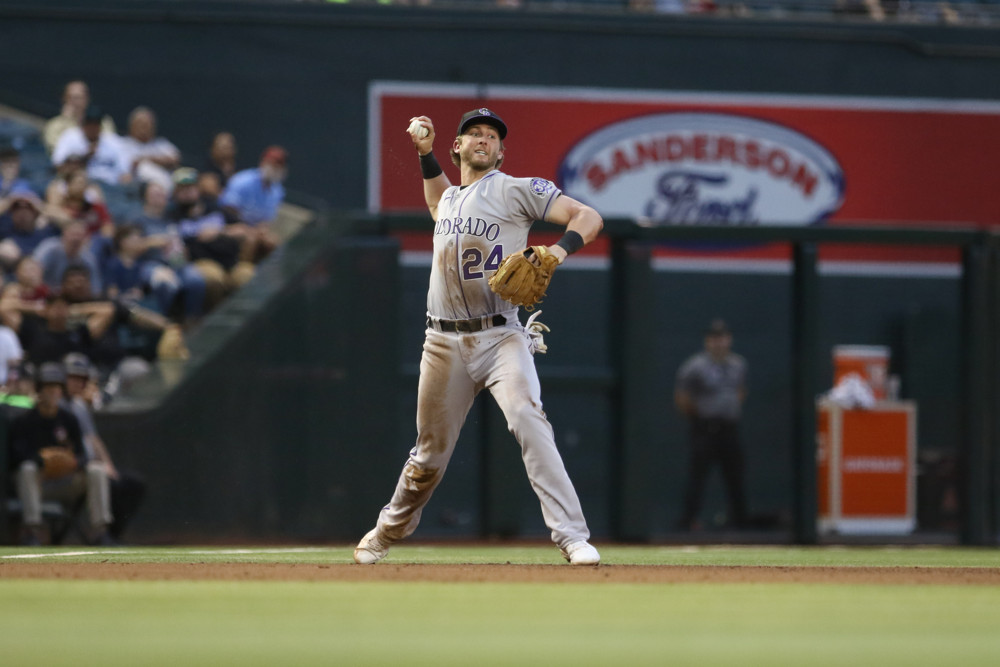
    Photos: Gavin Napier, Mark Goldman, Frank Jansky/Icon Sportswire

    It can sometimes be difficult to form consensus on our selections for The SIS/Fielding Bible Awards Defensive Player of the Month. That’s understandable because defense can be hard to judge in a small sample size.

    Case in point, our ballot for July. Three of my colleagues filled out votes for first and second place and three candidates netted the same point totals.

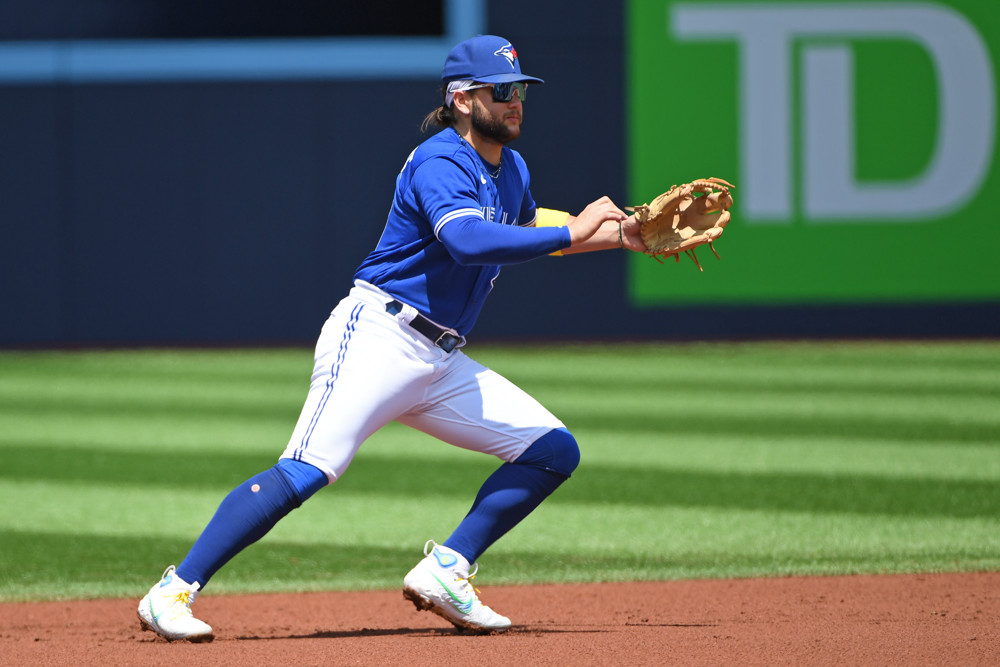
    So rather than break the tie with my own vote, I’ve decided not to limit the honor to one winner and instead go with three. Congratulations to Blue Jays third baseman Matt Chapman, Rockies center fielder Brenton Doyle and Royals shortstop Bobby Witt Jr. who share Defensive Player of the Month for July.

     All three of them are good stories.

    This year is a bounceback season for Chapman after recovering from a hip injury the last couple of seasons. His 7 Runs Saved and 7 Good Fielding Plays in July were the most of any third baseman. He has 13 Runs Saved overall, 2nd only to Ryan McMahon at the position. Those 13 Runs Saved are more than he had in 2021 and 2022 combined. Plays like this one look like ones that Chapman made when he saved 28 runs in 2019. And he started off August well too.

    Doyle, a rookie, led all center fielders with 6 Runs Saved in July. He also had 6 Good Fielding Plays, the 2nd-most by a center fielder for the month (Myles Straw had 9).

    Coors Field is an incredibly difficult place to play half of your games in center field. In fact, no other player has had more than 6 Runs Saved in a season as a Rockies center fielder since SIS began tracking the stat in 2003. Doyle ended July with 9 Runs Saved at the position. Plays like this show that he’s a legit candidate to win a Fielding Bible Award this year.

    To hear more from Doyle, check out our interview with him earlier this season on The Sports Info Solutions Baseball Podcast. 

    Witt has shown considerable progress in his 2nd MLB season for a rebuilding Royals team. In 2022 he finished last among shortstops with -18 Runs Saved. In July of 2023 he tied Francisco Lindor and Corey Seager as shortstop leaders with 5 Runs Saved and ended July at -1 for the season.

    Also notable is that Witt had 5 Good Fielding Plays and only 2 Misplays & Errors. I mention that because in 2022, Witt’s ratio of Good Plays to Misplays & Errors was 17-to-37. He ended July of 2023 with a ratio of 19-to-23 for the season. Last year, he might’ve rushed a play like this one against Anthony Rizzo, but this past month, he played it exactly as he should have. Exactly as a Player of the Month should have. 

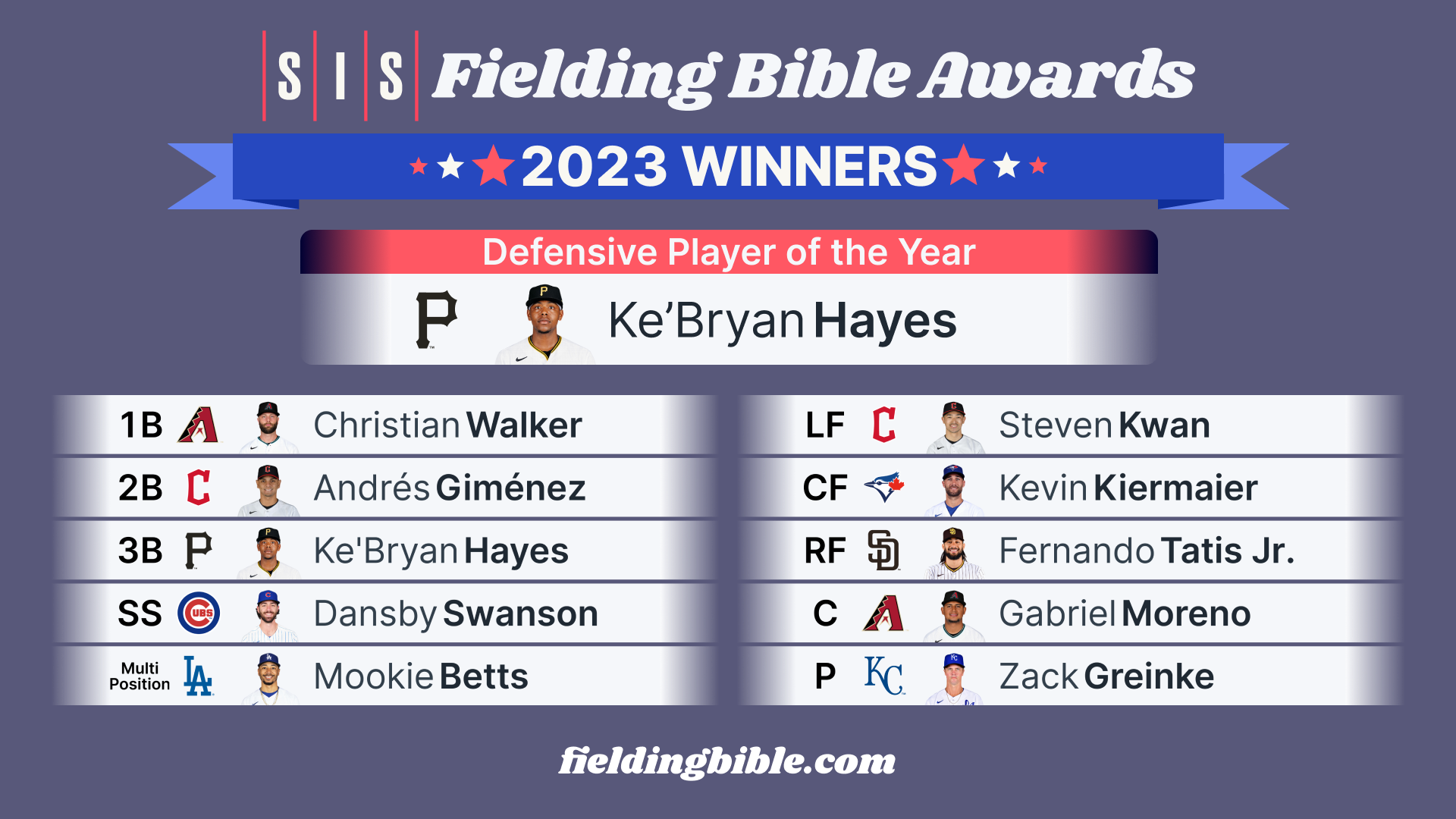
    This trio joins Pirates third baseman Ke’Bryan Hayes (April), Orioles left fielder Austin Hays and Blue Jays center fielder Kevin Kiermaier (May), and Brewers right fielder Blake Perkins (June) as winners of our Player of the Month award this season.

  • Stat of the Week: Playoff Contenders with Defensive Issues

    Stat of the Week: Playoff Contenders with Defensive Issues

    Depending on your definition of “contender” there are approximately 20 teams that are in go-for-it mode as the trade deadline approaches.

    Most of these teams are pretty good defensively, particularly the Blue Jays, Rangers, and Brewers, who enter the day as the top teams in Defensive Runs Saved this season.

    But there are some who are not stellar on defense, and this article is intended to look at them and see if and where they might wish to upgrade as they chase a playoff spot.

    Here are four teams that rank among those with the fewest Defensive Runs Saved this season for whom some aspect of their defense has been an issue in 2023 (rank and Runs Saved in parentheses).

    Phillies (24th, -15)

    The Phillies have been here before. They ranked 25th in Runs Saved last season and went to the World Series. You might recall that they did add a couple of players who were defensive upgrades in outfielder Brandon Marsh and infielder Edmundo Sosa. And they got an unlikely boost from right fielder Nick Castellanos, who made several great defensive plays in the postseason.

    This season, they may have already made their biggest upgrade in calling up center fielder Johan Rojas, who was leading all minor leaguers at that position with 16 Runs Saved at the time of his recall.

    Rojas’ presence allows for an outfield of Marsh-Rojas-Castellanos from left to right and takes what is by far their biggest defensive liability, left fielder Kyle Schwarber (-18 Runs Saved!) off the field. When Cristian Pache returns for an elbow injury, he can be the defensive replacement for Castellanos late in games.

    What the Phillies need more than trades is for some of their best players to play better defense. Catcher J.T. Realmuto (-3 Runs Saved) and shortstop Trea Turner (-4) have uncharacteristically bad numbers in the field this season.

    Red Sox (23rd, -14)

    A four-game winning streak and 15 wins in the last 20 games have vaulted a team that looked like it was going to be a seller right back into the AL Wild Card race.

    This week is one in which teams do a lot of self-evaluation, and Red Sox insiders have likely come to the realization that they’re a flawed defensive team at multiple positions.

    Their best defenders are right fielder Alex Verdugo (11 Runs Saved) and catcher Connor Wong (6).

    But center fielder Jarren Duran (-3) and left fielder Masataka Yoshida (-5) rate below average at those positions, as does third baseman Rafael Devers (-5) and first baseman Triston Casas (-5). None of those players are going to be sat for defensive reasons because their bats are too good. When Casas does sit, Justin Turner has been an alright replacement (3 Runs Saved at 1B).

    After trading Kiké Hernández, they could make a move in middle infield. Someone like Cardinals shortstop Paul DeJong (11 Runs Saved since 2021) would be an upgrade, whereas the likes of Tigers infielders Zack Short and Andy Ibañez could each fill in at five or six defensive positions.

    Marlins (21st, -3)

    The Marlins enter Thursday with the fewest Defensive Runs Saved at one position this season. They’re at -19 Runs Saved in center field. That spot likely belongs to Jazz Chisholm Jr. (-6 Runs Saved) when he returns from a strained oblique.

    Miami may not have a choice other than to live with this weakness. There aren’t a lot of upgrade options in center field on non-contending teams unless the Cubs move Cody Bellinger or the Padres make Trent Grisham available. There isn’t a great spot to put Chisholm other than center field when he comes back.

    One small move that could pay off would be getting a ‘defensive closer’ (a late-inning replacement) like Royals center fielder Kyle Isbel (7 Runs Saved).

    Giants (19th, 1)

    Similar to the Marlins, the Giants have one big defensive hole. That would be shortstop, where their players have combined for -16 Runs Saved, the worst total in the majors at that position.

    Brandon Crawford (-11 Runs Saved) is currently on the injured list. When he returns, he probably enters a platoon with someone, whether it be touted prospect Marco Luciano (-6 Runs Saved in the minor leagues), slumping rookie Casey Schmitt (-3) or an acquisition. DeJong, previously mentioned, could be a very good fit here.

    BONUS: And one player worth mentioning …

    There are a lot of teams looking to upgrade their pitching staffs at the trade deadline. But teams could improve their pitching by upgrading at catcher.

    One catcher who could be a difference maker is Austin Hedges of the Pirates.

    Hedges ranks tied for 5th with 8 Defensive Runs Saved there and he’s tied for the MLB lead in our pitch-framing stat (Strike Zone Runs Saved). He has a long track record of success in that area.

    Hedges may not be a fit for the teams listed in this article but there are others (the Angels might be the most prominent) for which he’d immediately be a boon to a pitching staff.

  • Stat of the Week: Great Defensive Players Who Are Hall-Caliber

    Stat of the Week: Great Defensive Players Who Are Hall-Caliber

    Photos: David Seelig/Icon SMI; John McDonough/Icon Sportswire

    Scott Rolen’s enshrinement in the Baseball Hall of Fame this weekend is good by us given that defense played such a large part in defining who Rolen was as a player and how frequently we write about defense here.

    But there are plenty of excellent defensive players with resumes worthy of Hall of Fame election who have yet to be enshrined.

    Todd Helton, Carlos Beltrán, Andruw Jones, and Omar Vizquel are among those on the BBWAA ballot who could fit that description. Helton, who won 3 Gold Gloves in a 17-year career, received 72% of the vote in the last election and seems likely to be inducted in the near future.

    As for Beltrán, Jones, and Vizquel, issues beyond baseball accomplishments may impact their future vote totals (Beltrán’s suspension as part of the Astros cheating scandal, Jones and Vizquel have both been accused of domestic assault and other allegations).

    But if we go beyond the BBWAA ballot and look to players who have already been bypassed in the selection process, a bunch of outstanding defenders stand out.

    In 2019, Bill James wrote an essay for The Bill James Handbook 2019 in which he combined Win Shares and 4 times their Baseball-Reference Wins Above Replacement into a Hall of Fame Value stat (HOF-V).

    Defensive Win Shares and Defensive WAR, based on the available metrics of the time, factor into HOF-V (along with offensive contributions, of course).

    A Hall of Fame Value of 500 is considered Hall of Fame caliber. Here’s a list of 6 great defensive players who surpass that threshold:

    Lou Whitaker – Whitaker had an HOF-V of 651.4 and amassed 75 WAR in a 19-year career. Second basemen in the 1970s didn’t typically put up big offensive numbers, but Whitaker’s consistency, his 2,369 hits, and 244 home runs stood out. James listed him as the second-most Hall-worthy player not in the Hall of Fame behind a 19th-century player, Bill Dahlen. Whitaker won 3 straight Gold Glove Awards from 1983 to 1985.

    Dwight Evans Evans is listed as the No. 4 most Hall-worthy player in that 2019 essay. His HOF-V of 615.8 easily clears James’ Hall-of-Fame standard. Evans played right field, matched Rolen’s 8 Gold Gloves, had a fantastic arm, and outpaced Rolen in OPS+, home runs, and hits.

    Bobby Grich – Grich has a nearly identical HOF-V to Evans of 613.0. He won 4 consecutive Gold Gloves as a second baseman from 1973 to 1976. Grich played in the 1970s and 1980s and OPS wasn’t a commonly-used stat then or in his one year on the BBWAA ballot. If it had been, voters would have likely noticed that he bested the average second baseman’s production by at least 20% 10 times in seasons in which he played at least 100 games there.

    Graig Nettles – Nettles has an HOF-V of 592.6, a little behind the three players listed above, but credible when it comes to Cooperstown consideration. Nettles hit 390 home runs, won a pair of Gold Gloves in World Series-winning years and put great defense on display in the Fall Classic.

    Kenny Lofton – All our other players on this list are from the 1970s and 1980s so let’s include someone more contemporary. Lofton dazzled defensively, winning 4 Gold Gloves. His 107 OPS+ over a 17-year career is a little light comparatively but his speed (622 stolen bases) helped the now-Guardians and five other franchises regularly reach the postseason. His 560.6 HOF-V definitely merits more discussion for the sport’s top honor.

    Keith Hernandez – Hernandez isn’t quite in the class of the other four players listed, with an HOF-V of 552.2, but he needs to be mentioned here given that that’s still a very good score. Hernandez won an MLB-best 11 Gold Gloves at first base, made 5 All-Star teams, and he had huge hits in Game 7 for two different World Series winners (1982 Cardinals, 1986 Mets).

    The good news for these six is that reconsideration is a key part of the Hall of Fame process. This year’s other worthy Hall of Fame electee, Fred McGriff, knows that well.

    For more Hall of Fame content, check out our oral history of Scott Rolen’s defensive excellence, as well as the latest episode of The Sports Info Solutions Baseball podcast in which Mark and Jay Jaffe discuss current HOF candidates.

  • Stat of the Week: Doug Eddings & Bill Miller Call A Lot Of Strikes

    Stat of the Week: Doug Eddings & Bill Miller Call A Lot Of Strikes

    Sports Info Solutions has tracked umpire data back to the 2010 season.
    We track many things, including tendencies. How often is a pitch thrown to a certain area called a strike and how does that compare to other umpires?
    SIS divides credit for called strikes among the catcher, umpire, pitcher, and batter through a process that you can read about here. In doing so, we created two metrics: Extra Strikes Per 150 Called Pitches and Strike Zone Runs Saved, with the latter being calculated to provide a run value based on the raw number of extra strikes called.
    This allows us to gauge an umpire’s tendency to call more strikes than expected or fewer strikes than expected. An umpire who calls a lot more strikes than expected has a high Strike Zone Runs Saved total.
    In that initial year, the 2010 season, the top two umpires in both Extra Strikes Per 150 Pitches and Strike Zone Runs Saved were Doug Eddings and Bill Miller.
    Thirteen years later, the top two umpires in those stats for 2023 are, once again, Eddings and Miller!
    In terms of the impact this might have in games, that can vary. A rate of calling strikes more often than your peers doesn’t guarantee more strikeouts, for example.
    But it does seem worth noting that pitchers in Miller’s games the last two seasons have had a strikeout-to-walk ratio of 3.8-to-1, highest for any umpire in MLB. The MLB average is 2.7-to-1. The ratio in Eddings’ games in that time is a more modest 2.9-to-1.
    Below are heat maps showing Eddings’ strike zone tendencies the last two years (June 30, 2021 to June 29, 2023). Areas in red are those in which Eddings calls strikes more often than his peers. Areas in blue are those in which Eddings calls fewer strikes.
    As you can see, other than that strip along the inside corner to lefties, Eddings’ heat map is a sea of red.
    Doug Eddings’ Strike-Calling Tendencies
    Miller’s strike zone has a similar look
    Bill Miller’s Strike Calling Tendencies
    Since 2010 Eddings and Miller have both called more than 60,000 pitches each. Their number of Extra Strikes (both in total and per-150 called pitches) and their Strike Zone Runs Saved are well more than any other umpire.
    Eddings has 153 Strike Zone Runs Saved in that time. Miller has 152. The next-closest umpire is Phil Cuzzi, with 70 Strike Zone Runs Saved, not even half of Eddings’ or Miller’s total.  The differential is also quite large when looking at extra strikes on a per-pitch basis.
    Who are the other umpires that call more strikes than their peers? Looking at the last two seasons, seven umpires have at least 10 Strike Zone Runs Saved. They are listed in the chart below.
    If you see these umpires working one of your team’s games, expect to see a few more called strikes than you typically would.
    Most Strike Zone Runs Saved – Last 2 Seasons
    Umpire Strike Zone Runs Saved
    Bill Miller 15
    Doug Eddings 14
    Nick Mahrley 13
    Lance Barrett 12
    Phil Cuzzi 11
    Junior Valentine 10
    Dan Iassogna 10
  • Negative Nolan: What’s Up With Arenado’s Defensive Runs Saved?

    Negative Nolan: What’s Up With Arenado’s Defensive Runs Saved?

    What Nolan Arenado did at third base from 2013 to 2022 was extraordinary. If it were easy to average 15 Defensive Runs a season at the hot corner, lots of players would do it. But Arenado stands alone with his skill and has the hardware in Gold Gloves (10) and Fielding Bible Awards (5) to back it up.

    But this 2023 season has been befuddling in many ways for the Cardinals. One of those ways is that Arenado’s defense has not been close to its usual standards.

    Arenado enters Thursday with -1 Runs Saved. That’s -1 as in negative-1.

    He’s not anywhere close to his usual spot near the top of the MLB leaderboard. The top three are currently Arenado’s division rival, Ke’Bryan Hayes, who is tied at the top with Arenado’s replacement with the Rockies, Ryan McMahon, followed by Arenado’s former high school teammate, Matt Chapman.

    Now, we’re only a little more than 40% of the way through the season and there are reasons that awards are given out for 162 games rather than 60 to 70. Arenado could easily rip off a great defensive stretch and make up a lot of ground in a short amount of time.

    That would mean believing in his track record over the small sample.

    The track record is fantastic. The small sample is … not.

    What’s Going On?

    What’s missing from Arenado’s play this year is that he’s not making the great play AND he’s on pace to do worse on the easier ones as well.

    We could cherrypick this any number of ways, but for the purposes of simplicity, let’s look at plays Arenado made that were worth at least a half-run in Defensive Runs Saved—these are generally the toughest balls on which to get outs.

    And then we’ll look at plays that cost him at least a half-run. These are generally easy plays on Arenado’s ledger.

    Nolan Arenado Plays Made – By Value of Play

    Season >=0.5 Runs <=-0.5 Runs
    2020 11 8
    2021 15 26
    2022 19 24
    2023 3 15

    This is a good mix of seasons. In the shortened 2020 season, Arenado was otherworldly. He led all third basemen in Runs Saved. In 2021, he dipped a bit and had his worst season to date, finishing it with 6 Runs Saved. In 2022, a few more really nice plays and fewer mistakes led to a much better season.

    Even Arenado’s previous “bad” year is pretty far from what he’s been in 2023. What stands out is that Arenado is lacking the jaw-dropping play.

    Video Review

    Here are some of the plays that made Arenado so valuable in 2022.

    The charge and throw has always been a big part of his repertoire. Here are two of them.


    Arenado has also mastered going to his left, cutting off balls that would be tough plays for his shortstops and taking care of them himself.

    These occasionally require dives


    Quick moves and spins


    And sometimes they’re just “ho-hum”


    There were so many of these last year that were “ho-hum” and beyond. His top 20 defensive plays by Run Value consisted almost entirely of charge-and-throws and cut-off balls hit to his left.

    What’s most noticeable about Arenado when watching these is that he can make a throw from any angle and adjust his velo as needed to get the batter at first base.

    That’s why Cardinals broadcaster Chip Caray would have such confidence that Arenado was going to make a play like this one against Mookie Betts and the Dodgers on May 19.

    Entering that day, Arenado seemed reasonably on track from a statistical perspective. He had 4 Defensive Runs Saved. But since May 19, Arenado has -5 Runs Saved, the worst total for anyone playing the position in that time.

    Since then, Arenado has had a collection of botches uncharacteristic of his defensive nature, not just on the balls he typically vacuums up, but on other kinds of plays too. Nine of the 15 plays that cost him at least a half-run have come in this time. Here are 3 of them.


    There’s More

    I want to point out two other things that I noticed in my video and data study. First, from 2018 to 2022, Arenado has ~400 more touches on his forehand than on his backhand. His ratio of forehand touches to backhand touches is about 1.6-to-1.

    This season, that ratio of opportunities is almost exactly 1-to-1 (72 backhand touches, 71 forehand touches). As an infielder you’d ideally want as many forehand chances as possible. Arenado has consistently converted them at about a 94% rate. Backhands, as you can see here, are harder.

    Nolan Arenado – Backhand Play Success Rate

    Plays Made/Touches Backhand Out Rate
    2018-2022 570/641 89%
    2023 58/72 81%

    The other thing I wanted to note is that in looking at Arenado’s season, it seems lacking in the kinds of chances that Arenado typically makes the most of: barehand plays.

    The last four full seasons, Arenado has attempted a barehand 37, 36, 28, and 21 times, converting 56 of 122 into outs. This season, he’s had only 5 opportunities, converting 2. We’re not attempting to create an excuse for Arenado but I think a lack of opportunities is coming into play here, thus giving Arenado fewer chances to raise his Runs Saved total.

    In sum, you might say that we should cut Arenado some slack, given that this is primarily a one-month funk. That’s fair.

    But if you want to post 15 Runs Saved in a season at third base and win Fielding Bible Awards, chances are your season’s going to need some of the kinds of plays that Arenado has yet to make. And if the Cardinals want to make up the ground necessary to be in the playoff race, they’re going to need their third baseman to defend like his old self.

  • Stat of the Week: What’s Up With All The HR Robberies?

    Stat of the Week: What’s Up With All The HR Robberies?

    We normally bring up home run robberies at the beginning of the season and then again in The Bill James Handbook. But we have reason to bring them up again two months into 2023. Our company has been tracking home run robberies in detail since 2004. We take this seriously. Our Video Scouts discuss and audit their decisions as to whether a ball cleared or was going to clear a fence when it was brought back.

    There have been 34 home run robberies so far in 2023 (33 catches and one ball not caught that was knocked down). That’s just over two-thirds of the way to last year’s total (53) and nearly halfway to the highest total within the last 20 years, 69 in 2019. The season is only about 40% complete to this point.

    Aaron Judge, Mike Trout, and Luis Robert Jr. have each robbed two home runs this season. Twenty eight other players have snagged one apiece. The Red Sox got one in back-to-back innings earlier this week, the second team to do that in the last three seasons (the 2021 Rangers are the other). Before those two, the last team with a home run-robbing catch in back-to-back innings was the Tigers, both by Nook Logan, against the Orioles in 2005.

    But back to this season, what’s going on here?

    We can pinpoint one aspect. Lowered outfield fences in two ballparks have led to five home run robberies that may not have happened in other seasons.

    In Rogers Centre, the height of the center field fence was lowered from 10 feet to 8 feet this past offseason. That has enabled two robberies, one by Kevin Kiermaier and the other by Robert Jr. Those were the first home run robberies in that ballpark since Kevin Pillar stole one in 2018.

    In Comerica Park, the heights of the center and right field walls was lowered from 8.5 feet to 7 feet and the height of the wall in right center was lowered from 13.5 feet to 7 feet. That made three home run robberies by Tigers outfielders more likely – ones by Matt Vierling, Kerry Carpenter, and Riley Greene.

    Comerica is typically a friendly park for outfielders who can rob home runs (there were five home run robberies in 2022). Watch Carpenter’s robbery and you’ll see it wouldn’t have been one with an 8.5-foot wall. Vierling’s and Greene’s would have been close calls.

    It’s hard to project an “on-pace-for” total with home run robberies, as from 2004 to 2022 (not including the 2020 season), 20% of them came in August, the highest percentage for any calendar month, with May, June, July, and September all around 16% to 17%.

    In terms of this season in comparison to the record-setting 2019: The 2023 and 2019 seasons started on approximately the same day and in looking at home run robberies by date, the 2023 season is about three weeks ahead of the 2019 season’s pace. In 2019, the 34th home run robbery came on June 30. This season, it came on June 7.

  • Stat of the Week: Best Teams At Defensing Groundballs & Bunts

    Stat of the Week: Best Teams At Defensing Groundballs & Bunts

    Marcus Stroman was fired up after pitching eight strong innings against the Mets on Wednesday night.

    Stroman and his infield turned 16 of 19 groundballs and bunts into outs, the last two coming when Francisco Álvarez hit into a double play to kill a potential Mets rally.

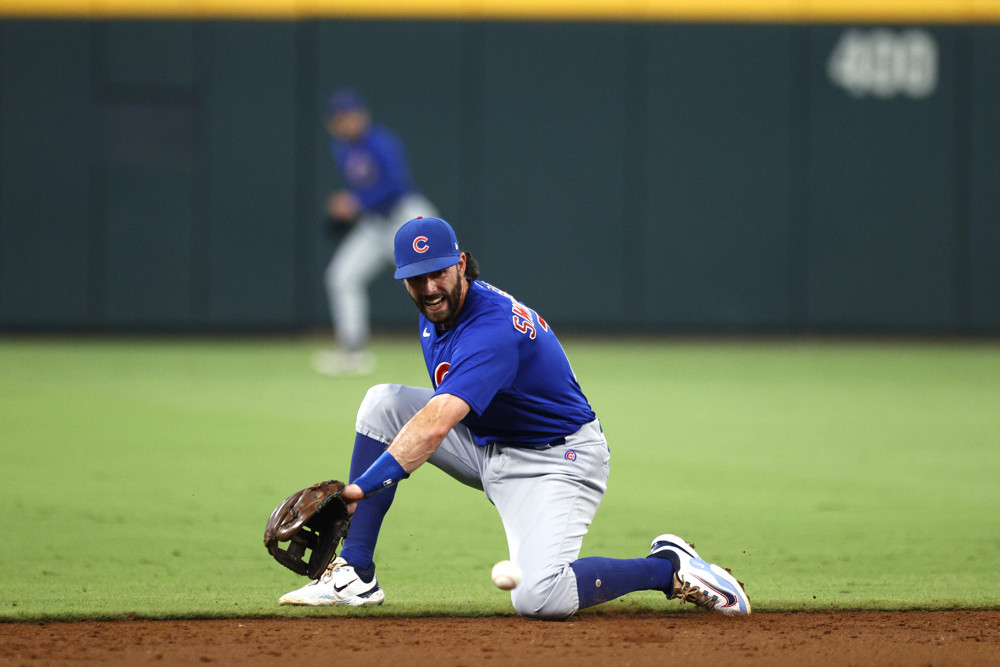
    The Cubs have shown the best version of themselves with their groundball and bunt defense this season. They’ve turned 76.6% of grounders and bunts into outs, the 3rd-best percentage in the league. Shortstop Dansby Swanson ranks tied for 2nd at his position with 6 Runs Saved.

    The standard setters in this stat have been the Rays, who are converting grounders and bunts into outs at a 78.1% rate. Wander Franco has lived up to his billing this season. He leads all shortstops with 8 Runs Saved.

    The Rays also have one of the top multi-position defenders in baseball in Taylor Walls. Walls has 5 Runs Saved as a third baseman and 2 Runs Saved as a shortstop (along with -1 at second base).

    The other team to take note of is the one in between the Rays and Cubs, the Mets, who rank 2nd in groundball and bunt out rate at 77.4%.

    The Mets have made the biggest improvement in their out rate on grounders and bunts from last season to this season. In 2022, the Mets ranked 26th in this stat, with a 72.1% out rate. Their jump to 2nd comes from an increase in their out rate of just over 5 percentage points.

    What’s particularly interesting about the Mets is that the elimination of the full defensive shift (shifts with 3 infielders on the pull side) may have helped them. Last season, they turned 72% of grounders and bunts hit in full shifts into outs, with, as noted on a recent broadcast, players having difficulty with running into each other because of how closely infielders could be positioned and with making plays from odd angles. That out rate was the lowest rate in the majors.

    As is the case with the Rays and Cubs, the Mets’ shortstop, Francisco Lindor, leads their infielders with 3 Runs Saved.

    MLB season-ending leaders in groundball and bunt out rate tend to finish at around 77 to 78%. The Cardinals and Yankees finished 1-2 last season at 77.3% and 77.2%, respectively. This season, the Cardinals rank 8th (75.1%) while the Yankees have slipped to 19th (73.4%).

    The bottom two teams at turning grounders and bunts into outs this season are the Athletics (69.2%) and Reds (67.8%).

    To illustrate the difference between the team at the top and the team at the bottom, consider this: If the Reds had the Rays out rate on grounders and bunts, they’d have turned 55 more balls into outs than they have this season.

  • Stat of the Week: Pitcher Injuries On Comebackers On The Rise

    Stat of the Week: Pitcher Injuries On Comebackers On The Rise

    Pitcher injuries are always a frequent topic and 2023 is no different with Robbie Ray, Germán Márquez, and Drew Rasmussen all out with significant elbow injuries. Ray and Marquez will miss the season after Tommy John surgery. Rasmussen is out for multiple months with a strained tendon in his elbow.

    But there’s a different type of pitcher injury that’s worth noting, too.

    An abundance of pitchers have been hit by line drives early this season relative to the last few years.

    Most recently Royals pitcher Ryan Yarbrough and Rockies pitcher Ryan Feltner were hit in the head by line drives. Yarbrough suffered facial fractures. Feltner suffered a skull fracture and a concussion. Both will be out for an extended period of time.

    Sports Info Solutions tracks injury events in all the sports it covers. We document everything, even foul balls off a catcher’s mask or off a batter’s foot. Every injury event receives a grade ranging from 1 (least severe) to 5 (most severe).

    Injury events graded ‘4’ and ‘5’ are generally significant. A 4 grade is for an injury with a trainer’s visit, where the player is shaken up and needs time to recover and move around on his own power. A 5 grade is an injury that requires an immediate visit, in which the player may be immobile and/or bleeding. Severities are based on what happens immediately following the injury, not knowing what the diagnosis or prognosis is

    There have been 10 instances of a pitcher being hit by a ground ball or line drive this season and receiving a 4 or 5 injury grade from our Video Scouts. In addition to Yarbrough and Feltner, Josh Fleming (Rays), Casey Legumina (Reds), Kyle Bradish (Orioles), Luis Castillo (Mariners), Stephen Nogosek (Mets), Gus Varland (Brewers), Cal Quantrill (Guardians), and Kenta Maeda (Twins) got drilled by hard-hit batted balls. 

    Castillo, who got hit above the back of the shoulder by a 96 MPH line drive on Opening Day, was the only one of these 10 pitchers to stay in the game (after getting hit in the 3rd inning, he pitched three more innings).

    Besides Yarbrough and Feltner, Legumina is also out with an ankle injury, Nogosek (bone bruise in elbow) missed a week earlier this season, Varland (injury to chin and arm) missed a week-and-a-half, and Bradish (foot) missed a week-and-a-half.

    That there have been 10 of these incidents already is notable in this regard: There were only 8 instances of a pitcher getting a 4’ or 5 injury grade on a comebacker all of last season and only 6 such instances in 2021.

    We’ve tracked injury events back to 2015. Here are the year-by-year totals for these types of injuries.

    Pitcher Injured Being Hit By Line Drive or Ground Ball

    Received Injury Grade of ‘4’ or ‘5’

    Year Injury Events
    2015 11
    2016 8
    2017 9
    2018 19
    2019 12
    2020* 5
    2021 6
    2022 8
    2023** 10

    * Shortened season

    ** Through games of May 17

    In total, there have been 48 injury events for pitchers on comebackers this season (with the others receiving a grade from 1 to 3). In 2021 there were 163, in 2022 there were 171.

    The 48 is a near-match for the 50 in the shortened 60-game 2020 season (most teams in 2023 just passed the 40-game mark).

    The 2023 number is definitely concerning. It’s one worth keeping an eye on, while crossing our fingers that no one else suffers injuries like Feltner and Yarbrough did.

  • Stat of the Week: Which Defenses Have Best Supported Their Pitchers?   

    Stat of the Week: Which Defenses Have Best Supported Their Pitchers?  

    In the fifth inning of Eduardo Rodriguez’s start against the Guardians on April 18, Josh Naylor hit a bolt to right field that looked like it was going to be a go-ahead home run. But Matt Vierling raced back, leapt, reached over the wall as he banged into the fence, and made the catch.

    Rodriguez ended up pitching eight scoreless innings in a 1-0 Tigers win. He’s been one of the best pitchers in baseball this season, pitching to a 1.57 ERA, and his team’s defense has been a huge reason why.

    Vierling’s catch is one of 11 times that the Tigers defense recorded what we call a “Good Fielding Play” behind Rodriguez this season. The Tigers outfield has turned 83% of balls hit in the air against Rodriguez into outs this season, the 3rd-highest rate in MLB.

    But it’s not just those plays. Besides the homer-robbing catch, other highlights have included a couple of base-hit takeaways by second baseman Jonathan Schoop, and a couple of throw-outs on the bases in an early start vs the Blue Jays.

    Only one pitcher has had his defense record more Good Fielding Plays behind him this season. Ryan Feltner of the Rockies has had 13. Jake Woodford of the Cardinals also has had 11. Clarke Schmidt (Yankees), Corbin Burnes (Brewers), Anthony DeSclafani (Giants), and David Peterson (Mets) have all had 9 behind them.

    In looking at how good defense has impacted other pitchers, we can turn our attention to Guardians starter Shane Bieber. Whether through positioning or playmaking, the Guardians defense has been solid behind him in 2023. Bieber has a 3.62 FIP but a 2.61 ERA.

    The plays made aren’t nearly as flashy as the ones behind Rodriguez, though here’s a Good Fielding Play by Myles Straw. Most of them are just “nice plays” like this one by Amed Rosario.

    He’s well at the front of the line in this stat. The Guardans have saved 10 runs for him with their batted ball defense.

    Dustin May (Dodgers), Marcus Stroman (Cubs), Yonny Chirinos (Rays), Kyle Freeland (Rockies), and Yusei Kikuchi (Blue Jays) have all had their teams record 6 Runs Saved on batted balls behind them.

    This isn’t to say that the success of Rodriguez and Bieber this season is undeserved or that it won’t last throughout the season. It’s just to point out that there are lots of factors in play that make a pitcher successful. Rodriguez and Bieber should be first in line to tell you how important defense can be.