Category: John Dewan’s Stat of the Week

  • What We Noticed About Defense From Opening Week

    What We Noticed About Defense From Opening Week

    BY MARK SIMON

    It’s too early to draw conclusions from much of anything in small-sample-size land these days. So rather than write a highly-detailed analysis and extrapolation of anything, we’ll just point out some of the things we’ve noticed defensively from the first week of the season.

    * White Sox center fielder Luis Robert Jr. has looked like a player in want of a Fielding Bible Award. He’s already made 3 spectacular catches (we call them “Good Fielding Plays”), including the season’s second home run robbery (Bubba Thompson had the first). Robert Jr. totaled 4 Good Fielding Plays all last season. It’s good to see him healthy.

    * Speaking of outfielder-related subjects, the Dodgers outfield has been catching everything, relatively speaking. The Dodgers have caught 44 of 60 balls hit in the air to the outfield, good for an MLB-best 73% rate. Past performance doesn’t equal future results, but the Dodgers led the majors in that stat in 2020 and 2022, snagging 65% of flies and liners to the outfield in the latter season. They finished second in that stat in 2021.

    * The Dodgers infield hasn’t been quite as sharp, but they’ve played against the top infield defense so far. The Diamondbacks, who opened with the Dodgers, have gotten at least one out on 44 of 50 groundballs hit against their defense. Arizona regularly starts past Fielding Bible Award winners Christian Walker and Nick Ahmed at first base and shortstop, respectively, and if they’re healthy, Arizona’s infield defense should be pretty good.

    One thing we’ll point out – 88% success rates don’t hold up over 162 games. The MLB team leader in each of the last five seasons has had either a 77% or 78% rate.

    * Putting three infielders on the pull side of second base is now verboten, but teams are still making plenty of defensive adjustments. SIS tracks what we call partial shifts, which are instances in which two fielders deviate considerably from “normal” positioning. Think of those as instances in which the shortstop or second baseman was almost at second base but not quite there.

    Anyway, 62.3% of balls in play this season have come against a partially-shifted defense. For context, last season, 61.5% of balls in play came against full and partial shifts combined.

    * A lot has been made of how stolen bases are up – and they are – to 0.68 per team game through one week of the season. That’s a pace for more than 3,300 stolen bases this season. MLB hasn’t even reached 3,000 since 2012.

    But you wouldn’t know they’re up if you watched the Braves. They’re the only team in the majors not to allow a stolen base this season. In fact, they’ve surrendered only one attempt. Five teams have allowed only one: the Orioles, the Rays, the Cubs, the Rockies, and the Diamondbacks.

    Again, we don’t want to draw any conclusions from anything just yet. The only conclusion that’s worth drawing is that it’s great that baseball is back.

  • Stat of the Week: NL Team Defensive Previews

    Stat of the Week: NL Team Defensive Previews

    BY MARK SIMON

    Continuing what we started last week with the AL, we’ve got a stat-driven defensive theme or story to watch for each NL team. Play ball!

    Braves – We’re curious to see what Michael Harris II’s defensive ceiling is. Harris has already won a Minor League Gold Glove and at times showed the potential to be the best defensive center fielder in MLB. His 8 Runs Saved tied for 4th-most. We wouldn’t be surprised if he led MLB in 2023.

    Brewers – Said manager Craig Counsell of rookie second baseman Brice Turang: “He showed us this camp that he is going to win games playing defense.” Counsell knows of what he speaks. His 30 Runs Saved at second base in 2005 are tied for the most by anyone at the position.

    Cardinals – The most intriguing thing to watch will be how Willson Contreras steps into the shoes of Yadier Molina as the team’s new catcher. Contreras’ throwing and blocking stats are typically top-notch but he’s historically a below-average pitch framer.

    Cubs – The Cubs seemed to prioritize defense in their offseason maneuvers. The team has the potential to be great up-the-middle, as new acquisitions Tucker Barnhart, Dansby Swanson, and Cody Bellinger all come with solid defensive pedigrees and Nico Hoerner’s move from shortstop to second base should be seamless.

    Diamondbacks The Diamondbacks will start perhaps the fastest outfield in the game with Corbin Carroll in left field, Alek Thomas in center, and Jake McCarthy in right (all three rank Top-50 in 90-foot speed). If the Diamondbacks are going to contend for a playoff spot, they’re going to need these three to turn a lot of potential extra-base hits into outs.

    Dodgers 53% of ground balls and short line drives versus the Dodgers last season were hit against full infield shifts (those with three defenders on the pull side), the highest rate in MLB. In fact, the Dodgers led the majors in how often they full shifted in each of the last four seasons. They’ll have an adjustment to make to baseball’s new rules.

    Giants – For much of last season, the Giants defense was hard to watch. The team finished last in the majors in Defensive Runs Saved. But if they can play some combo of Mike Yastrzemski, Michael Conforto, Mitch Haniger, and Bryce Johnson in the outfield, their outfield defense should be much improved from the -47 Runs Saved that it combined for last season.

    Marlins Can Jazz Chisholm make the transition from middle infield to center field without it being too costly defensively? We love Chisholm the athlete, but we’re a little skeptical based on past history of others trying to make the move (which we wrote about).

    Mets – As good as the Mets were last season, they had a defensive weakness. They ranked 26th in turning groundballs and bunts into outs. Francisco Lindor has said he doesn’t like shifts. He had -11 Runs Saved in them last season. He’ll get a chance to play straight-up a lot more in 2023.

    Nationals – The Nationals set a 20-year MLB low for Defensive Runs Saved at shortstop last season (-34). But they looked a lot better once they put C.J. Abrams there and moved Luis Garcia to second base. They’ll get a chance to grow together for a full season in 2023.

    Padres – Fernando Tatis Jr. is going to find a spot somewhere and for now that looks like it will be right field. We know from Tatis’ history at shortstop that he has great arm strength but has a hard time throwing accurately. The Padres and their fans will find out how Tatis acclimates to his new spot together.

    Phillies – Only three teams finished worse in Defensive Runs Saved by their shortstops than the Phillies did last season. They signed Trea Turner for $300 million for his bat and his speed, but watch how his glove should help too. The last two seasons, he’s played exactly average defense at shortstop, which would be a considerable step up for the Phillies.

    Pirates – Oneil Cruz can get outs that other shortstops can’t get because of his arm strength (per Statcast, his throws average nearly 94 MPH – no other shortstop exceeds 90). He just needs to limit his mistakes. On a per-inning basis, he made a lot (4.3 Defensive Misplays & Errors per 100 innings, the 6th-highest rate at the position).

    Reds – With Aristides Aquino now playing in Japan, the Reds are lacking for interesting defensive players, as the ones to watch are in the minors (top prospects Elly De La Cruz and Cam Collier). For now, the attempted bounceback of second baseman Jonathan India (-14 Runs Saved last season) serves as one notable story.

    Rockies – Top prospect Ezequiel Tovar will be the starting shortstop. The position was a problematic one for the Rockies last season (-12 Runs Saved), but the future looks bright. Tovar played close to average shortstop in the minors per our data and Fangraphs’ Eric Longenhagen gives Tovar a 60 future fielding grade on the 20-80 scouting scale.

  • Stat of the Week: Comparing Outfield Defense In The Minors & MLB

    Stat of the Week: Comparing Outfield Defense In The Minors & MLB

    At Sports Info Solutions, we developed the PART system to better analyze the different components of defensive play in MLB. PART, which stands for Positioning, Air Balls, Range and (Infield) Throwing, has allowed us to best assess how much of a fielder’s defensive performance is based on his positioning (which is assessed to his team) as compared to his skill (for which the player is credited or debited). 

    Now, we’re able to take that and utilize it in the minor leagues.

    At the SABR Analytics Conference last weekend, our research analyst Sarah Thompson did a presentation titled “Evaluation of Minor League Defense Using Detailed Contextual Data.” She walked through how we’ve applied our methodology to players across different levels.

    One of the cool things to come out of this work was an all-inclusive look at how outfielders fare against different levels of play difficulty. Below is a chart that compares minor league and major league out rates across different expected out rate groups.

    MLB Out Rate Group MiLB Out Rate MLB Out Rate
    96-100% 98% 99%
    86-95% 85% 92%
    76-85% 71% 82%
    66-75% 58% 70%
    56-65% 42% 61%

    As the degree of difficulty of the play increases, so does the gap between the minor league and major league out rates.

    To hone in more specifically on what kinds of plays make up those disparate groups, take a look at the following chart.

    Pos Travel Distance & Direction Hang Time

    (Seconds)

    MiLB Out Rate MLB

    Out Rate

    LF 90 feet straight back >5.0 56% 85%
    CF 90 feet lateral 4.2 – 5.0 55% 87%
    RF 90 feet lateral 4.2 – 5.0 46% 79%

    Those outfielders who can make catches of this nature in the minor leagues, like Michael Harris II of the Braves, generally have their skills translate well to the majors. Harris averaged 10 Runs Saved specific to Range & Positioning per 1,000 innings in the minors and then was credited with 6 PART Runs Saved in 1,021 innings this past season with the Braves.

    There are some outfielders whose minor league numbers may not look as good but who are able to live up to their potential once they reach the major leagues. Cristian Pache of the Athletics averaged -8 PART Runs Saved per 1,000 innings in the minor leagues but then had a PART Runs Saved of 9 per 1,000 innings in his brief stint with the Athletics.

    Pache fared better at the tougher plays after his ascension.

    On plays with an estimated out rate between 56 and 65%, Pache caught only 3 of 11 of those in the minors in 2021. But at the major league level, he caught 8 of 9 of those plays. That alone explains a decent chunk of that gap between the levels.

    As SIS continues to innovate and further develop its minor league defensive evaluation tools, we’ll try to provide more data and context in the future. Our biggest takeaway from this subject: You have to be pretty good to be playing outfield in the major leagues.

  • Stat of the Week: A Defensive Look for Team USA

    Stat of the Week: A Defensive Look for Team USA

    You might have noticed that over the last couple of years we’ve transitioned our thinking on Stat of the Week to make it largely based around defensive excellence.

    We consider that our beat here. Some people cover teams. We cover a way to play. As such, we think of things with defensive excellence first in mind.

    That brings us to the World Baseball Classic and with defensive excellence at the forefront, we wondered what Team USA’s position player roster would look like if defense was the primary priority.

    For the purposes of this exercise, we’ll presume that players that could have played for the United States but who are playing with other countries chose to stay on those teams. Our choices may differ from yours and that’s fine. There are lots of ways to do this. These are our selections.

    Catcher – Adley Rutschman was so good in his debut season, finishing second to Jose Trevino in Defensive Runs Saved. The latter won the 2022 Fielding Bible Award. We’re taking both of them along with 2021 Fielding Bible Award winner Jacob Stallings.

    First Base – Christian Walker would undoubtedly make the team. He won the Fielding Bible Award at the position last year and he’s the leader in Defensive Runs Saved at the position since 2020. Walker’s backup would be a tough call. We’d lean to three-time Fielding Bible Award winner Matt Olson, who ranks third in Runs Saved at the position over the last three seasons behind Walker and Lewin Díaz.

    Second Base – 2022 Fielding Bible Multi-Position Award winner Tommy Edman chose to play for Korea and Brendan Rodgers is injured, so that makes a tough call a little easier. We’ll take Marcus Semien, who’s someone who has been very good at second base the last two seasons (most Runs Saved in MLB in that time) and offers additional defensive flexibility because he can play shortstop.

    Shortstop – We can garner some more positional flexibility with our pick here, Taylor Walls. Walls, who also plays second base and third base, ranks second to Carlos Correa in Runs Saved at shortstop the last two seasons, though he’s played less than half as many innings as Correa has in that time.

    Third Base – The actual Team USA took six infielders, so we’ll take six as well. That means our squad has room for both Ke’Bryan Hayes and Nolan Arenado. This one is clearcut. They rank 1-2 in Defensive Runs Saved at the position over the last three seasons.

    Outfield – Team USA took six outfielders, so we’ll match that. Mookie Betts, who has won five Fielding Bible Awards, is our No. 1 choice. Michael A. Taylor, who won a Fielding Bible Award in 2021 and leads center fielders in Runs Saved over the last three seasons, is next on our list.

    It gets harder after that as we ponder whether to reward outstanding performance accumulated in short periods of time. We’ll do that by adding Byron Buxton and Brett Phillips to the squad.

    Buxton is second to Taylor in Runs Saved since 2020 even playing 1,000 fewer innings than Taylor has. Phillips has 17 Runs Saved in just over 600 innings in right field the last two seasons, which is too good to pass up. Plus, we know he’d bring the fun.

    Steven Kwan was deemed ineligible to play for Japan or China (read more about it here) in the actual WBC. But we’d welcome the 2022 Fielding Bible Award winner for left field on our team. He led the position in Runs Saved last season.

    The last slot is a tough one. Apologies to Kevin Kiermaier, Daulton Varsho, Joey Gallo, and a lot of other worthy options. We’re going to give it to Kyle Tucker, who leads right fielders in Defensive Runs Saved the last two seasons.

    Here’s our full roster. We think they’d be pretty good.

    Position Player
    C Adley Rutschman
    C Jose Trevino
    C Jacob Stallings
    1B Christian Walker
    1B Matt Olson
    2B Marcus Semien
    SS Taylor Walls
    3B Ke’Bryan Hayes
    3B Nolan Arenado
    LF Steven Kwan
    CF Michael A. Taylor
    CF Byron Buxton
    RF Mookie Betts
    RF Kyle Tucker
    OF Brett Phillips
  • Stat of the Week: Baseball’s Rising Defensive Stars

    Stat of the Week: Baseball’s Rising Defensive Stars

    This is the time of year when baseball fans get excited about everyone.

    Understandably so. Watch a few games and it’s easy to feel good about players, often rising stars or prospects. And usually you’re watching home runs because they make for good highlights, so you tend to think about them as hitters. But who are the game’s rising young defensive stars?

    In terms of those already in the major leagues, these were the top 6 players in Defensive Runs Saved by a player in his age-23-or-younger season in 2022.

    Name Team Runs Saved
    Andrés Giménez Guardians 17
    Oswaldo Cabrera Yankees 12
    Nick Allen Athletics 10
    Alejandro Kirk Blue Jays 9
    Michael Harris Braves 8
    Alek Thomas Diamondbacks 6
    Akil Baddoo Tigers 6

    Andrés Giménez won a Gold Glove and finished sixth in the AL MVP voting in his third MLB season. He looks like he’s going to be a standout, whether he plays second base or shortstop, for years to come.

    Oswaldo Cabrera tallied 12 Runs Saved in only 43 games in the field. He played six positions for the Yankees and could fill a super utility role this year. Right field was his best spot – he finished with 6 assists and 9 Runs Saved there.

    We just wrote about Nick Allen, another shortstop/second baseman, in an article for our website. He was the most aggressive shortstop at going to his backhand last season and it was an effective approach for him.

    Alejandro Kirk split time between catcher and DH because the Blue Jays wanted to get him in the lineup a lot. In addition to being a Silver Slugger, Kirk also ranked 3rd in Runs Saved from blocking pitches and ranked tied for 6th in Runs Saved among catchers.

    We featured Michael Harris prominently in The Bill James Handbook 2023, and for good reason. He totaled 19 home runs and 20 stolen bases to go with his 8 Runs Saved last season. He’s arguably the most likely player to have a 20-20-20 season (20 homers, 20 steals, 20 Runs Saved).

    Alek Thomas was similar to Allen in that he didn’t hit much but stood out for his glove. His 17 Good Fielding Plays in center field ranked 3rd at the position behind Myles Straw (24) and Victor Robles (18).

    Akil Baddoo is another whose hitting needs some work, in his case to get back to the success he had in 2021. The glove played well in left field last season and with the Tigers in rebuilding mode, he should continue to get chances to prove he can be a solid big leaguer.

    There was a time when Scott Rolen was one of the game’s rising defensive stars. Read about Rolen’s reign of defensive excellence in an oral history on our website.

  • Stat of the Week: Defensive Support Behind Pitchers

    Stat of the Week: Defensive Support Behind Pitchers

    We can calculate how many Defensive Runs Saved a team recorded for a pitcher on batted balls. Think of it as similar to a team’s defensive efficiency behind a pitcher, but with a run value instead of a percentage.
    Here’s a list of the pitchers who received the most Defensive Runs Saved in that regard in 2022.

    Most Defensive Runs Saved By Team For Pitcher – 2022

    Pitcher 2022 Team DRS For P
    Zac Gallen Diamondbacks 18
    Jameson Taillon* Yankees 17
    José Quintana* Pirates/Cardinals 16
    Justin Verlander* Astros 13
    Yu Darvish Padres 12
    Corbin Burnes Brewers 12
    Tony Gonsolin Dodgers 12
    Cal Quantrill Guardians 12

    * Changed teams this past offseason

    Let’s take a closer look at the top four pitchers on this leaderboard, three of whom changed teams this offseason.

    Zac Gallen had a fantastic 2022 for the Diamondbacks, pitching to a 2.54 ERA and leading the NL in both WHIP (0.91) and hits allowed per 9 innings (5.9).
    The Diamondbacks’ infield turned 80% of groundballs and bunts into outs for Gallen (the MLB out rate is 74%) last season, which ranked in the top 10% of pitchers who allowed 120 grounders and bunts (14th out of 138). Fielding Bible Award winning first baseman Christian Walker was no doubt instrumental in that.
    The Nos. 2, 3, and 4 pitchers all changed teams this past offseason. Jameson Taillon went from the Yankees, who led the majors in Defensive Runs Saved in 2022, to the Cubs after signing a four-year deal as a free agent.
    The Cubs could be one of the better defensive teams in 2023 if things break right. They moved a standout fielder, Nico Hoerner, from shortstop to second base to accommodate the signing of Gold Glove Award winner Dansby Swanson. They also added Cody Bellinger in center field and Tucker Barnhart at catcher. All of these players have solid defensive reputations.
    Something to keep an eye on with Taillon will be his groundball rate, which ranged from 46 to 52% with the Pirates from 2017 to 2020, but dropped to 33% and 40% in his two seasons with the Yankees.
    Taillon’s rate of getting outs on grounders and bunts was just about identical to Gallen’s, 80%. The Cubs infield defense figures to be strong up the middle but may not be as good as the Yankees at the corners (with Eric Hosmer and Christopher Morel instead of Anthony Rizzo and Josh Donaldson/DJ LeMahieu).
    José Quintana and Justin Verlander, both headed to the Mets, are contrasts in the defensive support they got last season.
    Quintana’s was largely predicated on the skill of the Pirates and Cardinals teammates behind him. He led all pitchers in Runs Saved that came from player performance excluding positioning with 14.
    For Verlander, 9 of the Astros 13 Runs Saved came from defensive positioning, indicative of defensive shifts being of notable benefit to him.
    Also contrasting was their defensive support on balls hit in the air that stayed in the ballpark. Verlander got the third-highest out rate on those balls (77%). Quintana ranked in the bottom 10% (153rd out of 165 pitchers with 120 balls allowed in the air) with a 60% rate.
    The Mets defense will be challenged to be as good as Verlander’s Astros or the Cardinals one that Quintana had behind him the last two months of the season. New York ranked 15th in Defensive Runs Saved last season and return a nearly identical defensive lineup to that of 2022.
    Keep an eye on how this impacts Verlander’s and Quintana’s ERAs. It may be hard for them to maintain their 2022 performance levels.
    For more baseball content, check out our Defensive Players To Watch series at the Sports Info Solutions website.
  • Stat of the Week: Celebrating Pitcher and Catcher Defensive Excellence

    Stat of the Week: Celebrating Pitcher and Catcher Defensive Excellence

    Pitchers and catchers report to their MLB teams this week. To celebrate as we get ready for baseball, here are nine pitcher and catcher-related stats celebrating their defensive play.

    1) The catcher leader in Defensive Runs Saved last season was Jose Trevino of the Yankees with 21. Adley Rutschman of the Orioles and Cal Raleigh of the Mariners followed with 18 and 14, respectively. J.T. Realmuto of the Phillies led the NL with 11. Trevino also led all catchers in our pitch framing stat, Strike Zone Runs Saved (12).

    2) The pitcher leader in Defensive Runs Saved in 2022 was Ranger Suárez of the Phillies with 9. Behind him were Suárez’s new teammate, Taijuan Walker, then with the Mets, with 6, and Tyler Anderson, then of the Dodgers, now of the Angels with 5. Wandy Peralta (Yankees), Luis Severino (Yankees), and Yusei Kikuchi (Mariners) tied for the AL lead with 4.

    3) Trevino and Suárez are also the respective leaders at their positions in Defensive Runs Saved over the last three seasons with 29 and 15. Austin Hedges, now of the Pirates, and Max Fried of the Braves are the respective runners-up with 20 and 14 Runs Saved, respectively.

    4) Blue Jays catchers Alejandro Kirk and Danny Jansen ranked 1-2 in our catcher block rate stat that shows how effective catchers are at blocking potential wild pitches*. Kirk blocked 95.9% and Jansen blocked 95.7%. The top non-Blue Jays catcher was Tomás Nido of the Mets, 95.5%.

    * Block rate equals the number of times the catcher blocked a pitch in the dirt or went well beyond normal effort to catch a pitch in a wild pitch situation divided by [the number of blocked pitches plus the sum of wild pitches and passed balls]. Our ranking is based on the top 60 catchers in block opportunities.

    5) Zack Greinke’s 87 career Runs Saved match Mark Buehrle for the most by a pitcher in the 20-year history of the stat (more on that here). The next-most among active pitchers is Clayton Kershaw’s 34 (unless Dallas Keuchel, who has 54, pitches in 2023).

    6) Realmuto was by far the top catcher last season when it came to limiting basestealing. He threw out 42% of runners attempting to steal and his 9 Stolen Base Runs Saved was more than double that of the players with the next-most (Christian Bethancourt, Keibert Ruiz, 4).

    7) The pitcher with the most innings pitched and no stolen bases allowed last season was Cole Irvin with 181. Irvin was with the Athletics in 2022 but was traded to the Orioles in the offseason. Suárez was the only other pitcher with at least 100 innings pitched and no steals allowed (155 1/3).

    8) Yadier Molina retired after the 2022 season. He’s the leader in Defensive Runs Saved by a catcher with 184. The new active leader is Roberto Pérez, now of the Giants, with 79.

    9) Yankees pitchers and catchers finished with 45 Defensive Runs Saved in 2022, matching the 2012 Reds for the most by a pitching-catching combo in the 20-year history of Runs Saved. Those Reds were led by catcher Ryan Hanigan’s 23 Runs Saved.

  • Stat of the Week: Zack Greinke’s Defense

    Stat of the Week: Zack Greinke’s Defense

    Let’s hear it for pitcher defense!

    This is a topic we don’t get to touch on much but it’s pertinent this week with Zack Greinke re-signing with the Royals.

    Why? Because this is the Defensive Runs Saved leaderboard for pitchers. SIS began tracking the stat in 2003.

    Pitcher Defensive Runs Saved
    Zack Greinke 87
    Mark Buehrle 87
    Jake Westbrook 63
    R.A. Dickey 60
    Dallas Keuchel 54

    Greinke is tied for the lead with Mark Buehrle, though there’s an asterisk there. Though Greinke’s career began in 2004 and is thus entirely encapsulated by Runs Saved, Buehrle’s career began in 2000 and thus is not entirely captured by our data.

    Nonetheless, we can agree that Greinke is very, very good. He’s still a terrific athlete even at age 39 even if he hasn’t quite kept pace with his early-career numbers. His 9 Runs Saved over the last three seasons rank tied for 6th among pitchers. Consistency is a differentiator both for Greinke and Buehrle. Each has nine seasons with at least 5 Runs Saved, most of any pitcher.

    Greinke has excellent reflexes

    He’s quick off the mound

    He can keep runners close or pick them off.

    And his throws to any base are right on target.

    There isn’t much bunting done these days but you probably don’t want to bunt on Greinke. His 14 Bunt Runs Saved rank 2nd among all players, trailing only Adrián Beltré’s 15.

    Here’s one good Greinke bunt play, as called by Vin Scully.

    Greinke generally plays the position mistake-free. He hasn’t been charged with an error since getting in Charlie Blackmon’s way and getting called for interference as Blackmon was rounding first base and trying to go to second base in a game in July 2019.

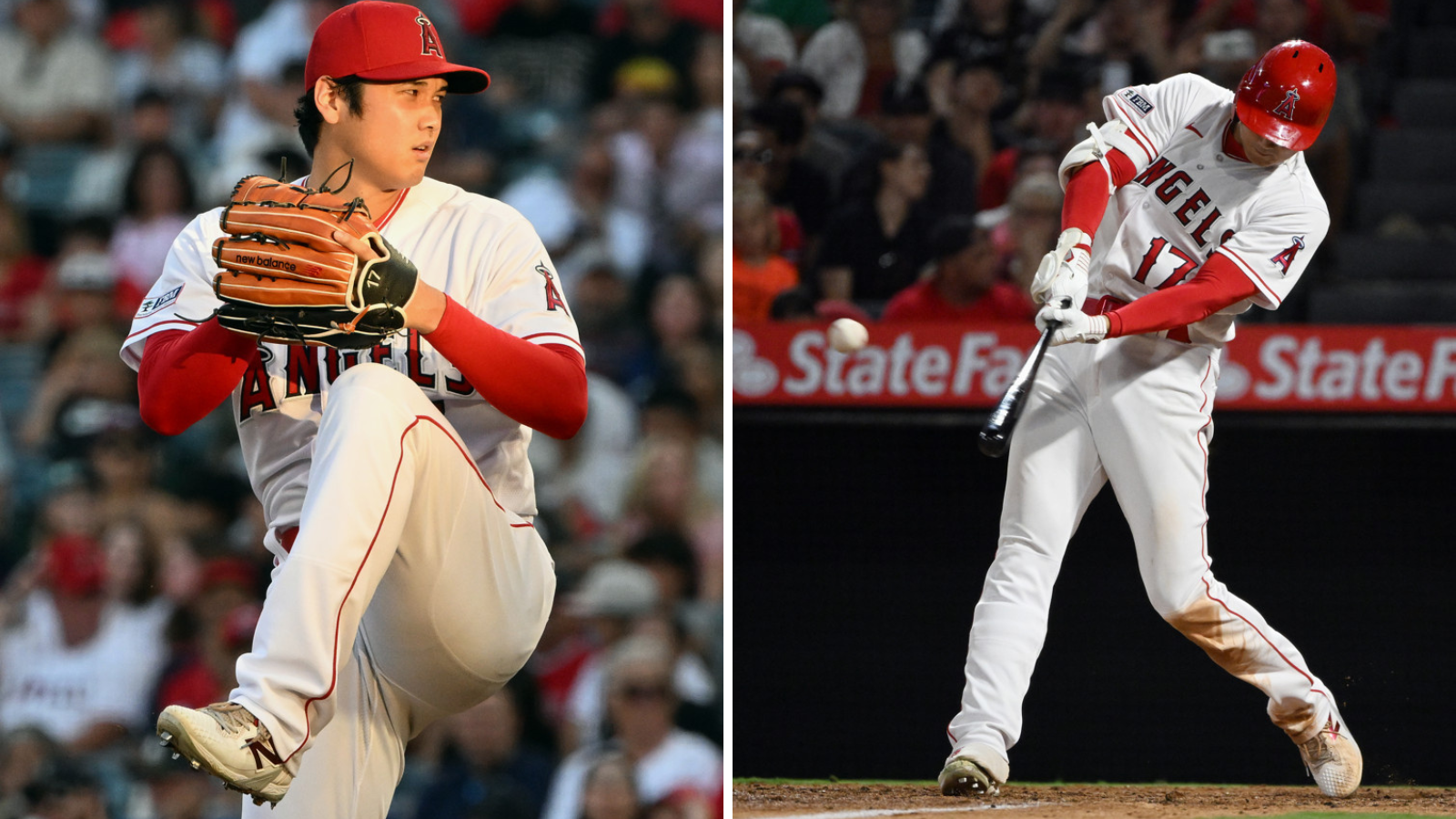
    Our Video Scouts have credited him with only one Defensive Misplay the last three seasons, picking up and then rushing a throw on a Shohei Ohtani roller that appeared to be heading foul in April 2021.

    By our accounting, the last instance we have of Greinke not cleanly fielding a ball that cost his team a potential out was in August 2019 on a play where bat and ball came at him at the same time, thus preventing a possible double play (they still got one out).

    There are no active pitchers even close to Greinke’s accrued Runs Saved. As you can see in the chart, Dallas Keuchel is 33 runs behind, but given that he had a 9.20 ERA last season, there’s no guarantee he’ll pitch again in the majors. The next-closest active pitchers are Clayton Kershaw (34), Johnny Cueto (33), and Justin Verlander (31).

    Someone asked me the other day if Greinke was a Hall of Famer. I think the answer is similar for him as it is for Scott Rolen. It’s a close call looking at his basic career stats. But there are some other things to consider, like standard-setting defense, that could help in pushing him over the top.

  • Stat of the Week: 2024 Baseball Hall of Fame Ballot

    Stat of the Week: 2024 Baseball Hall of Fame Ballot

    The neverending debate that is Baseball Hall of Fame worthiness can move ahead to 2024 after the elections of Scott Rolen and Fred McGriff to 2023’s Hall class.

    Next year’s BBWAA ballot includes not just prominent holdovers like Todd Helton, Billy Wagner, and Carlos Beltran, but also three newcomers who surpass the standard set by Bill James’ Hall of Fame Value (HOF-V) stat.

    HOF-V sums a player’s Win Shares and four times his Baseball-Reference WAR (For a more in-depth analysis of HOF-V, check out this article from The Bill James Handbook 2018). The target HOF-V to signify Hall of Fame worthiness is 500.

    The 2024 ballot is not fully set yet, but these will be the leading newcomers by HOF-V:

    Player HOF-V
    Adrián Beltré 747.0
    Joe Mauer 590.4
    Chase Utley 549.0
    David Wright 463.8
    Adrián González 460.0
    Matt Holliday 444.0

    Adrián Beltré is a clearcut Hall of Fame selection. He totaled 3,166 hits and 477 home runs in a 21-year career. He ranks in the top 20 in hits, doubles, total bases, and games played. His 1,781 Runs Created rank 44th all time and his 93.5 bWAR ranks 40th.

    Beltré’s 200 Defensive Runs Saved are tied with Andrelton Simmons for the most in the 20-year history of the stat. He won three Fielding Bible Awards and five Gold Glove Awards.

    Joe Mauer packed a lot into a 15-year MLB career with the Twins, playing catcher early in his career and first base in his latter seasons. He won the AL batting title three times, won the AL MVP in 2009, and finished in the top eight of the MVP voting three other times. He was a six-time All-Star who won five Silver Sluggers and three Gold Gloves.

    Mauer retired at age 35 and thus didn’t play long enough to record the cumulative totals of some other candidates, but his candidacy is viewed favorably by this system. His HOF-V is actually six points higher than Rolen’s and nearly 100 points higher than another contemporary, Buster Posey (490.7).

    Chase Utley’s HOF-V is a near match for McGriff’s 552.4. Utley totaled 64.5 bWAR (97th among position players) in a 16-year career as a second baseman for the Phillies and Dodgers. He was a six-time All-Star and four-time Silver Slugger. He was also an impactful postseason player, whose five home runs in 2009 are tied for the most in one World Series.

    Utley had a six-year peak from 2005 to 2010 in which he ranked second to Albert Pujols in Win Shares. Utley’s 123 career Runs Saved at second base rank second to Mark Ellis (130) in the 20-year history of the stat. He won a Fielding Bible Award in 2010.

    We expect fellow ballot newcomers David Wright, Adrián González, and Matt Holliday to get some degree of sentimental support (and probably Bartolo Colon too). But HOF-V does not consider such feelings. It stamps Beltré, Mauer, and Utley as Hall-of-Fame worthy and is a tool that can be used (perhaps alongside Jay Jaffe’s JAWS system) to support those candidacies. We look forward to the debate.

  • Stat of the Week: How Trea Turner Impacts The Phillies Defense

    Stat of the Week: How Trea Turner Impacts The Phillies Defense

    By MARK SIMON

    A couple of weeks ago, we wrote about the difference that Cody Bellinger should make for the Cubs, whose  center fielders ranked worst in MLB in Defensive Runs Saved last season.

    What Bellinger represents to the Cubs in center field is what Trea Turner represents to the Phillies at shortstop.

    Didi Gregorius, Bryson Stott, Johan Camargo, and three other players combined for -13 Runs Saved at shortstop for the Phillies in 2022. Only three teams played worse defense at the position than that – the Blue Jays (-15 Runs Saved), the Royals (-18), and the Nationals (-34).

    There are a lot of areas in which Turner excels. Defense isn’t necessarily one of them, but he’s still a huge upgrade at the position. Similar to Bellinger in center field, Turner has been exactly an average shortstop defensively the last two seasons (a little more than 250 games). He’s netted 0 Runs Saved in roughly 2,150 innings there. Zero is a significant upgrade from -13.

    The specific impact will most likely come on balls hit to Turner’s right, where again he was an average defender and the Phillies’ shortstops were less than stellar.

    Turner turned 62% of opportunities on balls hit to his right into outs, exactly the rate he was expected to get based on historical out probabilities.

    The Phillies turned only 51% of balls hit to the right of their shortstops into outs, against an expected out rate of 57%. They made 14 plays fewer than expected on those balls (think of that as similar to a -14 in Statcast’s Outs Above Average specific to that direction).

    Keep the following in mind with the new rules banning the use of full infield shifts: Turner has saved 5 runs with his play-making in non-shift situations the last two seasons. Gregorius, Stott, and Camargo combined for -9 Runs Saved in non-shifts in 2022.

    Turner’s acquisition also puts Stott at second base, where he saved 1 run in 47 games last season. Other Phillies’ second basemen combined for -2 Runs Saved in 2022. The Phillies also made moves related to their up-the-middle defense last season, trading with the Cardinals for infielder Edmundo Sosa and the Angels for outfielder Brandon Marsh. They also return a two-time Gold Glove catcher, J.T. Realmuto, and a Fielding Bible Award winner among a pretty good group of fielding pitchers in Ranger Suárez.

    Sosa can fill in at second base, shortstop, and third base and has shown particular aplomb at shortstop (13 career Runs Saved in 800 innings). The trade of Matt Vierling to the Tigers makes Marsh a full-time center fielder rather than a platoon player. Marsh rates better than Vierling defensively in center field but is still a little below average there for his career (-4 Runs Saved in approximately 1,000 innings).

    The Phillies still have a fair number of trouble spots within their defense. At third base, Alec Bohm ranked last in MLB with -17 Runs Saved last season. In the outfield Kyle Schwarber ranked next-to-last (-14) among left fielders, and right field, where Nick Castellanos ranked tied for last (-8). Those are regular season numbers, of course, as you’ll remember Castellanos excelled defensively in the playoffs.

    But at the very least the Phillies should be better in the middle infield than they were in 2022. And that should improve their chances of hanging with the Braves and Mets in the NL East.

    For more on the Phillies, check out our interview with their general manager Sam Fuld on The Sports Info Solutions Baseball Podcast.