Category: Baseball

  • The A’s have struggled defensively

    The A’s have struggled defensively

    By MARK SIMON

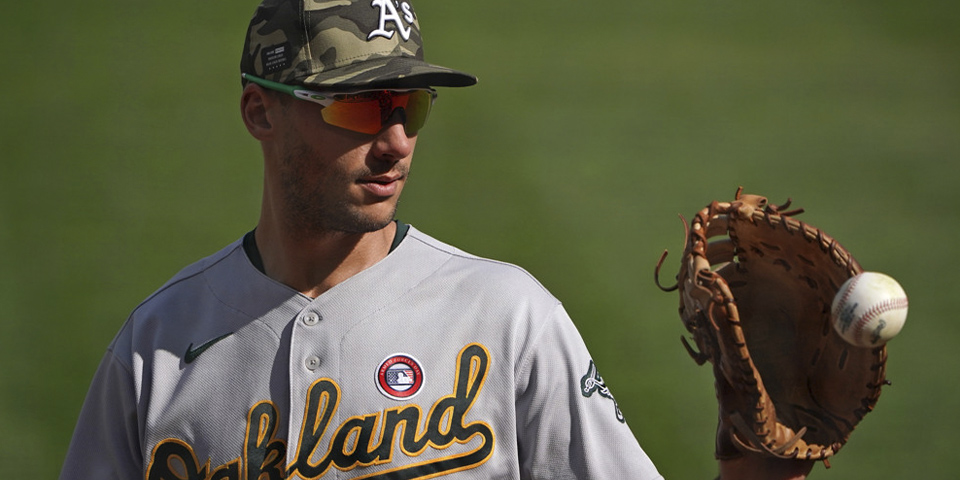
    The Athletics started 0-6 but have been the hottest team in baseball since then, winning 25 of their next 36 games. They are tied for third in the AL with 47 home runs and have a standout bullpen that includes two pitchers with at least five saves (Lou Trivino and Jake Diekman). And they’ve been good so far in one-run games (10-4).

    They’ve done this without much help from their defense. The Athletics have the best record in the AL West but rank tied for 28th in the majors in Defensive Runs Saved (-18). Only the Angels (-30) rank worse.

    Oakland has gotten positive defensive value from only two positions – catcher left field. That’s odd considering that the Athletics have a three-time Fielding Bible Award winner at first base in Matt Olson, and a two-time Fielding Bible Award winner at third base in Matt Chapman.

    They also have a shortstop who has had two seasons of at least 10 Runs Saved in Elvis Andrus, a center fielder who finished fifth in the Fielding Bible Award voting last season, Ramón Laureano, and a well-regarded catcher in Sean Murphy.

    Olson has cost the Athletics three runs at first base and Andrus cost four at shortstop. Chapman and Laureano currently rate as MLB average (0 Runs Saved).

    As you might expect from these numbers, the Athletics have had a hard time converting ground balls and bunts into outs. Their infield ranks last in MLB in that stat at 69.5%. They ranked 28th last season (71%), one in which Chapman missed considerable time due to injury.

    What the Athletics are doing goes against how most teams win. As we detailed in Stat of the Week last season: Of the 16 seasons with the fewest Defensive Runs Saved from 2013 to 2019, only the 2013 Tigers and 2019 Mets had a winning record (and for much of the season, the Mets didn’t). Of the 42 lowest Runs Saved totals, there were nine teams with winning records.

    So it’s on the Athletics to either fix their defensive issues or to keep defying the odds. Over the weekend, it looked like the latter was starting to happen, as the team improve by six runs. It wouldn’t be surprising to see even more of a statistical correction to their performance given the track records of those involved.

    MLB Division Leaders ÔÇô Defensive Runs Saved

    Division Team DRS MLB Rank
    NL East Mets 14 6th
    NL West Giants 13 8th
    NL Central Cardinals 10 T-11th
    AL East Red Sox 10 T-11th
    AL Central White Sox 10 T-11th
    AL West Athletics -18 T-28th
  • Sandy Alcantara’s changeup moves him towards ace status

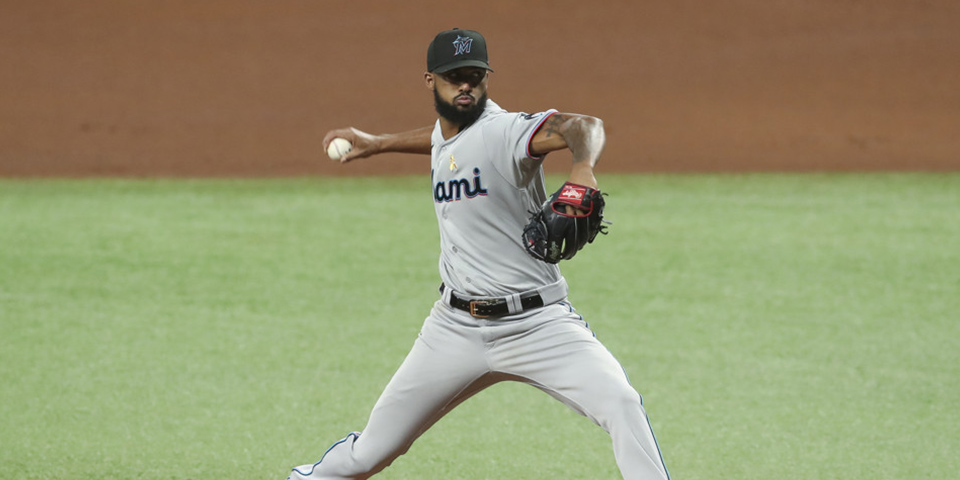
    Sandy Alcantara’s changeup moves him towards ace status

    By CHRISTIAN CHASE

    It is no secret that the 2020 Marlins overperformed in their run to the NLDS where they were swept by their division rival, the Braves. Throughout baseball, there were many who believed that the team was simply a fluke and nothing more.

    Under MLBs usual playoff system, the Marlins shouldn’t have been in the playoffs, but that doesn’t mean they aren’t building up for similar runs soon. Many played a role in last year’s success: however, as solid as Jazz Chisholm, Trevor Rogers, Brian Anderson, and Jesus Aguilar are, Sandy Alcantara’s growth into an ace may be the difference maker.

    Alcantara has developed a formidable arsenal overnight:

    Sporting a traditional 4-seam, 2-seam, curveball, slider, changeup repertoire, Alcantara is one of the many silent leaders on a Marlins team that doesn’t receive national coverage outside of Jazz Chishom Jr. and Trevor Rogers.

    At the beginning of his career, Alcantara threw his changeup in just 13% of his pitches, resulting in an overreliance on his fastball and slider. Between 2019 and 2020, he upped the usage of that pitch to over 22%.

    This development of an elite third pitch, paired with a fastball whose average velo ranks second in MLB (97.3 MPH) has allowed Alcantara to become an ace-quality pitcher. More specifically, Alcantara’s .137 batting average against ranks 9th among the 50 pitchers who have thrown the most changeups this season. Those ahead of him include Gerrit Cole, and John Means.

    Thus far, it looks like a much improved pitch than the last couple seasons. FanGraphs measures the run value of a pitch based on how often it gets good results (strikes and outs) versus bad results (balls, hits, walks, hit by pitches). Alcantara ranked below-average in that stat the last two seasons. This season, he ranks in the top 15 in terms of the overall value of his changeup.


    Over the course of his first five seasons, Sandy Alcantara’s hard-hit rate has decreased consistently each year. Through his starts this season, his hard-hit rate sits at .182, which is the best on the Marlins (most notably over Pablo Lopez and Trevor Rogers). Alcantara has had consistently low hard-hit rates throughout his career due to his high percentage of pitches on the lower half of the plate. By sticking with this line of approach in all his starts, he indirectly became a more consistent pitcher because of the development of the changeup. 

    Alcantara has a 2.72 ERA, though he’s only 1-2 this season. In his last two starts, he received two no decisions after 13 innings pitched and only two runs allowed.

    The heightened progression of Alcantara is further shown in the Bill James Online World’s No. 1 Starting Pitcher Rankings, which has him ranked as the 25th best pitcher in baseball now. He started the season at 49th, and this growth is due in large part to the changeup that has allowed him to put hitters away at a much more effective clip.

    Alcantara boasts a fastball in the 99th percentile of velocity for starting pitchers in the MLB and has slowly become the face of a young Marlins team. He has been the Opening Day Starter two years in a row and has been the guy on the mound in big moments for Miami. Each year he has gotten progressively better and better, and with two other budding aces in Sixto Sanchez and Rogers, the sky’s the limit for the future of this Marlins staff.

  • Exploring some strong defensive starts

    Exploring some strong defensive starts

    By AUSTIN LEONARD

    Good defense is quite fun to watch and inherently difficult to quantify, as there’s often a gap between a player’s ability to make highlight plays and his true defensive talent.

    At Sports Info Solutions, we have ways of working around this. The most prominent of these is our Defensive Runs Saved statistic, which attempts to quantify how many runs a defender has prevented (or cost his team) with his fielding acumen.

    Along with this we have Good Fielding Plays (GFPs) and Defensive Misplays (DMs) which use the eye test to track Web Gem-level plays (and goofs), as well as solid fundamental plays like keeping a hard-hit grounder in the infield to prevent an advancement (or allowing an advance with an ill-advised throw, or some other blunder).

    Another tool you’ll see referenced here is our play difficulty scale, in which our game watchers (whom we call Video Scouts) rank every play from 1 (routine) to 5 (impossible).

    With those metrics in mind, we can get a bit more of an objective take on defense. Of course, defensive numbers are notoriously volatile, and often take multiple seasons to stabilize, giving this entire article a giant disclaimer: we’re working with a super-small sample size here, and these numbers could easily look completely different in just two weeks, let alone at the end of the season.

    Now, with that out of the way, let’s examine four players who are excelling in the field.

    Tommy Edman, 2B/RF, St. Louis Cardinals  

    Edman leads all players with 11 GFPs this year, which is three more than any other non-first baseman (first basemen tend to have more than other positions because of the number of throws they scoop).

    What’s made Edman’s season so interesting is that he’s been above-average defensively at both second base and right field, posting a positive DRS at both positions. The versatile Edman has played at least one game at every position besides pitcher and catcher in his career, and he’s been at least league average at all of them.

    Edman’s defense is mostly powered by his impressive range at both spots, which you’ll see in his highlight reel below. But there’s more to it than that – By his DRS splits, 2 of Edman’s 4 Runs Saved at second base have been attributed to what he’s done after he fielded the ball (throws, base tags).

    If you look at the individual components of his DRS, you can find some (addressable) flaws. At second base, he’s converted 8-of-17 of his double play opportunities, including 3-of-9 opportunities as the pivot man.  In his debut season, Edman converted 22 of 25 double play chances overall, but has only done 10-of-22 since.

    In the outfield, he’s allowed 4-of-7 baserunners to advance on base hits he’s fielded. That subtracts a run of value from his DRS total for now.

    Edman’s range and fielding capability have made him a solid defender his entire career, and that’s holding true this year. His athleticism, quickness, and competence at both positions have powered him to a notable 5 Defensive Runs Saved. He’s a solid defender, and a player any team would love to have.

    Tommy Edman highlight reel

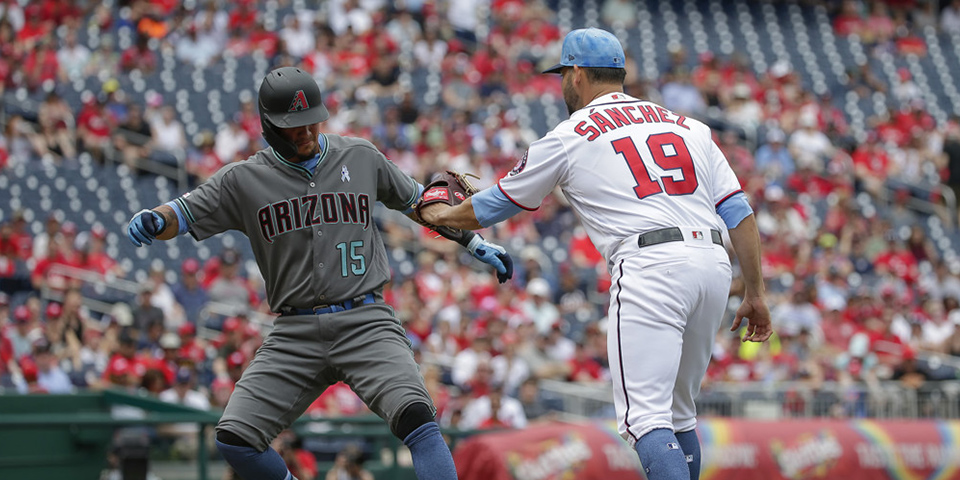
    Asdrubal Cabrera, 3B, Arizona Diamondbacks

    This is probably the most shocking defensive start in the whole league. Cabrera is 35 years old and sits in a tie for fourth place with 6 DRS this year. It’s unusual for a player his age to be near the top of this leaderboard, but here we are.

    What’s even more surprising is that Cabrera hasn’t been a positive defender at any position – and he’s had time at every infield position in his career – since 2008, when he was mostly a second baseman.

    Cabrera’s DRS total is not supported by a high amount of GFPs; in fact, he’s made just one this year. All signs point to him being fundamentally solid and making nearly every play that comes his way. Those fundamentals are reflected in his throwing statistics: Cabrera’s a perfect 37-for-37 on throws this year, with no throwing errors or throws that have required a tough scoop by the first baseman.

    To his credit: Cabrera’s converted 4 of his 5 plays that are a Difficulty Rating of 3, or what our Video Scouts consider as “50-50” plays.

    The Diamondbacks rank 11th in shift usage this season and Cabrera has benefited. Four of Cabrera’s 5 Runs Saved at third base have come from a shifted position.

    Perhaps some of this total is attributable to their creative defensive positioning: The Diamondbacks often send the third baseman to the right side of second base when they employ a full shift against lefties, and this subtle defensive change gives an older defender like Cabrera shorter throws and easier plays to make, which likely helps his numbers.

    Still, you have to actually make the plays in order to have such an impressive DRS total, and he has, so he gets the credit.

    Given Cabrera’s age and his poor defensive track record, it’d be a tad surprising to see this start hold. I’m hoping it does, just for the fun of it. He’d be the oldest player to finish in the top 10 of DRS since catcher Jeff Mathis in 2017. If he can keep making plays consistently, the Diamondbacks’ clever defensive mindset may help him achieve that mark.

    Asdrubal Cabrera highlight reel

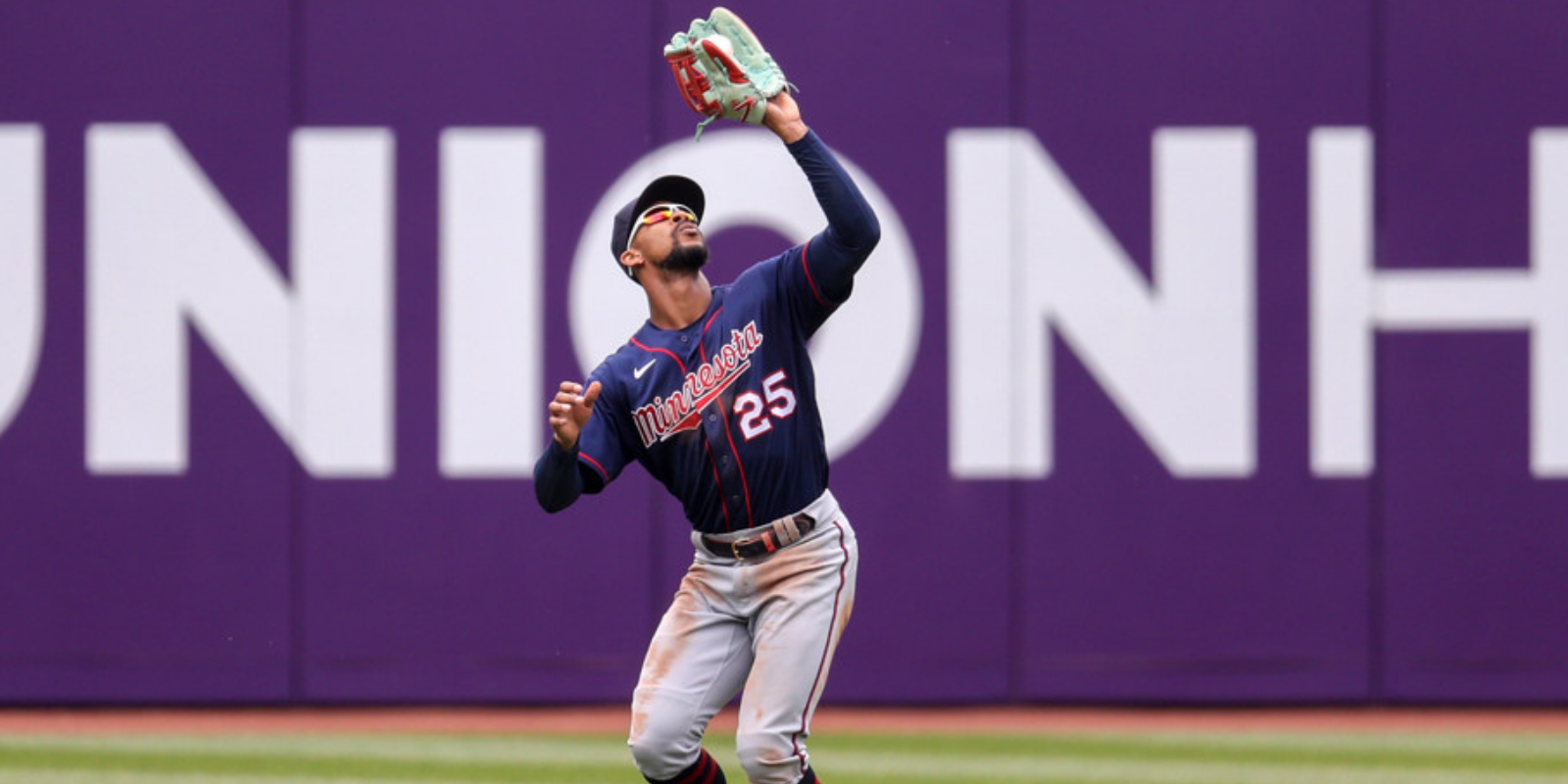
    Byron Buxton, CF, Minnesota Twins

    Buxton has been incredible this year, putting up staggering offensive numbers while displaying his signature stellar defense. The 2017 Platinum Glove winner has been dealing with injury issues his entire career, but he’s been excellent when healthy, and that’s showing through here.

    Buxton has 5 Defensive Runs Saved this year, which puts him in a tie for third place among outfielders. He’s also posted 6 GFPs with just one Defensive Misplay and one error. Buxton leads all outfielders in GFPs, and his are of a different caliber than most.

    When Buxton makes a GFP, it’s front-page highlight material. He’s perfected the full-extension Superman-style dive, and he pulls it off with a high success rate (his one DM came on a failed dive, but we’ll chalk that one up to good hustle).  Buxton has caught 5-of-7 balls on what our Video Scouts defined as the toughest plays to make, four-star plays.

    His elite speed makes tracking down hard-hit balls in the gaps easy work, and he’s got the athleticism and vertical leaping ability necessary to rob home runs with ease. If he stays healthy, don’t be surprised to see him near the top of the DRS leaderboard at season’s end. He could make a bid for his second Platinum Glove as well.

    Byron Buxton highlight reel

    Isiah Kiner-Falefa, SS, Texas Rangers

    Kiner-Falefa’s had quite the journey to arrive at regular shortstop playing time (taking detours through catcher and third base in the last three years), but he’s looked good this season. He’s been worth 5 DRS this year, tied for first among shortstops.

    Of note with Kiner-Falefa, however, is he’s looked quite mistake-prone so far. He’s already got 8 Defensive Misplays and 3 errors. These have cost him 2 DRS – Kiner-Falefa leads MLB in the PART (Position, balls in the Air, Range, and Throwing) component of DRS, but his misplays have subtracted 2 runs from his total, while his double play performance has subtracted another.

    That contradiction between DMss and DRS is interesting: there are eight shortstops with a worse net GFP – DME score (that’s Good Fielding plays minus Defensive Misplays and errors) than Kiner-Falefa’s -6. Of those eight, only two, Gleyber Torres and Andres Gimenez, have a positive DRS.

    Kiner-Falefa has made enough plays to make up for his mistakes. The numbers on Kiner-Falefa detail that he’s saved six runs due to his range, which is contributing greatly to his league-best PART component of DRS. Kiner-Falefa has adept, but not elite, speed; his range can be attributed to getting great reads off the bat. He seems to particularly excel when moving to his left (aka towards second base), as he’s saved 7 runs this season when doing so.

    Kiner-Falefa isn’t as well-known as other premium defenders at his position, but he’s making a name for himself with his quickness, good hands, and great range. If he can tone down the misplays and mistakes, he could be in the running for a second straight Gold Glove – this one at a different position than last year’s (something only previously done by Darin Erstad and Placido Polanco).

    Isiah Kiner-Falefa highlight reel

  • The No. 1 Defense in MLB … so far

    The No. 1 Defense in MLB … so far

    By MARK SIMON

    The Washington Nationals lead the majors with 22 Defensive Runs Saved in 25 games.

    That sounds weird, right? After all, the Nationals finished last in that stat in the shortened 2020 season.

    So right away, there’s a little reason to be skeptical, especially considering that they didn’t necessarily do anything to considerably upgrade their defense this offseason.

    So what’s going on here?

    Let’s start with the idea that it’s early. We’re looking at 25-game samples, so there are no ironclad guarantees that what’s true today will be true at the end of September.

    With that in mind, a few things we’ve noticed.

    Trea Turner

    Trea Turner has saved 4 runs with his defense so far this season. We’re not going to call it a great first month of the season, but it’s fair to call it a good one.

    Turner is representative of the Nationals’ turnaround. He cost them five runs with his defense last season, which seemed a bit of an aberration given that he’d never had a season with a negative Runs Saved total at shortstop previously.

    Turner’s solid play explains an important stat – the Nationals have turned nearly 80% of ground balls and bunts into outs this season (79.6% to be exact). That’s the highest rate in MLB by more than two percentage points.

    They were 29th in that stat last season, 71%

    And when we narrow it down to balls hit to the left of second base, you can see the jump.

    2020        67% out rate

    2021        81% out rate

    First Base

    So this one qualifies as a surprise, though maybe not as big of one as you would expect.

    Josh Bell and Ryan Zimmerman have split time at first base this season. Bell entered 2021 having never posted a positive Runs Saved total at the position, though he’s shown gradual improvement through his first five seasons. Zimmerman had – in fact he had 5 Runs Saved in 2019 –  but didn’t play at all in 2020, so who knew what to expect there.

    Each has 2 Runs Saved. We’re not reading much into their early totals yet, but the numbers are what the numbers are. So let’s explain:

    Bell’s contributions have come in two forms. For one, he’s done well with catching throws. By our measures, he’s recorded the most defensive value of anyone on handling tough throws from his teammates.

    Just look at what he did on May 1 against the Marlins.

    The other sounds a little weird. It’s that Bell hasn’t done anything to hurt them.

    In 2019 and 2020, Bell had 31 plays in which he failed to get an out and that cost him at least 0.4 runs. These are generally plays in which our system calculated him as having at least a 50% chance to record an out.

    In his 14 games this season, he has yet to have a ground ball or line drive even cost him two-tenths of a run.

    So between that and this example of Zimmerman’s surehandedness, the Nationals have something good going at first base.

    The rest of it

    A few bulletpoints to round things out:

    * Kyle Schwarber doesn’t always look great, but so far, he’s made more plays than he’s missed, like this one. He has 3 Runs Saved, a combination of his glove and his arm.

    * Starlin Castro, historically more of a bat-first player, has acclimated to third base through 25 games. This will be one to eyeball for the long term. He’s at 2 Runs Saved

    * Replacing Kurt Suzuki with Alex Avila in the Nationals’ catching platoon will likely benefit the team defensively. Avila saved 14 Runs from 2018 to 2020. Suzuki cost his teams 27, including 20 with the Nationals the last two seasons. He’s already at -4 Runs Saved for the Angels. Avila has barely played but has 1 Run Saved.

    * We haven’t even mentioned the Nationals best defender yet. Victor Robles plummeted from 23 Runs Saved in center field in 2019 to -4 last season. One good sign from his 2 Runs Saved in 2021 is that he has 5 Good Fielding Plays (think Web Gems, outfield assists, times cutting off a ball in the gap). He totaled 3 last season.

  • Nothing Doing: Unhittable Pitches in 2021

    By MARK SIMON

    Every day, we see and share highlights of pitchers with amazing stuff. There have already been two no-hitters (three if you want to count Madison Bumgarner’s). Strikeout records are falling left and right. So many pitchers and pitches seem unhittable.

    But who has a pitch that has been the most unhittable in 2021?

    We decided to look at the pitchers who have given up nothing – or almost nothing with a particular pitch this season. Our criteria was to look at the pitchers with the most at-bats against them who have allowed two, one, or no hits with a pitch type this season.

    Fair warning: Our criteria eliminated some dominant pitchers this season. Nothing against Jacob deGrom, Corbin Burnes or Brandon Woodruff, but we set numbers in place and are sticking with them.

    The 2-fors

    Joe Musgrove’s slider (2-for-35)

    What’s amazing about Musgrove is that he’s put up incredible numbers without throwing a tradition fastball often. His most-used pitch is actually his slider, with that just ahead of his cutter usage.

    It’s not just the slider that’s doing the job. Opponents are 2-for-21 against his curveball and 0-for-10 against his changeup too.

    Michael Kopech’s 4-seamer (2-for-32)

    Kopech’s return from Tommy John surgery is going alright so far, as he’s posted a 1.72 ERA in six appearances (two starts). His fastball is humming along well at 95 to 96 MPH. In his last start, Rangers hitters went 0-for-10 against it with eight strikeouts.

    The 1-fors

    Yu Darvish’s slider (1-for-30)

    We hope we’re right on this and maybe Darvish will let us know if we’re not.

    Among his many offerings, the slider has been almost untouchable. Not only has he loaded up on outs with it, he’s throwing it for a strike 70% of the time. Watch the slow, almost hypnotic delivery on this one.

    Richard Rodriguez’s 4-seamer (1-for-26)

    This is the guy on the list for whom you’re going to say “Who???” Rodriguez has thrown 9 1/3 one-hit innings this season for the Pirates and he’s done it almost entirely with the heater. Rodriguez’s fastball has been tough to hit throughout his career even though it only averages 93 MPH and hitters know it’s coming. He’s thrown it nearly 90% of the time this season.

    The 0-fors

    Julio Urías’s changeup (0-for-23)
    Dustin May’s curveball (0-for-21)

    The Dodgers have an embarrassment of pitching riches and two of their young’uns lead the way here.

    When Urías first came up, the changeup was his putaway pitch and five years later, hitters still haven’t figured out how to do anything with it. He’s thrown 66 this season, resulting in 23 outs and many swings that look like this.

    If you were watching Dodgers-Padres on Sunday night, you saw some 100-MPH heat from Dustin May, but you saw some pretty good slow stuff too. May throws his curveball for a strike only 51% of the time but it’s still extremely effective. On Sunday, he got eight outs and five of his 10 strikeouts with the pitch.

  • Mookie Betts’ brain has all the angles covered

    By MARK SIMON

    When it comes to baseball and neurological processing, what’s often focused on is the speed at which a hitter has to make a decision to swing or take a pitch.

    But after watching Mookie Betts make this game-winning catch against Tommy Pham of the Padres last week, I was wondering about the neuroscience involved in making that kind of play.

    Dr. Jason Themanson was able to help. Jason is a professor in the psychology department at Illinois Wesleyan University who has done multiple neuroscience presentations at the SABR Analytics Conference.

    My initial interest was in both the neurological and physiological aspects of the play, but Dr. Kristen Nicholson, the director of Wake Forest’s pitching lab and biomechanics research lead summed up the latter succinctly, pointing to Betts’ kinesio-awareness, which allows him to make catches like this and home run robberies like his one against Freddie Freeman in the 2020 NLCS.

    “He’s athletic and has good body awareness, which allows him to use his mechanics to their full potential,” she said. “But it’s more difficult to say ‘These are the mechanics that allowed him to do this.’”

    Nicholson and Themanson were more impressed by the amount of mental processing Betts did in such a short amount of time. Themanson walked us through it.

    “The first thing that happens in the brain is that the visual information of seeing the contact is sent to the visual cortex in the occipital lobe, the back of the brain,” Themanson said. “From there, the brain starts to instantly predict the trajectory of the ball and plan for where the ball flight is taking the ball both in terms of location and in terms of velocity.

    “Again, this is predictive because the brain knows that as it is processing the current visual information that information is already outdated and delayed, so the brain has to work ahead of time and extrapolate the future coordinates of the ball.”

    There’s a lot to take in when it comes to this information, so let’s briefly interrupt to point out how good Betts is when it comes to catching fly balls. Since 2016, he has 85 Defensive Runs Saved just from his range and positioning. The next-closest outfielder has 52. OK, let’s resume…

    “This processing starts in the visual cortex and moves forward in the brain to the middle temporal complex, the V5, which is an area of the cortex that is extremely sensitive to and responsive to the visual perception of moving objects,” Themanson said.

    “As this is happening visually, the cerebellum as well as premotor areas in the cortex are starting to engage movement responses to get the body to start moving toward the planned/predicted path of the ball to intercept it before it hits the ground – and some of this processing can even start to occur before being aware of the exact visual information – think very reflexive and reactionary and you can adjust on the way.”  

    The other component here is the dive. By our Video Scout tracking, that play marked the second time that Betts made a diving catch in a regular season game for the Dodgers. He’s had as many as nine in a season (2017). Nine successful diving catches in 12 attempts is both a good total and a good percentage. Since then, he’s 7-of-17, which is a much more ordinary total and rate (MLB average catch rate on dives by outfielders is 52%). But at least in this moment, Betts was extraordinary.

    “The decision to dive would be processed through the coordination of the basal ganglia, cerebellum, premotor areas, and motor areas,” Themanson said. “The basal ganglia structures are more involved in the planning or selection of actions and movements and inhibiting unwanted or undesired movements while the other structures (cerebellum, premotor) are more involved in the actual preparation and execution of movements and actions – including the coordination of complex movements and hand-eye coordination.

    “Finally, the planned/organized movement patterns end up at the motor area which send signals down the spinal cord to get the body to actually move as planned/desired.”

    This is partly a product of Betts’ neurological profile but also a honed skill.

    Experience and repetition make an athlete a better candidate to execute the necessary movements to win in that situation.

    “They build their neural pathways to be much more efficient to engage in this reactionary, almost reflexive, behavioral response, much quicker than you or I do based on their expertise and perceptual experience,” Themanson said.

    And though there’s a lot of neuroscience involved, perhaps the easiest way to describe this is to consider how quickly Betts can solve the kind of geometry problem we might have been asked to do in high school, one involving lines drawn and angles taken. Only in this case, he’s solving for himself and his path to the ball and not for the triangle on the chalkboard.

    “He did the math right,” Themanson said. “It was picture perfect based on athleticism and experience.”

    In August 2016, I asked ESPN analyst Doug Glanville to assess Betts, who was en route to his first of back-to-back seasons with 30 Runs Saved in right field. “He’s still figuring out how to be efficient in his routes,” Glanville said. “He’s phenomenally talented, super-fast, and constantly working to get better. That’s why he excels in so many ways. The sky’s the limit for him. But there’s way more he can do.”

  • Split-decision: Kevin Gausman’s incredible pitch

    By MARK SIMON

    Think about what you consider the best pitches in baseball.

    There are lots of contenders: Jacob deGrom’s fastball, Shane Bieber’s curveball, Dinelson Lamet’s slider, Devin Williams’ changeup are among many.

    One that you might not have thought about is Giants pitcher Kevin Gausman’s splitter.

    Here’s why we bring Gausman up:

    Since August 9, 2020, Gausman is 3-2 with a 3.15 ERA in 65 2/3 innings pitched. But that doesn’t tell the whole story.

    Gausman has thrown 289 splitters in that time. And opponents are batting .014 against the pitch.

    That’s 1-for-73.

    That’s not a typo.

    One hit, 73 at-bats.

    .014

    The lone hit in this stretch was by Matt Olson of the Athletics on September 19 2020, the only hit Gausman allowed in six innings pitched that day.

    Other than that, Gausman’s yielded nothing other than the three batters who walked on a splitter.

    They were smart to take it. The pitch is extremely difficult to hit. Opposing batters have missed on 51% of their swings against Gausman’s splitter since the start of last season, the second-highest miss rate on the pitch (among the 20 pitchers who have thrown it most often).

    Want to see how nasty the pitch is?

    Those are strikeout pitches against Manny Machado, Trevor Story, Cody Bellinger, and Mike Moustakas, and the last one is entertaining because of how Buster Posey bluffed like he was looking for a high fastball.

    This season, Gausman has thrown 81 splitters. Opponents are 0-for-22 against them. Even on Tuesday, when Gausman allowed four runs to the Reds, Cincinnati went 0-for-8 against his splitter.

    The splitter is a tough pitch to throw. That pitch type typically represents between 1% and 2% of all pitches thrown. Gausman has thrown 363 since the start of the 2020 season. No one else is within 100 of him.

    Gausman has thrown it 29% of the time in that span. Dodgers swingman pitcher Tony Gonsolin (30%) is the only other pitcher who has thrown it more than 20% of the time among pitchers with at least 40 innings pitched.

    We’re guessing that Gausman doesn’t mind that the pitch is a baseball rarity. Right now, the results he’s getting with it are just about one-of-a kind.

    Lowest Opponents’ BA By Pitch Type
    Since August 9, 2020 (Minimum 200 pitches)

    PitcherTeamPitchOpp BA
    1. Kevin GausmanGiantsSplitter.014
    2. Devin WilliamsBrewersChangeup.050
    3. Dinelson LametPadresSlider.059
    4. Trevor BauerDodgersSlider.073
    5. Yu DarvishPadresSlider.083
    (Through April 15)
  • For The Glove of The Game: Early Impressive Defensive Work

    By MARK SIMON

    You can’t say much to quantify any player or team’s defensive performance through one week of the season. But you can find plenty of things that you’re looking forward to seeing more of.

    Such as …

    Michael A. Taylor’s arm

    Royals center fielder Michael A. Taylor had two assists (and a home run) on Opening Day to jumpstart his season. Both came without the help of a cutoff man and that matched the number of similar assists he had in 36 games in center field in 2019 and 2020 combined.

    Taylor’s 10 Outfield Arm Runs Saved rank fourth among center fielders since 2017. Kevin Kiermaier leads with 13 in that time, though if you prorate Taylor’s numbers to Kiermaier’s nearly 3,000 innings, Taylor would come out just ahead.

    Chad Pinder’s go-get-it’ness

    This was another one from Opening Day, as Pinder made a pair of excellent catches in right field. Pinder missed much of the 2020 season due to injury and he’ll miss more time now with a knee sprain suffered on one of these plays. We’ll see when he returns if he can continue to pick up on the numbers he compiled in 2018 and 2019.

    Pinder totaled 19 Defensive Runs Saved in those two seasons, which ranked 14th among outfielders. He did that despite ranking 102nd in innings played in that time.

    The Brewers’ infield defense

    We knew that the signing of second baseman Kolten Wong would make the Brewers defense better. The move seems to have paid immediate dividends. Through six games, the Brewers have converted 52 of 61 ground balls and bunts into outs this season. Their 85% out rate on those balls ranks No. 1 in MLB.

    The Brewers ranked 24th in that stat last season. Props to Wong, shortstop Luis Urias, third baseman Travis Shaw, and first baseman Keston Hiura for their work so far.

    The slick plays from Jonathan India

    The talk of Cincinnati is how many runs the Reds are scoring. One catalyst has been rookie second baseman Jonathan India, who is hitting .476 with 10 RBI in six games.  He also leads the majors with 4 Good Fielding Plays.

    Good Fielding Plays are what you think they are – plays made by a fielder that resulted in an unlikely out (think: “Web Gems” or MLB Network “Premier Plays”). But they’re also things like keeping the ball in the infield to prevent a runner from a chance an extra base. We’ve got one of each to show you.

    Here’s your garden-variety nifty play:

    And here’s India preventing Paul Goldschmidt from scoring on a base hit by keeping the ball in the infield:

    Gavin Lux, Deluxe Defense

    Dodgers fans have been waiting for Gavin Lux to be a full-time player and it looks like they’ll get their wish this season. Lux totaled 9 Runs Saved in 40 games at second base in 2019 and 2020. Early returns in 2021 look good so far, with a combined 3 Runs Saved at second and shortstop, including this play against the Rockies in which he was playing second base but was positioned like a shortstop.

  • SIS Launches ‘SIS Model 5’ for 2021 MLB season


    Daily Fantasy Baseball projections powered by the most accurate, detailed MLB data.

    Sports Info Solutions has been at the forefront of baseball data and analytics for over 15 years. Formerly “Baseball Info Solutions”, the company has been a driving force behind the Sabermetric Revolution and the Moneyball Era, due largely in part to groundbreaking analytical contributions such as Defensive Runs Saved (DRS).

    Over the past six years, SIS has turned its extensive database and analytical prowess loose on the Daily Fantasy Sports industry.

    Beginning in 2016, John Dewan and our R&D team built the most comprehensive DFS model imaginable using the vast resources at their disposal. From this project spawned the original “Model 1”, which has undergone extensive testing and development behind the scenes to eventually lead us to the tool that is now available for the 2021 MLB season – “SIS Model 5”.

    We believe SIS Model 5 to be the most advanced analysis of daily player performance.

    The model is also used to power SISBets.com (founded in 2019), a prop betting assist tool that guides users to find value against the sportsbook. Pairing subscriptions to the SIS Model 5 projections and SISBets.com is a power play that can help users effectively uncover value in the prop betting market.

    Let’s take a look behind the curtain at SIS Model 5…

    First, the model uses elements involving the player himself, such as:

    — Player age and how each stat is specifically affected by his age
    — Career performance
    — Recent performance and specific recency weightings for each stat
    — Home park of the player (where he plays half his games)

    Secondly, it looks at elements that affect player performance based on game conditions:

    — Performance vs. the handedness of the opposing pitcher
    — Quality of the opposing pitcher including how well the pitcher performs based on batter handedness
    — How the ballpark affects performance (including specialized Coors Field analytics)
    — Temperature at game time
    — Wind speed and direction at game time
    — Pitchers-friendly umps and hitter-friendly umps
    — Where the hitter hits in the lineup
    — Quality of other players in the lineup
    — How offensive support affects a pitcher’s likelihood to get a win
    — How each stat is independently affected by each one of these elements
    — How individual player tendencies and relevant timing data affect stolen bases

    The model also features:
    — Speedy updates thanks to SIS Video Scouts and IT staff churning out the latest roster, lineup, and injury information.
    — SIS’ proprietary Defensive-Independent Batting & Pitching Statistics (DIBS & DIPS) formula, which uses batted ball characteristics (velocity, trajectory, and location) to determine expected outcomes for every ball in play.
    — The renowned player projections system derived by Bill James and John Dewan

    You can sign up for it here

  • 2021 MLB Season Previews: AL East Defenses

    By MARK SIMON

    Leading up to Opening Day, we’re going to preview all 30 MLB teams and how they could fare defensively in 2021.

    A team’s hitting and pitching are easy to evaluate when previewing a season but defense is a little harder because of the nature of the numbers available to assess a player’s skill.

    But that sort of thing is our specialty and we’re happy to take our best shot at it.

    Today’s look is at the AL East.

    Blue Jays

    Greatest Strengths: Center Field

    Biggest Weaknesses: First Base

    George Springer has played a bunch of partial seasons in center field, but because he also played right field for the Astros, he never played a full one there.

    Once he gets healthy, Springer will be an interesting test for how defensive performance in small samples translates to that of larger samples at that position. In the last two seasons, he’s totaled 13 Runs Saved in center in just under 900 innings. His per 1,000-inning rate in that time is comparable to Kevin Kiermaier, who gets praised later in this piece.

    Vladimir Guerrero got a look-see at first base last year and the numbers indicate it didn’t go great. Nonetheless, the Blue Jays are committed to playing him there and Cavan Biggio at the other corner.

    How Biggio and Marcus Semien fare at positions they haven’t typically played recently could dictate whether the Blue Jays are an alright defensive team or a bad one. Biggio has rated slightly above average at second base, but that’s Scutaro’s spot.

    Toronto is counting on the idea that Semien will play second base like the guy who saved 18 runs at shortstop in 2018 and 2019 and not the one who cost the Athletics 6 runs at that position last year. Semien has 29 career games at second base but none since 2014.

    Orioles

    Greatest Strengths: Right Field

    Biggest Weaknesses: Catcher

    Much of the Orioles talent is in the minors with the expectation of seeing time in the majors next season and beyond. The exception is catcher Adley Rutschman, though we don’t have a full enough sample on his minor league performance to make an evaluation of his performance.

    So we focus on what we do know. The Orioles best-performing defender is right fielder Anthony Santander, who has saved 13 runs in about 650 innings there the last two seasons. Santander has added value with some of the catches he’s made in the deepest parts of the ballpark, including three home run robberies in that timespan. He placed third in the Fielding Bible Awards for right field last season.

    Baltimore’s trouble spot is catcher, which Rutschman could solve in due time. For now, Baltimore’s top backstop is Chance Sisco, who cost the Orioles 17 runs behind the plate in the equivalent of about a half-season of playing time combining 2019 and 2020.

    Other than that, the Orioles don’t stray far from average at the other positions. First base will be the biggest question mark with Ryan Mountcastle likely to play there rather than the outfield.

    Rays

    Greatest Strengths: Center Field, Second Base

    Biggest Weaknesses: None.

    Kevin Kiermaier was highly disappointed that he wasn’t an AL Gold Glove finalist in center field last year, but he did win his second Fielding Bible Award. As long as Kiermaier is in the field, the Rays are likely to be in good shape. They’re basically playing with two center fielders, with Manuel Margot stationed in right field

    The Rays infielder to pay attention to is Joey Wendle. As you saw in the postseason Wendle played a solid third base. He’s been good in a little less than 500 innings there in his career but he’s been better at second base, where he’s saved 18 runs in about 1,500 innings (a little more than a season). The Rays already have a solid defensive second baseman in Brandon Lowe, so Wendle is likely to see most of his time at third base.

    Catcher should also be a strength, though Mike Zunino cost Tampa Bay two runs with his defense in the shortened 2020 season. He saved a combined 19 runs in 2018 and 2019 and his rep is as one of the top defensive catchers in the game.

    The Rays have a chance to be a very good defensive team, one with no significant holes. What you saw in the postseason may repeat itself in 2021.

    Red Sox

    Greatest Strengths: Second Base

    Biggest Weaknesses: Shortstop and Third Base

    Kiké Hernández is proud of his versatility but he’s most valuable as a second baseman. His 21 Runs Saved there in the last two seasons ranks second behind Kolten Wong, but Hernández has played nearly 800 fewer innings in that time. Dustin Pedroia won four Fielding Bible Awards for the Red Sox. Hernández has the capability to win one in 2021.

    The outfield will also be interesting with Alex Verdugo likely replacing Jackie Bradley Jr. in center field and Hunter Renfroe taking on right field. Verdugo played only one game in center field last season but saved four runs in a 61-game stint there in 2019. Renfroe is two seasons away from saving 12 runs in right field for the Padres. He graded average in 39 games with the Rays in 2020.

    Boston has put considerable time into shoring up its defensive weakness, the left side of the infield in spring training. Xander Bogaerts and Rafael Devers have ranked in the bottom 25% of the league in Runs Saved throughout their careers, as too many batted balls have not been converted into outs.

    Yankees

    Greatest Strengths: Right Field, Second Base

    Biggest Weaknesses: Shortstop, Center Field, First Base

    The Yankees could regularly start three very good defensive players if Aaron Judge is healthy, DJ LeMahieu locks in at second base, and Giovanny Urshela matches what he did in 2020 at third base.

    Judge’s path to a Fielding Bible Award is blocked by Mookie Betts, but Judge combined good range with a throwing arm that has high deterrent value. His 40 Runs Saved the last three seasons trail only Betts’ 48 among outfielders.

    LeMahieu won a Fielding Bible Award in 2017. He’s established himself as being capable at both corner infield spots, though second base has long been his specialty. Urshela recorded the best Runs Saved total of his career (5) last season, as his stats caught up with the eye test that grades him high.

    Why the Yankees project as a below-average team is that their holes are significant. Gleyber Torres has not handled shortstop well. He’s cost the Yankees 14 runs in a little more than 1,000 career innings there.

    Luke Voit’s defense at first base is statistically problematic. He’s cost his teams 25 runs there the last three seasons, the worst total at the position.

    And Aaron Hicks, who had 12 Runs Saved in center field in 2017, has cost the Yankees 16 runs since then.

    The other big topic is Gary Sánchez at catcher. Sánchez cost the Yankees 4 runs defensively in 2020, the worst total of his career. Sanchez has had trouble in the past both blocking and framing pitches. Work to get better in each has not yet reached fruition, though maybe a full season would help him establish a track record of success.