Category: Baseball

  • Stat of the Week: Active players on Hall of Fame path

    With this year’s Hall of Fame class announced, here’s a look at which active players have cleared the bar of Bill James’ Hall of Fame Value Standard.

    As a reminder, a player’s Hall of Fame Value (HOF-V) is his Win Shares plus four times his Baseball-Reference Wins Above Replacement (WAR). The standard for Hall of Fame worthiness is a score of 500.

    Not surprisingly, Angels DH and first baseman Albert Pujols leads the way. With 477 Win Shares and 99.9 WAR, he’s at 876.6 on the HOF-V scale. That ranks 27th all-time, sandwiched between legends Mike Schmidt (894.2) and Carl Yastrzemski (873.6).

    Miguel Cabrera is also well above the HOF-V line at 670.6. A ruptured biceps limited Cabrera to 38 games last season, but his .316/.395/.551 career slash line and 465 home runs solidify his status among the game’s greats.

    Robinson Cano’s Hall of Fame candidacy was addressed in an earlier Stat of the Week . A PED-related suspension complicates his status, but his numbers (.304/.355/.493 with 311 home runs) easily clear the HOF-V threshold. He’s at 613.8, not far from Hall-of-Fame second baseman Ryne Sandberg (618).

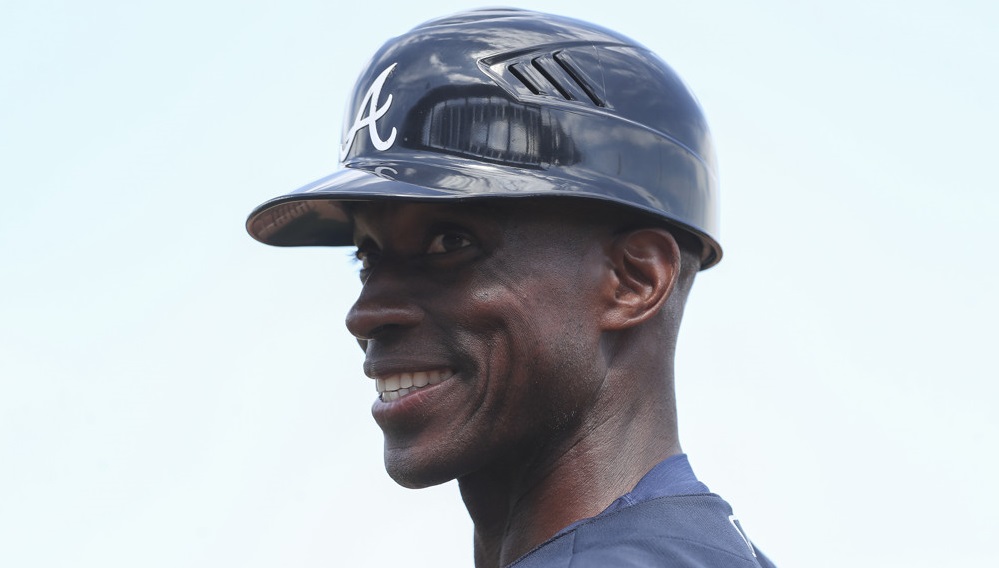
    Ichiro Suzuki says he wants to play in 2019, and for the purposes of this exercise, let’s presume he sees considerable time. By HOF-V, he’s Hall of Fame worthy at 561.2, just behind Hall of Famers Mike Piazza (562.4) and Vladimir Guerrero (561.6).

    Reds first baseman Joey Votto has a .311/.427/.530 slashline, in a 12-year career and has led the National League in on-base percentage seven times including each of the last three seasons. His Win Shares and WAR combination produces an HOF-V of 533.2, a little over the line for worthiness.

    Lastly, Mike Trout is only 27 years old and has played eight MLB seasons. But he’s already surpassed the HOF-V bar. He’s at 523.2, a remarkable total for a player of his age and experience. Trout has added at least 70 points to his HOF-V total in six of the last seven seasons. If he does so in the next two seasons, he’ll rank among the top 100 players in this stat (and having played 10 seasons, he will officially be Cooperstown eligible).

    If he averages 70 HOF-V over the next 10 seasons, he’ll be at 1,223.2, not far behind Willie Mays (1,267.6) for fifth all-time.

    Yadier Molina (499.9) is as close as you can come to reaching the bar. He should clear the threshold almost immediately, presuming no injuries or major performance issues.

    You might have noticed that there are no active pitchers on this list. The pitcher who is closest to a 500 HOF-V is Yankees starter CC Sabathia(489.8). Sabathia has averaged 21.6 HOF-V the last three seasons, so he’s got a good chance to surpass the 500 mark in 2019. Likewise,Justin Verlander (467.6) should clear 500 so long as he pitches at the level he did in each of the last three seasons, in which he averaged an HOF-V of 45.5.

    Perhaps surprisingly Zack Greinke (465.8) is in a similar spot. Another season matching his 2018 campaign (17 Win Shares, 4.8 WAR, 36.2 HOF-V) would push him over the line.

    For those wondering about Clayton Kershaw (444.4) and Max Scherzer (387), public perception may differ from this form of statistical analysis. Both still have a little way to go. Kershaw has been hurt by injuries the last three seasons that have limited his innings. Scherzer didn’t reach a level of consistent excellence until his sixth MLB season, so he still has some ground to make up.

    Three players retired in 2018 who surpassed 500 on the HOF-V scale.Adrian Beltre (755.8), Joe Mauer (631.7), and Chase Utley (552.6) and will all have their names come for discussion in five years. By the measure of this stat, they are Hall Of Fame worthy.

    If you want to check where your favorite player stands in the Hall of Fame Value Standard, go to Bill James Online. If you would like to read more about the Hall of Fame Value Standard, purchase the 2019 Bill James Handbook or visit the SIS Blog.

    Active Leaders in HOF-V
    NameHOF-V
    Albert Pujols876.6
    Miguel Cabrera670.6
    Robinson Cano613.8
    Ichiro Suzuki561.2
    Joey Votto533.2
    Mike Trout523.2
    Yadier Molina499.9
    CC Sabathia489.8
    Ian Kinsler475.2
    Justin Verlander467.6
    Zack Greinke465.8
  • Stat of the Week: Hall of Fame Value Standard Part II

    Last week’s Stat of the Week looked at Bill James’ newest creation, the Hall of Fame Value Standard (HOF-V), and how it analyzes the worthiness of some of the debatable position player candidates on this year’s Hall of Fame ballot. To supplement that, here’s a look at the pitcher candidates of a similar debatable status.

    As a reminder, HOF-V is calculated by adding a player’s Win Shares and four times their Baseball-Reference Wins Above Replacement (WAR). A score of 500 is considered to be the standard for Hall of Fame worthiness.

    Mike Mussina has the highest HOF-V score of any pitcher on the ballot not named Roger Clemens (who would be a certain Hall-of-Famer if not for PED allegations against him). Mussina’s HOF-V of 601.6 is higher than those of fellow former Orioles ace Jim Palmer (587.6) and a contemporary Hall-of-Famer, John Smoltz (565.0).

    Curt Schilling is a notch below Mussina statistically, with 252 Win Shares and 79.6 WAR (to Mussina’s 270 and 82.9). Schilling crosses the threshold with an HOF-V of 570.4, and that’s without even counting his postseason numbers (2.23 ERA in 133 1/3 innings).

    Roy Halladay is polling very well among Hall of Fame voters, indicating that his election is likely. By the HOF-V, he comes up a little short at 479.2. James’ assessment is that the system looks at overall numbers rather than peak performance, and that penalizes Halladay enough to bring him below the line. There are Hall-of-Fame pitchers with an HOF-V below 500 — among them is ex-Yankees ace Whitey Ford (488.6) — so Halladay wouldn’t be alone in that regard. James acknowledged he would vote for Halladay if he had a vote.

    Andy Pettitte is also below the HOF-V line at 465.2, as he was deemed to have had a number of very good years, but not enough great years to add up to Hall of Fame status.

    The system has imperfections when it comes to evaluating relief pitching. Both
    Mariano Rivera (497.8) and Billy Wagner (292.8) come in below the HOF-V bar. Rivera is widely considered to be the best relief pitcher of all-time. Wagner posted incredible numbers in strikeouts and saves.

    But as James wrote in the
    2019 Bill James Handbook, WAR and Win Shares don’t produce a number that represents a closer’s true value.

    “Although MLB field staff don’t think in those terms, they act as if they believe that the Leverage Index for a closer is about four to five … Win Shares and WAR both use Leverage Indexes for closers around 2.00. Let’s say Billy Wagner works 70 innings a year. With a Leverage Index of 2.00 his impact is more as it would be if he was pitching 140 innings a year at the same level of effectiveness … Wagner appears to have much less impact on his team than a good starting pitcher … But is this fair to Billy Wagner? … Wagner’s value is in essence kept in a cage because other people are acting on false assumptions. It’s not his fault. His value doesn’t reflect his performance level.”

    If you want to check where your favorite player stands in the Hall of Fame Value Standard, go to
    Bill James Online. If you would like to read more about the Hall of Fame Value Standard, purchase the 2019 Bill James Handbook or visit the SIS Blog. The BBWAA will announce the newest inductees on January 22. Happy debating!

    2019 HOF Eligible Pitchers
    Roger Clemens 995.4
    Mike Mussina 601.6
    Curt Schilling 570.4
    Mariano Rivera 497.8
    Roy Halladay 479.2
    Andy Pettitte 465.2
    Roy Oswalt 372.4
    Derek Lowe 311.6
    Billy Wagner 292.8
    Freddy Garcia 275.6
    Ted Lilly 220.4
    Jon Garland 209
    Darren Oliver 207.8
  • Larry Walker meets the Hall of Fame standard

    Larry Walker is a high-end Hall of Fame candidate. But not everyone seems to have figured that out yet.

    This year, Bill James introduced a new Hall of Fame Value Standard in the 2019 Baseball Handbook (excerpted here). The methodology combines James’ Win Shares metric with four times Wins Above Replacement into one number. The cutoff score for Hall of Fame worthiness is 500.

    Walker clears the bar with plenty of room to spare, at 599.4. That puts him right in line with Hall-of-Famer Andre Dawson (599.2) and places him just outside the top 100 in that stat all-time. He’s higher than Edgar Martinez by about 20 points, though Walker’s vote total is not close to Martinez’s.

    Walker is hindered by a perception that his numbers were inflated by playing regularly in Coors Field for much of his career. From 1995 to 2002, he slashed .341/.425/.636, averaging 30 home runs and 124 games per season. By the Jamesian metric Offensive Winning Percentage, a team of nine Walkers at the plate (along with average pitching and defense) would have won nearly 75 percent of the time. That ranks 29th all-time.

    Walker did have a strong defensive reputation, though most of his seasons predate Defensive Runs Saved (which was devised in 2003). He did tally 10 DRS in 2003 and did well in the Total Zone Runs stat that is a predecessor to Defensive Runs Saved. Overall, he ranks eighth among right fielders in the Total Zone metric.

    Walker’s standing as Hall of Fame worthy may be slightly hindered by where he played, but in the end, it’s not debatable that he put up numbers that match up well among others who have been enshrined.

  • Fred McGriff has statistical support for Cooperstown

    Fred McGriff has statistical support for Cooperstown

    This article was originally published in December 2018

    Fred McGriff was a really good baseball player. But he’s yet to be recognized as belonging among the elite. McGriff is in his final year of eligibility on the Baseball Hall of Fame ballot. He received 22 percent support in his first year. He received 23 percent last year. He’s not close to the 75 percent needed for election. But perhaps he should be.

    This year, Bill James introduced a new Hall of Fame Value Standard in the 2019 Baseball Handbook (excerpted here). The methodology combines James’ Win Shares metric with four times Wins Above Replacement into one number. The cutoff score for Hall of Fame worthiness is 500.

    McGriff is there. His 552.6 cleared the bar by a little bit. He’s right alongside another player who will be a tough Hall of Fame choice in a few years, recently retired Chase Utley (552.5). James ranks McGriff 19th on the list of those who are Hall of Fame worthy who aren’t special cases (like players with PED histories)

    McGriff finished his career with a slashline of .284/.377/.509, 2,490 hits, and 493 home runs. He didn’t slug like Mark McGwire or Sammy Sosa, but he didn’t have to do that to be an effective player. He finished in the top 10 in MVP voting six times. He also was great in the postseason, hitting .303/.385/.532 with 10 home runs and 37 RBI in 50 games.

    What should solidify McGriff’s argument is this. James also devised a metric known as Similarity Scores, to illustrate how similar one player is to another. The two players rated as most similar to McGriff are Hall-of-Famers Willie McCovey and Willie Stargell.

    McGriff almost surely isn’t making the Hall of Fame this time around. Instead, he’ll likely be forced to wait and hope that someone carries the torch for his candidacy. There are plenty of good reasons to do so.

  • For Edgar Martínez, voters are catching up to HOF worthiness

    This should be the year that Mariners third baseman Edgar Martinez makes the Baseball Hall of Fame.

    It’s fair to call this an overdue honor for Martinez, who is in his 10th and final year on the Hall of Fame ballot. Martinez’s vote total has jumped significantly, from 27 percent in 2015 to 70 percent last year (75 percent is needed for election).

    This year, Bill James introduced a new Hall of Fame Value Standard in the 2019 Baseball Handbook (excerpted here). The methodology combines James’ Win Shares metric with four times Wins Above Replacement into one number. The cutoff score for Hall of Fame worthiness is 500.

    Martinez clears the bar with a score of 578.7. That’s higher than already- elected Hall of Famers Mike Piazza (562.2) and Vladimir Guerrero (561.8). among others. In all, it ranks 139th all-time, which puts him in the top one percent of players all-time, with a little room to spare. James ranked Martinez as the 12th-most deserving position player that is not in the Hall of Fame (excluding special cases, such as those players with PED histories).

    If we may leave you with a stat to remember on Martinez, one you might have forgotten about, let’s look at another James’ creation: Offensive Winning Percentage.

    Offensive Winning Percentage estimates how a team would do if it were comprised of nine batters with the batting line of a given player. It assumes average defensive and pitching performance. An average offensive player would have a .500 offensive winning percentage)

    The elite players in this stat are the best players of all-time. Babe Ruth (.858) and Ted Williams (.857) rank 1-2. Mike Trout is the top active player at .793. The all-time leaders can be found here.

    Martinez represents extremely well here. He’s 59th all-time with a .712 offensive winning percentage. That’s higher than many notable players, including (perhaps surprisingly) Miguel Cabrera, who is tied for 60th at .710 and Albert Pujols, who is 82nd at .696. Martinez’s excellence here can be explained by his batting line. He’s one of 14 players in MLB history with a batting line of at least .310/.410/.510.

    The stats more than make their case for Martinez to be a Hall of Famer. We’ll see if the voters come through for him this time around.

  • Hall of Fame Value Standard shows Mike Mussina’s worthiness

    The Baseball Hall of Fame voters are slowly but surely supporting Mike Mussina’s Hall of Fame candidacy. Mussina isn’t quite there yet, though statistically there’s not much doubt that he belongs.

    This year, Bill James introduced a new Hall of Fame Value Standard in the 2019 Baseball Handbook (excerpted here). The methodology combines James’ Win Shares metric with four times Wins Above Replacement into one number. The cutoff score for Hall of Fame worthiness is 500.

    Mussina clears the bar and then some. He’s at 601.8. That’s better than Hall of Fame pitchers Jim Palmer (587.7), Don Sutton (587.1), and John Smoltz (565.2) among others. Mussina is that high because of consistent excellence. Some say he didn’t dominate like a Roger Clemens or a Pedro Martinez. That’s a poor way to judge Mussina’s performance.

    Here’s a better way:

    James once devised something known as the Gray Ink Test, which rewards pitchers for finishing in the top 10 in wins, ERA, strikeouts, innings pitched, winning percentage, saves, complete games, walks per 9 innings, hits per 9 innings, starts, and shutouts. Each stat is assigned a point value, with wins, ERA, and strikeouts being the most valuable. The stat is actually tougher on contemporary players like Mussina, because they played (and are still playing) in 14-to-16 team leagues and thus have more competition than those players who played pre-expansion.

    Mussina scored 250 points by the Gray Ink test, which ranks tied for 21st among pitchers. Of the top 35 pitchers in this stat, 31 are in the Baseball Hall of Fame, with Mussina, Clemens, and two pitchers from the 19th century (Jim McCormick and Bobby Mathews) being the exceptions.

    Mussina may not have been the best pitcher of his generation. But he certainly was among the best. The numbers indicate he deserves a spot in Cooperstown.

  • Job Opening: Minor League Video Editor Internships

    Sports Info Solutions: 2019 Minor League Video Editing Internship

    Sports Info Solutions, originally founded as Baseball Info Solutions, is looking for highly motivated individuals with a desire to work in the baseball industry. In a new position for the 2019 season, SIS is looking for Minor League Video Editors, who will watch and clip video from Minor League games while validating the accuracy of pitch by pitch information. The end result of each Video Editor’s work will allow professional teams and other SIS clients to conduct advanced player and team analysis, specifically relating to advanced scouting and player development. Video Editors will have the opportunity to watch thousands of players across multiple levels of Minor League baseball, while also learning the ins and outs of the baseball statistics industry.


    Former SIS interns have risen rapidly through Major League front offices after getting their start watching two to three games per day at SIS. In the words of one former intern and current Vice President of Baseball Operations, “My summer at [BIS] was the best baseball experience of my life.” Major League teams frequently come to us for recommendations when they need to fill a position within their organization, and our top interns each year routinely land team internships and/or full-time jobs.

    We take pride in making our internships great development opportunities for those looking to get their start in baseball. In addition to gaining invaluable experience watching thousands of players across different levels, we offer introductory classes that cover writing scouting reports and using the database management language, SQL. We also provide insight and advice from previous SIS interns who have branched out into a variety of areas in the sports industry.

    Responsibilities:
    • During overnight shifts, edit video from Minor League games, properly marking in and out points for each pitch, ensuring all meaningful action is captured
    • Validate the accuracy of Minor League pitch by pitch data
    • Assist with the production of the 2020 Bill James Handbook
    • Provide administrative support to the full-time staff
    Time Frame:
    • The start date for this position is March 11th, 2019. This position will through the end of the Minor League season, with the last day of employment being Monday, September 2nd, 2019 (Labor Day)
    • This position will require relocation to Coplay, Pennsylvania; working remotely is not an option at this time
    Compensation:
    • A starting hourly rate of $8.00 and/or college course credit will be offered
    We are an equal opportunity employer and all qualified applicants will receive consideration for employment without regard to race, color, religion, sex, national origin, disability status, protected veteran status, or any other characteristic protected by law.
    To apply, click here
  • By the numbers, Scott Rolen is Hall-of-Fame worthy

    Third baseman Scott Rolen received 10 percent of the vote his first time on the Hall of Fame ballot. The numbers indicate he deserves better when the results are announced on January. 22.

    This year, Bill James introduced a new Hall of Fame Value Standard in the 2019 Baseball Handbook (excerpted here). The methodology combines James’ Win Shares metric with four times Wins Above Replacement into one number. The cutoff score for Hall of Fame worthiness is 500.

    Rolen clears the bar with a score of 584.7. That’s not quite Chipper Jones (756.8) or Adrián Beltré territory (755.9), but it’s enough to be deemed induction worthy. Rolen’s total is higher than another player hoping for induction, Edgar Martínez.

    Martínez received 70 percent of the vote last year. As noted above, Rolen wasn’t close to that.  Rolen, like Martínez, also rates better in the Hall-of-Fame Value Standard than a couple of his contemporaries, recently-elected Hall-of-Famers Mike Piazza (562.2) and Vladimir Guerrero (561.8).

    There are a couple of things working against Rolen. One is that the Hall of Fame has historically been tough on third basemen. There have been only 17 enshrined, the fewest of any position on the diamond (catcher ranks second with 18). The other is that injuries significantly limited his ability at the end of his career and thus his offensive numbers are not as gaudy as some of his contemporaries. They were still quite good — .281/.364/.490 with 316 home runs.

    But even playing through injuries, Rolen was a defensive superstar. He ranks second among third baseman in Defensive Runs Saved at the position, even though the stat has only been compiled since 2003 (and thus misses his first seven seasons). Rolen is also one of three third basemen to total 30 Defensive Runs Saved in a season, along with Manny Machado and Nolan Arenado. Rolen won eight Gold Glove Awards and made seven All-Star teams.

    In short, Rolen was probably better than you remember him. As James himself wrote:

    “Scott Rolen seems to be to have been a well-qualified Hall of Famer in every respect, a great offensive and defensive performer.”

    Hall of Fame Value Standard – Primary Position: 3B
    1. Mike Schmidt* 894.2
    2. Eddie Mathews* 836.6
    3. George Brett* 786.6
    4. Wade Boggs* 759.7
    5. Chipper Jones* 756.8
    6. Adrián Beltré 755.9
    7. Brooks Robinson* 669.6
    8. Ron Santo* 606.1
    9. Darrell Evans 599.7
    10. Graig Nettles 592.9
    11. Scott Rolen 584.7
    12. Buddy Bell 566.4
    * In Hall of Fame
  • Stat of the Week: Year-End MLB Awards Part II

    Last week, we gave out some year-end MLB Awards to hitters, infielders, and outfielders. This week, we’re specifically rewarding the work of pitchers and catchers. Here are some honors that celebrate their outstanding performance.

    The Contact Minimizer

    The Contact Minimizer goes to the pitcher who limited hard contact best in 2018. The winner of that honor is Mets pitcher Noah Syndergaard.

    Of the batted balls hit against Syndergaard, only 21.9 percent were hard-hit. He was nearly three full percentage points ahead of the next-best starting pitcher, his teammate Zack Wheeler (24.8 percent). Both were better than Jacob deGrom, who placed fifth at 26.6 percent. Not surprisingly, Mets starting pitchers had the lowest hard-hit rate in the majors last season (29 percent).

    Among relief pitchers with at least 50 innings pitched in 2018, there’s a surprise name atop the list. Pirates pitcher Kyle Crick beat out some of the game’s best closers with a hard-hit rate of only 22.5 percent. Crick’s overall numbers in his second season in the majors were notably better than those in his first (which was with the Giants). He finished with a 2.39 ERA and three home runs allowed in 60 1/3 innings pitched.

    Stolen Base Stopper

    The award for the Stolen Base Stopper goes to the pitcher and catcher who had the most Stolen Base Runs Saved in 2018. On the mound, that was Padres starting pitcher Eric Lauer with four. Lauer pitched only 112 innings, but earned the award because of his excellent pickoff move. Lauer had an MLB-best eight pickoffs and two pitcher caught stealings to offset the five stolen bases he allowed.

    The catcher winner is not a surprise. With a couple of brief exceptions, Salvador Pérez has been among the best in the game at basestealer deterrence since he became an everyday catcher in 2013. In 2018, he threw out 24-of-51 basestealers (47 percent) and picked off three more to net seven Stolen Base Runs Saved. That matched his single-season high set in 2012.

    The Hall of Framer

    The Hall of Framer award goes to the catcher who had the best pitch-framing numbers in 2018. This is measured by looking at extra strikes gained on a per-100-pitches basis. The winner of this award is Dodgers catcher Austin Barnes, who gained 1.8 extra strikes per 100 called pitches. Barnes has shown great skill in this area. Yasmani Grandal often got credit for being a top framer for the Dodgers, but Barnes has been just as good, if not better.

    Max Stassi of the Astros was the runner-up for this honor (1.7 extra strikes per 100 pitches). He got significant playing time for the first time in his career and showed that he could excel at this skill at a high level.

  • Stat of the Week: 2018 Year-End Awards

    We’re nearing the end of the year, so this seems like an appropriate time to bestow some statistically-driven baseball awards for 2018. These will round out the awards already given by the BBWAA. Without further ado…

    The Hard-Hitter Award

    Baseball Info Solutions charting is such that every batted ball is deemed hard, medium or soft-hit, based on the balls’ location and velocity. The winner of the Hard-Hitter Award is the player who had the highest percentage of batted balls that were hard- hit.

    That honor goes to Matt Carpenter of the Cardinals (49 percent). The next five players behind Carpenter were Braves catcher Tyler Flowers (48.9 percent), Diamondbacks outfielder David Peralta (48.6), Reds third baseman Eugenio Suarez (48.6), Cardinals and Rays outfielder Tommy Pham (48.5), and Rangers outfielder Joey Gallo (48.5).

    Carpenter succeeded with an approach of trying to drive the ball over the shift that vexed him in the first quarter of the season. After batting .140 in his first 39 games, he hit .287/.397/.587 with 33 home runs in his last 121.

    The Flat Bat Award

    The Flat Bat Award is given annually to the best bunter of the year. To determine the winner, we look at run value — run expectancy gained or lost — for both successful and unsuccessful sacrifice and bunt-for-hit attempts for each player. This year’s winner is Delino DeShields of the Rangers, who also won the award in 2017. In addition to having 12 successful sacrifices (and only two failed attempts), DeShields had 12 bunt hits, easily the most in the majors in 2018 (six players ranked tied for second with eight).

    Amazingly, Carpenter, who won the Hard-Hitter Award, finished second for the Flat Bat. He had eight bunt hits and no failed bunt hit attempts. He could both hit for power and drop a bunt down effectively in order to beat shifts.

    If you would like to read about the methodology behind the Flat Bat Award, click here.

    The Vacuum Cleaner Award

    BIS Video Scouts also track what are known as “Good Fielding Plays,” which are often those that lead to the unlikely recording of an out. Those can be broken up into different subtypes, including “Ground Ball Outs.”

    Let’s call the leader in Good Fielding Plays on Ground Ball Outs the winner of our Vacuum Cleaner Award. For 2018, there are co-winners,Nolan Arenado of the Rockies and Matt Chapman of the Athletics, each of whom easily paced the field with 28.

    The two are an appropriate choice, given their penchant for amazing defensive work at third base. They’ve combined to win the last four Fielding Bible Awards. Coincidentally, the two share another common bond. They each went to El Toro High in Lake Forest, Calif.

    The Fly Swatter Award

    This is a similar award to The Vacuum Cleaner, except it’s for Good Fielding Plays on “Fly Ball Outs.” The player with the most in 2018 was Royals left fielder Alex Gordon with 25 (23 fair fly balls and two foul fly balls). Albert Almora of the Cubs was second with 23.

    Gordon is best known for his arm, but showed standout range as well, as evidenced by the many impressive catches he made. He also won his fourth Fielding Bible Award, the most given to a left fielder since the award was first bestowed in 2006.