Category: NFL

  • Five Games Later, Drew Lock is Still An Enigma

    By BRYCE ROSSLER

    John Elway doesn’t have the best track record when it comes to quarterback evaluation. While he deserves credit for “discovering” four-time NFL MVP Peyton Manning, he’s spent multiple top-60 selections on busts at the position. 

    The first failed experiment was Brock Osweiler, who eventually retired after the Dolphins decided a better alternative to his services would be to trade a second- and fifth-round pick for a quarterback coming off one of the worst passing seasons in the Total Points era (2016-present). Said quarterback (Josh Rosen) ultimately failed to beat out Ryan Fitzpatrick, who, by the way, has a career average net yards per attempt (5.59) that is just one one-hundredth of a yard below Elway’s.

    But, no lessons were learned there. As soon as the Texans outbid Elway’s 3-year, $45M offer to Osweiler in the 2016 offseason, Elway spent a first-round pick on Paxton Lynch. That went so well that Osweiler was welcomed back to Denver in 2017 after playing poorly elsewhere. Osweiler attempted more passes for the Broncos that season than Lynch, who was cut after just two years and spent 2019 as the Steelers’ fourth-string quarterback behind an undrafted rookie out of Samford. Simply put: a competent successor to Manning has proven as elusive to Elway as a 60% completion rate was during his playing career.

    Or has it?

    Elway used the 42nd overall pick on Drew Lock, who was a late bloomer as a rookie and started the final five games of the season. The Broncos’ 4-1 record in those games has inspired fan confidence in Lock, but impartial viewers may be more skeptical of a five-game sample. Furthermore, Lock’s 6 Passing Total Points/60 Snaps ranked just 22nd among 42 quarterbacks with at least 100 attempts. If we want to excuse his worst performance in a 23-3 loss to Chiefs on account of the winter weather conditions, that Total Points/60 figure jumps to 14 and ranks fifth in the NFL. No matter how you look at it, it’s hard to be sure about Lock entering his second year.

    Conversely, it’s easy to see why some people are excited about him. He’s aggressive, flashes plus arm talent, and has the athleticism and creativity to improvise effectively. In just a few games, Lock showed that he was capable of making impressive throws outside the numbers:

    Into tight windows:

    And on the run:

    But, as was the case on this last play, he’s also capable of making things harder on himself than they need to be. His primary read, which was the field out by the motion receiver, was open all the way and he never should have come off of it. The result was the same, but the process was inferior. And on more than one occasion, Lock’s bad process yielded a bad result.

    His second career interception is a microcosm of his decisionmaking going into Year 2. It’s 2nd & 10 from the Houston 25-yard line with Denver up 38-14 with 2:47 to go in the third quarter. A field goal here would put the Broncos up four scores and effectively end the game. 

    The Texans end up in a split-field coverage with what appears to be quarters to the trips side and 2-man on the single receiver side. Lock seems to like the pre-snap matchup Courtland Sutton has and checks the boundary safety (#39), but he either misdiagnoses what the safety’s responsibility is or makes a bad decision to throw this ball. Perhaps he could have gotten away with it if he had been more decisive and hadn’t double-clutched, but the ball was badly underthrown, anyway. The result is an interception which likely took points off the board for Denver.

    This is a less egregious error. It’s 2nd & 20 with 3:30 to go in the first quarter, and the Broncos are down 3-0 to the Lions. Detroit is playing Tampa 2 here, and the result is a checkdown to Royce Freeman (No, 28). On paper, this is a 7-yard completion, but it’s really a missed opportunity. Given the depth of the MIKE’s drop, the middle hook area should be vacated, and Jeff Heuerman (No. 82) is consequently open over the ball. Failing to target him isn’t the worst mistake in the world, but neither the WILL nor the weak safety are in a position to cover the dig route by Noah Fant (No. 87). These compounding errors set up a 3rd & long which the Broncos ultimately failed to convert.

    Lock was undeniably physically talented coming out of Missouri and that continues to be the case. In spite of some bad process, he was very efficient from a Total Points standpoint when he wasn’t playing in a blizzard. However, his mental processing and decision-making have not yet caught up to his physical abilities, and that’s a recipe for volatility. On top of that, a five-game sample could be high-variance and does little to assuage concerns about the sustainability of his play. There’s only one thing we should be comfortable saying about Drew Lock at this point in time:

    He’s a better option than Paxton Lynch.

  • New football podcast: All things Buccaneers

    LISTEN HERE

    Former NFL scout Matt Manocherian (@mattmano) of Sports Info Solutions and football analytics pioneer Aaron Schatz (@FO_ASchatz) of Football Outsiders (@fboutsiders) welcome Football Outsiders Almanac contributor Thomas Bassinger (@tometrics) of the Tampa Bay Times to the show to talk about the 2020 Tampa Bay Buccaneers. The group opens with an update on the team workouts organized by Tom Brady during the COVID outbreak (0:54) before moving on to how Brady fits into the Bruce Arians offense (4:29) and what to expect from Rob Gronkowski and OJ Howard (14:23). The discussion then shifts to whether the defense can be as good as they were in 2019 (22:22) and which under-appreciated players could jump into the spotlight thanks to increased media coverage this season (28:23).

    You can email the show with feedback at offthecharts@ww2.sportsinfosolutions.com and don’t forget to follow on Twitter @SportsInfo_SIS and Instagram @sportsinfosolutions. For more, check out: sportsinfosolutions.com footballoutsiders.com sportsinfosolutionsblog.com SISDataHub.com

  • A quick introduction to our Analytics Challenge data set

    A quick introduction to our Analytics Challenge data set

    In case you missed it, we’ve announced a football analytics challenge! We’ll be releasing some data that can be used to evaluate defensive linemen, including individual player alignment pre-snap and play outcomes. Then, we ask you to determine which D-line position is the most important!

    This is the first time we’ve done anything like this, but we thought this was as good a time as any to start thinking about such a competition, because we can give the competition a purpose beyond the little sports analysis bubble we live in.

    There isn’t an entry fee for the competition, but we ask that all participants donate any amount they would like to the United Negro College Fund. We as a company want to do more to promote racial equality, and with your help, we can take a step (or many steps!) towards that goal.

    (By the way, even if you’re not interested in the competition, feel free to donate via the GoFundMe page we created for the challenge.)

    For those who want to explore some of our previously-unreleased data, maybe this brief article will help give you a lay of the land before you embark on the challenge!

    “What’s in the box”

    The data set used for the challenge combines both play-level information and player-level information from weeks 9 to 17 of the 2019 season into a single file.

    The play-level section includes basic play-by-play plus some extra data points like the Expected Points Added (EPA) of the play. There are also some interesting details about the play that might be relevant to your analysis, with a few data points specific to each of pass or run plays.

    The player-level section includes the identity of all of the up-front defenders on the play, their positions as named on the roster, their alignment on that play in particular, and a number of stats they might have accumulated.

    A player is included if he (a) was in a 3 point stance, (b) lined up standing on the edge on the line of scrimmage, or (c) usually lines up as a DL, even if he might have been up or off the ball on this play.

    Some of the stats included in the file are given at both a play level and a player level. For example, InterceptionOnPlay will tell you if anyone intercepted the pass, and Interception will tell you if the specific player referenced in that row intercepted the pass.

    A little extra info on defensive alignment

    Most of the data we’re releasing for this challenge is pretty self-explanatory to anyone who has played around with football data before. The defensive alignment info is probably the biggest exception.

    For starters, we have what we’re calling RosterPosition and OnFieldPosition. The former is just what we have the player labeled as on the roster. The latter is his position on the given play. In this context, that basically means “did you have your hand on the ground?” If “yes”, then you’re a defensive lineman. If “no,” then you’re a linebacker.

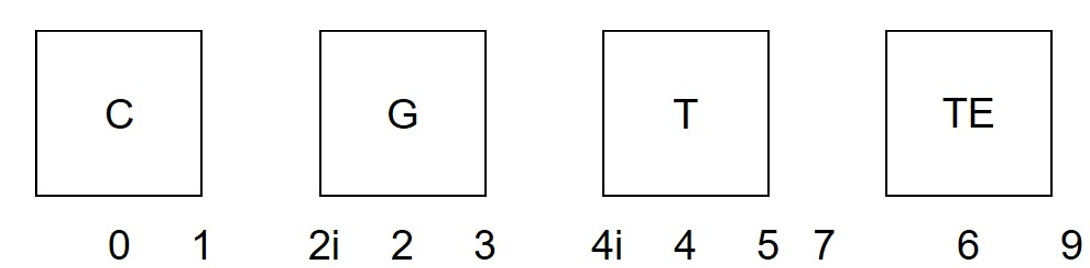
    The one piece that requires a little more football know-how is the technique (i.e. alignment) of the defenders on each play. In the file it’s called TechniqueName.

    The technique of a defender is encoded using a (mostly) numeric system where your alignment is measured by which offensive player you line up against and on which side of that player you line up. See this image from the SIS Football Rookie Handbook:

    Looking at this image, you can see that when people refer to “3-technique” or “5-technique” they’re talking about lining up just outside of either the guard or tackle. And the same structure is used for either side of the center, so you might have multiple players with the same technique on a given play, just on different sides of the center. The player’s side of the ball is encoded with SideOfBall, which is from the defense’s perspective.

    There’s also another data point that isn’t quite alignment-related but does convey specific information about what a player was doing on a given play. The IsRushing column tells you whether the given player was rushing the passer on designed pass plays. That column will always be zero on designed run plays.

    A few more notes on the data

    Event Types

    Unsurprisingly, there are run plays and pass plays in the data set. The EventType column tells you whether the play was a pass or a run—not by design, just in result. So a scramble would be counted as a run play for this purpose. There are also “Challenge pass” and “Challenge run” event types, which are just passes or runs where a replay review changed the call on the field.

    For the purposes of this kind of analysis, it’s likely fine to just assume that the “challenge” version of each event type is the same as the regular one.

    Run plays

    We have included RunDirection and UsedDesignedGap to help you analyze run plays based on where the play was designed to go and whether the offense succeeded in running that direction.

    The run directions are gap-based using the A-B-C-D naming convention (moving from inside to outside). A run to the left B gap, for example, was intended to go between the guard and the tackle on the left side.

    If a run was intended to go between the right guard and the center and the rusher bounced the run outside the tackles, RunDirection would be “Right A Gap” and UsedDesignedGap would be set to 0.

    Pass plays

    In addition to basic information like whether the pass was completed or intercepted, we have also included the air yards on the throw (ThrowDepth). At both the play level and player level, we’ve included information about Pressure (hits, hurries, knockdowns, sacks) and PassBreakup (defensed, batted, deflected, or intercepted passes).

    Penalties

    While we understand that the value of defensive players can be affected by their ability to draw offensive penalties (or commit penalties themselves), we decided that we would remove all plays with an accepted penalty from the data. There is enough gray area in how one should approach analyzing plays with penalties that it was decided to remove them from the picture.

    It’s going to be a fun month while we have this challenge going! If you have any questions about the data set or the competition in general, don’t hesitate to e-mail challenge@ww2.sportsinfosolutions.com.

  • Which Defensive Playcallers Are Best At Coaching For Takeaways?

    By LOGAN KING

    “We’re going to take the football,” was a phrase echoed repeatedly by Bear Bryant in his time at Alabama to emphasize the importance of generating takeaways on the defensive side of the football. The turnover battle remains a key determinant in the outcome of football games today, however previous research suggests that much of the turnover battle is up to chance and defensive performance significantly fluctuates from year to year.

    Despite the inherent volatility of defensive performance at a team level, examining specific coaching schemes may provide greater consistency when analyzing defensive performance in the turnover department. To do this, I looked at season-level takeaway statistics for each defensive playcaller dating back to 2015. While there was a rotating door for top and bottom teams in takeaways, two coaches consistently had defenses performing above the league average: Wade Phillips and Bob Sutton.

    Wade Phillips

    SeasonTeamTakeaways (Rank)Yards/ReturnPoints 
    2015Broncos24 (T-10th)14.230
    2016Broncos24 (T-11th)17.524
    2017Rams27 (T-5th)15.318
    2018Rams29 (3rd)13.724
    2019Rams23 (9th)8.918

    Bob Sutton

    SeasonTeamTakeaways (Rank)Yards/ReturnPoints
    2015Chiefs28 (3rd)19.636
    2016Chiefs29 (1st)12.324
    2017Chiefs24 (7th)12.318
    2018Chiefs26 (T-5th)12.724

    NFL Averages

    SeasonTakeawaysYards/ReturnPoints
    201521.611.015.4
    201620.610.310.1
    201720.912.414.4
    201820.810.912.4
    201921.110.812.4

    To measure the statistical significance of the performance of each coach when compared to the rest of the league, an unpaired two-sample t-test was used for each statistic. Based on these tests, Phillips and Sutton displayed significantly higher takeaway and points scored numbers than the rest of the league. However, the test revealed that their average yards per return were not significantly different than the rest of the league. While takeaway numbers are typically up to chance, the results of these tests indicate both Phillips and Sutton defenses have held a tangible edge over the rest of the league in terms of generating both takeaways and points on takeaways since 2015. 

    Wade Phillips

    In each of the last five seasons, Phillips’ defenses generated more takeaways than the NFL average with nearly 50% above the league average in 2018. In addition to generating takeaways, Phillips-led defenses were also consistently above league average in generating yards and points on takeaways. Even more impressive are these results being seen with two separate teams. 

    Two Super Bowl seasons for Wade Phillips (2015 Broncos and 2018 Rams) were highlighted by strong performances in the turnover department. In 2015, Denver’s defense tied for third in points on defensive takeaways in the regular season. The Rams 2018 defense ranked third in takeaways and tied for second in points generated on takeaways. 

    The value of Phillips coaching is especially apparent in the 2018 season, when compared to a team with similar takeaway numbers. Gregg Williams’ 2018 Cleveland Browns defense finished with 31 takeaways, two more than Phillips’ Rams defense. However, Cleveland only generated 6.2 yards per return and did not score any points on takeaways.

    While this could be chalked up to mere volatility in takeaway statistics in a given year, there is an underlying trend. In the majority of seasons since 2015, defenses under Williams have performed below average in takeaways, average return yards, and points generated on takeaways, which points to the ability or inability of certain coaches in this facet of the game. 

    Bob Sutton

    From 2015-2018, Bob Sutton’s defenses in Kansas City finished above average in takeaways and points generated from takeaways each season, along with finishing above average in yards per return in three of four seasons. Sutton’s defenses tied for fourth or better in points generated on takeaways in three of four seasons, finishing tied for first in 2015. The Chiefs defense also led the league in yards per return in 2015. 

    The play of the Chiefs’ defense in terms of generating and capitalizing on takeaways under Sutton contributed to the team’s four playoff appearances and three division wins in that span, along with a conference championship appearance. 

    Sutton currently serves as a senior assistant for the Falcons. While his Kansas City defenses performed well in the turnover department, they received significant criticism elsewhere. In 2018, the Chiefs allowed the second most yards per game (405.5), eighth most yards per play (5.9) through the regular season, and ninth most points per game (26.3) through the regular season. The final straw came in the AFC Championship, where Kansas City’s defense lost two fourth quarter leads and failed to stop the Patriots from scoring a touchdown on the opening drive of overtime. Following Sutton’s replacement, the 2019 Chiefs would go on to hoist the Lombardi Trophy.

    There are several lessons to be learned from this analysis:

    • While it is largely random how teams perform year-to-year in terms of takeaways, certain coaches have displayed a particular aptitude for both generating takeaways and efficiency on the returns of said takeaways. 
    • Defensive performance on takeaways is not solely dependent on coaching ability: many other factors such as individual player ability, level of competition, and sheer luck also play roles in the outcomes of takeaways.
    • Overall defensive performance relies on much more than just results in the turnover department, which is why both Phillips and Sutton are no longer with their respective teams.

    Coaches who have performed well in terms of takeaways in recent years to keep an eye on include:

    • Bill Belichick: With Belichick calling the shots for the Patriots defense in 2019, New England finished with the second most takeaways in the league, tied for third in points generated on takeaways, and was above average in yards per return. 
    • Don Martindale: In his two years leading the Ravens defense, the team has finished first in yards per return (2018) and tied for first in the NFL in points generated on takeaways (2019).
    • Todd Bowles: In his first season as the Buccaneers defensive coordinator, Bowles coached the defense to a tie for the lead in points generated on takeaways, a second place finish in yards per return, and a fifth place finish in takeaways.

  • New football podcast: Talking Eagles

    New football podcast: Talking Eagles

    LISTEN HERE

    Former NFL scout Matt Manocherian (@mattmano) of Sports Info Solutions and football analytics pioneer Aaron Schatz (@FO_ASchatz) of Football Outsiders (@fboutsiders) welcome Michael Kist (@MichaelKistNFL) of Bleeding Green Nation (@BleedingGreen@BGN_Radio) to the show to talk Philadelphia Eagles. The group opens with a discussion of the team’s decision to draft Jalen Hurts (1:46) and then transitions to the confidence level in the Eagles’ decision-makers heading into 2020 (11:05), some offensive tendencies (specifically in the passing game) (17:06), and defensive tendencies to watch for with the secondary (22:12), when blitzing (30:52), and with the off-ball linebackers (34:30). 

    You can email the show with feedback at offthecharts@ww2.sportsinfosolutions.com and don’t forget to follow on Twitter @SportsInfo_SIS and Instagram @sportsinfosolutions. For more, check out: sportsinfosolutions.com footballoutsiders.com sportsinfosolutionsblog.com SISDataHub.com

  • Pinpointing the skill differential: Pat Mahomes & Mitch Trubisky

    Pinpointing the skill differential: Pat Mahomes & Mitch Trubisky

    By BRYCE ROSSLER

    The timelines can vary, but most people in the personnel community would agree that by the end of their third professional season, you usually know how good a player is. Perhaps that is why the cutoff point to accept a first-rounder’s fifth-year option falls in the May following their third year.

    That deadline has passed and only two of the three quarterbacks taken in the first round had their options picked up. The Chiefs and the Texans opted in on Pat Mahomes and Deshaun Watson, respectively, whereas the Bears traded a fourth-round pick for Nick Foles’ bloated contract and decided on a four-year term limit for Mitch Trubisky.

    This means that Marquise Williams’ old backup at UNC is currently not guaranteed to make any money in the NFL after the upcoming campaign, but it’s still possible for him to earn 2021 guarantees similar to what his former backup Chase Daniel earned this offseason ($1.5M). Now would be a good time to compare the members of the 2017 quarterback class.

    For this article, we’ll contrast Trubisky and Mahomes. There are several ways we can do this. We can do it by career accolades:

    MahomesTrubisky
    NFL MVP (2018)Ohio’s Mr. Football (2012)
    NFL OPOY (2018)247Sports’ #206 HS recruit (2013)
    NFL passing TDs leader (2018)Third-team All-ACC (2016)
    2x Pro Bowl (2018, 2019)2nd overall pick in NFL Draft (2017)
    Super Bowl champion (LIV)Pro Bowl alternate (2018)
    Super Bowl MVP (LIV)

    We can do it by comparing weekly performance from a Total Points perspective:

    Or, we can do it by comparing how they executed some of the same concepts in 2019.

    Mesh out of 2×2 Slot Gun Weak

    Week 16 (KC at CHI) Q4 10:11

    The Chiefs are facing 3rd & 8 on the +14 (i.e., the opponent’s 14 yard line), and they’re looking to extend their two-touchdown lead and put the game away with roughly ten minutes to go in the fourth quarter. Mahomes appears to be expecting man coverage pre-snap and alerts the wheel route. When he sees the traffic created by the route distribution post-snap, he confirms that Nick Kwiatkoski (#44) will not be in a good position to leverage the wheel and lays it out for Damien Williams, showing Trubisky and the Bears how it’s done.

    Week 3 (CHI at WAS) Q3 3:18

    That play occurred in Week 16, though–months after Trubisky’s Monday night mishap against Washington on the same concept from the same formation. On 2nd & 3 from the +6, Trubisky’s eyes go to Allen Robinson off the snap. This is fine; it’s a good matchup and you would generally expect Robinson to be the first receiver in the progression in this look.

    The problem is, Trubisky never comes off it. Josh Norman remains patient at the LOS and gets a good collision to deny a clean release on the fade. Nevertheless, Trubisky giftwraps an underthrow to Norman, giving him his only pick of the season–one in which he ranked 114th in pass defense Points Saved (-2).

    Curl-Flat out of 3×1 Gun Weak

    Week 16 (KC at CHI) Q1 3:32

    Trubisky has yet another opportunity to witness how a franchise quarterback operates in a critical situation, this time on 3rd & Long. It’s a tie game in the first quarter, Kansas City is facing 3rd & 18 on the +47, and Andy Reid has dialed up curl-flat to the sticks. The post safety ends up being too deep to drive and assist the nickel defender, and Mahomes delivers a laser to Tyreek Hill for the first down.

    Week 1 (GB at CHI) Q2 2:19

    https://streamable.com/lojper

    That route is the first read for Trubisky, too, but he’s once again too reluctant to move on. On 3rd & 14 from his own 23, he stares down Robinson and narrowly avoids disaster.

    The Packers are in a quarter-quarter-half look, and the positioning of both the mike linebacker and the strong safety suggest that Trubisky should come off this read and look towards the outside curl. Instead, he affords the strong safety an opportunity to drive on the route and make a play on the ball.

    Four Verts out of 3×1 Open Gun Weak

    Week 14 (DAL at CHI) Q4 11:33

    https://streamable.com/fmx1tf

    Unlike some of the other plays, it’s hard to fault Trubisky for the decision he makes here. It’s the fourth quarter, the Bears are down three scores, and it’s 3rd & 7, so he admittedly needs to make something happen. If this is 1st & 10, it might be a different story, but I have no problem with him trusting his best receiver here.

    The problem is that he doesn’t give Robinson a chance to make a play on the ball. Byron Jones quickly tops this route and the only way to beat his coverage is to backshoulder the throw. It’s definitely not an exercise in pitch-and-catch, but the inability to see the leverage and adjust accordingly is certainly less than ideal.

    Week 3 (BAL at KC) Q2 0:53

    https://streamable.com/usairy

    Mahomes, though, is able to recognize the kind of throw he needs to make whenever the corner denies vertical access. In this play, the corner’s body positioning is more exaggerated – he’s in a bail technique and isn’t playing tight to the route–but Mahomes nevertheless demonstrates an understanding of where he needs to put the ball. Again, these are not easy completions to make, but NFL quarterbacks need to be able to provide such opportunities to their receivers.

    Conclusion

    Chicagoan holders-on might tell you that Foles’ arrival will be enough to jumpstart Trubisky’s career, but he’s never ranked better than 28th in passing Total Points in a season and seems a lost cause at this point. Both the numbers and the film lead to the same conclusion: Trubisky has a long way to go in order to prove that he can operate an NFL offense effectively.

  • NFL 2020 Breakout Candidates

    BY JOHN SHIRLEY

    Every NFL season we see young players who haven’t cracked the starting lineup, but nevertheless flash big-time potential. These players have taken advantage of their limited opportunities and hope to build upon them to become larger contributors the next season. Here we will highlight some of these players from last season who hope to breakout in 2020.

    Players were chosen based on their performance in the SIS player value metric Total Points per Snap. To qualify for this list players have to be entering either their second or third NFL season and must have played between 10 and 40 percent of their teams’ snaps in 2019.

    Player (Pos, Team)Pct of Team SnapsTotal PointsTotal Points / Snap
    Derrius Guice (RB, Redskins)10%100.12
    Tony Pollard (RB, Cowboys)18%190.11
    Ryan Connelly (LB, Giants)17%160.09
    George Odum (S, Colts)27%240.09
    Rashad Fenton (CB, Chiefs)15%140.09
    T.J. Edwards (LB, Eagles)11%90.09
    Foyesade Oluokun (LB, Falcons)30%240.09
    Chandon Sullivan (CB, Packers)34%270.08
    D.J. Reed (S, 49ers)12%90.08
    Darius Phillips (CB, Bengals)10%80.07
    1. Derrius Guice, RB Redskins
    • Guice has so far had trouble staying healthy during his first two seasons in the NFL. But when he was healthy last season, he flashed high-end potential. His 5.8 yards per rush average ranked second among backs with at least 40 carries. And he ranked first in Yards After Contact (4.6) and fourth in Broken Tackles Per 100 Rushes (28.6).
    1. Tony Pollard, RB Cowboys
    • Pollard will continue to be a role player for the foreseeable future. When he is given the opportunity, he is an explosive player in both the running and passing game. As a rookie, he averaged more Yards Per Rush (5.3), Yards After Contact (4.0), and Broken Tackles Per 100 Rushes (26.7) than starter Ezekiel Elliott (4.5, 2.6, and 14.6). 
    1. Ryan Connelly, LB Giants
    • Connelly was well on his way to a breakout season as a rookie, before being derailed by a torn ACL. When he returns from injury, look for him to build on his 2019 season that included 20 Tackles, 3 Pressures, 2 Interceptions, and an ATD+ of 155 in only 4 games played. 
    1. George Odum, S Colts
    • Odum has been a reserve safety for the Colts the past two seasons since going undrafted in 2018. He put up a solid 2019 campaign racking up 36 Tackles, 2 Forced Fumbles, and allowing a completion percentage of 67% (8 completions) on 12 Targets.
    1. Rashad Fenton, CB Chiefs
    • In limited playing time, mostly consisting of sub packages, Fenton had an efficient season for the Super Bowl champion Chiefs. On 15 Targets, he allowed only 6 completions and 4.6 Yards Per Target.
    1. T.J. Edwards, LB Eagles
    • After going undrafted a year ago, Edwards is now projected to be the Eagles starting middle linebacker. His play in limited opportunities last season bodes well for his new role. He was above average against the run with an Adjusted Tackle Depth+ of 115 and 4 Tackles Above Expectation on designed running plays.
    1. Foyesade Oluokun, LB Falcons
    • As a reserve linebacker, Oluokun made quite a few plays, racking up 62 tackles on only 291 defensive snaps. In coverage, he allowed 10 of his 12 targets to be completed. Though, he allowed only 3.3 Yards Per Target, which resulted in a combined -11.2 EPA for the offense.
    1. Chandon Sullivan, CB Packers
    • Sullivan is the front-runner to take over the primary nickel spot for the Packers in 2020. In 2019, he was one of the most efficient corners in the entire NFL, allowing a league low Completion Percentage of 28.6 among corners with at least 20 targets. He also allowed a league low 3.5 Yards Per Target and broke up almost as many passes (5) as he allowed receptions (6).
    1. D.J. Reed, S 49ers
    • Similarly to Fenton, Reed is another secondary player who has excelled in sub packages and could breakout if given the opportunity. After allowing a completion percentage of 81.3% during his rookie season, last year Reed allowed 5 completions on 10 targets.
    1. Darius Phillips, CB Bengals
    • During his career at Western Michigan, Phillips set the FBS record with 12 non-offensive touchdowns. He hasn’t had the same level of success quite yet in the NFL, but showed his immense potential in 2019. In coverage, he was targeted 12 times, allowed only 4 Completions, had 4 Interceptions and dropped another one, and added 3 Passes Defensed. 

  • Too early to call it quits on Dwayne Haskins

    By BRYCE ROSSLER

    Dwayne Haskins’ rookie season did not start well. Technically, it started on the bench behind Case Keenum, but it really didn’t start well when he threw three interceptions in relief of Keenum against the division rival Giants. 

    It didn’t end well, either. Haskins exited Washington’s Week 16 contest against the Cowboys with an ankle injury and rested for a lame duck game the following week. 

    But it really didn’t end well when people punctuated his season with speculation about whether the franchise should have given Haskins the hook and taken Tua Tagovailoa with the second overall pick. Of course, there was precedent for this considering we weren’t yet a year removed from the Cardinals defunding the Josh Rosen experiment in favor of Kyler Murray, but Haskins also wasn’t unequivocally the worst rookie passer in the Total Points era.

    Scouting Analysis

    It’s important to distinguish outcomes from processes, especially when it comes to rookie quarterbacks. The results weren’t always there and he could have accelerated his reads at times, especially when the picture changed post-snap, but Haskins’ process was sound most of the time. He did a good job of identifying defensive structures pre-snap and generally had the right idea of where to go with the ball.

    Take, for example, this play against Buffalo in his first NFL start. It’s 2nd & 6 and Washington is on its own 44-yard line. The Bills present a quarters look pre-snap and stay in it post-snap. Haskins has a ‘snag’ or ‘spot’ concept to the boundary, which theoretically does not fare very well against Cover 4. 

    He initially looks to the boundary side but quickly comes off once he confirms it’s quarters. Since Tremaine Edmunds opens to the boundary, Haskins knows he has McLaurin isolated against Lorenzo Alexander and takes his chances. It’s a tight window throw and it’s ultimately broken up, but he demonstrated quick processing, got the ball out before pressure arrived, and gave his receiver a chance to make a play. 

    In the NFL, you win some and you lose some. Haskins lost here, but it’s a good rep nevertheless.

    The biggest thing that affected Haskins’ game as a rookie was his footwork. Maintaining a base when navigating the pocket, quick game setup, and effectively resetting to targets later in his progressions created issues with accuracy for him. 

    His completion percentage over expectation (CPOE) of -6.4% and his on-target rate of 75.4% ranked 34th  out of 34 quarterbacks with at least 200 dropbacks, respectively. However, these issues with footwork appeared on his college tape, so growing pains were to be expected and are not cause to hit the panic button on him. It’s a lot easier to correct a quarterback’s footwork than to teach him how to read a defense, which Haskins has shown he’s able to do.

    Furthermore, sacks really hampered Haskins’ efficiency from a Total Points perspective. He endured the second-highest sack rate (11.9%) among quarterbacks with at least 200 dropbacks. Although quarterbacks do contribute to their own sack numbers, Haskins looks much better when you examine just his attempts.

    After removing sacks, his 17.9 passing Total Points Added/100 Dropbacks ranks 18th. That put him just below Kyler Murray (18.3, 17th) and above all of the following: Tom Brady (16.5, 22nd), Gardner Minshew (16.1, 23rd), Josh Allen (15.3, 24th), Daniel Jones (14.0, 25th), Sam Darnold (13.6, 26th), and Baker Mayfield (10.0, 31st). It was also better than Drew Lock’s 13.6, but Lock was a nonqualifier.

    Washington may have been uniquely situated to take Tagovailoa, but Haskins was more efficient as a passer than many members of both the 2018 and 2019 quarterback classes. There are reasons for trepidation with him moving forward – specifically, the lapses in accuracy that his footwork causes – but he demonstrated that he can handle the NFL game mentally and his first-read accuracy is much better than that of first-round fixer-uppers of drafts past. 

    As Haskins tries to rebuild from the ground up, the organization must do so with him, and they appear to be ready to do that. For now, I think they made the right choice, but only time will tell.

  • New football podcast: History of DVOA

    Former NFL scout Matt Manocherian (@mattmano) of Sports Info Solutions and football analytics pioneer Aaron Schatz (@FO_ASchatz) of Football Outsiders (@fboutsiders) have a discussion about the history of the Football Outsiders DVOA metric. Aaron brings us behind the curtain to talk about what inspired him to start looking into football stats on a deeper level (1:28), what the process was to conceptualize DVOA and what kind of iterations it went through before he arrived at the final construction (3:37), what some of the key decision were that helped build DVOA and decisions that would’ve changed the story that DVOA has told over time (12:46), how the stat has changed over time (20:09), how it works in its present form (24:08), some of its strengths and weaknesses (29:41), and where he sees it going in the future (34:07).

    You can email the show with feedback at offthecharts@ww2.sportsinfosolutions.com and don’t forget to follow on Twitter @SportsInfo_SIS and Instagram @sportsinfosolutions. For more, check out: sportsinfosolutions.com footballoutsiders.com sportsinfosolutionsblog.com SISDataHub.com

  • How Does Experience Affect Quarterback Performance?

    How Does Experience Affect Quarterback Performance?

    By JOHN SHIRLEY

    Earlier this month Dan Pizzuta of Sharp Football Analysis posted an interesting finding concerning Giants quarterback Daniel Jones’ performance based on dropback type to Twitter. The crux of the finding was that Jones performed at an above-average rate when using only a 0/1-Step Drop and generally having fewer reads on a given play. But with longer drops and more time to process and read the field, Jones’ performance significantly faltered. 

    This finding led to us wondering if this was a unique instance of a rookie struggling with more reads, or if there is a relationship between experience and dropback types. 

    If a relationship were to exist, the theory would be that experience impacts longer dropbacks more than shorter ones. A 0/1-Step Drop with limited reads on the play should be a similar throw for a rookie or a seasoned veteran, while a 5-Step Drop would involve more processing and reads and therefore have a stronger relationship to experience.

    Based on exploratory analysis, there is evidence of this theory being true among quarterbacks within their first four seasons.

    In the above graphic, experience shows a weak relationship with EPA/Att on 0/1-Step Drops, with a correlation of 0.13. This follows the theory that these throws are similar for most quarterbacks and generally don’t require much experience for high-level performance. One of the more extreme outliers within our dataset is Josh Rosen’s rookie season of -0.30 EPA/Att, which is shown as the dot furthest towards the bottom left of the graphic.

    On 3-Step Drops, we see a slightly stronger relationship between experience and EPA/Att, with a correlation of 0.31. The above graphic also shows a noticeable trend of rookies quarterbacks having a much wider variance in their performance on these throws. The range for rookie quarterbacks spans from Ryan Finley’s -0.48 EPA/Att to Lamar Jackson’s +0.47 EPA/Att.

    5-Step Drops are where experience matters the most for quarterback performance, with a correlation of 0.46. There is also the noticeable trend of every quarterback in years three and four having a positive EPA/Att on these throws, while only a single rookie quarterback had a positive EPA/Att. Gardner Minshew, with his +0.46 EPA/Att, was that sole rookie quarterback, though, Kyler Murray would have joined him had he met the minimum attempts threshold, with an EPA/Att of +0.17.

    This analysis shows a trend of experience being a larger factor in quarterback performance on longer dropbacks. This supports the theory that these throws generally require more reads, which players can improve upon with more playing time. However, experience and more playing time does not show a relationship with quick drops, suggesting that players are unable to improve significantly on these throws over time. 

    These findings bode well for Jones, the subject of the original Twitter thread, who performed well on 0/1-Step Drops and struggled on longer dropbacks. Over the next few years, experience should help his performance more on 3-Step and 5-Step drops. All of this analysis comes with an important caveat of smaller sample sizes, but it has provided interesting insight and something for SIS to monitor moving forward.