Author: Nathan Cooper

  • 2021 NFL Draft Review: From best (Lions) to worst (Rams)

    2021 NFL Draft Review: From best (Lions) to worst (Rams)

    By NATHAN COOPER AND JOHN TODD

    If you want our full thoughts on the players your team has added, you can buy the Football Rookie Handbook now at ACTA Sports or on Amazon. And if you’d like to contribute to next year’s edition, consider applying to our Football Video Scout position.

    This was Year 3 of the SIS Football Rookie Handbook. The idea is to have the top players at their respective positions make the book. With 318 players featured in the 2021 edition, not every player from the Handbook would be drafted and not every drafted player was in the Handbook. After having 69% (174 of 254) of drafted players in the book in 2019 and 78% (199 of 255) in 2020, we raised that number once again to 84% (218 of 259) this season.

    When taking out specialists and fullbacks, which we currently don’t put into the Handbook, there were only 36 players drafted who weren’t in the book and only 7 of which we didn’t watch or have a report on. That’s over 97% of the NFL Draft covered! Plus, by our count, 86 of the 98 players who were in the book and didn’t get drafted have already signed undrafted free agent deals with teams as of Monday morning.

    Now using the Handbook, we attempted to grade each team’s draft class. Just like in our article from last season, we assigned all grades from the Handbook and gave all players that weren’t in the book a 5.7 and divided that by the number of selections the team had. These rankings do not account for the value of where players were drafted or trades teams made, it is literally based on the grades we gave the players who were drafted.

    The 2021 Best Draft Class, with an average grade of 6.6, went to the Detroit Lions. They had seven draft picks and made the most of their picks by selecting players who were all featured in the SIS Football Rookie Handbook.

    The Lions draft class is in the table below.

    Detroit Lions 2021 Draft Class

    Pick Position Player College Grade
    7 OT Penei Sewell Oregon 7.2
    41 DT Levi Onwuzurike Washington 6.7
    72 NT Alim McNeill NC State 6.8
    101 CB Ifeatu Melifonwu Syracuse 6.6
    112 WR Amon-Ra St. Brown USC 6.4
    113 LB Derrick Barnes Purdue 6.2
    257 RB Jermar Jefferson Oregon State 6.3

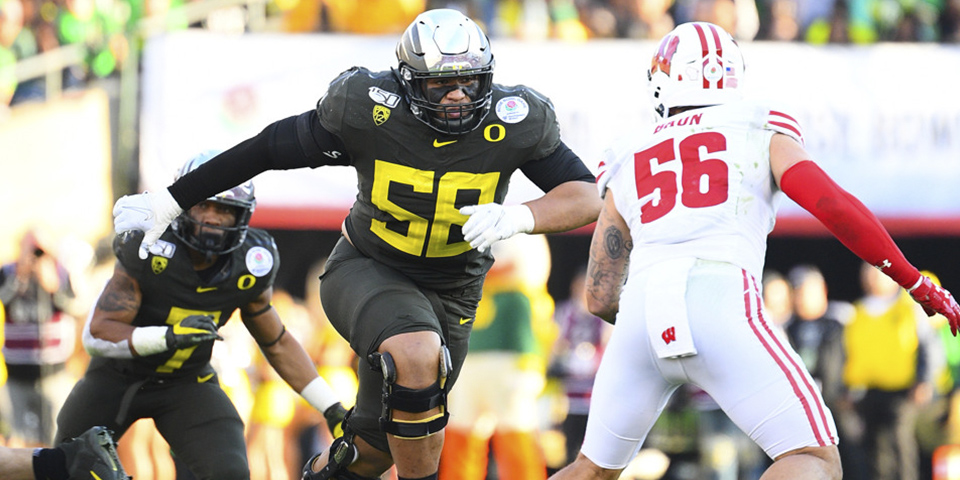
    In our opinion, Brad Holmes, Dan Campbell, and the new regime in Detroit drafted a lot of players that we feel can contribute to both sides of the ball early on in their careers. Penei Sewell is a plug-and-play tackle who many scouts think was the one surefire Hall of Fame player in this class. Onwuzurike and McNeill are big time playmakers on the interior of the defense and will really help the team “bite a kneecap off.” 

    Melifonwu is a big, physical corner who can help bring some depth to a position that struggled with injuries in 2020. 

    St. Brown has the ability to become a No. 3 receiver who can play inside or out, 

    Barnes brings some grit and versatility to the middle of the defense, and Jefferson shows some pass and run game versatility and should compete for the No. 3 RB job. 

    That’s not to mention some undrafted free agents the team reportedly picked up after the draft, most notably Wake Forest WR Sage Surratt (6.7, No. 6 WR) and Notre Dame OG Tommy Kraemer (6.5, No. 10 OG).

    SIS Handbook Top Draft Classes

    Year Team Previous Season Following Season
    2019 Tennessee Titans 9-7 (No Playoffs) 9-7 (L, AFC Champ)
    2020 Cleveland Browns 6-10 (No Playoffs) 11-5 (L, Divisional)
    2021 Detroit Lions 5-11 (No Playoffs) ?

    Our previous two Top Draft Class winners, the Titans and the Browns, both made the playoffs the following year after not making it the season before. Both won in the postseason, as well. Detroit’s roster still needs a lot of work and is in no way similar to what Tennessee’s or Cleveland’s was the past two seasons, but it’s a huge step in the right direction for a new staff and rebuilding organization.

    Here are the draft classes ranked in order of their grade:

    Draft Class Final Rankings

    Rank Team # of Picks Draft Grade
    1 Lions 7 6.60
    2 Dolphins 7 6.46
    3 Browns 8 6.44
    4 Jaguars 9 6.40
    5 Falcons 9 6.38
    6 Packers 9 6.37
    7 Chargers 9 6.37
    8 Broncos 10 6.36
    9 Panthers 11 6.35
    10 Patriots 8 6.35
    11 Bengals 10 6.34
    12 Giants 6 6.32
    13 49ers 8 6.30
    14 Titans 8 6.30
    15 Raiders 7 6.30
    16 Bears 7 6.30
    17 Texans 5 6.30
    18 Ravens 8 6.28
    19 Eagles 9 6.26
    20 Steelers 9 6.23
    21 Chiefs 6 6.23
    22 Jets 10 6.22
    23 Vikings 11 6.20
    24 Cardinals 7 6.20
    25 Buccaneers 7 6.20
    26 Seahawks 3 6.20
    27 Washington 10 6.14
    28 Bills 8 6.14
    29 Saints 6 6.12
    30 Cowboys 11 6.11
    31 Colts 7 6.07
    32 Rams 9 5.82

    The Dolphins ranked No. 2 after a Top 10 ranking in 2020. Getting Jaylen Waddle, our top-ranked receiver, and Jaelan Phillips, our top-ranked edge rusher, in the 1st Round was a home run for Miami. Two more 6.7 players in Jevon Holland (No. 3 S) and Liam Eichenberg (No. 4 OT) really solidified an outstanding draft for an up-and-coming Dolphins squad.

    Coming off their first postseason win since 1994, the Browns checked in with another Top 5 class. This followed having the No. 1 Draft class in 2020. 

    Selecting Greg Newsome II (6.7, No. 4 CB) in the 1st Round and getting a steal in Jeremiah Owusu-Koramoah (6.8, No. 1 Will LB) in the 2nd Round was huge for that defense. They also got Tommy Togiai (6.7, No. 2 NT) in the 4th Round and Richard LeCounte (6.7, No. 6 S) in the 5th Round.

    The Jaguars got their QB of the future in Trevor Lawrence with the No. 1 pick and then followed it up by taking his Clemson teammate Travis Etienne later in the 1st Round. In addition, grabbing Andre Cisco (6.7, No. 5 S) in the 3rd Round and Jay Tufele (6.7, No. 4 DT) in the 4th Round really helped solidify their ranking.

    Rounding out the Top 5 was the Atlanta Falcons. They took arguably the top skill player in this class with the No. 4 overall pick in Florida’s Kyle Pitts, who should immediately help give Matt Ryan another weapon on offense. They also got Ryan some offensive line help early in the 3rd Round in Michigan’s Jalen Mayfield (6.7, No. 6 OT).

    The bottom three teams for 2021 were the Rams, Colts, and Cowboys.

    Dallas did start out with a huge pick in Micah Parsons and also grabbed Jabril Cox in the 4th Round to solidify the linebacker position (they declined Leighton Vander Esch’s 5th-year option), but we were a little lower on 2nd-Round pick Kelvin Joseph and 3rd-Round pick Chauncey Golston. 

    However, out of their 11 picks, Dallas took 10 who were featured in the Handbook. 

    The Colts got two big time defensive linemen with their first two picks in Kwity Paye (6.7, No. 3 Edge) and Dayo Odeyingbo (6.6, No. 7 DT), but then drafted fringe backups in Kylen Granson, Shawn Davis, and Sam Ehlinger, before taking Mike Strachan and Will Fries, who we thought weren’t good enough to make the Handbook.

    The Rams took home the 2021 Worst Draft Class. It’s hard to put together a top-end draft class when you don’t have a 1st Round pick, but not only that, five of their nine draftees we felt weren’t good enough to be a part of the Handbook’s 318. Tutu Atwell should be a playmaker for new quarterback Matthew Stafford out of the slot, but the rest of their picks were tabbed as fringe backups according to our scouts.

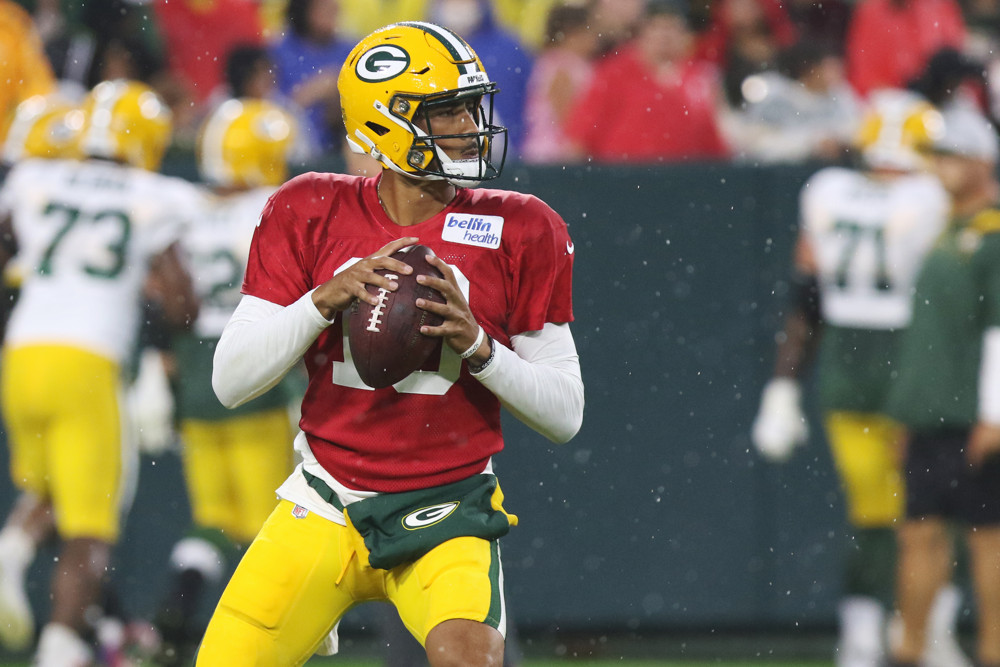
    The Green Bay Packers had the worst ranking for us in 2020, and while that was a slightly different situation, they still made the playoffs and were one of the top teams in the NFL. In addition to coming off a No. 7 class in 2020, there’s still hope for the Rams in 2021 and beyond.

    How the Handbook Compared to the Draft

    Comparing the SIS Rookie Handbook’s top five graded players at each position to how the NFL drafted them, there were plenty of similarities and some differences. Our No. 1  player in nine of our 14 position groups matched the NFL’s first player taken at each spot (only differing at wide receiver, center, will linebacker, cornerback, and safety). While in different orders, we had the same first five quarterbacks (as many did), and four of the first group of five running backs, wide receivers, tight ends, tackles, centers, and cornerbacks. We had at least three of our top five players taken within that initial group of selections at every position.

    Overdrafted?

    Some players we believe the NFL drafted much higher than we had them pegged include Milton Williams, Earnest Jones and Brandon Stephens. None of the three received grades high enough to make our final tally of players in the Handbook, yet each was taken before the third round ended. 

    With nearly 750 scouting reports submitted on over 460 players, which ultimately led to the 318 players in the Handbook, we feel we cast a wide net to find the best players for this class. Our lowest graded first round selections, based on their projected role, are Joe Tryon, Jamin Davis, Kadarius Toney, and Payton Turner, who was the only first round player to not receive at least a low-end starting grade.

    Underdrafted?

    Conversely, there were plenty of value picks in the later rounds based on their Handbook grades. Some of these players include Jaylen Twyman, Rodarius Williams, Cole Van Lanen, and Quincy Roche. All four of these players, taken in the sixth round, received strong starting grades from our scouts, and we believe whether they fell due to injuries, off-field concerns, or other intangibles we may not consider, they have a great chance to become impactful players. 

    Additionally, Trey Smith, Kylin Hill, Trey Hill, Larry Rountree III, Victor Dimukeje, Patrick Johnson, and Shaka Toney were taken in the last two rounds of the draft, yet received low-end starting grades within their respective position groups. These players may be more usage specific at the next level, but we like their chances of seeing the field and playing key roles by Year 2.

    Players who were graded and ranked within the Top 5 at their position in the Handbook and ultimately not drafted include Dylan Moses (No. 2 Will LB), Ar’Darius Washington (No. 2 S), Paris Ford (No. 4 S), and Amen Ogbongbemiga (No. 4 Mike LB). Each of these players has already reportedly signed with a team through the undrafted free agency process. Needless to say, we feel this group has a strong chance of sticking on a roster and proving the league made a mistake passing on them.

    Handbook Report Card

    As this is the third annual edition of the SIS Football Rookie Handbook, and thus the third edition of this post-draft recap, we’re pleased to look back at our previous work and see drastic progress. 

    Only two players drafted within the top five of their position group were not in the Handbook: DT Milton Williams – who would not be mentioned here if we had graded him as a true Edge, as he was drafted – and Mike LB Buddy Johnson. The number of drafted players not in the Handbook in total dropped from 56 to 41 (36 excluding specialists and fullbacks). And possibly our favorite statistic from this year, as it was mentioned in the outset, the number of drafted players on whom we didn’t have a report assigned at all dropped from 27 to just 7.

    While the first non-Handbook and non-report players were each taken earlier this year than in 2020, the percentage increases noted at the beginning of this article, as well as our raw contribution totals, tell us we’re trending in the right direction. The Handbook doesn’t claim to be perfect. Quite the opposite in fact, as it is presented with often contradictory scouting and analytical perspectives so you, the reader, can form your own opinions. 

    Publishing the Handbook as early in the pre-draft process as we do, in order to solely grade on-field ability as purely as possible, occasionally miscalculates our final projections, not to mention our lack of insider medical and character information and the natural variance of scouting opinions. Given the adversities of 2020, we’re thrilled and thankful for the hard work our scouts put in to chart and evaluate this class and, as usual, we’ve already begun scouting for 2022.

    The SIS Football Rookie Handbook will be back again next year, filled with even more data, more accuracy, better reports, and the same combination of deep-dive analytics and pre-Combine scouting we’re proud to share. In the meantime, if you want our full thoughts on the players your team has added, you can buy the book now at ACTA Sports or on Amazon. And if you’d like to contribute to next year’s edition, consider applying to our Football Video Scout position.

  • Sports Info Solutions 2020 NFL All-Rookie Teams

    Sports Info Solutions 2020 NFL All-Rookie Teams

    Now that the football season is over and the work for The SIS Football Rookie Handbook is behind us, it’s time to combine those two things together and give you the 2020 Sports Info Solutions All-Rookie Teams. 

    Using SIS’s Total Points metric as our guide, we have come up with the All-Rookie 1st and 2nd Teams, consisting of one quarterback, three wide receivers, one running back and tight end, and a full offensive line on offense, and four defensive linemen/edge rushers, two off-ball linebackers, two cornerbacks, two safeties, and one hybrid player on defense.

    While Total Points was used in most of the decision making, we also factored in playing time and a few other advanced stats to break any ties or close calls.

    Here are the 2020 Sports Info Solutions All-Rookie Teams:

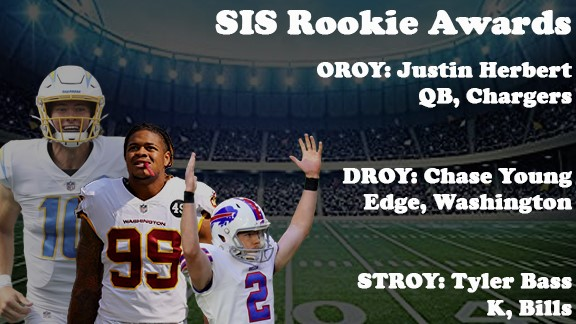
    Let’s begin with our overall Offensive, Defensive, and Special Teams Rookies of the Year. With 116 Total Points, far and away above any other rookie, Justin Herbert takes home Offensive Rookie of the Year. With 38 Total Points, No. 2 overall pick Chase Young is the Defensive Rookie of the Year. Finally, with 13 Total Points to lead all rookie special teamers, Tyler Bass is crowned Special Teams Rookie of the Year.

    Sports Info Solutions All-Rookie 1st-Team Offense

    Position Player Team Total Points
    Quarterback Justin Herbert Chargers 116
    Running Back Jonathan Taylor Colts 37
    Wide Receiver Justin Jefferson Vikings 45
    Wide Receiver Tee Higgins Bengals 24
    Wide Receiver Brandon Aiyuk 49ers 23
    Tight End Cole Kmet Bears 10
    Tackle Tristan Wirfs Buccaneers 36
    Tackle Jedrick Wills Browns 21
    Guard Michael Onwenu Patriots 29
    Guard Cesar Ruiz Saints 25
    Center Lloyd Cushenberry III Broncos 14
    Kicker Tyler Bass Bills 13

    Quarterback: Justin Herbert, Chargers

    • After having to make a surprise start Week 2 against the reigning Super Bowl champs, Justin Herbert never looked back. Herbert’s 116 Total Points ranked 7th among all quarterbacks and 4,336 yards ranked 6th. His 6-9 record and one 4th-quarter comeback weren’t indicative of his overall play as he led the team down for a score or a chance to win multiple times, but to have the kicking game or defense falter behind him. Herbert broke nearly every rookie passing record and looks to be a star in the making in Los Angeles.

    Running Back: Jonathan Taylor, Colts

    • Jonathan Taylor was outside the NFL’s top 20 in rushing and had logged only one broken tackle through Week 10 of the 2020 season. But despite missing a game and a week of practice due to COVID protocols down the stretch, only Offensive Player of the Year Derrick Henry gained more rushing yards and first downs the rest of the regular season than Taylor, who also broke 11 tackles in that six-game period.

    Wide Receiver: Justin Jefferson, Vikings

    • When the Vikings threw to Justin Jefferson, good things happened. He finished his rookie season third among all receivers and tight ends in Points Earned (behind only Travis Kelce and Stefon Diggs). After being bound to the slot his final year at LSU, 41% of his rookie year receptions came from wide alignments, he received the third-most Air Yards in the NFL, and he was one of only four players with over 100 targets to average at least 10 Yards per Target. His 45 Total Points were the most of all non-QB rookies.

    Wide Receiver: Tee Higgins, Bengals

    • In the 2021 NFL Draft, Tee Higgins fell to the second round and was paired with No. 1 overall pick Joe Burrow in Cincinnati. Even with a healthy A.J. Green, Higgins was targeted 108 times (one behind Tyler Boyd for the team lead) and led the team with 908 yards on 67 receptions. Higgins’ 1st-Down Rate of 77.6% ranked 6th among all receivers with at least 50 targets. Additionally, his 137 Yards After Contact ranked 19th among wide receivers.

    Wide Receiver: Brandon Aiyuk, 49ers

    • For a team riddled with injuries, the 49ers found consistency with their first-round pick Brandon Aiyuk. Aiyuk made 11 starts, saw 96 targets and caught 60 of his 71 catchable targets for a team-leading 748 yards and 5 touchdowns. Not only did he make plays as a receiver, but he also added 77 yards and 2 touchdowns on the ground.

    Tight End: Cole Kmet, Bears

    • After beginning the year third on the Bears’ tight end depth chart, Kmet played over 70% of snaps in each of the team’s final eight games of the season, including playoffs. Coinciding with Mitchell Trubisky’s return to the lineup, Kmet was third on the team in targets and receptions in that final stretch, and he was second among all tight ends in On-Target Catch Rate for the season (minimum 40 targets).

    Tackle: Tristan Wirfs, Buccaneers

    • Tristan Wirfs was a clear first-place finisher in rookie OL Total Points this year, largely due to his ability to assist Tom Brady and the Buccaneers’ passing game, from which 24 of his 36 Total Points came. Wirfs didn’t miss a snap at right tackle all season, including the Super Bowl run. Tampa Bay finished second in the NFL in sack rate, a testament to the 43-year-old Brady as much as it is to Wirfs and his linemates. Wirfs received the 3rd-most votes among right tackles in All-Pro voting as a rookie.

    Tackle: Jedrick Wills, Browns

    • Jedrick Wills was one of the key pieces to the Browns’ success this year and a big reason Cleveland saw their first playoff appearance since 2002. As Baker Mayfield’s blind-side protector, Wills helped Mayfield to the 5th-best On-Target% and 6th-best IQR in the second half of the regular season. On the ground, Wills ranked 23rd among offensive linemen who started at least 10 games with 2.6 Yards Before Contact on runs to his gap.

    Guard: Michael Onwenu, Patriots

    • While Onwenu spent 12 of his 16 starts at right tackle, we’re bending the rules a bit to get our best groups represented. The Patriots’ sixth-round pick was expected to back up along the interior but earned immediate playing time and rotated at both guard spots and jumbo tight end before settling in at right tackle in Week 7. He was second in his rookie class in Run and Pass Total Points, respectively.

    Guard: Cesar Ruiz, Saints

    • Although Cesar Ruiz was a center at Michigan and Erik McCoy was already on the roster, the Saints still drafted Ruiz with the No. 24 overall pick. After missing Week 1 due to injury and easing into action Week 2, Ruiz slotted in at right guard and played at least 60% of the offensive snaps in 12 of the final 14 games with 9 starts, including playing 100% of the snaps in each playoff game. He made his name as a run blocker, with positive plays 48.5% of the time on runs to his gap, and his 15 Total Points on run plays ranked 21st among all offensive linemen.

    Center: Lloyd Cushenberry III, Broncos

    • Cushenberry was the only Broncos offensive player to not miss a snap in 2020. He led the NFL in Blown Blocks on run plays, but his 12 Total Points and zero holding penalties on pass plays give him the nod among rookie centers.

    Kicker: Tyler Bass, Bills

    • A sixth-round pick in the 2020 NFL Draft, Tyler Bass went 2-for-4 against the Jets in his NFL debut but finished 33-for-39 the rest of the way, including playoffs. The next meeting with the Jets, Bass went 6-for-8 scoring all 18 Bills points in a 18-10 win. Additionally, his 57 made extra points tied for the most in the NFL with Wil Lutz.

    Sports Info Solutions All-Rookie 1st-Team Defense

    Position Player Team Total Points
    Edge Chase Young Washington 38
    Edge Alex Highsmith Steelers 23
    Interior Defensive Lineman Derrick Brown Panthers 21
    Interior Defensive Lineman Javon Kinlaw 49ers 16
    Linebacker Patrick Queen Ravens 34
    Linebacker Jordyn Brooks Seahawks 27
    Linebacker/Defensive Back Jeremy Chinn Panthers 29
    Cornerback Cameron Dantzler Vikings 43
    Cornerback Jaylon Johnson Bears 32
    Safety Kamren Curl Washington 36
    Safety Antoine Winfield Jr. Buccaneers 29
    Punter Joseph Charlton Panthers 11

    Edge: Chase Young, Washington

    • Not only did Chase Young lead the 2020 rookie defensive end class in pressures and sacks, he also led the group in tackles and TFLs on run plays. He tied for the overall NFL lead in forced and recovered fumbles, was top-10 in pressures after Week 10, and fully lived up to his lofty draft status, earning Defensive Rookie of the Year honors.

    Edge: Alex Highsmith, Steelers

    • Despite logging only two sacks on the season and not getting significant game time until the final 5 games of the year, Highsmith actually led the 2020 rookie class with a 12.4% Pressure Rate for the year (minimum 20 pressures). His 19 total pressures over those final five regular season games were tied for 8th in the entire league in that stretch among all defensive ends and linebackers.

    Interior Defensive Lineman: Derrick Brown, Panthers

    • The 7th overall pick in the 2020 NFL Draft, Derrick Brown finished in the top 15 of all NFL defensive tackles in QB hurries and tackles for loss. He played over 50% of snaps in all 16 games, and he was credited with 8 Points Saved against the pass and 9 against the run, validating his true three-down ceiling as a prospect.

    Interior Defensive Lineman: Javon Kinlaw, 49ers

    • Javon Kinlaw stamped his ticket to the first round during an outstanding week at the Senior Bowl and then continued that production for the 49ers in 2020. Kinlaw played in 14 games with 12 starts and was on the field for 53% of the overall defensive snaps. He finished the season with 34 tackles, 1.5 sacks, 15 pressures, and even had 3 passes deflected at the line. He also showed off his athleticism picking off Jared Goff and returning it 27 yards for a touchdown against the Rams in late November.

    Linebacker: Patrick Queen, Ravens

    • Patrick Queen started every game for the Ravens and proved his range by finishing in the top 10 in tackles on designed off-tackle and outside runs league-wide. He also added 18 pressures and 3 sacks as a pass rusher. He’ll need to improve his tackling efficiency (5th-worst Broken/Missed Tackle Rate among LBs with at least 5 tackles/game) and his coverage rates could be better, but overall Queen was easily the top rookie LB in Total Points.

    Linebacker: Jordyn Brooks, Seahawks

    • Jordyn Brooks didn’t rush the passer much, but he teamed up with Bobby Wagner at the heart of the Seahawks run defense. Brooks actually tied his teammate with 13 Run Defense Points Saved which ranked him 17th in the league among all linebackers. Brooks totaled 57 tackles and ranked third in the league among linebackers with only a 3.4% Broken + Missed Tackle Rate despite being on the field for only 32% of snaps over 14 games.

    Linebacker/Defensive Back: Jeremy Chinn, Panthers

    • Jeremy Chinn immediately contributed as a late second-round pick in 2020 and lined up just about everywhere in his 15 starts. Chinn saw 40% of his snaps as an off-ball linebacker, 25% at safety, 23% in the slot, and 8% on the edge. He also saw nine snaps as an outside corner. As far as numbers go, he filled up the stat sheet. His 117 tackles tied for 17th-most in the league. Chinn also gave up the 2nd-fewest yards per attempt from the slot behind only Minkah Fitzpatrick (among 66 safeties who saw at least 10 targets while defending receivers from the slot).

    Cornerback: Cameron Dantzler, Vikings

    • For the first eight weeks of the season, Dantzler had the league’s 6th-worst Passer Rating Against among cornerbacks (minimum 15 targets) and had allowed 4 touchdowns. However, after returning in Week 11 from a scary midseason neck injury, Dantzler led all NFL corners in Passing Points Saved and was third-best in Passer Rating Against the rest of the season, logging 2 interceptions and conceding no further touchdowns. He finished with the most Total Points of the 2020 defensive rookies.

    Cornerback: Jaylon Johnson, Bears

    • There were concerns about Jaylon Johnson’s shoulder injury history coming into the NFL and another one forced him to miss the final 3 games of the season. However, before that, Johnson started all 13 games, never seeing less than 85% of the snaps except for the game he got injured. Johnson gave up the 29th-most yards, but he tied for the 2nd-most passes defended with 15 and the 7th-best Deserved Catch Rate at just 70% among cornerbacks who saw at least 25 targets their way.

    Safety: Kamren Curl, Washington

    • Seventh-round pick Kam Curl rotated as Washington’s nickel back for the first 7 weeks of the season before safety Landon Collins ruptured his Achilles. Curl stepped into his role full-time and, from that point on, led all secondary defenders in tackles and was a top-10 safety in Run Defense Points Saved. He wasn’t lacking in coverage, either. For the season, he had the 7th-best Passer Rating Against among safeties (minimum 20 targets) and tallied 3 interceptions and 2 sacks, adding up to a Draft-Day steal and the clear No. 1 rookie safety in Total Points.

    Safety: Antoine Winfield Jr., Buccaneers

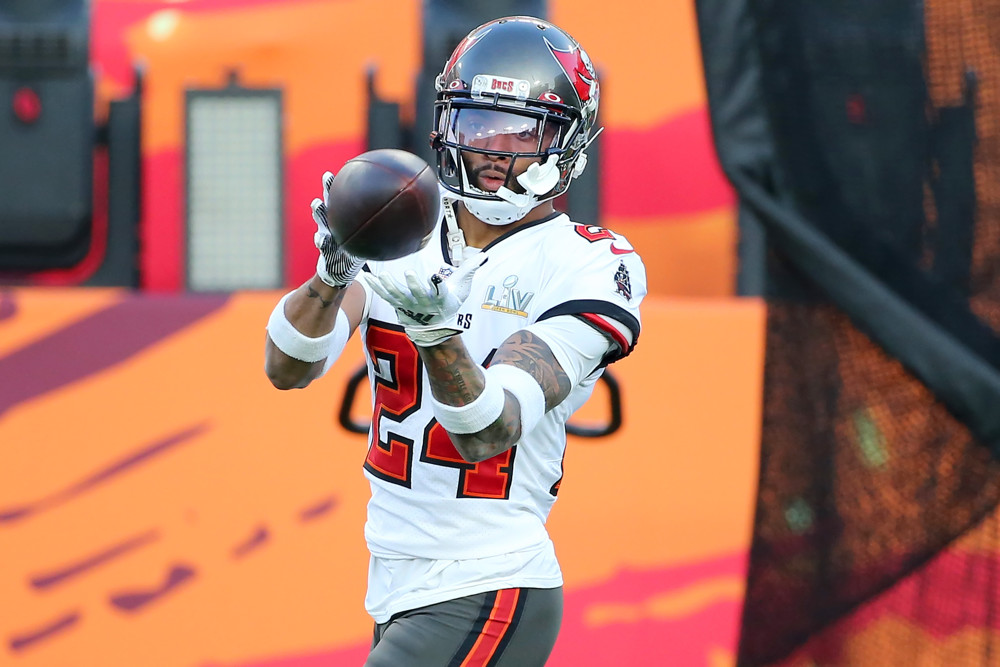
    • Size and durability concerns led to Antoine Winfield Jr. falling to the middle of the second round in the Draft. However, he went on to start 19 games (only missing the NFC Championship Game against Green Bay with injury), play 97% of the regular season defensive snaps, and win a Super Bowl. He finished the regular season with 92 tackles, 3 passes defended, and an interception, even adding a second against Patrick Mahomes in the Super Bowl. Winfield also ranked top 25 among safeties in Passer Rating Against (minimum of 20 targets).

    Punter: Joseph Charlton, Panthers

    • Joseph Charlton showed off his leg at South Carolina and then the Senior Bowl before landing with the Panthers as an Undrafted Free Agent. Charlton had the 3rd-fewest punts of any full-time punter in 2020 with 45, yet he still managed 21 punts inside the 20, 9 punts inside the 10, forced 16 fair catches, and only had 3 touchbacks. His 46.2 raw punt average ranked 10th and his 42.2 net average ranked 15th.

    In all, six offensive 1st-Teamers and five defensive 1st-Teamers received a 6.7 final grade or higher from us in the 2020 edition of The SIS Football Rookie Handbook, suggesting those players will at least be high-end three-down starters beginning their second season. We’ll see if they begin 2021 the way they played in 2020 to warrant those final grades, but we like their chances.

    Below, you can find our All-Rookie 2nd Teams which still included big names, such as Joe Burrow, Clyde Edwards-Helaire, Mekhi Becton, Yetur Gross-Matos, and Isaiah Simmons.

    Sports Info Solutions All-Rookie 2nd-Team Offense

    Position Player Team Total Points
    Quarterback Joe Burrow Bengals 49
    Running Back Clyde Edwards-Helaire Chiefs 13
    Wide Receiver Chase Claypool Steelers 21
    Wide Receiver Darnell Mooney Bears 17
    Wide Receiver Laviska Shenault Jaguars 12
    Tight End Adam Trautman Saints 5
    Tackle Mekhi Becton Jets 21
    Tackle Robert Hunt Dolphins 21
    Guard Jonah Jackson Lions 24
    Guard Solomon Kindley Dolphins 19
    Center Tyler Biadasz Cowboys 8
    Kicker Rodrigo Blankenship Colts 7

    Sports Info Solutions All-Rookie 2nd-Team Defense

    Position Player Team Total Points
    Edge Alton Robinson Seahawks 15
    Edge Yetur Gross-Matos Panthers 13
    Interior Defensive Lineman DaVon Hamilton Jaguars 14
    Interior Defensive Lineman Tershawn Wharton Chiefs 14
    Linebacker Willie Gay Chiefs 15
    Linebacker Tae Crowder Giants 11
    Linebacker/Defensive Back Isaiah Simmons Cardinals 15
    Cornerback Michael Ojemudia Broncos 25
    Cornerback Trevon Diggs Cowboys 21
    Safety Jordan Fuller Rams 25
    Safety Kyle Dugger Patriots 14
    Punter Tommy Townsend Chiefs 7

    There were a few close calls on both teams and honorable mentions we’d like to highlight.

    The 1st-Team tackle spot next to Wirfs was a neck-and-neck three-way tie in Total Points between Wills, Becton and Hunt, the 1st-Team guard spot next to Onwenu was tight between Ruiz and Jackson (If you’re a stickler who would have wanted us to stick to players with a majority of games at their selected position, Jackson of the Lions would have ascended to First Team and Onwenu would have moved to 1st-Team tackle) and Michael Pittman Jr. and Gabriel Davis are deserving of a mention for 2nd-Team wide receiver consideration. Defensively, Mykal Walker had a good case for a 2nd-Team linebacker selection, as did Jeff Gladney at cornerback.

    The Carolina Panthers (three 1st-Team & one 2nd-Team) and the Kansas City Chiefs (four 2nd-Team) tied with the most selections at four apiece. Additionally, all but six teams were represented, suggesting there was a lot of talent in the 2020 Draft class that was dispersed throughout the league.

    Be sure to grab your copy of this year’s SIS Football Rookie Handbook to get a leg up on who we think could vie for the 2021 All-Rookie Teams. It’s available for pre-order now at this link with an expected release date of March 1.

  • Who Are The Most Efficient Wide Receivers by Route?

    Who Are The Most Efficient Wide Receivers by Route?

    Introduction

    Sports Info Solutions currently tracks approximately 40 routes run by potential receivers. Many players are better at running some routes than others, while some routes fit a player’s skill set better than others. 

    When looking at the stat Yards per Target (yards gained / number of targets), it gives a good indicator of how efficient receivers are at piling up yards each time their quarterback targets them. I found the most efficient receiver at six routes, or set of routes among those players who just moved on from college to the NFL and looked at their 2019 film to see what characteristics make them stand out among the rest.

    Curl – Ceedee Lamb, Oklahoma

    2019: 16.5 YPT, 13 Targets, 13 On-Target, 13 Receptions, 215 Yards, 1 TD (minimum 10 targets)

    2020 Draft: Round 1, Pick #17 – Dallas Cowboys

    The biggest thing that stands out when watching Ceedee Lamb run curl routes is his route savvy. He does a great job of reading defenses and identifying coverages. When defenders bail off the line, Lamb breaks off his route and lets his quarterback know he’s open right away. He’s able to find the open holes in zones and work away from defenders to give his quarterback a better throwing lane and give him an uncontested catch opportunity. Lamb is also really good at breaking the defender’s cushion and getting him to flip his hips just at the top of the route.

    Once Lamb makes the catch, his run after catch ability allows him to turn a 5-10 yard curl route into a 20-30 yard gain. Of his 13 receptions on curl routes this season, four of them went for at least 20 yards. In a Cowboys offense in which Dak Prescott targeted a curl route on over 19% of his attempts in 2019, look for Lamb to come in right away and contribute early on.

    Top 2021 Draft Eligible Prospect: Trevon Grimes, Florida (4SR)

    Out – Cody White, Michigan State

    2019: 11.9 YPT, 18 Targets, 15 On-Target, 15 Receptions, 214 Yards, 1 TD (minimum 15 targets)

    2020 Draft: Undrafted – Signed by Kansas City Chiefs

    The out route is a route that demands one of the most precise cuts by a receiver. Inefficient route runners often will round cuts at the top of their routes. However, regardless if the receiver is using a true speed cut or not, the route needs to be flat to the sideline and not veer upfield or that’s when the corner can jump it for an interception. With all of that said, there’s a reason why Cody White was the most efficient out route runner in 2019, and that’s because he possesses the traits needed to run a textbook out route.

    White is quick off the line and does a really good job at the top of the route to drop his weight, stick his inside foot in the ground, and quickly break outside. He also has an uncanny ability of getting his head snapped around extremely quick.

    The video below is the first play for Michigan State’s offense in their bowl game against Wake Forest. It’s a great look at White’s ability to stick his foot in the ground at the top of the route and then snap his head around to look for the ball. It’s so good that the corner slips trying to break with him.

    https://youtu.be/LW1mtBHGWNg

    When the ball approaches, White has strong hands to pluck the ball out of the air. He has the awareness along the sideline to stay inbounds on balls thrown close to the sideline and also can turn upfield and gain yards after the catch. His efficient route-running ability should give him a chance to win a back-end job for the reigning Super Bowl Champions.

    Top 2021 Draft Eligible Prospect: Warren Jackson, Colorado State (4SR)

    Slant – Jauan Jennings, Tennessee

    2019: 16.2 YPT, 14 Targets, 13 On-Target, 11 Receptions, 227 Yards, 1 TD (minimum 10 targets)

    2020 Draft: Round 7, Pick #217 – San Francisco 49ers

    Jennings lined up in the slot 76% of the time in 2019 and all 13 of his slant routes came from that spot. He’s not the fastest guy in the world (40 yard dash in 4.72 seconds at the Combine), but he makes up for it with good, precise route running.

    Even when defenders have inside leverage on him, he does a good job stemming his route off the line and getting the defender to hop outside to give Jennings an inside release. At the top of the route, Jennings nearly always sticks his foot in the ground with authority to create separation. He possesses strong hands which allow him to pluck the ball out of the air and does a really good job of getting upfield quickly after the catch to break the angles of incoming defenders and gaining extra chunks of yardage.

    https://youtu.be/mb9V_FbtwQw

    He did have two on-target incompletions on slant routes, both in the Alabama game. One was a good defensive play to break up the pass at the catch point and the other was a concentration drop that turned into an interception. With those aside, Jennings’ route running allows for him to take a short pass for a long gain. The NCAA average yards per reception on slant routes is just over 13 yards, but Jennings was able to take 7 of 11 receptions beyond that in 2019.

    The 49ers have a really strong, young crop of players at the position in Deebo Samuel, Brandon Aiyuk, and Jalen Hurd, among others, but Jennings shows enough traits to contribute at the next level, whether it’s one of the last roster spots in San Francisco or with another team.

    Top 2021 Draft Eligible Prospect: DeVonta Smith, Alabama (4SR)

    Post – George Campbell, West Virginia

    2019: 27.7 YPT, 9 Targets, 7 On-Target, 6 Receptions, 264 Yards, 3 TD (minimum 5 targets)

    2020 Draft: Undrafted – Signed by New York Jets

    Campbell’s stat line is ridiculous. After coming to West Virginia from Florida State in 2019, Campbell caught 19 passes for 469 yards and 7 touchdowns. Additionally, 32% of his receptions and a whopping 56% of his yardage came via the post route, along with 3 of his 7 scores.

    When watching Campbell run the post, it’s obvious he has the speed to win deep. If he’s pressed, his quickness off the line allows him to gain a free release and get into his route quickly. If the defender is playing off, Campbell does a good job of attacking him and then usually gives a quick, hard jab to the outside to open up the middle of the field. 

    Once he gets by the defender, he has the speed to create additional separation. He also possesses really good tracking ability down the field to adjust to off-target throws and still make the grab.

    There is a lot of youth and uncertainty in the Jets wide receiver room right now with the exception of Jamison Crowder. Campbell has enough traits to win himself one of the last receiver spots with a good camp.

    Top 2021 Draft Eligible Prospect: Reggie Roberson, SMU (4SR)

    Corner – Devin Duvernay, Texas

    2019: 16.3 YPT, 12 Targets, 9 On-Target, 9 Receptions, 195 Yards, 2 TD (minimum 5 targets)

    2020 Draft: Round 3, Pick #92 – Baltimore Ravens

    Duvernay is primarily a slot receiver, so all of his corner routes came out of the slot. In addition to his speed and quickness, he also possesses smarts in that he knows how to set up his route based on defender leverage. Many times he will stem to the inside off the line against defenders with inside leverage so that he can get on the same plane. At that point, he gets the defender guessing if he’s going outside or inside. Duvernay’s quickness at the top of the route allows him to gain separation as he heads for the sideline.

    https://youtu.be/2BTGTTJ1vT8

    He also shows strong hands to make contested catches and has good awareness and body control to stay in bounds along the sideline. Not only can he use the corner route to win deep, but he scored twice running the corner inside the 15 yard line, showing it’s an effective target type at all areas of the field.

    In Baltimore’s offense, look for Duvernay to thrive out of the slot for quarterback Lamar Jackson.

    Top 2021 Draft Eligible Prospect: Khalil Shakir, Boise State (3JR)

    Vertical Routes – Tee Higgins, Clemson

    Consists of: Fade, Go/Fly, Seam

    2019: 34.0 YPT, 13 Targets, 10 On-Target, 10 Receptions, 442 Yards, 6 TD (min 10 targets)

    2020 Draft: Round 2, Pick #33 – Cincinnati Bengals

    When you think of vertical routes, you just think of running by the defender, letting the quarterback throw it to you, and that’s that, but there’s much more to it, especially in Higgins’ case. First off, Higgins was able to get to the end zone on 6 of his 10 receptions via vertical routes, which is an absurd percentage.

    He shows a burst and second gear once he gets by the defender to create even more separation with speed. In addition to that, his ability to track the ball in the air is exceptional. Higgins possesses a large catch radius and great body control to find the ball and go get it.

    When a defender contests the catch, Higgins’ high point ability and strong hands allow him to still go up and make the grab. On underthrown passes, he’s even shown on more than one occasion that he can backpedal the last few steps away from the defender, use his hands to create extra separation, and go get the ball. The video below shows one of those examples.

    https://youtu.be/67UoP0xHFnE

    LSU’s Ja’Marr Chase led all of college football in yardage on these routes with 461 in 2019. His quarterback? New Bengals signal caller Joe Burrow. Look for Higgins and Burrow to get well-acquainted early on in Cincinnati.

    Top 2021 Draft Eligible Prospect: Isaiah McKoy, Kent State (3JR)

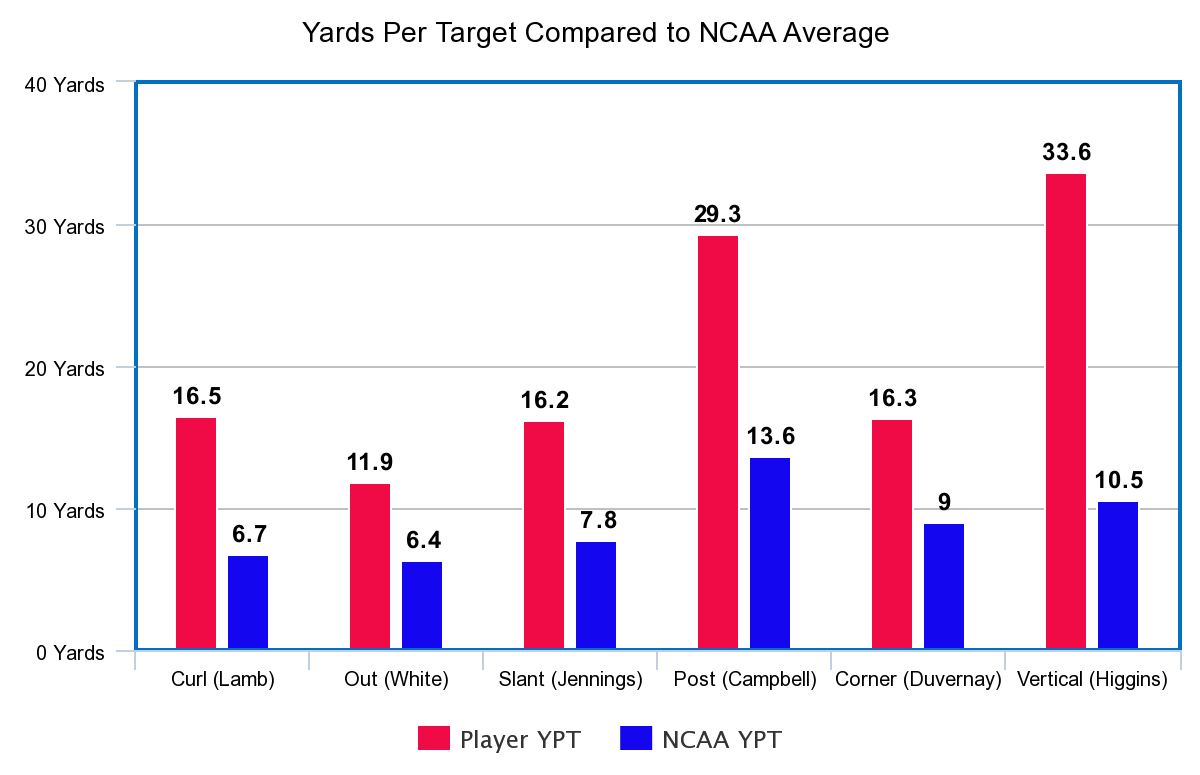
    NCAA Average Comparison

    Now when comparing each of the players we just looked at to the NCAA averages, we can see how much they stand out. All six of these receivers turned average gains into explosive ones on their respective routes. Look for these players to excel at these routes if and when given the opportunity at the next level.

    Most Efficient Receivers Returning in 2020

    I’ve highlighted six names to watch for next season on certain routes in the NFL, but who are the most efficient route runners overall that are returning to college? The table below shows the top five players in Yards per Target who are returning in 2020. True Juniors dominate the list with 4th-year Senior DeVonta Smith in there as well.

    Player College Eligibility Targets Rec Yards YPT
    Ja’Marr Chase LSU 3JR 124 84 1780 14.4
    DeVonta Smith Alabama 4SR 89 76 1259 14.2
    Rashod Bateman Minnesota 3JR 98 70 1219 12.4
    Chatarius Atwell Louisville 3JR 106 70 1276 12.0
    Dyami Brown UNC 3JR 86 51 1034 12.0

    *minimum of 75 targets

    It’s pretty easy to see why LSU’s Ja’Marr Chase leads the way. The 2019 Biletnikoff Award Winner, Chase helped lead LSU’s new-look offense to a National Championship by hauling in nearly 1,800 yards on 14.4 YPT. 

    DeVonta Smith surprised many by not declaring for the NFL Draft and returning to Alabama for his Senior season. He likely could be the best of the Alabama trio of receivers when things are all said and done. 

    For Rashod Bateman at Minnesota, he no longer has Tyler Johnson on the team to draw coverage away from his side. We’ll see if he can stay productive even with one of the most efficient quarterbacks in Tanner Morgan throwing to him. 

    Chatarius “Tutu” Atwell returns to what could be a dynamic Louisville offense which has Dez Fitzpatrick lining up with Atwell on the outside catching balls from Malik Cunningham. 

    North Carolina’s Dyami Brown also has a strong supporting cast. Dazz Newsome is another one of the top returning receivers in college football for 2020. They have a pretty good quarterback as well in Sam Howell controlling the offense.

    Conclusion

    Some players are more efficient at running certain routes than others. While it’s best to have a receiver that can run nearly every route on the route tree, it’s also good to gameplan around what receivers do best. Being efficient leads to yardage gained, which leads to first downs, which lead to touchdowns, which are points that ultimately lead to wins. 

    Half of the receivers among these six routes/route sets we took a look at were selected in the first three rounds of the draft just a short time ago. Find receivers that can run routes well and be efficient when given the opportunity, and you’ll likely find some of the better talent that’s headed to play on Sundays.

  • NFL Draft Team Grades Using the Football Rookie Handbook

    This was the second season of the SIS Football Rookie Handbook being published. The idea is to have the top players at their respective positions make the book. With 284 players, not every player from the Handbook would be drafted and not every player drafted was in the Handbook. After having 174 of 254 (69%) drafted players in the book in 2019, we bumped that number up to 199 of 255 (78%) this year. 

    When taking out special teams players and one XFL player, which we don’t cover, and 22 players that we had reports on but didn’t think were good enough to make the book, it comes out to only 27 draftees that didn’t have a report on them.

    Now using the Handbook, we attempted to grade each team’s draft class. Just like in our article from last season, we assigned all grades from the Handbook and gave all players that weren’t in the book a 5.7 and divided that by the number of selections the team had. 

    The 2020 Best Draft Class, with an average grade of 6.5, went to the Cleveland Browns. They had seven draft picks and all of them were featured in the SIS Football Rookie Handbook. After only two teams selected Handbook players for their entire draft class in 2019, five teams did in 2020. In addition to the Browns, the Ravens (both seasons), Bengals, Raiders, and Cardinals all selected their entire draft class from players profiled in the SIS Football Rookie Handbook.

    The Browns draft class is seen in the table below.

    Cleveland Browns 2020 Draft Class
    Pick Position Player College Grade
    10 OT Jedrick Wills Alabama 6.8
    44 S Grant Delpit LSU 6.9
    88 NT Jordan Elliott Missouri 6.3
    97 LB Jacob Phillips LSU 6.2
    115 TE Harrison Bryant Florida Atlantic 6.5
    160 OC Nick Harris Washington 6.4
    187 WR Donovan Peoples-Jones Michigan 6.4

    In our opinion, the Browns drafted a lot of players that we feel can contribute to both sides of the ball early on in their careers. Jedrick Wills and Grant Delpit have the ability to come in and make impacts right away, working into a high-end starting role by Year 2. Jordan Elliott, Harrison Bryant, Nick Harris, and Donovan Peoples-Jones should all develop into low-end or limited starters.

    Here are the draft classes ranked in order of their grade.

    Final Rankings
    Team # of Picks Draft Grade
    Browns 7 6.50
    Bengals 7 6.49
    Cardinals 6 6.45
    Cowboys 7 6.44
    Bills 7 6.43
    Saints 4 6.40
    Rams 9 6.38
    Raiders 7 6.36
    Dolphins 11 6.35
    Ravens 10 6.31
    Lions 9 6.31
    Panthers 7 6.27
    Redskins 8 6.26
    Jets 9 6.26
    Buccaneers 7 6.26
    Eagles 10 6.23
    Falcons 6 6.22
    49ers 5 6.20
    Jaguars 12 6.17
    Broncos 10 6.17
    Chargers 6 6.17
    Seahawks 8 6.15
    Vikings 15 6.13
    Titans 6 6.13
    Patriots 10 6.08
    Colts 9 6.08
    Chiefs 6 6.07
    Bears 7 6.07
    Texans 5 6.06
    Giants 10 6.04
    Steelers 6 6.02
    Packers 9 5.97

    The Bengals, Cardinals, and Bills make the top five for the second straight season. Consistently having top draft classes are how teams build rosters and have success.

    With just a 0.01 separation from the top spot, the Bengals garnered our  No. 2 Draft Grade with a 6.49 average. No. 1 pick Joe Burrow was a selection that could change the dynamic of the entire football team for many years to come. With the first pick of Day 2, Tee Higgins is a game changer at the receiver position and should pair nicely across from A.J. Green as a lethal target for Burrow. Logan Wilson and Akeem Davis-Gather should fill in nicely at the linebacker position, as well as 7th-round pick Markus Bailey if he can prove to stay healthy. 5th and 6th round picks Khalid Kareem and Hakeem Adeniji are rotational pieces that could be valuable depth players moving forward.

    The bottom three teams for 2020 were the Packers, Steelers, and Giants.

    The Giants started off with two really good picks, but ultimately took five of ten players that weren’t in the book, including Matt Peart in the 3rd round. The Steelers took four of six players from the Handbook, but their highest graded player was Anthony McFarland Jr. in the 4th round.

    Green Bay earned this year’s worst draft grade. Out of their nine picks, only five were included in the Handbook. Jordan Love was their highest graded player at a 6.6 while AJ Dillon was graded 6.5, but no other players graded higher than a 6.2. The Chiefs earned the 2019 worst draft grade and went on to win the Super Bowl, and while that was a little different situation than the Packers, you never know what could happen.

    How the Handbook Compared to the Draft

    Taking a look at our top five position ranks compared to the first five players drafted at each position, the SIS Rookie Handbook and the NFL had the same group of five running backs and wide receivers in different orders.

    Our No. 1 player at every position but running back, wide receiver, tight end, guard and safety was also the NFL’s top drafted player. We also matched the first four quarterbacks off the board in order, had the same first group of four offensive tackles, and had four of the first five centers, nose tackles, defensive tackles, edge rushers, and safeties grouped in lockstep with the League. 

    Players we believe were drafted much higher than they should have been include Matt Peart, Alex Highsmith, Joshua Kelley, Charlie Heck, and Shaquille Quarterman. Over 650 reports were written on players for this year’s Rookie Handbook, including on these five. However, this group received grades that were not high enough to be included, while NFL teams drafted these players as high as the third and fourth rounds. First round picks AJ Terrell, Brandon Aiyuk and Isaiah Wilson also received role-based grades lower than their draft selections warranted in our eyes.

    On the other hand, some players we thought were great value picks based on their Handbook grades include Netane Muti, Prince Tega Wanogho, Markus Bailey, Eno Benjamin, Kenny Willekes, and Clay Johnston. All of these players were taken in the sixth and seventh rounds, yet received at least a lower-end starting grade from us. Whether they fell due to injury concerns or were just overlooked in their position groups, we feel they each could pay dividends to the teams that took a chance on them.

    Players who were rated in the top five at their positions in the Handbook who were not drafted include Jared Pinkney (our No. 1 TE), Hunter Bryant (No. 4 TE), Thaddeus Moss (No. 5 TE), Josiah Coatney (No. 4 NT), Cale Garrett (No. 4 Mike LB), and Rodney Clemons (No. 5 S). We’re looking forward to them catching on with teams soon, if they haven’t already, and potentially making a year-one impact like 2019 SIS Top-Five-to-Undrafted darling Nik Needham.

    Looking back on this article from last year, we noted that we didn’t have reports at all on four players taken in the top five of their position group by NFL teams, and that we were already implementing plans to improve our process and hopefully mitigate this glaring issue moving forward. We’re very pleased to report that we assigned and received reports on every player taken within the top five of his position group in 2020. 

    Along with the percentage increases noted at the beginning of this article, we’re happy to see statistical improvements year over year, especially as data analytics providers ourselves. We aren’t satisfied with this year’s results, however. The first non-Handbook selection going 99th (Peart) and the first player without a report written going 129th (Cameron Clark) are improvements, but we need to aim higher. We can’t wait to continue building upon the progress we’ve continued to make, and we’ve already begun scouting for the 2021 class. 

    The SIS Football Rookie Handbook will be back again next year, filled with even more data, more accuracy, better reports, and the same combination of deep-dive analytics and pre-Combine scouting we’re proud to share. In the meantime, if you want to learn about the players your team got, you can buy the book now at ACTA Sports.