Category: Baseball

  • Going Deep: Blue Jays CFs On Run-Saving Tear

    Going Deep: Blue Jays CFs On Run-Saving Tear

    The Blue Jays currently have a huge lead on the Defensive Runs Saved leaderboard. They’re currently at 77 Runs Saved, 30 runs clear of the Brewers for the most in MLB.

    The Blue Jays have three positions in which they’ve excelled this season. One is catcher, where Alejandro Kirk ranks 2nd overall with 13 Runs Saved. Another is third base, where Matt Chapman ranks 3rd with 11.

    Then there is center field.

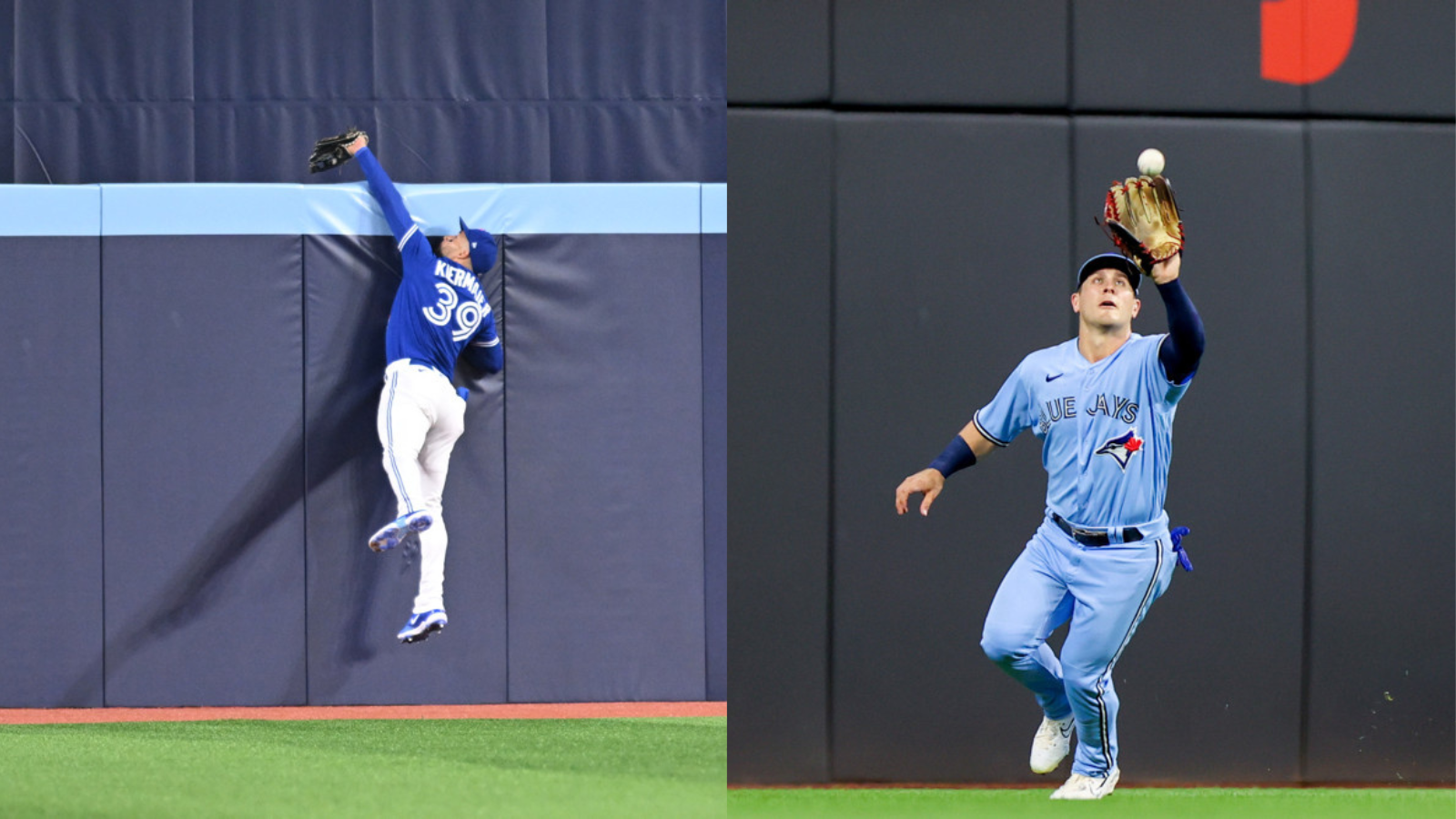
    The Blue Jays have accrued 26 Runs Saved in center field this season. The next-closest team is the Royals with 13, half of Toronto’s total.

    Teammates Kevin Kiermaier and Daulton Varsho are tied for the center field lead with 13 Runs Saved. In other words, the Blue Jays have two center fielders with more Runs Saved than all but one other MLB team. Varsho’s numbers are particularly impressive given that he’s played about half as many innings there as Kiermaier has. 

    How does something like this happen?

    Kiermaier and Varsho are both great at chasing fly balls. 

    Kiermaier ranks No. 1 in MLB’s jump stat, which analyzes how much ground each outfielder covers in the first 3 seconds that a batted ball is in the air. Varsho ranks 20th out of roughly 100 qualified outfielders.  

    That is most evident when we do a team-by-team comparison of how each team does at catching balls that our batted-ball evaluation system classifies as “deep.” Blue Jays center fielders are alright at catching balls classified as “shallow” and “medium.” 

    But they are elite at catching the deep ball, at taking away potential extra-base hits.

    There have been 133 balls hit against the Blue Jays this season that were classified as “deep” in which the center fielder had a >0 chance to make the catch.

    Based on the out probabilities of each of those balls, the center fielder was expected to catch 106 of them. Blue Jays center fielders beat that by 16. They caught 122, for a catch rate of nearly 92%. Going 122-for-133 on plays rather than 106-for-133 meant that they beat their expected out rate by 12 percentage points.

    Only one other team’s center fielders came close to that. The Phillies via Brandon Marsh and rookie standout Johan Rojas bested their expected catch rate by a little less than 9 percentage points.

    Individually, Kiermaier has converted 74-of-82 (90%), 10 catches above expectations. Varsho is 47-of-50 (94%), beating his expected catch total by 6.

    In sum, the Blue Jays totaled about 12.6 Runs Saved on deep balls this season. They almost outpaced every other team’s total Runs Saved with just their Runs Saved on deep balls.

    Here’s one other perspective on the 122 out of 133 that shows the gap between the Blue Jays and an average team.

    Deep Balls Made Plays Missed Plays
    Blue Jays CF 122 11
    Average of Other Teams 99 27

    This is not the only area in which Blue Jays center fielders rate as best in MLB. They’re also tops in Outfield Arm Runs Saved, which combines a fielder’s success at holding runners on base hits and potential sacrifice flies with how often they’ve thrown a runner out without the help of a relay man. Toronto has 5 Outfield Arm Runs Saved thanks to throws like these.


    But it is the deep-ball differentiation that most separates them from the rest of the sport.

    Lastly, to put the Blue Jays’ center field success into historical perspective, their combined 26 Runs Saved rank 8th most since DRS was first tracked in 2003. The 2015 Rays set the standard for positional excellence with 37 Runs Saved. That team had a familiar center fielder, none other than a younger Kiermaier. 

  • Stat of the Week: Total Runs Leaders – Shohei Ohtani & Everybody Else

    Stat of the Week: Total Runs Leaders – Shohei Ohtani & Everybody Else

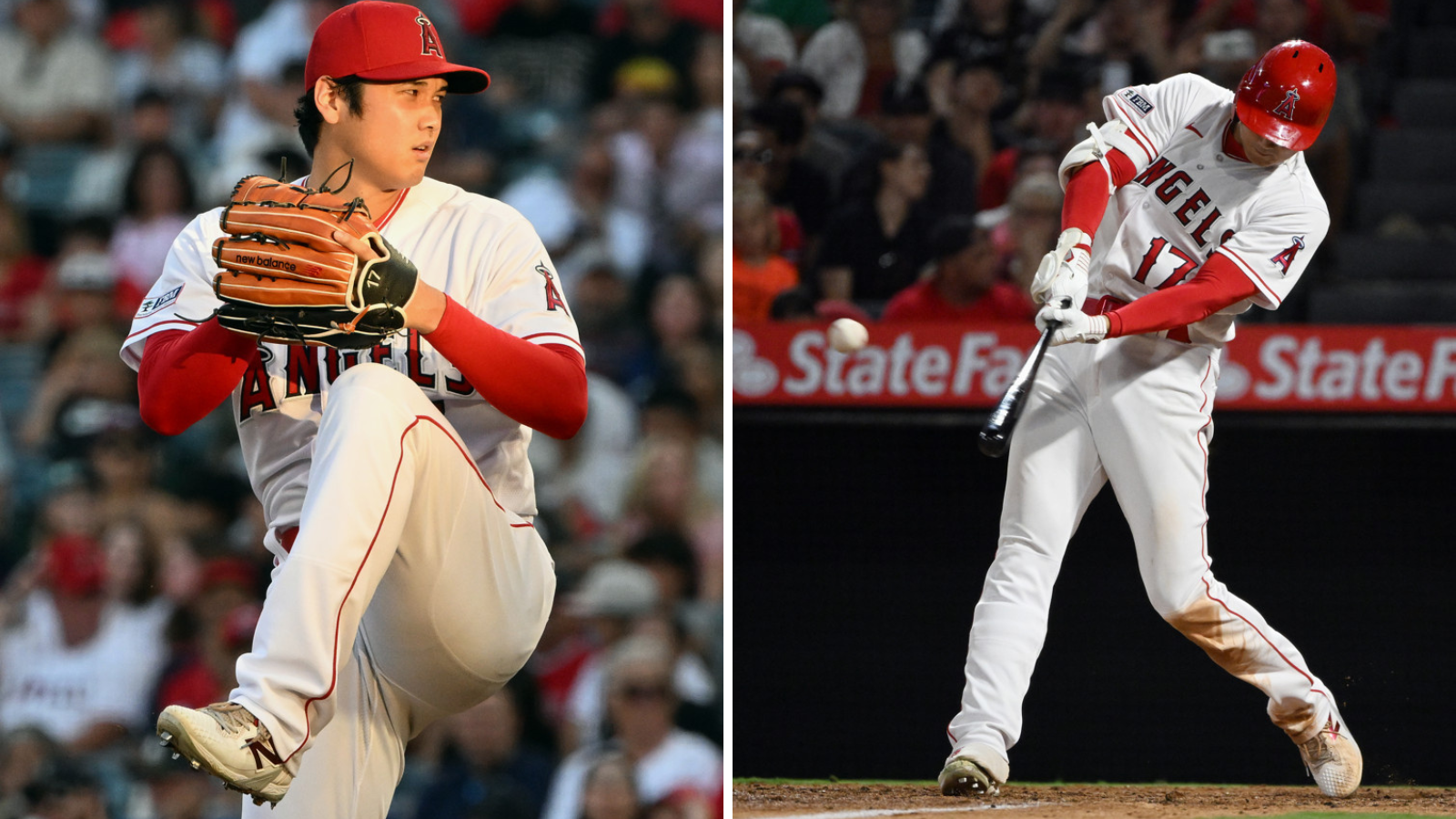
    To call Shohei Ohtani the overwhelming favorite for AL MVP might be doing a disservice to the word “overwhelming.”

    By any player evaluation method, Ohtani comes out far superior to any other player. That includes the SIS R&D creation, Total Runs, which sums a player’s offensive value (Batting Runs Created), baserunning value (Baserunning Runs), defensive value (Defensive Runs Saved), and pitching value (Pitching Runs Created) and adds a positional adjustment.

    The statistic gives a good idea of a player’s all-around value.

    Here are the leaders in Total Runs through Thursday.

    Player Team Total Runs
    Shohei Ohtani Angels 187
    Ronald Acuña Jr. Braves 123
    Freddie Freeman Dodgers 116
    Mookie Betts Dodgers 115
    Marcus Semien Rangers 113
    Matt Olson Braves 105
    Ha-Seong Kim Padres 105

    Ohtani’s 64-run lead over Ronald Acuña Jr. far surpasses the lead that any Total Runs leader had over those who finished No. 2 in that stat in its 21-year history.

    The previous largest lead for No. 1 over No. 2 was by Ohtani, who outpaced Marcus Semien, 194-161, a 33-run difference in 2021. Ohtani beat Aaron Judge, 199-176 in 2022 for the next-highest differential, 23 runs.

    There is typically not a large gap between the top two players in baseball. From 2003 to 2019, the average differential between No. 1 and No. 2 was 7 runs. In six instances, the top two either finished tied or one run apart.

    But Ohtani is a special player and a special case given his prowess as both a hitter and pitcher. His 108 Batting Runs Created are 1 run shy of the MLB lead and he ranks 6th in Pitching Runs Created (72). The combination of the two makes this season among the most amazing in MLB history.

    The AL MVP Race

    Rather than asking who’s going to win the AL MVP, the better question is: Who’s comprising the rest of the Top 5?

    This is the current AL Total Runs leaderboard.

    Player Team Total Runs
    Shohei Ohtani Angels 187
    Marcus Semien Rangers 113
    Wander Franco Rays 102
    Adolis Garcia Rangers 100
    Luis Robert Jr. White Sox 100

    Semien could be on his way to another Top 5 MVP finish. He’s finished 3rd twice, in 2019 and 2021. Semien has an .812 OPS, nearly 100 points higher than the average second baseman.

    Rays shortstops Wander Franco doesn’t have offensive numbers quite as good as his teammate, Yandy Díaz or other shortstops like Corey Seager, Bo Bichette and Bobby Witt Jr. But Franco’s defense – an AL-best 16 Runs Saved – boosts him to 3rd in Total Runs.

    Rangers right fielder Adolis García and White Sox center fielder Luis Robert Jr. are tied for 4th. García is on track to post career highs in every offensive stat. He leads the AL in RBI and ranks Top-6 in slugging percentage, OPS,  and home runs. He’s also tied with Fernando Tatis Jr. for the MLB lead in Outfield Arm Runs Saved.

    Robert Jr. has 31 home runs and 16 stolen bases at a premium position for the vastly-underperforming White Sox.

    But it’s fair to say that the Total Runs leaderboard won’t fully define the AL MVP race. Case in point, this morning on the MLB Network show, MLB Central, analyst Mark DeRosa listed his No. 2 through 5 MVP picks as Seager, Adley Rutschman,  Bichette, and Díaz. None of those players rank in the Top 5 in Total Runs. So it’s fair to say that there will be plenty of debate on much of the ballot as there are many strong candidates.

    But there’s no debate whatsoever about who’s No. 1.

  • The Defense Behind A Chicago Hope

    The Defense Behind A Chicago Hope

    On June 8 the Cubs hit their low point of the season, 10 games under .500 after getting swept by the Angels. They were 26-36, 6 1/2 games out of the wild card.

    I’d like to tell you that the Cubs played a good defensive game the next day. They didn’t. They mishandled a hit, botched a foul pop up and bobbled a slow roller.

    But I can tell you that if we measure from June 9 forward that the Cubs’ playing pretty good defense is a big part of this turnaround.

    The Cubs rank tied for 3rd in Defensive Runs Saved this season after ranking 21st in 2022. They currently have the biggest improvement in Runs Saved ranking from last year to this year.

    Team Defensive Runs Saved
    Blue Jays 61
    Brewers 46
    Cubs 31
    Padres 31

    When we isolate skill and just look at that (in other words, discounting positioning), the Cubs fielders have the second-most Defensive Runs Saved in MLB since June 9 trailing only the Brewers.

    What’s the story of their season from a defensive perspective? There have been two things that have been the biggest keys.

    The middle infield

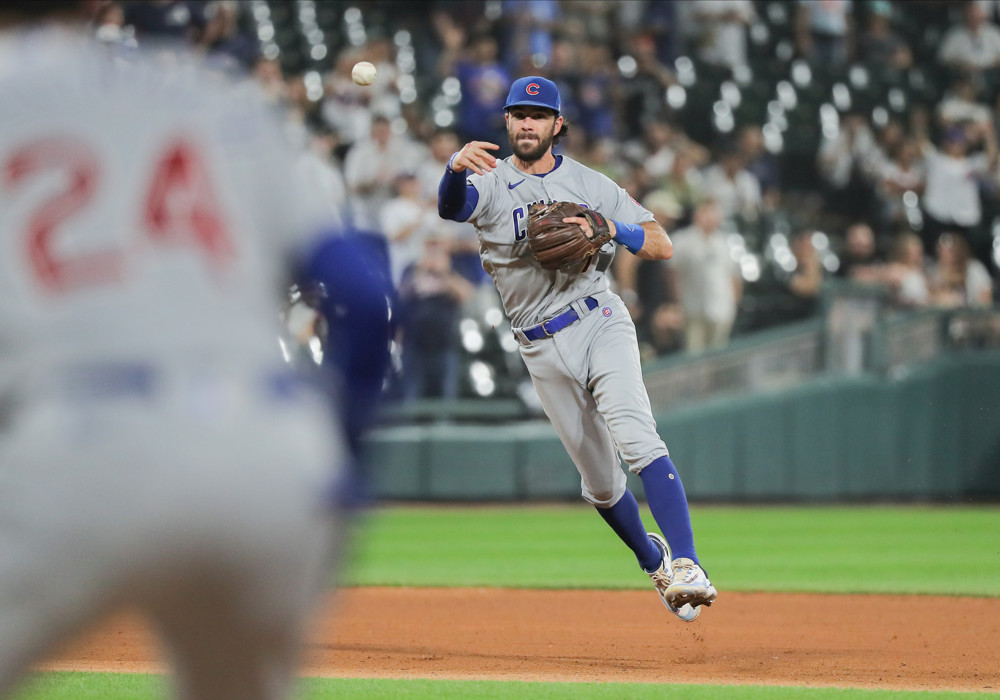
    The Cubs made it a point to improve their middle-infield defense this offseason. After signing Dansby Swanson to play shortstop and moving Nico Hoerner from shortstop to full-time second base, the Cubs went into the season with arguably the best second base-shortstop combo in MLB.

    It’s lived up to the billing. 


    Cubs second basemen and shortstop have combined for 23 Runs Saved, the most in MLB in 2023. Swanson ranks second to Wander Franco in Runs Saved at shortstop with 12. Hoerner has 6 Runs Saved at second base, which ranks tied for 6th, and his fill-ins also have 3 Runs Saved.

    Most Defensive Runs Saved – 2023 Middle Infields

    Team Defensive Runs Saved
    Cubs 23
    Rays 18
    Rangers 12
    Yankees 11
    Orioles 11
    Dodgers 10

    Outfield Improvement

    After spending the first two months of the season with a negative Runs Saved total, 2022 Gold Glove-winning left fielder Ian Happ has turned it around. He has 3 Defensive Runs Saved and a positional high 7 assists without the help of a cutoff man. His 7 Runs Saved in left field since June 9 rank second to Steven Kwan’s 11. 


    Though Happ isn’t on pace to match his numbers from 2022, the rest of the Cubs outfield is going to far surpass their totals from what was a rough 2022.

    Cubs center fielders ranked last in MLB last season with -19 Runs Saved and only three teams had a right fielder total worse than the Cubs’ -9. This season, with Cody Bellinger and Mike Tauchman patrolling center, the Cubs have improved their Runs Saved total to -1 Run Saved. 

    An 18-run jump makes a big difference regardless of where you’re starting from. So does the 9-run jump that the Cubs have made in right field thanks to better play from Seiya Suzuki (2 Runs Saved in right field after totaling -4 in his rookie season). And some of the plays these outfielders are making are highly impactful

     The Cubs offense is averaging better than 7 runs per game in the last 23 games. We can’t dispute that it’s the primary reason why the Cubs find themselves in the Wild Card race. But make sure to take note of their defense too, as it has made and can continue to make the difference between winning and losing. 

  • Defensive Excellence Q&A: Bianca Smith

    Defensive Excellence Q&A: Bianca Smith

    Engage Bianca Smith in conversation about defense for a few minutes and you’re almost sure to think about the game in a different way when you’re done. We experienced that after talking to the former Red Sox minor league coach on Tuesday, just before she heads to Japan on a new coaching venture.

    Smith, the first African-American woman to be a pro baseball coach, has taught all aspects of the game, including defense, on the scholastic, collegiate, and professional levels. She spent two years as a coach at the Red Sox complex in Fort Myers and spent the last few months coaching a summer college team on Long Island. She’s a graduate of Dartmouth with an MBA and law degree from Case Western Reserve. You’ll get a good education in both the physical and mental side of coaching defense from reading this Q&A.

    This is the latest article in a series in which we’ve interviewed a diverse group of coaches about teaching defensive excellence. To read the others in the series, click here.

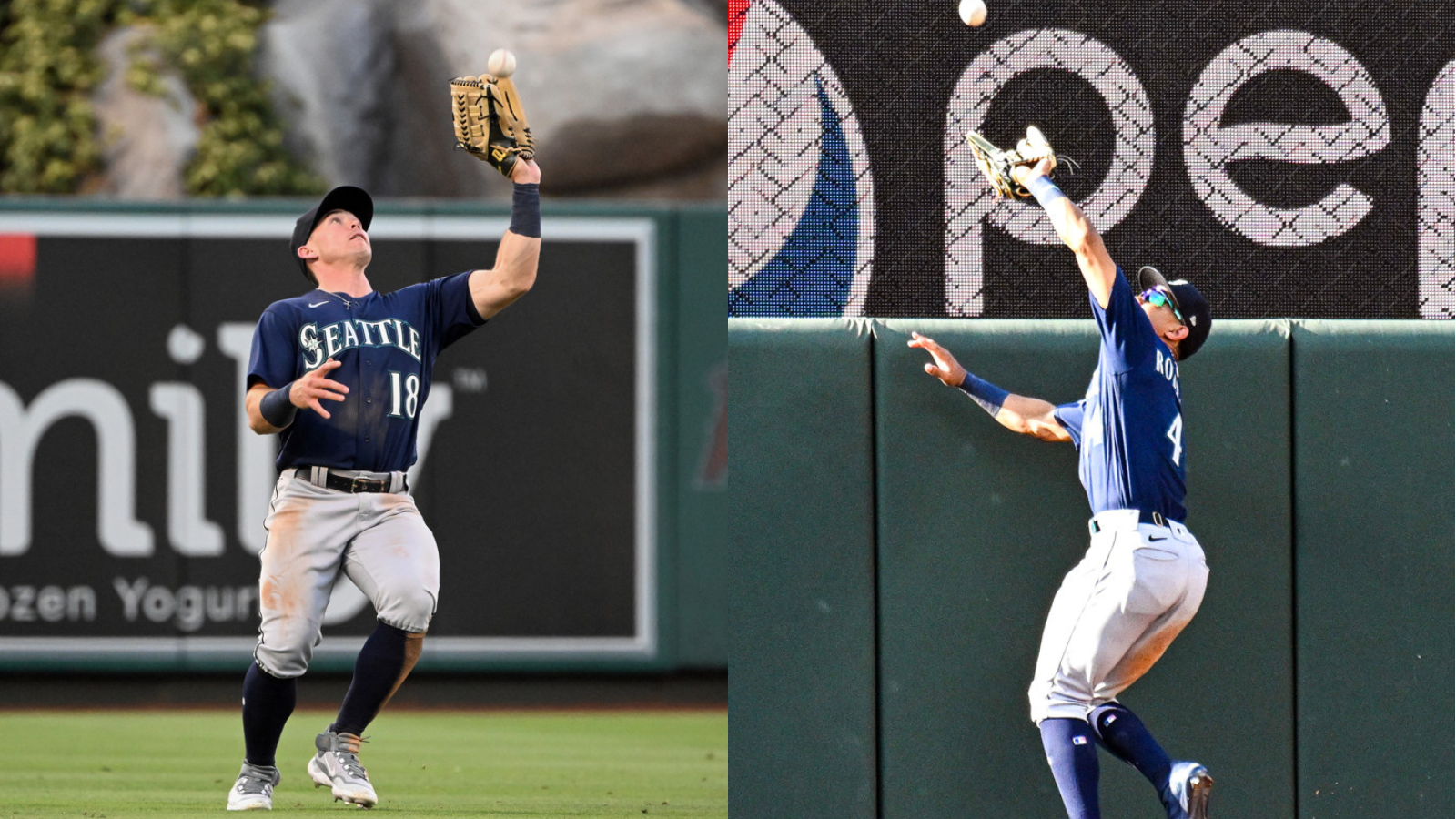
    This interview has been edited for clarity and length.

    Mark: What does defensive excellence mean to you?

    Bianca: It’s not quite like being perfect at defense, but it’s more giving 100% and knowing what you’re doing when the ball comes to you.

    Mark: Who taught you how to play defense?

    Bianca: I got the physical skills from my high school coaches.

    But the mental part I actually learned just from watching the game. I always put myself in the same position as whatever player was in my position and would go through the game as well, thinking about the situation and if the ball came to me, what would I do. That’s what prepared me for my games.

    Mark: How do you teach that and how do you teach defense?

    Bianca: A lot of it is experience, but I’ve also found just going over situations with players is going to be a lot more effective than putting them in the situations in games and just hoping they figure it out, which I’ve actually seen a lot of coaches do.

    They just kind of assume the players know. And I even found this out with the Red Sox. You get to the professional level and you assume that players know how to play and what they’re supposed to be doing. And a lot of the times, they actually don’t. So I spend a lot of my time as an outfield coach, probably more time actually, talking about situations, talking about defensive skills, rather than actually doing them.

    Once I actually explained it to them first, it was a lot easier for them to practice and pick up rather than just throw them out there and try to force them to figure it out.

    Mark: This isn’t meant to be critical of their past coaches, but is that due to where they were before, or is that due to instruction being done differently at different levels?

    Bianca: I think it’s more instruction being done differently. And like I said, I’ve seen it with coaches at higher levels. You just expect that either their previous coach or the fact that they’ve been playing so long that they already know this information. And when coaches come in with that assumption, you don’t coach it, and then they go off to the next level, and they still haven’t learned it.

    So, I don’t think it’s a lack of coaching. It’s more just that assumption that a lot of coaches have, based on whatever level they’re at. You just assume, oh, at some point they’ve learned this already, I shouldn’t have to teach them.

    So you don’t even bother bringing it up.

    Mark: Can you break down some of the things you teach and give us some specifics?

    Bianca: I’d say one of the most important things for outfield – it’s not as much the physical part.

    It’s knowing where to throw the ball and knowing how to throw it properly.  A lot of outfielders, no matter what level, they like to throw it as hard as they can because they’re trying to show off their arm.

    Giving them a situation where I explain to them that there’s a runner on base, so what is your goal?

    Are you trying to prevent them from scoring, or prevent them from moving and advancing, or are you actually just trying to get them out? Some players will say, yeah, we’re trying to get them out. Others will say they’re trying to prevent them from advancing.

    And I’ll explain it using statistics that, the majority of the time, outfielders are not going to actually throw a player out. That’s why outfield assists really aren’t as high a number as you would expect.

    And then I explain, imagine you’re in a game, you’re throwing as hard as you can, the throw technically gets to the base, but it’s too high. Or you overthrow it because you’re throwing as hard as you can because you’re trying to throw them out versus trying to just keep them from advancing. Now the runner is going to advance anyway.

    So, talking that through, explaining why we want to play a certain way, keeps them from going into a game and making those types of errors.

    And then, that’s when we start working on a long-hop drill, throwing to the base, where we’re trying to get the long hop. I’ve even had drills where half the outfielders will be in the outfield throwing, the other half will actually be fielding in the infield, to give them an idea of what it’s like to catch a long hop versus a short hop for the infielders.

    And then they really understand, okay, yeah, I need to do a long hop, because it’s a lot easier for them not only to catch it, but to apply the tag, if we do actually manage to throw them out.

    Mark: How do you get them to listen to you?

    Bianca: Ha!

    It depends on the age group, depends on the level. But one thing that I’ve found to be very effective in getting them to listen to me, but also in making sure that everybody understands what we’re working on, is that I don’t like to give drills that I haven’t tried myself at least once.

    I was never an auditory learner. If I hear something, I don’t retain it as well as if I either read it or I do it myself. So I’m a very hands-on learner. So I like to actually practice the drill before I tell the players what we’re going to work on and I show it at the same time. They learn it better, but they also have this understanding of, okay, she actually does know what she’s talking about because she’s done this before.

    I don’t believe every coach needs to have played the game. I do believe you need to at least be able to do some of the skills that you’re showing your players because it does help them, and it gives them a little bit more trust. I’m not necessarily gonna trust a coach who tells me to go run two miles, but they can’t even run a little bit. You do what you preach, pretty much. I’ve found that’s a lot of the ways that I’m going to gain trust from players.

    Mark: Do you do anything different for kids?

    Bianca: Kids are actually a lot easier to gain trust from.

    They just expect that you know what you’re talking about. But I approach it the same way. When you’re first starting out with players that you don’t know very well, you don’t know what kind of learners they are. As I get to know them a little bit more, I might change my coaching style based on what kind of learner they are, based on how they receive my coaching style.

    Once I start talking to them and get to know them, you also build trust that way because you’re just learning about them as a person versus just them as a player.

    I know the moment that I’ve really gained trust from a player is when they start asking me stuff that doesn’t have to do with baseball.

    Mark: How do you overcome the gender gap?

    Bianca: Never really had to.

    I think we’re at that point now, at least in baseball, where most players don’t really care. whether you’re a man or a woman.

    It’s funny because I would have boys and girls in my camp, and one of the girls would throw a ball really well. One of the boys would go, oh my gosh, I can’t believe she’s a girl and she could throw a ball. And I’m just looking at him thinking, you do realize that your coach is a girl, right?

    Mark: How do you talk to a potential outfielder about knowing when to leave his or her feet?

    Bianca: That’s been a fun one because I’ve had this conversation quite a bit. At least with the players that I’ve worked with, most of them are too afraid to leave their feet because they’re scared of messing up.

    So I explain it that if you think there’s like a 95% chance that you think you can catch that ball, I want you going for it. The only times you wouldn’t is if it’s a sharp line drive, you’re playing left field or right field and you’re diving towards the foul pole or foul line. Because if you miss that, that’s going to get way past you.

    If it’s in the gap,  I actually prefer them diving, even on a sharp line drive. If we’re teaching them right, your center fielder is backing you up. The center field basically has free range, meaning if you’re diving either way, hopefully the other outfielder is backing you up. So that, I don’t mind at all.

    I would rather them dive and at least try for it, than see a bloop single land in front of them that they could have caught. We actually practice just backing up. I will have two guys go out at the same time, put a ball in the machine. The guy in front will pretend like he missed it, and the guy behind has to actually back him up.

    So they have to figure out: How far am I going to be away from my other outfielder so I can be there in case he misses the ball?

    I’ll go over situations depending on, what runners are on, are they fast, what’s the score, what’s the inning? Is this a do-or-die play or is this a situation where if you dive, you catch it, we win the game? If you don’t dive and it drops, they’re gonna win anyway, so you might as well dive. I make sure that we’re gonna go through every situation. And if they do dive in a situation that I don’t think they shouldn’t have, I just bring them back in after the inning’s done, we talk about it, and then they learn from it.

    But I try to make sure players know I’m never gonna be upset with you giving 100% and diving for the ball. I’m gonna be more upset if you didn’t try at all, the ball drops and now they got a hit.

    Mark: What about teaching the technique of getting under the ball when you dive?

    Bianca: We had to do this even with the Red Sox because diving is something that’s not really practiced because of injury prevention.

    We make sure to do some kind of progression. I remember this is how I actually learned diving in the outfield and became more comfortable with diving and sliding.

    It’s just starting from your knees, actually even just starting in a diving position so you understand where to put your hands, how to keep your body up a little bit so you’re not face-planting when you dive or keeping your wrist from rolling under you. Then going from your knees and just trying to kind of get comfortable with landing on the ground.

    Then we start getting to a position where you’re going from your feet and then you’re running. We might use a diving mat or sliding mat. I ran a camp for a summer collegiate team just a few weeks ago, and we worked on sliding on a slip-and-slide. So, now that’s something I bring up with the kids, especially if it’s hot out.

    They have less of a fear of sliding now, and they’re just getting familiar and comfortable with their bodies to the point where eventually, it’s just going to become natural in a game, and they’re not thinking about it, they’re just going to do it. As soon as they start thinking, that’s when you’re risking injury, because then your body tenses up.

    Mark: Do you teach jumping at the wall too?

    Bianca: With kids it’s more just finding the wall. But as they get older, we’ve done that with the Red Sox where we have a drill where they’re not just finding the wall, they are trying to actually judge it and see if they can jump and just protect their bodies so they’re not getting hurt.

    Mark: On your website, you had a one-line reference in your ‘About Me’ section to playing soccer and dancing as you grew up. I’m curious if you have any favorite drills to teach footwork that mimic either soccer or dancing movements.

    Bianca: So, it’s not really a drill. I haven’t done it yet. I’ve brought it up once and it kind of got laughed at. But the idea that in baseball, you need rhythm. Because no matter what you’re doing, whether you’re hitting, you’re on the bases, you’re in the field, you’re dancing with the pitcher. That’s your timing.

    And I saw one team who actually warmed up with music and danced. I thought that was a great idea and that’s something I would love to do with a team. But I know it seems a little weird until you start to explain how you’re dancing with the pitcher.

    It’s literally just rhythm. You start to see it with guys when they can’t dance or they don’t have rhythm. It makes so much more sense when you see them either hitting or in the field trying to work on their pre-pitch. Because you try to tell them your pre-pitch is just going off the pitcher. But then their pre-pitch is off.

    I’m [thinking] okay, that explains so much and we can try to just work through that. But that’d be one drill. It’s not really a drill. It’s more the warm-up. But it’d be one thing I definitely want to incorporate, trying to get that rhythm and everything going at the same time.

    I love looking at other sports and trying to incorporate things that we can use for baseball. You can talk to any of the players that I’ve had in the last few years. I’ve introduced bunting with a lacrosse stick. And I love doing that. When I teach guys tracking the baseball, we do football routes. We would have the coaches actually throw footballs We put the cones out there and they’re actually just running routes.

    I’ve looked at hockey for hitting a slap shot is very similar to the body movement you use with your hips when you hit it. The same thing with golf. I’ve even started looking at volleyball for pitching and throwing. One of my brothers plays volleyball and we’ve gone back and forth about how to strengthen up his arms. It’s very similar to how pitchers do it.

    So looking at other sports, it’s fascinating how similar the movements still are.

    Mark: What about soccer?

    Bianca: This is a little different. It’s not a physical defensive skill. It’s something that I’ve also found interesting with the Red Sox. It’s not like it’s not taught, but it’s one of those things that you assume that they already know. Simple communication in the outfield, which could make a huge difference on whether a ball is caught or not.

    So rather than do your typical drill where you have two lines, you hit a ball in the gap and have them call for it, I had them juggling a soccer ball amongst themselves and calling for it.

    Anybody who was at the Red Sox complex in my first season (2021) has done the soccer ball drill.

    The first week or two that we had games, they weren’t really talking in the outfield.  They were catching balls, but it bugged me, because I’m saying there’s going to be a point where there’s a ball in the gap, nobody says anything, and you’re going to collide. Or, you’re going to think the other person has it, you’re going to back off, and nobody’s going to catch it.

    So I said okay, we’re working on this drill. You guys need to be loud. I want to hear you be loud. I want to know who’s actually got the ball. And it gave them an opportunity to kind of break out of their shells and just have a little bit of fun while still working on something that’s really important in the outfield.

    And it became a competition because if they called for it and they missed it, they’re out. We assigned our normal center fielders, they were the center fielders of the circle that started with all our outfielders lined up LF, CF, RF, LF CF, RF. You had your three outfielders and the center fielders had priority and everybody knew who the center fielders were, but they had to call for the ball. As players “lost,” they came out of the circle.

    I did see guys become a little bit louder in the outfield after that.

    Mark: What’s the hardest thing to teach defensively?

    Bianca: Actually throwing the ball.

    Because you don’t want to fall into that cookie cutter that you have to throw it this way. Just because [your arm slot] looks bad doesn’t mean they’re not doing it effectively. Some guys are more comfortable from sidearm. Some are more comfortable from three quarters. It’s all over the place.

    Mark: What’s your favorite thing to teach on defense?

    Bianca: Diving and sliding. I still do figure four slides when I’m shagging balls during BP. And the guys get really excited if I actually do manage to catch one.

    I love being able to teach that because I think once you get into their heads that it’s okay for them to dive and slide, their aggressiveness in the outfield just shoots up and it’s so much more fun.

    Mark: Anything else you would like to say about coaching defense?

    Bianca: Anybody following major league baseball now, they see the rule changes. Defense is so much more important now than it used to be and yes, offense is important. I understand that too. I was a hitting coach.

    So. being able to rely on defense, especially now that hitters are gonna have to focus more on just driving the ball, getting hits versus just hitting home runs means you have to be able to field the ball properly. You have to be able to throw the ball in. You can’t risk errors.

    Defense and baserunning were my bread-and-butter as a player. That’s why it’s so important to me.

    Mark: You’re headed to Japan – this week actually. Thank you for talking to me. What’s the coaching opportunity you have overseas?

    Bianca: Japan started this program called The JET Program in the 1980s where they would send English speakers over to teach English in their schools. The last decade or two they’ve started including sports coaches. There are 10 of us in the whole country compared to something like 3,000 English teachers.

    The baseball position opened up in February. It was perfect timing. I found out that I got it in May, so I’ll be heading over and living in Higashikawa, which is the center of Hokkaido, the northern island of Japan and I will be coaching elementary and junior high students from 5 to 15 years old. It’s kind of like their local Little League team. It’s a really good team. I do know that. And I found out the elementary school program has 52 players on the team.

    It’s been on my bucket list forever to be able to work in baseball in Japan. I’m incredibly excited. I’ve loved the culture and the country since I was a teenager. A goal of mine is to coach an NPB team someday.

    So I’m merging my three loves: baseball, Japan, and traveling.

    This is the latest article in a series in which we’ve interviewed a diverse group of coaches about teaching defensive excellence. To read the others in the series, click here.
  • SIS Defenders of the Month for July: Matt Chapman, Brenton Doyle, Bobby Witt Jr.

    SIS Defenders of the Month for July: Matt Chapman, Brenton Doyle, Bobby Witt Jr.

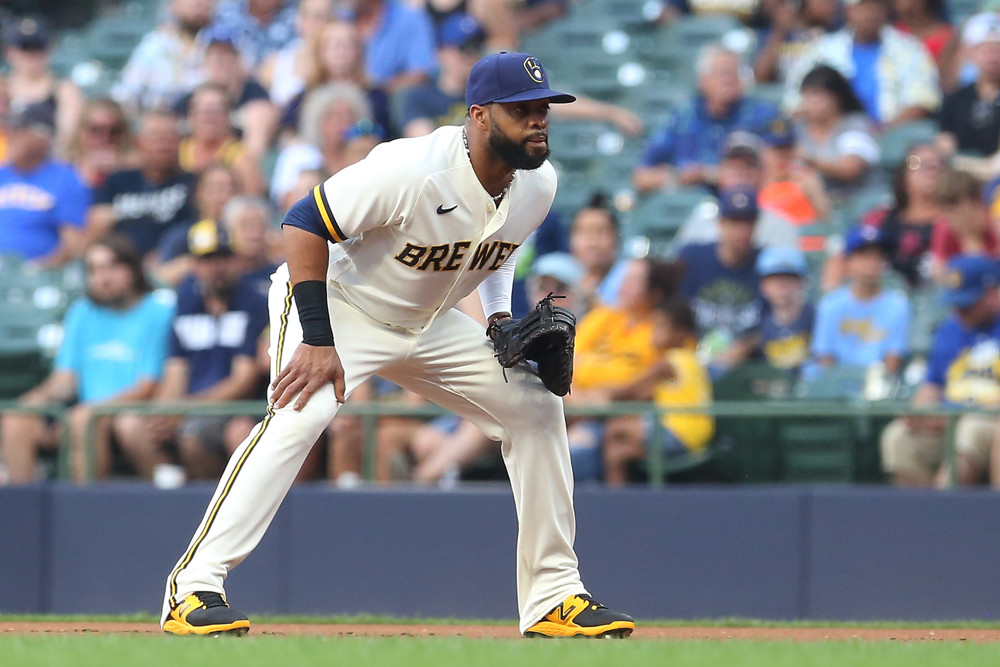
    Photos: Gavin Napier, Mark Goldman, Frank Jansky/Icon Sportswire

    It can sometimes be difficult to form consensus on our selections for The SIS/Fielding Bible Awards Defensive Player of the Month. That’s understandable because defense can be hard to judge in a small sample size.

    Case in point, our ballot for July. Three of my colleagues filled out votes for first and second place and three candidates netted the same point totals.

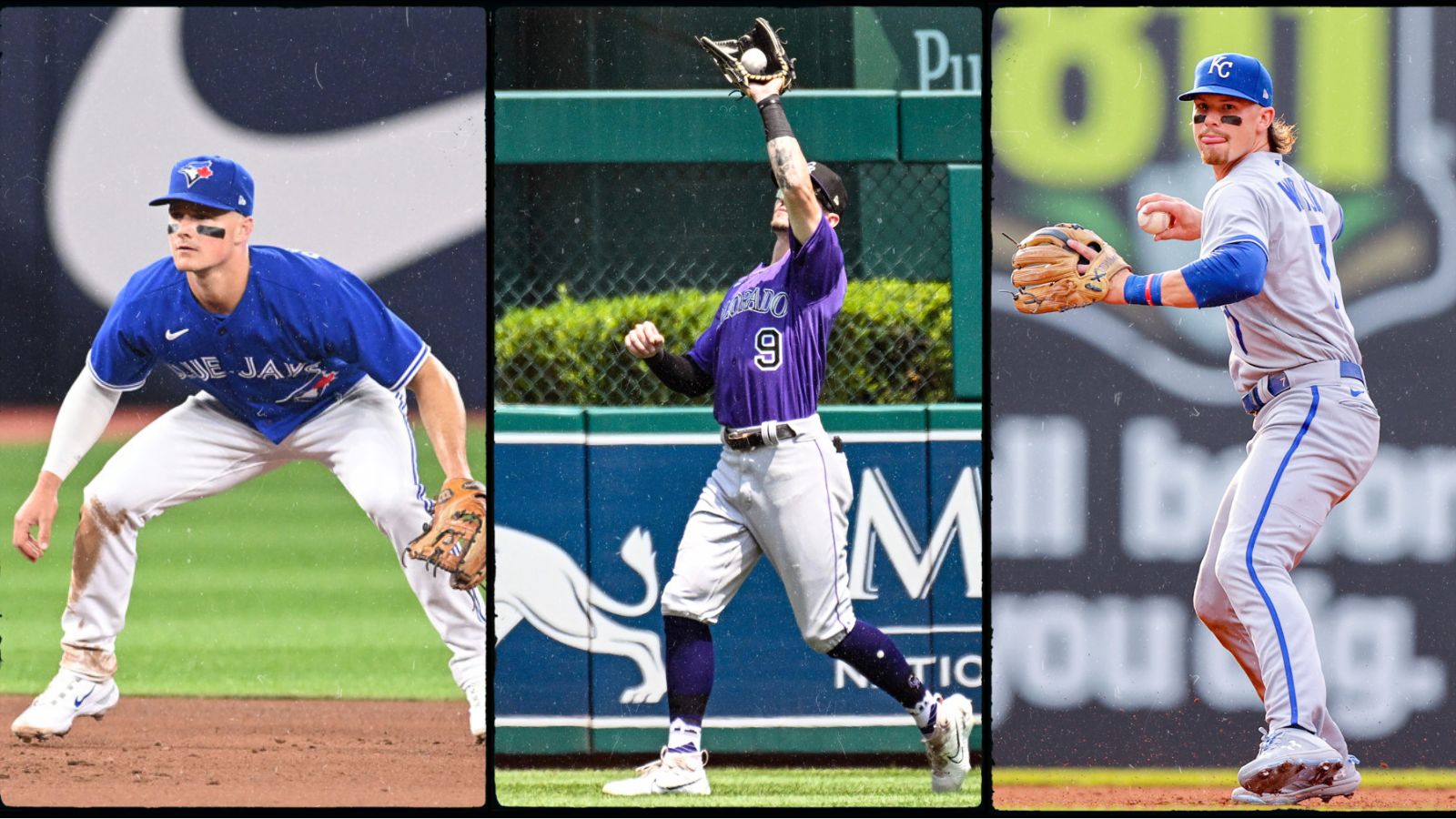
    So rather than break the tie with my own vote, I’ve decided not to limit the honor to one winner and instead go with three. Congratulations to Blue Jays third baseman Matt Chapman, Rockies center fielder Brenton Doyle and Royals shortstop Bobby Witt Jr. who share Defensive Player of the Month for July.

     All three of them are good stories.

    This year is a bounceback season for Chapman after recovering from a hip injury the last couple of seasons. His 7 Runs Saved and 7 Good Fielding Plays in July were the most of any third baseman. He has 13 Runs Saved overall, 2nd only to Ryan McMahon at the position. Those 13 Runs Saved are more than he had in 2021 and 2022 combined. Plays like this one look like ones that Chapman made when he saved 28 runs in 2019. And he started off August well too.

    Doyle, a rookie, led all center fielders with 6 Runs Saved in July. He also had 6 Good Fielding Plays, the 2nd-most by a center fielder for the month (Myles Straw had 9).

    Coors Field is an incredibly difficult place to play half of your games in center field. In fact, no other player has had more than 6 Runs Saved in a season as a Rockies center fielder since SIS began tracking the stat in 2003. Doyle ended July with 9 Runs Saved at the position. Plays like this show that he’s a legit candidate to win a Fielding Bible Award this year.

    To hear more from Doyle, check out our interview with him earlier this season on The Sports Info Solutions Baseball Podcast. 

    Witt has shown considerable progress in his 2nd MLB season for a rebuilding Royals team. In 2022 he finished last among shortstops with -18 Runs Saved. In July of 2023 he tied Francisco Lindor and Corey Seager as shortstop leaders with 5 Runs Saved and ended July at -1 for the season.

    Also notable is that Witt had 5 Good Fielding Plays and only 2 Misplays & Errors. I mention that because in 2022, Witt’s ratio of Good Plays to Misplays & Errors was 17-to-37. He ended July of 2023 with a ratio of 19-to-23 for the season. Last year, he might’ve rushed a play like this one against Anthony Rizzo, but this past month, he played it exactly as he should have. Exactly as a Player of the Month should have. 

    This trio joins Pirates third baseman Ke’Bryan Hayes (April), Orioles left fielder Austin Hays and Blue Jays center fielder Kevin Kiermaier (May), and Brewers right fielder Blake Perkins (June) as winners of our Player of the Month award this season.

  • Stat of the Week: Playoff Contenders with Defensive Issues

    Stat of the Week: Playoff Contenders with Defensive Issues

    Depending on your definition of “contender” there are approximately 20 teams that are in go-for-it mode as the trade deadline approaches.

    Most of these teams are pretty good defensively, particularly the Blue Jays, Rangers, and Brewers, who enter the day as the top teams in Defensive Runs Saved this season.

    But there are some who are not stellar on defense, and this article is intended to look at them and see if and where they might wish to upgrade as they chase a playoff spot.

    Here are four teams that rank among those with the fewest Defensive Runs Saved this season for whom some aspect of their defense has been an issue in 2023 (rank and Runs Saved in parentheses).

    Phillies (24th, -15)

    The Phillies have been here before. They ranked 25th in Runs Saved last season and went to the World Series. You might recall that they did add a couple of players who were defensive upgrades in outfielder Brandon Marsh and infielder Edmundo Sosa. And they got an unlikely boost from right fielder Nick Castellanos, who made several great defensive plays in the postseason.

    This season, they may have already made their biggest upgrade in calling up center fielder Johan Rojas, who was leading all minor leaguers at that position with 16 Runs Saved at the time of his recall.

    Rojas’ presence allows for an outfield of Marsh-Rojas-Castellanos from left to right and takes what is by far their biggest defensive liability, left fielder Kyle Schwarber (-18 Runs Saved!) off the field. When Cristian Pache returns for an elbow injury, he can be the defensive replacement for Castellanos late in games.

    What the Phillies need more than trades is for some of their best players to play better defense. Catcher J.T. Realmuto (-3 Runs Saved) and shortstop Trea Turner (-4) have uncharacteristically bad numbers in the field this season.

    Red Sox (23rd, -14)

    A four-game winning streak and 15 wins in the last 20 games have vaulted a team that looked like it was going to be a seller right back into the AL Wild Card race.

    This week is one in which teams do a lot of self-evaluation, and Red Sox insiders have likely come to the realization that they’re a flawed defensive team at multiple positions.

    Their best defenders are right fielder Alex Verdugo (11 Runs Saved) and catcher Connor Wong (6).

    But center fielder Jarren Duran (-3) and left fielder Masataka Yoshida (-5) rate below average at those positions, as does third baseman Rafael Devers (-5) and first baseman Triston Casas (-5). None of those players are going to be sat for defensive reasons because their bats are too good. When Casas does sit, Justin Turner has been an alright replacement (3 Runs Saved at 1B).

    After trading Kiké Hernández, they could make a move in middle infield. Someone like Cardinals shortstop Paul DeJong (11 Runs Saved since 2021) would be an upgrade, whereas the likes of Tigers infielders Zack Short and Andy Ibañez could each fill in at five or six defensive positions.

    Marlins (21st, -3)

    The Marlins enter Thursday with the fewest Defensive Runs Saved at one position this season. They’re at -19 Runs Saved in center field. That spot likely belongs to Jazz Chisholm Jr. (-6 Runs Saved) when he returns from a strained oblique.

    Miami may not have a choice other than to live with this weakness. There aren’t a lot of upgrade options in center field on non-contending teams unless the Cubs move Cody Bellinger or the Padres make Trent Grisham available. There isn’t a great spot to put Chisholm other than center field when he comes back.

    One small move that could pay off would be getting a ‘defensive closer’ (a late-inning replacement) like Royals center fielder Kyle Isbel (7 Runs Saved).

    Giants (19th, 1)

    Similar to the Marlins, the Giants have one big defensive hole. That would be shortstop, where their players have combined for -16 Runs Saved, the worst total in the majors at that position.

    Brandon Crawford (-11 Runs Saved) is currently on the injured list. When he returns, he probably enters a platoon with someone, whether it be touted prospect Marco Luciano (-6 Runs Saved in the minor leagues), slumping rookie Casey Schmitt (-3) or an acquisition. DeJong, previously mentioned, could be a very good fit here.

    BONUS: And one player worth mentioning …

    There are a lot of teams looking to upgrade their pitching staffs at the trade deadline. But teams could improve their pitching by upgrading at catcher.

    One catcher who could be a difference maker is Austin Hedges of the Pirates.

    Hedges ranks tied for 5th with 8 Defensive Runs Saved there and he’s tied for the MLB lead in our pitch-framing stat (Strike Zone Runs Saved). He has a long track record of success in that area.

    Hedges may not be a fit for the teams listed in this article but there are others (the Angels might be the most prominent) for which he’d immediately be a boon to a pitching staff.

  • Connor Wong Knows How To Maximize His Throwing Arm

    Connor Wong Knows How To Maximize His Throwing Arm

    Photo: Joe Robbins/Icon Sportswire

    Mookie Betts and Alex Verdugo headlined the big trade between the Red Sox and Dodgers early in 2020, but in 2023, Connor Wong has emerged as a huge part of that deal. The 27-year old backstop has assumed the starting role in Boston and is a big reason why the Sox are hanging around the wild card race. Wong’s 1.8 bWAR ranks tied for 8th among all catchers

    Wong is having a very solid year with the bat, hitting .249 with a .715 OPS, along with six home runs and 19 doubles. But what vaults him into that group of catchers above is his defense. He’s tied for 10th among catchers with 6 Defensive Runs Saved.

    He’s done this despite posting -5 Runs Saved in our pitch-framing stat, Strike Zone Runs Saved. What’s saved Wong is two things.

    For one, SIS has a stat, Adjusted Earned Runs Saved, that serves as a substitute for what we call “staff handling.” He’s at 5 Runs Saved in that area, largely because the ERA when he catches is 3.81, compared to backup Reese McGuire’s 5.42.

    The other is the one we’ll focus on here:  His 5 Runs Saved for basestealing deterrence are tied with Gabriel Moreno for the MLB lead.

    Wong’s 82.7 MPH average on his throws ranks 7th in MLB per Statcast. But his skill is about more than that.

    POP TIME

    The first thing we can point to is his pop times to second base (we’ve hand-timed pop times for several years). He is among the league’s best in that regard, tied with Sean Murphy for the third-lowest at 1.849 seconds. The MLB average is 1.924 seconds. The slowest pop time that we have recorded for Wong this season is 1.909. So, his slowest is still better than the league average. The ball is getting from Wong’s glove to the fielder on the receiving end’s glove extremely quickly and efficiently. You’ll see some examples of this in a second.

    ACCURACY

    The next area in which Wong does what he needs to do is accuracy. He isn’t just getting the ball to second base quickly, he has also been precise with his throws, giving the second baseman or shortstop easy chances at catching and tagging.

    At SIS, we assign a “Catch Difficulty” for the fielder receiving the throw on each stolen base attempt. It is a 1-5 scale, with 1 being “Routine” and 5 being “Impossible.” Wong’s throws to second base this year average out to a 1.7 difficulty, which is right around the league average of 1.8. He’s giving his infielders a reasonable chance to make a tag.

    We also have a “Expected Time to Tag” metric, which estimates the average time that it takes for an infielder to apply a tag after receiving a throw. On Wong’s throws to second base, his average Expected Time to Tag is 0.219 seconds, which, again, is right around the league average of 0.224 seconds in a sport where tenths and hundredths of seconds make a big difference.

    This combination of good quickness and average accuracy, paired with his arm strength has allowed Wong to throw out 15 runners at second base in 47 attempts (32%) in a year where the average caught stealing rate at second is 21%.

    But I think you can get a fuller appreciation of Wong by watching him in action when he’s at his best.

    VIDEO ANALYSIS

    The first throw we’ll look at illustrates how easy Wong makes it on his infielders to get a tag down quickly and efficiently:


    Everything Wong does here is efficient. His feet move into a great position to throw, squaring up to second base, almost instantly. His glove hand also stays compact and close to his body as he transfers the ball to his throwing hand. His glove barely moves from the time he catches the ball to the time the ball reaches his throwing hand:

    Being in such a perfect position to throw allows Wong to be spot-on with his accuracy. This is a good example of Wong’s strong Expected Time to Tag as the time it takes Kike Hernandez to tag the runner after he catches the ball is almost non-existent. It’s almost as if the velocity from the throw takes Hernandez’ glove right into the leg of Isaiah Kiner-Falefa.

    Of course, this pitch was a relatively easy ball for Wong to handle, which helped his efficiency in transferring the ball to his hand and getting a great throw off. But Wong has also been able to nab runners at second despite a less-than-ideal offering from his pitcher:

    https://twitter.com/peskyreport/status/1655272961920606209?s=46&t=kyOywkZWm9MHJ-tojzBVvA


    Wong is set up inside here, but the pitch is pulled almost to the left-handers batters box. Even with that, Wong is able to almost immediately get into the same throwing position as he was in the previous play we looked at:

    Wong’s starting position also plays a factor into how quickly he gets into a good throwing position. Instead of starting in a normal catching stance with his feet parallel to each other, his right foot starts slightly behind his left, with one knee on the ground:

    When a catcher makes a throw to second base, his right foot is obviously going to need to end up behind his left. Wong starting like this just simply allows less time for that to happen.

    Wong’s great arm is not limited to just throwing out would-be-base stealers. He has also impacted games with his arm by nabbing runners at second and third base after base hits against the Braves and the Athletics.

    There may have been some concerns last season about the future Red Sox catching situation when they traded longtime starter Christian Vázquez to the Astros. But Wong has alleviated those concerns thanks to strong play, particularly behind the plate.

  • The Hottest of Hot Zones: Josh Naylor vs Low Pitches

    The Hottest of Hot Zones: Josh Naylor vs Low Pitches

    Photo: Frank Jansky/Icon Sportswire

    Guardians 1B Josh Naylor is having a breakout season in 2023 and deserves some recognition. Naylor is 7th in baseball in batting average (.307), 14th in slugging (.511), 20th in OPS (.856), and 26th in wRC+ (129). These numbers somehow weren’t good enough for Naylor to be an all-star. 

    One area that Naylor has improved in is against pitches in the lower-third of the zone (and below). These are his numbers against those pitches for 2023:

    AB AVG SLG OPS 2B HR K Miss%
    119 .311 .529 .875 8 6 28 30%

    When looking at the MLB averages for low pitches, it makes what Naylor has done even more impressive. This season the league’s numbers against them are: .222 avg, .347 slg, .648 ops. 

    In 2022 Naylor really struggled against pitches in this part of the zone (.188 avg, .391 slg, .686 ops). He’s changed his approach against low pitches this year and it’s paid off incredibly well:

    2022 2023
    Swing % 41% 48%
    Miss % 35% 30%
    Chase % 29% 37%

    Naylor is swinging more, chasing more, but swinging and missing less. For a hitter with so much power like Naylor, being less selective is a good thing. He doesn’t need a perfect pitch to hit. He can do damage against any pitch he can make contact with. 

    He made some changes in his stance that have him getting to the low part of the zone quicker. The most noticeable change is closing his stance. He was way open last season and would have to step far towards the plate 

    Being more closed has Naylor in a more athletic position pre-pitch and there’s less movement in his swing. It’s helped him be more on time this season. If he does get out in front, the minimized movement means he can stay back and adjust easier. 

    Naylor is also holding his hands slightly higher. His bat is now parallel with the ground. Last season he had it at more of an angle. 

    Naylor’s favorite pitches to attack in the lower part of the zone are curveballs, sliders, and 2-seamers. He has 2 HRs against all three pitch types. He’s a tough out if a pitcher wants to attack him down with these pitches: 

    Curveball (28 AB): .286 avg / .607 slug

    Slider (24 AB): .375 avg / .667 slug

    2-seam(15 AB): .467 avg / .933 slug

    Video Breakdown

    Leg kick. As mentioned before, Naylor being more closed in his stance has changed his leg kick. Instead of a big step towards home plate he’s lifting the leg and slightly stepping towards home. He’s getting his foot down quicker but he’s still anchored on his back leg and using the strength of his lower half to build power. 

    Front shoulder tucked. Another product of Naylor being more closed in his stance is that he does a better job of keeping his front shoulder closed. His hips start to fly open but that shoulder stays exactly where it is until Naylor is ready to swing. Keeping his front shoulder tucked for as long as possible helps him stay back on breaking balls. 

    Torque. Naylor puts his entire body into every swing he takes, he never gets cheated. Every time he makes contact he wants to hit the ball as hard as possible. It reminds me of Bryce Harper.

    Both of his feet are moving at the point of contact, they both end up facing the pitcher. He’s shifting the energy built up from the ground all the way to his upper body. His ability to stay balanced even with all that force in his swing is impressive. 

    Side view

    There’s so much torque in this swing from Naylor but it’s still a controlled swing. He doesn’t have much of a load and his hands follow his lower half through the zone. Naylor sits on his back hip to generate his power then it explodes through his body. 

    HR vs Carlos Carrasco 

    An absolutely beautiful swing here from Naylor. His entire body is right on time, his barrel takes a short direct path to the ball, and he crushes it. His front foot opens, almost facing towards right center, because of all the torque in this swing. 

    HR vs Mitch Keller 

    Naylor stays back on this first pitch curveball so well. This is one that he probably would’ve been way out in front of in 2022 and grounded out or swung and missed. This year though, it’s a pitch he’s crushed.

    His lower half starts to open up but his front shoulder and hands stay back. Taking a curveball low and away and hitting it 404 feet to right-center shows Naylor’s pure strength.

    HR vs Corbin Burnes

    Naylor turns on this 97 mph fastball with ease. He has incredibly quick hands and that’s on full display here. The barrel of the bat follows his hands through the zone giving it the shortest path to the ball. Even with 2 strikes, Naylor is taking his most powerful swing. 

    Wrap up

    Josh Naylor didn’t make the All-Star team but he’s definitely playing at an All-Star level. A few small changes in his stance and approach have made him one of the most consistent and dangerous hitters in baseball, particularly against pitches in the lower part of the zone. Pitchers and fans should take heed.


  • Twins Defense Has Come Around

    Twins Defense Has Come Around

    Randy Litzinger/Icon Sportswire

    If the Minnesota Twins win the AL Central by one game, they can remember this play by Willi Castro on June 9 as one that may have made the difference in their season.

    The Twins and Blue Jays were tied in the ninth inning and the winning run was 90 feet away from scoring. Alejandro Kirk shot a ground ball to the right side that looked like it was going to be the winning hit. 

    But Castro was positioned just right, corralled it, and threw Kirk out. The Twins survived the rest of the inning and then won the game in the 10th, with Castro catching the game’s final out. 

    As the AL Central continues to plod along, the Twins have gotten hot recently, or at least hot by divisional standards. They’re 10-6 in their last 16 games.

    And they’ve been playing pretty good defense recently.

    In fact, beginning with that June 9 game, the Twins players have the most Defensive Runs Saved in MLB from their skill (in other words, anything that doesn’t involve defensive positioning) with 17. They’ve vaulted to 6th in MLB in Defensive Runs Saved overall.

    Most Defensive Runs Saved – Teams

    Team DRS
    Blue Jays 45
    Rangers 39
    Brewers 31
    Diamondbacks 30
    Rays 28
    Twins 27

    Castro is the unlikely defensive standout. He has 4 Runs Saved in that time, 8 for the season, and has recorded at least 1 Run Saved at 4 different positions (second base, third base, shortstop, and left field). Not bad for a guy who entered the season with -22 Runs Saved for his career. The Twins have minimized his innings at his weakest positions (shortstop and second base). In that Blue Jays game, he played right field for the first 8 innings before making a fortuitous move to second base for the 9th. 

    Other than Castro, the Twins have a few players with modest Defensive Runs Saved totals, though none rate as elite. Catcher Christian Vzquez has 4. Shortstop Carlos Correa, center fielder Michael Taylor, and right fielder Max Kepler have 3.  Those are all players with solid defensive reputations who are now doing what they need to do to succeed. Those numbers might be small individually, but they add up collectively. 

    What they do well

    What are the team’s biggest strengths? Here are 3 of them:

    1)The collective performance of their outfield has made up for the move of Byron Buxton from the outfield to DH. 

    The Twins rank 2nd in how often they turn a ball hit in the air to the outfield into an out (63% of the time), trailing only the Tigers and 4 percentage points better than MLB average. They don’t necessarily do it with a lot of flash. Twins outfielders have 20 Good Fielding Plays on flies and liners. That ranks 13th in MLB (Blue Jays lead with 32).


    2) That clip leads right into another strength. Also meriting mention is the team’s stolen base prevention. The Twins have allowed the third-fewest stolen bases in the majors. That’s a combination of good work from Vázquez and Ryan Jeffers as well as the pitching staff, particularly Bailey Ober, who has allowed only 2 steals in 7 attempts. 

    The Twins 8 Runs Saved when you combine the Stolen Base Runs Saved totals of their pitchers and catchers rank 2nd in MLB, trailing only the Rockies’ 10.

    3) We mentioned that Castro was positioned just right on that ball hit by Kirk. Only 2 teams have more Runs Saved than the Twins do for infield positioning (12). The Twins got 0.6 Positioning Runs Saved of credit for that play, the fifth-most they’ve gotten on a defensive play all season. 

    Centrally Located

    The Twins and Guardians seem likely to battle it out for the AL Central title all the way to the final days of the season. You could make a case that right now, the difference between the teams is their defense. The Twins are two games in front and have an 18-Runs Saved edge.

  • Stat of the Week: Great Defensive Players Who Are Hall-Caliber

    Stat of the Week: Great Defensive Players Who Are Hall-Caliber

    Photos: David Seelig/Icon SMI; John McDonough/Icon Sportswire

    Scott Rolen’s enshrinement in the Baseball Hall of Fame this weekend is good by us given that defense played such a large part in defining who Rolen was as a player and how frequently we write about defense here.

    But there are plenty of excellent defensive players with resumes worthy of Hall of Fame election who have yet to be enshrined.

    Todd Helton, Carlos Beltrán, Andruw Jones, and Omar Vizquel are among those on the BBWAA ballot who could fit that description. Helton, who won 3 Gold Gloves in a 17-year career, received 72% of the vote in the last election and seems likely to be inducted in the near future.

    As for Beltrán, Jones, and Vizquel, issues beyond baseball accomplishments may impact their future vote totals (Beltrán’s suspension as part of the Astros cheating scandal, Jones and Vizquel have both been accused of domestic assault and other allegations).

    But if we go beyond the BBWAA ballot and look to players who have already been bypassed in the selection process, a bunch of outstanding defenders stand out.

    In 2019, Bill James wrote an essay for The Bill James Handbook 2019 in which he combined Win Shares and 4 times their Baseball-Reference Wins Above Replacement into a Hall of Fame Value stat (HOF-V).

    Defensive Win Shares and Defensive WAR, based on the available metrics of the time, factor into HOF-V (along with offensive contributions, of course).

    A Hall of Fame Value of 500 is considered Hall of Fame caliber. Here’s a list of 6 great defensive players who surpass that threshold:

    Lou Whitaker – Whitaker had an HOF-V of 651.4 and amassed 75 WAR in a 19-year career. Second basemen in the 1970s didn’t typically put up big offensive numbers, but Whitaker’s consistency, his 2,369 hits, and 244 home runs stood out. James listed him as the second-most Hall-worthy player not in the Hall of Fame behind a 19th-century player, Bill Dahlen. Whitaker won 3 straight Gold Glove Awards from 1983 to 1985.

    Dwight Evans Evans is listed as the No. 4 most Hall-worthy player in that 2019 essay. His HOF-V of 615.8 easily clears James’ Hall-of-Fame standard. Evans played right field, matched Rolen’s 8 Gold Gloves, had a fantastic arm, and outpaced Rolen in OPS+, home runs, and hits.

    Bobby Grich – Grich has a nearly identical HOF-V to Evans of 613.0. He won 4 consecutive Gold Gloves as a second baseman from 1973 to 1976. Grich played in the 1970s and 1980s and OPS wasn’t a commonly-used stat then or in his one year on the BBWAA ballot. If it had been, voters would have likely noticed that he bested the average second baseman’s production by at least 20% 10 times in seasons in which he played at least 100 games there.

    Graig Nettles – Nettles has an HOF-V of 592.6, a little behind the three players listed above, but credible when it comes to Cooperstown consideration. Nettles hit 390 home runs, won a pair of Gold Gloves in World Series-winning years and put great defense on display in the Fall Classic.

    Kenny Lofton – All our other players on this list are from the 1970s and 1980s so let’s include someone more contemporary. Lofton dazzled defensively, winning 4 Gold Gloves. His 107 OPS+ over a 17-year career is a little light comparatively but his speed (622 stolen bases) helped the now-Guardians and five other franchises regularly reach the postseason. His 560.6 HOF-V definitely merits more discussion for the sport’s top honor.

    Keith Hernandez – Hernandez isn’t quite in the class of the other four players listed, with an HOF-V of 552.2, but he needs to be mentioned here given that that’s still a very good score. Hernandez won an MLB-best 11 Gold Gloves at first base, made 5 All-Star teams, and he had huge hits in Game 7 for two different World Series winners (1982 Cardinals, 1986 Mets).

    The good news for these six is that reconsideration is a key part of the Hall of Fame process. This year’s other worthy Hall of Fame electee, Fred McGriff, knows that well.

    For more Hall of Fame content, check out our oral history of Scott Rolen’s defensive excellence, as well as the latest episode of The Sports Info Solutions Baseball podcast in which Mark and Jay Jaffe discuss current HOF candidates.