Category: John Dewan’s Stat of the Week

  • Stat of the Week: The Hall of Fame And Active Players

    Stat of the Week: The Hall of Fame And Active Players

    The recent Hall of Fame election got us thinking about active players, but beyond those who are surefire Hall of Famers like Mike Trout and Justin Verlander. We’re more intrigued by the players who are close calls or tough calls and those who still have a little work to do. And we can use statistics to help us understand their situations more closely.

    Bill James has a tool, Hall of Fame Value, which is (4 * Baseball-Reference WAR) + Win Shares, the latter a James-created stat meant to assess player value that he invented about 25 years ago, prior to the development of WAR.

    There are currently 12 players who have reached the HOF-V threshold of 500 intended to measure Hall of Fame worthiness. Those who hit it last season include Manny Machado, Aaron Judge, Bryce Harper, and José Ramírez.

    Highest Hall of Fame Value (HOF-V) – Active Players

    Player

    Hall of Fame Value

    Mike Trout

    731

    Freddie Freeman

    640

    Justin Verlander

    606

    Mookie Betts

    587

    Paul Goldschmidt

    583

    Manny Machado

    540

    Andrew McCutchen

    537

    Max Scherzer

    536

    Jose Altuve

    524

    Aaron Judge

    517

    Bryce Harper

    514

    José Ramírez

    505

    Francisco Lindor

    473

    Nolan Arenado

    471

    Salvador Perez

    449

    Shohei Ohtani

    439

    Christian Yelich

    432

    Carlos Santana

    432

    Giancarlo Stanton

    429

    Marcus Semien

    426

    J.T. Realmuto

    417

    Chris Sale

    411

    Corey Seager

    389

    Xander Bogaerts

    387

    George Springer

    381

    Justin Turner

    378

    Juan Soto

    374

    Carlos Correa

    374

    Trea Turner

    374

    Alex Bregman

    372

    The most likely player to clear 500 this season is Mets shortstop Francisco Lindor, who stands at 473. Lindor had 23 Win Shares and 5.9 bWAR last season. His future footing as a Hall of Famer seems solid.

    Dodgers DH/pitcher Shohei Ohtani is 61 points shy of 500 and normally we’d say that’s too much to accumulate in one year, but not in this care. Ohtani added 67.8 to his total last season, in which he finished with 37 Win Shares and 7.7 WAR.

    Cardinals third baseman Nolan Arenado is also right there at 471 HOF-V. But Arenado is coming off the worst season of his career, 8 Win Shares and 1.3 WAR. He’ll turn 35 in April and is not anywhere near the hitter (or fielder) he was in his prime. His Hall case is still very good though.

    Nolan Arenado – Hall-of-Fame Case

    * Six times in top 8 of MVP voting

    * 10 Gold Glove Awards, 5 Fielding Bible Awards

    * 353 career home runs

    * 58 career bWAR (21st among 3B)

    Some of the other players whose progress will be interesting to track are Royals catcher Salvador Perez, Brewers DH and left fielder Christian Yelich, and Yankees DH Giancarlo Stanton.

    Perez (HOF-V of 449) is 35 and hit 30 home runs and drove in 100 runs last year, though his overall offensive numbers dipped from 2024 to 2025. Win Shares still had him as a Top 50 player last season, though he managed only 0.4 WAR. He added 22.6 HOF-V to his total in 2025.

    HOF-V doesn’t take into account leadership aspects (which Perez is praised for) or postseason performance (Perez was a World Series MVP) so if he’s a close call come retirement, those may be the things that push him over the top for election.

    Yelich is actually a better candidate than you might think. He had 34.4 HOF-V last year, leaving him at 432 for his career. He’s coming off a 29-homer 103-RBI season If he could match his 2023 or 2025 in each of the next two seasons and get a little closer to being a 300-homer/300 steals guy, he’d be right at 500 HOF-V and then the discussion around him would get more serious. It won’t be easy given that he’s in his age 34 season.

    Stanton currently has a candidacy shaped by his 453 home runs (he’s the active leader). His bWAR and Win Shares combo puts him at an HOF-V of 429. He’s been injured often during his Yankees career and played only 77 games last year in his age-35 season. He’s averaged 27 home runs but only 12 doubles per season the last four years, and the sum of his production limits his overall value.

    Giancarlo Stanton – Season Averages, 2022-2025

    Stat

    Season Average

    Games

    101

    HR

    27

    Doubles

    12

    BA/OPS

    .223/.779

    WAR

    0.6

    Bill has acknowledged publicly that HOF-V tends to work better for position players than it does for pitchers, especially relief pitchers. Once you get past Verlander and Max Scherzer, the next starting pitcher in line is Chris Sale, who has an HOF-V of 411 and then there’s another steep drop to Jacob deGrom (322) and Gerrit Cole (321).

    The change in the role and usage of the starting pitcher is going to necessitate a reevaluation of what makes a Hall of Fame pitcher. Where Sale, deGrom and Cole rank among starting pitchers may be more important than what threshold they’ve cleared. The same is true for closers like Kenley Jansen (275), Aroldis Chapman (255, with off-field issues that may hinder his candidacy) and Craig Kimbrel (251).

    For another perspective on the Hall of Fame and active players, we always enjoy Mike Petriello of MLB.com’s review, which includes not just the players listed here but younger ones (like Paul Skenes) whose careers are just getting started.

  • Stat of the Week: Which Team Can Put Out The Best Defensive 9-Man Group?

    Stat of the Week: Which Team Can Put Out The Best Defensive 9-Man Group?

    It’s January, which is always the time when you see articles considering a team’s all-time performance or some other aspect of franchise history (best free agent signings is a common one).

    We don’t usually jump onto trends here, but I liked the suggestion from my colleague Alex Vigderman, who asked “If we took each team’s best player season at each position, which team would have the highest Defensive Runs Saved total?”

    So let’s indulge this one since it fits our brand. Essentially, it’s our version of a best-ball competition.

    It turns out that the team on top just traded a great defensive player in Nolan Arenado, the Cardinals.

    Position

    Player

    Runs Saved

    C

    Yadier Molina (2012)

    29

    1B

    Albert Pujols (2007)

    31

    2B

    Mark Grudzielanek (2005)

    23

    3B

    Scott Rolen (2004)

    30

    SS

    Brendan Ryan (2010)/

    Paul DeJong (2019)

    24

    LF

    Tyler O’Neill (2021)

    14

    CF

    Harrison Bader (2021)

    18

    RF

    Jason Heyward (2015)

    26

    P

    Jake Westbrook (2012)

    11

    Albert Pujols is the positional single-season and career record holder at first base (we’ve written about this). Scott Rolen has the best single-season total of any MLB player at third base (we’ve written about him too). Yadier Molina‘s 29 is just shy of the most in a season by any catcher (Roberto Pérez, 31) and he’s the career leader at catcher too. Jason Heyward is the career leader in right field since we started tracking Runs Saved in 2003.

    Between them, the listed group won 17 Fielding Bible Awards and 28 Gold Glove Awards in their careers and the only ones who didn’t win either were Paul DeJong and Jake Westbrook.

    Counting Ryan/DeJong only once (rather than both their totals), those players combined for 206 Runs Saved, making the Cardinals the only team to clear 200.

    The Cardinals beat out the Angels, whose lineup totaled 183 Runs Saved, with a large chunk of it coming from shortstop Andrelton Simmons and his record-setting 42 Runs Saved in 2017.

    The Diamondbacks‘ group of nine players, which ranked third-best, was strong all the way around, from second baseman Craig Counsell‘s 30 Runs Saved in 2005 to Gerardo Parra’s 27 in 2013, Nick Ahmed‘s 25 in 2018, and Jeff Mathis‘ 21 in 2018.

    Just behind the Diamondbacks were the Mariners, who have had three players with huge Runs Saved seasons: center fielder Franklin Gutierrez (33 in 2009), shortstop Brendan Ryan (27 in 2012), and Hall of Fame third baseman Adrian Beltré (27 in 2008).

    We would be remiss not to point out that prior to 2013, players received credit or demerit for their positioning, which led to some higher Runs Saved totals than are seen today. Just over half of the representation on these team’s lists came from 2003 to 2012.

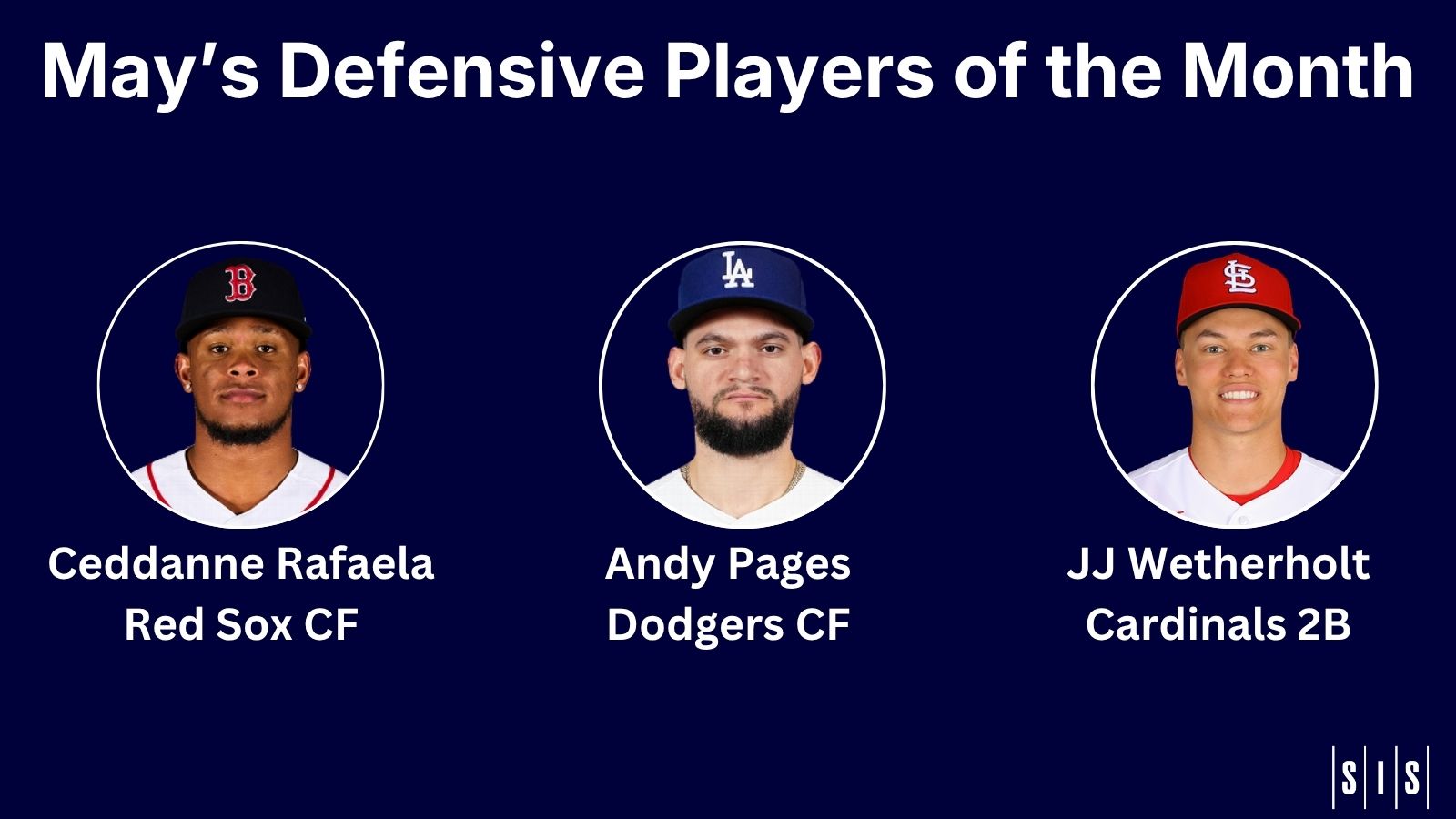
    However, there were 20 instances in 2025 in which a team got its best defensive season for a player, the most in 10 years. That included Steven Kwan‘s 22 Runs Saved in left field for the Guardians, Ceddanne Rafaela‘s 20 in center field for the Red Sox, and the 17 runs saved seasons for Mookie Betts (Dodgers shortstop), Taylor Walls (Rays shortstop), and Matt Olson (Braves first base).

    At the other end of the list are the Marlins. In the 24-year history of Runs Saved, the Marlins have never had a player save more than 15 Runs at a position. Their nine-player lineup totaled 108 runs and featured notable names shortstop Miguel Rojas (15, 2022), right fielder Giancarlo Stanton (13, 2017), and left fielder Christian Yelich (13, 2015).

    Perhaps the most unusual discovery from all of this was with one of the lower-end teams, the White Sox. Miguel Vargas had 4 Runs Saved at first base for them in 2025, the most any White Sox first baseman has had in the history of the stat.

    Here’s the full listing of teams from 1 to 30.

    Team

    Runs Saved

    1. Cardinals

    206

    2. Angels

    183

    3. Diamondbacks

    172

    4. Mariners

    171

    5. Blue Jays

    162

    6. Guardians

    160

    7. Braves

    159

    T8. Rays

    158

    T8. Yankees

    158

    10. Astros

    156

    11. Cubs

    155

    12. Rockies

    151

    T13. Red Sox

    150

    T13. Rangers

    150

    15. Pirates

    149

    16. Athletics

    146

    17. Reds

    141

    T18. Royals

    140

    T18. Orioles

    140

    20. Nationals

    139

    21. Brewers

    138

    22. Phillies

    134

    T23. Padres

    133

    T23. Dodgers

    133

    T25. Tigers

    130

    T25. White Sox

    130

    27. Mets

    128

    T28. Giants

    127

    T28. Twins

    127

    30. Marlins

    108

  • Stat of the Week: Our Year-End Awards

    Stat of the Week: Our Year-End Awards

    It’s been a tradition here to bestow awards on some year-end leaders in stats that only we track. A few years ago, we refreshed the list of leaders and I’m doing so again this year to give us an entirely defensive theme.

    Here are the award winners for 2025.

    The Homer Robber Award

    The title of this award speaks for itself. This one goes to the leader in home run robbing catches for 2025, which was Padres right fielder Fernando Tatis Jr. with 4 (here’s one example).

    This was a prolific season for home run robbing catches. There were 88 in 2025, easily surpassing the 78 of 2024 for the most in any season since we began fully tracking them in 2004.

    Most Home Run Robbing Catches – 2025 Season

    Player Good Fielding Plays
    Joey Ortiz 20
    Bryson Stott 20
    Ke’Bryan Hayes 19
    Ryan McMahon 18
    Brayan Rocchio 18

     The Who Needs A Glove Award?

    This award goes to the player with the most successful barehand plays. This works better if we separate this by catchers, third basemen, and others. Catchers are often fielding barehands that have come to a stop and that are right in front of the plate. Patrick Bailey led the position with 15, two more than Cal Raleigh.

    Third basemen get the most barehand opportunities, which is why its best to separate them from other fielders too. This award could have been named for Nolan Arenado, who annually ranked as a leader in the prime of his career. But among third basemen this year, Alex Bregman of the Red Sox actually led with 13 successful plays, two more than Ke’Bryan Hayes and Maikel Garcia. Arenado finished with 10, fourth-most among third basemen.

    The leader among those who don’t play third base or catcher was Mariners pitcher Bryan Woo, who had 6 (this one in particular was pretty good).

    Most Barehand Plays – 2025 Season

    Player Barehand Plays
    Patrick Bailey 15
    Cal Raleigh 13
    Alex Bregman 13
    Elias Diaz 12
    Drake Baldwin 11
    Ke’Bryan Hayes 11
    William Contreras 11
    Maikel Garcia 11

    The Vacuum Cleaner Award

    SIS Video Scouts also track what are known as “Good Fielding Plays,” which are often those that lead to the unlikely recording of an out. Those can be broken up into different subtypes, including one just for ground balls. The leader in Good Fielding Plays on ground balls is the winner of our Vacuum Cleaner Award.

    This year’s winners were Brewers shortstop Joey Ortiz and Phillies second baseman Bryson Stott. Ortiz finished with -2 Runs Saved in his first full time season there as a major leaguer and Stott totaled 0 at second base, as making lots of Good Fielding Plays doesn’t necessarily translate to a high Runs Saved total. Stott’s issue wasn’t range. He had -6 Runs Saved from the Phillies’ difficulty turning double plays.

    Nonetheless, both had their share of Web Gem-caliber highlight-reel moments (one example from Ortiz, one from Stott).

    Most Good Fielding Plays – Ground Balls

    Player Good Fielding Plays
    Joey Ortiz 20
    Bryson Stott 20
    Ke’Bryan Hayes 19
    Ryan McMahon 18
    Brayan Rocchio 18

    The Fly Swatter Award

    The Fly Swatter Award is a similar award to The Vacuum Cleaner, except it’s for Good Fielding Plays resulting in outs on fly balls and line drives. The leaders were Tigers left fielder Riley Greene and Twins/Phillies outfielder Harrison Bader with 19 apiece.

    Greene, the 2024 Fielding Bible Award winner in left field, slipped to -5 Runs Saved in 2025, though his primary issue was not catching balls (here’s one he ran down) but rather baserunner advancement on balls he fielded. Bader is one of the top defensive players in this year’s free agent class.

    Most Good Fielding Plays – Fly Balls

    Player Good Fielding Plays
    Riley Greene 19
    Harrison Bader 19
    Victor Scott II 17
    Nathan Lukes 17
    Brenton Doyle 16
    Lawrence Butler 16


    Stolen Base Stopper

    The awards for the Stolen Base Stopper go to the catcher and pitcher who had the most Stolen Base Runs Saved in 2025.

    Red Sox catcher Carlos Narváez had 7 Stolen Base Runs Saved in 2025, most among all catchers. Narvaez threw out 25 of 100 runners attempting to steal and also had 3 pickoffs. You could also make a case for Luis Torrens, who had 6 Stolen Base Runs Saved and threw out 20 of 49 basestealers (41%).

    For pitchers, Matthew Boyd led the way with 5 Stolen Base Runs Saved. Boyd had 8 pickoffs and 3 pitcher caught stealings. His 11 combined pickoffs and caught stealing were easily the most in MLB.

    The Hall of Framer

    The Hall of Framer award goes to the catcher who had the best pitch-framing numbers in 2025. In our world, that means the catcher who had the most called strikes above expectations (we call this stat Strike Zone Plus-Minus).

    Patrick Bailey was the runaway leader in this stat for the second straight year. He finished 120 called strikes above expectations. Austin Wells of the Yankees and Alejandro Kirk of the Blue Jays were a distant second with 79.

    Austin Hedges was the leader in this stat on a per-pitch basis. He ranked 4th overall in called strikes above expectations.

    Bailey’s leadership in this stat factored into winning a bigger award than this, our Defensive Player of the Year award (which was announced with the Fielding Bible Awards).

    To learn more about our pitch-framing methodology, read the paper from our award-winning presentation at the Sloan Sports Analytics Conference.

  • Stat of the Week: Who Were MLB’s Most Underachieving Starting Pitchers in 2025?

    Stat of the Week: Who Were MLB’s Most Underachieving Starting Pitchers in 2025?

    It’s kind of scary to think but Garrett Crochet could have been even better than he was in 2025.

    Crochet finished the season with a 2.59 ERA and 255 strikeouts in 205 1/3 innings pitched. He placed second in the AL Cy Young voting and eighth in the AL MVP voting.

    The idea that he could have been better stems from this: Crochet allowed 24 home runs. But by our expected stats measurement tools, he was expected to allow only 18 based on the batted ball type, where the ball was hit and how hard it was hit.

    A brief point of explanation:

    Sports Info Solutions tracks its own version of a player’s expected stats (similar to what you can find on Baseball Savant). Rather than basing a player’s hit probability (and therefore single, double, triple, and home run probability) on a batted ball’s exit velocity and launch angle, SIS’ version estimates probabilities based on where balls are hit, how hard they are hit, and how long they spend in the air.

    This allows us to compare a player’s actual stats to his expected stats to see if they fared better or worse than perhaps they could have.

    Some examples for Crochet include:

    A front-row home run to right field at Steinbrenner Field by Rays shortstop Carson Williams (LINK), and front-row shots over the Green Monster in left field by Byron Buxton (LINK) and Amed Rosario (LINK).

    Crochet had a .617 OPS against in 2025, which ranked 18th-lowest (minimum 400 batters faced). His expected OPS of .553 was the lowest among that same set of pitchers.

    Logan Webb of the Giants experienced something similar with doubles. He allowed 49, 14 more than his expected total. Webb got the worst defensive support on the batted balls against him of any pitcher in baseball. Here’s two examples of balls that could have been caught that turned into doubles (LINK, LINK), both missed by Giants left fielder Heliot Ramos.

    Crochet and Webb are two of the headline names on our list of pitchers who underachieved the most in 2025. In this case, we’re defining underachieved as yielding an OPS higher than our stats expected. Another is recent Blue Jays free agent signee Dylan Cease, whom we previously wrote about for the lack of defensive support that the Padres gave him last season. He ranked second to Webb in terms of least defensive support gotten on batted balls.

    Here’s the list of pitchers who underachieved by the largest amounts OPS-wise.

    Biggest Differential – Actual OPS and Expected OPS in 2025

    Minimum 400 Batters Faced

    Pitcher

    2025 OPS

    Expected OPS

    Differential

    Antonio Senzatela

    .949

    .855

    .094

    Aaron Nola

    .805

    .715

    .090

    Ben Brown

    .800

    .734

    .066

    Ryan Gusto

    .805

    .741

    .064

    Garrett Crochet

    .617

    .553

    .064

    Dylan Cease

    .717

    .654

    .063

    Logan Webb

    .694

    .631

    .063

    Jonathan Cannon

    .838

    .779

    .059

    Tanner Bibee

    .720

    .664

    .056

    Cade Povich

    .812

    .758

    .055

     Antonio Senzatela of the Rockies tops this list. He had the worst OPS allowed in MLB (.949) but he wasn’t much better by expected OPS. His .855 was the fourth-highest.

    Phillies starter Aaron Nola was right behind Senzatela. He had a 6.01 ERA during the regular season and his .805 OPS against was 15th-highest, but his .715 expected OPS allowed was almost right in the middle of the pool of 135 pitchers (61st-highest). Nola’s season was nowhere near his usual standards, but it also seems like it wasn’t as bad as it looked

    Guardians pitcher Tanner Bibee’s season also fell into that category. His .720 OPS against was 56 points higher than his expected OPS. The latter, .664, ranked in the 77th percentile among this group of pitchers (31st overall).

    Seven of the 10 pitchers on last year’s list of biggest underachievers had lower ERAs in 2025 than they did in 2024, though a couple changed roles and became relievers (Reid Detmers and Chris Flexen).

    The biggest ‘hit’ among the 2024 underachievers was Hunter Brown, whose ERA dropped from 3.49 to 2.43, though you could make a case that you could have seen that coming with the way he closed the 2024 season. Others whose ERA improved significantly from 2024 to 2025 were Taijuan Walker and Logan Allen.

    As we’ve said with each of these articles, caveats apply. If you’re on the list of underachievers, you’re not guaranteed to be better in 2026. You still have to go out there and inevitably get some outs in difficult situations.

  • Who Were MLB’s Most Overachieving Starting Pitchers in 2025?

    Who Were MLB’s Most Overachieving Starting Pitchers in 2025?

    You had to figure that when we released our list of the pitchers that overperformed their expected numbers the most in 2025 that Trevor Rogers would be on it.

    In 18 starts, the Orioles lefty pitched to a 1.81 ERA and allowed 70 hits in 109 2/3 innings. He did that while striking out less than a batter per inning and with a hard-hit rate that ranked in the 3rd percentile (48%). And his home runs per 9 innings rate was about half his previous career rate.

    Rogers’ expected OPS allowed was .503, the third-lowest by any pitcher in the last 10 seasons (minimum 100 innings). His expected OPS allowed was .634.

    The 131-point differential between his expected (.634) and allowed (.503) was by far the largest in MLB in 2025 (minimum 400 batters faced, a pool of 135 pitchers).

    A brief point of explanation:

    Sports Info Solutions tracks its own version of a player’s expected stats (similar to what you can find on Baseball Savant). Rather than basing a player’s hit probability (and therefore single, double, triple, and home run probability) on a batted ball’s exit velocity and launch angle, SIS’ version estimates probabilities based on where balls are hit, how hard they are hit, and how long they spend in the air.

    This allows us to compare a player’s actual stats to his expected stats to see if they fared better or worse than perhaps they could have.

    Here’s the list of pitchers with the greatest differential between their expected OPS and their actual OPS. Think of them as a group whose actual 2025 numbers could have been worse under different circumstances.

    Biggest Differential – Expected OPS and Actual OPS

    2025 Season (Minimum 400 Batters Faced)

    Pitcher

    Expected OPS Allowed

    OPS Allowed

    Differential

    Trevor Rogers

    .634

    .503

    .131

    Noah Cameron

    .729

    .641

    .087

    Spencer Schwellenbach

    .702

    .618

    .084

    Janson Junk

    .767

    .686

    .081

    Nick Pivetta

    .663

    .583

    .080

    Jose Quintana

    .776

    .698

    .078

    Cade Horton

    .692

    .615

    .077

    Mitchell Parker

    .873

    .797

    .076

    Grant Holmes

    .789

    .715

    .074

    Merrill Kelly

    .734

    .661

    .073

    To be clear, a .634 expected OPS is still excellent. It’s just not as great as his actual numbers. Rogers had the lowest actual OPS allowed among these 135 pitchers. He had the 17th-lowest expected OPS. His expected runs allowed of 39 (using Bill James’ Runs Created) would have given him an ERA likely in the low 3s instead of his season-ending 1.81.

    With the second pitcher on this list, Royals rookie Noah Cameron, his ERA-FIP differential (2.99 vs 4.18) also gives us a sense that he overperformed in 2025. His actual OPS was 87 points lower than his expected OPS and for where Cameron was, that’s a big difference.

    A .641 OPS allowed ranked 25th overall, meaning he was in the top 20% of our pool of pitchers.

    A .729 expected OPS allowed ranks 78th, which puts him outside the top half of that group, which makes sense given what his FIP was. He goes from being considered a pretty good pitcher to a below-average one.

    Other pitchers in this top 10, such as Spencer Schwellenbach and Cade Horton, experience dips too, though not as extreme as Cameron’s. Schwellenbach goes from 19th-lowest OPS to 48th-lowest expected OPS allowed. Horton goes from 16th to 37th.

    Free agent Merrill Kelly actually made our Top 10 list for the second straight season. He’s had an OPS at least 50 points lower than his expected OPS four times in the last six seasons (excluding 2020). Kelly has typically gotten very good defensive support behind him. The Diamondbacks and Rangers have 32 Runs Saved behind him in the last four seasons, 6th-most in MLB.

    We can trace the success of many of the pitchers on the list above to the work that defenses did behind them. The Braves had 12 runs saved behind Schwellenbach (5 of those attributable to Schwellenbach, himself) and 11 Runs Saved for Grant Holmes. The Royals had 10 Runs Saved for Cameron. The Brewers had 10 for Jose Quintana.

    This article was meant to focus on starting pitchers, but if we lower the qualifier to 250 batters faced to include relievers, the three relievers with the largest differentials were Pirates closer Dennis Santana (expected OPS 122 points higher than actual OPS), Phillies reliever Tanner Banks (103), recent Braves signee Robert Suarez (100), and free agent Shawn Armstrong (100). Suarez had gotten great defensive support from the Padres throughout his career, including 5 Runs Saved (a high total for a reliever) in 2025.

    On last year’s list, 7 of the 9 pitchers listed among our biggest overachievers had their ERA increase from 2024 to 2025, 6 by more than a full run (one didn’t pitch, Derek Law). Kelly and Kevin Gausman were the only ones whose ERAs improved. Among those with big ERA increases were David Peterson, Tyler Holton, and Bowden Francis.

    That’s not to say what will happen in 2026, but it gives you an indication of some pitchers to keep an eye on heading into next year.

  • Stat of the Week: MLB’s Most Overachieving Hitters in 2025

    Stat of the Week: MLB’s Most Overachieving Hitters in 2025

    Baseball isn’t supposed to be as easy as it was for Aaron Judge and Nick Kurtz in 2025. Judge had an OPS of 1.144. Kurtz finished at 1.002. They won the AL MVP and Rookie of the Year, respectively.

    For players to put up those kinds of numbers, they need to be great hitters, but they need some things to go their way too.

    By our measures, they did.

    Sports Info Solutions tracks its own version of a player’s expected stats (similar to what you can find on Baseball Savant). Rather than basing a player’s hit probability (and subsequently single, double, triple, and home run probability) on a batted ball’s exit velocity and launch angle, SIS’ version estimates probabilities based on where balls are hit, how hard they are hit, how long they spend in the air, and the speed of the batter, as well as the ballpark in which the ball was hit. Important to note: defensive positioning is NOT taken into account.

    This allows us to compare a player’s actual stats to his expected stats.

    Kurtz had an expected OPS of .877, which is terrific. But it’s not as otherworldly as 1.002. The 125-point gap between his actual OPS and expected OPS is the biggest such differential in MLB.

    Judge’s gap was 96 points. His expected OPS was still otherworldly at 1.048.

    There can be a few reasons why a player exceeds his expected OPS. Defenses had -13 Runs Saved on balls hit by Judge (-6 for Kurtz) which certainly helped him out when he wasn’t hitting balls out of the ballpark. Kurtz also had 22 of his 36 home runs at home in hitter-friendly Sutter Health Park, which helped his final stat line.

    Here’s a list of the 10 players whose OPS was most above their expected OPS, among those with a minimum of 300 plate appearances.

    Biggest Differential, OPS and Expected OPS, 2025 Season

    Minimum 300 Plate Appearances

    Player

    2025 OPS

    Expected OPS

    Differential

    Nick Kurtz

    1.002

    .877

    -.125

    Miguel Andujar

    .822

    .699

    -.123

    Harrison Bader

    .796

    .678

    -.118

    Yandy Díaz

    .848

    .739

    -.109

    Aaron Judge

    1.144

    1.048

    -.096

    Jake Mangum

    .698

    .604

    -.094

    Riley Greene

    .806

    .717

    -.089

    Jonathan Aranda

    .883

    .794

    -.089

    Jordan Westburg

    .770

    .684

    -.086

    Isaac Paredes

    .809

    .725

    -.084

    Kurtz and Judge were still superstars by their expected OPS numbers. But that’s not the case for the others on this list. There are a handful of players who – if they had hit at their expected numbers rather than their actual ones – would have had a season perceived differently than their season was.

    Miguel Andujar has a little bit of a smaller sample than others (321 at-bats) got hot at the end of the season with the Reds and finished the season with an .822 OPS. The perception of his season would have been completely different had he hit his expected OPS of .699.

    Andujar had 23 hits on balls with an expected hit probability below 30%. Those balls should have netted him 5 hits. Instead, they resulted in 23.

    Harrison Bader is another good example. Bader finished with an OPS close to .800 but an expected OPS of .678. The .678 was more in line with his 2022, 2023, and 2024 actual OPS.

    Bader got particularly hot after being traded from the Twins to the Phillies. He hit .305 in 50 games with the Phillies but had 9 hits more than his expected total (54 instead of 45), which bumped his batting average with them up by 51 points. A bunch of infield hits (examples here, here, and here) were key to that.

    Another example of a different nature is Rays DH and first baseman Yandy Díaz, who had 21 hits more than his expected total (no one had more than him and Bader). The actual versus expected OPS differential for Díaz was 109 points, primarily because Díaz hit 25 home runs but had an expected total of only 17.

    Of those 25 home runs 18 came in Steinbrenner Field. Díaz took full advantage of right field there with several of his home runs clearing the wall by only a little bit (examples here, here, and here).

    Looking back to last year’s list of overachievers, 8 of the 10 had an actual OPS decline from 2024 to 2025 of at least 118 points. Notable names whose performance dipped significantly in 2025 included Connor Wong, Tyler O’Neill, Jose Iglesias, and Carlos Correa.

    Player

    2024 OPS

    2025 OPS

    Connor Wong

    .758

    .500

    Tyler O’Neill

    .847

    .684

    Jose Iglesias

    .830

    .592

    Carlos Correa

    .905

    .734

    Bryce Harper and Bobby Witt Jr., superstars similar to Kurtz and Judge, were also in that Top 10 list of 2024 overachievers. Their 2025 numbers didn’t match their 2024 ones but they were still superstars even with the drop in OPS.

    Caveats apply when considering any future ramifications here. Just because the players on this list could have been worse in 2025 doesn’t necessarily mean that they will be worse in 2026. There are no guarantees in baseball. The wonder of who will overachieve and who will underachieve is one of the things that keeps us watching.

  • Mets Abound on List of MLB’s Most Underachieving Hitters In 2025

    Mets Abound on List of MLB’s Most Underachieving Hitters In 2025

    There are reports that the Mets are interested in trading utility man Jeff McNeil after their falter, McNeil’s sputter at the finish line last season, and the acquisition of Marcus Semien to play second base.

    McNeil, who will turn 34 in early April, went 4-for-46 in the final 15 games of the 2025 season, chopping 52 points from his OPS, which finished the season at .746.

    But according to one of our measurement tools, McNeil was a better hitter than his final line appeared.

    Sports Info Solutions tracks its own version of a player’s expected stats (similar to what you can find on Baseball Savant). Rather than basing a player’s hit probability (and subsequently single, double, triple, and home run probability) on a batted ball’s exit velocity and launch angle, SIS’ version estimates probabilities based on where balls are hit, how hard they are hit, how long they spend in the air, and the speed of the batter, as well as the ballpark in which the ball was hit. 

    This allows us to compare a player’s actual stats to his expected stats.

    McNeil finished with a .746 OPS, but his expected OPS by our measures, was .890. The 144-point gap was the largest among players with at least 300 plate appearances last season .

    Mets fans are used to seeing McNeil exude frustration after a hard-hit out (this example was a ball with a 71% hit probability).

    Here’s the leaderboard for the hitters with the biggest negative differential between their actual and expected OPS, among hitters with at least 300 plate appearances.

    Player

    OPS

    Expected OPS

    Differential

    Jeff McNeil

    .746

    .890

    -.144

    Tyrone Taylor

    .598

    .716

    -.118

    Tommy Edman

    .655

    .769

    -.114

    Andrés Giménez

    .598

    .708

    -.110

    Luis Garcia Jr.

    .701

    .806

    -.105

    Otto López

    .672

    .776

    -.104

    Jo Adell

    .778

    .869

    -.091

    Marcus Semien

    .669

    .753

    -.084

    Liam Hicks

    .693

    .776

    -.083

    Kyle Higashioka

    .693

    .773

    -.080

    Perhaps McNeil will take solace in knowing that his constant frustration was justified. McNeil lost a lot of hits on balls with hit probabilities between 40 and 60 percent. He hit 59 such balls, resulting in 29 expected hits. The actual number of hits McNeil got was 17 .

    Here are two more examples from that group of outs that induced a McNeil helmet slam and a touch of profanity.

    Semien is actually on this list too. His .669 OPS was 84 points lower than his expected OPS. Semien actually made this list for the 2024 season too, finishing with an OPS 82 points below his expected OPS. Over the last two seasons his actual hit total is about 32 hits below his expected hit total. McNeil is the only player to have lost more hits (roughly 34). Semien also had 14 doubles below his expected total, most in MLB.

    And there’s yet another Mets player: outfielder Tyrone Taylor, who had a miserable offensive season in 2025, finishing with a .598 OPS. He’d finished with an OPS over .700 in every season from 2021 to 2024 and had his actual numbers matched his expected numbers, he’d have done so again in 2025.

    The biggest differential among non-Mets was Tommy Edman, who finished the season with a .655 OPS and a .769 expected OPS. Defenses fared quite well against both Edman and McNeil, recording 12 Defensive Runs Saved against them, which ranked in the Top 15 this season.

    Jo Adell had it worse. Defenses had 14 Runs Saved against him, which helps explain why he finished with a .778 OPS and an .869 expected OPS.

    In both McNeil’s case and Adell’s case, their season-ending numbers would have been perceived much differently had their actual totals been closer to their expected numbers. McNeil had the 9th-highest expected OPS in MLB. Adell ranked 18th.

    Semien made this list two years in a row, but there were some players on last year’s list who did bounce back in 2025. Bo Bichette’s 2024 OPS was 99 points under his expected OPS. He had a terrific season in 2025, hitting .311 with an .840 OPS. T.J. Friedl, Maikel Garcia, and Zach McKinstry also thrived after having a rough go of it in 2024.

    Caveats abound here. Just because McNeil, Adell, and the others on this list could have been better in 2025 doesn’t necessarily mean that they will be better in 2026. But if you believe in a player on this list and are looking for reasons to feel good about them, then these numbers should provide you some comfort.

  • Stat of the Week: Top Defensive Players in Free Agency

    Stat of the Week: Top Defensive Players in Free Agency

    Photo: Terence Lewis/Icon Sportswire

    Admittedly, it’s extremely rare to sign a free agent specifically because of that player’s defensive skills.

    Also admittedly, the 2025-26 free agent market isn’t all that strong as far as good defensive players are concerned.

    Nonetheless, by my measure, there are some players, including some good ones, whose defense is worth noting as a positive as they hit the market this winter.

    Here’s a list of some in alphabetical order by last name.

    Harrison Bader

    Harrison Bader had the most Runs Saved of any free agent this offseason (13), so we’re glad to be leading this list with him. He split time between left field (7 Runs Saved) and center field (6) and has had seasons of 18 and 15 Runs Saved at the latter spot. His specialty is chasing down fly balls. The one downside is that he’ll be 32 in June. No 32-year-old even played 60 games there in 2025, so a split between a corner outfield spot and center field seems inevitable.

     Cody Bellinger

    Cody Bellinger split time between all three outfield spots and had better results within a small sample in both corners (7 Runs Saved in left field, 8 in right field) than he had in center field (-3 Runs Saved) last season.

    Of note, Bellinger had 6 Outfield Arm Runs Saved in 2025. Only Steven Kwan had more among outfielders. Bellinger still has 83rd percentile arm strength per Baseball Savant’s numbers.

    Alex Bregman

    Alex Bregman won a Gold Glove at third base in 2024 and he’s had other seasons of being a finalist there, so his reputation is solid. He’s never put up Ke’Bryan Hayes or Matt Chapman-like numbers at third base but he’s tied for 7th among third basemen in Runs Saved over the last three seasons. Bregman’s floor has usually been that of an average third baseman, so you know he’s someone you generally don’t have to worry about.

    Danny Jansen

    Danny Jansen, a part-time catcher for the Rays and Brewers, had the best defensive WAR (as calculated by Baseball-Reference) of any free agent.

    Jansen had 6 Runs Saved, and that and his dWAR stemmed from his good pitch blocking and stolen base defense. Fair warning, Jansen hasn’t rated well as a pitch framer in each of the last two seasons (pitch framing isn’t factored into dWAR). Though he’s had as many as 12 Runs Saved in a season (2019), he also had -11 in 2024. His pitch blocking numbers have been reliably consistent. The rest of his catching game hasn’t been.

    Ha-Seong Kim

    Ha-Seong Kim passed up a $16 million option to test free agency coming off a season in which he played only 48 games.

    When healthy, Kim has proven to be a very good defensive player. From 2021 to 2023, he saved 46 runs, fourth-most by any player in that time. He’s had as many as 10 Runs Saved at second base and 11 at shortstop. His throws at shortstop are down about 3 MPH from where they were in 2022, likely the result of his Tommy John surgery. His optimal spot may be second base.

    Carlos Santana

    Carlos Santana’s going to have a hard time finding any takers after posting a .633 OPS last season. But if anyone does pick him up, they’ll nab a player who reinvented himself defensively. His 32 Runs Saved over the last three seasons ranks second at first base to Matt Olson.

    (ADDED, NOV. 13) – The other first baseman of note is Ty France, who won an AL Gold Glove last season, a year in which he finished with a career-high 9 Runs Saved. But though France has often looked the part, he’s underperformed in terms of Runs Saved. He had -7 in 2023 and 2024.

    Ranger Suárez

    I’m throwing everyone a curveball here and putting a pitcher in here (one with a very good curveball, by the way) because I think that highly of his defensive work.

    Ranger Suárez ranks first among pitchers with 25 Runs Saved over the last 5 seasons. He led pitchers with 9 Runs Saved in 2022. The 2025 season was actually a substandard year for him, as he had only 3 Runs Saved.

    What I like most about Suárez is that he’s always in a good position to field balls. If anything is hit back up the middle, it’s his. He’s also generally good at limiting stolen bases.

    And by the way, don’t just take our word for it. Listen to the Marlins play-by-play broadcaster, Kyle Sielaff.

    Kyle Tucker

    I debated whether Kyle Tucker merited mention here and I’ll err on the side of inclusion even though he totaled -1 Runs Saved in right field in an injury-hampered year in 2025.

    Tucker’s had as many as 15 Runs Saved in a season, though his totals were spiked by an MLB-best 6 home run robberies in 2022 and 2023, 4 of which came on short right field walls in his home park, Houston, and Boston. Home run robbery totals are tough to predict year-to-year. Though Tucker has a history of getting to balls well, his arm strength is 4 to 5 MPH below that of an average right fielder. There are certain places where that won’t play well.

    In sum, he’s a decent defensive player if healthy, though not necessarily up with the best-skilled right fielders in the game.

    Mike Yastrzemski

    Mike Yastrzemski will be 35 this season and yet you wouldn’t know it from his defense. He’s totaled 37 Runs Saved in seven MLB seasons and has never finished a season with a negative total. He may not be great but he’s consistently been good.

    This season was little different for Yaz in that it was his best one in terms of his Outfield Arm Runs Saved numbers. He had 8 assists from right field without the help of a cutoff man, matching his total from 2022 to 2024 combined. By the way, an odd fact on Yaz: In each of his seven seasons, he’s always been worth at least 2 bWAR but never as much as 3 bWAR.

  • Stat of the Week – Ultimate Winner of the World Series: Great Defense

    Stat of the Week – Ultimate Winner of the World Series: Great Defense

    If you had told me before the season that I was going to write the following sentence, I would have laughed at you.

    Vladimir Guerrero Jr. was the most impressive-looking defensive player in the World Series.

    He was!

    This was a great World Series for great defense. We don’t track Defensive Runs Saved in the postseason, but our Data Scouts do award Good Fielding Plays and Defensive Misplays when warranted. In all, they awarded 24 Good Fielding Plays. to 12 different players. Guerrero had 4 of them, one shy of Freddie Freeman for most in the postseason (4 of Freeman’s 5 Good Plays were for scooped throws).

    Vlad Jr. put on a defensive variety show. In Game 2, he made an over-the-shoulder catch on a popup. In Game 3 he came off the bag and made a throw across the diamond to get a runner who trying to go first to third on an infield hit. That came in a tie game in the sixth inning. He then made a diving stop and a flawless flip to first base for the first out of Game 7 and a diving stop in the other direction to take away a likely extra base hit and at least one Dodgers run in the fourth inning.

    This wasn’t a fluke. Guerrero Jr. had his best defensive season, finishing fourth among first basemen with 8 Defensive Runs Saved, a big improvement from the -7 and -1 from the last two seasons. The punchline here, I suppose, is that the team’s backup first baseman, late-season acquisition Ty France, won the AL Gold Glove Award. But Guerrero showed just how much better he’s gotten.

    A strong honorable mention goes to the combination of Dodgers second basemen Tommy Edman and Miguel Rojas, who for the purposes of this exercise could basically be morphed into one player. For one thing, they were part of a Dodgers infield that turned 75% of grounders and bunts into outs in the World Series (basically matching the team’s regular season rate, which ranked 4th-best overall), including 9-of-9 in Game 7.

    For another, they combined for 3 Good Fielding plays of note. Edman atoned for a critical error in Game 3 by throwing Isiah Kiner-Falefa out at third base on a ball that deflected off Freeman, which helped keep the score tied in the ninth inning. Then he made a relay throw to cut down Davis Schneider at the plate as the potential go-ahead run in the 10th inning.

    Then in Game 6, Rojas scooped a Kiké Hernández throw from left field to complete a game-ending double play.  This was a heck of a play on multiple fronts. The Dodgers had Hernández positioned perfectly in left field and he had a great jump on the ball off the bat, which allowed him to make the catch.

    And yes, Rojas hit the game-tying home run in the ninth inning of Game 7 and Will Smith hit the series-winning home run in the 10th. It seemed like the only way someone was going to win that game was by hitting a ball that was not defensible.

  • Stat of the Week: Fielding Bible Award Runners-Up

    Stat of the Week: Fielding Bible Award Runners-Up

    I started something last year that I want to make an annual tradition: Saluting the runners-up for The Fielding Bible Awards.

    We’re always going to celebrate the winners of the Awards, but it feels like we’re shortchanging some great defensive players who are deserving of recognition too. So here’s to this year’s second-place finishers in the Awards voting.

    First BaseCarlos Santana has been a high-performing defensive first baseman for three years running. That’s remarkable given that he’s done so at ages 37, 38, and 39 after having only a modestly successful run at first base prior to that. Santana had 12 Defensive Runs Saved this season, second to Matt Olson’s 17. Santana’s 32 Runs Saved trail only Olson’s 38 at first base since the start of 2023.

    Second Base – Our voters like Andrés Giménez a lot. He previously won a Fielding Bible Award in 2023 and 2024 and finished a solid second in 2025 despite injuries limiting him to 87 games at second base (and 15 games at shortstop). Giménez finished tied for fourth in Runs Saved among second basemen and may have challenged Nico Hoerner for the positional lead had he been fully healthy.

    Third Base – Maikel Garcia had a strong close to the season, finishing with 13 Runs Saved, second to only Ke’Bryan Hayes’ 19 at third base. That meant that Garcia beat out bigger names, including Nolan Arenado, and Matt Chapman. It has been an impressive rise for Garcia, who had -1 Runs Saved in 2023 and 3 in 2024 before his big jump in 2025.

    Shortstop – Nick Allen finished fifth with 12 Runs Saved at the position but vaulted over a few players to finish as the runner-up in the voting to Mookie Betts. The 2025 season was the first in which Allen got to play every day and he lived up to the scouting reports that have been touting his defensive excellence since his minor league days.

    Left Field – Wyatt Langford finished second in Runs Saved at the position for the second straight season and acquitted himself well in a 45-game stint in center field in 2025 too. Langford actually had the highest Range Runs Saved among left fielders in 2025, beating out Fielding Bible Award winner Steven Kwan. Shout-out too to Ian Happ, who finished with the same number of points as Langford in Fielding Bible Voting but Langford edged him out for second on the tiebreaker.

    Center Field – Had the Fielding Bible Awards vote been conducted at midseason, Pete Crow-Armstrong would probably have won, but he declined a bit both offensive and defensively after the All-Star Break. Still, he finished tied for second among center fielders in Runs Saved and was one of the most exciting defensive players to watch this season. We wouldn’t be at all surprised if he won the Fielding Bible Award in 2026.

    Right Field – Wilyer Abreu won a Fielding Bible Award in 2024 and came close to winning it for the second straight year after another standout season. Fernando Tatis Jr. beat him out. Abreu’s 15 Runs Saved were 1 shy of the most in right field, which was impressive given that he played nearly 300 fewer innings than the leader, Adolis García.

    CatcherAlejandro Kirk had impressive catching credentials, as he led all catchers in the pitch blocking component of Runs Saved and finished tied for second in the pitch framing component (Strike Zone Runs Saved). Kirk has been consistently good. His 39 Runs Saved over the last three seasons rank second to 2024 and 2025 Fielding Bible Award winner Patrick Bailey.

    Pitcher Logan Webb tied for the lead in the Range component of Runs Saved and had good Stolen Base Runs Saved stats too. He finished both second among pitchers in Runs Saved and second in the voting to Fielding Bible Award winner Max Fried.

    Multi-PositionMauricio Dubón sets a standard in versatility that is hard to match. He played at least 15 games at five different positions (left field, second base, shortstop, third base, and center field) and had at least 5 Runs Saved at two of those spots (left field and second base). He was a worthy runner-up to Ernie Clement for the Fielding Bible Award.

    Team of the Year – The Blue Jays had a Fielding Bible Award winner (Clement) and two runners-up (Giménez and Kirk). They were also the only team to record at least 10 Runs Saved at five defensive positions this season (catcher, first base, second base, center field, and left field). Their defense was one of the key factors in their World Series run and they were a deserving runner up to the Cubs for Team of the Year honors.

    Click here to see the full Fielding Bible Awards voting, featuring the complete ballots for each of our 16 voters.Pete Cr